ABC Family Arquivos Brasileiros de Cardiologia International Journal of Cardiovascular Sciences ABC Heart Failure & Cardiomyopathy ABC Imagem Cardiovascular
Português English
ABC Family
Português English
  • About
    • About ABC Family
    • Internal Regulation
    • Editorial Board
    • Brazilian Society of Cardiology (SBC)
  • Issues
  • SBC Guidelines
  • Content
    • Videos
    • Podcasts
    • News
  • About
    • About ABC Family
    • Internal Regulation
    • Editorial Board
    • Brazilian Society of Cardiology (SBC)
  • Issues
  • SBC Guidelines
  • Content
    • Videos
    • Podcasts
    • News

ABC Family

  • ABC Family
  • Arquivos Brasileiros de Cardiologia
  • International Journal of Cardiovascular Sciences
  • ABC Heart Failure & Cardiomyopathy
  • ABC Imagem Cardiovascular
Search in

No content found.

Journals
Ordering
Article types
Others

  1. Home
  2. Keyword: Urban Population
ABC
Statement

2019: Recommendations for Reducing Tobacco Consumption in Portuguese-Speaking Countries – Positioning of the Federation of Portuguese Language Cardiology Societies

Gláucia Maria Moraes de Oliveira et al. Miguel Mendes Oscar Pereira Dutra Aloysio Achutt … Mario Fernandes Vanda Azevedo Maria Beatriz Sena e Costa Santos Ferreira Armando Serra Coelho Miryan Bandeira dos Prazeres Cassandra Soares Mário Alberto Brito Lima Évora Mário Gomes Mariotto João Araujo Morais

Introduction

Depending on the epidemiological perspective of the observer and the extent of his concept of causality, tobacco consumption can be considered the second cause in the world of death attributed to classic cardiovascular risk factors, preceded only by hypertension, and the first cause of premature death and disabilities. When understood as an immediate cause without contextualization in the complex that determines and maintains population behavior, smoking was responsible in the world for about 8.10 (7.79-8.41) million deaths and 213.39 (201.16-226.66) million healthy life years lost (disability-adjusted life-years, DALYs). Although the number of daily smokers (individuals aged 15 years and older who smoke daily) has decreased, the total number of smokers continues to increase, imposing a major global challenge for healthcare systems.

Physicians, who generally deal directly and individually with the patient, tend to consider health/illness limited to the patient’s organic commitment and personal history and are less appreciative of the “causes of the causes” and the psychosocial determinants of the phenomena and behaviors, inseparable from the ecological context and interests. Environmental pollution (which has also a contribution from smoking and is progressively increasing) is currently considered to be the most important cause of morbidity and mortality in the world’s population, extending the spectrum beyond the traditionally valued risk factors. This perspective is very important for an understanding of the resistance to smoking control and planning of strategies that are more effective to approach this issue.

[…]
  • Rural Population
  • Smoking Prevention
  • Socioeconomic Factors
  • Tobacco Smoke Pollution
  • Tobacco Use Disorder/epidemiology
  • Tobacco Use Disorder/mortality
  • Urban Population
Read Full Article
Creative Commons Attribution (CC BY) Creative Commons license
15/04/2019 DOI: 10.5935/abc.20190071 Views 1
Figure 1
ABC
Original Article

Lifetime Prevalence of Transient Loss of Consciousness in an Urban Russian Population

S Gudkova et al. N Cherepanova D Duplyakov G Golovina … S Khokhlunov E Surkova O Rotar A Konradi E Shlyakhto

Abstract

Background:

Most international studies on epidemiology of transient loss of consciousness (TLC) were performed many years ago. There are no data about the lifetime prevalence of TLC in Russia.

Objective:

To identify the lifetime prevalence and presumed mechanisms of TLC in an urban Russian population.

Methods:

1796 individuals (540 males [30.1%] and 1256 females [69.9%]) aged 20 to 69 years (mean age 45.8 ± 11.9 years) were randomly selected and interviewed within the framework of multicentre randomised observational trial.

Results:

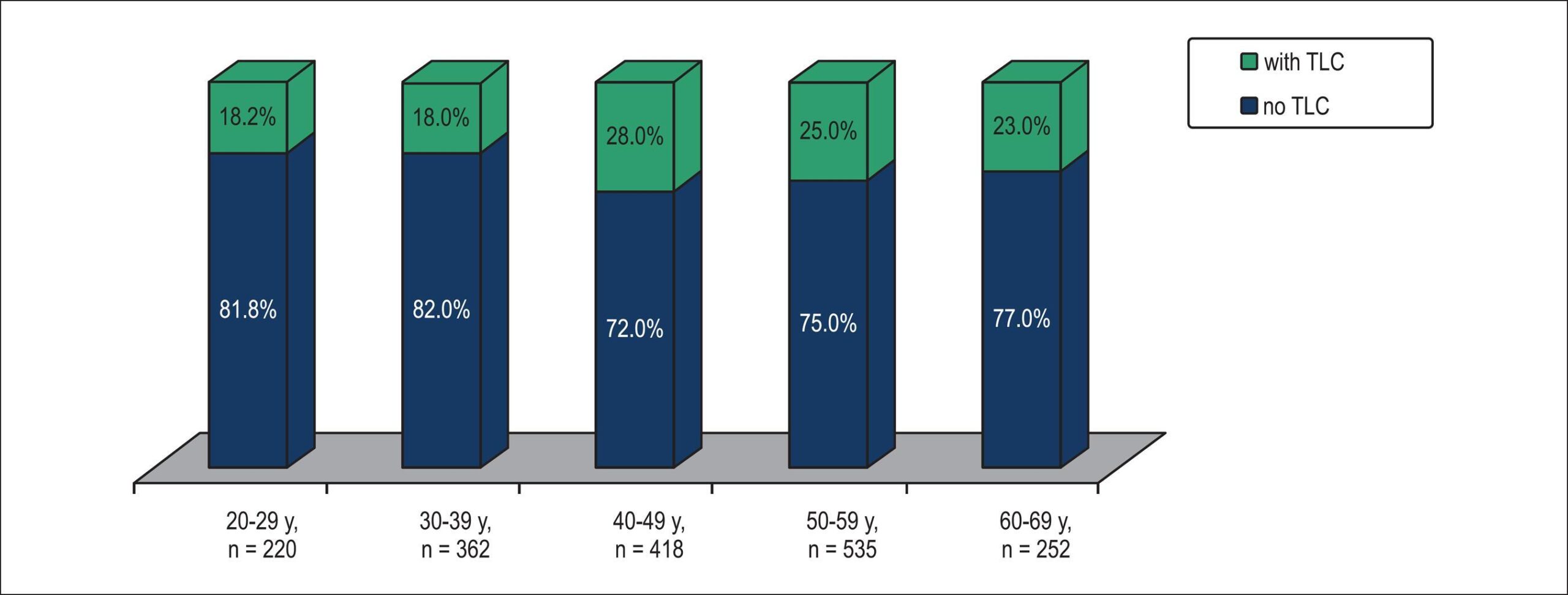
The overall prevalence of TLC in the studied population was 23.3% (418/1796), with the highest proportion (28%) seen in 40-49 year age group. TLC was significantly more common in women than in men (27.5% vs 13.5%). The mean age of patients at the time of the first event was 16 (11; 23) years, with 333 (85%) individuals experiencing the first episode of TLC under 30 years. The average time after the first episode of TLC was 27 (12; 47) years. The following mechanisms of TLC were determined using the questionnaire: neurally-mediated syncope (56.5%), arrhythmogenic onset of syncope (6.0%), nonsyncopal origin of TLC (1.4%), single episode during lifetime (2.1%). Reasons for TLC remained unidentified in 34% cases. 27 persons (6.5%) reported a family history of sudden death, mainly patients with presumably arrhythmogenic origin (24%).

Conclusion:

Our findings suggest that the overall prevalence of TLC in individuals aged 20-69 years is high. The most common cause of TLC is neurally-mediated syncope. These data about the epidemiology can help to develop cost-effective management approaches to TLC.

  • Cross-Sectional Studies
  • Syncope, Vasovagal
  • Unconsciousness / epidemiology
  • Urban Population
Read Full Article
Creative Commons Attribution (CC BY) Creative Commons license
15/04/2016 DOI: 10.5935/abc.20160056 Views 1
Cardiorespiratory fitness of a Brazilian regional sample distributed in different tables
ABC
Artigo Original

Cardiorespiratory fitness of a Brazilian regional sample distributed in different tables

Karlyse Claudino Belli et al. Carine Calegaro Cleusa Maria Richter Jonatas Zeni Klafke … Ricardo Stein Paulo Ricardo Nazario Viecili

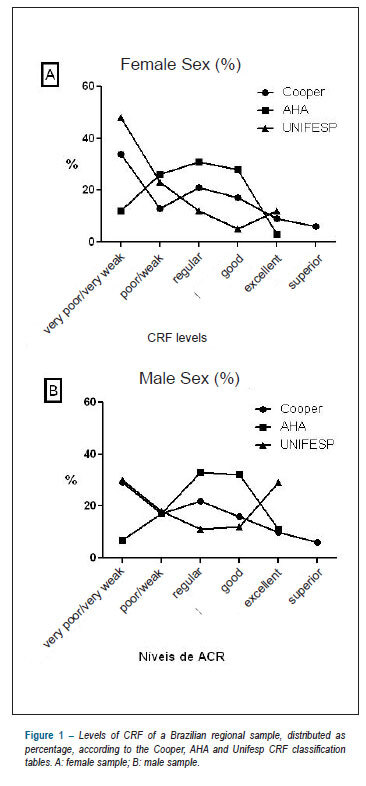
BACKGROUND: Most classification tables of cardiorespiratory fitness (CRF) used in clinical practice are international and have not been validated for the Brazilian population. That can result in important discrepancies when that classification is extrapolated to our population. OBJECTIVE: To assess the use of major CRF tables available in a Brazilian population sample of the Central High Plan of the state of Rio Grande do Sul (RS). METHODS: This study assessed the retrospective data of 2,930 individuals, living in 36 cities of the Central High Plan of the state of RS, and considered the following: presence of risk factors for cardiovascular disease and estimated maximum oxygen consumption (VO2peak) values obtained through exercise test with Bruce protocol. To classify CRF, the individuals were distributed according to sex, inserted in their respective age groups in the Cooper, American Heart Association (AHA) and Universidade Federal de São Paulo (Unifesp) tables, and classified according to their VO2peak. RESULTS: Women had lower VO2peak values as compared with those of men (23.5 ± 8.5 vs. 31.7 ± 10.8 mL.kg-1.min-1, p < 0.001). Considering both sexes, VO2peak showed an inverse and moderate correlation with age (R = -0.48, p < 0.001). An important discrepancy in the CRF classification levels was observed between the tables, ranging from 49% (Cooper x AHA) to 75% (Unifesp x AHA). CONCLUSION: Our findings indicate important discrepancy in the CRF classification levels of the tables assessed. Future studies could assess whether international tables could be used for the Brazilian population and populations of different regions of Brazil.

  • Classification
  • Exercise Test
  • Oxygen Consumption
  • physical fitness
  • Urban Population
Read Full Article
Creative Commons Attribution (CC BY) Creative Commons license
09/08/2012 DOI: 10.1590/S0066-782X2012005000075 Views 2
ABC
Artigo Original

Anthropometric measures as predictors of cardiovascular disease risk factors in the urban population of Iran

Reza Gharakhanlou et al. Babak Farzad Hamid Agha-Alinejad Lyn M. Steffen Mahdi Bayati

BACKGROUND: Overweight and obesity are an important public health problem in society, due to their association with various chronic diseases. OBJECTIVE: The purpose of this study is to determine the prevalence and distribution of overweight and obesity, using different anthropometric measurements and to identify the best anthropometric indicator which is most closely related to cardiovascular disease (CVD) risk factors in an Iranian urban population. METHODS: This cross-sectional study was conducted with 991 men and 1188 women aged 15 to 64 years. Body mass index (BMI), waist circumference (WC), waist-to-hip ratio (WHR), waist-to-height ratio (WHtR) and percentage of body fat were measured. A fasting blood specimen was obtained. CVD risk factors, including fasting blood glucose, triglycerides, total cholesterol (Tchol), low-density (LDL-C) and high-density-lipoprotein cholesterol (HDL-C) were assessed. RESULTS: Based on BMI, more than 49% of men and 53% of women were either overweight or obese with 10.2% of men and 18.6% of women being obese. In both men and women, the prevalence of overweight was greater among 40-49 year olds and the prevalence of obesity was greater among those 50+ years. Using the multiple regression analysis, BMI, WHtR and WHR explained the highest percentage of variation of triglycerides, Tchol/HDL-C ratio and LDL-C in men, respectively, whereas WHR explained the highest percentage of variation of triglycerides and WC explained the highest percentage of variation of Tchol/HDL-C ratio and LDL-C in women. CONCLUSION: Our data indicated that WHR and WHtR were the anthropometric indicators that best predicted CVD risk factors in men and WHR and WC in women.

  • Body weight
  • Body Weights and Measures
  • Cardiovascular Diseases
  • iran
  • Risk Factors
  • Urban Population
Read Full Article
Creative Commons Attribution (CC BY) Creative Commons license
09/01/2012 DOI: 10.1590/S0066-782X2012005000007
ABC
Artigo Original

Epidemiologic transition in mortality rate from circulatory diseases in Brazil

Antonio de Padua Mansur et al. Adriano Ibrahim A. Lopes Desidério Favarato Solange Desirée Avakian … Luíz Antonio M. César José Antonio F. Ramires

BACKGROUND: Circulatory diseases (CD) are the major cause of death in Brazil, being cerebrovascular diseases (CVD) predominant. In developed countries ischemic heart diseases (IHD) predominate. OBJECTIVE: The objective of the present study was to investigate the ratio between cerebrovascular diseases/ischemic heart diseases (CVD/IHD) in males and females who were 30 years of age and older. METHODS: Population estimates and mortality data for CD, IHD and CVD were provided by the Ministry of Health for the period between 1980 and 2005. The risk of death from IHD and CVD per 100,000 Brazilians and CVD/IHD ratio were analyzed in 10-year age ranges as of 30 years of age. The risk of death was adjusted by direct method by using 1960 world population as the standard population. RESULTS: It was observed that the risk of death from IHD and CVD increased exponentially as age advanced. CVD was the major cause of death in Brazil until 1996, when IHD took the lead. In the period between 1980 and 2005 a 33.25% reduction in death risk from CD was observed in the Brazilian population. In that same period, the metropolitan area of the capital city of São Paulo reported a 45.44% reduction. The CVD/IHD ratio was shown to be higher among younger women – from 2.53 in 1980 down to 2.04 in 2005 in the Brazilian population, and from 2.76 in 1980 down to 1.96 in the metropolitan area of the capital city of São Paulo, with decreasing figures for subsequent age ranges. Among males, the CVD/IHD ratio was close to < 1 in all age ranges. CONCLUSION: A transition in death risk from CD could be observed in Brazil, with current predominance of IHD.

  • Brain Ischemia
  • Brazil
  • Mortality
  • Myocardial Ischemia
  • São Paulo
  • Urban Population
Read Full Article
Creative Commons Attribution (CC BY) Creative Commons license
06/01/2010 DOI: 10.1590/S0066-782X2009001100011 Views 1

How to cite this article

EndNote RIS

Electronic Document Format (Vancouver)

Oliveira GMM, Mendes M, Dutra OP, Achutt A, Fernandes M, Azevedo V, Ferreira MBSCS, et al. 2019: Recommendations for Reducing Tobacco Consumption in Portuguese-Speaking Countries – Positioning of the Federation of Portuguese Language Cardiology Societies. Arquivos Brasileiros de Cardiologia 2019;112(4):477-86.

Electronic Document Format (ABNT)

Oliveira, Gláucia Maria Moraes de; Mendes, Miguel; Dutra, Oscar Pereira; Achutt, Aloysio; Fernandes, Mario; Azevedo, Vanda; Ferreira, Maria Beatriz Sena e Costa Santos; Coelho, Armando Serra; Soares, Miryan Bandeira dos Prazeres Cassandra; Évora, Mário Alberto Brito Lima; Mariotto, Mário Gomes; Morais, João Araujo. 2019: Recommendations for Reducing Tobacco Consumption in Portuguese-Speaking Countries – Positioning of the Federation of Portuguese Language Cardiology Societies. Arquivos Brasileiros de Cardiologia, v. 112, n. 4, p. 477-486, Apr. 2019.

Electronic Document Format (APA)

Oliveira, G. M. M. , Mendes, M., Dutra, O. P., Achutt, A., Fernandes, M., Azevedo, V., Ferreira, M. B. S. C. S., Coelho, A. S., Soares, M. B. P. C., Évora, M. A. B. L., Mariotto, M. G., & Morais, J. A. (2019). 2019: Recommendations for Reducing Tobacco Consumption in Portuguese-Speaking Countries – Positioning of the Federation of Portuguese Language Cardiology Societies. Arquivos Brasileiros de Cardiologia, 112(4), 477-486.

Electronic Document Format (ISO)

Oliveira, Gláucia Maria Moraes de and Mendes, Miguel and Dutra, Oscar Pereira and Achutt, Aloysio and Fernandes, Mario and Azevedo, Vanda and Ferreira, Maria Beatriz Sena e Costa Santos and Coelho, Armando Serra and Soares, Miryan Bandeira dos Prazeres Cassandra and Évora, Mário Alberto Brito Lima and Mariotto, Mário Gomes and Morais, João Araujo. 2019: Recommendations for Reducing Tobacco Consumption in Portuguese-Speaking Countries – Positioning of the Federation of Portuguese Language Cardiology Societies. Arquivos Brasileiros de Cardiologia [online]. 2019, vol. 112, n. 4, [cited 2026-10-14], pp. 477-486. Available from: <https://journals.cardiol.br/en/article/2019-recommendations-for-reducing-tobacco-consumption-in-portuguese-speaking-countries-positioning-of-the-federation-of-portuguese-language-cardiology-societies/>. ISSN 0066-782X

EndNote RIS

Electronic Document Format (Vancouver)

Gudkova S, Cherepanova N, Duplyakov D, Golovina G, Khokhlunov S, Surkova E, Rotar O, et al. Lifetime Prevalence of Transient Loss of Consciousness in an Urban Russian Population. Arquivos Brasileiros de Cardiologia 2016;106(5):382-8.

Electronic Document Format (ABNT)

Gudkova, S; Cherepanova, N; Duplyakov, D; Golovina, G; Khokhlunov, S; Surkova, E; Rotar, O; Konradi, A; Shlyakhto, E. Lifetime Prevalence of Transient Loss of Consciousness in an Urban Russian Population. Arquivos Brasileiros de Cardiologia, v. 106, n. 5, p. 382-388, Apr. 2016.

Electronic Document Format (APA)

Gudkova, S., Cherepanova, N., Duplyakov, D., Golovina, G., Khokhlunov, S., Surkova, E., Rotar, O., Konradi, A., & Shlyakhto, E. (2016). Lifetime Prevalence of Transient Loss of Consciousness in an Urban Russian Population. Arquivos Brasileiros de Cardiologia, 106(5), 382-388.

Electronic Document Format (ISO)

Gudkova, S and Cherepanova, N and Duplyakov, D and Golovina, G and Khokhlunov, S and Surkova, E and Rotar, O and Konradi, A and Shlyakhto, E. Lifetime Prevalence of Transient Loss of Consciousness in an Urban Russian Population. Arquivos Brasileiros de Cardiologia [online]. 2016, vol. 106, n. 5, [cited 2026-10-14], pp. 382-388. Available from: <https://journals.cardiol.br/en/article/lifetime-prevalence-of-transient-loss-of-consciousness-in-an-urban-russian-population/>. ISSN 0066-782X

EndNote RIS

Electronic Document Format (Vancouver)

Belli KC, Calegaro C, Richter CM, Klafke JZ, Stein R, Viecili PRN. Cardiorespiratory fitness of a Brazilian regional sample distributed in different tables. Arquivos Brasileiros de Cardiologia 2012;99(3):811-7.

Electronic Document Format (ABNT)

Belli, Karlyse Claudino; Calegaro, Carine; Richter, Cleusa Maria; Klafke, Jonatas Zeni; Stein, Ricardo; Viecili, Paulo Ricardo Nazario. Cardiorespiratory fitness of a Brazilian regional sample distributed in different tables. Arquivos Brasileiros de Cardiologia, v. 99, n. 3, p. 811-817, Aug. 2012.

Electronic Document Format (APA)

Belli, K. C., Calegaro, C., Richter, C. M., Klafke, J. Z., Stein, R., & Viecili, P. R. N. (2012). Cardiorespiratory fitness of a Brazilian regional sample distributed in different tables. Arquivos Brasileiros de Cardiologia, 99(3), 811-817.

Electronic Document Format (ISO)

Belli, Karlyse Claudino and Calegaro, Carine and Richter, Cleusa Maria and Klafke, Jonatas Zeni and Stein, Ricardo and Viecili, Paulo Ricardo Nazario. Cardiorespiratory fitness of a Brazilian regional sample distributed in different tables. Arquivos Brasileiros de Cardiologia [online]. 2012, vol. 99, n. 3, [cited 2026-10-14], pp. 811-817. Available from: <https://journals.cardiol.br/en/article/cardiorespiratory-fitness-of-a-brazilian-regional-sample-distributed-in-different-tables/>. ISSN 0066-782X

EndNote RIS

Electronic Document Format (Vancouver)

Gharakhanlou R, Farzad B, Agha-Alinejad H, Steffen LM, Bayati M. Anthropometric measures as predictors of cardiovascular disease risk factors in the urban population of Iran. Arquivos Brasileiros de Cardiologia 2012;98(2):126-35.

Electronic Document Format (ABNT)

Gharakhanlou, Reza; Farzad, Babak; Agha-Alinejad, Hamid; Steffen, Lyn M.; Bayati, Mahdi. Anthropometric measures as predictors of cardiovascular disease risk factors in the urban population of Iran. Arquivos Brasileiros de Cardiologia, v. 98, n. 2, p. 126-135, Jan. 2012.

Electronic Document Format (APA)

Gharakhanlou, R., Farzad, B., Agha-Alinejad, H., Steffen, L. M., & Bayati, M. (2012). Anthropometric measures as predictors of cardiovascular disease risk factors in the urban population of Iran. Arquivos Brasileiros de Cardiologia, 98(2), 126-135.

Electronic Document Format (ISO)

Gharakhanlou, Reza and Farzad, Babak and Agha-Alinejad, Hamid and Steffen, Lyn M. and Bayati, Mahdi. Anthropometric measures as predictors of cardiovascular disease risk factors in the urban population of Iran. Arquivos Brasileiros de Cardiologia [online]. 2012, vol. 98, n. 2, [cited 2026-10-14], pp. 126-135. Available from: <https://journals.cardiol.br/en/article/anthropometric-measures-as-predictors-of-cardiovascular-disease-risk-factors-in-the-urban-population-of-iran/>. ISSN 0066-782X

EndNote RIS

Electronic Document Format (Vancouver)

Mansur AP, Lopes AIA, Favarato D, Avakian SD, César LAM, Ramires JAF. Epidemiologic transition in mortality rate from circulatory diseases in Brazil. Arquivos Brasileiros de Cardiologia 2010;93(5):506-10.

Electronic Document Format (ABNT)

Mansur, Antonio de Padua; Lopes, Adriano Ibrahim A.; Favarato, Desidério; Avakian, Solange Desirée; César, Luíz Antonio M.; Ramires, José Antonio F.. Epidemiologic transition in mortality rate from circulatory diseases in Brazil. Arquivos Brasileiros de Cardiologia, v. 93, n. 5, p. 506-510, Jan. 2010.

Electronic Document Format (APA)

Mansur, A. P., Lopes, A. I. A., Favarato, D., Avakian, S. D., César, L. A. M., & Ramires, J. A. F. (2010). Epidemiologic transition in mortality rate from circulatory diseases in Brazil. Arquivos Brasileiros de Cardiologia, 93(5), 506-510.

Electronic Document Format (ISO)

Mansur, Antonio de Padua and Lopes, Adriano Ibrahim A. and Favarato, Desidério and Avakian, Solange Desirée and César, Luíz Antonio M. and Ramires, José Antonio F.. Epidemiologic transition in mortality rate from circulatory diseases in Brazil. Arquivos Brasileiros de Cardiologia [online]. 2010, vol. 93, n. 5, [cited 2026-10-14], pp. 506-510. Available from: <https://journals.cardiol.br/en/article/epidemiologic-transition-in-mortality-rate-from-circulatory-diseases-in-brazil/>. ISSN 0066-782X

  • About ABC Family
  • Internal Regulation
  • Editorial Board
  • Brazilian Society of Cardiology (SBC)

Issues

SBC Guidelines

  • Videos
  • Podcasts
  • News