ABC Family Arquivos Brasileiros de Cardiologia International Journal of Cardiovascular Sciences ABC Heart Failure & Cardiomyopathy ABC Imagem Cardiovascular
Português English
ABC Family
Português English
  • About
    • About ABC Family
    • Internal Regulation
    • Editorial Board
    • Brazilian Society of Cardiology (SBC)
  • Issues
  • SBC Guidelines
  • Content
    • Videos
    • Podcasts
    • News
  • About
    • About ABC Family
    • Internal Regulation
    • Editorial Board
    • Brazilian Society of Cardiology (SBC)
  • Issues
  • SBC Guidelines
  • Content
    • Videos
    • Podcasts
    • News

ABC Family

  • ABC Family
  • Arquivos Brasileiros de Cardiologia
  • International Journal of Cardiovascular Sciences
  • ABC Heart Failure & Cardiomyopathy
  • ABC Imagem Cardiovascular
Search in

No content found.

Journals
Ordering
Article types
Others

  1. Home
  2. Keyword: Atrial Fibrillation / mortality
ABC
Editorial

COVID-19 and Atrial Fibrillation: Predicting to Prevent

Lucas Simonetto Faganello et al. Leandro Ioschpe Zimerman

Atrial fibrillation (AF) is the most common chronic arrhythmia worldwide, with significant morbidity and mortality. The causes for the development and maintenance of AF are multifactorial, with advanced-age patients and comorbidities such as hypertension, diabetes, and coronary artery disease being at greater risk. Increased sympathetic tone and inflammatory states are also associated with the development of AF.,

The new coronavirus disease pandemic that began at the end of 2019 (COVID-19) quickly spread across the world, bringing catastrophic consequences for public health and the global economy. The infection can lead to illness with varying severities, ranging from mild upper airway infection to severe pneumonia, resulting in severe acute respiratory syndrome requiring mechanical ventilation. Although COVID-19 is primarily a lung disease as a consequence of an immune inflammatory response, cardiovascular system may be involved as well., Cardiac manifestations include myocarditis, heart failure, acute coronary syndrome, and arrhythmias and are associated with increased mortality. The exact arrhythmogenic mechanism is not yet completely known, but hypoxia, myocarditis, exaggerated immune response, myocardial ischemia, electrolyte disturbance, and adverse effects of medications are potential causes.,

[…]

  • Atrial Fibrillation / mortality
  • Coronary Artery Disease
  • Coronavirus infections
  • Severe Acute Respiratory Syndrome
Read Full Article
Creative Commons Attribution (CC BY) Creative Commons license
08/04/2024 DOI: 10.36660/abc.20230823 Views 1
Figure 1
ABC
Original Article

Prognostic Prediction of Cardiopulmonary Exercise Test Parameters in Heart Failure Patients with Atrial Fibrillation

António Valentim Gonçalves et al. Tiago Pereira-da-Silva Rui Soares Joana Feliciano … Rita Ilhão Moreira Pedro Rio Ana Abreu Rui Cruz Ferreira

Abstract

Background:

Atrial fibrillation (AF) is associated with increased mortality in heart failure (HF) patients.

Objective:

To evaluate whether the risk of AF patients can be precisely stratified by relation with cardiopulmonary exercise test (CPET) cut-offs for heart transplantation (HT) selection.

Methods:

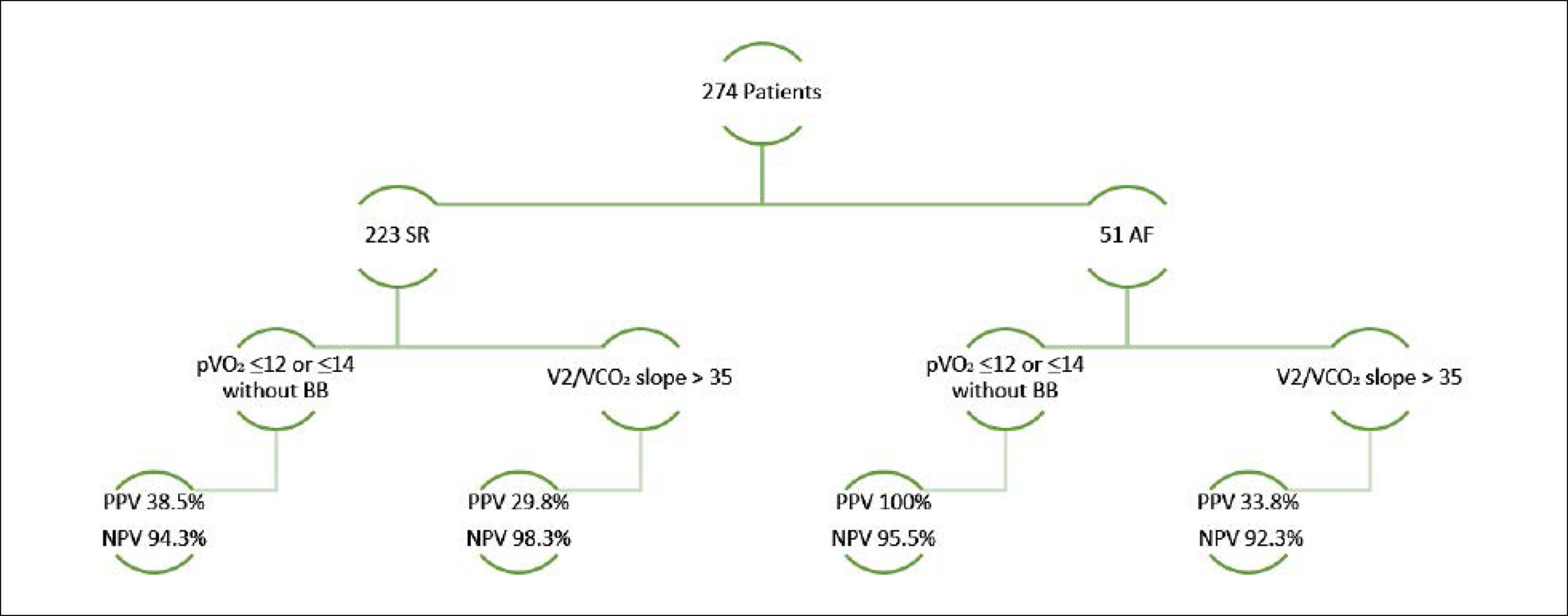
Prospective evaluation of 274 consecutive HF patients with left ventricular ejection fraction ≤ 40%. The primary endpoint was a composite of cardiac death or urgent HT in 1-year follow-up. The primary endpoint was analysed by several CPET parameters for the highest area under the curve and for positive (PPV) and negative predictive value (NPV) in AF and sinus rhythm (SR) patients to detect if the current cut-offs for HT selection can precisely stratify the AF group. Statistical differences with a p-value <0.05 were considered significant.

Results:

There were 51 patients in the AF group and 223 in the SR group. The primary outcome was higher in the AF group (17.6% vs 8.1%, p = 0.038). The cut-off value of pVO2 for HT selection showed a PPV of 100% and an NPV of 95.5% for the primary outcome in the AF group, with a PPV of 38.5% and an NPV of 94.3% in the SR group. The cut-off value of VE/VCO2 slope showed lower values of PPV (33.3%) and similar NPV (92.3%) to pVO2 results in the AF group.

Conclusion:

Despite the fact that AF carries a worse prognosis for HF patients, the current cut-off of pVO2 for HT selection can precisely stratify this high-risk group.

  • Atrial Fibrillation / mortality
  • Exercise Test
  • Heart Failure
  • Oxygen Consumption
  • Peak Expiratory Flow Rate
  • Prognosis
Read Full Article
Creative Commons Attribution (CC BY) Creative Commons license
20/03/2020 DOI: 10.36660/abc.20180193 Views 1
ABC
Original Article

Colchicine to Reduce Atrial Fibrillation in the Postoperative Period of Myocardial Revascularization

Camila Stuchi Zarpelon et al. Miguel Chomiski Netto José Carlos Moura Jorge Cátia Carolina Fabris … Dieli Desengrini Mariana da Silva Jardim Diego Guedes da Silva

Abstract

Background:

The high prevalence of atrial fibrillation (AF) in the postoperative period of myocardial revascularization surgery increases morbidity and mortality.

Objective:

To assess the efficacy of colchicine to prevent AF in the postoperative period of myocardial revascularization surgery, the impact of AF on hospital length of stay and death, and to identify its risk factors.

Methods:

Between May 2012 and November 2013, 140 patients submitted to myocardial revascularization surgery were randomized, 69 to the control group and 71 to the colchicine group. Colchicine was used at the dose of 1 mg orally, twice daily, preoperatively, and of 0.5 mg, twice daily, until hospital discharge. A single dose of 1 mg was administered to those admitted 12 hours or less before surgery.

Results:

The primary endpoint was AF rate in the postoperative period of myocardial revascularization surgery. Colchicine group patients showed no reduction in AF incidence as compared to control group patients (7.04% versus 13.04%, respectively; p = 0.271). There was no statistically significant difference between the groups regarding death from any cause rate (5.6% versus 10.1%; p = 0,363) and hospital length of stay (14.5 ± 11.5 versus 13.3 ± 9.4 days; p = 0.490). However, colchicine group patients had a higher infection rate (26.8% versus 8.7%; p = 0.007).

Conclusion:

The use of colchicine to prevent AF after myocardial revascularization surgery was not effective in the present study. Brazilian Registry of Clinical Trials number RBR-556dhr.

  • Atrial Fibrillation / mortality
  • Colchicine/therapeutic use
  • Myocardial Revascularization
  • Postoperative Period
Read Full Article
Creative Commons Attribution (CC BY) Creative Commons license
24/05/2016 DOI: 10.5935/abc.20160082 Views 1
Figure 1
ABC
Review Article

Atrial Fibrillation and Non-cardiovascular Diseases: A Systematic Review

Cátia Ferreira et al. Rui Providência Maria João Ferreira Lino Manuel Gonçalves

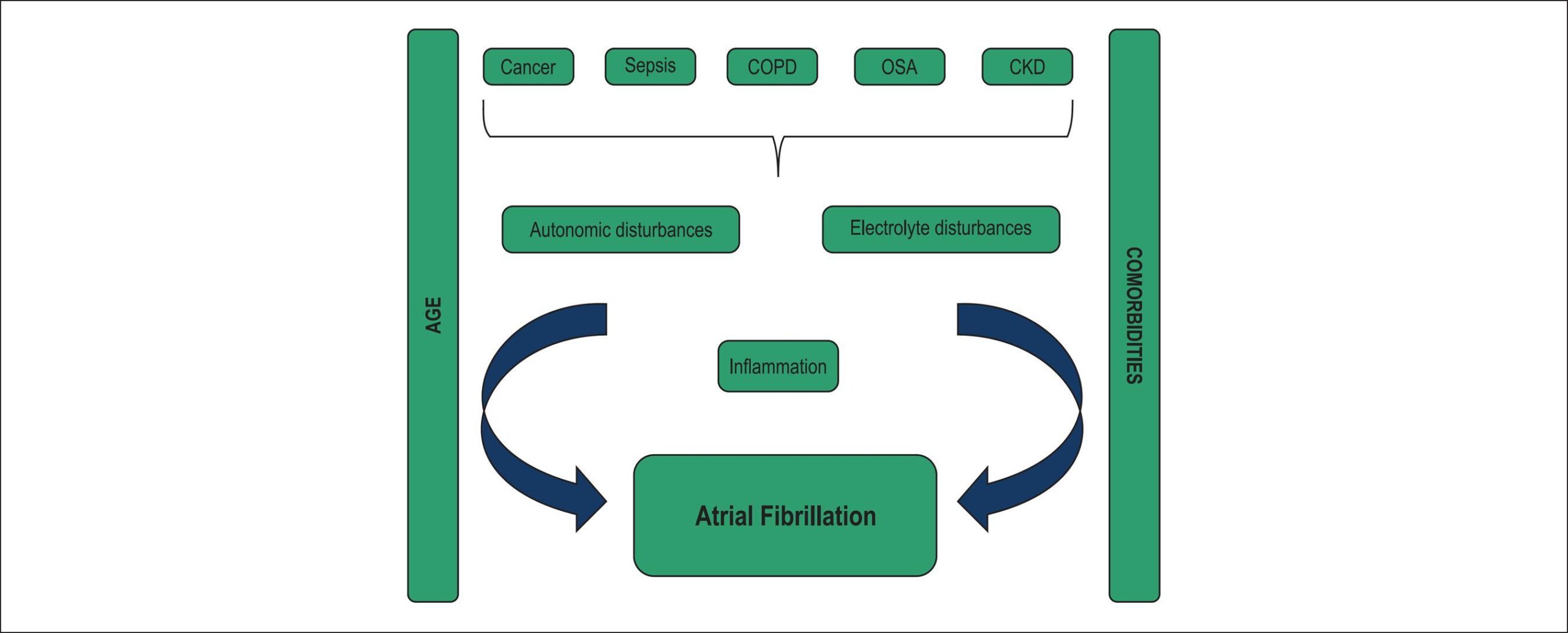
Atrial fibrillation (AF) is the most common cardiac arrhythmia and is associated with an unfavorable prognosis, increasing the risk of stroke and death. Although traditionally associated with cardiovascular diseases, there is increasing evidence of high incidence of AF in patients with highly prevalent noncardiovascular diseases, such as cancer, sepsis, chronic obstructive pulmonary disease, obstructive sleep apnea and chronic kidney disease. Therefore, considerable number of patients has been affected by these comorbidities, leading to an increased risk of adverse outcomes.

The authors performed a systematic review of the literature aiming to better elucidate the interaction between these conditions.

Several mechanisms seem to contribute to the concomitant presence of AF and noncardiovascular diseases. Comorbidities, advanced age, autonomic dysfunction, electrolyte disturbance and inflammation are common to these conditions and may predispose to AF.

The treatment of AF in these patients represents a clinical challenge, especially in terms of antithrombotic therapy, since the scores for stratification of thromboembolic risk, such as the CHADS2 and CHA2DS2VASc scores, and the scores for hemorrhagic risk, like the HAS-BLED score have limitations when applied in these conditions.

The evidence in this area is still scarce and further investigations to elucidate aspects like epidemiology, pathogenesis, prevention and treatment of AF in noncardiovascular diseases are still needed.

  • Arrhythmias / therapeutic use
  • Atrial Fibrillation / mortality
  • Heart Failure
  • Neoplasms
Read Full Article
Creative Commons Attribution (CC BY) Creative Commons license
01/11/2015 DOI: 10.5935/abc.20150142 Views 1

How to cite this article

EndNote RIS

Electronic Document Format (Vancouver)

Faganello LS, Zimerman LI. COVID-19 and Atrial Fibrillation: Predicting to Prevent. Arquivos Brasileiros de Cardiologia 2024;121(1):e20230823.

Electronic Document Format (ABNT)

Faganello, Lucas Simonetto; Zimerman, Leandro Ioschpe. COVID-19 and Atrial Fibrillation: Predicting to Prevent. Arquivos Brasileiros de Cardiologia, v. 121, n. 1, e20230823, Apr. 2024.

Electronic Document Format (APA)

Faganello, L. S., & Zimerman, L. I. (2024). COVID-19 and Atrial Fibrillation: Predicting to Prevent. Arquivos Brasileiros de Cardiologia, 121(1), e20230823.

Electronic Document Format (ISO)

Faganello, Lucas Simonetto and Zimerman, Leandro Ioschpe. COVID-19 and Atrial Fibrillation: Predicting to Prevent. Arquivos Brasileiros de Cardiologia [online]. 2024, vol. 121, n. 1, [cited 2026-10-14], e20230823. Available from: <https://journals.cardiol.br/en/article/covid-19-and-atrial-fibrillation-predicting-to-prevent/>. ISSN 0066-782X

EndNote RIS

Electronic Document Format (Vancouver)

Gonçalves AV, Pereira-da-Silva T, Soares R, Feliciano J, Moreira RI, Rio P, Abreu A, et al. Prognostic Prediction of Cardiopulmonary Exercise Test Parameters in Heart Failure Patients with Atrial Fibrillation. Arquivos Brasileiros de Cardiologia 2020;114(2):209-18.

Electronic Document Format (ABNT)

Gonçalves, António Valentim; Pereira-da-Silva, Tiago; Soares, Rui; Feliciano, Joana; Moreira, Rita Ilhão; Rio, Pedro; Abreu, Ana; Ferreira, Rui Cruz. Prognostic Prediction of Cardiopulmonary Exercise Test Parameters in Heart Failure Patients with Atrial Fibrillation. Arquivos Brasileiros de Cardiologia, v. 114, n. 2, p. 209-218, Mar. 2020.

Electronic Document Format (APA)

Gonçalves, A. V., Pereira-da-Silva, T., Soares, R., Feliciano, J., Moreira, R. I., Rio, P., Abreu, A., & Ferreira, R. C. (2020). Prognostic Prediction of Cardiopulmonary Exercise Test Parameters in Heart Failure Patients with Atrial Fibrillation. Arquivos Brasileiros de Cardiologia, 114(2), 209-218.

Electronic Document Format (ISO)

Gonçalves, António Valentim and Pereira-da-Silva, Tiago and Soares, Rui and Feliciano, Joana and Moreira, Rita Ilhão and Rio, Pedro and Abreu, Ana and Ferreira, Rui Cruz. Prognostic Prediction of Cardiopulmonary Exercise Test Parameters in Heart Failure Patients with Atrial Fibrillation. Arquivos Brasileiros de Cardiologia [online]. 2020, vol. 114, n. 2, [cited 2026-10-14], pp. 209-218. Available from: <https://journals.cardiol.br/en/article/prognostic-prediction-of-cardiopulmonary-exercise-test-parameters-in-heart-failure-patients-with-atrial-fibrillation/>. ISSN 0066-782X

EndNote RIS

Electronic Document Format (Vancouver)

Zarpelon CS, Netto MC, Jorge JCM, Fabris CC, Desengrini D, Jardim MS, Silva DG, et al. Colchicine to Reduce Atrial Fibrillation in the Postoperative Period of Myocardial Revascularization. Arquivos Brasileiros de Cardiologia 2016;107(1):4-9.

Electronic Document Format (ABNT)

Zarpelon, Camila Stuchi; Netto, Miguel Chomiski; Jorge, José Carlos Moura; Fabris, Cátia Carolina; Desengrini, Dieli; Jardim, Mariana da Silva; Silva, Diego Guedes da. Colchicine to Reduce Atrial Fibrillation in the Postoperative Period of Myocardial Revascularization. Arquivos Brasileiros de Cardiologia, v. 107, n. 1, p. 4-9, May. 2016.

Electronic Document Format (APA)

Zarpelon, C. S., Netto, M. C., Jorge, J. C. M., Fabris, C. C., Desengrini, D., Jardim, M. S., & Silva, D. G. (2016). Colchicine to Reduce Atrial Fibrillation in the Postoperative Period of Myocardial Revascularization. Arquivos Brasileiros de Cardiologia, 107(1), 4-9.

Electronic Document Format (ISO)

Zarpelon, Camila Stuchi and Netto, Miguel Chomiski and Jorge, José Carlos Moura and Fabris, Cátia Carolina and Desengrini, Dieli and Jardim, Mariana da Silva and Silva, Diego Guedes da. Colchicine to Reduce Atrial Fibrillation in the Postoperative Period of Myocardial Revascularization. Arquivos Brasileiros de Cardiologia [online]. 2016, vol. 107, n. 1, [cited 2026-10-14], pp. 4-9. Available from: <https://journals.cardiol.br/en/article/colchicine-to-reduce-atrial-fibrillation-in-the-postoperative-period-of-myocardial-revascularization/>. ISSN 0066-782X

EndNote RIS

Electronic Document Format (Vancouver)

Ferreira C, Providência R, Ferreira MJ, Gonçalves LM. Atrial Fibrillation and Non-cardiovascular Diseases: A Systematic Review. Arquivos Brasileiros de Cardiologia 2015;105(5):519-26.

Electronic Document Format (ABNT)

Ferreira, Cátia; Providência, Rui; Ferreira, Maria João; Gonçalves, Lino Manuel. Atrial Fibrillation and Non-cardiovascular Diseases: A Systematic Review. Arquivos Brasileiros de Cardiologia, v. 105, n. 5, p. 519-526, Oct. 2015.

Electronic Document Format (APA)

Ferreira, C., Providência, R., Ferreira, M. J., & Gonçalves, L. M. (2015). Atrial Fibrillation and Non-cardiovascular Diseases: A Systematic Review. Arquivos Brasileiros de Cardiologia, 105(5), 519-526.

Electronic Document Format (ISO)

Ferreira, Cátia and Providência, Rui and Ferreira, Maria João and Gonçalves, Lino Manuel. Atrial Fibrillation and Non-cardiovascular Diseases: A Systematic Review. Arquivos Brasileiros de Cardiologia [online]. 2015, vol. 105, n. 5, [cited 2026-10-14], pp. 519-526. Available from: <https://journals.cardiol.br/en/article/atrial-fibrillation-and-non-cardiovascular-diseases-a-systematic-review/>. ISSN 0066-782X

  • About ABC Family
  • Internal Regulation
  • Editorial Board
  • Brazilian Society of Cardiology (SBC)

Issues

SBC Guidelines

  • Videos
  • Podcasts
  • News