ABC Family Arquivos Brasileiros de Cardiologia International Journal of Cardiovascular Sciences ABC Heart Failure & Cardiomyopathy ABC Imagem Cardiovascular
Português English
ABC Family
Português English
  • About
    • About ABC Family
    • Internal Regulation
    • Editorial Board
    • Brazilian Society of Cardiology (SBC)
  • Issues
  • SBC Guidelines
  • Content
    • Videos
    • Podcasts
    • News
  • About
    • About ABC Family
    • Internal Regulation
    • Editorial Board
    • Brazilian Society of Cardiology (SBC)
  • Issues
  • SBC Guidelines
  • Content
    • Videos
    • Podcasts
    • News

ABC Family

  • ABC Family
  • Arquivos Brasileiros de Cardiologia
  • International Journal of Cardiovascular Sciences
  • ABC Heart Failure & Cardiomyopathy
  • ABC Imagem Cardiovascular
Search in

No content found.

Journals
Ordering
Article types
Others

  1. Home
  2. Keyword: Postural Balance
ABC
Editorial

Is There an Association Between Timed Up and Go Test Performance Results and Directly Measured Peak Oxygen Consumption in Patients with Heart Disease?

Filipe Ferrari et al. Ricardo Stein

Functional capacity, the ability to perform daily activities independently, is commonly assessed using standardized tests like the 6-minute walk test, Timed Up and Go Test (TUGT), and one-minute sit-to-stand test. However, the gold standard for evaluating functional or cardiorespiratory capacity is cardiopulmonary exercise testing (CPET), which measures peak oxygen consumption (VO2peak). CPET involves gradually increasing exercise intensity until exhaustion or symptom onset.

Numerous studies consistently demonstrate a strong inverse association between VO2peak and cardiovascular events, cardiovascular mortality, and all-cause mortality,, underscoring the pivotal role of functional capacity in the context of cardiovascular diseases. Moreover, in heart failure, regardless of ejection fraction status, poor performance on the 6-minute walk test has been linked to elevated risks of all-cause mortality and heart failure.

[…]

  • Cardiovascular Diseases
  • health care
  • outcome assessment
  • Oxygen Consumption
  • Postural Balance
  • Test Timed Up and Go
Read Full Article
Creative Commons Attribution (CC BY) Creative Commons license
04/03/2024 DOI: 10.36660/abc.20230832 Views 1
Figure 1
ABC
Original Article

Cardiac and Musculoskeletal Responses to the Effects of Passive and Active Tilt Test in Healthy Subjects

Rogerio Ferreira Liporaci et al. Marcelo Camargo Saad Julio César Crescêncio Fabiana Marques … Debora Bevilaqua-Grossi Lourenço Gallo-Júnior

Abstract

Background:

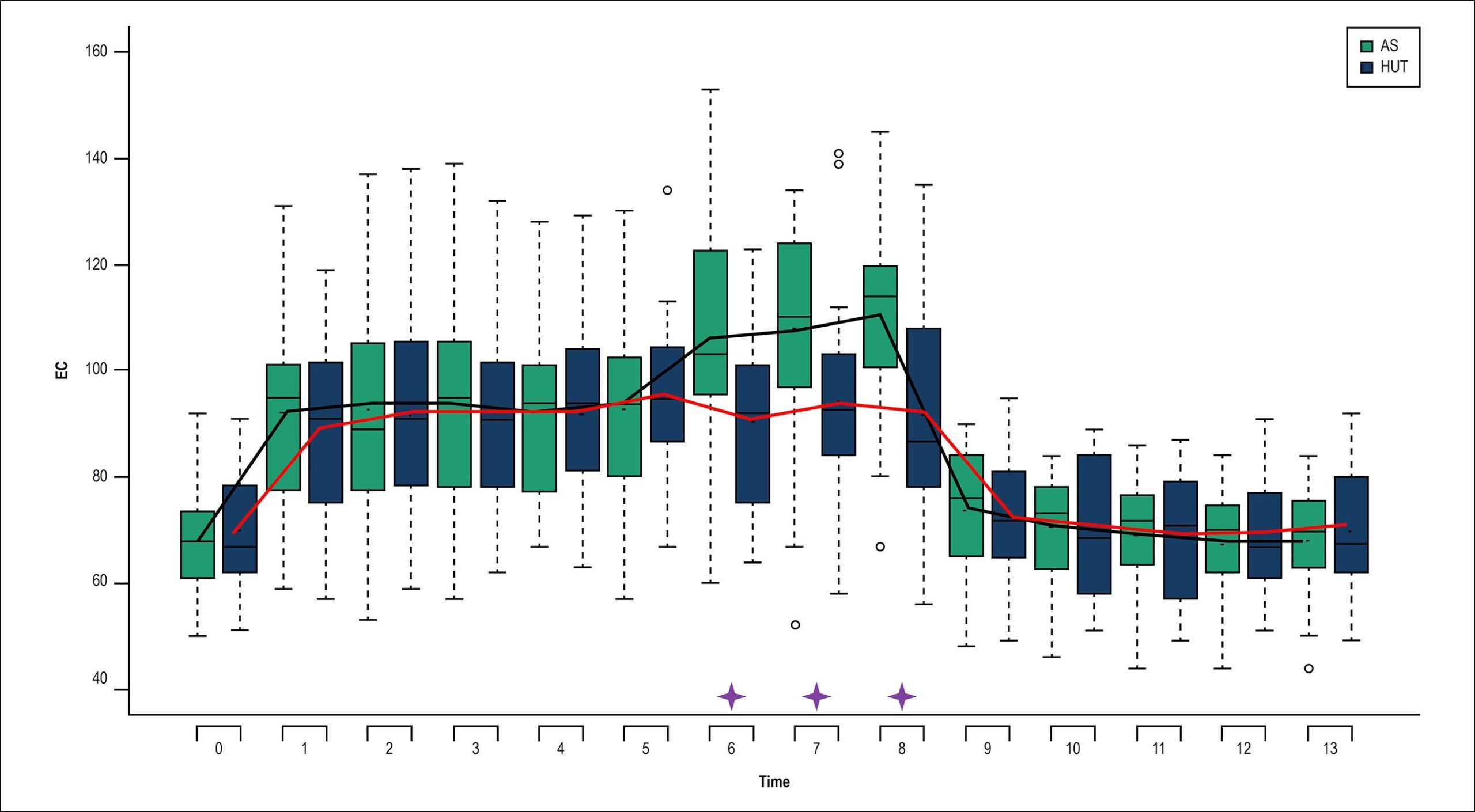
Maintenance of orthostatism requires the interaction of autonomic and muscle responses for an efficient postural control, to minimize body motion and facilitate venous return in a common type of syncope called neurocardiogenic syncope (NCS). Muscle activity in standing position may be registered by surface electromyography, and body sway confirmed by displacement of the center of pressure (COP) on a force platform. These peripheral variables reflect the role of muscles in the maintenance of orthostatism during the active tilt test, which, compared with muscle activity during the passive test (head-up tilt test), enables the analyses of electromyographic activity of these muscles that may anticipate the clinical effects of CNS during these tests.

Objective:

to evaluate and compare the effects of a standardized protocol of active and passive tests for CNS diagnosis associated with the effects of Valsalva maneuver (VM).

Methods:

twenty-thee clinically stable female volunteers were recruited to undergo both tests. EMG electrodes were placed on muscles involved in postural maintenance. During the active test, subjects stood on a force platform. In addition to electromyography and the platform, heart rate was recorded during all tests. Three VMs were performed during the tests.

Results:

progressive peripheral changes were observed along both tests, more evidently during the active test.

Conclusion:

the active test detected changes in muscle and cardiovascular responses, which were exacerbated by the VM.

  • Heart Rate
  • Postural Balance
  • Syncope, Vasovagal
  • Tilt Table Test
Read Full Article
Creative Commons Attribution (CC BY) Creative Commons license
01/01/2018 DOI: 10.5935/abc.20180003

How to cite this article

EndNote RIS

Electronic Document Format (Vancouver)

Ferrari F, Stein R. Is There an Association Between Timed Up and Go Test Performance Results and Directly Measured Peak Oxygen Consumption in Patients with Heart Disease?. Arquivos Brasileiros de Cardiologia 2024;120(12):e20230832.

Electronic Document Format (ABNT)

Ferrari, Filipe; Stein, Ricardo. Is There an Association Between Timed Up and Go Test Performance Results and Directly Measured Peak Oxygen Consumption in Patients with Heart Disease?. Arquivos Brasileiros de Cardiologia, v. 120, n. 12, e20230832, Mar. 2024.

Electronic Document Format (APA)

Ferrari, F., & Stein, R. (2024). Is There an Association Between Timed Up and Go Test Performance Results and Directly Measured Peak Oxygen Consumption in Patients with Heart Disease?. Arquivos Brasileiros de Cardiologia, 120(12), e20230832.

Electronic Document Format (ISO)

Ferrari, Filipe and Stein, Ricardo. Is There an Association Between Timed Up and Go Test Performance Results and Directly Measured Peak Oxygen Consumption in Patients with Heart Disease?. Arquivos Brasileiros de Cardiologia [online]. 2024, vol. 120, n. 12, [cited 2026-10-14], e20230832. Available from: <https://journals.cardiol.br/en/article/is-there-an-association-between-timed-up-and-go-test-performance-results-and-directly-measured-peak-oxygen-consumption-in-patients-with-heart-disease/>. ISSN 0066-782X

EndNote RIS

Electronic Document Format (Vancouver)

Liporaci RF, Saad MC, Crescêncio JC, Marques F, Bevilaqua-Grossi D, Gallo-Júnior L. Cardiac and Musculoskeletal Responses to the Effects of Passive and Active Tilt Test in Healthy Subjects. Arquivos Brasileiros de Cardiologia 2018;110(1):74-83.

Electronic Document Format (ABNT)

Liporaci, Rogerio Ferreira; Saad, Marcelo Camargo; Crescêncio, Julio César; Marques, Fabiana; Bevilaqua-Grossi, Debora; Gallo-Júnior, Lourenço. Cardiac and Musculoskeletal Responses to the Effects of Passive and Active Tilt Test in Healthy Subjects. Arquivos Brasileiros de Cardiologia, v. 110, n. 1, p. 74-83, Dec. 2017.

Electronic Document Format (APA)

Liporaci, R. F., Saad, M. C., Crescêncio, J. C., Marques, F., Bevilaqua-Grossi, D., & Gallo-Júnior, L. (2018). Cardiac and Musculoskeletal Responses to the Effects of Passive and Active Tilt Test in Healthy Subjects. Arquivos Brasileiros de Cardiologia, 110(1), 74-83.

Electronic Document Format (ISO)

Liporaci, Rogerio Ferreira and Saad, Marcelo Camargo and Crescêncio, Julio César and Marques, Fabiana and Bevilaqua-Grossi, Debora and Gallo-Júnior, Lourenço. Cardiac and Musculoskeletal Responses to the Effects of Passive and Active Tilt Test in Healthy Subjects. Arquivos Brasileiros de Cardiologia [online]. 2018, vol. 110, n. 1, [cited 2026-10-14], pp. 74-83. Available from: <https://journals.cardiol.br/en/article/cardiac-and-musculoskeletal-responses-to-the-effects-of-passive-and-active-tilt-test-in-healthy-subjects/>. ISSN 0066-782X

  • About ABC Family
  • Internal Regulation
  • Editorial Board
  • Brazilian Society of Cardiology (SBC)

Issues

SBC Guidelines

  • Videos
  • Podcasts
  • News