ABC Family Arquivos Brasileiros de Cardiologia International Journal of Cardiovascular Sciences ABC Heart Failure & Cardiomyopathy ABC Imagem Cardiovascular
Português English
ABC Family
Português English
  • About
    • About ABC Family
    • Internal Regulation
    • Editorial Board
    • Brazilian Society of Cardiology (SBC)
  • Issues
  • SBC Guidelines
  • Content
    • Videos
    • Podcasts
    • News
  • About
    • About ABC Family
    • Internal Regulation
    • Editorial Board
    • Brazilian Society of Cardiology (SBC)
  • Issues
  • SBC Guidelines
  • Content
    • Videos
    • Podcasts
    • News

ABC Family

  • ABC Family
  • Arquivos Brasileiros de Cardiologia
  • International Journal of Cardiovascular Sciences
  • ABC Heart Failure & Cardiomyopathy
  • ABC Imagem Cardiovascular
Search in

No content found.

Journals
Ordering
Article types
Others

  1. Home
  2. Keyword: antihypertensive agents
Comparison of Blood Pressure Values and Antihypertensive Medications Used in Non-Afro-Descendant and Afro-Descendant Brazilians with Hypertension
ABC
Original Article

Comparison of Blood Pressure Values and Antihypertensive Medications Used in Non-Afro-Descendant and Afro-Descendant Brazilians with Hypertension

Maicon Borges Euzébio et al. Priscila Valverde de Oliveira Vitorino Andrea A. Brandão Eduardo Costa Duarte Barbosa … Celso Amodeo Audes Feitosa Marcus Vinicius Bolivar Malachias Marco Antonio MotaGomes Rui Manoel dos Santos Póvoa Renato Delascio Lopes Paulo Cesar B Veiga Jardim Ana Luiza Lima Souza Antonio Coca Weimar Kunz Sebba Barroso

Abstract

Background

The prevalence of hypertension (HTN) is high in ethnic communities, particularly among Afro-descendant adults in the United States. Moreover, there is a lack of studies addressing this issue in the Brazilian Afro-descendant population.

Objective

To analyze blood pressure control and the use of antihypertensive medications among Afro-descendant and non-Afro-descendant Brazilians.

Methods

This cross-sectional study evaluated data from the First Brazilian Registry of Hypertension, which included individuals over 18 years of age, self-identified as Afro-descendant or non-Afro-descendant, with HTN for at least four weeks or using antihypertensive medication. Comparisons were performed using t-tests or the Mann-Whitney test. A significance level of p < 0.05 was adopted.

Results

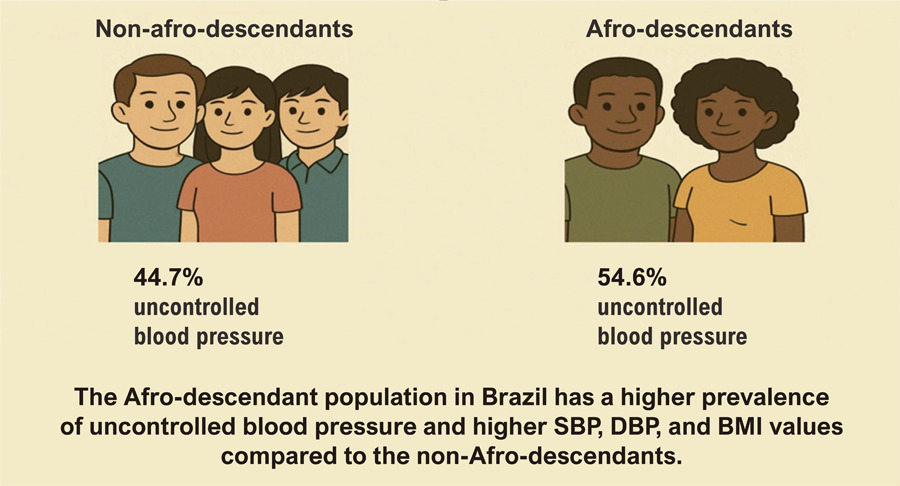
A total of 2,643 participants were included, of whom 82.8% were non–Afro-descendant and 17.1% were Afro-descendant. The rates of uncontrolled HTN were 44.68% among non–Afro-descendants and 54.64% among Afro-descendants. Median values of systolic blood pressure (SBP), diastolic blood pressure (DBP), and body mass index (BMI) were higher in Afro-descendants compared to non–Afro-descendants (p < .001). The distribution of antihypertensive medication classes varied between the populations. No significant differences in HTN control were observed between beta-blocker users in the Afro-descendant and non–Afro-descendant groups, even when stratified by sex.

Conclusion

The Afro-descendant population in Brazil demonstrated a higher prevalence of uncontrolled HTN and higher SBP, DBP, and BMI values compared to the non–Afro-descendant population. The choice of antihypertensive medications differed between groups, with thiazides more commonly prescribed for Afro-descendants and ARBs for non–Afro-descendants. However, no significant differences in blood pressure control were observed between groups using beta-blockers, regardless of sex.

  • antihypertensive agents
  • Hypertension
  • Population Characteristics
  • Race Factors
Read Full Article
Creative Commons Attribution (CC BY) Creative Commons license
27/02/2026 DOI: 10.36660/abc.20250316i Views 2
Strategic Use of Intravenous Medications to Protect Target Organs in Hypertensive Emergencies
IJCS
Review Article

Strategic Use of Intravenous Medications to Protect Target Organs in Hypertensive Emergencies

Mariana Costa Silva et al. Rubens Carmo Costa Filho Vanessa Estato

Abstract

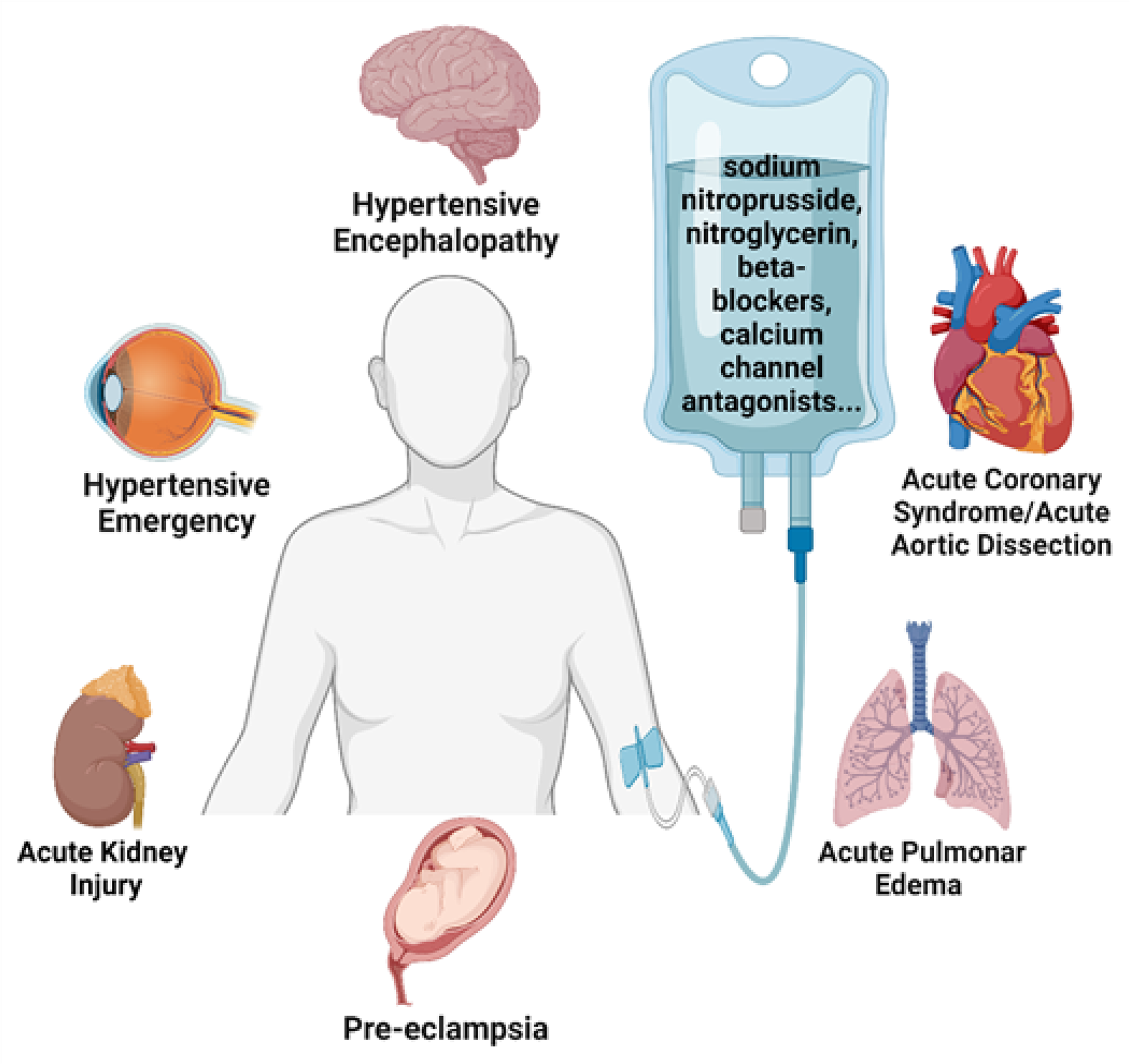
Hypertensive emergencies (HE) are life-threatening conditions triggered by sudden increases in blood pressure (BP) exceeding 180 mmHg systolic and/or 110 mmHg diastolic levels, often resulting in acute organ damage (AOD) and the risk of death. This article discusses contemporary practices in diagnosing and managing these episodes, emphasizing early recognition and immediate therapeutic intervention. It highlights the significance of a meticulous diagnostic assessment for appropriate clinical and therapeutic approaches, including detailed medical history, physical examination, and complementary investigations. Treatment focuses on the judicious use of intravenous antihypertensive agents such as sodium nitroprusside, nitroglycerin (NTG), beta-blockers, and calcium channel antagonists, stressing careful administration to prevent further harm. Individualization of treatment in HE is imperative and should be meticulously tailored to the patient’s clinical profile and main complications, notably hypertensive encephalopathy, acute pulmonary edema, acute coronary syndromes, acute aortic dissection, and preeclampsia. These conditions require differentiated approaches due to their severity. The article underscores the scarcity of randomized controlled clinical trials addressing all daily practice questions regarding managing HE. This is due to the complexity of available drugs, clinical conditions, adverse effects, and drug interactions in various scenarios. Consequently, clinical wisdom and careful observation remain pivotal in decision-making. It also addresses the complexity of accurately measuring BP in emergency settings, which can pose an additional diagnostic challenge. Finally, it emphasizes the need for new evidence to guide therapeutic practices in HE, aiming to improve patient care and clinical outcomes continuously.

  • Adrenergic beta-Antagonists
  • antihypertensive agents
  • calcium channel blockers
  • Cardiovascular Diseases
  • hypertensive crisis
Read Full Article
Creative Commons Attribution (CC BY) Creative Commons license
28/02/2025 DOI: 10.36660/ijcs.20240117
ABC
Editorial

The Adenosine System as a Target in the Search for a New Class of Antihypertensives

Roberto Jorge da Silva Franco

Cardiovascular (CV) complications are one of the main factors of early mortality in the current global scenario and have become a major challenge in the search to control their rise in both developing and developed countries. It has therefore become immensely important to look for different therapeutic possibilities and treatments for the growing burden of CV diseases. Adenosine receptors (AR) may be an innovative tool of choice in understanding the signaling mechanism that can lead to CV complications.

Adenosine mediation involves the activation of a family of four G protein-coupled AR: A1, A2A, A2B, and A3. A3AR is the only adenosine subtype to be overexpressed in inflammatory and cancer cells, thus making it a potential target for therapy. A3AR showed a dual nature under different pathophysiological conditions and could be protective/harmful in ischemic conditions, pro/anti-inflammatory, and pro/antitumor depending on the systems investigated. Until recently, the biggest and most intriguing challenge was understanding whether, and in which cases, selective A3 agonists or antagonists would be the best choice.

[…]

  • Adenosine
  • antihypertensive agents
  • Cardiovascular Diseases/complications
  • Hypertension
  • Mortality
Read Full Article
Creative Commons Attribution (CC BY) Creative Commons license
06/05/2024 DOI: 10.36660/abc.20240129 Views 1
ABC
Original Article

Racial Differences in Blood Pressure Control from Users of Antihypertensive Monotherapy: Results from the ELSA-Brasil Study

Camila Tavares Sousa et al. Antonio Ribeiro Sandhi Maria Barreto Luana Giatti … Luisa Brant Paulo Lotufo Dora Chor Antônio Alberto Lopes Sotero Serrate Mengue André Oliveira Baldoni Roberta Carvalho Figueiredo

Abstract

Background

It seems that the worst response to some classes of antihypertensive drugs, especially angiotensin-converting enzyme inhibitors and angiotensin receptor blockers, on the part of the Black population, would at least partially explain the worse control of hypertension among these individuals. However, most of the evidence comes from American studies.

Objectives

This study aims to investigate the association between self-reported race/skin color and BP control in participants of the Longitudinal Study of Adult Health (ELSA-Brasil), using different classes of antihypertensive drugs in monotherapy.

Methods

The study involved a cross-sectional analysis, carried out with participants from the baseline of ELSA-Brasil. Blood pressure control was the response variable, participants with BP values ≥140/90 mmHg were considered out of control in relation to blood pressure levels. Race/skin color was self-reported (White, Brown, Black). All participants were asked about the continuous use of medication. Association between BP control and race/skin color was estimated through logistic regression. The level of significance adopted in this study was of 5%.

Results

Of the total of 1,795 users of antihypertensive drugs in monotherapy at baseline, 55.5% declared themselves White, 27.9% Brown, and 16.7% Black. Even after adjusting for confounding variables, Blacks using angiotensin converting enzyme inhibitors (ACEI), angiotensin receptor blocker (ARB), thiazide diuretics (thiazide DIU), and beta-blockers (BB) in monotherapy had worse blood pressure control compared to Whites.

Conclusions

Our results suggest that in this sample of Brazilian adults using antihypertensive drugs in monotherapy, the differences in blood pressure control between different racial groups are not explained by the possible lower effectiveness of ACEIs and ARBs in Black individuals.

  • antihypertensive agents
  • Continental Population Groups
  • Hypertension
Read Full Article
Creative Commons Attribution (CC BY) Creative Commons license
18/03/2022 DOI: 10.36660/abc.20201180 Views 1
Clinical Characteristics and Therapeutic Adherence of Women in a Referral Outpatient Clinic for Severe Hypertension
IJCS
Original Article

Clinical Characteristics and Therapeutic Adherence of Women in a Referral Outpatient Clinic for Severe Hypertension

Pedro Henrique Barletta et al. Eduardo Faria Soares de Magalhães Vitor Fernandes de Almeida Júlia Lasserre Moreira … Murilo Jorge da Silva Cristiano Macedo Roque Aras

Abstract

Background

Cardiovascular disease is the main cause of death worldwide. There is a lack of studies addressing this issue in women and its risk factors, such as hypertension.

Objective

To evaluate the clinical and therapeutic profile of women with hypertension and to determine which factors are related to treatment adherence and blood pressure control.

Methods

Cross-sectional study of 181 hypertensive women treated at an outpatient referral clinic. Data were obtained from medical records, face-to-face interviews, and physical examination, using a standardized form. Statistical analysis was performed with prevalence ratio, chi-square and Student’s t test. Significance was accepted at p<0.05.

Results

Most patients were mixed-race or black (91.7%) and the mean age was 66.09 years. Only 44.2% of patients had controlled blood pressure. The prevalence of stroke was 14.9%, whereas the prevalence of coronary artery disease was 19.3%. The mean number of oral antihypertensive drugs prescribed to each individual was 3.41. A history of stroke was more often found in patients with uncontrolled blood pressure (p=0.013) and in those using three or more antihypertensives (p=0.023). Eighty patients (44.2%) had high treatment adherence. Depression was more frequently reported by patients with poorer adherence to treatment (p=0.026).

Conclusion

Women with hypertension presented a high prevalence of cardiovascular risk factors and cardiovascular events, including a significantly higher prevalence of stroke in those with uncontrolled hypertension. Self-reported depression may help identify patients at risk of nonadherence to treatment.

  • antihypertensive agents
  • Blood Pressure
  • Hypertension
  • medication adherence
  • Women
Read Full Article
Creative Commons Attribution (CC BY) Creative Commons license
16/07/2021 DOI: 10.36660/ijcs.20200417 Views 1
Figure 1
ABC
Original Article

Treated Hypertensive Patients Assessed by Home Blood Pressure Telemonitoring. TeleMRPA Study

Weimar Kunz Sebba Barroso et al. Audes Diógenes Magalhães Feitosa Eduardo Costa Duarte Barbosa Andréa Araujo Brandão … Roberto Dischinger Miranda Priscila Valverde Oliveira Vitorino Carlos Alberto Machado Antônio Almeida Braga Lúcio Paulo de Souza Ribeiro Marco Antonio Mota-Gomes

Abstract

Background:

Hypertensive patients undergoing treatment and assessed only by casual blood pressure (BP) measurement may be subject to mistaken decisions.

Objective:

To assess BP behavior by measuring its levels at the office (casual) and at home (HBPM), the behavior of different classes of antihypertensive drugs, and the prevalence of uncontrolled white-coat hypertension (UCWCH) and uncontrolled masked hypertension (UCMH).

Methods:

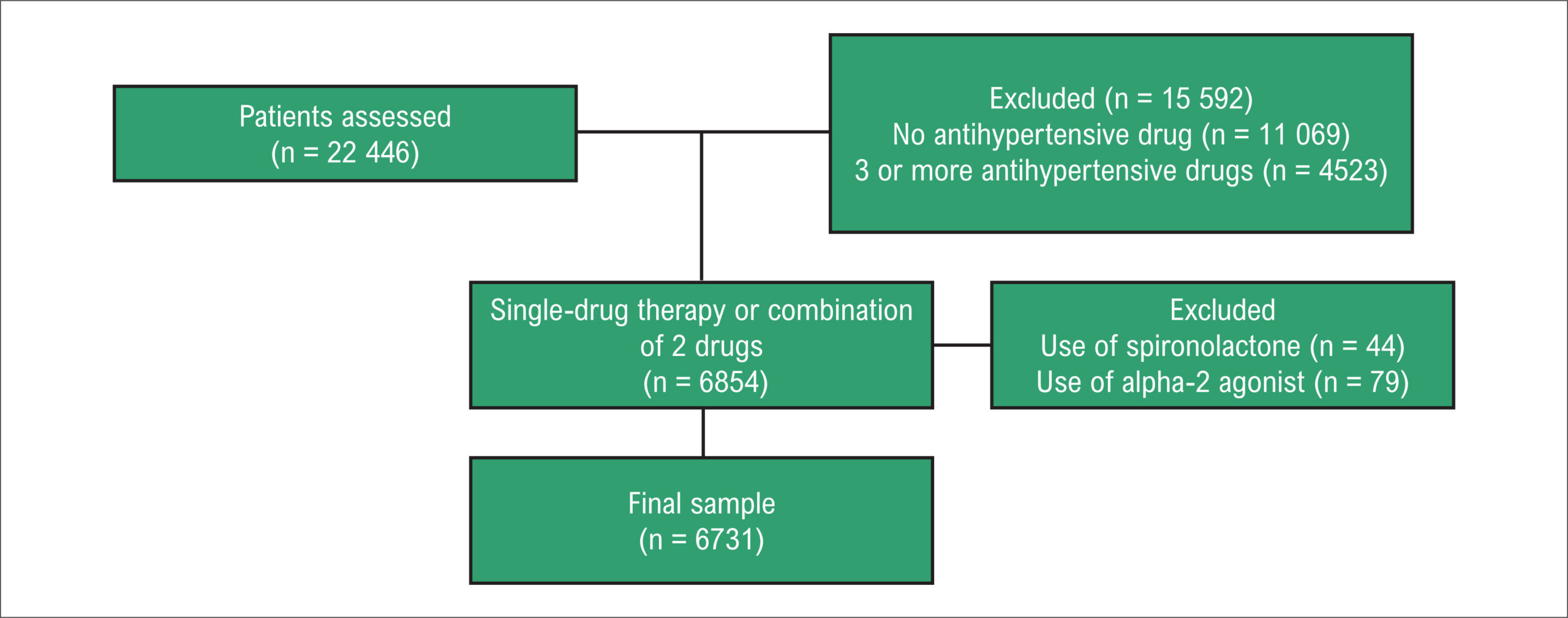
Cross-sectional study assessing patients who underwent BP monitoring in the TeleMRPA platform between 2017 and 2019. The exclusion criteria were: use of no antihypertensive drug; combined use of 3 or more antihypertensive drugs; and use of spironolactone and alpha-2 agonist. The variables analyzed were: age, sex, body mass index (BMI), number of valid BP measurements, means of systolic and diastolic blood pressure (SBP and DBP, respectively) obtained from HBPM and casual measurement, and the classes of antihypertensive drugs. Paired and unpaired t tests, as well as chi-square test, were used. The 5% significance level was adopted.

Results:

This study selected 22 446 patients, 6731 of whom met the inclusion criteria [61.3%, female sex; mean age, 57.8 (±12.6) years; mean BMI, 29.0 (±5.1) kg/m2]. Mean SBP and DBP were 6.6 mm Hg (p<0.001) and 4.4 mm Hg (p<0.001) higher in casual measurement than in HBPM. The rates of BP control were 57.0% in casual measurement and 61.3% in HBPM (p<0.001), and the prevalence of UCWCH and UCMH was 15.4% and 11.1%, respectively. Renin-angiotensin-aldosterone system blockade was observed in 74.6% of the patients, and 54.8% were on single-drug therapy.

Conclusions:

HBPM should be considered for the follow-up of treated hypertensive patients because of the high prevalence of UCWCH and UCMH. Antihypertensive drugs behaved differently in HBPM. (Arq Bras Cardiol. 2021; [online].ahead print, PP.0-0)

  • antihypertensive agents
  • Blood Pressure
  • Hypertension
  • Prevalence
  • Study Blood Pressure Monitoring Home
  • TeleMRPA
Read Full Article
Creative Commons Attribution (CC BY) Creative Commons license
31/05/2021 DOI: 10.36660/abc.20200073
Figure 1
IJCS
Viewpoint

Health Promotion to Reduce Hypertension Patients’ Vulnerability to Coronavirus Disease-19 (COVID-19)

Charles Nsanzabera

Abstract

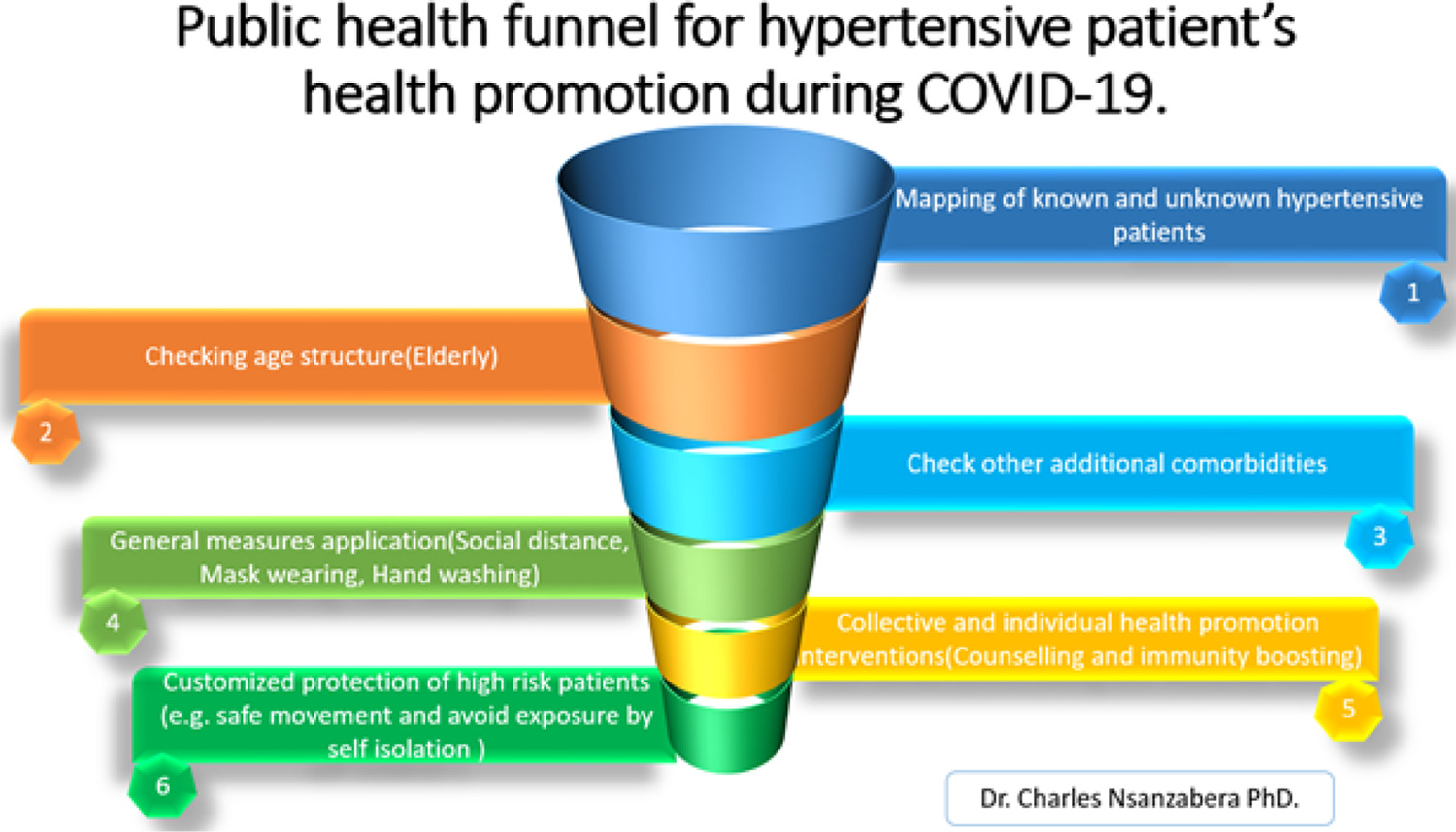
Hypertension remains a prominent risk factor for cardiovascular diseases. It is not a coincidence that 23% to 30% of coronavirus disease-19 (COVID-19) confirmed cases are hypertensive patients, and the case-fatality rate of adult COVID-19 cases with hypertension was estimated at 6%. It is important that hypertensive patients be aware of their vulnerability to COVID-19, which may be achieved by a health promotion program in addition to preventive measures.

  • antihypertensive agents
  • Betacoronavirus
  • COVID-19
  • Health Promotion
  • Hypertension/complications
Read Full Article
Creative Commons Attribution (CC BY) Creative Commons license
01/02/2021 DOI: 10.36660/ijcs.20200147 Views 1
ABC
Original Article

Maximal Oxygen Uptake and Ventilation Improvement Following Sacubitril-Valsartan Therapy

António Valentim Gonçalves et al. Tiago Pereira-da-Silva Ana Galrinho Pedro Rio … Rui Soares Joana Feliciano Rita Ilhão Moreira Sofia Silva Sandra Alves Eunice Capilé Rui Cruz Ferreira

Abstract

Background

Sacubitril/valsartan had its prognosis benefit confirmed in the PARADIGM-HF trial. However, data on cardiopulmonary exercise testing (CPET) changes with sacubitril-valsartan therapy are scarce.

Objective

This study aimed to compare CPET parameters before and after sacubitril-valsartan therapy.

Methods

Prospective evaluation of chronic heart failure (HF) patients with left ventricular ejection fraction ≤40% despite optimized standard of care therapy, who started sacubitril-valsartan therapy, expecting no additional HF treatment. CPET data were gathered in the week before and 6 months after sacubitril-valsartan therapy. Statistical differences with a p-value <0.05 were considered significant.

Results

Out of 42 patients, 35 (83.3%) completed the 6-month follow-up, since 2 (4.8%) patients died and 5 (11.9%) discontinued treatment for adverse events. Mean age was 58.6±11.1 years. New York Heart Association class improved in 26 (74.3%) patients. Maximal oxygen uptake (VO2max) (14.4 vs. 18.3 ml/kg/min, p<0.001), VE/VCO2slope (36.7 vs. 31.1, p<0.001), and exercise duration (487.8 vs. 640.3 sec, p<0.001) also improved with sacubitril-valsartan. Benefit was maintained even with the 24/26 mg dose (13.5 vs. 19.2 ml/kg/min, p=0.018) of sacubitril-valsartan, as long as this was the highest tolerated dose.

Conclusions

Sacubitril-valsartan therapy is associated with marked CPET improvement in VO2max, VE/VCO2slope, and exercise duration. (Arq Bras Cardiol. 2020; [online].ahead print, PP.0-0)

  • antihypertensive agents
  • Heart Failure
  • Hypertension
  • Oxygen Consumption
  • Pulmonary Ventilation
  • Sacubitril-Valsartan
  • Stroke Volume
Read Full Article
Creative Commons Attribution (CC BY) Creative Commons license
19/10/2020 DOI: 10.36660/abc.20190443 Views 1
Figure 1
ABC
Viewpoint

Pharmacological Treatment of Hypertension: From the Golden Trio to the Octet

Audes Diógenes Magalhães Feitosa et al. Marco Mota-Gomes Oswaldo Passarelli Júnior Weimar Kunz Sebba Barroso … Roberto Dischinger Miranda Eduardo Costa Duarte Barbosa Andrea A. Brandão Wilson Nadruz

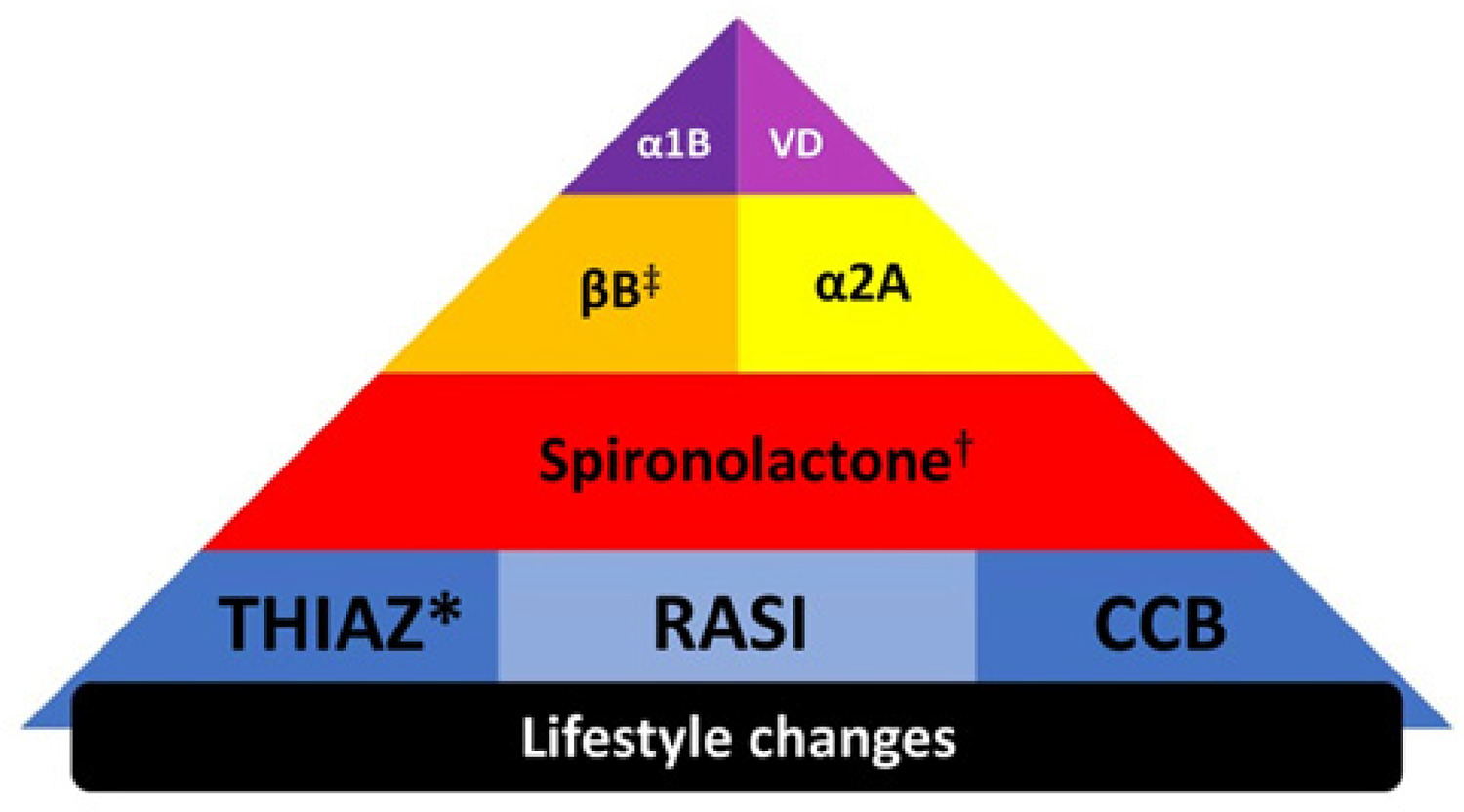
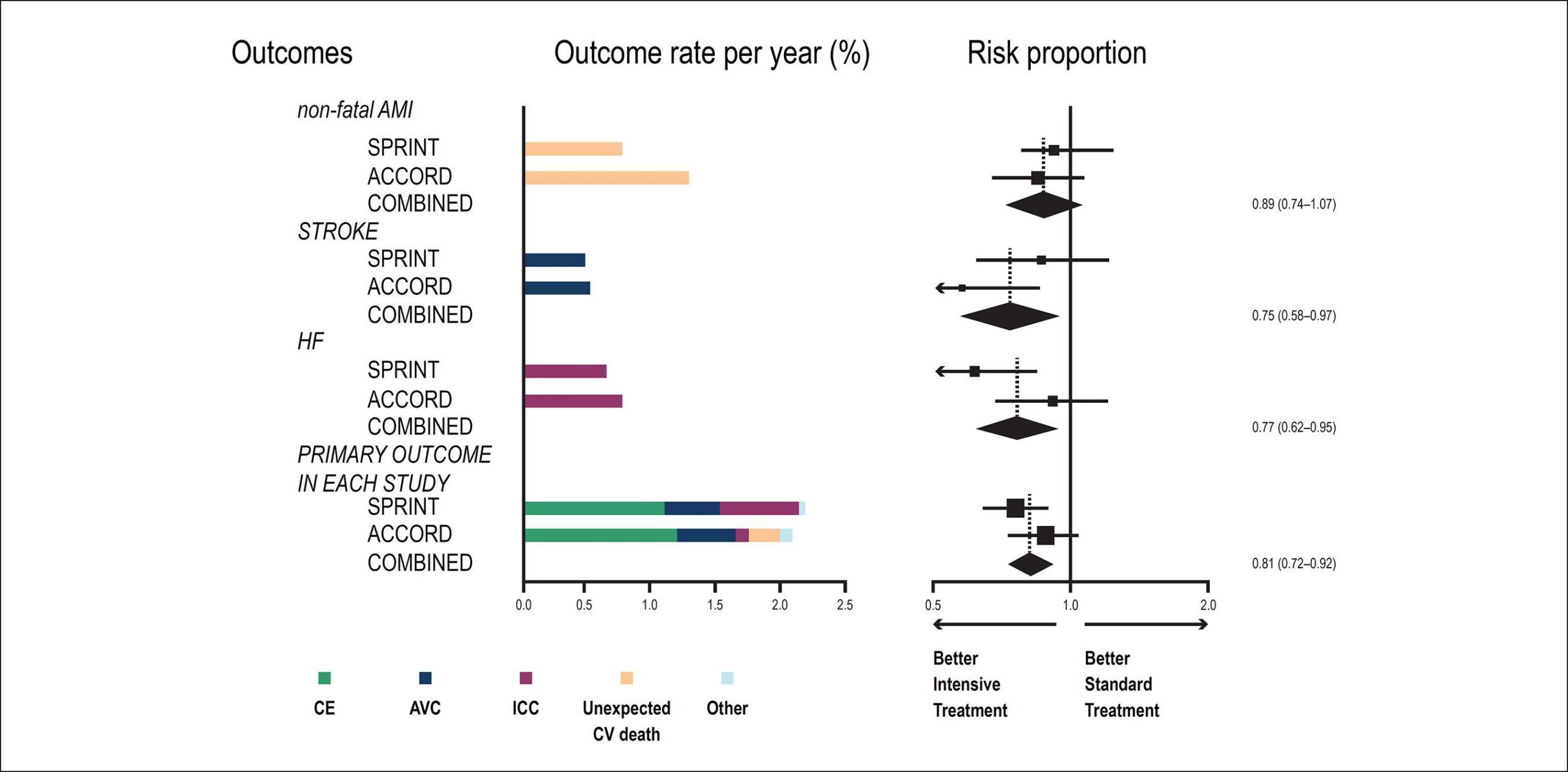
The treatment of hypertension comprises numerous pharmacological options, which may hinder patient management standardization, thus contributing to therapeutic failure. However, in more recent years, several studies and guidelines from diverse hypertension and cardiology societies have suggested preferential pharmacological classes to treat hypertension. – Based on this evidence, the present report aims to propose a simple and practical pharmacological treatment algorithm that can be applied to patients ranging from stage 1 to refractory hypertension cases ( ).

[…]

  • antihypertensive agents
  • Drug Therapy
  • Exercise
  • Hypertension
  • Life Style
  • medication adherence
  • Weight Loss
Read Full Article
Creative Commons Attribution (CC BY) Creative Commons license
28/08/2020 DOI: 10.36660/abc.20190780 Views 1
ABC
Editorial

Blood Pressure Control: The secret is…Team Work!

Andrea Pio-Abreu et al. Luciano F. Drager

Hypertension is one of the leading causes of cardiovascular death. Indeed, data from the Heart and Stroke Statistics showed that 45% of the cardiovascular mortality is potentially attributed to hypertension. This worrying scenario has not been changing in the last decades despite the availability of non-pharmacological interventions and the development of several anti-hypertensive classes that effectively contributed to blood pressure (BP) control. – The reasons for our low effectiveness in controlling BP at the population level are multiple, including the lack of organized public policies regulating salt consumption and increasing awareness, early detection, and effective treatment. Additional challenges include the asymptomatic characteristic of hypertension, therapeutic inertia, among others.

In this edition of the Arquivos Brasileiros de Cardiologia , Jardim et al. reported data from a retrospective study exploring a multidisciplinary team strategy in the rate of BP control (set at the traditional <140/90 mmHg). The authors evaluated demographic and clinical data of 1548 hypertensive patients from a specialized hypertension center who have been followed up regularly for 7.6 ± 7.1 years (mean age 62 years, 73.6% women). The multidisciplinary approach described by the authors consisted by the availability of nurses, nutritionists, occupational therapists, physical educators, psychologists and music therapists working in conjunction with the staff physicians (general practitioners, cardiologists, endocrinologists, and nephrologists). The maximal interval for medical outpatient visits was 3 months. According to the patients’ needs (determined by the clinical evaluation), the physicians scheduled visits to the professionals mentioned above in a flexible demand. In addition, educational and health promotion activities were performed every two weeks with patients. All this information was recorded on a standardized form. Using this strategy, the authors found that this multidisciplinary team approach was associated with an overall 68% BP control, being more prominent in those aged ≥60 years (OR 1.45; 95% CI [1.13-1.90]), and females (OR 1.36; 95% CI [1.09-1.88]). In contrast, patients with diabetes were associated with a lower probability of reaching the BP target compared to patients without diabetes. Interestingly, no significant differences in the number of anti-hypertensive drugs were observed in the groups who controlled or not BP. This finding suggests that the adherence of this multidisciplinary approach may vary as usually observed with any other intervention.

[…]

  • antihypertensive agents
  • Blood Pressure
  • Hypertension
  • medication adherence
  • Patient Care Team/trends
  • Prevention and Control
  • Risk Factors
Read Full Article
Creative Commons Attribution (CC BY) Creative Commons license
28/08/2020 DOI: 10.36660/abc.20200544 Views 1
IJCS
Original Article

Analysis of Adherence to Antihypertensive Drug Treatment in an Argentinean Cohort

Walter Gaston Espeche et al. Rodrigo Sabio Alejandro Diaz Roberto Parodi … Carlos Enrique Leiva Sisnieguez Roberto Antonio Flores Silvia Poppe Javier Altube Diego Grimaldi Martin Rogelio Salazar

Abstract

Background

Adherence to antihypertensive medication is a major challenge in the management of hypertension, and non-adherence is an important barrier to effective management of hypertension.

Objectives

To determine the adherence rate to hypertensive drug treatment and the factors that influence non-adherence in a cohort of the Argentinean population.

Methods

A multicenter cross-sectional study was conducted in eight cities of Argentina. Consecutive hypertensive patients seen in general practice offices, receiving pharmacological treatment for at least six months were included. Blood pressure measurements were performed by physicians during the patient visit. The level of adherence was assessed using the Morisky questionnaire, and patients were divided into non-adherent and adherent. Continuous variables were compared using independent t-test. Categorical variables were compared using the χ2 test. To identify the variables independently associated with non-adherence, a forward stepwise binary regression logistic model was performed, and the results expressed as odds ratio (OR) with 95% of confidence interval. All tests were two-tailed, and p-values < 0.05 were considered statistically significant.

Results

A total of 852 individuals (52% women, 62 ± 13 years) were included. The main reason for lack of adherence was forgetfulness of medication intake and errors in the time of intake (~ 40% in both). Individuals with more cardiovascular risk factors (smoking, diabetes, dyslipidemia and previous cardiovascular events) had lower adherence to antihypertensive treatment, and considerably younger (~ five years younger).

Conclusions

Adherence rate to antihypertensive drug treatment in our study group was higher than the one reported in previous studies, and the main reason for non-adherence was forgetfulness of medication intake. (Int J Cardiovasc Sci. 2020; 33(3):272-277)

  • antihypertensive agents
  • Cross-sectional Study
  • Hypertension/epidemiology
  • Risk Factors
Read Full Article
Creative Commons Attribution (CC BY) Creative Commons license
29/05/2020 DOI: 10.36660/ijcs.20190069 Views 1
ABC
Editorial

Aortic Arch Calcification on routine Chest Radiography is Strongly and Independently Associated with Non-Dipper Blood Pressure Pattern

Rui Póvoa

Arterial hypertension is the most prevalent chronic disease worldwide, and it is estimated that in Brazil, according to the Vigitel study of 2018, the Brazilian population has 24.7% of hypertensive individuals. It is the most important risk factor for all cardiovascular diseases, being one of the main factors responsible for stroke, coronary artery disease, heart failure, renal failure, and so on.

Blood pressure is not simply a biological phenomenon characterized by two numbers expressed in mmHg that reflect systolic and diastolic pressure. It is a multiform event resulting from the hydrodynamic action of a complex fluid that exerts force on a compliant vascular wall, with elastic properties governed by multiple forces arising from vascular structures (muscle cells, extracellular matrix, elastic fibers, etc.). This vector wave of blood follows the laws of sympathetic and parasympathetic interaction, varying more or less depending on the conditions of each patient. Therefore, the simple measurement of blood pressure in the office does not reflect the reality of the patient’s true daily life.

[…]

  • antihypertensive agents
  • Blood Pressure Monitoring, Ambulatory
  • calcification
  • Calcinosis
  • Cardiomyopathies
  • Heart Rate
  • Hypertension
  • Thoracic, Aorta/physiopathology
  • Ventricular Function, Left
Read Full Article
Creative Commons Attribution (CC BY) Creative Commons license
10/02/2020 DOI: 10.36660/abc.20190790 Views 1
Figure 1
ABC
Original Article

Pioglitazone Induces Cardiomyocyte Apoptosis and Inhibits Cardiomyocyte Hypertrophy Via VEGFR-2 Signaling Pathway

Wenliang Zhong et al. Wen Jin Shanghua Xu Yanqing Wu … Shunxiang Luo Minlie Liang Lianglong Chen

Abstract

Background:

Pioglitazone has been widely used as an insulin-sensitizing agent for improving glycemic control in patients with type 2 diabetes mellitus. However, cardiovascular risk and protective effects of pioglitazone remain controversial.

Objectives:

In this study, we investigated whether pioglitazone affects cardiomyocyte apoptosis and hypertrophy by regulating the VEGFR-2 signaling pathway.

Methods:

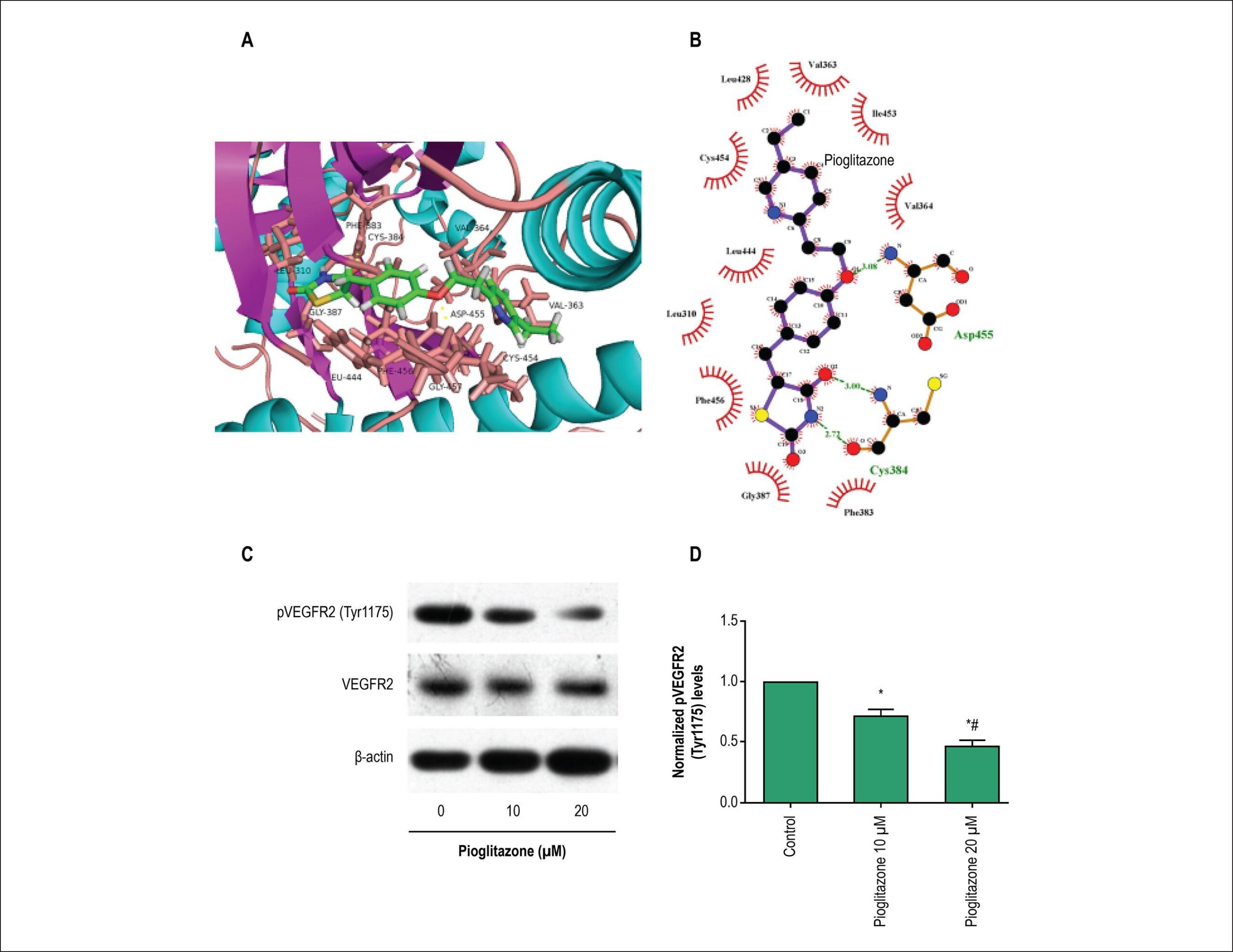
Cardiomyocytes were enzymatically isolated from 1- to 3-day-old Sprague-Dawley rat ventricles. Effects of pioglitazone and the VEGFR-2-selective inhibitor apatinib on cardiomyocyte apoptotic rate was determined using flow cytometry, and hypertrophy was evaluated using [3H]-leucine incorporation. The protein expressions of unphosphorylated and phosphorylated VEGFR-2, Akt, P53, and mTOR were determined by Western-Blotting. Analysis of variance (ANOVA) was used to assess the differences between groups.

Results:

Pioglitazone and VEGFR-2-selective inhibitor apatinib reduced rat cardiomyocyte viability and cardiomyocyte hypertrophy induced by angiotensin II in vitro. Furthermore, in the same in vitro model, pioglitazone and apatinib significantly increased the expression of Bax and phosphorylated P53 and decreased the expression of phosphorylated VEGFR-2, Akt, and mTOR, which promote cardiomyocyte hypertrophy.

Conclusions:

These findings indicate that pioglitazone induces cardiomyocyte apoptosis and inhibits cardiomyocyte hypertrophy by modulating the VEGFR-2 signaling pathway.

  • antihypertensive agents
  • Apoptosis
  • Cardiomegaly
  • Heart Failure/physiopathology
  • Insulin Resistance
  • Myocytes, Cardiac
  • Thiazolidinediones
Read Full Article
Creative Commons Attribution (CC BY) Creative Commons license
02/07/2018 DOI: 10.5935/abc.20180108
Figure 1
ABC
Editorial

Blood Pressure Targets: Will We Reach Definite Figures? I Currently Have Mine

Paulo César B. Veiga Jardim

I was born before the era of evidence-based Medicine. When I was a student, arterial hypertension (AH) used to be diagnosed based on blood pressure (BP) readings greater than 160/95 mm Hg.

Can anyone imagine that now?

[…]

  • antihypertensive agents
  • Blood Pressure / physiology
  • Blood Pressure Targets
  • Diabetes Mellitus
  • Hypertension
Read Full Article
Creative Commons Attribution (CC BY) Creative Commons license
01/07/2017 DOI: 10.5935/abc.20170100
ABC
Original Article

Compliance with the Prescription of Antihypertensive Medications and Blood Pressure Control in Primary Care

Mayra Faria Novello et al. Maria Luiza Garcia Rosa Ranier Tagarro Ferreira Icaro Gusmão Nunes … Antonio José Lagoeiro Jorge Dayse Mary da Silva Correia Wolney de Andrade Martins Evandro Tinoco Mesquita

Abstract

Background:

Hypertension is the most prevalent risk factor for cardiovascular disease, and its proper control can prevent the high morbidity and mortality associated with this disease.

Objective:

To assess the degree of compliance of antihypertensive prescriptions with the VI Brazilian Guidelines on Hypertension and the blood pressure control rate in primary care.

Methods:

Cross-sectional study conducted between August 2011 and November 2012, including 332 adults ≥ 45 years registered in the Family Doctor Program in Niteroi and selected randomly. The analysis included the prescribed antihypertensive classes, doses, and frequencies, as well as the blood pressure (BP) of the individuals.

Results:

The rate of prescription compliance was 80%. Diuretics were the most prescribed medications, and dual therapy was the most used treatment. The most common non-compliances were underdosing and underfrequencies. The BP goal in all cases was < 140/90 mmHg, except for diabetic patients, in whom the goal was set at < 130/80 mmHg. Control rates according to these goals were 44.9% and 38.6%, respectively. There was no correlation between prescription compliance and BP control.

Conclusions:

The degree of compliance was considered satisfactory. The achievement of the targets was consistent with national and international studies, suggesting that the family health model is effective in BP management, although it still needs improvement.

  • antihypertensive agents
  • Arterial Pressure
  • Control
  • Drug Prescription
  • Hypertension
Read Full Article
Creative Commons Attribution (CC BY) Creative Commons license
13/02/2017 DOI: 10.5935/abc.20170009
ABC
Original Article

Impact of Different Normality Thresholds for 24-hour ABPM at the Primary Health Care Level

Guilherme Brasil Grezzana et al. David William Moraes Airton Tetelbon Stein Lucia Campos Pellanda

Abstract

Background:

Hypertension is an important risk factor for cardiovascular outcomes. Primary health care (PHC) physicians should be prepared to act appropriately in the prevention of cardiovascular risk factors. However, the rates of patients with control of blood pressure (BP) remain low. The impact of the reclassification of high BP by 24-hour ambulatory BP monitoring (ABPM) can lead to different medical decisions in PHC.

Objective:

To evaluate the agreement between the BP measured by a conventional method by PHC physicians and by 24-hour ABPM, considering different BP normal thresholds for the 24-hour ABPM according to the V Brazilian ABPM Guidelines and the European Society of Hypertension Guidelines.

Methods:

A cross-sectional study including 569 hypertensive patients. The BP was initially measured by the PHC physicians and, later, by 24-hour ABPM. The BP measurements were obtained independently between the two methods. The therapeutic targets for the conventional BP followed the guidelines by the Eighth Joint National Committee (JNC 8), the V ABPM Brazilian Guidelines, and the 2013 European Hypertension Guidelines.

Results:

There was an accuracy of 54.8% (95% confidence interval [95%CI] 0.51 – 0.58%) for the BP measured with the conventional method when compared with the 24-hour ABPM, with a sensitivity of 85% (95%CI 80.8 – 88.6%), specificity of 31.9% (95%CI 28.7 – 34.7%), and kappa value of 0.155, when considering the European Hypertension Guidelines. When using more stringent thresholds to characterize the BP as “normal” by ABPM, the accuracy was 45% (95%CI 0.41 – 0.47%) for conventional measurement when compared with 24-hour ABPM, with a sensitivity of 86.7% (95%CI 0.81 – 0.91%), specificity of 29% (95%CI 0.26 – 0.30%), and kappa value of 0.103.

Conclusion:

The BP measurements obtained by PHC physicians showed low accuracy when compared with those obtained by 24-hour ABPM, regardless of the threshold set by the different guidelines.

  • antihypertensive agents
  • Blood Pressure Monitoring, Ambulatory
  • Hypertension
  • Primary Health Care
  • Risk Factors
Read Full Article
Creative Commons Attribution (CC BY) Creative Commons license
16/01/2017 DOI: 10.5935/abc.20160204 Views 1
ABC
Original Article

Blood Pressure Treatment Adherence and Control after Participation in the ReHOT

Nathália Silva de Jesus et al. Armando da Rocha Nogueira Cacilda Oliveira Pachu Ronir Raggio Luiz Glaucia Maria Moraes de Oliveira

Abstract

Background:

Lack of adherence to pharmacological treatment is one of the main causes of low control rates in hypertension.

Objective:

To verify treatment adherence and associated factors, as well as blood pressure (BP) control in participants of the Resistant Hypertension Optimal Treatment (ReHOT) clinical trial.

Method:

Cross-sectional study including all 109 patients who had completed the ReHOT for at least 6 months. We excluded those participants who failed to respond to the new recruitment after three phone contact attempts. We evaluated the BP control by ambulatory BP monitoring (ABPM; controlled levels: 24-hour systolic and diastolic BP < 130 x 80 mmHg) and analyzed the patients' treatment adherence using the Morisky Medication Adherence Scale (MMAS) questionnaire validated by Bloch, Melo, and Nogueira (2008). The statistical analysis was performed with the software IBM SPSS statistics 21.0. We tested the normality of the data distribution with kurtosis and skewness. The variables tested in the study are presented with descriptive statistics. Comparisons between treatment adherence and other variables were performed with Student's t test for independent variables and Pearson's chi-square or Fisher's exact test. To conduct analyses among patients considering adherence to treatment and BP control, we created four groups: G0, G1, G2, and G3. We considered a 5% significance level in all tests.

Results:

During the ReHOT, 80% of the patients had good BP control and treatment adherence. Of 96 patients reevaluated in the present study, only 52.1% had controlled hypertension when assessed by ABPM, while 31.3% were considered adherent by the MMAS. Regarding other ABPM measures, we observed an absence of a nocturnal dip in 64.6% of the patients and a white-coat effect and false BP control in 23% and 12.5%, respectively. Patients’ education level showed a trend towards being a determinant factor associated with lack of adherence (p = 0.05). Resistant hypertension and number of medications were significantly associated with BP control assessed by ABPM (p = 0.009 and p = 0.001, respectively). Resistant hypertension was also significantly associated with group G0 (patients with no control or adherence, p = 0.012).

Conclusion:

There was a decrease in BP control and adherence measured by the MMAS after participation of at least 6 months in the ReHOT clinical trial.

  • antihypertensive agents
  • Arterial Pressure, Medication Adherence
  • Clinical Trial
  • Hypertension
  • Survey and Questionnaires
Read Full Article
Creative Commons Attribution (CC BY) Creative Commons license
01/11/2016 DOI: 10.5935/abc.20160165 Views 1
ABC
Revisão

Hypertension in Patients with Cancer

Vinicius Barbosa de Souza et al. Eduardo Nani Silva Mario Luiz Ribeiro Wolney de Andrade Martins

There is a known association between chemotherapy and radiotherapy for treatment of cancer patients and development or worsening of hypertension. The aim of this article is to review this association. A literature search was conducted for articles reporting this association on the databases PubMed, SciELO and LILACS between 1993 and 2013. There was a high coprevalence of hypertension and cancer, since both diseases share the same risk factors, such as sedentary lifestyle, obesity, smoking, unhealthy diet and alcohol abuse. The use of chemotherapy and adjuvant drugs effective in the treatment of cancer increased the survival rate of these patients and, consequently, increased the incidence of hypertension. We described the association between the use of angiogenesis inhibitors (bevacizumab, sorafenib and sunitinib), corticosteroids, erythropoietin and non-steroidal anti-inflammatory drugs with the development of hypertension. We also described the relationship between hypertension and carotid baroreceptor injury secondary to cervical radiotherapy. Morbidity and mortality increased in patients with cancer and hypertension without proper antihypertensive treatment. We concluded that there is need for early diagnosis, effective monitoring and treatment strategies for hypertension in cancer patients in order to reduce cardiovascular morbidity and mortality.

  • antihypertensive agents
  • Hypertension
  • Indicators of Morbidity and Mortality
  • Neoplasms / complications
  • Neoplasms / radiotherapy
  • Neoplasms/drug therapy
Read Full Article
Creative Commons Attribution (CC BY) Creative Commons license
27/02/2015 DOI: 10.5935/abc.20150011 Views 1
ABC
Review Article

Phenotypic characteristics of resistant hypertension in the Brazilian population

Ana Paula Cabral de Faria et al. Andréa Rodrigues Sabbatini Antonio Coca Heitor Moreno-Junior

Resistant hypertension (RH) is defined as blood pressure that remains above target in spite of the concurrent use of three or more classes of antihypertensive drugs at optimized doses (UCRH), with one of them being a diuretic. Moreover, patients whose blood pressure is controlled while using four or more antihypertensive medications are also considered controlled resistant hypertensive (CRH) subjects. Although this definition may be useful in terms of categorizing a larger group of resistant hypertensive individuals, as these two subgroups share high cardiovascular risk, some important clinical and pathophysiologic particularities need to be better evaluated, before considering resistant controlled and uncontrolled patients as part of the same group. We compared cardiovascular characteristics of these two subgroups with resistant hypertension. In spite of some similar features, the UCRH subgroup has cardiovascular phenotypes with worse prognosis, such as increased vascular stiffness and left ventricular hypertrophy, as well as more impaired endothelial function and lower nocturnal blood pressure dipping, among others. Considering these differences, the UCRH subgroup is associated with greater cardiovascular risk and may be considered as more resistant to antihypertensive treatment. In addition to the importance of better prevention and treatment of resistant hypertension by identifying early risk factors and optimizing drug therapy, some clinical implications must be considered when managing controlled and uncontrolled patients as similar to the resistant hypertension group.

  • antihypertensive agents
  • Brazil
  • Hypertension
  • population
  • Quality of life
  • Risk Factors
Read Full Article
Creative Commons Attribution (CC BY) Creative Commons license
10/05/2013 DOI: 10.5935/abc.20130100 Views 1
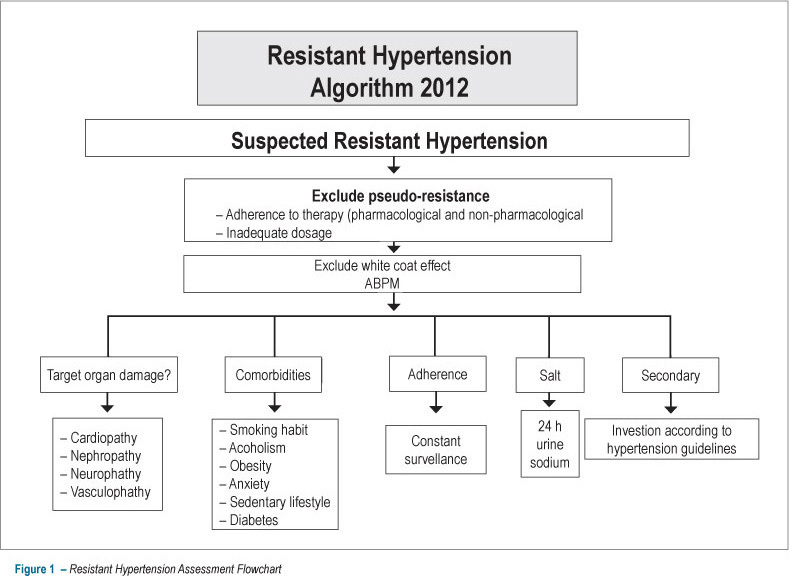
First Brazilian position on resistant hypertension
ABC
Special Article

First Brazilian position on resistant hypertension

SPECIAL ARTICLE

[…]

  • antihypertensive agents
  • Blood Pressure
  • Hypertension
  • Risk Factors
Read Full Article
Creative Commons Attribution (CC BY) Creative Commons license
04/09/2012 DOI: 10.1590/S0066-782X2012001000002 Views 1
Profile of patients with hypertension included in a cohort with HIV/AIDS in the state of Pernambuco, Brazil
ABC
Artigo Original

Profile of patients with hypertension included in a cohort with HIV/AIDS in the state of Pernambuco, Brazil

Evanizio Roque de Arruda Júnior et al. Heloisa Ramos Lacerda Líbia Cristina Rocha Vilela Moura Maria de Fátima Pessoa Militão de Albuquerque … Demócrito de Barros Miranda Filho George Tadeu Nunes Diniz Valéria Maria Gonçalves de Albuquerque Josefina Cláudia Zirpoli Amaral Verônica Soares Monteiro Ricardo Alencar de Arraes Ximenes

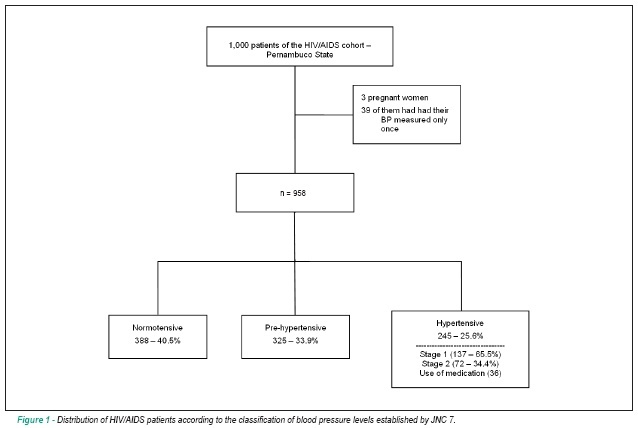
BACKGROUND: Hypertension (HBP) is modifiable risk factor, whose control may reduce cardiovascular disease in patients with human immunodeficiency virus (HIV). OBJECTIVE: To estimate the prevalence of hypertension and describe the characteristics of patients with hypertension infected by HIV/AIDS. METHODS: A cross-sectional study aligned to a cohort of patients with HIV/AIDS. The study considered hypertension at levels > 140/90 mmHg or use of antihypertensive drugs and pre-hypertension at levels > 120/80 mmHg. RESULTS: Out of 958 patients, 388 (40.5%) were normotensive, 325 (33.9%) were pre-hypertensive, and 245 (25.6%) were hypertensive. Out of these 245 patients, 172 (70.2%) were aware of the fact there they were hypertensive, and 36 (14.8%) had blood pressure controlled. Sixty-two (62) patients (54.4%) were diagnosed with hypertension after HIV diagnosis. Lipodystrophy occurred in 95 (46.1%) patients; overweight/obesity in 129 (52.7%). Use of antiretrovirals occurred in 184 (85.9%), 89 (41.6%) with protease inhibitors (PI) and 95 (44.4%) without PI. Out of these patients, 74.7 used antivirals > 24 months. Age, family history of hypertension, waist circumference, body mass index and triglyceride levels were higher among hypertensive patients. Time of HIV infection, CD4 count, viral load, time and type of antiretroviral regimen were similar in hypertensive and prehypertensive patients. CONCLUSION: The high frequency of uncontrolled hypertensive patients and cardiovascular risks in HIV-infected patients point out to the need for preventive and therapeutic measures against hypertension in this group.

  • acquired immunodeficiency syndrome (AIDS)
  • antihypertensive agents
  • HIV
  • Hypertension
  • Life Style
  • Risk Factors
Read Full Article
Creative Commons Attribution (CC BY) Creative Commons license
15/10/2010 DOI: 10.1590/S0066-782X2010005000138 Views 3
ABC
Artigo Original

Temporary limitations in daily routine activities: association with arterial pressure and antihypertensive therapy

Gilberto Senechal de Goffredo Filho et al. Eduardo Faerstein

BACKGROUND: Arterial hypertension has a crucial role in the occurrence of severe clinical events, but there are controversies regarding the impact of the arterial pressure levels or anti-hypertensive medication on the routine activities of individuals. OBJECTIVE: To verify whether the increase in arterial pressure levels or anti-hypertensive medications determine a temporary incapacity for routine activities. METHODS: Analysis of sectional data of 2,953 participants, from 1999-2001, of a cohort of university employees in Rio de Janeiro (Pro-Saude Study). The occurrence and duration of the incapacity on the 14 days before data collection were assessed according to the measured level of arterial pressure, as continuous variable and with the stratification of the participants in four groups, combining the information regarding the arterial pressure ( 140/90 mmHg) and the reported use of anti-hypertensive medications. A multinomial logistic regression was carried out, with multiple adjustments for sex, age, ethnicity, per capita household income and report of comorbidities. RESULTS: The adjusted odds ratio for the association between the use of anti-hypertensive medication and incapacity for 8 to 14 days was 2.08 (95% CI: 1.25-3.48), and 0.92 (95%CI: 0.84-1.01) for the association between a 10 mmHg increase in systolic pressure and incapacity for up to 7 days. CONCLUSION: Temporary incapacity for 8 to 14 days associated to anti-hypertensive medications might be related to its adverse effects. Among other reasons, the suggestive inverse association between the systolic pressure and incapacity for up to 7 days can be related to the phenomenon of hypoalgesia, sometimes described by hypertensive individuals.

  • antihypertensive agents
  • Hypertension
  • sickness impact profile
Read Full Article
Creative Commons Attribution (CC BY) Creative Commons license
26/03/2010 DOI: 10.1590/S0066-782X2010005000011 Views 1

How to cite this article

EndNote RIS

Electronic Document Format (Vancouver)

Euzébio MB, Vitorino PVO, Brandão AA, Barbosa ECD, Amodeo C, Feitosa A, Malachias MVB, et al. Comparison of Blood Pressure Values and Antihypertensive Medications Used in Non-Afro-Descendant and Afro-Descendant Brazilians with Hypertension. Arquivos Brasileiros de Cardiologia 2026;122(12):e20250316.

Electronic Document Format (ABNT)

Euzébio, Maicon Borges; Vitorino, Priscila Valverde de Oliveira; Brandão, Andrea A.; Barbosa, Eduardo Costa Duarte; Amodeo, Celso; Feitosa, Audes; Malachias, Marcus Vinicius Bolivar; MotaGomes, Marco Antonio; Póvoa, Rui Manoel dos Santos; Lopes, Renato Delascio; Jardim, Paulo Cesar B Veiga; Souza, Ana Luiza Lima; Coca, Antonio; Barroso, Weimar Kunz Sebba. Comparison of Blood Pressure Values and Antihypertensive Medications Used in Non-Afro-Descendant and Afro-Descendant Brazilians with Hypertension. Arquivos Brasileiros de Cardiologia, v. 122, n. 12, e20250316, Feb. 2026.

Electronic Document Format (APA)

Euzébio, M. B., Vitorino, P. V. O., Brandão, A. A., Barbosa, E. C. D., Amodeo, C., Feitosa, A., Malachias, M. V. B., MotaGomes, M. A., Póvoa, R. M. S., Lopes, R. D., Jardim, P. C. B. V., Souza, A. L. L., Coca, A., & Barroso, W. K. S. (2026). Comparison of Blood Pressure Values and Antihypertensive Medications Used in Non-Afro-Descendant and Afro-Descendant Brazilians with Hypertension. Arquivos Brasileiros de Cardiologia, 122(12), e20250316.

Electronic Document Format (ISO)

Euzébio, Maicon Borges and Vitorino, Priscila Valverde de Oliveira and Brandão, Andrea A. and Barbosa, Eduardo Costa Duarte and Amodeo, Celso and Feitosa, Audes and Malachias, Marcus Vinicius Bolivar and MotaGomes, Marco Antonio and Póvoa, Rui Manoel dos Santos and Lopes, Renato Delascio and Jardim, Paulo Cesar B Veiga and Souza, Ana Luiza Lima and Coca, Antonio and Barroso, Weimar Kunz Sebba. Comparison of Blood Pressure Values and Antihypertensive Medications Used in Non-Afro-Descendant and Afro-Descendant Brazilians with Hypertension. Arquivos Brasileiros de Cardiologia [online]. 2026, vol. 122, n. 12, [cited 2026-10-14], e20250316. Available from: <https://journals.cardiol.br/en/article/comparison-of-blood-pressure-values-and-antihypertensive-medications-used-in-non-afro-descendant-and-afro-descendant-brazilians-with-hypertension/>. ISSN 0066-782X

EndNote RIS

Electronic Document Format (Vancouver)

Silva MC, Costa Filho RC, Estato V. Strategic Use of Intravenous Medications to Protect Target Organs in Hypertensive Emergencies. International Journal of Cardiovascular Sciences 2025;38:e20240117.

Electronic Document Format (ABNT)

Silva, Mariana Costa; Costa Filho, Rubens Carmo; Estato, Vanessa. Strategic Use of Intravenous Medications to Protect Target Organs in Hypertensive Emergencies. International Journal of Cardiovascular Sciences, v. 38, e20240117, Feb. 2025.

Electronic Document Format (APA)

Silva, M. C., Costa Filho, R. C., & Estato, V. (2025). Strategic Use of Intravenous Medications to Protect Target Organs in Hypertensive Emergencies. International Journal of Cardiovascular Sciences, 38, e20240117.

Electronic Document Format (ISO)

Silva, Mariana Costa and Costa Filho, Rubens Carmo and Estato, Vanessa. Strategic Use of Intravenous Medications to Protect Target Organs in Hypertensive Emergencies. International Journal of Cardiovascular Sciences [online]. 2025, vol. 38, [cited 2026-10-14], e20240117. Available from: <https://journals.cardiol.br/en/article/strategic-use-of-intravenous-medications-to-protect-target-organs-in-hypertensive-emergencies/>. ISSN 2359-4802

EndNote RIS

Electronic Document Format (Vancouver)

Franco RJS. The Adenosine System as a Target in the Search for a New Class of Antihypertensives. Arquivos Brasileiros de Cardiologia 2024;121(2):e20240129.

Electronic Document Format (ABNT)

Franco, Roberto Jorge da Silva. The Adenosine System as a Target in the Search for a New Class of Antihypertensives. Arquivos Brasileiros de Cardiologia, v. 121, n. 2, e20240129, May. 2024.

Electronic Document Format (APA)

Franco, R. J. S. (2024). The Adenosine System as a Target in the Search for a New Class of Antihypertensives. Arquivos Brasileiros de Cardiologia, 121(2), e20240129.

Electronic Document Format (ISO)

Franco, Roberto Jorge da Silva. The Adenosine System as a Target in the Search for a New Class of Antihypertensives. Arquivos Brasileiros de Cardiologia [online]. 2024, vol. 121, n. 2, [cited 2026-10-14], e20240129. Available from: <https://journals.cardiol.br/en/article/the-adenosine-system-as-a-target-in-the-search-for-a-new-class-of-antihypertensives/>. ISSN 0066-782X

EndNote RIS

Electronic Document Format (Vancouver)

Sousa CT, Ribeiro A, Barreto SM, Giatti L, Brant L, Lotufo P, Chor D, et al. Racial Differences in Blood Pressure Control from Users of Antihypertensive Monotherapy: Results from the ELSA-Brasil Study. Arquivos Brasileiros de Cardiologia 2022;118(3):614-22.

Electronic Document Format (ABNT)

Sousa, Camila Tavares; Ribeiro, Antonio; Barreto, Sandhi Maria; Giatti, Luana; Brant, Luisa; Lotufo, Paulo; Chor, Dora; Lopes, Antônio Alberto; Mengue, Sotero Serrate; Baldoni, André Oliveira; Figueiredo, Roberta Carvalho. Racial Differences in Blood Pressure Control from Users of Antihypertensive Monotherapy: Results from the ELSA-Brasil Study. Arquivos Brasileiros de Cardiologia, v. 118, n. 3, p. 614-622, Mar. 2022.

Electronic Document Format (APA)

Sousa, C. T., Ribeiro, A., Barreto, S. M., Giatti, L., Brant, L., Lotufo, P., Chor, D., Lopes, A. A., Mengue, S. S., Baldoni, A. O., & Figueiredo, R. C. (2022). Racial Differences in Blood Pressure Control from Users of Antihypertensive Monotherapy: Results from the ELSA-Brasil Study. Arquivos Brasileiros de Cardiologia, 118(3), 614-622.

Electronic Document Format (ISO)

Sousa, Camila Tavares and Ribeiro, Antonio and Barreto, Sandhi Maria and Giatti, Luana and Brant, Luisa and Lotufo, Paulo and Chor, Dora and Lopes, Antônio Alberto and Mengue, Sotero Serrate and Baldoni, André Oliveira and Figueiredo, Roberta Carvalho. Racial Differences in Blood Pressure Control from Users of Antihypertensive Monotherapy: Results from the ELSA-Brasil Study. Arquivos Brasileiros de Cardiologia [online]. 2022, vol. 118, n. 3, [cited 2026-10-14], pp. 614-622. Available from: <https://journals.cardiol.br/en/article/racial-differences-in-blood-pressure-control-from-users-of-antihypertensive-monotherapy-results-from-the-elsa-brasil-study/>. ISSN 0066-782X

EndNote RIS

Electronic Document Format (Vancouver)

Barletta PH, Magalhães EFS, Almeida VF, Moreira JL, Silva MJ, Macedo C, Aras R, et al. Clinical Characteristics and Therapeutic Adherence of Women in a Referral Outpatient Clinic for Severe Hypertension. International Journal of Cardiovascular Sciences 2021;34(4):400-8.

Electronic Document Format (ABNT)

Barletta, Pedro Henrique; Magalhães, Eduardo Faria Soares de; Almeida, Vitor Fernandes de; Moreira, Júlia Lasserre; Silva, Murilo Jorge da; Macedo, Cristiano; Aras, Roque. Clinical Characteristics and Therapeutic Adherence of Women in a Referral Outpatient Clinic for Severe Hypertension. International Journal of Cardiovascular Sciences, v. 34, n. 4, p. 400-408, Jul. 2021.

Electronic Document Format (APA)

Barletta, P. H., Magalhães, E. F. S. , Almeida, V. F. , Moreira, J. L., Silva, M. J. , Macedo, C., & Aras, R. (2021). Clinical Characteristics and Therapeutic Adherence of Women in a Referral Outpatient Clinic for Severe Hypertension. International Journal of Cardiovascular Sciences, 34(4), 400-408.

Electronic Document Format (ISO)

Barletta, Pedro Henrique and Magalhães, Eduardo Faria Soares de and Almeida, Vitor Fernandes de and Moreira, Júlia Lasserre and Silva, Murilo Jorge da and Macedo, Cristiano and Aras, Roque. Clinical Characteristics and Therapeutic Adherence of Women in a Referral Outpatient Clinic for Severe Hypertension. International Journal of Cardiovascular Sciences [online]. 2021, vol. 34, n. 4, [cited 2026-10-14], pp. 400-408. Available from: <https://journals.cardiol.br/en/article/clinical-characteristics-and-therapeutic-adherence-of-women-in-a-referral-outpatient-clinic-for-severe-hypertension/>. ISSN 2359-4802

EndNote RIS

Electronic Document Format (Vancouver)

Barroso WKS, Feitosa ADM, Barbosa ECD, Brandão AA, Miranda RD, Vitorino PVO, Machado CA, et al. Treated Hypertensive Patients Assessed by Home Blood Pressure Telemonitoring. TeleMRPA Study. Arquivos Brasileiros de Cardiologia 2021;117(3):520-7.

Electronic Document Format (ABNT)

Barroso, Weimar Kunz Sebba; Feitosa, Audes Diógenes Magalhães; Barbosa, Eduardo Costa Duarte; Brandão, Andréa Araujo; Miranda, Roberto Dischinger; Vitorino, Priscila Valverde Oliveira; Machado, Carlos Alberto; Braga, Antônio Almeida; Ribeiro, Lúcio Paulo de Souza; Mota-Gomes, Marco Antonio. Treated Hypertensive Patients Assessed by Home Blood Pressure Telemonitoring. TeleMRPA Study. Arquivos Brasileiros de Cardiologia, v. 117, n. 3, p. 520-527, May. 2021.

Electronic Document Format (APA)

Barroso, W. K. S., Feitosa, A. D. M., Barbosa, E. C. D., Brandão, A. A., Miranda, R. D., Vitorino, P. V. O., Machado, C. A., Braga, A. A., Ribeiro, L. P. S., & Mota-Gomes, M. A. (2021). Treated Hypertensive Patients Assessed by Home Blood Pressure Telemonitoring. TeleMRPA Study. Arquivos Brasileiros de Cardiologia, 117(3), 520-527.

Electronic Document Format (ISO)

Barroso, Weimar Kunz Sebba and Feitosa, Audes Diógenes Magalhães and Barbosa, Eduardo Costa Duarte and Brandão, Andréa Araujo and Miranda, Roberto Dischinger and Vitorino, Priscila Valverde Oliveira and Machado, Carlos Alberto and Braga, Antônio Almeida and Ribeiro, Lúcio Paulo de Souza and Mota-Gomes, Marco Antonio. Treated Hypertensive Patients Assessed by Home Blood Pressure Telemonitoring. TeleMRPA Study. Arquivos Brasileiros de Cardiologia [online]. 2021, vol. 117, n. 3, [cited 2026-10-14], pp. 520-527. Available from: <https://journals.cardiol.br/en/article/treated-hypertensive-patients-assessed-by-home-blood-pressure-telemonitoring-telemrpa-study/>. ISSN 0066-782X

EndNote RIS

Electronic Document Format (Vancouver)

Nsanzabera C. Health Promotion to Reduce Hypertension Patients’ Vulnerability to Coronavirus Disease-19 (COVID-19). International Journal of Cardiovascular Sciences 2021;34(1):99-102.

Electronic Document Format (ABNT)

Nsanzabera, Charles. Health Promotion to Reduce Hypertension Patients’ Vulnerability to Coronavirus Disease-19 (COVID-19). International Journal of Cardiovascular Sciences, v. 34, n. 1, p. 99-102, Jan. 2021.

Electronic Document Format (APA)

Nsanzabera, C. (2021). Health Promotion to Reduce Hypertension Patients’ Vulnerability to Coronavirus Disease-19 (COVID-19). International Journal of Cardiovascular Sciences, 34(1), 99-102.

Electronic Document Format (ISO)

Nsanzabera, Charles. Health Promotion to Reduce Hypertension Patients’ Vulnerability to Coronavirus Disease-19 (COVID-19). International Journal of Cardiovascular Sciences [online]. 2021, vol. 34, n. 1, [cited 2026-10-14], pp. 99-102. Available from: <https://journals.cardiol.br/en/article/health-promotion-to-reduce-hypertension-patients-vulnerability-to-coronavirus-disease-19-covid-19/>. ISSN 2359-4802

EndNote RIS

Electronic Document Format (Vancouver)

Gonçalves AV, Pereira-da-Silva T, Galrinho A, Rio P, Soares R, Feliciano J, Moreira RI, et al. Maximal Oxygen Uptake and Ventilation Improvement Following Sacubitril-Valsartan Therapy. Arquivos Brasileiros de Cardiologia 2020;115(5):821-7.

Electronic Document Format (ABNT)

Gonçalves, António Valentim; Pereira-da-Silva, Tiago; Galrinho, Ana; Rio, Pedro; Soares, Rui; Feliciano, Joana; Moreira, Rita Ilhão; Silva, Sofia; Alves, Sandra; Capilé, Eunice; Ferreira, Rui Cruz. Maximal Oxygen Uptake and Ventilation Improvement Following Sacubitril-Valsartan Therapy. Arquivos Brasileiros de Cardiologia, v. 115, n. 5, p. 821-827, Oct. 2020.

Electronic Document Format (APA)

Gonçalves, A. V., Pereira-da-Silva, T., Galrinho, A., Rio, P., Soares, R., Feliciano, J., Moreira, R. I., Silva, S., Alves, S., Capilé, E., & Ferreira, R. C. (2020). Maximal Oxygen Uptake and Ventilation Improvement Following Sacubitril-Valsartan Therapy. Arquivos Brasileiros de Cardiologia, 115(5), 821-827.

Electronic Document Format (ISO)

Gonçalves, António Valentim and Pereira-da-Silva, Tiago and Galrinho, Ana and Rio, Pedro and Soares, Rui and Feliciano, Joana and Moreira, Rita Ilhão and Silva, Sofia and Alves, Sandra and Capilé, Eunice and Ferreira, Rui Cruz. Maximal Oxygen Uptake and Ventilation Improvement Following Sacubitril-Valsartan Therapy. Arquivos Brasileiros de Cardiologia [online]. 2020, vol. 115, n. 5, [cited 2026-10-14], pp. 821-827. Available from: <https://journals.cardiol.br/en/article/maximal-oxygen-uptake-and-ventilation-improvement-following-sacubitril-valsartan-therapy/>. ISSN 0066-782X

EndNote RIS

Electronic Document Format (Vancouver)

Feitosa ADM, Mota-Gomes M, Passarelli Júnior O, Barroso WKS, Miranda RD, Barbosa ECD, Brandão AA, et al. Pharmacological Treatment of Hypertension: From the Golden Trio to the Octet. Arquivos Brasileiros de Cardiologia 2020;115(2):270-2.

Electronic Document Format (ABNT)

Feitosa, Audes Diógenes Magalhães; Mota-Gomes, Marco; Passarelli Júnior, Oswaldo; Barroso, Weimar Kunz Sebba; Miranda, Roberto Dischinger; Barbosa, Eduardo Costa Duarte; Brandão, Andrea A.; Nadruz, Wilson. Pharmacological Treatment of Hypertension: From the Golden Trio to the Octet. Arquivos Brasileiros de Cardiologia, v. 115, n. 2, p. 270-272, Aug. 2020.

Electronic Document Format (APA)

Feitosa, A. D. M., Mota-Gomes, M., Passarelli Júnior, O., Barroso, W. K. S., Miranda, R. D., Barbosa, E. C. D., Brandão, A. A., & Nadruz, W. (2020). Pharmacological Treatment of Hypertension: From the Golden Trio to the Octet. Arquivos Brasileiros de Cardiologia, 115(2), 270-272.

Electronic Document Format (ISO)

Feitosa, Audes Diógenes Magalhães and Mota-Gomes, Marco and Passarelli Júnior, Oswaldo and Barroso, Weimar Kunz Sebba and Miranda, Roberto Dischinger and Barbosa, Eduardo Costa Duarte and Brandão, Andrea A. and Nadruz, Wilson. Pharmacological Treatment of Hypertension: From the Golden Trio to the Octet. Arquivos Brasileiros de Cardiologia [online]. 2020, vol. 115, n. 2, [cited 2026-10-14], pp. 270-272. Available from: <https://journals.cardiol.br/en/article/pharmacological-treatment-of-hypertension-from-the-golden-trio-to-the-octet/>. ISSN 0066-782X

EndNote RIS

Electronic Document Format (Vancouver)

Pio-Abreu A, Drager LF. Blood Pressure Control: The secret is…Team Work!. Arquivos Brasileiros de Cardiologia 2020;115(2):182-3.

Electronic Document Format (ABNT)

Pio-Abreu, Andrea; Drager, Luciano F.. Blood Pressure Control: The secret is…Team Work!. Arquivos Brasileiros de Cardiologia, v. 115, n. 2, p. 182-183, Aug. 2020.

Electronic Document Format (APA)

Pio-Abreu, A., & Drager, L. F. (2020). Blood Pressure Control: The secret is…Team Work!. Arquivos Brasileiros de Cardiologia, 115(2), 182-183.

Electronic Document Format (ISO)

Pio-Abreu, Andrea and Drager, Luciano F.. Blood Pressure Control: The secret is…Team Work!. Arquivos Brasileiros de Cardiologia [online]. 2020, vol. 115, n. 2, [cited 2026-10-14], pp. 182-183. Available from: <https://journals.cardiol.br/en/article/blood-pressure-control-the-secret-isteam-work/>. ISSN 0066-782X

EndNote RIS

Electronic Document Format (Vancouver)

Espeche WG, Sabio R, Diaz A, Parodi R, Sisnieguez CEL, Flores RA, Poppe S, et al. Analysis of Adherence to Antihypertensive Drug Treatment in an Argentinean Cohort. International Journal of Cardiovascular Sciences 2020;33(3):272-7.

Electronic Document Format (ABNT)

Espeche, Walter Gaston; Sabio, Rodrigo; Diaz, Alejandro; Parodi, Roberto; Sisnieguez, Carlos Enrique Leiva; Flores, Roberto Antonio; Poppe, Silvia; Altube, Javier; Grimaldi, Diego; Salazar, Martin Rogelio. Analysis of Adherence to Antihypertensive Drug Treatment in an Argentinean Cohort. International Journal of Cardiovascular Sciences, v. 33, n. 3, p. 272-277, May. 2020.

Electronic Document Format (APA)

Espeche, W. G., Sabio, R., Diaz, A., Parodi, R., Sisnieguez, C. E. L., Flores, R. A., Poppe, S., Altube, J., Grimaldi, D., & Salazar, M. R. (2020). Analysis of Adherence to Antihypertensive Drug Treatment in an Argentinean Cohort. International Journal of Cardiovascular Sciences, 33(3), 272-277.

Electronic Document Format (ISO)

Espeche, Walter Gaston and Sabio, Rodrigo and Diaz, Alejandro and Parodi, Roberto and Sisnieguez, Carlos Enrique Leiva and Flores, Roberto Antonio and Poppe, Silvia and Altube, Javier and Grimaldi, Diego and Salazar, Martin Rogelio. Analysis of Adherence to Antihypertensive Drug Treatment in an Argentinean Cohort. International Journal of Cardiovascular Sciences [online]. 2020, vol. 33, n. 3, [cited 2026-10-14], pp. 272-277. Available from: <https://journals.cardiol.br/en/article/analysis-of-adherence-to-antihypertensive-drug-treatment-in-an-argentinean-cohort/>. ISSN 2359-4802

EndNote RIS

Electronic Document Format (Vancouver)

Póvoa R. Aortic Arch Calcification on routine Chest Radiography is Strongly and Independently Associated with Non-Dipper Blood Pressure Pattern. Arquivos Brasileiros de Cardiologia 2020;114(1):118-9.

Electronic Document Format (ABNT)

Póvoa, Rui. Aortic Arch Calcification on routine Chest Radiography is Strongly and Independently Associated with Non-Dipper Blood Pressure Pattern. Arquivos Brasileiros de Cardiologia, v. 114, n. 1, p. 118-119, Feb. 2020.

Electronic Document Format (APA)

Póvoa, R. (2020). Aortic Arch Calcification on routine Chest Radiography is Strongly and Independently Associated with Non-Dipper Blood Pressure Pattern. Arquivos Brasileiros de Cardiologia, 114(1), 118-119.

Electronic Document Format (ISO)

Póvoa, Rui. Aortic Arch Calcification on routine Chest Radiography is Strongly and Independently Associated with Non-Dipper Blood Pressure Pattern. Arquivos Brasileiros de Cardiologia [online]. 2020, vol. 114, n. 1, [cited 2026-10-14], pp. 118-119. Available from: <https://journals.cardiol.br/en/article/aortic-arch-calcification-on-routine-chest-radiography-is-strongly-and-independently-associated-with-non-dipper-blood-pressure-pattern-2/>. ISSN 0066-782X

EndNote RIS

Electronic Document Format (Vancouver)

Zhong W, Jin W, Xu S, Wu Y, Luo S, Liang M, Chen L, et al. Pioglitazone Induces Cardiomyocyte Apoptosis and Inhibits Cardiomyocyte Hypertrophy Via VEGFR-2 Signaling Pathway. Arquivos Brasileiros de Cardiologia 2018;111(2):162-9.

Electronic Document Format (ABNT)

Zhong, Wenliang; Jin, Wen; Xu, Shanghua; Wu, Yanqing; Luo, Shunxiang; Liang, Minlie; Chen, Lianglong. Pioglitazone Induces Cardiomyocyte Apoptosis and Inhibits Cardiomyocyte Hypertrophy Via VEGFR-2 Signaling Pathway. Arquivos Brasileiros de Cardiologia, v. 111, n. 2, p. 162-169, Jul. 2018.

Electronic Document Format (APA)

Zhong, W., Jin, W., Xu, S., Wu, Y., Luo, S., Liang, M., & Chen, L. (2018). Pioglitazone Induces Cardiomyocyte Apoptosis and Inhibits Cardiomyocyte Hypertrophy Via VEGFR-2 Signaling Pathway. Arquivos Brasileiros de Cardiologia, 111(2), 162-169.

Electronic Document Format (ISO)

Zhong, Wenliang and Jin, Wen and Xu, Shanghua and Wu, Yanqing and Luo, Shunxiang and Liang, Minlie and Chen, Lianglong. Pioglitazone Induces Cardiomyocyte Apoptosis and Inhibits Cardiomyocyte Hypertrophy Via VEGFR-2 Signaling Pathway. Arquivos Brasileiros de Cardiologia [online]. 2018, vol. 111, n. 2, [cited 2026-10-14], pp. 162-169. Available from: <https://journals.cardiol.br/en/article/pioglitazone-induces-cardiomyocyte-apoptosis-and-inhibits-cardiomyocyte-hypertrophy-via-vegfr-2-signaling-pathway/>. ISSN 0066-782X

EndNote RIS

Electronic Document Format (Vancouver)

Jardim PCBV. Blood Pressure Targets: Will We Reach Definite Figures? I Currently Have Mine. Arquivos Brasileiros de Cardiologia 2017;109(1):01-4.

Electronic Document Format (ABNT)

Jardim, Paulo César B. Veiga. Blood Pressure Targets: Will We Reach Definite Figures? I Currently Have Mine. Arquivos Brasileiros de Cardiologia, v. 109, n. 1, p. 01-04, Jun. 2017.

Electronic Document Format (APA)

Jardim, P. C. B. V. (2017). Blood Pressure Targets: Will We Reach Definite Figures? I Currently Have Mine. Arquivos Brasileiros de Cardiologia, 109(1), 01-04.

Electronic Document Format (ISO)

Jardim, Paulo César B. Veiga. Blood Pressure Targets: Will We Reach Definite Figures? I Currently Have Mine. Arquivos Brasileiros de Cardiologia [online]. 2017, vol. 109, n. 1, [cited 2026-10-14], pp. 01-04. Available from: <https://journals.cardiol.br/en/article/blood-pressure-targets-will-we-reach-definite-figures-i-currently-have-mine/>. ISSN 0066-782X

EndNote RIS

Electronic Document Format (Vancouver)

Novello MF, Rosa MLG, Ferreira RT, Nunes IG, Jorge AJL, Correia DMS, Martins WA, et al. Compliance with the Prescription of Antihypertensive Medications and Blood Pressure Control in Primary Care. Arquivos Brasileiros de Cardiologia 2017;108(2):135-42.

Electronic Document Format (ABNT)

Novello, Mayra Faria; Rosa, Maria Luiza Garcia; Ferreira, Ranier Tagarro; Nunes, Icaro Gusmão; Jorge, Antonio José Lagoeiro; Correia, Dayse Mary da Silva; Martins, Wolney de Andrade; Mesquita, Evandro Tinoco. Compliance with the Prescription of Antihypertensive Medications and Blood Pressure Control in Primary Care. Arquivos Brasileiros de Cardiologia, v. 108, n. 2, p. 135-142, Feb. 2017.

Electronic Document Format (APA)

Novello, M. F., Rosa, M. L. G., Ferreira, R. T., Nunes, I. G., Jorge, A. J. L., Correia, D. M. S., Martins, W. A., & Mesquita, E. T. (2017). Compliance with the Prescription of Antihypertensive Medications and Blood Pressure Control in Primary Care. Arquivos Brasileiros de Cardiologia, 108(2), 135-142.

Electronic Document Format (ISO)

Novello, Mayra Faria and Rosa, Maria Luiza Garcia and Ferreira, Ranier Tagarro and Nunes, Icaro Gusmão and Jorge, Antonio José Lagoeiro and Correia, Dayse Mary da Silva and Martins, Wolney de Andrade and Mesquita, Evandro Tinoco. Compliance with the Prescription of Antihypertensive Medications and Blood Pressure Control in Primary Care. Arquivos Brasileiros de Cardiologia [online]. 2017, vol. 108, n. 2, [cited 2026-10-14], pp. 135-142. Available from: <https://journals.cardiol.br/en/article/compliance-with-the-prescription-of-antihypertensive-medications-and-blood-pressure-control-in-primary-care/>. ISSN 0066-782X

EndNote RIS

Electronic Document Format (Vancouver)

Grezzana GB, Moraes DW, Stein AT, Pellanda LC. Impact of Different Normality Thresholds for 24-hour ABPM at the Primary Health Care Level. Arquivos Brasileiros de Cardiologia 2017;108(2):143-8.

Electronic Document Format (ABNT)

Grezzana, Guilherme Brasil; Moraes, David William; Stein, Airton Tetelbon; Pellanda, Lucia Campos. Impact of Different Normality Thresholds for 24-hour ABPM at the Primary Health Care Level. Arquivos Brasileiros de Cardiologia, v. 108, n. 2, p. 143-148, Jan. 2017.

Electronic Document Format (APA)

Grezzana, G. B., Moraes, D. W., Stein, A. T., & Pellanda, L. C. (2017). Impact of Different Normality Thresholds for 24-hour ABPM at the Primary Health Care Level. Arquivos Brasileiros de Cardiologia, 108(2), 143-148.

Electronic Document Format (ISO)

Grezzana, Guilherme Brasil and Moraes, David William and Stein, Airton Tetelbon and Pellanda, Lucia Campos. Impact of Different Normality Thresholds for 24-hour ABPM at the Primary Health Care Level. Arquivos Brasileiros de Cardiologia [online]. 2017, vol. 108, n. 2, [cited 2026-10-14], pp. 143-148. Available from: <https://journals.cardiol.br/en/article/impact-of-different-normality-thresholds-for-24-hour-abpm-at-the-primary-health-care-level/>. ISSN 0066-782X

EndNote RIS

Electronic Document Format (Vancouver)

Jesus NS, Nogueira AR, Pachu CO, Luiz RR, Oliveira GMM. Blood Pressure Treatment Adherence and Control after Participation in the ReHOT. Arquivos Brasileiros de Cardiologia 2016;107(5):437-45.

Electronic Document Format (ABNT)

Jesus, Nathália Silva de; Nogueira, Armando da Rocha; Pachu, Cacilda Oliveira; Luiz, Ronir Raggio; Oliveira, Glaucia Maria Moraes de. Blood Pressure Treatment Adherence and Control after Participation in the ReHOT. Arquivos Brasileiros de Cardiologia, v. 107, n. 5, p. 437-445, Oct. 2016.

Electronic Document Format (APA)

Jesus, N. S. , Nogueira, A. R., Pachu, C. O., Luiz, R. R., & Oliveira, G. M. M. (2016). Blood Pressure Treatment Adherence and Control after Participation in the ReHOT. Arquivos Brasileiros de Cardiologia, 107(5), 437-445.

Electronic Document Format (ISO)

Jesus, Nathália Silva de and Nogueira, Armando da Rocha and Pachu, Cacilda Oliveira and Luiz, Ronir Raggio and Oliveira, Glaucia Maria Moraes de. Blood Pressure Treatment Adherence and Control after Participation in the ReHOT. Arquivos Brasileiros de Cardiologia [online]. 2016, vol. 107, n. 5, [cited 2026-10-14], pp. 437-445. Available from: <https://journals.cardiol.br/en/article/blood-pressure-treatment-adherence-and-control-after-participation-in-the-rehot/>. ISSN 0066-782X

EndNote RIS

Electronic Document Format (Vancouver)

Souza VB, Silva EN, Ribeiro ML, Martins WA. Hypertension in Patients with Cancer. Arquivos Brasileiros de Cardiologia 2015;104(3):246-52.

Electronic Document Format (ABNT)

Souza, Vinicius Barbosa de; Silva, Eduardo Nani; Ribeiro, Mario Luiz; Martins, Wolney de Andrade. Hypertension in Patients with Cancer. Arquivos Brasileiros de Cardiologia, v. 104, n. 3, p. 246-252, Feb. 2015.

Electronic Document Format (APA)

Souza, V. B. , Silva, E. N., Ribeiro, M. L., & Martins, W. A. (2015). Hypertension in Patients with Cancer. Arquivos Brasileiros de Cardiologia, 104(3), 246-252.

Electronic Document Format (ISO)

Souza, Vinicius Barbosa de and Silva, Eduardo Nani and Ribeiro, Mario Luiz and Martins, Wolney de Andrade. Hypertension in Patients with Cancer. Arquivos Brasileiros de Cardiologia [online]. 2015, vol. 104, n. 3, [cited 2026-10-14], pp. 246-252. Available from: <https://journals.cardiol.br/en/article/hypertension-in-patients-with-cancer/>. ISSN 0066-782X

EndNote RIS

Electronic Document Format (Vancouver)

Faria APC, Sabbatini AR, Coca A, Moreno-Junior H. Phenotypic characteristics of resistant hypertension in the Brazilian population. Arquivos Brasileiros de Cardiologia 2013;100(6):579-82.

Electronic Document Format (ABNT)

Faria, Ana Paula Cabral de; Sabbatini, Andréa Rodrigues; Coca, Antonio; Moreno-Junior, Heitor. Phenotypic characteristics of resistant hypertension in the Brazilian population. Arquivos Brasileiros de Cardiologia, v. 100, n. 6, p. 579-582, May. 2013.

Electronic Document Format (APA)

Faria, A. P. C. , Sabbatini, A. R., Coca, A., & Moreno-Junior, H. (2013). Phenotypic characteristics of resistant hypertension in the Brazilian population. Arquivos Brasileiros de Cardiologia, 100(6), 579-582.

Electronic Document Format (ISO)

Faria, Ana Paula Cabral de and Sabbatini, Andréa Rodrigues and Coca, Antonio and Moreno-Junior, Heitor. Phenotypic characteristics of resistant hypertension in the Brazilian population. Arquivos Brasileiros de Cardiologia [online]. 2013, vol. 100, n. 6, [cited 2026-10-14], pp. 579-582. Available from: <https://journals.cardiol.br/en/article/phenotypic-characteristics-of-resistant-hypertension-in-the-brazilian-population/>. ISSN 0066-782X

EndNote RIS

Electronic Document Format (Vancouver)

. First Brazilian position on resistant hypertension. Arquivos Brasileiros de Cardiologia 2012;99(1):576-85.

Electronic Document Format (ABNT)

. First Brazilian position on resistant hypertension. Arquivos Brasileiros de Cardiologia, v. 99, n. 1, p. 576-585, Sep. 2012.

Electronic Document Format (APA)

(2012). First Brazilian position on resistant hypertension. Arquivos Brasileiros de Cardiologia, 99(1), 576-585.

Electronic Document Format (ISO)

. First Brazilian position on resistant hypertension. Arquivos Brasileiros de Cardiologia [online]. 2012, vol. 99, n. 1, [cited 2026-10-14], pp. 576-585. Available from: <https://journals.cardiol.br/en/article/first-brazilian-position-on-resistant-hypertension/>. ISSN 0066-782X

EndNote RIS

Electronic Document Format (Vancouver)

Arruda Júnior ER, Lacerda HR, Moura LCRV, Albuquerque MFPM, Miranda Filho DB, Diniz GTN, Albuquerque VMG, et al. Profile of patients with hypertension included in a cohort with HIV/AIDS in the state of Pernambuco, Brazil. Arquivos Brasileiros de Cardiologia 2010;95(5):640-7.

Electronic Document Format (ABNT)

Arruda Júnior, Evanizio Roque de; Lacerda, Heloisa Ramos; Moura, Líbia Cristina Rocha Vilela; Albuquerque, Maria de Fátima Pessoa Militão de; Miranda Filho, Demócrito de Barros; Diniz, George Tadeu Nunes; Albuquerque, Valéria Maria Gonçalves de; Amaral, Josefina Cláudia Zirpoli; Monteiro, Verônica Soares; Ximenes, Ricardo Alencar de Arraes. Profile of patients with hypertension included in a cohort with HIV/AIDS in the state of Pernambuco, Brazil. Arquivos Brasileiros de Cardiologia, v. 95, n. 5, p. 640-647, Oct. 2010.

Electronic Document Format (APA)

Arruda Júnior, E. R. , Lacerda, H. R., Moura, L. C. R. V., Albuquerque, M. F. P. M. , Miranda Filho, D. B., Diniz, G. T. N., Albuquerque, V. M. G. , Amaral, J. C. Z., Monteiro, V. S., & Ximenes, R. A. A. (2010). Profile of patients with hypertension included in a cohort with HIV/AIDS in the state of Pernambuco, Brazil. Arquivos Brasileiros de Cardiologia, 95(5), 640-647.

Electronic Document Format (ISO)

Arruda Júnior, Evanizio Roque de and Lacerda, Heloisa Ramos and Moura, Líbia Cristina Rocha Vilela and Albuquerque, Maria de Fátima Pessoa Militão de and Miranda Filho, Demócrito de Barros and Diniz, George Tadeu Nunes and Albuquerque, Valéria Maria Gonçalves de and Amaral, Josefina Cláudia Zirpoli and Monteiro, Verônica Soares and Ximenes, Ricardo Alencar de Arraes. Profile of patients with hypertension included in a cohort with HIV/AIDS in the state of Pernambuco, Brazil. Arquivos Brasileiros de Cardiologia [online]. 2010, vol. 95, n. 5, [cited 2026-10-14], pp. 640-647. Available from: <https://journals.cardiol.br/en/article/profile-of-patients-with-hypertension-included-in-a-cohort-with-hiv-aids-in-the-state-of-pernambuco-brazil/>. ISSN 0066-782X

EndNote RIS

Electronic Document Format (Vancouver)

Goffredo Filho GS, Faerstein E. Temporary limitations in daily routine activities: association with arterial pressure and antihypertensive therapy. Arquivos Brasileiros de Cardiologia 2010;94(4):472-6.

Electronic Document Format (ABNT)

Goffredo Filho, Gilberto Senechal de; Faerstein, Eduardo. Temporary limitations in daily routine activities: association with arterial pressure and antihypertensive therapy. Arquivos Brasileiros de Cardiologia, v. 94, n. 4, p. 472-476, Mar. 2010.

Electronic Document Format (APA)

Goffredo Filho, G. S. , & Faerstein, E. (2010). Temporary limitations in daily routine activities: association with arterial pressure and antihypertensive therapy. Arquivos Brasileiros de Cardiologia, 94(4), 472-476.

Electronic Document Format (ISO)

Goffredo Filho, Gilberto Senechal de and Faerstein, Eduardo. Temporary limitations in daily routine activities: association with arterial pressure and antihypertensive therapy. Arquivos Brasileiros de Cardiologia [online]. 2010, vol. 94, n. 4, [cited 2026-10-14], pp. 472-476. Available from: <https://journals.cardiol.br/en/article/temporary-limitations-in-daily-routine-activities-association-with-arterial-pressure-and-antihypertensive-therapy/>. ISSN 0066-782X

  • About ABC Family
  • Internal Regulation
  • Editorial Board
  • Brazilian Society of Cardiology (SBC)

Issues

SBC Guidelines

  • Videos
  • Podcasts
  • News