ABC Family Arquivos Brasileiros de Cardiologia International Journal of Cardiovascular Sciences ABC Heart Failure & Cardiomyopathy ABC Imagem Cardiovascular
Português English
ABC Family
Português English
  • About
    • About ABC Family
    • Internal Regulation
    • Editorial Board
    • Brazilian Society of Cardiology (SBC)
  • Issues
  • SBC Guidelines
  • Content
    • Videos
    • Podcasts
    • News
  • About
    • About ABC Family
    • Internal Regulation
    • Editorial Board
    • Brazilian Society of Cardiology (SBC)
  • Issues
  • SBC Guidelines
  • Content
    • Videos
    • Podcasts
    • News

ABC Family

  • ABC Family
  • Arquivos Brasileiros de Cardiologia
  • International Journal of Cardiovascular Sciences
  • ABC Heart Failure & Cardiomyopathy
  • ABC Imagem Cardiovascular
Search in

No content found.

Journals
Ordering
Article types
Others

  1. Home
  2. Keyword: Classification
Figure 1
ABCHF
Special Article

Cardiomyopathies: Yesterday, Today, and Tomorrow

Charles Mady et al. Diane Xavier de Ávila Vagner Madrini Junior Evandro Tinoco Mesquita

The interest in myocardial damage is very old, but only in recent decades has there been a reasonable advance in greater knowledge thereof. Ancient peoples were limited to rudimentary observations on the morphology and physiology of the circulatory system, but with special interest directed to the heart. Texts in cuneiform scripts from Sumer, considered the first civilization in human history; others from the Library of Ashurbanipal, with inscriptions on clay tiles, discovered intact under the sands at Nineveh; Egyptian hieroglyphs in stone and ink; and writings by the Mayans, the only people in the Americas to leave reports in their alphabet as well as books, of which we have only copies in some cases (the Spanish invaders took it upon themselves to destroy and burn many originals) all demonstrate an ancient interest in human anatomy and the heart. With the limitations of their times, they demonstrated curiosity about the constitution of the human body, reaching academic-level descriptions by Leonardo da Vinci’s time. Recent developments have brought us new knowledge about the etiopathogenesis and pathophysiology of the diseases that affect the heart, but they are not sufficient to generate greater therapeutic advances. There are reasons for this.

As these diseases are predominantly clinically treated, cardiology has spent the past few decades committed to understanding and disseminating themes considered more relevant in surgical areas, such as coronary, congenital, and valve diseases, which were and are subjected to highly developed treatments in the recent past, with more immediate results. The drug and equipment industries have understood the size of the doors open to their interests, actively participating in research associated with academic institutions. There is no doubt that the evolution in these fields has been enormous, with remarkable material interests, massively concentrating research, symposiums, congresses, and publications on these themes. Spaces for cardiomyopathies were very limited, due to almost total lack of interest, and therapy in these fields was limited to digitalis and diuretics, indicated for heart failure, and not for underlying diseases. It was a world apart within cardiology. It took a long time for new drugs to be studied and released on the market, but only for the treatment of dysfunction as a syndrome. There was a long delay in creating laboratories to promote understanding of the etiological factors of myocardial aggression, in an attempt to understand, reduce, or eliminate the lethality of these diseases, many of which are still little known, and to attempt to develop specific treatments for each cause. Unfortunately, we are still a long way from this goal. As an example, I cite the old and current Chagas cardiomyopathy. We treat the consequences, heart failure, thromboembolisms, and arrhythmias, but to date we do not have any truly effective specific treatment, in a society that contains a significant part of the infected population. Even prevention, which is inexpensive, given that it simply uses insecticides, is carried out on a modest scale. It has become conventional to use the terminology “disease of the poor” to justify this lack of interest. Nonetheless, this delay generates a huge social cost in the health area.

[…]
  • Cardiomyopathies
  • Classification
  • Genetics
Read Full Article
Creative Commons Attribution (CC BY) Creative Commons license
01/08/2023 DOI: 10.36660/abchf.20230022 Views 1
Figure 1
ABCHF
Review Article

I NEED HELP: How to Indentify Patients with Advanced Cardiac Dysfunction?

Jacqueline Sampaio S. Miranda et al. Antonio Fatorelli Luciana Ferreira Vitor Salles Ana Luiza Sales

Abstract

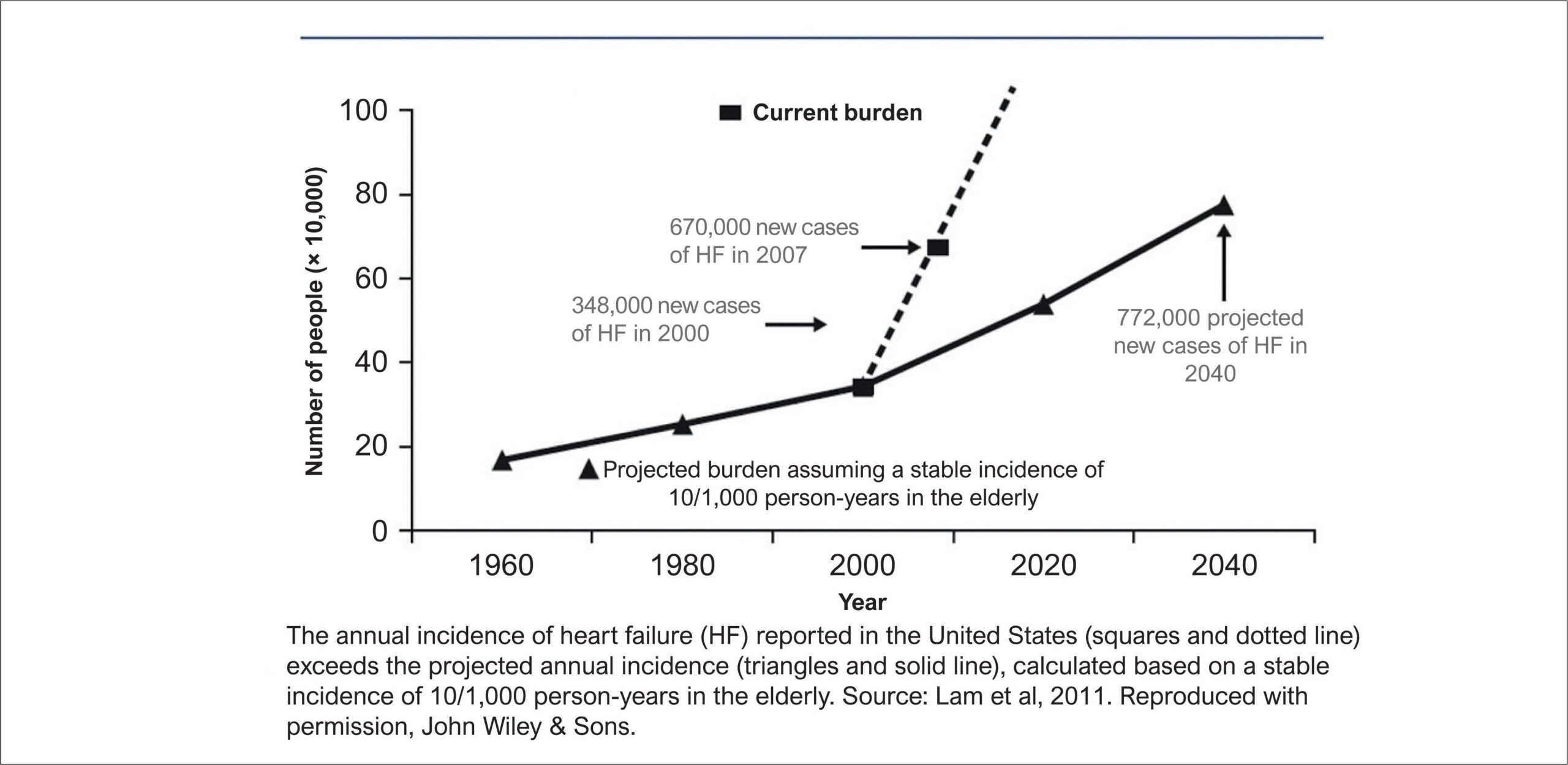
Heart failure (HF) is a clinical syndrome characterized by inadequate tissue oxygen supply. In spite of the best current approach to heart diseases, population aging in individuals with heart disease has resulted in increased incidence of HF.

In Brazil, HF represents the second leading cause of hospitalization due to cardiovascular diseases, and it has high mortality in its most advanced stage. The difficult recognition of therapeutic refractoriness can often lead to delays in referral to specialized centers that are able to promote reduced symptoms, improved quality of life, and increased survival.

Therapeutic options are limited in advanced HF, and heart transplantation is the therapy of choice. Organ availability is a major limitation, making circulatory support an increasingly present reality, with improved results.

  • Classification
  • Heart Failure
  • Heart Transplantation
Read Full Article
Creative Commons Attribution (CC BY) Creative Commons license
29/06/2022 DOI: 10.36660/abchf.20220041 Views 1
Figure 1
ABC
Editorial

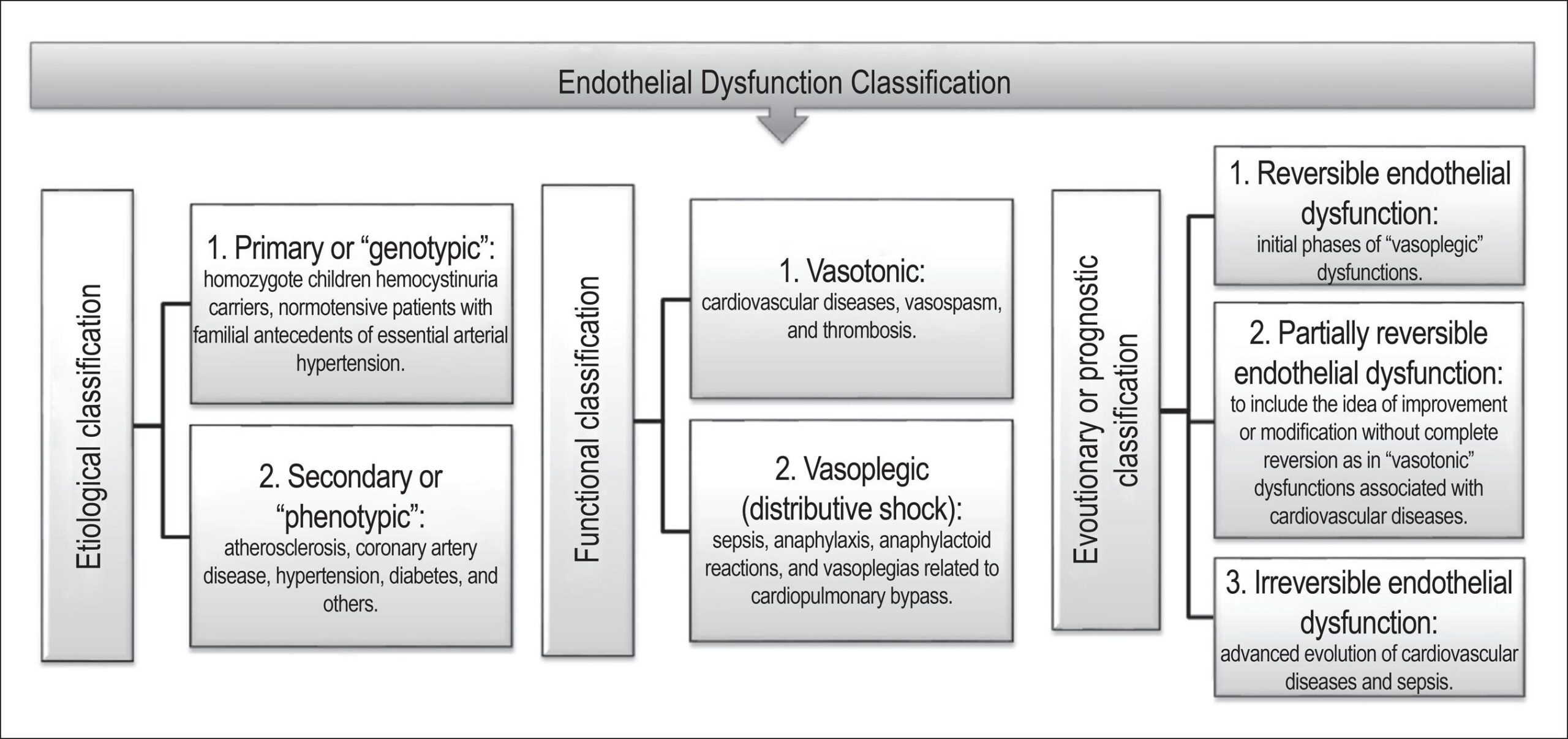
The Lack of Clinical Applications Would be the Cause of Low Interest in an Endothelial Dysfunction Classification

Livia Arcêncio et al. Paulo R. B. Evora

Based on the assumption that a classification system is a very critical subject and may significantly improve the prediction of individual responses to treatment and related diseases, we proposed 16 years ago a classification for endothelial dysfunction including etiological, functional, and evolutionary aspects ().

[…]

  • Cardiovascular Diseases
  • Classification
  • Endothelium / dysfunction
  • Prevention
  • Risk Factors
Read Full Article
Creative Commons Attribution (CC BY) Creative Commons license
01/02/2017 DOI: 10.5935/abc.20170019
Cardiorespiratory fitness of a Brazilian regional sample distributed in different tables
ABC
Artigo Original

Cardiorespiratory fitness of a Brazilian regional sample distributed in different tables

Karlyse Claudino Belli et al. Carine Calegaro Cleusa Maria Richter Jonatas Zeni Klafke … Ricardo Stein Paulo Ricardo Nazario Viecili

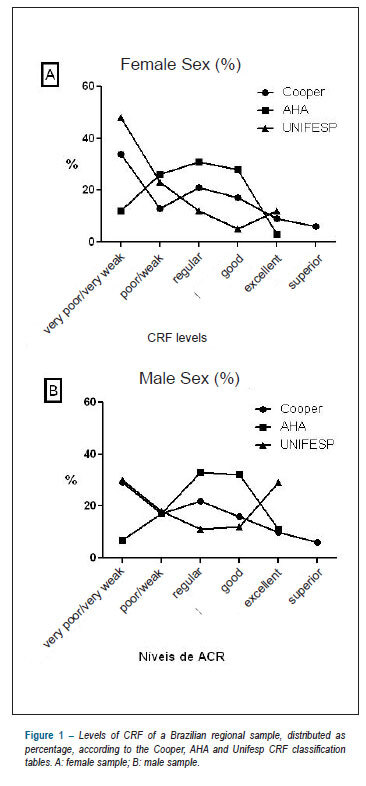
BACKGROUND: Most classification tables of cardiorespiratory fitness (CRF) used in clinical practice are international and have not been validated for the Brazilian population. That can result in important discrepancies when that classification is extrapolated to our population. OBJECTIVE: To assess the use of major CRF tables available in a Brazilian population sample of the Central High Plan of the state of Rio Grande do Sul (RS). METHODS: This study assessed the retrospective data of 2,930 individuals, living in 36 cities of the Central High Plan of the state of RS, and considered the following: presence of risk factors for cardiovascular disease and estimated maximum oxygen consumption (VO2peak) values obtained through exercise test with Bruce protocol. To classify CRF, the individuals were distributed according to sex, inserted in their respective age groups in the Cooper, American Heart Association (AHA) and Universidade Federal de São Paulo (Unifesp) tables, and classified according to their VO2peak. RESULTS: Women had lower VO2peak values as compared with those of men (23.5 ± 8.5 vs. 31.7 ± 10.8 mL.kg-1.min-1, p < 0.001). Considering both sexes, VO2peak showed an inverse and moderate correlation with age (R = -0.48, p < 0.001). An important discrepancy in the CRF classification levels was observed between the tables, ranging from 49% (Cooper x AHA) to 75% (Unifesp x AHA). CONCLUSION: Our findings indicate important discrepancy in the CRF classification levels of the tables assessed. Future studies could assess whether international tables could be used for the Brazilian population and populations of different regions of Brazil.

  • Classification
  • Exercise Test
  • Oxygen Consumption
  • physical fitness
  • Urban Population
Read Full Article
Creative Commons Attribution (CC BY) Creative Commons license
09/08/2012 DOI: 10.1590/S0066-782X2012005000075 Views 2

How to cite this article

EndNote RIS

Electronic Document Format (Vancouver)

Mady C, Ávila DX, Madrini Junior V, Mesquita ET. Cardiomyopathies: Yesterday, Today, and Tomorrow. ABC Heart Fail Cardiomyop 2023;3(1):e20230022.

Electronic Document Format (ABNT)

Mady, Charles; Ávila, Diane Xavier de; Madrini Junior, Vagner; Mesquita, Evandro Tinoco. Cardiomyopathies: Yesterday, Today, and Tomorrow. ABC Heart Fail Cardiomyop, v. 3, n. 1, e20230022, Jul. 2023.

Electronic Document Format (APA)

Mady, C., Ávila, D. X. , Madrini Junior, V., & Mesquita, E. T. (2023). Cardiomyopathies: Yesterday, Today, and Tomorrow. ABC Heart Fail Cardiomyop, 3(1), e20230022.

Electronic Document Format (ISO)

Mady, Charles and Ávila, Diane Xavier de and Madrini Junior, Vagner and Mesquita, Evandro Tinoco. Cardiomyopathies: Yesterday, Today, and Tomorrow. ABC Heart Fail Cardiomyop [online]. 2023, vol. 3, n. 1, [cited 2026-10-14], e20230022. Available from: <https://journals.cardiol.br/en/article/cardiomyopathies-yesterday-today-and-tomorrow/>

EndNote RIS

Electronic Document Format (Vancouver)

Miranda JSS, Fatorelli A, Ferreira L, Salles V, Sales AL. I NEED HELP: How to Indentify Patients with Advanced Cardiac Dysfunction?. ABC: Heart Failure & Cardiomyopathy 2022;2(2):157-64.

Electronic Document Format (ABNT)

Miranda, Jacqueline Sampaio S.; Fatorelli, Antonio; Ferreira, Luciana; Salles, Vitor; Sales, Ana Luiza. I NEED HELP: How to Indentify Patients with Advanced Cardiac Dysfunction?. ABC: Heart Failure & Cardiomyopathy, v. 2, n. 2, p. 157-164, Jun. 2022.

Electronic Document Format (APA)

Miranda, J. S. S., Fatorelli, A., Ferreira, L., Salles, V., & Sales, A. L. (2022). I NEED HELP: How to Indentify Patients with Advanced Cardiac Dysfunction?. ABC: Heart Failure & Cardiomyopathy, 2(2), 157-164.

Electronic Document Format (ISO)

Miranda, Jacqueline Sampaio S. and Fatorelli, Antonio and Ferreira, Luciana and Salles, Vitor and Sales, Ana Luiza. I NEED HELP: How to Indentify Patients with Advanced Cardiac Dysfunction?. ABC: Heart Failure & Cardiomyopathy [online]. 2022, vol. 2, n. 2, [cited 2026-10-14], pp. 157-164. Available from: <https://journals.cardiol.br/en/article/i-need-help-how-to-indentify-patients-with-advanced-cardiac-dysfunction/>

EndNote RIS

Electronic Document Format (Vancouver)

Arcêncio L, Evora PRB. The Lack of Clinical Applications Would be the Cause of Low Interest in an Endothelial Dysfunction Classification. Arquivos Brasileiros de Cardiologia 2017;108(2):97-9.

Electronic Document Format (ABNT)

Arcêncio, Livia; Evora, Paulo R. B.. The Lack of Clinical Applications Would be the Cause of Low Interest in an Endothelial Dysfunction Classification. Arquivos Brasileiros de Cardiologia, v. 108, n. 2, p. 97-99, Jan. 2017.

Electronic Document Format (APA)

Arcêncio, L., & Evora, P. R. B. (2017). The Lack of Clinical Applications Would be the Cause of Low Interest in an Endothelial Dysfunction Classification. Arquivos Brasileiros de Cardiologia, 108(2), 97-99.

Electronic Document Format (ISO)

Arcêncio, Livia and Evora, Paulo R. B.. The Lack of Clinical Applications Would be the Cause of Low Interest in an Endothelial Dysfunction Classification. Arquivos Brasileiros de Cardiologia [online]. 2017, vol. 108, n. 2, [cited 2026-10-14], pp. 97-99. Available from: <https://journals.cardiol.br/en/article/the-lack-of-clinical-applications-would-be-the-cause-of-low-interest-in-an-endothelial-dysfunction-classification/>. ISSN 0066-782X

EndNote RIS

Electronic Document Format (Vancouver)

Belli KC, Calegaro C, Richter CM, Klafke JZ, Stein R, Viecili PRN. Cardiorespiratory fitness of a Brazilian regional sample distributed in different tables. Arquivos Brasileiros de Cardiologia 2012;99(3):811-7.

Electronic Document Format (ABNT)

Belli, Karlyse Claudino; Calegaro, Carine; Richter, Cleusa Maria; Klafke, Jonatas Zeni; Stein, Ricardo; Viecili, Paulo Ricardo Nazario. Cardiorespiratory fitness of a Brazilian regional sample distributed in different tables. Arquivos Brasileiros de Cardiologia, v. 99, n. 3, p. 811-817, Aug. 2012.

Electronic Document Format (APA)

Belli, K. C., Calegaro, C., Richter, C. M., Klafke, J. Z., Stein, R., & Viecili, P. R. N. (2012). Cardiorespiratory fitness of a Brazilian regional sample distributed in different tables. Arquivos Brasileiros de Cardiologia, 99(3), 811-817.

Electronic Document Format (ISO)

Belli, Karlyse Claudino and Calegaro, Carine and Richter, Cleusa Maria and Klafke, Jonatas Zeni and Stein, Ricardo and Viecili, Paulo Ricardo Nazario. Cardiorespiratory fitness of a Brazilian regional sample distributed in different tables. Arquivos Brasileiros de Cardiologia [online]. 2012, vol. 99, n. 3, [cited 2026-10-14], pp. 811-817. Available from: <https://journals.cardiol.br/en/article/cardiorespiratory-fitness-of-a-brazilian-regional-sample-distributed-in-different-tables/>. ISSN 0066-782X

  • About ABC Family
  • Internal Regulation
  • Editorial Board
  • Brazilian Society of Cardiology (SBC)

Issues

SBC Guidelines

  • Videos
  • Podcasts
  • News