ABC Family Arquivos Brasileiros de Cardiologia International Journal of Cardiovascular Sciences ABC Heart Failure & Cardiomyopathy ABC Imagem Cardiovascular
Português English
ABC Family
Português English
  • About
    • About ABC Family
    • Internal Regulation
    • Editorial Board
    • Brazilian Society of Cardiology (SBC)
  • Issues
  • SBC Guidelines
  • Content
    • Videos
    • Podcasts
    • News
  • About
    • About ABC Family
    • Internal Regulation
    • Editorial Board
    • Brazilian Society of Cardiology (SBC)
  • Issues
  • SBC Guidelines
  • Content
    • Videos
    • Podcasts
    • News

ABC Family

  • ABC Family
  • Arquivos Brasileiros de Cardiologia
  • International Journal of Cardiovascular Sciences
  • ABC Heart Failure & Cardiomyopathy
  • ABC Imagem Cardiovascular
Search in

No content found.

Journals
Ordering
Article types
Others

  1. Home
  2. Keyword: health care
ABC
Editorial

Is There an Association Between Timed Up and Go Test Performance Results and Directly Measured Peak Oxygen Consumption in Patients with Heart Disease?

Filipe Ferrari et al. Ricardo Stein

Functional capacity, the ability to perform daily activities independently, is commonly assessed using standardized tests like the 6-minute walk test, Timed Up and Go Test (TUGT), and one-minute sit-to-stand test. However, the gold standard for evaluating functional or cardiorespiratory capacity is cardiopulmonary exercise testing (CPET), which measures peak oxygen consumption (VO2peak). CPET involves gradually increasing exercise intensity until exhaustion or symptom onset.

Numerous studies consistently demonstrate a strong inverse association between VO2peak and cardiovascular events, cardiovascular mortality, and all-cause mortality,, underscoring the pivotal role of functional capacity in the context of cardiovascular diseases. Moreover, in heart failure, regardless of ejection fraction status, poor performance on the 6-minute walk test has been linked to elevated risks of all-cause mortality and heart failure.

[…]

  • Cardiovascular Diseases
  • health care
  • outcome assessment
  • Oxygen Consumption
  • Postural Balance
  • Test Timed Up and Go
Read Full Article
Creative Commons Attribution (CC BY) Creative Commons license
04/03/2024 DOI: 10.36660/abc.20230832
ABC
Original Article

Correlation among Waist Circumference and Central Measures of Blood Pressure

Gilberto Campos Guimarães Filho et al. Lucas Tavares Silva Ruth Mellina Castro e Silva

Abstract

Background:

Arterial stiffness is a strong predictor of cardiovascular disease (CVD). Body fat measures such as waist circumference (WC) have been associated with CVD in adulthood.

Objectives:

The objective of this study was to evaluate the association of arterial stiffness, measured by applanation tonometry-Sphygmocor, with WC.

Methods:

Observational study with 240 participants who make routine consultations at the outpatient clinic of a university hospital. Participants were interviewed and had central blood pressure measurements (CBPM), anthropometric parameters, abdominal fat and visceral fat measured. Paired and unpaired t and chi-square tests were used. A significance level of 5% was adopted.

Results:

Of the 240 participants, 51.82% were male with a mean age of 59.71(±14.81) years and a mean WC of 99.87 (11.54) cm. Mean CBPM values were: Central arterial pressure (CAP) = 130.23 (91-223) mmHg, pulse wave velocity (PWV) = 9.8 (5.28-19.6)m/s and Augmentation Index [Amplification Index (AI)] = 29.45 (-14-60). PWV and CAP were highly correlated with WC with p<0.001 and p=0.02, respectively; however, the same positive correlation was not found between WC and AI (p=0.06).

Conclusion:

The present study showed a positive association between WC and arterial stiffness, through the femoral carotid pulse wave velocity (cf-PWV) and AI, being stronger with cf-PWV, suggesting the evaluation of the effect of WC in vascular health as a method of aid in the early treatment of CVD and in the prevention of clinical outcomes.

  • Atherosclerosis
  • Blood Pressure
  • Cardiovascular Diseases
  • health care
  • outcome assessment
  • Pulse Wave Analysis
  • Vascular Stiffness
  • Waist Circumference
Read Full Article
Creative Commons Attribution (CC BY) Creative Commons license
03/06/2022 DOI: 10.36660/abc.20210432
Figure 1
IJCS
Original Article

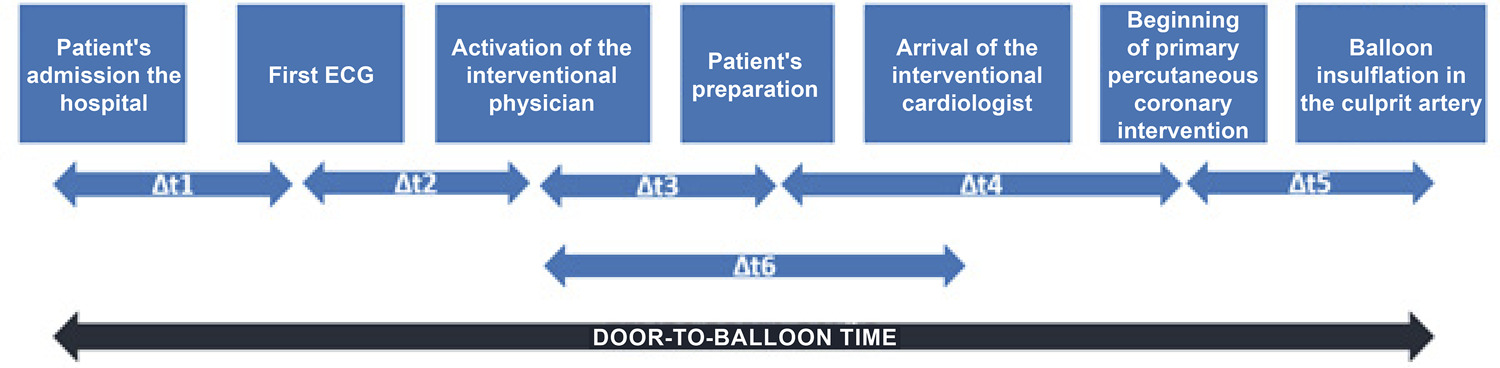
Door-to-balloon Time in Cardiovascular Emergency Care in a Hospital of Northern Brazil

Tárcio Sadraque Gomes Amoras et al. Taymara Barbosa Rodrigues Cláudia Ribeiro Menezes Christielaine Venzel Zaninotto Roseneide dos Santos Tavares

Abstract

Background

The use of an adequate door-to-balloon time (≤ 90 minutes) is crucial in improving the quality of care provided to patients with ST-segment elevation myocardial infarction (STEMI).

Objective

To determine the door-to-balloon time in the management of STEMI patients in a cardiovascular emergency department in a hospital of northern Brazil.

Methods

This was a cross-sectional study based on review of medical records. A total of 109 patients with STEMI admitted to the emergency department of a referral cardiology hospital in Pará State, Brazil, between May 2017 and December 2017. Correlations of the door-to-balloon time with length of hospital stay and mortality rate were assessed, as well as whether the time components of the door-to-balloon time affected the delay in performing primary percutaneous coronary intervention. Quantitative variables were analyzed by Spearman correlation and the G test was used for categorical variables. A p<0.05 was set as statistically significant.

Results

Median door-to-balloon time was 104 minutes. No significant correlation was found between door-to-balloon time and length of hospital stay or deaths, but significant correlations were found between door-to-balloon time and door-to-ECG time (p<0.001) and ECG-to-activation (of an interventional cardiologist) time (p<0.001).

Conclusion

The door-to-balloon time was longer the recommended and was not correlated with the length of hospital stay or in-hospital mortality. Door-to-ECG time and ECG-to-activation time contributed to the delay in performing the primary percutaneous coronary intervention. Int J Cardiovasc Sci. 2020; [online].ahead print, PP.0-0

  • Admitting Department, Hospital
  • Angioplasty, Balloon, Coronary
  • health care
  • Myocardial Infarction
  • Quality Indicators
  • Time to Treatment
Read Full Article
Creative Commons Attribution (CC BY) Creative Commons license
06/11/2020 DOI: 10.36660/ijcs.20190104 Views 1
ABC
Artigo Original

Clinical and demographic profile and quality indicators for heart failure in a rural area

Henrique Miller Balieiro et al. Raphael Kasuo Osugue Samuel Pereira Rangel Raphael Brandão … Tatiana Leal Balieiro Sabrina Bernardez Evandro Tinoco Mesquita

BACKGROUND: data on heart failure (HF) in Brazil are ensued from tertiary centers. This information can not be extended to the rural population, for it reflects distinct social, economic and cultural characteristics. OBJECTIVE: To establish the clinical and demographic profile and quality indicators for HF in rural areas. METHODS: Transversal cohort study that included 166 patients from the rural area of Valença, Rio de Janeiro, Brazil. After the evaluation of clinical, laboratorial and echocardiograph data, chi-square and Fisher’s exact tests were used for analysis of proportion, as well as the Student’s t-test for numeric variables, in order to establish the population’s characteristics. RESULTS: Mean age was 61±14 years old, as 85 of them (51%) were men, 88 (53%) were afro-Brazilian and 85 (51%) had heart failure with reduced ejection fraction (HFREF). Systemic arterial hypertension (151 patients, 91%) and metabolic syndrome (103 patients, 62%) were prevalent comorbidities. The most common etiologies were: hypertensive (77 patients, 46%) and ischemic (62 patients, 37%). Quality indicators in HF were: 43 patients (26%) with previous echocardiogram, 102 patients (62%) were in use of beta-blockers, 147 patients (88%) received angiotensin converter enzyme inhibitor (ACEI) or angiotensin receptor blockers (ARB), and 22% of the patients with atrial fibrillation (AF) were under treatment with oral anticoagulation. For heart failure with normal ejection fraction (HFNEF), females (p=0.001; OD: 0.32; CI=0.17-0.60), metabolic syndrome (p=0.004; OD: 0.28; CI=1.31-4.78) and hypertensive etiology (p<0.0001; OD: 6.83; CI=3.45-13.5) were predominant. For CIREF, males (p=0.001; OD: 0.32; CI=0.170-0.605) and ischemic etiology (p<0.0001; OD: 0.16; CI=0.079-0.330) were predominant. CONCLUSION: In rural areas, HF shows similarity with regard to sex, ethnicity and classification. Hypertensive etiology was the most commonly present. HFNEF was prevalent among women and in the presence of metabolic syndrome, while HFREF was associated with males and ischemic etiology.

  • health care
  • Health Profile
  • Heart Failure
  • quality indictors
  • Rural Population
Read Full Article
Creative Commons Attribution (CC BY) Creative Commons license
05/05/2010 DOI: 10.1590/S0066-782X2009001200020
ABC
Artigo Original

Prevalence of dyslipidemias in adult ambulatory laboratory tests from different health care providers

Ines Lessa et al. João Lycio Conceição Levi Mirabeau Joabe Carneiro … Joamar Melo Viviane Oliveira Joel Pinheiro Fábio Meireles Joaquim Reis Neto Felipe Reis Rogério Gouvea Marcelo Couto Marlene Rosa Oliveira Silvânia Souza

OBJECTIVE: To detect differences in the prevalence of dyslipidemia in adult ambulatory laboratory tests from three different health care providers, in Salvador-Brazil, 1995. METHODS: The study was carried out using a probabilistic sample of 24 out of 104 laboratories (@25%) which performed the same enzymatic method for lipid tests with the same quality control. Laboratory tests results were separated into three groups, according to health care provider: Sistema Único de Saúde (SUS, governamental), Health Maintenance Organizations (HMO), and Private or Patients Health Insurance (PHI). Criteria for dyslipidemias in mg/dL were: total cholesterol > or = 240; LDL-c > or = 160; HDL-c or = 200. Prevalence rates, 95% confidence intervals (CI) and chi² test were used in the analysis. RESULTS: From the 5464 adult subjects, 14.8% were from SUS, 31.6%. from HMO and 53.6% PHI. The highest prevalence for hypercholesterolemia – 28.0% (CI 24.0; 32.0) and for LDL-c > or = 160mg/dL – 30.4% (CI 27.6; 33.2), were found in the HMO group. PHI had the highest prevalence for HDL-c <35mg/dL – 12.3% (CI 10.0; 13.8), and for hypertrygliceridemia – 17.8% (CI 16.3; 19.3). Most of the differences among health providers were statistically significant. CONCLUSION: The best lypid profile observed in subjects from SUS suggests social differences in the prevalence of dyslipidemias. As compared to other dyslipidemias, HDL-c <35mg/dL prevalence was lower than expected in all three groups. The data may provide insights to medical doctors and other health care professionals regarding the questions of dyslipidemias. It can also provide objective information to the patients and encourage them to change their life styles.

  • dyslipidemia
  • health care
Read Full Article
Creative Commons Attribution (CC BY) Creative Commons license
08/01/2002 DOI: 10.1590/S0066-782X1998000500005 Views 1

How to cite this article

EndNote RIS

Electronic Document Format (Vancouver)

Ferrari F, Stein R. Is There an Association Between Timed Up and Go Test Performance Results and Directly Measured Peak Oxygen Consumption in Patients with Heart Disease?. Arquivos Brasileiros de Cardiologia 2024;120(12):e20230832.

Electronic Document Format (ABNT)

Ferrari, Filipe; Stein, Ricardo. Is There an Association Between Timed Up and Go Test Performance Results and Directly Measured Peak Oxygen Consumption in Patients with Heart Disease?. Arquivos Brasileiros de Cardiologia, v. 120, n. 12, e20230832, Mar. 2024.

Electronic Document Format (APA)

Ferrari, F., & Stein, R. (2024). Is There an Association Between Timed Up and Go Test Performance Results and Directly Measured Peak Oxygen Consumption in Patients with Heart Disease?. Arquivos Brasileiros de Cardiologia, 120(12), e20230832.

Electronic Document Format (ISO)

Ferrari, Filipe and Stein, Ricardo. Is There an Association Between Timed Up and Go Test Performance Results and Directly Measured Peak Oxygen Consumption in Patients with Heart Disease?. Arquivos Brasileiros de Cardiologia [online]. 2024, vol. 120, n. 12, [cited 2026-10-14], e20230832. Available from: <https://journals.cardiol.br/en/article/is-there-an-association-between-timed-up-and-go-test-performance-results-and-directly-measured-peak-oxygen-consumption-in-patients-with-heart-disease/>. ISSN 0066-782X

EndNote RIS

Electronic Document Format (Vancouver)

Guimarães Filho GC, Silva LT, Silva RMC. Correlation among Waist Circumference and Central Measures of Blood Pressure. Arquivos Brasileiros de Cardiologia 2022;119(2):257-64.

Electronic Document Format (ABNT)

Guimarães Filho, Gilberto Campos; Silva, Lucas Tavares; Silva, Ruth Mellina Castro e. Correlation among Waist Circumference and Central Measures of Blood Pressure. Arquivos Brasileiros de Cardiologia, v. 119, n. 2, p. 257-264, Jun. 2022.

Electronic Document Format (APA)

Guimarães Filho, G. C., Silva, L. T., & Silva, R. M. C. (2022). Correlation among Waist Circumference and Central Measures of Blood Pressure. Arquivos Brasileiros de Cardiologia, 119(2), 257-264.

Electronic Document Format (ISO)

Guimarães Filho, Gilberto Campos and Silva, Lucas Tavares and Silva, Ruth Mellina Castro e. Correlation among Waist Circumference and Central Measures of Blood Pressure. Arquivos Brasileiros de Cardiologia [online]. 2022, vol. 119, n. 2, [cited 2026-10-14], pp. 257-264. Available from: <https://journals.cardiol.br/en/article/correlation-among-waist-circumference-and-central-measures-of-blood-pressure/>. ISSN 0066-782X

EndNote RIS

Electronic Document Format (Vancouver)

Amoras TSG, Rodrigues TB, Menezes CR, Zaninotto CV, Tavares RS. Door-to-balloon Time in Cardiovascular Emergency Care in a Hospital of Northern Brazil. International Journal of Cardiovascular Sciences 2020;34(1):53-9.

Electronic Document Format (ABNT)

Amoras, Tárcio Sadraque Gomes; Rodrigues, Taymara Barbosa; Menezes, Cláudia Ribeiro; Zaninotto, Christielaine Venzel; Tavares, Roseneide dos Santos. Door-to-balloon Time in Cardiovascular Emergency Care in a Hospital of Northern Brazil. International Journal of Cardiovascular Sciences, v. 34, n. 1, p. 53-59, Nov. 2020.

Electronic Document Format (APA)

Amoras, T. S. G., Rodrigues, T. B., Menezes, C. R., Zaninotto, C. V., & Tavares, R. S. (2020). Door-to-balloon Time in Cardiovascular Emergency Care in a Hospital of Northern Brazil. International Journal of Cardiovascular Sciences, 34(1), 53-59.

Electronic Document Format (ISO)

Amoras, Tárcio Sadraque Gomes and Rodrigues, Taymara Barbosa and Menezes, Cláudia Ribeiro and Zaninotto, Christielaine Venzel and Tavares, Roseneide dos Santos. Door-to-balloon Time in Cardiovascular Emergency Care in a Hospital of Northern Brazil. International Journal of Cardiovascular Sciences [online]. 2020, vol. 34, n. 1, [cited 2026-10-14], pp. 53-59. Available from: <https://journals.cardiol.br/en/article/door-to-balloon-time-in-cardiovascular-emergency-care-in-a-hospital-of-northern-brazil/>. ISSN 2359-4802

EndNote RIS

Electronic Document Format (Vancouver)

Balieiro HM, Osugue RK, Rangel SP, Brandão R, Balieiro TL, Bernardez S, Mesquita ET, et al. Clinical and demographic profile and quality indicators for heart failure in a rural area. Arquivos Brasileiros de Cardiologia 2010;93(6):687-91.

Electronic Document Format (ABNT)

Balieiro, Henrique Miller; Osugue, Raphael Kasuo; Rangel, Samuel Pereira; Brandão, Raphael; Balieiro, Tatiana Leal; Bernardez, Sabrina; Mesquita, Evandro Tinoco. Clinical and demographic profile and quality indicators for heart failure in a rural area. Arquivos Brasileiros de Cardiologia, v. 93, n. 6, p. 687-691, May. 2010.

Electronic Document Format (APA)

Balieiro, H. M., Osugue, R. K., Rangel, S. P., Brandão, R., Balieiro, T. L., Bernardez, S., & Mesquita, E. T. (2010). Clinical and demographic profile and quality indicators for heart failure in a rural area. Arquivos Brasileiros de Cardiologia, 93(6), 687-691.

Electronic Document Format (ISO)

Balieiro, Henrique Miller and Osugue, Raphael Kasuo and Rangel, Samuel Pereira and Brandão, Raphael and Balieiro, Tatiana Leal and Bernardez, Sabrina and Mesquita, Evandro Tinoco. Clinical and demographic profile and quality indicators for heart failure in a rural area. Arquivos Brasileiros de Cardiologia [online]. 2010, vol. 93, n. 6, [cited 2026-10-14], pp. 687-691. Available from: <https://journals.cardiol.br/en/article/clinical-and-demographic-profile-and-quality-indicators-for-heart-failure-in-a-rural-area/>. ISSN 0066-782X

EndNote RIS

Electronic Document Format (Vancouver)

Lessa I, Conceição JL, Mirabeau L, Carneiro J, Melo J, Oliveira V, Pinheiro J, et al. Prevalence of dyslipidemias in adult ambulatory laboratory tests from different health care providers. Arquivos Brasileiros de Cardiologia 2002;70(5):331-5.

Electronic Document Format (ABNT)

Lessa, Ines; Conceição, João Lycio; Mirabeau, Levi; Carneiro, Joabe; Melo, Joamar; Oliveira, Viviane; Pinheiro, Joel; Meireles, Fábio; Reis Neto, Joaquim; Reis, Felipe; Gouvea, Rogério; Couto, Marcelo; Oliveira, Marlene Rosa; Souza, Silvânia. Prevalence of dyslipidemias in adult ambulatory laboratory tests from different health care providers. Arquivos Brasileiros de Cardiologia, v. 70, n. 5, p. 331-335, Jan. 2002.

Electronic Document Format (APA)

Lessa, I., Conceição, J. L., Mirabeau, L., Carneiro, J., Melo, J., Oliveira, V., Pinheiro, J., Meireles, F., Reis Neto, J., Reis, F., Gouvea, R., Couto, M., Oliveira, M. R., & Souza, S. (2002). Prevalence of dyslipidemias in adult ambulatory laboratory tests from different health care providers. Arquivos Brasileiros de Cardiologia, 70(5), 331-335.

Electronic Document Format (ISO)

Lessa, Ines and Conceição, João Lycio and Mirabeau, Levi and Carneiro, Joabe and Melo, Joamar and Oliveira, Viviane and Pinheiro, Joel and Meireles, Fábio and Reis Neto, Joaquim and Reis, Felipe and Gouvea, Rogério and Couto, Marcelo and Oliveira, Marlene Rosa and Souza, Silvânia. Prevalence of dyslipidemias in adult ambulatory laboratory tests from different health care providers. Arquivos Brasileiros de Cardiologia [online]. 2002, vol. 70, n. 5, [cited 2026-10-14], pp. 331-335. Available from: <https://journals.cardiol.br/en/article/prevalence-of-dyslipidemias-in-adult-ambulatory-laboratory-tests-from-different-health-care-providers/>. ISSN 0066-782X

  • About ABC Family
  • Internal Regulation
  • Editorial Board
  • Brazilian Society of Cardiology (SBC)

Issues

SBC Guidelines

  • Videos
  • Podcasts
  • News