ABC Family Arquivos Brasileiros de Cardiologia International Journal of Cardiovascular Sciences ABC Heart Failure & Cardiomyopathy ABC Imagem Cardiovascular
Português English
ABC Family
Português English
  • About
    • About ABC Family
    • Internal Regulation
    • Editorial Board
    • Brazilian Society of Cardiology (SBC)
  • Issues
  • SBC Guidelines
  • Content
    • Videos
    • Podcasts
    • News
  • About
    • About ABC Family
    • Internal Regulation
    • Editorial Board
    • Brazilian Society of Cardiology (SBC)
  • Issues
  • SBC Guidelines
  • Content
    • Videos
    • Podcasts
    • News

ABC Family

  • ABC Family
  • Arquivos Brasileiros de Cardiologia
  • International Journal of Cardiovascular Sciences
  • ABC Heart Failure & Cardiomyopathy
  • ABC Imagem Cardiovascular
Search in

No content found.

Journals
Ordering
Article types
Others

  1. Home
  2. Keyword: Homeostasis
ABC
Editorial

Pulmonary Arterial Hypertension and Cardioprotective Interventions

Elida Paula Benquique Ojopi et al. Carolina Rodrigues Tonon Katashi Okoshi Marina Politi Okoshi

The normal pulmonary vasculature is a low-pressure system compared with the systemic vasculature. Pulmonary hypertension is characterized by a mean pulmonary artery pressure higher than 25 mmHg. The primary pathophysiological process of pulmonary hypertension is a restriction of blood flow through the pulmonary circulation, which leads to increased pulmonary vascular resistance and eventual failure of the right ventricle. Pulmonary hypertension may be idiopathic (PAH) or aconsequence of chronic diseases, including left-sided heart failure, parenchymal lung diseases, and thromboembolic disease.

Pathological structural and functional changes of the ventricles are known as cardiac remodeling, which is associated with a poor prognosis in PAH. Currently, no specific treatment is recommended for PAH-induced cardiac remodeling.

[…]

  • Antioxidants
  • Homeostasis
  • Pulmonary Arterial Hypertension
  • Right Ventricular Dysfunction
Read Full Article
Creative Commons Attribution (CC BY) Creative Commons license
13/09/2024 DOI: 10.36660/abc.20240445i
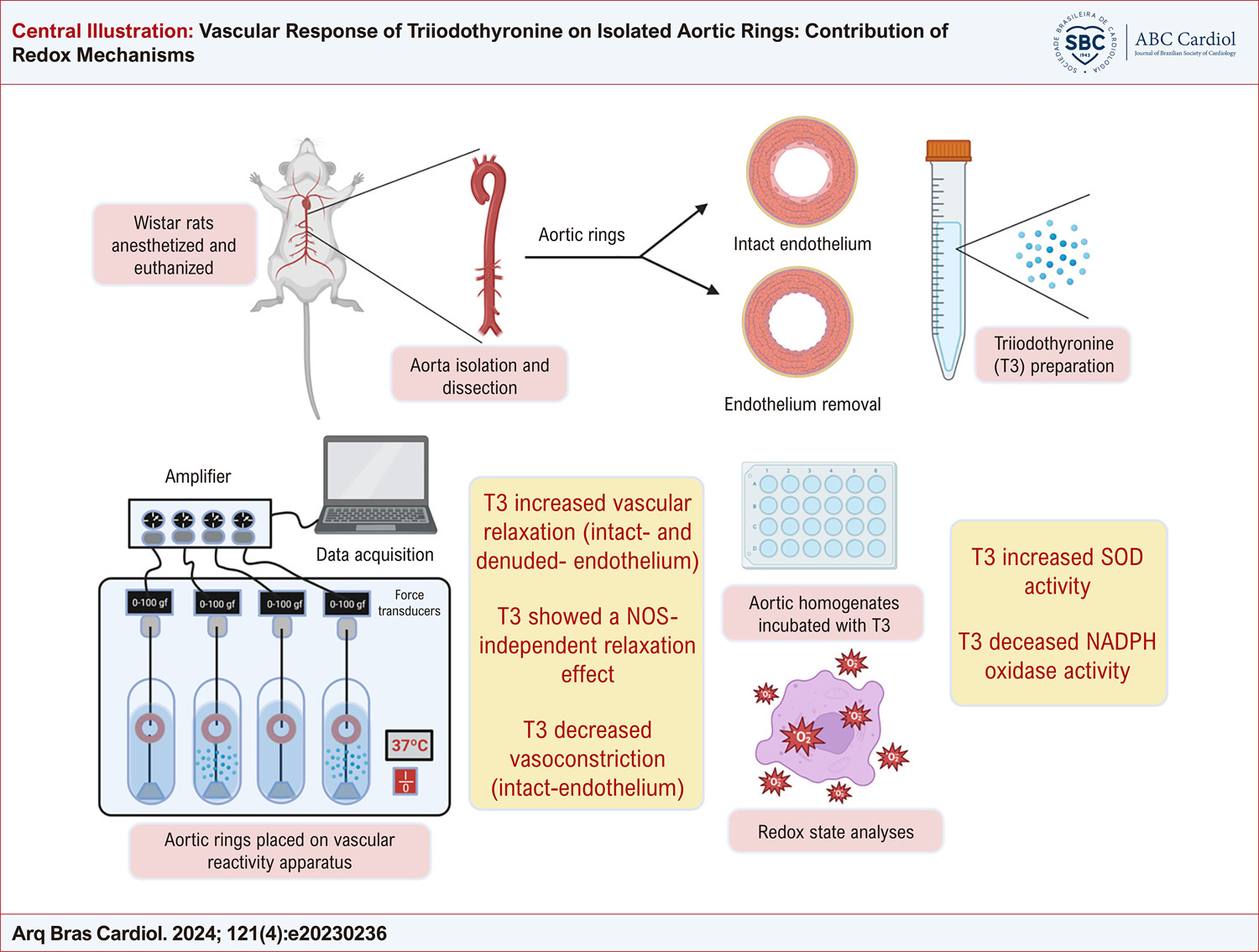
Vascular Response of Triiodothyronine on Isolated Aortic Rings: Contribution of Redox Mechanisms
ABC
Original Article

Vascular Response of Triiodothyronine on Isolated Aortic Rings: Contribution of Redox Mechanisms

Viviane Cristina Pederiva et al. Alexandre de Castro Adriane Belló-Klein Alex Sander da Rosa Araujo Patrick Turck

Abstract

Background

Vascular dysfunction constitutes the etiology of many diseases, such as myocardial infarction and hypertension, with the disruption of redox homeostasis playing a role in the imbalance of the vasomotor control mechanism. Our group previously has shown that thyroid hormones exert protective effects on the aortic tissue of infarcted rats by improving angiogenesis signaling.

Objective

Investigate the role of triiodothyronine (T3) on vascular response, exploring its effects on isolated aortas and whether there is an involvement of vascular redox mechanisms.

Methods

Isolated aortic rings (intact- and denuded-endothelium) precontracted with phenylephrine were incubated with T3 (10-8, 10-7, 10-6, 10-5, and 10-4 M), and tension was recorded using a force-displacement transducer coupled with an acquisition system. To assess the involvement of oxidative stress, aortic rings were preincubated with T3 and subsequently submitted to an in vitro reactive oxygen species (ROS) generation system. The level of significance adopted in the statistical analysis was 5%.

Results

T3 (10-4 M) promoted vasorelaxation of phenylephrine precontracted aortic rings in both intact- and denuded-endothelium conditions. Aortic rings preincubated in the presence of T3 (10-4 M) also showed decreased vasoconstriction elicited by phenylephrine (1 µM) in intact-endothelium preparations. Moreover, T3 (10-4 M) vasorelaxation effect persisted in aortic rings preincubated with NG-nitro-L-arginine methylester (L-NAME, 10 µM), a nonspecific NO synthase (NOS) inhibitor. Finally, T3 (10-4 M) exhibited, in vitro, an antioxidant role by reducing NADPH oxidase activity and increasing SOD activity in the aorta’s homogenates.

Conclusion

T3 exerts dependent- and independent-endothelium vasodilation effects, which may be related to its role in maintaining redox homeostasis.
  • Aorta
  • Homeostasis
  • Thyroid Hormones
  • Triiodothyronine
Read Full Article
Creative Commons Attribution (CC BY) Creative Commons license
26/04/2024 DOI: 10.36660/abc.20230236i Views 1
ABC
Editorial

Blood Pressure Variability and Cardiovascular Risk in ELSA-Brasil: A Potential Surrogate Marker for Predicting Mortality and Cardiovascular Outcomes?

Maria Cristina Izar et al. Francisco A. H. Fonseca

Blood pressure (BP) homeostasis is a crucial element in the protection of cardiovascular events. Many national and international guidelines – have proposed target values for blood pressure, and these recommendations consider slightly different goals according to hypertension stages, risk stratification and presence of renal or cardiovascular diseases, and target organ lesion. However, these values are based on office measures, ambulatory blood pressure monitoring (ABPM) and home blood pressure monitoring (HBPM), not accounting for blood pressure variability (BPV). BP intraindividual variability is an independent risk factor for cardiovascular diseases regardless of mean BP. – Fluctuations in physiological measures of blood pressure do not occur randomly and can contribute or be predictors of cardiovascular outcomes.

Most studies evaluated BPV on short (24h), medium (>2 days) or long-term (weekly, monthly, or annually). , Short-term BPV can be associated with increased cardiovascular risk. ,

[…]

  • Blood Pressure
  • Cardiovascular Diseases
  • Homeostasis
  • Hypertension
  • Risk Factors
Read Full Article
Creative Commons Attribution (CC BY) Creative Commons license
21/10/2022 DOI: 10.36660/abc.20220525 Views 1
Figure 1
ABC
Original Article

Pterostilbene Reduces Experimental Myocardial Infarction-Induced Oxidative Stress in Lung and Right Ventricle

Silvio Tasca et al. Cristina Campos Denise Lacerda Vanessa D. Ortiz … Patrick Turck Sara E. Bianchi Alexandre L. de Castro Adriane Belló-Klein Valquiria Bassani Alex Sander da Rosa Araújo

Abstract

Background

Pterostilbene (PS), a natural and antioxidant polyphenolic compound emerges as a promising intervention in improving the myocardial infarction (MI) damages.

Objetives

This study aimed to evaluate PS actions in promoting redox homeostasis in lungs and right ventricle (RV) of infarcted animals.

Methods

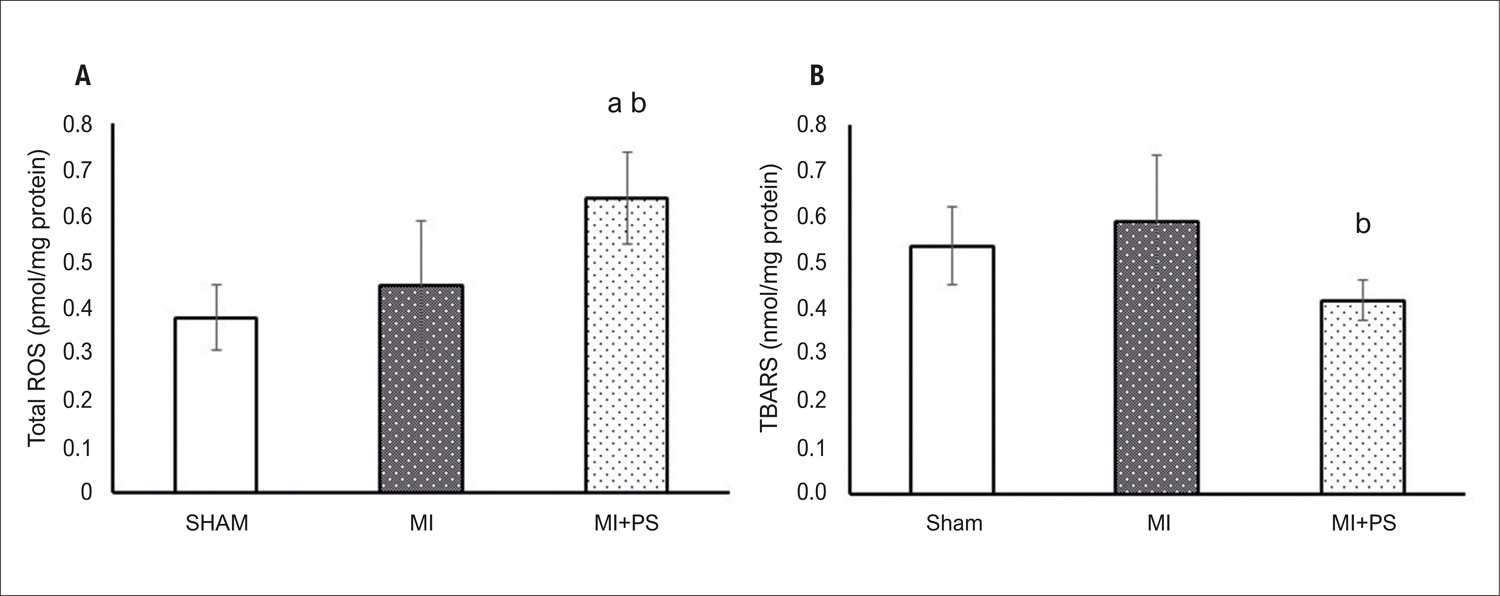
Male Wistar rats (60 day-old) were randomized into three groups: SHAM, MI (infarcted), and MI+PS (MI+pterostilbene). Seven days after MI procedure, rats were treated with PS (100 mg/kg/day) via gavage for eight days. Animals were euthanized and the lungs and RV were harvested for analyses of redox balance (Differences were considered significant when p<0.05).

Results

Our results show that MI triggers a redox disruption scenario in RV and lungs, which can contribute to MI-induced damage on these organs. Consistently, PS mitigated oxidative stress and restored antioxidant defenses (GSH in lungs: SHAM= 0.79±0.07; MI=0.67±0.05; MI+PS=0.86±0.14; p<0.05), indicating its protective role in this scenario.

Conclusions

Our work evidences the PS potential use as an adjuvant therapeutic approach after MI focusing on protecting pulmonary and right-sided heart tissues.

  • Antioxidants
  • Homeostasis
  • Hormesis
  • Myocardial Infarction
  • NADPH Oxidases
  • Oxidative Stress, Nitric Oxidase Synthase
  • Pterostilbene
  • Rats
Read Full Article
Creative Commons Attribution (CC BY) Creative Commons license
07/03/2022 DOI: 10.36660/abc.20201155 Views 2
ABC
Editorial

Thiol Homeostasis in Rheumatic Heart Disease: Biomarker or Risk Factor?

Ana Cecília de Almeida Valadares et al. Roney Orismar Sampaio

Rheumatic fever and rheumatic heart disease (RHD) lesions result from a complex network of several genes and proteins that control innate and adaptive immune responses following a Streptococcus pyogenes pharyngo-tonsillitis. The succeeding inflammatory process leads to the development of cardiac lesions with high production of inflammatory cytokines leading to calcification and valvular fibrosis. However, the cellular pathways beyond these immunoregulated phenomena have not been fully elucidated.

Oxidative stress is a biological condition marked by an imbalance between reactive oxygen species production and its reduction. Disturbances in this redox balance can cause the overproduction of peroxides and free radicals that damage all cellular components, including proteins, lipids and DNA.

[…]

  • Biomarkers
  • Cardiovascular Diseases
  • Homeostasis
  • Rheumatic Fever
  • Risk Factors
  • Sulphydril
Read Full Article
Creative Commons Attribution (CC BY) Creative Commons license
20/09/2021 DOI: 10.36660/abc.20210693 Views 1
ABC
Original Article

Serum Thiol Levels and Thiol/Disulfide Homeostasis in Patients with Rheumatic Mitral Valve Disease and Healthy Subjects

Ahmet Korkmaz et al. Birsen Doğanay Funda Basyigit Cem Çöteli … Abdulkadir Yildiz Tugba Gursoy Umit Guray Ozgul Ucar Elalmis

Abstract

Background

Rheumatic mitral valve disease (RMVD) is the most common presentation of rheumatic heart disease (RHD). Inflammation and fibrosis processes also play significant roles in its pathogenesis. Recent studies showed that thiols and thiol-disulfide are promising novel oxidative stress markers.

Objectives

The present study aimed to evaluate differences in the serum thiol and thiol-disulfide levels in patients with RMVD and the control group.

Methods

Ninety-two patients with RMVD were enrolled in the study. Fifty-four healthy subjects, age, and gender-matched with the study group, were also included in the study as a control group. This study investigated thiol levels in patients with RMVD and the control group. P-values lower than 0.05 were considered statistically significant.

Results

The patients with RMVD presented higher systolic pulmonary artery pressure (SPAP) and left atrial (LA) diameter levels than the control group. Native thiol (407±83 μmol/L vs. 297±65 μmol/L, p<0.001) and total thiol (442±82 μmol/L vs. 329±65 μmol/L, p<0.001) levels were higher in the control group. Disulfide (16.7±4.9 μmol/L vs. 14.8±3.7 μmol/L, p=0.011) levels were higher in the group of patients with RMVD. A positive correlation was found between disulfide/native and disulfide/total thiols ratio with SPAP, LA diameter, and MS severity. Disulfide/total thiols ratio was significantly higher in patients with severe MS than with mild to moderate MS patients.

Conclusions

To the best of our knowledge, this is the only study of its kind that has evaluated thiol/disulfide homeostasis as a novel predictor, which was more closely related to RMVD and the severity of MS.

  • Echocardiography/methods
  • Homeostasis
  • Mitral Valve Stenosis
  • Oxidative Stress
  • rheumatic diseases
  • Tiol/Dissulfide
Read Full Article
Creative Commons Attribution (CC BY) Creative Commons license
02/07/2021 DOI: 10.36660/abc.20200161
ABC
Editorial

Heart and Skeletal Muscles: Linked by Autonomic Nervous System

Claudio Gil Araujo et al. Jari Antero Laukkanen

The autonomic nervous system (ANS) plays a fundamental role in maintaining cell homeostasis and human life. The functionality of the heart and skeletal muscles is partially modulated by sympathetic and parasympathetic branches of the ANS both in resting and exercising conditions.

Substantial literature attests to the fact that objective indices of muscle strength reflect health status. It is well-established that heart failure is typically accompanied by skeletal muscle abnormalities that contributed to the exercise intolerance and poor health-related quality of life usually seen in these patients., Indeed, while a decrease in muscle mass and strength is naturally seen with ageing, especially after the fifth decade of life, this is especially more relevant in middle-aged and older patients with heart failure.

[…]

  • Autonomic Nervous System
  • Heart Failure
  • Homeostasis
  • Muscle,Skeletal
  • Myocardium
  • Sarcopenia
  • Sympathetica Nervous System
Read Full Article
Creative Commons Attribution (CC BY) Creative Commons license
15/07/2019 DOI: 10.5935/abc.20190097
ABC
Original Article

Reduction in Post-Marathon Peak Oxygen Consumption: Sign of Cardiac Fatigue in Amateur Runners?

Ana Paula Rennó Sierra et al. Anderson Donelli da Silveira Ricardo Contesini Francisco Rodrigo Bellios de Mattos Barretto … Carlos Anibal Sierra Romeu Sergio Meneghelo Maria Augusta Peduti Dal Molin Kiss Nabil Ghorayeb Ricardo Stein

Abstract

Background:

Prolonged aerobic exercise, such as running a marathon, produces supraphysiological stress that can affect the athlete’s homeostasis. Some degree of transient myocardial dysfunction (“cardiac fatigue”) can be observed for several days after the race.

Objective:

To verify if there are changes in the cardiopulmonary capacity, and cardiac inotropy and lusitropy in amateur marathoners after running a marathon.

Methods:

The sample comprised 6 male amateur runners. All of them underwent cardiopulmonary exercise testing (CPET) one week before the São Paulo Marathon, and 3 to 4 days after that race. They underwent echocardiography 24 hours prior to and immediately after the marathon. All subjects were instructed not to exercise, to maintain their regular diet, ingest the same usual amount of liquids, and rest at least 8 hours a day in the period preceding the CPET.

Results:

The athletes completed the marathon in 221.5 (207; 250) minutes. In the post-marathon CPET, there was a significant reduction in peak oxygen consumption and peak oxygen pulse compared to the results obtained before the race (50.75 and 46.35 mL.kg-1 .min-1; 19.4 and 18.1 mL.btm, respectively). The echocardiography showed a significant reduction in the s’ wave (inotropic marker), but no significant change in the E/e’ ratio (lusitropic marker).

Conclusions:

In amateur runners, the marathon seems to promote changes in the cardiopulmonary capacity identified within 4 days after the race, with a reduction in the cardiac contractility. Such changes suggest that some degree of “cardiac fatigue” can occur.

  • Exercise
  • Homeostasis
  • Oxygen Consumption
  • Running
  • Sports
  • Ventricular Dysfunction
Read Full Article
Creative Commons Attribution (CC BY) Creative Commons license
12/01/2016 DOI: 10.5935/abc.20150148

How to cite this article

EndNote RIS

Electronic Document Format (Vancouver)

Ojopi EPB, Tonon CR, Okoshi K, Okoshi MP. Pulmonary Arterial Hypertension and Cardioprotective Interventions. Arquivos Brasileiros de Cardiologia 2024;121(7):e20240445.

Electronic Document Format (ABNT)

Ojopi, Elida Paula Benquique; Tonon, Carolina Rodrigues; Okoshi, Katashi; Okoshi, Marina Politi. Pulmonary Arterial Hypertension and Cardioprotective Interventions. Arquivos Brasileiros de Cardiologia, v. 121, n. 7, e20240445, Sep. 2024.

Electronic Document Format (APA)

Ojopi, E. P. B., Tonon, C. R., Okoshi, K., & Okoshi, M. P. (2024). Pulmonary Arterial Hypertension and Cardioprotective Interventions. Arquivos Brasileiros de Cardiologia, 121(7), e20240445.

Electronic Document Format (ISO)

Ojopi, Elida Paula Benquique and Tonon, Carolina Rodrigues and Okoshi, Katashi and Okoshi, Marina Politi. Pulmonary Arterial Hypertension and Cardioprotective Interventions. Arquivos Brasileiros de Cardiologia [online]. 2024, vol. 121, n. 7, [cited 2026-10-14], e20240445. Available from: <https://journals.cardiol.br/en/article/pulmonary-arterial-hypertension-and-cardioprotective-interventions/>. ISSN 0066-782X

EndNote RIS

Electronic Document Format (Vancouver)

Pederiva VC, Castro A, Belló-Klein A, Araujo ASR, Turck P. Vascular Response of Triiodothyronine on Isolated Aortic Rings: Contribution of Redox Mechanisms. Arquivos Brasileiros de Cardiologia 2024;121(4):e20230236.

Electronic Document Format (ABNT)

Pederiva, Viviane Cristina; Castro, Alexandre de; Belló-Klein, Adriane; Araujo, Alex Sander da Rosa; Turck, Patrick. Vascular Response of Triiodothyronine on Isolated Aortic Rings: Contribution of Redox Mechanisms. Arquivos Brasileiros de Cardiologia, v. 121, n. 4, e20230236, Apr. 2024.

Electronic Document Format (APA)

Pederiva, V. C., Castro, A. , Belló-Klein, A., Araujo, A. S. R., & Turck, P. (2024). Vascular Response of Triiodothyronine on Isolated Aortic Rings: Contribution of Redox Mechanisms. Arquivos Brasileiros de Cardiologia, 121(4), e20230236.

Electronic Document Format (ISO)

Pederiva, Viviane Cristina and Castro, Alexandre de and Belló-Klein, Adriane and Araujo, Alex Sander da Rosa and Turck, Patrick. Vascular Response of Triiodothyronine on Isolated Aortic Rings: Contribution of Redox Mechanisms. Arquivos Brasileiros de Cardiologia [online]. 2024, vol. 121, n. 4, [cited 2026-10-14], e20230236. Available from: <https://journals.cardiol.br/en/article/vascular-response-of-triiodothyronine-on-isolated-aortic-rings-contribution-of-redox-mechanisms/>. ISSN 0066-782X

EndNote RIS

Electronic Document Format (Vancouver)

Izar MC, Fonseca FAH. Blood Pressure Variability and Cardiovascular Risk in ELSA-Brasil: A Potential Surrogate Marker for Predicting Mortality and Cardiovascular Outcomes?. Arquivos Brasileiros de Cardiologia 2022;119(4):512-3.

Electronic Document Format (ABNT)

Izar, Maria Cristina; Fonseca, Francisco A. H.. Blood Pressure Variability and Cardiovascular Risk in ELSA-Brasil: A Potential Surrogate Marker for Predicting Mortality and Cardiovascular Outcomes?. Arquivos Brasileiros de Cardiologia, v. 119, n. 4, p. 512-513, Oct. 2022.

Electronic Document Format (APA)

Izar, M. C., & Fonseca, F. A. H. (2022). Blood Pressure Variability and Cardiovascular Risk in ELSA-Brasil: A Potential Surrogate Marker for Predicting Mortality and Cardiovascular Outcomes?. Arquivos Brasileiros de Cardiologia, 119(4), 512-513.

Electronic Document Format (ISO)

Izar, Maria Cristina and Fonseca, Francisco A. H.. Blood Pressure Variability and Cardiovascular Risk in ELSA-Brasil: A Potential Surrogate Marker for Predicting Mortality and Cardiovascular Outcomes?. Arquivos Brasileiros de Cardiologia [online]. 2022, vol. 119, n. 4, [cited 2026-10-14], pp. 512-513. Available from: <https://journals.cardiol.br/en/article/blood-pressure-variability-and-cardiovascular-risk-in-elsa-brasil-a-potential-surrogate-marker-for-predicting-mortality-and-cardiovascular-outcomes/>. ISSN 0066-782X

EndNote RIS

Electronic Document Format (Vancouver)

Tasca S, Campos C, Lacerda D, Ortiz VD, Turck P, Bianchi SE, Castro AL, et al. Pterostilbene Reduces Experimental Myocardial Infarction-Induced Oxidative Stress in Lung and Right Ventricle. Arquivos Brasileiros de Cardiologia 2022;118(2):435-4.

Electronic Document Format (ABNT)

Tasca, Silvio; Campos, Cristina; Lacerda, Denise; Ortiz, Vanessa D.; Turck, Patrick; Bianchi, Sara E.; Castro, Alexandre L. de; Belló-Klein, Adriane; Bassani, Valquiria; Araújo, Alex Sander da Rosa. Pterostilbene Reduces Experimental Myocardial Infarction-Induced Oxidative Stress in Lung and Right Ventricle. Arquivos Brasileiros de Cardiologia, v. 118, n. 2, p. 435-445, Mar. 2022.

Electronic Document Format (APA)

Tasca, S., Campos, C., Lacerda, D., Ortiz, V. D., Turck, P., Bianchi, S. E., Castro, A. L. , Belló-Klein, A., Bassani, V., & Araújo, A. S. R. (2022). Pterostilbene Reduces Experimental Myocardial Infarction-Induced Oxidative Stress in Lung and Right Ventricle. Arquivos Brasileiros de Cardiologia, 118(2), 435-445.

Electronic Document Format (ISO)

Tasca, Silvio and Campos, Cristina and Lacerda, Denise and Ortiz, Vanessa D. and Turck, Patrick and Bianchi, Sara E. and Castro, Alexandre L. de and Belló-Klein, Adriane and Bassani, Valquiria and Araújo, Alex Sander da Rosa. Pterostilbene Reduces Experimental Myocardial Infarction-Induced Oxidative Stress in Lung and Right Ventricle. Arquivos Brasileiros de Cardiologia [online]. 2022, vol. 118, n. 2, [cited 2026-10-14], pp. 435-445. Available from: <https://journals.cardiol.br/en/article/pterostilbene-reduces-experimental-myocardial-infarction-induced-oxidative-stress-in-lung-and-right-ventricle/>. ISSN 0066-782X

EndNote RIS

Electronic Document Format (Vancouver)

Valadares ACA, Sampaio RO. Thiol Homeostasis in Rheumatic Heart Disease: Biomarker or Risk Factor?. Arquivos Brasileiros de Cardiologia 2021;117(3):444-5.

Electronic Document Format (ABNT)

Valadares, Ana Cecília de Almeida; Sampaio, Roney Orismar. Thiol Homeostasis in Rheumatic Heart Disease: Biomarker or Risk Factor?. Arquivos Brasileiros de Cardiologia, v. 117, n. 3, p. 444-445, Sep. 2021.

Electronic Document Format (APA)

Valadares, A. C. A., & Sampaio, R. O. (2021). Thiol Homeostasis in Rheumatic Heart Disease: Biomarker or Risk Factor?. Arquivos Brasileiros de Cardiologia, 117(3), 444-445.

Electronic Document Format (ISO)

Valadares, Ana Cecília de Almeida and Sampaio, Roney Orismar. Thiol Homeostasis in Rheumatic Heart Disease: Biomarker or Risk Factor?. Arquivos Brasileiros de Cardiologia [online]. 2021, vol. 117, n. 3, [cited 2026-10-14], pp. 444-445. Available from: <https://journals.cardiol.br/en/article/thiol-homeostasis-in-rheumatic-heart-disease-biomarker-or-risk-factor/>. ISSN 0066-782X

EndNote RIS

Electronic Document Format (Vancouver)

Korkmaz A, Doğanay B, Basyigit F, Çöteli C, Yildiz A, Gursoy T, Guray U, et al. Serum Thiol Levels and Thiol/Disulfide Homeostasis in Patients with Rheumatic Mitral Valve Disease and Healthy Subjects. Arquivos Brasileiros de Cardiologia 2021;117(3):437-43.

Electronic Document Format (ABNT)

Korkmaz, Ahmet; Doğanay, Birsen; Basyigit, Funda; Çöteli, Cem; Yildiz, Abdulkadir; Gursoy, Tugba; Guray, Umit; Elalmis, Ozgul Ucar. Serum Thiol Levels and Thiol/Disulfide Homeostasis in Patients with Rheumatic Mitral Valve Disease and Healthy Subjects. Arquivos Brasileiros de Cardiologia, v. 117, n. 3, p. 437-443, Jul. 2021.

Electronic Document Format (APA)

Korkmaz, A., Doğanay, B., Basyigit, F., Çöteli, C., Yildiz, A., Gursoy, T., Guray, U., & Elalmis, O. U. (2021). Serum Thiol Levels and Thiol/Disulfide Homeostasis in Patients with Rheumatic Mitral Valve Disease and Healthy Subjects. Arquivos Brasileiros de Cardiologia, 117(3), 437-443.

Electronic Document Format (ISO)

Korkmaz, Ahmet and Doğanay, Birsen and Basyigit, Funda and Çöteli, Cem and Yildiz, Abdulkadir and Gursoy, Tugba and Guray, Umit and Elalmis, Ozgul Ucar. Serum Thiol Levels and Thiol/Disulfide Homeostasis in Patients with Rheumatic Mitral Valve Disease and Healthy Subjects. Arquivos Brasileiros de Cardiologia [online]. 2021, vol. 117, n. 3, [cited 2026-10-14], pp. 437-443. Available from: <https://journals.cardiol.br/en/article/serum-thiol-levels-and-thiol-disulfide-homeostasis-in-patients-with-rheumatic-mitral-valve-disease-and-healthy-subjects/>. ISSN 0066-782X

EndNote RIS

Electronic Document Format (Vancouver)

Araujo CG, Laukkanen JA. Heart and Skeletal Muscles: Linked by Autonomic Nervous System. Arquivos Brasileiros de Cardiologia 2019;112(6):747-8.

Electronic Document Format (ABNT)

Araujo, Claudio Gil; Laukkanen, Jari Antero. Heart and Skeletal Muscles: Linked by Autonomic Nervous System. Arquivos Brasileiros de Cardiologia, v. 112, n. 6, p. 747-748, Jul. 2019.

Electronic Document Format (APA)

Araujo, C. G., & Laukkanen, J. A. (2019). Heart and Skeletal Muscles: Linked by Autonomic Nervous System. Arquivos Brasileiros de Cardiologia, 112(6), 747-748.

Electronic Document Format (ISO)

Araujo, Claudio Gil and Laukkanen, Jari Antero. Heart and Skeletal Muscles: Linked by Autonomic Nervous System. Arquivos Brasileiros de Cardiologia [online]. 2019, vol. 112, n. 6, [cited 2026-10-14], pp. 747-748. Available from: <https://journals.cardiol.br/en/article/heart-and-skeletal-muscles-linked-by-autonomic-nervous-system/>. ISSN 0066-782X

EndNote RIS

Electronic Document Format (Vancouver)

Sierra APR, Silveira AD, Francisco RC, Barretto RBM, Sierra CA, Meneghelo RS, Kiss MAPDM, et al. Reduction in Post-Marathon Peak Oxygen Consumption: Sign of Cardiac Fatigue in Amateur Runners?. Arquivos Brasileiros de Cardiologia 2016;106(2):92-6.

Electronic Document Format (ABNT)

Sierra, Ana Paula Rennó; Silveira, Anderson Donelli da; Francisco, Ricardo Contesini; Barretto, Rodrigo Bellios de Mattos; Sierra, Carlos Anibal; Meneghelo, Romeu Sergio; Kiss, Maria Augusta Peduti Dal Molin; Ghorayeb, Nabil; Stein, Ricardo. Reduction in Post-Marathon Peak Oxygen Consumption: Sign of Cardiac Fatigue in Amateur Runners?. Arquivos Brasileiros de Cardiologia, v. 106, n. 2, p. 92-96, Jan. 2016.

Electronic Document Format (APA)

Sierra, A. P. R., Silveira, A. D. , Francisco, R. C., Barretto, R. B. M., Sierra, C. A., Meneghelo, R. S., Kiss, M. A. P. D. M., Ghorayeb, N., & Stein, R. (2016). Reduction in Post-Marathon Peak Oxygen Consumption: Sign of Cardiac Fatigue in Amateur Runners?. Arquivos Brasileiros de Cardiologia, 106(2), 92-96.

Electronic Document Format (ISO)

Sierra, Ana Paula Rennó and Silveira, Anderson Donelli da and Francisco, Ricardo Contesini and Barretto, Rodrigo Bellios de Mattos and Sierra, Carlos Anibal and Meneghelo, Romeu Sergio and Kiss, Maria Augusta Peduti Dal Molin and Ghorayeb, Nabil and Stein, Ricardo. Reduction in Post-Marathon Peak Oxygen Consumption: Sign of Cardiac Fatigue in Amateur Runners?. Arquivos Brasileiros de Cardiologia [online]. 2016, vol. 106, n. 2, [cited 2026-10-14], pp. 92-96. Available from: <https://journals.cardiol.br/en/article/reduction-in-post-marathon-peak-oxygen-consumption-sign-of-cardiac-fatigue-in-amateur-runners/>. ISSN 0066-782X

  • About ABC Family
  • Internal Regulation
  • Editorial Board
  • Brazilian Society of Cardiology (SBC)

Issues

SBC Guidelines

  • Videos
  • Podcasts
  • News