| ABC
ABC Family Arquivos Brasileiros de Cardiologia International Journal of Cardiovascular Sciences ABC Heart Failure & Cardiomyopathy ABC Imagem Cardiovascular
Português English
ABC Family | ABC
Português English
  • About
    • About the Journal
    • Internal Regulation
    • Editors Section
    • Editorial Board
    • History
    • SBC Award
  • Instructions to Authors
    • Guidelines for Publication
    • Editorial Policy
    • Ethics Policy
    • Policy on the Use of Artificial Intelligence
    • Mandatory Publication Form
    • Publication Fee
  • Issues
  • SBC Guidelines
  • Abstracts
    • How to Publish an Abstract Supplement?
    • Supplements from the Brazilian Congress of Cardiology
  • About
    • About the Journal
    • Internal Regulation
    • Editors Section
    • Editorial Board
    • History
    • SBC Award
  • Instructions to Authors
    • Guidelines for Publication
    • Editorial Policy
    • Ethics Policy
    • Policy on the Use of Artificial Intelligence
    • Mandatory Publication Form
    • Publication Fee
  • Issues
  • SBC Guidelines
  • Abstracts
    • How to Publish an Abstract Supplement?
    • Supplements from the Brazilian Congress of Cardiology

ABC Family

  • ABC Family
  • Arquivos Brasileiros de Cardiologia
  • International Journal of Cardiovascular Sciences
  • ABC Heart Failure & Cardiomyopathy
  • ABC Imagem Cardiovascular
Search in

No content found.

Journals
Ordering
Article types
Others

  1. Home
  2. ABC
  3. Issues
  4. 2018, Volume 111, Number 4
Figure 1
Original Article

Up to 15-Year Survival of Men and Women after Percutaneous Coronary Intervention Paid by the Brazilian Public Healthcare System in the State of Rio de Janeiro, 1999-2010

Christina Grüne de Souza e Silva et al. Carlos Henrique Klein Paulo Henrique Godoy Lucia Helena Alvares Salis Nelson Albuquerque de Souza e Silva

Abstract

Background:

Percutaneous coronary intervention (PCI) is the most frequently used invasive therapy for ischemic heart disease (IHD). Studies able to provide information about PCI’s effectiveness should be conducted in a population of real-world patients.

Objectives:

To assess the survival rate of IHD patients treated with PCI in the state of Rio de Janeiro (RJ).

Methods:

Administrative (1999-2010) and death (1999-2014) databases of dwellers aged ≥ 20 years old in the state of RJ submitted to one single PCI paid by the Brazilian public healthcare system (SUS) between 1999 and 2010 were linked. Patients were grouped as follows: 20-49 years old, 50-69 years old and ≥ 70 years old, and PCI in primary PCI, with stent and without stent placement (bare metal stent). Survival probabilities in 30 days, one year and 15 years were estimated by using the Kaplan-Meier method. Cox hazards regression models were used to compare risks among sex, age groups and types of PCI. Test results with a p-value < 0.05 were deemed statistically significant.

Results:

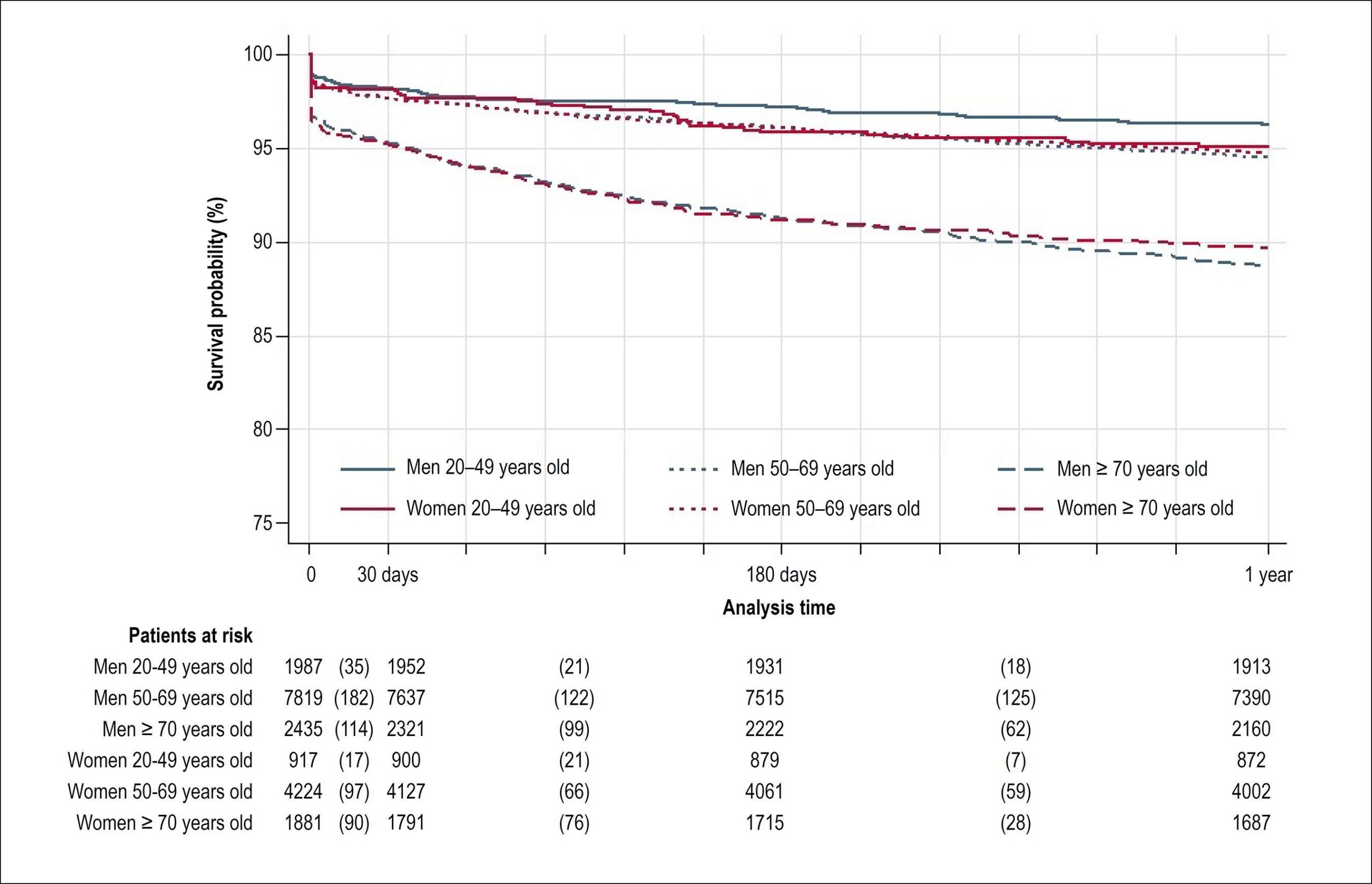
Data of 19,263 patients (61 ± 11 years old, 63.6% men) were analyzed. Survival rates of men vs. women in 30 days, one year and 15 years were: 97.3% (97.0-97.6%) vs. 97.1% (96.6-97.4%), 93.6% (93.2-94.1%) vs. 93.4% (92.8-94.0%), and 55.7% (54.0-57.4%) vs. 58.1% (55.8-60.3%), respectively. The oldest age group was associated with lower survival rates in all periods. PCI with stent placement had higher survival rates than those without stent placement during a two-year follow-up. After that, both procedures had similar survival rates (HR 0.91, 95% CI 0.82-1.00).

Conclusions:

In a population of real-world patients, women had a higher survival rate than men within 15 years after PCI. Moreover, using a bare-metal stent failed to improve survival rates after a two-year follow-up compared to simple balloon angioplasty.
  • Coronary Artery Disease
  • Mortality
  • Myocardial Revascularization
  • Percutaneous Coronary Intervention
Read Full Article
Creative Commons Attribution (CC BY) Creative Commons license
18/10/2018 DOI: 10.5935/abc.20180184
Editorial

Predictors of Family Recruitment in a Program of Genetic Cascade Screening for Familial Hypercholesterolemia

Maria Cristina de Oliveira Izar et al. Francisco Antonio Helfenstein Fonseca

Familial hypercholesterolemia (FH) is a common inherited disease affecting lipid metabolism; it is associated with lifelong exposure to high levels of LDL-cholesterol, and premature atherosclerotic cardiovascular disease. FH imposes an enormous burden on patients and their relatives, due to years of life lost, and particularly, for not being diagnosed as an entity.

In spite of the high LDL-cholesterol and even after an atherosclerotic event, a large proportion of individuals with FH remains undiagnosed., Criteria for diagnosing FH are based on clinical findings, family history, LDL-cholesterol levels, and genetic testing (Simon Broome or Dutch Lipid Clinic Network), or on the LDL-cholesterol levels alone (US MED PED). However, FH phenotypes can vary, and the lack of physical signs (15-30% of patients with genetic diagnosis of FH present xanthomas or corneal arcus, and 5% have xanthelasma) can contribute for the underdiagnosis of FH. –

[…]

  • Family Health Strategy
  • Hyperlipoproteinemia Type II/genetic
  • Hyperlipoproteinemia/prevention &control
  • Lipid Metabolism Disorders
Read Full Article
Creative Commons Attribution (CC BY) Creative Commons license
01/10/2018 DOI: 10.5935/abc.20180193
Editorial

From Journals to Bedside: We Must Improve the Compliance with Practice Guidelines

Barbara Kumagai et al. Bruno Caramelli

In this issue of “Arquivos Brasileiros de Cardiologia”, Borges et al. described the rate of non-compliance with practice guidelines in a Hospital-based study regarding the use of antiplatelet agents in the perioperative setting of non-cardiac surgery. The authors found an extremely high non-compliance rate of 80.75%, and depicted a significant negative association among non-compliance, patient education level, and the presence of previous myocardial infarction. The authors concluded that local procedures and protocols must be urgently defined.

Perioperative care underwent profound changes in the past decades. Initially, evaluation was limited to issues related to the anesthetic procedures, or to the cancellation of interventions for patients at high risk of complications. Eventually, population aging, the improvement in surgical techniques, and the development of less invasive procedures brought to operation theaters patients at an increased risk of complications, especially cardiovascular ones. Perioperative care specialists had to develop new and interdisciplinary skills to deal with several aspects of medicine, kindly deserving the nickname Chameleon doctor.–

[…]

  • medication adherence
  • Myocardial Infarction
  • Perioperative Care
  • Platelet Aggregation Inhibitors/therapeutic use
  • Practice Guidelines as Topic
  • Treatment Refusal
Read Full Article
Creative Commons Attribution (CC BY) Creative Commons license
01/10/2018 DOI: 10.5935/abc.20180186 Views 2
Editorial

To Defer or Not Defer? The Challenges of Physiology in Acute Coronary Syndromes

Carlos M. Campos et al. Pedro A. Lemos

Conventional angiography may unreliably estimate the functional severity of coronary lesions, particularly of intermediate stenosis. It is in this context that intracoronary physiology, namely the measurement of fractional flow reserve (FFR), has been developed: to precisely differentiate stenoses that cause myocardial ischemia from those that are not significantly obstructive. Overall, FFR has been applied as a decision-making tool, helping to indicate (or defer) revascularization in intermediate or ambiguous coronary stenoses. Compared with angiography alone, the addition of FFR-derived information has been shown to improve patient outcomes and procedural cost-efficiencies, with physiology-guided coronary revascularization being currently recommended in clinical practice guidelines, on the grounds of ample scientific evidence.

Almost twenty years ago, the pivotal DEFER trial consolidated the concept that FFR-based postponement of revascularization is safe. However, numerous reasons make the translation of the DEFER trial to contemporary clinical practice outdated: i) the excessively restrictive 0.75 cutoff (as used in the study) has been supplanted by the more permissive 0.80 threshold, ii) balloon angioplasty as a stand-alone therapy has been largely replaced by drug-eluting stents, iii) more potent antiplatelet agents and other medical therapies have become available, and iv) the relation between FFR and the obstructive profile of coronary lesion is yet being questioned by some authors. Thus, the contemporary safety of deferring lesions in stable angina pectoris (SAP) and acute coronary syndrome (ACS) on the basis of FFR still deserves investigation.

[…]

  • Acute Coronary Syndrome/physiopathology
  • Angina, Stable
  • Fractional Flow Reserve, Myocardial
  • Myocardial Revascularization
  • Percutaneous Coronary Intervention
Read Full Article
Creative Commons Attribution (CC BY) Creative Commons license
01/10/2018 DOI: 10.5935/abc.20180206 Views 1
Letter to the Editor

Body Mass Index May Influence Heart Rate Variability

Thalys Sampaio Rodrigues et al. Levindo José Garcia Quarto

We read with interest the article by Bassi et al., titled “Effects of Coexistence Hypertension and Type II Diabetes on Heart Rate Variability and Cardiorespiratory Fitness”, published in the issue of July 2018. The authors investigated the influence of systemic hypertension on cardiac autonomic modulation in patients with type 2 diabetes mellitus (T2DM) and assessed the heart rate variability (HRV) on exercise capacity in these patients. They concluded that hypertension negatively affects cardiac autonomic function, with greater impairment in HRV, when compared to normotensive patients with T2DM.

Several aspects of this study require discussion. As previously reported, numerous factors may have impact on HRV indices, including sex, insulin resistance, body mass index (BMI), hyperlipidemia, hypertension, ischemic and non-ischemic cardiomyopathy, and smoking status.– For instance, increased BMI can independently decrease HRV, particularly when central adiposity is present. Indeed, the hypertensive group had a higher BMI when compared to the normotensive group (28 ± 4.4 vs 31 ± 3.8, p = 0.031). Given the lack of control for BMI between the two groups, the conclusions made by the authors should be regarded cautiously.

[…]

  • Autonomic Nervous Systems
  • Cardiovascular Diseases
  • Diabetes Mellitus, Type 2
  • Heart Rate
  • Hypertension/prevalence
  • Risk Factors
Read Full Article
Creative Commons Attribution (CC BY) Creative Commons license
01/10/2018 DOI: 10.5935/abc.20180201
Editorial

The Importance of the Prehospital Phase in ST Elevation Myocardial Infarction

Gláucia Maria Moraes de Oliveira et al. Paolo Blanco Villela

Notwithstanding the decline which has been observed in recent years, circulatory diseases continue to be the leading cause of death in Brazil. In spite of recent advances in clinical and interventional treatment,, ischemic heart disease (IHD) was responsible for 116,333 deaths in 2016, of which 80% were due to acute manifestations, principally in the form of acute myocardial infarction (AMI).

In treating AMI patients, especially those with ST-segment elevation, the pre-hospital phase of care plays a crucial role in short- and long-term prognosis. Two data related to this phase deserve our attention. First, we may observe delays in reaching healthcare services. In 80% of cases, these delays last for more than two hours starting from the moment symptoms begin to manifest., Second, it stands out that 50% of deaths resulting from AMI were recorded precisely during the pre-hospital phase.,

[…]

  • Cardiovascular Diseases, mortality
  • Emergency Medical Services
  • Epidemiology
  • Healthcare Inequality
  • Patient Acceptance of Healthcare
  • Patient Transportation
Read Full Article
Creative Commons Attribution (CC BY) Creative Commons license
01/10/2018 DOI: 10.5935/abc.20180209 Views 2
Figure 1
Image

Takayasu Arteritis: From Diagnosis to a Life-Threatening Complication

Filipa Cordeiro et al. Sofia Silva Carvalho Fernando Salvador Alberto Ferreira J. Ilidio Moreira

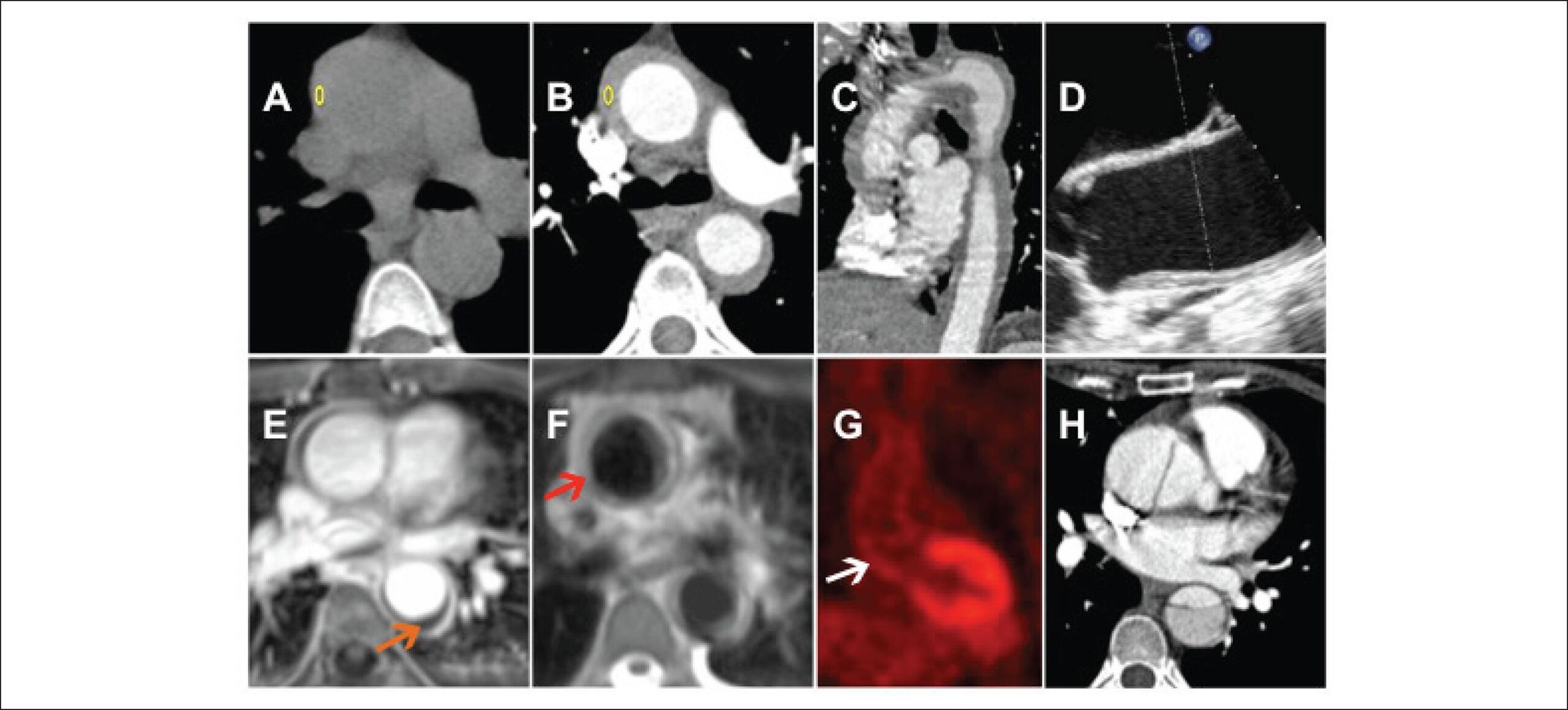
A fifty-two-year-old Caucasian woman was admitted for severe epigastric pain irradiating to the back. Physical examination and electrocardiogram were normal. Laboratory tests showed leucocytosis (11100 cells/uL) and increased levels of C-reactive protein (15.6 mg/dl). Due to the suspicion of acute aortic syndrome (AAS), she underwent computed tomography (CT), which showed a low attenuation circumferential mural thickening of the aorta (43 Hounsfield units (HU)), which enhanced (73 HU) after contrast administration (-), suggestive of aortitis. Transesophageal echocardiogram also revealed thickened thoracic aorta (). Cardiovascular magnetic resonance imaging confirmed the diagnosis of aortitis and excluded intramural hematoma (mural thickening hypointense on T1-weighted images and hyperintense on T2-weighted images), (Figures E-F). Infectious serologies were negative.

[…]

  • Aortitis/physiopathology
  • Takayasu Arteritis/diagnostic imaging
  • Takayasu Arteritis/surgery
  • vasculitis
Read Full Article
Creative Commons Attribution (CC BY) Creative Commons license
01/10/2018 DOI: 10.5935/abc.20180195 Views 1
Editorial

Endothelial Function and Physical Exercise

Luana Urbano Pagan et al. Mariana Janini Gomes Marina Politi Okoshi

The endothelium is considered an active and dynamic tissue with important properties such as maintenance of blood circulation, regulation of vascular tone, microvascular permeability, signaling, and vascular angiogenesis and inflammatory response. The endothelium allows the connection among components of the circulation and body systems. Endothelial cells produce and, depending on the stimulus received, release factors that lead to vascular smooth muscle cells contraction or relaxation. Vascular tone control by the endothelium is modulated by the production and release of mediators such as nitric oxide, prostacyclins, prostaglandins, thromboxane, angiotensin II, endothelin-1 and reactive oxygen species. Under physiological conditions, these factors are balanced. Imbalance in the production of substances by the endothelium leads to triggering and progression of several conditions and diseases such as ischemia, thrombosis, atherosclerosis, arterial hypertension, inflammation and tumor growth., Therefore, vascular endothelial dysfunction is an important pathophysiological factor in human diseases.

Endothelial dysfunction is mainly characterized by changes in endothelial actions involving the reduction of vasodilation and the induction of a pro-inflammatory or prothrombotic state. Due to its clinical importance, endothelial dysfunction is considered an independent predictor of cardiovascular risk. In addition, it can also be observed in non-cardiovascular diseases, such as rheumatic and autoimmune diseases.

[…]

  • Cardiovascular Diseases
  • Endothelium, Vascular / physiopathology
  • Exercise Therapy
  • Nitric Oxide
  • Rats
  • Vascular Tonus
Read Full Article
Creative Commons Attribution (CC BY) Creative Commons license
01/10/2018 DOI: 10.5935/abc.20180211 Views 1
Editorial

Analysis of Cardiac Dyssynchrony – An Unsolved Issue! How to improve selection and response to Cardiac Resynchronization Therapy?

Eduardo Arrais Rocha

The authors Nascimento et al., published an important work demonstrating the value of myocardial perfusion scintigraphy (SPECT-Gated) to identify cardiac dyssynchrony (CD) and with posterior implantation of left ventricle (LV) electrode in the area with higher dyssynchrony, with favorable correlation with clinical results and cardiac function. The study rises important issues in the attempt to reduce non-respondent rate (30-40%). These high rates are due to implants in very advanced or irreversible phases of the disease or to positioning of the LV electrode in areas with fibrosis or due to absence of dyssynchrony.

All the current directives take the indication of cardiac resynchronization therapy (CRT) in consideration, based on electrical dyssynchrony criteria, in detriment of mechanical dyssynchrony criteria. The Echo CRT study confirmed the unfavorable results in patients submitted to CRT in absence of CD, minding it may be a deleterious therapy.

[…]

  • Cardiac Resynchronization Therapy
  • Cardiac resynchronization-therapy devices
  • Eletrodes
  • Myocardial Perfusion Imaging, Diagnostic Imaging
Read Full Article
Creative Commons Attribution (CC BY) Creative Commons license
01/10/2018 DOI: 10.5935/abc.20180200 Views 1
Editorial

Rosuvastatin Decreases the Formation of Neointima by Increasing Apo J, Reducing Restenosis after Balloon Injury in Rats

Paulo Magno Martins Dourado

The study by Yang et al. brings new light on the action of Apolipoprotein (Apo) J, also called clusterin (CLU), a heterodimeric glycoprotein consisting of α and β subunits linked by disulfide bond., The coding gene of Apo J is located on chromosome 8p21-p12, encoding two main isoforms, including secreted (sCLU) and nuclear (nCLU) on restenosis following balloon percutaneous transluminal carotid angioplasty (PTCA) in an experimental model in rats; this was published in this edition of the Brazilian Archives of Cardiology, because there is a controversy in the literature whether Apo J, which is elevated in atherosclerosis and post-angioplasty, plays a protective or promoting role for restenosis. Apo J is involved in several important pathological processes in the transport of lipids, and in the differentiation of vascular smooth muscle cells (VSMC), including cell death by apoptosis, cell cycle regulation, cell adhesion, tissue remodeling, regulation of the immune system and oxidative stress, playing a role in the development of clinical atherosclerosis., In the process of attenuating atherosclerosis, Apo J can promote the export of cholesterol and phospholipids from foam cells of macrophages, and show cytoprotective and anti-inflammatory actions interacting with many known inflammatory proteins that may act in the initial phase of clinical cardiovascular events, and may play an important role in mediating atherosclerotic disease, such as C-reactive protein, paraoxonase and leptin. There are studies reporting that Apo J can stimulate the proliferation and migration of VSMC, and promote restenosis,, and there have been studies showing that overexpression of CLUs can inhibit migration and proliferation of VSMC, and inhibit cellular apoptosis. In view of these controversial results, the authors sought to elucidate the role of Apo J in neointimal hyperplasia, using the rat carotid artery in vivo, with or without rosuvastatin.

The results of the study published here suggest that rosuvastatin can inhibit intimal hyperplasia due to the high expression of Apo J in the active proliferation and migration phase of VSMC, after balloon injury in rats. In the present study, the authors evidenced an increase in the intimal/media (I/M) area rate after the balloon injury that reached the maximum value in the fourth week in the model group; in addition, I/M was increased at week 2, and such increase ceased after the administration of rosuvastatin. These results suggest that rosuvastatin can significantly reduce the degree of intimal hyperplasia in the balloon-injured carotid arteries in rats. The levels of Messenger Ribonucleic Acid (mRNA) and Apo J were increased in the carotid arteries in the group using rosuvastatin, when compared to the model group, reaching the maximum in the second week, earlier than in the model group, suggesting that rosuvastatin can inhibit intimal hyperplasia by increasing Apo J after balloon injury in rats. Therefore, Apo J has been identified as having a central role in the migration, adhesion and vascular proliferation process, and that it can contribute significantly to restenosis after vascular injury.

[…]

  • Angioplasty
  • Carotid Arteries
  • Clusterin/genetic
  • Coronary Restenosis
  • Percutaneous Coronary Intervention/trends
  • Rats
Read Full Article
Creative Commons Attribution (CC BY) Creative Commons license
01/10/2018 DOI: 10.5935/abc.20180204 Views 1
Viewpoint

Internationalization is Necessary, But is it Enough?

Gláucia Maria Moraes de Oliveira et al. Andrea De Lorenzo Fernanda Marciano Consolim Colombo Eduardo Back Sternick … Andréa Araujo Brandão Sergio Emanuel Kaiser Alexandre Schaan de Quadros Renato Abdala Karam Kalil Christianne Brêtas Vieira Scaramello Francisco Rafael Martins Laurindo Ludhmila Abrahão Hajjar

Globalization has left its mark on the 21st century. One of the many ways of defining globalization is as the integration of information, communication, and economy on a worldwide scale, with a direct influence on all levels of higher education. In this manner, the internationalization of postgraduation may be seen as a response to globalization, taking shape in the form of programs and policies put in place by academic institutions and governments in order to increase student and faculty exchanges and to stimulate and strengthen partnerships in research, among other actions. Universities and research centers have, in fact, been practicing these actions for a long time, but they have expanded significantly, particularly during this century.

Various studies– have repeatedly shown that collaborative research that involves authors from multiple institutions and/or countries have an identifiably greater impact than research involving only one group or institution. In Brazil, the internationalization of postgraduation has been highly valued by the Coordination for the Improvement of Higher Education Personnel (CAPES), generating immense efforts on the part of postgraduate programs (PGPs) to achieve the goals defined. In a study conducted with PGPs ranked 6 or 7 by CAPES, Ramos observed that internationalization in these PGPs encompasses everything from international mobility, international cooperation networks, academic output (international publications, international co-authorships, presentation of academic work in international scientific conferences and meetings), to access to resources through the sharing of research facilities and international funding. In Brazilian PGPs, the most popular internationalization strategies were international mobility of faculty, researchers, and students and international research collaboration, implemented mainly through international cooperation agreements. This study, nevertheless, detected inequalities between institutions in the provision of adequate conditions for internationalization. The availability of financial resources, the existence of regulatory frameworks, and organizational support were considered important requisites for achieving this goal.

[…]

  • Citation Databases
  • Databases, Bibliographics
  • International Cooperation
  • Journal Impact Factor
  • Researcher Performance Evaluation System
  • Scientifcs Periodicals/internacionalization
Read Full Article
Creative Commons Attribution (CC BY) Creative Commons license
01/10/2018 DOI: 10.5935/abc.20180212 Views 1
Figure 1
Case Report

Quantification of Coronary Flow Reserve with CZT Gamma Camera in the Evaluation of Multivessel Coronary Disease

Ana Carolina do Amaral Henrique de Souza et al. Bernardo Kremer Diniz Gonçalves Angelo Tedeschi Ronaldo de Souza Leão Lima

Introduction

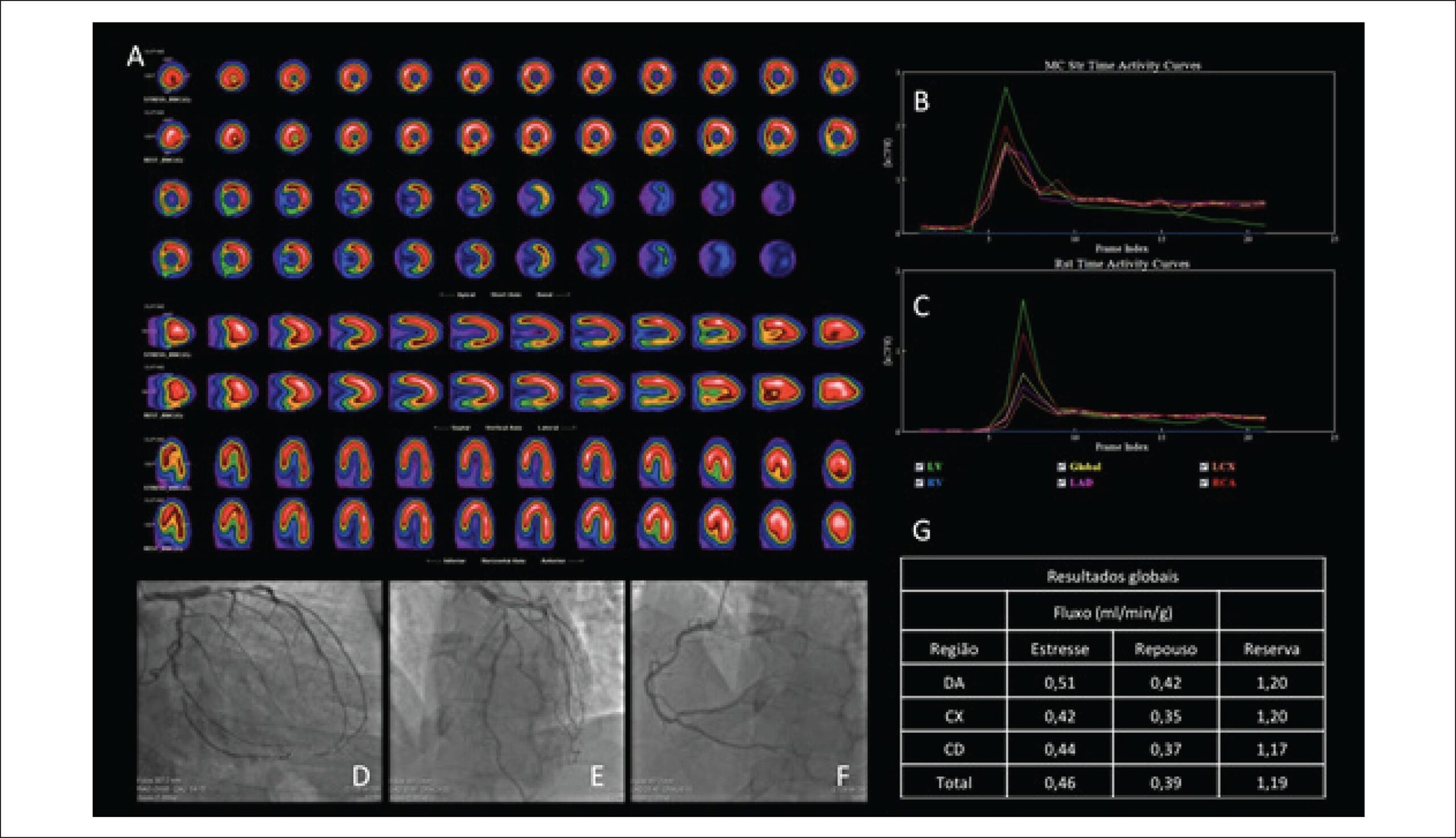
Evaluating patients with multivessel coronary disease using myocardial perfusion scintigraphy (MPS) remains a challenge as the extent and severity of the disease can be underestimated. This phenomenon occurs in part due to balanced ischemia and inaccuracy of traditional devices to identify small changes in coronary flow in the stress phase., New gamma cameras with cadmium and zinc telluride (CZT) detectors that are already commercially available have shown higher temporal and spatial resolution,– theoretically enabling dynamic acquisition of images and calculation of myocardial blood flow (MBF) and coronary flow reserve (CFR) in an absolute way., This tool, whose use with positron emission tomography (PET) is already well established,– may be promising to non invasively access three-vessel obstructive coronary artery disease (CAD) using scintigraphy and its conventional radiotracers. The objective of this case report is to describe the quantification of CFR upon diagnosis of a patient with multivessel disease whose myocardial perfusion image showed a defect not compatible with coronary angiography.

[…]

  • Coronary Artery Disease
  • Coronary floe reserve/methods
  • Diagnostic Imaging
  • Fractional Flow Reserve, Myocardial
  • Myocardial Perfusion Imaging
Read Full Article
Creative Commons Attribution (CC BY) Creative Commons license
01/10/2018 DOI: 10.5935/abc.20180196 Views 1
Figure 1
Anatomopathological Correlation

Case 5 / 2018 – Acute Respiratory Failure and Cardiogenic Shock in a Patient in the First Trimester of Pregnancy with Mechanical Mitral Valve Prosthesis Implant

Walkíria Samuel Ávila et al. Vinícius Araújo de Freitas Chagas Caldas Daniel Valente Batista Paulo Sampaio Gutierrez

Clinical aspects

The case reported is of a 36-year-old pregnant woman with repaired complex congenital heart disease, with a mechanical mitral valve prosthesis implanted 28 years before, paroxysmal atrial fibrillation, and a history of thromboembolism, a triad that characterizes a high thromboembolic risk.

Notwithstanding, the patient maintained the adequate anticoagulation goal (INR = 3) until the pregnancy diagnosis, when the anticoagulation regimen of warfarin was replaced by enoxaparin due to the risk of fetal warfarin syndrome, which occurs between the 6th and 12th weeks of gestation (characterized by nasal hypoplasia, dysplasia of the bony epiphyses, limb deformities, neurological and respiratory problems). However, there is less evidence of the erratic bioavailability and distribution of enoxaparin during pregnancy, although it constitutes a current challenge to define the best anticoagulation strategy in this population with high thromboembolic risk.

[…]

  • Heart Defects, Congenital
  • Heart Valve Prosthesis
  • Pregnancy
  • Respiratory Insufficiency
  • Shock, Cardiogenic
Read Full Article
Creative Commons Attribution (CC BY) Creative Commons license
01/10/2018 DOI: 10.5935/abc.20180205 Views 1
Erratum

Erratum

September issue of 2017, vol. 109 (3), Suppl. 1, pages 1-104

In “3rd Guideline for Perioperative Cardiovascular Evaluation of the Brazilian Society of Cardiology”, consider Marcondes-Braga FG as the correct form for the name of the author Fabiana Goulart Marcondes Braga.

[…]

Read Full Article
Creative Commons Attribution (CC BY) Creative Commons license
01/10/2018 DOI: 10.5935/abc.20180213 Views 1
Figure 1
Review Article

Risk-Benefit Assessment of Carotid Revascularization

Pedro Piccaro de Oliveira et al. José Luiz da Costa Vieira Raphael Boesche Guimarães Eduardo Dytz Almeida … Simone Louise Savaris Vera Lucia Portal

Abstract

Severe carotid atherosclerotic disease is responsible for 14% of all strokes, which result in a high rate of morbidity and mortality. In recent years, advances in clinical treatment of cardiovascular diseases have resulted in a significant decrease in mortality due to these causes.

To review the main studies on carotid revascularization, evaluating the relationship between risks and benefits of this procedure.

The data reviewed show that, for a net benefit, carotid intervention should only be performed in cases of a periprocedural risk of less than 6% in symptomatic patients. The medical therapy significantly reduced the revascularization net benefit ratio for stroke prevention in asymptomatic patients. Real life registries indicate that carotid stenting is associated with a greater periprocedural risk. The operator annual procedure volume and patient age has an important influence in the rate of stroke and death after carotid stenting. Symptomatic patients have a higher incidence of death and stroke after the procedure. Revascularization has the greatest benefit in the first weeks of the event.

There is a discrepancy in the scientific literature about carotid revascularization and/or clinical treatment, both in primary and secondary prevention of patients with carotid artery injury. The identification of patients who will really benefit is a dynamic process subject to constant review.

  • Atherosclerosis
  • Carotid Artery Diseases
  • Endarterectomy, Carotid
  • Indicators of Morbidity and Mortality
  • Risk Assessment
  • Stroke
Read Full Article
Creative Commons Attribution (CC BY) Creative Commons license
01/10/2018 DOI: 10.5935/abc.20180208 Views 2
Figure 1
Original Article

Effects of Rosuvastatin on Apolipoprotein J in Balloon-Injured Carotid Artery in Rats

Ning Yang et al. Bo Dong Jinyu Yang Yang Li … Lu Kou Yue Liu Qin Qin

Abstract

Background:

Restenosis after percutaneous coronary intervention in coronary heart disease remains an unsolved problem. Clusterin (CLU) (or Apolipoprotein [Apo] J) levels have been reported to be elevated during the progression of postangioplasty restenosis and atherosclerosis. However, its role in neointimal hyperplasia is still controversial.

Objective:

To elucidate the role Apo J in neointimal hyperplasia in a rat carotid artery model in vivo with or without rosuvastatin administration.

Methods:

Male Wistar rats were randomly divided into three groups: the control group (n = 20), the model group (n = 20) and the statin intervention group (n = 32). The rats in the intervention group were given 10mg /kg dose of rosuvastatin. A 2F Fogarty catheter was introduced to induce vascular injury. Neointima formation was analyzed 1, 2, 3 and 4 weeks after balloon injury. The level of Apo J was measured by real-time PCR, immunohistochemistry and western blotting.

Results:

Intimal/medial area ratio (intimal/medial, I/M) was increased after balloon-injury and reached the maximum value at 4weeks in the model group; I/M was slightly increased at 2 weeks and stopped increasing after rosuvastatin administration. The mRNA and protein levels of Apo J in carotid arteries were significantly upregulated after rosuvastatin administration as compared with the model group, and reached maximum values at 2 weeks, which was earlier than in the model group (3 weeks).

Conclusion:

Apo J served as an acute phase reactant after balloon injury in rat carotid arteries. Rosuvastatin may reduce the neointima formation through up-regulation of Apo J. Our results suggest that Apo J exerts a protective role in the restenosis after balloon-injury in rats.

  • Apolipoprotein J
  • Coronary Artery Dsease
  • Coronary Reestenosis
  • Percutaneous Coronary Intervention
  • Rats
  • Rosuvastatin Calcium
Read Full Article
Creative Commons Attribution (CC BY) Creative Commons license
21/09/2018 DOI: 10.5935/abc.20180163
Figure 1
Original Article

Fractional Flow Reserve-Guided Strategy in Acute Coronary Syndrome. A Systematic Review and Meta-Analysis

José Luís Martins et al. Vera Afreixo José Santos Lino Gonçalves

Abstract

Background:

There are limited data on the prognosis of deferral of lesion treatment in patients with acute coronary syndrome (ACS) based on fractional flow reserve (FFR).

Objectives:

To provide a systematic review of the current evidence on the prognosis of deferred lesions in ACS patients compared with deferred lesions in non-ACS patients, on the basis of FFR.

Methods:

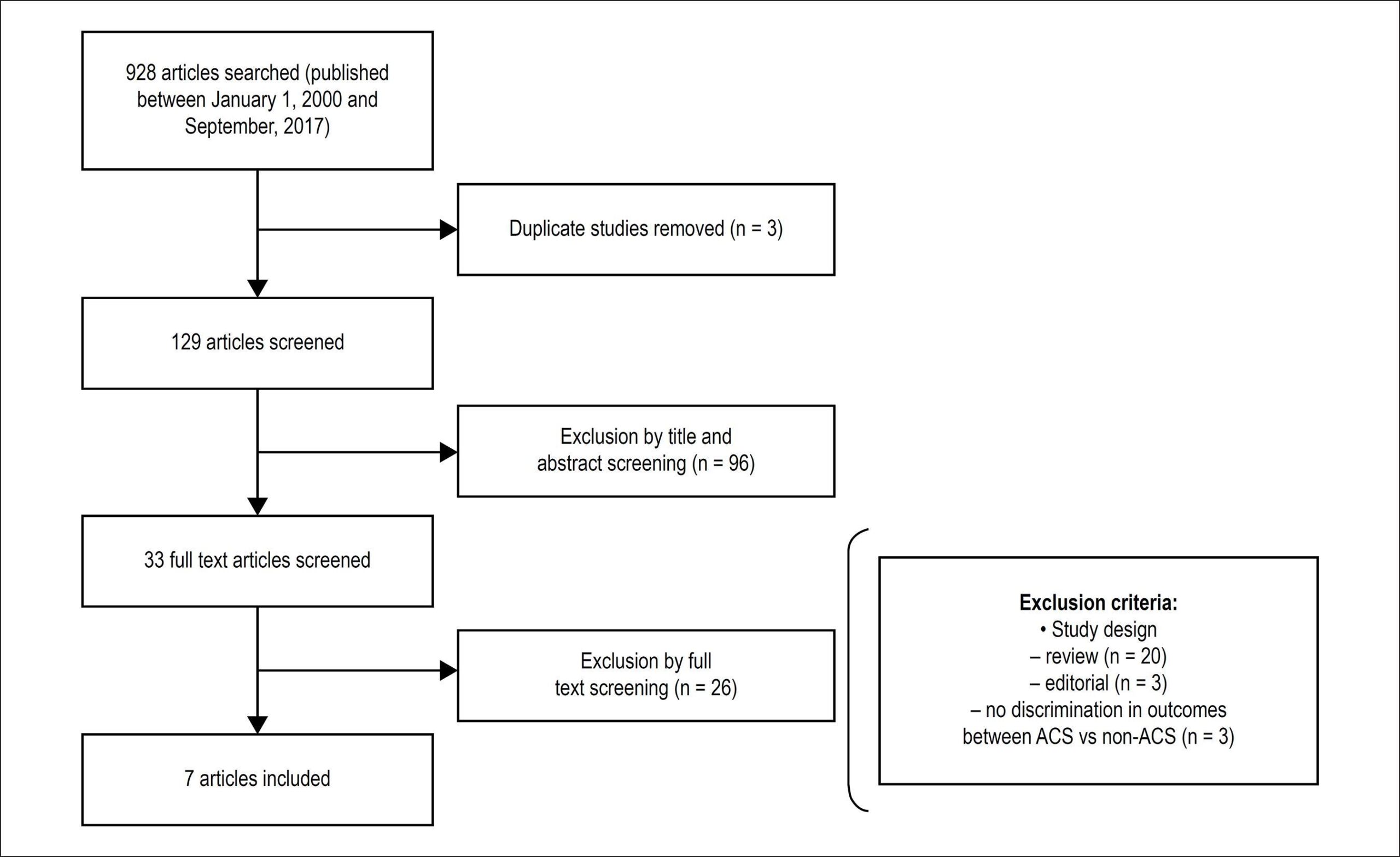
We searched Medline, EMBASE, and the Cochrane Library for studies published between January 2000 and September 2017 that compared prognosis of deferred revascularization of lesions on the basis of FFR in ACS patients compared with non-ACS patients. We conducted a pooled relative risk meta-analysis of four primary outcomes: mortality, cardiovascular (CV) mortality, myocardial infarction (MI) and target-vessel revascularization (TVR).

Results:

We identified 7 studies that included a total of 5,107 patients. A pooled meta-analysis showed no significant difference in mortality (relative risk [RR] = 1.44; 95% CI, 0.9-2.4), CV mortality (RR = 1.29; 95% CI = 0.4-4.3) and TVR (RR = 1.46; 95% CI = 0.9-2.3) after deferral of revascularization based on FFR between ACS and non-ACS patients. Such deferral was associated with significant additional risk of MI (RR = 1.83; 95% CI = 1.4-2.4) in ACS patients.

Conclusion:

The prognostic value of FFR in ACS setting is not as good as in stable patients. The results demonstrate an increased risk of MI but not of mortality, CV mortality, and TVR in ACS patients.

  • Acute Coronary Syndrome/physiopathology
  • Coronary Angiography/methods
  • Fractional Flow Reserve Myocardial/physiology
  • Microvessels
  • Percutaneous Coronary Intervention/methods
  • Reproducibility of Results
  • Vascular Resistance
Read Full Article
Creative Commons Attribution (CC BY) Creative Commons license
21/09/2018 DOI: 10.5935/abc.20180170 Views 1
Original Article

Factors Associated with Inadequate Management of Antiplatelet Agents in Perioperative Period of Non-Cardiac Surgeries

Juliana Maria Dantas Mendonça Borges et al. Pamella de Assis Almeida Mariana Martins Gonzaga do Nascimento José Augusto Soares Barreto Filho … Mario Borges Rosa Antonio Carlos Sobral Sousa

Abstract

Background:

The current guidelines dispose recommendations to manage antiplatelet agents in the perioperative period; however, the daily medical practices lack standardization.

Objectives:

To asses factors associated with inadequate management of antiplatelet agents in the perioperative period of non-cardiac surgeries.

Methods:

Cross-sectional Study conducted in hospital from October 2014 to October 2016. The study dependent variable was a therapy that did not comply with the recommendations in the Brazilian Association of Cardiology (SBC) guidelines. The independent variables included some characteristics, the people in charge of the management and causes of lack of adherence to those guidelines. Variables were included in the multivariate model. Analysis was based on the odds ratio (OR) value and its respective 95% confidence interval (CI) estimated by means of logistic regression with 5% significance level.

Results:

The sample was composed of adult patients submitted to non-cardiac surgeries and who would use acetylsalicylic acid (aspirin) or clopidogrel (n = 161). The management failed to comply with the recommendations in the guidelines in 80.75% of the sample. Surgeons had the highest number of noncomplying orientations (n = 63). After multivariate analysis it was observed that patients with a higher level of schooling (OR = 0.24; CI95% 0.07-0.78) and those with a previous episode of acute myocardial infarction (AMI) (OR = 0.18; CI95% 0.04-0.95) had a higher probability of using a therapy complying with the guidelines.

Conclusion:

Positive association between patients’ schooling level, or those with a history of previous AMI, with management of the use of aspirin and clopidogrel in the perioperative period of non-cardiac surgeries. However, diverging conducts stress the need of having internal protocol defined.

  • Adults
  • Educational Status
  • Intraoperative Care
  • Myocardial Infarction
  • Platelet Aggregation
  • Surgery/perioperative care
Read Full Article
Creative Commons Attribution (CC BY) Creative Commons license
21/09/2018 DOI: 10.5935/abc.20180162 Views 1
Figure 1
Original Article

Independent Predictors of Late Presentation in Patients with ST-Segment Elevation Myocardial Infarction

Juliane Araujo Rodrigues et al. Karina Melleu Márcia Moura Schmidt Carlos Antonio Mascia Gottschall … Maria Antonieta Pereira de Moraes Alexandre Schaan de Quadros

Abstract

Background:

In patients with acute ST-segment elevation myocardial infarction (STEMI), the time elapsed from symptom onset to receiving medical care is one of the main mortality predictors.

Objective:

To identify independent predictors of late presentation in patients STEMI representative of daily clinical practice.

Methods:

All patients admitted with a diagnosis of STEMI in a reference center between December 2009 and November 2014 were evaluated and prospectively followed during hospitalization and for 30 days after discharge. Late presentation was defined as a time interval > 6 hours from chest pain onset until hospital arrival. Multiple logistic regression analysis was used to identify independent predictors of late presentation. Values of p < 0.05 were considered statistically significant.

Results:

A total of 1,297 patients were included, with a mean age of 60.7 ± 11.6 years, of which 71% were males, 85% Caucasians, 72% had a mean income lower than five minimum wages and 66% had systemic arterial hypertension. The median time of clinical presentation was 3.00 [1.40-5.48] hours, and approximately one-quarter of the patients had a late presentation, with their mortality being significantly higher. The independent predictors of late presentation were Black ethnicity, low income and diabetes mellitus, and a history of previous heart disease was a protective factor.

Conclusion:

Black ethnicity, low income and diabetes mellitus are independent predictors of late presentation in STEMI. The identification of subgroups of patients prone to late presentation may help to stimulate prevention policies for these high-risk individuals.

  • Emergency Medical Services
  • First Aid
  • ST Elevation Myocardial Infarction
  • Time Factors
Read Full Article
Creative Commons Attribution (CC BY) Creative Commons license
21/09/2018 DOI: 10.5935/abc.20180178 Views 1
Figure 1
Original Article

Relationship of Electromechanical Dyssynchrony in Patients Submitted to CRT With LV Lead Implantation Guided by Gated Myocardial Perfusion Spect

Erivelton Alessandro do Nascimento et al. Christiane Cigagna Wiefels Reis Fernanda Baptista Ribeiro Christiane Rodrigues Alves … Eduardo Nani Silva Mario Luiz Ribeiro Claudio Tinoco Mesquita

Abstract

Background:

Heart failure (HF) affects more than 5 million individuals in the United States, with more than 1 million hospital admissions per year. Cardiac resynchronization therapy (CRT) can benefit patients with advanced HF and prolonged QRS. A significant percentage of patients, however, does not respond to CRT. Electrical dyssynchrony isolated might not be a good predictor of response, and the last left ventricular (LV) segment to contract can influence the response.

Objectives:

To assess electromechanical dyssynchrony in CRT with LV lead implantation guided by GATED SPECT.

Methods:

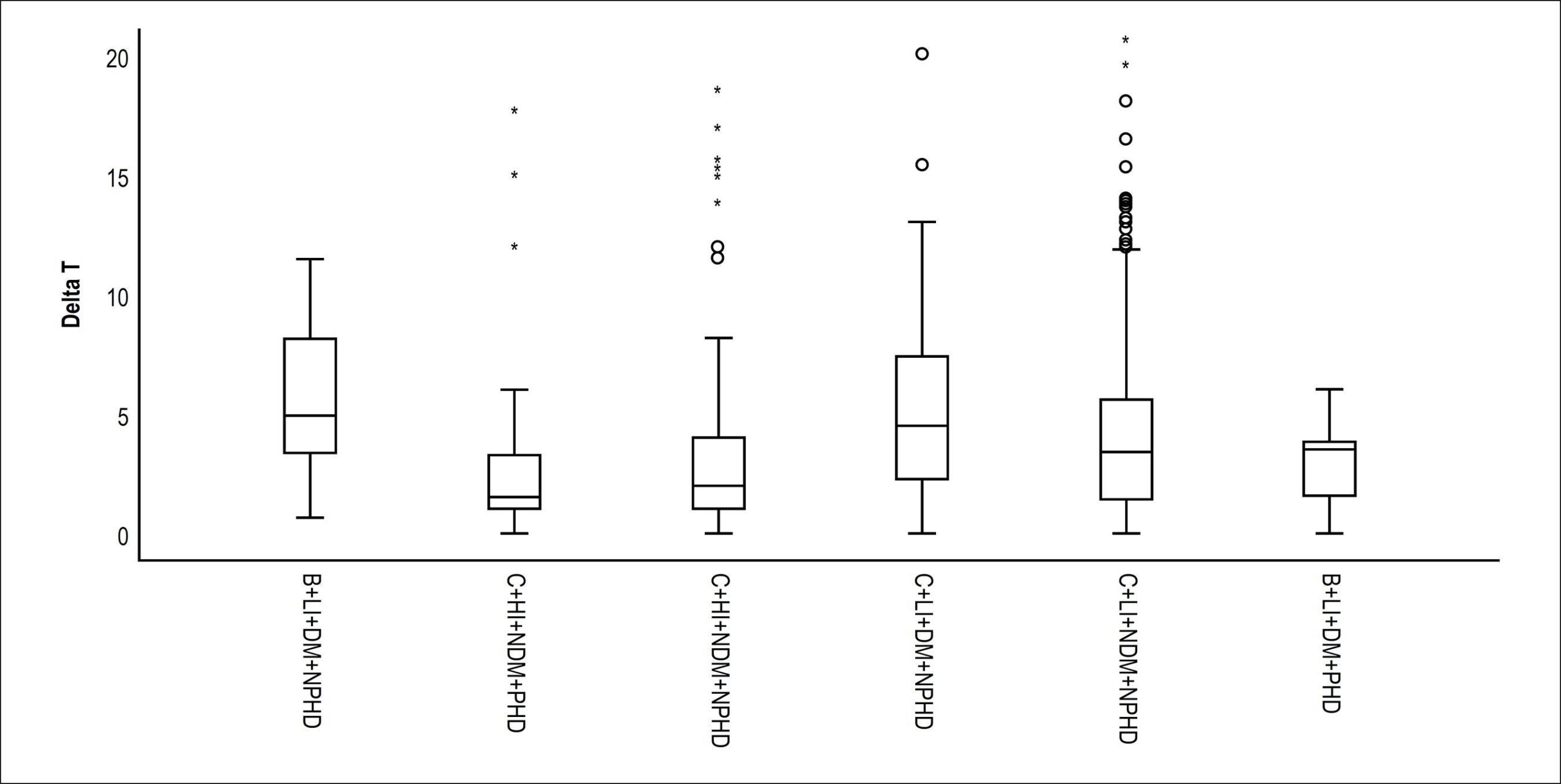
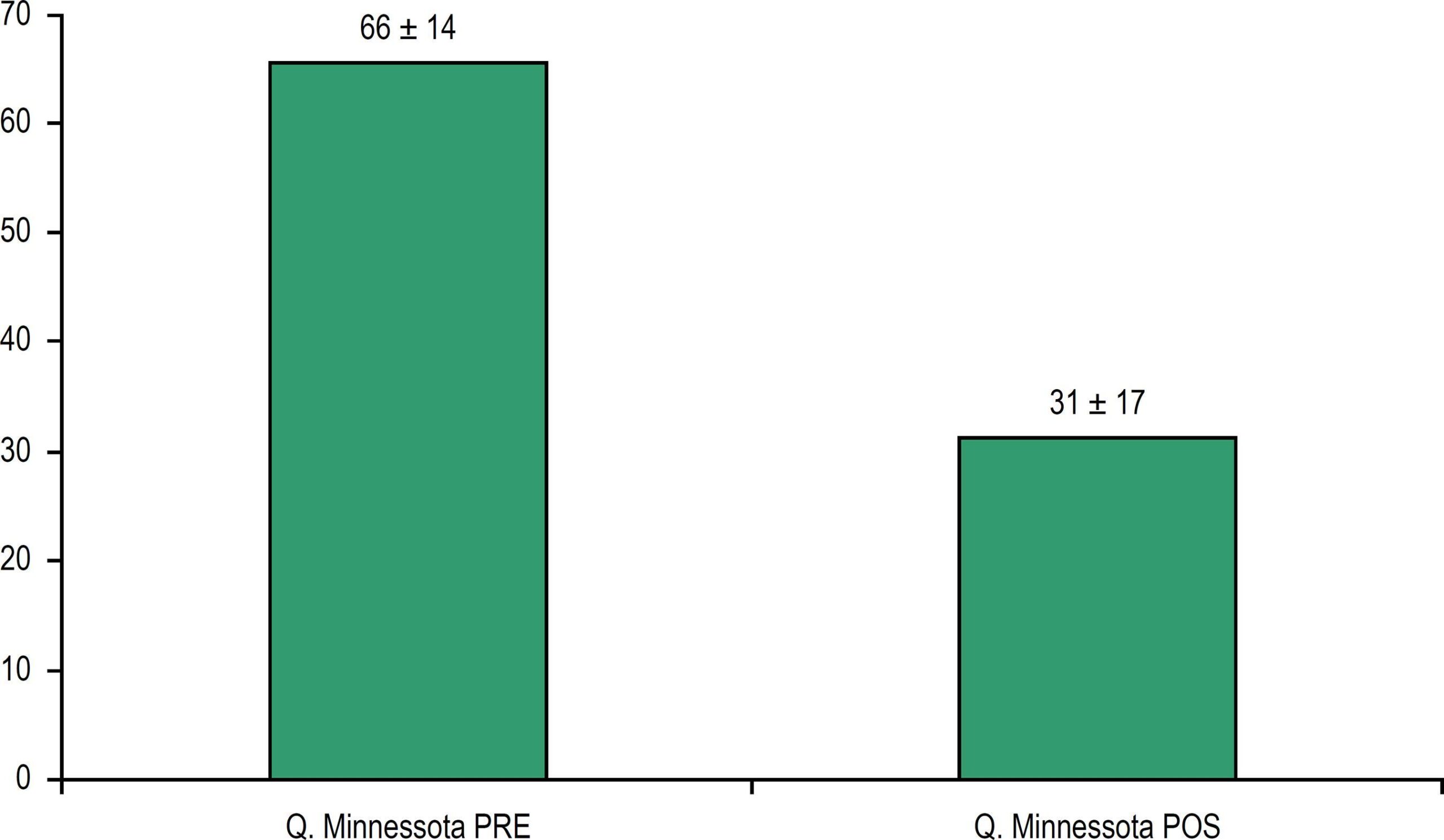
This study included 15 patients with functional class II-IV HF and clinically optimized, ejection fraction of 35%, sinus rhythm, left bundle-branch block, and QRS ≥ 120 ms. The patients underwent electrocardiography, answered the Minnesota Living with Heart Failure Questionnaire (MLHFQ), and underwent gated myocardial perfusion SPECT up to 4 weeks before CRT, being reassessed 6 months later. The primary analysis aimed at determining the proportion of patients with a reduction in QRS duration and favorable response to CRT, depending on concordance of the LV lead position, using chi-square test. The pre- and post-CRT variables were analyzed by use of Student t test, adopting the significance level of 5%.

Results:

We implanted 15 CRT devices, and 2 patients died during follow-up. The durations of the QRS (212 ms vs 136 ms) and the PR interval (179 ms vs 126 ms) were significantly reduced (p < 0.001). In 54% of the patients, the lead position was concordant with the maximal delay site. In the responder group, the lateral position was prevalent. The MLHFQ showed a significant improvement in quality of life (p < 0.0002).

Conclusion:

CRT determines improvement in the quality of life and in electrical synchronism. Electromechanical synchronism relates to response to CRT. Positioning the LV lead in the maximal delay site has limitations.

  • Cardiac Resynchronization Therapy
  • Eletrodes,Implanted
  • Heart Failure
  • Radionuclide Imaging
  • Stroke Volume
Read Full Article
Creative Commons Attribution (CC BY) Creative Commons license
23/08/2018 DOI: 10.5935/abc.20180159 Views 2
Figure 1
Original Article

Predictors of Family Enrollment in a Genetic Cascade Screening Program for Familial Hypercholesterolemia

Pãmela Rodrigues de Souza Silva et al. Cinthia Elim Jannes Theo G. M. Oliveira Luz Marina Gómez Gómez … José E. Krieger Raul D. Santos Alexandre Costa Pereira

Abstract

Background:

Genetic cascade screening is the most cost-effective method for the identification of individuals with familial hypercholesterolemia (FH), but the best strategies for the enrollment of at-risk individuals in a FH screening program are not fully known.

Objective:

The aim of this study is to identify the best predictors of familial enrollment into genetic screening, using features derived from tested probands.

Methods:

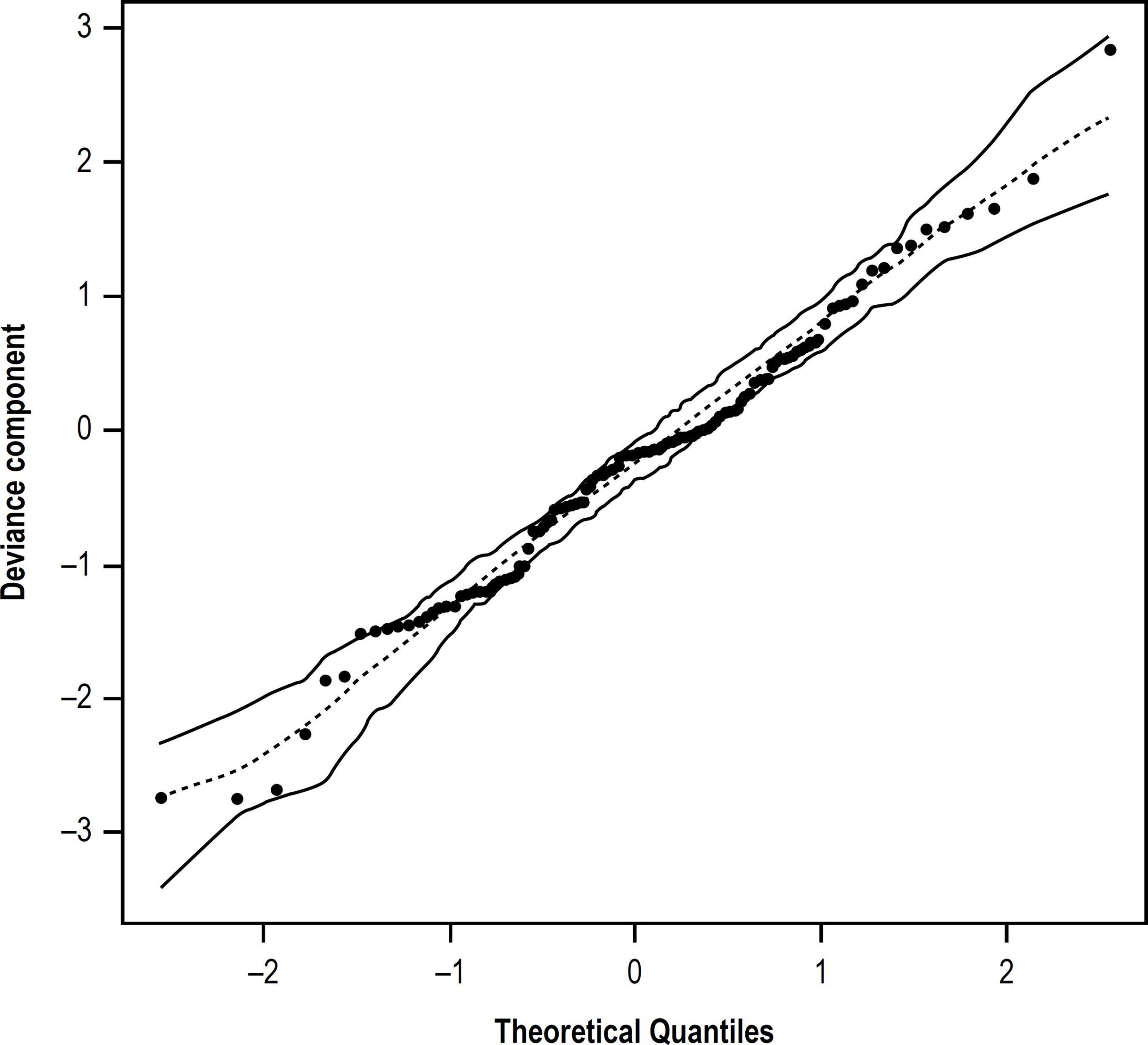
One hundred and eighty-three index-cases (ICs) with a positive genetic result that had relatives screened from 01/2011 to 07/2015 were included. The response variable was the number of relatives for each enrolled IC. All variables in the study were based on ICs’ derived clinical and socioeconomical features. The effect size of predictor variables were obtained through a general linear model using a negative binomial regression link function. Significance was considered with a p < 0.05.

Results:

Mean IC age when enrolling into the program was 50 years old; 78.1% of individuals reported knowledge of relatives with dyslipidemia. Mean baseline LDL-cholesterol level was 316 ± 90 mg/dL. Referral origin through the cascade program website vs. tertiary care, IC LDL-cholesterol and familial history of high LDL-cholesterol levels were independent predictors associated with a higher number of enrolled relatives.

Conclusions:

Our data suggest that FH cascade screening programs can predict family enrollment based on IC features. This information may be useful for devising better and more effective screening approaches for at-risk individuals.

  • Cholesterol
  • Dyslipidemias/genetics
  • Genetic Testing
  • Hypelipoproteinemia Type II/genetics
  • Hypercholesterolemia
  • Mass Screening
Read Full Article
Creative Commons Attribution (CC BY) Creative Commons license
23/08/2018 DOI: 10.5935/abc.20180156 Views 1
Figure 1
Original Article

Genetic Testing and Pregnancy Outcome Analysis of 362 Fetuses with Congenital Heart Disease Identified by Prenatal Ultrasound

Shiyu Luo et al. Dahua Meng Qifei Li Xuehua Hu … Yuhua Chen Chun He Bobo Xie Shangyang She Yingfeng Li Chunyun Fu

Abstract

Background:

Congenital heart defects (CHD), as the most common congenital anomaly, have been reported to be associated with chromosomal abnormalities. Currently, patients with CHD are routinely offered karyotyping and chromosomal microarray (CMA) testing, but the genotype-phenotype relationship has not yet been fully established.

Objective:

To determine the type and frequency of chromosomal abnormalities in fetuses with CHD and to analyze pregnancy outcomes of fetuses with heart abnormalities caused by different genetic factors.

Methods:

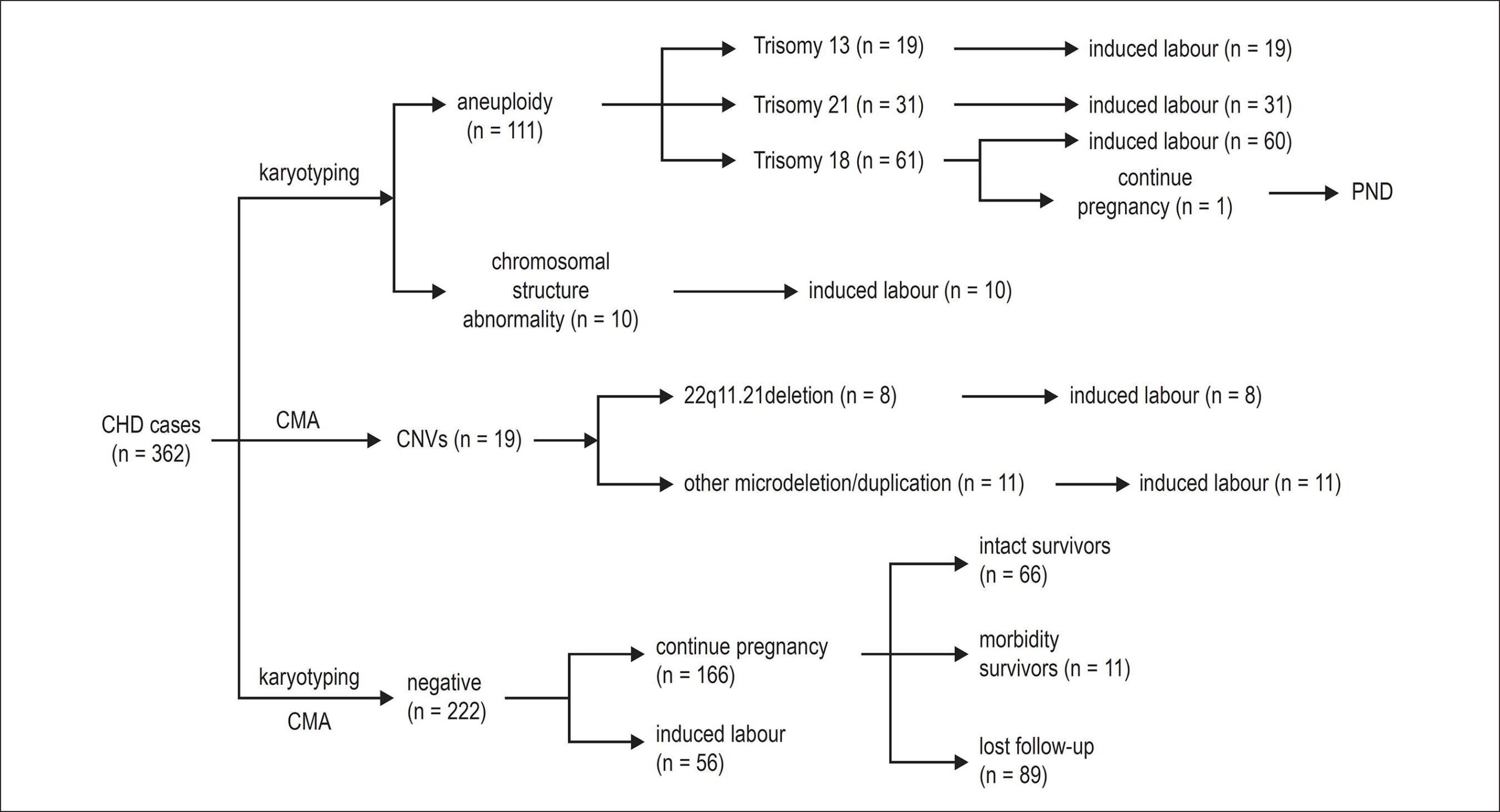
A total of 362 cases of CHD were enrolled from 2009 to 2016. Detailed ultrasound and laboratory examinations, including karyotyping and CMA, were performed. Outcome was obtained from discharge summaries.

Results:

Of the 362 fetuses, 220 were found with an isolated CHD, and 142 had CHD with extracardiac anomaly. Among these 362 fetuses, 140 were identified with a genetic cause, including 111 cases with aneuploidy, 10 cases with abnormality of chromosomal structure by karyotyping and 19 cases with pathogenic or likely pathogenic copy-number variations (CNVs) by CMA. The detection rate is close to 38.7%. Only one (identified as trisomy 18 syndrome) in 140 positive cases resulted in perinatal death, with the others being induced. The remaining 222 cases had negative results for both genetic testing and of these cases, 56 resulted in induced labor, and 77 had natural childbirth or caesarean births. The pregnancy outcome of the remaining 89 cases was uncertain.

Conclusions:

Karyotyping and CMA are effective and accurate prenatal genetic techniques for identifying fetal chromosomal abnormalities associated with cardiac defects, and this can assist clinical doctors to perform appropriate genetic counselling with regard to the etiology and outcome of CHD.

  • Chromosome Disorders
  • Fetus
  • Heart Defects, Congenital
  • Pregnancy
  • Spectral Karyotyping
  • Ultrasonography
Read Full Article
Creative Commons Attribution (CC BY) Creative Commons license
20/08/2018 DOI: 10.5935/abc.20180144 Views 1

How to cite this article

EndNote RIS

Electronic Document Format (Vancouver)

Silva CGS, Klein CH, Godoy PH, Salis LHA, Silva NAS. Up to 15-Year Survival of Men and Women after Percutaneous Coronary Intervention Paid by the Brazilian Public Healthcare System in the State of Rio de Janeiro, 1999-2010. Arquivos Brasileiros de Cardiologia 2018;111(4):553-61.

Electronic Document Format (ABNT)

Silva, Christina Grüne de Souza e; Klein, Carlos Henrique; Godoy, Paulo Henrique; Salis, Lucia Helena Alvares; Silva, Nelson Albuquerque de Souza e. Up to 15-Year Survival of Men and Women after Percutaneous Coronary Intervention Paid by the Brazilian Public Healthcare System in the State of Rio de Janeiro, 1999-2010. Arquivos Brasileiros de Cardiologia, v. 111, n. 4, p. 553-561, Oct. 2018.

Electronic Document Format (APA)

Silva, C. G. S. , Klein, C. H., Godoy, P. H., Salis, L. H. A., & Silva, N. A. S. (2018). Up to 15-Year Survival of Men and Women after Percutaneous Coronary Intervention Paid by the Brazilian Public Healthcare System in the State of Rio de Janeiro, 1999-2010. Arquivos Brasileiros de Cardiologia, 111(4), 553-561.

Electronic Document Format (ISO)

Silva, Christina Grüne de Souza e and Klein, Carlos Henrique and Godoy, Paulo Henrique and Salis, Lucia Helena Alvares and Silva, Nelson Albuquerque de Souza e. Up to 15-Year Survival of Men and Women after Percutaneous Coronary Intervention Paid by the Brazilian Public Healthcare System in the State of Rio de Janeiro, 1999-2010. Arquivos Brasileiros de Cardiologia [online]. 2018, vol. 111, n. 4, [cited 2026-10-14], pp. 553-561. Available from: <https://journals.cardiol.br/en/article/up-to-15-year-survival-of-men-and-women-after-percutaneous-coronary-intervention-paid-by-the-brazilian-public-healthcare-system-in-the-state-of-rio-de-janeiro-1999-2010/>. ISSN 0066-782X

EndNote RIS

Electronic Document Format (Vancouver)

Izar MCO, Fonseca FAH. Predictors of Family Recruitment in a Program of Genetic Cascade Screening for Familial Hypercholesterolemia. Arquivos Brasileiros de Cardiologia 2018;111(4):585-6.

Electronic Document Format (ABNT)

Izar, Maria Cristina de Oliveira; Fonseca, Francisco Antonio Helfenstein. Predictors of Family Recruitment in a Program of Genetic Cascade Screening for Familial Hypercholesterolemia. Arquivos Brasileiros de Cardiologia, v. 111, n. 4, p. 585-586, Sep. 2018.

Electronic Document Format (APA)

Izar, M. C. O., & Fonseca, F. A. H. (2018). Predictors of Family Recruitment in a Program of Genetic Cascade Screening for Familial Hypercholesterolemia. Arquivos Brasileiros de Cardiologia, 111(4), 585-586.

Electronic Document Format (ISO)

Izar, Maria Cristina de Oliveira and Fonseca, Francisco Antonio Helfenstein. Predictors of Family Recruitment in a Program of Genetic Cascade Screening for Familial Hypercholesterolemia. Arquivos Brasileiros de Cardiologia [online]. 2018, vol. 111, n. 4, [cited 2026-10-14], pp. 585-586. Available from: <https://journals.cardiol.br/en/article/predictors-of-family-recruitment-in-a-program-of-genetic-cascade-screening-for-familial-hypercholesterolemia/>. ISSN 0066-782X

EndNote RIS

Electronic Document Format (Vancouver)

Kumagai B, Caramelli B. From Journals to Bedside: We Must Improve the Compliance with Practice Guidelines. Arquivos Brasileiros de Cardiologia 2018;111(4):605-6.

Electronic Document Format (ABNT)

Kumagai, Barbara; Caramelli, Bruno. From Journals to Bedside: We Must Improve the Compliance with Practice Guidelines. Arquivos Brasileiros de Cardiologia, v. 111, n. 4, p. 605-606, Sep. 2018.

Electronic Document Format (APA)

Kumagai, B., & Caramelli, B. (2018). From Journals to Bedside: We Must Improve the Compliance with Practice Guidelines. Arquivos Brasileiros de Cardiologia, 111(4), 605-606.

Electronic Document Format (ISO)

Kumagai, Barbara and Caramelli, Bruno. From Journals to Bedside: We Must Improve the Compliance with Practice Guidelines. Arquivos Brasileiros de Cardiologia [online]. 2018, vol. 111, n. 4, [cited 2026-10-14], pp. 605-606. Available from: <https://journals.cardiol.br/en/article/from-journals-to-bedside-we-must-improve-the-compliance-with-practice-guidelines/>. ISSN 0066-782X

EndNote RIS

Electronic Document Format (Vancouver)

Campos CM, Lemos PA. To Defer or Not Defer? The Challenges of Physiology in Acute Coronary Syndromes. Arquivos Brasileiros de Cardiologia 2018;111(4):551-2.

Electronic Document Format (ABNT)

Campos, Carlos M.; Lemos, Pedro A.. To Defer or Not Defer? The Challenges of Physiology in Acute Coronary Syndromes. Arquivos Brasileiros de Cardiologia, v. 111, n. 4, p. 551-552, Sep. 2018.

Electronic Document Format (APA)

Campos, C. M., & Lemos, P. A. (2018). To Defer or Not Defer? The Challenges of Physiology in Acute Coronary Syndromes. Arquivos Brasileiros de Cardiologia, 111(4), 551-552.

Electronic Document Format (ISO)

Campos, Carlos M. and Lemos, Pedro A.. To Defer or Not Defer? The Challenges of Physiology in Acute Coronary Syndromes. Arquivos Brasileiros de Cardiologia [online]. 2018, vol. 111, n. 4, [cited 2026-10-14], pp. 551-552. Available from: <https://journals.cardiol.br/en/article/to-defer-or-not-defer-the-challenges-of-physiology-in-acute-coronary-syndromes/>. ISSN 0066-782X

EndNote RIS

Electronic Document Format (Vancouver)

Rodrigues TS, Quarto LJG. Body Mass Index May Influence Heart Rate Variability. Arquivos Brasileiros de Cardiologia 2018;111(4):640-2.

Electronic Document Format (ABNT)

Rodrigues, Thalys Sampaio; Quarto, Levindo José Garcia. Body Mass Index May Influence Heart Rate Variability. Arquivos Brasileiros de Cardiologia, v. 111, n. 4, p. 640-642, Sep. 2018.

Electronic Document Format (APA)

Rodrigues, T. S., & Quarto, L. J. G. (2018). Body Mass Index May Influence Heart Rate Variability. Arquivos Brasileiros de Cardiologia, 111(4), 640-642.

Electronic Document Format (ISO)

Rodrigues, Thalys Sampaio and Quarto, Levindo José Garcia. Body Mass Index May Influence Heart Rate Variability. Arquivos Brasileiros de Cardiologia [online]. 2018, vol. 111, n. 4, [cited 2026-10-14], pp. 640-642. Available from: <https://journals.cardiol.br/en/article/body-mass-index-may-influence-heart-rate-variability/>. ISSN 0066-782X

EndNote RIS

Electronic Document Format (Vancouver)

Oliveira GMM, Villela PB. The Importance of the Prehospital Phase in ST Elevation Myocardial Infarction. Arquivos Brasileiros de Cardiologia 2018;111(4):594-5.

Electronic Document Format (ABNT)

Oliveira, Gláucia Maria Moraes de; Villela, Paolo Blanco. The Importance of the Prehospital Phase in ST Elevation Myocardial Infarction. Arquivos Brasileiros de Cardiologia, v. 111, n. 4, p. 594-595, Sep. 2018.

Electronic Document Format (APA)

Oliveira, G. M. M. , & Villela, P. B. (2018). The Importance of the Prehospital Phase in ST Elevation Myocardial Infarction. Arquivos Brasileiros de Cardiologia, 111(4), 594-595.

Electronic Document Format (ISO)

Oliveira, Gláucia Maria Moraes de and Villela, Paolo Blanco. The Importance of the Prehospital Phase in ST Elevation Myocardial Infarction. Arquivos Brasileiros de Cardiologia [online]. 2018, vol. 111, n. 4, [cited 2026-10-14], pp. 594-595. Available from: <https://journals.cardiol.br/en/article/the-importance-of-the-prehospital-phase-in-st-elevation-myocardial-infarction/>. ISSN 0066-782X

EndNote RIS

Electronic Document Format (Vancouver)

Cordeiro F, Carvalho SS, Salvador F, Ferreira A, Moreira JI. Takayasu Arteritis: From Diagnosis to a Life-Threatening Complication. Arquivos Brasileiros de Cardiologia 2018;111(4):638-9.

Electronic Document Format (ABNT)

Cordeiro, Filipa; Carvalho, Sofia Silva; Salvador, Fernando; Ferreira, Alberto; Moreira, J. Ilidio. Takayasu Arteritis: From Diagnosis to a Life-Threatening Complication. Arquivos Brasileiros de Cardiologia, v. 111, n. 4, p. 638-639, Sep. 2018.

Electronic Document Format (APA)

Cordeiro, F., Carvalho, S. S., Salvador, F., Ferreira, A., & Moreira, J. I. (2018). Takayasu Arteritis: From Diagnosis to a Life-Threatening Complication. Arquivos Brasileiros de Cardiologia, 111(4), 638-639.

Electronic Document Format (ISO)

Cordeiro, Filipa and Carvalho, Sofia Silva and Salvador, Fernando and Ferreira, Alberto and Moreira, J. Ilidio. Takayasu Arteritis: From Diagnosis to a Life-Threatening Complication. Arquivos Brasileiros de Cardiologia [online]. 2018, vol. 111, n. 4, [cited 2026-10-14], pp. 638-639. Available from: <https://journals.cardiol.br/en/article/takayasu-arteritis-from-diagnosis-to-a-life-threatening-complication/>. ISSN 0066-782X

EndNote RIS

Electronic Document Format (Vancouver)

Pagan LU, Gomes MJ, Okoshi MP. Endothelial Function and Physical Exercise. Arquivos Brasileiros de Cardiologia 2018;111(4):540-1.

Electronic Document Format (ABNT)

Pagan, Luana Urbano; Gomes, Mariana Janini; Okoshi, Marina Politi. Endothelial Function and Physical Exercise. Arquivos Brasileiros de Cardiologia, v. 111, n. 4, p. 540-541, Sep. 2018.

Electronic Document Format (APA)

Pagan, L. U., Gomes, M. J., & Okoshi, M. P. (2018). Endothelial Function and Physical Exercise. Arquivos Brasileiros de Cardiologia, 111(4), 540-541.

Electronic Document Format (ISO)

Pagan, Luana Urbano and Gomes, Mariana Janini and Okoshi, Marina Politi. Endothelial Function and Physical Exercise. Arquivos Brasileiros de Cardiologia [online]. 2018, vol. 111, n. 4, [cited 2026-10-14], pp. 540-541. Available from: <https://journals.cardiol.br/en/article/endothelial-function-and-physical-exercise/>. ISSN 0066-782X

EndNote RIS

Electronic Document Format (Vancouver)

Rocha EA. Analysis of Cardiac Dyssynchrony – An Unsolved Issue! How to improve selection and response to Cardiac Resynchronization Therapy?. Arquivos Brasileiros de Cardiologia 2018;111(4):616-7.

Electronic Document Format (ABNT)

Rocha, Eduardo Arrais. Analysis of Cardiac Dyssynchrony – An Unsolved Issue! How to improve selection and response to Cardiac Resynchronization Therapy?. Arquivos Brasileiros de Cardiologia, v. 111, n. 4, p. 616-617, Sep. 2018.

Electronic Document Format (APA)

Rocha, E. A. (2018). Analysis of Cardiac Dyssynchrony – An Unsolved Issue! How to improve selection and response to Cardiac Resynchronization Therapy?. Arquivos Brasileiros de Cardiologia, 111(4), 616-617.

Electronic Document Format (ISO)

Rocha, Eduardo Arrais. Analysis of Cardiac Dyssynchrony – An Unsolved Issue! How to improve selection and response to Cardiac Resynchronization Therapy?. Arquivos Brasileiros de Cardiologia [online]. 2018, vol. 111, n. 4, [cited 2026-10-14], pp. 616-617. Available from: <https://journals.cardiol.br/en/article/analysis-of-cardiac-dyssynchrony-an-unsolved-issue-how-to-improve-selection-and-response-to-cardiac-resynchronization-therapy/>. ISSN 0066-782X

EndNote RIS

Electronic Document Format (Vancouver)

Dourado PMM. Rosuvastatin Decreases the Formation of Neointima by Increasing Apo J, Reducing Restenosis after Balloon Injury in Rats. Arquivos Brasileiros de Cardiologia 2018;111(4):569-70.

Electronic Document Format (ABNT)

Dourado, Paulo Magno Martins. Rosuvastatin Decreases the Formation of Neointima by Increasing Apo J, Reducing Restenosis after Balloon Injury in Rats. Arquivos Brasileiros de Cardiologia, v. 111, n. 4, p. 569-570, Sep. 2018.

Electronic Document Format (APA)

Dourado, P. M. M. (2018). Rosuvastatin Decreases the Formation of Neointima by Increasing Apo J, Reducing Restenosis after Balloon Injury in Rats. Arquivos Brasileiros de Cardiologia, 111(4), 569-570.

Electronic Document Format (ISO)

Dourado, Paulo Magno Martins. Rosuvastatin Decreases the Formation of Neointima by Increasing Apo J, Reducing Restenosis after Balloon Injury in Rats. Arquivos Brasileiros de Cardiologia [online]. 2018, vol. 111, n. 4, [cited 2026-10-14], pp. 569-570. Available from: <https://journals.cardiol.br/en/article/rosuvastatin-decreases-the-formation-of-neointima-by-increasing-apo-j-reducing-restenosis-after-balloon-injury-in-rats/>. ISSN 0066-782X

EndNote RIS

Electronic Document Format (Vancouver)

Oliveira GMM, Lorenzo AD, Colombo FMC, Sternick EB, Brandão AA, Kaiser SE, Quadros AS, et al. Internationalization is Necessary, But is it Enough?. Arquivos Brasileiros de Cardiologia 2018;111(4):626-8.

Electronic Document Format (ABNT)

Oliveira, Gláucia Maria Moraes de; Lorenzo, Andrea De; Colombo, Fernanda Marciano Consolim; Sternick, Eduardo Back; Brandão, Andréa Araujo; Kaiser, Sergio Emanuel; Quadros, Alexandre Schaan de; Kalil, Renato Abdala Karam; Scaramello, Christianne Brêtas Vieira; Laurindo, Francisco Rafael Martins; Hajjar, Ludhmila Abrahão. Internationalization is Necessary, But is it Enough?. Arquivos Brasileiros de Cardiologia, v. 111, n. 4, p. 626-628, Sep. 2018.

Electronic Document Format (APA)

Oliveira, G. M. M. , Lorenzo, A. D., Colombo, F. M. C., Sternick, E. B., Brandão, A. A., Kaiser, S. E., Quadros, A. S. , Kalil, R. A. K., Scaramello, C. B. V., Laurindo, F. R. M., & Hajjar, L. A. (2018). Internationalization is Necessary, But is it Enough?. Arquivos Brasileiros de Cardiologia, 111(4), 626-628.

Electronic Document Format (ISO)

Oliveira, Gláucia Maria Moraes de and Lorenzo, Andrea De and Colombo, Fernanda Marciano Consolim and Sternick, Eduardo Back and Brandão, Andréa Araujo and Kaiser, Sergio Emanuel and Quadros, Alexandre Schaan de and Kalil, Renato Abdala Karam and Scaramello, Christianne Brêtas Vieira and Laurindo, Francisco Rafael Martins and Hajjar, Ludhmila Abrahão. Internationalization is Necessary, But is it Enough?. Arquivos Brasileiros de Cardiologia [online]. 2018, vol. 111, n. 4, [cited 2026-10-14], pp. 626-628. Available from: <https://journals.cardiol.br/en/article/internationalization-is-necessary-but-is-it-enough/>. ISSN 0066-782X

EndNote RIS

Electronic Document Format (Vancouver)

Souza ACAH, Gonçalves BKD, Tedeschi A, Lima RSL. Quantification of Coronary Flow Reserve with CZT Gamma Camera in the Evaluation of Multivessel Coronary Disease. Arquivos Brasileiros de Cardiologia 2018;111(4):635-7.

Electronic Document Format (ABNT)

Souza, Ana Carolina do Amaral Henrique de; Gonçalves, Bernardo Kremer Diniz; Tedeschi, Angelo; Lima, Ronaldo de Souza Leão. Quantification of Coronary Flow Reserve with CZT Gamma Camera in the Evaluation of Multivessel Coronary Disease. Arquivos Brasileiros de Cardiologia, v. 111, n. 4, p. 635-637, Sep. 2018.

Electronic Document Format (APA)

Souza, A. C. A. H. , Gonçalves, B. K. D., Tedeschi, A., & Lima, R. S. L. (2018). Quantification of Coronary Flow Reserve with CZT Gamma Camera in the Evaluation of Multivessel Coronary Disease. Arquivos Brasileiros de Cardiologia, 111(4), 635-637.

Electronic Document Format (ISO)

Souza, Ana Carolina do Amaral Henrique de and Gonçalves, Bernardo Kremer Diniz and Tedeschi, Angelo and Lima, Ronaldo de Souza Leão. Quantification of Coronary Flow Reserve with CZT Gamma Camera in the Evaluation of Multivessel Coronary Disease. Arquivos Brasileiros de Cardiologia [online]. 2018, vol. 111, n. 4, [cited 2026-10-14], pp. 635-637. Available from: <https://journals.cardiol.br/en/article/quantification-of-coronary-flow-reserve-with-czt-gamma-camera-in-the-evaluation-of-multivessel-coronary-disease/>. ISSN 0066-782X

EndNote RIS

Electronic Document Format (Vancouver)

Ávila WS, Caldas VAFC, Batista DV, Gutierrez PS. Case 5 / 2018 – Acute Respiratory Failure and Cardiogenic Shock in a Patient in the First Trimester of Pregnancy with Mechanical Mitral Valve Prosthesis Implant. Arquivos Brasileiros de Cardiologia 2018;111(4):629-34.

Electronic Document Format (ABNT)

Ávila, Walkíria Samuel; Caldas, Vinícius Araújo de Freitas Chagas; Batista, Daniel Valente; Gutierrez, Paulo Sampaio. Case 5 / 2018 – Acute Respiratory Failure and Cardiogenic Shock in a Patient in the First Trimester of Pregnancy with Mechanical Mitral Valve Prosthesis Implant. Arquivos Brasileiros de Cardiologia, v. 111, n. 4, p. 629-634, Sep. 2018.

Electronic Document Format (APA)

Ávila, W. S., Caldas, V. A. F. C., Batista, D. V., & Gutierrez, P. S. (2018). Case 5 / 2018 – Acute Respiratory Failure and Cardiogenic Shock in a Patient in the First Trimester of Pregnancy with Mechanical Mitral Valve Prosthesis Implant. Arquivos Brasileiros de Cardiologia, 111(4), 629-634.

Electronic Document Format (ISO)

Ávila, Walkíria Samuel and Caldas, Vinícius Araújo de Freitas Chagas and Batista, Daniel Valente and Gutierrez, Paulo Sampaio. Case 5 / 2018 – Acute Respiratory Failure and Cardiogenic Shock in a Patient in the First Trimester of Pregnancy with Mechanical Mitral Valve Prosthesis Implant. Arquivos Brasileiros de Cardiologia [online]. 2018, vol. 111, n. 4, [cited 2026-10-14], pp. 629-634. Available from: <https://journals.cardiol.br/en/article/case-5-2018-acute-respiratory-failure-and-cardiogenic-shock-in-a-patient-in-the-first-trimester-of-pregnancy-with-mechanical-mitral-valve-prosthesis-implant/>. ISSN 0066-782X

EndNote RIS

Electronic Document Format (Vancouver)

. Erratum. Arquivos Brasileiros de Cardiologia 2018;111(4):642.

Electronic Document Format (ABNT)

. Erratum. Arquivos Brasileiros de Cardiologia, v. 111, n. 4, p. 642-642, Sep. 2018.

Electronic Document Format (APA)

(2018). Erratum. Arquivos Brasileiros de Cardiologia, 111(4), 642-642.

Electronic Document Format (ISO)

. Erratum. Arquivos Brasileiros de Cardiologia [online]. 2018, vol. 111, n. 4, [cited 2026-10-14], pp. 642-642. Available from: <https://journals.cardiol.br/en/article/erratum-10/>. ISSN 0066-782X

EndNote RIS

Electronic Document Format (Vancouver)

Oliveira PP, Vieira JLC, Guimarães RB, Almeida ED, Savaris SL, Portal VL. Risk-Benefit Assessment of Carotid Revascularization. Arquivos Brasileiros de Cardiologia 2018;111(4):618-25.

Electronic Document Format (ABNT)

Oliveira, Pedro Piccaro de; Vieira, José Luiz da Costa; Guimarães, Raphael Boesche; Almeida, Eduardo Dytz; Savaris, Simone Louise; Portal, Vera Lucia. Risk-Benefit Assessment of Carotid Revascularization. Arquivos Brasileiros de Cardiologia, v. 111, n. 4, p. 618-625, Sep. 2018.

Electronic Document Format (APA)

Oliveira, P. P. , Vieira, J. L. C., Guimarães, R. B., Almeida, E. D., Savaris, S. L., & Portal, V. L. (2018). Risk-Benefit Assessment of Carotid Revascularization. Arquivos Brasileiros de Cardiologia, 111(4), 618-625.

Electronic Document Format (ISO)

Oliveira, Pedro Piccaro de and Vieira, José Luiz da Costa and Guimarães, Raphael Boesche and Almeida, Eduardo Dytz and Savaris, Simone Louise and Portal, Vera Lucia. Risk-Benefit Assessment of Carotid Revascularization. Arquivos Brasileiros de Cardiologia [online]. 2018, vol. 111, n. 4, [cited 2026-10-14], pp. 618-625. Available from: <https://journals.cardiol.br/en/article/risk-benefit-assessment-of-carotid-revascularization/>. ISSN 0066-782X

EndNote RIS

Electronic Document Format (Vancouver)

Yang N, Dong B, Yang J, Li Y, Kou L, Liu Y, Qin , et al. Effects of Rosuvastatin on Apolipoprotein J in Balloon-Injured Carotid Artery in Rats. Arquivos Brasileiros de Cardiologia 2018;111(4):562-8.

Electronic Document Format (ABNT)

Yang, Ning; Dong, Bo; Yang, Jinyu; Li, Yang; Kou, Lu; Liu, Yue; Qin, . Effects of Rosuvastatin on Apolipoprotein J in Balloon-Injured Carotid Artery in Rats. Arquivos Brasileiros de Cardiologia, v. 111, n. 4, p. 562-568, Sep. 2018.

Electronic Document Format (APA)

Yang, N., Dong, B., Yang, J., Li, Y., Kou, L., Liu, Y., & Qin, (2018). Effects of Rosuvastatin on Apolipoprotein J in Balloon-Injured Carotid Artery in Rats. Arquivos Brasileiros de Cardiologia, 111(4), 562-568.

Electronic Document Format (ISO)

Yang, Ning and Dong, Bo and Yang, Jinyu and Li, Yang and Kou, Lu and Liu, Yue and Qin. Effects of Rosuvastatin on Apolipoprotein J in Balloon-Injured Carotid Artery in Rats. Arquivos Brasileiros de Cardiologia [online]. 2018, vol. 111, n. 4, [cited 2026-10-14], pp. 562-568. Available from: <https://journals.cardiol.br/en/article/effects-of-rosuvastatin-on-apolipoprotein-j-in-balloon-injured-carotid-artery-in-rats/>. ISSN 0066-782X

EndNote RIS

Electronic Document Format (Vancouver)

Martins JL, Afreixo V, Santos J, Gonçalves L. Fractional Flow Reserve-Guided Strategy in Acute Coronary Syndrome. A Systematic Review and Meta-Analysis. Arquivos Brasileiros de Cardiologia 2018;111(4):542-50.

Electronic Document Format (ABNT)

Martins, José Luís; Afreixo, Vera; Santos, José; Gonçalves, Lino. Fractional Flow Reserve-Guided Strategy in Acute Coronary Syndrome. A Systematic Review and Meta-Analysis. Arquivos Brasileiros de Cardiologia, v. 111, n. 4, p. 542-550, Sep. 2018.

Electronic Document Format (APA)

Martins, J. L., Afreixo, V., Santos, J., & Gonçalves, L. (2018). Fractional Flow Reserve-Guided Strategy in Acute Coronary Syndrome. A Systematic Review and Meta-Analysis. Arquivos Brasileiros de Cardiologia, 111(4), 542-550.

Electronic Document Format (ISO)

Martins, José Luís and Afreixo, Vera and Santos, José and Gonçalves, Lino. Fractional Flow Reserve-Guided Strategy in Acute Coronary Syndrome. A Systematic Review and Meta-Analysis. Arquivos Brasileiros de Cardiologia [online]. 2018, vol. 111, n. 4, [cited 2026-10-14], pp. 542-550. Available from: <https://journals.cardiol.br/en/article/fractional-flow-reserve-guided-strategy-in-acute-coronary-syndrome-a-systematic-review-and-meta-analysis/>. ISSN 0066-782X

EndNote RIS

Electronic Document Format (Vancouver)

Borges JMDM, Almeida PA, Nascimento MMG, Barreto Filho JAS, Rosa MB, Sousa ACS. Factors Associated with Inadequate Management of Antiplatelet Agents in Perioperative Period of Non-Cardiac Surgeries. Arquivos Brasileiros de Cardiologia 2018;111(4):596-604.

Electronic Document Format (ABNT)

Borges, Juliana Maria Dantas Mendonça; Almeida, Pamella de Assis; Nascimento, Mariana Martins Gonzaga do; Barreto Filho, José Augusto Soares; Rosa, Mario Borges; Sousa, Antonio Carlos Sobral. Factors Associated with Inadequate Management of Antiplatelet Agents in Perioperative Period of Non-Cardiac Surgeries. Arquivos Brasileiros de Cardiologia, v. 111, n. 4, p. 596-604, Sep. 2018.

Electronic Document Format (APA)

Borges, J. M. D. M., Almeida, P. A., Nascimento, M. M. G. , Barreto Filho, J. A. S., Rosa, M. B., & Sousa, A. C. S. (2018). Factors Associated with Inadequate Management of Antiplatelet Agents in Perioperative Period of Non-Cardiac Surgeries. Arquivos Brasileiros de Cardiologia, 111(4), 596-604.

Electronic Document Format (ISO)

Borges, Juliana Maria Dantas Mendonça and Almeida, Pamella de Assis and Nascimento, Mariana Martins Gonzaga do and Barreto Filho, José Augusto Soares and Rosa, Mario Borges and Sousa, Antonio Carlos Sobral. Factors Associated with Inadequate Management of Antiplatelet Agents in Perioperative Period of Non-Cardiac Surgeries. Arquivos Brasileiros de Cardiologia [online]. 2018, vol. 111, n. 4, [cited 2026-10-14], pp. 596-604. Available from: <https://journals.cardiol.br/en/article/factors-associated-with-inadequate-management-of-antiplatelet-agents-in-perioperative-period-of-non-cardiac-surgeries/>. ISSN 0066-782X

EndNote RIS

Electronic Document Format (Vancouver)

Rodrigues JA, Melleu K, Schmidt MM, Gottschall CAM, Moraes MAP, Quadros AS. Independent Predictors of Late Presentation in Patients with ST-Segment Elevation Myocardial Infarction. Arquivos Brasileiros de Cardiologia 2018;111(4):587-93.

Electronic Document Format (ABNT)

Rodrigues, Juliane Araujo; Melleu, Karina; Schmidt, Márcia Moura; Gottschall, Carlos Antonio Mascia; Moraes, Maria Antonieta Pereira de; Quadros, Alexandre Schaan de. Independent Predictors of Late Presentation in Patients with ST-Segment Elevation Myocardial Infarction. Arquivos Brasileiros de Cardiologia, v. 111, n. 4, p. 587-593, Sep. 2018.

Electronic Document Format (APA)

Rodrigues, J. A., Melleu, K., Schmidt, M. M., Gottschall, C. A. M., Moraes, M. A. P. , & Quadros, A. S. (2018). Independent Predictors of Late Presentation in Patients with ST-Segment Elevation Myocardial Infarction. Arquivos Brasileiros de Cardiologia, 111(4), 587-593.

Electronic Document Format (ISO)

Rodrigues, Juliane Araujo and Melleu, Karina and Schmidt, Márcia Moura and Gottschall, Carlos Antonio Mascia and Moraes, Maria Antonieta Pereira de and Quadros, Alexandre Schaan de. Independent Predictors of Late Presentation in Patients with ST-Segment Elevation Myocardial Infarction. Arquivos Brasileiros de Cardiologia [online]. 2018, vol. 111, n. 4, [cited 2026-10-14], pp. 587-593. Available from: <https://journals.cardiol.br/en/article/independent-predictors-of-late-presentation-in-patients-with-st-segment-elevation-myocardial-infarction/>. ISSN 0066-782X

EndNote RIS

Electronic Document Format (Vancouver)

Nascimento EA, Reis CCW, Ribeiro FB, Alves CR, Silva EN, Ribeiro ML, Mesquita CT, et al. Relationship of Electromechanical Dyssynchrony in Patients Submitted to CRT With LV Lead Implantation Guided by Gated Myocardial Perfusion Spect. Arquivos Brasileiros de Cardiologia 2018;111(4):607-15.

Electronic Document Format (ABNT)

Nascimento, Erivelton Alessandro do; Reis, Christiane Cigagna Wiefels; Ribeiro, Fernanda Baptista; Alves, Christiane Rodrigues; Silva, Eduardo Nani; Ribeiro, Mario Luiz; Mesquita, Claudio Tinoco. Relationship of Electromechanical Dyssynchrony in Patients Submitted to CRT With LV Lead Implantation Guided by Gated Myocardial Perfusion Spect. Arquivos Brasileiros de Cardiologia, v. 111, n. 4, p. 607-615, Aug. 2018.

Electronic Document Format (APA)

Nascimento, E. A. , Reis, C. C. W., Ribeiro, F. B., Alves, C. R., Silva, E. N., Ribeiro, M. L., & Mesquita, C. T. (2018). Relationship of Electromechanical Dyssynchrony in Patients Submitted to CRT With LV Lead Implantation Guided by Gated Myocardial Perfusion Spect. Arquivos Brasileiros de Cardiologia, 111(4), 607-615.

Electronic Document Format (ISO)

Nascimento, Erivelton Alessandro do and Reis, Christiane Cigagna Wiefels and Ribeiro, Fernanda Baptista and Alves, Christiane Rodrigues and Silva, Eduardo Nani and Ribeiro, Mario Luiz and Mesquita, Claudio Tinoco. Relationship of Electromechanical Dyssynchrony in Patients Submitted to CRT With LV Lead Implantation Guided by Gated Myocardial Perfusion Spect. Arquivos Brasileiros de Cardiologia [online]. 2018, vol. 111, n. 4, [cited 2026-10-14], pp. 607-615. Available from: <https://journals.cardiol.br/en/article/relationship-of-electromechanical-dyssynchrony-in-patients-submitted-to-crt-with-lv-lead-implantation-guided-by-gated-myocardial-perfusion-spect/>. ISSN 0066-782X

EndNote RIS

Electronic Document Format (Vancouver)

Silva PRS, Jannes CE, Oliveira TGM, Gómez LM, Krieger JE, Santos RD, Pereira AC, et al. Predictors of Family Enrollment in a Genetic Cascade Screening Program for Familial Hypercholesterolemia. Arquivos Brasileiros de Cardiologia 2018;111(4):578-84.

Electronic Document Format (ABNT)

Silva, Pãmela Rodrigues de Souza; Jannes, Cinthia Elim; Oliveira, Theo G. M.; Gómez, Luz Marina; Krieger, José E.; Santos, Raul D.; Pereira, Alexandre Costa. Predictors of Family Enrollment in a Genetic Cascade Screening Program for Familial Hypercholesterolemia. Arquivos Brasileiros de Cardiologia, v. 111, n. 4, p. 578-584, Aug. 2018.

Electronic Document Format (APA)

Silva, P. R. S., Jannes, C. E., Oliveira, T. G. M., Gómez, L. M., Krieger, J. E., Santos, R. D., & Pereira, A. C. (2018). Predictors of Family Enrollment in a Genetic Cascade Screening Program for Familial Hypercholesterolemia. Arquivos Brasileiros de Cardiologia, 111(4), 578-584.

Electronic Document Format (ISO)

Silva, Pãmela Rodrigues de Souza and Jannes, Cinthia Elim and Oliveira, Theo G. M. and Gómez, Luz Marina and Krieger, José E. and Santos, Raul D. and Pereira, Alexandre Costa. Predictors of Family Enrollment in a Genetic Cascade Screening Program for Familial Hypercholesterolemia. Arquivos Brasileiros de Cardiologia [online]. 2018, vol. 111, n. 4, [cited 2026-10-14], pp. 578-584. Available from: <https://journals.cardiol.br/en/article/predictors-of-family-enrollment-in-a-genetic-cascade-screening-program-for-familial-hypercholesterolemia/>. ISSN 0066-782X

EndNote RIS

Electronic Document Format (Vancouver)

Luo S, Meng D, Li Q, Hu X, Chen Y, He C, Xie B, et al. Genetic Testing and Pregnancy Outcome Analysis of 362 Fetuses with Congenital Heart Disease Identified by Prenatal Ultrasound. Arquivos Brasileiros de Cardiologia 2018;111(4):571-7.

Electronic Document Format (ABNT)

Luo, Shiyu; Meng, Dahua; Li, Qifei; Hu, Xuehua; Chen, Yuhua; He, Chun; Xie, Bobo; She, Shangyang; Li, Yingfeng; Fu, Chunyun. Genetic Testing and Pregnancy Outcome Analysis of 362 Fetuses with Congenital Heart Disease Identified by Prenatal Ultrasound. Arquivos Brasileiros de Cardiologia, v. 111, n. 4, p. 571-577, Aug. 2018.

Electronic Document Format (APA)

Luo, S., Meng, D., Li, Q., Hu, X., Chen, Y., He, C., Xie, B., She, S., Li, Y., & Fu, C. (2018). Genetic Testing and Pregnancy Outcome Analysis of 362 Fetuses with Congenital Heart Disease Identified by Prenatal Ultrasound. Arquivos Brasileiros de Cardiologia, 111(4), 571-577.

Electronic Document Format (ISO)

Luo, Shiyu and Meng, Dahua and Li, Qifei and Hu, Xuehua and Chen, Yuhua and He, Chun and Xie, Bobo and She, Shangyang and Li, Yingfeng and Fu, Chunyun. Genetic Testing and Pregnancy Outcome Analysis of 362 Fetuses with Congenital Heart Disease Identified by Prenatal Ultrasound. Arquivos Brasileiros de Cardiologia [online]. 2018, vol. 111, n. 4, [cited 2026-10-14], pp. 571-577. Available from: <https://journals.cardiol.br/en/article/genetic-testing-and-pregnancy-outcome-analysis-of-362-fetuses-with-congenital-heart-disease-identified-by-prenatal-ultrasound/>. ISSN 0066-782X

Sede – Rio de Janeiro
Av. Marechal Câmara, 160
3º andar – Sala: 330 – Centro
Rio de Janeiro – CEP: 20020-907
Tel.: (55 +21) 3478-2700
ou (21) 99386-3961
E-mail: revista@cardiol.br

Sede – São Paulo
Alameda Santos, 705 – 11º andar
Cerqueira César | São Paulo
CEP: 01419-001
Tel.: (55 +11) 3411-5500
E-mail: revista@cardiol.br

  • About the Journal
  • Internal Regulation
  • Editors Section
  • Editorial Board
  • History
  • SBC Award

  • Guidelines for Publication
  • Editorial Policy
  • Ethics Policy
  • Policy on the Use of Artificial Intelligence
  • Mandatory Publication Form
  • Publication Fee

Issues

SBC Guidelines

  • How to Publish an Abstract Supplement?
  • Supplements from the Brazilian Congress of Cardiology