ABC Family Arquivos Brasileiros de Cardiologia International Journal of Cardiovascular Sciences ABC Heart Failure & Cardiomyopathy ABC Imagem Cardiovascular
Português English
ABC Family
Português English
  • About
    • About ABC Family
    • Internal Regulation
    • Editorial Board
    • Brazilian Society of Cardiology (SBC)
  • Issues
  • SBC Guidelines
  • Content
    • Videos
    • Podcasts
    • News
  • About
    • About ABC Family
    • Internal Regulation
    • Editorial Board
    • Brazilian Society of Cardiology (SBC)
  • Issues
  • SBC Guidelines
  • Content
    • Videos
    • Podcasts
    • News

ABC Family

  • ABC Family
  • Arquivos Brasileiros de Cardiologia
  • International Journal of Cardiovascular Sciences
  • ABC Heart Failure & Cardiomyopathy
  • ABC Imagem Cardiovascular
Search in

No content found.

Journals
Ordering
Article types
Others

  1. Home
  2. Keyword: Diabetes Mellitus, Type 2
ABC
Editorial

Can PM20D1 be a New Kid on the Block in Cardiovascular Risk Stratification? Do Not Run before You Can Walk

Ana Teresa Timóteo

Cardiovascular diseases are the leading cause of death worldwide, representing around 30% of all deaths, particularly in developed countries, including cardiovascular and cerebral-vascular diseases. Furthermore, in the analysis of the Global Burden of Diseases 2019 report, cardiovascular risk factors represent 75% of all cardiovascular burden, particularly hypertension, with an important impact on mortality. This is also relevant in Portuguese-speaking countries. Carotid intima-media thickness has long been recognized as a surrogate marker for coronary artery disease and has a relevant prognostic impact. For that reason, it is a useful tool in cardiovascular risk stratification.

N-acyl amino acids (NAAA) are a family of cold-inducible circulating lipids that stimulate thermogenesis, and their biosynthesis in brown adipocytes is mediated by a secreted enzyme called Peptidase M20 domain containing 1 (PM20D1). PM20D1 and NAAA activity regulation in blood plasma is still largely unknown. However, what is already known is that PM20D1 circulates in tight association with both low- and high-density lipoproteins that are powerful co-activators of PM20D1 activity in vitro and NAAA biosynthesis in vivo. Serum albumin is also a physiologic NAAA carrier that separates NAAA away from their sites of production, conferring resistance to hydrolytic degradation and establishing an equilibrium between thermogenic “free” versus inactive “bound” fractions. It has been hypothesized that lipoprotein particles are probably the main extracellular sites of NAAA biosynthesis, and this supports the concept that a lipoprotein-albumin network regulates the activity of circulating thermogenic lipid family.

[…]
  • Alzheimer Diseases
  • Cardiovascular Diseases
  • Carotid Artery Diseases
  • Diabetes Mellitus, Type 2
  • Hypertension
  • Insulin Resistance
  • Metabolic Syndrome
  • Neurodegenerative Diseases
  • Obesity
  • PM20D1
Read Full Article
Creative Commons Attribution (CC BY) Creative Commons license
05/09/2022 DOI: 10.36660/abc.20220462 Views 1
Figure 1
ABC
Original Article

Presystolic Wave is Associated with Subclinical Left Ventricular Dysfunction Assessed by Myocardial Performance Index in Type 2 Diabetes Mellitus

Selim Kul et al. İhsan Dursun Semiha Ayhan Muhammet Rasit Sayin … Özge Üçüncü Nilgün Esen Bülbül Ahmet Hakan Ateş Ali Rıza Akyüz

Abstract

Background:

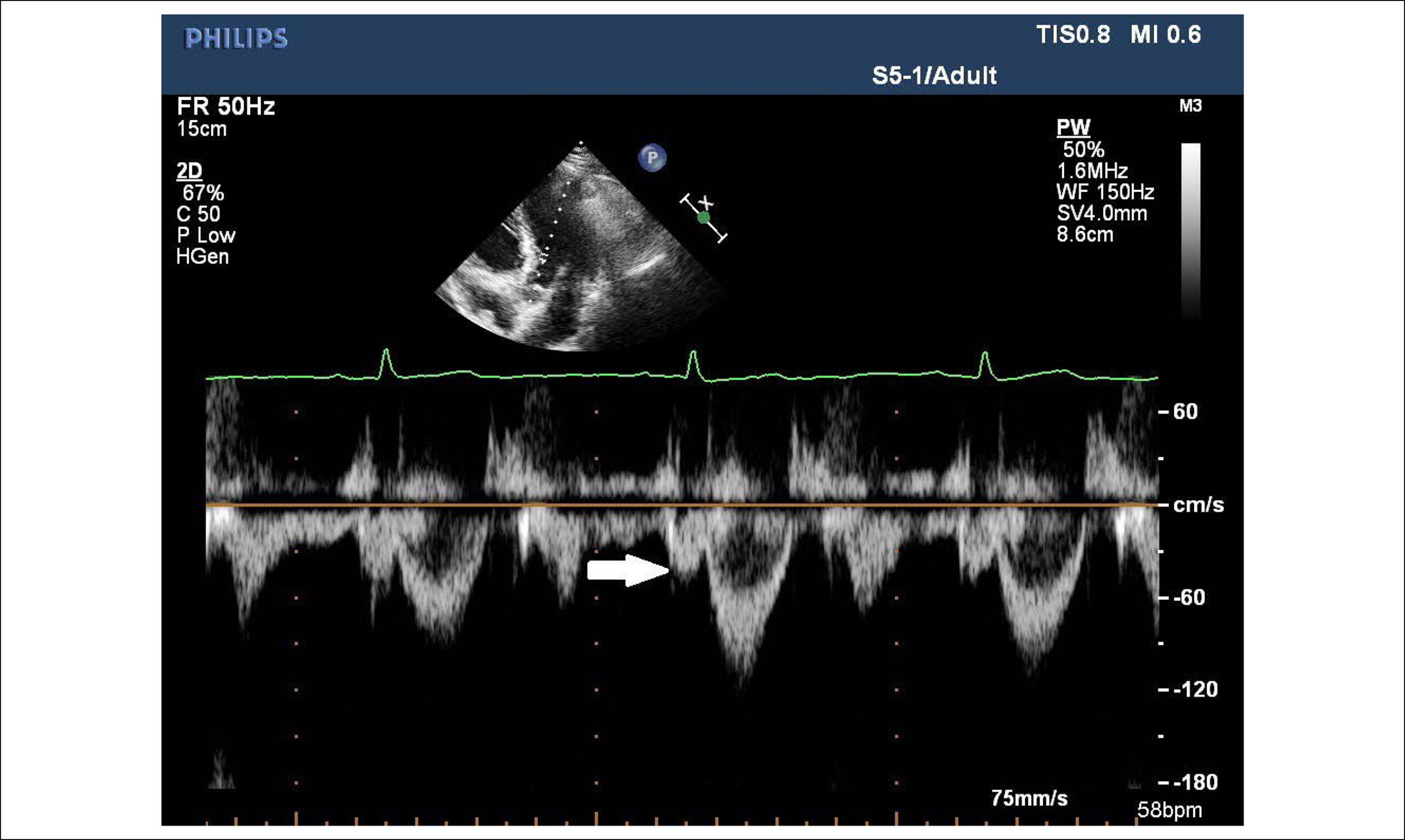
Myocardial performance index (MPI), demonstrates both systolic and diastolic functions of the left ventricle. Presystolic wave (PSW) is frequently detected on Doppler examination of the left ventricular outflow tract and possible mechanism of PSW is impaired LV compliance and left ventricular stiffness.

Objective:

To investigate the relationship between PSW and MPI in type 2 diabetic patients.

Method:

A total of 129 type 2 diabetic patients were included in this study. Patients were divided into two groups according to the presence of PSW on Doppler echocardiography. There were 90 patients (38 male, mean age 57.77 ± 10.91 years) in the PSW-positive group and 39 patients (13 male; mean age: 55.31 ± 11.29 years) in the PSW-negative group. The p values of < 0.05 were considered statistically significant.

Results:

MPI was higher in PSW- positive group (0.63 ± 0.17vs 0.52 ± 0.13, p < 0.001). In addition, subclinical left ventricle dysfunction (LVD) was higher in the PSW- positive group (p = 0.029). Univariate analysis showed that the presence of PSW associated with abnormal MPI (p = 0.031). Pearson correlation analysis showed that PSW velocity correlated with MPI (r: 0.286, p = 0.006).

Conclusion:

Presence of the PSW on Doppler examination was associated with subclinical LV dysfunction in patients with DM type 2. This easy-to-perform echocardiographic parameter may be related to subclinical LVD among patients with type 2 DM.

  • Diabetes Mellitus, Type 2
  • Heart Failure
  • Heart/physiopathology
  • Risk Factors
  • Ventricular Dysfunction,Left
Read Full Article
Creative Commons Attribution (CC BY) Creative Commons license
29/07/2019 DOI: 10.5935/abc.20190134 Views 1
ABC
Letter to the Editor

Body Mass Index May Influence Heart Rate Variability

Thalys Sampaio Rodrigues et al. Levindo José Garcia Quarto

We read with interest the article by Bassi et al., titled “Effects of Coexistence Hypertension and Type II Diabetes on Heart Rate Variability and Cardiorespiratory Fitness”, published in the issue of July 2018. The authors investigated the influence of systemic hypertension on cardiac autonomic modulation in patients with type 2 diabetes mellitus (T2DM) and assessed the heart rate variability (HRV) on exercise capacity in these patients. They concluded that hypertension negatively affects cardiac autonomic function, with greater impairment in HRV, when compared to normotensive patients with T2DM.

Several aspects of this study require discussion. As previously reported, numerous factors may have impact on HRV indices, including sex, insulin resistance, body mass index (BMI), hyperlipidemia, hypertension, ischemic and non-ischemic cardiomyopathy, and smoking status.– For instance, increased BMI can independently decrease HRV, particularly when central adiposity is present. Indeed, the hypertensive group had a higher BMI when compared to the normotensive group (28 ± 4.4 vs 31 ± 3.8, p = 0.031). Given the lack of control for BMI between the two groups, the conclusions made by the authors should be regarded cautiously.

[…]

  • Autonomic Nervous Systems
  • Cardiovascular Diseases
  • Diabetes Mellitus, Type 2
  • Heart Rate
  • Hypertension/prevalence
  • Risk Factors
Read Full Article
Creative Commons Attribution (CC BY) Creative Commons license
01/10/2018 DOI: 10.5935/abc.20180201
Figure 1
IJCS
Original Article

Prevalence of Metabolic Syndrome in Three Regions in Venezuela: The VEMSOLS Study

Imperia Brajkovich et al. Juan P. González-Rivas Eunice Ugel Alejandro Rísquez Ramfis Nieto-Martínez

Abstract

Background:

No previous study has evaluated the prevalence of metabolic syndrome (MS) in more than one region in Venezuela.

Objective:

To determine the prevalence of MS in three Venezuelan regions.

Methods:

From 2006 to 2010, a total of 1,320 subjects aged ≥ 20 years were selected by multistage stratified random sampling from the regions of Lara State (western region), Mérida State (the Andean region), and Capital District (Capital Region). Anthropometric measurements, blood pressure, and biochemical analysis were obtained from each participant. MS was defined according to the harmonized Joint Interim Statement (2009) definition.

Results:

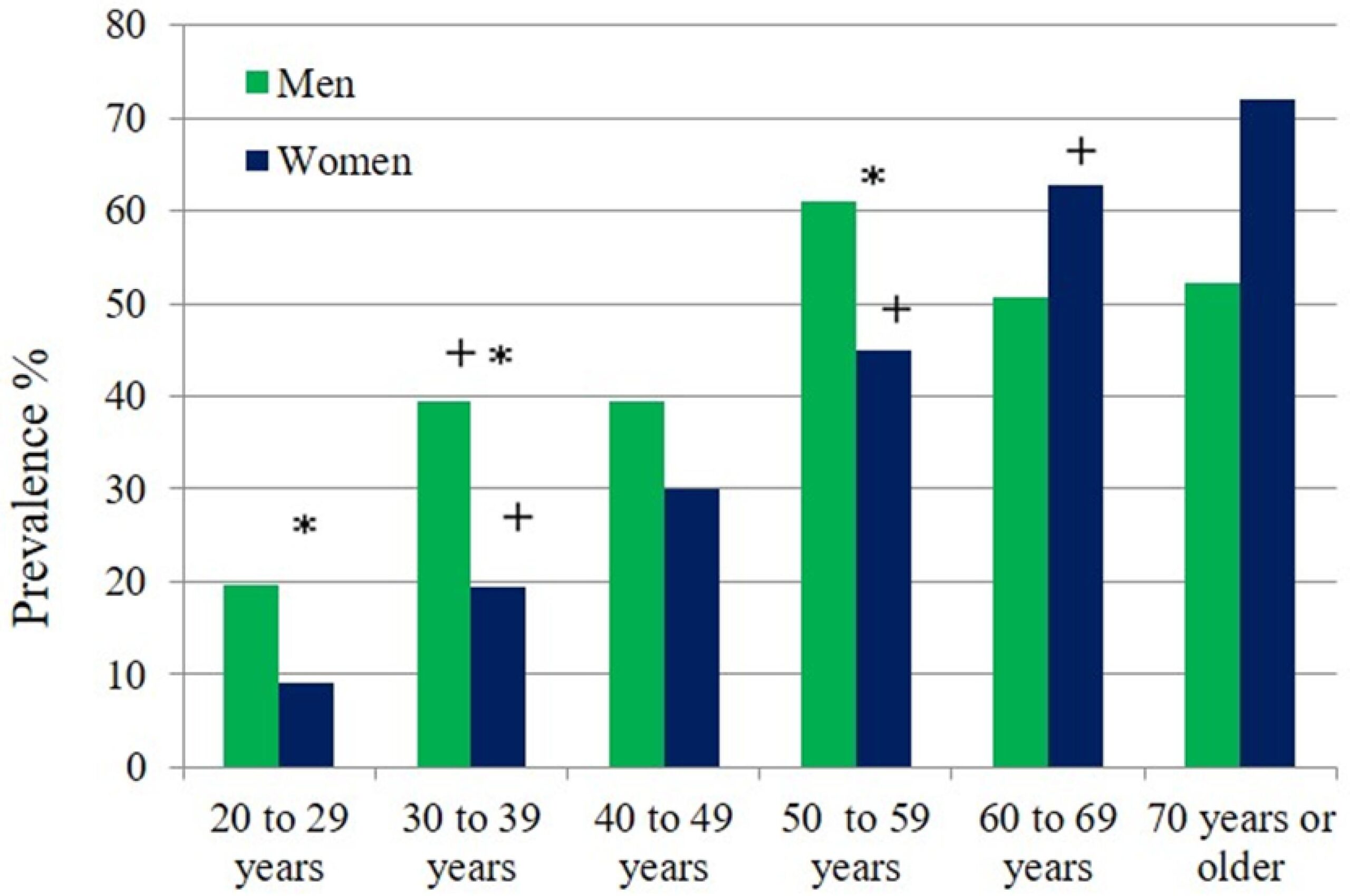
Mean age was 44.8 ± 0.39 years and 68.5% of the participants were female. The overall prevalence of MS was 35.7% (95% confidence interval 32.2 – 39.2%), while the prevalence was 42.5% (95% CI 38.8 – 46.1%) among men and 32.6% (95% CI 29.1 – 36.0%) among women (p < 0.001). In women, the prevalence of MS increased at almost every decade of life, while in men, the prevalence was similar from the age of 30 years onwards. The most prevalent abnormalities were low HDL-c levels (58.6%, 95% CI 54.9 – 62.1%), abdominal obesity (52.0%, 95% CI 48.4 – 55.7%), and elevated triglycerides levels (39.7%, 95% CI 36.1 – 43.2%). The prevalence of MS increased with increasing body mass index categories.

Conclusion:

In Venezuela, MS is a highly prevalent condition, which increases the risk of type 2 diabetes and cardiovascular disease in a large number of subjects. (Int J Cardiovasc Sci. 2018; [online].ahead print, PP.0-0)

  • Cardiovascular Diseases
  • Diabetes Mellitus, Type 2
  • Metabolic Syndrome / epidemiology
  • Obesity
  • Risk Factors
  • Venezuela/epidemiology
Read Full Article
Creative Commons Attribution (CC BY) Creative Commons license
27/08/2018 DOI: 10.5935/2359-4802.20180065
Figure 1
ABC
Original Article

Correlation between Very Short and Short-Term Blood Pressure Variability in Diabetic-Hypertensive and Healthy Subjects

Karina R. Casali et al. Beatriz D. Schaan Nicola Montano Daniela Massierer … Flávio M.F. Neto Gabriela H. Teló Priscila S. Ledur Marilia Reinheimer Graciele Sbruzzi Miguel Gus

Abstract

Background:

Blood pressure (BP) variability can be evaluated by 24-hour ambulatory BP monitoring (24h-ABPM), but its concordance with results from finger BP measurement (FBPM) has not been established yet.

Objective:

The aim of this study was to compare parameters of short-term (24h-ABPM) with very short-term BP variability (FBPM) in healthy (C) and diabetic-hypertensive (DH) subjects.

Methods:

Cross-sectional study with 51 DH subjects and 12 C subjects who underwent 24h-ABPM [extracting time-rate, standard deviation (SD), coefficient of variation (CV)] and short-term beat-to-beat recording at rest and after standing-up maneuvers [FBPM, extracting BP and heart rate (HR) variability parameters in the frequency domain, autoregressive spectral analysis]. Spearman correlation coefficient was used to correlate BP and HR variability parameters obtained from both FBPM and 24h-ABPM (divided into daytime, nighttime, and total). Statistical significance was set at p < 0.05.

Results:

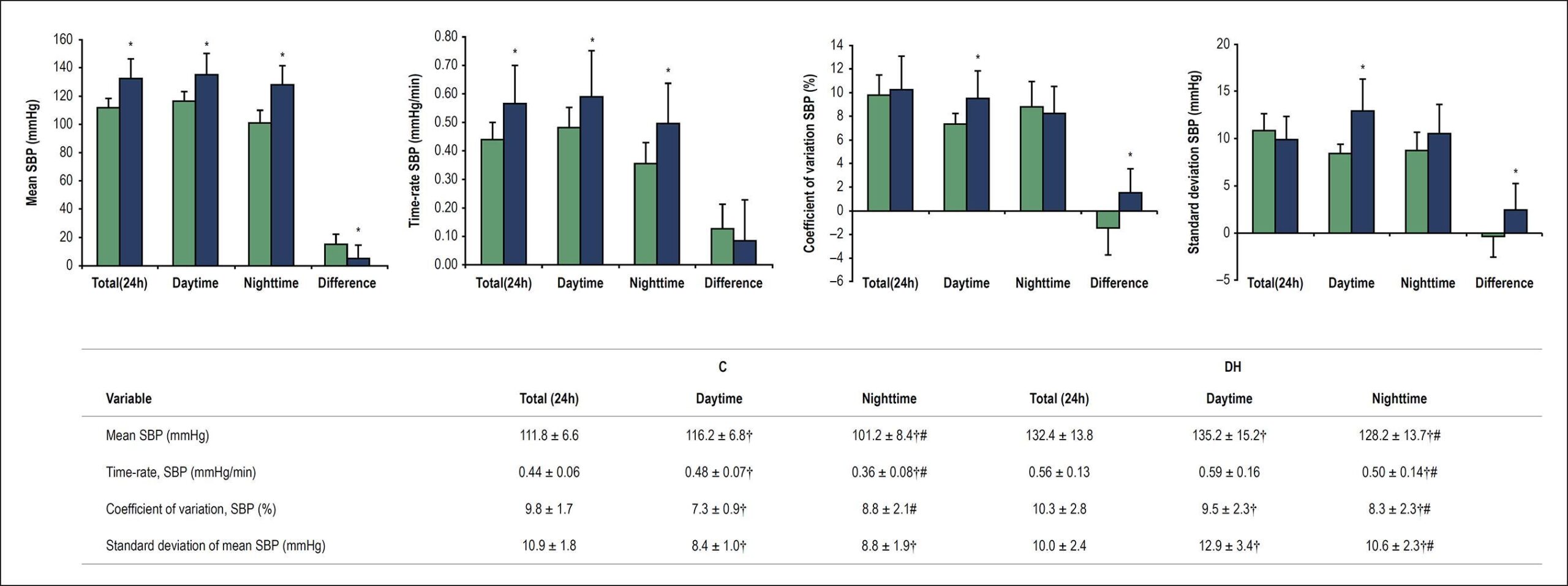
There was a circadian variation of BP levels in C and DH groups; systolic BP and time-rate were higher in DH subjects in all periods evaluated. In C subjects, high positive correlations were shown between time-rate index (24h-ABPM) and LF component of short-term variability (FBPM, total, R = 0.591, p = 0.043); standard deviation (24h-ABPM) with LF component BPV (FBPM, total, R = 0.608, p = 0.036), coefficient of variation (24h-ABPM) with total BPV (FBPM, daytime, -0.585, p = 0.046) and alpha index (FBPM, daytime, -0.592, p = 0.043), time rate (24h-ABPM) and delta LF/HF (FBPM, total, R = 0.636, p = 0.026; daytime R = 0,857, p < 0.001). Records obtained from DH showed weak positive correlations.

Conclusions:

Indices obtained from 24h-ABPM (total, daytime) reflect BP and HR variability evaluated by FBPM in healthy individuals. This does not apply for DH subjects.

  • Autonomic Nervous System
  • Blood Pressure Monitoring, Ambulatory
  • Diabetes Mellitus, Type 2
  • Hypertension
Read Full Article
Creative Commons Attribution (CC BY) Creative Commons license
01/02/2018 DOI: 10.5935/abc.20180020
ABC
Artigo Original

ENPP1 K121Q polymorphism and ischemic heart disease in diabetic patients

Milene Moehlecke et al. Caroline K. Kramer Cristiane B. Leitão Ana Luiza Krahe … Ivaldir Balbosco Mirela Jobim de Azevedo Jorge L. Gross Luis Henrique Canani

BACKGROUND: The ecto-nucleotide pyrophosphatase/phosphodiesterase 1 (ENPP1) gene is a candidate gene for insulin resistance. Insulin resistance is a major component of metabolic syndrome (MetS) and has been implicated in ischemic heart disease (IHD). OBJECTIVE: To evaluate the association between the K121Q polymorphism of the ENPP1 gene and IHD in white patients with type 2 diabetes mellitus (DM). METHODS: A cross-sectional study was performed in type 2 DM patients (n = 573, 50.6% males, age 59.5±10.4 years). IHD was defined by the presence of angina or myocardial infarction according to the Worth Health Organization cardiovascular questionnaire and/or compatible electrocardiographic (Minnesota Code), or perfusional abnormalities in myocardial scintigraphy. The K121Q polymorphism of ENPP1 gene was genotyped using PCR-based methods and restriction enzyme digestion. RESULTS: IHD was present in 209 (36.5%) patients. The distribution of KK, KQ and QQ genotypes among patients with IHD was 60.8%, 34.4% and 4.8%, not different from the genotype distribution in the group without IHD (64%, 32.7% and 3.3%, P=0.574). No difference was found in the clinical and laboratory characteristics between the three genotypes, neither regarding the prevalence of Metabolic Syndrome. CONCLUSION: No association was found between polymorphism K121A of ENPP1 gene and the presence of IHD.

  • Diabetes Mellitus, Type 2
  • Metabolic Syndrome
  • Myocardial Ischemia
  • Polymorphism, Genetic
Read Full Article
Creative Commons Attribution (CC BY) Creative Commons license
05/05/2010 DOI: 10.1590/S0066-782X2010000200005
ABC
Artigo Original

Carotid artery structural and functional evaluation in relatives of type 2 diabetic patients

Sônia Silva Prado et al. Mário Luiz Ribeiro Gilberto Perez Cardoso Kelb Bousquet-Santos … Luis Guillermo Coca Velarde Antônio Cláudio Lucas da Nóbrega

In Western countries type 2 diabetes mellitus (DM2) is the leading cause of morbidity and mortality, particularly from cardiovascular causes. Since a family history of diabetes, even in non-diabetic subjects, is regarded as an increased risk of coronary heart disease, the use of approved surrogate markers of early atherosclerosis, specially of ultrasonic measurements of the carotid arteries, is of vital importance. OBJECTIVE: To analyze the structural properties (intima-media thickness) and functional properties (distensibility measurement) of the carotid arteries in subjects with (FH+) a family history of type 2 diabetes, in comparison to subjects without (FH-) a family history of type 2 diabetes, both groups with no known cardiovascular risk factors. METHODS: 32 individuals (male and female, age range, 21-47 years; 19 FH+, 13 FH-) had their right and left common and internal carotid arteries measured, using high-resolution B-mode ultrasonography. Both groups had similar (p>0.05) age, BMI, blood pressure, and fasting blood glucose and insulin, leptin, and C-reactive protein (CRP) levels. RESULTS: The intima-media thickness (IMT) of the left common carotid artery (LCCA) in the FH+ group (0.568±0.107mm) was statistically greater (p=0.029) than in the FH- group (0.477±0.116mm). Multiple regression analysis identified age, overweight and obesity (determined by BMI), CRP, and LDL-cholesterol levels as independent predictors of the IMT in the LCCA. CONCLUSION: FH+ individuals with no metabolic disorders presented greater IMT of the left common carotid artery (structural alteration) than FH- individuals, but normal vessel function. (Arq Bras Cardiol 2009;92(3): 186-192)

  • Carotid Artery, Common
  • Diabetes Mellitus, Type 2
Read Full Article
Creative Commons Attribution (CC BY) Creative Commons license
22/04/2009 DOI: 10.1590/S0066-782X2009000300006 Views 1
Lipid transfer to HDL in type-2 diabetic patients: associations with microalbuminuria, statin, and insulin
ABC
Artigo Original

Lipid transfer to HDL in type-2 diabetic patients: associations with microalbuminuria, statin, and insulin

Gilson Soares Feitosa-Filho et al. Talita de Mattos Seydell Alina Coutinho Rodrigues Feitosa Raul Cavalcante Maranhão José Antônio Franchini Ramires

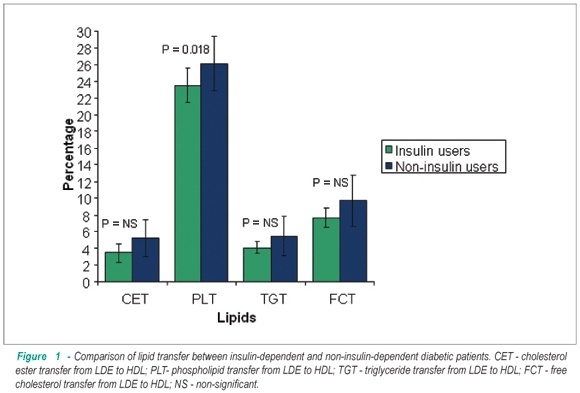
BACKGROUND: Type-2 diabetes mellitus (T2DM) is an isolated risk factor for coronary artery disease, especially when associated with microalbuminuria (MA). Structural and functional changes in lipoproteins have not yet been fully elucidated in this context. OBJECTIVE: To assess lipid transfer (T) to HDL in type-2 diabetic patients and its association with microalbuminuria and treatment with statins or insulin. METHODS: Thirty-three patients with type-2 diabetes mellitus and 34 age-matched control subjects were studied. A synthetic cholesterol-rich nanoemulsion radiolabeled with ³H- triglycerides (TG) and 14C-free cholesterol (FC) or ³H- cholesteryl ester (CE) and 14C-phospholipids (PL) was incubated with plasma. Both the nanoemulsion and lipoproteins were precipitated, except for HDL, which was counted for radioactivity. RESULTS: PLT (%) was higher in the T2DM group than in the control group (25.2 ± 3.2 and 19.7 ± 3.2 respectively; p < 0.001), as was free cholesterol (% FC): 9.1 ± 2.7 and 6.3 ± 1.5 respectively; p < 0.001. The diagnosis of microalbuminuria (MA) was not associated with changes in lipid transfers. Insulin therapy was associated with lower PLT rates: 23.5 ± 2.1 versus 26.1 ± 3.3; p = 0.018. Statin therapy, in turn, was associated with a drop in all lipid transfers – CET 3.5 ± 0.9; PLT: 23.8 ± 2.0; TGT: 3.9 ± 0.8; FCT: 7.4 ± 1.3 – as compared to the group that was not on statin therapy (CET: 5.9 ± 2.4; PLT: 26.9 ± 3.6; TGT: 6.4 ± 2.2; FCT: 11.1 ± 2.6). CONCLUSION:Type-2 diabetes mellitus increased lipid transfer to HDL particles, whereas statin therapy decreased all lipid transfers. The presence of MA was not associated with changes in lipid transfer.

  • albuminuria
  • Cholesterol, HDL
  • Diabetes Mellitus, Type 2
  • diabetic nephropathies
  • Hydroxymethylglutaryl-CoA Reductase Inhibitors
  • Insulin
  • Lipoproteins
Read Full Article
Creative Commons Attribution (CC BY) Creative Commons license
06/04/2009 DOI: 10.1590/S0066-782X2009000200005
Early glucometabolic profile in patients with acute coronary syndromes and metabolic syndrome
ABC
Artigo Original

Early glucometabolic profile in patients with acute coronary syndromes and metabolic syndrome

Carlos M. C. Monteiro et al. Luciene Oliveira Maria C. O. Izar Tatiana Helfenstein … Andreza O. Santos Simone M. Fischer Sahana W. Barros Luiz F. M. Pinheiro Antonio C. C. Carvalho Francisco A. H. Fonseca

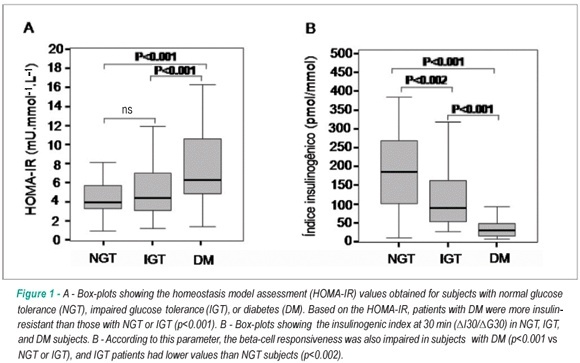
BACKGROUND: Patients with metabolic syndrome (MetS) are at high coronary risk and beta-cell dysfunction or insulin resistance might predict an additional risk for early cardiovascular events. OBJECTIVE: This study aimed to evaluate early glucometabolic alterations in patients with MetS, but without previously known type 2 diabetes, after acute coronary syndrome. METHODS: A total of 114 patients were submitted to an oral glucose tolerance test (OGTT) 1-3 days after hospital discharge due to myocardial infarction or unstable angina. Based on the OGTT, we defined three groups of patients: normal glucose tolerance (NGT; n=26), impaired glucose tolerance (IGT; n=39), or diabetes (DM; n=49). The homeostasis model assessment (HOMA-IR) was used to measure insulin resistance; beta-cell responsiveness was assessed by the insulinogenic index at 30 min (ΔI30/ΔG30). RESULTS: Based on the HOMA-IR, patients with DM were more insulin-resistant than those with NGT or IGT (p<0.001). According to the insulinogenic index, the beta-cell responsiveness was also impaired in subjects with DM (p<0.001 vs NGT or IGT). CONCLUSION: High rates of glucometabolic alterations were found after acute coronary syndrome in patients with MetS. As these abnormalities markedly increase the risk for adverse outcomes, early OGTT among MetS patients might be used to identify those at the highest coronary risk.

  • Acute coronary syndrome
  • Diabetes Mellitus, Type 2
  • Insulin Resistance
  • insulin-secreting cells
  • Metabolic Syndrome
Read Full Article
Creative Commons Attribution (CC BY) Creative Commons license
06/04/2009 DOI: 10.1590/S0066-782X2009000200004
Effect of frequency of physical exercise on glycemic control and body composition in type 2 diabetic patients
ABC
Artigo Original

Effect of frequency of physical exercise on glycemic control and body composition in type 2 diabetic patients

Denise Maria Martins Vancea et al. José Nelson Vancea Maria Izabel Fernandes Pires Marco Antonio Reis … Rafael Brandão Moura Sergio Atala Dib

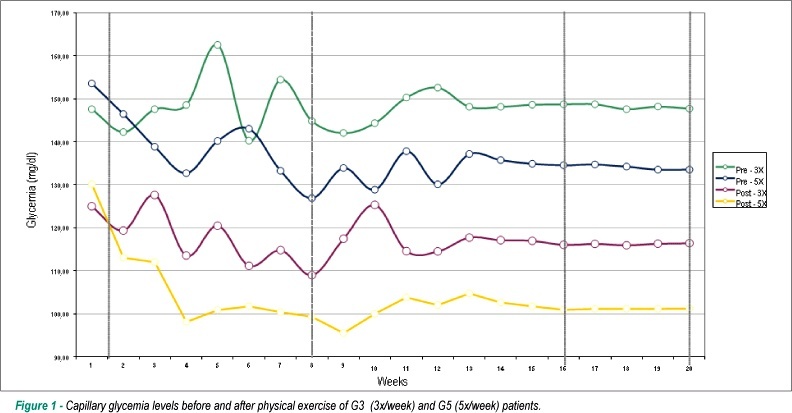
BACKGROUND: Diabetes and cardiovascular disease have emerged as key threats to human health, and the risk is increased in individuals with visceral obesity. The consensus is that physical exercise should be part of the treatment of diabetes mellitus (DM). OBJECTIVE: To compare the influence of guided and structured physical exercise programs (SPEP), three to five times per week, during a period of 20 weeks, on glycemic control and body composition of type 2 diabetic patients (DM2). METHODS: The research was conducted at the Universidade Federal de São Paulo (Federal University School of Medicine in São Paulo). At the clinical visit, patients from the Control Group (CG) n=17, mean age 55.8 years, were encouraged to engage in a physical exercise program. Patients from Group 3x (G3), n=14, mean age 57.4 years, were to engage in 1 hour of physical exercise, 3x/week, and Group 5x (G5), n=9, mean age 58.8 years, followed the same protocol but 5x/week. Mean of 5 years since diagnosis in all groups. Classes consisted of a 5-minute warm-up, 30-minute treadmill walk at 70% of maximum heart rate, and 10-minute relaxation. BMI, abdominal circumference (AC), percentage of body fat (BF), capillary glycemia (CG), fasting glycemia (FG), and glycated hemoglobin (HbA1c) were assessed. RESULTS: A comparison was made between the baseline time point (B) and the 20th week (20th). BMI in G3 (B:29.5±2.9 vs. 20th: 28.3 ± 2.2 Kg/sqm, p=0.005) and G5 (B:29.7±4.4 vs. 20th: 29.1 ± 4.3 Kg/sqm, p=0.025); abdominal circumference in G5 (B:100.5±11.9 vs. 20th: 933 ± 11.7 cm, p=0.001); BF in G3 (B:31±5.1 vs 20th: 26±5%, p=0.001) and G5 (B:32.4 ± 5.4 vs. 20th: 30.3 ± 6.9%, p=0.001); FG, G5 (B:150.8 ± 47.5 vs. 20th: 109.2± 30.5 mg/dL, p=0.034), showed statistically significant differences. CG did not show statistically significant differences for these variables. CG showed a tendency to drop after physical exercise in G5. HbA1c showed no statistically significant differences in the three groups. CONCLUSION: G5 did better than G3 in most parameters assessed. However, results failed to show a decrease of HbA1c in DM2 patients.

  • Blood Glucose
  • body compostion
  • Control
  • Diabetes Mellitus, Type 2
  • Exercise
Read Full Article
Creative Commons Attribution (CC BY) Creative Commons license
04/02/2009 DOI: 10.1590/S0066-782X2009000100005
Ambulatory blood pressure monitoring and type 2 diabetes mellitus
ABC
Revisão

Ambulatory blood pressure monitoring and type 2 diabetes mellitus

Cristiane Bauermann Leitão et al. Luís Henrique Canani Sandra Pinho Silveiro Jorge Luiz Gross

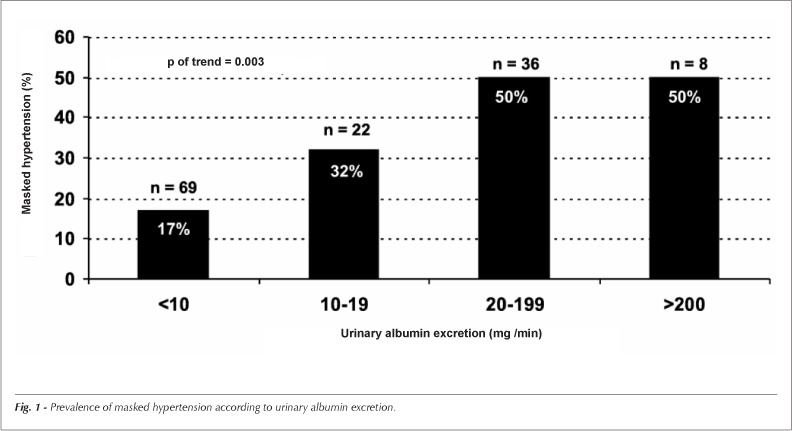
Hypertension is one of the main risk factors for the onset and progression of chronic complications in type 2 diabetes mellitus (DM). Ambulatory blood pressure (BP) monitoring (ABPM) provides a better correlation with target organ lesions than BP obtained in the office. Furthermore, it allows the evaluation of distinct BP parameters such as the 24-h, daytime and nighttime systolic and diastolic BP means, BP loads and the absence of nocturnal drop of BP, as well as the identification of white-coat and masked hypertension. DM patients have higher daytime and nighttime BP means than non-DM patients. In addition, one third of normotensive type 2 DM patients have masked hypertension, which is associated with an increase in albuminuria and in left ventricle wall thickness. On the other hand, the prevalence and effect of white-coat hypertension in type 2 DM patients have not yet been properly evaluated. The absence of nocturnal drop of BP does not add information to the 24 h, daytime or nighttime BP measurements, but the nighttime BP means seem to be relevant in DM retinopathy. In conclusion, BP determination by ABPM allows better patient risk stratification for the development of DM chronic complications and is an essential instrument for effective BP control in these patients.

  • Blood Pressure Monitoring, Ambulatory
  • Diabetes Mellitus, Type 2
Read Full Article
Creative Commons Attribution (CC BY) Creative Commons license
07/12/2007 DOI: 10.1590/S0066-782X2007001700012

How to cite this article

EndNote RIS

Electronic Document Format (Vancouver)

Timóteo AT. Can PM20D1 be a New Kid on the Block in Cardiovascular Risk Stratification? Do Not Run before You Can Walk. Arquivos Brasileiros de Cardiologia 2022;119(3):380-1.

Electronic Document Format (ABNT)

Timóteo, Ana Teresa. Can PM20D1 be a New Kid on the Block in Cardiovascular Risk Stratification? Do Not Run before You Can Walk. Arquivos Brasileiros de Cardiologia, v. 119, n. 3, p. 380-381, Sep. 2022.

Electronic Document Format (APA)

Timóteo, A. T. (2022). Can PM20D1 be a New Kid on the Block in Cardiovascular Risk Stratification? Do Not Run before You Can Walk. Arquivos Brasileiros de Cardiologia, 119(3), 380-381.

Electronic Document Format (ISO)

Timóteo, Ana Teresa. Can PM20D1 be a New Kid on the Block in Cardiovascular Risk Stratification? Do Not Run before You Can Walk. Arquivos Brasileiros de Cardiologia [online]. 2022, vol. 119, n. 3, [cited 2026-10-14], pp. 380-381. Available from: <https://journals.cardiol.br/en/article/can-pm20d1-be-a-new-kid-on-the-block-in-cardiovascular-risk-stratification-do-not-run-before-you-can-walk/>. ISSN 0066-782X

EndNote RIS

Electronic Document Format (Vancouver)

Kul S, Dursun , Ayhan S, Sayin MR, Üçüncü , Bülbül NE, Ateş AH, et al. Presystolic Wave is Associated with Subclinical Left Ventricular Dysfunction Assessed by Myocardial Performance Index in Type 2 Diabetes Mellitus. Arquivos Brasileiros de Cardiologia 2019;113(2):207-15.

Electronic Document Format (ABNT)

Kul, Selim; Dursun, İhsan; Ayhan, Semiha; Sayin, Muhammet Rasit; Üçüncü, Özge; Bülbül, Nilgün Esen; Ateş, Ahmet Hakan; Akyüz, Ali Rıza. Presystolic Wave is Associated with Subclinical Left Ventricular Dysfunction Assessed by Myocardial Performance Index in Type 2 Diabetes Mellitus. Arquivos Brasileiros de Cardiologia, v. 113, n. 2, p. 207-215, Jul. 2019.

Electronic Document Format (APA)

Kul, S., Dursun, , Ayhan, S., Sayin, M. R., Üçüncü, , Bülbül, N. E., Ateş, A. H., & Akyüz, A. R. (2019). Presystolic Wave is Associated with Subclinical Left Ventricular Dysfunction Assessed by Myocardial Performance Index in Type 2 Diabetes Mellitus. Arquivos Brasileiros de Cardiologia, 113(2), 207-215.

Electronic Document Format (ISO)

Kul, Selim and Dursun, İhsan and Ayhan, Semiha and Sayin, Muhammet Rasit and Üçüncü, Özge and Bülbül, Nilgün Esen and Ateş, Ahmet Hakan and Akyüz, Ali Rıza. Presystolic Wave is Associated with Subclinical Left Ventricular Dysfunction Assessed by Myocardial Performance Index in Type 2 Diabetes Mellitus. Arquivos Brasileiros de Cardiologia [online]. 2019, vol. 113, n. 2, [cited 2026-10-14], pp. 207-215. Available from: <https://journals.cardiol.br/en/article/presystolic-wave-is-associated-with-subclinical-left-ventricular-dysfunction-assessed-by-myocardial-performance-index-in-type-2-diabetes-mellitus/>. ISSN 0066-782X

EndNote RIS

Electronic Document Format (Vancouver)

Rodrigues TS, Quarto LJG. Body Mass Index May Influence Heart Rate Variability. Arquivos Brasileiros de Cardiologia 2018;111(4):640-2.

Electronic Document Format (ABNT)

Rodrigues, Thalys Sampaio; Quarto, Levindo José Garcia. Body Mass Index May Influence Heart Rate Variability. Arquivos Brasileiros de Cardiologia, v. 111, n. 4, p. 640-642, Sep. 2018.

Electronic Document Format (APA)

Rodrigues, T. S., & Quarto, L. J. G. (2018). Body Mass Index May Influence Heart Rate Variability. Arquivos Brasileiros de Cardiologia, 111(4), 640-642.

Electronic Document Format (ISO)

Rodrigues, Thalys Sampaio and Quarto, Levindo José Garcia. Body Mass Index May Influence Heart Rate Variability. Arquivos Brasileiros de Cardiologia [online]. 2018, vol. 111, n. 4, [cited 2026-10-14], pp. 640-642. Available from: <https://journals.cardiol.br/en/article/body-mass-index-may-influence-heart-rate-variability/>. ISSN 0066-782X

EndNote RIS

Electronic Document Format (Vancouver)

Brajkovich I, González-Rivas JP, Ugel E, Rísquez A, Nieto-Martínez R. Prevalence of Metabolic Syndrome in Three Regions in Venezuela: The VEMSOLS Study. International Journal of Cardiovascular Sciences 2018;31(6):603-9.

Electronic Document Format (ABNT)

Brajkovich, Imperia; González-Rivas, Juan P.; Ugel, Eunice; Rísquez, Alejandro; Nieto-Martínez, Ramfis. Prevalence of Metabolic Syndrome in Three Regions in Venezuela: The VEMSOLS Study. International Journal of Cardiovascular Sciences, v. 31, n. 6, p. 603-609, Aug. 2018.

Electronic Document Format (APA)

Brajkovich, I., González-Rivas, J. P., Ugel, E., Rísquez, A., & Nieto-Martínez, R. (2018). Prevalence of Metabolic Syndrome in Three Regions in Venezuela: The VEMSOLS Study. International Journal of Cardiovascular Sciences, 31(6), 603-609.

Electronic Document Format (ISO)

Brajkovich, Imperia and González-Rivas, Juan P. and Ugel, Eunice and Rísquez, Alejandro and Nieto-Martínez, Ramfis. Prevalence of Metabolic Syndrome in Three Regions in Venezuela: The VEMSOLS Study. International Journal of Cardiovascular Sciences [online]. 2018, vol. 31, n. 6, [cited 2026-10-14], pp. 603-609. Available from: <https://journals.cardiol.br/en/article/prevalence-of-metabolic-syndrome-in-three-regions-in-venezuela-the-vemsols-study/>. ISSN 2359-4802

EndNote RIS

Electronic Document Format (Vancouver)

Casali KR, Schaan BD, Montano N, Massierer D, M.F. Neto F, Teló GH, Ledur PS, et al. Correlation between Very Short and Short-Term Blood Pressure Variability in Diabetic-Hypertensive and Healthy Subjects. Arquivos Brasileiros de Cardiologia 2018;110(2):157-65.

Electronic Document Format (ABNT)

Casali, Karina R.; Schaan, Beatriz D.; Montano, Nicola; Massierer, Daniela; M.F. Neto, Flávio; Teló, Gabriela H.; Ledur, Priscila S.; Reinheimer, Marilia; Sbruzzi, Graciele; Gus, Miguel. Correlation between Very Short and Short-Term Blood Pressure Variability in Diabetic-Hypertensive and Healthy Subjects. Arquivos Brasileiros de Cardiologia, v. 110, n. 2, p. 157-165, Jan. 2018.

Electronic Document Format (APA)

Casali, K. R., Schaan, B. D., Montano, N., Massierer, D., M.F. Neto, F., Teló, G. H., Ledur, P. S., Reinheimer, M., Sbruzzi, G., & Gus, M. (2018). Correlation between Very Short and Short-Term Blood Pressure Variability in Diabetic-Hypertensive and Healthy Subjects. Arquivos Brasileiros de Cardiologia, 110(2), 157-165.

Electronic Document Format (ISO)

Casali, Karina R. and Schaan, Beatriz D. and Montano, Nicola and Massierer, Daniela and M.F. Neto, Flávio and Teló, Gabriela H. and Ledur, Priscila S. and Reinheimer, Marilia and Sbruzzi, Graciele and Gus, Miguel. Correlation between Very Short and Short-Term Blood Pressure Variability in Diabetic-Hypertensive and Healthy Subjects. Arquivos Brasileiros de Cardiologia [online]. 2018, vol. 110, n. 2, [cited 2026-10-14], pp. 157-165. Available from: <https://journals.cardiol.br/en/article/correlation-between-very-short-and-short-term-blood-pressure-variability-in-diabetic-hypertensive-and-healthy-subjects/>. ISSN 0066-782X

EndNote RIS

Electronic Document Format (Vancouver)

Moehlecke M, Kramer CK, Leitão CB, Krahe AL, Balbosco I, Azevedo MJ, Gross JL, et al. ENPP1 K121Q polymorphism and ischemic heart disease in diabetic patients. Arquivos Brasileiros de Cardiologia 2010;94(2):168-73.

Electronic Document Format (ABNT)

Moehlecke, Milene; Kramer, Caroline K.; Leitão, Cristiane B.; Krahe, Ana Luiza; Balbosco, Ivaldir; Azevedo, Mirela Jobim de; Gross, Jorge L.; Canani, Luis Henrique. ENPP1 K121Q polymorphism and ischemic heart disease in diabetic patients. Arquivos Brasileiros de Cardiologia, v. 94, n. 2, p. 168-173, May. 2010.

Electronic Document Format (APA)

Moehlecke, M., Kramer, C. K., Leitão, C. B., Krahe, A. L., Balbosco, I., Azevedo, M. J. , Gross, J. L., & Canani, L. H. (2010). ENPP1 K121Q polymorphism and ischemic heart disease in diabetic patients. Arquivos Brasileiros de Cardiologia, 94(2), 168-173.

Electronic Document Format (ISO)

Moehlecke, Milene and Kramer, Caroline K. and Leitão, Cristiane B. and Krahe, Ana Luiza and Balbosco, Ivaldir and Azevedo, Mirela Jobim de and Gross, Jorge L. and Canani, Luis Henrique. ENPP1 K121Q polymorphism and ischemic heart disease in diabetic patients. Arquivos Brasileiros de Cardiologia [online]. 2010, vol. 94, n. 2, [cited 2026-10-14], pp. 168-173. Available from: <https://journals.cardiol.br/en/article/enpp1-k121q-polymorphism-and-ischemic-heart-disease-in-diabetic-patients/>. ISSN 0066-782X

EndNote RIS

Electronic Document Format (Vancouver)

Prado SS, Ribeiro ML, Cardoso GP, Bousquet-Santos K, Velarde LGC, Nóbrega ACL. Carotid artery structural and functional evaluation in relatives of type 2 diabetic patients. Arquivos Brasileiros de Cardiologia 2009;92(3):196-202.

Electronic Document Format (ABNT)

Prado, Sônia Silva; Ribeiro, Mário Luiz; Cardoso, Gilberto Perez; Bousquet-Santos, Kelb; Velarde, Luis Guillermo Coca; Nóbrega, Antônio Cláudio Lucas da. Carotid artery structural and functional evaluation in relatives of type 2 diabetic patients. Arquivos Brasileiros de Cardiologia, v. 92, n. 3, p. 196-202, Apr. 2009.

Electronic Document Format (APA)

Prado, S. S., Ribeiro, M. L., Cardoso, G. P., Bousquet-Santos, K., Velarde, L. G. C., & Nóbrega, A. C. L. (2009). Carotid artery structural and functional evaluation in relatives of type 2 diabetic patients. Arquivos Brasileiros de Cardiologia, 92(3), 196-202.

Electronic Document Format (ISO)

Prado, Sônia Silva and Ribeiro, Mário Luiz and Cardoso, Gilberto Perez and Bousquet-Santos, Kelb and Velarde, Luis Guillermo Coca and Nóbrega, Antônio Cláudio Lucas da. Carotid artery structural and functional evaluation in relatives of type 2 diabetic patients. Arquivos Brasileiros de Cardiologia [online]. 2009, vol. 92, n. 3, [cited 2026-10-14], pp. 196-202. Available from: <https://journals.cardiol.br/en/article/carotid-artery-structural-and-functional-evaluation-in-relatives-of-type-2-diabetic-patients/>. ISSN 0066-782X

EndNote RIS

Electronic Document Format (Vancouver)

Feitosa-Filho GS, Seydell TM, Feitosa ACR, Maranhão RC, Ramires JAF. Lipid transfer to HDL in type-2 diabetic patients: associations with microalbuminuria, statin, and insulin. Arquivos Brasileiros de Cardiologia 2009;92(2):100-6.

Electronic Document Format (ABNT)

Feitosa-Filho, Gilson Soares; Seydell, Talita de Mattos; Feitosa, Alina Coutinho Rodrigues; Maranhão, Raul Cavalcante; Ramires, José Antônio Franchini. Lipid transfer to HDL in type-2 diabetic patients: associations with microalbuminuria, statin, and insulin. Arquivos Brasileiros de Cardiologia, v. 92, n. 2, p. 100-106, Apr. 2009.

Electronic Document Format (APA)

Feitosa-Filho, G. S., Seydell, T. M., Feitosa, A. C. R., Maranhão, R. C., & Ramires, J. A. F. (2009). Lipid transfer to HDL in type-2 diabetic patients: associations with microalbuminuria, statin, and insulin. Arquivos Brasileiros de Cardiologia, 92(2), 100-106.

Electronic Document Format (ISO)

Feitosa-Filho, Gilson Soares and Seydell, Talita de Mattos and Feitosa, Alina Coutinho Rodrigues and Maranhão, Raul Cavalcante and Ramires, José Antônio Franchini. Lipid transfer to HDL in type-2 diabetic patients: associations with microalbuminuria, statin, and insulin. Arquivos Brasileiros de Cardiologia [online]. 2009, vol. 92, n. 2, [cited 2026-10-14], pp. 100-106. Available from: <https://journals.cardiol.br/en/article/lipid-transfer-to-hdl-in-type-2-diabetic-patients-associations-with-microalbuminuria-statin-and-insulin/>. ISSN 0066-782X

EndNote RIS

Electronic Document Format (Vancouver)

Monteiro CMC, Oliveira L, Izar MCO, Helfenstein T, Santos AO, Fischer SM, Barros SW, et al. Early glucometabolic profile in patients with acute coronary syndromes and metabolic syndrome. Arquivos Brasileiros de Cardiologia 2009;92(2):94-9.

Electronic Document Format (ABNT)

Monteiro, Carlos M. C.; Oliveira, Luciene; Izar, Maria C. O.; Helfenstein, Tatiana; Santos, Andreza O.; Fischer, Simone M.; Barros, Sahana W.; Pinheiro, Luiz F. M.; Carvalho, Antonio C. C.; Fonseca, Francisco A. H.. Early glucometabolic profile in patients with acute coronary syndromes and metabolic syndrome. Arquivos Brasileiros de Cardiologia, v. 92, n. 2, p. 94-99, Apr. 2009.

Electronic Document Format (APA)

Monteiro, C. M. C., Oliveira, L., Izar, M. C. O., Helfenstein, T., Santos, A. O., Fischer, S. M., Barros, S. W., Pinheiro, L. F. M., Carvalho, A. C. C., & Fonseca, F. A. H. (2009). Early glucometabolic profile in patients with acute coronary syndromes and metabolic syndrome. Arquivos Brasileiros de Cardiologia, 92(2), 94-99.

Electronic Document Format (ISO)

Monteiro, Carlos M. C. and Oliveira, Luciene and Izar, Maria C. O. and Helfenstein, Tatiana and Santos, Andreza O. and Fischer, Simone M. and Barros, Sahana W. and Pinheiro, Luiz F. M. and Carvalho, Antonio C. C. and Fonseca, Francisco A. H.. Early glucometabolic profile in patients with acute coronary syndromes and metabolic syndrome. Arquivos Brasileiros de Cardiologia [online]. 2009, vol. 92, n. 2, [cited 2026-10-14], pp. 94-99. Available from: <https://journals.cardiol.br/en/article/early-glucometabolic-profile-in-patients-with-acute-coronary-syndromes-and-metabolic-syndrome/>. ISSN 0066-782X

EndNote RIS

Electronic Document Format (Vancouver)

Vancea DMM, Vancea JN, Pires MIF, Reis MA, Moura RB, Dib SA. Effect of frequency of physical exercise on glycemic control and body composition in type 2 diabetic patients. Arquivos Brasileiros de Cardiologia 2009;92(1):23-30.

Electronic Document Format (ABNT)

Vancea, Denise Maria Martins; Vancea, José Nelson; Pires, Maria Izabel Fernandes; Reis, Marco Antonio; Moura, Rafael Brandão; Dib, Sergio Atala. Effect of frequency of physical exercise on glycemic control and body composition in type 2 diabetic patients. Arquivos Brasileiros de Cardiologia, v. 92, n. 1, p. 23-30, Feb. 2009.

Electronic Document Format (APA)

Vancea, D. M. M., Vancea, J. N., Pires, M. I. F., Reis, M. A., Moura, R. B., & Dib, S. A. (2009). Effect of frequency of physical exercise on glycemic control and body composition in type 2 diabetic patients. Arquivos Brasileiros de Cardiologia, 92(1), 23-30.

Electronic Document Format (ISO)

Vancea, Denise Maria Martins and Vancea, José Nelson and Pires, Maria Izabel Fernandes and Reis, Marco Antonio and Moura, Rafael Brandão and Dib, Sergio Atala. Effect of frequency of physical exercise on glycemic control and body composition in type 2 diabetic patients. Arquivos Brasileiros de Cardiologia [online]. 2009, vol. 92, n. 1, [cited 2026-10-14], pp. 23-30. Available from: <https://journals.cardiol.br/en/article/effect-of-frequency-of-physical-exercise-on-glycemic-control-and-body-composition-in-type-2-diabetic-patients/>. ISSN 0066-782X

EndNote RIS

Electronic Document Format (Vancouver)

Leitão CB, Canani LH, Silveiro SP, Gross JL. Ambulatory blood pressure monitoring and type 2 diabetes mellitus. Arquivos Brasileiros de Cardiologia 2007;89(5):347-54.

Electronic Document Format (ABNT)

Leitão, Cristiane Bauermann; Canani, Luís Henrique; Silveiro, Sandra Pinho; Gross, Jorge Luiz. Ambulatory blood pressure monitoring and type 2 diabetes mellitus. Arquivos Brasileiros de Cardiologia, v. 89, n. 5, p. 347-354, Dec. 2007.

Electronic Document Format (APA)

Leitão, C. B., Canani, L. H., Silveiro, S. P., & Gross, J. L. (2007). Ambulatory blood pressure monitoring and type 2 diabetes mellitus. Arquivos Brasileiros de Cardiologia, 89(5), 347-354.

Electronic Document Format (ISO)

Leitão, Cristiane Bauermann and Canani, Luís Henrique and Silveiro, Sandra Pinho and Gross, Jorge Luiz. Ambulatory blood pressure monitoring and type 2 diabetes mellitus. Arquivos Brasileiros de Cardiologia [online]. 2007, vol. 89, n. 5, [cited 2026-10-14], pp. 347-354. Available from: <https://journals.cardiol.br/en/article/ambulatory-blood-pressure-monitoring-and-type-2-diabetes-mellitus/>. ISSN 0066-782X

  • About ABC Family
  • Internal Regulation
  • Editorial Board
  • Brazilian Society of Cardiology (SBC)

Issues

SBC Guidelines

  • Videos
  • Podcasts
  • News