ABC Family Arquivos Brasileiros de Cardiologia International Journal of Cardiovascular Sciences ABC Heart Failure & Cardiomyopathy ABC Imagem Cardiovascular
Português English
ABC Family
Português English
  • About
    • About ABC Family
    • Internal Regulation
    • Editorial Board
    • Brazilian Society of Cardiology (SBC)
  • Issues
  • SBC Guidelines
  • Content
    • Videos
    • Podcasts
    • News
  • About
    • About ABC Family
    • Internal Regulation
    • Editorial Board
    • Brazilian Society of Cardiology (SBC)
  • Issues
  • SBC Guidelines
  • Content
    • Videos
    • Podcasts
    • News

ABC Family

  • ABC Family
  • Arquivos Brasileiros de Cardiologia
  • International Journal of Cardiovascular Sciences
  • ABC Heart Failure & Cardiomyopathy
  • ABC Imagem Cardiovascular
Search in

No content found.

Journals
Ordering
Article types
Others

  1. Home
  2. Keyword: Carotid Arteries
Figure 1
ABCIC
Case Report

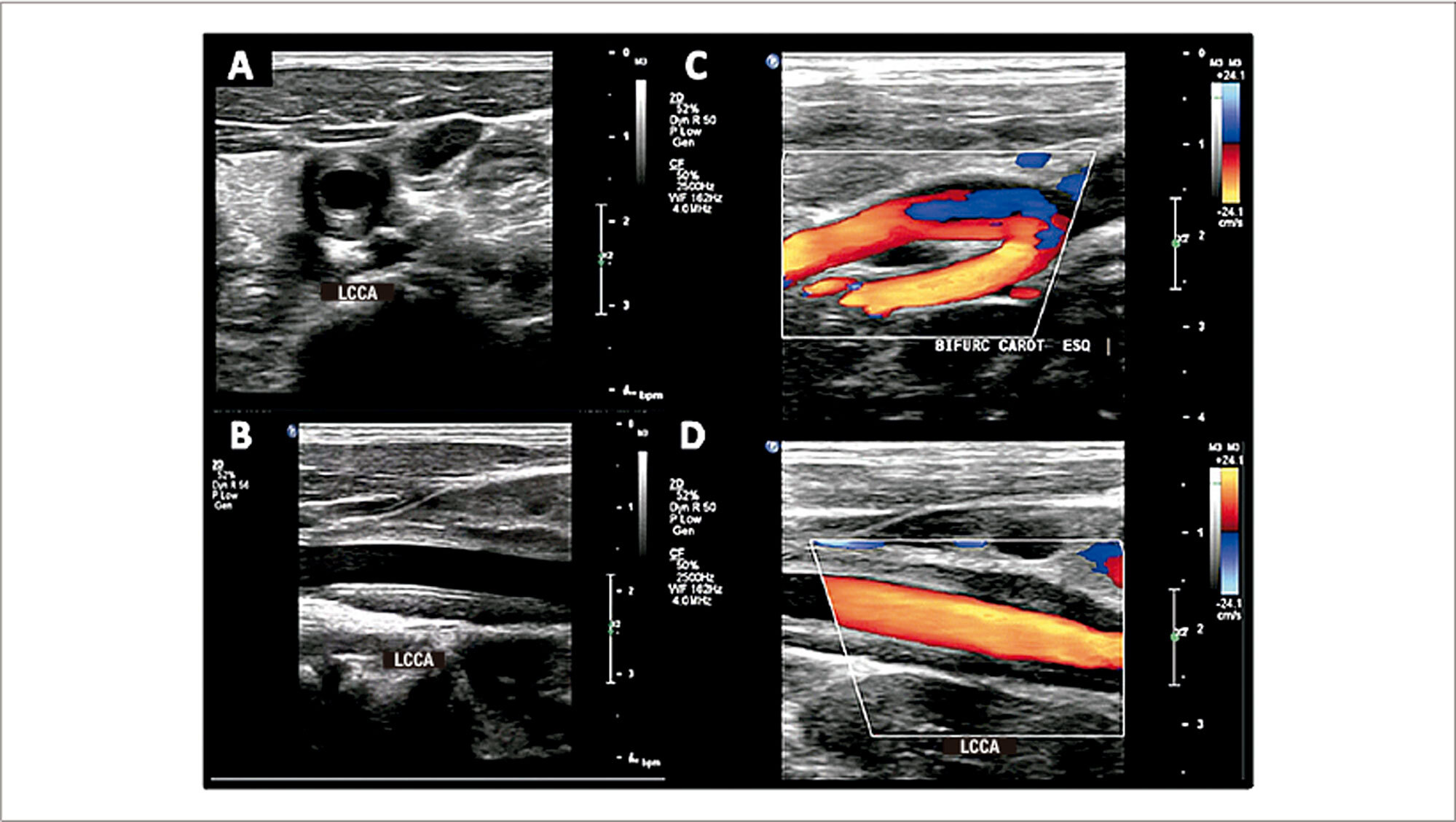
A Rare Case of Pulmonary Sarcoidosis With Extracranial Carotid System Involvement

Fanilda Souto Barros et al. Halsted Alarcão Gomes Pereira da Silva Daniela Souto Barros Simone Nascimento dos Santos

Introduction

Sarcoidosis is a disease of unknown etiology, whose pathogenesis appears to involve genetic, immunologic, infectious, and environmental factors. It was first described in 1889 by Ernest Besnier and is also called Besnier-Boeck-Schaumann disease.,

In sarcoidosis, a noninfectious inflammatory process leads to the formation of granulomas, which predominantly affect the lungs and intrathoracic lymph nodes in approximately 90% to 95% of cases. Close to 30% of patients with sarcoidosis present with extrapulmonary involvement, which may be the primary manifestation of the disease or occur in isolation.–

[…]

  • Carotid Arteries
  • Endosonography
  • Sarcoidosis
Read Full Article
Creative Commons Attribution (CC BY) Creative Commons license
16/05/2024 DOI: 10.36660/abcimg.20240027i Views 1
ABCIC
Review Article

My Approach To: Vascular Ultrasonography in Dolichoarteriopathies of the Carotid Arteries

Armando Luis Cantisano et al. Catarina Schiavo Grubert

Abstract

This article provides step-by-step guidance on how I investigate, classify and evaluate dolichoarteriopathies anatomically and hemodynamically, often found in the carotid and vertebral arteries. Dolichoarteriopathies may be present in children, disappearing during growth and reappearing with increasing age. Previously considered benign anatomic variations (AVs), discussion has arisen on the topic in view of new implications due to associations with cardiovascular events, risk factors, and various pathologies.

  • Anatomic Variation
  • Carotid Arteries
  • Ultrasonography, Carotid Arteries
Read Full Article
Creative Commons Attribution (CC BY) Creative Commons license
30/06/2023 DOI: 10.36660/abcimg.20230034i Views 1
ABC
Editorial

SAGE Score and Pulse Wave Velocity in Non-Hypertensive Individuals

Alfredo José Mansur

An important step of physical examination is the evaluation of arterial pulses. On inspection, palpation and auscultation we are able to study the characteristics of the arterial pulses – symmetry, rate, rhythm, rigidity of arterial wall (mainly in carotid arteries), pulse pressure, contour, velocity of ascension of the ulse wave, thrill, bruits and murmurs. Current day technology made possible to register graphically the pulse wave and to make serial evaluations of arterial rigidity by studying central and peripheral blood pressure, central and peripheral pulse pressure, pulse wave velocity e augmentation index. , An increase in arterial rigidity leads to increase in the pulse wave velocity and the interaction between the forward pulse wave with the backward reflexion is observed in the augmentation index. Anatomical and functional changes of the arteries is one of the mechanisms involved in senescence and may constitute per se a cardiovascular risk factor. Studies of arterial rigidity were performed in patients with arterial hypertension. Indeed, the study of arterial rigidity is also interesting in samples of individuals without hypertension.

In the study researchers reported a study devised to evaluate clinical (age, peripheral systolic arterial pressure) and metabolic (serum glucose, estimated glomerular filtration rate) characteristics in a previously published score (SAGE) relative to variables of arterial rigidity evaluated non-invasively in a sample of 100 participants with normal blood pressure (n=80) or pre-hypertensive (n=20) out of a large sample of 1594 patients; diagnosis of arterial hypertension (n=1349) was an exclusion criteria for this analysis. The maximal score value is 17. The distribution of the score in this study sample ranged between 0 and 3 (64% of the sample). Median of pulse wave velocity in this study sample was 7,3 m.seg-1. The increase in cut off value of pulse wave velocity (percentis 50% – 7,3 m.seg-1e 75% – 9,8 m.seg-1) was associated with an increase in positive and negative predictive values on the basis of scores SAGE observed in the study sample. In participants with pulse wave velocity higher than 10 m.seg-1the most frequent score was 7. The authors concluded that the SAGE score might be useful to screening non hypertensive subjects with higher risk of increase in arterial rigidity. Additional studies might be of help of therapeutic interventions in these clinical scenarios, including follow-up studies provided appropriate reproducibility of the measurements.

[…]

  • Aging/physiology
  • Carotid Arteries
  • Circadian Rhythm
  • Hypertension
  • Oxidative Stress
  • Pulse Wave Analysis/methods, trends
  • Risk Factors
  • Vascular Calcification
  • Vascular Stiffness
Read Full Article
Creative Commons Attribution (CC BY) Creative Commons license
27/02/2023 DOI: 10.36660/abc.20220881 Views 1
ABC
Editorial

Rosuvastatin Decreases the Formation of Neointima by Increasing Apo J, Reducing Restenosis after Balloon Injury in Rats

Paulo Magno Martins Dourado

The study by Yang et al. brings new light on the action of Apolipoprotein (Apo) J, also called clusterin (CLU), a heterodimeric glycoprotein consisting of α and β subunits linked by disulfide bond., The coding gene of Apo J is located on chromosome 8p21-p12, encoding two main isoforms, including secreted (sCLU) and nuclear (nCLU) on restenosis following balloon percutaneous transluminal carotid angioplasty (PTCA) in an experimental model in rats; this was published in this edition of the Brazilian Archives of Cardiology, because there is a controversy in the literature whether Apo J, which is elevated in atherosclerosis and post-angioplasty, plays a protective or promoting role for restenosis. Apo J is involved in several important pathological processes in the transport of lipids, and in the differentiation of vascular smooth muscle cells (VSMC), including cell death by apoptosis, cell cycle regulation, cell adhesion, tissue remodeling, regulation of the immune system and oxidative stress, playing a role in the development of clinical atherosclerosis., In the process of attenuating atherosclerosis, Apo J can promote the export of cholesterol and phospholipids from foam cells of macrophages, and show cytoprotective and anti-inflammatory actions interacting with many known inflammatory proteins that may act in the initial phase of clinical cardiovascular events, and may play an important role in mediating atherosclerotic disease, such as C-reactive protein, paraoxonase and leptin. There are studies reporting that Apo J can stimulate the proliferation and migration of VSMC, and promote restenosis,, and there have been studies showing that overexpression of CLUs can inhibit migration and proliferation of VSMC, and inhibit cellular apoptosis. In view of these controversial results, the authors sought to elucidate the role of Apo J in neointimal hyperplasia, using the rat carotid artery in vivo, with or without rosuvastatin.

The results of the study published here suggest that rosuvastatin can inhibit intimal hyperplasia due to the high expression of Apo J in the active proliferation and migration phase of VSMC, after balloon injury in rats. In the present study, the authors evidenced an increase in the intimal/media (I/M) area rate after the balloon injury that reached the maximum value in the fourth week in the model group; in addition, I/M was increased at week 2, and such increase ceased after the administration of rosuvastatin. These results suggest that rosuvastatin can significantly reduce the degree of intimal hyperplasia in the balloon-injured carotid arteries in rats. The levels of Messenger Ribonucleic Acid (mRNA) and Apo J were increased in the carotid arteries in the group using rosuvastatin, when compared to the model group, reaching the maximum in the second week, earlier than in the model group, suggesting that rosuvastatin can inhibit intimal hyperplasia by increasing Apo J after balloon injury in rats. Therefore, Apo J has been identified as having a central role in the migration, adhesion and vascular proliferation process, and that it can contribute significantly to restenosis after vascular injury.

[…]

  • Angioplasty
  • Carotid Arteries
  • Clusterin/genetic
  • Coronary Restenosis
  • Percutaneous Coronary Intervention/trends
  • Rats
Read Full Article
Creative Commons Attribution (CC BY) Creative Commons license
01/10/2018 DOI: 10.5935/abc.20180204 Views 1
Figure 1
ABC
Original Article

Discordant Lipid Pattern and Carotid Atherosclerotic Plaque. Importance of Remnant Cholesterol

Walter Masson et al. Martín Lobo Graciela Molinero Daniel Siniawski

Abstract

Background:

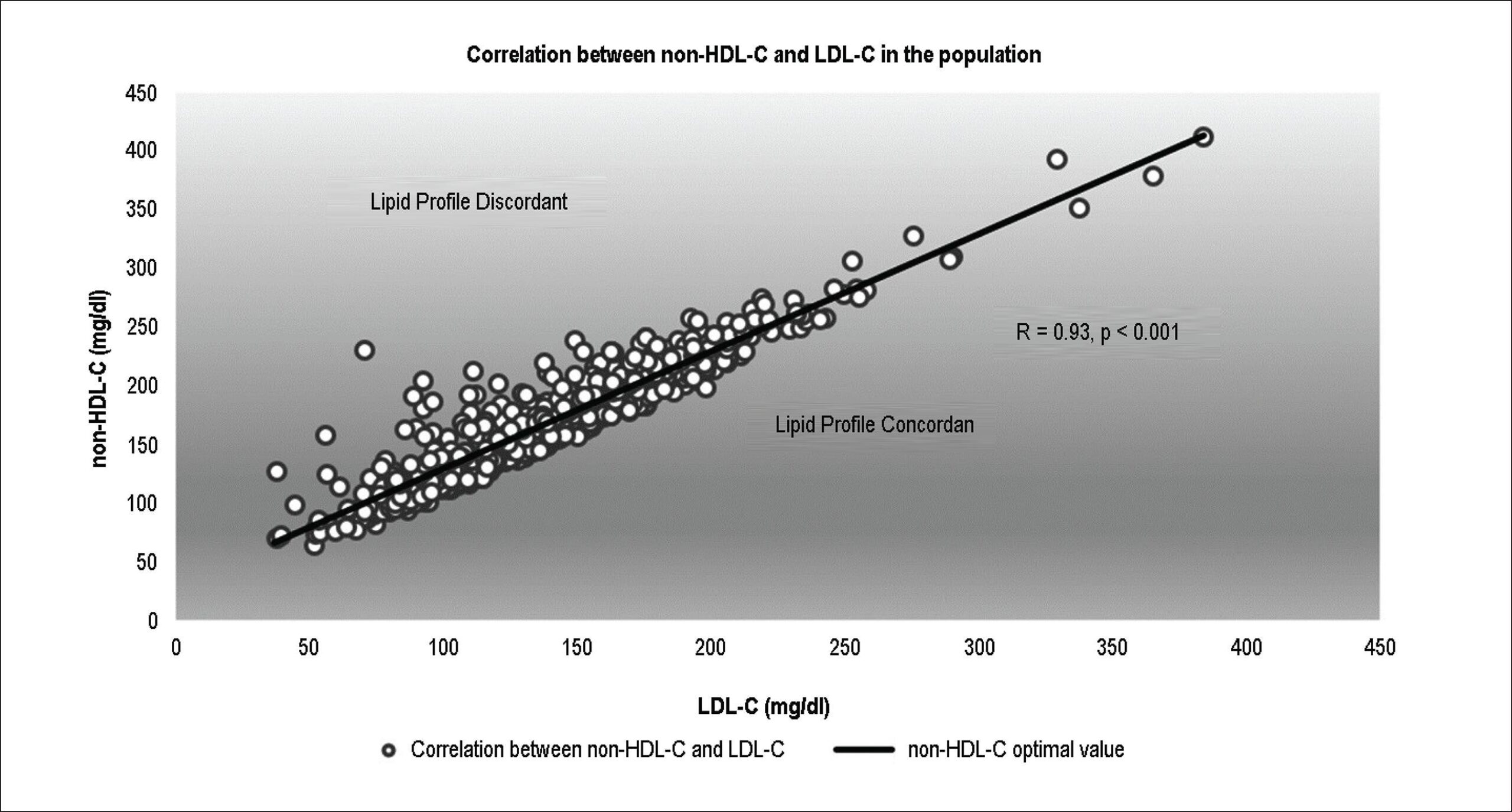
Subjects with levels of non-HDL-C 30 mg/dL above those of LDL-C (lipid discordance) or with high remnant cholesterol levels could have a greater residual cardiovascular risk.

Objectives:

Methods:

Primary prevention patients without diabetes or lipid-lowering therapy were included. Regardless of the LDL-C level, we define “lipid discordance” if the non-HDL-C value exceeded 30 mg/dL that of LDL-C. Remnant cholesterol was calculated as total cholesterol minus HDL-C minus LDL-C when triglycerides were < 4.0 mmol/L. Ultrasound was used to assess carotid plaque occurrence. Multiple regression logistic models were performed.

Results:

The study included 772 patients (mean age 52 ± 11 years, 66% women). The prevalence of lipid discordance was 34%. Male sex and body mass index were independently associated with discordant lipid pattern. The prevalence of carotid plaque was higher in subjects with lipid discordance (40.2% vs. 29.2, p = 0.002). The multivariate analysis showed that the discordant lipid pattern was associated with the greater probability of carotid plaque (OR 1.58, 95% CI 1.08-2.34, p = 0.02). Similarly, a significant association between calculated remnant cholesterol and carotid plaque was found.

Conclusion:

Lipid discordance and presence of a higher level of calculated remnant cholesterol are associated with subclinical atherosclerosis. Our findings could be used to improve the residual cardiovascular risk evaluation.

  • Atherosclerosis / complications
  • Carotid Arteries
  • Cholesterol, LDL
  • Cholesterol, VLDL
  • Lipoproteins, LDL
  • Plaque, Atherosclerotic
Read Full Article
Creative Commons Attribution (CC BY) Creative Commons license
01/06/2017 DOI: 10.5935/abc.20170069 Views 1
Percutaneous implantation of endoprostheses in the carotid arteries
ABC
Original Article

Percutaneous implantation of endoprostheses in the carotid arteries

José Ribamar Costa Jr. et al. Manuel N. Cano Dinaldo C. Oliveira Antonio M. Kambara … Adriana C. Moreira Rogério Queiroz Silvia Cano Amanda G.M.R. Sousa J. Eduardo M.R. Sousa

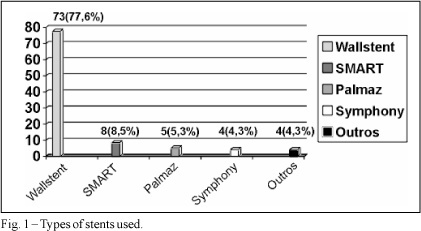
OBJECTIVE: To assess the in-hospital evolution of patients undergoing percutaneous stent placement in the carotid arteries. METHODS: From August 1996 to April 2001, we studied 86 patients with carotid arterial obliterative lesions > 70% who were treated with percutaneous stent placement in the carotid arteries. We assessed the rate of success of the implantation and of the procedure, the types of stents used, mortality rate, and neurological complications. RESULTS: Successful implantation was obtained in 98.9% of the cases, and the procedure was successful in 91.8%. The Wallstent was the most frequently used stent (73 patients – 77%). Cerebral strokes occurred as follows: 3 (3.2%) transient ischemic attacks, 1 (1.1%) minor stroke, and 3 (3.1%) major strokes. One (1.1%) patient died during hospitalization. CONCLUSION: The high rate of success of stent implantation (98.9%) in addition to the low rate of cerebral stroke/death (4.2%) showed the efficiency and safety of percutaneous stent placement in carotid arteries.

  • Carotid Arteries
  • placement
  • stent
Read Full Article
Creative Commons Attribution (CC BY) Creative Commons license
04/01/2012 DOI: 10.1590/S0066-782X2003000100007 Views 1

How to cite this article

EndNote RIS

Electronic Document Format (Vancouver)

Barros FS, Silva HAGP, Barros DS, Santos SN. A Rare Case of Pulmonary Sarcoidosis With Extracranial Carotid System Involvement. ABC Imagem Cardiovascular 2024;37(2):e20240027.

Electronic Document Format (ABNT)

Barros, Fanilda Souto; Silva, Halsted Alarcão Gomes Pereira da; Barros, Daniela Souto; Santos, Simone Nascimento dos. A Rare Case of Pulmonary Sarcoidosis With Extracranial Carotid System Involvement. ABC Imagem Cardiovascular, v. 37, n. 2, e20240027, May. 2024.

Electronic Document Format (APA)

Barros, F. S., Silva, H. A. G. P. , Barros, D. S., & Santos, S. N. (2024). A Rare Case of Pulmonary Sarcoidosis With Extracranial Carotid System Involvement. ABC Imagem Cardiovascular, 37(2), e20240027.

Electronic Document Format (ISO)

Barros, Fanilda Souto and Silva, Halsted Alarcão Gomes Pereira da and Barros, Daniela Souto and Santos, Simone Nascimento dos. A Rare Case of Pulmonary Sarcoidosis With Extracranial Carotid System Involvement. ABC Imagem Cardiovascular [online]. 2024, vol. 37, n. 2, [cited 2026-10-14], e20240027. Available from: <https://journals.cardiol.br/en/article/a-rare-case-of-pulmonary-sarcoidosis-with-extracranial-carotid-system-involvement/>. ISSN 2318-8219

EndNote RIS

Electronic Document Format (Vancouver)

Cantisano AL, Grubert CS. My Approach To: Vascular Ultrasonography in Dolichoarteriopathies of the Carotid Arteries. ABC Imagem Cardiovascular 2023;36(2):e20230034.

Electronic Document Format (ABNT)

Cantisano, Armando Luis; Grubert, Catarina Schiavo. My Approach To: Vascular Ultrasonography in Dolichoarteriopathies of the Carotid Arteries. ABC Imagem Cardiovascular, v. 36, n. 2, e20230034, Jun. 2023.

Electronic Document Format (APA)

Cantisano, A. L., & Grubert, C. S. (2023). My Approach To: Vascular Ultrasonography in Dolichoarteriopathies of the Carotid Arteries. ABC Imagem Cardiovascular, 36(2), e20230034.

Electronic Document Format (ISO)

Cantisano, Armando Luis and Grubert, Catarina Schiavo. My Approach To: Vascular Ultrasonography in Dolichoarteriopathies of the Carotid Arteries. ABC Imagem Cardiovascular [online]. 2023, vol. 36, n. 2, [cited 2026-10-14], e20230034. Available from: <https://journals.cardiol.br/en/article/my-approach-to-vascular-ultrasonography-in-dolichoarteriopathies-of-the-carotid-arteries/>. ISSN 2318-8219

EndNote RIS

Electronic Document Format (Vancouver)

Mansur AJ. SAGE Score and Pulse Wave Velocity in Non-Hypertensive Individuals. Arquivos Brasileiros de Cardiologia 2023;120(2):e20220881.

Electronic Document Format (ABNT)

Mansur, Alfredo José. SAGE Score and Pulse Wave Velocity in Non-Hypertensive Individuals. Arquivos Brasileiros de Cardiologia, v. 120, n. 2, e20220881, Feb. 2023.

Electronic Document Format (APA)

Mansur, A. J. (2023). SAGE Score and Pulse Wave Velocity in Non-Hypertensive Individuals. Arquivos Brasileiros de Cardiologia, 120(2), e20220881.

Electronic Document Format (ISO)

Mansur, Alfredo José. SAGE Score and Pulse Wave Velocity in Non-Hypertensive Individuals. Arquivos Brasileiros de Cardiologia [online]. 2023, vol. 120, n. 2, [cited 2026-10-14], e20220881. Available from: <https://journals.cardiol.br/en/article/sage-score-and-pulse-wave-velocity-in-non-hypertensive-individuals/>. ISSN 0066-782X

EndNote RIS

Electronic Document Format (Vancouver)

Dourado PMM. Rosuvastatin Decreases the Formation of Neointima by Increasing Apo J, Reducing Restenosis after Balloon Injury in Rats. Arquivos Brasileiros de Cardiologia 2018;111(4):569-70.

Electronic Document Format (ABNT)

Dourado, Paulo Magno Martins. Rosuvastatin Decreases the Formation of Neointima by Increasing Apo J, Reducing Restenosis after Balloon Injury in Rats. Arquivos Brasileiros de Cardiologia, v. 111, n. 4, p. 569-570, Sep. 2018.

Electronic Document Format (APA)

Dourado, P. M. M. (2018). Rosuvastatin Decreases the Formation of Neointima by Increasing Apo J, Reducing Restenosis after Balloon Injury in Rats. Arquivos Brasileiros de Cardiologia, 111(4), 569-570.

Electronic Document Format (ISO)

Dourado, Paulo Magno Martins. Rosuvastatin Decreases the Formation of Neointima by Increasing Apo J, Reducing Restenosis after Balloon Injury in Rats. Arquivos Brasileiros de Cardiologia [online]. 2018, vol. 111, n. 4, [cited 2026-10-14], pp. 569-570. Available from: <https://journals.cardiol.br/en/article/rosuvastatin-decreases-the-formation-of-neointima-by-increasing-apo-j-reducing-restenosis-after-balloon-injury-in-rats/>. ISSN 0066-782X

EndNote RIS

Electronic Document Format (Vancouver)

Masson W, Lobo M, Molinero G, Siniawski D. Discordant Lipid Pattern and Carotid Atherosclerotic Plaque. Importance of Remnant Cholesterol. Arquivos Brasileiros de Cardiologia 2017;108(6):526-32.

Electronic Document Format (ABNT)

Masson, Walter; Lobo, Martín; Molinero, Graciela; Siniawski, Daniel. Discordant Lipid Pattern and Carotid Atherosclerotic Plaque. Importance of Remnant Cholesterol. Arquivos Brasileiros de Cardiologia, v. 108, n. 6, p. 526-532, May. 2017.

Electronic Document Format (APA)

Masson, W., Lobo, M., Molinero, G., & Siniawski, D. (2017). Discordant Lipid Pattern and Carotid Atherosclerotic Plaque. Importance of Remnant Cholesterol. Arquivos Brasileiros de Cardiologia, 108(6), 526-532.

Electronic Document Format (ISO)

Masson, Walter and Lobo, Martín and Molinero, Graciela and Siniawski, Daniel. Discordant Lipid Pattern and Carotid Atherosclerotic Plaque. Importance of Remnant Cholesterol. Arquivos Brasileiros de Cardiologia [online]. 2017, vol. 108, n. 6, [cited 2026-10-14], pp. 526-532. Available from: <https://journals.cardiol.br/en/article/discordant-lipid-pattern-and-carotid-atherosclerotic-plaque-importance-of-remnant-cholesterol/>. ISSN 0066-782X

EndNote RIS

Electronic Document Format (Vancouver)

Costa Jr. JR, Cano MN, Oliveira DC, Kambara AM, Moreira AC, Queiroz R, Cano S, et al. Percutaneous implantation of endoprostheses in the carotid arteries. Arquivos Brasileiros de Cardiologia 2012;80(1):77-82.

Electronic Document Format (ABNT)

Costa Jr., José Ribamar; Cano, Manuel N.; Oliveira, Dinaldo C.; Kambara, Antonio M.; Moreira, Adriana C.; Queiroz, Rogério; Cano, Silvia; Sousa, Amanda G.M.R.; Sousa, J. Eduardo M.R.. Percutaneous implantation of endoprostheses in the carotid arteries. Arquivos Brasileiros de Cardiologia, v. 80, n. 1, p. 77-82, Jan. 2012.

Electronic Document Format (APA)

Costa Jr., J. R., Cano, M. N., Oliveira, D. C., Kambara, A. M., Moreira, A. C., Queiroz, R., Cano, S., Sousa, A. G., & Sousa, J. E. M. (2012). Percutaneous implantation of endoprostheses in the carotid arteries. Arquivos Brasileiros de Cardiologia, 80(1), 77-82.

Electronic Document Format (ISO)

Costa Jr., José Ribamar and Cano, Manuel N. and Oliveira, Dinaldo C. and Kambara, Antonio M. and Moreira, Adriana C. and Queiroz, Rogério and Cano, Silvia and Sousa, Amanda G.M.R. and Sousa, J. Eduardo M.R.. Percutaneous implantation of endoprostheses in the carotid arteries. Arquivos Brasileiros de Cardiologia [online]. 2012, vol. 80, n. 1, [cited 2026-10-14], pp. 77-82. Available from: <https://journals.cardiol.br/en/article/percutaneous-implantation-of-endoprostheses-in-the-carotid-arteries/>. ISSN 0066-782X

  • About ABC Family
  • Internal Regulation
  • Editorial Board
  • Brazilian Society of Cardiology (SBC)

Issues

SBC Guidelines

  • Videos
  • Podcasts
  • News