ABC Family Arquivos Brasileiros de Cardiologia International Journal of Cardiovascular Sciences ABC Heart Failure & Cardiomyopathy ABC Imagem Cardiovascular
Português English
ABC Family
Português English
  • About
    • About ABC Family
    • Internal Regulation
    • Editorial Board
    • Brazilian Society of Cardiology (SBC)
  • Issues
  • SBC Guidelines
  • Content
    • Videos
    • Podcasts
    • News
  • About
    • About ABC Family
    • Internal Regulation
    • Editorial Board
    • Brazilian Society of Cardiology (SBC)
  • Issues
  • SBC Guidelines
  • Content
    • Videos
    • Podcasts
    • News

ABC Family

  • ABC Family
  • Arquivos Brasileiros de Cardiologia
  • International Journal of Cardiovascular Sciences
  • ABC Heart Failure & Cardiomyopathy
  • ABC Imagem Cardiovascular
Search in

No content found.

Journals
Ordering
Article types
Others

  1. Home
  2. Keyword: Angina, Stable
ABC
Editorial

Refractory Angina Referral to Cardiovascular Rehabilitation: A Neglected Patient

Mauricio Milani et al. Juliana Goulart Prata Oliveira Milani Gerson Cipriano Junior

Cardiovascular rehabilitation (CR) is an effective and safe treatment for stable coronary artery disease (CAD) patients, with established benefits to improving quality of life and reducing cardiovascular mortality and hospital admission. The effects of CR on reducing myocardial ischemia have been documented,– justifying the CR Class IA recommendation. However, CR is still neglected and underused worldwide.

Refractory angina (RA) is a disabling condition affecting CAD patients under optimized medical therapy with a residual ischemic burden for more than three months who are ineligible for revascularization interventions. RA is associated with reduced quality of life, exercise limitation, and biopsychosocial disorders. Ideally, clinical management should be guided by specialized centers aiming to optimize multiple pharmacologic therapies and evaluated interventional options. In this context, comprehensive CR is a valuable treatment for RA considering its multi-component approach, including risk factor management, psychological support, and exercise training, although the latter possess limited evidence.

[…]
  • Angina, Stable
  • Cardiac Rehabilitation
  • Coronary Artery Disease
  • Exercise
  • Myocardial Ischemia/drug therapy
Read Full Article
Creative Commons Attribution (CC BY) Creative Commons license
25/11/2022 DOI: 10.36660/abc.20220695 Views 1
Figure 1
ABC
Case Report

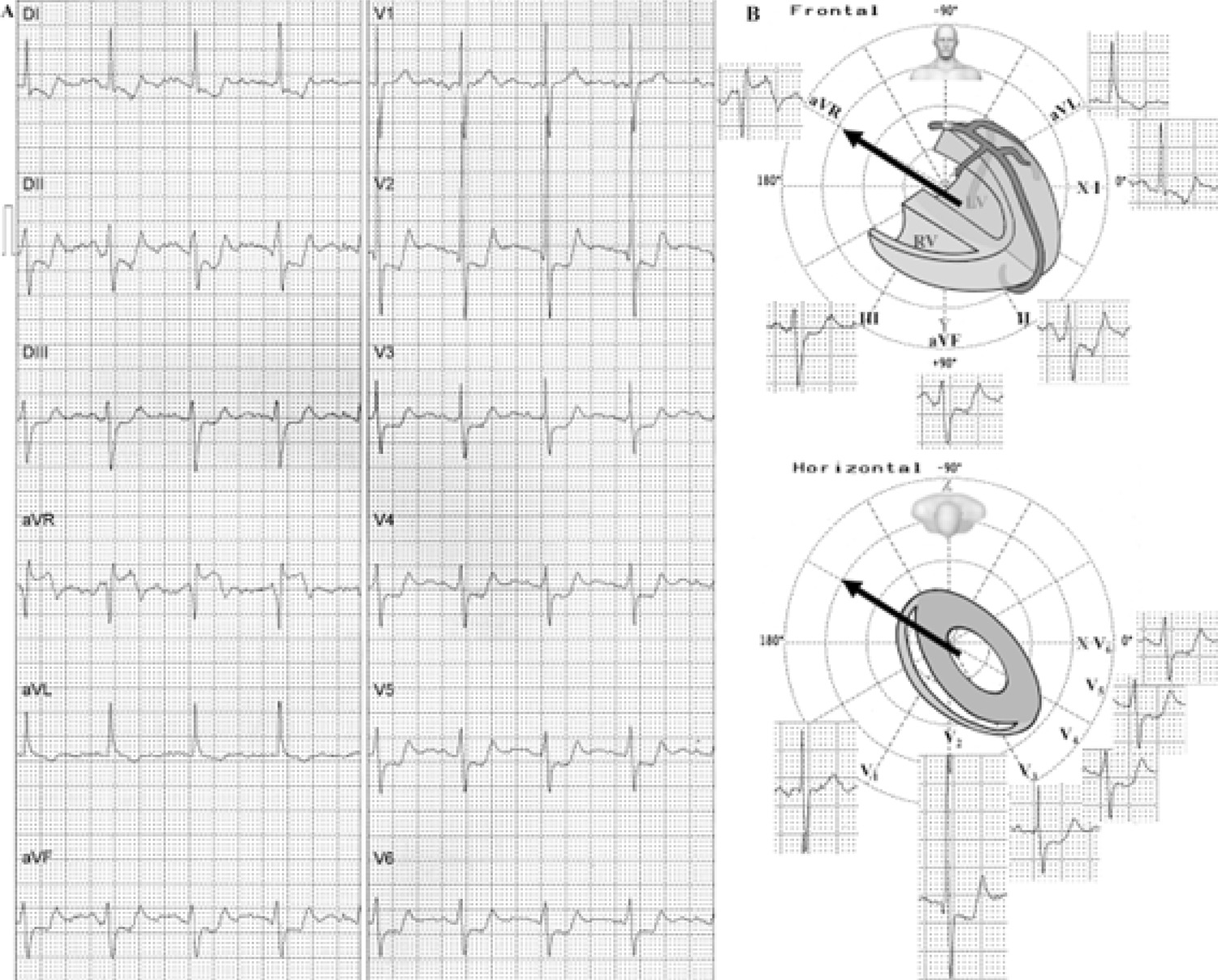
Transient Prominent Anterior QRS Forces in Acute Left Main Coronary Artery Subocclusion: Transient Left Septal Fascicular Block

Andrés Ricardo Pérez-Riera et al. Raimundo Barbosa-Barros Rodrigo Daminello Raimundo Luiz Carlos de Abreu … Marcos Célio de Almeida Kjell Nikus

Introduction

The left main coronary artery (LMCA) originates from the left sinus of Valsalva, passes between the main pulmonary artery and the left atrial appendage before entering the coronary sulcus and bifurcates into the left anterior descending (LAD) and the left circumflex (LCX) coronary arteries. In most individuals, the LMCA supplies ≈75% of the left ventricle (LV). Significant stenosis, which may lead to stable angina and/or acute coronary syndrome, places the patient at risk of life-threatening acute left ventricular failure and malignant arrhythmias. Patient prognosis of LMCA disease can be improved with coronary artery bypass grafting (CABG). With technical improvement and effective anti-thrombotic medication, percutaneous coronary intervention (PCI) has evolved as an alternative therapeutic modality. In patients with severe LMCA disease having low to intermediate anatomic complexity, both CABG and PCI are effective methods of revascularization with comparable long-term rates of death, myocardial infarction, and stroke. Patients most suitable for LMCA stenting are those with isolated ostial/mid LMCA disease, protected LMCA disease and those who undergo an elective stenting procedure. In a recent study, 8% mortality and 8% target lesion revascularization rate during one-year follow-up was reported.

[…]

  • Acute coronary syndrome
  • Angina, Stable
  • Coronary Occlusion
  • Electrocardiography/methods
  • Fibrinolytic Agents
  • Percutaneous Coronary Intervention
  • Truncus Arterious
Read Full Article
Creative Commons Attribution (CC BY) Creative Commons license
14/09/2020 DOI: 10.36660/abc.20180363 Views 2
Figura 1
ABC
Viewpoint

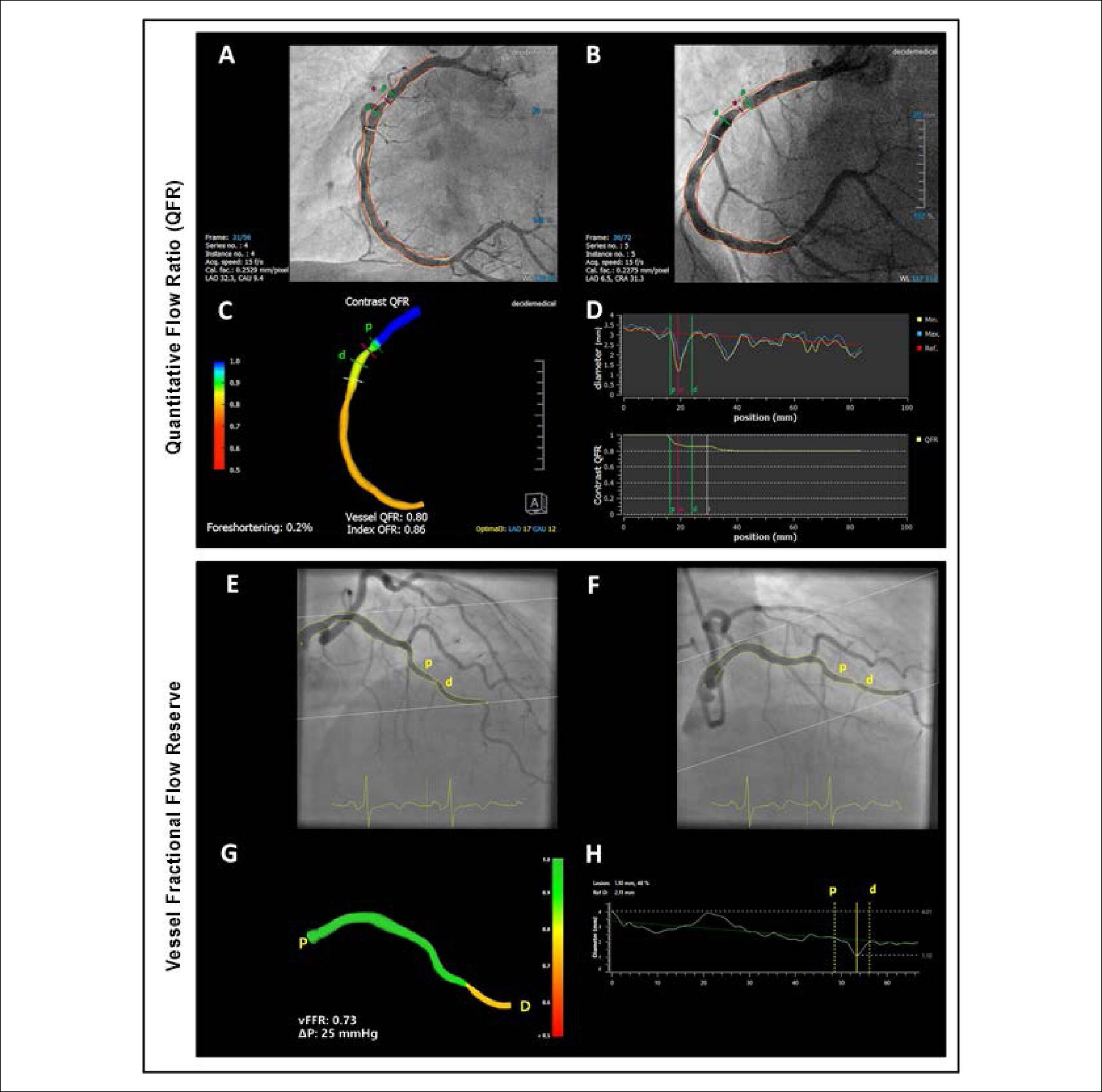
Update on Coronary Angiography-Based Physiology Technologies

Alexandre Hideo-Kajita et al. Hector M. Garcia-Garcia Evan Shlofmitz Carlos M. Campos

Computational fluid dynamics

The basis for CFD is derived from Navier-Stokes equations, a mathematical generalization of Euler’s flow of incompressible and frictionless fluids equation. In its current state, CFD now can compensate for 3 dimensionality and interactions in the non-perfect cylindrical shape of the coronary arteries. However, due to intrinsic cardiovascular physiology particularities, CFD cannot compensate for pulsatile blood flow effects; physiologic differences of coronary blood flow velocity in the proximal vs. distal segments of the vessel; and predictable loss of energy over a diseased vessel.– Moreover, CFD still cannot address the high complexity interactions in vessel geometry that may lead to a chaotic vortex or turbulence formation and more importantly, the trans-lesional pressure drop.,

There are significant differences in the complex rheological properties of blood and normal blood flow along the coronary artery tree branches by itself that are not taken into account in these models. This includes the Newtonian versus Non-Newtonian fluid properties of blood that depend on the vessel diameter, the presence of a bifurcation, and slow blood flow shear stress effects (e.g. the non-Newtonian fluid property in that context). CFD simulation generalizes the differences of Newtonian and Non-Newtonian fluids properties by the assumption that large vessels can be approximated to a Newtonian fluid property with constant viscosity., Therefore, these data provide a consistent explanation of why these methods were not standardized to evaluate severe stenosis or antegrade blood flow in small vessels.

[…]

  • Angina, Stable
  • Coronary Angiography
  • Coronary Artery Disease/physiopathology
  • Fractional Flow Reserve, Myocardial
  • Percutaneous Coronary Intervention
  • Software/trends
Read Full Article
Creative Commons Attribution (CC BY) Creative Commons license
29/07/2019 DOI: 10.5935/abc.20190140
ABC
Editorial

To Defer or Not Defer? The Challenges of Physiology in Acute Coronary Syndromes

Carlos M. Campos et al. Pedro A. Lemos

Conventional angiography may unreliably estimate the functional severity of coronary lesions, particularly of intermediate stenosis. It is in this context that intracoronary physiology, namely the measurement of fractional flow reserve (FFR), has been developed: to precisely differentiate stenoses that cause myocardial ischemia from those that are not significantly obstructive. Overall, FFR has been applied as a decision-making tool, helping to indicate (or defer) revascularization in intermediate or ambiguous coronary stenoses. Compared with angiography alone, the addition of FFR-derived information has been shown to improve patient outcomes and procedural cost-efficiencies, with physiology-guided coronary revascularization being currently recommended in clinical practice guidelines, on the grounds of ample scientific evidence.

Almost twenty years ago, the pivotal DEFER trial consolidated the concept that FFR-based postponement of revascularization is safe. However, numerous reasons make the translation of the DEFER trial to contemporary clinical practice outdated: i) the excessively restrictive 0.75 cutoff (as used in the study) has been supplanted by the more permissive 0.80 threshold, ii) balloon angioplasty as a stand-alone therapy has been largely replaced by drug-eluting stents, iii) more potent antiplatelet agents and other medical therapies have become available, and iv) the relation between FFR and the obstructive profile of coronary lesion is yet being questioned by some authors. Thus, the contemporary safety of deferring lesions in stable angina pectoris (SAP) and acute coronary syndrome (ACS) on the basis of FFR still deserves investigation.

[…]

  • Acute Coronary Syndrome/physiopathology
  • Angina, Stable
  • Fractional Flow Reserve, Myocardial
  • Myocardial Revascularization
  • Percutaneous Coronary Intervention
Read Full Article
Creative Commons Attribution (CC BY) Creative Commons license
01/10/2018 DOI: 10.5935/abc.20180206 Views 1
Figure 1
ABC
Original Article

Correlation between C-Reactive Protein in Peripheral Vein and Coronary Sinus in Stable and Unstable Angina

Weverton Ferreira Leite et al. José Antonio Franchini Ramires Luiz Felipe Pinho Moreira Célia Maria Cassaro Strunz José Armando Mangione

Background:

High sensitivity C-reactive protein (hs-CRP) is commonly used in clinical practice to assess cardiovascular risk. However, a correlation has not yet been established between the absolute levels of peripheral and central hs-CRP.

Objective:

To assess the correlation between serum hs-CRP levels (mg/L) in a peripheral vein in the left forearm (LFPV) with those in the coronary sinus (CS) of patients with coronary artery disease (CAD) and a diagnosis of stable angina (SA) or unstable angina (UA).

Methods:

This observational, descriptive, and cross-sectional study was conducted at the Instituto do Coração, Hospital das Clinicas, Faculdade de Medicina, Universidade de São Paulo, and at the Hospital Beneficência Portuguesa de Sao Paulo, where CAD patients referred to the hospital for coronary angiography were evaluated.

Results:

Forty patients with CAD (20 with SA and 20 with UA) were included in the study. Blood samples from LFPV and CS were collected before coronary angiography. Furthermore, analysis of the correlation between serum levels of hs-CRP in LFPV versus CS showed a strong linear correlation for both SA (r = 0.993, p < 0.001) and UA (r = 0.976, p < 0.001) and for the entire sample (r = 0.985, p < 0.001).

Conclusion:

Our data suggest a strong linear correlation between hs-CRP levels in LFPV versus CS in patients with SA and UA.

  • Angina, Stable
  • Angina, Unstable
  • C-Reactive Protein
  • Coronary Artery Disease
  • Coronary sinus
Read Full Article
Creative Commons Attribution (CC BY) Creative Commons license
09/12/2014 DOI: 10.5935/abc.20140188 Views 2

How to cite this article

EndNote RIS

Electronic Document Format (Vancouver)

Milani M, Milani JGPO, Cipriano Junior G. Refractory Angina Referral to Cardiovascular Rehabilitation: A Neglected Patient. Arquivos Brasileiros de Cardiologia 2022;119(5):754-5.

Electronic Document Format (ABNT)

Milani, Mauricio; Milani, Juliana Goulart Prata Oliveira; Cipriano Junior, Gerson. Refractory Angina Referral to Cardiovascular Rehabilitation: A Neglected Patient. Arquivos Brasileiros de Cardiologia, v. 119, n. 5, p. 754-755, Nov. 2022.

Electronic Document Format (APA)

Milani, M., Milani, J. G. P. O., & Cipriano Junior, G. (2022). Refractory Angina Referral to Cardiovascular Rehabilitation: A Neglected Patient. Arquivos Brasileiros de Cardiologia, 119(5), 754-755.

Electronic Document Format (ISO)

Milani, Mauricio and Milani, Juliana Goulart Prata Oliveira and Cipriano Junior, Gerson. Refractory Angina Referral to Cardiovascular Rehabilitation: A Neglected Patient. Arquivos Brasileiros de Cardiologia [online]. 2022, vol. 119, n. 5, [cited 2026-10-14], pp. 754-755. Available from: <https://journals.cardiol.br/en/article/refractory-angina-referral-to-cardiovascular-rehabilitation-a-neglected-patient/>. ISSN 0066-782X

EndNote RIS

Electronic Document Format (Vancouver)

Pérez-Riera AR, Barbosa-Barros R, Raimundo RD, Abreu LC, Almeida MC, Nikus K. Transient Prominent Anterior QRS Forces in Acute Left Main Coronary Artery Subocclusion: Transient Left Septal Fascicular Block. Arquivos Brasileiros de Cardiologia 2020;115(1 suppl 1):1-5.

Electronic Document Format (ABNT)

Pérez-Riera, Andrés Ricardo; Barbosa-Barros, Raimundo; Raimundo, Rodrigo Daminello; Abreu, Luiz Carlos de; Almeida, Marcos Célio de; Nikus, Kjell. Transient Prominent Anterior QRS Forces in Acute Left Main Coronary Artery Subocclusion: Transient Left Septal Fascicular Block. Arquivos Brasileiros de Cardiologia, v. 115, n. 1 suppl 1, p. 1-5, Sep. 2020.

Electronic Document Format (APA)

Pérez-Riera, A. R., Barbosa-Barros, R., Raimundo, R. D., Abreu, L. C. , Almeida, M. C. , & Nikus, K. (2020). Transient Prominent Anterior QRS Forces in Acute Left Main Coronary Artery Subocclusion: Transient Left Septal Fascicular Block. Arquivos Brasileiros de Cardiologia, 115(1 suppl 1), 1-5.

Electronic Document Format (ISO)

Pérez-Riera, Andrés Ricardo and Barbosa-Barros, Raimundo and Raimundo, Rodrigo Daminello and Abreu, Luiz Carlos de and Almeida, Marcos Célio de and Nikus, Kjell. Transient Prominent Anterior QRS Forces in Acute Left Main Coronary Artery Subocclusion: Transient Left Septal Fascicular Block. Arquivos Brasileiros de Cardiologia [online]. 2020, vol. 115, n. 1 suppl 1, [cited 2026-10-14], pp. 1-5. Available from: <https://journals.cardiol.br/en/article/transient-prominent-anterior-qrs-forces-in-acute-left-main-coronary-artery-subocclusion-transient-left-septal-fascicular-block/>. ISSN 0066-782X

EndNote RIS

Electronic Document Format (Vancouver)

Hideo-Kajita A, Garcia-Garcia HM, Shlofmitz E, Campos CM. Update on Coronary Angiography-Based Physiology Technologies. Arquivos Brasileiros de Cardiologia 2019;113(2):282-5.

Electronic Document Format (ABNT)

Hideo-Kajita, Alexandre; Garcia-Garcia, Hector M.; Shlofmitz, Evan; Campos, Carlos M.. Update on Coronary Angiography-Based Physiology Technologies. Arquivos Brasileiros de Cardiologia, v. 113, n. 2, p. 282-285, Jul. 2019.

Electronic Document Format (APA)

Hideo-Kajita, A., Garcia-Garcia, H. M., Shlofmitz, E., & Campos, C. M. (2019). Update on Coronary Angiography-Based Physiology Technologies. Arquivos Brasileiros de Cardiologia, 113(2), 282-285.

Electronic Document Format (ISO)

Hideo-Kajita, Alexandre and Garcia-Garcia, Hector M. and Shlofmitz, Evan and Campos, Carlos M.. Update on Coronary Angiography-Based Physiology Technologies. Arquivos Brasileiros de Cardiologia [online]. 2019, vol. 113, n. 2, [cited 2026-10-14], pp. 282-285. Available from: <https://journals.cardiol.br/en/article/update-on-coronary-angiography-based-physiology-technologies/>. ISSN 0066-782X

EndNote RIS

Electronic Document Format (Vancouver)

Campos CM, Lemos PA. To Defer or Not Defer? The Challenges of Physiology in Acute Coronary Syndromes. Arquivos Brasileiros de Cardiologia 2018;111(4):551-2.

Electronic Document Format (ABNT)

Campos, Carlos M.; Lemos, Pedro A.. To Defer or Not Defer? The Challenges of Physiology in Acute Coronary Syndromes. Arquivos Brasileiros de Cardiologia, v. 111, n. 4, p. 551-552, Sep. 2018.

Electronic Document Format (APA)

Campos, C. M., & Lemos, P. A. (2018). To Defer or Not Defer? The Challenges of Physiology in Acute Coronary Syndromes. Arquivos Brasileiros de Cardiologia, 111(4), 551-552.

Electronic Document Format (ISO)

Campos, Carlos M. and Lemos, Pedro A.. To Defer or Not Defer? The Challenges of Physiology in Acute Coronary Syndromes. Arquivos Brasileiros de Cardiologia [online]. 2018, vol. 111, n. 4, [cited 2026-10-14], pp. 551-552. Available from: <https://journals.cardiol.br/en/article/to-defer-or-not-defer-the-challenges-of-physiology-in-acute-coronary-syndromes/>. ISSN 0066-782X

EndNote RIS

Electronic Document Format (Vancouver)

Leite WF, Ramires JAF, Moreira LFP, Strunz CMC, Mangione JA. Correlation between C-Reactive Protein in Peripheral Vein and Coronary Sinus in Stable and Unstable Angina. Arquivos Brasileiros de Cardiologia 2014;104(3):202-8.

Electronic Document Format (ABNT)

Leite, Weverton Ferreira; Ramires, José Antonio Franchini; Moreira, Luiz Felipe Pinho; Strunz, Célia Maria Cassaro; Mangione, José Armando. Correlation between C-Reactive Protein in Peripheral Vein and Coronary Sinus in Stable and Unstable Angina. Arquivos Brasileiros de Cardiologia, v. 104, n. 3, p. 202-208, Dec. 2014.

Electronic Document Format (APA)

Leite, W. F., Ramires, J. A. F., Moreira, L. F. P., Strunz, C. M. C., & Mangione, J. A. (2014). Correlation between C-Reactive Protein in Peripheral Vein and Coronary Sinus in Stable and Unstable Angina. Arquivos Brasileiros de Cardiologia, 104(3), 202-208.

Electronic Document Format (ISO)

Leite, Weverton Ferreira and Ramires, José Antonio Franchini and Moreira, Luiz Felipe Pinho and Strunz, Célia Maria Cassaro and Mangione, José Armando. Correlation between C-Reactive Protein in Peripheral Vein and Coronary Sinus in Stable and Unstable Angina. Arquivos Brasileiros de Cardiologia [online]. 2014, vol. 104, n. 3, [cited 2026-10-14], pp. 202-208. Available from: <https://journals.cardiol.br/en/article/correlation-between-c-reactive-protein-in-peripheral-vein-and-coronary-sinus-in-stable-and-unstable-angina/>. ISSN 0066-782X

  • About ABC Family
  • Internal Regulation
  • Editorial Board
  • Brazilian Society of Cardiology (SBC)

Issues

SBC Guidelines

  • Videos
  • Podcasts
  • News