ABC Family Arquivos Brasileiros de Cardiologia International Journal of Cardiovascular Sciences ABC Heart Failure & Cardiomyopathy ABC Imagem Cardiovascular
Português English
ABC Family
Português English
  • About
    • About ABC Family
    • Internal Regulation
    • Editorial Board
    • Brazilian Society of Cardiology (SBC)
  • Issues
  • SBC Guidelines
  • Content
    • Videos
    • Podcasts
    • News
  • About
    • About ABC Family
    • Internal Regulation
    • Editorial Board
    • Brazilian Society of Cardiology (SBC)
  • Issues
  • SBC Guidelines
  • Content
    • Videos
    • Podcasts
    • News

ABC Family

  • ABC Family
  • Arquivos Brasileiros de Cardiologia
  • International Journal of Cardiovascular Sciences
  • ABC Heart Failure & Cardiomyopathy
  • ABC Imagem Cardiovascular
Search in

No content found.

Journals
Ordering
Article types
Others

  1. Home
  2. Keyword: Fractional Flow Reserve, Myocardial
ABC
Editorial

Is it Time to Revisit Fractional Flow Reserve Thresholds?

Fernando Mendes Sant’Anna et al. Lucas Bonacossa Sant’Anna Sérgio Lívio Menezes Couceiro

Intracoronary physiological assessment is established as a valuable strategy to identify flow-limiting epicardial stenoses in patients with coronary artery disease (CAD) and to determine an indication for percutaneous coronary interventions (PCI).

It had been previously assumed that once the flow-limiting disease was confirmed with a pressure guidewire measurement, PCI guided by angiography should lead to effective restoration of vessel conductance. However, studies with physiological post-PCI evaluation based on fractional flow reserve (FFR) and non-hyperemic pressure ratios (NHPR) demonstrate that this supposition is not correct and that relying on angiographic guidance alone can be associated with suboptimal functional results post-PCI in many cases. , Moreover, it is well known that post-PCI FFR is a strong predictor of outcomes, and the lower the post-stent FFR, the worse the clinical follow-up.

[…]

  • Constriction Pathoçogic
  • Coronary Artery Disease, Percutaneous Coronary Intervention
  • Drug-Eluting Stents
  • Fractional Flow Reserve, Myocardial
  • Pericardium
Read Full Article
Creative Commons Attribution (CC BY) Creative Commons license
17/07/2023 DOI: 10.36660/abc.20230363
Figure 1
ABCIC
Case Report

New Application of FFRCT in Clinical Practice: Evaluation of Interarterial Anomalous Coronary Course

Fábio Bordin Trindade et al. Thamara Carvalho Morais Roberto Nery Dantas Junior Roberto Vitor Almeida Torres … Clarice Santos Parreira Soares José Rodrigues Parga Filho

Discussion

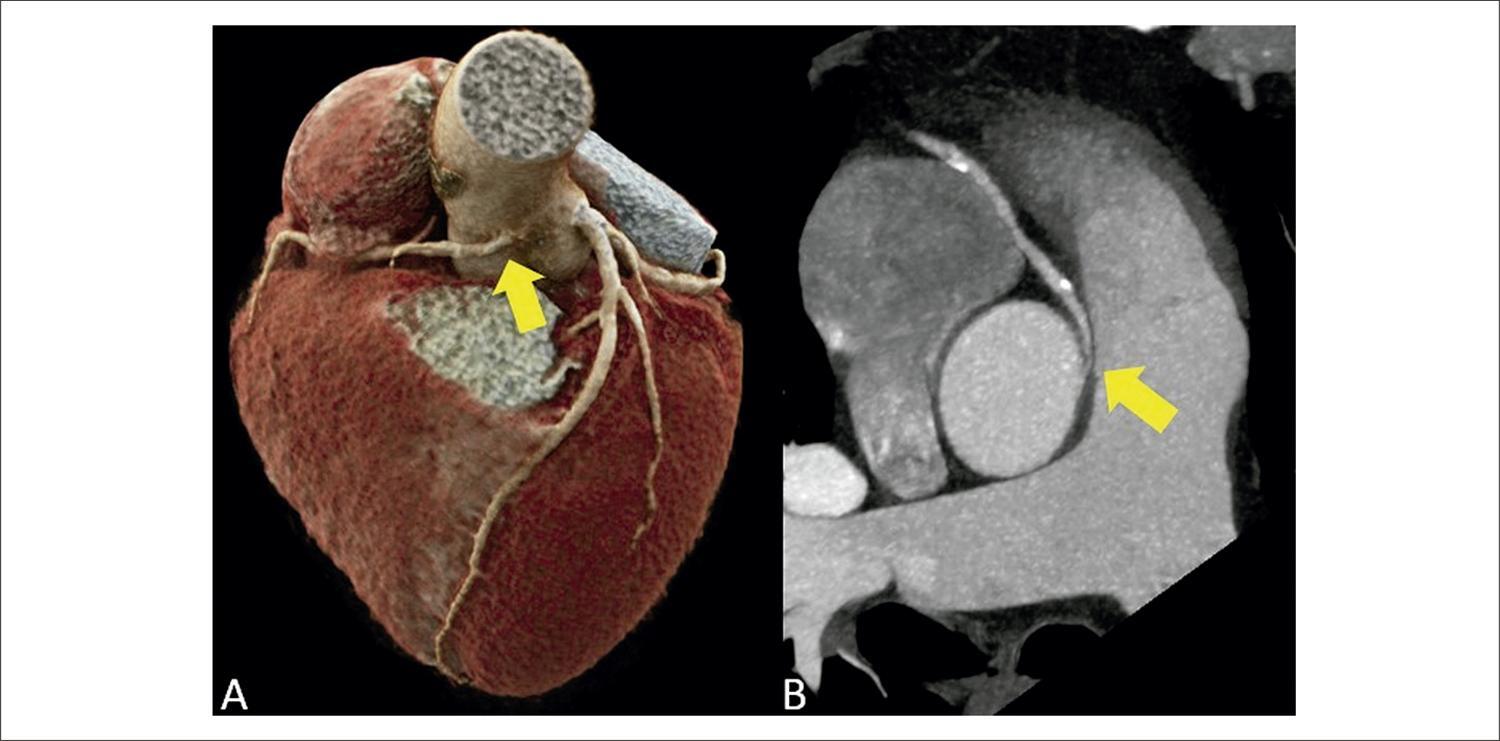
Anomalous origin and course of coronary arteries are rare congenital heart diseases, affecting less than 1% of the general population., Anomalous coronary origin with an interarterial (suprapulmonary) course is characterized by the course of the coronary artery between the ascending aorta and the pulmonary artery trunk, most commonly involving the right coronary artery., Most individuals are asymptomatic, but, among symptomatic patients, chest pain and dyspnea on exertion are the most prevalent complaints. There is also an increase in rates of arrhythmia, sudden death, and acute myocardial infarction., Sudden death is the main complication of this anatomical variant, occurring in approximately 30% of patients.,, In these cases, the narrowing and stretching of the anomalous ostium, mainly during physical exercise and in stressful situations, with consequent reduction in coronary flow, is the substrate for potentially fatal ischemic alterations.,, Since electrocardiogram, in most cases, does not reveal ischemic alterations, diagnosis is generally made through an incidental finding on imaging exams. These exams are of great importance, especially coronary CTA, which, in addition to being a non-invasive exam with high negative predictive value, allows detailed anatomical visualization (angle of the origin, presence of intramural trajectory in the aorta, degree of ostial/proximal luminal reduction) and the correct classification in relation to the pulmonary valve plane (suprapulmonary versus subpulmonary).,,

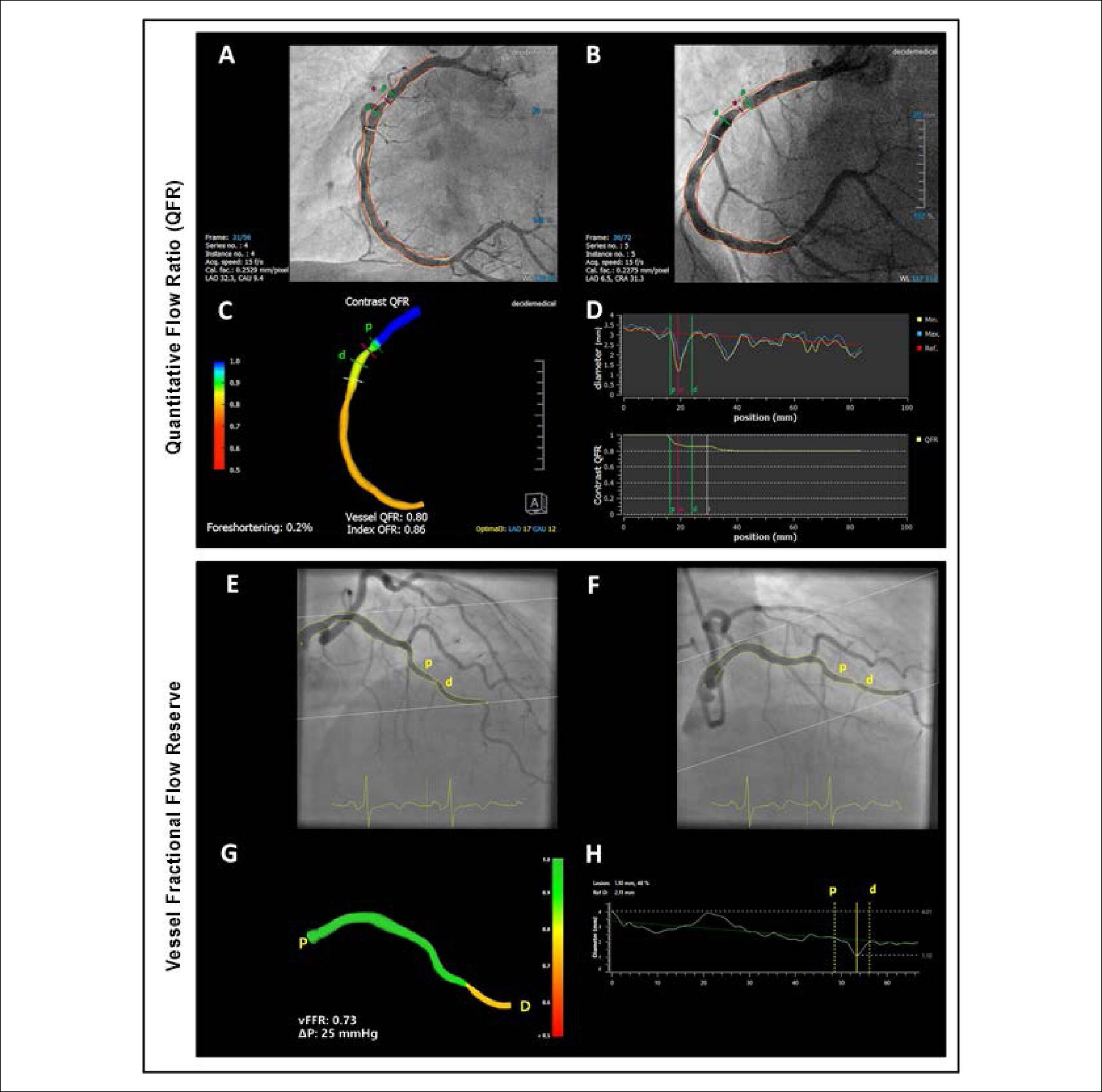
Recent studies have demonstrated that coronary CTA is an accurate test for identifying myocardial ischemia through FFRCT, when compared to invasive measurement (iFFR) by coronary angiography.,,, The detection of ischemia in coronary CTA is of great importance in decision-making, mainly in plaques considered moderate (50% to 69% luminal reduction) or when there is diagnostic doubt, reducing the number of unnecessary referrals to coronary angiography in cases without ischemia on FFRct.,, Due to the excellent accuracy between the methods in the analysis of a coronary tree without anomaly, the applicability of the method in the context of coronary anomaly has been extrapolated., Our group applied the most current version of a tool for calculating FFRCT currently available only on a research platform developed by Siemens Healthineers (cFRR, version 3.0.0) in the clinical case described. This research tool is available for installation on standard configuration computers, and it uses artificial intelligence tools, with reduced processing time. Currently, commercially available options require the step of sending images in DICOM format for processing in specific centers, with delivery of results at least 24 hours after the images have been sent., The research tool used in this clinical case has advantages, such as fast processing time on standard configuration computers in the analysis room and use of tomographic images from the standard routine protocol, without requiring the addition of a specific protocol or a higher dose of radiation, without the use of stressors., This tool, in general, has some limitations, such as difficulty in defining the coronary borders in the presence of excessive calcification, and the need for high-quality images, without movement artifacts, for adequate automatic detection of the central luminal line and the lines that delimit the coronary borders, allowing adequate calculation of FFRct. It is important to emphasize that this tool distinguishes the interarterial pathways associated with ischemia, considering only the flow obstacle during rest, without estimating the risk of ischemic events associated with dynamic changes secondary to intense exercise. Use of this tool is scarce in the literature, and it still does not have a robust body of evidence. Nevertheless, in the clinical case described, the FFRCT tool was applied in a context different than what is usual, where luminal reduction was not determined by coronary atheromatosis, but by ostial angulation and compression of the proximal segment of the anomalous interarterial pathway. The ischemic response was considered a parameter of poor prognosis; subsequently, the confirmatory invasive functional test (iFFR) was indicated to assist in the therapeutic decision.

[…]
  • Congenital Abnormalities
  • Fractional Flow Reserve, Myocardial
  • Machine Learning
  • Myocardial Ischemia
  • Tomography, X-Ray Computed
Read Full Article
Creative Commons Attribution (CC BY) Creative Commons license
10/05/2023 DOI: 10.36660/abcimg.2023361i
Figure 1
ABCIC
Original Article

Comparative Analysis of the Coronary Arteries Flow Pattern in Secondary Myocardial Hypertrophies and by Sarcomeric Mutation

Caio Guedes de Sousa et al. José Maria Del Castillo Carlos Mazzarollo Eugenio Soares de Albuquerque … Antônia Dulcineide Medeiros Sena Djair Brindeiro Filho Carlos Antônio da Mota Silveira

Abstract

Background:

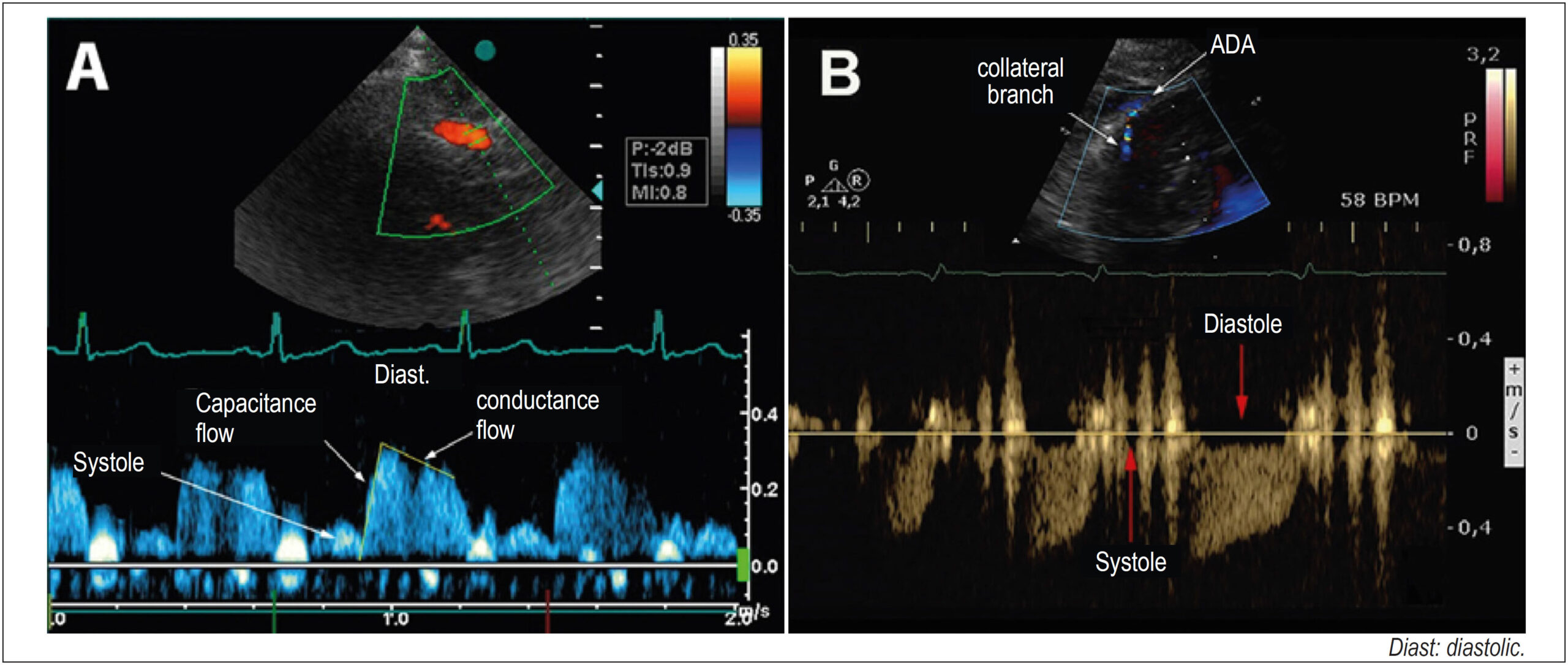
Coronary flow with a diastolic predominance increases two to five times in hyperemia, mediated by vasodilation (coronary flow reserve, CFR) and, in hypertrophy, relative ischemia may occur. In secondary hypertrophy (LVH), the flow, normal at rest, becomes ischemic due to increased demand. In hypertrophic cardiomyopathy (HCM) with perivascular fibrosis, collateral vessels appear to increase the irrigation of hypertrophied segments.

Objective:

To determine the coronary flow pattern in patients with secondary hypertrophy and hypertrophic cardiomyopathy, evaluating the coronary flow reserve.

Methods:

Coronary flow was evaluated in 34 patients with secondary hypertrophy, 24 with hypertrophic cardiomyopathy and in 16 controls. The anterior descending artery was detected with transthoracic Doppler with adequate equipment calibration. In the hypertrophic cardiomyopathy group, the flow of collaterals from the hypertrophic region was evaluated. In the control and secondary hypertrophy groups and in six patients in the hypertrophic cardiomyopathy group, the intravenous dipyridamole (0.84 mg) coronary flow reserve was calculated. The data were compared by variance with a significance of 5%.

Results:

In secondary hypertrophy there was an increase in mass index and blood pressure, and in hypertrophic cardiomyopathy an increase in relative thickness predominated. Ejection fraction and diastolic dysfunction were higher in the hypertrophic cardiomyopathy group. The coronary flow reserve was lower in the hypertrophic cardiomyopathy group, and flow of collaterals was also detected, with a reduction in the coronary flow reserve.

Conclusion:

the analysis of coronary circulation with transthoracic Doppler is possible in normal and hypertrophic individuals. Patients with secondary hypertrophy and hypertrophic cardiomyopathy have a decrease in the coronary flow reserve, and patients with hypertrophic cardiomyopathy show a hyper flow of dilated collateral vessels observed in the hypertrophic region, with a decrease in the coronary flow reserve.

  • Cardiomegaly
  • Echocardiography, Doppler
  • Fractional Flow Reserve, Myocardial
Read Full Article
Creative Commons Attribution (CC BY) Creative Commons license
16/06/2021 DOI: 10.47593/2675-312X/20213401eabc131 Views 2
ABC
Letter to the Editor

Temporal Evolution of the iFR (Instantaneous Wave-Free Ratio) Employment Results Analysis

Maria Cristina Meira Ferreira et al. Gláucia Maria Moraes de Oliveira

Dear Editor,

We read with interest the short editorial written by authors Chamié and Abzaid regarding the paper “Evaluation of Myocardial Ischemia with iFR (instantaneous wave-free ratio) in the catheterization laboratory: a pilot study”. The short editorial clearly translates to us the historical evolution reasoning that we must follow when interpreting coronary physiology studies in therapeutic decision-making. Although medicine is full of binary situations for resolution, such as the presence or absence of fever by the thermometer, it is very clear that different levels of values refer to different diagnoses, prognosis and treatments. With regard to coronary functional assessments, after an enormous amount of binary studies to demonstrate their validity, recent trials cited in the short editorial directed us to a phase where clinical decision-making power has an important weight once again, and the dissertation of this change in direction occurred brilliantly in the editorial. We did not neglect the clinical reasoning and other factors in our study, since the stent placement predictor was iFR < 0.87 in this group, despite the cutoff value established for iFR being 0.89, with a significant reduction in the use of stent.

[…]

  • Coronary Artery Disease
  • Fractional Flow Reserve, Myocardial
  • Myocardial Ischemia
  • Percutaneous Coronary Intervention/methods
  • Stents
Read Full Article
Creative Commons Attribution (CC BY) Creative Commons license
23/10/2020 DOI: 10.36660/abc.20200195 Views 2
Figure 1
ABC
Original Article

Determination of Myocardial Scar Tissue in Coronary Slow Flow Phenomenon and The Relationship Between Amount of Scar Tissue and Nt-ProBNP

Mustafa Candemir et al. Asife Şahinarslan Merve Yazol Yusuf Ali Öner Bülent Boyacı

Abstract

Background

Pathophysiology and prognosis are not clearly determined in patients with the coronary slow flow phenomenon (CSFP). These patients present with various clinical conditions ranging from being asymptomatic to being admitted with sudden cardiac death.

Objectives

We aimed at assessing the findings of late gadolinium enhancement (LGE) in cardiac magnetic resonance imaging (CMR) as an indicator of myocardial fibrosis. We also aimed at determining the relationship between the presence of myocardial fibrosis and NT-proBNP levels in patients with CSFP in the left anterior descending coronary artery (LAD).

Methods

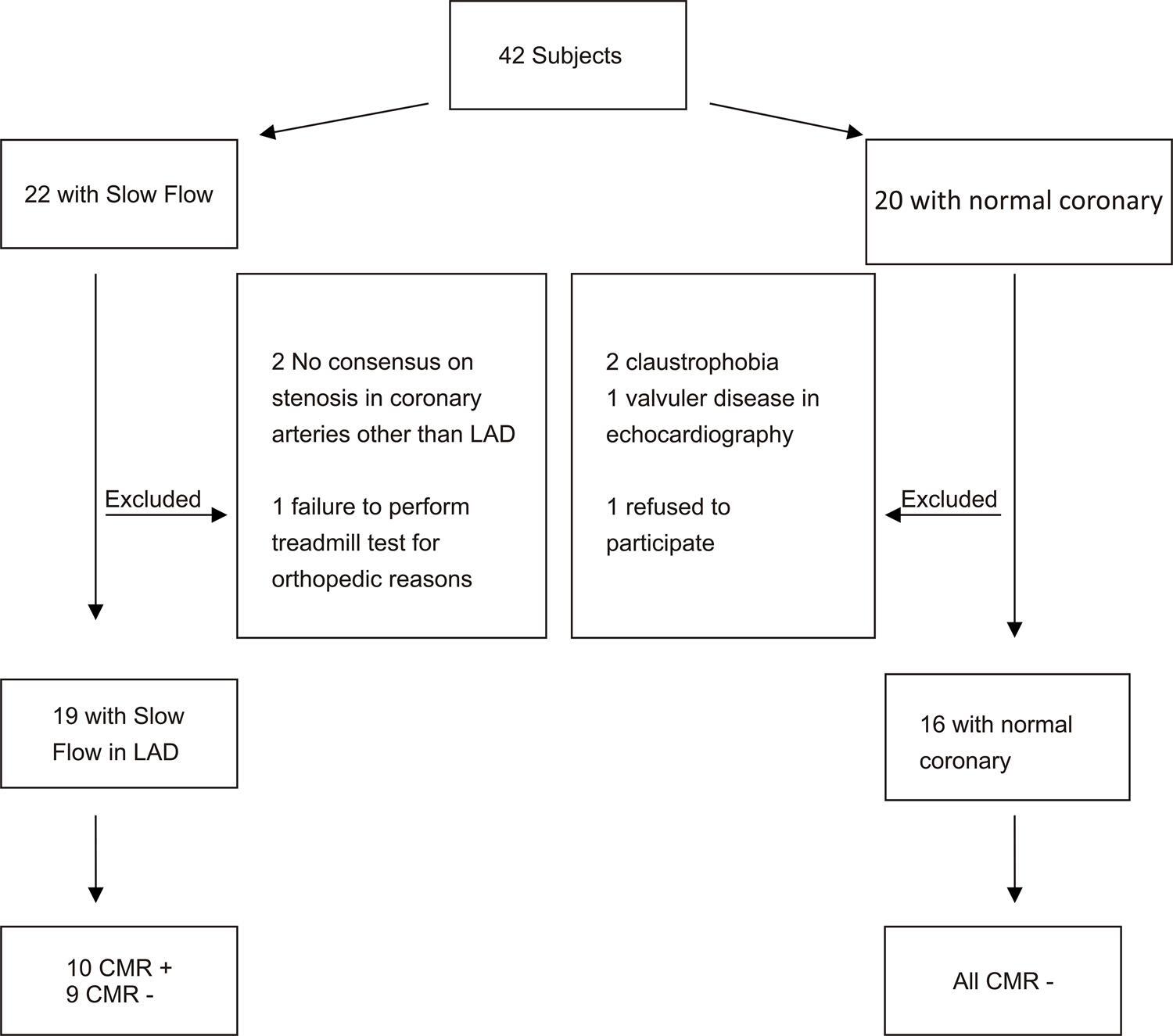
A total of 35 patients were enrolled within an age range of 31-75. The study patients (n=19) had normal epicardial coronary arteries at angiography, but they presented with CSFP in the LAD. The control group patients (n=16) had normal epicardial coronary arteries and TIMI scores at normal levels in angiography. In both groups, the patients were examined with CMR for the presence of myocardial fibrosis. In addition, plasma NT-proBNP levels were measured. A p-value < 0.05 was considered significant.

Results

The rate of myocardial fibrosis was significantly higher in CMR in the patients with CSFP (p=0.018). A variable amount of myocardial scar tissue was detected at the left ventricular apex in 7 patients and at the inferior and inferolateral regions in 3 patients. There was no difference in the level of NT-proBNP in patients with CSFP. However, the NT-proBNP levels were higher in patients with CSFP, who had scar tissue in CMR (p=0.022).

Conclusions

In conclusion, LGE in CMR showed that ischemic myocardial scarring may exist in patients with CSFP. These results indicate that CSFP may not always be innocent. (Arq Bras Cardiol. 2020; 114(3):540-551)

  • Cicatrix, Hypertrophic
  • Endomyocardial Fibrosis, Magnetic Resonance Spectroscopy
  • Fractional Flow Reserve, Myocardial
  • Heart Failure
  • Natriuretic-Peptide, C-Type
  • Prognosis
Read Full Article
Creative Commons Attribution (CC BY) Creative Commons license
06/04/2020 DOI: 10.36660/abc.2018149 Views 1
Figura 1
ABC
Viewpoint

Update on Coronary Angiography-Based Physiology Technologies

Alexandre Hideo-Kajita et al. Hector M. Garcia-Garcia Evan Shlofmitz Carlos M. Campos

Computational fluid dynamics

The basis for CFD is derived from Navier-Stokes equations, a mathematical generalization of Euler’s flow of incompressible and frictionless fluids equation. In its current state, CFD now can compensate for 3 dimensionality and interactions in the non-perfect cylindrical shape of the coronary arteries. However, due to intrinsic cardiovascular physiology particularities, CFD cannot compensate for pulsatile blood flow effects; physiologic differences of coronary blood flow velocity in the proximal vs. distal segments of the vessel; and predictable loss of energy over a diseased vessel.– Moreover, CFD still cannot address the high complexity interactions in vessel geometry that may lead to a chaotic vortex or turbulence formation and more importantly, the trans-lesional pressure drop.,

There are significant differences in the complex rheological properties of blood and normal blood flow along the coronary artery tree branches by itself that are not taken into account in these models. This includes the Newtonian versus Non-Newtonian fluid properties of blood that depend on the vessel diameter, the presence of a bifurcation, and slow blood flow shear stress effects (e.g. the non-Newtonian fluid property in that context). CFD simulation generalizes the differences of Newtonian and Non-Newtonian fluids properties by the assumption that large vessels can be approximated to a Newtonian fluid property with constant viscosity., Therefore, these data provide a consistent explanation of why these methods were not standardized to evaluate severe stenosis or antegrade blood flow in small vessels.

[…]

  • Angina, Stable
  • Coronary Angiography
  • Coronary Artery Disease/physiopathology
  • Fractional Flow Reserve, Myocardial
  • Percutaneous Coronary Intervention
  • Software/trends
Read Full Article
Creative Commons Attribution (CC BY) Creative Commons license
29/07/2019 DOI: 10.5935/abc.20190140
Figure 1
ABC
Original Article

Clinical Outcomes and Cost-Effectiveness Analysis of FFR Compared with Angiography in Multivessel Disease Patient

Edgard Freitas Quintella et al. Esmeralci Ferreira Vitor Manuel Pereira Azevedo Denizar V. Araujo … Fernando Mendes Sant'Anna Bernardo Amorim Denilson Campos de Albuquerque

Abstract

Background:

In multivessel disease patients with moderate stenosis, fractional flow reserve (FFR) allows the analysis of the lesions and guides treatment, and could contribute to the cost-effectiveness (CE) of non-pharmacological stents (NPS).

Objectives:

To evaluate CE and clinical impact of FFR-guided versus angiography-guided angioplasty (ANGIO) in multivessel patients using NPS.

Methods:

Multivessel disease patients were prospectively randomized to FFR or ANGIO groups during a 5 year-period and followed for < 12 months. Outcomes measures were major adverse cardiac events (MACE), restenosis and CE.

Results:

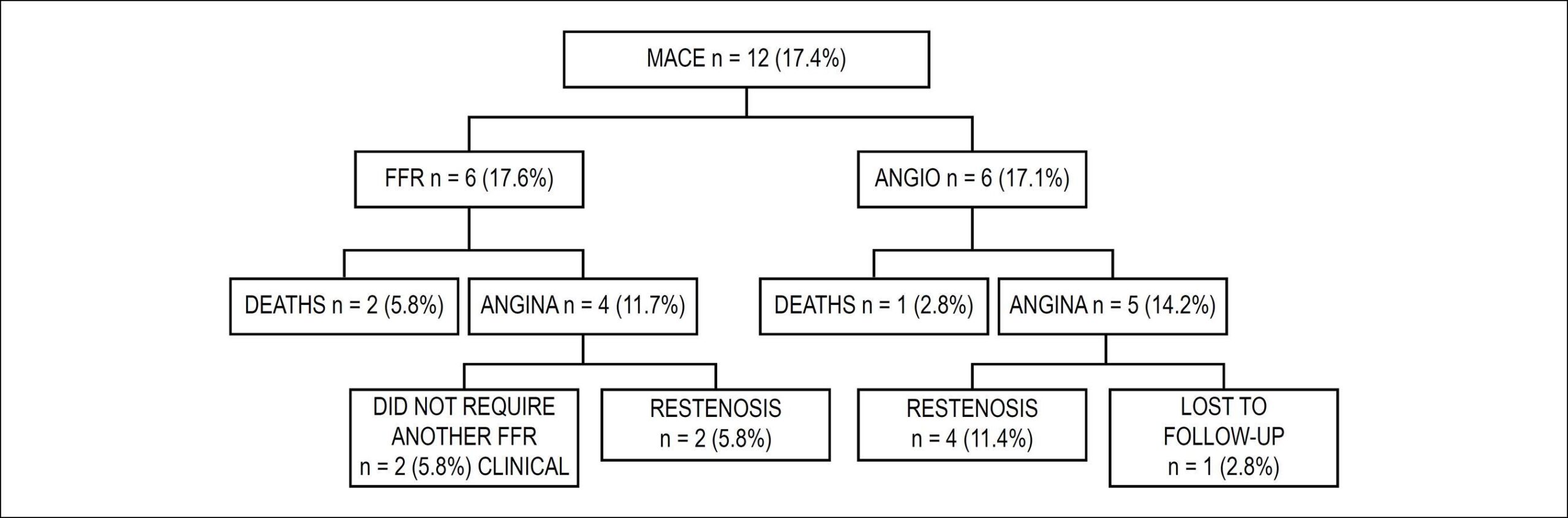
We studied 69 patients, 47 (68.1%) men, aged 62.0 ± 9.0 years, 34 (49.2%) in FFR group and 53 (50.7%) in ANGIO group, with stable angina or acute coronary syndrome. In FFR, there were 26 patients with biarterial disease (76.5%) and 8 (23.5%) with triarterial disease, and in ANGIO, 24 (68.6%) with biarterial and 11 (31.4%) with triarterial disease. Twelve MACEs were observed – 3 deaths: 2 (5.8%) in FFR and 1 (2.8%) in ANGIO, 9 (13.0%) angina: 4(11.7%) in FFR and 5(14.2%) in ANGIO, 6 restenosis: 2(5.8%) in FFR and 4 (11.4%) in ANGIO. Angiography detected 87(53.0%) lesions in FFR, 39(23.7%) with PCI and 48(29.3%) with medical treatment; and 77 (47.0%) lesions in ANGIO, all treated with angioplasty. Thirty-nine (33.3%) stents were registered in FFR (0.45 ± 0.50 stents/lesion) and 78 (1.05 ± 0.22 stents/lesion) in ANGIO (p = 0.0001), 51.4% greater in ANGIO than FFR. CE analysis revealed a cost of BRL 5,045.97 BRL 5,430.60 in ANGIO and FFR, respectively. The difference of effectiveness was of 1.82%.

Conclusion:

FFR reduced the number of lesions treated and stents, and the need for target-lesion revascularization, with a CE comparable with that of angiography.

  • Angioplasty, Balloon, Coronary
  • Coronary Artery Disease/economics
  • Cost-Benefit Analysis
  • Fractional Flow Reserve, Myocardial
  • Stents
Read Full Article
Creative Commons Attribution (CC BY) Creative Commons license
17/12/2018 DOI: 10.5935/abc.20180262
Figure 1
ABC
Case Report

Quantification of Coronary Flow Reserve with CZT Gamma Camera in the Evaluation of Multivessel Coronary Disease

Ana Carolina do Amaral Henrique de Souza et al. Bernardo Kremer Diniz Gonçalves Angelo Tedeschi Ronaldo de Souza Leão Lima

Introduction

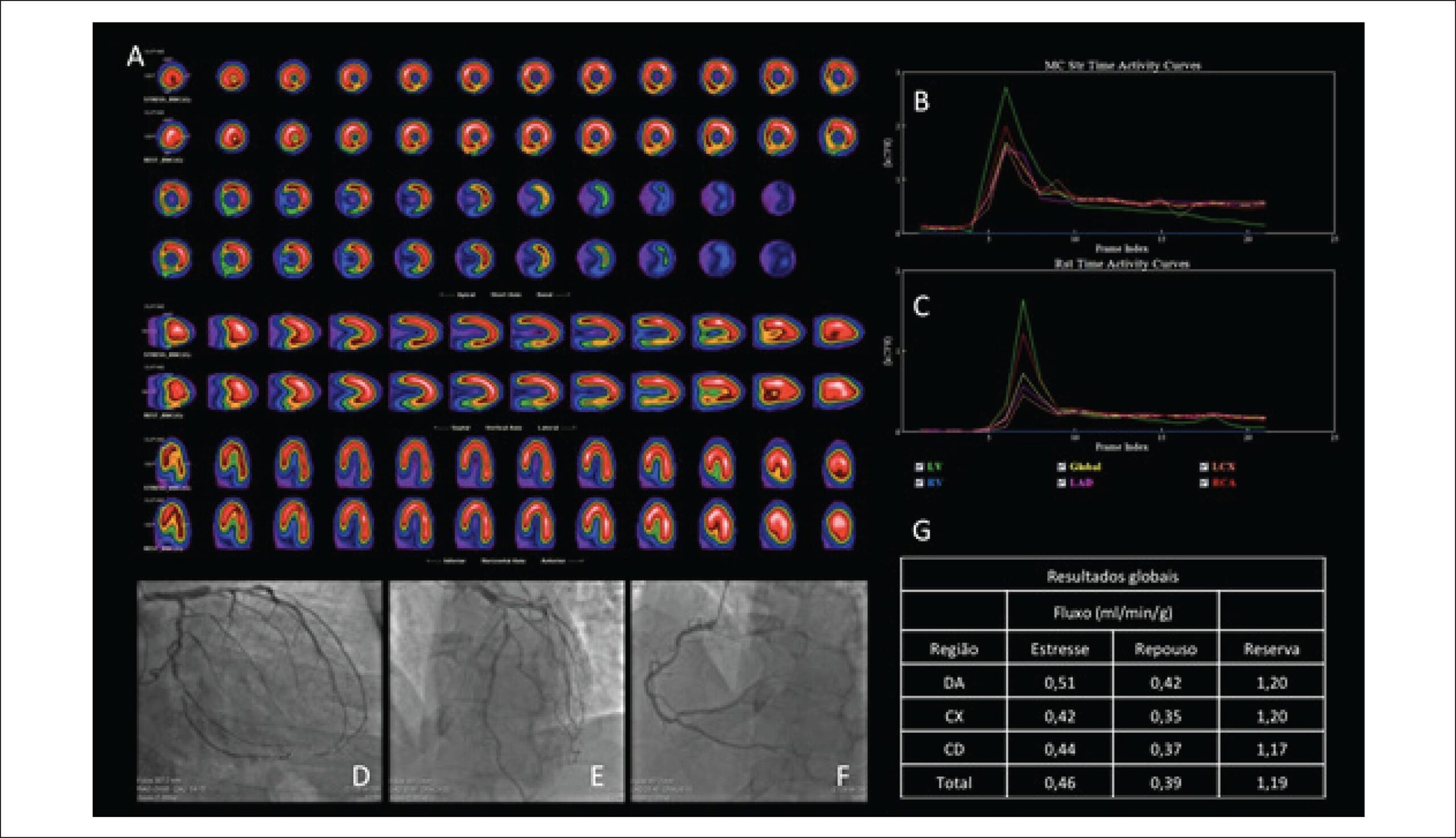
Evaluating patients with multivessel coronary disease using myocardial perfusion scintigraphy (MPS) remains a challenge as the extent and severity of the disease can be underestimated. This phenomenon occurs in part due to balanced ischemia and inaccuracy of traditional devices to identify small changes in coronary flow in the stress phase., New gamma cameras with cadmium and zinc telluride (CZT) detectors that are already commercially available have shown higher temporal and spatial resolution,– theoretically enabling dynamic acquisition of images and calculation of myocardial blood flow (MBF) and coronary flow reserve (CFR) in an absolute way., This tool, whose use with positron emission tomography (PET) is already well established,– may be promising to non invasively access three-vessel obstructive coronary artery disease (CAD) using scintigraphy and its conventional radiotracers. The objective of this case report is to describe the quantification of CFR upon diagnosis of a patient with multivessel disease whose myocardial perfusion image showed a defect not compatible with coronary angiography.

[…]

  • Coronary Artery Disease
  • Coronary floe reserve/methods
  • Diagnostic Imaging
  • Fractional Flow Reserve, Myocardial
  • Myocardial Perfusion Imaging
Read Full Article
Creative Commons Attribution (CC BY) Creative Commons license
01/10/2018 DOI: 10.5935/abc.20180196 Views 1
ABC
Editorial

To Defer or Not Defer? The Challenges of Physiology in Acute Coronary Syndromes

Carlos M. Campos et al. Pedro A. Lemos

Conventional angiography may unreliably estimate the functional severity of coronary lesions, particularly of intermediate stenosis. It is in this context that intracoronary physiology, namely the measurement of fractional flow reserve (FFR), has been developed: to precisely differentiate stenoses that cause myocardial ischemia from those that are not significantly obstructive. Overall, FFR has been applied as a decision-making tool, helping to indicate (or defer) revascularization in intermediate or ambiguous coronary stenoses. Compared with angiography alone, the addition of FFR-derived information has been shown to improve patient outcomes and procedural cost-efficiencies, with physiology-guided coronary revascularization being currently recommended in clinical practice guidelines, on the grounds of ample scientific evidence.

Almost twenty years ago, the pivotal DEFER trial consolidated the concept that FFR-based postponement of revascularization is safe. However, numerous reasons make the translation of the DEFER trial to contemporary clinical practice outdated: i) the excessively restrictive 0.75 cutoff (as used in the study) has been supplanted by the more permissive 0.80 threshold, ii) balloon angioplasty as a stand-alone therapy has been largely replaced by drug-eluting stents, iii) more potent antiplatelet agents and other medical therapies have become available, and iv) the relation between FFR and the obstructive profile of coronary lesion is yet being questioned by some authors. Thus, the contemporary safety of deferring lesions in stable angina pectoris (SAP) and acute coronary syndrome (ACS) on the basis of FFR still deserves investigation.

[…]

  • Acute Coronary Syndrome/physiopathology
  • Angina, Stable
  • Fractional Flow Reserve, Myocardial
  • Myocardial Revascularization
  • Percutaneous Coronary Intervention
Read Full Article
Creative Commons Attribution (CC BY) Creative Commons license
01/10/2018 DOI: 10.5935/abc.20180206 Views 1
Figure 1
ABC
Original Article

Prognostic Value of Coronary Flow Reserve Obtained on Dobutamine Stress Echocardiography and its Correlation with Target Heart Rate

José Sebastião de Abreu et al. Eduardo Arrais Rocha Isadora Sucupira Machado Isabelle Oliveira Parahyba … Thaís de Brito Rocha Fernando José Villar Nogueira Paes Tereza Cristina Pinheiro Diogenes Marília Esther Benevides de Abreu Ana Gardenia Liberato Ponte Farias Marcia Maria Carneiro José Nogueira Paes Junior

Abstract

Background:

Normal coronary flow velocity reserve (CFVR) (≥ 2) obtained in the left anterior descending coronary artery (LAD) from transthoracic echocardiography is associated with a good prognosis, but there is no study correlating CFVR with submaximal target heart rate (HR).

Objective:

To evaluate the prognostic value of CFVR obtained in the LAD of patients with preserved (>50%) left ventricular ejection fraction (LVEF) who completed a dobutamine stress echocardiography (DSE), considering target HR.

Methods:

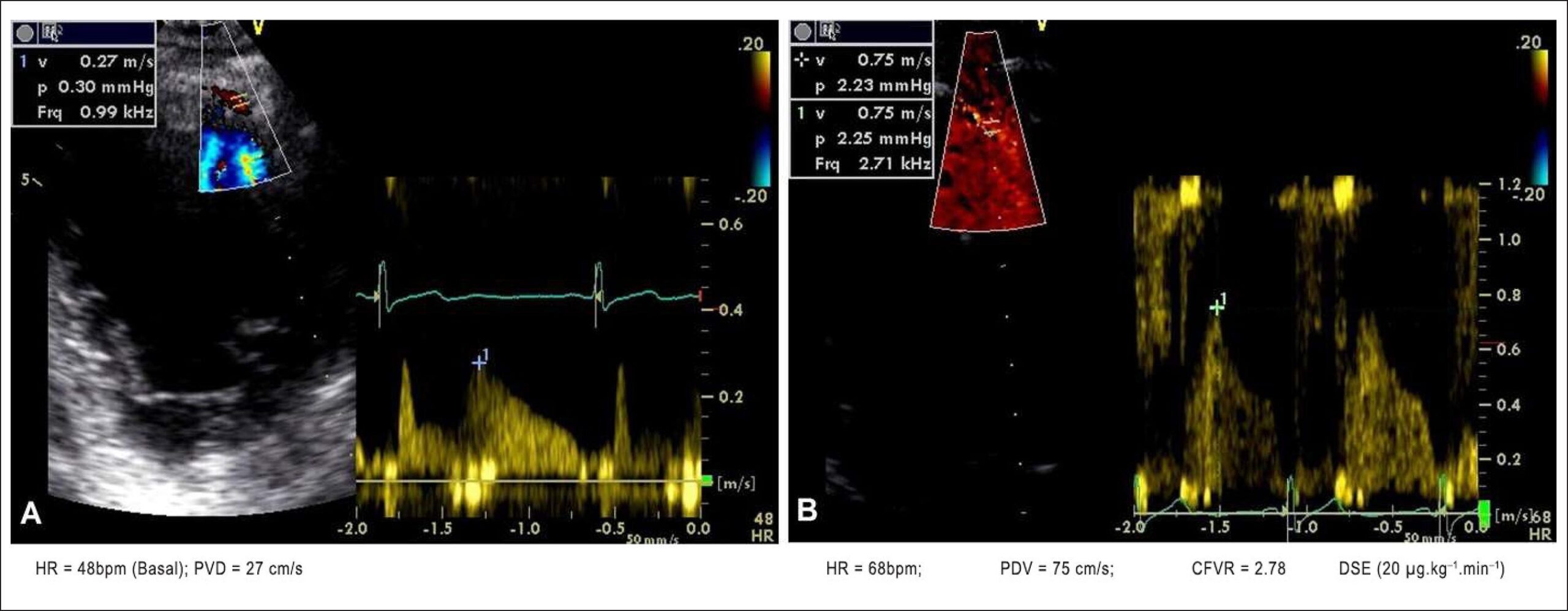
Prospective study of patients with preserved LVEF and CFVR obtained in the LAD who completed DSE. In Group I (GI = 31), normal CFVR was obtained before achieving target HR, and, in Group II (GII = 28), after that. Group III (G III=24) reached target HR, but CFVR was abnormal. Death, acute coronary insufficiency, coronary intervention, coronary angiography without further intervention, and hospitalization were considered events.

Results:

In 28 ± 4 months, there were 18 (21.6%) events: 6% (2/31) in GI, 18% (5/28) in GII, and 46% (11/24) in GIII. There were 4 (4.8%) deaths, 6 (7.2%) coronary interventions and 8 (9.6%) coronary angiographies without further intervention. In event-free survival by regression analysis, GIII had more events than GI (p < 0.001) and GII (p < 0.045), with no difference between GI and GII (p = 0.160). After adjustment, the only difference was between GIII and GI (p = 0.012).

Conclusion:

In patients with preserved LVEF and who completed their DSE, normal CFVR obtained before achieving target HR was associated with better prognosis.

  • Echocardiography, Stress
  • Fractional Flow Reserve, Myocardial
  • Heart Rate
  • Prognosis
Read Full Article
Creative Commons Attribution (CC BY) Creative Commons license
20/04/2017 DOI: 10.5935/abc.20170041 Views 1

How to cite this article

EndNote RIS

Electronic Document Format (Vancouver)

Sant’Anna FM, Sant’Anna LB, Couceiro SLM. Is it Time to Revisit Fractional Flow Reserve Thresholds?. Arquivos Brasileiros de Cardiologia 2023;120(6):e20230363.

Electronic Document Format (ABNT)

Sant’Anna, Fernando Mendes; Sant’Anna, Lucas Bonacossa; Couceiro, Sérgio Lívio Menezes. Is it Time to Revisit Fractional Flow Reserve Thresholds?. Arquivos Brasileiros de Cardiologia, v. 120, n. 6, e20230363, Jul. 2023.

Electronic Document Format (APA)

Sant’Anna, F. M., Sant’Anna, L. B., & Couceiro, S. L. M. (2023). Is it Time to Revisit Fractional Flow Reserve Thresholds?. Arquivos Brasileiros de Cardiologia, 120(6), e20230363.

Electronic Document Format (ISO)

Sant’Anna, Fernando Mendes and Sant’Anna, Lucas Bonacossa and Couceiro, Sérgio Lívio Menezes. Is it Time to Revisit Fractional Flow Reserve Thresholds?. Arquivos Brasileiros de Cardiologia [online]. 2023, vol. 120, n. 6, [cited 2026-10-14], e20230363. Available from: <https://journals.cardiol.br/en/article/is-it-time-to-revisit-fractional-flow-reserve-thresholds/>. ISSN 0066-782X

EndNote RIS

Electronic Document Format (Vancouver)

Trindade FB, Morais TC, Dantas Junior RN, Torres RVA, Soares CSP, Parga Filho JR. New Application of FFRCT in Clinical Practice: Evaluation of Interarterial Anomalous Coronary Course. ABC Imagem Cardiovascular 2023;36(2):e361.

Electronic Document Format (ABNT)

Trindade, Fábio Bordin; Morais, Thamara Carvalho; Dantas Junior, Roberto Nery; Torres, Roberto Vitor Almeida; Soares, Clarice Santos Parreira; Parga Filho, José Rodrigues. New Application of FFRCT in Clinical Practice: Evaluation of Interarterial Anomalous Coronary Course. ABC Imagem Cardiovascular, v. 36, n. 2, e361, May. 2023.

Electronic Document Format (APA)

Trindade, F. B., Morais, T. C., Dantas Junior, R. N., Torres, R. V. A., Soares, C. S. P., & Parga Filho, J. R. (2023). New Application of FFRCT in Clinical Practice: Evaluation of Interarterial Anomalous Coronary Course. ABC Imagem Cardiovascular, 36(2), e361.

Electronic Document Format (ISO)

Trindade, Fábio Bordin and Morais, Thamara Carvalho and Dantas Junior, Roberto Nery and Torres, Roberto Vitor Almeida and Soares, Clarice Santos Parreira and Parga Filho, José Rodrigues. New Application of FFRCT in Clinical Practice: Evaluation of Interarterial Anomalous Coronary Course. ABC Imagem Cardiovascular [online]. 2023, vol. 36, n. 2, [cited 2026-10-14], e361. Available from: <https://journals.cardiol.br/en/article/new-application-of-ffrct-in-clinical-practice-evaluation-of-interarterial-anomalous-coronary-course/>. ISSN 2318-8219

EndNote RIS

Electronic Document Format (Vancouver)

Sousa CG, Castillo JMD, Mazzarollo C, Albuquerque ES, Sena ADM, Brindeiro Filho D, Silveira CAM, et al. Comparative Analysis of the Coronary Arteries Flow Pattern in Secondary Myocardial Hypertrophies and by Sarcomeric Mutation. ABC Imagem Cardiovascular 2021;34(1):eabc131.

Electronic Document Format (ABNT)

Sousa, Caio Guedes de; Castillo, José Maria Del; Mazzarollo, Carlos; Albuquerque, Eugenio Soares de; Sena, Antônia Dulcineide Medeiros; Brindeiro Filho, Djair; Silveira, Carlos Antônio da Mota. Comparative Analysis of the Coronary Arteries Flow Pattern in Secondary Myocardial Hypertrophies and by Sarcomeric Mutation. ABC Imagem Cardiovascular, v. 34, n. 1, eabc131, Jun. 2021.

Electronic Document Format (APA)

Sousa, C. G. , Castillo, J. M. D., Mazzarollo, C., Albuquerque, E. S. , Sena, A. D. M., Brindeiro Filho, D., & Silveira, C. A. M. (2021). Comparative Analysis of the Coronary Arteries Flow Pattern in Secondary Myocardial Hypertrophies and by Sarcomeric Mutation. ABC Imagem Cardiovascular, 34(1), eabc131.

Electronic Document Format (ISO)

Sousa, Caio Guedes de and Castillo, José Maria Del and Mazzarollo, Carlos and Albuquerque, Eugenio Soares de and Sena, Antônia Dulcineide Medeiros and Brindeiro Filho, Djair and Silveira, Carlos Antônio da Mota. Comparative Analysis of the Coronary Arteries Flow Pattern in Secondary Myocardial Hypertrophies and by Sarcomeric Mutation. ABC Imagem Cardiovascular [online]. 2021, vol. 34, n. 1, [cited 2026-10-14], eabc131. Available from: <https://journals.cardiol.br/en/article/comparative-analysis-of-the-coronary-arteries-flow-pattern-in-secondary-myocardial-hypertrophies-and-by-sarcomeric-mutation/>. ISSN 2318-8219

EndNote RIS

Electronic Document Format (Vancouver)

Ferreira MCM, Oliveira GMM. Temporal Evolution of the iFR (Instantaneous Wave-Free Ratio) Employment Results Analysis. Arquivos Brasileiros de Cardiologia 2020;115(4):719.

Electronic Document Format (ABNT)

Ferreira, Maria Cristina Meira; Oliveira, Gláucia Maria Moraes de. Temporal Evolution of the iFR (Instantaneous Wave-Free Ratio) Employment Results Analysis. Arquivos Brasileiros de Cardiologia, v. 115, n. 4, p. 719-719, Oct. 2020.

Electronic Document Format (APA)

Ferreira, M. C. M., & Oliveira, G. M. M. (2020). Temporal Evolution of the iFR (Instantaneous Wave-Free Ratio) Employment Results Analysis. Arquivos Brasileiros de Cardiologia, 115(4), 719-719.

Electronic Document Format (ISO)

Ferreira, Maria Cristina Meira and Oliveira, Gláucia Maria Moraes de. Temporal Evolution of the iFR (Instantaneous Wave-Free Ratio) Employment Results Analysis. Arquivos Brasileiros de Cardiologia [online]. 2020, vol. 115, n. 4, [cited 2026-10-14], pp. 719-719. Available from: <https://journals.cardiol.br/en/article/temporal-evolution-of-the-ifr-instantaneous-wave-free-ratio-employment-results-analysis/>. ISSN 0066-782X

EndNote RIS

Electronic Document Format (Vancouver)

Candemir M, Şahinarslan A, Yazol M, Öner YA, Boyacı B. Determination of Myocardial Scar Tissue in Coronary Slow Flow Phenomenon and The Relationship Between Amount of Scar Tissue and Nt-ProBNP. Arquivos Brasileiros de Cardiologia 2020;114(3):540-51.

Electronic Document Format (ABNT)

Candemir, Mustafa; Şahinarslan, Asife; Yazol, Merve; Öner, Yusuf Ali; Boyacı, Bülent. Determination of Myocardial Scar Tissue in Coronary Slow Flow Phenomenon and The Relationship Between Amount of Scar Tissue and Nt-ProBNP. Arquivos Brasileiros de Cardiologia, v. 114, n. 3, p. 540-551, Apr. 2020.

Electronic Document Format (APA)

Candemir, M., Şahinarslan, A., Yazol, M., Öner, Y. A., & Boyacı, B. (2020). Determination of Myocardial Scar Tissue in Coronary Slow Flow Phenomenon and The Relationship Between Amount of Scar Tissue and Nt-ProBNP. Arquivos Brasileiros de Cardiologia, 114(3), 540-551.

Electronic Document Format (ISO)

Candemir, Mustafa and Şahinarslan, Asife and Yazol, Merve and Öner, Yusuf Ali and Boyacı, Bülent. Determination of Myocardial Scar Tissue in Coronary Slow Flow Phenomenon and The Relationship Between Amount of Scar Tissue and Nt-ProBNP. Arquivos Brasileiros de Cardiologia [online]. 2020, vol. 114, n. 3, [cited 2026-10-14], pp. 540-551. Available from: <https://journals.cardiol.br/en/article/determination-of-myocardial-scar-tissue-in-coronary-slow-flow-phenomenon-and-the-relationship-between-amount-of-scar-tissue-and-nt-probnp/>. ISSN 0066-782X

EndNote RIS

Electronic Document Format (Vancouver)

Hideo-Kajita A, Garcia-Garcia HM, Shlofmitz E, Campos CM. Update on Coronary Angiography-Based Physiology Technologies. Arquivos Brasileiros de Cardiologia 2019;113(2):282-5.

Electronic Document Format (ABNT)

Hideo-Kajita, Alexandre; Garcia-Garcia, Hector M.; Shlofmitz, Evan; Campos, Carlos M.. Update on Coronary Angiography-Based Physiology Technologies. Arquivos Brasileiros de Cardiologia, v. 113, n. 2, p. 282-285, Jul. 2019.

Electronic Document Format (APA)

Hideo-Kajita, A., Garcia-Garcia, H. M., Shlofmitz, E., & Campos, C. M. (2019). Update on Coronary Angiography-Based Physiology Technologies. Arquivos Brasileiros de Cardiologia, 113(2), 282-285.

Electronic Document Format (ISO)

Hideo-Kajita, Alexandre and Garcia-Garcia, Hector M. and Shlofmitz, Evan and Campos, Carlos M.. Update on Coronary Angiography-Based Physiology Technologies. Arquivos Brasileiros de Cardiologia [online]. 2019, vol. 113, n. 2, [cited 2026-10-14], pp. 282-285. Available from: <https://journals.cardiol.br/en/article/update-on-coronary-angiography-based-physiology-technologies/>. ISSN 0066-782X

EndNote RIS

Electronic Document Format (Vancouver)

Quintella EF, Ferreira E, Azevedo VMP, Araujo DV, Sant’Anna FM, Amorim B, Albuquerque DC, et al. Clinical Outcomes and Cost-Effectiveness Analysis of FFR Compared with Angiography in Multivessel Disease Patient. Arquivos Brasileiros de Cardiologia 2018;112(1):40-7.

Electronic Document Format (ABNT)

Quintella, Edgard Freitas; Ferreira, Esmeralci; Azevedo, Vitor Manuel Pereira; Araujo, Denizar V.; Sant’Anna, Fernando Mendes; Amorim, Bernardo; Albuquerque, Denilson Campos de. Clinical Outcomes and Cost-Effectiveness Analysis of FFR Compared with Angiography in Multivessel Disease Patient. Arquivos Brasileiros de Cardiologia, v. 112, n. 1, p. 40-47, Dec. 2018.

Electronic Document Format (APA)

Quintella, E. F., Ferreira, E., Azevedo, V. M. P., Araujo, D. V., Sant’Anna, F. M., Amorim, B., & Albuquerque, D. C. (2018). Clinical Outcomes and Cost-Effectiveness Analysis of FFR Compared with Angiography in Multivessel Disease Patient. Arquivos Brasileiros de Cardiologia, 112(1), 40-47.

Electronic Document Format (ISO)

Quintella, Edgard Freitas and Ferreira, Esmeralci and Azevedo, Vitor Manuel Pereira and Araujo, Denizar V. and Sant’Anna, Fernando Mendes and Amorim, Bernardo and Albuquerque, Denilson Campos de. Clinical Outcomes and Cost-Effectiveness Analysis of FFR Compared with Angiography in Multivessel Disease Patient. Arquivos Brasileiros de Cardiologia [online]. 2018, vol. 112, n. 1, [cited 2026-10-14], pp. 40-47. Available from: <https://journals.cardiol.br/en/article/clinical-outcomes-and-cost-effectiveness-analysis-of-ffr-compared-with-angiography-in-multivessel-disease-patient/>. ISSN 0066-782X

EndNote RIS

Electronic Document Format (Vancouver)

Souza ACAH, Gonçalves BKD, Tedeschi A, Lima RSL. Quantification of Coronary Flow Reserve with CZT Gamma Camera in the Evaluation of Multivessel Coronary Disease. Arquivos Brasileiros de Cardiologia 2018;111(4):635-7.

Electronic Document Format (ABNT)

Souza, Ana Carolina do Amaral Henrique de; Gonçalves, Bernardo Kremer Diniz; Tedeschi, Angelo; Lima, Ronaldo de Souza Leão. Quantification of Coronary Flow Reserve with CZT Gamma Camera in the Evaluation of Multivessel Coronary Disease. Arquivos Brasileiros de Cardiologia, v. 111, n. 4, p. 635-637, Sep. 2018.

Electronic Document Format (APA)

Souza, A. C. A. H. , Gonçalves, B. K. D., Tedeschi, A., & Lima, R. S. L. (2018). Quantification of Coronary Flow Reserve with CZT Gamma Camera in the Evaluation of Multivessel Coronary Disease. Arquivos Brasileiros de Cardiologia, 111(4), 635-637.

Electronic Document Format (ISO)

Souza, Ana Carolina do Amaral Henrique de and Gonçalves, Bernardo Kremer Diniz and Tedeschi, Angelo and Lima, Ronaldo de Souza Leão. Quantification of Coronary Flow Reserve with CZT Gamma Camera in the Evaluation of Multivessel Coronary Disease. Arquivos Brasileiros de Cardiologia [online]. 2018, vol. 111, n. 4, [cited 2026-10-14], pp. 635-637. Available from: <https://journals.cardiol.br/en/article/quantification-of-coronary-flow-reserve-with-czt-gamma-camera-in-the-evaluation-of-multivessel-coronary-disease/>. ISSN 0066-782X

EndNote RIS

Electronic Document Format (Vancouver)

Campos CM, Lemos PA. To Defer or Not Defer? The Challenges of Physiology in Acute Coronary Syndromes. Arquivos Brasileiros de Cardiologia 2018;111(4):551-2.

Electronic Document Format (ABNT)

Campos, Carlos M.; Lemos, Pedro A.. To Defer or Not Defer? The Challenges of Physiology in Acute Coronary Syndromes. Arquivos Brasileiros de Cardiologia, v. 111, n. 4, p. 551-552, Sep. 2018.

Electronic Document Format (APA)

Campos, C. M., & Lemos, P. A. (2018). To Defer or Not Defer? The Challenges of Physiology in Acute Coronary Syndromes. Arquivos Brasileiros de Cardiologia, 111(4), 551-552.

Electronic Document Format (ISO)

Campos, Carlos M. and Lemos, Pedro A.. To Defer or Not Defer? The Challenges of Physiology in Acute Coronary Syndromes. Arquivos Brasileiros de Cardiologia [online]. 2018, vol. 111, n. 4, [cited 2026-10-14], pp. 551-552. Available from: <https://journals.cardiol.br/en/article/to-defer-or-not-defer-the-challenges-of-physiology-in-acute-coronary-syndromes/>. ISSN 0066-782X

EndNote RIS

Electronic Document Format (Vancouver)

Abreu JS, Rocha EA, Machado IS, Parahyba IO, Rocha TB, Paes FJVN, Diogenes TCP, et al. Prognostic Value of Coronary Flow Reserve Obtained on Dobutamine Stress Echocardiography and its Correlation with Target Heart Rate. Arquivos Brasileiros de Cardiologia 2017;108(5):417-26.

Electronic Document Format (ABNT)

Abreu, José Sebastião de; Rocha, Eduardo Arrais; Machado, Isadora Sucupira; Parahyba, Isabelle Oliveira; Rocha, Thaís de Brito; Paes, Fernando José Villar Nogueira; Diogenes, Tereza Cristina Pinheiro; Abreu, Marília Esther Benevides de; Farias, Ana Gardenia Liberato Ponte; Carneiro, Marcia Maria; Paes Junior, José Nogueira. Prognostic Value of Coronary Flow Reserve Obtained on Dobutamine Stress Echocardiography and its Correlation with Target Heart Rate. Arquivos Brasileiros de Cardiologia, v. 108, n. 5, p. 417-426, Apr. 2017.

Electronic Document Format (APA)

Abreu, J. S. , Rocha, E. A., Machado, I. S., Parahyba, I. O., Rocha, T. B., Paes, F. J. V. N., Diogenes, T. C. P., Abreu, M. E. B. , Farias, A. G. L. P., Carneiro, M. M., & Paes Junior, J. N. (2017). Prognostic Value of Coronary Flow Reserve Obtained on Dobutamine Stress Echocardiography and its Correlation with Target Heart Rate. Arquivos Brasileiros de Cardiologia, 108(5), 417-426.

Electronic Document Format (ISO)

Abreu, José Sebastião de and Rocha, Eduardo Arrais and Machado, Isadora Sucupira and Parahyba, Isabelle Oliveira and Rocha, Thaís de Brito and Paes, Fernando José Villar Nogueira and Diogenes, Tereza Cristina Pinheiro and Abreu, Marília Esther Benevides de and Farias, Ana Gardenia Liberato Ponte and Carneiro, Marcia Maria and Paes Junior, José Nogueira. Prognostic Value of Coronary Flow Reserve Obtained on Dobutamine Stress Echocardiography and its Correlation with Target Heart Rate. Arquivos Brasileiros de Cardiologia [online]. 2017, vol. 108, n. 5, [cited 2026-10-14], pp. 417-426. Available from: <https://journals.cardiol.br/en/article/prognostic-value-of-coronary-flow-reserve-obtained-on-dobutamine-stress-echocardiography-and-its-correlation-with-target-heart-rate/>. ISSN 0066-782X

  • About ABC Family
  • Internal Regulation
  • Editorial Board
  • Brazilian Society of Cardiology (SBC)

Issues

SBC Guidelines

  • Videos
  • Podcasts
  • News