ABC Family Arquivos Brasileiros de Cardiologia International Journal of Cardiovascular Sciences ABC Heart Failure & Cardiomyopathy ABC Imagem Cardiovascular
Português English
ABC Family
Português English
  • About
    • About ABC Family
    • Internal Regulation
    • Editorial Board
    • Brazilian Society of Cardiology (SBC)
  • Issues
  • SBC Guidelines
  • Content
    • Videos
    • Podcasts
    • News
  • About
    • About ABC Family
    • Internal Regulation
    • Editorial Board
    • Brazilian Society of Cardiology (SBC)
  • Issues
  • SBC Guidelines
  • Content
    • Videos
    • Podcasts
    • News

ABC Family

  • ABC Family
  • Arquivos Brasileiros de Cardiologia
  • International Journal of Cardiovascular Sciences
  • ABC Heart Failure & Cardiomyopathy
  • ABC Imagem Cardiovascular
Search in

No content found.

Journals
Ordering
Article types
Others

  1. Home
  2. Keyword: ST Elevation Myocardial Infarction
ABC
Letter to the Editor

Point-of-Care Ultrasound in Cardiology: When a Positioning Statement Does Not Reflect the State of the Art

Guilherme Pinheiro Machado et al. Guilherme Heiden Telo Gustavo Neves de Araujo Fernando Luis Scolari … Anderson Donelli da Silveira Rodrigo Wainstein Marco Wainstein

Dear Editor,

We read with interest the recently published Positioning Statement on the Use of Point-of-Care Ultrasound in Cardiovascular Medicine – 2026, in Arquivos Brasileiros de Cardiologia. This is a relevant initiative that acknowledges the growing role of point-of-care ultrasound (POCUS) as a fundamental tool in contemporary cardiovascular practice. Nevertheless, despite its merits, we believe that the document presents an important limitation: the lack of discussion and incorporation of a substantial body of evidence regarding the assessment of cardiac patients across different clinical scenarios, particularly ST-segment elevation myocardial infarction (STEMI).

[…]

  • Diagnostic Ultrasound
  • Echocardiography
  • Heart Diseases
  • ST Elevation Myocardial Infarction
Read Full Article
Creative Commons Attribution (CC BY) Creative Commons license
21/09/2026 DOI: 10.36660/abc.20260312i Views 3
IJCS
Editorial

Difference in Treatment Response Between Men and Women with Acute Myocardial Infarction with ST-segment Elevation Even When Following Well-established Protocols

João Manoel Theotonio dos Santos

The study “Comparison of Clinical and Epidemiological Profiles Between Men and Women with ST-Elevation Myocardial Infarction in Salvador from 2021 to 2023” provides an important contribution by demonstrating that, even in a setting supported by a well-structured ST-elevation myocardial infarction (STEMI) protocol, relevant differences in clinical profiles between men and women persist. Although treatment strategies were homogeneous between sexes—a noteworthy finding in a country where healthcare inequities are often the rule—the observation that women present later, are older at the time of the event, and more frequently receive potent antiplatelet agents reinforces the need to understand acute coronary syndrome in women according to their specific pathophysiological and clinical characteristics.1

In recent years, increasing evidence has challenged the concept that myocardial infarction in women is simply “the same infarction, occurring later.” Contemporary data indicate that mechanisms such as coronary microvascular dysfunction, plaque erosion, and spontaneous coronary artery dissection are more prevalent among women, demanding greater diagnostic precision and tailored therapeutic strategies.2,3 In parallel, atypical symptom presentation and lower perceived cardiovascular risk contribute to delays in seeking care—a phenomenon consistently observed worldwide, including in high-income countries.4

[…]

  • ST Elevation Myocardial Infarction
  • Time to Treatment
  • Women
Read Full Article
Creative Commons Attribution (CC BY) Creative Commons license
12/06/2026 DOI: 10.36660/ijcs.20260023 Views 1
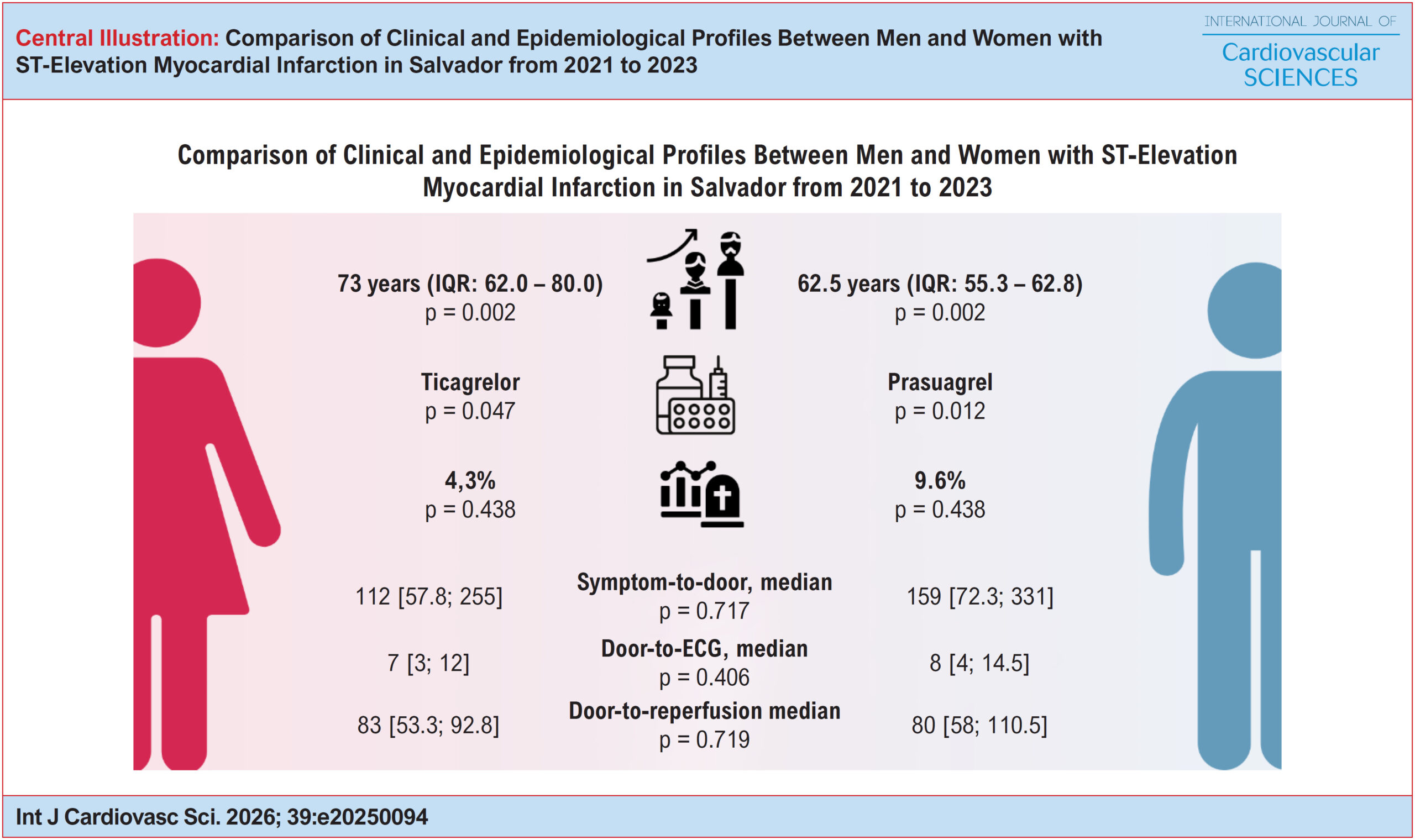
Comparison of Clinical and Epidemiological Profiles Between Men and Women with ST-Elevation Myocardial Infarction in Salvador from 2021 to 2023
IJCS
Original Article

Comparison of Clinical and Epidemiological Profiles Between Men and Women with ST-Elevation Myocardial Infarction in Salvador from 2021 to 2023

Heloisa Gonzaga Menezes de Moraes et al. Mariela Gomes Botelho Carneiro Marianna Deway Andrade Dracoulakis

Abstract

Background:

ST-segment elevation myocardial infarction (STEMI) remains one of the leading causes of morbidity and mortality worldwide. Although studies indicate sex disparities in risk factors, symptomatology, and outcomes, there is a lack of local research validating these differences.

Objectives:

To compare the clinical and epidemiological profiles, treatment times, and in-hospital outcomes of men and women diagnosed with STEMI at a private hospital in Salvador, Brazil from 2021 to 2023.

Methods:

This retrospective observational study analyzed 75 patients, of whom 30.7% were women. Variables assessed included age, cardiovascular risk factors, symptom-to-door time, door-to-ECG time, door-to-reperfusion time, pharmacological therapy, and in-hospital outcomes.

Results:

Women presented STEMI at a significantly older age compared to men (median age: 73.0 versus 62.5 years; p = 0.002). There were no statistically significant differences in treatment times (symptom-to-door, door-to-ECG, and door-to-reperfusion) between sexes. Women were more frequently treated with high-potency antiplatelet agents (prasugrel and ticagrelor) than men (p = 0.047 and p = 0.012, respectively). No differences in complications or mortality rates were observed between the groups.

Conclusions:

Despite being older and using more potent antiplatelet therapy, women did not experience significant differences in treatment times or complications. The limited sample size may have affected the ability to detect more significant differences, underscoring the need for larger studies.

  • Brasil
  • ST Elevation Myocardial Infarction
  • Women
Read Full Article
Creative Commons Attribution (CC BY) Creative Commons license
25/05/2026 DOI: 10.36660/ijcs.20250094 Views 1
IJCS
Editorial

ST-Segment Elevation Myocardial Infarction: Assessment of Quality of Care Before and After the COVID-19 Pandemic

Fernando Oswaldo Dias Rangel

In this article, Tavares et al. comparatively analyze quality indicators of care for 193 patients with ST-segment elevation myocardial infarction (STEMI) and relevant clinical outcomes before and during the COVID-19 pandemic.

An increase in mortality rates associated with cardiovascular diseases was observed in Brazil after the onset of the COVID-19 pandemic. Many patients did not leave their homes to seek hospital care, contributing to increased cardiovascular mortality.

[…]

  • COVID-19
  • Hospital Mortality
  • ST Elevation Myocardial Infarction
Read Full Article
Creative Commons Attribution (CC BY) Creative Commons license
29/08/2025 DOI: 10.36660/ijcs.20250099 Views 1
ABC
Editorial

Exploring the Naples Prognostic Score: A Key to Predicting New-Onset Atrial Fibrillation in STEMI Cases

Paulo Magno Martins Dourado

In the ever-evolving landscape of cardiac care, the Naples Prognostic Score (NPS) has emerged as a promising tool for predicting the onset of atrial fibrillation (AF) in patients experiencing ST-segment elevation myocardial infarction (STEMI). This innovative scoring system offers insights into patient outcomes and empowers healthcare providers to make real-time, informed decisions. Understanding and utilizing this score can enhance patient management and improve survival rates. Let us explore how the NPS transforms the approach to STEMI and AF prediction.

AF following STEMI is a rising concern in the field of cardiovascular medicine. The post-MI landscape presents myriad challenges, with AF significantly amplifying the risk of adverse outcomes for patients. A recent study highlighting the NPS brings new hope in the quest to predict and manage complications effectively after myocardial infarction. Recognizing the potential for early detection of new-onset AF (NOAF) —a condition associated with increased morbidity and mortality—enhances the quality of care delivered to STEMI patients undergoing primary percutaneous coronary intervention.

[…]

  • Atrial Fibrillation
  • Prognosis
  • ST Elevation Myocardial Infarction
Read Full Article
Creative Commons Attribution (CC BY) Creative Commons license
04/08/2025 DOI: 10.36660/abc.20250518i Views 2
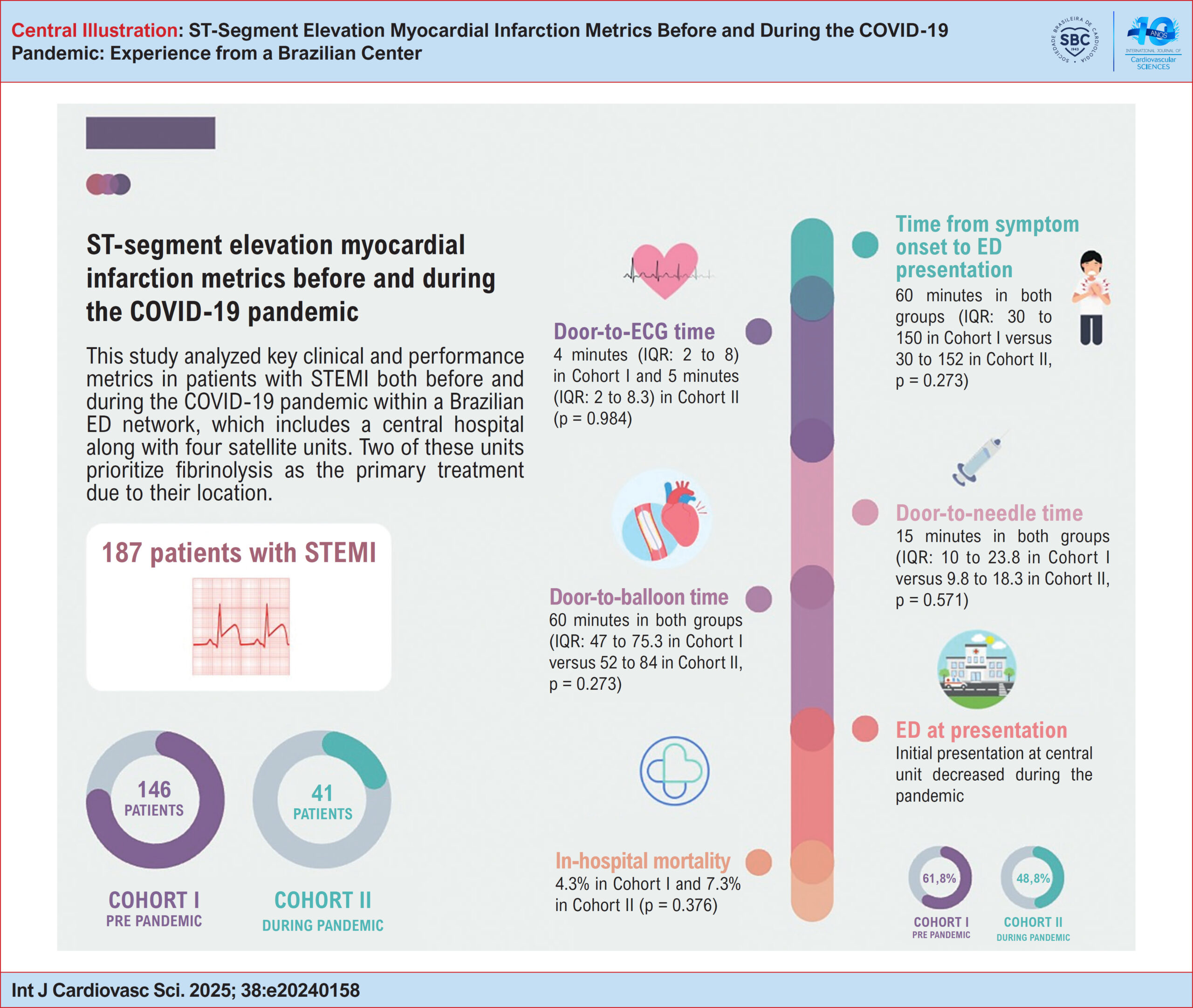
ST-Segment Elevation Myocardial Infarction Metrics Before and During the COVID-19 Pandemic: Experience from a Brazilian Center
IJCS
Original Article

ST-Segment Elevation Myocardial Infarction Metrics Before and During the COVID-19 Pandemic: Experience from a Brazilian Center

Caio de Assis Moura Tavares et al. Tarso A. D. Accorsi Milena Ribeiro Paixão Tarsila Mota … Fabio Pitta Pedro Alves Lemos Marcelo Franken Karine De Amicis Lima Karen Francine Kohler José Leão de Souza Jr.

Abstract

Background:

The impact of the COVID-19 pandemic on the healthcare of patients with ST-segment elevation acute myocardial infarction (STEMI) in Brazil remains unclear.

Objective:

Provide a descriptive analysis of clinical profiles, time intervals, performance metrics, and outcomes in patients with STEMI before and during the COVID-19 pandemic.

Methods:

Among a cohort of 193 patients with STEMI diagnosed in five emergency departments within a single Brazilian healthcare network, 187 patients were included between January 2017 and April 2021 and stratified into two cohorts: Cohort I (pre-pandemic, 146 patients) and Cohort II (pandemic, 41 patients). Statistical significance was defined as a two-sided p value < 0.05.

Results:

The mean age of the participants was 62.7 years (standard deviation: 13.2); 83.4% were male, and 86.1% underwent primary percutaneous coronary intervention (PCI). Duration from symptom onset to emergency department presentation was 60 minutes in both cohorts (interquartile range, IQR: 30 to 150 in Cohort I versus 30 to 152 in Cohort II, p = 0.273). Total ischemic time was 132 minutes in Cohort I (IQR: 94 to 222), and 117 minutes in Cohort II (IQR: 76.3 to 185.6) (p = 0.159). The observed STEMI time delays and performance metrics were comparable between groups, with reperfusion rates within the recommended time frame above 90% in both cohorts. Hospital mortality was 3.4% in Cohort I and 7.3% in Cohort II (p = 0.376).

Conclusion:

In the context of the COVID-19 pandemic, within a private healthcare network system in Brazil, this study did not uncover statistically significant disparities in clinical profiles, time intervals, performance metrics, or in-hospital mortality when compared to the pre-pandemic period.

  • Angioplasty
  • COVID-19
  • Fibrinolysis
  • Myocardial Reperfusion
  • ST Elevation Myocardial Infarction
Read Full Article
Creative Commons Attribution (CC BY) Creative Commons license
02/06/2025 DOI: 10.36660/ijcs.20240158 Views 1
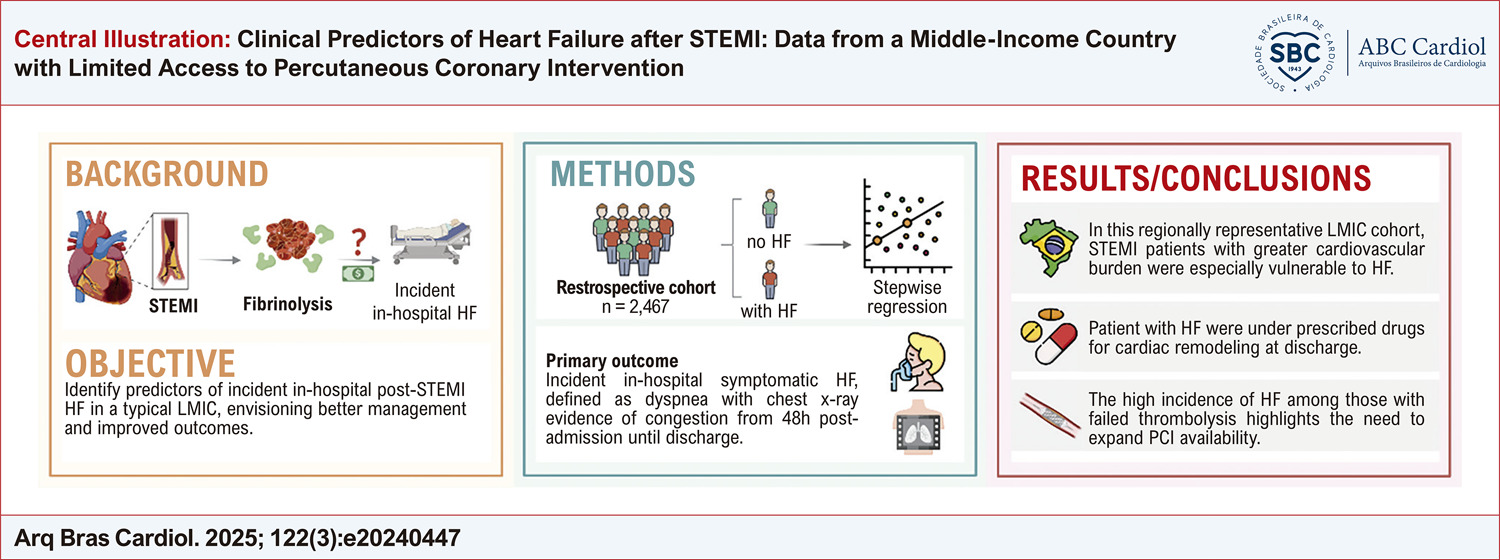
Clinical Predictors of Heart Failure after STEMI: Data from a Middle-Income Country with Limited Access to Percutaneous Coronary Intervention
ABC
Original Article

Clinical Predictors of Heart Failure after STEMI: Data from a Middle-Income Country with Limited Access to Percutaneous Coronary Intervention

Vinícius C. Fiusa et al. Andrea D. Stephanus Victor F. Couto Gustavo A. Alexim … Thaiene M. M. Severino Ana Claudia C. Nogueira Adriana J. B. A. Guimarães Alexandre Anderson S. M. Soares Elizabeth Bilevicius Vivian Batista Alessandra Staffico Andrei C. Sposito Luiz Sérgio F. de Carvalho

Abstract

Background

Heart failure (HF) is a common complication of ST-elevation myocardial infarction (STEMI) in low- and middle-income countries (LMICs), where cardiovascular mortality is disproportionately high. Primary percutaneous coronary intervention (PCI) has reduced post-STEMI HF incidence in high-income countries. However, access to this standard of care is poor in LMICs, and data in these settings remain scarce

Objective

To identify predictors of HF following STEMI in a LMIC with limited access to PCI, aiming at better management and outcomes.

Methods

This retrospective cohort study analyzed 2,467 STEMI patients admitted to two Brazilian public hospitals between January/2015 and February/2020. All participants received pharmacological thrombolysis and underwent coronarography within 48h post-admission. The primary outcome was symptomatic HF, defined as dyspnea with chest X-ray evidence of congestion, from 48h post-admission until discharge. Stepwise binary logistic regression was used to identify HF predictors. Significance was defined as p-values<0.05.

Results

The population was 61.9% male, mean age was 58.3±12.6 years, and 39.9% developed post-STEMI HF. HF was more common among older men with cardiovascular-kidney-metabolic (CKM) disease, larger infarcts, and left anterior descending artery involvement. Medications were often underprescribed at discharge, especially aldosterone antagonists (11.0%). HF was notably more frequent among individuals with failed thrombolysis (47.0%).

Conclusions

This regionally representative cohort from a LMIC with limited access to PCI showed that older men with CKM disease are particularly vulnerable to post-STEMI HF, and that HF pharmacotherapy at discharge needs optimization. The high HF incidence among patients with failed thrombolysis highlights the need to expand PCI availability.

  • Heart Failure
  • Pharmacological Thrombolysis
  • Risk Factors
  • ST Elevation Myocardial Infarction
Read Full Article
Creative Commons Attribution (CC BY) Creative Commons license
07/04/2025 DOI: 10.36660/abc.20240447i Views 1
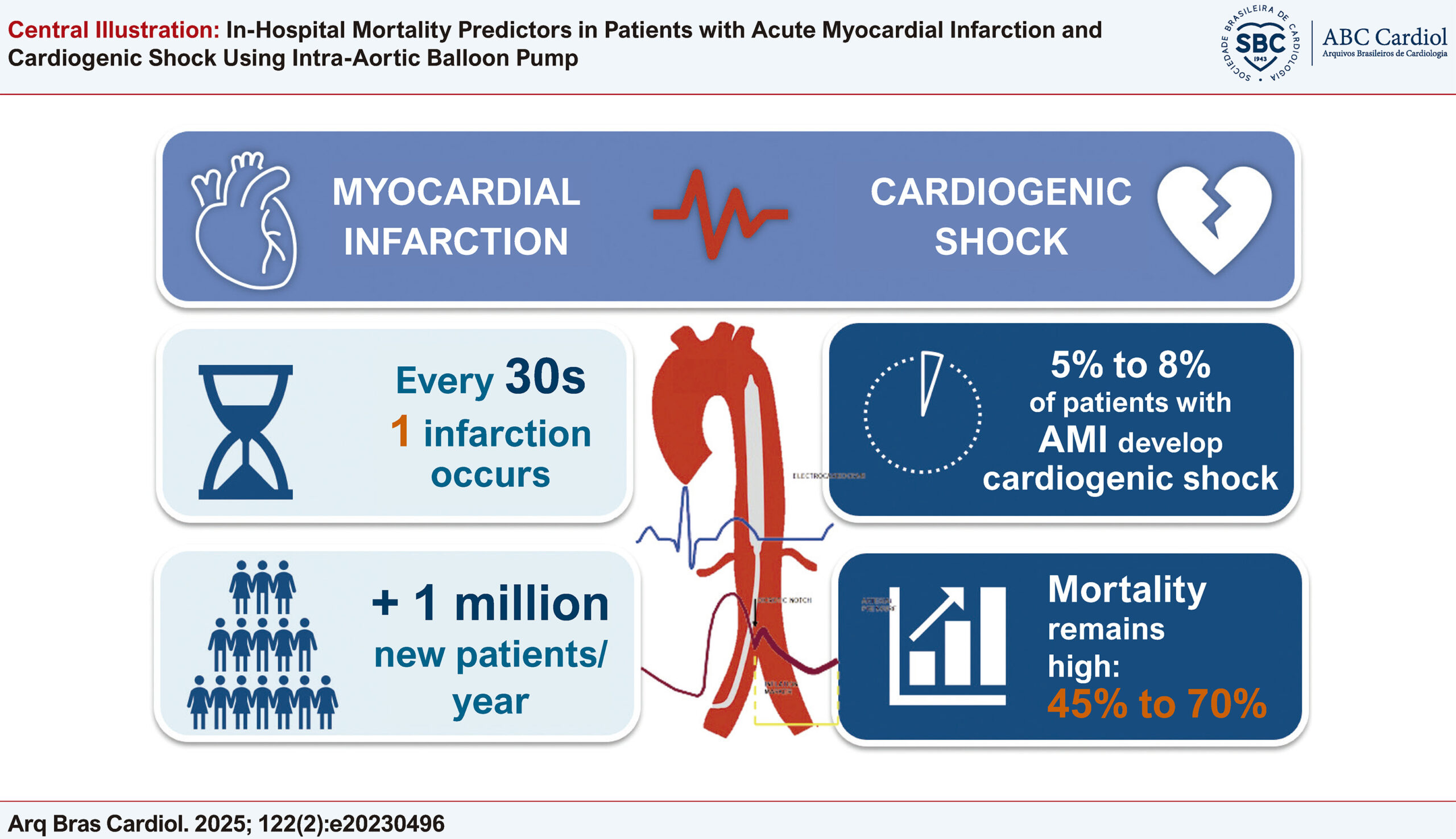
In-Hospital Mortality Predictors in Patients with Acute Myocardial Infarction and Cardiogenic Shock Using Intra-Aortic Balloon Pump
ABC
Original Article

In-Hospital Mortality Predictors in Patients with Acute Myocardial Infarction and Cardiogenic Shock Using Intra-Aortic Balloon Pump

Rossana Dall’Orto Elias et al. Isabella Pedrosa Assunção Julliane Vasconcelos Joviano Santos Maria da Gloria Rodrigues-Machado José Luiz Barros Pena

Abstract

Background

Patients with ST-segment elevation myocardial infarction (STEMI) and cardiogenic shock (CS) have a high risk of death. New types of mechanical devices have limited availability in Brazil. The use of intra-aortic balloon pump (IABP), although new guidelines downgraded its recommendation, is the most widely used mechanical support strategy. However, little is known about the clinical predictors of its effectiveness in reducing mortality in this group of patients.

Objectives

To assess the predictors of IABP effectiveness in reducing in-hospital mortality in patients with STEMI and CS.

Methods

This observational, retrospective, descriptive, single-center study involved 98 patients with STEMI and CS treated with IABP, in an intensive care unit. We compared patients who survived (42 men and 13 women) and those did not (30 men and 13 women) using clinical predictors of IABP effectiveness in reducing in-hospital death, considering a statistical significance level of 5% (p < 0.05).

Results

The use of IABP in patients less than 1 day after infarction (odds ratio [OR]: 0.12; 95% confidence interval [CI]: 0.02 to 0.85; p = 0.034) was a factor that increased the risk of in-hospital death. Younger age (OR: 1.09; 95% CI: 1.02 to 1.16; p = 0.010) and dyslipidemia (OR: 0.19; 95% CI: 0.05 to 0.81; p = 0.024) were predictors of reduced in-hospital mortality. For each additional year of age, the risk of death increased 1.07-fold.

Conclusion

In patients with STEMI and CS, the use of IABP reduced in-hospital mortality when it was used for 2 or more days, as well as in younger patients and those with dyslipidemia. Additional studies are needed to confirm these findings.

  • Cardiogenic shock
  • Hospital Mortality
  • Intra-Aortic Balloon Pumping
  • ST Elevation Myocardial Infarction
Read Full Article
Creative Commons Attribution (CC BY) Creative Commons license
21/02/2025 DOI: 10.36660/abc.20230496i Views 2
Central Illustration
ABC
Original Article

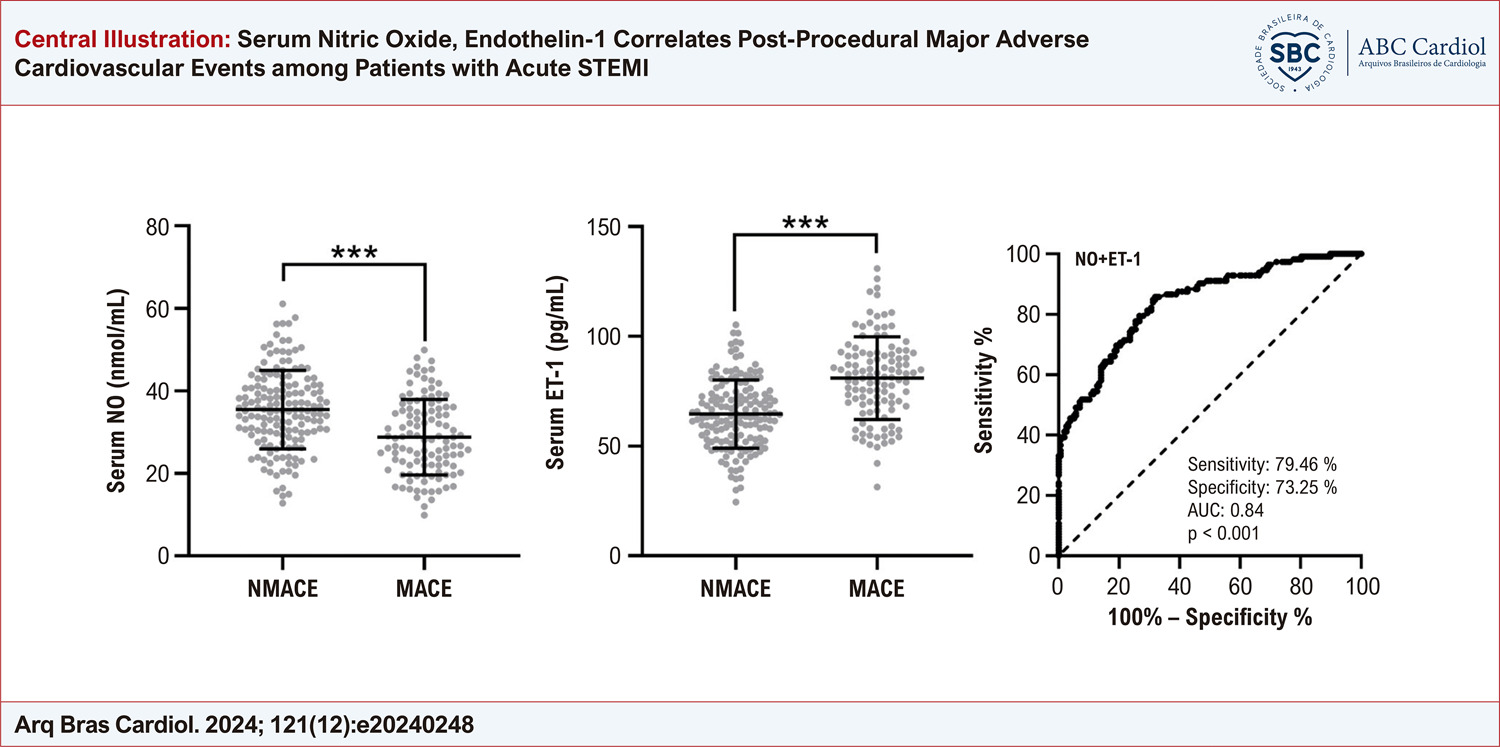
Serum Nitric Oxide, Endothelin-1 Correlates Post-Procedural Major Adverse Cardiovascular Events among Patients with Acute STEMI

Huihui Guo et al. Qi Qu Jiechao Lv

Abstract

Background

ST-segment elevation myocardial infarction (STEMI) is a common and severe form of acute myocardial infarction (AMI).

Objectives

The study aimed to investigate the relationship between serum nitric oxide (NO) and endothelin-1 (ET-1) levels with the severity of STEMI and their predictive value for major adverse cardiovascular events (MACE) within one year after percutaneous coronary intervention (PCI) in STEMI patients.

Methods

The retrospective study was conducted on 269 STEMI patients who underwent PCI. The patients were categorized into two groups: those who developed MACE (112 cases) and those who did not (157 cases) within one year. NO and ET1 levels were measured in collected serum using enzyme-linked immunosorbent assay. Receive-operating characteristics (ROC) curve was used to analyze the prognostic potential of NO and ET1 individually and in combination, p<0.05 was considered statistically significant.

Results

Significant differences were noted between the two groups concerning age, Killip classification, left ventricular ejection fraction, cardiac troponin I (cTnI), creatine kinase-MB (CK-MB), as well as serum NO and ET-1 levels. The study observed that patients who developed MACE had lower serum NO and higher ET-1 levels upon admission. Further analysis revealed a significant inverse relationship between serum NO and ET-1 levels and the severity of myocardial infarction. A combined detection model, -0.082 * NO + 0.059 * ET-1, demonstrated promising prognostic value for the occurrence of MACE within one year post-PCI.

Conclusions

Serum NO and ET-1 levels serve as valuable prognostic markers for MACE in STEMI patients undergoing PCI, exhibiting a strong correlation with AMI severity.

  • Myocardial Infarction
  • Prognosis
  • ST Elevation Myocardial Infarction
Read Full Article
Creative Commons Attribution (CC BY) Creative Commons license
20/01/2025 DOI: 10.36660/abc.20240248i Views 2
NSTEMI and Ischemic Mitral Regurgitation: Incidence and Long-Term Clinical Outcomes with Respect to Management Strategy
ABC
Original Article

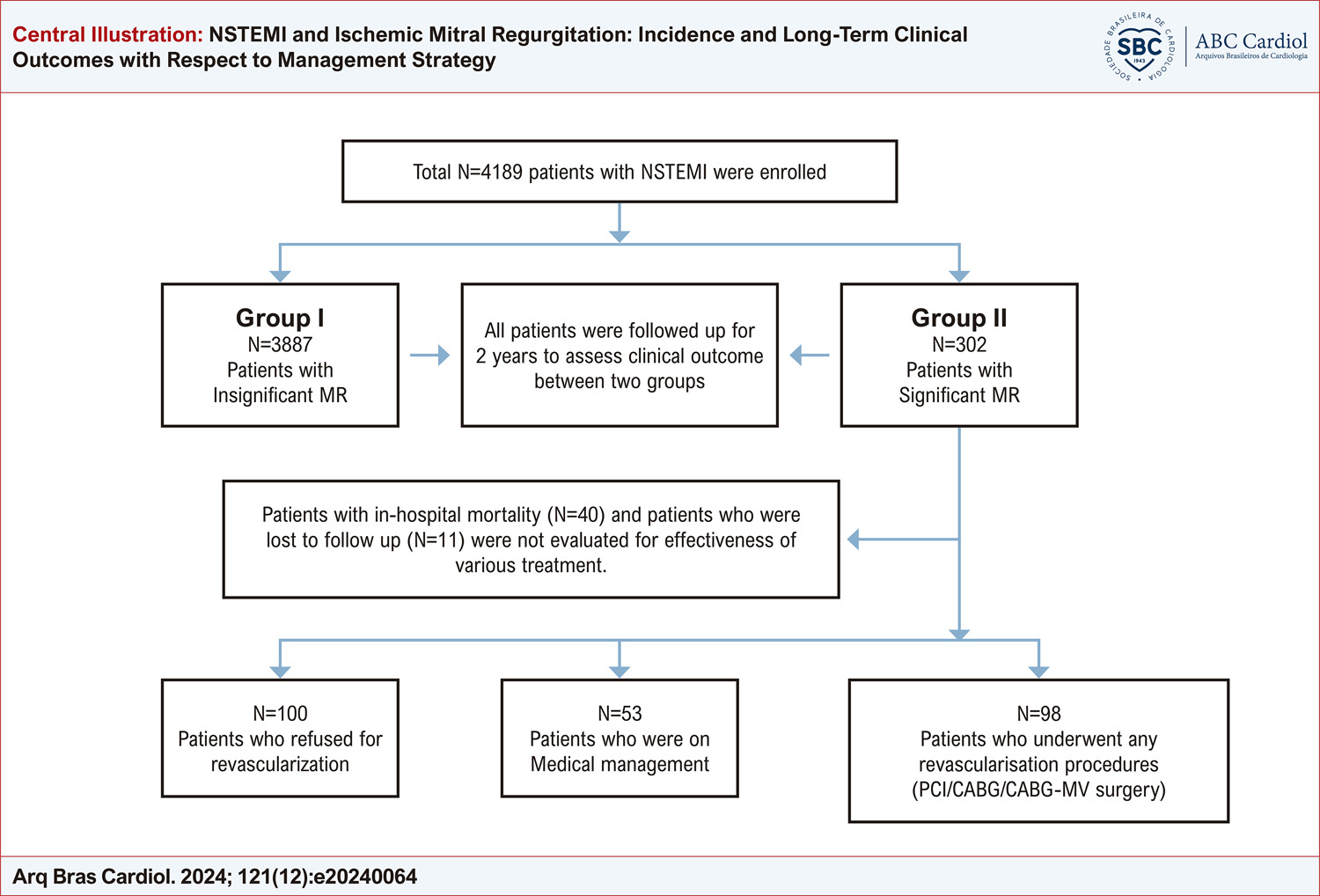
NSTEMI and Ischemic Mitral Regurgitation: Incidence and Long-Term Clinical Outcomes with Respect to Management Strategy

Pooja Vyas et al. Radhakishan Dake Kewal Kanabar Iva Patel … Ashish Mishra Vishal Sharma Tirth Nathwani Kunal Parwani Mital Rathod

Abstract

Background

The optimal treatment for ischemic mitral regurgitation (IMR) in patients of non-ST elevation myocardial infarction (NSTEMI) is a debated topic.

Objective

To evaluate the long term outcome on patients with NSTEMI and IMR, particularly emphasizing the comparison of treatments in those with moderate to severe MR.

Methods

We enrolled patients with NSTEMI and classified non/trivial to mild regurgitation as insignificant IMR and moderate to severe regurgitation as significant IMR. Furthermore, patients with substantial IMR were assessed for long-term clinical outcomes with respect to different management strategies. A test was considered statistically significant based on the probability value p<0.05.

Results

From a total of 4,189 patients of NSTEMI, significant IMR was found in 7.21% of patients. A significantly higher number of patients with death (1.21% vs. 13.24%, p<0.0001), cardiogenic shock (0.46% vs. 13.24%, p<0.0001) and heart failure (1.03% vs. 11.59%, p<0.0001) were found during hospitalization in patients with significant IMR. At a 2-year follow-up, a higher event rate was observed in the significant IMR group. Patients with significant IMR re-vascularized either by percutaneous coronary intervention (PCI), coronary artery bypass grafting (CABG), or CABG+ mitral valve (MV) surgery showed substantial improvement in MR grade ( 32.65% vs. 6% vs. 16.98%, p<0.0001) and LVEF (27.55% vs. 1% vs. 1.89%, p<0.0001) at 1 year follow up and significantly improved outcomes were identified compared to refused revascularization and medical management group with (-5.10% vs. 15% vs. 13.21%, p=0.04) mortality, (-33.67% vs. 61% vs. 73.58%, p<0.0001) readmission, and (-15.31% vs. 27% vs. 33.96%, p=0.01) heart failure at 2 years follow up.

Conclusion

Higher mortality and admission rates were observed in patients with significant IMR compared to those with in-significant IMR. Notably, significant IMR patients who underwent PCI, CABG, or CABG+MV surgery showed improved outcomes compared to non-revascularized counterparts.

  • Coronary Angioplasty Balloon
  • Mitral Valve Insufficiency
  • ST Elevation Myocardial Infarction
Read Full Article
Creative Commons Attribution (CC BY) Creative Commons license
13/12/2024 DOI: 10.36660/abc.20240064i Views 1
Primary Percutaneous Coronary Intervention during Off-Hours: One-Decade Experience from a High-Volume Cardiovascular Center
ABC
Original Article

Primary Percutaneous Coronary Intervention during Off-Hours: One-Decade Experience from a High-Volume Cardiovascular Center

Filipe Cirne et al. Marcia Moura Schmidt Cristiano Oliveira Cardoso Darryl P. Leong Alexandre Schaan de Quadros

Abstract

Background

The impact of performing a primary percutaneous coronary intervention (pPCI) off-hours on clinical outcomes is not well established.

Objective

Compare characteristics and major adverse cardiovascular events (MACE) of pPCI off-hours versus on-hours in a high-volume cardiology center.

Methods

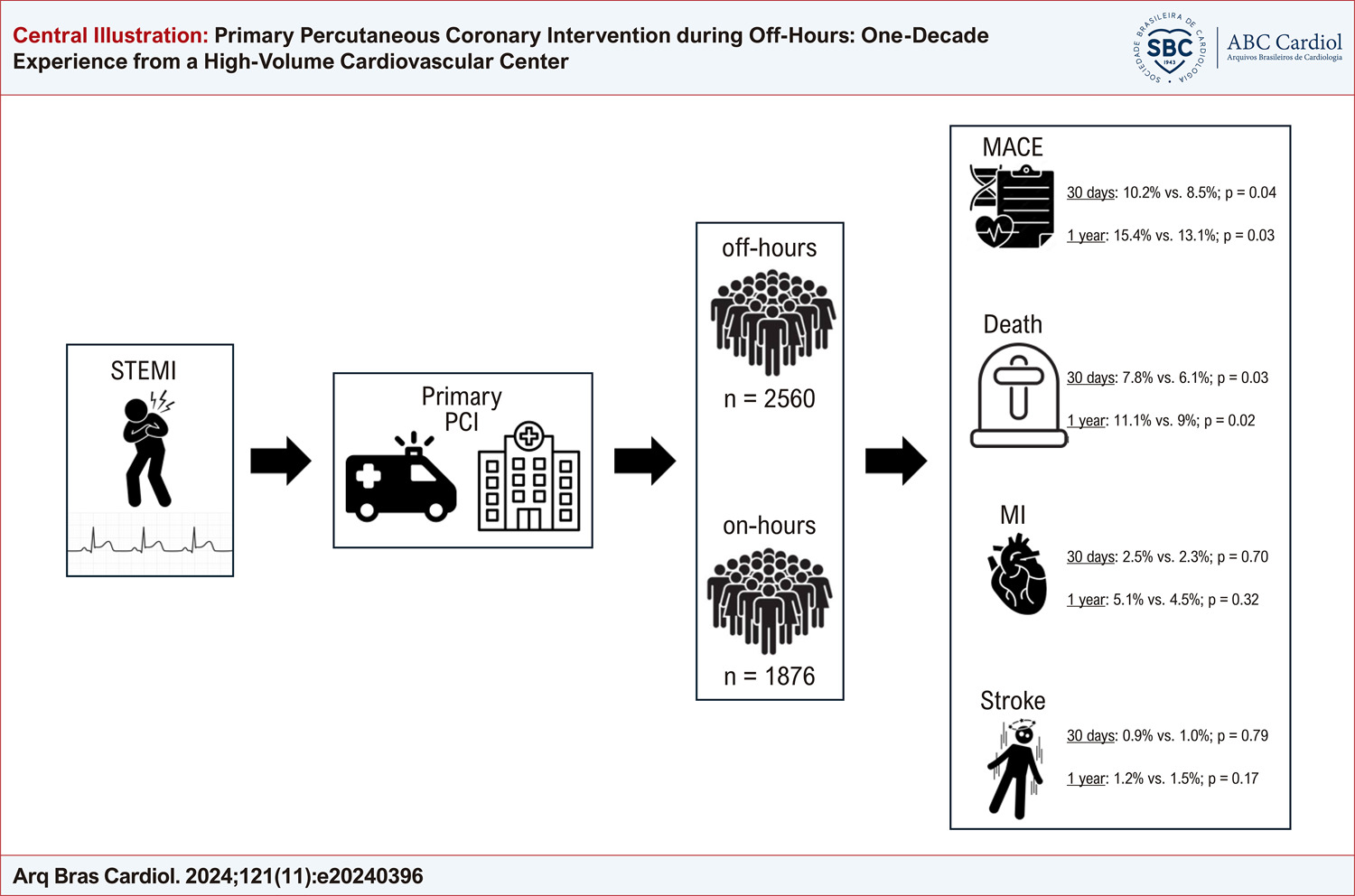
Prospective cohort of patients who underwent pPCI for ST elevation myocardial infarction (STEMI) from 2009 to 2019. We defined off-hours pPCI as workdays from 8pm to 7:59 am as well as weekends and holidays. We compared patients treated on- and off-hours as to baseline characteristics and 1-year events.

Results

A total of 2,560 patients were treated off-hours and 1,876 patients treated on-hours. The groups were similar for most of the baseline characteristics. A higher thrombus burden was seen in patients treated off-hours (50% x 45%; p < 0.01), and in this group the radial access was more frequently used (62% x 58%; p = 0.01). Procedural success was not statistically different between the groups (95.7% x 96.4%; p = 0.21). MACE rates were higher in patients treated off-hours at 30 days (10.2% x 8.5%; p = 0.04) and at one year of follow-up (15.4% x 13.1%; p = 0.03), driven by higher death rates at 30 days (7.8% x 6.1%; p = 0.03) and at 1 year follow-up (11.1% x 9.0%; p = 0.02).

Conclusion

In a high-volume cardiology center, clinical characteristics, door-to-balloon times, procedural pPCI success and complication rates of STEMI patients treated on and off-hours were similar. However, patients treated off-hours presented higher MACE and mortality rates, in spite of similar MI and stroke rates.

  • Major Adverse Cardiovascular Events
  • Primary percutaneous coronary intervention
  • ST Elevation Myocardial Infarction
Read Full Article
Creative Commons Attribution (CC BY) Creative Commons license
22/11/2024 DOI: 10.36660/abc.20240396i Views 2
IJCS
Editorial

Challenges in Worldwide Cardiovascular Urgencies and Emergencies

Daniel Piskorz et al. Ignacio Piskorz

The Sustainable Health Agenda for the Americas 2018-2030 represents the highest level of strategic planning and policy framework in the Americas. Approved by the Pan American Sanitary Conference — the top authority of the Pan American Health Organization (PAHO) — one of its main objectives is to achieve the highest attainable standard of health care. In this context, timely, affordable, and high-quality access to urgent and emergency health care is an essential requirement. The original research by Uchimura et al. aimed to identify the various challenges that hinder the effectiveness of urgent and emergency care networks. These challenges include inadequate regulatory mechanisms, difficulties in financial management across different levels of government, a lack of evaluation and monitoring culture, and weaknesses in information systems.

Over the past decade, the mortality profile in the Americas was dominated by noncommunicable diseases, which accounted for 78% of all deaths. The leading causes of death in the region were ischemic heart diseases (I20-I25), which accounted for 14.1% of total deaths, and cerebrovascular diseases (I60-I69), which accounted for 7.2% of total deaths.

[…]

  • Guideline Adherence
  • Reperfusion
  • ST Elevation Myocardial Infarction
Read Full Article
Creative Commons Attribution (CC BY) Creative Commons license
04/11/2024 DOI: 10.36660/ijcs.20240147 Views 1
ABC
Editorial

Can Artificial Intelligence Change our Interpretation of Cardiovascular Risk Scores?

Maria Cristina Meira Ferreira et al. Glaucia Maria Moraes de Oliveira

The need to discover ways to predict future events has fascinated the human race since its beginnings. Through observations stored in human memory, predicting events was part of security and survival of humanity. Over the centuries, the need for prediction became part of several sciences, due to its extreme importance in guiding strategic decision-making, and in medicine it wasn’t different.

Human beings have developed skills in recording, organizing, and storing data for future analysis. We went from storing in analog mode to digital, and along with the development of statistical methods, analysis of large databases has become possible. In medicine, complex algorithms used by computer systems began to predict the risk of developing diseases, prognoses, the best therapeutic strategies, risk of events, mortality, among others.

[…]

  • Acute coronary syndrome
  • Artificial Intelligence
  • Percutaneous Coronary Intervention
  • ST Elevation Myocardial Infarction
Read Full Article
Creative Commons Attribution (CC BY) Creative Commons license
19/07/2024 DOI: 10.36660/abc.20240280i Views 3
Figure 1
ABC
Case Report

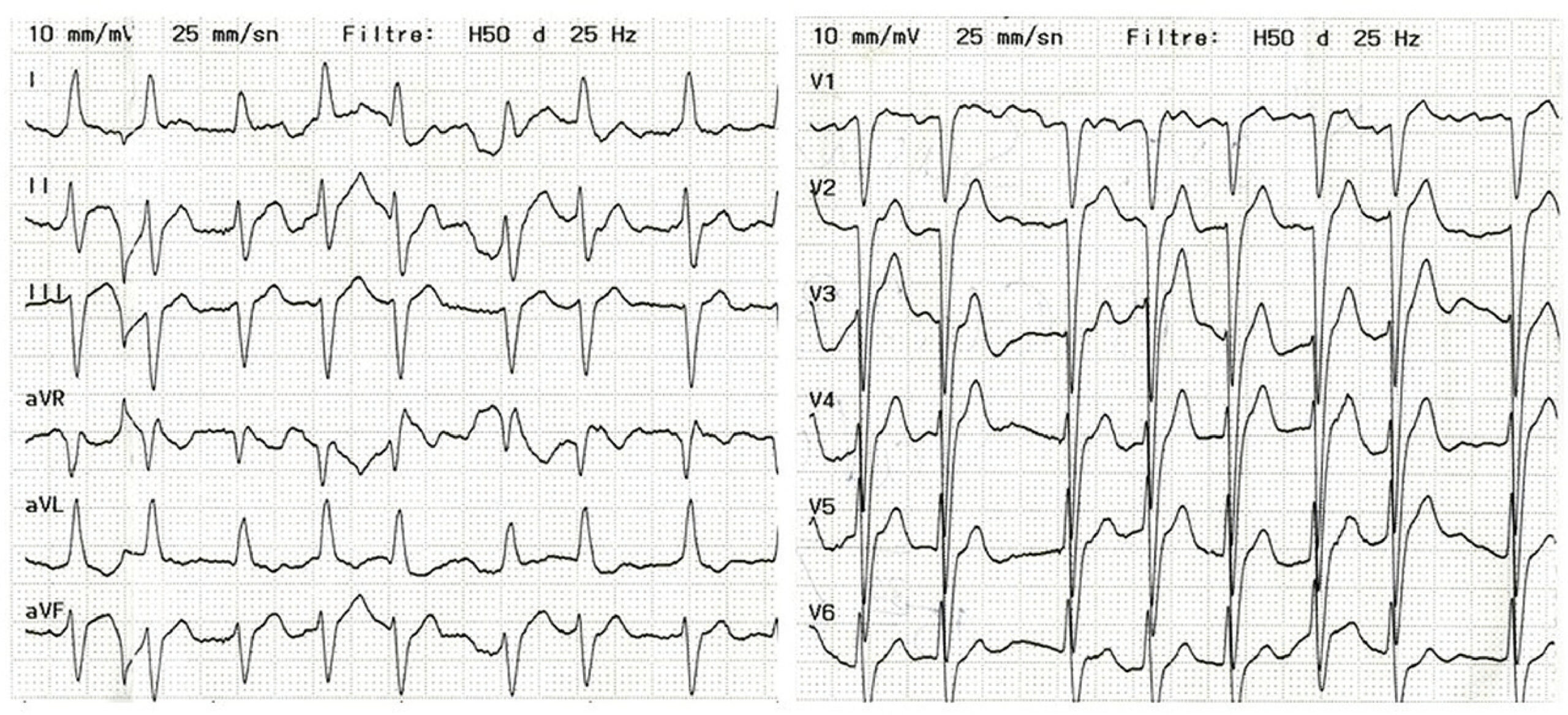
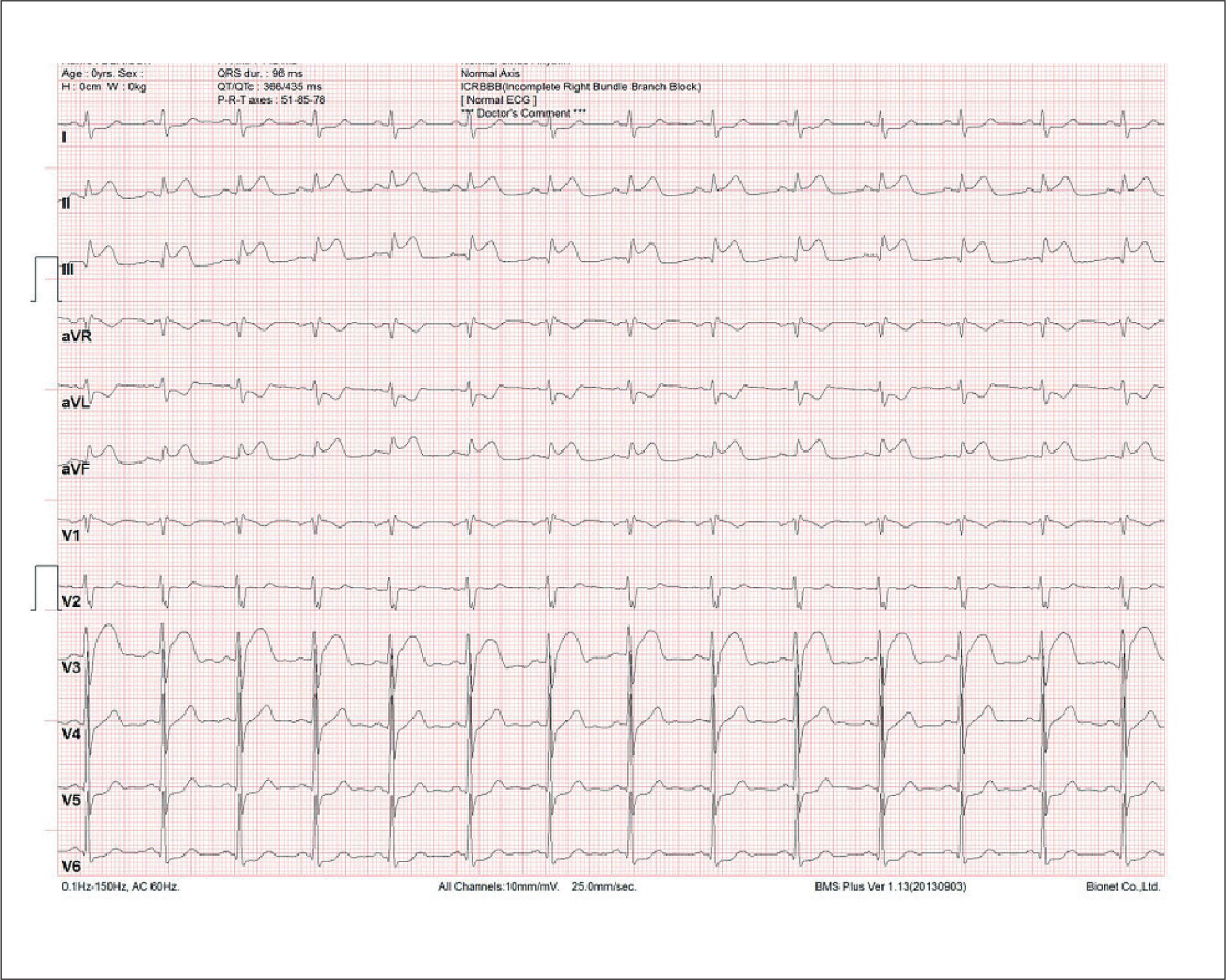
Deceptive Anteroseptal ST-segment Elevation and Brugada Pattern Caused by Isolated Conus Artery Occlusion

Hakan Gökalp Uzun et al. İrfan Özgen

Abstract

The conus artery (CA) supplies the right ventricular outflow tract (RVOT). ST-segment elevation in leads V1-3, which can resemble Brugada electrocardiogram (EKG) patterns, has been reported due to occlusion of the CA. A 68-year-old male was admitted to the hospital with a diagnosis of non-ST-elevation myocardial infarction. A coronary angiogram revealed a dissection in the conus artery, most likely caused by the catheter. Due to the small caliber of the CA, medical therapy was chosen as the course of action. However, after the procedure, an EKG showed changes consistent with features of both type-1 and type-2 Brugada patterns, with ST-segment elevations in leads V1-4. Subsequent coronary imaging revealed that the CA had progressed to total occlusion. Despite multiple attempts to gain reentry into the true lumen, they were unsuccessful. Based on the risk-benefit ratio, the decision was made to continue with medical therapy. This is the first reported case of CA occlusion induced by catheter dissection, which manifested as anteroseptal ST-segment elevation. The patient did not report any anginal symptoms or arrhythmic events, which contrasts with conventional knowledge. Not all CA obstructions or RVOT infarcts cause Brugada-like patterns. When they do, ST elevations tend to be less than those in true Brugada syndrome.

  • Brugada Syndrome
  • ST Elevation Myocardial Infarction
  • Ventricular Outflow Obstruction, Right
Read Full Article
Creative Commons Attribution (CC BY) Creative Commons license
15/07/2024 DOI: 10.36660/abc.20230749i Views 2
Central Illustration
ABC
Original Article

The Clinical and Economic Impact of Delayed Reperfusion Therapy: Real-World Evidence

Silvio Gioppatto et al. Paulo Sousa Prado Mariana Araújo Lima Elias Verônica Homem de Carvalho … Caio Resende da Costa Paiva Gustavo de Almeida Alexim Ricardo Torres Bispo Reis Ana Claudia Cavalcante Nogueira Alexandre Anderson de Sousa Munhoz Soares Wilson Nadruz Luiz Sergio F. de Carvalho Andrei C. Sposito

Abstract

Background:

Early reperfusion therapy is acknowledged as the most effective approach for reducing case fatality rates in patients with ST-segment elevation myocardial infarction (STEMI).

Objective:

Estimate the clinical and economic consequences of delaying reperfusion in patients with STEMI.

Methods:

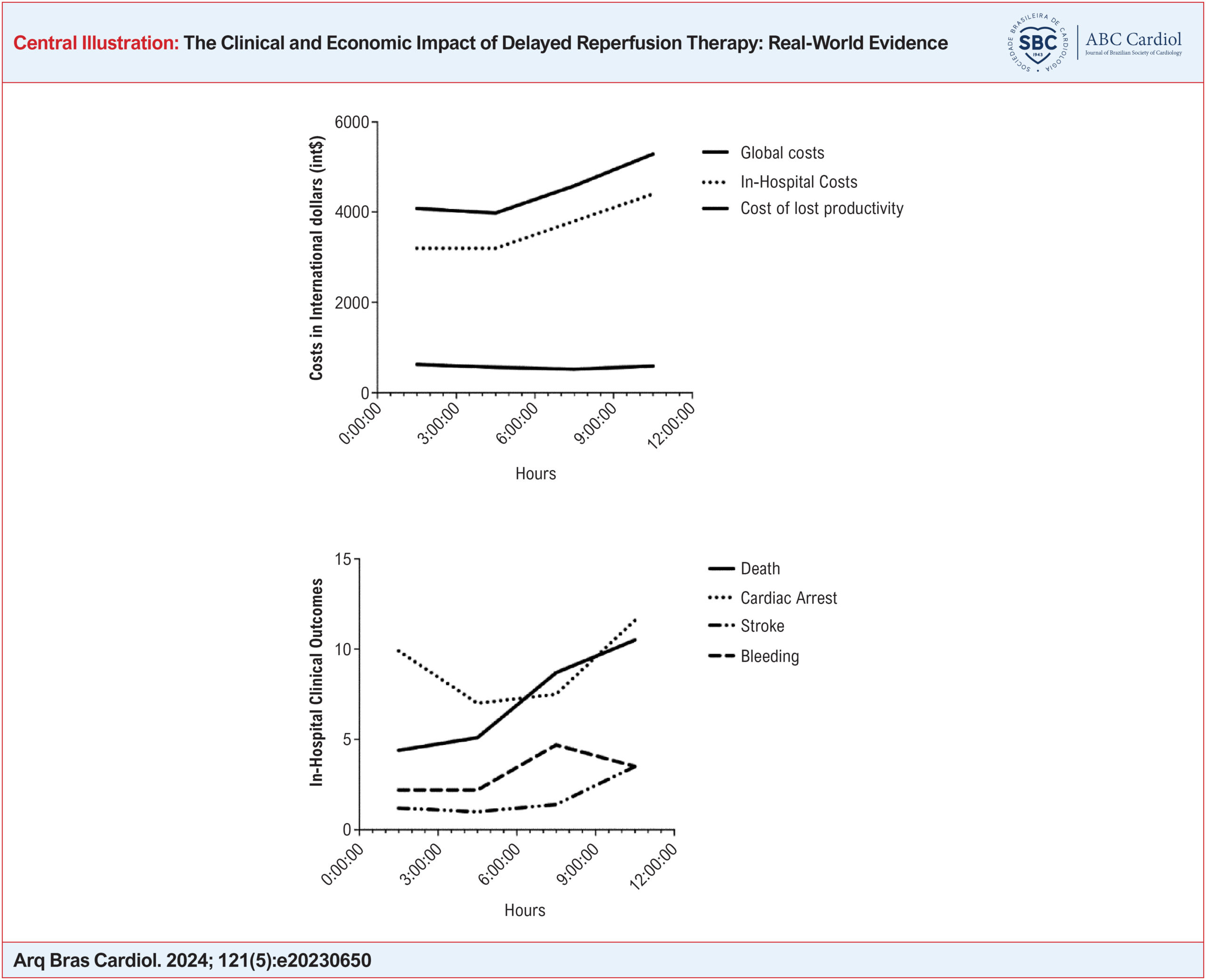
This retrospective cohort study evaluated mortality rates and the total expenses incurred by delaying reperfusion therapy among 2622 individuals with STEMI. Costs of in-hospital care and lost productivity due to death or disability were estimated from the perspective of the Brazilian Unified Health System indexed in international dollars (Int$) adjusted by purchase power parity. A p < 0.05 was considered statistically significant.

Results:

Each additional hour of delay in reperfusion therapy was associated with a 6.2% increase (95% CI: 0.3% to 11.8%, p = 0.032) in the risk of in-hospital mortality. The overall expenses were 45% higher among individuals who received treatment after 9 hours compared to those who were treated within the first 3 hours, primarily driven by in-hospital costs (p = 0.005). A multivariate linear regression model indicated that for every 3-hour delay in thrombolysis, there was an increase in in-hospital costs of Int$497 ± 286 (p = 0.003).

Conclusions:

The findings of our study offer further evidence that emphasizes the crucial role of prompt reperfusion therapy in saving lives and preserving public health resources. These results underscore the urgent need for implementing a network to manage STEMI cases.

  • Acute coronary syndrome
  • Percutaneous Coronary Intervention
  • Reperfusion
  • ST Elevation Myocardial Infarction
Read Full Article
Creative Commons Attribution (CC BY) Creative Commons license
13/05/2024 DOI: 10.36660/abc.20230650i Views 2
The Predictive Value of the Inflammatory Prognostic Index for Detecting No-Reflow in ST-Elevation Myocardial Infarction Patients
ABC
Original Article

The Predictive Value of the Inflammatory Prognostic Index for Detecting No-Reflow in ST-Elevation Myocardial Infarction Patients

Faysal Şaylık et al. Tufan Çınar İbrahim Halil Tanboğa

Abstract

Background:

No-reflow (NR) is characterized by an acute reduction in coronary flow that is not accompanied by coronary spasm, thrombosis, or dissection. Inflammatory prognostic index (IPI) is a novel marker that was reported to have a prognostic role in cancer patients and is calculated by neutrophil/lymphocyte ratio (NLR) multiplied by C-reactive protein/albumin ratio.

Objective:

We aimed to investigate the relationship between IPI and NR in ST-segment elevation myocardial infarction (STEMI) patients undergoing primary percutaneous coronary intervention (pPCI).

Methods:

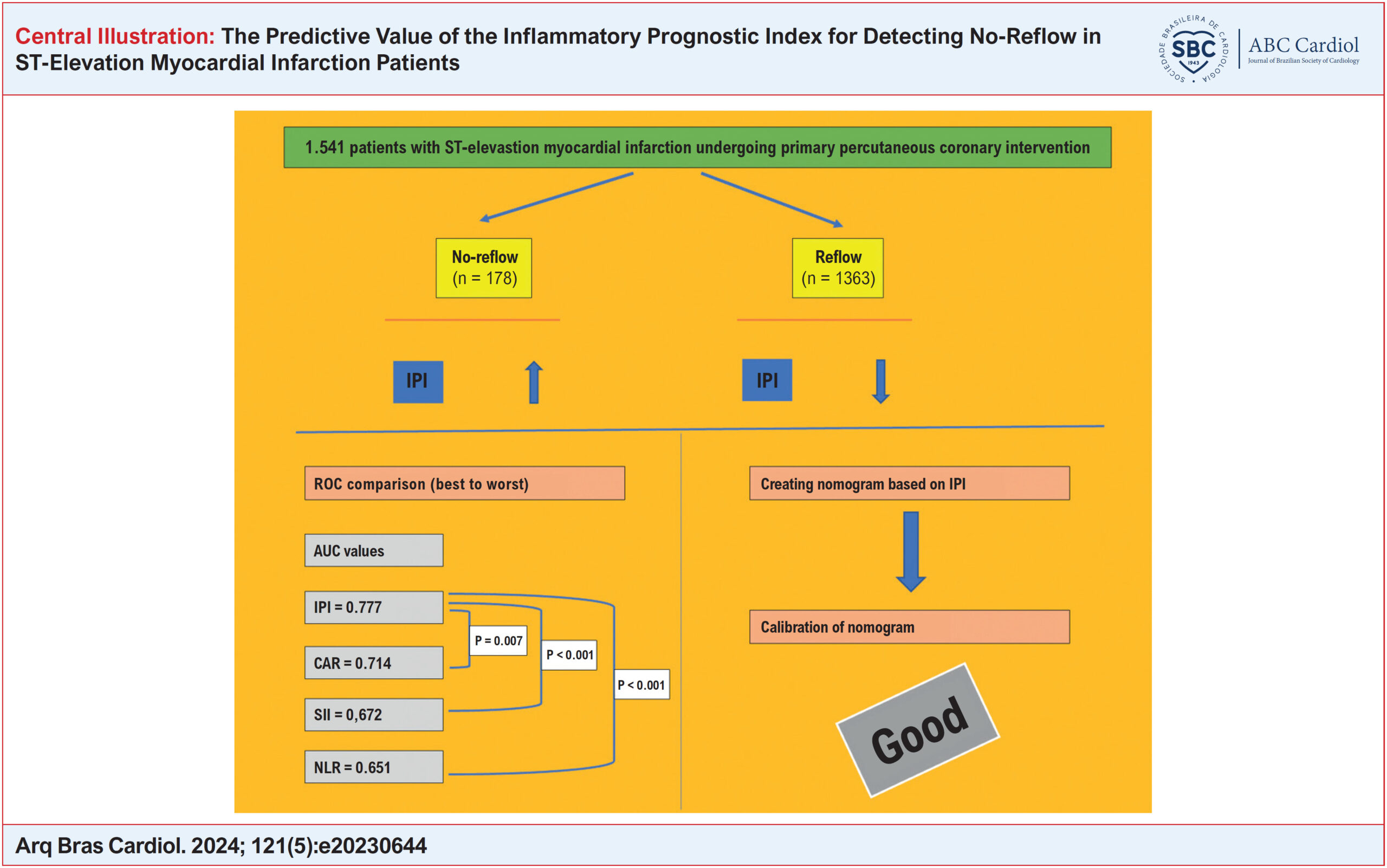
A total of 1541 patients were enrolled in this study (178 with NR and 1363 with reflow). Lasso panelized shrinkage was used for variable selection. A nomogram was created based on IPI for detecting the risk of NR development. Internal validation with Bootstrap resampling was used for model reproducibility. A two-sided p-value <0.05 was accepted as a significance level for statistical analyses.

Results:

IPI was higher in patients with NR than in patients with reflow. IPI was non-linearly associated with NR. IPI had a higher discriminative ability than the systemic immune-inflammation index, NLR, and CRP/albumin ratio. Adding IPI to the baseline multivariable logistic regression model improved the discrimination and net-clinical benefit effect of the model for detecting NR patients, and IPI was the most prominent variable in the full model. A nomogram was created based on IPI to predict the risk of NR. Bootstrap internal validation of nomogram showed a good calibration and discrimination ability.

Conclusion:

This is the first study that shows the association of IPI with NR in STEMI patients who undergo pPCI.

  • No-Reflow Phenomenon
  • Nomograms
  • Percutaneous Coronary Intervention
  • ST Elevation Myocardial Infarction
Read Full Article
Creative Commons Attribution (CC BY) Creative Commons license
29/04/2024 DOI: 10.36660/abc.20230644i
Figure 1
ABC
Case Report

Acute ST-Elevation Myocardial Infarction in a Young Adult: Rare Presentation of Giant Atrial Myxoma

Rodrigo Rufino Pereira Silva et al. Carolina Jerônimo Magalhães Rafael Silvestre Vieira da Silva Giulia Antoni Ferreira Rocha … Paulo Ernando Ferraz Cavalcanti Sérgio Tavares Montenegro

Abstract

Cardiac tumors are rare entities, among which atrial myxoma (AM) stands as the most frequent, accounting for approximately half of all reported cases. The incidence of AM is estimated to range from 0.001% to 0.3% within the general population, yet only about 0.06% of these cases present with coronary embolic events.

We report on a 33-year-old male smoker who experienced acute, severe precordial pain radiating to the left upper limb, lasting for one hour. The electrocardiographic evaluation demonstrated ST-segment elevation in leads D2, D3, and aVF, alongside significantly elevated serum troponin levels, confirming a diagnosis of ST-segment elevation myocardial infarction (STEMI). Subsequent coronary angiography revealed proximal occlusion of the right coronary artery due to thrombus. An initial attempt of thrombus aspiration was unsuccessful, followed by primary angioplasty with balloon inflation without stent placement. Further diagnostic exploration through transthoracic echocardiography identified a homogenous, smooth-surfaced mass measuring 5.2 cm x 2.3 cm attached to the interatrial septum. This mass, characterized by lobulations, prolapsed into the mitral valve and left ventricle during diastole, consistent with AM. Surgical resection of the mass was successfully performed, with the patient being discharged asymptomatic.

In the reported case, the patient’s profile, notably his age, and gender, diverges from the typical epidemiological characteristics associated with AM. This case adds to the limited number of reports where the inferior wall is affected by the right coronary artery being occluded. This report emphasizes the significance of differential diagnoses in younger patients presenting with STEMI.

  • Diagnostic Imaging/methods
  • Myxoma
  • ST Elevation Myocardial Infarction
  • Young Adult
Read Full Article
Creative Commons Attribution (CC BY) Creative Commons license
22/04/2024 DOI: 10.36660/abc.20230538i Views 1
Identification of Potential Crucial Biomarkers in STEMI Through Integrated Bioinformatic Analysis
ABC
Artigo Original

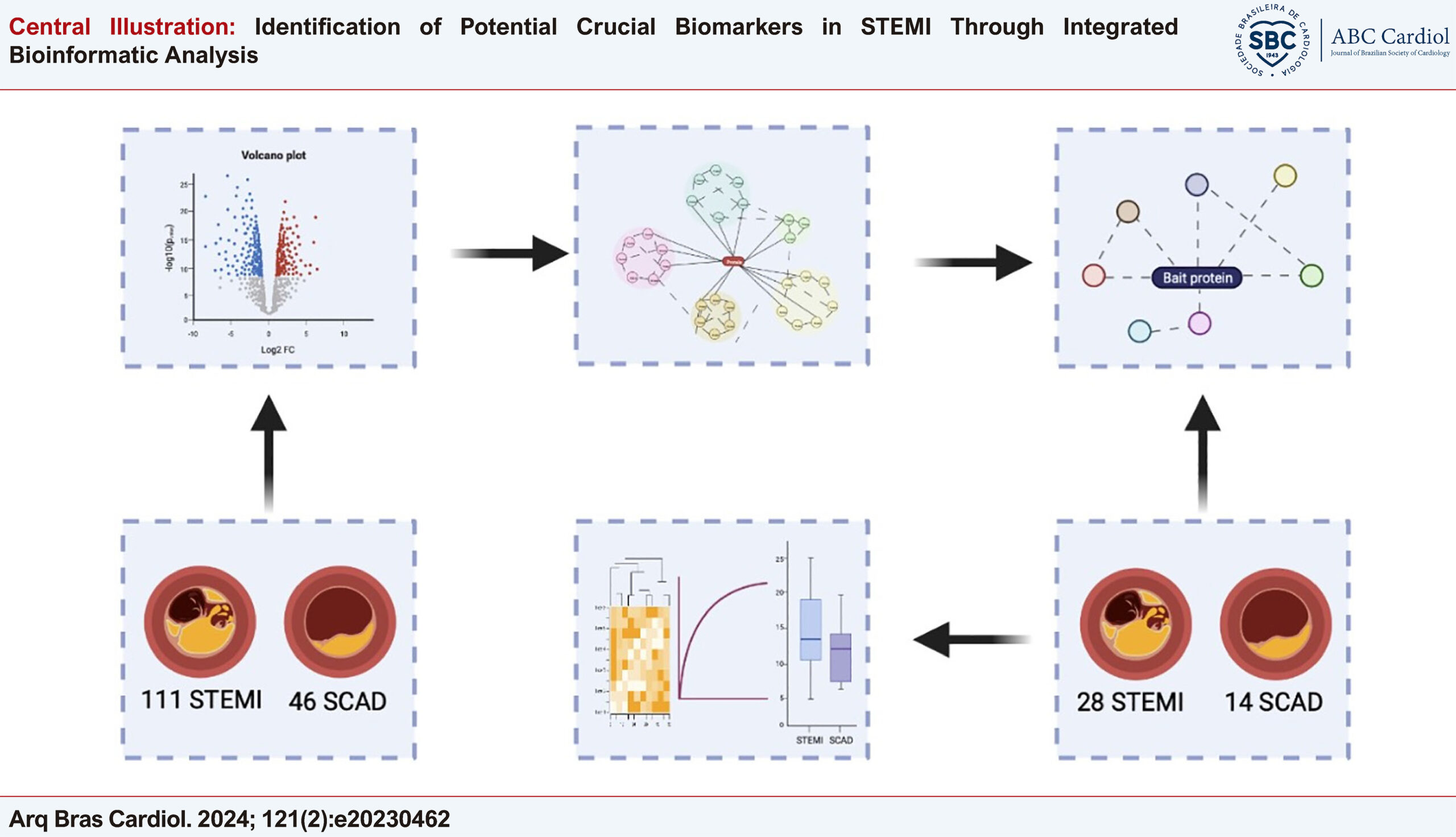
Identification of Potential Crucial Biomarkers in STEMI Through Integrated Bioinformatic Analysis

Li-Zhi Zhao et al. Yi Liang Ting Yin Hui-Ling Liao Bo Liang

Abstract

Background

ST-segment elevation myocardial infarction (STEMI) is one of the leading causes of fatal cardiovascular diseases, which have been the prime cause of mortality worldwide. Diagnosis in the early phase would benefit clinical intervention and prognosis, but the exploration of the biomarkers of STEMI is still lacking.

Objectives

In this study, we conducted a bioinformatics analysis to identify potential crucial biomarkers in the progress of STEMI.

Methods

We obtained GSE59867 for STEMI and stable coronary artery disease (SCAD) patients. Differentially expressed genes (DEGs) were screened with the threshold of |log2fold change| > 0.5 and p <0.05. Based on these genes, we conducted enrichment analysis to explore the potential relevance between genes and to screen hub genes. Subsequently, hub genes were analyzed to detect related miRNAs and DAVID to detect transcription factors for further analysis. Finally, GSE62646 was utilized to assess DEGs specificity, with genes demonstrating AUC results exceeding 75%, indicating their potential as candidate biomarkers.

Results

133 DEGs between SCAD and STEMI were obtained. Then, the PPI network of DEGs was constructed using String and Cytoscape, and further analysis determined hub genes and 6 molecular complexes. Functional enrichment analysis of the DEGs suggests that pathways related to inflammation, metabolism, and immunity play a pivotal role in the progression from SCAD to STEMI. Besides, related-miRNAs were predicted, has-miR-124, has-miR-130a/b, and has-miR-301a/b regulated the expression of the largest number of genes. Meanwhile, Transcription factors analysis indicate that EVI1, AML1, GATA1, and PPARG are the most enriched gene. Finally, ROC curves demonstrate that MS4A3, KLRC4, KLRD1, AQP9, and CD14 exhibit both high sensitivity and specificity in predicting STEMI.

Conclusions

This study revealed that immunity, metabolism, and inflammation are involved in the development of STEMI derived from SCAD, and 6 genes, including MS4A3, KLRC4, KLRD1, AQP9, CD14, and CCR1, could be employed as candidate biomarkers to STEMI.
  • Biomarkers
  • Computational Biology
  • Coronary Artery Disease
  • ST Elevation Myocardial Infarction
Read Full Article
Creative Commons Attribution (CC BY) Creative Commons license
05/04/2024 DOI: 10.36660/abc.20230462 Views 1
ABC
Editorial

How Can COVID-19 Influence the Evolution of Patients with Acute Coronary Syndromes?

Alexandre de Matos Soeiro

The pandemic caused by the COVID-19 virus has changed the way we view infectious diseases. In a more intense way than in other situations, COVID-19 was from the beginning related to a greater number of thrombotic events, whether in its acute presentation, with pulmonary microthrombi worsening the hypoxia, or even in its late evolution with a large number of pulmonary embolic events. The interface between the endothelium and the coagulation cascade was modified, and different pro-thrombotic mechanisms were deregulated, with elevated expression of tissue factor, CD40, leukocyte adhesion molecules, pro-inflammatory cytokines, thromboxane, and reduced production of nitric oxide. Along with the lungs, the heart is one of the organs most affected by the disease with global involvement, whether myocardial, arrhythmogenic, or coronary.–

Thus, the study presented by Baytugan et al. describes patients with ST-elevation acute coronary syndrome (ST-ACS) with COVID-19, comparing them with the group without COVID-19 in relation to the clinical outcomes found. Some interesting points should be highlighted, including the fact that it takes longer for patients to present themselves to the hospital. This was very common during the pandemic and certainly worsened outcomes related to ACS. It was also observed that patients with COVID-19 were older and had more comorbidities, such as diabetes and chronic obstructive pulmonary disease. Finally, in an incisive and clear way, patients with COVID-19 developed worse outcomes, such as a greater number of stent thromboses, more cardiogenic shock, and higher mortality. A curious fact was the description of higher troponin levels in the COVID-19 group. More simply, we can relate this to the greater diagnostic delay; however, it is worth highlighting the possibility of direct cardiac aggression caused by COVID-19, in addition to the greater thrombotic and inflammatory load that the disease can cause.

[…]

  • Coronavirus infections
  • COVID-19
  • Hospitalization
  • Percutaneous Coronary Intervention/methods
  • Pulmonary embolism
  • ST Elevation Myocardial Infarction
Read Full Article
Creative Commons Attribution (CC BY) Creative Commons license
18/03/2024 DOI: 10.36660/abc.20230888 Views 2
IJCS
Editorial

The COVID-19 Collateral Damage in ST-Elevation Myocardial Infarctions in Low/Middle-Income American Regions

Karen Alexandra Dueñas-Criado et al. Oscar Maurício Perez-Fernandez

For this issue of the International Journal of Cardiovascular Sciences, we would like to discuss the post-coronavirus disease 2019 (COVID-19) pandemic effects on performance measures in patients with ST-segment elevation myocardial infarction (STEMI) in a low/middle-income country.

In the Americas, cardiovascular diseases, mainly ischemic heart disease and cerebrovascular disease (stroke), are the leading causes of long-term disability and mortality. Over three quarters of heart disease and stroke-related deaths occur in low- and middle-income countries. In the Americas region, during the last 3 years, more than 190.3 million people have been diagnosed with COVID-19, and more than 2.9 million people have died, according to Pan American Health Organization statistics from March 2023. As of 12 July 2023, more than 2 billion doses of vaccination against COVID-19 had been applied in the region to about 700 million people with a 3-dose regimen.

[…]

  • COVID-19
  • Mortality
  • ST Elevation Myocardial Infarction
Read Full Article
Creative Commons Attribution (CC BY) Creative Commons license
22/12/2023 DOI: 10.36660/ijcs.20230116 Views 2
IJCS
Editorial

Quality of Life Assessment in Patients With ST-Elevation Myocardial Infarction (STEMI): An Opportunity to Improve the Quality of Care That Should Not Be Missed

Ana Teresa Timóteo

In chronic diseases, the Quality of Life (QoL) is one of the most important patient-reported outcomes. Cardiovascular diseases are the main cause of death worldwide and ischemic heart disease represents an important health burden. In a large population-based cohort, individuals with self-reported previous myocardial infarction (MI) presented worse self-perceived health statuses in all domains, particularly in mobility and anxiety / depression. However, QoL was not independently associated with MI but instead was associated with age, sex and number of comorbidities, which were significantly higher in patients with prior MI. In this study, long-term QoL was more impaired in men, as compared to women. Nevertheless, in population-based cohorts, we have many possible pitfalls, considering that a diagnosis of MI and other chronic diseases is self-reported; therefore, it is impossible to confirm this diagnosis. It is also impossible to differentiate between ST-elevation MI (STEMI) and non-STEMI, and it is rarely possible to assess the QoL at the same point in time after MI. In fact, we can expect QoL to be much different in the first few months after MI when compared with the QoL several years later.

A more structured study was performed in Australia, in which the QoL was assessed at earlier time points (4 weeks and 6 months). The study sample consisted primarily of males (representing more than 75%), but with a mean age similar to previous studies in MI populations. Health-related QoL improved at 6 months following primary percutaneous coronary intervention for physical and mental health. All aspects of cardiac-specific health status had improved (physical limitation, anginal frequency, treatment satisfaction, and QoL), except for angina stability. Patients aged ≥ 70 years had poorer physical QoL and physical limitations, but better mental QoL at both time points. However, patients were from a specific remote geographic region and were included in 2010 and 2011. Therefore, this did not represent a contemporary sample of patients, and it does not reflect current treatment standards. All in all, those results are not comparable with current populations of STEMI patients from different regions around the world.

[…]

  • Myocardial Infarction
  • Quality of life
  • ST Elevation Myocardial Infarction
  • STEMI
Read Full Article
Creative Commons Attribution (CC BY) Creative Commons license
13/11/2023 DOI: 10.36660/ijcs.20230136 Views 1
IJCS
Editorial

ST-Elevation Myocardial Infarction and COVID-19: Is There a Synergistic Effect?

Eduardo Martelli Moreira et al. Bernardo Augusto Rosário Pedro Felipe Gomes Nicz

The SARS-CoV-2 pandemic has widely and profoundly impacted cardiovascular care worldwide. In Brazil, a decrease in emergency department visits for chest pain has been witnessed in both public and private healthcare providers., There has been a 23% reduction in weekly emergency department visits for chest pain, from 13.0 to 10.1 per 100.000 habitants, in public health services in Curitiba, Paraná. Private emergency departments have reported an even higher 42% reduction in suspected acute coronary syndrome presentations. A meta-analysis of 12 international studies, conducted with50,123 patients, has shown a nearly 25% decline, from 11.0 to 8.2, in ST-elevation myocardial infarction (STEMI) daily admissions during the pandemic. Although no increase in symptom onset to first medical contact (patient delay) was reported, there was an increase in door-to-balloon time, and no change in mortality was reported.

In this edition of the International Journal of Cardiovascular Sciences, Vargas et al. report on the impact of the COVID-19 pandemic concerning the reperfusion times of 336 patients who underwent primary angioplasty for STEMI at a single, mid-sized, tertiary center in Passos, Minas Gerais, Brazil. This was a retrospective, before-and-after study carried out between January 1, 2018, and August 31, 2021.

[…]

  • Angioplastia
  • COVID-19
  • ST Elevation Myocardial Infarction
Read Full Article
Creative Commons Attribution (CC BY) Creative Commons license
13/11/2023 DOI: 10.36660/ijcs.20230123 Views 1
Central Illustration
ABC
Original Article

Relationship between the Fibrinogen/Albumin Ratio and Microvascular Perfusion in Patients Undergoing Primary Percutaneous Coronary Intervention for ST-Elevated Myocardial Infarction: A Prospective Study

Mustafa Kaplangoray et al. Kenan Toprak Omer Faruk Cicek Edhem Deveci

Abstract

Background

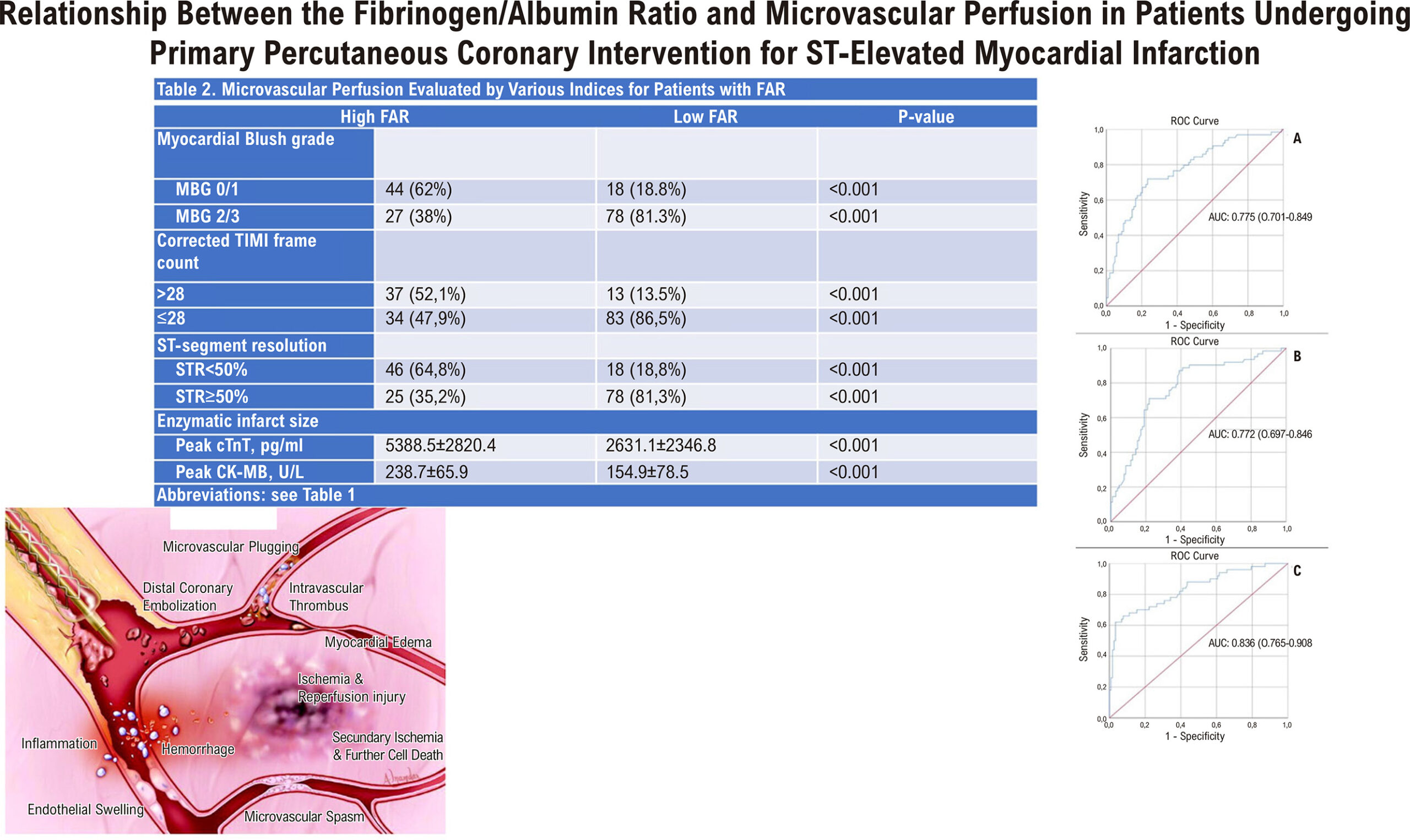
Correct TIMI frame count (CTFC), myocardial blush grade (MBG), and ST-segment resolution (STR) are parameters used to evaluate reperfusion at the microvascular level in patients that have undergone primary percutaneous coronary intervention (pPCI). Fibrinogen-to-albumin ratio (FAR) has been associated with thrombotic events in patients with ST-elevation myocardial infarction (STEMI) and chronic venous insufficiency.

Objectives

To investigate the relationship of FAR with CTFC, MBG, and STR. Methods: The study included 167 consecutive patients who underwent successful pPCI for STEMI and achieved TIMI-3 flow. The cases were divided into two groups, high (>0.0765) and low FAR (≤0.0765), according to the cut-off value of this parameter in the receiver operator characteristic analysis (ROC). STR, CTFC, and MBG were used to evaluate myocardial reperfusion. P values<0.05 were considered statistically significant.

Results

CTFC value, SYNTAX score, neutrophil/lymphocyte ratio, low-density lipoprotein, glucose, and peak cTnT were significantly higher, whereas STR, MBG, and LVEF were lower in the high FAR group. Spearman’s correlation analysis revealed a significant relationship between the FAR and STR (r=-0.666, p<0.001), MBG (-0.523, p28, and STR28 with a sensitivity of 76 % and a specificity of 65.8 %.

Conclusions

FAR is an important independent predictor of microvascular perfusion in patients undergoing pPCI for STEMI.

  • Fbrinogen-to-Albumin Ratio
  • Myocardial Perfusion Imaging
  • Primary percutaneous coronary intervention
  • ST Elevation Myocardial Infarction
Read Full Article
Creative Commons Attribution (CC BY) Creative Commons license
23/10/2023 DOI: 10.36660/abc.20230002 Views 1
Quality of Life in Patients After Acute ST-Segment Elevation Myocardial Infarction
IJCS
Original Article

Quality of Life in Patients After Acute ST-Segment Elevation Myocardial Infarction

Bárbara de Matos Santos et al. Itana Samara Santana Guimarães Katia de Miranda Avena Ivan de Mattos Paiva Filho Pollianna de Souza Roriz

Abstract

Background:

ST-segment elevation myocardial infarction (STEMI) is the acute coronary syndrome with the highest severity and mortality. It can affect physical health and well-being of patients, and consequently their quality of life (QoL).

Objective:

To describe the QoL of patients at 30 days and 180 days after STEMI, focusing on sex differences and repercussions on physical and mental dimensions.

Methods:

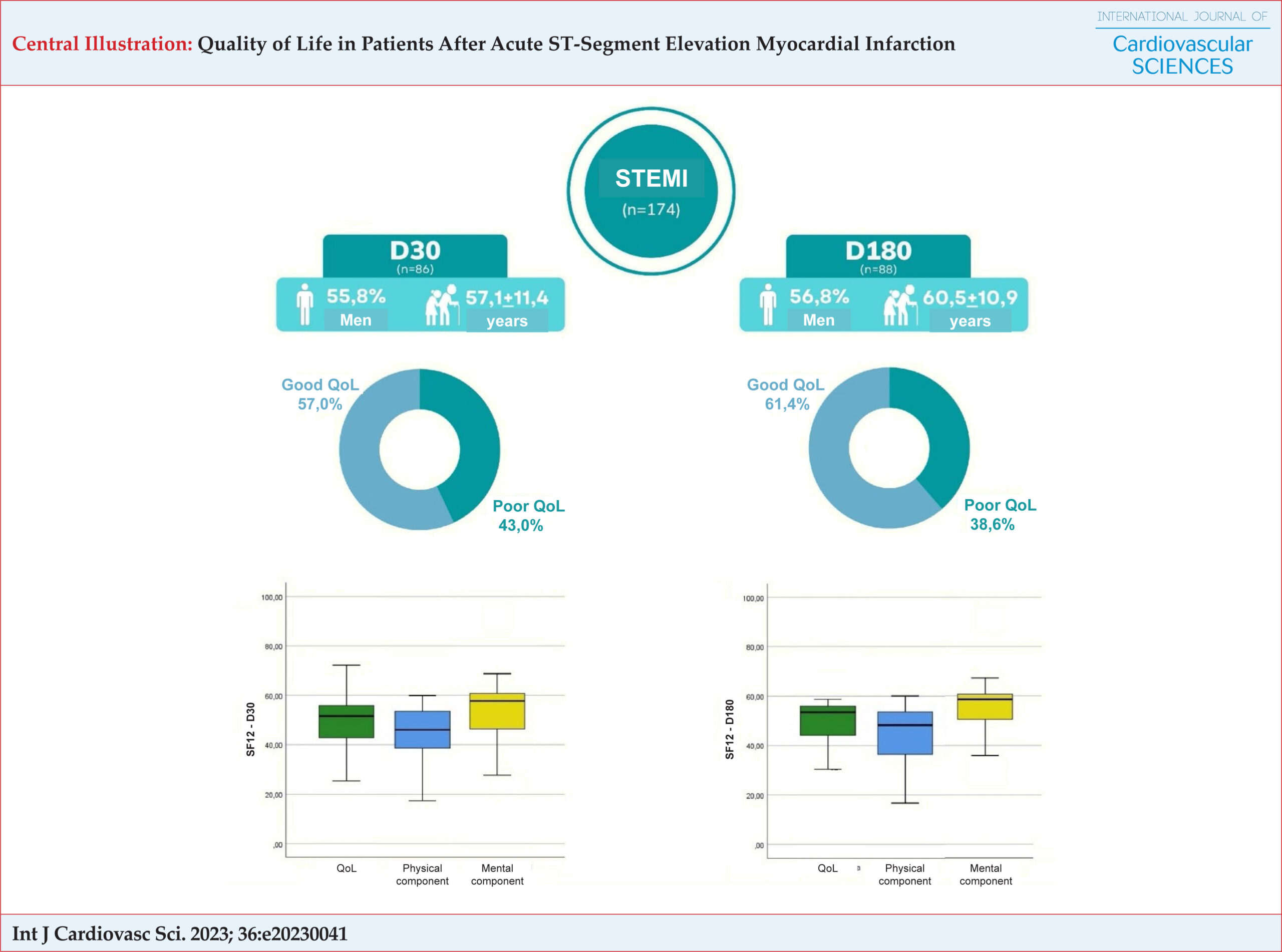
Observational study with 174 STEMI patients included in the study on STEMI conducted in the city of Salvador, Brazil (PERSISST). The QoL of patients at 30 days (D30) and 180 days (D180) after the coronary event was assessed using the 12-item short form health survey (SF-12). Physical and mental components of QoL were calculated using the SF-12 OrthoToolKit. Descriptive analysis of data was made using the IBM SPSS software, version 25.0.

Results:

Mean age of participants at D30 and D180 was 57.1±11.4 years and 60.5±10.9 years, respectively, with a higher prevalence of men (55.8% and 56.8%). In general, patients had a poor QoL at both time points (scores 49.1±8.9 and 49.9±8.4, respectively). Analysis by sex, however, showed that men had a good QoL at both 30D (score 51.8±7.4) and 180 D (score 51.3±7.7), whereas a poor QoL was found among women at these time points (45.7±9.6 and 48.1±9.0, respectively). Men showed higher physical and mental health scale scores than women at both D30 and D180, and there was a greater impairment of the physical component in both sexes.

Conclusion:

Patients had poor QoL at 30 days and 180 days after STEMI, with a greater impairment of the physical component and a worse QoL perception among women than men at both time points.

  • Coronary Artery Disease
  • Quality of life
  • ST Elevation Myocardial Infarction
Read Full Article
Creative Commons Attribution (CC BY) Creative Commons license
15/09/2023 DOI: 10.36660/ijcs.20230041 Views 1

Could not load more articles. Please try again.

How to cite this article

EndNote RIS

Electronic Document Format (Vancouver)

Machado GP, Telo GH, Araujo GN, Scolari FL, Silveira AD, Wainstein R, Wainstein M, et al. Point-of-Care Ultrasound in Cardiology: When a Positioning Statement Does Not Reflect the State of the Art. Arquivos Brasileiros de Cardiologia 2026;123(8):e20260312.

Electronic Document Format (ABNT)

Machado, Guilherme Pinheiro; Telo, Guilherme Heiden; Araujo, Gustavo Neves de; Scolari, Fernando Luis; Silveira, Anderson Donelli da; Wainstein, Rodrigo; Wainstein, Marco. Point-of-Care Ultrasound in Cardiology: When a Positioning Statement Does Not Reflect the State of the Art. Arquivos Brasileiros de Cardiologia, v. 123, n. 8, e20260312, Sep. 2026.

Electronic Document Format (APA)

Machado, G. P., Telo, G. H., Araujo, G. N. , Scolari, F. L., Silveira, A. D. , Wainstein, R., & Wainstein, M. (2026). Point-of-Care Ultrasound in Cardiology: When a Positioning Statement Does Not Reflect the State of the Art. Arquivos Brasileiros de Cardiologia, 123(8), e20260312.

Electronic Document Format (ISO)

Machado, Guilherme Pinheiro and Telo, Guilherme Heiden and Araujo, Gustavo Neves de and Scolari, Fernando Luis and Silveira, Anderson Donelli da and Wainstein, Rodrigo and Wainstein, Marco. Point-of-Care Ultrasound in Cardiology: When a Positioning Statement Does Not Reflect the State of the Art. Arquivos Brasileiros de Cardiologia [online]. 2026, vol. 123, n. 8, [cited 2026-10-14], e20260312. Available from: <https://journals.cardiol.br/en/article/point-of-care-ultrasound-in-cardiology-when-a-positioning-statement-does-not-reflect-the-state-of-the-art/>. ISSN 0066-782X

EndNote RIS

Electronic Document Format (Vancouver)

Santos JMT. Difference in Treatment Response Between Men and Women with Acute Myocardial Infarction with ST-segment Elevation Even When Following Well-established Protocols. International Journal of Cardiovascular Sciences 2026;39:e20260023.

Electronic Document Format (ABNT)

Santos, João Manoel Theotonio dos. Difference in Treatment Response Between Men and Women with Acute Myocardial Infarction with ST-segment Elevation Even When Following Well-established Protocols. International Journal of Cardiovascular Sciences, v. 39, e20260023, Jun. 2026.

Electronic Document Format (APA)

Santos, J. M. T. (2026). Difference in Treatment Response Between Men and Women with Acute Myocardial Infarction with ST-segment Elevation Even When Following Well-established Protocols. International Journal of Cardiovascular Sciences, 39, e20260023.

Electronic Document Format (ISO)

Santos, João Manoel Theotonio dos. Difference in Treatment Response Between Men and Women with Acute Myocardial Infarction with ST-segment Elevation Even When Following Well-established Protocols. International Journal of Cardiovascular Sciences [online]. 2026, vol. 39, [cited 2026-10-14], e20260023. Available from: <https://journals.cardiol.br/en/article/difference-in-treatment-response-between-men-and-women-with-acute-myocardial-infarction-with-st-segment-elevation-even-when-following-well-established-protocols/>. ISSN 2359-4802

EndNote RIS

Electronic Document Format (Vancouver)

Moraes HGM, Carneiro MGB, Dracoulakis MDA. Comparison of Clinical and Epidemiological Profiles Between Men and Women with ST-Elevation Myocardial Infarction in Salvador from 2021 to 2023. International Journal of Cardiovascular Sciences 2026;39:e20250094.

Electronic Document Format (ABNT)

Moraes, Heloisa Gonzaga Menezes de; Carneiro, Mariela Gomes Botelho; Dracoulakis, Marianna Deway Andrade. Comparison of Clinical and Epidemiological Profiles Between Men and Women with ST-Elevation Myocardial Infarction in Salvador from 2021 to 2023. International Journal of Cardiovascular Sciences, v. 39, e20250094, May. 2026.

Electronic Document Format (APA)

Moraes, H. G. M. , Carneiro, M. G. B., & Dracoulakis, M. D. A. (2026). Comparison of Clinical and Epidemiological Profiles Between Men and Women with ST-Elevation Myocardial Infarction in Salvador from 2021 to 2023. International Journal of Cardiovascular Sciences, 39, e20250094.

Electronic Document Format (ISO)

Moraes, Heloisa Gonzaga Menezes de and Carneiro, Mariela Gomes Botelho and Dracoulakis, Marianna Deway Andrade. Comparison of Clinical and Epidemiological Profiles Between Men and Women with ST-Elevation Myocardial Infarction in Salvador from 2021 to 2023. International Journal of Cardiovascular Sciences [online]. 2026, vol. 39, [cited 2026-10-14], e20250094. Available from: <https://journals.cardiol.br/en/article/comparison-of-clinical-and-epidemiological-profiles-between-men-and-women-with-st-elevation-myocardial-infarction-in-salvador-from-2021-to-2023/>. ISSN 2359-4802

EndNote RIS

Electronic Document Format (Vancouver)

Rangel FOD. ST-Segment Elevation Myocardial Infarction: Assessment of Quality of Care Before and After the COVID-19 Pandemic. International Journal of Cardiovascular Sciences 2025;38:e20250099.

Electronic Document Format (ABNT)

Rangel, Fernando Oswaldo Dias. ST-Segment Elevation Myocardial Infarction: Assessment of Quality of Care Before and After the COVID-19 Pandemic. International Journal of Cardiovascular Sciences, v. 38, e20250099, Aug. 2025.

Electronic Document Format (APA)

Rangel, F. O. D. (2025). ST-Segment Elevation Myocardial Infarction: Assessment of Quality of Care Before and After the COVID-19 Pandemic. International Journal of Cardiovascular Sciences, 38, e20250099.

Electronic Document Format (ISO)

Rangel, Fernando Oswaldo Dias. ST-Segment Elevation Myocardial Infarction: Assessment of Quality of Care Before and After the COVID-19 Pandemic. International Journal of Cardiovascular Sciences [online]. 2025, vol. 38, [cited 2026-10-14], e20250099. Available from: <https://journals.cardiol.br/en/article/st-segment-elevation-myocardial-infarction-assessment-of-quality-of-care-before-and-after-the-covid-19-pandemic/>. ISSN 2359-4802

EndNote RIS

Electronic Document Format (Vancouver)

Dourado PMM. Exploring the Naples Prognostic Score: A Key to Predicting New-Onset Atrial Fibrillation in STEMI Cases. Arquivos Brasileiros de Cardiologia 2025;122(6):e20250218.

Electronic Document Format (ABNT)

Dourado, Paulo Magno Martins. Exploring the Naples Prognostic Score: A Key to Predicting New-Onset Atrial Fibrillation in STEMI Cases. Arquivos Brasileiros de Cardiologia, v. 122, n. 6, e20250218, Aug. 2025.

Electronic Document Format (APA)

Dourado, P. M. M. (2025). Exploring the Naples Prognostic Score: A Key to Predicting New-Onset Atrial Fibrillation in STEMI Cases. Arquivos Brasileiros de Cardiologia, 122(6), e20250218.

Electronic Document Format (ISO)

Dourado, Paulo Magno Martins. Exploring the Naples Prognostic Score: A Key to Predicting New-Onset Atrial Fibrillation in STEMI Cases. Arquivos Brasileiros de Cardiologia [online]. 2025, vol. 122, n. 6, [cited 2026-10-14], e20250218. Available from: <https://journals.cardiol.br/en/article/exploring-the-naples-prognostic-score-a-key-to-predicting-new-onset-atrial-fibrillation-in-stemi-cases/>. ISSN 0066-782X

EndNote RIS

Electronic Document Format (Vancouver)

Tavares CAM, Accorsi TAD, Paixão MR, Mota T, Pitta F, Lemos PA, Franken M, et al. ST-Segment Elevation Myocardial Infarction Metrics Before and During the COVID-19 Pandemic: Experience from a Brazilian Center. International Journal of Cardiovascular Sciences 2025;38:e20240158.

Electronic Document Format (ABNT)

Tavares, Caio de Assis Moura; Accorsi, Tarso A. D.; Paixão, Milena Ribeiro; Mota, Tarsila; Pitta, Fabio; Lemos, Pedro Alves; Franken, Marcelo; Lima, Karine De Amicis; Kohler, Karen Francine; Souza Jr., José Leão de. ST-Segment Elevation Myocardial Infarction Metrics Before and During the COVID-19 Pandemic: Experience from a Brazilian Center. International Journal of Cardiovascular Sciences, v. 38, e20240158, Jun. 2025.

Electronic Document Format (APA)

Tavares, C. A. M., Accorsi, T. A. D., Paixão, M. R., Mota, T., Pitta, F., Lemos, P. A., Franken, M., Lima, K. D. A., Kohler, K. F., & Souza Jr., J. L. (2025). ST-Segment Elevation Myocardial Infarction Metrics Before and During the COVID-19 Pandemic: Experience from a Brazilian Center. International Journal of Cardiovascular Sciences, 38, e20240158.

Electronic Document Format (ISO)

Tavares, Caio de Assis Moura and Accorsi, Tarso A. D. and Paixão, Milena Ribeiro and Mota, Tarsila and Pitta, Fabio and Lemos, Pedro Alves and Franken, Marcelo and Lima, Karine De Amicis and Kohler, Karen Francine and Souza Jr., José Leão de. ST-Segment Elevation Myocardial Infarction Metrics Before and During the COVID-19 Pandemic: Experience from a Brazilian Center. International Journal of Cardiovascular Sciences [online]. 2025, vol. 38, [cited 2026-10-14], e20240158. Available from: <https://journals.cardiol.br/en/article/st-segment-elevation-myocardial-infarction-metrics-before-and-during-the-covid-19-pandemic-experience-from-a-brazilian-center/>. ISSN 2359-4802

EndNote RIS

Electronic Document Format (Vancouver)

Fiusa VC, Stephanus AD, Couto VF, Alexim GA, Severino TMM, Nogueira ACC, Guimarães AJBA, et al. Clinical Predictors of Heart Failure after STEMI: Data from a Middle-Income Country with Limited Access to Percutaneous Coronary Intervention. Arquivos Brasileiros de Cardiologia 2025;122(3):e20240447.

Electronic Document Format (ABNT)

Fiusa, Vinícius C.; Stephanus, Andrea D.; Couto, Victor F.; Alexim, Gustavo A.; Severino, Thaiene M. M.; Nogueira, Ana Claudia C.; Guimarães, Adriana J. B. A.; Soares, Alexandre Anderson S. M.; Bilevicius, Elizabeth; Batista, Vivian; Staffico, Alessandra; Sposito, Andrei C.; Carvalho, Luiz Sérgio F. de. Clinical Predictors of Heart Failure after STEMI: Data from a Middle-Income Country with Limited Access to Percutaneous Coronary Intervention. Arquivos Brasileiros de Cardiologia, v. 122, n. 3, e20240447, Apr. 2025.

Electronic Document Format (APA)

Fiusa, V. C., Stephanus, A. D., Couto, V. F., Alexim, G. A., Severino, T. M. M., Nogueira, A. C. C., Guimarães, A. J. B. A., Soares, A. A. S. M., Bilevicius, E., Batista, V., Staffico, A., Sposito, A. C., & Carvalho, L. S. F. (2025). Clinical Predictors of Heart Failure after STEMI: Data from a Middle-Income Country with Limited Access to Percutaneous Coronary Intervention. Arquivos Brasileiros de Cardiologia, 122(3), e20240447.

Electronic Document Format (ISO)

Fiusa, Vinícius C. and Stephanus, Andrea D. and Couto, Victor F. and Alexim, Gustavo A. and Severino, Thaiene M. M. and Nogueira, Ana Claudia C. and Guimarães, Adriana J. B. A. and Soares, Alexandre Anderson S. M. and Bilevicius, Elizabeth and Batista, Vivian and Staffico, Alessandra and Sposito, Andrei C. and Carvalho, Luiz Sérgio F. de. Clinical Predictors of Heart Failure after STEMI: Data from a Middle-Income Country with Limited Access to Percutaneous Coronary Intervention. Arquivos Brasileiros de Cardiologia [online]. 2025, vol. 122, n. 3, [cited 2026-10-14], e20240447. Available from: <https://journals.cardiol.br/en/article/clinical-predictors-of-heart-failure-after-stemi-data-from-a-middle-income-country-with-limited-access-to-percutaneous-coronary-intervention/>. ISSN 0066-782X

EndNote RIS

Electronic Document Format (Vancouver)

Elias RD, Assunção IP, Santos JVJ, Rodrigues-Machado MG, Pena JLB. In-Hospital Mortality Predictors in Patients with Acute Myocardial Infarction and Cardiogenic Shock Using Intra-Aortic Balloon Pump. Arquivos Brasileiros de Cardiologia 2025;122(2):e20230496.

Electronic Document Format (ABNT)

Elias, Rossana Dall’Orto; Assunção, Isabella Pedrosa; Santos, Julliane Vasconcelos Joviano; Rodrigues-Machado, Maria da Gloria; Pena, José Luiz Barros. In-Hospital Mortality Predictors in Patients with Acute Myocardial Infarction and Cardiogenic Shock Using Intra-Aortic Balloon Pump. Arquivos Brasileiros de Cardiologia, v. 122, n. 2, e20230496, Feb. 2025.

Electronic Document Format (APA)

Elias, R. D., Assunção, I. P., Santos, J. V. J., Rodrigues-Machado, M. G., & Pena, J. L. B. (2025). In-Hospital Mortality Predictors in Patients with Acute Myocardial Infarction and Cardiogenic Shock Using Intra-Aortic Balloon Pump. Arquivos Brasileiros de Cardiologia, 122(2), e20230496.

Electronic Document Format (ISO)

Elias, Rossana Dall’Orto and Assunção, Isabella Pedrosa and Santos, Julliane Vasconcelos Joviano and Rodrigues-Machado, Maria da Gloria and Pena, José Luiz Barros. In-Hospital Mortality Predictors in Patients with Acute Myocardial Infarction and Cardiogenic Shock Using Intra-Aortic Balloon Pump. Arquivos Brasileiros de Cardiologia [online]. 2025, vol. 122, n. 2, [cited 2026-10-14], e20230496. Available from: <https://journals.cardiol.br/en/article/in-hospital-mortality-predictors-in-patients-with-acute-myocardial-infarction-and-cardiogenic-shock-using-intra-aortic-balloon-pump/>. ISSN 0066-782X

EndNote RIS

Electronic Document Format (Vancouver)

Guo H, Qu Q, Lv J. Serum Nitric Oxide, Endothelin-1 Correlates Post-Procedural Major Adverse Cardiovascular Events among Patients with Acute STEMI. Arquivos Brasileiros de Cardiologia 2025;122(1):e20240248.

Electronic Document Format (ABNT)

Guo, Huihui; Qu, Qi; Lv, Jiechao. Serum Nitric Oxide, Endothelin-1 Correlates Post-Procedural Major Adverse Cardiovascular Events among Patients with Acute STEMI. Arquivos Brasileiros de Cardiologia, v. 122, n. 1, e20240248, Jan. 2025.

Electronic Document Format (APA)

Guo, H., Qu, Q., & Lv, J. (2025). Serum Nitric Oxide, Endothelin-1 Correlates Post-Procedural Major Adverse Cardiovascular Events among Patients with Acute STEMI. Arquivos Brasileiros de Cardiologia, 122(1), e20240248.

Electronic Document Format (ISO)

Guo, Huihui and Qu, Qi and Lv, Jiechao. Serum Nitric Oxide, Endothelin-1 Correlates Post-Procedural Major Adverse Cardiovascular Events among Patients with Acute STEMI. Arquivos Brasileiros de Cardiologia [online]. 2025, vol. 122, n. 1, [cited 2026-10-14], e20240248. Available from: <https://journals.cardiol.br/en/article/serum-nitric-oxide-endothelin-1-correlates-post-procedural-major-adverse-cardiovascular-events-among-patients-with-acute-stemi/>. ISSN 0066-782X

EndNote RIS

Electronic Document Format (Vancouver)

Vyas P, Dake R, Kanabar K, Patel I, Mishra A, Sharma V, Nathwani T, et al. NSTEMI and Ischemic Mitral Regurgitation: Incidence and Long-Term Clinical Outcomes with Respect to Management Strategy. Arquivos Brasileiros de Cardiologia 2024;121(12):e20240064.

Electronic Document Format (ABNT)

Vyas, Pooja; Dake, Radhakishan; Kanabar, Kewal; Patel, Iva; Mishra, Ashish; Sharma, Vishal; Nathwani, Tirth; Parwani, Kunal; Rathod, Mital. NSTEMI and Ischemic Mitral Regurgitation: Incidence and Long-Term Clinical Outcomes with Respect to Management Strategy. Arquivos Brasileiros de Cardiologia, v. 121, n. 12, e20240064, Dec. 2024.

Electronic Document Format (APA)

Vyas, P., Dake, R., Kanabar, K., Patel, I., Mishra, A., Sharma, V., Nathwani, T., Parwani, K., & Rathod, M. (2024). NSTEMI and Ischemic Mitral Regurgitation: Incidence and Long-Term Clinical Outcomes with Respect to Management Strategy. Arquivos Brasileiros de Cardiologia, 121(12), e20240064.

Electronic Document Format (ISO)

Vyas, Pooja and Dake, Radhakishan and Kanabar, Kewal and Patel, Iva and Mishra, Ashish and Sharma, Vishal and Nathwani, Tirth and Parwani, Kunal and Rathod, Mital. NSTEMI and Ischemic Mitral Regurgitation: Incidence and Long-Term Clinical Outcomes with Respect to Management Strategy. Arquivos Brasileiros de Cardiologia [online]. 2024, vol. 121, n. 12, [cited 2026-10-14], e20240064. Available from: <https://journals.cardiol.br/en/article/nstemi-and-ischemic-mitral-regurgitation-incidence-and-long-term-clinical-outcomes-with-respect-to-management-strategy/>. ISSN 0066-782X

EndNote RIS

Electronic Document Format (Vancouver)

Cirne F, Schmidt MM, Cardoso CO, Leong DP, Quadros AS. Primary Percutaneous Coronary Intervention during Off-Hours: One-Decade Experience from a High-Volume Cardiovascular Center. Arquivos Brasileiros de Cardiologia 2024;121(11):e20240396.

Electronic Document Format (ABNT)

Cirne, Filipe; Schmidt, Marcia Moura; Cardoso, Cristiano Oliveira; Leong, Darryl P.; Quadros, Alexandre Schaan de. Primary Percutaneous Coronary Intervention during Off-Hours: One-Decade Experience from a High-Volume Cardiovascular Center. Arquivos Brasileiros de Cardiologia, v. 121, n. 11, e20240396, Nov. 2024.

Electronic Document Format (APA)

Cirne, F., Schmidt, M. M., Cardoso, C. O., Leong, D. P., & Quadros, A. S. (2024). Primary Percutaneous Coronary Intervention during Off-Hours: One-Decade Experience from a High-Volume Cardiovascular Center. Arquivos Brasileiros de Cardiologia, 121(11), e20240396.

Electronic Document Format (ISO)

Cirne, Filipe and Schmidt, Marcia Moura and Cardoso, Cristiano Oliveira and Leong, Darryl P. and Quadros, Alexandre Schaan de. Primary Percutaneous Coronary Intervention during Off-Hours: One-Decade Experience from a High-Volume Cardiovascular Center. Arquivos Brasileiros de Cardiologia [online]. 2024, vol. 121, n. 11, [cited 2026-10-14], e20240396. Available from: <https://journals.cardiol.br/en/article/primary-percutaneous-coronary-intervention-during-off-hours-one-decade-experience-from-a-high-volume-cardiovascular-center/>. ISSN 0066-782X

EndNote RIS

Electronic Document Format (Vancouver)

Piskorz D, Piskorz I. Challenges in Worldwide Cardiovascular Urgencies and Emergencies. International Journal of Cardiovascular Sciences 2024;37:e20240147.

Electronic Document Format (ABNT)

Piskorz, Daniel; Piskorz, Ignacio. Challenges in Worldwide Cardiovascular Urgencies and Emergencies. International Journal of Cardiovascular Sciences, v. 37, e20240147, Nov. 2024.

Electronic Document Format (APA)

Piskorz, D., & Piskorz, I. (2024). Challenges in Worldwide Cardiovascular Urgencies and Emergencies. International Journal of Cardiovascular Sciences, 37, e20240147.

Electronic Document Format (ISO)

Piskorz, Daniel and Piskorz, Ignacio. Challenges in Worldwide Cardiovascular Urgencies and Emergencies. International Journal of Cardiovascular Sciences [online]. 2024, vol. 37, [cited 2026-10-14], e20240147. Available from: <https://journals.cardiol.br/en/article/challenges-in-worldwide-cardiovascular-urgencies-and-emergencies/>. ISSN 2359-4802

EndNote RIS

Electronic Document Format (Vancouver)

Ferreira MCM, Oliveira GMM. Can Artificial Intelligence Change our Interpretation of Cardiovascular Risk Scores?. Arquivos Brasileiros de Cardiologia 2024;121(4):e20240280.

Electronic Document Format (ABNT)

Ferreira, Maria Cristina Meira; Oliveira, Glaucia Maria Moraes de. Can Artificial Intelligence Change our Interpretation of Cardiovascular Risk Scores?. Arquivos Brasileiros de Cardiologia, v. 121, n. 4, e20240280, Jul. 2024.

Electronic Document Format (APA)

Ferreira, M. C. M., & Oliveira, G. M. M. (2024). Can Artificial Intelligence Change our Interpretation of Cardiovascular Risk Scores?. Arquivos Brasileiros de Cardiologia, 121(4), e20240280.

Electronic Document Format (ISO)

Ferreira, Maria Cristina Meira and Oliveira, Glaucia Maria Moraes de. Can Artificial Intelligence Change our Interpretation of Cardiovascular Risk Scores?. Arquivos Brasileiros de Cardiologia [online]. 2024, vol. 121, n. 4, [cited 2026-10-14], e20240280. Available from: <https://journals.cardiol.br/en/article/can-artificial-intelligence-change-our-interpretation-of-cardiovascular-risk-scores/>. ISSN 0066-782X

EndNote RIS

Electronic Document Format (Vancouver)

Uzun HG, Özgen . Deceptive Anteroseptal ST-segment Elevation and Brugada Pattern Caused by Isolated Conus Artery Occlusion. Arquivos Brasileiros de Cardiologia 2024;121(6):e20230749.

Electronic Document Format (ABNT)

Uzun, Hakan Gökalp; Özgen, İrfan. Deceptive Anteroseptal ST-segment Elevation and Brugada Pattern Caused by Isolated Conus Artery Occlusion. Arquivos Brasileiros de Cardiologia, v. 121, n. 6, e20230749, Jul. 2024.

Electronic Document Format (APA)

Uzun, H. G., & Özgen, (2024). Deceptive Anteroseptal ST-segment Elevation and Brugada Pattern Caused by Isolated Conus Artery Occlusion. Arquivos Brasileiros de Cardiologia, 121(6), e20230749.

Electronic Document Format (ISO)

Uzun, Hakan Gökalp and Özgen, İrfan. Deceptive Anteroseptal ST-segment Elevation and Brugada Pattern Caused by Isolated Conus Artery Occlusion. Arquivos Brasileiros de Cardiologia [online]. 2024, vol. 121, n. 6, [cited 2026-10-14], e20230749. Available from: <https://journals.cardiol.br/en/article/deceptive-anteroseptal-st-segment-elevation-and-brugada-pattern-caused-by-isolated-conus-artery-occlusion/>. ISSN 0066-782X

EndNote RIS

Electronic Document Format (Vancouver)

Gioppatto S, Prado PS, Elias MAL, Carvalho VH, Paiva CRC, Alexim GA, Reis RTB, et al. The Clinical and Economic Impact of Delayed Reperfusion Therapy: Real-World Evidence. Arquivos Brasileiros de Cardiologia 2024;121(5):e20230650.

Electronic Document Format (ABNT)

Gioppatto, Silvio; Prado, Paulo Sousa; Elias, Mariana Araújo Lima; Carvalho, Verônica Homem de; Paiva, Caio Resende da Costa; Alexim, Gustavo de Almeida; Reis, Ricardo Torres Bispo; Nogueira, Ana Claudia Cavalcante; Soares, Alexandre Anderson de Sousa Munhoz; Nadruz, Wilson; Carvalho, Luiz Sergio F. de; Sposito, Andrei C.. The Clinical and Economic Impact of Delayed Reperfusion Therapy: Real-World Evidence. Arquivos Brasileiros de Cardiologia, v. 121, n. 5, e20230650, May. 2024.

Electronic Document Format (APA)

Gioppatto, S., Prado, P. S., Elias, M. A. L., Carvalho, V. H. , Paiva, C. R. C., Alexim, G. A., Reis, R. T. B., Nogueira, A. C. C., Soares, A. A. S. M., Nadruz, W., Carvalho, L. S. F. , & Sposito, A. C. (2024). The Clinical and Economic Impact of Delayed Reperfusion Therapy: Real-World Evidence. Arquivos Brasileiros de Cardiologia, 121(5), e20230650.

Electronic Document Format (ISO)

Gioppatto, Silvio and Prado, Paulo Sousa and Elias, Mariana Araújo Lima and Carvalho, Verônica Homem de and Paiva, Caio Resende da Costa and Alexim, Gustavo de Almeida and Reis, Ricardo Torres Bispo and Nogueira, Ana Claudia Cavalcante and Soares, Alexandre Anderson de Sousa Munhoz and Nadruz, Wilson and Carvalho, Luiz Sergio F. de and Sposito, Andrei C.. The Clinical and Economic Impact of Delayed Reperfusion Therapy: Real-World Evidence. Arquivos Brasileiros de Cardiologia [online]. 2024, vol. 121, n. 5, [cited 2026-10-14], e20230650. Available from: <https://journals.cardiol.br/en/article/the-clinical-and-economic-impact-of-delayed-reperfusion-therapy-real-world-evidence/>. ISSN 0066-782X

EndNote RIS

Electronic Document Format (Vancouver)

Şaylık F, Çınar T, Tanboğa H. The Predictive Value of the Inflammatory Prognostic Index for Detecting No-Reflow in ST-Elevation Myocardial Infarction Patients. Arquivos Brasileiros de Cardiologia 2024;121(4):e20230644.

Electronic Document Format (ABNT)

Şaylık, Faysal; Çınar, Tufan; Tanboğa, İbrahim Halil. The Predictive Value of the Inflammatory Prognostic Index for Detecting No-Reflow in ST-Elevation Myocardial Infarction Patients. Arquivos Brasileiros de Cardiologia, v. 121, n. 4, e20230644, Apr. 2024.

Electronic Document Format (APA)

Şaylık, F., Çınar, T., & Tanboğa, H. (2024). The Predictive Value of the Inflammatory Prognostic Index for Detecting No-Reflow in ST-Elevation Myocardial Infarction Patients. Arquivos Brasileiros de Cardiologia, 121(4), e20230644.

Electronic Document Format (ISO)

Şaylık, Faysal and Çınar, Tufan and Tanboğa, İbrahim Halil. The Predictive Value of the Inflammatory Prognostic Index for Detecting No-Reflow in ST-Elevation Myocardial Infarction Patients. Arquivos Brasileiros de Cardiologia [online]. 2024, vol. 121, n. 4, [cited 2026-10-14], e20230644. Available from: <https://journals.cardiol.br/en/article/the-predictive-value-of-the-inflammatory-prognostic-index-for-detecting-no-reflow-in-st-elevation-myocardial-infarction-patients/>. ISSN 0066-782X

EndNote RIS

Electronic Document Format (Vancouver)

Silva RRP, Magalhães CJ, Silva RSV, Rocha GAF, Cavalcanti PEF, Montenegro ST. Acute ST-Elevation Myocardial Infarction in a Young Adult: Rare Presentation of Giant Atrial Myxoma. Arquivos Brasileiros de Cardiologia 2024;121(3):e20230538.

Electronic Document Format (ABNT)

Silva, Rodrigo Rufino Pereira; Magalhães, Carolina Jerônimo; Silva, Rafael Silvestre Vieira da; Rocha, Giulia Antoni Ferreira; Cavalcanti, Paulo Ernando Ferraz; Montenegro, Sérgio Tavares. Acute ST-Elevation Myocardial Infarction in a Young Adult: Rare Presentation of Giant Atrial Myxoma. Arquivos Brasileiros de Cardiologia, v. 121, n. 3, e20230538, Apr. 2024.

Electronic Document Format (APA)

Silva, R. R. P., Magalhães, C. J., Silva, R. S. V. , Rocha, G. A. F., Cavalcanti, P. E. F., & Montenegro, S. T. (2024). Acute ST-Elevation Myocardial Infarction in a Young Adult: Rare Presentation of Giant Atrial Myxoma. Arquivos Brasileiros de Cardiologia, 121(3), e20230538.

Electronic Document Format (ISO)

Silva, Rodrigo Rufino Pereira and Magalhães, Carolina Jerônimo and Silva, Rafael Silvestre Vieira da and Rocha, Giulia Antoni Ferreira and Cavalcanti, Paulo Ernando Ferraz and Montenegro, Sérgio Tavares. Acute ST-Elevation Myocardial Infarction in a Young Adult: Rare Presentation of Giant Atrial Myxoma. Arquivos Brasileiros de Cardiologia [online]. 2024, vol. 121, n. 3, [cited 2026-10-14], e20230538. Available from: <https://journals.cardiol.br/en/article/acute-st-elevation-myocardial-infarction-in-a-young-adult-rare-presentation-of-giant-atrial-myxoma/>. ISSN 0066-782X

EndNote RIS

Electronic Document Format (Vancouver)

Zhao L, Liang Y, Yin T, Liao H, Liang B. Identification of Potential Crucial Biomarkers in STEMI Through Integrated Bioinformatic Analysis. Arquivos Brasileiros de Cardiologia 2024;121(2):e20230462.

Electronic Document Format (ABNT)

Zhao, Li-Zhi; Liang, Yi; Yin, Ting; Liao, Hui-Ling; Liang, Bo. Identification of Potential Crucial Biomarkers in STEMI Through Integrated Bioinformatic Analysis. Arquivos Brasileiros de Cardiologia, v. 121, n. 2, e20230462, Apr. 2024.

Electronic Document Format (APA)

Zhao, L., Liang, Y., Yin, T., Liao, H., & Liang, B. (2024). Identification of Potential Crucial Biomarkers in STEMI Through Integrated Bioinformatic Analysis. Arquivos Brasileiros de Cardiologia, 121(2), e20230462.

Electronic Document Format (ISO)

Zhao, Li-Zhi and Liang, Yi and Yin, Ting and Liao, Hui-Ling and Liang, Bo. Identification of Potential Crucial Biomarkers in STEMI Through Integrated Bioinformatic Analysis. Arquivos Brasileiros de Cardiologia [online]. 2024, vol. 121, n. 2, [cited 2026-10-14], e20230462. Available from: <https://journals.cardiol.br/en/article/identification-of-potential-crucial-biomarkers-in-stemi-through-integrated-bioinformatic-analysis/>. ISSN 0066-782X

EndNote RIS

Electronic Document Format (Vancouver)

Soeiro AM. How Can COVID-19 Influence the Evolution of Patients with Acute Coronary Syndromes?. Arquivos Brasileiros de Cardiologia 2024;121(1):e20230888.

Electronic Document Format (ABNT)

Soeiro, Alexandre de Matos. How Can COVID-19 Influence the Evolution of Patients with Acute Coronary Syndromes?. Arquivos Brasileiros de Cardiologia, v. 121, n. 1, e20230888, Mar. 2024.

Electronic Document Format (APA)

Soeiro, A. M. (2024). How Can COVID-19 Influence the Evolution of Patients with Acute Coronary Syndromes?. Arquivos Brasileiros de Cardiologia, 121(1), e20230888.

Electronic Document Format (ISO)

Soeiro, Alexandre de Matos. How Can COVID-19 Influence the Evolution of Patients with Acute Coronary Syndromes?. Arquivos Brasileiros de Cardiologia [online]. 2024, vol. 121, n. 1, [cited 2026-10-14], e20230888. Available from: <https://journals.cardiol.br/en/article/how-can-covid-19-influence-the-evolution-of-patients-with-acute-coronary-syndromes/>. ISSN 0066-782X

EndNote RIS

Electronic Document Format (Vancouver)

Dueñas-Criado KA, Perez-Fernandez OM. The COVID-19 Collateral Damage in ST-Elevation Myocardial Infarctions in Low/Middle-Income American Regions. International Journal of Cardiovascular Sciences 2023;36:e20230116.

Electronic Document Format (ABNT)

Dueñas-Criado, Karen Alexandra; Perez-Fernandez, Oscar Maurício. The COVID-19 Collateral Damage in ST-Elevation Myocardial Infarctions in Low/Middle-Income American Regions. International Journal of Cardiovascular Sciences, v. 36, e20230116, Dec. 2023.

Electronic Document Format (APA)

Dueñas-Criado, K. A., & Perez-Fernandez, O. M. (2023). The COVID-19 Collateral Damage in ST-Elevation Myocardial Infarctions in Low/Middle-Income American Regions. International Journal of Cardiovascular Sciences, 36, e20230116.

Electronic Document Format (ISO)

Dueñas-Criado, Karen Alexandra and Perez-Fernandez, Oscar Maurício. The COVID-19 Collateral Damage in ST-Elevation Myocardial Infarctions in Low/Middle-Income American Regions. International Journal of Cardiovascular Sciences [online]. 2023, vol. 36, [cited 2026-10-14], e20230116. Available from: <https://journals.cardiol.br/en/article/the-covid-19-collateral-damage-in-st-elevation-myocardial-infarctions-in-low-middle-income-american-regions/>. ISSN 2359-4802

EndNote RIS

Electronic Document Format (Vancouver)

Timóteo AT. Quality of Life Assessment in Patients With ST-Elevation Myocardial Infarction (STEMI): An Opportunity to Improve the Quality of Care That Should Not Be Missed. International Journal of Cardiovascular Sciences 2023;36:e20230136.

Electronic Document Format (ABNT)

Timóteo, Ana Teresa. Quality of Life Assessment in Patients With ST-Elevation Myocardial Infarction (STEMI): An Opportunity to Improve the Quality of Care That Should Not Be Missed. International Journal of Cardiovascular Sciences, v. 36, e20230136, Nov. 2023.

Electronic Document Format (APA)

Timóteo, A. T. (2023). Quality of Life Assessment in Patients With ST-Elevation Myocardial Infarction (STEMI): An Opportunity to Improve the Quality of Care That Should Not Be Missed. International Journal of Cardiovascular Sciences, 36, e20230136.

Electronic Document Format (ISO)

Timóteo, Ana Teresa. Quality of Life Assessment in Patients With ST-Elevation Myocardial Infarction (STEMI): An Opportunity to Improve the Quality of Care That Should Not Be Missed. International Journal of Cardiovascular Sciences [online]. 2023, vol. 36, [cited 2026-10-14], e20230136. Available from: <https://journals.cardiol.br/en/article/quality-of-life-assessment-in-patients-with-st-elevation-myocardial-infarction-stemi-an-opportunity-to-improve-the-quality-of-care-that-should-not-be-missed/>. ISSN 2359-4802

EndNote RIS

Electronic Document Format (Vancouver)

Moreira EM, Rosário BA, Nicz PFG. ST-Elevation Myocardial Infarction and COVID-19: Is There a Synergistic Effect?. International Journal of Cardiovascular Sciences 2023;36:e20230123.

Electronic Document Format (ABNT)

Moreira, Eduardo Martelli; Rosário, Bernardo Augusto; Nicz, Pedro Felipe Gomes. ST-Elevation Myocardial Infarction and COVID-19: Is There a Synergistic Effect?. International Journal of Cardiovascular Sciences, v. 36, e20230123, Nov. 2023.

Electronic Document Format (APA)

Moreira, E. M., Rosário, B. A., & Nicz, P. F. G. (2023). ST-Elevation Myocardial Infarction and COVID-19: Is There a Synergistic Effect?. International Journal of Cardiovascular Sciences, 36, e20230123.

Electronic Document Format (ISO)

Moreira, Eduardo Martelli and Rosário, Bernardo Augusto and Nicz, Pedro Felipe Gomes. ST-Elevation Myocardial Infarction and COVID-19: Is There a Synergistic Effect?. International Journal of Cardiovascular Sciences [online]. 2023, vol. 36, [cited 2026-10-14], e20230123. Available from: <https://journals.cardiol.br/en/article/st-elevation-myocardial-infarction-and-covid-19-is-there-a-synergistic-effect/>. ISSN 2359-4802

EndNote RIS

Electronic Document Format (Vancouver)

Kaplangoray M, Toprak K, Cicek OF, Deveci E. Relationship between the Fibrinogen/Albumin Ratio and Microvascular Perfusion in Patients Undergoing Primary Percutaneous Coronary Intervention for ST-Elevated Myocardial Infarction: A Prospective Study. Arquivos Brasileiros de Cardiologia 2023;120(11):e20230002.

Electronic Document Format (ABNT)

Kaplangoray, Mustafa; Toprak, Kenan; Cicek, Omer Faruk; Deveci, Edhem. Relationship between the Fibrinogen/Albumin Ratio and Microvascular Perfusion in Patients Undergoing Primary Percutaneous Coronary Intervention for ST-Elevated Myocardial Infarction: A Prospective Study. Arquivos Brasileiros de Cardiologia, v. 120, n. 11, e20230002, Oct. 2023.

Electronic Document Format (APA)

Kaplangoray, M., Toprak, K., Cicek, O. F., & Deveci, E. (2023). Relationship between the Fibrinogen/Albumin Ratio and Microvascular Perfusion in Patients Undergoing Primary Percutaneous Coronary Intervention for ST-Elevated Myocardial Infarction: A Prospective Study. Arquivos Brasileiros de Cardiologia, 120(11), e20230002.

Electronic Document Format (ISO)

Kaplangoray, Mustafa and Toprak, Kenan and Cicek, Omer Faruk and Deveci, Edhem. Relationship between the Fibrinogen/Albumin Ratio and Microvascular Perfusion in Patients Undergoing Primary Percutaneous Coronary Intervention for ST-Elevated Myocardial Infarction: A Prospective Study. Arquivos Brasileiros de Cardiologia [online]. 2023, vol. 120, n. 11, [cited 2026-10-14], e20230002. Available from: <https://journals.cardiol.br/en/article/relationship-between-the-fibrinogen-albumin-ratio-and-microvascular-perfusion-in-patients-undergoing-primary-percutaneous-coronary-intervention-for-st-elevated-myocardial-infarction-a-prospective-stu/>. ISSN 0066-782X

EndNote RIS

Electronic Document Format (Vancouver)

Santos BM, Guimarães ISS, Avena KM, Paiva Filho IM, Roriz PS. Quality of Life in Patients After Acute ST-Segment Elevation Myocardial Infarction. International Journal of Cardiovascular Sciences 2023;36:e20230041.

Electronic Document Format (ABNT)

Santos, Bárbara de Matos; Guimarães, Itana Samara Santana; Avena, Katia de Miranda; Paiva Filho, Ivan de Mattos; Roriz, Pollianna de Souza. Quality of Life in Patients After Acute ST-Segment Elevation Myocardial Infarction. International Journal of Cardiovascular Sciences, v. 36, e20230041, Sep. 2023.

Electronic Document Format (APA)

Santos, B. M., Guimarães, I. S. S., Avena, K. M., Paiva Filho, I. M., & Roriz, P. S. (2023). Quality of Life in Patients After Acute ST-Segment Elevation Myocardial Infarction. International Journal of Cardiovascular Sciences, 36, e20230041.

Electronic Document Format (ISO)

Santos, Bárbara de Matos and Guimarães, Itana Samara Santana and Avena, Katia de Miranda and Paiva Filho, Ivan de Mattos and Roriz, Pollianna de Souza. Quality of Life in Patients After Acute ST-Segment Elevation Myocardial Infarction. International Journal of Cardiovascular Sciences [online]. 2023, vol. 36, [cited 2026-10-14], e20230041. Available from: <https://journals.cardiol.br/en/article/quality-of-life-in-patients-after-acute-st-segment-elevation-myocardial-infarction/>. ISSN 2359-4802

  • About ABC Family
  • Internal Regulation
  • Editorial Board
  • Brazilian Society of Cardiology (SBC)

Issues

SBC Guidelines

  • Videos
  • Podcasts
  • News