ABC Family Arquivos Brasileiros de Cardiologia International Journal of Cardiovascular Sciences ABC Heart Failure & Cardiomyopathy ABC Imagem Cardiovascular
Português English
ABC Family
Português English
  • About
    • About ABC Family
    • Internal Regulation
    • Editorial Board
    • Brazilian Society of Cardiology (SBC)
  • Issues
  • SBC Guidelines
  • Content
    • Videos
    • Podcasts
    • News
  • About
    • About ABC Family
    • Internal Regulation
    • Editorial Board
    • Brazilian Society of Cardiology (SBC)
  • Issues
  • SBC Guidelines
  • Content
    • Videos
    • Podcasts
    • News

ABC Family

  • ABC Family
  • Arquivos Brasileiros de Cardiologia
  • International Journal of Cardiovascular Sciences
  • ABC Heart Failure & Cardiomyopathy
  • ABC Imagem Cardiovascular
Search in

No content found.

Journals
Ordering
Article types
Others

  1. Home
  2. Keyword: Fetus
ABCIC
Editorial

My approach to the diagnosis and treatment of fetal tachycardias

Marcia Ferreira Alves Barberato

[…]

  • Diagnosis
  • Echocardiography
  • Fetus
  • Tachycardia
Read Full Article
Creative Commons Attribution (CC BY) Creative Commons license
14/01/2022 DOI: 10.5935/2318-8219.20200017
Figure 1
ABC
Original Article

Genetic Testing and Pregnancy Outcome Analysis of 362 Fetuses with Congenital Heart Disease Identified by Prenatal Ultrasound

Shiyu Luo et al. Dahua Meng Qifei Li Xuehua Hu … Yuhua Chen Chun He Bobo Xie Shangyang She Yingfeng Li Chunyun Fu

Abstract

Background:

Congenital heart defects (CHD), as the most common congenital anomaly, have been reported to be associated with chromosomal abnormalities. Currently, patients with CHD are routinely offered karyotyping and chromosomal microarray (CMA) testing, but the genotype-phenotype relationship has not yet been fully established.

Objective:

To determine the type and frequency of chromosomal abnormalities in fetuses with CHD and to analyze pregnancy outcomes of fetuses with heart abnormalities caused by different genetic factors.

Methods:

A total of 362 cases of CHD were enrolled from 2009 to 2016. Detailed ultrasound and laboratory examinations, including karyotyping and CMA, were performed. Outcome was obtained from discharge summaries.

Results:

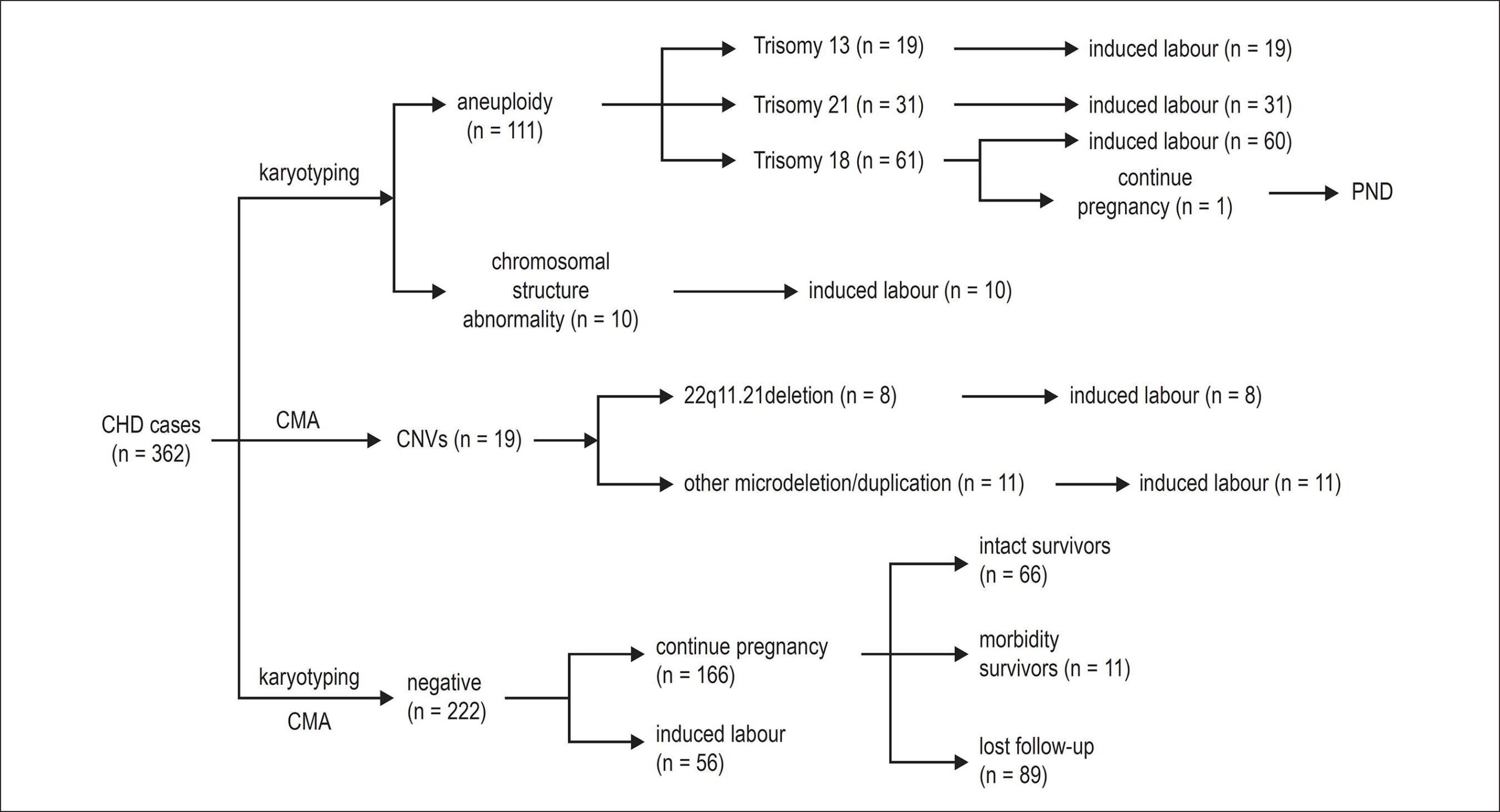
Of the 362 fetuses, 220 were found with an isolated CHD, and 142 had CHD with extracardiac anomaly. Among these 362 fetuses, 140 were identified with a genetic cause, including 111 cases with aneuploidy, 10 cases with abnormality of chromosomal structure by karyotyping and 19 cases with pathogenic or likely pathogenic copy-number variations (CNVs) by CMA. The detection rate is close to 38.7%. Only one (identified as trisomy 18 syndrome) in 140 positive cases resulted in perinatal death, with the others being induced. The remaining 222 cases had negative results for both genetic testing and of these cases, 56 resulted in induced labor, and 77 had natural childbirth or caesarean births. The pregnancy outcome of the remaining 89 cases was uncertain.

Conclusions:

Karyotyping and CMA are effective and accurate prenatal genetic techniques for identifying fetal chromosomal abnormalities associated with cardiac defects, and this can assist clinical doctors to perform appropriate genetic counselling with regard to the etiology and outcome of CHD.

  • Chromosome Disorders
  • Fetus
  • Heart Defects, Congenital
  • Pregnancy
  • Spectral Karyotyping
  • Ultrasonography
Read Full Article
Creative Commons Attribution (CC BY) Creative Commons license
20/08/2018 DOI: 10.5935/abc.20180144 Views 1
Figure 1
ABC
Original Article

Effect of Fetal Hypothyroidism on Cardiac Myosin Heavy Chain Expression in Male Rats

Nasibeh Yousefzadeh et al. Sajad Jeddi Mohammad Reza Alipour

Abstract

Background:

Thyroid hormone deficiency during fetal life could affect the cardiac function in later life. The mechanism underlying this action in fetal hypothyroidism (FH) in rats has not been elucidated thus far.

Objective:

The aim of this study is to evaluation the effect of FH on cardiac function in male rats and to determine the contribution of α-myosin heavy chain (MHC) and β-MHC isoforms.

Methods:

Six pregnant female rats were randomly divided into two groups: The hypothyroid group received water containing 6-propyl-2-thiouracil during gestation and the controls consumed tap water. The offspring of the rats were tested in adulthood. Hearts from the FH and control rats were isolated and perfused with langendroff setup for measuring hemodynamic parameters; also, the heart mRNA expressions of α- MHC and β-MHC were measured by qPCR.

Results:

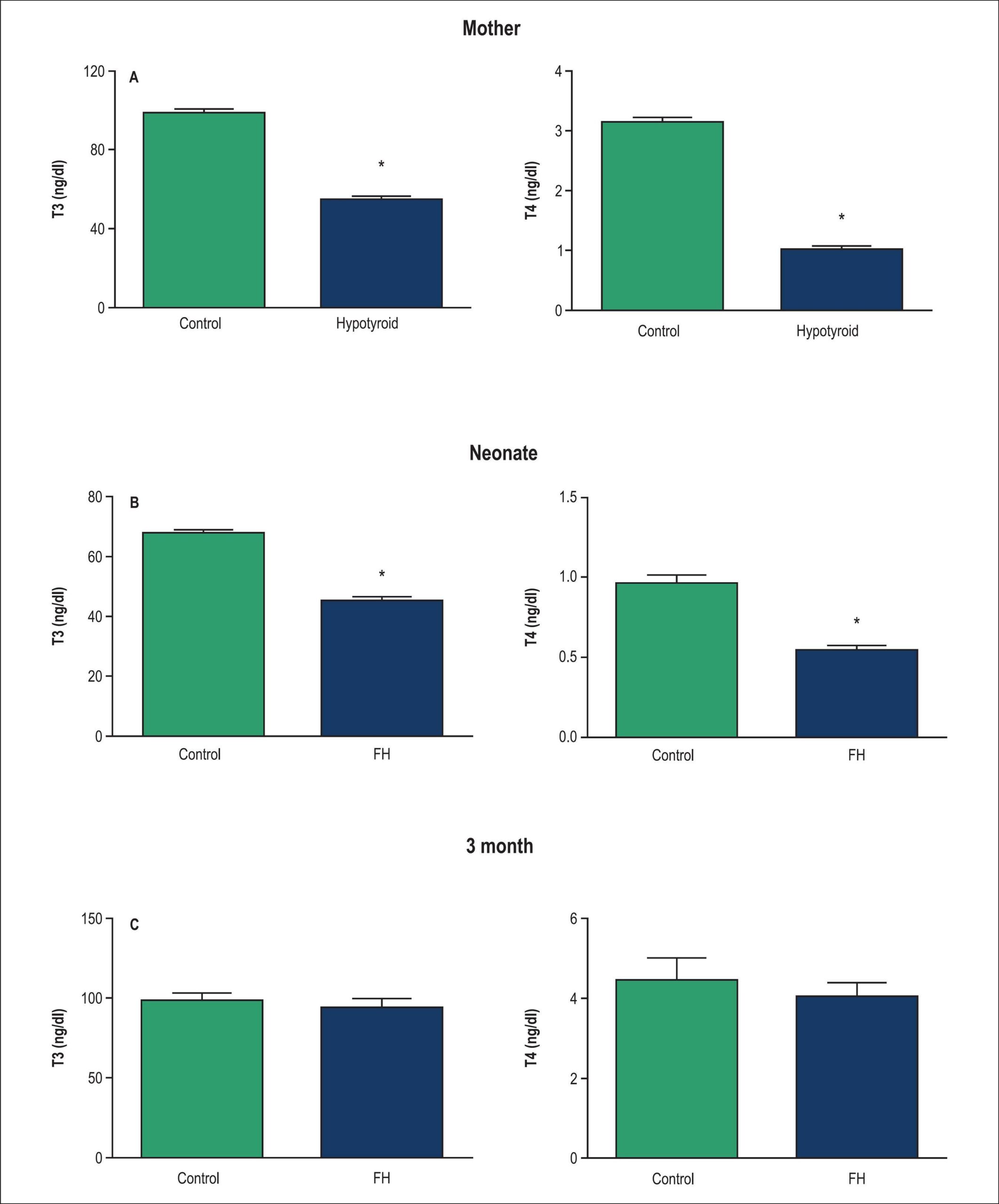
Baseline LVDP (74.0 ± 3.1 vs. 92.5 ± 3.2 mmHg, p < 0.05) and heart rate (217 ± 11 vs. 273 ± 6 beat/min, p < 0.05) were lower in the FH rats than controls. Also, these results showed the same significance in ±dp/dt. In the FH rats, β-MHC expression was higher (201%) and α- MHC expression was lower (47%) than control.

Conclusion:

Thyroid hormone deficiency during fetal life could attenuate normal cardiac functions in adult rats, an effect at least in part due to the increased expression of β-MHC to α- MHC ratio in the heart.

  • Cardiac Myosins
  • Fetus
  • Hypothyroidism
  • Myocardial Contraction
  • Rats
  • Thyroid Hormones
Read Full Article
Creative Commons Attribution (CC BY) Creative Commons license
11/07/2016 DOI: 10.5935/abc.20160099
Noncompaction cardiomyopathy: a current view
ABC
Clinical Update

Noncompaction cardiomyopathy: a current view

Leonardo Vieira da Rosa et al. Vera Maria Cury Salemi Leonardo Machado Alexandre Charles Mady

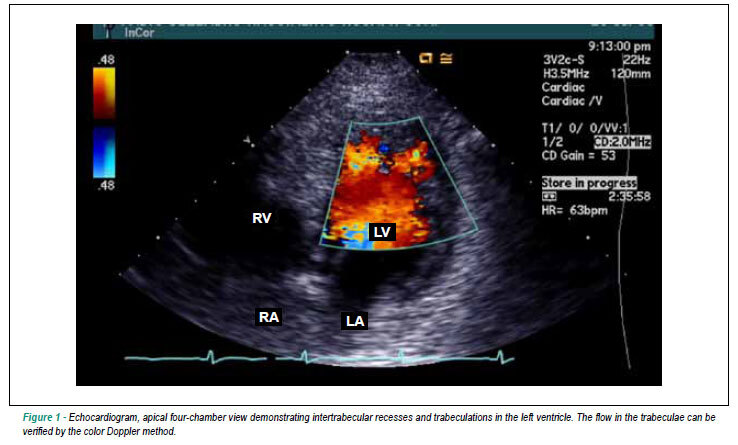
Isolated non-compaction cardiomyopathy is a rare disease that is likely to develop in the embryonic period. It is caused by the intrauterine arrest of the myocardial compaction process in the beginning of the fetal development. It is characterized by prominent myocardial trabeculations and deep intertrabecular recesses, as well as the thickening of the myocardium into two distinct layers (compacted and not compacted). Even though this disease is said to be prevalent in the pediatric population or together with congenital heart disease, one can understand that this disease occurs in isolation, because the diagnosis is becoming more common in adult patients that have no other heart disease. The clinical manifestations vary greatly, because they range from absence of symptoms to congestive heart failure, arrhythmias and systemic thromboembolism. Echocardiography is the most widely used diagnostic procedure, but the little knowledge about this disease, its similarity to other myocardial diseases and the limitation of the echocardiographic technique used delay the diagnosis. The purpose of this review is to show that that other imaging techniques, such as MRI, CT and left ventriculography have emerged as diagnostic alternatives.

  • Cardiomyopathies
  • embryonic structures
  • Fetus
  • Heart Defects, Congenital
Read Full Article
Creative Commons Attribution (CC BY) Creative Commons license
30/08/2011 DOI: 10.1590/S0066-782X2011000900021
ABC
Artigo Original

Study of the natural history of myocardial hypertrophy and its association with hyperinsulinism in infants of diabetic mothers

Paulo Zielinsky et al. Martha H. Leal da Costa Leandro Turra Oliveira Fernanda Paiva Bonow … Nilza Iracema Telles da Silva Lauro Luís Hagemann

PURPOSE: To test the hypothesis that myocardial hypertrophy is associated with increased serum insulin levels in children of diabetic mothers and to determine the frequency and timing of this spontaneous regression. METHODS: Seventy-two patients were studied (54 children of diabetic mothers and 18 controls). Diagnosis of myocardial hypertrophy was made by fetal echocardiography. Amniotic fluid insulin levels were obtained from a previous prenatal study on hypertrophic cardiomyopathy, since the participation of the mothers was common to both projects. RESULTS: There were 10 cases of myocardial hypertrophy among children of diabetic mothers (18.52%). Septal thickness was significantly different between the 2 groups (children of diabetic mothers and controls) in the evaluation performed at the age of 1 month (p=0.04). Insulin levels were still increased in children of diabetic mothers until the age of 3 months. During this period insulin levels were significantly higher than those of controls (p=0.003 and p=0.001, at 1 and 3 months, respectively). The association between regression of ventricular septum thickness and the decrease of insulin levels occurred up to the age of 1 month. CONCLUSION: There was spontaneous regression of ventricular septum thickness in children of diabetic mothers during the first 6 months of life. The association between hyperinsulinism and hypertrophic cardiomyopathy was present up to the first month of life.

  • Diabetes Mellitus
  • Fetus
  • hyperinsulinism
  • myocardial hypertrophy
Read Full Article
Creative Commons Attribution (CC BY) Creative Commons license
23/01/2001 DOI: 10.1590/S0066-782X1997001200005
Comparison between right and left ventricular myocardia during the human fetal period. Stereological evaluation
ABC
Original Article

Comparison between right and left ventricular myocardia during the human fetal period. Stereological evaluation

Ricardo Xavier-Vidal et al. Kalil Madi

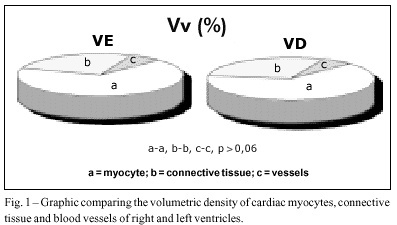
PURPOSE: To develop a stereological comparison between right (RV) and left ventricle (LV) myocardium during the third human gestational trimester. METHODS: Five human fetal hearts of the third trimester provided representative samples of 5 RV myocardium and 4 LV myocardium. The material was fixed in 10% buffered formaldehyde, and processed through routine methods. Fifteen microscopic fields were randomly chosen and counted in each ventricular myocardium using an “M-42” test system. The following stereological parameters were assessed: Vv (%), Lv (µm²), Sv (µm²/µm³), Vp (µm³), Nv (1/mm³) and total N. RESULTS: No significant difference between the stereological parameters of the myocardial structures assessed was evidenced, when comparing RV and LV. CONCLUSION: Right and left human ventricular myocardium are very similar during the fetal period at least in regard to their structural aspects.

  • biometry
  • cardiac development
  • Fetus
  • morphology
  • morphometry
  • stereology
Read Full Article
Creative Commons Attribution (CC BY) Creative Commons license
27/10/2000 DOI: 10.1590/S0066-782X1999000500005 Views 1

How to cite this article

EndNote RIS

Electronic Document Format (Vancouver)

Barberato MFA. My approach to the diagnosis and treatment of fetal tachycardias. Arquivos Brasileiros de Cardiologia Imagem cardiovascular 2022;33(2):1-3.

Electronic Document Format (ABNT)

Barberato, Marcia Ferreira Alves. My approach to the diagnosis and treatment of fetal tachycardias. Arquivos Brasileiros de Cardiologia Imagem cardiovascular, v. 33, n. 2, p. 1-3, Jan. 2022.

Electronic Document Format (APA)

Barberato, M. F. A. (2022). My approach to the diagnosis and treatment of fetal tachycardias. Arquivos Brasileiros de Cardiologia Imagem cardiovascular, 33(2), 1-3.

Electronic Document Format (ISO)

Barberato, Marcia Ferreira Alves. My approach to the diagnosis and treatment of fetal tachycardias. Arquivos Brasileiros de Cardiologia Imagem cardiovascular [online]. 2022, vol. 33, n. 2, [cited 2026-10-14], pp. 1-3. Available from: <https://journals.cardiol.br/en/article/my-approach-to-the-diagnosis-and-treatment-of-fetal-tachycardias/>. ISSN 2318-8219

EndNote RIS

Electronic Document Format (Vancouver)

Luo S, Meng D, Li Q, Hu X, Chen Y, He C, Xie B, et al. Genetic Testing and Pregnancy Outcome Analysis of 362 Fetuses with Congenital Heart Disease Identified by Prenatal Ultrasound. Arquivos Brasileiros de Cardiologia 2018;111(4):571-7.

Electronic Document Format (ABNT)

Luo, Shiyu; Meng, Dahua; Li, Qifei; Hu, Xuehua; Chen, Yuhua; He, Chun; Xie, Bobo; She, Shangyang; Li, Yingfeng; Fu, Chunyun. Genetic Testing and Pregnancy Outcome Analysis of 362 Fetuses with Congenital Heart Disease Identified by Prenatal Ultrasound. Arquivos Brasileiros de Cardiologia, v. 111, n. 4, p. 571-577, Aug. 2018.

Electronic Document Format (APA)

Luo, S., Meng, D., Li, Q., Hu, X., Chen, Y., He, C., Xie, B., She, S., Li, Y., & Fu, C. (2018). Genetic Testing and Pregnancy Outcome Analysis of 362 Fetuses with Congenital Heart Disease Identified by Prenatal Ultrasound. Arquivos Brasileiros de Cardiologia, 111(4), 571-577.

Electronic Document Format (ISO)

Luo, Shiyu and Meng, Dahua and Li, Qifei and Hu, Xuehua and Chen, Yuhua and He, Chun and Xie, Bobo and She, Shangyang and Li, Yingfeng and Fu, Chunyun. Genetic Testing and Pregnancy Outcome Analysis of 362 Fetuses with Congenital Heart Disease Identified by Prenatal Ultrasound. Arquivos Brasileiros de Cardiologia [online]. 2018, vol. 111, n. 4, [cited 2026-10-14], pp. 571-577. Available from: <https://journals.cardiol.br/en/article/genetic-testing-and-pregnancy-outcome-analysis-of-362-fetuses-with-congenital-heart-disease-identified-by-prenatal-ultrasound/>. ISSN 0066-782X

EndNote RIS

Electronic Document Format (Vancouver)

Yousefzadeh N, Jeddi S, Alipour MR. Effect of Fetal Hypothyroidism on Cardiac Myosin Heavy Chain Expression in Male Rats. Arquivos Brasileiros de Cardiologia 2016;107(2):147-53.

Electronic Document Format (ABNT)

Yousefzadeh, Nasibeh; Jeddi, Sajad; Alipour, Mohammad Reza. Effect of Fetal Hypothyroidism on Cardiac Myosin Heavy Chain Expression in Male Rats. Arquivos Brasileiros de Cardiologia, v. 107, n. 2, p. 147-153, Jul. 2016.

Electronic Document Format (APA)

Yousefzadeh, N., Jeddi, S., & Alipour, M. R. (2016). Effect of Fetal Hypothyroidism on Cardiac Myosin Heavy Chain Expression in Male Rats. Arquivos Brasileiros de Cardiologia, 107(2), 147-153.

Electronic Document Format (ISO)

Yousefzadeh, Nasibeh and Jeddi, Sajad and Alipour, Mohammad Reza. Effect of Fetal Hypothyroidism on Cardiac Myosin Heavy Chain Expression in Male Rats. Arquivos Brasileiros de Cardiologia [online]. 2016, vol. 107, n. 2, [cited 2026-10-14], pp. 147-153. Available from: <https://journals.cardiol.br/en/article/effect-of-fetal-hypothyroidism-on-cardiac-myosin-heavy-chain-expression-in-male-rats/>. ISSN 0066-782X

EndNote RIS

Electronic Document Format (Vancouver)

Rosa LV, Salemi VMC, Alexandre LM, Mady C. Noncompaction cardiomyopathy: a current view. Arquivos Brasileiros de Cardiologia 2011;97(1):e13-9.

Electronic Document Format (ABNT)

Rosa, Leonardo Vieira da; Salemi, Vera Maria Cury; Alexandre, Leonardo Machado; Mady, Charles. Noncompaction cardiomyopathy: a current view. Arquivos Brasileiros de Cardiologia, v. 97, n. 1, p. e13-e19, Aug. 2011.

Electronic Document Format (APA)

Rosa, L. V. , Salemi, V. M. C., Alexandre, L. M., & Mady, C. (2011). Noncompaction cardiomyopathy: a current view. Arquivos Brasileiros de Cardiologia, 97(1), e13-e19.

Electronic Document Format (ISO)

Rosa, Leonardo Vieira da and Salemi, Vera Maria Cury and Alexandre, Leonardo Machado and Mady, Charles. Noncompaction cardiomyopathy: a current view. Arquivos Brasileiros de Cardiologia [online]. 2011, vol. 97, n. 1, [cited 2026-10-14], pp. e13-e19. Available from: <https://journals.cardiol.br/en/article/noncompaction-cardiomyopathy-a-current-view/>. ISSN 0066-782X

EndNote RIS

Electronic Document Format (Vancouver)

Zielinsky P, Costa MHL, Oliveira LT, Bonow FP, Silva NIT, Hagemann LL. Study of the natural history of myocardial hypertrophy and its association with hyperinsulinism in infants of diabetic mothers. Arquivos Brasileiros de Cardiologia 2001;69(6):389-94.

Electronic Document Format (ABNT)

Zielinsky, Paulo; Costa, Martha H. Leal da; Oliveira, Leandro Turra; Bonow, Fernanda Paiva; Silva, Nilza Iracema Telles da; Hagemann, Lauro Luís. Study of the natural history of myocardial hypertrophy and its association with hyperinsulinism in infants of diabetic mothers. Arquivos Brasileiros de Cardiologia, v. 69, n. 6, p. 389-394, Jan. 2001.

Electronic Document Format (APA)

Zielinsky, P., Costa, M. H. L. , Oliveira, L. T., Bonow, F. P., Silva, N. I. T. , & Hagemann, L. L. (2001). Study of the natural history of myocardial hypertrophy and its association with hyperinsulinism in infants of diabetic mothers. Arquivos Brasileiros de Cardiologia, 69(6), 389-394.

Electronic Document Format (ISO)

Zielinsky, Paulo and Costa, Martha H. Leal da and Oliveira, Leandro Turra and Bonow, Fernanda Paiva and Silva, Nilza Iracema Telles da and Hagemann, Lauro Luís. Study of the natural history of myocardial hypertrophy and its association with hyperinsulinism in infants of diabetic mothers. Arquivos Brasileiros de Cardiologia [online]. 2001, vol. 69, n. 6, [cited 2026-10-14], pp. 389-394. Available from: <https://journals.cardiol.br/en/article/study-of-the-natural-history-of-myocardial-hypertrophy-and-its-association-with-hyperinsulinism-in-infants-of-diabetic-mothers/>. ISSN 0066-782X

EndNote RIS

Electronic Document Format (Vancouver)

Xavier-Vidal R, Madi K. Comparison between right and left ventricular myocardia during the human fetal period. Stereological evaluation. Arquivos Brasileiros de Cardiologia 2000;72(5):587-92.

Electronic Document Format (ABNT)

Xavier-Vidal, Ricardo; Madi, Kalil. Comparison between right and left ventricular myocardia during the human fetal period. Stereological evaluation. Arquivos Brasileiros de Cardiologia, v. 72, n. 5, p. 587-592, Oct. 2000.

Electronic Document Format (APA)

Xavier-Vidal, R., & Madi, K. (2000). Comparison between right and left ventricular myocardia during the human fetal period. Stereological evaluation. Arquivos Brasileiros de Cardiologia, 72(5), 587-592.

Electronic Document Format (ISO)

Xavier-Vidal, Ricardo and Madi, Kalil. Comparison between right and left ventricular myocardia during the human fetal period. Stereological evaluation. Arquivos Brasileiros de Cardiologia [online]. 2000, vol. 72, n. 5, [cited 2026-10-14], pp. 587-592. Available from: <https://journals.cardiol.br/en/article/comparison-between-right-and-left-ventricular-myocardia-during-the-human-fetal-period-stereological-evaluation/>. ISSN 0066-782X

  • About ABC Family
  • Internal Regulation
  • Editorial Board
  • Brazilian Society of Cardiology (SBC)

Issues

SBC Guidelines

  • Videos
  • Podcasts
  • News