ABC Family Arquivos Brasileiros de Cardiologia International Journal of Cardiovascular Sciences ABC Heart Failure & Cardiomyopathy ABC Imagem Cardiovascular
Português English
ABC Family
Português English
  • About
    • About ABC Family
    • Internal Regulation
    • Editorial Board
    • Brazilian Society of Cardiology (SBC)
  • Issues
  • SBC Guidelines
  • Content
    • Videos
    • Podcasts
    • News
  • About
    • About ABC Family
    • Internal Regulation
    • Editorial Board
    • Brazilian Society of Cardiology (SBC)
  • Issues
  • SBC Guidelines
  • Content
    • Videos
    • Podcasts
    • News

ABC Family

  • ABC Family
  • Arquivos Brasileiros de Cardiologia
  • International Journal of Cardiovascular Sciences
  • ABC Heart Failure & Cardiomyopathy
  • ABC Imagem Cardiovascular
Search in

No content found.

Journals
Ordering
Article types
Others

  1. Home
  2. Keyword: Percutaneous Coronary Intervention/trends
ABC
Editorial

Are We Reaching the End of the Evolutionary Road to Metallic Drug-Eluting Stents? Which 4th Generation Stents Do We Need?

Manuel Sousa Almeida

Stents are the cornerstone of current PCI. It guarantees safety, a predictable acute angiographic upshot, and long-term acceptable clinical outcomes.

Its current accomplishment is, undoubtedly, linked to a successful evolutionary road driven by continuous unmet medical needs endured by device companies eager to gain market shares.

[…]

  • Angioplasty,Transluminal Percutaneous Coronary
  • Coronary Thrombosis
  • Coronary Vessels Anomalies
  • Myocardial Infarction
  • Percutaneous Coronary Intervention/trends
  • Stents/trends
Read Full Article
Creative Commons Attribution (CC BY) Creative Commons license
30/06/2023 DOI: 10.36660/abc.20230302 Views 1
Central Illustration
ABC
Original Article

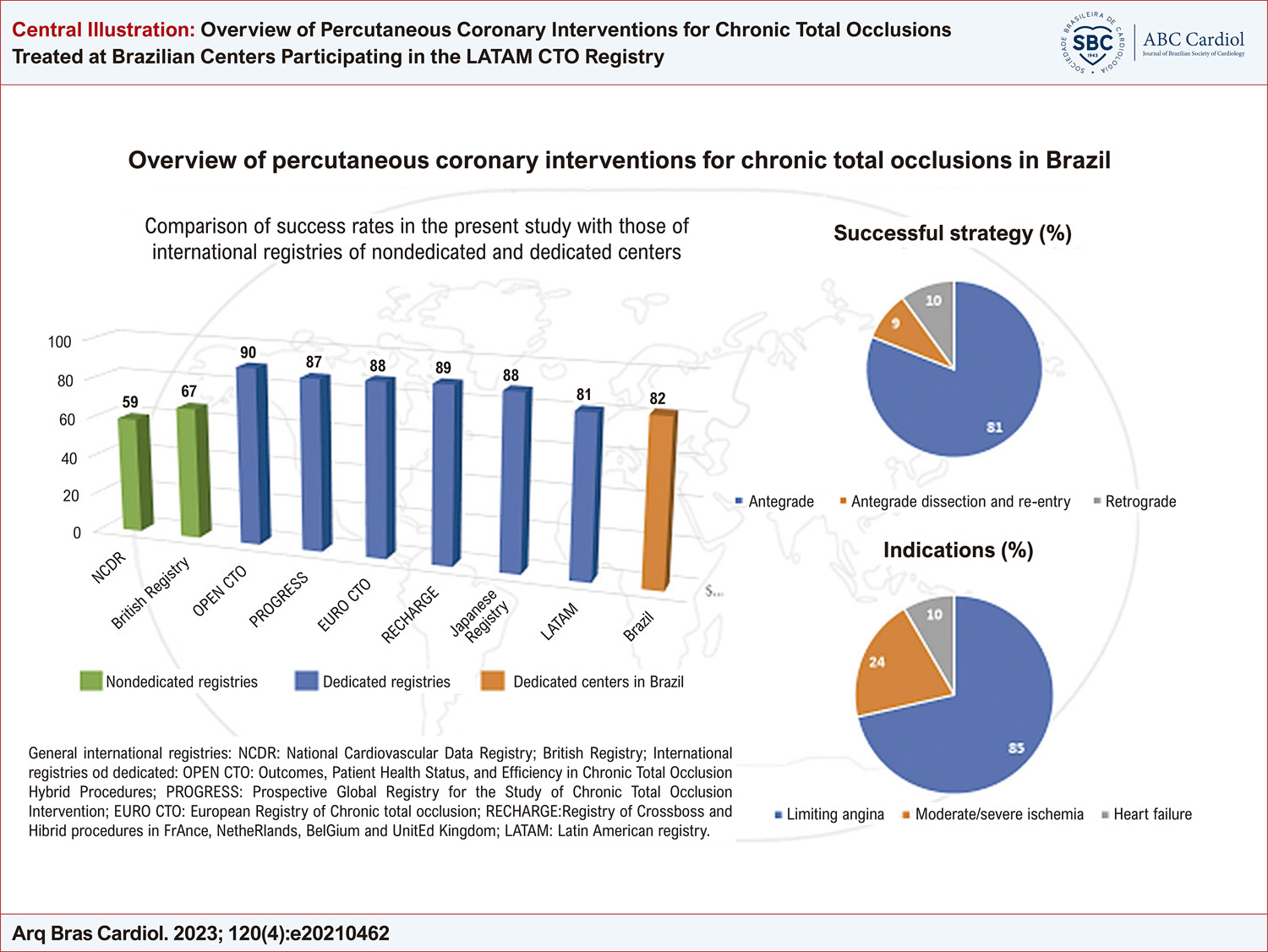
Overview of Percutaneous Coronary Interventions for Chronic Total Occlusions Treated at Brazilian Centers Participating in the LATAM CTO Registry

Antonio Carlos Botelho da Silva et al. João Eduardo Tinoco de Paula Carlos M. Campos Marcelo Harada Ribeiro … Evandro Martins Filho Marcos Danillo Peixoto Oliveira Leandro Assumpção Côrtes Aníbal Pereira Abelin Cleverson Neves Zukowski Gustavo Cervino Martinelli Fábio Sândoli de Brito Antônio José Muniz Marcelo José de Carvalho Cantarelli Pedro Beraldo de Andrade César Rocha Medeiros Breno de Alencar Araripe Falcão Felipe Costa Fuchs Leonardo Sinnott Silva Tammuz Fattah Ramiro Caldas Degrazia José Armando Mangione Cristiano Guedes Bezerra Sandra Baradel João Brum Silveira Luiz Fernando Ybarra Daniel Weillenmann Carlos Gottschall Viviana Lemke Franciele Rosa da Silva Marcia Moura Schmidt Karlyse Claudino Belli Pedro Piccaro de Oliveira Alexandre Schaan de Quadros

Abstract

Background

Major advances have been seen in techniques and devices for performing percutaneous coronary interventions (PCIs) for chronic total occlusions (CTOs), but there are limited real-world practice data from developing countries.

Objectives

To report clinical and angiographic characteristics, procedural aspects, and clinical outcomes of CTO PCI performed at dedicated centers in Brazil.

Methods

Included patients underwent CTO PCI at centers participating in the LATAM CTO Registry, a Latin American multicenter registry dedicated to prospective collection of these data. Inclusion criteria were procedures performed in Brazil, age 18 years or over, and presence of CTO with PCI attempt. CTO was defined as a 100% lesion in an epicardial coronary artery, known or estimated to have lasted at least 3 months.

Results

Data on 1196 CTO PCIs were included. Procedures were performed primarily for angina control (85%) and/or treatment of moderate/severe ischemia (24%). Technical success rate was 84%, being achieved with antegrade wire approaches in 81% of procedures, antegrade dissection and re-entry in 9%, and retrograde approaches in 10%. In-hospital adverse cardiovascular events occurred in 2.3% of cases, with a mortality rate of 0.75%.

Conclusions

CTOs can be treated effectively in Brazil by using PCI, with low complication rates. The scientific and technological development observed in this area in the past decade is reflected in the clinical practice of dedicated Brazilian centers.

  • Coronary Artery Disease
  • Coronary Occlusion
  • Equipment and Supplies Hospital/trends
  • Hospitals/trends
  • Percutaneous Coronary Intervention/trends
Read Full Article
Creative Commons Attribution (CC BY) Creative Commons license
01/05/2023 DOI: 10.36660/abc.20210462 Views 1
ABC
Editorial

Rosuvastatin Decreases the Formation of Neointima by Increasing Apo J, Reducing Restenosis after Balloon Injury in Rats

Paulo Magno Martins Dourado

The study by Yang et al. brings new light on the action of Apolipoprotein (Apo) J, also called clusterin (CLU), a heterodimeric glycoprotein consisting of α and β subunits linked by disulfide bond., The coding gene of Apo J is located on chromosome 8p21-p12, encoding two main isoforms, including secreted (sCLU) and nuclear (nCLU) on restenosis following balloon percutaneous transluminal carotid angioplasty (PTCA) in an experimental model in rats; this was published in this edition of the Brazilian Archives of Cardiology, because there is a controversy in the literature whether Apo J, which is elevated in atherosclerosis and post-angioplasty, plays a protective or promoting role for restenosis. Apo J is involved in several important pathological processes in the transport of lipids, and in the differentiation of vascular smooth muscle cells (VSMC), including cell death by apoptosis, cell cycle regulation, cell adhesion, tissue remodeling, regulation of the immune system and oxidative stress, playing a role in the development of clinical atherosclerosis., In the process of attenuating atherosclerosis, Apo J can promote the export of cholesterol and phospholipids from foam cells of macrophages, and show cytoprotective and anti-inflammatory actions interacting with many known inflammatory proteins that may act in the initial phase of clinical cardiovascular events, and may play an important role in mediating atherosclerotic disease, such as C-reactive protein, paraoxonase and leptin. There are studies reporting that Apo J can stimulate the proliferation and migration of VSMC, and promote restenosis,, and there have been studies showing that overexpression of CLUs can inhibit migration and proliferation of VSMC, and inhibit cellular apoptosis. In view of these controversial results, the authors sought to elucidate the role of Apo J in neointimal hyperplasia, using the rat carotid artery in vivo, with or without rosuvastatin.

The results of the study published here suggest that rosuvastatin can inhibit intimal hyperplasia due to the high expression of Apo J in the active proliferation and migration phase of VSMC, after balloon injury in rats. In the present study, the authors evidenced an increase in the intimal/media (I/M) area rate after the balloon injury that reached the maximum value in the fourth week in the model group; in addition, I/M was increased at week 2, and such increase ceased after the administration of rosuvastatin. These results suggest that rosuvastatin can significantly reduce the degree of intimal hyperplasia in the balloon-injured carotid arteries in rats. The levels of Messenger Ribonucleic Acid (mRNA) and Apo J were increased in the carotid arteries in the group using rosuvastatin, when compared to the model group, reaching the maximum in the second week, earlier than in the model group, suggesting that rosuvastatin can inhibit intimal hyperplasia by increasing Apo J after balloon injury in rats. Therefore, Apo J has been identified as having a central role in the migration, adhesion and vascular proliferation process, and that it can contribute significantly to restenosis after vascular injury.

[…]

  • Angioplasty
  • Carotid Arteries
  • Clusterin/genetic
  • Coronary Restenosis
  • Percutaneous Coronary Intervention/trends
  • Rats
Read Full Article
Creative Commons Attribution (CC BY) Creative Commons license
01/10/2018 DOI: 10.5935/abc.20180204 Views 1

How to cite this article

EndNote RIS

Electronic Document Format (Vancouver)

Almeida MS. Are We Reaching the End of the Evolutionary Road to Metallic Drug-Eluting Stents? Which 4th Generation Stents Do We Need?. Arquivos Brasileiros de Cardiologia 2023;120(6):e20230302.

Electronic Document Format (ABNT)

Almeida, Manuel Sousa. Are We Reaching the End of the Evolutionary Road to Metallic Drug-Eluting Stents? Which 4th Generation Stents Do We Need?. Arquivos Brasileiros de Cardiologia, v. 120, n. 6, e20230302, Jun. 2023.

Electronic Document Format (APA)

Almeida, M. S. (2023). Are We Reaching the End of the Evolutionary Road to Metallic Drug-Eluting Stents? Which 4th Generation Stents Do We Need?. Arquivos Brasileiros de Cardiologia, 120(6), e20230302.

Electronic Document Format (ISO)

Almeida, Manuel Sousa. Are We Reaching the End of the Evolutionary Road to Metallic Drug-Eluting Stents? Which 4th Generation Stents Do We Need?. Arquivos Brasileiros de Cardiologia [online]. 2023, vol. 120, n. 6, [cited 2026-10-14], e20230302. Available from: <https://journals.cardiol.br/en/article/are-we-reaching-the-end-of-the-evolutionary-road-to-metallic-drug-eluting-stents-which-4th-generation-stents-do-we-need/>. ISSN 0066-782X

EndNote RIS

Electronic Document Format (Vancouver)

Silva ACB, Paula JET, Campos CM, Ribeiro MH, Martins Filho E, Oliveira MDP, Côrtes LA, et al. Overview of Percutaneous Coronary Interventions for Chronic Total Occlusions Treated at Brazilian Centers Participating in the LATAM CTO Registry. Arquivos Brasileiros de Cardiologia 2023;120(4):e20210462.

Electronic Document Format (ABNT)

Silva, Antonio Carlos Botelho da; Paula, João Eduardo Tinoco de; Campos, Carlos M.; Ribeiro, Marcelo Harada; Martins Filho, Evandro; Oliveira, Marcos Danillo Peixoto; Côrtes, Leandro Assumpção; Abelin, Aníbal Pereira; Zukowski, Cleverson Neves; Martinelli, Gustavo Cervino; Brito, Fábio Sândoli de; Muniz, Antônio José; Cantarelli, Marcelo José de Carvalho; Andrade, Pedro Beraldo de; Medeiros, César Rocha; Falcão, Breno de Alencar Araripe; Fuchs, Felipe Costa; Silva, Leonardo Sinnott; Fattah, Tammuz; Degrazia, Ramiro Caldas; Mangione, José Armando; Bezerra, Cristiano Guedes; Baradel, Sandra; Silveira, João Brum; Ybarra, Luiz Fernando; Weillenmann, Daniel; Gottschall, Carlos; Lemke, Viviana; Silva, Franciele Rosa da; Schmidt, Marcia Moura; Belli, Karlyse Claudino; Oliveira, Pedro Piccaro de; Quadros, Alexandre Schaan de. Overview of Percutaneous Coronary Interventions for Chronic Total Occlusions Treated at Brazilian Centers Participating in the LATAM CTO Registry. Arquivos Brasileiros de Cardiologia, v. 120, n. 4, e20210462, Apr. 2023.

Electronic Document Format (APA)

Silva, A. C. B. , Paula, J. E. T. , Campos, C. M., Ribeiro, M. H., Martins Filho, E., Oliveira, M. D. P., Côrtes, L. A., Abelin, A. P., Zukowski, C. N., Martinelli, G. C., Brito, F. S. , Muniz, A. J., Cantarelli, M. J. C., Andrade, P. B. , Medeiros, C. R., Falcão, B. A. A., Fuchs, F. C., Silva, L. S., Fattah, T., Degrazia, R. C., Mangione, J. A., Bezerra, C. G., Baradel, S., Silveira, J. B., Ybarra, L. F., Weillenmann, D., Gottschall, C., Lemke, V., Silva, F. R. , Schmidt, M. M., Belli, K. C., Oliveira, P. P. , & Quadros, A. S. (2023). Overview of Percutaneous Coronary Interventions for Chronic Total Occlusions Treated at Brazilian Centers Participating in the LATAM CTO Registry. Arquivos Brasileiros de Cardiologia, 120(4), e20210462.

Electronic Document Format (ISO)

Silva, Antonio Carlos Botelho da and Paula, João Eduardo Tinoco de and Campos, Carlos M. and Ribeiro, Marcelo Harada and Martins Filho, Evandro and Oliveira, Marcos Danillo Peixoto and Côrtes, Leandro Assumpção and Abelin, Aníbal Pereira and Zukowski, Cleverson Neves and Martinelli, Gustavo Cervino and Brito, Fábio Sândoli de and Muniz, Antônio José and Cantarelli, Marcelo José de Carvalho and Andrade, Pedro Beraldo de and Medeiros, César Rocha and Falcão, Breno de Alencar Araripe and Fuchs, Felipe Costa and Silva, Leonardo Sinnott and Fattah, Tammuz and Degrazia, Ramiro Caldas and Mangione, José Armando and Bezerra, Cristiano Guedes and Baradel, Sandra and Silveira, João Brum and Ybarra, Luiz Fernando and Weillenmann, Daniel and Gottschall, Carlos and Lemke, Viviana and Silva, Franciele Rosa da and Schmidt, Marcia Moura and Belli, Karlyse Claudino and Oliveira, Pedro Piccaro de and Quadros, Alexandre Schaan de. Overview of Percutaneous Coronary Interventions for Chronic Total Occlusions Treated at Brazilian Centers Participating in the LATAM CTO Registry. Arquivos Brasileiros de Cardiologia [online]. 2023, vol. 120, n. 4, [cited 2026-10-14], e20210462. Available from: <https://journals.cardiol.br/en/article/overview-of-percutaneous-coronary-interventions-for-chronic-total-occlusions-treated-at-brazilian-centers-participating-in-the-latam-cto-registry/>. ISSN 0066-782X

EndNote RIS

Electronic Document Format (Vancouver)

Dourado PMM. Rosuvastatin Decreases the Formation of Neointima by Increasing Apo J, Reducing Restenosis after Balloon Injury in Rats. Arquivos Brasileiros de Cardiologia 2018;111(4):569-70.

Electronic Document Format (ABNT)

Dourado, Paulo Magno Martins. Rosuvastatin Decreases the Formation of Neointima by Increasing Apo J, Reducing Restenosis after Balloon Injury in Rats. Arquivos Brasileiros de Cardiologia, v. 111, n. 4, p. 569-570, Sep. 2018.

Electronic Document Format (APA)

Dourado, P. M. M. (2018). Rosuvastatin Decreases the Formation of Neointima by Increasing Apo J, Reducing Restenosis after Balloon Injury in Rats. Arquivos Brasileiros de Cardiologia, 111(4), 569-570.

Electronic Document Format (ISO)

Dourado, Paulo Magno Martins. Rosuvastatin Decreases the Formation of Neointima by Increasing Apo J, Reducing Restenosis after Balloon Injury in Rats. Arquivos Brasileiros de Cardiologia [online]. 2018, vol. 111, n. 4, [cited 2026-10-14], pp. 569-570. Available from: <https://journals.cardiol.br/en/article/rosuvastatin-decreases-the-formation-of-neointima-by-increasing-apo-j-reducing-restenosis-after-balloon-injury-in-rats/>. ISSN 0066-782X

  • About ABC Family
  • Internal Regulation
  • Editorial Board
  • Brazilian Society of Cardiology (SBC)

Issues

SBC Guidelines

  • Videos
  • Podcasts
  • News