| ABC
ABC Family Arquivos Brasileiros de Cardiologia International Journal of Cardiovascular Sciences ABC Heart Failure & Cardiomyopathy ABC Imagem Cardiovascular
Português English
ABC Family | ABC
Português English
  • About
    • About the Journal
    • Internal Regulation
    • Editors Section
    • Editorial Board
    • History
    • SBC Award
  • Instructions to Authors
    • Guidelines for Publication
    • Editorial Policy
    • Ethics Policy
    • Policy on the Use of Artificial Intelligence
    • Mandatory Publication Form
    • Publication Fee
  • Issues
  • SBC Guidelines
  • Abstracts
    • How to Publish an Abstract Supplement?
    • Supplements from the Brazilian Congress of Cardiology
  • About
    • About the Journal
    • Internal Regulation
    • Editors Section
    • Editorial Board
    • History
    • SBC Award
  • Instructions to Authors
    • Guidelines for Publication
    • Editorial Policy
    • Ethics Policy
    • Policy on the Use of Artificial Intelligence
    • Mandatory Publication Form
    • Publication Fee
  • Issues
  • SBC Guidelines
  • Abstracts
    • How to Publish an Abstract Supplement?
    • Supplements from the Brazilian Congress of Cardiology

ABC Family

  • ABC Family
  • Arquivos Brasileiros de Cardiologia
  • International Journal of Cardiovascular Sciences
  • ABC Heart Failure & Cardiomyopathy
  • ABC Imagem Cardiovascular
Search in

No content found.

Journals
Ordering
Article types
Others

  1. Home
  2. ABC
  3. Issues
  4. 2024, Volume 121, Number 1
Editorial

COVID-19 and Atrial Fibrillation: Predicting to Prevent

Lucas Simonetto Faganello et al. Leandro Ioschpe Zimerman

Atrial fibrillation (AF) is the most common chronic arrhythmia worldwide, with significant morbidity and mortality. The causes for the development and maintenance of AF are multifactorial, with advanced-age patients and comorbidities such as hypertension, diabetes, and coronary artery disease being at greater risk. Increased sympathetic tone and inflammatory states are also associated with the development of AF.,

The new coronavirus disease pandemic that began at the end of 2019 (COVID-19) quickly spread across the world, bringing catastrophic consequences for public health and the global economy. The infection can lead to illness with varying severities, ranging from mild upper airway infection to severe pneumonia, resulting in severe acute respiratory syndrome requiring mechanical ventilation. Although COVID-19 is primarily a lung disease as a consequence of an immune inflammatory response, cardiovascular system may be involved as well., Cardiac manifestations include myocarditis, heart failure, acute coronary syndrome, and arrhythmias and are associated with increased mortality. The exact arrhythmogenic mechanism is not yet completely known, but hypoxia, myocarditis, exaggerated immune response, myocardial ischemia, electrolyte disturbance, and adverse effects of medications are potential causes.,

[…]
  • Atrial Fibrillation / mortality
  • Coronary Artery Disease
  • Coronavirus infections
  • Severe Acute Respiratory Syndrome
Read Full Article
Creative Commons Attribution (CC BY) Creative Commons license
08/04/2024 DOI: 10.36660/abc.20230823 Views 1
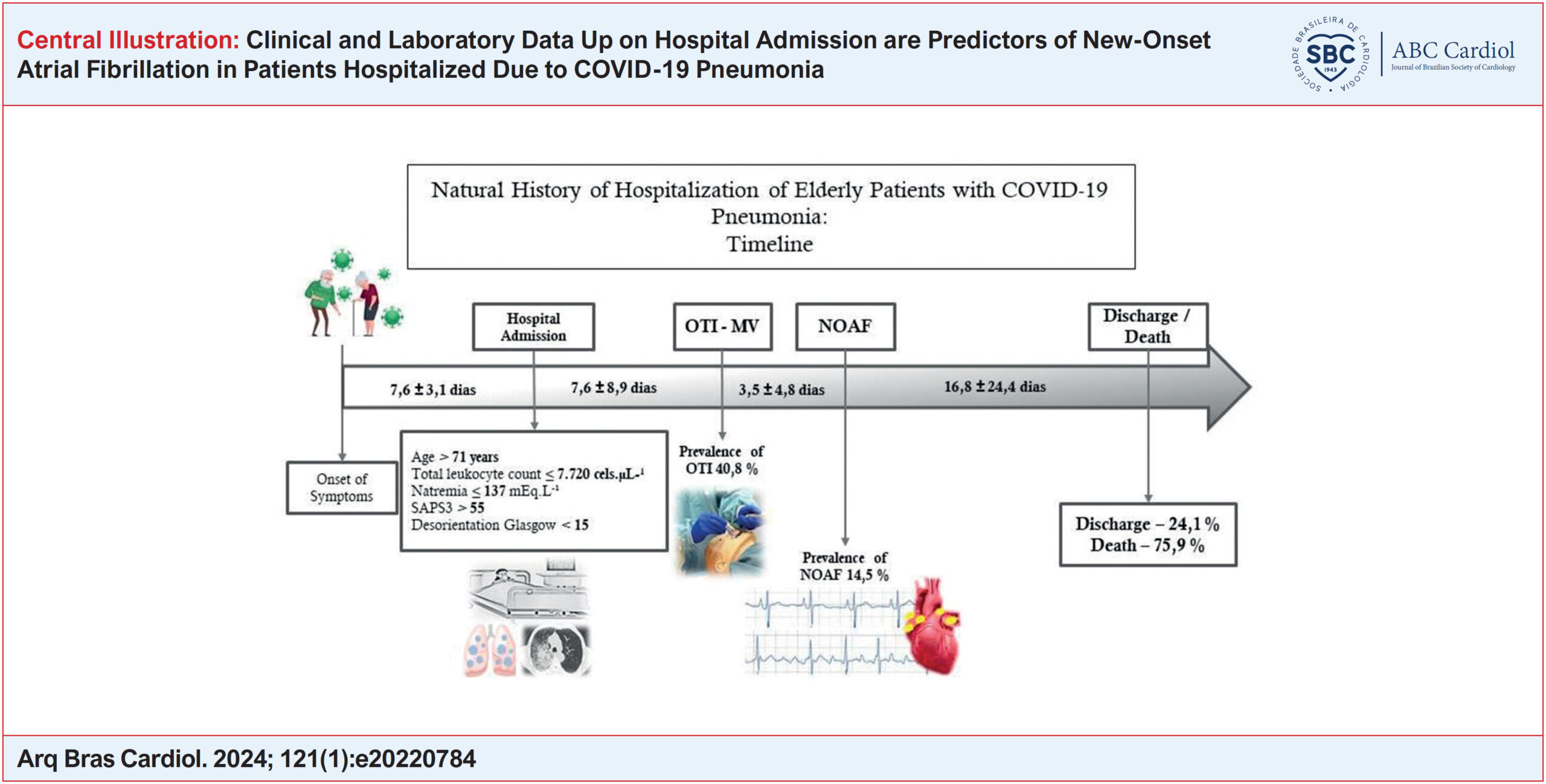
Clinical and Laboratory Data Up on Hospital Admission are Predictors of New-Onset Atrial Fibrillation in Patients Hospitalized Due to COVID-19 Pneumonia
Original Article

Clinical and Laboratory Data Up on Hospital Admission are Predictors of New-Onset Atrial Fibrillation in Patients Hospitalized Due to COVID-19 Pneumonia

Bruno Rustum Andrea et al. Paulo Roberto Benchimol-Barbosa Simone Farah Alexandra Monteiro

Abstract

Background

New-onset atrial fibrillation (NOAF) occurs in patients hospitalized due to COVID-19. It is still unknown whether clinical and laboratory data assessed upon hospital admission have predictive value for NOAF.

Objectives

To analyze, upon hospital admission, variables with predictive potential for the occurrence of NOAF in patients with COVID-19 pneumonia.

Methods

Observational, retrospective, case-control study. Electronic medical reports of consecutive patients, 60 years of age or older, hospitalized due to COVID-19 pneumonia between March 1st and July 15th, 2020, were reviewed. Non-paired Student or chi-squared tests compared variables. A Cox proportional hazard model was employed to identify independent predictors of NOAF. P value < 0.05 was considered statistically significant.

Results

Among 667 patients hospitalized due to COVID-19, 201 (30.1%) fulfilled the inclusion criteria. NOAF was documented in 29 patients (14.4%), composing group 1. Group 2 was composed of 162 patients without NOAF. Ten patients were excluded due to the AF rhythm upon hospital admission. In groups 1 and 2, there were differences in overall in-hospital survival rate (24.1 % vs. 67.9%; p<0.001), length of stay in ICU (11.1 ± 10.5 days vs. 4.9 ± 7.5 days; p=0.004) and need for mechanical ventilation rate (82.9% vs. 32.7%; p 71 y/o (HR=6.8; p<0.001), total leukocyte count ≤ 7,720 cels.μL-¹ (HR=6.6; p 55 (HR=5.6; p=0.002), and disorientation (HR=2.5; p=0.04) on admission were independent predictors of NOAF.

Conclusion

NOAF is a common arrhythmia in elderly hospitalized patients with COVID-19 pneumonia. Clinical and laboratory parameters evaluated on admission have a predictive value for the occurrence of NOAF during hospitalization.

  • Atrial Fibrillation
  • COVID-19
  • Hospitalization
  • Predictive Value of Tests
  • Prognosis
Read Full Article
Creative Commons Attribution (CC BY) Creative Commons license
08/04/2024 DOI: 10.36660/abc.20220784 Views 2
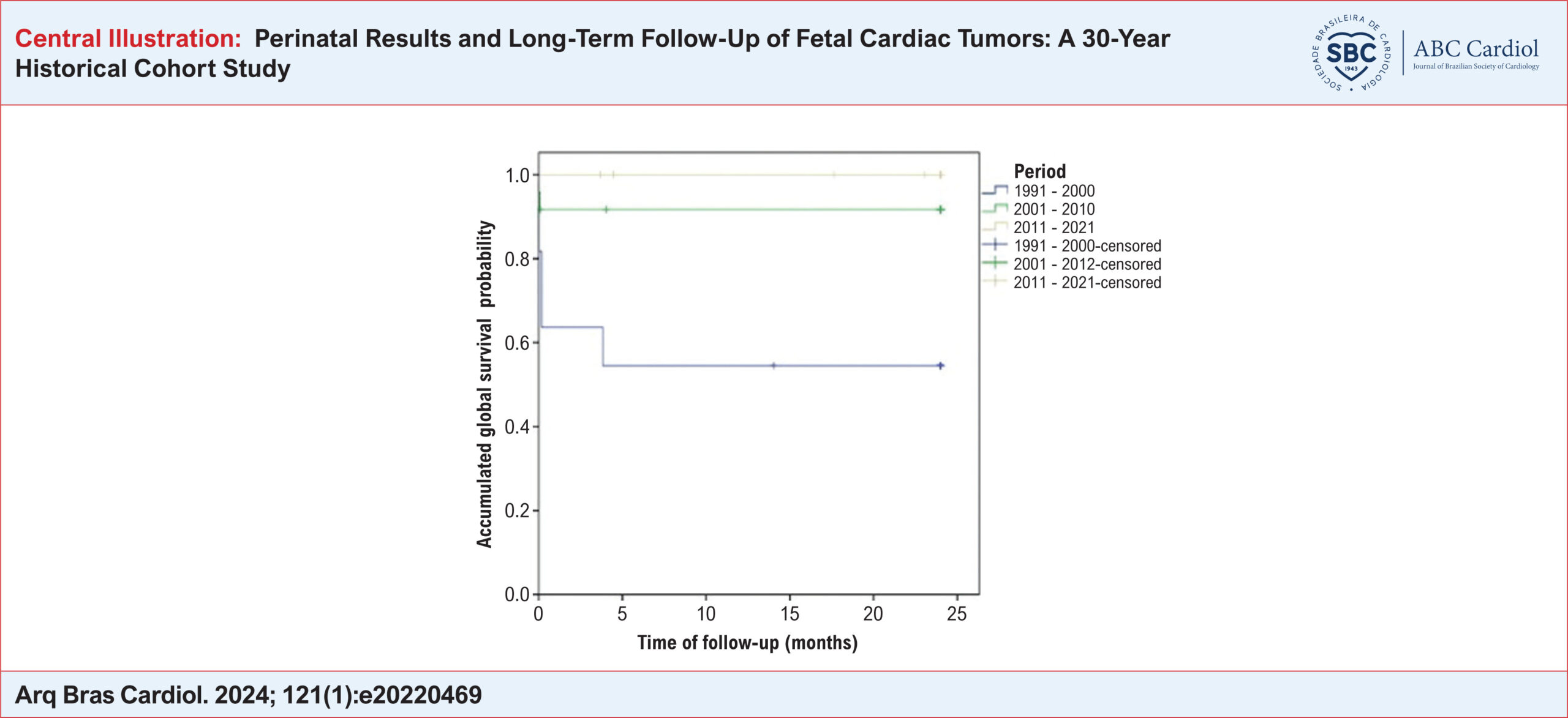
Perinatal Results and Long-Term Follow-Up of Fetal Cardiac Tumors: A 30-Year Historical Cohort Study
Original Article

Perinatal Results and Long-Term Follow-Up of Fetal Cardiac Tumors: A 30-Year Historical Cohort Study

Fabricio Marcondes Camargo et al. Maria de Lourdes Brizot Rossana Pulcineli Vieira Francisco Werther Brunow de Carvalho … Nana Miura Ikari Stella Verzinhasse Peres Marco Antônio Borges Lopes Lilian Maria Lopes

Abstract

Background:

This was a 30-year retrospective cohort study that approximates closely to the natural history of cardiac tumors diagnosed in the fetus, since there was no case of pregnancy interruption

Objective:

To assess morbidity and mortality in the perinatal period and at long term in fetuses diagnosed with cardiac tumor. Our secondary objective was to assess the evaluating factors of perinatal and postnatal results.

Methods:

This was a retrospective cohort study with 74 pregnant women with an echocardiographic diagnosis of fetal cardiac tumor at two referral centers between May 1991 and November 2021. A descriptive analysis was performed, and data were expressed as absolute (n) and relative (%) frequencies, median and interquartile range. Fisher’s exact test was used to evaluate the association of echocardiographic characteristics and clinical manifestations with perinatal and postnatal results. Global survival was calculated using the Kaplan-Meier method and the curves were compared by the log-rank test. The time of follow-up, calculated in months, corresponded to the time elapsed from hospital discharge to current status (survived/ censoring or death). The level of significance was set at 5% (p<0.05).

Results:

Rhabdomyoma is the most common type of cardiac tumor (85%), with a high morbidity (79.3%) and overall mortality of 17.4%. The presence of fetal hydrops was a predictor of death.

Conclusion:

The presence of fetal hydrops had an impact on mortality, and hence is an important factor in counselling and determining the prognosis. Most deaths occurred before hospital discharge.

  • Echocardiography
  • Heart Neoplasms
  • Prenatal Diagnosis
  • Rhabdomyoma
Read Full Article
Creative Commons Attribution (CC BY) Creative Commons license
22/03/2024 DOI: 10.36660/abc.20220469 Views 2
Editorial

Images Complement Words: Absence of Progression of Myocardial and Coronary Artery Injury in School-Age Children Undergoing Radiofrequency Catheter Ablation

Jorge Elias Neto et al. Márcio Augusto Silva

Not even the biggest enthusiasts among cardiologists could predict, at the end of the 1980s, the impact that catheter ablation would have on the treatment of cardiac arrhythmias. Since its advent, evidence, and clinical experience have accumulated that allow to affirm its effectiveness in the treatment of the most varied forms of cardiac tachyarrhythmias in individuals of all age groups.–

Particularly in the pediatric population, these perspectives have gradually shifted from the use of catheter ablation only in cases of drug-refractory arrhythmia to a first-line treatment and patient/parent preference.,- However, this generalization raises the question of whether it is appropriate to adopt a technique into clinical practice in the absence of animal or human data that sufficiently demonstrates both its safety and efficacy in immature organs.,

[…]

  • Catheter Ablation
  • ocardial Contusions
  • Pediatrics
  • Safety
Read Full Article
Creative Commons Attribution (CC BY) Creative Commons license
18/03/2024 DOI: 10.36660/abc.20230850 Views 1
Figure 1
Case Report

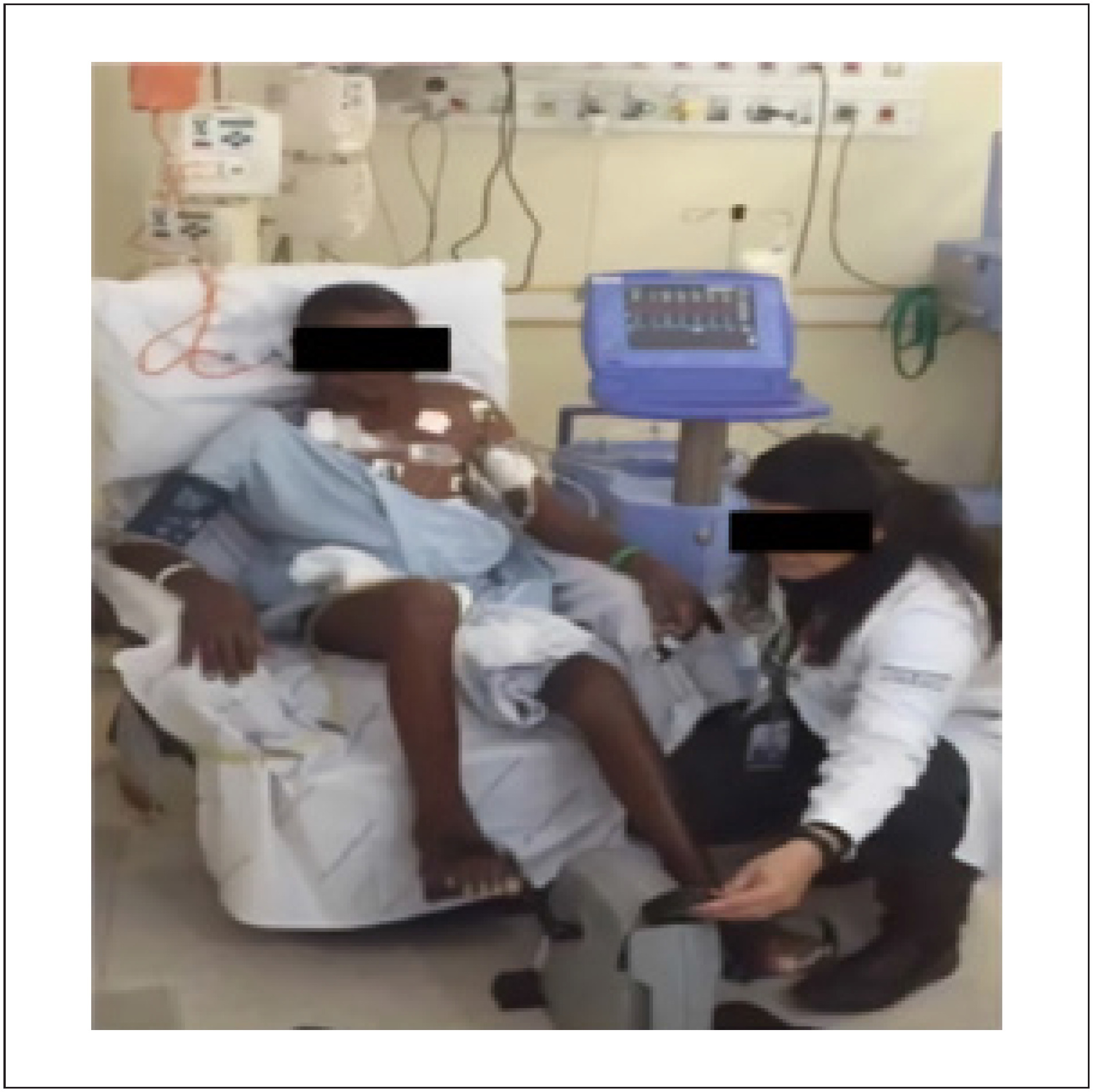
The Effects of Exercise on Cardiogenic Shock with an Intra-Aortic Balloon Pump: A Case Report

Vanessa M. Ferreira et al. Dayane Nunes Rodrigues Carlos Alberto Mendez Contreras João M. Rossi … Rui Fernando Ramos Gustavo Oliveira Mayron F. Oliveira

Abstract

This case report describes the exercise program on a hospitalized 54-year-old male patient with cardiogenic shock waiting for a heart transplant assisted by an intra-aortic balloon pump, a temporary mechanical circulatory support device.

The temporary mechanical circulatory support device, an intra-aortic balloon pump, was placed in the left subclavian artery, enabling the exercise protocol. Measurements and values from Swan-Ganz catheter, blood sample, brain natriuretic peptide (NT-proBNP), and high-sensitivity C-reactive protein (hs-CRP), as well as the six-minute walk test (6MWT) and venous oxygen saturation (SvO2) were obtained before and after an exercise protocol. The exercise training protocol involved the use of an unloaded bed cycle ergometer once a day, for a maximum of 30 minutes, to the tolerance limit.

No adverse events or events related to the dislocation of the intra-aortic balloon pump were observed during the exercise protocol. The exercise program resulted in higher SvO2 levels, with an increased 6MWT with lower Borg dyspnea scores (312 meters vs. 488 meters and five points vs. three points, respectively). After completing the ten-day exercise protocol, the patient underwent a non-complicated heart transplant surgery and a full recovery in the ICU.

This study showed that exercise is a feasible option for patients with cardiogenic shock who are using an intra-aortic balloon pump and that it is well-tolerated with no reported adverse events.

  • Cardiac Rehabilitation
  • Cardiogenic shock
  • Exercise
  • Intra-Aortic Balloon Pumping
  • physical therapy modalities
Read Full Article
Creative Commons Attribution (CC BY) Creative Commons license
18/03/2024 DOI: 10.36660/abc.20230537 Views 1
Editorial

How Can COVID-19 Influence the Evolution of Patients with Acute Coronary Syndromes?

Alexandre de Matos Soeiro

The pandemic caused by the COVID-19 virus has changed the way we view infectious diseases. In a more intense way than in other situations, COVID-19 was from the beginning related to a greater number of thrombotic events, whether in its acute presentation, with pulmonary microthrombi worsening the hypoxia, or even in its late evolution with a large number of pulmonary embolic events. The interface between the endothelium and the coagulation cascade was modified, and different pro-thrombotic mechanisms were deregulated, with elevated expression of tissue factor, CD40, leukocyte adhesion molecules, pro-inflammatory cytokines, thromboxane, and reduced production of nitric oxide. Along with the lungs, the heart is one of the organs most affected by the disease with global involvement, whether myocardial, arrhythmogenic, or coronary.–

Thus, the study presented by Baytugan et al. describes patients with ST-elevation acute coronary syndrome (ST-ACS) with COVID-19, comparing them with the group without COVID-19 in relation to the clinical outcomes found. Some interesting points should be highlighted, including the fact that it takes longer for patients to present themselves to the hospital. This was very common during the pandemic and certainly worsened outcomes related to ACS. It was also observed that patients with COVID-19 were older and had more comorbidities, such as diabetes and chronic obstructive pulmonary disease. Finally, in an incisive and clear way, patients with COVID-19 developed worse outcomes, such as a greater number of stent thromboses, more cardiogenic shock, and higher mortality. A curious fact was the description of higher troponin levels in the COVID-19 group. More simply, we can relate this to the greater diagnostic delay; however, it is worth highlighting the possibility of direct cardiac aggression caused by COVID-19, in addition to the greater thrombotic and inflammatory load that the disease can cause.

[…]

  • Coronavirus infections
  • COVID-19
  • Hospitalization
  • Percutaneous Coronary Intervention/methods
  • Pulmonary embolism
  • ST Elevation Myocardial Infarction
Read Full Article
Creative Commons Attribution (CC BY) Creative Commons license
18/03/2024 DOI: 10.36660/abc.20230888 Views 2
Figure 1
Editorial

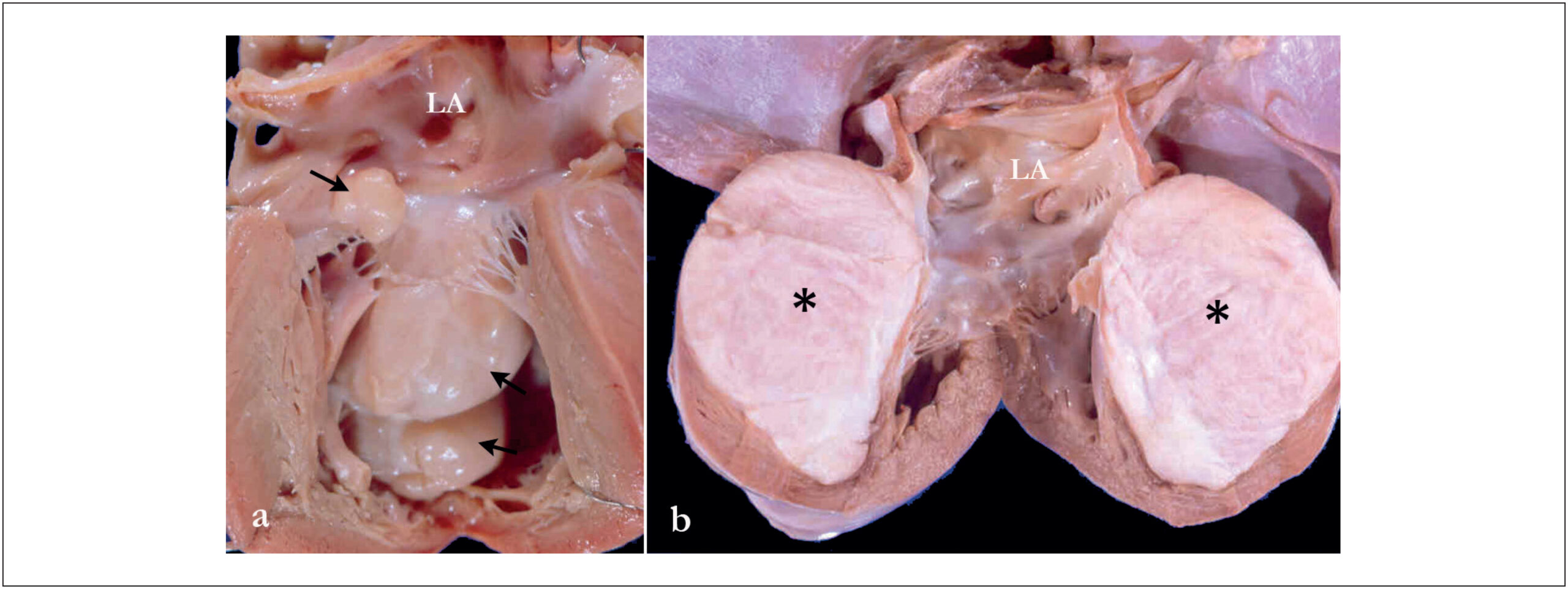
Has the Natural History of Primary Heart Tumors in Children Been Modified Recently?

Vera Demarchi Aiello

Morphology of the nodular lesions of the fetal and neonatal heart

The most frequent nodular lesions of the fetal and neonatal heart are rhabdomyomas and fibromas, which are considered hamartomas.

In rhabdomyoma cells, the lack of proliferative immunohistochemical markers indicates that these lesions are more likely hamartomas rather than true neoplasms.

[…]

  • Child
  • Fetal Heart/abnormalities
  • Fetus/diagnosis imaging
  • Heart Neoplasms/pathology
  • Tuberous Sclerosis/complications
Read Full Article
Creative Commons Attribution (CC BY) Creative Commons license
18/03/2024 DOI: 10.36660/abc.20230849
Letter to the Editor

The Relationship between Uric Acid/Albumin Ratio and Carotid Intima-Media Thickness in Patients with Hypertension

Cristian Rodrigues do Nascimento et al. João Luis Matos Ribeiro Rodrigo Mendes Romero Henrique de Almeida Barbosa … Johnnatas Mikael Lopes Pedro Pereira Tenório

To the Editor,

We carefully read the article entitled: “The relationship between the uric acid/albumin ratio and the carotid intima-media thickness in patients with hypertension“, whose objective was to investigate the association of the uric acid/albumin ratio (UAR) and carotid intima-media thickness (CIMT) in hypertensive patients. Although the present study demonstrated a significant correlation between UAR and CIMT, with UAR showing greater discriminatory capacity for increased CIMT values than uric acid and albumin alone and than the other inflammatory markers analyzed in the study, such as the systemic immune inflammation index (III), the neutrophil/lymphocyte ratio (NLR), the platelet/lymphocyte ratio (PLR) and the C-reactive protein/albumin ratio (CAR), some aspects observed, when reading the article, are worthy of note.

[…]

  • Cardiovascular Diseases/complications
  • Carotid Intima-Media Thickness
  • Human Serum Albumin
  • Hypertension
  • uric acid
Read Full Article
Creative Commons Attribution (CC BY) Creative Commons license
08/03/2024 DOI: 10.36660/abc.20230691
Editorial

Zebras Exist, Too!

Murillo de Oliveira Antunes

Fabry disease (FD) is a rare X-linked hereditary lysosomal storage disease caused by deficient activity of the enzyme alpha-galactosidase A that leads to the accumulation of globotriasylceramide (Gb3) in affected tissues, including the heart, brain, and kidneys. In FD, cardiac damage begins early and progresses subclinically before the appearance of symptoms and generally manifests as left ventricular hypertrophy simulating hypertrophic cardiomyopathy (HCM). Recent studies have demonstrated a prevalence of FD of up to 5% in patients whose initial diagnosis was HCM. After the introduction of enzyme replacement therapy, FD deserves special attention in the differential diagnosis in patients with unexplained ventricular hypertrophy and HCM, as it is a heart disease that requires specific treatment. However, early diagnosis and treatment are essential to prevent the progression of the disease by reducing cardiovascular event rates.–

With the aim of investigating the clinical and exam differences between HCM and DF, the study of Akhan et al. retrospectively evaluated 60 patients with HCM and 40 with FD. In this population, with a similar average age, the authors showed, in general, that the characteristics of the two cardiac conditions share more similarities than differences, making diagnosis a challenge in clinical practice.

[…]

  • Cardiomyopathy, Hypertrophic/diagnostic, imaging
  • Enzyme Replacement Therapy
  • Fabry disease / complications
  • Hypertrophy Left Ventricular
  • infant, newborn, diseases
  • Rare Disease
Read Full Article
Creative Commons Attribution (CC BY) Creative Commons license
08/03/2024 DOI: 10.36660/abc.20230834
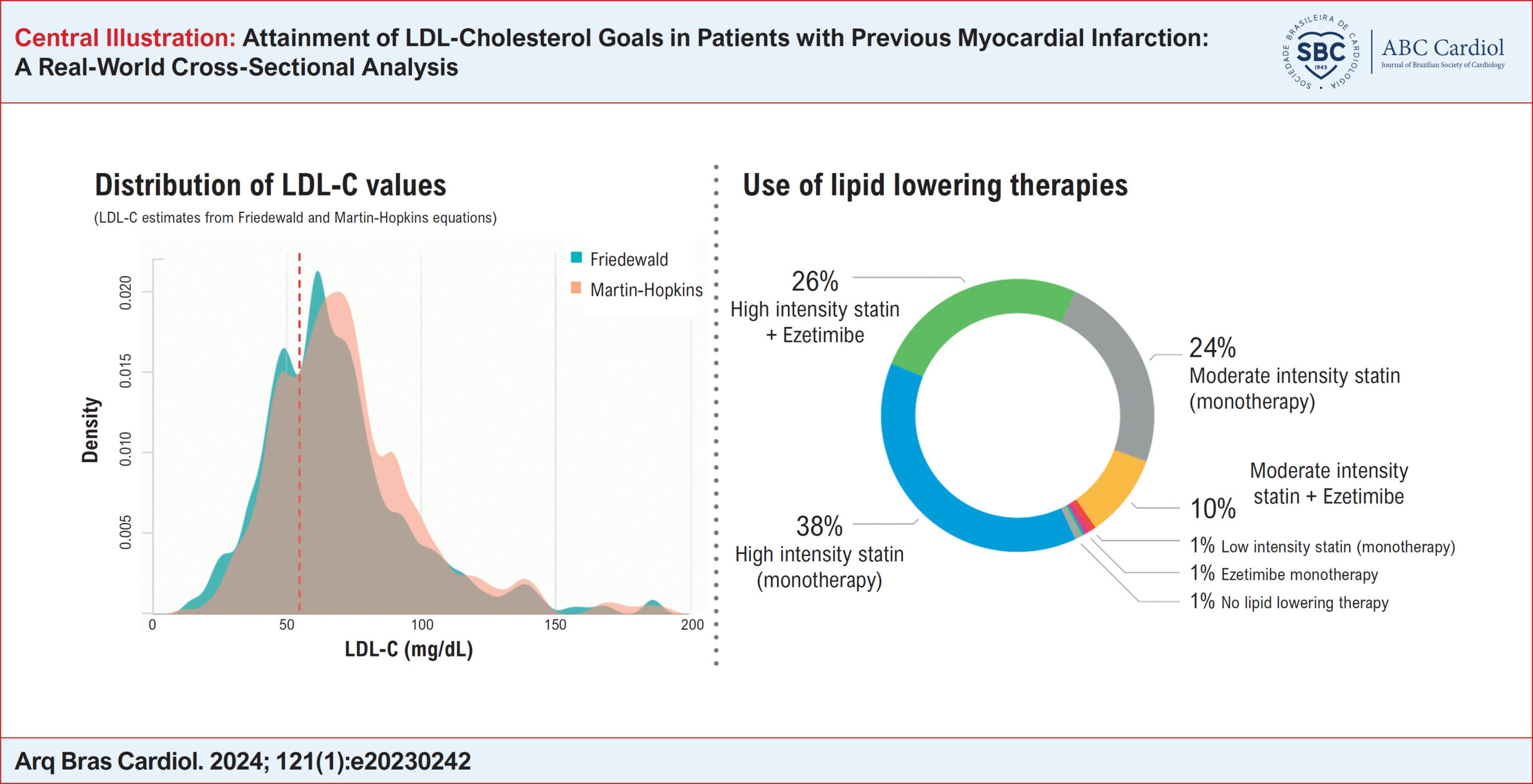
Attainment of LDL-Cholesterol Goals in Patients with Previous Myocardial Infarction: A Real-World Cross-Sectional Analysis
Original Article

Attainment of LDL-Cholesterol Goals in Patients with Previous Myocardial Infarction: A Real-World Cross-Sectional Analysis

Daniel A. Gomes et al. Mariana Sousa Paiva Pedro Freitas Francisco Albuquerque … Maria Rita Lima Rita Reis Santos João Presume Marisa Trabulo Carlos Aguiar Jorge Ferreira António M. Ferreira Miguel Mendes

Abstract

Background:

The European Society of Cardiology guidelines recommend an LDL-cholesterol (LDL-C) < 55 mg/dL for patients with established cardiovascular disease. While the Friedewald equation to estimate LDL-C is still widely used, the newer Martin-Hopkins equation has shown greater accuracy.

Objectives:

We aimed to assess: A) the proportion of patients reaching LDL-C goal and the therapies used in a tertiary center; B) the impact of using the Martin-Hopkins method instead of Friedewald’s on the proportion of controlled patients.

Methods:

A single-center cross-sectional study including consecutive post-myocardial infarction patients followed by 20 cardiologists in a tertiary hospital. Data was collected retrospectively from clinical appointments that took place after April 2022. For each patient, the LDL-C levels and attainment of goals were estimated from an ambulatory lipid profile using both Friedewald and Martin-Hopkins equations. A two-tailed p-value of < 0.05 was considered statistically significant for all tests.

Results:

Overall, 400 patients were included (aged 67 ± 13 years, 77% male). Using Friedewald’s equation, the median LDL-C under therapy was 64 (50-81) mg/dL, and 31% had LDL-C within goals. High-intensity statins were used in 64% of patients, 37% were on ezetimibe, and 0.5% were under PCSK9 inhibitors. Combination therapy of high-intensity statin + ezetimibe was used in 102 patients (26%). Applying the Martin-Hopkins method would reclassify a total of 31 patients (7.8%). Among those deemed controlled by Friedewald’s equation, 27 (21.6%) would have a Martin-Hopkins’ LDL-C above goals.

Conclusions:

Less than one-third of post-myocardial infarction patients had LDL-C within the goal. Applying the Martin-Hopkins equation would reclassify one-fifth of presumably controlled patients into the non-controlled group.

  • Atherosclerosis
  • Cholesterol, LDL
  • Secondary Prevention
Read Full Article
Creative Commons Attribution (CC BY) Creative Commons license
08/03/2024 DOI: 10.36660/abc.20230242 Views 1
Editorial

Scores for Diagnosing the Malignant Etiology of Pericardial Effusion: A Valuable Initial Aid in the Investigation

Wolney de Andrade Martins

Pericardial diseases are prevalent in cancer (CA) patients. The presence of pericardial effusion (PE) in these patients certainly worsens the prognosis. The possibility of cardiac tamponade increases the risk of death.

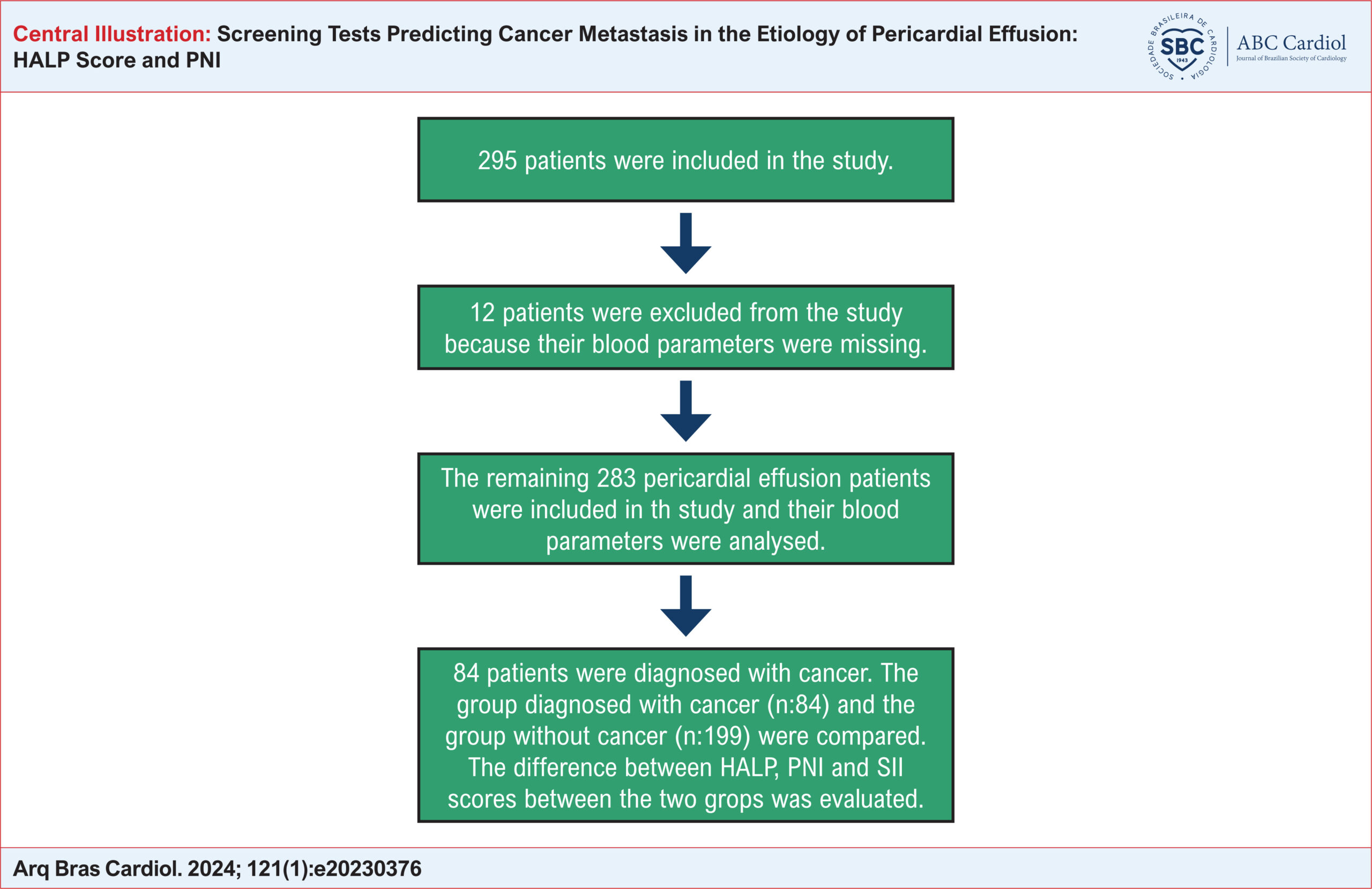
The article ‘Screening Tests Predicting Cancer Metastasis in the Etiology of Pericardial Effusion: HALP Score and PNI’ published in ABC, brings to discussion the clinical dilemma of the neoplastic etiology of PE. The ease of access to imaging methods has made the diagnosis of PE common in patients with CA and made the etiological search tempting. It is not uncommon to come across PE with an inconclusive etiology after an exhaustive investigation. On the other hand, the fear of failing to diagnose a hidden CA is worrying. We know that PE in patients with CA can be secondary to metastatic implantation, direct invasion of the tumor, lymphatic obstruction, pericarditis caused by chemotherapy, immunotherapy, or radiotherapy, and pericarditis from infectious causes common in immunocompromised patients. Furthermore, other causes cannot be ruled out, such as kidney disease, hypothyroidism, heart failure, and autoimmune diseases, whether related to CA or not.

[…]

  • Acute coronary syndrome
  • Cardiac Tamponade
  • Mortality
  • Neoplasms
  • Pericardial Effusion
  • Prognosis
Read Full Article
Creative Commons Attribution (CC BY) Creative Commons license
04/03/2024 DOI: 10.36660/abc.20230762 Views 1
Editorial

Point-of-Care in Clinical Practice: Consolidated Reality

Miguel José Francisco Neto et al. Edgar Bezerra de Lira Filho Marcos Roberto Gomes de Queiroz

Ultrasound and echocardiography with Doppler studies have represented, over the last few decades, highly noteworthy advances in medical practice in general. Particularly in internal medicine, they have promoted a true revolution in daily work and are currently considered a fundamental tool in clinical practice. This application of the method includes both urgent care and outpatient settings.,

In emergency scenarios, the initial establishment of the FAST (Focused Assessment with Sonography in Trauma) protocol for systematized trauma care made it possible to popularize the use of the method and served as a basis for multiple applications. In expanded application in emergency medicine, the sequence has included implementation of the RUSH (Rapid Ultrasound for Shock and Hypotension) and C.A.U.S.E. (Cardiac Arrest Ultrasound Exam) protocols,, progressively gaining ground as a multipurpose tool for use in medical education, research, and outpatient medical practice.

[…]

  • Echocardiography
  • emergency medicine
  • Medical Schools
  • Point-of-Care Systems
  • Ultrasonography
Read Full Article
Creative Commons Attribution (CC BY) Creative Commons license
04/03/2024 DOI: 10.36660/abc.20230688
Editorial

Electrocardiography in the Pre-Operative Assessment of Low-Risk Patients: Current Evidence

Francisco José de Oliveira Filho et al. Leonardo Rufino Garcia Pedro Luciano Mellucci Filho Lenize da Silva Rodrigues Matheus Bertanha

Cardiovascular diseases represent the main cause of mortality in the adult population, both in Brazil and globally. The proportional mortality from these diseases in Brazil is approximately 27%. Cardiovascular alterations become the cause of great concern for patients who will undergo surgical procedures, a time when the body is exposed to a high level of metabolic stress and, therefore, cardiovascular complications can overlap with unfavorable outcomes. Worldwide, it is estimated that annually, approximately 900,000 patients undergoing surgery develop cardiac complications directly related to the surgery. In this context, the perioperative period and, therefore, physiological changes secondary to surgical trauma are a more important risk factor for the manifestation of cardiovascular diseases.

In Brazil, between 2 and 3 million surgeries are performed per year, according to the Department of Informatics of the Unified Health System (DATASUS). The magnitude of the data reiterates the importance of carrying out detailed pre-operative preparation so that the risks related to the surgical procedure are minimized, including cardiological evaluation.

[…]

  • Cardiovascular Diseases/surgery
  • Electrocardiography/methods
  • Neoplasms//surgery
  • Perioperative Care
  • Risk Assessment
Read Full Article
Creative Commons Attribution (CC BY) Creative Commons license
04/03/2024 DOI: 10.36660/abc.20230808 Views 2
Screening Tests Predicting Cancer Metastasis in the Etiology of Pericardial Effusion: HALP Score and PNI
Original Article

Screening Tests Predicting Cancer Metastasis in the Etiology of Pericardial Effusion: HALP Score and PNI

Emin Koyun et al. Ferhat Dindas Anil Sahin Idris Bugra Cerik Mustafa Dogdus

Abstract

Background:

Cancer screening is absolutely necessary in patients with pericardial effusion, given that cancer is one of the most serious diseases in the etiology of pericardial effusion. In previous studies, it was stated that the systemic immune-inflammation index (SII); the prognostic nutrition index (PNI); and the hemoglobin, albumin, lymphocyte, platelet (HALP) score can produce scores related to cancer.

Objectives:

This study began considering that these scoring systems could predict cancer in the etiology of patients with pericardial effusion.

Methods:

This study produced a retrospective analysis of patients who underwent pericardiocentesis between 2006 and 2022. Pericardiocentesis was performed in a total of 283 patients with moderate-to-large pericardial effusion or pericardial tamponade within the specified period. HALP, PNI, and SII scores were calculated according to the peripheral venous blood taken before the pericardiocentesis procedure. The statistical significance level was set at p<0.05.

Results:

The HALP score proved to be 0.173 (0.125-0.175) in cancer patients and 0.32 (0.20-0.49) in non-cancer patients (p<0.001). The PNI score proved to be 33.1±5.6 in cancer patients and 39.8±4.8 in non-cancer patients (p<0.001).

Conclusion:

The HALP score and PNI proved to be easy and fast cancer screening tests that can predict cancer metastasis in the etiology of patients with pericardial effusion.

  • Cancer
  • Hemoglobin, Albumin, Lymphocyte, Platelet (HALP)
  • Pericardial Effusion
  • Prognostic Nutrition İndex
Read Full Article
Creative Commons Attribution (CC BY) Creative Commons license
04/03/2024 DOI: 10.36660/abc.20230376 Views 1
Body Surface Potential Mapping during Ventricular Depolarization in Athletes with Prolonged PQ Interval after Exercise
Original Article

Body Surface Potential Mapping during Ventricular Depolarization in Athletes with Prolonged PQ Interval after Exercise

Natalya I. Ivonina et al. Alexey G. Ivonin Irina M. Roshchevskaya

Abstract

Background:

Prolongation of the PQ interval, generally associated with an atrioventricular conduction delay, may be related to changes in intraventricular impulse spreading.

Objective:

To assess, using body surface potential mapping (BSPM), the process of ventricular depolarization in athletes with prolonged PQ intervals at rest and after exercise.

Methods:

The study included 7 cross-country skiers with a PQ interval of more than 200 ms (Prolonged-PQ group) and 7 with a PQ interval of less than 200 ms (Normal-PQ group). The BSPM from 64 unipolar torso leads was performed before (Pre-Ex) and after the bicycle exercise test (Post-Ex). Body surface equipotential maps were analyzed during ventricular depolarization. The significance level was 5%.

Results:

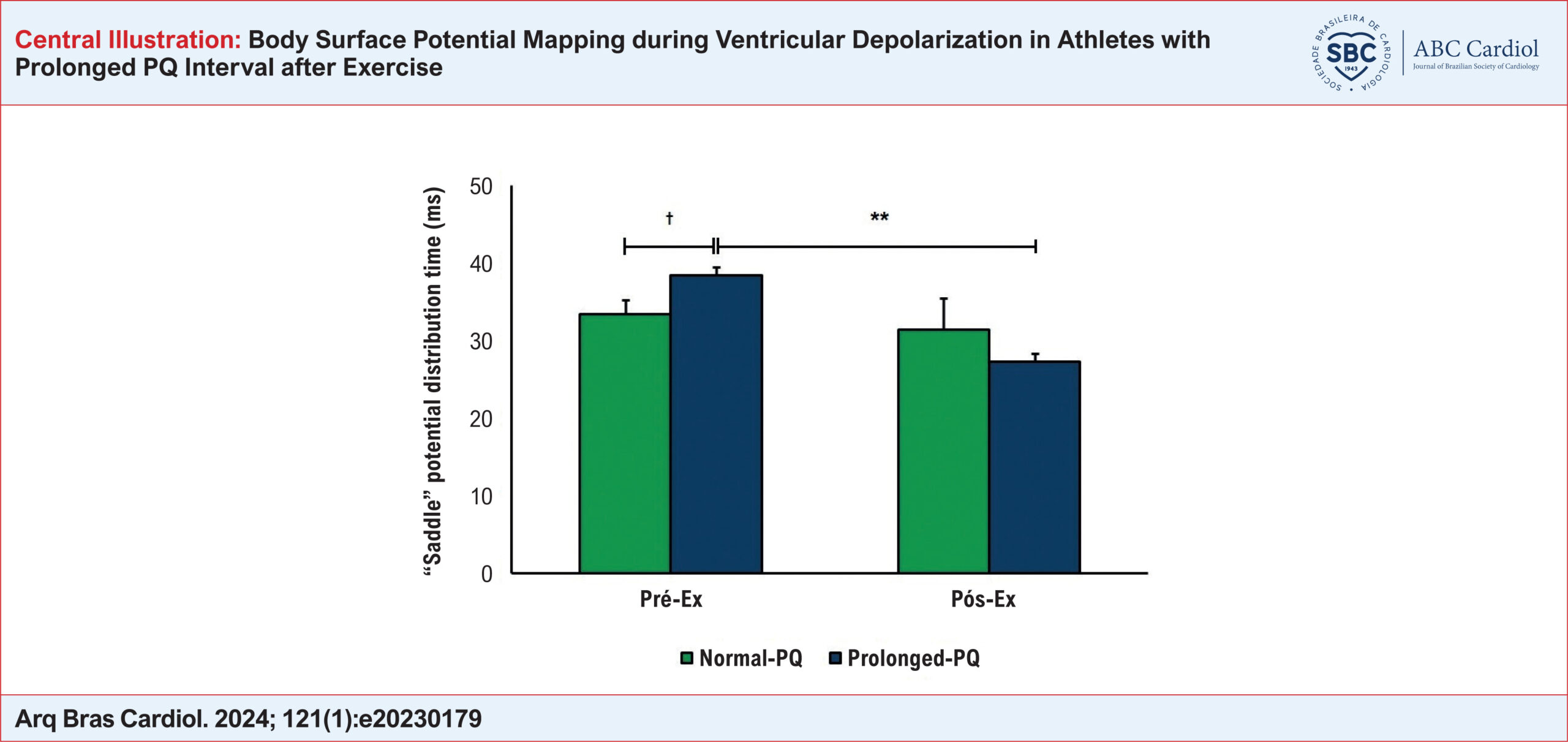
Compared to Normal-PQ athletes, the first and second periods of the stable position of cardiac potentials on the torso surface were longer, and the formation of the “saddle” potential distribution occurred later, at Pre-Ex, in Prolonged-PQ athletes. At Post-Ex, the Prolonged-PQ group showed a shortening of the first and second periods of stable potential distributions and a decrease in appearance time of the “saddle” phenomenon relative to Pre-Ex (to the values near to those of the Normal-PQ group). Additionally, at Post-Ex, the first inversion of potential distributions and the total duration of ventricular depolarization in Prolonged-PQ athletes decreased compared to Pre-Ex and with similar values in Normal-PQ athletes. Compared to Normal-PQ athletes, the second inversion was longer at Pre-Ex and Post-Ex in Prolonged-PQ athletes.

Conclusion:

Prolonged-PQ athletes had significant differences in the temporal characteristics of BSPM during ventricular depolarization both at rest and after exercise as compared to Normal-PQ athletes.

  • Athletes
  • Atrioventricular block
  • body surface potential mapping
  • Exercise Test
  • Heart Ventricles
Read Full Article
Creative Commons Attribution (CC BY) Creative Commons license
04/03/2024 DOI: 10.36660/abc.20230179 Views 1
Editorial

Is Catheter Ablation for Atrial Fibrillation in Patients with Heart Failure and Reduced Ejection Fraction a Good Therapeutic Option?

Sergio Menezes Couceiro et al. Fernando Mendes Sant'Anna

The article was well written, interesting, has relevance and validity and aimed to compare results obtained through meta-analyses of randomized controlled trials on catheter ablation in patients with left ventricular ejection fraction below 45%.,

The methods used were interesting and sought to answer the main question. They searched the literature for studies that compared catheter ablation (CA) with medical therapy in patients with atrial fibrillation (AF) with left ventricular ejection fraction (LVEF) ≤45%. A meta-analysis of 7 clinical trials was performed, including 1,163 patients with AF and heart failure (HF). All tests were two-sided, and only a p value <0.05 was considered statistically significant.

[…]

  • Atrial Fibrillation
  • Catheter Ablation
  • Heart Failure
  • Meta-Analysis
Read Full Article
Creative Commons Attribution (CC BY) Creative Commons license
04/03/2024 DOI: 10.36660/abc.20230820
Figure 1
Research Letter

Cardiac Magnetic Resonance to Evaluate Complete Substrate Elimination after Endocardial Ventricular Tachycardia Ablation in Chagas Disease

Mauricio I. Scanavacca et al. Rodrigo M. Kulchetscki Carlos E. Rochitte Cristiano F. Pisani

Introduction

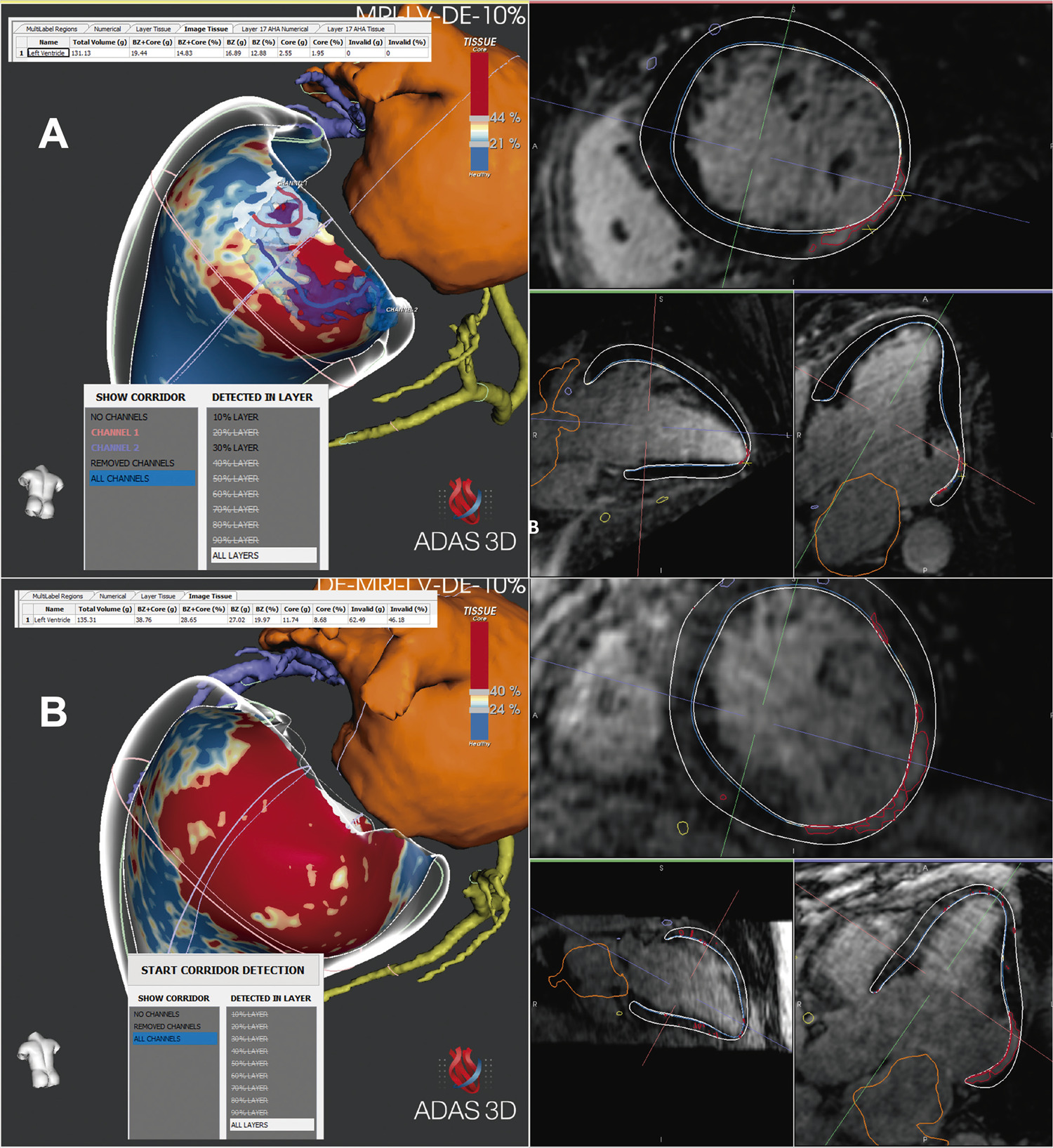
The main endpoint of ventricular tachycardia (VT) ablation includes elimination of the abnormal substrate on remapping and rendering non-inducible VT with programmed ventricular stimulation. ,

Cardiac magnetic resonance (CMR) has been increasingly used as a tool for locating the arrhythmogenic substrate of patients with scar-related VT. The images can be integrated with the electroanatomical mapping to guide ablation to the identified channels responsible for the VT-reentry circuits, optimizing the ablation results. However, until now, CMR has not been used to confirm the complete substrate elimination and effectiveness of VT ablation.

[…]

  • Ablation Techniques/methods
  • Chagas disease
  • Magnetic Resonance Spectroscopy
  • Tacchycardia, Ventricular
Read Full Article
Creative Commons Attribution (CC BY) Creative Commons license
26/02/2024 DOI: 10.36660/abc.20230421 Views 3
Figure 1
Image

A Rare Coronary Anomaly in the Adult: Large-Caliber Arteriovenous Fistula

Pedro Garcia Brás et al. Duarte Cacela Rui Cerejo Rui Rodrigues

Case description

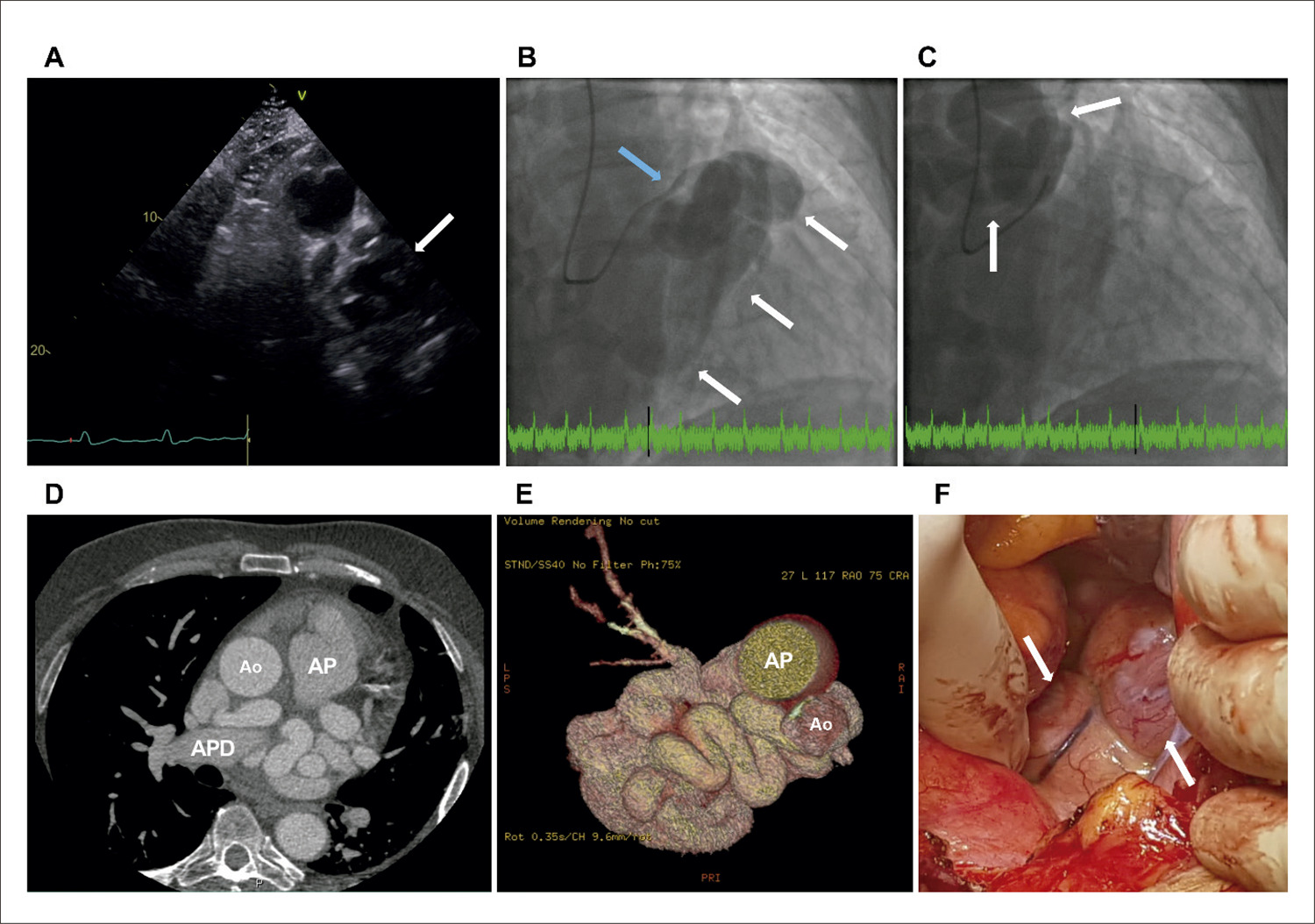
A 57-year-old Caucasian male patient with a past medical history of hypertension and pulmonary emphysema presented to the Cardiology outpatient clinic with exertional dyspnea, peripheral edema, orthopnea, and new-onset atrial fibrillation, with a III/VI continuous murmur, raising the possibility of an intrathoracic arteriovenous communication.

A transthoracic echocardiogram revealed a dilated left ventricle with mildly reduced global systolic function (ejection fraction of 44%), biatrial enlargement, and mild pericardial effusion. Notably, this study showed multiple ‘rosary-like’ folds (, , Supplementary Videos S1-S2) with color Doppler flow, revealing a possible coronary fistula. The Qp/Qs ratio was normal. ,

[…]

  • Arteriovenous Fistula
  • Computerized Tomography Coronary Angiogram
  • Coronary Angiography
  • Coronary Disease
  • Echocardiography
Read Full Article
Creative Commons Attribution (CC BY) Creative Commons license
26/02/2024 DOI: 10.36660/abc.20230307 Views 2
Central Illustration
Original Article

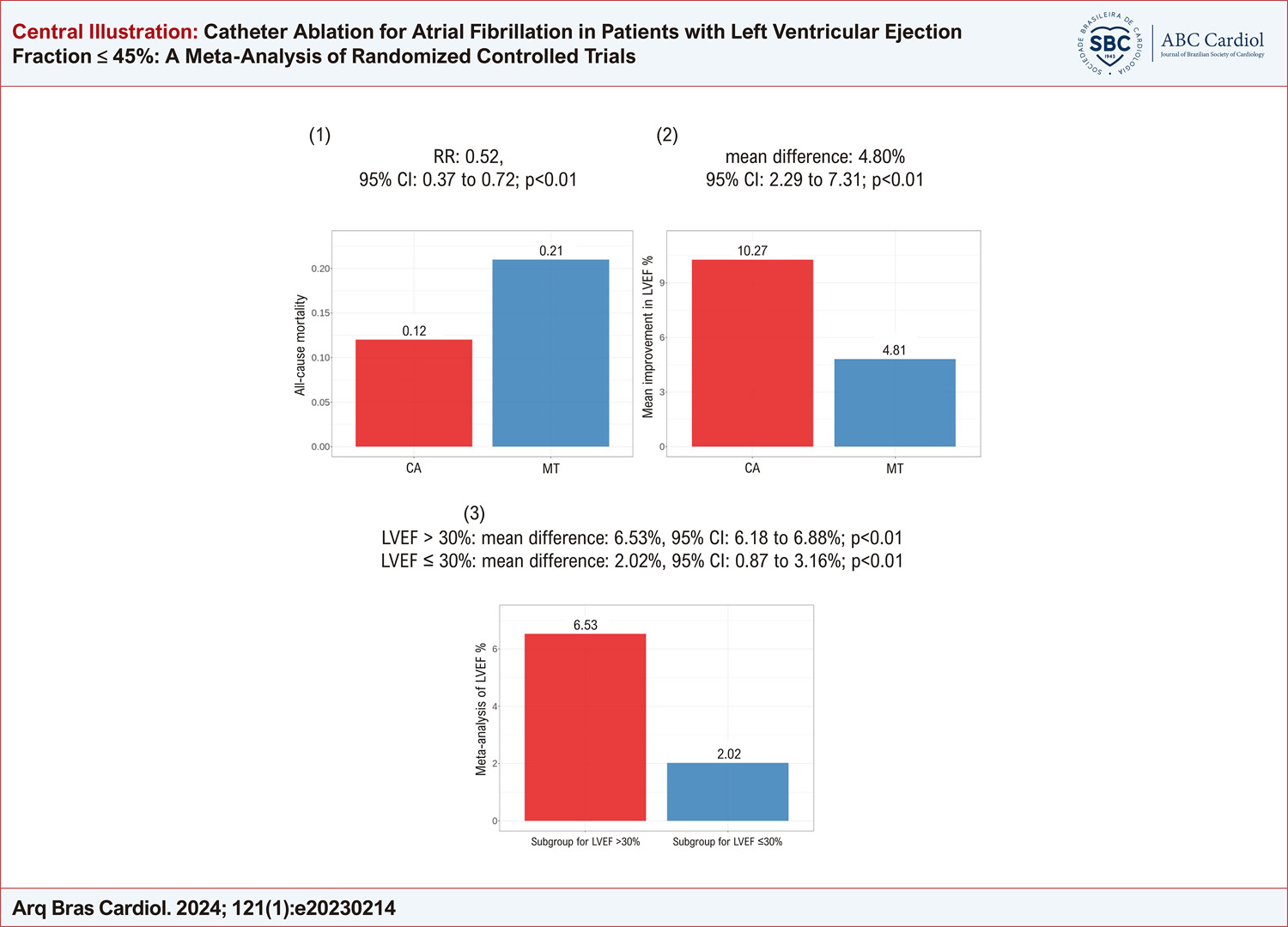
Catheter Ablation for Atrial Fibrillation in Patients with Left Ventricular Ejection Fraction ≤ 45%: A Meta-Analysis of Randomized Controlled Trials

Yujie Cui et al. Jialu Yao Junyi Zhang Zhenghao Liu … Tan Chen Yafeng Zhou

Abstract

Background

Atrial fibrillation (AF) and heart failure (HF) frequently coexist, resulting in adverse outcomes. However, controversies remain regarding the efficacy of catheter ablation (CA) in AF patients with severe left ventricular dysfunction.

Objectives

The purpose of this study was to perform a meta-analysis of prospective randomized controlled trials to evaluate the efficacy of CA versus medical therapy (MT) in AF patients with left ventricular ejection fraction (LVEF) ≤45%.

Methods

We searched the literature for studies that compared CA to MT in AF patients with LVEF ≤45%. A meta-analysis of 7 clinical trials was performed, including 1163 patients with AF and HF. Subgroup analysis was performed based on baseline LVEF. All tests were 2-sided; only the p-value <0.05 was considered statistically significant.

Results

We found that CA was associated with lower all-cause mortality (risk ratio: 0.52, 95% CI: 0.37 to 0.72; p<0.01) and greater improvements in LVEF (mean difference: 4.80%, 95% CI: 2.29% to 7.31%; p<0.01) compared to MT. Patients in the CA group had a lower risk of HF hospitalization and AF recurrence and a significantly better quality of life than those in the MT group. The results of subgroup analysis indicated that patients with milder left ventricular dysfunction improved LVEF after AF ablation (mean difference: 6.53%, 95% CI: 6.18% to 6.88%; p<0.01) compared to patients with more severe disease (mean difference: 2.02%, 95% CI: 0.87% to 3.16%; p<0.01).

Conclusions

Our meta-analysis demonstrated that CA was associated with significant improvements in outcomes of AF patients with LVEF ≤45%. Additionally, AF patients with milder left ventricular dysfunction could benefit more from CA.

  • Atrial Fibrillation
  • Catheter Ablation
  • Heart Failure
  • Meta-Analysis
Read Full Article
Creative Commons Attribution (CC BY) Creative Commons license
26/02/2024 DOI: 10.36660/abc.20230214
Central Illustration
Original Article

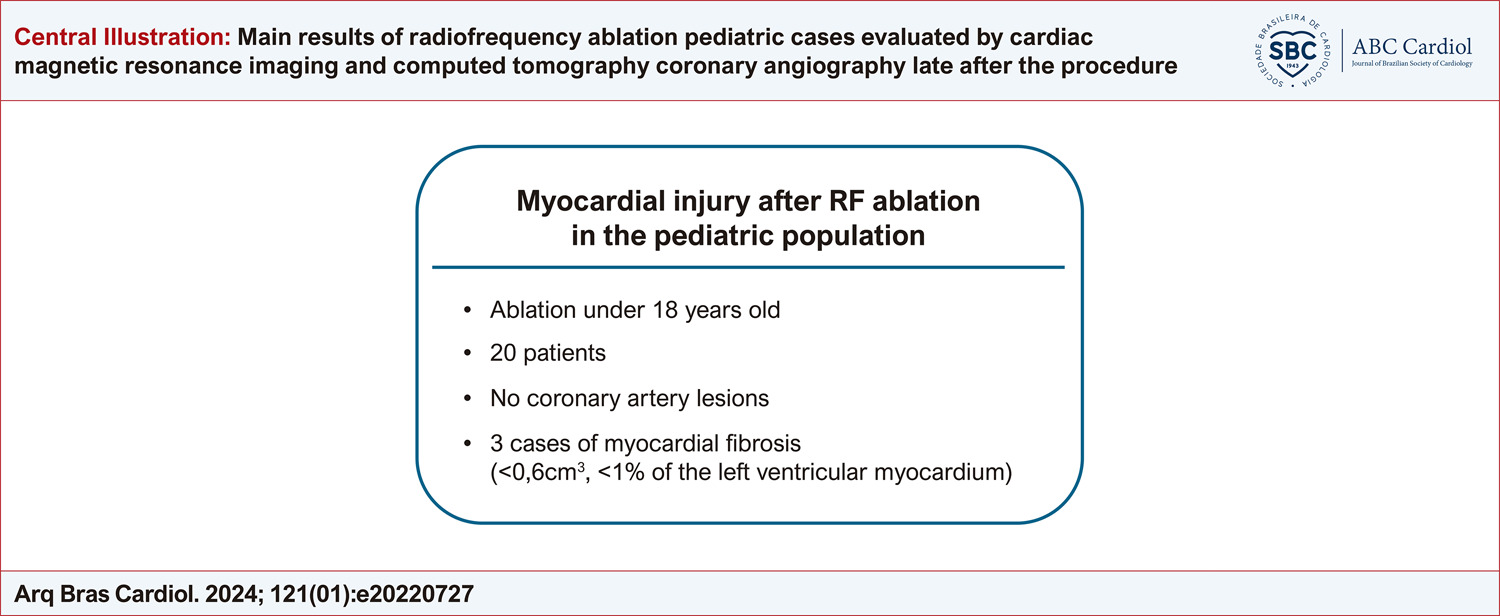
Myocardial Injury Progression after Radiofrequency Ablation in School-Age Children

Sissy Lara de Melo et al. Alberto Pereira Ferraz Stephanie Ondracek Lemouche Marcela Santana Devido … Gabriela Liberato de Sousa Carlos E. Rochitte Cristiano Faria Pisani Denise Tessariol Hachul Mauricio Scanavacca

Abstract

Background

The past decades have seen the rapid development of the invasive treatment of arrhythmias by catheter ablation procedures. Despite its safety and efficacy being well-established in adults, to date there has been little data in pediatric scenarios. One of the main concerns is the possible expansion of the ablation procedure scar in this population and its consequences over the years.

Objectives

This study aimed to analyze the risk of myocardial injury progression after radiofrequency catheter ablation in pediatric patients.

Methods

This is a retrospective study of 20 pediatric patients with previous ablation for treatment of supraventricular arrhythmia that underwent cardiac magnetic resonance and coronary angiography for evaluation of myocardial fibrosis and the integrity of the coronary arteries during follow-up.

Results

The median age at ablation procedure was 15.1 years (Q1 12.9, Q3 16.6) and 21 years (Q1 20, Q3 23) when the cardiac magnetic resonance was performed. Fourteen of them were women. Nodal reentry tachycardia and Wolf-Parkinson-White Syndrome were the main diagnosis (19 patients), with one patient with atrial tachycardia. Three patients had ventricular myocardial fibrosis, but with a volume < 0.6 cm 3 . None of them developed ventricular dysfunction and no patient had coronary lesions on angiography.

Conclusion

Radiofrequency catheter ablation did not show to increase the risk of myocardial injury progression or coronary artery lesions.

  • Catheter Ablation
  • Child
  • Myocardial Contusions
  • Safety
Read Full Article
Creative Commons Attribution (CC BY) Creative Commons license
05/02/2024 DOI: 10.36660/abc.20220727 Views 1
Central Illustration
Original Article

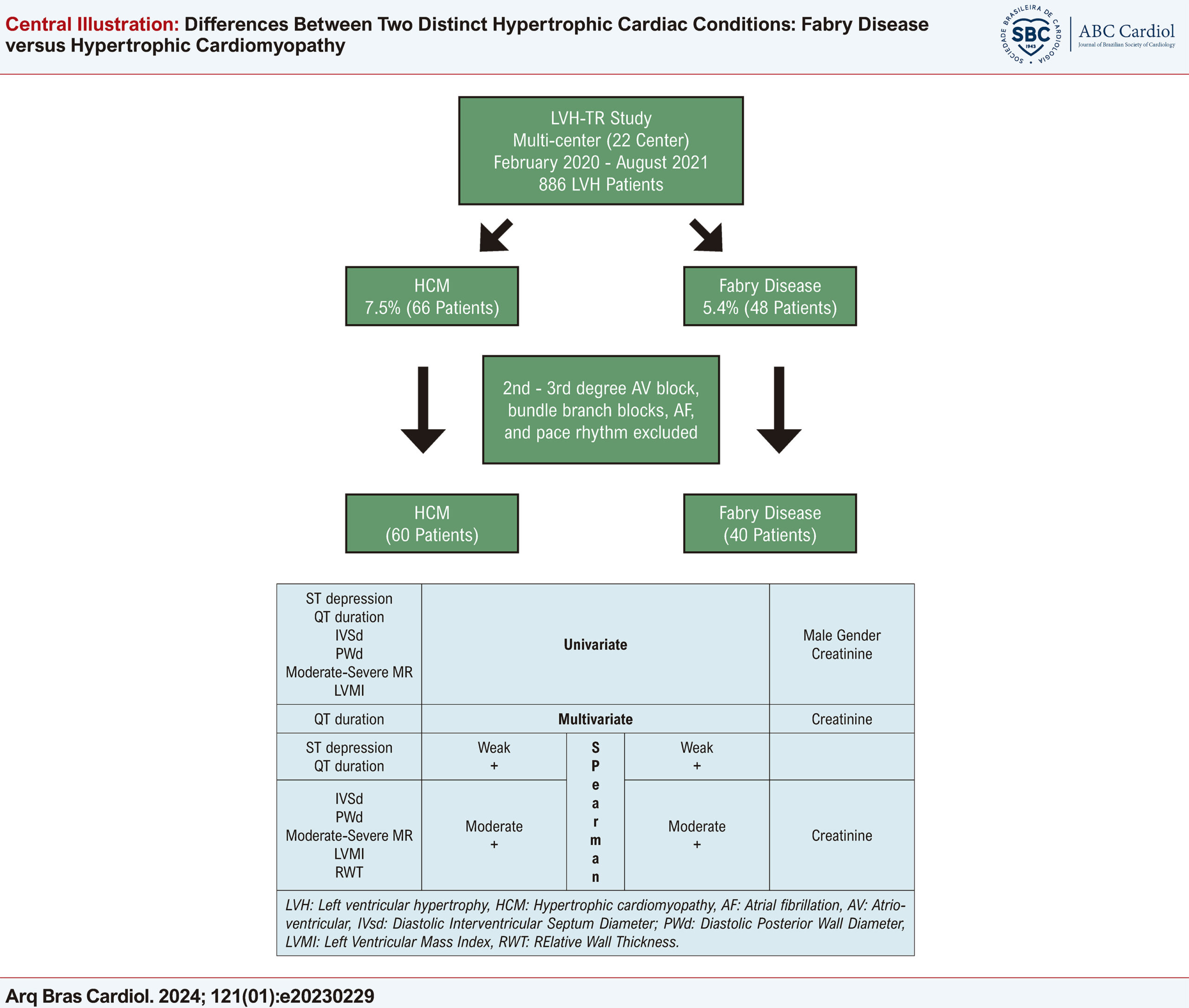
Differences Between Two Distinct Hypertrophic Cardiac Conditions: Fabry Disease versus Hypertrophic Cardiomyopathy

Onur Akhan et al. Mehmet Kış Tuncay Güzel Mehdi Zoghi

Abstract

Background

Hypertrophic cardiomyopathy (HCM) and Fabry disease (FD) are genetically inherited diseases with left ventricular hypertrophy (LVH) phenotype characteristics that cause adverse cardiac outcomes.

Objectives

To investigate the demographic, clinical, biochemical, electrocardiographic (ECG), and echocardiographic (ECHO) differences between HCM and FD.

Methods

60 HCM and 40 FD patients were analyzed retrospectively as a subanalysis of the ‘LVH-TR study’ after excluding patients with atrial fibrillation, pace rhythm, bundle branch blocks, and second and third-degree atrioventricular (AV) blocks. The significance level was accepted as <0.05.

Results

Male gender (p=0.048) and creatinine (p=0.010) are significantly higher in favor of FD; however, ST depression (p=0.028), QT duration (p=0.041), interventricular septum thickness (IVSd) (p=0.003), posterior wall thickness (PWd) (p=0.009), moderate-severe mitral regurgitation (MR) (p=0.013), and LV mass index (LVMI) (p=0.041) are significantly higher in favor of HCM in the univariate analyses. In multivariate analysis, statistical significance only continues in creatinine (p=0.018) and QT duration (0.045). FD was positively correlated with creatinine (rho=0.287, p=0.004) and HCM was positively correlated with PWd (rho=0.306, p=0.002), IVSd (rho=0.395, p<0.001), moderate-severe MR (rho=0.276, p<0.005), LVMI (rho=0.300, p=0.002), relative wall thickness (RWT) (rho=0.271, p=0.006), QT duration (rho=0.213, p=0.034) and ST depression (rho=0.222, p=0.026).

Conclusion

Specific biochemical, ECG, and ECHO characteristics can aid in the differentiation and early diagnosis of HCM and FD.

  • Cardiomyopathies
  • Fabry Disease
  • Hypertrophic Cardiomyopathy
  • Left Ventricular Hypertrophy
Read Full Article
Creative Commons Attribution (CC BY) Creative Commons license
05/02/2024 DOI: 10.36660/abc.20230229
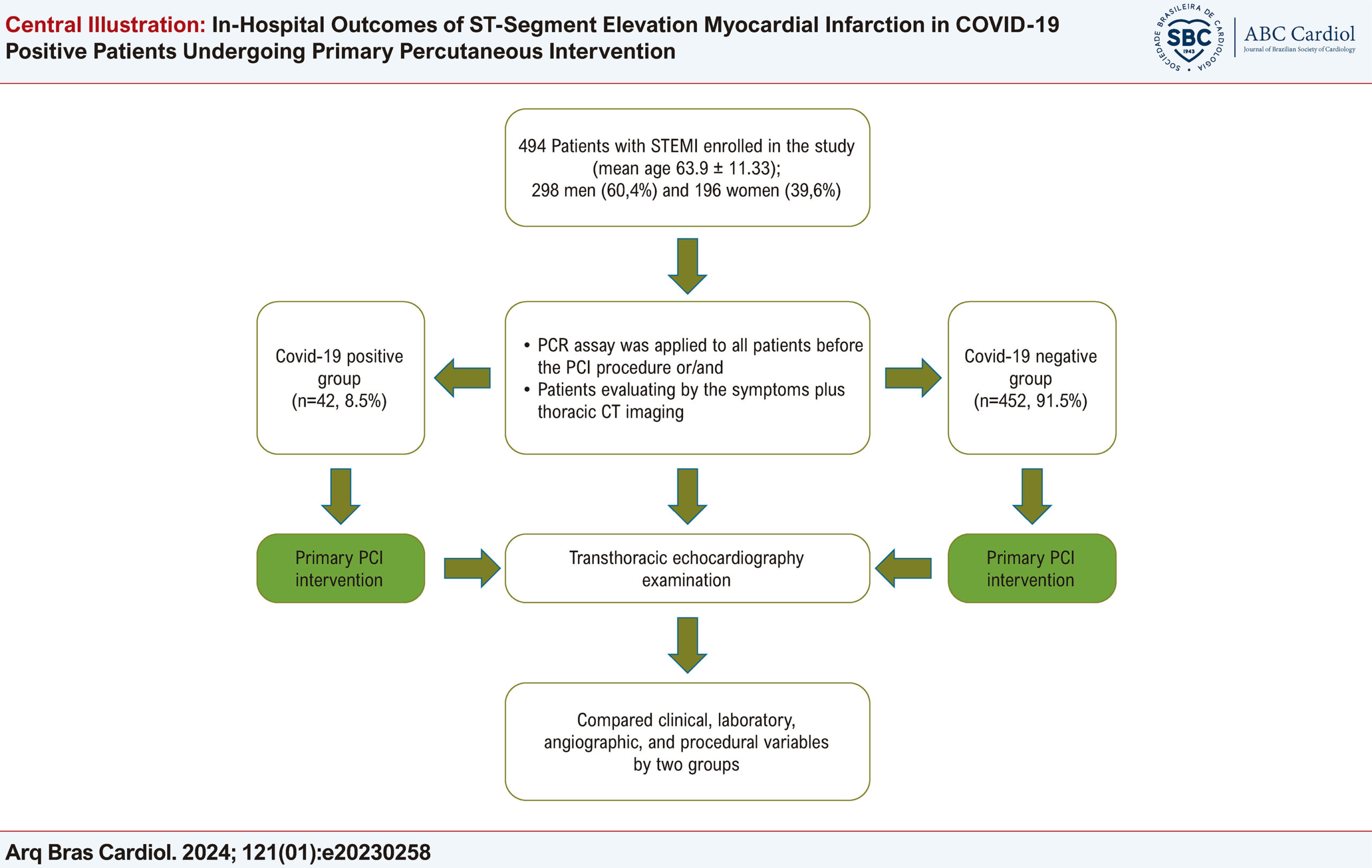
In-Hospital Outcomes of ST-Segment Elevation Myocardial Infarction in COVID-19 Positive Patients Undergoing Primary Percutaneous Intervention
Original Article

In-Hospital Outcomes of ST-Segment Elevation Myocardial Infarction in COVID-19 Positive Patients Undergoing Primary Percutaneous Intervention

Nart Zafer Baytuğan et al. Hasan Çağlayan Kandemir Tahir Bezgin

Abstract

Background

Concomitant coronavirus 2019 (COVID-19) infection and ST-segment elevation myocardial infarction (STEMI) are associated with increased adverse in-hospital outcomes.

Objectives

This study aimded to evaluate the angiographic, procedural, laboratory, and prognostic differences in COVID-19-positive and negative patients with STEMI undergoing primary percutaneous coronary intervention (PCI).

Methods

A single-center, retrospective, observational study was conducted between November 2020 and August 2022 in a tertiary-level hospital. According to their status, patients were divided into two groups (COVID-19 positive and negative). All patients were admitted due to confirmed STEMI and treated with primary PCI. In-hospital and angiographic outcomes were compared between the two groups. Two-sided p-values < 0.05 were accepted as statistically significant.

Results

Of the 494 STEMI patients enrolled in this study, 42 were identified as having a positive dagnosis for COVID-19 (8.5%), while 452 were negative. The patients who tested positive for COVID-19 had a longer total ischemic time than did those who tested negative for COVID-19 (p=0.006). Moreover, these patients presented an increase in stent thrombosis (7.1% vs. 1.7%, p=0.002), length of hospitalization (4 days vs. 3 days, p= 0.018), cardiogenic shock (14.2% vs. 5.5 %, p= 0.023), and in-hospital total and cardiac mortality (p<0.001 and p=0.032, respectively).

Conclusions

Patients with STEMI with concomitant COVID-19 infections were associated with increased major adverse cardiac events. Further studies are needed to understand the exact mechanisms of adverse outcomes in these patients.

  • Cardiogenic shock
  • COVID-19
  • Mortality
  • Myocardial Infarction
Read Full Article
Creative Commons Attribution (CC BY) Creative Commons license
05/02/2024 DOI: 10.36660/abc.20230258
Central Illustration
Original Article

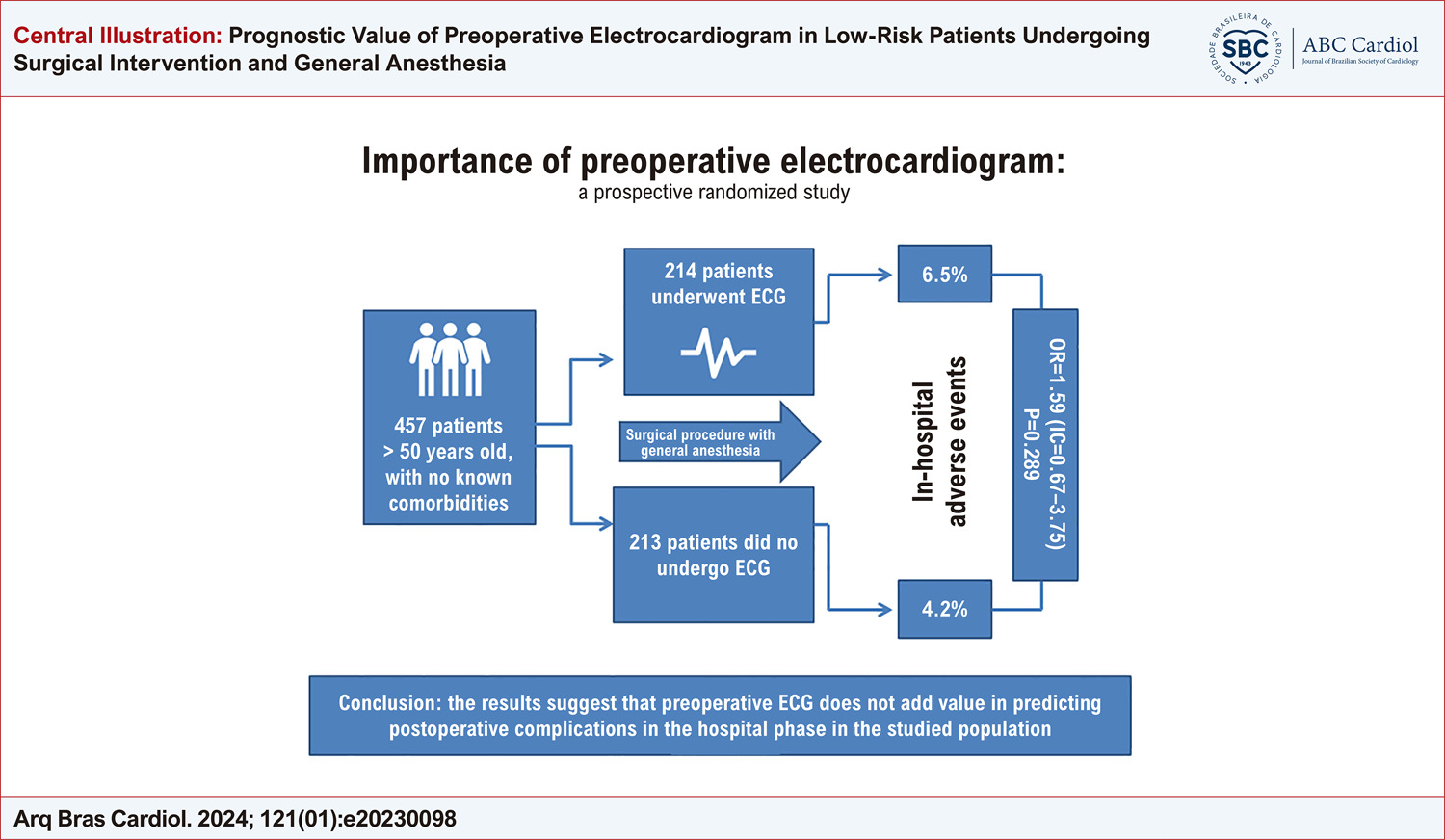
Prognostic Value of Preoperative Electrocardiogram in Low-Risk Patients Undergoing Surgical Intervention and General Anesthesia

Lafayete Ramos et al. Alexandre Chataubriand Coutinho José Rebelato Marcos Vinicius Ramos … Eliane Elly Pedro Amoedo Gustavo Viel Valdir Ambrósio Moises

Abstract

Background

Patients aged over 50 years require four times more surgical interventions than younger groups. Many guidelines recommend the performance of preoperative electrocardiogram (ECG) in this population.

Objectives

To determine the value of preoperative ECG in patients aged over 50 years and classified as ASA I–II (surgical risk).

Methods

Patients older than 50 years, without comorbidities, who underwent surgical intervention and general anesthesia were included in the study. Patients were randomized to undergo ECG (group A, n=214) or not (group B, n=213) in the preoperative period. The following variables were analyzed: sex, age, ECG, chest x-ray and laboratory tests results, surgical risk, surgery duration, adverse events and in-hospital mortality. The level of significance was set at 5%.

Results

Adverse outcomes were reported in 23 (5.4%) patients, with a significant number of adverse events in male patients (OR=7.91 95%CI 3.3-18.90, p<0.001) and in those undergoing major surgeries (OR=30.02 95%CI 4.01-224.92, p<0.001). No differences were observed between patients who underwent ECG and those who did not (OR=1.59, 95%CI, 0.67-3.75, p=0.289). No significant differences were found in the other variables. In multivariate logistic regression, male sex (OR = 6.49; 95%CI 2.42-17.42, p<0.001) and major surgery (OR=22.62; 95%CI 2.95-173.41, p=0.002) were independent predictors of adverse outcomes, whereas undergoing (or not) ECG (OR=1.09; IC95% 0.41-2.90, p=0.867) remained without statistical significance.

Conclusion

Our findings suggest that preoperative ECG could not predict an increased risk of adverse outcomes in our study population during the hospital phase.

  • Electrocardiography
  • General Surgery
  • Preoperative Care
Read Full Article
Creative Commons Attribution (CC BY) Creative Commons license
05/02/2024 DOI: 10.36660/abc.20230098 Views 1
Figure 1
Research Letter

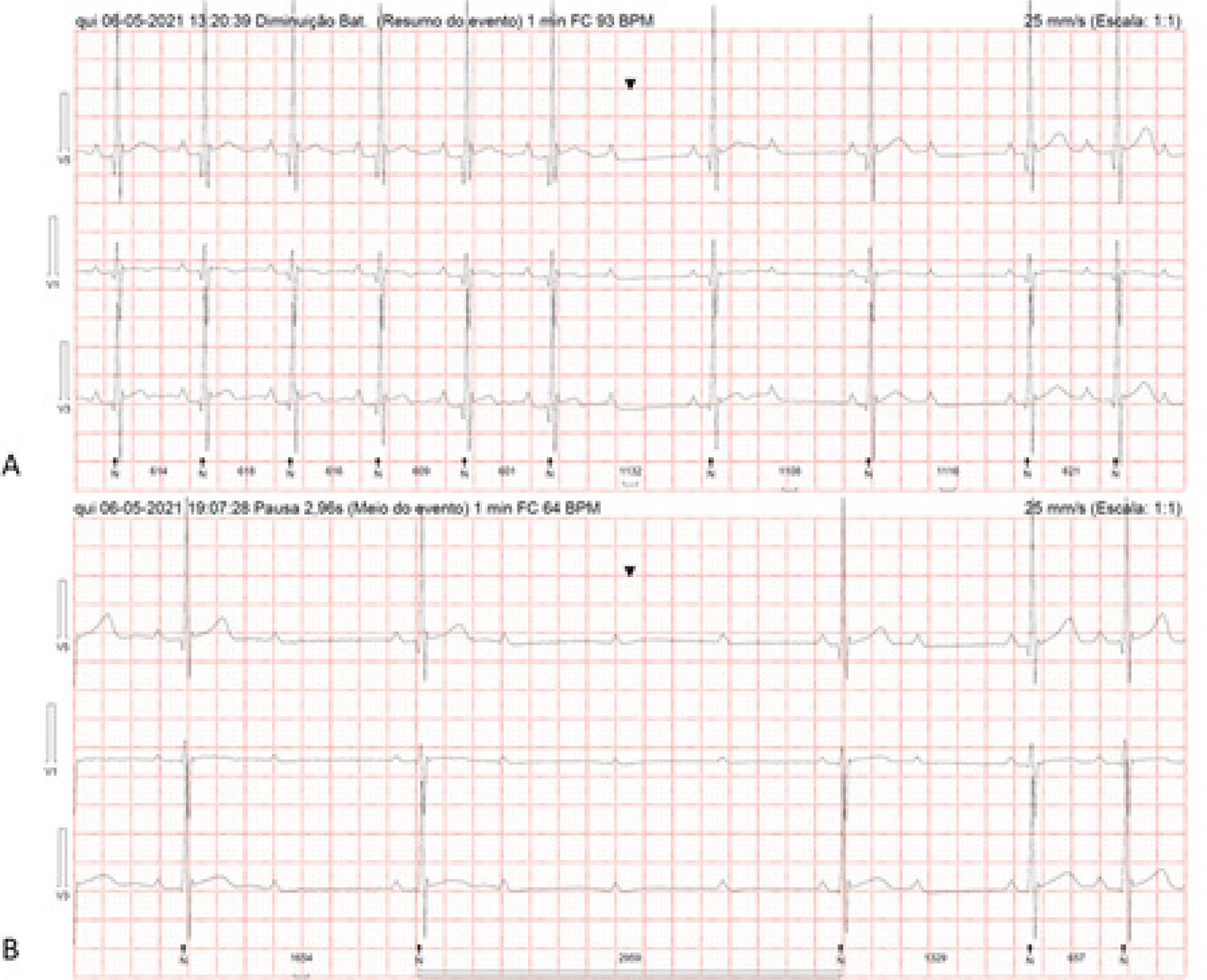
An Unusual Presentation of Lyme Carditis and Adenosine-Sensitive Atrioventricular Block

André Alexandre et al. Diana Ribeiro Maria João Sousa Hipólito Reis … João Silveira Severo Torres

Introduction

Lyme carditis (LC) is a relatively rare manifestation of the early disseminated stage of LC. , The most frequent presentation of LC is atrioventricular (AV) block characterized by rapid fluctuations in the grade and that occurs in approximately 80-90% of patients. , Other possible clinical manifestations of LC are myocarditis, pericarditis, dilated cardiomyopathy, and heart failure. , The clinical course is usually mild, short-term, and in most cases completely reversible after adequate antibiotic treatment. Indeed, high-grade AV block associated with Lyme disease typically resolves within the first ten days of antibiotic therapy. The authors present a case of a young female diagnosed with early disseminated Lyme disease and cardiac manifestations, in whom AV conduction disturbances persisted after four weeks of appropriate antibiotic treatment and led to an alternative diagnosis.

[…]

  • Adenosine
  • Atrioventricular block
  • cardiomyopathy
  • Lyme Disease
  • Theophyline
Read Full Article
Creative Commons Attribution (CC BY) Creative Commons license
05/02/2024 DOI: 10.36660/abc.20230228 Views 1

How to cite this article

EndNote RIS

Electronic Document Format (Vancouver)

Faganello LS, Zimerman LI. COVID-19 and Atrial Fibrillation: Predicting to Prevent. Arquivos Brasileiros de Cardiologia 2024;121(1):e20230823.

Electronic Document Format (ABNT)

Faganello, Lucas Simonetto; Zimerman, Leandro Ioschpe. COVID-19 and Atrial Fibrillation: Predicting to Prevent. Arquivos Brasileiros de Cardiologia, v. 121, n. 1, e20230823, Apr. 2024.

Electronic Document Format (APA)

Faganello, L. S., & Zimerman, L. I. (2024). COVID-19 and Atrial Fibrillation: Predicting to Prevent. Arquivos Brasileiros de Cardiologia, 121(1), e20230823.

Electronic Document Format (ISO)

Faganello, Lucas Simonetto and Zimerman, Leandro Ioschpe. COVID-19 and Atrial Fibrillation: Predicting to Prevent. Arquivos Brasileiros de Cardiologia [online]. 2024, vol. 121, n. 1, [cited 2026-10-14], e20230823. Available from: <https://journals.cardiol.br/en/article/covid-19-and-atrial-fibrillation-predicting-to-prevent/>. ISSN 0066-782X

EndNote RIS

Electronic Document Format (Vancouver)

Andrea BR, Benchimol-Barbosa PR, Farah S, Monteiro A. Clinical and Laboratory Data Up on Hospital Admission are Predictors of New-Onset Atrial Fibrillation in Patients Hospitalized Due to COVID-19 Pneumonia. Arquivos Brasileiros de Cardiologia 2024;121(1):e20220784.

Electronic Document Format (ABNT)

Andrea, Bruno Rustum; Benchimol-Barbosa, Paulo Roberto; Farah, Simone; Monteiro, Alexandra. Clinical and Laboratory Data Up on Hospital Admission are Predictors of New-Onset Atrial Fibrillation in Patients Hospitalized Due to COVID-19 Pneumonia. Arquivos Brasileiros de Cardiologia, v. 121, n. 1, e20220784, Apr. 2024.

Electronic Document Format (APA)

Andrea, B. R., Benchimol-Barbosa, P. R., Farah, S., & Monteiro, A. (2024). Clinical and Laboratory Data Up on Hospital Admission are Predictors of New-Onset Atrial Fibrillation in Patients Hospitalized Due to COVID-19 Pneumonia. Arquivos Brasileiros de Cardiologia, 121(1), e20220784.

Electronic Document Format (ISO)

Andrea, Bruno Rustum and Benchimol-Barbosa, Paulo Roberto and Farah, Simone and Monteiro, Alexandra. Clinical and Laboratory Data Up on Hospital Admission are Predictors of New-Onset Atrial Fibrillation in Patients Hospitalized Due to COVID-19 Pneumonia. Arquivos Brasileiros de Cardiologia [online]. 2024, vol. 121, n. 1, [cited 2026-10-14], e20220784. Available from: <https://journals.cardiol.br/en/article/clinical-and-laboratory-data-up-on-hospital-admission-are-predictors-of-new-onset-atrial-fibrillation-in-patients-hospitalized-due-to-covid-19-pneumonia/>. ISSN 0066-782X

EndNote RIS

Electronic Document Format (Vancouver)

Camargo FM, Brizot ML, Francisco RPV, Carvalho WB, Ikari NM, Peres SV, Lopes MAB, et al. Perinatal Results and Long-Term Follow-Up of Fetal Cardiac Tumors: A 30-Year Historical Cohort Study. Arquivos Brasileiros de Cardiologia 2024;121(1):e20220469.

Electronic Document Format (ABNT)

Camargo, Fabricio Marcondes; Brizot, Maria de Lourdes; Francisco, Rossana Pulcineli Vieira; Carvalho, Werther Brunow de; Ikari, Nana Miura; Peres, Stella Verzinhasse; Lopes, Marco Antônio Borges; Lopes, Lilian Maria. Perinatal Results and Long-Term Follow-Up of Fetal Cardiac Tumors: A 30-Year Historical Cohort Study. Arquivos Brasileiros de Cardiologia, v. 121, n. 1, e20220469, Mar. 2024.

Electronic Document Format (APA)

Camargo, F. M., Brizot, M. L., Francisco, R. P. V., Carvalho, W. B. , Ikari, N. M., Peres, S. V., Lopes, M. A. B., & Lopes, L. M. (2024). Perinatal Results and Long-Term Follow-Up of Fetal Cardiac Tumors: A 30-Year Historical Cohort Study. Arquivos Brasileiros de Cardiologia, 121(1), e20220469.

Electronic Document Format (ISO)

Camargo, Fabricio Marcondes and Brizot, Maria de Lourdes and Francisco, Rossana Pulcineli Vieira and Carvalho, Werther Brunow de and Ikari, Nana Miura and Peres, Stella Verzinhasse and Lopes, Marco Antônio Borges and Lopes, Lilian Maria. Perinatal Results and Long-Term Follow-Up of Fetal Cardiac Tumors: A 30-Year Historical Cohort Study. Arquivos Brasileiros de Cardiologia [online]. 2024, vol. 121, n. 1, [cited 2026-10-14], e20220469. Available from: <https://journals.cardiol.br/en/article/perinatal-results-and-long-term-follow-up-of-fetal-cardiac-tumors-a-30-year-historical-cohort-study/>. ISSN 0066-782X

EndNote RIS

Electronic Document Format (Vancouver)

Elias Neto J, Silva MA. Images Complement Words: Absence of Progression of Myocardial and Coronary Artery Injury in School-Age Children Undergoing Radiofrequency Catheter Ablation. Arquivos Brasileiros de Cardiologia 2024;121(1):e20230850.

Electronic Document Format (ABNT)

Elias Neto, Jorge; Silva, Márcio Augusto. Images Complement Words: Absence of Progression of Myocardial and Coronary Artery Injury in School-Age Children Undergoing Radiofrequency Catheter Ablation. Arquivos Brasileiros de Cardiologia, v. 121, n. 1, e20230850, Mar. 2024.

Electronic Document Format (APA)

Elias Neto, J., & Silva, M. A. (2024). Images Complement Words: Absence of Progression of Myocardial and Coronary Artery Injury in School-Age Children Undergoing Radiofrequency Catheter Ablation. Arquivos Brasileiros de Cardiologia, 121(1), e20230850.

Electronic Document Format (ISO)

Elias Neto, Jorge and Silva, Márcio Augusto. Images Complement Words: Absence of Progression of Myocardial and Coronary Artery Injury in School-Age Children Undergoing Radiofrequency Catheter Ablation. Arquivos Brasileiros de Cardiologia [online]. 2024, vol. 121, n. 1, [cited 2026-10-14], e20230850. Available from: <https://journals.cardiol.br/en/article/images-complement-words-absence-of-progression-of-myocardial-and-coronary-artery-injury-in-school-age-children-undergoing-radiofrequency-catheter-ablation/>. ISSN 0066-782X

EndNote RIS

Electronic Document Format (Vancouver)

Ferreira VM, Rodrigues DN, Contreras CAM, Rossi JM, Ramos RF, Oliveira G, Oliveira MF, et al. The Effects of Exercise on Cardiogenic Shock with an Intra-Aortic Balloon Pump: A Case Report. Arquivos Brasileiros de Cardiologia 2024;121(1):e20230537.

Electronic Document Format (ABNT)

Ferreira, Vanessa M.; Rodrigues, Dayane Nunes; Contreras, Carlos Alberto Mendez; Rossi, João M.; Ramos, Rui Fernando; Oliveira, Gustavo; Oliveira, Mayron F.. The Effects of Exercise on Cardiogenic Shock with an Intra-Aortic Balloon Pump: A Case Report. Arquivos Brasileiros de Cardiologia, v. 121, n. 1, e20230537, Mar. 2024.

Electronic Document Format (APA)

Ferreira, V. M., Rodrigues, D. N., Contreras, C. A. M., Rossi, J. M., Ramos, R. F., Oliveira, G., & Oliveira, M. F. (2024). The Effects of Exercise on Cardiogenic Shock with an Intra-Aortic Balloon Pump: A Case Report. Arquivos Brasileiros de Cardiologia, 121(1), e20230537.

Electronic Document Format (ISO)

Ferreira, Vanessa M. and Rodrigues, Dayane Nunes and Contreras, Carlos Alberto Mendez and Rossi, João M. and Ramos, Rui Fernando and Oliveira, Gustavo and Oliveira, Mayron F.. The Effects of Exercise on Cardiogenic Shock with an Intra-Aortic Balloon Pump: A Case Report. Arquivos Brasileiros de Cardiologia [online]. 2024, vol. 121, n. 1, [cited 2026-10-14], e20230537. Available from: <https://journals.cardiol.br/en/article/the-effects-of-exercise-on-cardiogenic-shock-with-an-intra-aortic-balloon-pump-a-case-report/>. ISSN 0066-782X

EndNote RIS

Electronic Document Format (Vancouver)

Soeiro AM. How Can COVID-19 Influence the Evolution of Patients with Acute Coronary Syndromes?. Arquivos Brasileiros de Cardiologia 2024;121(1):e20230888.

Electronic Document Format (ABNT)

Soeiro, Alexandre de Matos. How Can COVID-19 Influence the Evolution of Patients with Acute Coronary Syndromes?. Arquivos Brasileiros de Cardiologia, v. 121, n. 1, e20230888, Mar. 2024.

Electronic Document Format (APA)

Soeiro, A. M. (2024). How Can COVID-19 Influence the Evolution of Patients with Acute Coronary Syndromes?. Arquivos Brasileiros de Cardiologia, 121(1), e20230888.

Electronic Document Format (ISO)

Soeiro, Alexandre de Matos. How Can COVID-19 Influence the Evolution of Patients with Acute Coronary Syndromes?. Arquivos Brasileiros de Cardiologia [online]. 2024, vol. 121, n. 1, [cited 2026-10-14], e20230888. Available from: <https://journals.cardiol.br/en/article/how-can-covid-19-influence-the-evolution-of-patients-with-acute-coronary-syndromes/>. ISSN 0066-782X

EndNote RIS

Electronic Document Format (Vancouver)

Aiello VD. Has the Natural History of Primary Heart Tumors in Children Been Modified Recently?. Arquivos Brasileiros de Cardiologia 2024;121(1):e20230849.

Electronic Document Format (ABNT)

Aiello, Vera Demarchi. Has the Natural History of Primary Heart Tumors in Children Been Modified Recently?. Arquivos Brasileiros de Cardiologia, v. 121, n. 1, e20230849, Mar. 2024.

Electronic Document Format (APA)

Aiello, V. D. (2024). Has the Natural History of Primary Heart Tumors in Children Been Modified Recently?. Arquivos Brasileiros de Cardiologia, 121(1), e20230849.

Electronic Document Format (ISO)

Aiello, Vera Demarchi. Has the Natural History of Primary Heart Tumors in Children Been Modified Recently?. Arquivos Brasileiros de Cardiologia [online]. 2024, vol. 121, n. 1, [cited 2026-10-14], e20230849. Available from: <https://journals.cardiol.br/en/article/has-the-natural-history-of-primary-heart-tumors-in-children-been-modified-recently/>. ISSN 0066-782X

EndNote RIS

Electronic Document Format (Vancouver)

Nascimento CR, Ribeiro JLM, Mendes R, Barbosa RHA, Lopes JM, Tenório PP. The Relationship between Uric Acid/Albumin Ratio and Carotid Intima-Media Thickness in Patients with Hypertension. Arquivos Brasileiros de Cardiologia 2024;121(1):e20230691.

Electronic Document Format (ABNT)

Nascimento, Cristian Rodrigues do; Ribeiro, João Luis Matos; Mendes, Rodrigo; Barbosa, Romero Henrique de Almeida; Lopes, Johnnatas Mikael; Tenório, Pedro Pereira. The Relationship between Uric Acid/Albumin Ratio and Carotid Intima-Media Thickness in Patients with Hypertension. Arquivos Brasileiros de Cardiologia, v. 121, n. 1, e20230691, Mar. 2024.

Electronic Document Format (APA)

Nascimento, C. R. , Ribeiro, J. L. M., Mendes, R., Barbosa, R. H. A., Lopes, J. M., & Tenório, P. P. (2024). The Relationship between Uric Acid/Albumin Ratio and Carotid Intima-Media Thickness in Patients with Hypertension. Arquivos Brasileiros de Cardiologia, 121(1), e20230691.

Electronic Document Format (ISO)

Nascimento, Cristian Rodrigues do and Ribeiro, João Luis Matos and Mendes, Rodrigo and Barbosa, Romero Henrique de Almeida and Lopes, Johnnatas Mikael and Tenório, Pedro Pereira. The Relationship between Uric Acid/Albumin Ratio and Carotid Intima-Media Thickness in Patients with Hypertension. Arquivos Brasileiros de Cardiologia [online]. 2024, vol. 121, n. 1, [cited 2026-10-14], e20230691. Available from: <https://journals.cardiol.br/en/article/the-relationship-between-uric-acid-albumin-ratio-and-carotid-intima-media-thickness-in-patients-with-hypertension/>. ISSN 0066-782X

EndNote RIS

Electronic Document Format (Vancouver)

Antunes MO. Zebras Exist, Too!. Arquivos Brasileiros de Cardiologia 2024;121(1):e20230834.

Electronic Document Format (ABNT)

Antunes, Murillo de Oliveira. Zebras Exist, Too!. Arquivos Brasileiros de Cardiologia, v. 121, n. 1, e20230834, Mar. 2024.

Electronic Document Format (APA)

Antunes, M. O. (2024). Zebras Exist, Too!. Arquivos Brasileiros de Cardiologia, 121(1), e20230834.

Electronic Document Format (ISO)

Antunes, Murillo de Oliveira. Zebras Exist, Too!. Arquivos Brasileiros de Cardiologia [online]. 2024, vol. 121, n. 1, [cited 2026-10-14], e20230834. Available from: <https://journals.cardiol.br/en/article/zebras-exist-too/>. ISSN 0066-782X

EndNote RIS

Electronic Document Format (Vancouver)

Gomes DA, Paiva MS, Freitas P, Albuquerque F, Lima MR, Santos RR, Presume J, et al. Attainment of LDL-Cholesterol Goals in Patients with Previous Myocardial Infarction: A Real-World Cross-Sectional Analysis. Arquivos Brasileiros de Cardiologia 2024;121(1):e20230242.

Electronic Document Format (ABNT)

Gomes, Daniel A.; Paiva, Mariana Sousa; Freitas, Pedro; Albuquerque, Francisco; Lima, Maria Rita; Santos, Rita Reis; Presume, João; Trabulo, Marisa; Aguiar, Carlos; Ferreira, Jorge; Ferreira, António M.; Mendes, Miguel. Attainment of LDL-Cholesterol Goals in Patients with Previous Myocardial Infarction: A Real-World Cross-Sectional Analysis. Arquivos Brasileiros de Cardiologia, v. 121, n. 1, e20230242, Mar. 2024.

Electronic Document Format (APA)

Gomes, D. A., Paiva, M. S., Freitas, P., Albuquerque, F., Lima, M. R., Santos, R. R., Presume, J., Trabulo, M., Aguiar, C., Ferreira, J., Ferreira, A. M., & Mendes, M. (2024). Attainment of LDL-Cholesterol Goals in Patients with Previous Myocardial Infarction: A Real-World Cross-Sectional Analysis. Arquivos Brasileiros de Cardiologia, 121(1), e20230242.

Electronic Document Format (ISO)

Gomes, Daniel A. and Paiva, Mariana Sousa and Freitas, Pedro and Albuquerque, Francisco and Lima, Maria Rita and Santos, Rita Reis and Presume, João and Trabulo, Marisa and Aguiar, Carlos and Ferreira, Jorge and Ferreira, António M. and Mendes, Miguel. Attainment of LDL-Cholesterol Goals in Patients with Previous Myocardial Infarction: A Real-World Cross-Sectional Analysis. Arquivos Brasileiros de Cardiologia [online]. 2024, vol. 121, n. 1, [cited 2026-10-14], e20230242. Available from: <https://journals.cardiol.br/en/article/attainment-of-ldl-cholesterol-goals-in-patients-with-previous-myocardial-infarction-a-real-world-cross-sectional-analysis/>. ISSN 0066-782X

EndNote RIS

Electronic Document Format (Vancouver)

Martins WA. Scores for Diagnosing the Malignant Etiology of Pericardial Effusion: A Valuable Initial Aid in the Investigation. Arquivos Brasileiros de Cardiologia 2024;121(1):e20230762.

Electronic Document Format (ABNT)

Martins, Wolney de Andrade. Scores for Diagnosing the Malignant Etiology of Pericardial Effusion: A Valuable Initial Aid in the Investigation. Arquivos Brasileiros de Cardiologia, v. 121, n. 1, e20230762, Mar. 2024.

Electronic Document Format (APA)

Martins, W. A. (2024). Scores for Diagnosing the Malignant Etiology of Pericardial Effusion: A Valuable Initial Aid in the Investigation. Arquivos Brasileiros de Cardiologia, 121(1), e20230762.

Electronic Document Format (ISO)

Martins, Wolney de Andrade. Scores for Diagnosing the Malignant Etiology of Pericardial Effusion: A Valuable Initial Aid in the Investigation. Arquivos Brasileiros de Cardiologia [online]. 2024, vol. 121, n. 1, [cited 2026-10-14], e20230762. Available from: <https://journals.cardiol.br/en/article/scores-for-diagnosing-the-malignant-etiology-of-pericardial-effusion-a-valuable-initial-aid-in-the-investigation/>. ISSN 0066-782X

EndNote RIS

Electronic Document Format (Vancouver)

Francisco Neto MJ, Lira Filho EB, Queiroz MRG. Point-of-Care in Clinical Practice: Consolidated Reality. Arquivos Brasileiros de Cardiologia 2024;121(1):e20230688.

Electronic Document Format (ABNT)

Francisco Neto, Miguel José; Lira Filho, Edgar Bezerra de; Queiroz, Marcos Roberto Gomes de. Point-of-Care in Clinical Practice: Consolidated Reality. Arquivos Brasileiros de Cardiologia, v. 121, n. 1, e20230688, Mar. 2024.

Electronic Document Format (APA)

Francisco Neto, M. J., Lira Filho, E. B. , & Queiroz, M. R. G. (2024). Point-of-Care in Clinical Practice: Consolidated Reality. Arquivos Brasileiros de Cardiologia, 121(1), e20230688.

Electronic Document Format (ISO)

Francisco Neto, Miguel José and Lira Filho, Edgar Bezerra de and Queiroz, Marcos Roberto Gomes de. Point-of-Care in Clinical Practice: Consolidated Reality. Arquivos Brasileiros de Cardiologia [online]. 2024, vol. 121, n. 1, [cited 2026-10-14], e20230688. Available from: <https://journals.cardiol.br/en/article/point-of-care-in-clinical-practice-consolidated-reality/>. ISSN 0066-782X

EndNote RIS

Electronic Document Format (Vancouver)

Oliveira Filho FJ, Garcia LR, Mellucci Filho PL, Rodrigues LS, Bertanha M. Electrocardiography in the Pre-Operative Assessment of Low-Risk Patients: Current Evidence. Arquivos Brasileiros de Cardiologia 2024;121(1):e20230808.

Electronic Document Format (ABNT)

Oliveira Filho, Francisco José de; Garcia, Leonardo Rufino; Mellucci Filho, Pedro Luciano; Rodrigues, Lenize da Silva; Bertanha, Matheus. Electrocardiography in the Pre-Operative Assessment of Low-Risk Patients: Current Evidence. Arquivos Brasileiros de Cardiologia, v. 121, n. 1, e20230808, Mar. 2024.

Electronic Document Format (APA)

Oliveira Filho, F. J. , Garcia, L. R., Mellucci Filho, P. L., Rodrigues, L. S., & Bertanha, M. (2024). Electrocardiography in the Pre-Operative Assessment of Low-Risk Patients: Current Evidence. Arquivos Brasileiros de Cardiologia, 121(1), e20230808.

Electronic Document Format (ISO)

Oliveira Filho, Francisco José de and Garcia, Leonardo Rufino and Mellucci Filho, Pedro Luciano and Rodrigues, Lenize da Silva and Bertanha, Matheus. Electrocardiography in the Pre-Operative Assessment of Low-Risk Patients: Current Evidence. Arquivos Brasileiros de Cardiologia [online]. 2024, vol. 121, n. 1, [cited 2026-10-14], e20230808. Available from: <https://journals.cardiol.br/en/article/electrocardiography-in-the-pre-operative-assessment-of-low-risk-patients-current-evidence/>. ISSN 0066-782X

EndNote RIS

Electronic Document Format (Vancouver)

Koyun E, Dindas F, Sahin A, Cerik IB, Dogdus M. Screening Tests Predicting Cancer Metastasis in the Etiology of Pericardial Effusion: HALP Score and PNI. Arquivos Brasileiros de Cardiologia 2024;121(1):e20230376.

Electronic Document Format (ABNT)

Koyun, Emin; Dindas, Ferhat; Sahin, Anil; Cerik, Idris Bugra; Dogdus, Mustafa. Screening Tests Predicting Cancer Metastasis in the Etiology of Pericardial Effusion: HALP Score and PNI. Arquivos Brasileiros de Cardiologia, v. 121, n. 1, e20230376, Mar. 2024.

Electronic Document Format (APA)

Koyun, E., Dindas, F., Sahin, A., Cerik, I. B., & Dogdus, M. (2024). Screening Tests Predicting Cancer Metastasis in the Etiology of Pericardial Effusion: HALP Score and PNI. Arquivos Brasileiros de Cardiologia, 121(1), e20230376.

Electronic Document Format (ISO)

Koyun, Emin and Dindas, Ferhat and Sahin, Anil and Cerik, Idris Bugra and Dogdus, Mustafa. Screening Tests Predicting Cancer Metastasis in the Etiology of Pericardial Effusion: HALP Score and PNI. Arquivos Brasileiros de Cardiologia [online]. 2024, vol. 121, n. 1, [cited 2026-10-14], e20230376. Available from: <https://journals.cardiol.br/en/article/screening-tests-predicting-cancer-metastasis-in-the-etiology-of-pericardial-effusion-halp-score-and-pni/>. ISSN 0066-782X

EndNote RIS

Electronic Document Format (Vancouver)

Ivonina NI, Ivonin AG, Roshchevskaya IM. Body Surface Potential Mapping during Ventricular Depolarization in Athletes with Prolonged PQ Interval after Exercise. Arquivos Brasileiros de Cardiologia 2024;121(1):e20230179.

Electronic Document Format (ABNT)

Ivonina, Natalya I.; Ivonin, Alexey G.; Roshchevskaya, Irina M.. Body Surface Potential Mapping during Ventricular Depolarization in Athletes with Prolonged PQ Interval after Exercise. Arquivos Brasileiros de Cardiologia, v. 121, n. 1, e20230179, Mar. 2024.

Electronic Document Format (APA)

Ivonina, N. I., Ivonin, A. G., & Roshchevskaya, I. M. (2024). Body Surface Potential Mapping during Ventricular Depolarization in Athletes with Prolonged PQ Interval after Exercise. Arquivos Brasileiros de Cardiologia, 121(1), e20230179.

Electronic Document Format (ISO)

Ivonina, Natalya I. and Ivonin, Alexey G. and Roshchevskaya, Irina M.. Body Surface Potential Mapping during Ventricular Depolarization in Athletes with Prolonged PQ Interval after Exercise. Arquivos Brasileiros de Cardiologia [online]. 2024, vol. 121, n. 1, [cited 2026-10-14], e20230179. Available from: <https://journals.cardiol.br/en/article/body-surface-potential-mapping-during-ventricular-depolarization-in-athletes-with-prolonged-pq-interval-after-exercise/>. ISSN 0066-782X

EndNote RIS

Electronic Document Format (Vancouver)

Couceiro SM, Sant’Anna FM. Is Catheter Ablation for Atrial Fibrillation in Patients with Heart Failure and Reduced Ejection Fraction a Good Therapeutic Option?. Arquivos Brasileiros de Cardiologia 2024;121(1):e20230820.

Electronic Document Format (ABNT)

Couceiro, Sergio Menezes; Sant’Anna, Fernando Mendes. Is Catheter Ablation for Atrial Fibrillation in Patients with Heart Failure and Reduced Ejection Fraction a Good Therapeutic Option?. Arquivos Brasileiros de Cardiologia, v. 121, n. 1, e20230820, Mar. 2024.

Electronic Document Format (APA)

Couceiro, S. M., & Sant’Anna, F. M. (2024). Is Catheter Ablation for Atrial Fibrillation in Patients with Heart Failure and Reduced Ejection Fraction a Good Therapeutic Option?. Arquivos Brasileiros de Cardiologia, 121(1), e20230820.

Electronic Document Format (ISO)

Couceiro, Sergio Menezes and Sant’Anna, Fernando Mendes. Is Catheter Ablation for Atrial Fibrillation in Patients with Heart Failure and Reduced Ejection Fraction a Good Therapeutic Option?. Arquivos Brasileiros de Cardiologia [online]. 2024, vol. 121, n. 1, [cited 2026-10-14], e20230820. Available from: <https://journals.cardiol.br/en/article/is-catheter-ablation-for-atrial-fibrillation-in-patients-with-heart-failure-and-reduced-ejection-fraction-a-good-therapeutic-option/>. ISSN 0066-782X

EndNote RIS

Electronic Document Format (Vancouver)

Scanavacca MI, Kulchetscki RM, Rochitte CE, Pisani CF. Cardiac Magnetic Resonance to Evaluate Complete Substrate Elimination after Endocardial Ventricular Tachycardia Ablation in Chagas Disease. Arquivos Brasileiros de Cardiologia 2024;121(1):e20230421.

Electronic Document Format (ABNT)

Scanavacca, Mauricio I.; Kulchetscki, Rodrigo M.; Rochitte, Carlos E.; Pisani, Cristiano F.. Cardiac Magnetic Resonance to Evaluate Complete Substrate Elimination after Endocardial Ventricular Tachycardia Ablation in Chagas Disease. Arquivos Brasileiros de Cardiologia, v. 121, n. 1, e20230421, Feb. 2024.

Electronic Document Format (APA)

Scanavacca, M. I., Kulchetscki, R. M., Rochitte, C. E., & Pisani, C. F. (2024). Cardiac Magnetic Resonance to Evaluate Complete Substrate Elimination after Endocardial Ventricular Tachycardia Ablation in Chagas Disease. Arquivos Brasileiros de Cardiologia, 121(1), e20230421.

Electronic Document Format (ISO)

Scanavacca, Mauricio I. and Kulchetscki, Rodrigo M. and Rochitte, Carlos E. and Pisani, Cristiano F.. Cardiac Magnetic Resonance to Evaluate Complete Substrate Elimination after Endocardial Ventricular Tachycardia Ablation in Chagas Disease. Arquivos Brasileiros de Cardiologia [online]. 2024, vol. 121, n. 1, [cited 2026-10-14], e20230421. Available from: <https://journals.cardiol.br/en/article/cardiac-magnetic-resonance-to-evaluate-complete-substrate-elimination-after-endocardial-ventricular-tachycardia-ablation-in-chagas-disease/>. ISSN 0066-782X

EndNote RIS

Electronic Document Format (Vancouver)

Brás PG, Cacela D, Cerejo R, Rodrigues R. A Rare Coronary Anomaly in the Adult: Large-Caliber Arteriovenous Fistula. Arquivos Brasileiros de Cardiologia 2024;121(1):e2023037.

Electronic Document Format (ABNT)

Brás, Pedro Garcia; Cacela, Duarte; Cerejo, Rui; Rodrigues, Rui. A Rare Coronary Anomaly in the Adult: Large-Caliber Arteriovenous Fistula. Arquivos Brasileiros de Cardiologia, v. 121, n. 1, e2023037, Feb. 2024.

Electronic Document Format (APA)

Brás, P. G., Cacela, D., Cerejo, R., & Rodrigues, R. (2024). A Rare Coronary Anomaly in the Adult: Large-Caliber Arteriovenous Fistula. Arquivos Brasileiros de Cardiologia, 121(1), e2023037.

Electronic Document Format (ISO)

Brás, Pedro Garcia and Cacela, Duarte and Cerejo, Rui and Rodrigues, Rui. A Rare Coronary Anomaly in the Adult: Large-Caliber Arteriovenous Fistula. Arquivos Brasileiros de Cardiologia [online]. 2024, vol. 121, n. 1, [cited 2026-10-14], e2023037. Available from: <https://journals.cardiol.br/en/article/a-rare-coronary-anomaly-in-the-adult-large-caliber-arteriovenous-fistula/>. ISSN 0066-782X

EndNote RIS

Electronic Document Format (Vancouver)

Cui Y, Yao J, Zhang J, Liu Z, Chen T, Zhou Y. Catheter Ablation for Atrial Fibrillation in Patients with Left Ventricular Ejection Fraction ≤ 45%: A Meta-Analysis of Randomized Controlled Trials. Arquivos Brasileiros de Cardiologia 2024;121(1):e20230214.

Electronic Document Format (ABNT)

Cui, Yujie; Yao, Jialu; Zhang, Junyi; Liu, Zhenghao; Chen, Tan; Zhou, Yafeng. Catheter Ablation for Atrial Fibrillation in Patients with Left Ventricular Ejection Fraction ≤ 45%: A Meta-Analysis of Randomized Controlled Trials. Arquivos Brasileiros de Cardiologia, v. 121, n. 1, e20230214, Feb. 2024.

Electronic Document Format (APA)

Cui, Y., Yao, J., Zhang, J., Liu, Z., Chen, T., & Zhou, Y. (2024). Catheter Ablation for Atrial Fibrillation in Patients with Left Ventricular Ejection Fraction ≤ 45%: A Meta-Analysis of Randomized Controlled Trials. Arquivos Brasileiros de Cardiologia, 121(1), e20230214.

Electronic Document Format (ISO)

Cui, Yujie and Yao, Jialu and Zhang, Junyi and Liu, Zhenghao and Chen, Tan and Zhou, Yafeng. Catheter Ablation for Atrial Fibrillation in Patients with Left Ventricular Ejection Fraction ≤ 45%: A Meta-Analysis of Randomized Controlled Trials. Arquivos Brasileiros de Cardiologia [online]. 2024, vol. 121, n. 1, [cited 2026-10-14], e20230214. Available from: <https://journals.cardiol.br/en/article/catheter-ablation-for-atrial-fibrillation-in-patients-with-left-ventricular-ejection-fraction-%e2%89%a4-45-a-meta-analysis-of-randomized-controlled-trials/>. ISSN 0066-782X

EndNote RIS

Electronic Document Format (Vancouver)

Melo SL, Ferraz AP, Lemouche SO, Devido MS, Sousa GL, Rochitte CE, Pisani CF, et al. Myocardial Injury Progression after Radiofrequency Ablation in School-Age Children. Arquivos Brasileiros de Cardiologia 2024;121(1):e20220727.

Electronic Document Format (ABNT)

Melo, Sissy Lara de; Ferraz, Alberto Pereira; Lemouche, Stephanie Ondracek; Devido, Marcela Santana; Sousa, Gabriela Liberato de; Rochitte, Carlos E.; Pisani, Cristiano Faria; Hachul, Denise Tessariol; Scanavacca, Mauricio. Myocardial Injury Progression after Radiofrequency Ablation in School-Age Children. Arquivos Brasileiros de Cardiologia, v. 121, n. 1, e20220727, Feb. 2024.

Electronic Document Format (APA)

Melo, S. L. , Ferraz, A. P., Lemouche, S. O., Devido, M. S., Sousa, G. L. , Rochitte, C. E., Pisani, C. F., Hachul, D. T., & Scanavacca, M. (2024). Myocardial Injury Progression after Radiofrequency Ablation in School-Age Children. Arquivos Brasileiros de Cardiologia, 121(1), e20220727.

Electronic Document Format (ISO)

Melo, Sissy Lara de and Ferraz, Alberto Pereira and Lemouche, Stephanie Ondracek and Devido, Marcela Santana and Sousa, Gabriela Liberato de and Rochitte, Carlos E. and Pisani, Cristiano Faria and Hachul, Denise Tessariol and Scanavacca, Mauricio. Myocardial Injury Progression after Radiofrequency Ablation in School-Age Children. Arquivos Brasileiros de Cardiologia [online]. 2024, vol. 121, n. 1, [cited 2026-10-14], e20220727. Available from: <https://journals.cardiol.br/en/article/myocardial-injury-progression-after-radiofrequency-ablation-in-school-age-children/>. ISSN 0066-782X

EndNote RIS

Electronic Document Format (Vancouver)

Akhan O, Kış M, Güzel T, Zoghi M. Differences Between Two Distinct Hypertrophic Cardiac Conditions: Fabry Disease versus Hypertrophic Cardiomyopathy. Arquivos Brasileiros de Cardiologia 2024;121(1):e20230229.

Electronic Document Format (ABNT)

Akhan, Onur; Kış, Mehmet; Güzel, Tuncay; Zoghi, Mehdi. Differences Between Two Distinct Hypertrophic Cardiac Conditions: Fabry Disease versus Hypertrophic Cardiomyopathy. Arquivos Brasileiros de Cardiologia, v. 121, n. 1, e20230229, Feb. 2024.

Electronic Document Format (APA)

Akhan, O., Kış, M., Güzel, T., & Zoghi, M. (2024). Differences Between Two Distinct Hypertrophic Cardiac Conditions: Fabry Disease versus Hypertrophic Cardiomyopathy. Arquivos Brasileiros de Cardiologia, 121(1), e20230229.

Electronic Document Format (ISO)

Akhan, Onur and Kış, Mehmet and Güzel, Tuncay and Zoghi, Mehdi. Differences Between Two Distinct Hypertrophic Cardiac Conditions: Fabry Disease versus Hypertrophic Cardiomyopathy. Arquivos Brasileiros de Cardiologia [online]. 2024, vol. 121, n. 1, [cited 2026-10-14], e20230229. Available from: <https://journals.cardiol.br/en/article/differences-between-two-distinct-hypertrophic-cardiac-conditions-fabry-disease-versus-hypertrophic-cardiomyopathy/>. ISSN 0066-782X

EndNote RIS

Electronic Document Format (Vancouver)

Baytuğan NZ, Kandemir H, Bezgin T. In-Hospital Outcomes of ST-Segment Elevation Myocardial Infarction in COVID-19 Positive Patients Undergoing Primary Percutaneous Intervention. Arquivos Brasileiros de Cardiologia 2024;121(1):e20230258.

Electronic Document Format (ABNT)

Baytuğan, Nart Zafer; Kandemir, Hasan Çağlayan; Bezgin, Tahir. In-Hospital Outcomes of ST-Segment Elevation Myocardial Infarction in COVID-19 Positive Patients Undergoing Primary Percutaneous Intervention. Arquivos Brasileiros de Cardiologia, v. 121, n. 1, e20230258, Feb. 2024.

Electronic Document Format (APA)

Baytuğan, N. Z., Kandemir, H. , & Bezgin, T. (2024). In-Hospital Outcomes of ST-Segment Elevation Myocardial Infarction in COVID-19 Positive Patients Undergoing Primary Percutaneous Intervention. Arquivos Brasileiros de Cardiologia, 121(1), e20230258.

Electronic Document Format (ISO)

Baytuğan, Nart Zafer and Kandemir, Hasan Çağlayan and Bezgin, Tahir. In-Hospital Outcomes of ST-Segment Elevation Myocardial Infarction in COVID-19 Positive Patients Undergoing Primary Percutaneous Intervention. Arquivos Brasileiros de Cardiologia [online]. 2024, vol. 121, n. 1, [cited 2026-10-14], e20230258. Available from: <https://journals.cardiol.br/en/article/in-hospital-outcomes-of-st-segment-elevation-myocardial-infarction-in-covid-19-positive-patients-undergoing-primary-percutaneous-intervention/>. ISSN 0066-782X

EndNote RIS

Electronic Document Format (Vancouver)

Ramos L, Coutinho AC, Rebelato J, Ramos MV, Elly E, Amoedo P, Viel G, et al. Prognostic Value of Preoperative Electrocardiogram in Low-Risk Patients Undergoing Surgical Intervention and General Anesthesia. Arquivos Brasileiros de Cardiologia 2024;121(1):e20230098.

Electronic Document Format (ABNT)

Ramos, Lafayete; Coutinho, Alexandre Chataubriand; Rebelato, José; Ramos, Marcos Vinicius; Elly, Eliane; Amoedo, Pedro; Viel, Gustavo; Moises, Valdir Ambrósio. Prognostic Value of Preoperative Electrocardiogram in Low-Risk Patients Undergoing Surgical Intervention and General Anesthesia. Arquivos Brasileiros de Cardiologia, v. 121, n. 1, e20230098, Feb. 2024.

Electronic Document Format (APA)

Ramos, L., Coutinho, A. C., Rebelato, J., Ramos, M. V., Elly, E., Amoedo, P., Viel, G., & Moises, V. A. (2024). Prognostic Value of Preoperative Electrocardiogram in Low-Risk Patients Undergoing Surgical Intervention and General Anesthesia. Arquivos Brasileiros de Cardiologia, 121(1), e20230098.

Electronic Document Format (ISO)

Ramos, Lafayete and Coutinho, Alexandre Chataubriand and Rebelato, José and Ramos, Marcos Vinicius and Elly, Eliane and Amoedo, Pedro and Viel, Gustavo and Moises, Valdir Ambrósio. Prognostic Value of Preoperative Electrocardiogram in Low-Risk Patients Undergoing Surgical Intervention and General Anesthesia. Arquivos Brasileiros de Cardiologia [online]. 2024, vol. 121, n. 1, [cited 2026-10-14], e20230098. Available from: <https://journals.cardiol.br/en/article/prognostic-value-of-preoperative-electrocardiogram-in-low-risk-patients-undergoing-surgical-intervention-and-general-anesthesia/>. ISSN 0066-782X

EndNote RIS

Electronic Document Format (Vancouver)

Alexandre A, Ribeiro D, Sousa MJ, Reis H, Silveira J, Torres S. An Unusual Presentation of Lyme Carditis and Adenosine-Sensitive Atrioventricular Block. Arquivos Brasileiros de Cardiologia 2024;121(1):e20230228.

Electronic Document Format (ABNT)

Alexandre, André; Ribeiro, Diana; Sousa, Maria João; Reis, Hipólito; Silveira, João; Torres, Severo. An Unusual Presentation of Lyme Carditis and Adenosine-Sensitive Atrioventricular Block. Arquivos Brasileiros de Cardiologia, v. 121, n. 1, e20230228, Feb. 2024.

Electronic Document Format (APA)

Alexandre, A., Ribeiro, D., Sousa, M. J., Reis, H., Silveira, J., & Torres, S. (2024). An Unusual Presentation of Lyme Carditis and Adenosine-Sensitive Atrioventricular Block. Arquivos Brasileiros de Cardiologia, 121(1), e20230228.

Electronic Document Format (ISO)

Alexandre, André and Ribeiro, Diana and Sousa, Maria João and Reis, Hipólito and Silveira, João and Torres, Severo. An Unusual Presentation of Lyme Carditis and Adenosine-Sensitive Atrioventricular Block. Arquivos Brasileiros de Cardiologia [online]. 2024, vol. 121, n. 1, [cited 2026-10-14], e20230228. Available from: <https://journals.cardiol.br/en/article/an-unusual-presentation-of-lyme-carditis-and-adenosine-sensitive-atrioventricular-block/>. ISSN 0066-782X

Sede – Rio de Janeiro
Av. Marechal Câmara, 160
3º andar – Sala: 330 – Centro
Rio de Janeiro – CEP: 20020-907
Tel.: (55 +21) 3478-2700
ou (21) 99386-3961
E-mail: revista@cardiol.br

Sede – São Paulo
Alameda Santos, 705 – 11º andar
Cerqueira César | São Paulo
CEP: 01419-001
Tel.: (55 +11) 3411-5500
E-mail: revista@cardiol.br

  • About the Journal
  • Internal Regulation
  • Editors Section
  • Editorial Board
  • History
  • SBC Award

  • Guidelines for Publication
  • Editorial Policy
  • Ethics Policy
  • Policy on the Use of Artificial Intelligence
  • Mandatory Publication Form
  • Publication Fee

Issues

SBC Guidelines

  • How to Publish an Abstract Supplement?
  • Supplements from the Brazilian Congress of Cardiology