ABC Family Arquivos Brasileiros de Cardiologia International Journal of Cardiovascular Sciences ABC Heart Failure & Cardiomyopathy ABC Imagem Cardiovascular
Português English
ABC Family
Português English
  • About
    • About ABC Family
    • Internal Regulation
    • Editorial Board
    • Brazilian Society of Cardiology (SBC)
  • Issues
  • SBC Guidelines
  • Content
    • Videos
    • Podcasts
    • News
  • About
    • About ABC Family
    • Internal Regulation
    • Editorial Board
    • Brazilian Society of Cardiology (SBC)
  • Issues
  • SBC Guidelines
  • Content
    • Videos
    • Podcasts
    • News

ABC Family

  • ABC Family
  • Arquivos Brasileiros de Cardiologia
  • International Journal of Cardiovascular Sciences
  • ABC Heart Failure & Cardiomyopathy
  • ABC Imagem Cardiovascular
Search in

No content found.

Journals
Ordering
Article types
Others

  1. Home
  2. Keyword: Hypertrophic Cardiomyopathy
Figure 1
ABCIC
Case Report

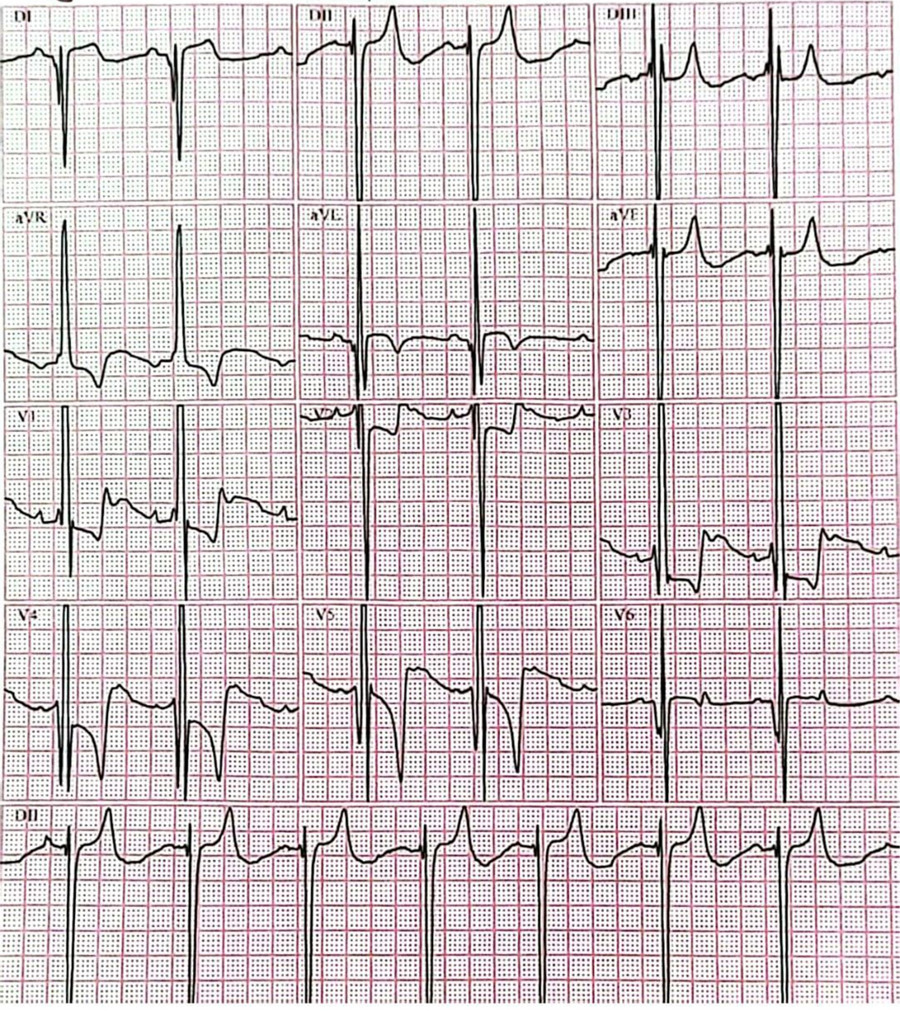
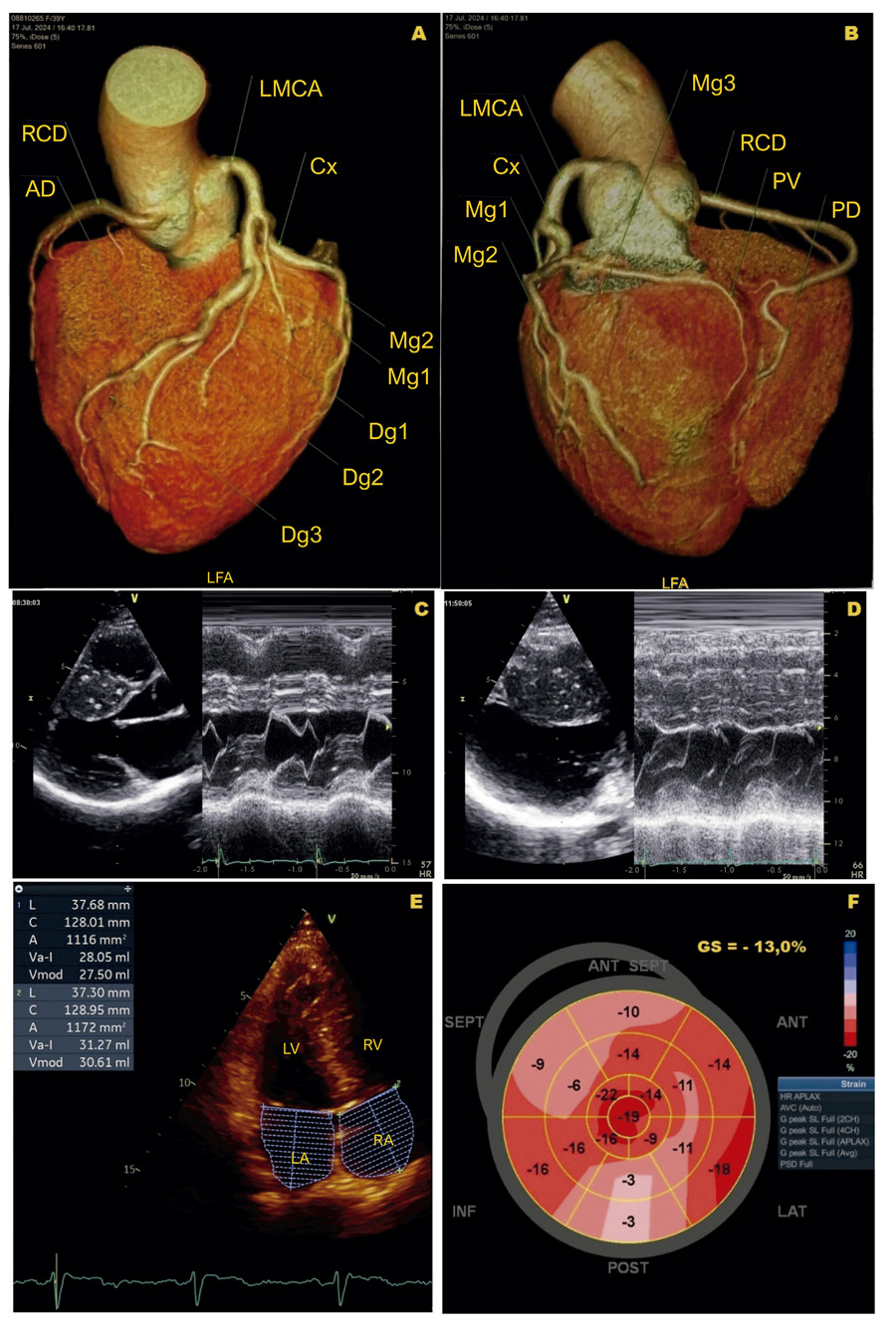
Apical Hypertrophic Cardiomyopathy with Microfistulas: Correlation Between Coronary Flow Steal, Positive Inotropic Effect, and Normalization of T-Wave Polarity

José Sebastiao de Abreu et al. Tereza Cristina Pinheiro Diógenes Marília Esther Benevides Abreu Isadora Sucupira Machado Chagas Mateus Paiva Marques Feitosa

Introduction

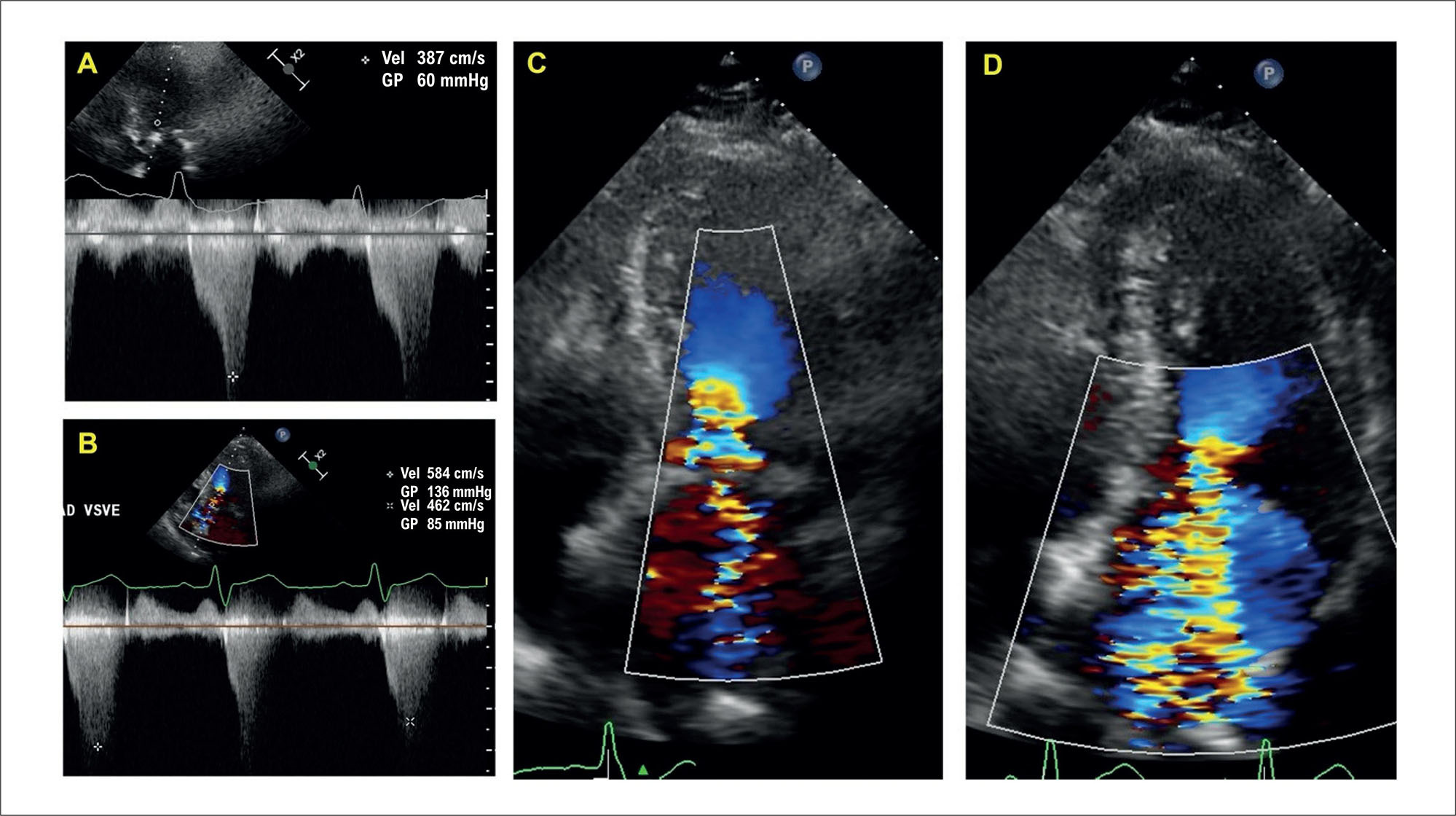
Apical hypertrophic cardiomyopathy (HCM) with microfistulas is a rare condition, and the incidence of multiple microfistulas draining into the left ventricle (LV) ranges from 0.07% to 0.09%., Diagnosis can be established via contrast ventriculography, coronary angiography, and echocardiography.–

Two-dimensional echocardiography with color and pulsed-wave Doppler allows visualization of microfistula flow and measurement of diastolic flow velocity (DFV) using the same approach as for the left anterior descending artery (LAD).

[…]
  • Electrocardiography
  • Hypertrophic Cardiomyopathy
  • Stress echocardiography
Read Full Article
Creative Commons Attribution (CC BY) Creative Commons license
21/09/2026 DOI: 10.36660/abcimg.20260090i Views 1
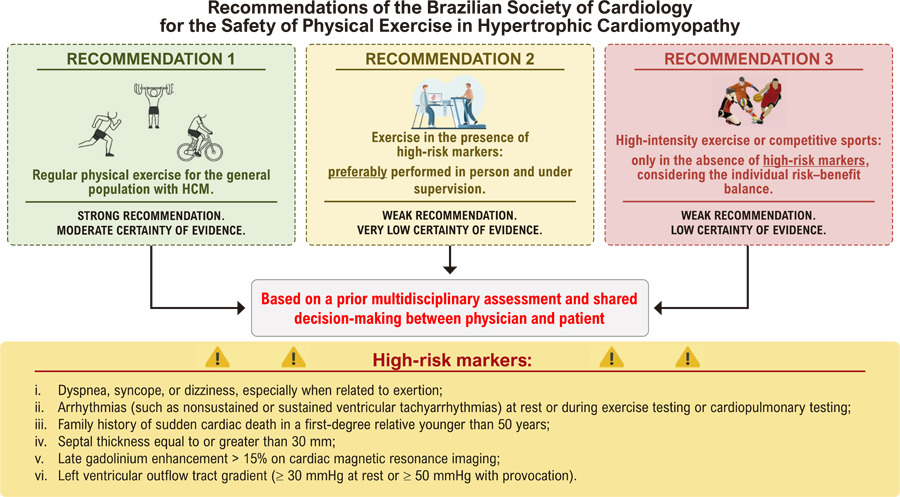
Systematic Review on the Safety of Physical Exercise in Hypertrophic Cardiomyopathy: Recommendations from the Brazilian Society of Cardiology
ABC
Original Article

Systematic Review on the Safety of Physical Exercise in Hypertrophic Cardiomyopathy: Recommendations from the Brazilian Society of Cardiology

Ricardo Stein et al. Rodrigo Otávio Bougleux Alô Luiz Eduardo Fonteles Ritt Alexsandro Alves Fagundes … Anderson Donelli da Silveira Artur Haddad Herdy Clea Colombo Cristiano Faria Pisani Fabrício Braga Frank Nunes Luciana Sacilotto Marconi Gomes Silva Mauricio Milani Mauricio Pimentel Milena dos Santos Barros Campos Nágela Simão Vinhosa Nunes Pablo Marino Nascimento Susimeire Buglia José Ronyeryson dos Santos Evangelista Filipe Ferrari Leonardo Castro Luna

Abstract

Background

Although historically discouraged due to the risk of arrhythmias and sudden cardiac death (SCD), physical exercise (PE) may be safe and beneficial for individuals with hypertrophic cardiomyopathy (HCM).

Objective

To evaluate the association between PE and the incidence of mortality and arrhythmic events in adults with HCM, stratifying the analysis according to different types and intensities of exercise.

Methods

Systematic review of randomized clinical trials (RCTs) and observational studies identified in PubMed, Embase, and the Cochrane Library through December 2024. Studies including individuals exposed to different intensities of PE were eligible. Risk of bias was assessed using the RoB 2 and ROBINS-I tools, and certainty of evidence using GRADE. Recommendations were developed by an expert panel of the Brazilian Society of Cardiology.

Results

Eight studies (four RCTs and four observational studies; 9,744 participants) were included. None reported an increased risk of mortality or severe arrhythmic events associated with PE, even at moderate or vigorous intensities. Syncope was rare. Additionally, a Korean observational study involving more than 7,000 participants (mean age: 59 years) demonstrated reduced all-cause mortality with higher physical activity intensity (dose–response curve). In low-risk athletes, competitive sports were not associated with severe adverse events. The quality of evidence ranged from moderate to very low.

Conclusion

PE in HCM should be encouraged based on individualized assessment. In patients without high-risk criteria for SCD, benefits appear to outweigh risks. For higher-risk subgroups, recommendations are more cautious and based on expert consensus.

  • Cardiac Arrhythmias
  • Exercise
  • Hypertrophic Cardiomyopathy
  • Mortality
  • systematic review
Read Full Article
Creative Commons Attribution (CC BY) Creative Commons license
21/09/2026 DOI: 10.36660/abc.20260423i Views 6
Figure 1
ABC
Case Report

Hypertrophic Phenotype in an Adolescent from the Amazon Region Associated with Combined Variants in the GLA, TTR, and PRKAG2 genes

Matheus Martins Monteiro et al. Kemelly Ferreira da Silva Jessica Vanina Ortiz Marcos Leite Barbosa Ferreira … Kátia do Nascimento Couceiro Rodrigo Fernandes de Castro Fábio Fernandes João Marcos Bemfica Barbosa Ferreira Investigadores do Mapa Genoma Brasil Investigadores do Mapa Genoma Brasil Bianca Domit Wener Linnenkamp Emanuelle Leonilia Marques José Eduardo Krieger

Introduction

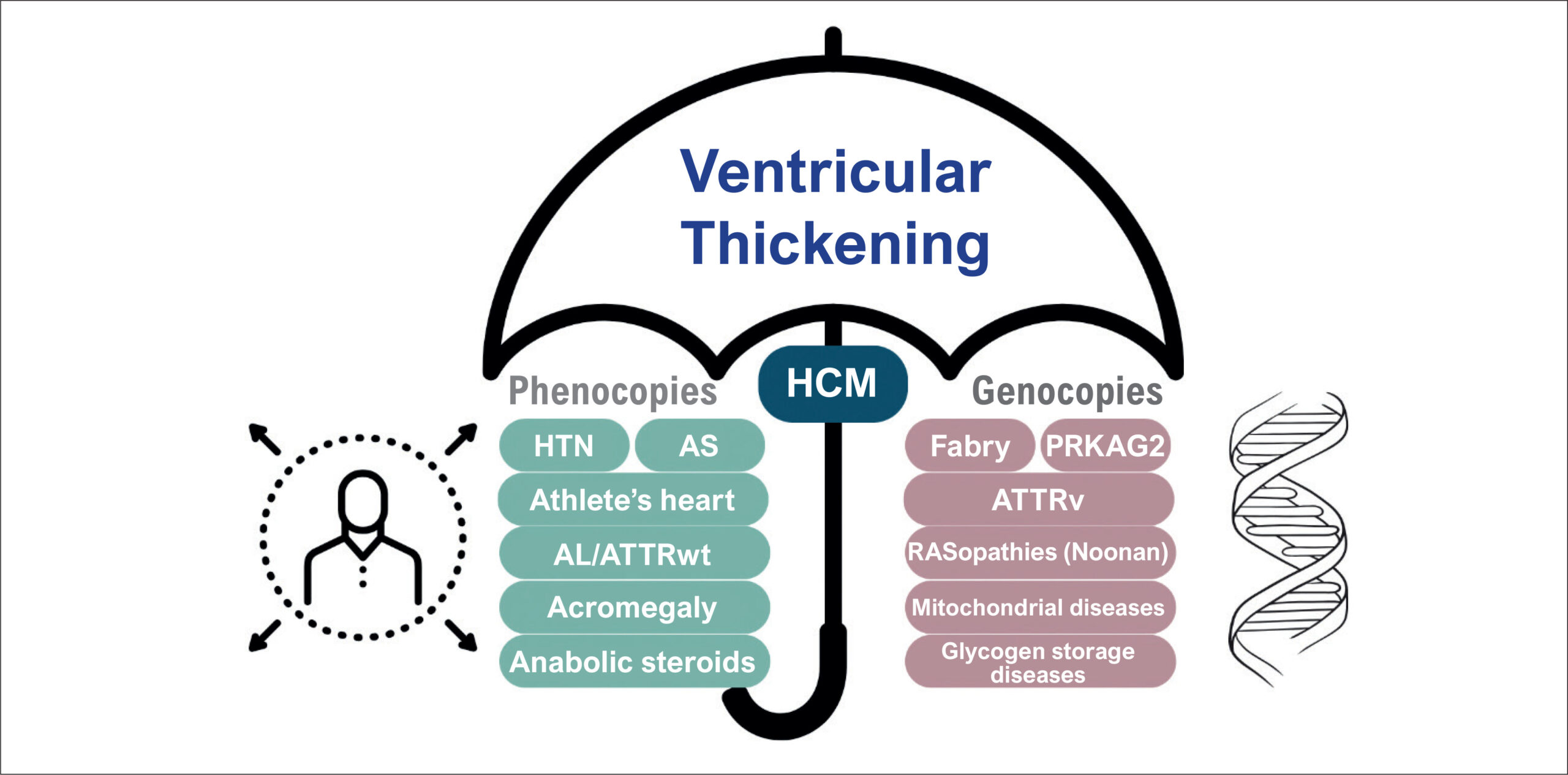
Hypertrophic cardiomyopathy (HCM) phenotype is defined as increased wall thickness of the left and/or right ventricle without loading conditions that explain this. Its diagnosis is confirmed by imaging tests such as echocardiogram and cardiac magnetic resonance (CMR) with the presence of wall thickness ≥ 15 mm in any myocardial segment or 13 mm in first-grade relatives of patients with a confirmed diagnosis. The most common cause of this phenotype is genetic HCM caused by mutations in genes encoding sarcomeric proteins. Most patients with HCM are asymptomatic, but some patients may present significant symptoms, and this is an important cause of sudden death in young people. However, it is important to consider other conditions known as phenocopies because they may have similar characteristics in imaging tests, but with specific etiologies that have different pathophysiological mechanisms. Among these phenocopies, we highlight mitochondrial diseases, RASopathies, muscular dystrophies, PRKAG2 syndrome, Fabry disease, and cardiac amyloidosis. Their differential diagnosis is essential because these phenocopies present specific diagnostic and therapeutic strategies that can impact the natural evolution of disease. The present report reveals the case of a young patient in which this differential diagnosis was challenging, both due to difficulties in accessing specific exams and the overlapping of diseases that made his diagnosis hard, and describes the disease distribution in his family. This patient is part of a broader research project approved by the Research Ethics Committee of the Universidade do Estado do Amazonas under approval number 7.108.530 and CAAE 55200322.5.3009.516.

[…]

  • Fabry Disease
  • Familial Amyloidosis
  • Hypertrophic Cardiomyopathy
Read Full Article
Creative Commons Attribution (CC BY) Creative Commons license
18/09/2026 DOI: 10.36660/abc.20260122i Views 2
Multimodal Evaluation of Cardiac Myosin Inhibitor Response in Obstructive Hypertrophic Cardiomyopathy Using Echocardiography and Cardiopulmonary Exercise Testing: A Meta-Analysis A Meta-Analysis
ABCIC
Original Article

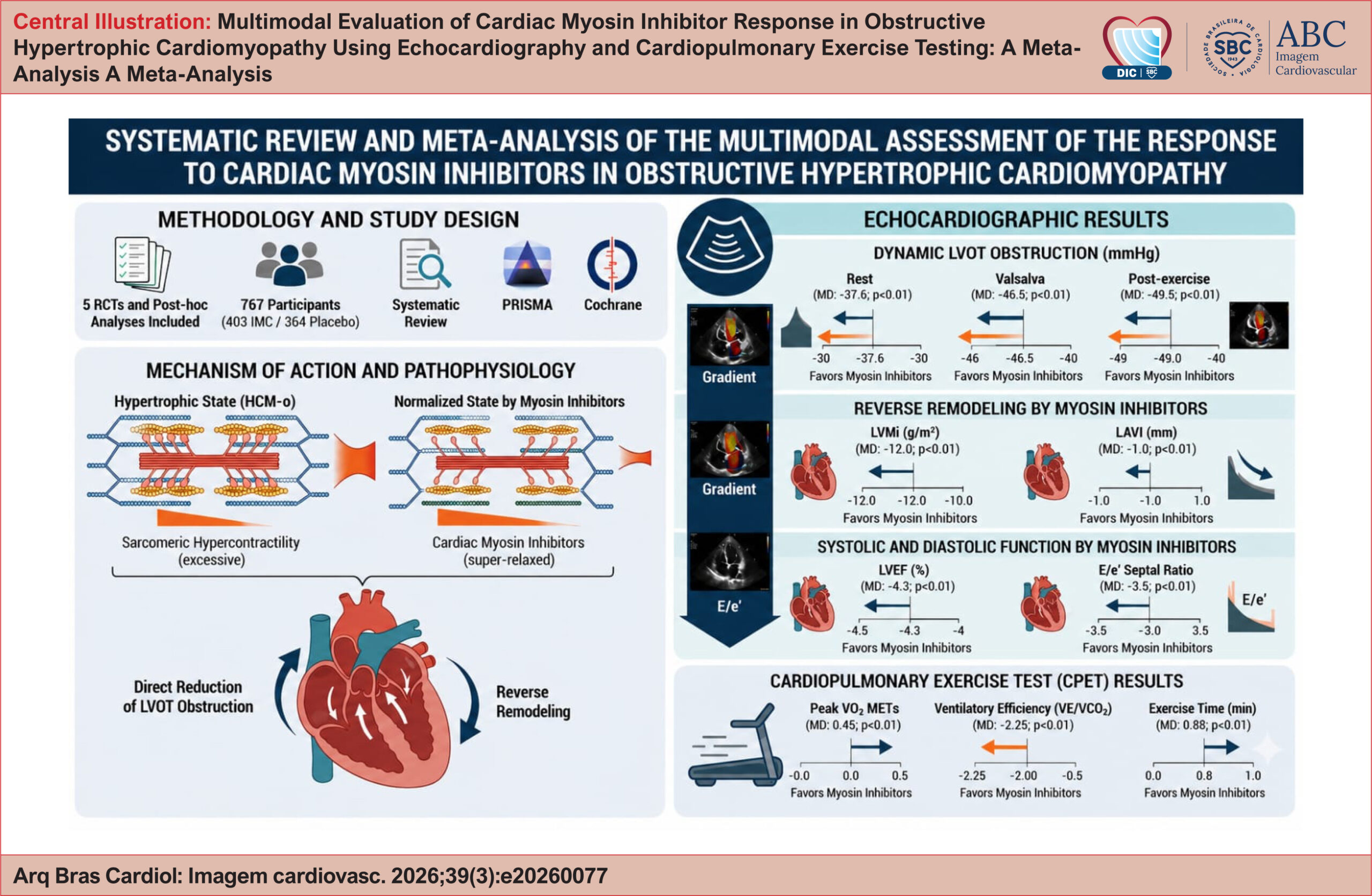
Multimodal Evaluation of Cardiac Myosin Inhibitor Response in Obstructive Hypertrophic Cardiomyopathy Using Echocardiography and Cardiopulmonary Exercise Testing: A Meta-Analysis A Meta-Analysis

João Victor de Oliveira Ramos et al. João Vitor Andrade Fernandes Luiz Henrique Cartaxo Fernandes Vera Louise Freire de Albuquerque Figueiredo … João Victor Oliveira Estrela Marcelo Tavares

Abstract

Background:

Cardiac Myosin Inhibitors (CMIs), including mavacamten and aficamten, represent a novel class of targeted therapies for obstructive Hypertrophic Cardiomyopathy (oHCM). Their effects on echocardiographic parameters and cardiopulmonary performance across Randomized Controlled Trials (RCTs) have not yet been systematically synthesized.

Objectives:

To conduct a systematic review and meta-analysis of RCTs in accordance with the PRISMA guidelines.

Methods:

Primary echocardiographic outcomes included Left Ventricular Ejection Fraction (LVEF), Left Ventricular Mass Index (LVMI), Interventricular Septal Thickness (IVST), E/e’ septal ratio, and resting, Valsalva, and post-exercise Left Ventricular Outflow Tract gradients (LVOT-G). Cardiopulmonary Exercise Testing (CPET) outcomes were also assessed. Data were pooled using random-effects models and reported as Mean Differences (MDs) or Standardized Mean Differences (SMDs), with 95% Confidence Intervals (CIs).

Results:

Five RCTs comprising 767 participants were included. CMIs significantly reduced resting LVOT-G (MD: −37.59 mmHg), Valsalva gradients (MD: −46.45 mmHg), and post-exercise gradients (MD: −49.45 mmHg; all p < 0.01). Reverse cardiac remodeling was reflected by reductions in LVMI (MD: −11.96 g/m²), IVST (SMD: −0.98), and E/e' septal ratio (MD: −3.53), along with an expected modest reduction in LVEF (MD: −4.33%). CPET outcomes also improved significantly, including ventilatory efficiency (MD: −2.25), peak metabolic equivalents (METs) (MD: +0.45), peak circulatory power (MD: +482.78 mL/kg/min × mmHg), and exercise duration (MD: +0.88 min; all p < 0.01). Subgroup analyses revealed no significant differences between the agents.

Conclusion:

CMIs promote reverse cardiac remodeling, improve hemodynamics, and enhance exercise tolerance in patients with oHCM, supporting their role as disease-modifying targeted therapies.

  • Echocardiography
  • Hypertrophic Cardiomyopathy
  • Meta-Analysis
Read Full Article
Creative Commons Attribution (CC BY) Creative Commons license
03/09/2026 DOI: 10.36660/abcimg.2026007i Views 2
IJCS
Editorial

Cardiac Myosin Inhibitors in Patients with Hypertrophic Cardiomyopathy

Marcelo Imbroinise Bittencourt et al. Ricardo Mourilhe-Rocha

In recent years, we have witnessed a significant shift in the management of symptomatic Hypertrophic Cardiomyopathy (HCM). For decades, treatment relied on medications that provided hemodynamic support without directly addressing sarcomeric hypercontractility, the primary pathophysiological driver of the disease. The emergence of Cardiac Myosin Inhibitors (CMIs), particularly mavacamten and aficamten, has transformed this landscape., In an article published in this issue of the International Journal of Cardiovascular Sciences, Fogaça PHT et al. present an updated systematic review and meta-analysis that reinforces the efficacy of this class of medications while providing important insights into their effects in both obstructive and non-obstructive HCM.

The study pooled data from six randomized controlled trials. Five included patients with obstructive HCM, whereas one – the MAVERICK-HCM trial – included patients with non-obstructive HCM.,,- The inclusion of non-obstructive patients represents a distinctive aspect of this analysis, as the benefits of CMIs in the absence of left ventricular outflow tract (LVOT) obstruction remain less well established.

[…]

  • Cardiac Myosins
  • Hypertrophic Cardiomyopathy
  • Therapeutics
Read Full Article
Creative Commons Attribution (CC BY) Creative Commons license
21/08/2026 DOI: 10.36660/ijcs.20260134 Views 3
Figure 1
IJCS
Brief Communication

Beyond Hypertrophic Cardiomyopathy: Rethinking Ventricular Thickening in the Spectrum of Cardiomyopathies

Fábio Fernandes et al. Murillo Oliveira Antunes Felix José Alvares Ramires Vinicius Machado Correia … Viviane Tiemi Hotta Juliano Novaes Cardoso Luciano Nastari Barbara Maria Ianni Marcelo Luiz Campos Vieira Charles Mady Jeffrey B. Geske Adelaide M. Arruda-Olson Alan Silva Martins Guilherme José dos Santos Ferreira Vagner Madrini Junior

Hypertrophic cardiomyopathy: potentially misleading nomenclature

In pathology, hypertrophy is the increase in cell size.³ In the heart, this suggests hypertrophy of cardiomyocytes, which can induce an anchoring bias, leading physicians to prioritize the diagnosis of sarcomeric hypertrophic cardiomyopathy, while diseases such as cardiac amyloidosis — where thickening is due to extracellular amyloid accumulation — are underdiagnosed.

This problem is exacerbated in echocardiographic reports, which often use “hypertrophic cardiomyopathy” nonspecifically. Although echocardiography is useful, it does not differentiate between thickening due to cellular hypertrophy or interstitial accumulation (infiltrative or storage diseases), making the term inadequate and potentially harmful in guiding clinical investigation and decisions.

[…]

  • Diagnosis
  • Hypertrophic Cardiomyopathy
  • Terminology
Read Full Article
Creative Commons Attribution (CC BY) Creative Commons license
03/08/2026 DOI: 10.36660/ijcs.20250292 Views 1
Efficacy of Cardiac Myosin Inhibitors in Symptomatic Hypertrophic Cardiomyopathy: An Updated Meta-Analysis and Systematic Review
IJCS
Original Article

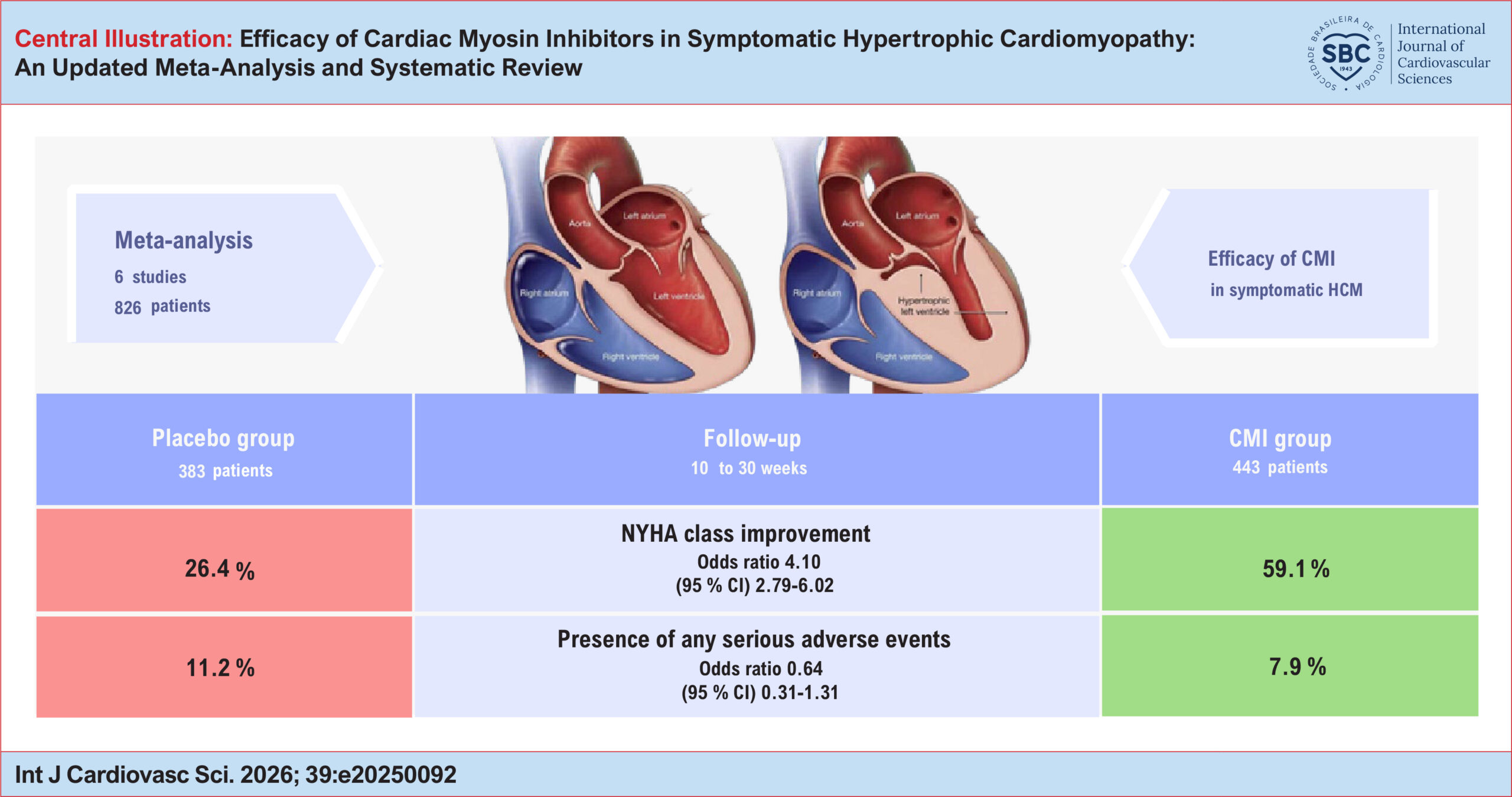
Efficacy of Cardiac Myosin Inhibitors in Symptomatic Hypertrophic Cardiomyopathy: An Updated Meta-Analysis and Systematic Review

Pedro Henrique Tavares Fogaça et al. Gabriel Grando Alves Camila Sales Sales Fagundes Fernanda Lavarda Scheinpflug … João Candido Tavares Fogaça Mateus Diniz Marques

Abstract

Background:

This study evaluates the efficacy of cardiac myosin inhibitors (CMI), which appear to be an innovative alternative for hypertrophic cardiomyopathy (HCM), a disease lacking highly effective pharmacologic treatments.

Objective:

To provide updated efficacy data on CMI (aficamten or mavacamten) in symptomatic HCM.

Materials and methods:

We searched PubMed, Embase, and Cochrane databases for randomized controlled trials comparing CMI to placebo in symptomatic HCM, reporting: (1) New York Heart Association (NYHA) functional class improvement; (2) change from baseline in Kansas City Cardiomyopathy Questionnaire clinical summary score (KCCQ-CSS); (3) percent change from baseline in left ventricular outflow tract (LVOT) gradient at rest and after Valsalva maneuver; and (4) serious adverse events. Heterogeneity was examined with I2 statistics, and p values < 0.05 indicated sta tistical significance. Continuous endpoints were analyzed using pooled mean difference (MD), and binary endpoints were analyzed using odds ratios (OR), both with 95% confidence intervals (CI).

Results:

We included six RCTs with 826 patients, 443 of whom received CMI. Compared to placebo, NYHA class improvement was more frequent in patients receiving CMI (OR: 4.10; 95% CI: 2.79 to 6.02; p < 0.00001), with significant differences in KCCQ-CSS change (MD: 7.15; 95% CI: 4.21 to 10.10; p < 0.00001), as well as in LVOT gradient change at rest (MD: −38.25; 95% CI: −46.76 to −29.74; p < 0.00001) and after Valsalva maneuver (MD: −46.49; 95% CI: −54.70 to −38.27; p < 0.00001). There were no significant differences in serious adverse events (OR: 0.64; 95% CI: 0.31 to 1.31; p = 0.22).

Conclusion:

CMI shows greater efficacy than placebo in treating symptomatic HCM.

  • Cardiac Myosins
  • Hypertrophic Cardiomyopathy
  • Manobra de Valsalva
Read Full Article
Creative Commons Attribution (CC BY) Creative Commons license
10/07/2026 DOI: 10.36660/ijcs.20250092 Views 1
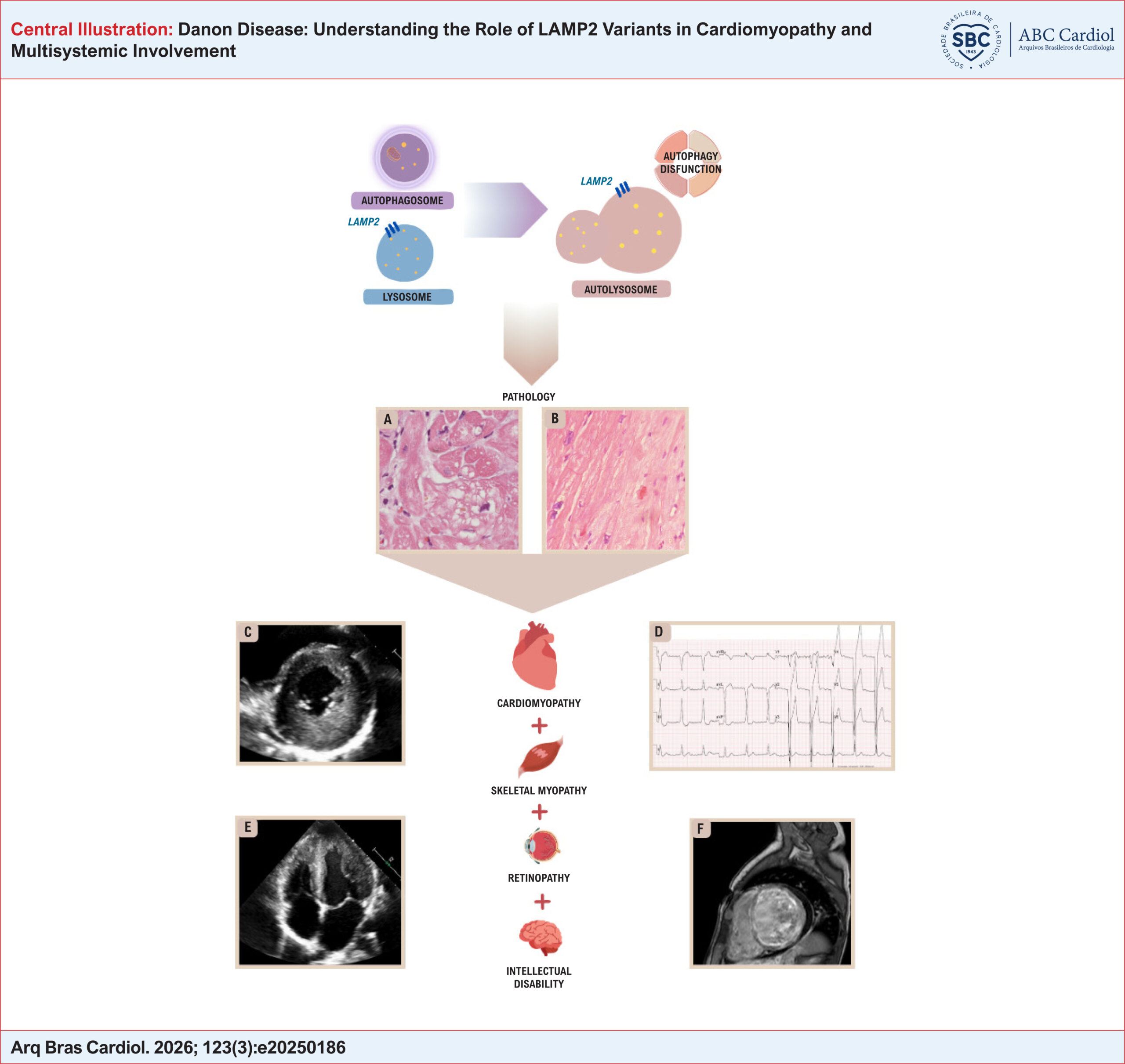
Danon Disease: Understanding the Role of LAMP2 Variants in Cardiomyopathy and Multisystemic Involvement
ABC
Review Article

Danon Disease: Understanding the Role of LAMP2 Variants in Cardiomyopathy and Multisystemic Involvement

Giovanna Napolitano Pereira Ribeiro et al. Layara Fernanda Vicente Pereira Lipari Paula Mendonça Senra Lucas Vieira Lacerda Pires … Marjorie Hayashida Mizuta Natália Quintella Sangiorgi Olivetti Vera Demarchi Aiello José Eduardo Krieger

Abstract

Danon disease (DD) is a rare X-linked disorder caused by pathogenic or likely pathogenic variants in the lysosome-associated membrane protein 2 (LAMP2) gene. It primarily manifests as hypertrophic cardiomyopathy, myopathy, intellectual disability, and retinopathy, with males typically experiencing a more severe and early-onset phenotype. The pathophysiology of DD is linked to defective autophagy due to LAMP2 deficiency, leading to the accumulation of glycogen-filled vacuoles within cardiomyocytes and other tissues. This results in progressive cardiac hypertrophy, conduction abnormalities, and eventual heart failure, often necessitating heart transplantation. Skeletal muscle involvement is common in males, while cognitive impairments are observed in both genders, though more prevalent in males. Diagnosis is challenging due to the condition’s rarity and variable presentation, highlighting the need for a multidisciplinary approach, including genetic testing for definitive diagnosis. Genetic testing must be performed only after proper genetic counseling is done. Differential diagnosis must be considered when DD is suspected, depending on the signs and symptoms, such as Fabry disease, PRKAG2, Pompe disease, and others. Management strategies currently focus on symptomatic treatment, with cardiac transplantation as a critical intervention for advanced cases. Emerging therapies, such as gene therapy targeting LAMP2, could help in altering disease progression. This review provides a comprehensive overview of DD, discussing its clinical manifestations, underlying mechanisms, diagnostic challenges, and potential therapeutic approaches in improving outcomes. Our goal is to increase the recognition of DD so that the prevention of possible complications and early diagnosis becomes feasible, ultimately leading to more favorable patient outcomes.

  • Hypertrophic Cardiomyopathy
  • Inborn Genetic Diseases
  • Lysosomes
Read Full Article
Creative Commons Attribution (CC BY) Creative Commons license
15/05/2026 DOI: 10.36660/abc.20250186i Views 1
ABCIC
Editorial

Hypertrophic Cardiomyopathy: Standardization of Echocardiographic Assessment in an Era of New Therapies

Marcelo Goulart Paiva

Hypertrophic cardiomyopathy (HCM) has become the most common inherited myocardial disease, with an estimated global prevalence between 1:200 and 1:500. Despite its relatively high frequency in the general population, the disease remains significantly underdiagnosed. Only about 15% of affected individuals are clinically identified, due mainly to the wide variability of phenotypes and clinical manifestations., Slightly more than half of patients may develop progressive symptoms or experience adverse events throughout their lifetime. Early identification, risk stratification, and cardiovascular therapies and interventions have reduced mortality rates to < 1.0% per year.

The pathophysiology of HCM is based on myocardial hypertrophy in the absence of secondary causes, associated with hypercontractility and diastolic dysfunction, resulting from abnormal myosin activation. Approximately 75% of patients present with left ventricular outflow tract (LVOT) obstruction at rest or after provocative maneuvers. In the absence of an obstructive pattern, the disease course is usually favorable, oligosymptomatic, or asymptomatic, with a minority progressing to advanced stages.–

[…]

  • Echocardiography
  • Hypertrophic Cardiomyopathy
  • Left Ventricular Outflow Obstruction
Read Full Article
Creative Commons Attribution (CC BY) Creative Commons license
11/05/2026 DOI: 10.36660/abcimg.20260027i Views 2
ABC
Editorial

Genetic Testing in Hypertrophic Cardiomyopathy: Expanding Global Representation While Refining Interpretation

Fernando Rabioglio Giugni

Hypertrophic cardiomyopathy (HCM) represents a paradigmatic example of how genetics has transformed contemporary cardiovascular medicine. Advances in sequencing technologies over the past two decades have substantially expanded molecular diagnosis, family screening, and risk stratification strategies. However, much of the current evidence derives from North American and European cohorts, with comparatively limited representation of Latin American populations. In this context, studies describing the genetic and clinical characteristics of Brazilian patients are particularly important, both to broaden global understanding of HCM and to support the development of precision cardiology within diverse healthcare settings.

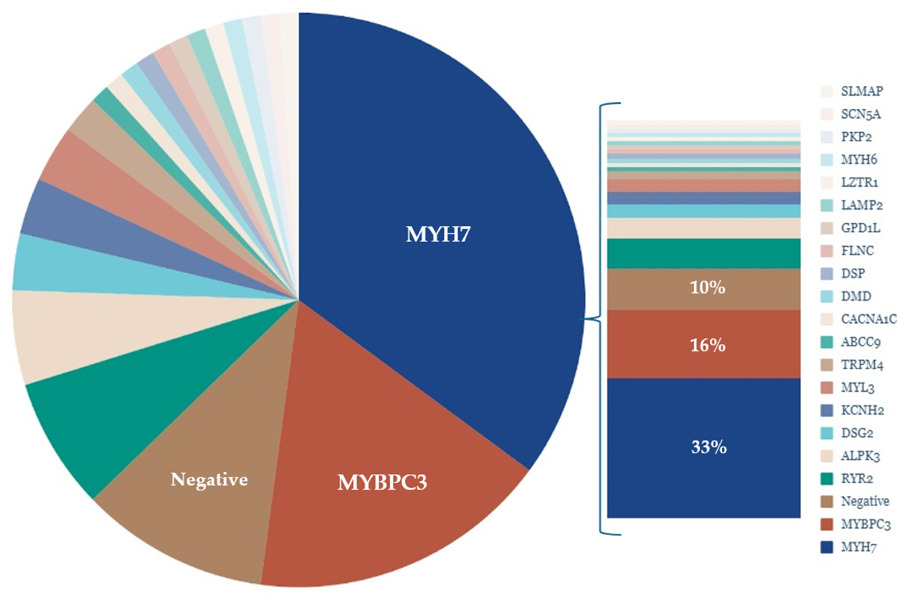
In this issue, Beuren et al. report genetic and phenotypic findings from patients with HCM and their relatives recruited at a tertiary center in southern Brazil. Consistent with prior literature, variants in sarcomeric genes—particularly MYH7 and MYBPC3—accounted for nearly half of the cases. These observations reinforce a central message repeatedly demonstrated across populations: despite substantial genetic heterogeneity, sarcomeric disease remains the dominant biological substrate of HCM.– Importantly, studies conducted outside traditionally studied populations are essential to ensure equitable implementation of cardiovascular genomics and to understand potential regional variation in genetic architecture.

[…]

  • Diagnostic Yield
  • Genetic Variants
  • Hypertrophic Cardiomyopathy
  • Sarcomere
Read Full Article
Creative Commons Attribution (CC BY) Creative Commons license
08/05/2026 DOI: 10.36660/abc.20260157i
Figure 1
ABCIC
Case Report

Hemodynamic Impact of Hypertrophic Cardiomyopathy at Rest and During Supine Bicycle Exercise: Additional Value of Postprandial Assessment

Marília Esther Benevides Abreu et al. Tereza Cristina Pinheiro Diógenes Isadora Sucupira Machado Chagas Humberto Mororó Xerex José Sebastião De Abreu

Abstract

A patient with severe, symptomatic hypertrophic cardiomyopathy (HCM) without a significant left ventricular outflow tract (LVOT) gradient at rest requires further evaluation. During exercise echocardiography (EE) performed on a supine bicycle, a latent or underestimated dynamic obstruction may be identified in real time, with postprandial assessment being particularly relevant.

  • Exercise
  • Exercise Test
  • Hypertrophic Cardiomyopathy
  • Postprandial
Read Full Article
Creative Commons Attribution (CC BY) Creative Commons license
17/04/2026 DOI: 10.36660/abcimg.20250049i
ABC
Editorial

Prevalence of Hypertrophic Cardiomyopathy in Brazil: What is Our Reality?

Silvia Moreira Ayub-Ferreira

Hypertrophic cardiomyopathy (HCM) is a hereditary heart disease whose prevalence is underestimated in several regions of the world. In Brazil, this challenge is also significant, especially given the country’s population heterogeneity. In this issue, we highlight a pioneering study that investigated the occurrence of the echocardiographic phenotype of HCM in the ELSA-Brasil cohort.1

For those unfamiliar, the Brazilian Longitudinal Study of Adult Health (ELSA-Brasil) is a large, multicenter cohort study designed to investigate risk factors for obesity, diabetes, and cardiovascular diseases in Brazilian public servants from large urban centers, aged 35 to 74 years.

[…]

  • Echocardiogram
  • Epidemiology
  • Hypertrophic Cardiomyopathy
Read Full Article
Creative Commons Attribution (CC BY) Creative Commons license
30/03/2026 DOI: 10.36660/abc.20260100i
Genetic and Clinical Characterization of a South-Brazilian Hypertrophic Cardiomyopathy Cohort
ABC
Original Article

Genetic and Clinical Characterization of a South-Brazilian Hypertrophic Cardiomyopathy Cohort

Thais Beuren et al. Fernando Scolari Fernanda Sperb-Ludwig Filipe Ferrari … Arthur Rossi Rafael Zawislak Peter van Tintelen Ricardo Stein

Abstract

Background

Hypertrophic cardiomyopathy (HCM) is the most common monogenic heart disease, characterized by genetic and phenotypic heterogeneity. Although extensively studied in North American and European populations, data from Brazil remain limited.

Objectives

To characterize the genetic and clinical profiles of a Southern Brazilian cohort of HCM patients and their relatives using massive parallel sequencing.

Methods

In this observational study, HCM patients and first-degree relatives were recruited from outpatient cardiology clinics. Clinical and imaging data were collected, and genetic analysis used a 100-gene panel. Variant pathogenicity was assessed according to American College of Medical Genetics and Genomics criteria, and statistical analyses were performed using R software.

Results

Eighty individuals were included in the final analysis (mean age: 49.2 ±18.5); 60% male; 40 index cases and 40 affected relatives). MYH7 and MYBPC3 were the most frequently related genes, with pathogenic / likely pathogenic variants (P/LP) identified in 33% and 16% of participants, respectively. No pathogenic TNNT2 variants were detected. Ninety percent of participants carried an identified variant (including variants of uncertain significance), with 68% harboring P/LP variants. MYH7 carriers exhibited a higher proportion of left ventricular outflow tract obstruction, whereas MYBPC3 carriers had a higher proportion of arrhythmic events and earlier diagnosis; however, these differences did not reach statistical significance and should be interpreted as exploratory. Clinical comparisons revealed regional differences, suggesting the potential impact of genetic diversity on the presentation of HCM in this part of Brazil.

Conclusions

This study offers the first detailed genetic and clinical characterization of a Brazilian HCM cohort using massive parallel sequencing. Our findings underscore the importance of genetic testing for diagnosis, risk stratification, and management.

  • Brazil
  • Genetic Testing
  • High-Throughput Nucleotide Sequencing
  • Hypertrophic Cardiomyopathy
Read Full Article
Creative Commons Attribution (CC BY) Creative Commons license
20/03/2026 DOI: 10.36660/abc.20250420i Views 1
Long-Term Clinical Outcomes of Catheter Ablation in Hypertrophic Cardiomyopathy and Atrial Fibrillation: A Systematic Review and Meta-Analysis
IJCS
Original Article

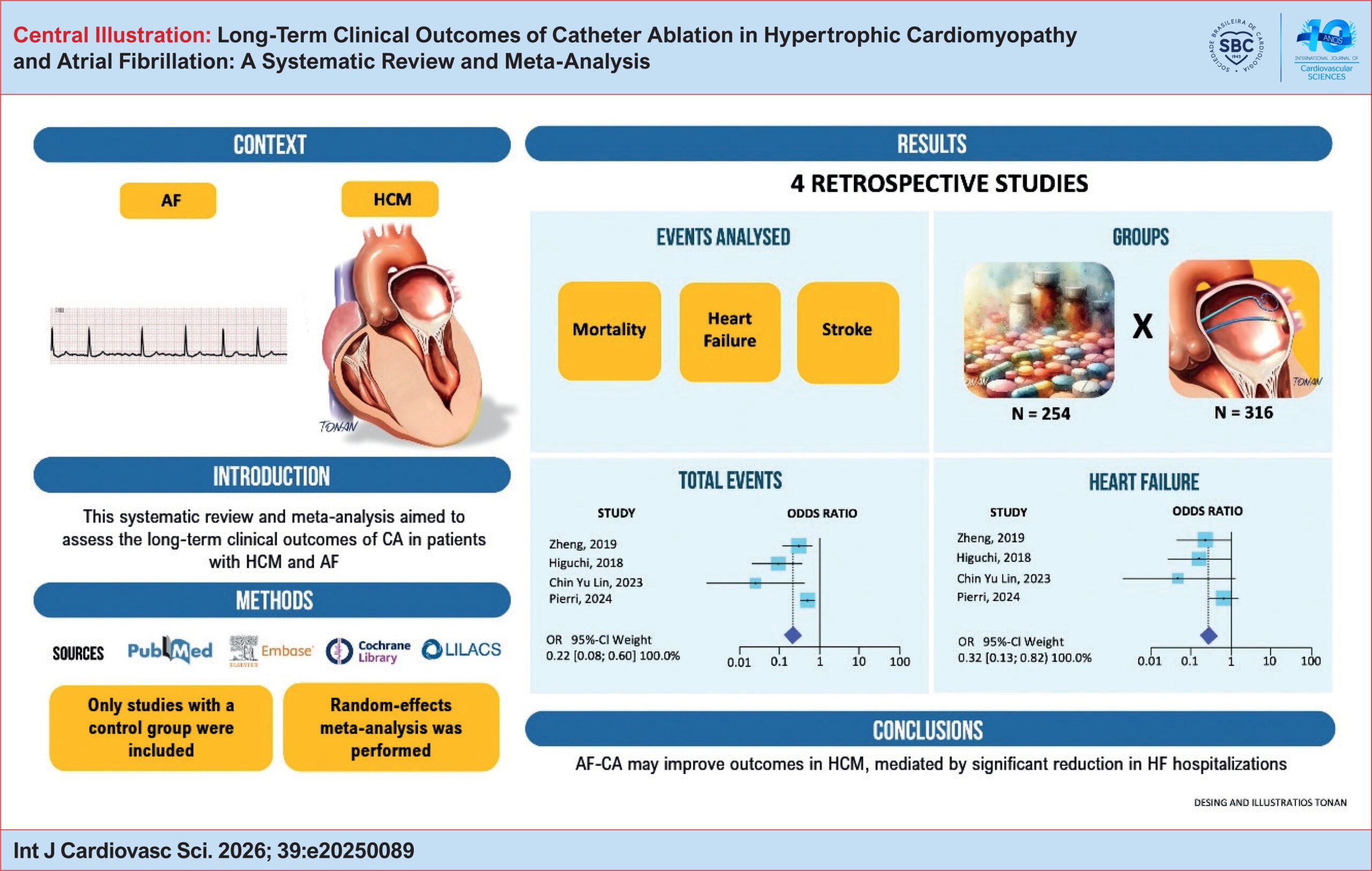
Long-Term Clinical Outcomes of Catheter Ablation in Hypertrophic Cardiomyopathy and Atrial Fibrillation: A Systematic Review and Meta-Analysis

Acácio Fernandes Cardoso et al. Fernanda Cristina Poscai Ribeiro Luiz Claudio Behrmann Martins Glaucylara Reis Geovanini … Cynthia Aparecida da Silva Rocha Nemer Luiz Pichara Áleff Mascarenhas da Silva

Abstract

Background:

Patients with hypertrophic cardiomyopathy (HCM) are at increased risk of atrial fibrillation (AF). However, the benefits of catheter ablation (CA) for reducing adverse clinical outcomes in this population are not well established.

Objective:

To assess the long-term impact of CA on clinical outcomes in patients with HCM and AF through a systematic review and meta-analysis.

Methods:

Controlled studies of patients with HCM and AF undergoing CA were identified through PubMed/MEDLINE, Embase, LILACS, and Cochrane. Meta-analysis employed a random-effects model in R Studio, version 4.3.2, with p < 0.05 considered significant.

Results:

Four retrospective cohort studies met inclusion criteria, all with long follow-up period (5.52 ± 0.91 years). Arrhythmia-free survival after multiple CA ranged from 36.3% to 82%. Combined event analysis (mortality, stroke, and heart failure) yielded odds ratio 0.22 (95% confidence interval 0.08 to 0.60; p < 0.05; I² = 64%). In individual analysis, only heart failure hospitalizations were significantly lower in the CA group (odds ratio 0.32; 95% confidence interval 0.13 to 0.82; p = 0.01).

Conclusions:

This study suggests that CA may improve clinical outcomes in patients with HCM and AF, particularly by improving heart failure hospitalizations. Studies with greater methodological rigor are needed to prove this hypothesis, since only four studies were included in this systematic review.

  • Atrial Fibrillation
  • Catheter Ablation
  • Heart Failure
  • Hypertrophic Cardiomyopathy
Read Full Article
Creative Commons Attribution (CC BY) Creative Commons license
02/03/2026 DOI: 10.36660/ijcs.20250089 Views 6
ABC
Original Article

Prevalence and Characterization of the Hypertrophic Cardiomyopathy Phenotype Assessed by Echocardiography in an Adult Brazilian Population: The ELSA-Brasil Study

Amadeu Antonio Bertuol Filho et al. Alexandre da Costa Pereira Angela Barreto Santiago Santos Antonio Luiz Pinho Ribeiro … Bruce Bartholow Duncan Eduardo Gatti Pianca Fernando Luis Scolari Murilo Foppa

Abstract

Background

Hypertrophic cardiomyopathy (HCM) is a genetically inherited cardiac disease with significant clinical impact. Although its epidemiology is well described in developed countries, the prevalence of HCM in Latin American populations remains poorly defined.

Objective

To estimate the prevalence of the HCM phenotype and describe its clinical and echocardiographic characteristics in a large adult Brazilian cohort.

Methods

The ELSA-Brasil study is a multicenter cohort including 15,105 active and retired public servants aged 35-74 years at baseline. Comprehensive clinical data collection was conducted at each investigation center. Baseline echocardiographic examinations were reviewed, and participants were classified as having Definitive HCM if established diagnostic criteria were met. The prevalence of HCM and its 95% CI were calculated. Individuals meeting borderline criteria were classified as Possible HCM. A p-value < 0.05 was considered statistically significant.

Results

Among 3,267 participants who underwent echocardiography at baseline (mean age 64 ± 9 years; 53% women), five individuals met diagnostic criteria for HCM, of whom 80% were women. The estimated prevalence of HCM was 0.15% (95% CI, 0.05%-0.36%). Three participants exhibited a septal hypertrophy phenotype, and all cases of Definitive HCM showed abnormal electrocardiographic findings. A total of 19 additional participants were classified as Possible HCM, with no statistically significant differences compared with the Definitive HCM group.

Conclusion

The prevalence of HCM in this Brazilian cohort was approximately 1.5 per 1,000 individuals, consistent with rates reported in other populations. Most cases of HCM occurred in women and were frequently associated with metabolic conditions. These findings provide novel data on the epidemiology and clinical profile of HCM in Brazil and highlight the need for further research on genetic cardiomyopathies in Latin America.

  • Cross-Sectional Studies
  • Echocardiography
  • Heart Failure
  • Hypertrophic Cardiomyopathy
Read Full Article
Creative Commons Attribution (CC BY) Creative Commons license
02/03/2026 DOI: 10.36660/abc.20250116i Views 2
Figure 1
ABCIC
Editorial

Tips and Pitfalls on the Role of Echocardiography in Percutaneous Intervention for Hypertrophic Cardiomyopathy

Claudio Henrique Fischer et al. Alessandra Joslin Oliveira

Hypertrophic cardiomyopathy (HCM) is the most prevalent genetic heart disease, affecting approximately 1 in 500 individuals in the general population,– with asymmetric septal hypertrophy as the most common phenotype. In obstructive HCM (oHCM), clinical relevance is greater due to its association with atrial fibrillation, heart failure, thromboembolic events, arrhythmias, and sudden cardiac death., For patients who remain symptomatic despite optimized medical therapy, septal reduction has become an established strategy, with surgical septal myectomy as the gold standard. Alcohol septal ablation is an alternative when surgical risk is prohibitive, there are contraindications to surgery, advanced age, or favorable coronary anatomy; it should be performed in experienced centers.– Other percutaneous approaches — such as radiofrequency septal ablation, the use of coils, or liquid embolic agents — have also been described.

Echocardiography plays a central role throughout the management of oHCM undergoing percutaneous intervention. Beyond diagnosis, it is essential for periprocedural guidance and for postoperative assessment. Understanding its capabilities and recognizing potential pitfalls are critical to success. This editorial offers practical tips for echocardiographers and highlights key points that, if overlooked, may compromise outcomes.

[…]

  • Echocardiography
  • Hypertrophic Cardiomyopathy
  • Left Ventricular Outflow Obstruction
Read Full Article
Creative Commons Attribution (CC BY) Creative Commons license
31/12/2025 DOI: 10.36660/abcimg.20250073i
Figure 1
ABCHF
Case Report

Septal Artery Embolization with EVOH in Obstructive Hypertrophic Cardiomyopathy Associated with Percutaneous Treatment of Coronary Disease

Victor Tavares Trindade et al. Núbia Andrade Silva Nassandro Machado Garcia Júnior Anna Luiza Souza … Maurício Lopes Prudente Giulliano Gardenghi

Introduction

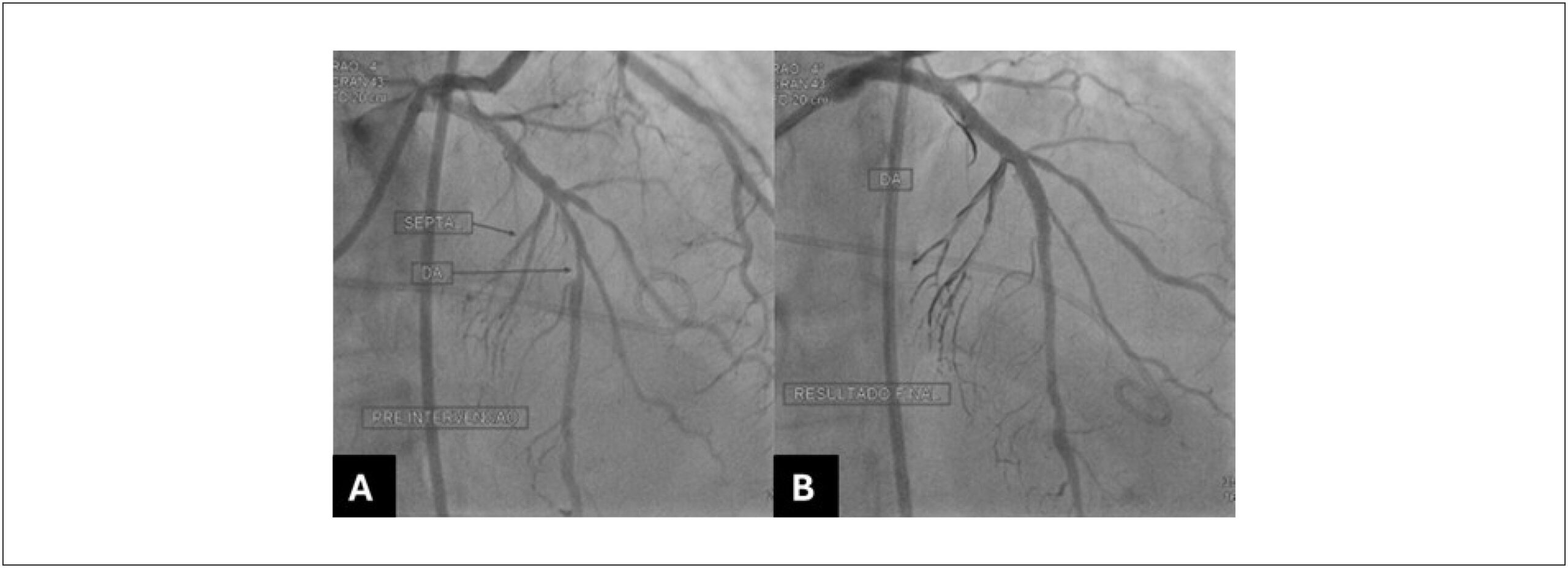
Hypertrophic cardiomyopathy (HCM) is the most common genetic heart disease. It has an autosomal dominant inheritance pattern, and to date, 11 genes have been identified among the 1400 mutations involved in its pathogenesis. The most common are the β-myosin heavy chain (MYH7), myosin-binding protein C (MYBPC3), and troponin T (TNNT2), which encode cardiac sarcomeric proteins. Three mutations are involved in its pathophysiology: missense, insertions, and deletions. The most common mutation is missense, which causes a punctual exchange between two nucleic acids, resulting in a change in the nucleotide conformation, leading to the formation of a codon that codes for a different amino acid.,

HCM promotes changes in cardiac structure, with left ventricular hypertrophy (LVH) without another underlying etiology being the most common anatomical alteration. Its symptomatology varies according to the HCM profiles, and can present asymptomatically, with minor symptoms such as dyspnea on exertion, precordialgia, fatigue, presyncope and syncope, or in a severe form, evolving with advanced heart failure (HF), ventricular and atrial arrhythmias, and even sudden cardiac death.,

[…]

  • Angioplasty
  • Coronary Artery Disease
  • Heart Septum
  • Hypertrophic Cardiomyopathy
  • Therapeutic Embolization
Read Full Article
Creative Commons Attribution (CC BY) Creative Commons license
22/12/2025 DOI: 10.36660/abchf.20250019i
Figure 1
ABCIC
Review Article

My Approach to Diagnose Fabry Disease

Sandra Marques e Silva

Abstract

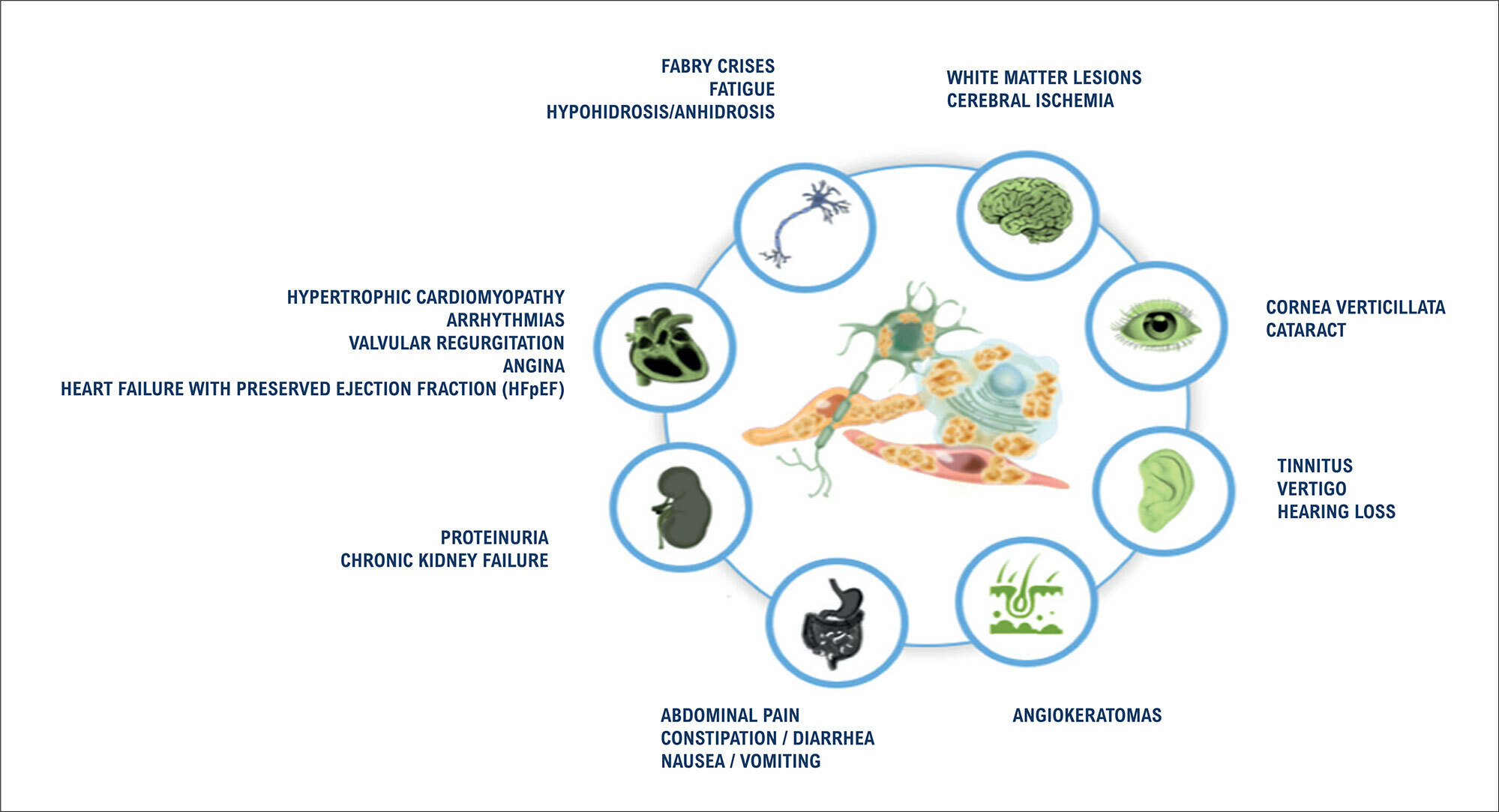
Fabry disease (FD) is an inherited lysosomal storage disorder caused by a deficiency of the enzyme alpha-galactosidase A (α-Gal A). This enzymatic defect leads to the cytoplasmic lysosomal accumulation of globotriaosylceramides (GB3 and LysoGB3), resulting in multisystemic clinical manifestations. Cardiovascular involvement, often mimicking hypertrophic cardiomyopathy, is the main determinant of morbidity and mortality, due to the development of arrhythmia, myocardial ischemia, and heart failure. Although FD is a rare condition in the general population, the availability of specific enzyme replacement therapy, which can alter the natural course of the disease, underscores the importance of including FD as a key differential diagnosis among storage cardiomyopathies. Diagnostic evaluation should encompass a thorough clinical assessment, with particular attention to patient history and physical examination, complemented by laboratory testing and imaging studies, such as electrocardiography and echocardiography. Cardiac magnetic resonance imaging, including late gadolinium enhancement and T1 and T2 parametric mapping, provides additional diagnostic and prognostic information and should ideally be performed at the time of initial diagnosis. Definitive diagnosis is established by genetic sequencing of the GLA gene, located on the long arm of the X chromosome, enabling the selection of the most appropriate therapeutic strategy for each patient.

  • Fabry Disease
  • Glycosphingolipids
  • Hypertrophic Cardiomyopathy
Read Full Article
Creative Commons Attribution (CC BY) Creative Commons license
01/07/2025 DOI: 10.36660/abcimg.20240091i
Hypertrophic Cardiomyopathy: Analysis of Septal Thickness with Gradient Reduction in Patients Undergoing Radiofrequency Septal Ablation
ABCIC
Original Article

Hypertrophic Cardiomyopathy: Analysis of Septal Thickness with Gradient Reduction in Patients Undergoing Radiofrequency Septal Ablation

Andrea de Andrade Vilela et al. Mariane Higa Shinzato Bruno Pereira Valdigem Antonio Tito Paladino … Edileide de Barros Correia Jorge Eduardo Assef

Abstract

Background:

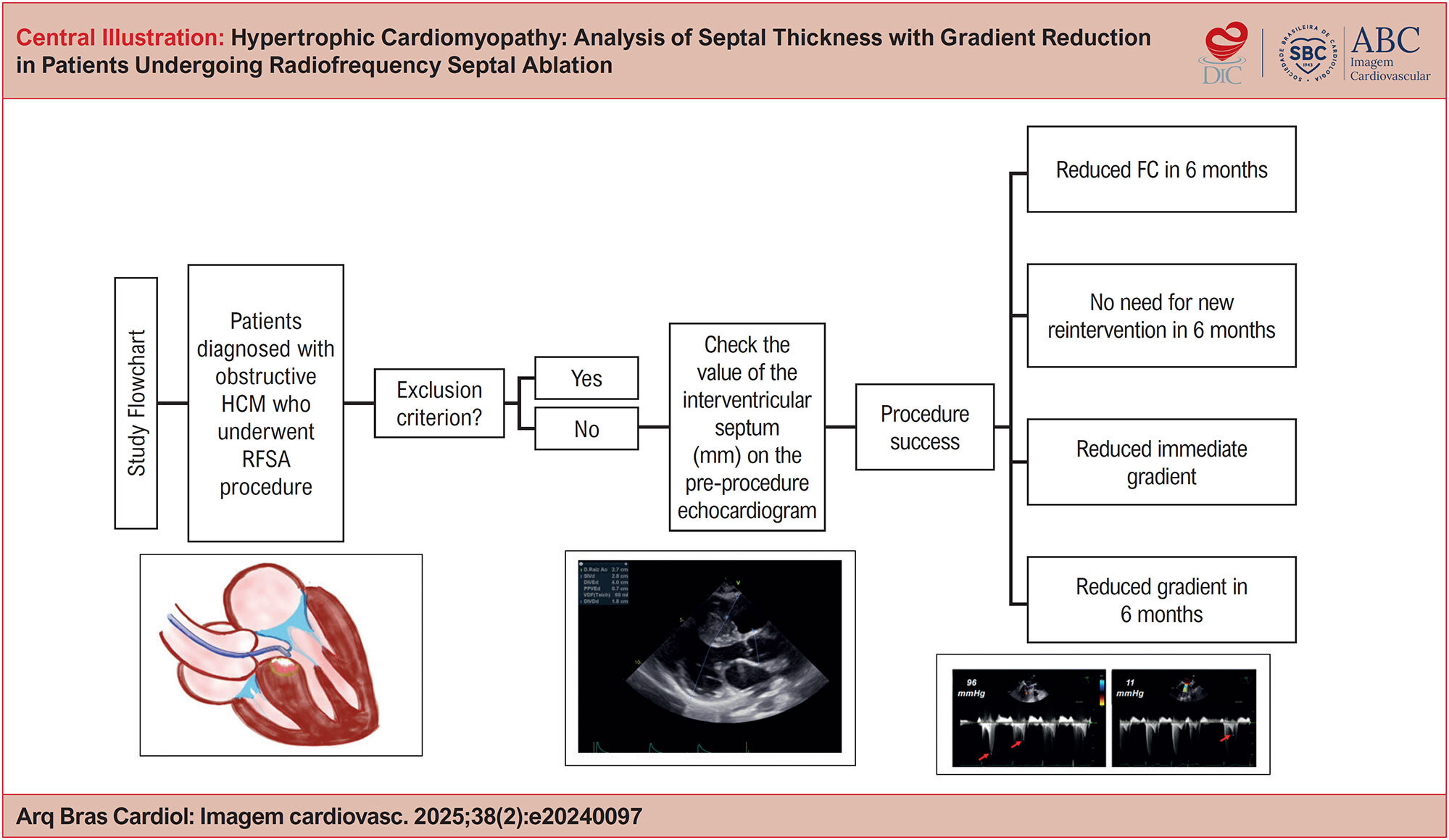
Hypertrophic obstructive cardiomyopathy (HOCM) is an autosomal dominant genetic disorder. Invasive treatment for intraventricular gradient reduction is indicated in patients (p) who are refractory to clinical treatment with gradient ≥ 50 mmHg. Radiofrequency ablation (RFA) is one of the current options for invasive management.

Objectives:

To evaluate the correlation between interventricular septal diameter and procedural success, defined as immediate post-procedural gradient reduction, improvement in functional class (FC), and sustained gradient reduction at 6-month follow-up.

Methods:

Twenty-two patients with HOCM were included. Transthoracic echocardiography was performed before and six months after RFA, while transesophageal echocardiography (TEE) was carried out intraprocedure.

Results:

The mean age was 56.64 years (± 12.23), with 68.18% of patients being female and 73% hypertensive. An immediate gradient reduction greater than 50% was observed in 72.7% of patients. At the 6-month follow-up, 60% of patients showed a ≥ 50% gradient reduction along with an improvement in FC. A median septal thickness of 18 mm was associated with greater procedural success compared to a median of 15 mm, and no significant change in septal thickness was observed over the 6-month follow-up period.

Conclusion:

Radiofrequency septal ablation (RFSA) is an effective and safe technique for the invasive management of HOCM. The procedure enables a significant reduction in the intraventricular gradient, accompanied by improved FC and sustained short-term results. Thicker septal were associated with greater intraprocedural gradient reductions; however, there was no reduction in thickness during the 6-month follow-up.

  • Hypertrophic Cardiomyopathy
  • Radiofrequency Ablation
Read Full Article
Creative Commons Attribution (CC BY) Creative Commons license
27/06/2025 DOI: 10.36660/abcimg.20240097i Views 2
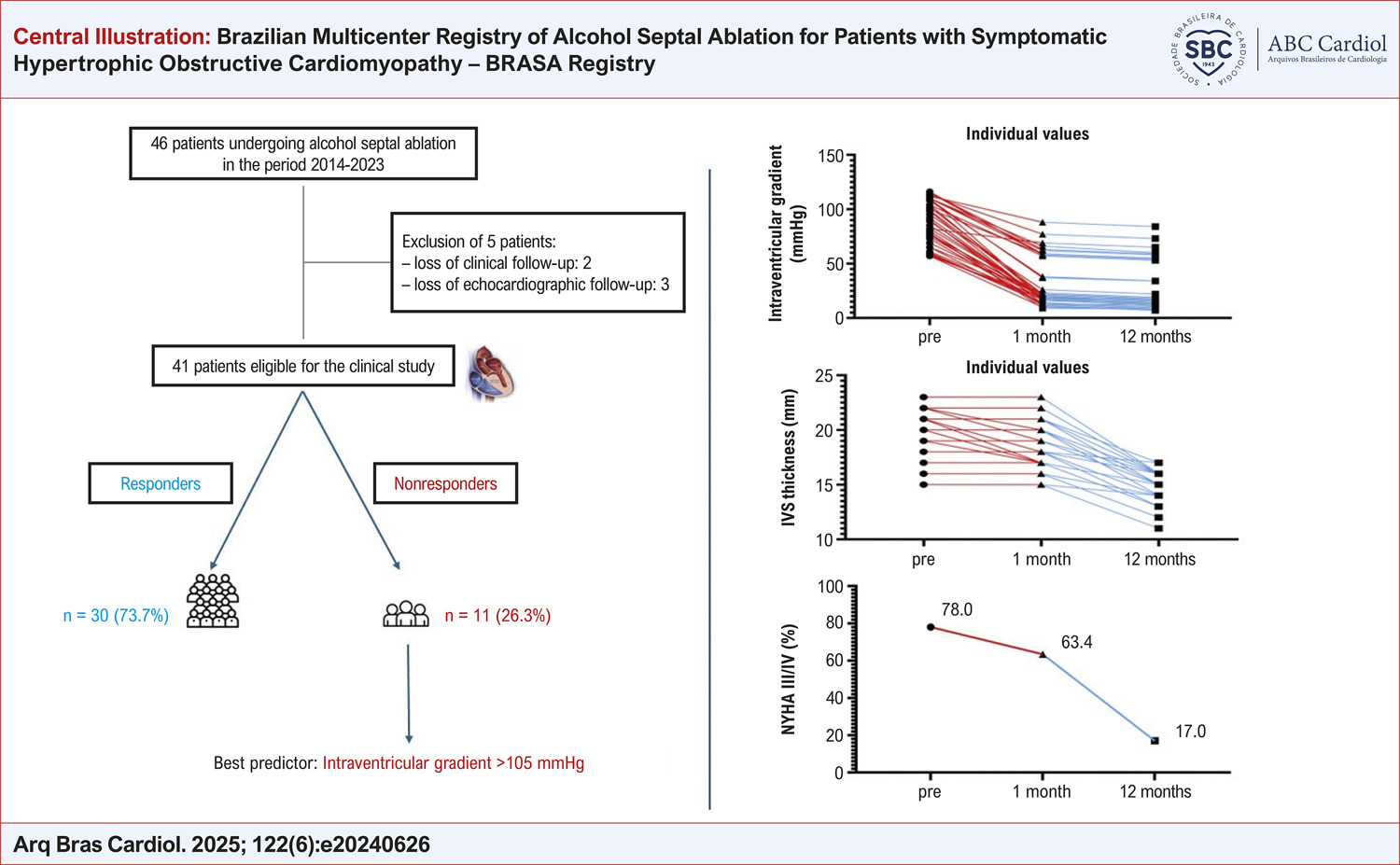
Brazilian Multicenter Registry of Alcohol Septal Ablation for Patients with Symptomatic Hypertrophic Obstructive Cardiomyopathy – BRASA Registry
ABC
Original Article

Brazilian Multicenter Registry of Alcohol Septal Ablation for Patients with Symptomatic Hypertrophic Obstructive Cardiomyopathy – BRASA Registry

Pedro Jallad et al. Marilia Soliani Pedro Henrique Almeida Marins Fábio Fernandes … Edmundo Arteaga-Fernandez Vagner Madrini Pedro Lemos Neto Charles Mady Felix Ramires Alexandre A. Abizaid Fábio Sândoli de Brito Jr Henrique Barbosa Ribeiro

Abstract

Background

Alcohol septal ablation (ASA) is an alternative to surgical myectomy for patients with symptomatic hypertrophic obstructive cardiomyopathy (HOCM) and significant left ventricular (LV) outflow tract (LVOT) obstruction. Although widely studied worldwide, data on ASA outcomes in Brazil are still limited.

Objective

To assess the safety and effectiveness of ASA in symptomatic HOCM patients receiving optimal medical therapy using current techniques across multiple centers in Brazil.

Methods

Patients with HOCM and angina (classified by the Canadian Cardiovascular Society [CCS]) or dyspnea (classified by the New York Heart Association [NYHA]) class >II who did not respond to optimal medical treatment were included. The primary efficacy endpoint was defined as a reduction of more than 50% in the maximum resting LVOT gradient, with a final gradient <50 mmHg. Patients were classified as responders or nonresponders. A p-value <0.05 was considered statistically significant.

Results

A total of 41 patients (median age 66.4 years; 73% female) underwent ASA. At baseline, 93.2% were in NYHA class III/IV or CCS class III/IV. The mean LV ejection fraction (LVEF) was 66.4%, and the mean LVOT gradient was 88.4 mmHg. After 12 months, 92.8% had improved to NYHA class I/II or CCS class I/II (p<0.01). The mean LVOT gradient dropped from 88.4 mmHg to 27.0 mmHg (p=0.003), and interventricular septum (IVS) thickness decreased from 19.3 mm to 14.7 mm (p=0.048). Responders had lower baseline gradients (73.4 vs 112.6 mmHg, p=0.04) and fewer hospitalizations (21.1% vs 82.4%, p=0.04). Complete atrioventricular block occurred in 16.7% of patients, and 4.8% required pacemakers. No deaths were reported during a median follow-up of 394 days. At the last in-person evaluation, 78.4% were in functional class I/II.

Conclusions

ASA is a safe, effective option for relieving symptoms in selected HOCM patients. It reduces LVOT gradient and septal thickness. Patients with higher baseline gradients were less likely to respond to the procedure.

  • Catheter Ablation
  • Hypertrophic Cardiomyopathy
  • Intervenção Coronária Percutânea
Read Full Article
Creative Commons Attribution (CC BY) Creative Commons license
27/06/2025 DOI: 10.36660/abc.20240626i Views 1
ABC
Editorial

Hypertrophic Cardiomyopathy in Brazil: Advances in Knowledge and Clinical Implications

Danielle Louvet Guazzelli et al. Mônica Samuel Avila

Hypertrophic cardiomyopathy (HCM) is the most prevalent genetically determined heart disease and remains a diagnostic and prognostic challenge. The estimated prevalence of this condition in the general population is approximately 1 case per 200 individuals. In Brazil, it is estimated that 400,000 people are affected.

The natural history of HCM is heterogeneous, with an unpredictable course that may manifest from childhood to the eighth decade of life. The disease also exhibits phenotypic heterogeneity, with two main clinical forms: left ventricular outflow tract obstruction (LVOTO) and non-obstructive.

[…]

  • Epidemiology
  • Hypertrophic Cardiomyopathy
  • Prognosis
Read Full Article
Creative Commons Attribution (CC BY) Creative Commons license
16/06/2025 DOI: 10.36660/abc.20250185i
ABC
Editorial

Non-sustained Ventricular Tachycardia and Hypertrophic Cardiomyopathy: When to Consider it as a Risk Factor for Sudden Death and Total Mortality?

Lucas Simonetto Faganello et al. Mauricio Pimentel

Hypertrophic cardiomyopathy (HCM) is an important cause of sudden cardiac death (SCD), particularly in young patients., The implantation of an implantable cardioverter-defibrillator (ICD) in high-risk patients is a pivotal aspect of HCM treatment. However, there are currently no randomized clinical trials to guide the selection of patients who are candidates for ICD implantation. Recommendations are based on retrospective cohorts that have identified the relationship between clinical characteristics and prognosis. Risk factors for SCD include history of syncope or ventricular tachyarrhythmia, family history of sudden death, left ventricular wall thickness, systolic dysfunction, apical aneurysm, late enhancement on magnetic resonance imaging, and the presence of non-sustained ventricular tachycardia (NSVT).

NSVT occurs in 20-30% of patients with HCM and is an independent predictor of SCD.– However, the strength of this evidence varies among published observational studies, often due to differences in the studied populations or diagnostic criteria. Research conducted in tertiary centers indicates that the presence of NSVT is associated with a higher risk of SCD, while studies from non-reference centers have not identified a statistically significant association. Another point of discussion is the characteristics of NSVT that should be considered. While the American guideline places greater emphasis on more frequent, longer, and faster arrhythmias, the European guideline argues that there is no robust evidence to support this., The Brazilian guideline considers NSVT relevant when it is frequent (≥ 3), longer (≥ 10 beats), and faster (≥ 200 beatsper minute).

[…]

  • Hypertrophic Cardiomyopathy
  • Mortality
  • Ventricular tachycardia
Read Full Article
Creative Commons Attribution (CC BY) Creative Commons license
16/06/2025 DOI: 10.36660/abc.20250233i Views 2
Central Illustration
ABCHF
Review Article

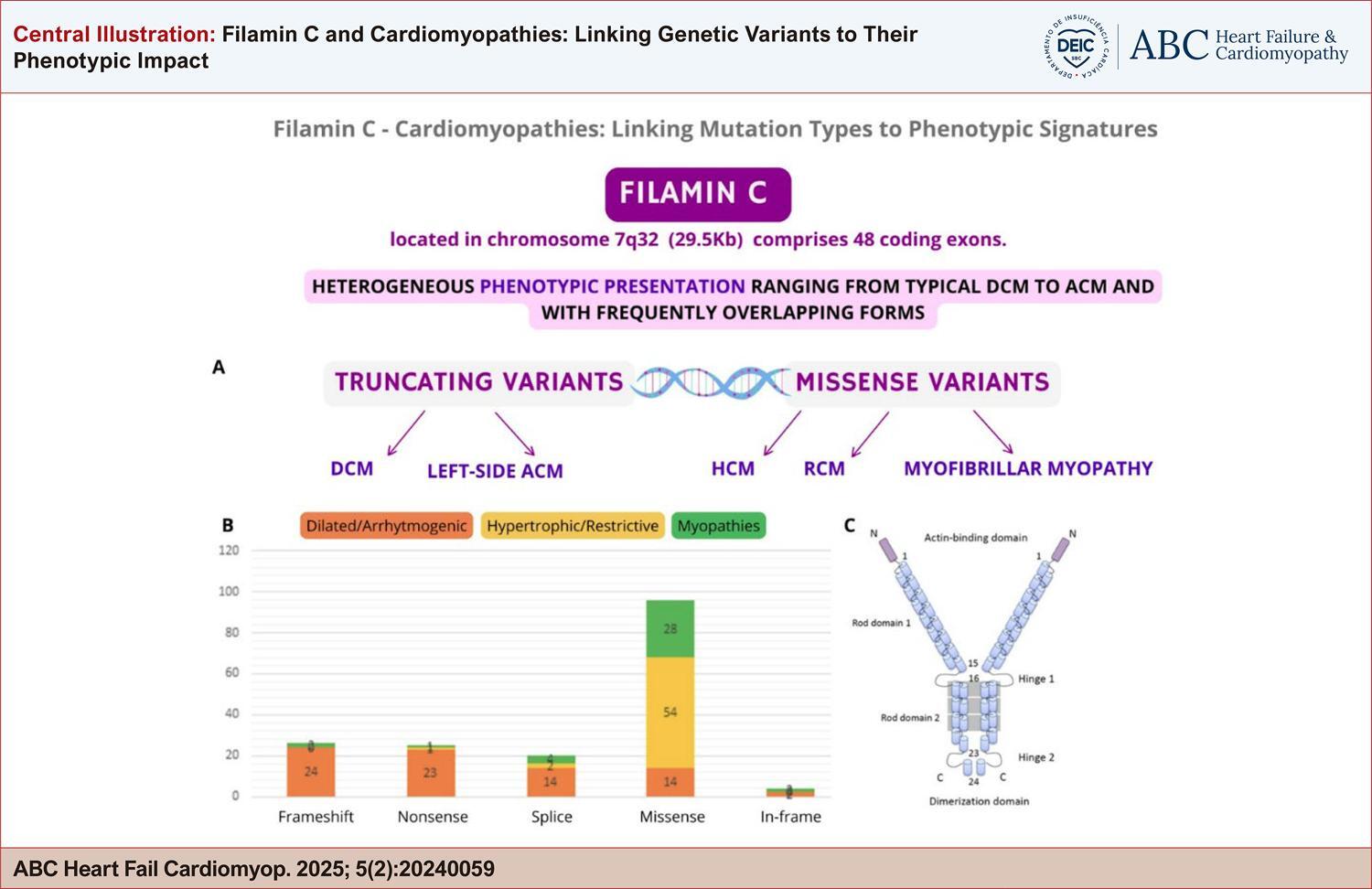
Filamin C and Cardiomyopathies: Linking Genetic Variants to Their Phenotypic Impact

Natália Olivetti et al. Márya Pagotti Bruno Moreira Santos Marjorie Mizuta … Bianca Linnenkamp Paula de Mendonça Senra Fernanda Andrade Mariana Lombardi Peres de Carvalho Luciana Sacilotto José Eduardo Krieger

Abstract

Filamin C (FLNC) plays a critical role in maintaining the structural integrity of muscle cells, particularly within the cardiac sarcomere. Pathogenic variants in the FLNC gene are increasingly recognized as significant contributors to a diverse range of cardiomyopathies, including dilated (DCM), hypertrophic (HCM), arrhythmogenic (ACM), and restrictive cardiomyopathy (RCM). This review explores the genotype-phenotype correlations in FLNC-related cardiomyopathies, emphasizing how the type and location of genetic variants influence the clinical presentation. Truncating variants are primarily associated with DCM and ACM, characterized by a high risk of arrhythmic events and severe outcomes, while missense variants often lead to HCM and RCM, with unique phenotypic features. The review also discusses the inheritance patterns, molecular mechanisms, and clinical phenotypes of FLNC-associated myopathies, highlighting the need for genetic testing in risk stratification and management. Future perspectives emphasize the importance of expanding research into the underlying mechanisms of FLNC variants and their interactions with other genetic and environmental factors. This integrated understanding is critical for improving the clinical management of patients with FLNC-related cardiomyopathies.

  • Arrhythmogenic right ventricular dysplasia;
  • Dilated Cardiomyopathy
  • Filamins
  • Hypertrophic Cardiomyopathy
  • Restrictive cardiomyopathy
Read Full Article
Creative Commons Attribution (CC BY) Creative Commons license
05/06/2025 DOI: 10.36660/abchf.20240059i
Central Illustration
ABCHF
Review Article

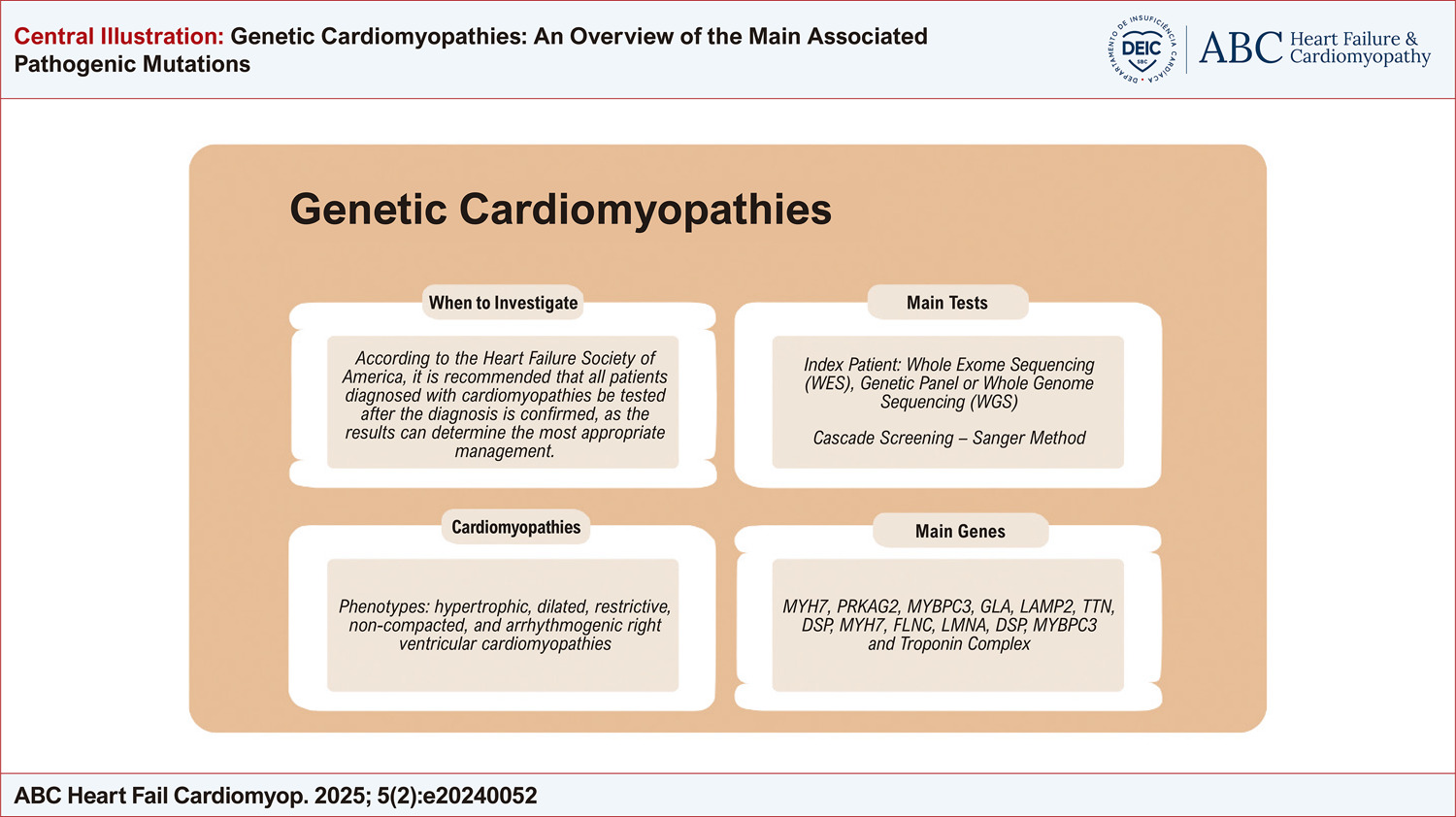
Genetic Cardiomyopathies: An Overview of the Main Associated Pathogenic Mutations

Flavia Misawa Hama et al. Edson Gabriel Rocha Estela Azeka

Abstract

Cardiomyopathies are pathological conditions associated with progressive dysfunction of cardiomyocytes, excluding situations in which other concomitant diseases may justify such progression. Their presentations can evolve with several phenotypes, the main ones being hypertrophic, dilated, restrictive, non-compacted, and arrhythmogenic phenotypes of the right ventricle (). Regarding this topic’s relevance, dilated and hypertrophic cardiomyopathies have a genetic origin in 30 to 50% of cases, evaluating these etiologies is a crucial tool in patient management. Assessing the risk of genetic transmission and the likelihood of phenotypic manifestation across generations requires identifying and classifying each gene’s inheritance pattern and mutation type associated with structural cardiomyopathy. Additionally, determining the structural protein affected facilitates understanding the pathophysiological phenomenon and the phenotype manifested by the variant carrier. Considering the growing advent of the genetic approach to cardiomyopathies, the Heart Failure Society of America, in collaboration with the American College of Medical Genetics and Genomics, developed a guide for the investigation and follow-up of these cases. However, in this study, the time to request the genetic tests was not evaluated. It is recommended that the tests be requested at any time after diagnosis confirmation since their results can contribute to guiding the most appropriate follow-up approach. Despite the multitude of existing variants related to genetic cardiomyopathies, some are of greater clinical interest due to their impact on risk stratification and interest in family screening, namely: MYH7, PRKAG2, MYBPC3, GLA, LAMP2, TTN, DSP, MYH7, FLNC, LMNA, DSP, MYBPC3 and Troponin Complex (). Recognizing the main mutations associated with cardiomyopathies and the phenotypes related to them enables a more individualized medicine approach with early interventions and risk stratification. Genetic evaluation is essential for screening family members and optimizing patient management, which may vary depending on the identified mutation.

  • Cardiomyopathies
  • Dilated Cardiomyopathy
  • Hypertrophic Cardiomyopathy
Read Full Article
Creative Commons Attribution (CC BY) Creative Commons license
26/05/2025 DOI: 10.36660/abchf.20240052i Views 1

Could not load more articles. Please try again.

How to cite this article

EndNote RIS

Electronic Document Format (Vancouver)

Abreu JS, Diógenes TCP, Abreu MEB, Chagas ISM, Feitosa MPM. Apical Hypertrophic Cardiomyopathy with Microfistulas: Correlation Between Coronary Flow Steal, Positive Inotropic Effect, and Normalization of T-Wave Polarity. ABC Imagem Cardiovascular 2026;39(3):e20260090.

Electronic Document Format (ABNT)

Abreu, José Sebastiao de; Diógenes, Tereza Cristina Pinheiro; Abreu, Marília Esther Benevides; Chagas, Isadora Sucupira Machado; Feitosa, Mateus Paiva Marques. Apical Hypertrophic Cardiomyopathy with Microfistulas: Correlation Between Coronary Flow Steal, Positive Inotropic Effect, and Normalization of T-Wave Polarity. ABC Imagem Cardiovascular, v. 39, n. 3, e20260090, Sep. 2026.

Electronic Document Format (APA)

Abreu, J. S. , Diógenes, T. C. P., Abreu, M. E. B., Chagas, I. S. M., & Feitosa, M. P. M. (2026). Apical Hypertrophic Cardiomyopathy with Microfistulas: Correlation Between Coronary Flow Steal, Positive Inotropic Effect, and Normalization of T-Wave Polarity. ABC Imagem Cardiovascular, 39(3), e20260090.

Electronic Document Format (ISO)

Abreu, José Sebastiao de and Diógenes, Tereza Cristina Pinheiro and Abreu, Marília Esther Benevides and Chagas, Isadora Sucupira Machado and Feitosa, Mateus Paiva Marques. Apical Hypertrophic Cardiomyopathy with Microfistulas: Correlation Between Coronary Flow Steal, Positive Inotropic Effect, and Normalization of T-Wave Polarity. ABC Imagem Cardiovascular [online]. 2026, vol. 39, n. 3, [cited 2026-10-14], e20260090. Available from: <https://journals.cardiol.br/en/article/apical-hypertrophic-cardiomyopathy-with-microfistulas-correlation-between-coronary-flow-steal-positive-inotropic-effect-and-normalization-of-t-wave-polarity/>. ISSN 2318-8219

EndNote RIS

Electronic Document Format (Vancouver)

Stein R, Alô ROB, Ritt LEF, Fagundes AA, Silveira AD, Herdy AH, Colombo C, et al. Systematic Review on the Safety of Physical Exercise in Hypertrophic Cardiomyopathy: Recommendations from the Brazilian Society of Cardiology. Arquivos Brasileiros de Cardiologia 2026;123(8):e20260423.

Electronic Document Format (ABNT)

Stein, Ricardo; Alô, Rodrigo Otávio Bougleux; Ritt, Luiz Eduardo Fonteles; Fagundes, Alexsandro Alves; Silveira, Anderson Donelli da; Herdy, Artur Haddad; Colombo, Clea; Pisani, Cristiano Faria; Braga, Fabrício; Nunes, Frank; Sacilotto, Luciana; Silva, Marconi Gomes; Milani, Mauricio; Pimentel, Mauricio; Campos, Milena dos Santos Barros; Nunes, Nágela Simão Vinhosa; Nascimento, Pablo Marino; Buglia, Susimeire; Evangelista, José Ronyeryson dos Santos; Ferrari, Filipe; Luna, Leonardo Castro. Systematic Review on the Safety of Physical Exercise in Hypertrophic Cardiomyopathy: Recommendations from the Brazilian Society of Cardiology. Arquivos Brasileiros de Cardiologia, v. 123, n. 8, e20260423, Sep. 2026.

Electronic Document Format (APA)

Stein, R., Alô, R. O. B., Ritt, L. E. F., Fagundes, A. A., Silveira, A. D. , Herdy, A. H., Colombo, C., Pisani, C. F., Braga, F., Nunes, F., Sacilotto, L., Silva, M. G., Milani, M., Pimentel, M., Campos, M. S. B., Nunes, N. S. V., Nascimento, P. M., Buglia, S., Evangelista, J. R. S., Ferrari, F., & Luna, L. C. (2026). Systematic Review on the Safety of Physical Exercise in Hypertrophic Cardiomyopathy: Recommendations from the Brazilian Society of Cardiology. Arquivos Brasileiros de Cardiologia, 123(8), e20260423.

Electronic Document Format (ISO)

Stein, Ricardo and Alô, Rodrigo Otávio Bougleux and Ritt, Luiz Eduardo Fonteles and Fagundes, Alexsandro Alves and Silveira, Anderson Donelli da and Herdy, Artur Haddad and Colombo, Clea and Pisani, Cristiano Faria and Braga, Fabrício and Nunes, Frank and Sacilotto, Luciana and Silva, Marconi Gomes and Milani, Mauricio and Pimentel, Mauricio and Campos, Milena dos Santos Barros and Nunes, Nágela Simão Vinhosa and Nascimento, Pablo Marino and Buglia, Susimeire and Evangelista, José Ronyeryson dos Santos and Ferrari, Filipe and Luna, Leonardo Castro. Systematic Review on the Safety of Physical Exercise in Hypertrophic Cardiomyopathy: Recommendations from the Brazilian Society of Cardiology. Arquivos Brasileiros de Cardiologia [online]. 2026, vol. 123, n. 8, [cited 2026-10-14], e20260423. Available from: <https://journals.cardiol.br/en/article/systematic-review-on-the-safety-of-physical-exercise-in-hypertrophic-cardiomyopathy-recommendations-from-the-brazilian-society-of-cardiology/>. ISSN 0066-782X

EndNote RIS

Electronic Document Format (Vancouver)

Monteiro MM, Silva KF, Ortiz JV, Ferreira MLB, Couceiro KN, Castro RF, Fernandes F, et al. Hypertrophic Phenotype in an Adolescent from the Amazon Region Associated with Combined Variants in the GLA, TTR, and PRKAG2 genes. Arquivos Brasileiros de Cardiologia 2026;123(7):e20260122.

Electronic Document Format (ABNT)

Monteiro, Matheus Martins; Silva, Kemelly Ferreira da; Ortiz, Jessica Vanina; Ferreira, Marcos Leite Barbosa; Couceiro, Kátia do Nascimento; Castro, Rodrigo Fernandes de; Fernandes, Fábio; Ferreira, João Marcos Bemfica Barbosa; Brasil, Investigadores do Mapa Genoma; Brasil, Investigadores do Mapa Genoma; Linnenkamp, Bianca Domit Wener; Marques, Emanuelle Leonilia; Krieger, José Eduardo. Hypertrophic Phenotype in an Adolescent from the Amazon Region Associated with Combined Variants in the GLA, TTR, and PRKAG2 genes. Arquivos Brasileiros de Cardiologia, v. 123, n. 7, e20260122, Sep. 2026.

Electronic Document Format (APA)

Monteiro, M. M., Silva, K. F. , Ortiz, J. V., Ferreira, M. L. B., Couceiro, K. N., Castro, R. F. , Fernandes, F., Ferreira, J. M. B. B., Brasil, I. M. G., Brasil, I. M. G., Linnenkamp, B. D. W., Marques, E. L., & Krieger, J. E. (2026). Hypertrophic Phenotype in an Adolescent from the Amazon Region Associated with Combined Variants in the GLA, TTR, and PRKAG2 genes. Arquivos Brasileiros de Cardiologia, 123(7), e20260122.

Electronic Document Format (ISO)

Monteiro, Matheus Martins and Silva, Kemelly Ferreira da and Ortiz, Jessica Vanina and Ferreira, Marcos Leite Barbosa and Couceiro, Kátia do Nascimento and Castro, Rodrigo Fernandes de and Fernandes, Fábio and Ferreira, João Marcos Bemfica Barbosa and Brasil, Investigadores do Mapa Genoma and Brasil, Investigadores do Mapa Genoma and Linnenkamp, Bianca Domit Wener and Marques, Emanuelle Leonilia and Krieger, José Eduardo. Hypertrophic Phenotype in an Adolescent from the Amazon Region Associated with Combined Variants in the GLA, TTR, and PRKAG2 genes. Arquivos Brasileiros de Cardiologia [online]. 2026, vol. 123, n. 7, [cited 2026-10-14], e20260122. Available from: <https://journals.cardiol.br/en/article/hypertrophic-phenotype-in-an-adolescent-from-the-amazon-region-associated-with-combined-variants-in-the-gla-ttr-and-prkag2-genes/>. ISSN 0066-782X

EndNote RIS

Electronic Document Format (Vancouver)

Ramos JVO, Fernandes JVA, Fernandes LHC, Figueiredo VLFA, Estrela JVO, Tavares M. Multimodal Evaluation of Cardiac Myosin Inhibitor Response in Obstructive Hypertrophic Cardiomyopathy Using Echocardiography and Cardiopulmonary Exercise Testing: A Meta-Analysis A Meta-Analysis. ABC Imagem Cardiovascular 2026;39(3):e20260077.

Electronic Document Format (ABNT)

Ramos, João Victor de Oliveira; Fernandes, João Vitor Andrade; Fernandes, Luiz Henrique Cartaxo; Figueiredo, Vera Louise Freire de Albuquerque; Estrela, João Victor Oliveira; Tavares, Marcelo. Multimodal Evaluation of Cardiac Myosin Inhibitor Response in Obstructive Hypertrophic Cardiomyopathy Using Echocardiography and Cardiopulmonary Exercise Testing: A Meta-Analysis A Meta-Analysis. ABC Imagem Cardiovascular, v. 39, n. 3, e20260077, Sep. 2026.

Electronic Document Format (APA)

Ramos, J. V. O., Fernandes, J. V. A., Fernandes, L. H. C., Figueiredo, V. L. F. A., Estrela, J. V. O., & Tavares, M. (2026). Multimodal Evaluation of Cardiac Myosin Inhibitor Response in Obstructive Hypertrophic Cardiomyopathy Using Echocardiography and Cardiopulmonary Exercise Testing: A Meta-Analysis A Meta-Analysis. ABC Imagem Cardiovascular, 39(3), e20260077.

Electronic Document Format (ISO)

Ramos, João Victor de Oliveira and Fernandes, João Vitor Andrade and Fernandes, Luiz Henrique Cartaxo and Figueiredo, Vera Louise Freire de Albuquerque and Estrela, João Victor Oliveira and Tavares, Marcelo. Multimodal Evaluation of Cardiac Myosin Inhibitor Response in Obstructive Hypertrophic Cardiomyopathy Using Echocardiography and Cardiopulmonary Exercise Testing: A Meta-Analysis A Meta-Analysis. ABC Imagem Cardiovascular [online]. 2026, vol. 39, n. 3, [cited 2026-10-14], e20260077. Available from: <https://journals.cardiol.br/en/article/multimodal-evaluation-of-cardiac-myosin-inhibitor-response-in-obstructive-hypertrophic-cardiomyopathy-using-echocardiography-and-cardiopulmonary-exercise-testing-a-meta-analysis-a-meta-analysis/>. ISSN 2318-8219

EndNote RIS

Electronic Document Format (Vancouver)

Bittencourt MI, Mourilhe-Rocha R. Cardiac Myosin Inhibitors in Patients with Hypertrophic Cardiomyopathy. International Journal of Cardiovascular Sciences 2026;39:e20260134.

Electronic Document Format (ABNT)

Bittencourt, Marcelo Imbroinise; Mourilhe-Rocha, Ricardo. Cardiac Myosin Inhibitors in Patients with Hypertrophic Cardiomyopathy. International Journal of Cardiovascular Sciences, v. 39, e20260134, Aug. 2026.

Electronic Document Format (APA)

Bittencourt, M. I., & Mourilhe-Rocha, R. (2026). Cardiac Myosin Inhibitors in Patients with Hypertrophic Cardiomyopathy. International Journal of Cardiovascular Sciences, 39, e20260134.

Electronic Document Format (ISO)

Bittencourt, Marcelo Imbroinise and Mourilhe-Rocha, Ricardo. Cardiac Myosin Inhibitors in Patients with Hypertrophic Cardiomyopathy. International Journal of Cardiovascular Sciences [online]. 2026, vol. 39, [cited 2026-10-14], e20260134. Available from: <https://journals.cardiol.br/en/article/cardiac-myosin-inhibitors-in-patients-with-hypertrophic-cardiomyopathy/>. ISSN 2359-4802

EndNote RIS

Electronic Document Format (Vancouver)

Fernandes F, Antunes MO, Ramires FJA, Correia VM, Hotta VT, Cardoso JN, Nastari L, et al. Beyond Hypertrophic Cardiomyopathy: Rethinking Ventricular Thickening in the Spectrum of Cardiomyopathies. International Journal of Cardiovascular Sciences 2026;39:e20250292.

Electronic Document Format (ABNT)

Fernandes, Fábio; Antunes, Murillo Oliveira; Ramires, Felix José Alvares; Correia, Vinicius Machado; Hotta, Viviane Tiemi; Cardoso, Juliano Novaes; Nastari, Luciano; Ianni, Barbara Maria; Vieira, Marcelo Luiz Campos; Mady, Charles; Geske, Jeffrey B.; Arruda-Olson, Adelaide M.; Martins, Alan Silva; Ferreira, Guilherme José dos Santos; Madrini Junior, Vagner. Beyond Hypertrophic Cardiomyopathy: Rethinking Ventricular Thickening in the Spectrum of Cardiomyopathies. International Journal of Cardiovascular Sciences, v. 39, e20250292, Aug. 2026.

Electronic Document Format (APA)

Fernandes, F., Antunes, M. O., Ramires, F. J. A., Correia, V. M., Hotta, V. T., Cardoso, J. N., Nastari, L., Ianni, B. M., Vieira, M. L. C., Mady, C., Geske, J. B., Arruda-Olson, A. M., Martins, A. S., Ferreira, G. J. S., & Madrini Junior, V. (2026). Beyond Hypertrophic Cardiomyopathy: Rethinking Ventricular Thickening in the Spectrum of Cardiomyopathies. International Journal of Cardiovascular Sciences, 39, e20250292.

Electronic Document Format (ISO)

Fernandes, Fábio and Antunes, Murillo Oliveira and Ramires, Felix José Alvares and Correia, Vinicius Machado and Hotta, Viviane Tiemi and Cardoso, Juliano Novaes and Nastari, Luciano and Ianni, Barbara Maria and Vieira, Marcelo Luiz Campos and Mady, Charles and Geske, Jeffrey B. and Arruda-Olson, Adelaide M. and Martins, Alan Silva and Ferreira, Guilherme José dos Santos and Madrini Junior, Vagner. Beyond Hypertrophic Cardiomyopathy: Rethinking Ventricular Thickening in the Spectrum of Cardiomyopathies. International Journal of Cardiovascular Sciences [online]. 2026, vol. 39, [cited 2026-10-14], e20250292. Available from: <https://journals.cardiol.br/en/article/beyond-hypertrophic-cardiomyopathy-rethinking-ventricular-thickening-in-the-spectrum-of-cardiomyopathies/>. ISSN 2359-4802

EndNote RIS

Electronic Document Format (Vancouver)

Fogaça PHT, Alves GG, Fagundes CSS, Scheinpflug FL, Fogaça JCT, Marques MD. Efficacy of Cardiac Myosin Inhibitors in Symptomatic Hypertrophic Cardiomyopathy: An Updated Meta-Analysis and Systematic Review. International Journal of Cardiovascular Sciences 2026;39:e20250092.

Electronic Document Format (ABNT)

Fogaça, Pedro Henrique Tavares; Alves, Gabriel Grando; Fagundes, Camila Sales Sales; Scheinpflug, Fernanda Lavarda; Fogaça, João Candido Tavares; Marques, Mateus Diniz. Efficacy of Cardiac Myosin Inhibitors in Symptomatic Hypertrophic Cardiomyopathy: An Updated Meta-Analysis and Systematic Review. International Journal of Cardiovascular Sciences, v. 39, e20250092, Jul. 2026.

Electronic Document Format (APA)

Fogaça, P. H. T., Alves, G. G., Fagundes, C. S. S., Scheinpflug, F. L., Fogaça, J. C. T., & Marques, M. D. (2026). Efficacy of Cardiac Myosin Inhibitors in Symptomatic Hypertrophic Cardiomyopathy: An Updated Meta-Analysis and Systematic Review. International Journal of Cardiovascular Sciences, 39, e20250092.

Electronic Document Format (ISO)

Fogaça, Pedro Henrique Tavares and Alves, Gabriel Grando and Fagundes, Camila Sales Sales and Scheinpflug, Fernanda Lavarda and Fogaça, João Candido Tavares and Marques, Mateus Diniz. Efficacy of Cardiac Myosin Inhibitors in Symptomatic Hypertrophic Cardiomyopathy: An Updated Meta-Analysis and Systematic Review. International Journal of Cardiovascular Sciences [online]. 2026, vol. 39, [cited 2026-10-14], e20250092. Available from: <https://journals.cardiol.br/en/article/efficacy-of-cardiac-myosin-inhibitors-in-symptomatic-hypertrophic-cardiomyopathy-an-updated-meta-analysis-and-systematic-review/>. ISSN 2359-4802

EndNote RIS

Electronic Document Format (Vancouver)

Ribeiro GNP, Lipari LFVP, Senra PM, Pires LVL, Mizuta MH, Olivetti NQS, Aiello VD, et al. Danon Disease: Understanding the Role of LAMP2 Variants in Cardiomyopathy and Multisystemic Involvement. Arquivos Brasileiros de Cardiologia 2026;123(3):e20250186.

Electronic Document Format (ABNT)

Ribeiro, Giovanna Napolitano Pereira; Lipari, Layara Fernanda Vicente Pereira; Senra, Paula Mendonça; Pires, Lucas Vieira Lacerda; Mizuta, Marjorie Hayashida; Olivetti, Natália Quintella Sangiorgi; Aiello, Vera Demarchi; Krieger, José Eduardo. Danon Disease: Understanding the Role of LAMP2 Variants in Cardiomyopathy and Multisystemic Involvement. Arquivos Brasileiros de Cardiologia, v. 123, n. 3, e20250186, May. 2026.

Electronic Document Format (APA)

Ribeiro, G. N. P., Lipari, L. F. V. P., Senra, P. M., Pires, L. V. L., Mizuta, M. H., Olivetti, N. Q. S., Aiello, V. D., & Krieger, J. E. (2026). Danon Disease: Understanding the Role of LAMP2 Variants in Cardiomyopathy and Multisystemic Involvement. Arquivos Brasileiros de Cardiologia, 123(3), e20250186.

Electronic Document Format (ISO)

Ribeiro, Giovanna Napolitano Pereira and Lipari, Layara Fernanda Vicente Pereira and Senra, Paula Mendonça and Pires, Lucas Vieira Lacerda and Mizuta, Marjorie Hayashida and Olivetti, Natália Quintella Sangiorgi and Aiello, Vera Demarchi and Krieger, José Eduardo. Danon Disease: Understanding the Role of LAMP2 Variants in Cardiomyopathy and Multisystemic Involvement. Arquivos Brasileiros de Cardiologia [online]. 2026, vol. 123, n. 3, [cited 2026-10-14], e20250186. Available from: <https://journals.cardiol.br/en/article/danon-disease-understanding-the-role-of-lamp2-variants-in-cardiomyopathy-and-multisystemic-involvement/>. ISSN 0066-782X

EndNote RIS

Electronic Document Format (Vancouver)

Paiva MG. Hypertrophic Cardiomyopathy: Standardization of Echocardiographic Assessment in an Era of New Therapies. ABC Imagem Cardiovascular 2026;39(1):e20260027.

Electronic Document Format (ABNT)

Paiva, Marcelo Goulart. Hypertrophic Cardiomyopathy: Standardization of Echocardiographic Assessment in an Era of New Therapies. ABC Imagem Cardiovascular, v. 39, n. 1, e20260027, May. 2026.

Electronic Document Format (APA)

Paiva, M. G. (2026). Hypertrophic Cardiomyopathy: Standardization of Echocardiographic Assessment in an Era of New Therapies. ABC Imagem Cardiovascular, 39(1), e20260027.

Electronic Document Format (ISO)

Paiva, Marcelo Goulart. Hypertrophic Cardiomyopathy: Standardization of Echocardiographic Assessment in an Era of New Therapies. ABC Imagem Cardiovascular [online]. 2026, vol. 39, n. 1, [cited 2026-10-14], e20260027. Available from: <https://journals.cardiol.br/en/article/hypertrophic-cardiomyopathy-standardization-of-echocardiographic-assessment-in-an-era-of-new-therapies/>. ISSN 2318-8219

EndNote RIS

Electronic Document Format (Vancouver)

Giugni FR. Genetic Testing in Hypertrophic Cardiomyopathy: Expanding Global Representation While Refining Interpretation. Arquivos Brasileiros de Cardiologia 2026;123(2):e20260157.

Electronic Document Format (ABNT)

Giugni, Fernando Rabioglio. Genetic Testing in Hypertrophic Cardiomyopathy: Expanding Global Representation While Refining Interpretation. Arquivos Brasileiros de Cardiologia, v. 123, n. 2, e20260157, May. 2026.

Electronic Document Format (APA)

Giugni, F. R. (2026). Genetic Testing in Hypertrophic Cardiomyopathy: Expanding Global Representation While Refining Interpretation. Arquivos Brasileiros de Cardiologia, 123(2), e20260157.

Electronic Document Format (ISO)

Giugni, Fernando Rabioglio. Genetic Testing in Hypertrophic Cardiomyopathy: Expanding Global Representation While Refining Interpretation. Arquivos Brasileiros de Cardiologia [online]. 2026, vol. 123, n. 2, [cited 2026-10-14], e20260157. Available from: <https://journals.cardiol.br/en/article/genetic-testing-in-hypertrophic-cardiomyopathy-expanding-global-representation-while-refining-interpretation/>. ISSN 0066-782X

EndNote RIS

Electronic Document Format (Vancouver)

Abreu MEB, Diógenes TCP, Chagas ISM, Xerex HM, Abreu JSD. Hemodynamic Impact of Hypertrophic Cardiomyopathy at Rest and During Supine Bicycle Exercise: Additional Value of Postprandial Assessment. ABC Imagem Cardiovascular 2026;39(1):e20250049.

Electronic Document Format (ABNT)

Abreu, Marília Esther Benevides; Diógenes, Tereza Cristina Pinheiro; Chagas, Isadora Sucupira Machado; Xerex, Humberto Mororó; Abreu, José Sebastião De. Hemodynamic Impact of Hypertrophic Cardiomyopathy at Rest and During Supine Bicycle Exercise: Additional Value of Postprandial Assessment. ABC Imagem Cardiovascular, v. 39, n. 1, e20250049, Apr. 2026.

Electronic Document Format (APA)

Abreu, M. E. B., Diógenes, T. C. P., Chagas, I. S. M., Xerex, H. M., & Abreu, J. S. D. (2026). Hemodynamic Impact of Hypertrophic Cardiomyopathy at Rest and During Supine Bicycle Exercise: Additional Value of Postprandial Assessment. ABC Imagem Cardiovascular, 39(1), e20250049.

Electronic Document Format (ISO)

Abreu, Marília Esther Benevides and Diógenes, Tereza Cristina Pinheiro and Chagas, Isadora Sucupira Machado and Xerex, Humberto Mororó and Abreu, José Sebastião De. Hemodynamic Impact of Hypertrophic Cardiomyopathy at Rest and During Supine Bicycle Exercise: Additional Value of Postprandial Assessment. ABC Imagem Cardiovascular [online]. 2026, vol. 39, n. 1, [cited 2026-10-14], e20250049. Available from: <https://journals.cardiol.br/en/article/hemodynamic-impact-of-hypertrophic-cardiomyopathy-at-rest-and-during-supine-bicycle-exercise-additional-value-of-postprandial-assessment/>. ISSN 2318-8219

EndNote RIS

Electronic Document Format (Vancouver)

Ayub-Ferreira SM. Prevalence of Hypertrophic Cardiomyopathy in Brazil: What is Our Reality?. Arquivos Brasileiros de Cardiologia 2026;123(1):e20260100.

Electronic Document Format (ABNT)

Ayub-Ferreira, Silvia Moreira. Prevalence of Hypertrophic Cardiomyopathy in Brazil: What is Our Reality?. Arquivos Brasileiros de Cardiologia, v. 123, n. 1, e20260100, Mar. 2026.

Electronic Document Format (APA)

Ayub-Ferreira, S. M. (2026). Prevalence of Hypertrophic Cardiomyopathy in Brazil: What is Our Reality?. Arquivos Brasileiros de Cardiologia, 123(1), e20260100.

Electronic Document Format (ISO)

Ayub-Ferreira, Silvia Moreira. Prevalence of Hypertrophic Cardiomyopathy in Brazil: What is Our Reality?. Arquivos Brasileiros de Cardiologia [online]. 2026, vol. 123, n. 1, [cited 2026-10-14], e20260100. Available from: <https://journals.cardiol.br/en/article/prevalence-of-hypertrophic-cardiomyopathy-in-brazil-what-is-our-reality/>. ISSN 0066-782X

EndNote RIS

Electronic Document Format (Vancouver)

Beuren T, Scolari F, Sperb-Ludwig F, Ferrari F, Rossi A, Zawislak R, Tintelen P, et al. Genetic and Clinical Characterization of a South-Brazilian Hypertrophic Cardiomyopathy Cohort. Arquivos Brasileiros de Cardiologia 2026;123(2):e20250420.

Electronic Document Format (ABNT)

Beuren, Thais; Scolari, Fernando; Sperb-Ludwig, Fernanda; Ferrari, Filipe; Rossi, Arthur; Zawislak, Rafael; Tintelen, Peter van; Stein, Ricardo. Genetic and Clinical Characterization of a South-Brazilian Hypertrophic Cardiomyopathy Cohort. Arquivos Brasileiros de Cardiologia, v. 123, n. 2, e20250420, Mar. 2026.

Electronic Document Format (APA)

Beuren, T., Scolari, F., Sperb-Ludwig, F., Ferrari, F., Rossi, A., Zawislak, R., Tintelen, P. , & Stein, R. (2026). Genetic and Clinical Characterization of a South-Brazilian Hypertrophic Cardiomyopathy Cohort. Arquivos Brasileiros de Cardiologia, 123(2), e20250420.

Electronic Document Format (ISO)

Beuren, Thais and Scolari, Fernando and Sperb-Ludwig, Fernanda and Ferrari, Filipe and Rossi, Arthur and Zawislak, Rafael and Tintelen, Peter van and Stein, Ricardo. Genetic and Clinical Characterization of a South-Brazilian Hypertrophic Cardiomyopathy Cohort. Arquivos Brasileiros de Cardiologia [online]. 2026, vol. 123, n. 2, [cited 2026-10-14], e20250420. Available from: <https://journals.cardiol.br/en/article/genetic-and-clinical-characterization-of-a-south-brazilian-hypertrophic-cardiomyopathy-cohort/>. ISSN 0066-782X

EndNote RIS

Electronic Document Format (Vancouver)

Cardoso AF, Ribeiro FCP, Martins LCB, Geovanini GR, Rocha CAS, Pichara NL, Silva M, et al. Long-Term Clinical Outcomes of Catheter Ablation in Hypertrophic Cardiomyopathy and Atrial Fibrillation: A Systematic Review and Meta-Analysis. International Journal of Cardiovascular Sciences 2026;39:e20250089.

Electronic Document Format (ABNT)

Cardoso, Acácio Fernandes; Ribeiro, Fernanda Cristina Poscai; Martins, Luiz Claudio Behrmann; Geovanini, Glaucylara Reis; Rocha, Cynthia Aparecida da Silva; Pichara, Nemer Luiz; Silva, Áleff Mascarenhas da. Long-Term Clinical Outcomes of Catheter Ablation in Hypertrophic Cardiomyopathy and Atrial Fibrillation: A Systematic Review and Meta-Analysis. International Journal of Cardiovascular Sciences, v. 39, e20250089, Mar. 2026.

Electronic Document Format (APA)

Cardoso, A. F., Ribeiro, F. C. P., Martins, L. C. B., Geovanini, G. R., Rocha, C. A. S., Pichara, N. L., & Silva, M. (2026). Long-Term Clinical Outcomes of Catheter Ablation in Hypertrophic Cardiomyopathy and Atrial Fibrillation: A Systematic Review and Meta-Analysis. International Journal of Cardiovascular Sciences, 39, e20250089.

Electronic Document Format (ISO)

Cardoso, Acácio Fernandes and Ribeiro, Fernanda Cristina Poscai and Martins, Luiz Claudio Behrmann and Geovanini, Glaucylara Reis and Rocha, Cynthia Aparecida da Silva and Pichara, Nemer Luiz and Silva, Áleff Mascarenhas da. Long-Term Clinical Outcomes of Catheter Ablation in Hypertrophic Cardiomyopathy and Atrial Fibrillation: A Systematic Review and Meta-Analysis. International Journal of Cardiovascular Sciences [online]. 2026, vol. 39, [cited 2026-10-14], e20250089. Available from: <https://journals.cardiol.br/en/article/long-term-clinical-outcomes-of-catheter-ablation-in-hypertrophic-cardiomyopathy-and-atrial-fibrillation-a-systematic-review-and-meta-analysis/>. ISSN 2359-4802

EndNote RIS

Electronic Document Format (Vancouver)

Bertuol Filho AA, Pereira AC, Santos ABS, Ribeiro ALP, Duncan BB, Pianca EG, Scolari FL, et al. Prevalence and Characterization of the Hypertrophic Cardiomyopathy Phenotype Assessed by Echocardiography in an Adult Brazilian Population: The ELSA-Brasil Study. Arquivos Brasileiros de Cardiologia 2026;123(1):e20250116.

Electronic Document Format (ABNT)

Bertuol Filho, Amadeu Antonio; Pereira, Alexandre da Costa; Santos, Angela Barreto Santiago; Ribeiro, Antonio Luiz Pinho; Duncan, Bruce Bartholow; Pianca, Eduardo Gatti; Scolari, Fernando Luis; Foppa, Murilo. Prevalence and Characterization of the Hypertrophic Cardiomyopathy Phenotype Assessed by Echocardiography in an Adult Brazilian Population: The ELSA-Brasil Study. Arquivos Brasileiros de Cardiologia, v. 123, n. 1, e20250116, Mar. 2026.

Electronic Document Format (APA)

Bertuol Filho, A. A., Pereira, A. C., Santos, A. B. S., Ribeiro, A. L. P., Duncan, B. B., Pianca, E. G., Scolari, F. L., & Foppa, M. (2026). Prevalence and Characterization of the Hypertrophic Cardiomyopathy Phenotype Assessed by Echocardiography in an Adult Brazilian Population: The ELSA-Brasil Study. Arquivos Brasileiros de Cardiologia, 123(1), e20250116.

Electronic Document Format (ISO)

Bertuol Filho, Amadeu Antonio and Pereira, Alexandre da Costa and Santos, Angela Barreto Santiago and Ribeiro, Antonio Luiz Pinho and Duncan, Bruce Bartholow and Pianca, Eduardo Gatti and Scolari, Fernando Luis and Foppa, Murilo. Prevalence and Characterization of the Hypertrophic Cardiomyopathy Phenotype Assessed by Echocardiography in an Adult Brazilian Population: The ELSA-Brasil Study. Arquivos Brasileiros de Cardiologia [online]. 2026, vol. 123, n. 1, [cited 2026-10-14], e20250116. Available from: <https://journals.cardiol.br/en/article/prevalence-and-characterization-of-the-hypertrophic-cardiomyopathy-phenotype-assessed-by-echocardiography-in-an-adult-brazilian-population-the-elsa-brasil-study/>. ISSN 0066-782X

EndNote RIS

Electronic Document Format (Vancouver)

Fischer CH, Oliveira AJ. Tips and Pitfalls on the Role of Echocardiography in Percutaneous Intervention for Hypertrophic Cardiomyopathy. ABC Imagem Cardiovascular 2025;38(4):e20250073.

Electronic Document Format (ABNT)

Fischer, Claudio Henrique; Oliveira, Alessandra Joslin. Tips and Pitfalls on the Role of Echocardiography in Percutaneous Intervention for Hypertrophic Cardiomyopathy. ABC Imagem Cardiovascular, v. 38, n. 4, e20250073, Dec. 2025.

Electronic Document Format (APA)

Fischer, C. H., & Oliveira, A. J. (2025). Tips and Pitfalls on the Role of Echocardiography in Percutaneous Intervention for Hypertrophic Cardiomyopathy. ABC Imagem Cardiovascular, 38(4), e20250073.

Electronic Document Format (ISO)

Fischer, Claudio Henrique and Oliveira, Alessandra Joslin. Tips and Pitfalls on the Role of Echocardiography in Percutaneous Intervention for Hypertrophic Cardiomyopathy. ABC Imagem Cardiovascular [online]. 2025, vol. 38, n. 4, [cited 2026-10-14], e20250073. Available from: <https://journals.cardiol.br/en/article/tips-and-pitfalls-on-the-role-of-echocardiography-in-percutaneous-intervention-for-hypertrophic-cardiomyopathy/>. ISSN 2318-8219

EndNote RIS

Electronic Document Format (Vancouver)

Trindade VT, Silva NA, Garcia Júnior NM, Souza AL, Prudente ML, Gardenghi G. Septal Artery Embolization with EVOH in Obstructive Hypertrophic Cardiomyopathy Associated with Percutaneous Treatment of Coronary Disease. ABC Heart Fail Cardiomyop 2025;5(3):e20250019.

Electronic Document Format (ABNT)

Trindade, Victor Tavares; Silva, Núbia Andrade; Garcia Júnior, Nassandro Machado; Souza, Anna Luiza; Prudente, Maurício Lopes; Gardenghi, Giulliano. Septal Artery Embolization with EVOH in Obstructive Hypertrophic Cardiomyopathy Associated with Percutaneous Treatment of Coronary Disease. ABC Heart Fail Cardiomyop, v. 5, n. 3, e20250019, Dec. 2025.

Electronic Document Format (APA)

Trindade, V. T., Silva, N. A., Garcia Júnior, N. M., Souza, A. L., Prudente, M. L., & Gardenghi, G. (2025). Septal Artery Embolization with EVOH in Obstructive Hypertrophic Cardiomyopathy Associated with Percutaneous Treatment of Coronary Disease. ABC Heart Fail Cardiomyop, 5(3), e20250019.

Electronic Document Format (ISO)

Trindade, Victor Tavares and Silva, Núbia Andrade and Garcia Júnior, Nassandro Machado and Souza, Anna Luiza and Prudente, Maurício Lopes and Gardenghi, Giulliano. Septal Artery Embolization with EVOH in Obstructive Hypertrophic Cardiomyopathy Associated with Percutaneous Treatment of Coronary Disease. ABC Heart Fail Cardiomyop [online]. 2025, vol. 5, n. 3, [cited 2026-10-14], e20250019. Available from: <https://journals.cardiol.br/en/article/septal-artery-embolization-with-evoh-in-obstructive-hypertrophic-cardiomyopathy-associated-with-percutaneous-treatment-of-coronary-disease/>

EndNote RIS

Electronic Document Format (Vancouver)

Silva SM. My Approach to Diagnose Fabry Disease. ABC Imagem Cardiovascular 2025;38(2):e20240091.

Electronic Document Format (ABNT)

Silva, Sandra Marques e. My Approach to Diagnose Fabry Disease. ABC Imagem Cardiovascular, v. 38, n. 2, e20240091, Jun. 2025.

Electronic Document Format (APA)

Silva, S. M. (2025). My Approach to Diagnose Fabry Disease. ABC Imagem Cardiovascular, 38(2), e20240091.

Electronic Document Format (ISO)

Silva, Sandra Marques e. My Approach to Diagnose Fabry Disease. ABC Imagem Cardiovascular [online]. 2025, vol. 38, n. 2, [cited 2026-10-14], e20240091. Available from: <https://journals.cardiol.br/en/article/my-approach-to-diagnose-fabry-disease/>. ISSN 2318-8219

EndNote RIS

Electronic Document Format (Vancouver)

Vilela AA, Shinzato MH, Valdigem BP, Paladino AT, Correia EB, Assef JE. Hypertrophic Cardiomyopathy: Analysis of Septal Thickness with Gradient Reduction in Patients Undergoing Radiofrequency Septal Ablation. ABC Imagem Cardiovascular 2025;38(2):e20240097.

Electronic Document Format (ABNT)

Vilela, Andrea de Andrade; Shinzato, Mariane Higa; Valdigem, Bruno Pereira; Paladino, Antonio Tito; Correia, Edileide de Barros; Assef, Jorge Eduardo. Hypertrophic Cardiomyopathy: Analysis of Septal Thickness with Gradient Reduction in Patients Undergoing Radiofrequency Septal Ablation. ABC Imagem Cardiovascular, v. 38, n. 2, e20240097, Jun. 2025.

Electronic Document Format (APA)

Vilela, A. A., Shinzato, M. H., Valdigem, B. P., Paladino, A. T., Correia, E. B., & Assef, J. E. (2025). Hypertrophic Cardiomyopathy: Analysis of Septal Thickness with Gradient Reduction in Patients Undergoing Radiofrequency Septal Ablation. ABC Imagem Cardiovascular, 38(2), e20240097.

Electronic Document Format (ISO)

Vilela, Andrea de Andrade and Shinzato, Mariane Higa and Valdigem, Bruno Pereira and Paladino, Antonio Tito and Correia, Edileide de Barros and Assef, Jorge Eduardo. Hypertrophic Cardiomyopathy: Analysis of Septal Thickness with Gradient Reduction in Patients Undergoing Radiofrequency Septal Ablation. ABC Imagem Cardiovascular [online]. 2025, vol. 38, n. 2, [cited 2026-10-14], e20240097. Available from: <https://journals.cardiol.br/en/article/hypertrophic-cardiomyopathy-analysis-of-septal-thickness-with-gradient-reduction-in-patients-undergoing-radiofrequency-septal-ablation/>. ISSN 2318-8219

EndNote RIS

Electronic Document Format (Vancouver)

Jallad P, Soliani M, Marins PHA, Fernandes F, Arteaga-Fernandez E, Madrini V, Lemos Neto P, et al. Brazilian Multicenter Registry of Alcohol Septal Ablation for Patients with Symptomatic Hypertrophic Obstructive Cardiomyopathy – BRASA Registry. Arquivos Brasileiros de Cardiologia 2025;122(6):e20240626.

Electronic Document Format (ABNT)

Jallad, Pedro; Soliani, Marilia; Marins, Pedro Henrique Almeida; Fernandes, Fábio; Arteaga-Fernandez, Edmundo; Madrini, Vagner; Lemos Neto, Pedro; Mady, Charles; Ramires, Felix; Abizaid, Alexandre A.; Brito Jr, Fábio Sândoli de; Ribeiro, Henrique Barbosa. Brazilian Multicenter Registry of Alcohol Septal Ablation for Patients with Symptomatic Hypertrophic Obstructive Cardiomyopathy – BRASA Registry. Arquivos Brasileiros de Cardiologia, v. 122, n. 6, e20240626, Jun. 2025.

Electronic Document Format (APA)

Jallad, P., Soliani, M., Marins, P. H. A., Fernandes, F., Arteaga-Fernandez, E., Madrini, V., Lemos Neto, P., Mady, C., Ramires, F., Abizaid, A. A., Brito Jr, F. S. , & Ribeiro, H. B. (2025). Brazilian Multicenter Registry of Alcohol Septal Ablation for Patients with Symptomatic Hypertrophic Obstructive Cardiomyopathy – BRASA Registry. Arquivos Brasileiros de Cardiologia, 122(6), e20240626.

Electronic Document Format (ISO)

Jallad, Pedro and Soliani, Marilia and Marins, Pedro Henrique Almeida and Fernandes, Fábio and Arteaga-Fernandez, Edmundo and Madrini, Vagner and Lemos Neto, Pedro and Mady, Charles and Ramires, Felix and Abizaid, Alexandre A. and Brito Jr, Fábio Sândoli de and Ribeiro, Henrique Barbosa. Brazilian Multicenter Registry of Alcohol Septal Ablation for Patients with Symptomatic Hypertrophic Obstructive Cardiomyopathy – BRASA Registry. Arquivos Brasileiros de Cardiologia [online]. 2025, vol. 122, n. 6, [cited 2026-10-14], e20240626. Available from: <https://journals.cardiol.br/en/article/brazilian-multicenter-registry-of-alcohol-septal-ablation-for-patients-with-symptomatic-hypertrophic-obstructive-cardiomyopathy-brasa-registry/>. ISSN 0066-782X

EndNote RIS

Electronic Document Format (Vancouver)

Guazzelli DL, Avila MS. Hypertrophic Cardiomyopathy in Brazil: Advances in Knowledge and Clinical Implications. Arquivos Brasileiros de Cardiologia 2025;122(4):e20250185.

Electronic Document Format (ABNT)

Guazzelli, Danielle Louvet; Avila, Mônica Samuel. Hypertrophic Cardiomyopathy in Brazil: Advances in Knowledge and Clinical Implications. Arquivos Brasileiros de Cardiologia, v. 122, n. 4, e20250185, Jun. 2025.

Electronic Document Format (APA)

Guazzelli, D. L., & Avila, M. S. (2025). Hypertrophic Cardiomyopathy in Brazil: Advances in Knowledge and Clinical Implications. Arquivos Brasileiros de Cardiologia, 122(4), e20250185.

Electronic Document Format (ISO)

Guazzelli, Danielle Louvet and Avila, Mônica Samuel. Hypertrophic Cardiomyopathy in Brazil: Advances in Knowledge and Clinical Implications. Arquivos Brasileiros de Cardiologia [online]. 2025, vol. 122, n. 4, [cited 2026-10-14], e20250185. Available from: <https://journals.cardiol.br/en/article/hypertrophic-cardiomyopathy-in-brazil-advances-in-knowledge-and-clinical-implications/>. ISSN 0066-782X

EndNote RIS

Electronic Document Format (Vancouver)

Faganello LS, Pimentel M. Non-sustained Ventricular Tachycardia and Hypertrophic Cardiomyopathy: When to Consider it as a Risk Factor for Sudden Death and Total Mortality?. Arquivos Brasileiros de Cardiologia 2025;122(5):e20250233.

Electronic Document Format (ABNT)

Faganello, Lucas Simonetto; Pimentel, Mauricio. Non-sustained Ventricular Tachycardia and Hypertrophic Cardiomyopathy: When to Consider it as a Risk Factor for Sudden Death and Total Mortality?. Arquivos Brasileiros de Cardiologia, v. 122, n. 5, e20250233, Jun. 2025.

Electronic Document Format (APA)

Faganello, L. S., & Pimentel, M. (2025). Non-sustained Ventricular Tachycardia and Hypertrophic Cardiomyopathy: When to Consider it as a Risk Factor for Sudden Death and Total Mortality?. Arquivos Brasileiros de Cardiologia, 122(5), e20250233.

Electronic Document Format (ISO)

Faganello, Lucas Simonetto and Pimentel, Mauricio. Non-sustained Ventricular Tachycardia and Hypertrophic Cardiomyopathy: When to Consider it as a Risk Factor for Sudden Death and Total Mortality?. Arquivos Brasileiros de Cardiologia [online]. 2025, vol. 122, n. 5, [cited 2026-10-14], e20250233. Available from: <https://journals.cardiol.br/en/article/non-sustained-ventricular-tachycardia-and-hypertrophic-cardiomyopathy-when-to-consider-it-as-a-risk-factor-for-sudden-death-and-total-mortality/>. ISSN 0066-782X

EndNote RIS

Electronic Document Format (Vancouver)

Olivetti N, Pagotti M, Santos BM, Mizuta M, Linnenkamp B, Senra PM, Andrade F, et al. Filamin C and Cardiomyopathies: Linking Genetic Variants to Their Phenotypic Impact. ABC Heart Fail Cardiomyop 2025;5(2):20240059.

Electronic Document Format (ABNT)

Olivetti, Natália; Pagotti, Márya; Santos, Bruno Moreira; Mizuta, Marjorie; Linnenkamp, Bianca; Senra, Paula de Mendonça; Andrade, Fernanda; Carvalho, Mariana Lombardi Peres de; Sacilotto, Luciana; Krieger, José Eduardo. Filamin C and Cardiomyopathies: Linking Genetic Variants to Their Phenotypic Impact. ABC Heart Fail Cardiomyop, v. 5, n. 2, 20240059, Jun. 2025.

Electronic Document Format (APA)

Olivetti, N., Pagotti, M., Santos, B. M., Mizuta, M., Linnenkamp, B., Senra, P. M., Andrade, F., Carvalho, M. L. P. , Sacilotto, L., & Krieger, J. E. (2025). Filamin C and Cardiomyopathies: Linking Genetic Variants to Their Phenotypic Impact. ABC Heart Fail Cardiomyop, 5(2), 20240059.

Electronic Document Format (ISO)

Olivetti, Natália and Pagotti, Márya and Santos, Bruno Moreira and Mizuta, Marjorie and Linnenkamp, Bianca and Senra, Paula de Mendonça and Andrade, Fernanda and Carvalho, Mariana Lombardi Peres de and Sacilotto, Luciana and Krieger, José Eduardo. Filamin C and Cardiomyopathies: Linking Genetic Variants to Their Phenotypic Impact. ABC Heart Fail Cardiomyop [online]. 2025, vol. 5, n. 2, [cited 2026-10-14], 20240059. Available from: <https://journals.cardiol.br/en/article/filamin-c-and-cardiomyopathies-linking-genetic-variants-to-their-phenotypic-impact/>

EndNote RIS

Electronic Document Format (Vancouver)

Hama FM, Rocha EG, Azeka E. Genetic Cardiomyopathies: An Overview of the Main Associated Pathogenic Mutations. ABC Heart Fail Cardiomyop 2025;5(2):e20240052.

Electronic Document Format (ABNT)

Hama, Flavia Misawa; Rocha, Edson Gabriel; Azeka, Estela. Genetic Cardiomyopathies: An Overview of the Main Associated Pathogenic Mutations. ABC Heart Fail Cardiomyop, v. 5, n. 2, e20240052, May. 2025.

Electronic Document Format (APA)

Hama, F. M., Rocha, E. G., & Azeka, E. (2025). Genetic Cardiomyopathies: An Overview of the Main Associated Pathogenic Mutations. ABC Heart Fail Cardiomyop, 5(2), e20240052.

Electronic Document Format (ISO)

Hama, Flavia Misawa and Rocha, Edson Gabriel and Azeka, Estela. Genetic Cardiomyopathies: An Overview of the Main Associated Pathogenic Mutations. ABC Heart Fail Cardiomyop [online]. 2025, vol. 5, n. 2, [cited 2026-10-14], e20240052. Available from: <https://journals.cardiol.br/en/article/genetic-cardiomyopathies-an-overview-of-the-main-associated-pathogenic-mutations/>

  • About ABC Family
  • Internal Regulation
  • Editorial Board
  • Brazilian Society of Cardiology (SBC)

Issues

SBC Guidelines

  • Videos
  • Podcasts
  • News