ABC Family Arquivos Brasileiros de Cardiologia International Journal of Cardiovascular Sciences ABC Heart Failure & Cardiomyopathy ABC Imagem Cardiovascular
Português English
ABC Family
Português English
  • About
    • About ABC Family
    • Internal Regulation
    • Editorial Board
    • Brazilian Society of Cardiology (SBC)
  • Issues
  • SBC Guidelines
  • Content
    • Videos
    • Podcasts
    • News
  • About
    • About ABC Family
    • Internal Regulation
    • Editorial Board
    • Brazilian Society of Cardiology (SBC)
  • Issues
  • SBC Guidelines
  • Content
    • Videos
    • Podcasts
    • News

ABC Family

  • ABC Family
  • Arquivos Brasileiros de Cardiologia
  • International Journal of Cardiovascular Sciences
  • ABC Heart Failure & Cardiomyopathy
  • ABC Imagem Cardiovascular
Search in

No content found.

Journals
Ordering
Article types
Others

  1. Home
  2. Keyword: Fabry Disease
Figure 1
ABC
Case Report

Hypertrophic Phenotype in an Adolescent from the Amazon Region Associated with Combined Variants in the GLA, TTR, and PRKAG2 genes

Matheus Martins Monteiro et al. Kemelly Ferreira da Silva Jessica Vanina Ortiz Marcos Leite Barbosa Ferreira … Kátia do Nascimento Couceiro Rodrigo Fernandes de Castro Fábio Fernandes João Marcos Bemfica Barbosa Ferreira Investigadores do Mapa Genoma Brasil Investigadores do Mapa Genoma Brasil Bianca Domit Wener Linnenkamp Emanuelle Leonilia Marques José Eduardo Krieger

Introduction

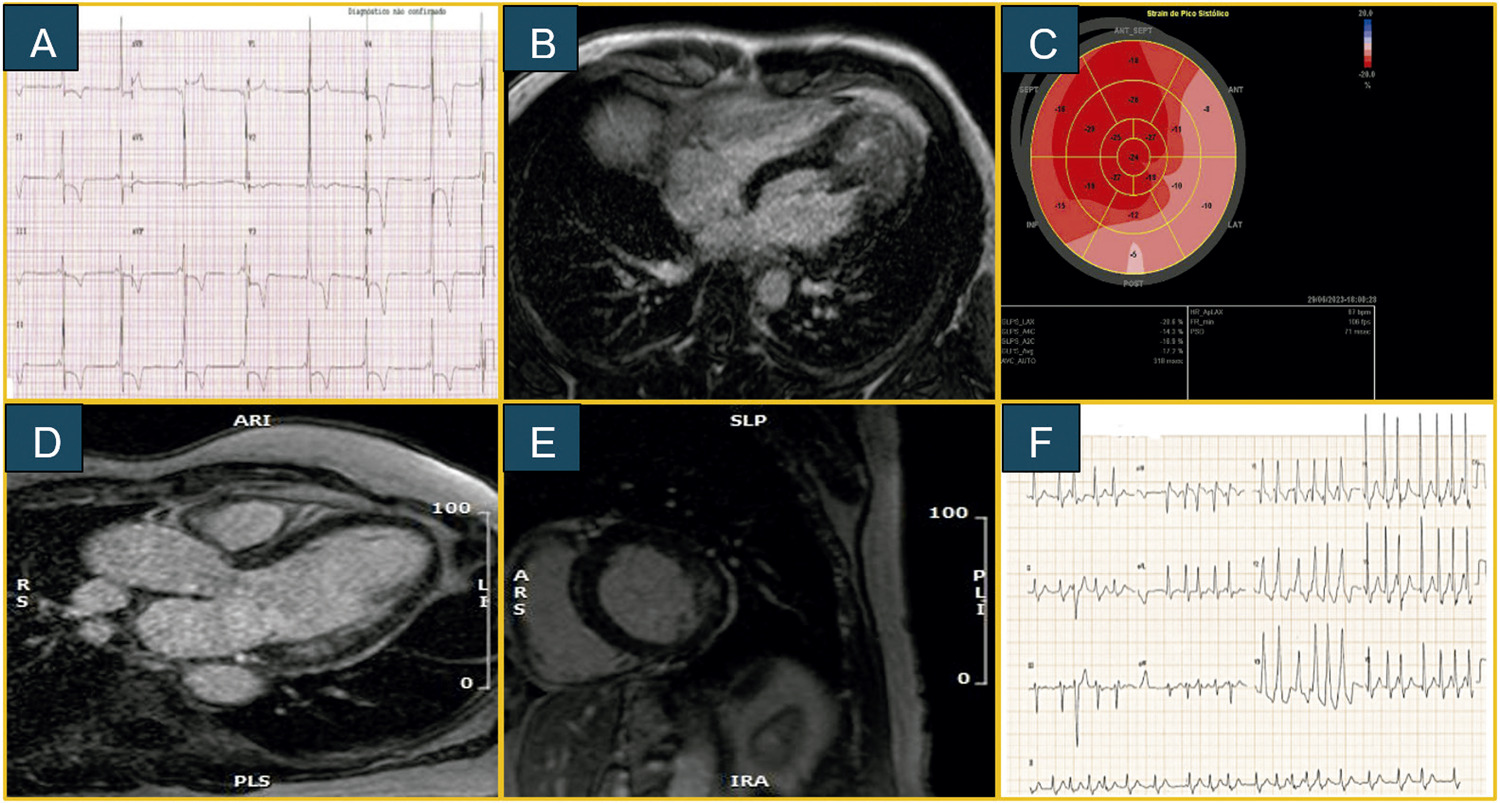
Hypertrophic cardiomyopathy (HCM) phenotype is defined as increased wall thickness of the left and/or right ventricle without loading conditions that explain this. Its diagnosis is confirmed by imaging tests such as echocardiogram and cardiac magnetic resonance (CMR) with the presence of wall thickness ≥ 15 mm in any myocardial segment or 13 mm in first-grade relatives of patients with a confirmed diagnosis. The most common cause of this phenotype is genetic HCM caused by mutations in genes encoding sarcomeric proteins. Most patients with HCM are asymptomatic, but some patients may present significant symptoms, and this is an important cause of sudden death in young people. However, it is important to consider other conditions known as phenocopies because they may have similar characteristics in imaging tests, but with specific etiologies that have different pathophysiological mechanisms. Among these phenocopies, we highlight mitochondrial diseases, RASopathies, muscular dystrophies, PRKAG2 syndrome, Fabry disease, and cardiac amyloidosis. Their differential diagnosis is essential because these phenocopies present specific diagnostic and therapeutic strategies that can impact the natural evolution of disease. The present report reveals the case of a young patient in which this differential diagnosis was challenging, both due to difficulties in accessing specific exams and the overlapping of diseases that made his diagnosis hard, and describes the disease distribution in his family. This patient is part of a broader research project approved by the Research Ethics Committee of the Universidade do Estado do Amazonas under approval number 7.108.530 and CAAE 55200322.5.3009.516.

[…]
  • Fabry Disease
  • Familial Amyloidosis
  • Hypertrophic Cardiomyopathy
Read Full Article
Creative Commons Attribution (CC BY) Creative Commons license
18/09/2026 DOI: 10.36660/abc.20260122i Views 2
Figure 1
ABC
Research Letter

Late-Onset Fabry Disease: Diagnostic Challenges and Clinical Evolution

Hernán Patricio García Mejía et al. Heleuterio da Conceição Nicolau Madogolele Manuela Cristina Ribeiro Dias Barroso Matheus Carvalho Alves Nogueira … Kevin Rafael de Paula Morales Cristhian Espinoza Romero Luciano Nastari Fábio Fernandes

Introduction

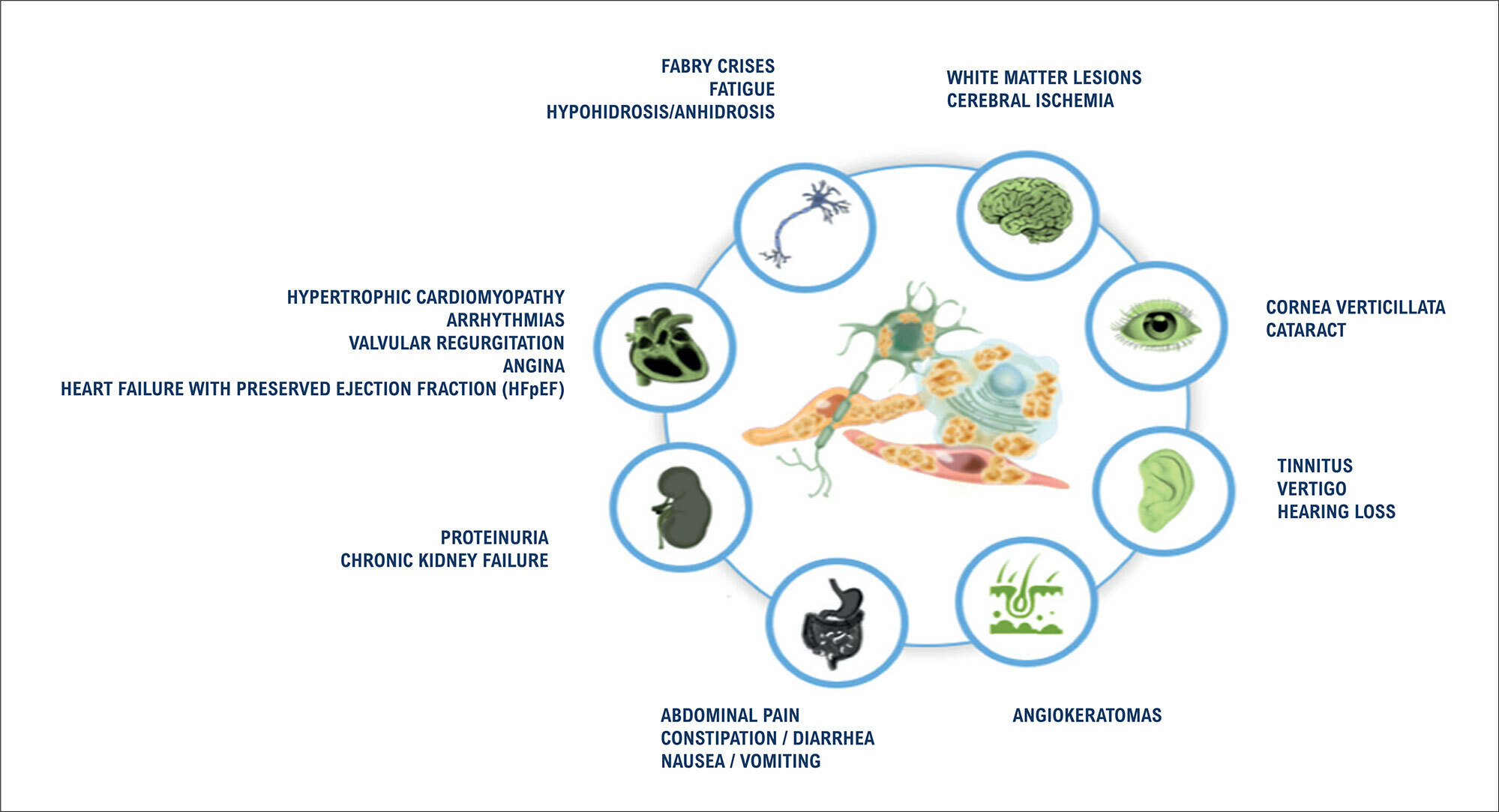
Simultaneous cardiac and renal involvement can result from various systemic conditions, such as hypertension, autoimmune diseases, infiltrative diseases, and hereditary syndromes. Fabry disease (FD) is an X-linked genetic disorder caused by a deficiency or absence of the enzyme α-galactosidase A, leading to the progressive accumulation of glycosphingolipids, especially globotriaosylceramide (Gb3), in various tissues. This accumulation of Gb3 promotes multisystemic dysfunctions, with heterogeneous clinical manifestations that vary according to sex, the degree of residual enzymatic activity, and the form of presentation, classic or non-classic.,

The estimated incidence of FD ranges from 1 in 40,000 to 1 in 117,000 individuals worldwide. In Brazil, the epidemiology of FD remains poorly defined due to the rarity of the condition and underreporting of cases, which reinforces the value of clinical reports such as this one.

[…]

  • Cardiac Conduction System Disease
  • Cardiomyopathies
  • Fabry Disease
  • Left Ventricular Hypertrophy
Read Full Article
Creative Commons Attribution (CC BY) Creative Commons license
17/04/2026 DOI: 10.36660/abc.20250554i Views 3
Figure 1
ABCIC
Review Article

My Approach to Diagnose Fabry Disease

Sandra Marques e Silva

Abstract

Fabry disease (FD) is an inherited lysosomal storage disorder caused by a deficiency of the enzyme alpha-galactosidase A (α-Gal A). This enzymatic defect leads to the cytoplasmic lysosomal accumulation of globotriaosylceramides (GB3 and LysoGB3), resulting in multisystemic clinical manifestations. Cardiovascular involvement, often mimicking hypertrophic cardiomyopathy, is the main determinant of morbidity and mortality, due to the development of arrhythmia, myocardial ischemia, and heart failure. Although FD is a rare condition in the general population, the availability of specific enzyme replacement therapy, which can alter the natural course of the disease, underscores the importance of including FD as a key differential diagnosis among storage cardiomyopathies. Diagnostic evaluation should encompass a thorough clinical assessment, with particular attention to patient history and physical examination, complemented by laboratory testing and imaging studies, such as electrocardiography and echocardiography. Cardiac magnetic resonance imaging, including late gadolinium enhancement and T1 and T2 parametric mapping, provides additional diagnostic and prognostic information and should ideally be performed at the time of initial diagnosis. Definitive diagnosis is established by genetic sequencing of the GLA gene, located on the long arm of the X chromosome, enabling the selection of the most appropriate therapeutic strategy for each patient.

  • Fabry Disease
  • Glycosphingolipids
  • Hypertrophic Cardiomyopathy
Read Full Article
Creative Commons Attribution (CC BY) Creative Commons license
01/07/2025 DOI: 10.36660/abcimg.20240091i
Figure 1
ABC
Research Letter

Fabry Disease and Its Different Phenotypes

Murillo Oliveira Antunes et al. Rafael Ruas Nastari Edmundo Arteaga-Fernandez Marcelle G. Henriques Lizandro … William Batah El-Feghaly Guilherme José dos Santos Ferreira Alan Silva Martins Juliana Alzira Gonzales Oliveira Leguizamon Vinicius Machado Correia Vagner Madrini Junior Fábio Fernandes

Abstract

Fabry disease (FD) is an X-linked genetic condition caused by variants in the GLA gene causing enzyme α-galactosidase A deficiency and accumulation of globotriaosylceramide (Gb3) in tissues such as the heart, kidneys, and the nervous system. This study reports a case series of patients with FD, highlighting the phenotypic diversity of the disease, which can be confused with other cardiological conditions. When properly indicated, genetic evaluation, combined with biomarker dosage and α-galactosidase enzymatic activity, is key for an accurate diagnosis. Early diagnosis of FD is fundamental for initiating treatments that can slow disease progression and prevent serious complications, reinforcing the need for greater awareness about this condition among cardiologists.

  • Cardiomyopathies
  • Fabry Disease
  • Genetics
Read Full Article
Creative Commons Attribution (CC BY) Creative Commons license
24/03/2025 DOI: 10.36660/abc.20240535i Views 3
Central Illustration
ABC
Original Article

Differences Between Two Distinct Hypertrophic Cardiac Conditions: Fabry Disease versus Hypertrophic Cardiomyopathy

Onur Akhan et al. Mehmet Kış Tuncay Güzel Mehdi Zoghi

Abstract

Background

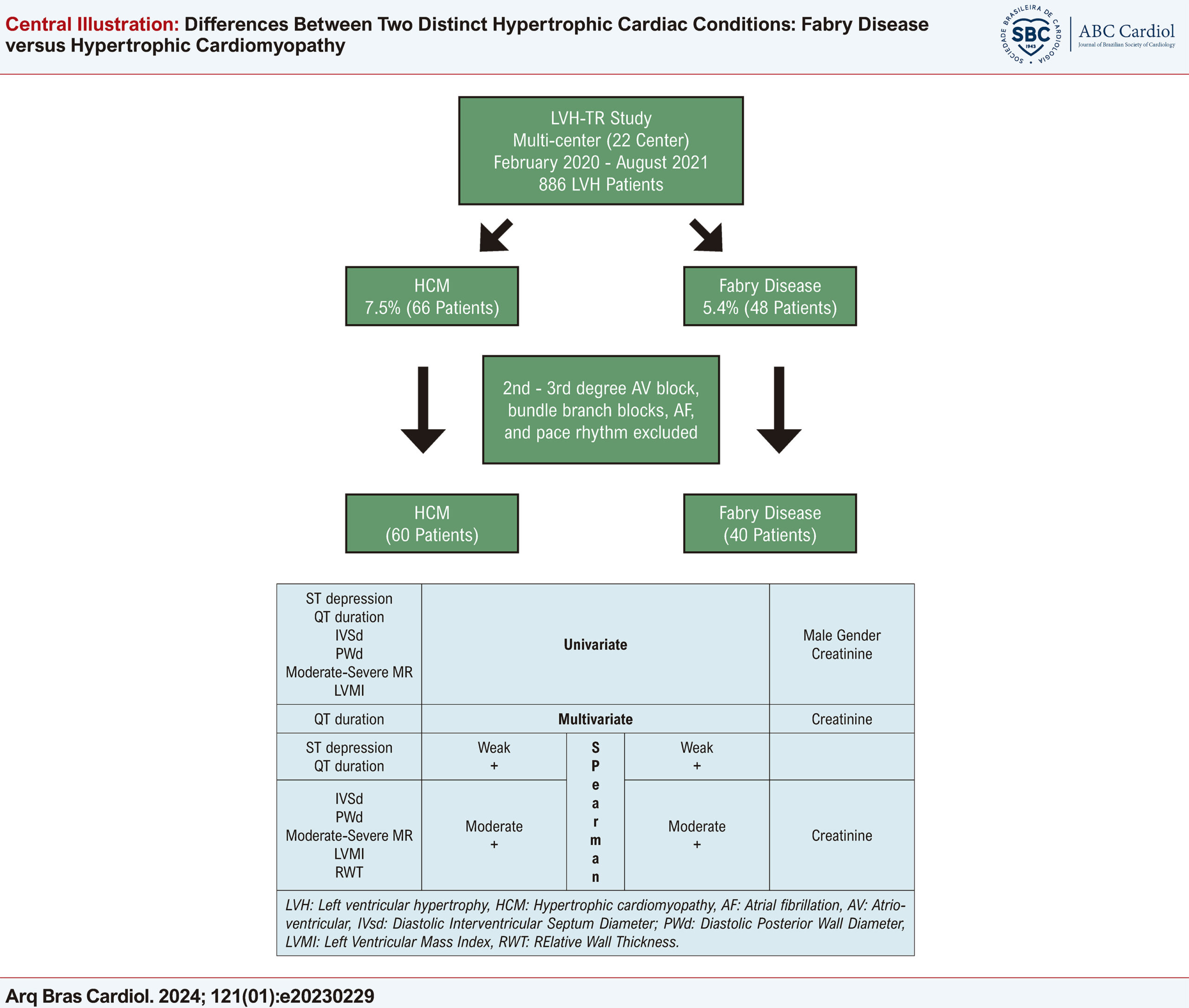
Hypertrophic cardiomyopathy (HCM) and Fabry disease (FD) are genetically inherited diseases with left ventricular hypertrophy (LVH) phenotype characteristics that cause adverse cardiac outcomes.

Objectives

To investigate the demographic, clinical, biochemical, electrocardiographic (ECG), and echocardiographic (ECHO) differences between HCM and FD.

Methods

60 HCM and 40 FD patients were analyzed retrospectively as a subanalysis of the ‘LVH-TR study’ after excluding patients with atrial fibrillation, pace rhythm, bundle branch blocks, and second and third-degree atrioventricular (AV) blocks. The significance level was accepted as <0.05.

Results

Male gender (p=0.048) and creatinine (p=0.010) are significantly higher in favor of FD; however, ST depression (p=0.028), QT duration (p=0.041), interventricular septum thickness (IVSd) (p=0.003), posterior wall thickness (PWd) (p=0.009), moderate-severe mitral regurgitation (MR) (p=0.013), and LV mass index (LVMI) (p=0.041) are significantly higher in favor of HCM in the univariate analyses. In multivariate analysis, statistical significance only continues in creatinine (p=0.018) and QT duration (0.045). FD was positively correlated with creatinine (rho=0.287, p=0.004) and HCM was positively correlated with PWd (rho=0.306, p=0.002), IVSd (rho=0.395, p<0.001), moderate-severe MR (rho=0.276, p<0.005), LVMI (rho=0.300, p=0.002), relative wall thickness (RWT) (rho=0.271, p=0.006), QT duration (rho=0.213, p=0.034) and ST depression (rho=0.222, p=0.026).

Conclusion

Specific biochemical, ECG, and ECHO characteristics can aid in the differentiation and early diagnosis of HCM and FD.

  • Cardiomyopathies
  • Fabry Disease
  • Hypertrophic Cardiomyopathy
  • Left Ventricular Hypertrophy
Read Full Article
Creative Commons Attribution (CC BY) Creative Commons license
05/02/2024 DOI: 10.36660/abc.20230229
Figure 1
ABCIC
My Approach To

My Approach to the Echocardiographic Assessment of Anderson-Fabry Disease

Sandra Marques e Silva

Echocardiographic assessment of anderson-fabry disease

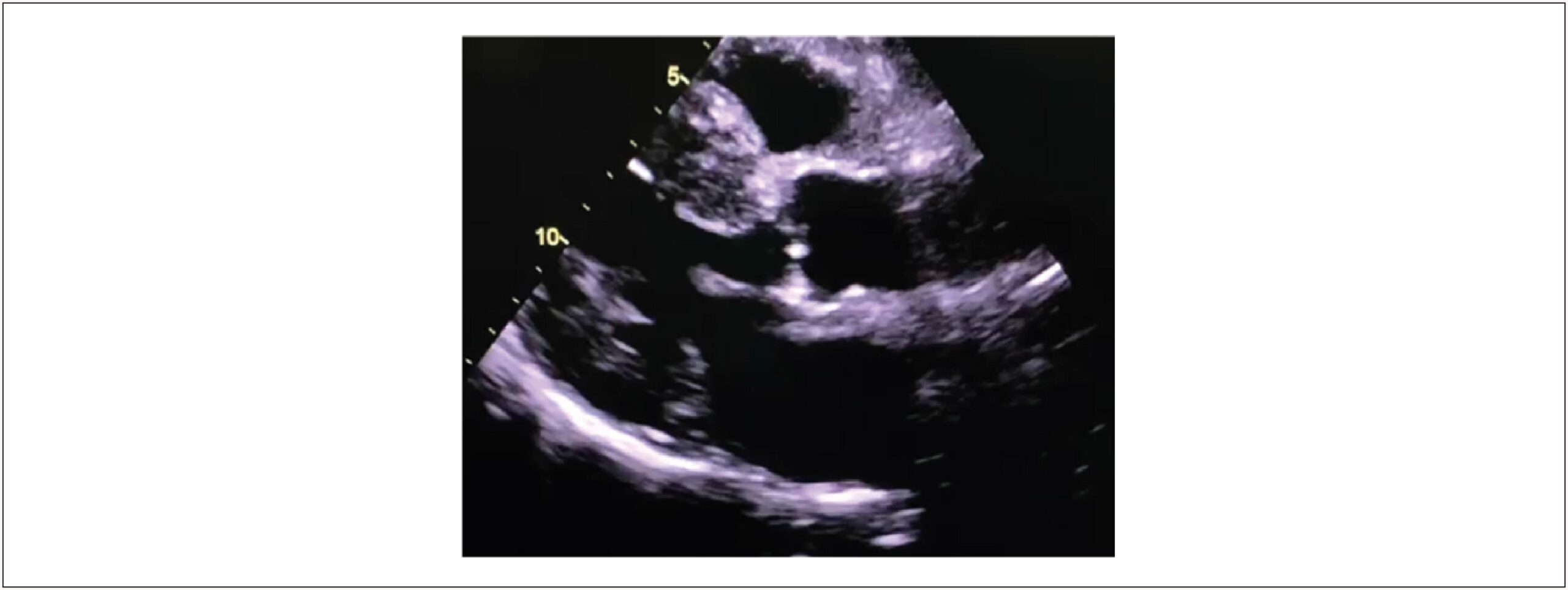
Anderson-Fabry disease (AFD) is a rare lysosomal inborn metabolism error due to changes to the long arm of the X chromosome that result in deficiencies of the alpha-galactosidase enzyme, which is responsible for metabolizing glycosphingolipids. Systemic presentations result from the accumulation of these substances in the cells of organs such as the heart, central and peripheral nervous system, kidneys, eyes, skin, and others. This heart disease, which resembles a sarcomeric hypertrophic cardiomyopathy phenocopy, is a main cause of mortality due to heart failure, arrhythmia, and/or myocardial ischemia in this population in Brazil. The natural disease progression can be changed by an accurate and early diagnosis and the availability of specific intravenous enzyme replacement or oral chaperone therapy, thereby increasing quality of life and life expectancy. Thus, echocardiography plays an essential role as a diagnostic and risk stratification tool in the assessment of therapeutic efficacy and the investigation of cardiac complications.

[…]

  • Diagnosis
  • Echocardiography
  • Fabry Disease
Read Full Article
Creative Commons Attribution (CC BY) Creative Commons license
30/03/2022 DOI: 10.47593/2675-312X/20223501ecom20 Views 1
Figure 1
ABC
Review Article

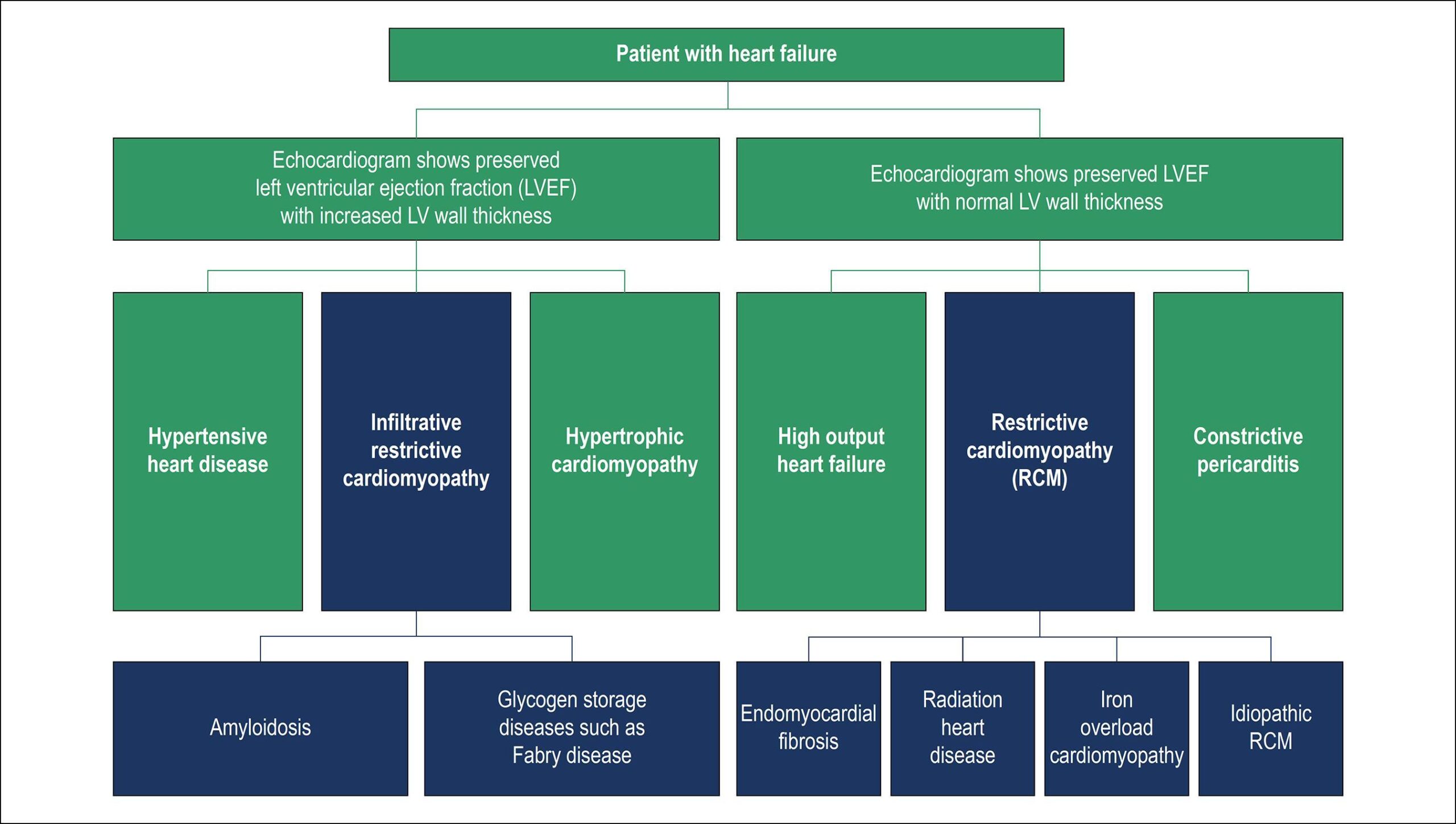
Deposit Diseases as Differential Diagnosis of Left Ventricular Hypertrophy in Patients with Heart Failure and Preserved Systolic Function

Fábio Fernandes et al. Murillo Oliveira Antunes Viviane Tiemi Hotta Carlos Eduardo Rochitte Charles Mady

Fabry Disease

Fabry’s disease FD is a genetic, lysosomal storage disorder caused by total or partial alpha-galactosidase (α-Gal A) deficiency of the enzyme that degrades glycolipid globotriaosylceramide (Gb3) in lysosomes. Therefore Gb3 deposits accumulate in the endothelial cells and heart, resulting in organic dysfunction. The gene that causes FD is located in the long arm of the X chromosome (locus Xq22) and currently hundreds of pathogenic mutations have been described. Thus, male homozygous patients develop the classic disease, while female heterozygous patients present variable clinical manifestations from conditions without apparent clinical disease to the complete expression of the disease.–

In clinical practice, early diagnosis is important because actually there are specific treatment with enzyme replacement therapy (ERT) that may change the natural history, reducing and/or stabilizing the progression of the disease.,

[…]

  • Amyloidosis
  • Cardiomyopaty, Restrictive
  • Fabry Disease
  • Heart Failure
  • Hipertrophy, Ventricular
Read Full Article
Creative Commons Attribution (CC BY) Creative Commons license
02/12/2019 DOI: 10.36660/abc.20180370 Views 2

How to cite this article

EndNote RIS

Electronic Document Format (Vancouver)

Monteiro MM, Silva KF, Ortiz JV, Ferreira MLB, Couceiro KN, Castro RF, Fernandes F, et al. Hypertrophic Phenotype in an Adolescent from the Amazon Region Associated with Combined Variants in the GLA, TTR, and PRKAG2 genes. Arquivos Brasileiros de Cardiologia 2026;123(7):e20260122.

Electronic Document Format (ABNT)

Monteiro, Matheus Martins; Silva, Kemelly Ferreira da; Ortiz, Jessica Vanina; Ferreira, Marcos Leite Barbosa; Couceiro, Kátia do Nascimento; Castro, Rodrigo Fernandes de; Fernandes, Fábio; Ferreira, João Marcos Bemfica Barbosa; Brasil, Investigadores do Mapa Genoma; Brasil, Investigadores do Mapa Genoma; Linnenkamp, Bianca Domit Wener; Marques, Emanuelle Leonilia; Krieger, José Eduardo. Hypertrophic Phenotype in an Adolescent from the Amazon Region Associated with Combined Variants in the GLA, TTR, and PRKAG2 genes. Arquivos Brasileiros de Cardiologia, v. 123, n. 7, e20260122, Sep. 2026.

Electronic Document Format (APA)

Monteiro, M. M., Silva, K. F. , Ortiz, J. V., Ferreira, M. L. B., Couceiro, K. N., Castro, R. F. , Fernandes, F., Ferreira, J. M. B. B., Brasil, I. M. G., Brasil, I. M. G., Linnenkamp, B. D. W., Marques, E. L., & Krieger, J. E. (2026). Hypertrophic Phenotype in an Adolescent from the Amazon Region Associated with Combined Variants in the GLA, TTR, and PRKAG2 genes. Arquivos Brasileiros de Cardiologia, 123(7), e20260122.

Electronic Document Format (ISO)

Monteiro, Matheus Martins and Silva, Kemelly Ferreira da and Ortiz, Jessica Vanina and Ferreira, Marcos Leite Barbosa and Couceiro, Kátia do Nascimento and Castro, Rodrigo Fernandes de and Fernandes, Fábio and Ferreira, João Marcos Bemfica Barbosa and Brasil, Investigadores do Mapa Genoma and Brasil, Investigadores do Mapa Genoma and Linnenkamp, Bianca Domit Wener and Marques, Emanuelle Leonilia and Krieger, José Eduardo. Hypertrophic Phenotype in an Adolescent from the Amazon Region Associated with Combined Variants in the GLA, TTR, and PRKAG2 genes. Arquivos Brasileiros de Cardiologia [online]. 2026, vol. 123, n. 7, [cited 2026-10-14], e20260122. Available from: <https://journals.cardiol.br/en/article/hypertrophic-phenotype-in-an-adolescent-from-the-amazon-region-associated-with-combined-variants-in-the-gla-ttr-and-prkag2-genes/>. ISSN 0066-782X

EndNote RIS

Electronic Document Format (Vancouver)

Mejía HPG, Madogolele HCN, Barroso MCRD, Nogueira MCA, Morales KRP, Romero CE, Nastari L, et al. Late-Onset Fabry Disease: Diagnostic Challenges and Clinical Evolution. Arquivos Brasileiros de Cardiologia 2026;123(2):e20250554.

Electronic Document Format (ABNT)

Mejía, Hernán Patricio García; Madogolele, Heleuterio da Conceição Nicolau; Barroso, Manuela Cristina Ribeiro Dias; Nogueira, Matheus Carvalho Alves; Morales, Kevin Rafael de Paula; Romero, Cristhian Espinoza; Nastari, Luciano; Fernandes, Fábio. Late-Onset Fabry Disease: Diagnostic Challenges and Clinical Evolution. Arquivos Brasileiros de Cardiologia, v. 123, n. 2, e20250554, Apr. 2026.

Electronic Document Format (APA)

Mejía, H. P. G., Madogolele, H. C. N., Barroso, M. C. R. D., Nogueira, M. C. A., Morales, K. R. P., Romero, C. E., Nastari, L., & Fernandes, F. (2026). Late-Onset Fabry Disease: Diagnostic Challenges and Clinical Evolution. Arquivos Brasileiros de Cardiologia, 123(2), e20250554.

Electronic Document Format (ISO)

Mejía, Hernán Patricio García and Madogolele, Heleuterio da Conceição Nicolau and Barroso, Manuela Cristina Ribeiro Dias and Nogueira, Matheus Carvalho Alves and Morales, Kevin Rafael de Paula and Romero, Cristhian Espinoza and Nastari, Luciano and Fernandes, Fábio. Late-Onset Fabry Disease: Diagnostic Challenges and Clinical Evolution. Arquivos Brasileiros de Cardiologia [online]. 2026, vol. 123, n. 2, [cited 2026-10-14], e20250554. Available from: <https://journals.cardiol.br/en/article/late-onset-fabry-disease-diagnostic-challenges-and-clinical-evolution/>. ISSN 0066-782X

EndNote RIS

Electronic Document Format (Vancouver)

Silva SM. My Approach to Diagnose Fabry Disease. ABC Imagem Cardiovascular 2025;38(2):e20240091.

Electronic Document Format (ABNT)

Silva, Sandra Marques e. My Approach to Diagnose Fabry Disease. ABC Imagem Cardiovascular, v. 38, n. 2, e20240091, Jun. 2025.

Electronic Document Format (APA)

Silva, S. M. (2025). My Approach to Diagnose Fabry Disease. ABC Imagem Cardiovascular, 38(2), e20240091.

Electronic Document Format (ISO)

Silva, Sandra Marques e. My Approach to Diagnose Fabry Disease. ABC Imagem Cardiovascular [online]. 2025, vol. 38, n. 2, [cited 2026-10-14], e20240091. Available from: <https://journals.cardiol.br/en/article/my-approach-to-diagnose-fabry-disease/>. ISSN 2318-8219

EndNote RIS

Electronic Document Format (Vancouver)

Antunes MO, Nastari RR, Arteaga-Fernandez E, Lizandro MGH, El-Feghaly WB, Ferreira GJS, Martins AS, et al. Fabry Disease and Its Different Phenotypes. Arquivos Brasileiros de Cardiologia 2025;122(2):e20240535.

Electronic Document Format (ABNT)

Antunes, Murillo Oliveira; Nastari, Rafael Ruas; Arteaga-Fernandez, Edmundo; Lizandro, Marcelle G. Henriques; El-Feghaly, William Batah; Ferreira, Guilherme José dos Santos; Martins, Alan Silva; Leguizamon, Juliana Alzira Gonzales Oliveira; Correia, Vinicius Machado; Madrini Junior, Vagner; Fernandes, Fábio. Fabry Disease and Its Different Phenotypes. Arquivos Brasileiros de Cardiologia, v. 122, n. 2, e20240535, Mar. 2025.

Electronic Document Format (APA)

Antunes, M. O., Nastari, R. R., Arteaga-Fernandez, E., Lizandro, M. G. H., El-Feghaly, W. B., Ferreira, G. J. S., Martins, A. S., Leguizamon, J. A. G. O., Correia, V. M., Madrini Junior, V., & Fernandes, F. (2025). Fabry Disease and Its Different Phenotypes. Arquivos Brasileiros de Cardiologia, 122(2), e20240535.

Electronic Document Format (ISO)

Antunes, Murillo Oliveira and Nastari, Rafael Ruas and Arteaga-Fernandez, Edmundo and Lizandro, Marcelle G. Henriques and El-Feghaly, William Batah and Ferreira, Guilherme José dos Santos and Martins, Alan Silva and Leguizamon, Juliana Alzira Gonzales Oliveira and Correia, Vinicius Machado and Madrini Junior, Vagner and Fernandes, Fábio. Fabry Disease and Its Different Phenotypes. Arquivos Brasileiros de Cardiologia [online]. 2025, vol. 122, n. 2, [cited 2026-10-14], e20240535. Available from: <https://journals.cardiol.br/en/article/fabry-disease-and-its-different-phenotypes/>. ISSN 0066-782X

EndNote RIS

Electronic Document Format (Vancouver)

Akhan O, Kış M, Güzel T, Zoghi M. Differences Between Two Distinct Hypertrophic Cardiac Conditions: Fabry Disease versus Hypertrophic Cardiomyopathy. Arquivos Brasileiros de Cardiologia 2024;121(1):e20230229.

Electronic Document Format (ABNT)

Akhan, Onur; Kış, Mehmet; Güzel, Tuncay; Zoghi, Mehdi. Differences Between Two Distinct Hypertrophic Cardiac Conditions: Fabry Disease versus Hypertrophic Cardiomyopathy. Arquivos Brasileiros de Cardiologia, v. 121, n. 1, e20230229, Feb. 2024.

Electronic Document Format (APA)

Akhan, O., Kış, M., Güzel, T., & Zoghi, M. (2024). Differences Between Two Distinct Hypertrophic Cardiac Conditions: Fabry Disease versus Hypertrophic Cardiomyopathy. Arquivos Brasileiros de Cardiologia, 121(1), e20230229.

Electronic Document Format (ISO)

Akhan, Onur and Kış, Mehmet and Güzel, Tuncay and Zoghi, Mehdi. Differences Between Two Distinct Hypertrophic Cardiac Conditions: Fabry Disease versus Hypertrophic Cardiomyopathy. Arquivos Brasileiros de Cardiologia [online]. 2024, vol. 121, n. 1, [cited 2026-10-14], e20230229. Available from: <https://journals.cardiol.br/en/article/differences-between-two-distinct-hypertrophic-cardiac-conditions-fabry-disease-versus-hypertrophic-cardiomyopathy/>. ISSN 0066-782X

EndNote RIS

Electronic Document Format (Vancouver)

Silva SM. My Approach to the Echocardiographic Assessment of Anderson-Fabry Disease. ABC Imagem Cardiovascular 2022;35(1):ecom20.

Electronic Document Format (ABNT)

Silva, Sandra Marques e. My Approach to the Echocardiographic Assessment of Anderson-Fabry Disease. ABC Imagem Cardiovascular, v. 35, n. 1, ecom20, Mar. 2022.

Electronic Document Format (APA)

Silva, S. M. (2022). My Approach to the Echocardiographic Assessment of Anderson-Fabry Disease. ABC Imagem Cardiovascular, 35(1), ecom20.

Electronic Document Format (ISO)

Silva, Sandra Marques e. My Approach to the Echocardiographic Assessment of Anderson-Fabry Disease. ABC Imagem Cardiovascular [online]. 2022, vol. 35, n. 1, [cited 2026-10-14], ecom20. Available from: <https://journals.cardiol.br/article/my-approach-to-the-echocardiographic-assessment-of-anderson-fabry-disease/>. ISSN 2318-8219

EndNote RIS

Electronic Document Format (Vancouver)

Fernandes F, Antunes MO, Hotta VT, Rochitte CE, Mady C. Deposit Diseases as Differential Diagnosis of Left Ventricular Hypertrophy in Patients with Heart Failure and Preserved Systolic Function. Arquivos Brasileiros de Cardiologia 2019;113(5):979-87.

Electronic Document Format (ABNT)

Fernandes, Fábio; Antunes, Murillo Oliveira; Hotta, Viviane Tiemi; Rochitte, Carlos Eduardo; Mady, Charles. Deposit Diseases as Differential Diagnosis of Left Ventricular Hypertrophy in Patients with Heart Failure and Preserved Systolic Function. Arquivos Brasileiros de Cardiologia, v. 113, n. 5, p. 979-987, Dec. 2019.

Electronic Document Format (APA)

Fernandes, F., Antunes, M. O., Hotta, V. T., Rochitte, C. E., & Mady, C. (2019). Deposit Diseases as Differential Diagnosis of Left Ventricular Hypertrophy in Patients with Heart Failure and Preserved Systolic Function. Arquivos Brasileiros de Cardiologia, 113(5), 979-987.

Electronic Document Format (ISO)

Fernandes, Fábio and Antunes, Murillo Oliveira and Hotta, Viviane Tiemi and Rochitte, Carlos Eduardo and Mady, Charles. Deposit Diseases as Differential Diagnosis of Left Ventricular Hypertrophy in Patients with Heart Failure and Preserved Systolic Function. Arquivos Brasileiros de Cardiologia [online]. 2019, vol. 113, n. 5, [cited 2026-10-14], pp. 979-987. Available from: <https://journals.cardiol.br/en/article/deposit-diseases-as-differential-diagnosis-of-left-ventricular-hypertrophy-in-patients-with-heart-failure-and-preserved-systolic-function/>. ISSN 0066-782X

  • About ABC Family
  • Internal Regulation
  • Editorial Board
  • Brazilian Society of Cardiology (SBC)

Issues

SBC Guidelines

  • Videos
  • Podcasts
  • News