ABC Family Arquivos Brasileiros de Cardiologia International Journal of Cardiovascular Sciences ABC Heart Failure & Cardiomyopathy ABC Imagem Cardiovascular
Português English
ABC Family
Português English
  • About
    • About ABC Family
    • Internal Regulation
    • Editorial Board
    • Brazilian Society of Cardiology (SBC)
  • Issues
  • SBC Guidelines
  • Content
    • Videos
    • Podcasts
    • News
  • About
    • About ABC Family
    • Internal Regulation
    • Editorial Board
    • Brazilian Society of Cardiology (SBC)
  • Issues
  • SBC Guidelines
  • Content
    • Videos
    • Podcasts
    • News

ABC Family

  • ABC Family
  • Arquivos Brasileiros de Cardiologia
  • International Journal of Cardiovascular Sciences
  • ABC Heart Failure & Cardiomyopathy
  • ABC Imagem Cardiovascular
Search in

No content found.

Journals
Ordering
Article types
Others

  1. Home
  2. Keyword: physical therapy modalities
Figure 1
ABC
Case Report

The Effects of Exercise on Cardiogenic Shock with an Intra-Aortic Balloon Pump: A Case Report

Vanessa M. Ferreira et al. Dayane Nunes Rodrigues Carlos Alberto Mendez Contreras João M. Rossi … Rui Fernando Ramos Gustavo Oliveira Mayron F. Oliveira

Abstract

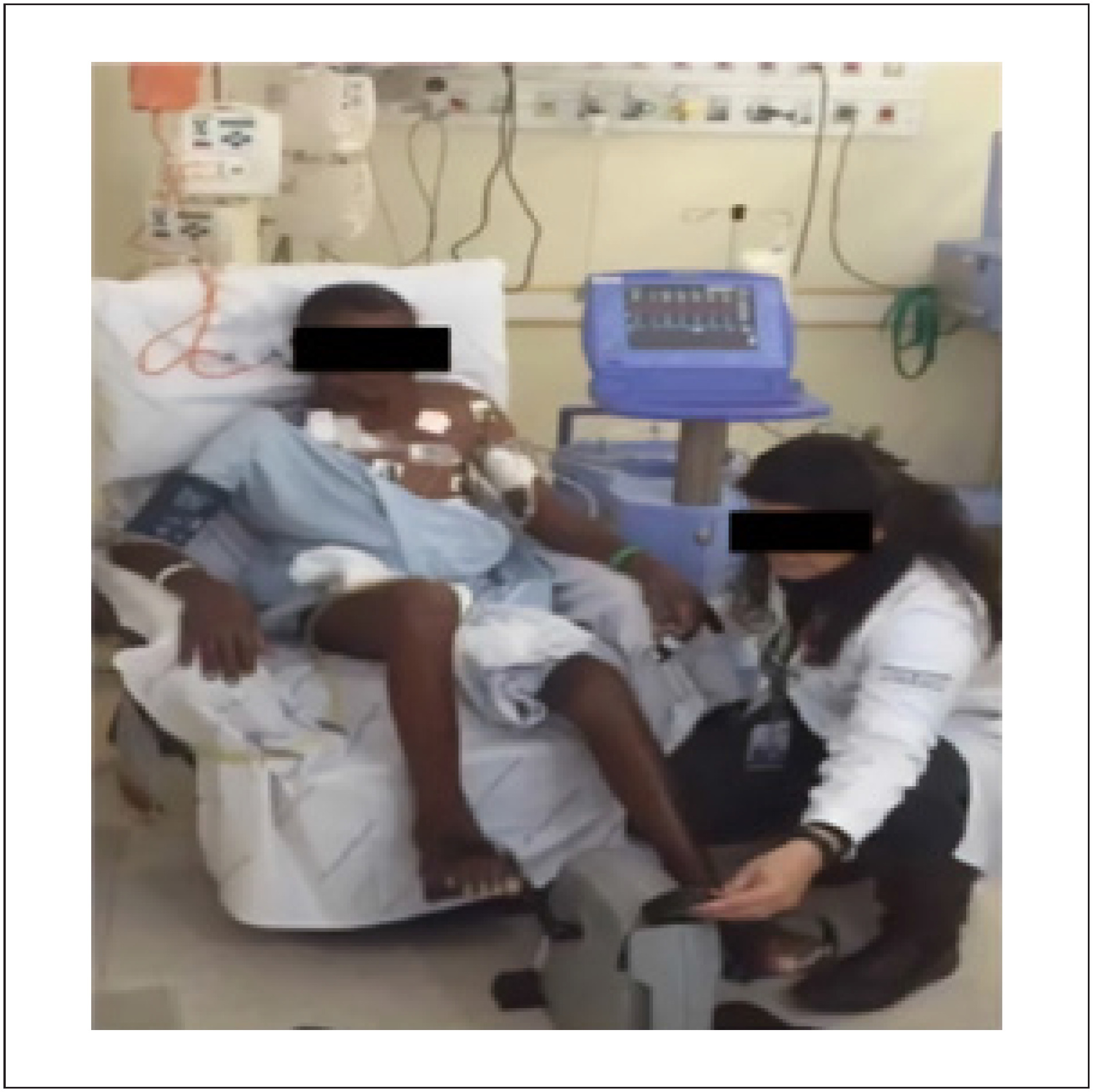
This case report describes the exercise program on a hospitalized 54-year-old male patient with cardiogenic shock waiting for a heart transplant assisted by an intra-aortic balloon pump, a temporary mechanical circulatory support device.

The temporary mechanical circulatory support device, an intra-aortic balloon pump, was placed in the left subclavian artery, enabling the exercise protocol. Measurements and values from Swan-Ganz catheter, blood sample, brain natriuretic peptide (NT-proBNP), and high-sensitivity C-reactive protein (hs-CRP), as well as the six-minute walk test (6MWT) and venous oxygen saturation (SvO2) were obtained before and after an exercise protocol. The exercise training protocol involved the use of an unloaded bed cycle ergometer once a day, for a maximum of 30 minutes, to the tolerance limit.

No adverse events or events related to the dislocation of the intra-aortic balloon pump were observed during the exercise protocol. The exercise program resulted in higher SvO2 levels, with an increased 6MWT with lower Borg dyspnea scores (312 meters vs. 488 meters and five points vs. three points, respectively). After completing the ten-day exercise protocol, the patient underwent a non-complicated heart transplant surgery and a full recovery in the ICU.

This study showed that exercise is a feasible option for patients with cardiogenic shock who are using an intra-aortic balloon pump and that it is well-tolerated with no reported adverse events.
  • Cardiac Rehabilitation
  • Cardiogenic shock
  • Exercise
  • Intra-Aortic Balloon Pumping
  • physical therapy modalities
Read Full Article
Creative Commons Attribution (CC BY) Creative Commons license
18/03/2024 DOI: 10.36660/abc.20230537 Views 1
IJCS
Editorial

Breathing and Cardiovascular Patterns: What can we Learn from Respiratory Exercises?

Gabriel Dias Rodrigues

In the current issue of the International Journal of Cardiovascular Sciences, Fetter and colleagues found that respiratory movements of the abdominal cavity and rib cage, evaluated by circumferences measurements, were higher in Yoga practitioners than in an age-matched sedentary group. Also, the study confirmed that Yoga practitioners showed higher maximal expiratory strength and lower heart rate at rest than non-practitioners.

Yoga has been recommended as a non-pharmacological therapy to control cardiovascular risk factors. Respiratory exercises are part of the Yoga program that includes abdominal and rib cage expansion by rhythmic movements. – It was demonstrated that four months of Yoga respiratory training improved inspiratory and expiratory muscle strength, forced vital capacity and quality of life in healthy elderly. Another study demostrated that Yoga influenced cardiorespiratory control, affecting the resting sympatho-vagal balance, with a shift from vagal to sympathetic predominance, reflecting a sympathetic withdrawal. Several disease subsets are marked by autonomic dysfunction characterized by sympathetic overactivity at rest, and in this context, respiratory exercises such as Yoga may be a potential countermeasure.

[…]

  • Breathing
  • Breathing Exercises
  • Cardiovascular Diseases
  • Continuity of Patient Care
  • physical therapy modalities
  • Yoga
Read Full Article
Creative Commons Attribution (CC BY) Creative Commons license
10/03/2023 DOI: 10.36660/ijcs.20210191 Views 1
IJCS
Editorial

Cardiovascular Rehabilitation at Distance: A New Moment

Ricardo Vivacqua Cardoso Costa

Cardiovascular rehabilitation consists of a non-pharmacological intervention process in individuals with metabolic, pulmonary, or cardiovascular disorders, aiming at reducing symptoms, quality of life improvement, and the possible increase in life expectancy.

It consists, predominantly, in the practice of regular, individualized physical exercises, in addition to guidance concerning other risk factors, including physical inactivity, as well as nutritional and psychological support, intending to slow down and cause possible regression of the patient’s pathology.,

[…]

  • Betacoronavirus
  • Cardiac Rehabilitation
  • COVID-1
  • Exercise Tolerance
  • Guidelines
  • Pandemia
  • Physical Exertion
  • physical therapy modalities
  • Telerehabilitation
Read Full Article
Creative Commons Attribution (CC BY) Creative Commons license
12/05/2021 DOI: 10.36660/ijcs.20210022 Views 1
Figure 1
IJCS
Original Article

Effects of Conventional and Virtual Reality Cardiovascular Rehabilitation in Body Composition and Functional Capacity of Patients with Heart Diseases: Randomized Clinical Trial

João Pedro Lucas Neves Silva et al. Luiz Felipe Marques Novaes Lorrany Caroline Rocha dos Santos Bianca Pinhal Galindo … Margaret Assad Cavalcante Bruna Corral Garcia de Araújo Francis Lopes Pacagnelli Ana Paula Coelho Figueira Freire

Abstract

Background:

Virtual reality is an alternative therapeutic resource to be inserted into cardiovascular rehabilitation, stimulating the practice of physical activity through man-machine interaction.

Objective:

To compare the effects of conventional and virtual reality cardiac rehabilitation on body composition and functional capacity in patients with heart disease.

Methods:

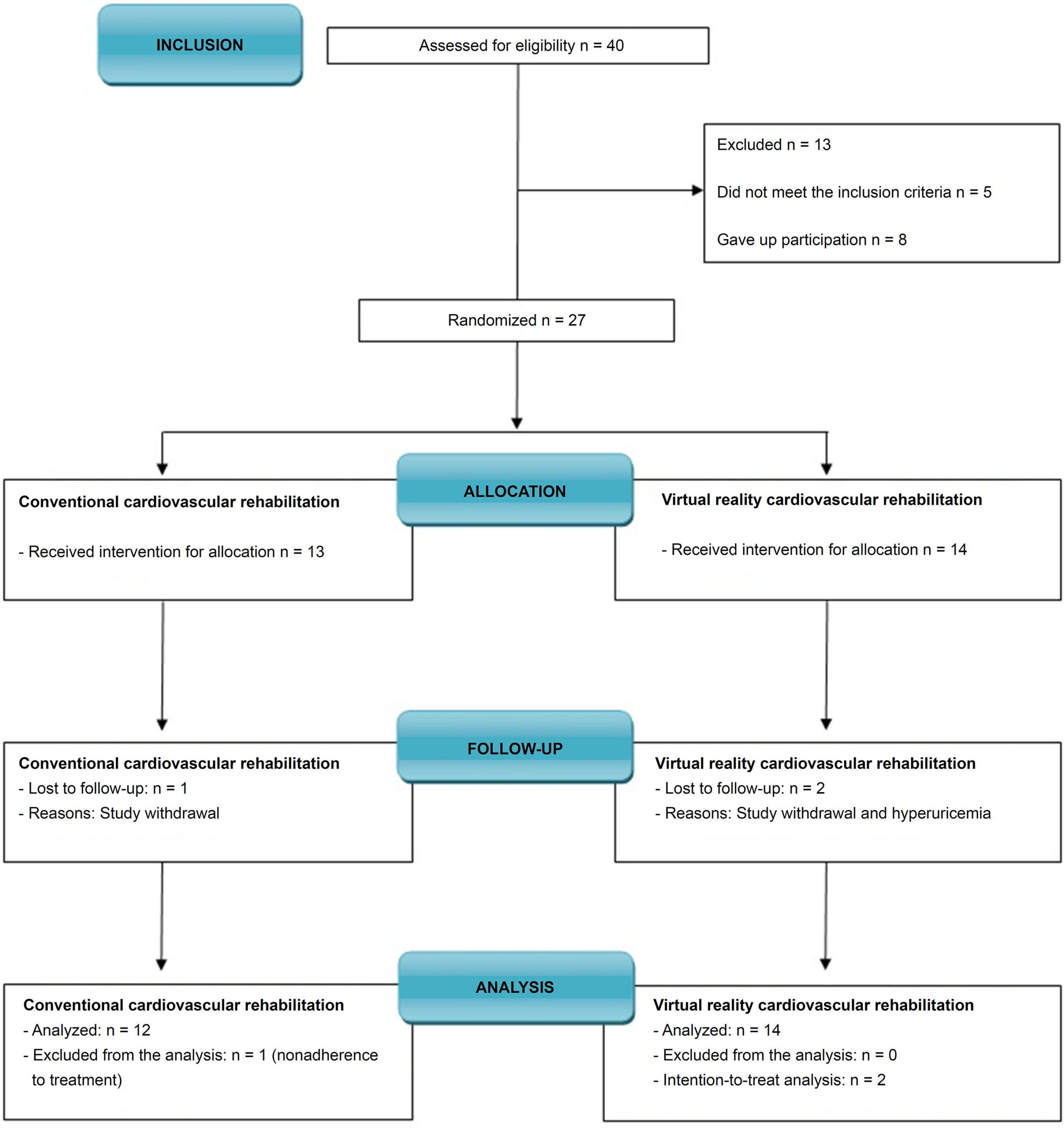
Randomized clinical trial with 27 cardiac patients divided into conventional rehabilitation group (CRG) and virtual reality rehabilitation group (VRG). They underwent a rehabilitation program with 60-minute training sessions twice a week for eight weeks. The VRG training consisted of exercises from the Xbox 360® with Kinect(tm), using YourShape(tm) and Dance Central 3(tm) games. The CRG used conventional treadmills for aerobic exercise and free weights for resistance exercise. Bioimpedance and 6-minute walk test (6MWT) were evaluated at baseline and after training. For main outcome analysis, Student t and Mann Whitney tests were used with a 5% significance level.

Results:

The VRG showed a significant increase in body fat percentage and fat weight when compared to the CRG, and a smaller amount of total water. There was a significant improvement in functional capacity evidenced by the increase in the distance covered in the 6MWT (54.00 m and 32.25 m in the CRG and VRG, respectively), but the gains did not differ between the groups.

Conclusion:

The two rehabilitation modalities had no effect on the body composition of the groups. In addition, the improvement in functional capacity was similar in both groups.

  • Body Composition
  • Cardiac Rehabilitation
  • Cardiovascular Diseases
  • physical therapy modalities
  • Virtual Reality Exposure Therapy
Read Full Article
Creative Commons Attribution (CC BY) Creative Commons license
06/09/2018 DOI: 10.5935/2359-4802.20180071 Views 1
IJCS
Original Article

Expansion Pulmonary Therapy in Blood Oxygenation and Lactate Serum Level in Postoperative Cardiac Surgery

Silvana Souza Oliveira et al. Mansueto Neto Roque Aras Junior

Abstract

Background:

Cardiovascular and pulmonary complications often occur in the immediate post- surgery period and may be prevented and/or treated with lung expansion techniques.

Objective:

To evaluate the efficacy of lung expansion techniques in serum arterial lactate levels and oxygenation in patients in this surgical recovery phase.

Method:

A prospective and analytical study was carried out in postoperative cardiac surgery patients, hemodynamically stable. Measurements of artery lactate levels and partial pressure of oxygen were obtained from arterial blood samples drawn before and after lung expansion techniques, including alveolar recruiting maneuver and intermittent positive pressure breathing.

Results:

40 patients with average age of 51.1 ± 14.9 years, 55% female, were included. It is possible to observe the statistically significant difference (p < 0.05) in the comparison between values of baseline and post-operative arterial lactate, oxygen level, oxygen saturation/fraction of inspired oxygen in both procedures. In relation to the outcome of oxygen blood pressure, only the group on intermittent positive pressure breathing achieved significant improvement.

Conclusion:

The lung expansion techniques used have contributed with the reduction of lactate level, improvement in oxygenation and oxygen saturation in this population, but did not alter intensive care unit length of stay.

  • L-Lactate Dehydrogenase
  • Oxygen Level
  • Oxygenation
  • physical therapy modalities
  • Postoperative Care
  • Thoracic Surgery
Read Full Article
Creative Commons Attribution (CC BY) Creative Commons license
01/01/2018 DOI: 10.5935/2359-4802.20170092 Views 1
Effects of an inspiratory muscle rehabilitation program in the postoperative period of cardiac surgery
ABC
Artigo Original

Effects of an inspiratory muscle rehabilitation program in the postoperative period of cardiac surgery

Paulo Eduardo Gomes Ferreira et al. Alfredo José Rodrigues Paulo Roberto Barboza Évora

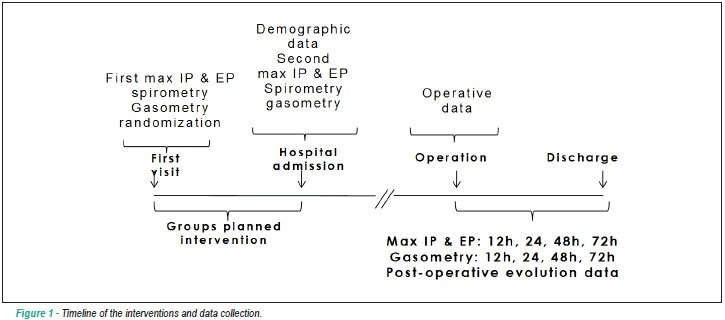
BACKGROUND: Respiratory muscles are affected after cardiac surgeries. OBJECTIVE: To verify whether the preoperative conditioning of the inspiratory muscles might help to decrease postoperative respiratory dysfunction. METHODS: Thirty volunteers of both genders and with a minimum age of 50 years, while waiting for myocardial revascularization and/or cardiac valve surgery, were randomly assigned to two groups. Fifteen patients were included in a domiciliary program of at least 2 weeks of preoperative training of the inspiratory muscles, using a device with a load corresponding to 40% of the maximum inspiratory pressure. The other 15 patients received general advice and did not train the inspiratory muscle. Spirometry, before and after the training program, as well as the evolution of the arterial blood gases and of the maximum inspiratory and expiratory pressure, before and after the operation were evaluated in both group. The clinical outcomes of the two groups were also compared. RESULTS: We observed that inspiratory muscle training increased the forced vital capacity, the maximum voluntary ventilation and the ratio between the forced expired volume during the first second and the forced vital capacity. The evolution of the arterial blood gases and of the maximum inspiratory and expiratory pressures before and after the operation was similar in both groups, with the outcomes also being similar. CONCLUSION: We concluded that our domiciliary program of inspiratory muscle training was safe and improved the forced vital capacity and the maximum voluntary ventilation, although the clinical benefits of this program were not clearly demonstrable in the present study.

  • physical therapy modalities
  • Postoperative Care
  • Rehabilitation
  • Respiratory Muscles
  • Thoracic Surgery
Read Full Article
Creative Commons Attribution (CC BY) Creative Commons license
23/06/2009 DOI: 10.1590/S0066-782X2009000400005 Views 2

How to cite this article

EndNote RIS

Electronic Document Format (Vancouver)

Ferreira VM, Rodrigues DN, Contreras CAM, Rossi JM, Ramos RF, Oliveira G, Oliveira MF, et al. The Effects of Exercise on Cardiogenic Shock with an Intra-Aortic Balloon Pump: A Case Report. Arquivos Brasileiros de Cardiologia 2024;121(1):e20230537.

Electronic Document Format (ABNT)

Ferreira, Vanessa M.; Rodrigues, Dayane Nunes; Contreras, Carlos Alberto Mendez; Rossi, João M.; Ramos, Rui Fernando; Oliveira, Gustavo; Oliveira, Mayron F.. The Effects of Exercise on Cardiogenic Shock with an Intra-Aortic Balloon Pump: A Case Report. Arquivos Brasileiros de Cardiologia, v. 121, n. 1, e20230537, Mar. 2024.

Electronic Document Format (APA)

Ferreira, V. M., Rodrigues, D. N., Contreras, C. A. M., Rossi, J. M., Ramos, R. F., Oliveira, G., & Oliveira, M. F. (2024). The Effects of Exercise on Cardiogenic Shock with an Intra-Aortic Balloon Pump: A Case Report. Arquivos Brasileiros de Cardiologia, 121(1), e20230537.

Electronic Document Format (ISO)

Ferreira, Vanessa M. and Rodrigues, Dayane Nunes and Contreras, Carlos Alberto Mendez and Rossi, João M. and Ramos, Rui Fernando and Oliveira, Gustavo and Oliveira, Mayron F.. The Effects of Exercise on Cardiogenic Shock with an Intra-Aortic Balloon Pump: A Case Report. Arquivos Brasileiros de Cardiologia [online]. 2024, vol. 121, n. 1, [cited 2026-10-14], e20230537. Available from: <https://journals.cardiol.br/en/article/the-effects-of-exercise-on-cardiogenic-shock-with-an-intra-aortic-balloon-pump-a-case-report/>. ISSN 0066-782X

EndNote RIS

Electronic Document Format (Vancouver)

Rodrigues GD. Breathing and Cardiovascular Patterns: What can we Learn from Respiratory Exercises?. International Journal of Cardiovascular Sciences 2023;34(6):732-3.

Electronic Document Format (ABNT)

Rodrigues, Gabriel Dias. Breathing and Cardiovascular Patterns: What can we Learn from Respiratory Exercises?. International Journal of Cardiovascular Sciences, v. 34, n. 6, p. 732-733, Mar. 2023.

Electronic Document Format (APA)

Rodrigues, G. D. (2023). Breathing and Cardiovascular Patterns: What can we Learn from Respiratory Exercises?. International Journal of Cardiovascular Sciences, 34(6), 732-733.

Electronic Document Format (ISO)

Rodrigues, Gabriel Dias. Breathing and Cardiovascular Patterns: What can we Learn from Respiratory Exercises?. International Journal of Cardiovascular Sciences [online]. 2023, vol. 34, n. 6, [cited 2026-10-14], pp. 732-733. Available from: <https://journals.cardiol.br/en/article/breathing-and-cardiovascular-patterns-what-can-we-learn-from-respiratory-exercises/>. ISSN 2359-4802

EndNote RIS

Electronic Document Format (Vancouver)

Costa RVC. Cardiovascular Rehabilitation at Distance: A New Moment. International Journal of Cardiovascular Sciences 2021;34(6):642-3.

Electronic Document Format (ABNT)

Costa, Ricardo Vivacqua Cardoso. Cardiovascular Rehabilitation at Distance: A New Moment. International Journal of Cardiovascular Sciences, v. 34, n. 6, p. 642-643, May. 2021.

Electronic Document Format (APA)

Costa, R. V. C. (2021). Cardiovascular Rehabilitation at Distance: A New Moment. International Journal of Cardiovascular Sciences, 34(6), 642-643.

Electronic Document Format (ISO)

Costa, Ricardo Vivacqua Cardoso. Cardiovascular Rehabilitation at Distance: A New Moment. International Journal of Cardiovascular Sciences [online]. 2021, vol. 34, n. 6, [cited 2026-10-14], pp. 642-643. Available from: <https://journals.cardiol.br/en/article/cardiovascular-rehabilitation-at-distance-a-new-moment/>. ISSN 2359-4802

EndNote RIS

Electronic Document Format (Vancouver)

Silva JPLN, Novaes LFM, Santos LCR, Galindo BP, Cavalcante MA, Araújo BCG, Pacagnelli FL, et al. Effects of Conventional and Virtual Reality Cardiovascular Rehabilitation in Body Composition and Functional Capacity of Patients with Heart Diseases: Randomized Clinical Trial. International Journal of Cardiovascular Sciences 2018;31(6):619-2.

Electronic Document Format (ABNT)

Silva, João Pedro Lucas Neves; Novaes, Luiz Felipe Marques; Santos, Lorrany Caroline Rocha dos; Galindo, Bianca Pinhal; Cavalcante, Margaret Assad; Araújo, Bruna Corral Garcia de; Pacagnelli, Francis Lopes; Freire, Ana Paula Coelho Figueira. Effects of Conventional and Virtual Reality Cardiovascular Rehabilitation in Body Composition and Functional Capacity of Patients with Heart Diseases: Randomized Clinical Trial. International Journal of Cardiovascular Sciences, v. 31, n. 6, p. 619-629, Sep. 2018.

Electronic Document Format (APA)

Silva, J. P. L. N., Novaes, L. F. M., Santos, L. C. R. , Galindo, B. P., Cavalcante, M. A., Araújo, B. C. G. , Pacagnelli, F. L., & Freire, A. P. C. F. (2018). Effects of Conventional and Virtual Reality Cardiovascular Rehabilitation in Body Composition and Functional Capacity of Patients with Heart Diseases: Randomized Clinical Trial. International Journal of Cardiovascular Sciences, 31(6), 619-629.

Electronic Document Format (ISO)

Silva, João Pedro Lucas Neves and Novaes, Luiz Felipe Marques and Santos, Lorrany Caroline Rocha dos and Galindo, Bianca Pinhal and Cavalcante, Margaret Assad and Araújo, Bruna Corral Garcia de and Pacagnelli, Francis Lopes and Freire, Ana Paula Coelho Figueira. Effects of Conventional and Virtual Reality Cardiovascular Rehabilitation in Body Composition and Functional Capacity of Patients with Heart Diseases: Randomized Clinical Trial. International Journal of Cardiovascular Sciences [online]. 2018, vol. 31, n. 6, [cited 2026-10-14], pp. 619-629. Available from: <https://journals.cardiol.br/en/article/effects-of-conventional-and-virtual-reality-cardiovascular-rehabilitation-in-body-composition-and-functional-capacity-of-patients-with-heart-diseases-randomized-clinical-trial/>. ISSN 2359-4802

EndNote RIS

Electronic Document Format (Vancouver)

Oliveira SS, Mansueto Neto , Aras Junior R. Expansion Pulmonary Therapy in Blood Oxygenation and Lactate Serum Level in Postoperative Cardiac Surgery. International Journal of Cardiovascular Sciences 2018;31(1):63-70.

Electronic Document Format (ABNT)

Oliveira, Silvana Souza; Mansueto Neto, ; Aras Junior, Roque. Expansion Pulmonary Therapy in Blood Oxygenation and Lactate Serum Level in Postoperative Cardiac Surgery. International Journal of Cardiovascular Sciences, v. 31, n. 1, p. 63-70, Dec. 2017.

Electronic Document Format (APA)

Oliveira, S. S., Mansueto Neto, , & Aras Junior, R. (2018). Expansion Pulmonary Therapy in Blood Oxygenation and Lactate Serum Level in Postoperative Cardiac Surgery. International Journal of Cardiovascular Sciences, 31(1), 63-70.

Electronic Document Format (ISO)

Oliveira, Silvana Souza and Mansueto Neto and Aras Junior, Roque. Expansion Pulmonary Therapy in Blood Oxygenation and Lactate Serum Level in Postoperative Cardiac Surgery. International Journal of Cardiovascular Sciences [online]. 2018, vol. 31, n. 1, [cited 2026-10-14], pp. 63-70. Available from: <https://journals.cardiol.br/en/article/expansion-pulmonary-therapy-in-blood-oxygenation-and-lactate-serum-level-in-postoperative-cardiac-surgery/>. ISSN 2359-4802

EndNote RIS

Electronic Document Format (Vancouver)

Ferreira PEG, Rodrigues AJ, Évora PRB. Effects of an inspiratory muscle rehabilitation program in the postoperative period of cardiac surgery. Arquivos Brasileiros de Cardiologia 2009;92(4):275-82.

Electronic Document Format (ABNT)

Ferreira, Paulo Eduardo Gomes; Rodrigues, Alfredo José; Évora, Paulo Roberto Barboza. Effects of an inspiratory muscle rehabilitation program in the postoperative period of cardiac surgery. Arquivos Brasileiros de Cardiologia, v. 92, n. 4, p. 275-282, Jun. 2009.

Electronic Document Format (APA)

Ferreira, P. E. G., Rodrigues, A. J., & Évora, P. R. B. (2009). Effects of an inspiratory muscle rehabilitation program in the postoperative period of cardiac surgery. Arquivos Brasileiros de Cardiologia, 92(4), 275-282.

Electronic Document Format (ISO)

Ferreira, Paulo Eduardo Gomes and Rodrigues, Alfredo José and Évora, Paulo Roberto Barboza. Effects of an inspiratory muscle rehabilitation program in the postoperative period of cardiac surgery. Arquivos Brasileiros de Cardiologia [online]. 2009, vol. 92, n. 4, [cited 2026-10-14], pp. 275-282. Available from: <https://journals.cardiol.br/en/article/effects-of-an-inspiratory-muscle-rehabilitation-program-in-the-postoperative-period-of-cardiac-surgery/>. ISSN 0066-782X

  • About ABC Family
  • Internal Regulation
  • Editorial Board
  • Brazilian Society of Cardiology (SBC)

Issues

SBC Guidelines

  • Videos
  • Podcasts
  • News