ABC Family Arquivos Brasileiros de Cardiologia International Journal of Cardiovascular Sciences ABC Heart Failure & Cardiomyopathy ABC Imagem Cardiovascular
Português English
ABC Family
Português English
  • About
    • About ABC Family
    • Internal Regulation
    • Editorial Board
    • Brazilian Society of Cardiology (SBC)
  • Issues
  • SBC Guidelines
  • Content
    • Videos
    • Podcasts
    • News
  • About
    • About ABC Family
    • Internal Regulation
    • Editorial Board
    • Brazilian Society of Cardiology (SBC)
  • Issues
  • SBC Guidelines
  • Content
    • Videos
    • Podcasts
    • News

ABC Family

  • ABC Family
  • Arquivos Brasileiros de Cardiologia
  • International Journal of Cardiovascular Sciences
  • ABC Heart Failure & Cardiomyopathy
  • ABC Imagem Cardiovascular
Search in

No content found.

Journals
Ordering
Article types
Others

  1. Home
  2. Keyword: cardiomyopathy
ABC
Editorial

To Silence or to Stabilize: That is the Question

João Bicho Augusto

Transthyretin amyloid cardiomyopathy (ATTR-CM) was previously considered an inescapable progressive disease leading to devastating outcomes. Clinicians often disregarded ATTR-CM, as the therapeutical arsenal available was very limited. Historically, treatments have offered mostly symptomatic relief without altering disease progression. Fortunately, the last decade brought us disease-modifying treatments with the potential to transform the course of ATTR-CM.

At a molecular level, ATTR-CM develops when transthyretin (TTR), usually a stable transport protein for thyroxine and vitamin A, dissociates from its tetrameric configuration into monomers and amyloid fibrils that accumulate in the myocardium. Two key drug classes have been studied for the treatment of ATTR-CM: stabilizers and silencers. Stabilizers, such as tafamidis and acoramidis, act by stabilizing the TTR tetramer configuration, thus preventing its breakdown and subsequent deposition of amyloid fibrils., In contrast, silencers, such as patisiran and vutrisiran, inhibit the hepatic production of TTR via RNA interference mechanisms, essentially reducing the source of the amyloid precursor., Historically, the ATTR-ACT study was the first Phase III trial to demonstrate that a drug for ATTR-CM, tafamidis, could reduce all-cause mortality, giving stabilizers a competitive edge. However, with newer drug classes, which option is the best for our patients?

[…]

  • Amyloidosis
  • cardiomyopathy
  • Transthyretin
Read Full Article
Creative Commons Attribution (CC BY) Creative Commons license
03/10/2025 DOI: 10.36660/abc.20250426i Views 1
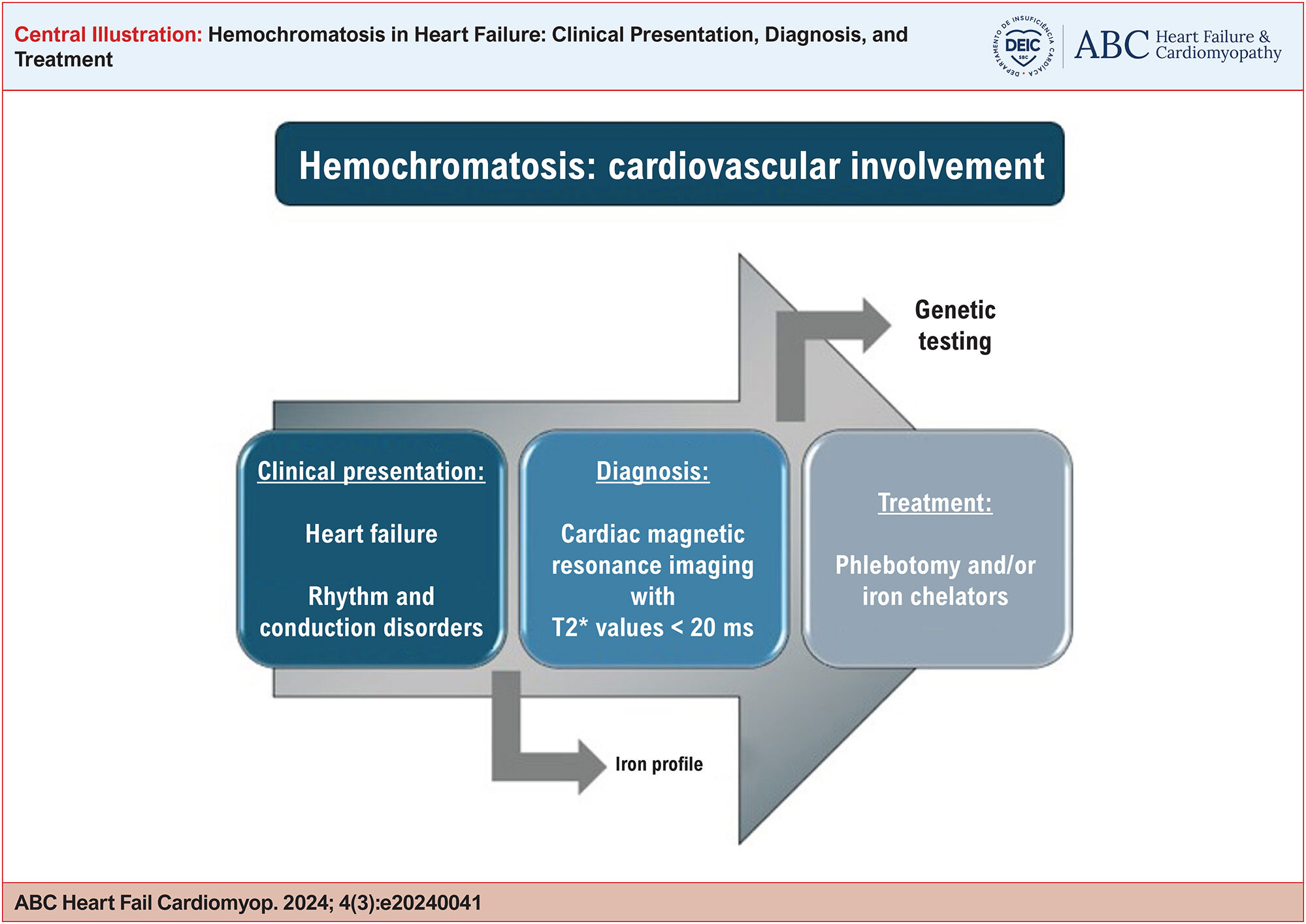
Hemochromatosis in Heart Failure: Clinical Presentation, Diagnosis, and Treatment
ABCHF
Review Article

Hemochromatosis in Heart Failure: Clinical Presentation, Diagnosis, and Treatment

Rodrigo Mantovani Roehrs Sguario et al. Bruno Biselli Luis Fernando Bernal da Costa Seguro

Introduction

Hemochromatosis is a disease characterized by excessive intestinal absorption of iron and its deposition in various organs, including the heart. There are 2 types of hemochromatosis: primary and secondary. Primary or hereditary hemochromatosis (HH) is a genetic disease, whereas secondary hemochromatosis is a consequence of systemic diseases, such as anemia, thalassemia, liver disease, or excessive blood transfusions.

It was first described in the nineteenth century by the French physician Armand Trousseau, who raised the hypothesis that some excess element in the blood was responsible for causing organ damage and skin pigmentation. In 1935, Joseph Sheldon identified that iron accumulation in tissues was responsible for toxicity and was the first to suggest that this metabolic defect had a genetic origin. In the 1950s, a study of iron kinetics correlated increased intestinal iron absorption in patients with hemochromatosis. It was only in 1996 that the “hemochromatosis gene,” HFE (“high Fe”), which is responsible for most cases of the disease, was identified.

[…]

  • cardiomyopathy
  • Heart Failure
  • Hemochromatosis
Read Full Article
Creative Commons Attribution (CC BY) Creative Commons license
18/11/2024 DOI: 10.36660/abchf.20240041i Views 1
Figure 1
ABC
Research Letter

An Unusual Presentation of Lyme Carditis and Adenosine-Sensitive Atrioventricular Block

André Alexandre et al. Diana Ribeiro Maria João Sousa Hipólito Reis … João Silveira Severo Torres

Introduction

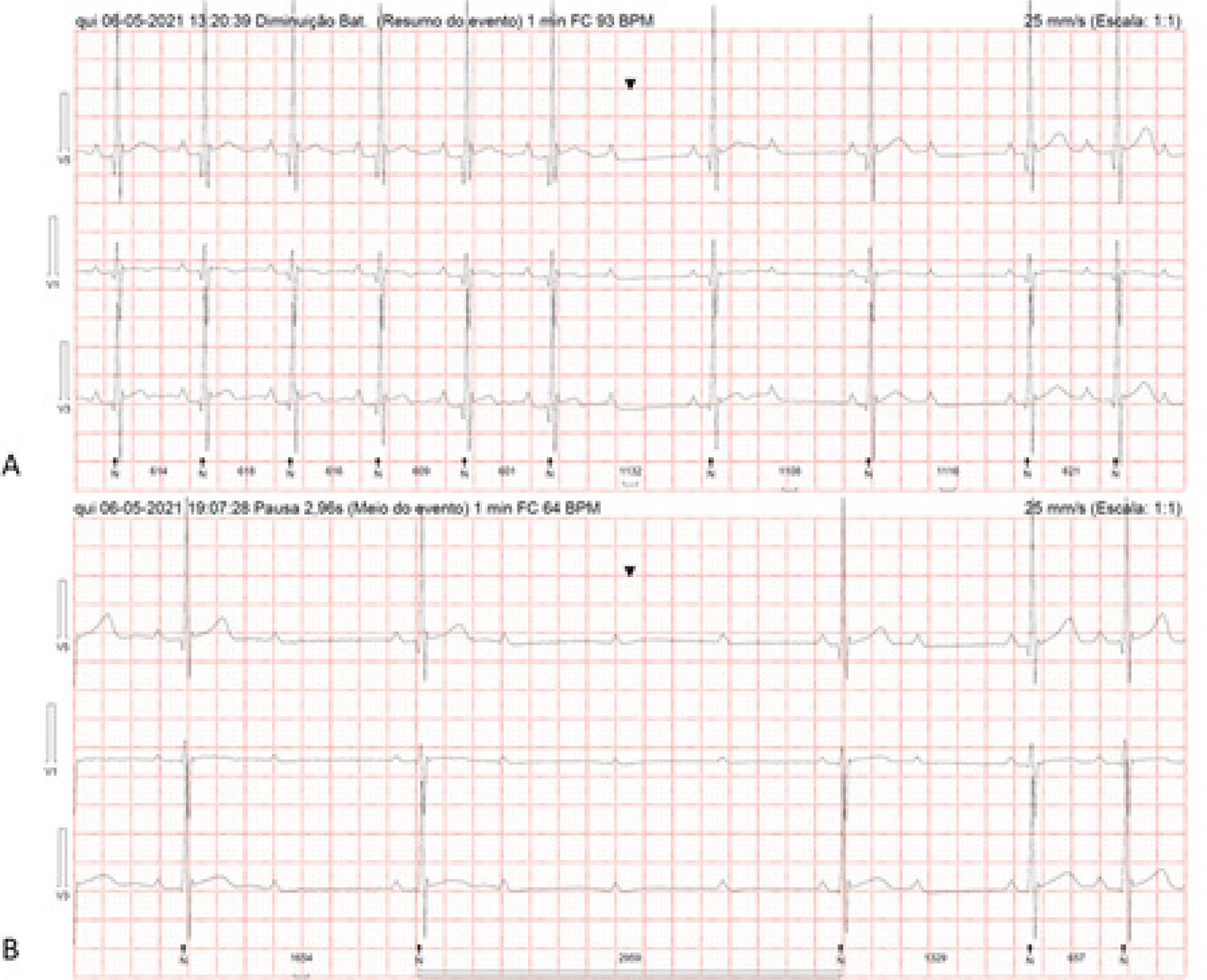
Lyme carditis (LC) is a relatively rare manifestation of the early disseminated stage of LC. , The most frequent presentation of LC is atrioventricular (AV) block characterized by rapid fluctuations in the grade and that occurs in approximately 80-90% of patients. , Other possible clinical manifestations of LC are myocarditis, pericarditis, dilated cardiomyopathy, and heart failure. , The clinical course is usually mild, short-term, and in most cases completely reversible after adequate antibiotic treatment. Indeed, high-grade AV block associated with Lyme disease typically resolves within the first ten days of antibiotic therapy. The authors present a case of a young female diagnosed with early disseminated Lyme disease and cardiac manifestations, in whom AV conduction disturbances persisted after four weeks of appropriate antibiotic treatment and led to an alternative diagnosis.

[…]

  • Adenosine
  • Atrioventricular block
  • cardiomyopathy
  • Lyme Disease
  • Theophyline
Read Full Article
Creative Commons Attribution (CC BY) Creative Commons license
05/02/2024 DOI: 10.36660/abc.20230228 Views 1
Figure 1
ABCHF
Viewpoint

Endomyocardial Fibrosis: Viewpoint

Luma Ornelas Sousa Rêgo et al. Gustavo Sampaio Vilas-Boas André Rodrigues Durães

Abstract

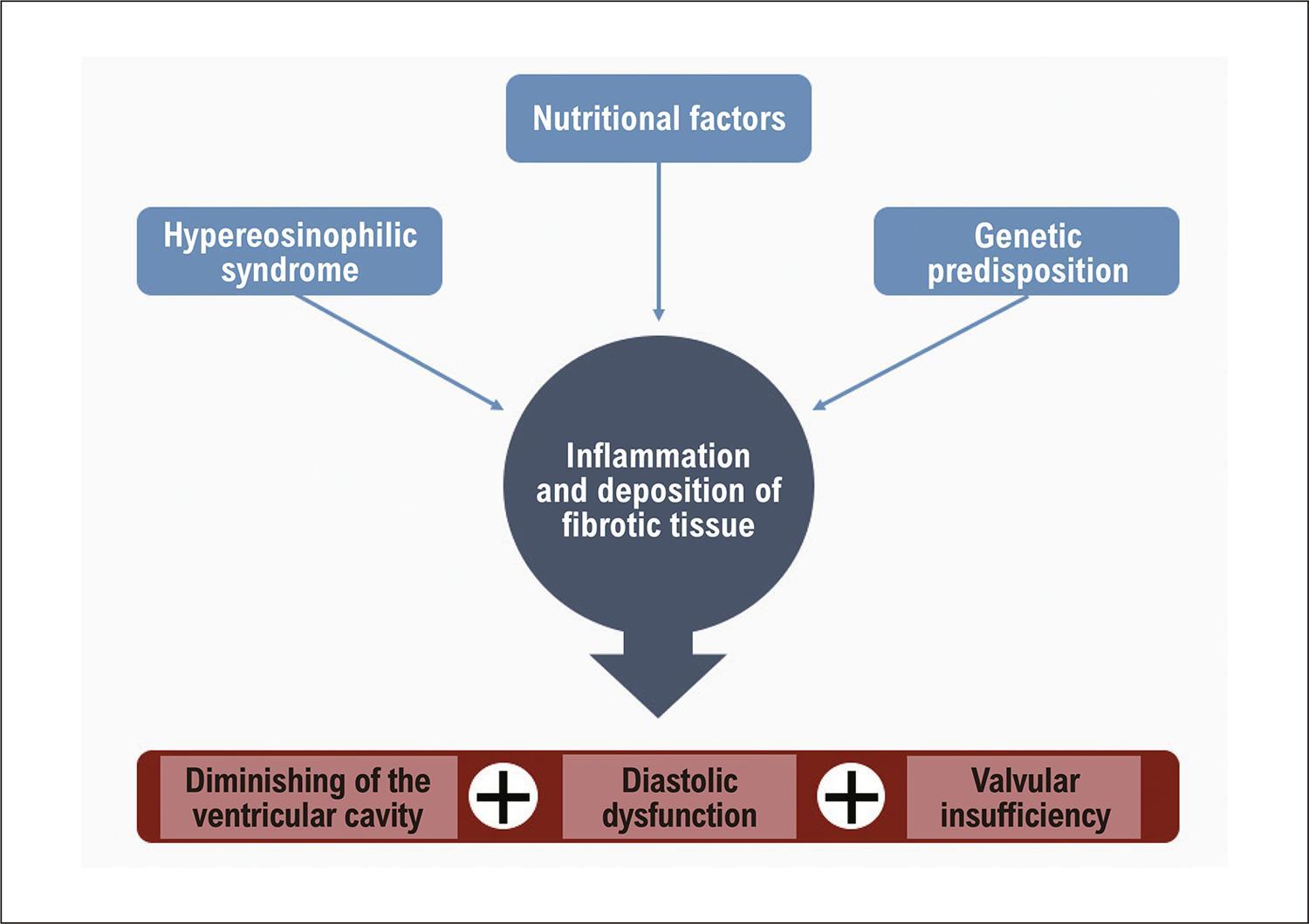
Endomyocardial fibrosis (EMF) is a restrictive cardiomyopathy of unknown origin, affecting mainly young people from tropical countries. EMF is considered to be the most restrictive cardiomyopathy in the world. The main risk factors for EMF appear to be age, gender, ethnicity, social vulnerability, and eosinophilia. The deposition of fibrotic tissue in the endocardium, myocardium, and heart valves leads to a decrease in the ventricular cavity and dysfunction in the diastolic filling of the ventricles. In this article we will express our point of view on this pathology, which is relatively unknown and with limited treatment options.

  • cardiomyopathy
  • Endomyocardial
  • Fibrosis
  • Ventricles
Read Full Article
Creative Commons Attribution (CC BY) Creative Commons license
10/07/2023 DOI: 10.36660/abchf.20230028
Figure 1
ABCHF
Review Article

Peripartum Cardiomyopathy

Walkiria Samuel Ávila et al. Regina Coeli Marques de Carvalho

Abstract

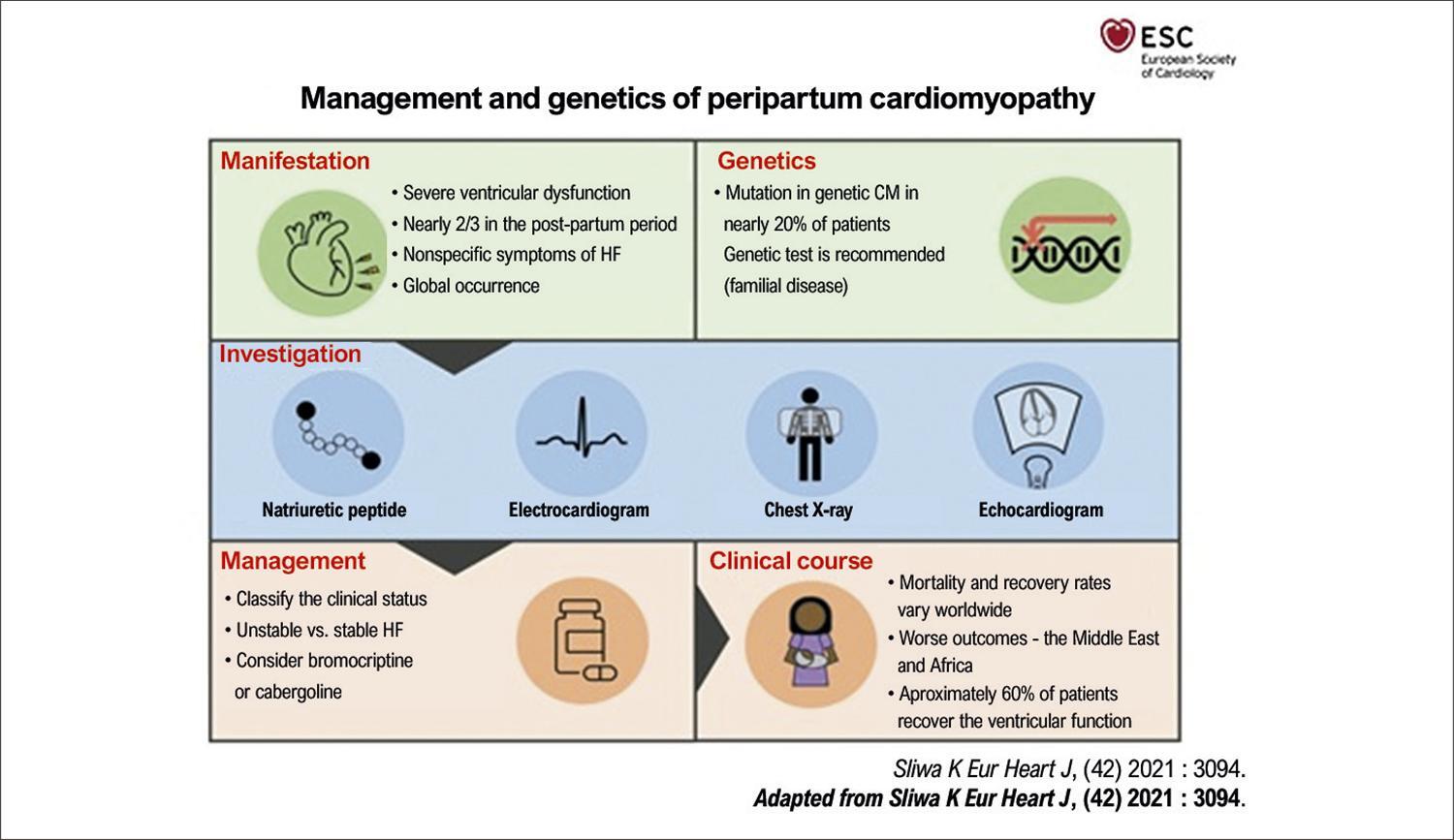
Peripartum cardiomyopathy (PPCM) is a low frequent, but potentially fatal disease, that manifests with heart failure and reduced ejection fraction, with no other identified cause, and related to the puerperal pregnancy cycle. It is a global disease with different clinical manifestations and prognosis. Known risks include preeclampsia, advanced maternal age, multifetal gestation, and African ascendence. Genetic tests have shown that up to 20% of women with PPCM have an identifiable variant of cardiomyopathy. The etiopathogenesis of PPCM, although still unclear, is characterized by endothelial dysfunction caused by anti-angiogenic agents in the placenta, and prolactin degradation products. Clinical manifestation of PPCM does not differ from that of heart failure in other cardiomyopathies, with symptoms varying from mild to cardiogenic shock. Mortality rates in PPCM patients vary widely, and are related to cardiogenic shock, thromboembolism, and complex arrhythmias. The disease may progress rapidly to severe HF, with indication for mechanical circulatory support or cardiac transplant. The treatment of PPCM during gestation is distinct due to potential adverse effects of drugs to pregnancy. However, a careful selection of beta-blockers, diuretics and vasodilators has achieved therapeutic success for the mother and the fetus. Although the treatment meets traditional guidelines developed for nonpregnant adults, the use of bromocriptine (ergot alkaloid) and cabergoline (dopamine D2 receptor agonist) has shown favorable results in ventricular recovery in patients with LVEF < 35% when treated with optimized treatment for heart failure.

  • cardiomyopathy
  • Heart Failure
  • Maternal mortality
  • Pregnancy
Read Full Article
Creative Commons Attribution (CC BY) Creative Commons license
10/07/2023 DOI: 10.36660/abchf.20230020 Views 2
Figure 1
ABCIC
Review Article

My Approach to “Athlete's Heart”: Evaluation of the Different Types of Adaptation to Exercise

Frederico José Neves Mancuso

Abstract

Exercise-induced adaptation may occur in amateur and professional athletes. This condition is commonly named “athlete’s heart”. The alterations observed include dilation of the heart chambers, increased myocardial thickness, improved ventricular filling, increased left ventricular trabeculation, dilation of the inferior vena cava, among others. These changes can also be observed in some heart diseases, such as dilated, hypertrophic and other cardiomyopathies (CMP). Thus, cardiac imaging tests are fundamental in identifying these alterations and in differentiating between “athlete’s heart” and possible heart disease.

  • adaptive cardiac remodeling
  • Athlete's heart
  • cardiomyopathy
  • ecocardiography
Read Full Article
Creative Commons Attribution (CC BY) Creative Commons license
31/03/2023 DOI: 10.36660/abcimg.20230002i Views 1
Figure 1
ABCIC
Case Report

Dilated Cardimiopathy as Initial Presentation of Mucopolysacaridosis in Infant

Ludimila dos Anjos Teixeira Romão et al. Fátima Derlene da Rocha Araújo Camila Magalhães Silva Rodrigo Rezende Arantes Zilda Maria Alves Meira

Introduction

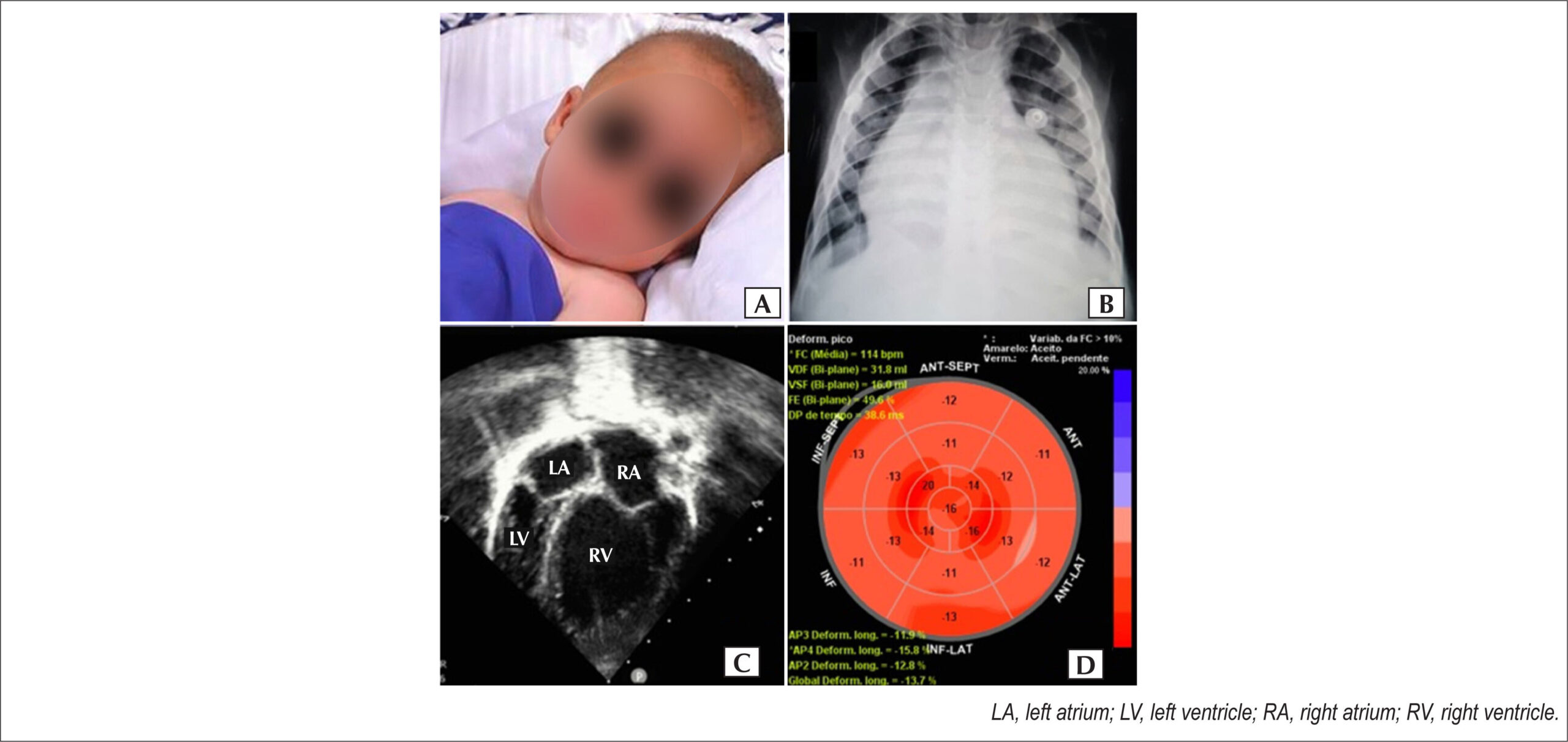
Mucopolysaccharidoses are rare genetic diseases caused by decreased lysosomal enzymes that act in the catabolism of glycosaminoglycans, connective tissue extracellular matrix polymers. Glycosaminoglycans progressively accumulate in the airways, mucous membranes, lungs, bones, joints, heart, liver, eyes, ears, and central and peripheral nervous systems. The multiple affected organs characterize its multisystemic presentation with a wide spectrum of severity and clinical presentations. The most severe phenotype is Hurler syndrome (type I mucopolysaccharidosis), with an incidence of 0.61–1.30 per 100,000 live births.

The heart is affected in more than 50% of mucopolysaccharidosis cases, with both valvular and myocardial involvement in addition to a possible association with systemic arterial hypertension (SAH).

[…]

  • cardiomyopathy
  • Child
  • Dilated
  • Mucopolysaccharidosis I
Read Full Article
Creative Commons Attribution (CC BY) Creative Commons license
13/06/2022 DOI: 10.47593/2675-312X/20223502eabc255 Views 2
Figure 1
IJCS
Case Report

First-degree Atrioventricular Block as an Early Marker of Advanced Disease of the Conduction System in a Patient with Hereditary Val142Ile Cardiac Amyloidosis

Nágela S. V. Nunes et al. Evandro Tinoco Mesquita Claudio Tinoco Mesquita Paulo Roberto Benchimol-Barbosa

Introduction

Cardiac amyloidosis (CA) is a type of restrictive cardiomyopathy secondary to amyloid infiltration in the heart. The most common clinical forms are immunoglobulin light chain amyloidosis (AL) and amyloidosis resulting from amyloid deposits secondary to the destabilization of the protein tetramer transthyretin (ATTR), which is divided into two types: the hereditary form (ATTRm) and the wild type (ATTRwt).

Cardiac impulse conduction disorders and atrial arrhythmias are more frequent in ATTR than in the AL form, and this seems to reflect the longer survival of patients affected by ATTR, given that the AL form manifests with high mortality up to 6 months from diagnosis, because conduction system disease appears to be a later manifestation.

[…]

  • Artificial Pacemaker
  • Atrioventricular Block/genetics
  • Bradycardia/complications
  • cardiomyopathy
  • Diagnostic Imaging
  • Familial Amyloidodis/complications
  • Sick Sinus Syndrome/genetics
Read Full Article
Creative Commons Attribution (CC BY) Creative Commons license
09/05/2022 DOI: 10.36660/ijcs.20210081 Views 2
Figure 1
ABCIC
Original Article

Non-Compacted Cardiomyopathy in Children and Adolescents: From the Challenge of Echocardiographic Diagnosis to Clinical Follow-Up

Ana Flávia Malheiros Torbey et al. Ana Catarina Durán Bustamante Aurea Lucia Grippa de Souza Carmen Zampirole Brandão … Luan Rodrigues Abdallah Yves Pacheco Dias March e Souza Evandro Tinoco Mesquita

Abstract

Background

Non-compacted cardiomyopathy (NCCM) is characterized by hypertrabeculations and deep recesses in the left ventricle, with a heterogeneous clinical presentation, ranging from asymptomatic patients to those with heart failure (HF), thromboembolic events and arrhythmias with risk of sudden death. As it is rare and does not have well-defined diagnostic criteria, its natural history in pediatrics is poorly understood. This study describes the clinical presentation and clinical course of patients with NCCM.

Methodology

Observational, longitudinal, prospective study of pediatric patients seen at a pediatric cardiology referral center from metropolitan region II in the state of Rio de Janeiro, with NCCM phenotype on echocardiogram (ECHO) during a 2-year follow-up, from the ChARisMa registry.

Results

6 patients aged 4 to 14, with NCCM, were analyzed. Mean age 7.5 years (SD: 3.93), 3 males (50%). The patients presented HF (n=2), cardiac murmur (n=1), cardiac arrhythmia (n=1), were asymptomatic (n=1) or were under investigation for a genetic syndrome (n=1). Phenotypes on ECHO: NCCM/dilated cardiomyopathy (n=1) and NCCM/restrictive cardiomyopathy (n=1), isolated phenotype of NCCM (n=4). Cardiac magnetic resonance imaging was performed and confirmed the diagnosis (n=4). The outcomes observed were thromboembolism, indication for heart transplantation, and sustained ventricular tachycardia.

Conclusions

This case series provides relevant data for pediatric NCCM as it shows its heterogeneous clinical presentation and potentially fatal complications. More prospective studies are needed for an accurate diagnosis and to allow its clinical course, therapeutic response and prognosis to be better known.

  • cardiomyopathy
  • Children
  • Heart Failure
  • Pediatrics
Read Full Article
Creative Commons Attribution (CC BY) Creative Commons license
16/12/2021 DOI: 10.47593/2675-312X/20213404eabc237 Views 1
Figure 1
ABCHF
Editorial

The Importance of the DEIC/GEMIC/SBC 2021 Position Statement on Diagnosis and Treatment of Cardiac Amyloidosis to Clinical Practice

Marcus Vinicius Simões et al. Fabio Fernandes

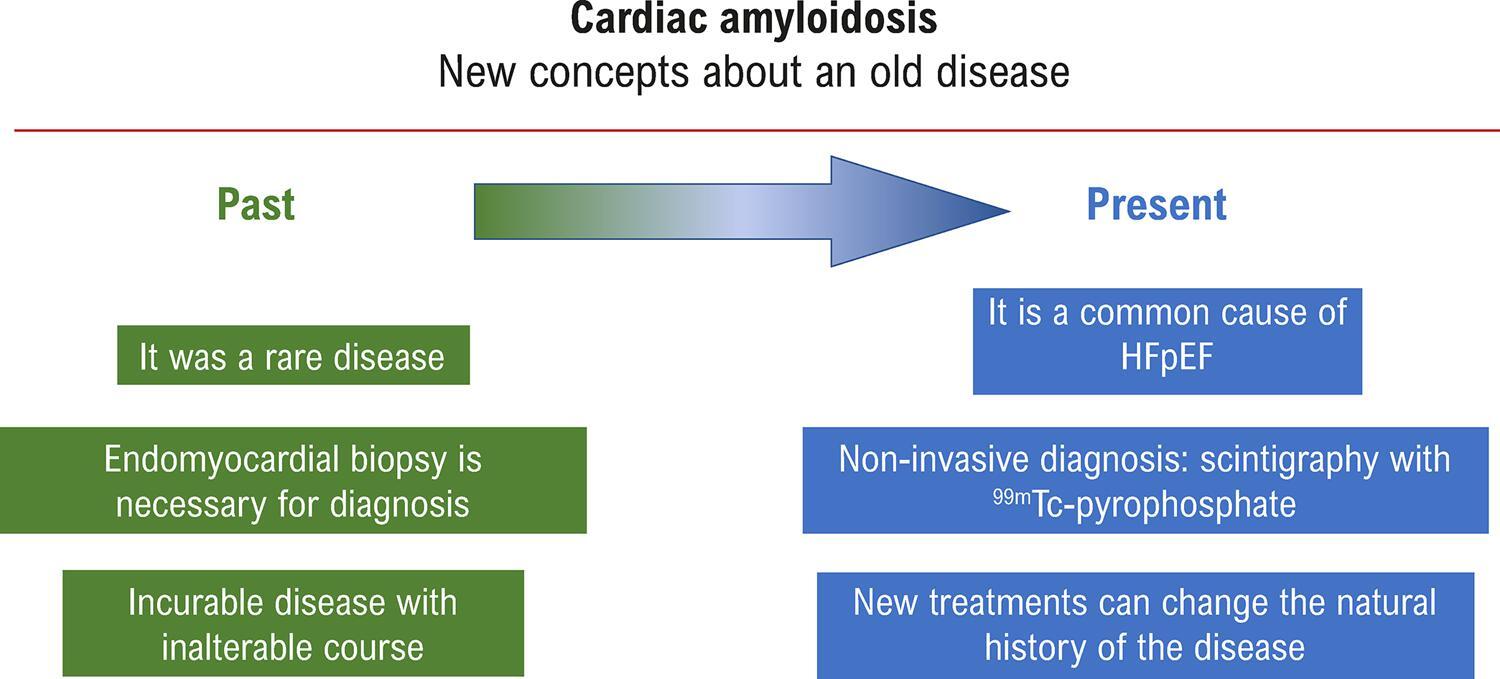
Cardiac amyloidosis is a frequent cause of heart failure with preserved ejection fraction

The main cardiological phenotype of CA is that of an infiltrative restrictive cardiomyopathy, whose more general aspects of symptoms, increased thickness of the ventricular walls, and concentric remodeling of the left ventricle, overlap with those of heart failure with preserved ejection fraction (HFpEF), produced by risk factors such as high blood pressure, obesity, diabetes, and aging. Thus, CA should be considered as a differential diagnosis in patients who exhibit HFpEF.

It is worth remembering that, among the different amyloidogenic proteins that can be deposited in the myocardium and cause CA, the wild type transthyretin form (ATTR-CAwt), which is closely linked to aging, is the most frequently reported in several series of specialized medical literature. This has been repeated both in large reference centers and in real world registers. Accordingly, a recent article has shown a very significant increase in CA as a cause of hospitalizations due to heart failure in several regions of the United States, between 2000 and 2012, exceeding the rate of 65 cases per 100,000 people/year, indicating that CA is not a rare disease according to the current criteria of the World Health Organization ( ).

[…]

  • Amyloidosis
  • cardiomyopathy
  • Diagnostic Methods
  • Treatment
Read Full Article
Creative Commons Attribution (CC BY) Creative Commons license
10/12/2021 DOI: 10.36660/abchf.20210021 Views 1
ABCHF
Editorial

ATTRv: a Multisystemic Disease Requires a Multiprofessional Approach

Carolina Lavigne Moreira et al. Wilson Marques Júnior

Pathogenic variants of the transtiretin gene (TTRv) result in the production of amyloidogenic fibrils that deposit in the extracellular space of many tissues, resulting in amyloidogenic multisystemic disease (ATTRv). Several tissues may be affected in different combinations, including the peripheral nerves and the cardiac system, which are usually the main targets, but also the kidneys, eyes, gastrointestinal system, central nervous system and musculoskeletal structures.

ATTRv is a progressive disease that results in death around 8 to 15 years after the onset of the disease, even more rapidly when the cardiac system is involved early. However, the natural history of the disease has changed with the introduction of treatments that, by different mechanisms, decrease the production of amyloid fibrils.

[…]

  • cardiomyopathy
  • Polyneuropathy
  • Transthyretin
  • TTR
Read Full Article
Creative Commons Attribution (CC BY) Creative Commons license
10/12/2021 DOI: 10.36660/abchf.20210026 Views 2
Figure 1
ABCIC
Image

Left Ventricular Diverticulum

Márcio Silva Miguel Lima

A

[…]

  • Cardiomyopathies
  • cardiomyopathy
  • hypertrophic
  • left
  • Ventricular Dysfunction
Read Full Article
Creative Commons Attribution (CC BY) Creative Commons license
26/11/2021 DOI: 10.47593/2675-312X/20213403eabc234
Figure 1
ABCHF
Review Article

Acute Myocarditis in Childhood and Adolescence in the Covid-19 Era

Ana Flávia Malheiros Torbey et al. Aurea Lúcia Alves de Azevedo Grippa de Souza Ana Catarina Durán Bustamante Carmen Z. Brandão … Luan Rodrigues Abdallah Yves P. D. March e Souza Evandro Tinoco Mesquita

Abstract

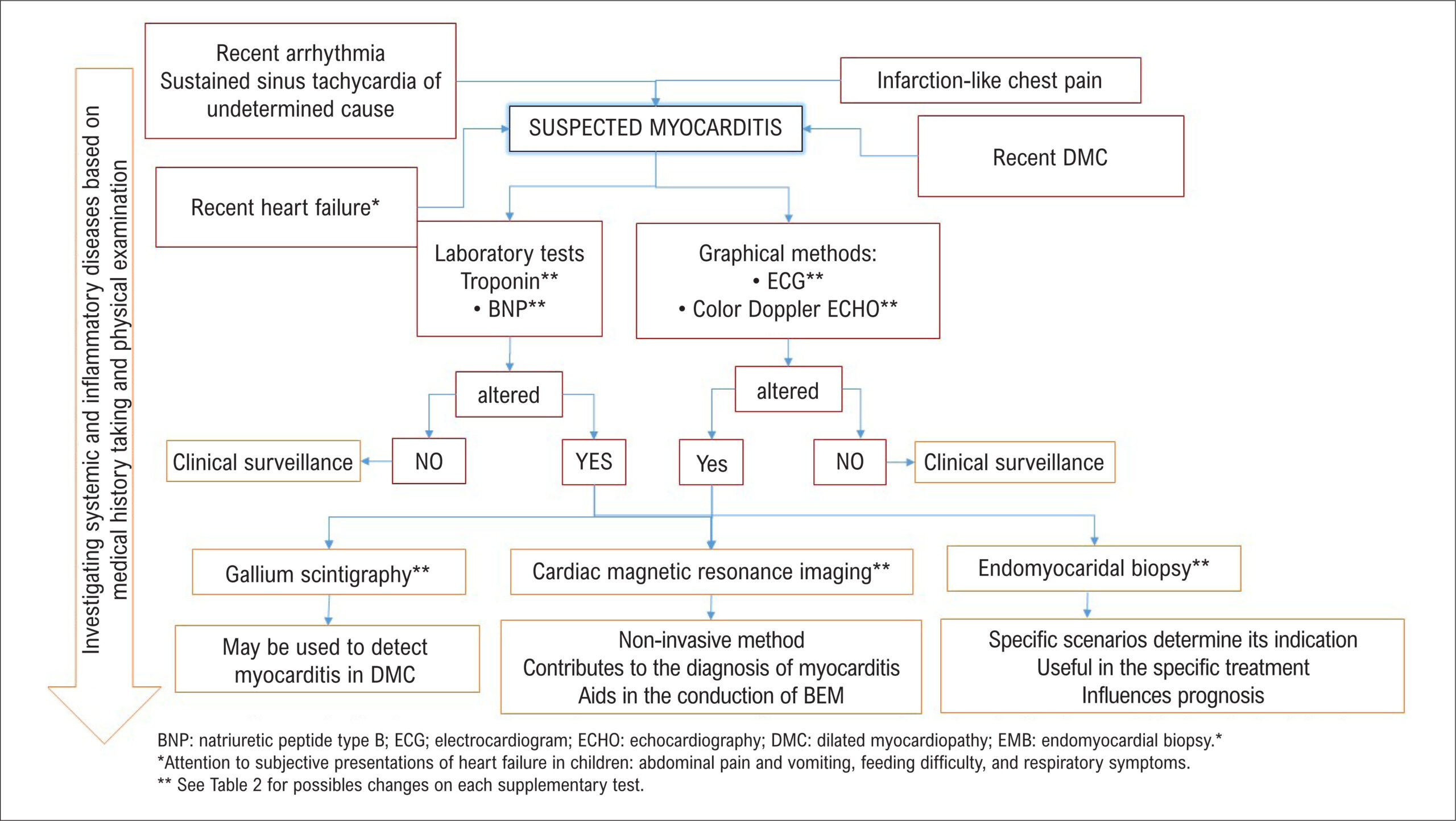
Myocarditis in children and adolescents is an inflammatory myocardial disease with a heterogeneous presentation ranging from oligosymptomatic, with no impaired ejection fraction to catastrophic clinical presentation with cardiogenic shock (fulminant myocarditis) or sudden death. Thus, this condition remains a major challenge from the diagnostic and therapeutic points of view. Despite the different etiologies listed, the most frequent form may be related to viral diseases, and new forms of myocarditis, such allergic ones (eosinophilic and use of medications, particularly cancer immunotherapy), have been currently described. Increasing the rate of suspicion is crucial. Measurement of serum levels of troponin and N-terminal B-type natriuretic peptide, as well as the use of advanced methods of cardiac imaging, such as strain echocardiogram, positron emission tomography, and cardiac magnetic resonance, are integral part of multimodal assessment in suspected patients. Although endomyocardial biopsy remains is still the gold standard for disease diagnosis, currently it tends to be performed in specific situations, such as fulminant clinical presentation and chronic or recurrent myocarditis. The management of this condition includes general supportive care, treatment of heart failure, control of arrhythmias when present, assessment of mechanical support and cardiac transplantation. Treatments based on immunosuppression and immunotherapy are still controversial. In this article, we propose a broad review of diagnostic and treatment methods, as well as the different etiologies in the pediatric population.

  • Adolescents
  • cardiomyopathy
  • Children
  • Heart Failure
  • Myocarditis
Read Full Article
Creative Commons Attribution (CC BY) Creative Commons license
06/07/2021 DOI: 10.36660/abchf.20210008 Views 1
Figure 1
IJCS
Review Article

Heart Transplantation for Chagas Cardiomyopathy

Maria da Consolação Moreira et al. Fabio Morato Castilho Renato Braulio Guilherme Ferraz Messina de Pádua Andrade José Renan da Cunha Melo

Abstract

Heart transplantation (HT) is an established treatment for patients with advanced heart failure (HF). Chagas disease (CD), caused by the Trypanosoma cruzi (T.cruzi) is an important cause of HF in Latin America. Considering CD is a chronic infectious disease, the use of immunosuppressive therapy after HT can reactivate T. cruzi infection and compromise outcomes. Early diagnosis and treatment of this complication is extremely important, which requires knowledge, experience, and a high degree of suspicion by transplant physicians. Furthermore, with the international immigration of people, CD is no longer exclusive to Latin America, since a large number of immigrants with T. cruzi infection are living in non-endemic countries. This phenomenon represents not only a new global epidemiological problem, but also a challenge for transplant teams. This review aims to discuss the peculiarities of HT in the context of CD, with a focus on reactivation of the infection, clinical manifestations, etiological treatment of T. cruzi and differential diagnosis with allograft rejection, among HT recipients.

  • cardiomyopathy
  • Chagas disease
  • Heart Failure
  • Heart Transplantation
  • Trypanosoma cruzi
Read Full Article
Creative Commons Attribution (CC BY) Creative Commons license
25/11/2020 DOI: 10.36660/ijcs.20200248
Figure 1
ABC
Original Article

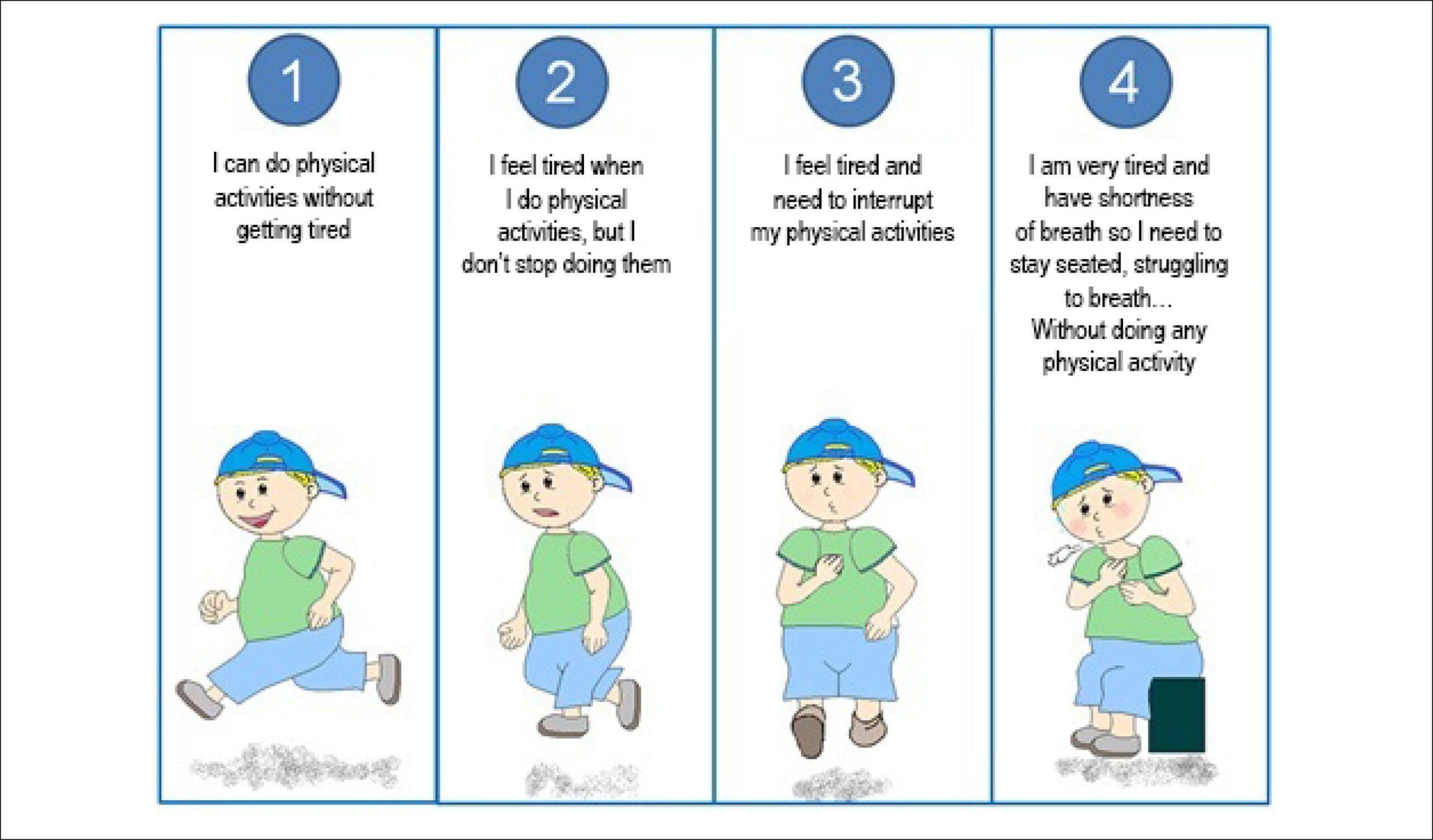
Functional Class in Children with Idiopathic Dilated Cardiomyopathy. A pilot Study

Aline Cristina Tavares et al. Edimar Alcides Bocchi Guilherme Veiga Guimarães

Abstract

Background:

Idiopathic dilated cardiomyopathy (IDCM), most common cardiac cause of pediatric deaths, mortality descriptor: a low left ventricular ejection fraction (LVEF) and low functional capacity (FC). FC is never self reported by children.

Objective:

The aims of this study were (i) To evaluate whether functional classifications according to the children, parents and medical staff were associated. (iv) To evaluate whether there was correlation between VO2 max and Weber’s classification.

Method:

Prepubertal children with IDCM and HF (by previous IDCM and preserved LVEF) were selected, evaluated and compared. All children were assessed by testing, CPET and functional class classification.

Results:

Chi-square test showed association between a CFm and CFp (1, n = 31) = 20.6; p = 0.002. There was no significant association between CFp and CFc (1, n = 31) = 6.7; p = 0.4. CFm and CFc were not associated as well (1, n = 31) = 1.7; p = 0.8. Weber’s classification was associated to CFm (1, n = 19) = 11.8; p = 0.003, to CFp (1, n = 19) = 20.4; p = 0.0001and CFc (1, n = 19) = 6.4; p = 0.04).

Conclusion:

Drawing were helpful for children’s self NYHA classification, which were associated to Weber’s stratification.

  • cardiomyopathy
  • Child
  • Dilated / mortality
  • Heart Failure
  • Pilot Projects
  • Stroke Volume
Read Full Article
Creative Commons Attribution (CC BY) Creative Commons license
06/05/2016 DOI: 10.5935/abc.20160066
Figure 1
ABC
Anatomopathological Session

Case 6/2014 – A Case of a 61-Year-old Woman with Diastolic Heart Failure

Fabio Grunspun Pitta et al. Natalia Quintella Sangiorgi Olivetti Diego Simões Peniche Andrea Maria Bercht … Paulo Sampaio Gutierrez Luiz Alberto Benvenuti

Clinical aspects

The patient was a 61-year-old woman who developed HF in March 2013, with initial improvement after introduction of a specific treatment. However, 5 months later, she was admitted to the emergency room with decompensated underlying disease, requiring hospitalization.

HF is a complex syndrome resulting from any structural or functional damage to ventricular filling or ejection volume. The cardinal manifestations of HF are dyspnea and fatigue, which in turn may cause exercise intolerance, fluid retention, and pulmonary and systemic congestion. There is no specific diagnostic test for HF because it is primarily a syndrome of clinical diagnosis based on the history and physical exam. The importance of an active search for risk factors or previous cardiovascular disease should be emphasized in determining the etiology for this syndrome.

[…]

  • Amyloidosis
  • cardiomyopathy
  • Diastolic
  • Heart Failure
  • restrictive
  • Ventricular Dysfunction
Read Full Article
Creative Commons Attribution (CC BY) Creative Commons license
01/12/2014 DOI: 10.5935/abc.20140185 Views 1
ABC
Letter to the Editor

Is Sildenafil a Therapeutic Option for Noncompaction?

Josef Finsterer et al. Claudia Stöllberger

To the editor

With interest we read the article by Redondo et al about a 6yo male with heart failure and left-ventricular hypertrabeculation/noncompaction (LVHT). We have the following comments and concerns.

Though LVHT is congenital in the majority of the cases, there are some cases in which LVHT is not present on previous echocardiographies (acquired LVHT). In such cases, LVHT may be truly absent or hidden. Hidden LVHT may occur if there is severe myocardial thickening or severe dilatation.

[…]

  • cardiomyopathy
  • Congenital
  • Dilated/complications
  • Heart Defects
  • Heart Failure
  • Phosphodiesterase Inibitors/therapeutic use
Read Full Article
Creative Commons Attribution (CC BY) Creative Commons license
01/09/2014 DOI: 10.5935/abc.20140131 Views 1
Figure 1
ABC
Case Report

Clinically Manifested Myocarditis in Acute Rheumatic Fever José

José L. Xavier Jr. et al. Alexandre de Matos Soeiro Antonio S. S. A. Lopes Guilherme S. Spina … Carlos V. Serrano Jr. Múcio T. Oliveira Jr.

Introduction

The development of acute myocarditis in the postoperative period of cardiac surgery is a challenge for the doctor who treats this type of patient. In most cases, myocarditis can be only a consequence of procedural-related inflammation. However, differential diagnoses must be observed. Among them, rheumatic fever must be considered as an important mechanism. Although its cardiac manifestation is predominantly related to the involvement of the valvular apparatus, its diagnosis is essentially clinical and it can acutely impair the myocardium. In this context, the occurrence of acute rheumatic myocarditis is rare and its immunosuppressive treatment remains uncertain.

[…]

  • cardiomyopathy
  • Dilated
  • Myocarditis
  • Rheumatic Fever / epidemiology
Read Full Article
Creative Commons Attribution (CC BY) Creative Commons license
25/03/2014 DOI: 10.5935/abc.20140017
Latent obstructive hypertrophic cardiomyopathy: is echocardiography enough?
ABC
Case Report

Latent obstructive hypertrophic cardiomyopathy: is echocardiography enough?

João Abecasis et al. Regina Ribeiras Antonio Ferreira Raquel Gouveia Miguel Mendes

CASE REPORT

Latent obstructive hypertrophic cardiomyopathy: is echocardiography enough?

[…]

  • Cardiac magnetic resonance
  • cardiomyopathy
  • Echocardiography
  • hypertrophic
Read Full Article
Creative Commons Attribution (CC BY) Creative Commons license
04/09/2012 DOI: 10.1590/S0066-782X2012001000016 Views 1
Case 2 – for index purposes: a 50 year old and past heavy drinker man admitted to treat decompensated heart failure
ABC
Anatomopathological Session

Case 2 – for index purposes: a 50 year old and past heavy drinker man admitted to treat decompensated heart failure

Wilma Noia Ribeiro et al. Alice Tatsuko Yamada Luiz Alberto Benvenuti

ANATOMOPATHOLOGICAL SESSION

Case 2 – for index purposes: a 50 year old and past heavy drinker man admitted to treat decompensated heart failure

[…]

  • Alcoholism
  • cardiomyopathy
  • Dilated
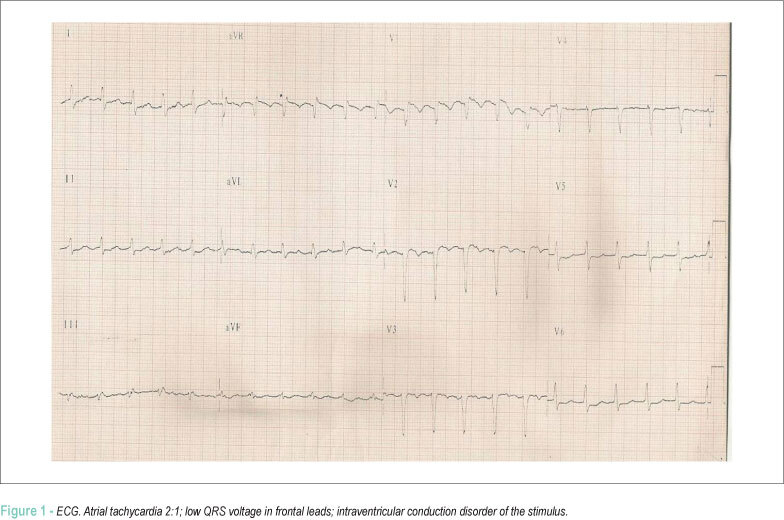
  • ectopic atrial
  • Heart Failure
  • Obesity
  • Tachycardia
Read Full Article
Creative Commons Attribution (CC BY) Creative Commons license
08/08/2012 DOI: 10.1590/S0066-782X2012000600015
Comparison of outcome between Chagas cardiomyopathy and idiopathic dilated cardiomyopathy
ABC
Artigo Original

Comparison of outcome between Chagas cardiomyopathy and idiopathic dilated cardiomyopathy

Amanda Pires Barbosa et al. Augusto Cardinalli Neto Ana Paula Otaviano Bianca Faria Rocha Reinaldo Bulgarelli Bestetti

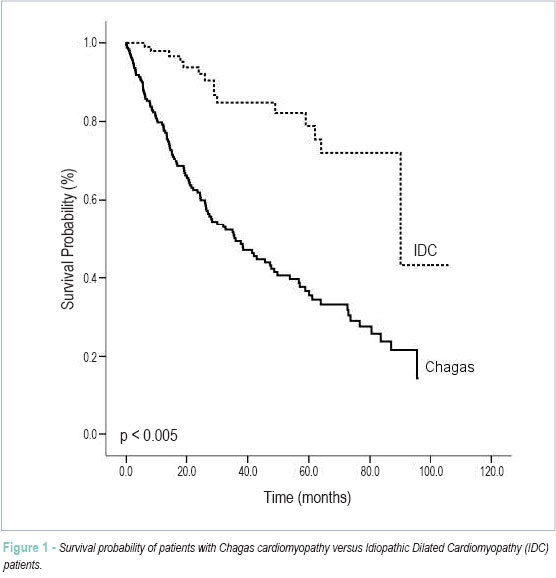
BACKGROUND: Little is known about the outcome of patients with Chagas cardiomyopathy in comparison to that of patients with Idiopathic Dilated Cardiomyopathy in the contemporary era. OBJECTIVE: To compare the outcome of chagasic patients with chronic systolic heart failure secondary to Chagas cardiomyopathy with that observed in patients with IDC in the contemporary era. METHODS: A total of 352 patients (246 with Chagas cardiomyopathy, 106 with Idiopathic Dilated Cardiomyopathy) prospectively followed at our Institution from January, 2000 to January, 2008 were included. All patients received standard contemporary medical therapy. RESULTS: In Cox proportional hazards model multivariate analysis, digoxin use (Hazard Ratio=3.17; 95% Confidence Interval 1.62 to 6.18; p=0.001), need of inotropic support (Hazard Ratio=2.08; 95% Confidence Interval 1.43 to 3.02; p<0.005), left ventricular ejection fraction (Hazard Ratio=0.97; 95% Confidence Interval 0.95 to 0.99; p<0.005), and Chagas cardiomyopathy etiology (Hazard Ratio=3.29; 95% Confidence Interval 1.89 to 5.73; p<0.005) were positively associated with mortality, whereas Beta-Blocker therapy (Hazard Ratio=0.39; 95% Confidence Interval 0.26 to 0.56; p<0.005) was negatively associated with mortality. Survival probability for patients with Chagas cardiomyopathy at 8, 24, and 49 months was 83%, 61%, and 41%, respectively, and for patients with Idiopathic Dilated cardiomyopathy 97%, 92%, and 82%, respectively (p<0.005). CONCLUSION: In the current era of heart failure therapy, patients with Chagas cardiomyopathy have a poorer outcome in comparison to patients with Idiopathic Dilated Cardiomyopathy.

  • cardiomyopathy
  • Chagas Cardiomyopathy
  • Chagas disease
  • Dilated
  • trypanosomiasis
Read Full Article
Creative Commons Attribution (CC BY) Creative Commons license
27/10/2011 DOI: 10.1590/S0066-782X2011005000112
Intramyocardial adrenergic activation in chagasic cardiomyopathy and coronary artery disease
ABC
Artigo Original

Intramyocardial adrenergic activation in chagasic cardiomyopathy and coronary artery disease

Luciano Nastari et al. Felix Jose Alvarez Ramires Vera Maria Cury Salemi Barbara Maria Ianni … Fábio Fernandes Célia Maria Strunz Edmundo Arteaga Charles Mady

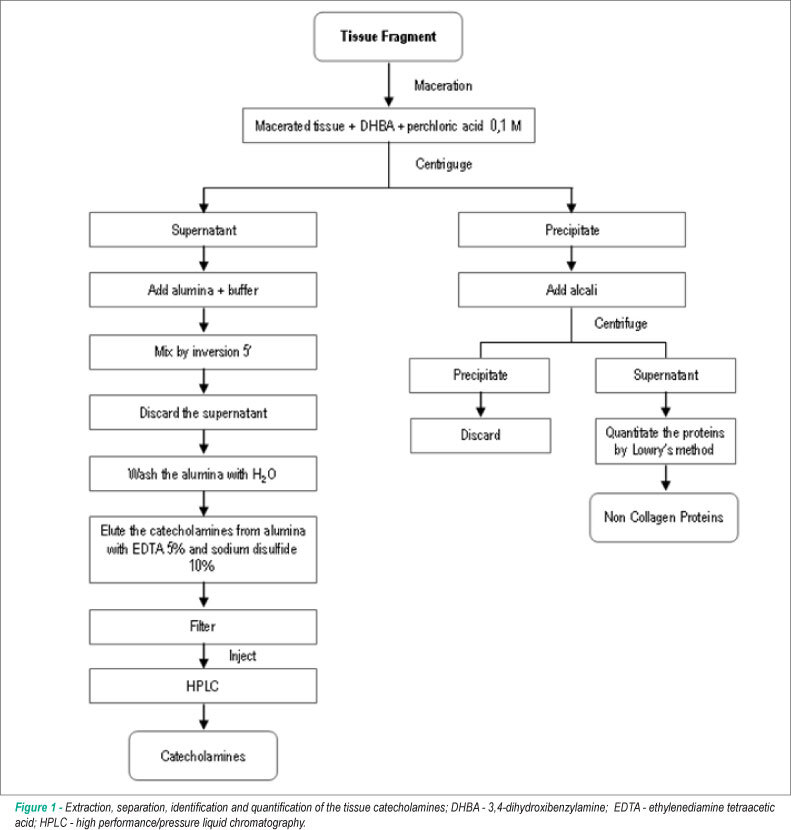
BACKGROUND: Myocardial norepinephrine is altered in left ventricular impairment. In patients with Chagas’ cardiomyopathy (CC), this issue has not been addressed. OBJECTIVE: To determine the level of myocardial norepinephrine in patients with CC and compare it in patients with coronary artery disease, and to relate myocardial norepinephrine to left ventricular ejection fraction (LVEF). METHODS: We studied 39 patients with CC, divided into group 1: 21 individuals with normal LVEF and group 2: 18 individuals with decreased LVEF. Seventeen patients with coronary artery disease were divided into group 3: 12 individuals with normal LVEF and group 4: 5 individuals with decreased LVEF. Two-dimensional echocardiography was used to measure LVEF. Myocardial norepinephrine was determined by high-performance liquid chromatography. RESULTS: Myocardial norepinephrine in CC with and without ventricular dysfunction was 1.3±1.3 and 6.1±4.2 pg/μg noncollagen protein, respectively (p<0.0001); in coronary artery disease with and without ventricular dysfunction, it was 3.3±3.0 and 9.8±4.2 pgμg noncollagen protein, respectively (p<0.0001). A positive correlation was found between LVEF and myocardial norepinephrine concentration in the patients with Chagas' cardiomyopathy (p<0.01, r = 0.57) and also in those with coronary artery disease (p<0.01, r=0.69). A significant difference was demonstrated between norepinephrine concentrations in patients with normal LVEF (groups 1 and 3; p = 0.0182), but no difference was found in patients with decreased LVEF (groups 2 and 4; p = 0.1467). CONCLUSION: In patients with Chagas' cardiomyopathy and normal global ejection fraction there is an early cardiac denervation, when compared to coronary artery disease patients.

  • cardiomyopathy
  • Coronary Artery Disease
  • Heart Failure
  • left
  • Norepinephrine
  • Ventricular Dysfunction
Read Full Article
Creative Commons Attribution (CC BY) Creative Commons license
22/12/2010 DOI: 10.1590/S0066-782X2010005000163
Case 5: 50-year-old woman with restrictive cardiomyopathy, renal failure and proteinuria
ABC
Anatomopathological Session

Case 5: 50-year-old woman with restrictive cardiomyopathy, renal failure and proteinuria

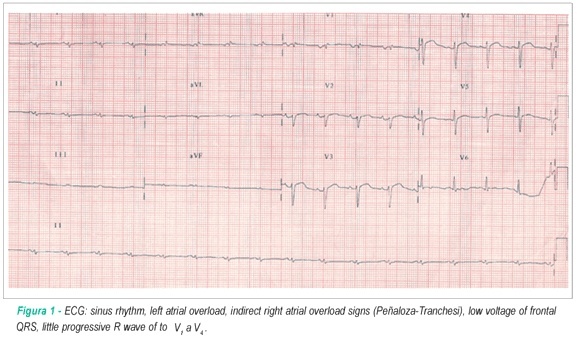
Odilson Marcos Silvestre et al. Henrique Barbosa Ribeiro Leonardo Jorge C. de Paula Sérgio Ricardo V. Macêdo Jussara Bianchi Castelli

ANATOMOPATHOLOGICAL SESSION

Case 5 50-year-old woman with restrictive cardiomyopathy, renal failure and proteinuria

[…]

  • Amyloidosis
  • cardiomyopathy
  • Pulmonary embolism
  • Shock
Read Full Article
Creative Commons Attribution (CC BY) Creative Commons license
11/01/2010 DOI: 10.1590/S0066-782X2009001100020 Views 2
Cardiac pacing in hypertrophic cardiomyopathy: a cohort with 24 years of follow-up
ABC
Artigo Original

Cardiac pacing in hypertrophic cardiomyopathy: a cohort with 24 years of follow-up

Lenine Angelo Alves Silva et al. Edmundo Arteaga Fernández Martino Martinelli Filho Roberto Costa … Sérgio Siqueira Barbara Maria Ianni Charles Mady

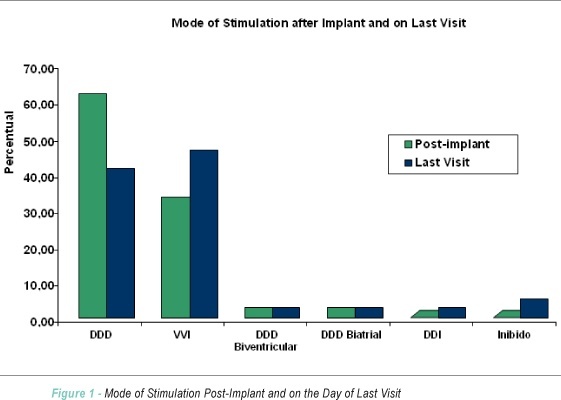
BACKGROUND: The benefits of heart stimulation in hypertrophic cardiomyopathy (HCM) patients have been questioned. Research work available in Brazil on those benefits is scarce. OBJECTIVE: To describe the indication, clinical response, complications and survival time related to pacemaker implant in HCM patients. METHODS: Thirty-nine hypertrophic cardiomyopathy patients were studied (41% males) and submitted to pacemaker implant from May, 1980 through November, 2003. RESULTS: Twenty-seven patients presented obstructive hypertrophic cardiomyopathy, and 12, non-obstructive. Mean age was 46.4 years of age (range 14 – 77), with follow-up of 6.4 ± 4.1 years. Major indications for implant were: spontaneous or induced atrioventricular block (54%), refractoriness to therapeutic conduct associated to high gradient (33%), support for drug therapy to treat bradychardia (8%), and atrial fibrillation prevention (5%). Functional class was shown to improve from 2.41±0.87 to 1.97±0.92 (p = 0.008), and symptoms referred were reduced. No change was made in drug therapy administration. No procedure-related deaths were reported. Although shown to be safe, the procedure was not free from complications (6 patients – 15.4%). Three deaths occurred in the follow-up period – the three of them were atrial fibrillation female patients, with evidence of functional deterioration. A close association was observed between clinical condition worsening and the onset of atrial fibrillation or flutter. CONCLUSION: Cardiac pacing in HCM patients was successful, with evidence of symptoms relief in obstructive HCM patients. No functional improvement was observed in non-obstructive patients.

  • Artificial
  • Cardiac pacing
  • cardiomyopathy
  • Cohort Studies
  • hypertrophic
  • outcome assessment
Read Full Article
Creative Commons Attribution (CC BY) Creative Commons license
11/11/2008 DOI: 10.1590/S0066-782X2008001600011

Could not load more articles. Please try again.

How to cite this article

EndNote RIS

Electronic Document Format (Vancouver)

Augusto JB. To Silence or to Stabilize: That is the Question. Arquivos Brasileiros de Cardiologia 2025;122(8):e20250426.

Electronic Document Format (ABNT)

Augusto, João Bicho. To Silence or to Stabilize: That is the Question. Arquivos Brasileiros de Cardiologia, v. 122, n. 8, e20250426, Oct. 2025.

Electronic Document Format (APA)

Augusto, J. B. (2025). To Silence or to Stabilize: That is the Question. Arquivos Brasileiros de Cardiologia, 122(8), e20250426.

Electronic Document Format (ISO)

Augusto, João Bicho. To Silence or to Stabilize: That is the Question. Arquivos Brasileiros de Cardiologia [online]. 2025, vol. 122, n. 8, [cited 2026-10-14], e20250426. Available from: <https://journals.cardiol.br/en/article/to-silence-or-to-stabilize-that-is-the-question/>. ISSN 0066-782X

EndNote RIS

Electronic Document Format (Vancouver)

Sguario RMR, Biselli B, Seguro LFBC. Hemochromatosis in Heart Failure: Clinical Presentation, Diagnosis, and Treatment. ABC Heart Fail Cardiomyop 2024;4(3):e20240041.

Electronic Document Format (ABNT)

Sguario, Rodrigo Mantovani Roehrs; Biselli, Bruno; Seguro, Luis Fernando Bernal da Costa. Hemochromatosis in Heart Failure: Clinical Presentation, Diagnosis, and Treatment. ABC Heart Fail Cardiomyop, v. 4, n. 3, e20240041, Nov. 2024.

Electronic Document Format (APA)

Sguario, R. M. R., Biselli, B., & Seguro, L. F. B. C. (2024). Hemochromatosis in Heart Failure: Clinical Presentation, Diagnosis, and Treatment. ABC Heart Fail Cardiomyop, 4(3), e20240041.

Electronic Document Format (ISO)

Sguario, Rodrigo Mantovani Roehrs and Biselli, Bruno and Seguro, Luis Fernando Bernal da Costa. Hemochromatosis in Heart Failure: Clinical Presentation, Diagnosis, and Treatment. ABC Heart Fail Cardiomyop [online]. 2024, vol. 4, n. 3, [cited 2026-10-14], e20240041. Available from: <https://journals.cardiol.br/en/article/hemochromatosis-in-heart-failure-clinical-presentation-diagnosis-and-treatment/>

EndNote RIS

Electronic Document Format (Vancouver)

Alexandre A, Ribeiro D, Sousa MJ, Reis H, Silveira J, Torres S. An Unusual Presentation of Lyme Carditis and Adenosine-Sensitive Atrioventricular Block. Arquivos Brasileiros de Cardiologia 2024;121(1):e20230228.

Electronic Document Format (ABNT)

Alexandre, André; Ribeiro, Diana; Sousa, Maria João; Reis, Hipólito; Silveira, João; Torres, Severo. An Unusual Presentation of Lyme Carditis and Adenosine-Sensitive Atrioventricular Block. Arquivos Brasileiros de Cardiologia, v. 121, n. 1, e20230228, Feb. 2024.

Electronic Document Format (APA)

Alexandre, A., Ribeiro, D., Sousa, M. J., Reis, H., Silveira, J., & Torres, S. (2024). An Unusual Presentation of Lyme Carditis and Adenosine-Sensitive Atrioventricular Block. Arquivos Brasileiros de Cardiologia, 121(1), e20230228.

Electronic Document Format (ISO)

Alexandre, André and Ribeiro, Diana and Sousa, Maria João and Reis, Hipólito and Silveira, João and Torres, Severo. An Unusual Presentation of Lyme Carditis and Adenosine-Sensitive Atrioventricular Block. Arquivos Brasileiros de Cardiologia [online]. 2024, vol. 121, n. 1, [cited 2026-10-14], e20230228. Available from: <https://journals.cardiol.br/en/article/an-unusual-presentation-of-lyme-carditis-and-adenosine-sensitive-atrioventricular-block/>. ISSN 0066-782X

EndNote RIS

Electronic Document Format (Vancouver)

Rêgo LOS, Vilas-Boas GS, Durães AR. Endomyocardial Fibrosis: Viewpoint. ABC Heart Fail Cardiomyop 2023;3(1):e20230028.

Electronic Document Format (ABNT)

Rêgo, Luma Ornelas Sousa; Vilas-Boas, Gustavo Sampaio; Durães, André Rodrigues. Endomyocardial Fibrosis: Viewpoint. ABC Heart Fail Cardiomyop, v. 3, n. 1, e20230028, Jul. 2023.

Electronic Document Format (APA)

Rêgo, L. O. S., Vilas-Boas, G. S., & Durães, A. R. (2023). Endomyocardial Fibrosis: Viewpoint. ABC Heart Fail Cardiomyop, 3(1), e20230028.

Electronic Document Format (ISO)

Rêgo, Luma Ornelas Sousa and Vilas-Boas, Gustavo Sampaio and Durães, André Rodrigues. Endomyocardial Fibrosis: Viewpoint. ABC Heart Fail Cardiomyop [online]. 2023, vol. 3, n. 1, [cited 2026-10-14], e20230028. Available from: <https://journals.cardiol.br/en/article/endomyocardial-fibrosis-viewpoint/>

EndNote RIS

Electronic Document Format (Vancouver)

Ávila WS, Carvalho RCM. Peripartum Cardiomyopathy. ABC Heart Fail Cardiomyop 2023;3(1):e20230020.

Electronic Document Format (ABNT)

Ávila, Walkiria Samuel; Carvalho, Regina Coeli Marques de. Peripartum Cardiomyopathy. ABC Heart Fail Cardiomyop, v. 3, n. 1, e20230020, Jul. 2023.

Electronic Document Format (APA)

Ávila, W. S., & Carvalho, R. C. M. (2023). Peripartum Cardiomyopathy. ABC Heart Fail Cardiomyop, 3(1), e20230020.

Electronic Document Format (ISO)

Ávila, Walkiria Samuel and Carvalho, Regina Coeli Marques de. Peripartum Cardiomyopathy. ABC Heart Fail Cardiomyop [online]. 2023, vol. 3, n. 1, [cited 2026-10-14], e20230020. Available from: <https://journals.cardiol.br/en/article/peripartum-cardiomyopathy/>

EndNote RIS

Electronic Document Format (Vancouver)

Mancuso FJN. My Approach to “Athlete’s Heart”: Evaluation of the Different Types of Adaptation to Exercise. ABC Imagem Cardiovascular 2023;36(1):e20230002.

Electronic Document Format (ABNT)

Mancuso, Frederico José Neves. My Approach to “Athlete’s Heart”: Evaluation of the Different Types of Adaptation to Exercise. ABC Imagem Cardiovascular, v. 36, n. 1, e20230002, Mar. 2023.

Electronic Document Format (APA)

Mancuso, F. J. N. (2023). My Approach to “Athlete’s Heart”: Evaluation of the Different Types of Adaptation to Exercise. ABC Imagem Cardiovascular, 36(1), e20230002.

Electronic Document Format (ISO)

Mancuso, Frederico José Neves. My Approach to “Athlete’s Heart”: Evaluation of the Different Types of Adaptation to Exercise. ABC Imagem Cardiovascular [online]. 2023, vol. 36, n. 1, [cited 2026-10-14], e20230002. Available from: <https://journals.cardiol.br/en/article/my-approach-to-athletes-heart-evaluation-of-the-different-types-of-adaptation-to-exercise/>. ISSN 2318-8219

EndNote RIS

Electronic Document Format (Vancouver)

Romão LAT, Araújo FDR, Silva CM, Arantes RR, Meira ZMA. Dilated Cardimiopathy as Initial Presentation of Mucopolysacaridosis in Infant. ABC Imagem Cardiovascular 2022;35(2):eabc255.

Electronic Document Format (ABNT)

Romão, Ludimila dos Anjos Teixeira; Araújo, Fátima Derlene da Rocha; Silva, Camila Magalhães; Arantes, Rodrigo Rezende; Meira, Zilda Maria Alves. Dilated Cardimiopathy as Initial Presentation of Mucopolysacaridosis in Infant. ABC Imagem Cardiovascular, v. 35, n. 2, eabc255, Jun. 2022.

Electronic Document Format (APA)

Romão, L. A. T., Araújo, F. D. R., Silva, C. M., Arantes, R. R., & Meira, Z. M. A. (2022). Dilated Cardimiopathy as Initial Presentation of Mucopolysacaridosis in Infant. ABC Imagem Cardiovascular, 35(2), eabc255.

Electronic Document Format (ISO)

Romão, Ludimila dos Anjos Teixeira and Araújo, Fátima Derlene da Rocha and Silva, Camila Magalhães and Arantes, Rodrigo Rezende and Meira, Zilda Maria Alves. Dilated Cardimiopathy as Initial Presentation of Mucopolysacaridosis in Infant. ABC Imagem Cardiovascular [online]. 2022, vol. 35, n. 2, [cited 2026-10-14], eabc255. Available from: <https://journals.cardiol.br/en/article/dilated-cardimiopathy-as-initial-presentation-of-mucopolysacaridosis-in-infant/>. ISSN 2318-8219

EndNote RIS

Electronic Document Format (Vancouver)

Nunes NSV, Mesquita ET, Mesquita CT, Benchimol-Barbosa PR. First-degree Atrioventricular Block as an Early Marker of Advanced Disease of the Conduction System in a Patient with Hereditary Val142Ile Cardiac Amyloidosis. International Journal of Cardiovascular Sciences 2022;36:e20210081.

Electronic Document Format (ABNT)

Nunes, Nágela S. V.; Mesquita, Evandro Tinoco; Mesquita, Claudio Tinoco; Benchimol-Barbosa, Paulo Roberto. First-degree Atrioventricular Block as an Early Marker of Advanced Disease of the Conduction System in a Patient with Hereditary Val142Ile Cardiac Amyloidosis. International Journal of Cardiovascular Sciences, v. 36, e20210081, May. 2022.

Electronic Document Format (APA)

Nunes, N. S. V., Mesquita, E. T., Mesquita, C. T., & Benchimol-Barbosa, P. R. (2022). First-degree Atrioventricular Block as an Early Marker of Advanced Disease of the Conduction System in a Patient with Hereditary Val142Ile Cardiac Amyloidosis. International Journal of Cardiovascular Sciences, 36, e20210081.

Electronic Document Format (ISO)

Nunes, Nágela S. V. and Mesquita, Evandro Tinoco and Mesquita, Claudio Tinoco and Benchimol-Barbosa, Paulo Roberto. First-degree Atrioventricular Block as an Early Marker of Advanced Disease of the Conduction System in a Patient with Hereditary Val142Ile Cardiac Amyloidosis. International Journal of Cardiovascular Sciences [online]. 2022, vol. 36, [cited 2026-10-14], e20210081. Available from: <https://journals.cardiol.br/en/article/first-degree-atrioventricular-block-as-an-early-marker-of-advanced-disease-of-the-conduction-system-in-a-patient-with-hereditary-val142ile-cardiac-amyloidosis/>. ISSN 2359-4802

EndNote RIS

Electronic Document Format (Vancouver)

Torbey AFM, Bustamante ACD, Souza ALG, Brandão CZ, Abdallah LR, Souza YPDM, Mesquita ET, et al. Non-Compacted Cardiomyopathy in Children and Adolescents: From the Challenge of Echocardiographic Diagnosis to Clinical Follow-Up. Arquivos Brasileiros de Cardiologia Imagem cardiovascular 2021;34(4):eabc237.

Electronic Document Format (ABNT)

Torbey, Ana Flávia Malheiros; Bustamante, Ana Catarina Durán; Souza, Aurea Lucia Grippa de; Brandão, Carmen Zampirole; Abdallah, Luan Rodrigues; Souza, Yves Pacheco Dias March e; Mesquita, Evandro Tinoco. Non-Compacted Cardiomyopathy in Children and Adolescents: From the Challenge of Echocardiographic Diagnosis to Clinical Follow-Up. Arquivos Brasileiros de Cardiologia Imagem cardiovascular, v. 34, n. 4, eabc237, Dec. 2021.

Electronic Document Format (APA)

Torbey, A. F. M., Bustamante, A. C. D., Souza, A. L. G. , Brandão, C. Z., Abdallah, L. R., Souza, Y. P. D. M. , & Mesquita, E. T. (2021). Non-Compacted Cardiomyopathy in Children and Adolescents: From the Challenge of Echocardiographic Diagnosis to Clinical Follow-Up. Arquivos Brasileiros de Cardiologia Imagem cardiovascular, 34(4), eabc237.

Electronic Document Format (ISO)

Torbey, Ana Flávia Malheiros and Bustamante, Ana Catarina Durán and Souza, Aurea Lucia Grippa de and Brandão, Carmen Zampirole and Abdallah, Luan Rodrigues and Souza, Yves Pacheco Dias March e and Mesquita, Evandro Tinoco. Non-Compacted Cardiomyopathy in Children and Adolescents: From the Challenge of Echocardiographic Diagnosis to Clinical Follow-Up. Arquivos Brasileiros de Cardiologia Imagem cardiovascular [online]. 2021, vol. 34, n. 4, [cited 2026-10-14], eabc237. Available from: <https://journals.cardiol.br/en/article/non-compacted-cardiomyopathy-in-children-and-adolescents-from-the-challenge-of-echocardiographic-diagnosis-to-clinical-follow-up/>. ISSN 2318-8219

EndNote RIS

Electronic Document Format (Vancouver)

Simões MV, Fernandes F. The Importance of the DEIC/GEMIC/SBC 2021 Position Statement on Diagnosis and Treatment of Cardiac Amyloidosis to Clinical Practice. Phenomenology, Humanities and Sciences – Fenomenologia, Humanidades e Ciências 2021;1(2):80-3.

Electronic Document Format (ABNT)

Simões, Marcus Vinicius; Fernandes, Fabio. The Importance of the DEIC/GEMIC/SBC 2021 Position Statement on Diagnosis and Treatment of Cardiac Amyloidosis to Clinical Practice. Phenomenology, Humanities and Sciences – Fenomenologia, Humanidades e Ciências, v. 1, n. 2, p. 80-83, Dec. 2021.

Electronic Document Format (APA)

Simões, M. V., & Fernandes, F. (2021). The Importance of the DEIC/GEMIC/SBC 2021 Position Statement on Diagnosis and Treatment of Cardiac Amyloidosis to Clinical Practice. Phenomenology, Humanities and Sciences – Fenomenologia, Humanidades e Ciências, 1(2), 80-83.

Electronic Document Format (ISO)

Simões, Marcus Vinicius and Fernandes, Fabio. The Importance of the DEIC/GEMIC/SBC 2021 Position Statement on Diagnosis and Treatment of Cardiac Amyloidosis to Clinical Practice. Phenomenology, Humanities and Sciences – Fenomenologia, Humanidades e Ciências [online]. 2021, vol. 1, n. 2, [cited 2026-10-14], pp. 80-83. Available from: <https://journals.cardiol.br/en/article/the-importance-of-the-deic-gemic-sbc-2021-position-statement-on-diagnosis-and-treatment-of-cardiac-amyloidosis-to-clinical-practice/>

EndNote RIS

Electronic Document Format (Vancouver)

Moreira CL, Marques Júnior W. ATTRv: a Multisystemic Disease Requires a Multiprofessional Approach. Phenomenology, Humanities and Sciences – Fenomenologia, Humanidades e Ciências 2021;1(2):84-5.

Electronic Document Format (ABNT)

Moreira, Carolina Lavigne; Marques Júnior, Wilson. ATTRv: a Multisystemic Disease Requires a Multiprofessional Approach. Phenomenology, Humanities and Sciences – Fenomenologia, Humanidades e Ciências, v. 1, n. 2, p. 84-85, Dec. 2021.

Electronic Document Format (APA)

Moreira, C. L., & Marques Júnior, W. (2021). ATTRv: a Multisystemic Disease Requires a Multiprofessional Approach. Phenomenology, Humanities and Sciences – Fenomenologia, Humanidades e Ciências, 1(2), 84-85.

Electronic Document Format (ISO)

Moreira, Carolina Lavigne and Marques Júnior, Wilson. ATTRv: a Multisystemic Disease Requires a Multiprofessional Approach. Phenomenology, Humanities and Sciences – Fenomenologia, Humanidades e Ciências [online]. 2021, vol. 1, n. 2, [cited 2026-10-14], pp. 84-85. Available from: <https://journals.cardiol.br/en/article/attrv-a-multisystemic-disease-requires-a-multiprofessional-approach/>

EndNote RIS

Electronic Document Format (Vancouver)

Lima MSM. Left Ventricular Diverticulum. ABC Imagem Cardiovascular 2021;34(3):eabc234.

Electronic Document Format (ABNT)

Lima, Márcio Silva Miguel. Left Ventricular Diverticulum. ABC Imagem Cardiovascular, v. 34, n. 3, eabc234, Nov. 2021.

Electronic Document Format (APA)

Lima, M. S. M. (2021). Left Ventricular Diverticulum. ABC Imagem Cardiovascular, 34(3), eabc234.

Electronic Document Format (ISO)

Lima, Márcio Silva Miguel. Left Ventricular Diverticulum. ABC Imagem Cardiovascular [online]. 2021, vol. 34, n. 3, [cited 2026-10-14], eabc234. Available from: <https://journals.cardiol.br/en/article/left-ventricular-diverticulum/>. ISSN 2318-8219

EndNote RIS

Electronic Document Format (Vancouver)

Torbey AFM, Souza ALAAG, Bustamante ACD, Brandão CZ, Abdallah LR, Souza YPDM, Mesquita ET, et al. Acute Myocarditis in Childhood and Adolescence in the Covid-19 Era. ABC: Heart Failure & Cardiomyopathy 2021;1(1):44-5.

Electronic Document Format (ABNT)

Torbey, Ana Flávia Malheiros; Souza, Aurea Lúcia Alves de Azevedo Grippa de; Bustamante, Ana Catarina Durán; Brandão, Carmen Z.; Abdallah, Luan Rodrigues; Souza, Yves P. D. March e; Mesquita, Evandro Tinoco. Acute Myocarditis in Childhood and Adolescence in the Covid-19 Era. ABC: Heart Failure & Cardiomyopathy, v. 1, n. 1, p. 44-54, Jul. 2021.

Electronic Document Format (APA)

Torbey, A. F. M., Souza, A. L. A. A. G. , Bustamante, A. C. D., Brandão, C. Z., Abdallah, L. R., Souza, Y. P. D. M. , & Mesquita, E. T. (2021). Acute Myocarditis in Childhood and Adolescence in the Covid-19 Era. ABC: Heart Failure & Cardiomyopathy, 1(1), 44-54.

Electronic Document Format (ISO)

Torbey, Ana Flávia Malheiros and Souza, Aurea Lúcia Alves de Azevedo Grippa de and Bustamante, Ana Catarina Durán and Brandão, Carmen Z. and Abdallah, Luan Rodrigues and Souza, Yves P. D. March e and Mesquita, Evandro Tinoco. Acute Myocarditis in Childhood and Adolescence in the Covid-19 Era. ABC: Heart Failure & Cardiomyopathy [online]. 2021, vol. 1, n. 1, [cited 2026-10-14], pp. 44-54. Available from: <https://journals.cardiol.br/en/article/acute-myocarditis-in-childhood-and-adolescence-in-the-covid-19-era/>

EndNote RIS

Electronic Document Format (Vancouver)

Moreira MC, Castilho FM, Braulio R, Andrade GFMP, Melo JRC. Heart Transplantation for Chagas Cardiomyopathy. International Journal of Cardiovascular Sciences 2020;33(6):697-704.

Electronic Document Format (ABNT)

Moreira, Maria da Consolação; Castilho, Fabio Morato; Braulio, Renato; Andrade, Guilherme Ferraz Messina de Pádua; Melo, José Renan da Cunha. Heart Transplantation for Chagas Cardiomyopathy. International Journal of Cardiovascular Sciences, v. 33, n. 6, p. 697-704, Nov. 2020.

Electronic Document Format (APA)

Moreira, M. C., Castilho, F. M., Braulio, R., Andrade, G. F. M. P., & Melo, J. R. C. (2020). Heart Transplantation for Chagas Cardiomyopathy. International Journal of Cardiovascular Sciences, 33(6), 697-704.

Electronic Document Format (ISO)

Moreira, Maria da Consolação and Castilho, Fabio Morato and Braulio, Renato and Andrade, Guilherme Ferraz Messina de Pádua and Melo, José Renan da Cunha. Heart Transplantation for Chagas Cardiomyopathy. International Journal of Cardiovascular Sciences [online]. 2020, vol. 33, n. 6, [cited 2026-10-14], pp. 697-704. Available from: <https://journals.cardiol.br/en/article/heart-transplantation-for-chagas-cardiomyopathy/>. ISSN 2359-4802

EndNote RIS

Electronic Document Format (Vancouver)

Tavares AC, Bocchi EA, Guimarães GV. Functional Class in Children with Idiopathic Dilated Cardiomyopathy. A pilot Study. Arquivos Brasileiros de Cardiologia 2016;106(6):502-9.

Electronic Document Format (ABNT)

Tavares, Aline Cristina; Bocchi, Edimar Alcides; Guimarães, Guilherme Veiga. Functional Class in Children with Idiopathic Dilated Cardiomyopathy. A pilot Study. Arquivos Brasileiros de Cardiologia, v. 106, n. 6, p. 502-509, May. 2016.

Electronic Document Format (APA)

Tavares, A. C., Bocchi, E. A., & Guimarães, G. V. (2016). Functional Class in Children with Idiopathic Dilated Cardiomyopathy. A pilot Study. Arquivos Brasileiros de Cardiologia, 106(6), 502-509.

Electronic Document Format (ISO)

Tavares, Aline Cristina and Bocchi, Edimar Alcides and Guimarães, Guilherme Veiga. Functional Class in Children with Idiopathic Dilated Cardiomyopathy. A pilot Study. Arquivos Brasileiros de Cardiologia [online]. 2016, vol. 106, n. 6, [cited 2026-10-14], pp. 502-509. Available from: <https://journals.cardiol.br/en/article/functional-class-in-children-with-idiopathic-dilated-cardiomyopathy-a-pilot-study/>. ISSN 0066-782X

EndNote RIS

Electronic Document Format (Vancouver)

Pitta FG, Olivetti NQS, Peniche DS, Bercht AM, Gutierrez PS, Benvenuti LA. Case 6/2014 – A Case of a 61-Year-old Woman with Diastolic Heart Failure. Arquivos Brasileiros de Cardiologia 2014;103(6):e73-80.

Electronic Document Format (ABNT)

Pitta, Fabio Grunspun; Olivetti, Natalia Quintella Sangiorgi; Peniche, Diego Simões; Bercht, Andrea Maria; Gutierrez, Paulo Sampaio; Benvenuti, Luiz Alberto. Case 6/2014 – A Case of a 61-Year-old Woman with Diastolic Heart Failure. Arquivos Brasileiros de Cardiologia, v. 103, n. 6, p. e73-e80, Nov. 2014.

Electronic Document Format (APA)

Pitta, F. G., Olivetti, N. Q. S., Peniche, D. S., Bercht, A. M., Gutierrez, P. S., & Benvenuti, L. A. (2014). Case 6/2014 – A Case of a 61-Year-old Woman with Diastolic Heart Failure. Arquivos Brasileiros de Cardiologia, 103(6), e73-e80.

Electronic Document Format (ISO)

Pitta, Fabio Grunspun and Olivetti, Natalia Quintella Sangiorgi and Peniche, Diego Simões and Bercht, Andrea Maria and Gutierrez, Paulo Sampaio and Benvenuti, Luiz Alberto. Case 6/2014 – A Case of a 61-Year-old Woman with Diastolic Heart Failure. Arquivos Brasileiros de Cardiologia [online]. 2014, vol. 103, n. 6, [cited 2026-10-14], pp. e73-e80. Available from: <https://journals.cardiol.br/en/article/case-6-2014-a-case-of-a-61-year-old-woman-with-diastolic-heart-failure/>. ISSN 0066-782X

EndNote RIS

Electronic Document Format (Vancouver)

Finsterer J, Stöllberger C. Is Sildenafil a Therapeutic Option for Noncompaction?. Arquivos Brasileiros de Cardiologia 2014;103(3):264-5.

Electronic Document Format (ABNT)

Finsterer, Josef; Stöllberger, Claudia. Is Sildenafil a Therapeutic Option for Noncompaction?. Arquivos Brasileiros de Cardiologia, v. 103, n. 3, p. 264-265, Aug. 2014.

Electronic Document Format (APA)

Finsterer, J., & Stöllberger, C. (2014). Is Sildenafil a Therapeutic Option for Noncompaction?. Arquivos Brasileiros de Cardiologia, 103(3), 264-265.

Electronic Document Format (ISO)

Finsterer, Josef and Stöllberger, Claudia. Is Sildenafil a Therapeutic Option for Noncompaction?. Arquivos Brasileiros de Cardiologia [online]. 2014, vol. 103, n. 3, [cited 2026-10-14], pp. 264-265. Available from: <https://journals.cardiol.br/en/article/is-sildenafil-a-therapeutic-option-for-noncompaction/>. ISSN 0066-782X

EndNote RIS

Electronic Document Format (Vancouver)

Xavier Jr. JL, Soeiro AM, Lopes ASSA, Spina GS, Serrano Jr. CV, Oliveira Jr. MT. Clinically Manifested Myocarditis in Acute Rheumatic Fever José. Arquivos Brasileiros de Cardiologia 2014;102(2):e17.

Electronic Document Format (ABNT)

Xavier Jr., José L.; Soeiro, Alexandre de Matos; Lopes, Antonio S. S. A.; Spina, Guilherme S.; Serrano Jr., Carlos V.; Oliveira Jr., Múcio T.. Clinically Manifested Myocarditis in Acute Rheumatic Fever José. Arquivos Brasileiros de Cardiologia, v. 102, n. 2, e17, Mar. 2014.

Electronic Document Format (APA)

Xavier Jr., J. L., Soeiro, A. M., Lopes, A. S. S. A., Spina, G. S., Serrano Jr., C. V., & Oliveira Jr., M. T. (2014). Clinically Manifested Myocarditis in Acute Rheumatic Fever José. Arquivos Brasileiros de Cardiologia, 102(2), e17.

Electronic Document Format (ISO)

Xavier Jr., José L. and Soeiro, Alexandre de Matos and Lopes, Antonio S. S. A. and Spina, Guilherme S. and Serrano Jr., Carlos V. and Oliveira Jr., Múcio T.. Clinically Manifested Myocarditis in Acute Rheumatic Fever José. Arquivos Brasileiros de Cardiologia [online]. 2014, vol. 102, n. 2, [cited 2026-10-14], e17. Available from: <https://journals.cardiol.br/en/article/clinically-manifested-myocarditis-in-acute-rheumatic-fever-jose/>. ISSN 0066-782X

EndNote RIS

Electronic Document Format (Vancouver)

Abecasis J, Ribeiras R, Ferreira A, Gouveia R, Mendes M. Latent obstructive hypertrophic cardiomyopathy: is echocardiography enough?. Arquivos Brasileiros de Cardiologia 2012;99(1):e108-11.

Electronic Document Format (ABNT)

Abecasis, João; Ribeiras, Regina; Ferreira, Antonio; Gouveia, Raquel; Mendes, Miguel. Latent obstructive hypertrophic cardiomyopathy: is echocardiography enough?. Arquivos Brasileiros de Cardiologia, v. 99, n. 1, p. e108-e111, Sep. 2012.

Electronic Document Format (APA)

Abecasis, J., Ribeiras, R., Ferreira, A., Gouveia, R., & Mendes, M. (2012). Latent obstructive hypertrophic cardiomyopathy: is echocardiography enough?. Arquivos Brasileiros de Cardiologia, 99(1), e108-e111.

Electronic Document Format (ISO)

Abecasis, João and Ribeiras, Regina and Ferreira, Antonio and Gouveia, Raquel and Mendes, Miguel. Latent obstructive hypertrophic cardiomyopathy: is echocardiography enough?. Arquivos Brasileiros de Cardiologia [online]. 2012, vol. 99, n. 1, [cited 2026-10-14], pp. e108-e111. Available from: <https://journals.cardiol.br/en/article/latent-obstructive-hypertrophic-cardiomyopathy-is-echocardiography-enough/>. ISSN 0066-782X

EndNote RIS

Electronic Document Format (Vancouver)

Ribeiro WN, Yamada AT, Benvenuti LA. Case 2 – for index purposes: a 50 year old and past heavy drinker man admitted to treat decompensated heart failure. Arquivos Brasileiros de Cardiologia 2012;98(6):e87-95.

Electronic Document Format (ABNT)

Ribeiro, Wilma Noia; Yamada, Alice Tatsuko; Benvenuti, Luiz Alberto. Case 2 – for index purposes: a 50 year old and past heavy drinker man admitted to treat decompensated heart failure. Arquivos Brasileiros de Cardiologia, v. 98, n. 6, p. e87-e95, Aug. 2012.

Electronic Document Format (APA)

Ribeiro, W. N., Yamada, A. T., & Benvenuti, L. A. (2012). Case 2 – for index purposes: a 50 year old and past heavy drinker man admitted to treat decompensated heart failure. Arquivos Brasileiros de Cardiologia, 98(6), e87-e95.

Electronic Document Format (ISO)

Ribeiro, Wilma Noia and Yamada, Alice Tatsuko and Benvenuti, Luiz Alberto. Case 2 – for index purposes: a 50 year old and past heavy drinker man admitted to treat decompensated heart failure. Arquivos Brasileiros de Cardiologia [online]. 2012, vol. 98, n. 6, [cited 2026-10-14], pp. e87-e95. Available from: <https://journals.cardiol.br/en/article/case-2-for-index-purposes-a-50-year-old-and-past-heavy-drinker-man-admitted-to-treat-decompensated-heart-failure/>. ISSN 0066-782X

EndNote RIS

Electronic Document Format (Vancouver)

Barbosa AP, Cardinalli Neto A, Otaviano AP, Rocha BF, Bestetti RB. Comparison of outcome between Chagas cardiomyopathy and idiopathic dilated cardiomyopathy. Arquivos Brasileiros de Cardiologia 2011;97(6):517-25.

Electronic Document Format (ABNT)

Barbosa, Amanda Pires; Cardinalli Neto, Augusto; Otaviano, Ana Paula; Rocha, Bianca Faria; Bestetti, Reinaldo Bulgarelli. Comparison of outcome between Chagas cardiomyopathy and idiopathic dilated cardiomyopathy. Arquivos Brasileiros de Cardiologia, v. 97, n. 6, p. 517-525, Oct. 2011.

Electronic Document Format (APA)

Barbosa, A. P., Cardinalli Neto, A., Otaviano, A. P., Rocha, B. F., & Bestetti, R. B. (2011). Comparison of outcome between Chagas cardiomyopathy and idiopathic dilated cardiomyopathy. Arquivos Brasileiros de Cardiologia, 97(6), 517-525.

Electronic Document Format (ISO)

Barbosa, Amanda Pires and Cardinalli Neto, Augusto and Otaviano, Ana Paula and Rocha, Bianca Faria and Bestetti, Reinaldo Bulgarelli. Comparison of outcome between Chagas cardiomyopathy and idiopathic dilated cardiomyopathy. Arquivos Brasileiros de Cardiologia [online]. 2011, vol. 97, n. 6, [cited 2026-10-14], pp. 517-525. Available from: <https://journals.cardiol.br/en/article/comparison-of-outcome-between-chagas-cardiomyopathy-and-idiopathic-dilated-cardiomyopathy/>. ISSN 0066-782X

EndNote RIS

Electronic Document Format (Vancouver)

Nastari L, Ramires FJA, Salemi VMC, Ianni BM, Fernandes F, Strunz CM, Arteaga E, et al. Intramyocardial adrenergic activation in chagasic cardiomyopathy and coronary artery disease. Arquivos Brasileiros de Cardiologia 2010;96(2):99-106.

Electronic Document Format (ABNT)

Nastari, Luciano; Ramires, Felix Jose Alvarez; Salemi, Vera Maria Cury; Ianni, Barbara Maria; Fernandes, Fábio; Strunz, Célia Maria; Arteaga, Edmundo; Mady, Charles. Intramyocardial adrenergic activation in chagasic cardiomyopathy and coronary artery disease. Arquivos Brasileiros de Cardiologia, v. 96, n. 2, p. 99-106, Dec. 2010.

Electronic Document Format (APA)

Nastari, L., Ramires, F. J. A., Salemi, V. M. C., Ianni, B. M., Fernandes, F., Strunz, C. M., Arteaga, E., & Mady, C. (2010). Intramyocardial adrenergic activation in chagasic cardiomyopathy and coronary artery disease. Arquivos Brasileiros de Cardiologia, 96(2), 99-106.

Electronic Document Format (ISO)

Nastari, Luciano and Ramires, Felix Jose Alvarez and Salemi, Vera Maria Cury and Ianni, Barbara Maria and Fernandes, Fábio and Strunz, Célia Maria and Arteaga, Edmundo and Mady, Charles. Intramyocardial adrenergic activation in chagasic cardiomyopathy and coronary artery disease. Arquivos Brasileiros de Cardiologia [online]. 2010, vol. 96, n. 2, [cited 2026-10-14], pp. 99-106. Available from: <https://journals.cardiol.br/en/article/intramyocardial-adrenergic-activation-in-chagasic-cardiomyopathy-and-coronary-artery-disease/>. ISSN 0066-782X

EndNote RIS

Electronic Document Format (Vancouver)

Silvestre OM, Ribeiro HB, Paula LJC, Macêdo SRV, Castelli JB. Case 5: 50-year-old woman with restrictive cardiomyopathy, renal failure and proteinuria. Arquivos Brasileiros de Cardiologia 2010;93(5):569-77.

Electronic Document Format (ABNT)

Silvestre, Odilson Marcos; Ribeiro, Henrique Barbosa; Paula, Leonardo Jorge C. de; Macêdo, Sérgio Ricardo V.; Castelli, Jussara Bianchi. Case 5: 50-year-old woman with restrictive cardiomyopathy, renal failure and proteinuria. Arquivos Brasileiros de Cardiologia, v. 93, n. 5, p. 569-577, Jan. 2010.

Electronic Document Format (APA)

Silvestre, O. M., Ribeiro, H. B., Paula, L. J. C. , Macêdo, S. R. V., & Castelli, J. B. (2010). Case 5: 50-year-old woman with restrictive cardiomyopathy, renal failure and proteinuria. Arquivos Brasileiros de Cardiologia, 93(5), 569-577.

Electronic Document Format (ISO)

Silvestre, Odilson Marcos and Ribeiro, Henrique Barbosa and Paula, Leonardo Jorge C. de and Macêdo, Sérgio Ricardo V. and Castelli, Jussara Bianchi. Case 5: 50-year-old woman with restrictive cardiomyopathy, renal failure and proteinuria. Arquivos Brasileiros de Cardiologia [online]. 2010, vol. 93, n. 5, [cited 2026-10-14], pp. 569-577. Available from: <https://journals.cardiol.br/en/article/case-5-50-year-old-woman-with-restrictive-cardiomyopathy-renal-failure-and-proteinuria/>. ISSN 0066-782X

EndNote RIS

Electronic Document Format (Vancouver)

Silva LAA, Fernández EA, Martinelli Filho M, Costa R, Siqueira S, Ianni BM, Mady C, et al. Cardiac pacing in hypertrophic cardiomyopathy: a cohort with 24 years of follow-up. Arquivos Brasileiros de Cardiologia 2008;91(4):274-80.

Electronic Document Format (ABNT)

Silva, Lenine Angelo Alves; Fernández, Edmundo Arteaga; Martinelli Filho, Martino; Costa, Roberto; Siqueira, Sérgio; Ianni, Barbara Maria; Mady, Charles. Cardiac pacing in hypertrophic cardiomyopathy: a cohort with 24 years of follow-up. Arquivos Brasileiros de Cardiologia, v. 91, n. 4, p. 274-280, Nov. 2008.

Electronic Document Format (APA)

Silva, L. A. A., Fernández, E. A., Martinelli Filho, M., Costa, R., Siqueira, S., Ianni, B. M., & Mady, C. (2008). Cardiac pacing in hypertrophic cardiomyopathy: a cohort with 24 years of follow-up. Arquivos Brasileiros de Cardiologia, 91(4), 274-280.

Electronic Document Format (ISO)

Silva, Lenine Angelo Alves and Fernández, Edmundo Arteaga and Martinelli Filho, Martino and Costa, Roberto and Siqueira, Sérgio and Ianni, Barbara Maria and Mady, Charles. Cardiac pacing in hypertrophic cardiomyopathy: a cohort with 24 years of follow-up. Arquivos Brasileiros de Cardiologia [online]. 2008, vol. 91, n. 4, [cited 2026-10-14], pp. 274-280. Available from: <https://journals.cardiol.br/en/article/cardiac-pacing-in-hypertrophic-cardiomyopathy-a-cohort-with-24-years-of-follow-up/>. ISSN 0066-782X

  • About ABC Family
  • Internal Regulation
  • Editorial Board
  • Brazilian Society of Cardiology (SBC)

Issues

SBC Guidelines

  • Videos
  • Podcasts
  • News