ABC Family Arquivos Brasileiros de Cardiologia International Journal of Cardiovascular Sciences ABC Heart Failure & Cardiomyopathy ABC Imagem Cardiovascular
Português English
ABC Family
Português English
  • About
    • About ABC Family
    • Internal Regulation
    • Editorial Board
    • Brazilian Society of Cardiology (SBC)
  • Issues
  • SBC Guidelines
  • Content
    • Videos
    • Podcasts
    • News
  • About
    • About ABC Family
    • Internal Regulation
    • Editorial Board
    • Brazilian Society of Cardiology (SBC)
  • Issues
  • SBC Guidelines
  • Content
    • Videos
    • Podcasts
    • News

ABC Family

  • ABC Family
  • Arquivos Brasileiros de Cardiologia
  • International Journal of Cardiovascular Sciences
  • ABC Heart Failure & Cardiomyopathy
  • ABC Imagem Cardiovascular
Search in

No content found.

Journals
Ordering
Article types
Others

  1. Home
  2. Keyword: Intra-Aortic Balloon Pumping
Percutaneous Axillary Intra-Aortic Balloon Pump Implantation in Patients Hospitalized with Heart Failure: Initial Brazilian Experience
ABC
Original Article

Percutaneous Axillary Intra-Aortic Balloon Pump Implantation in Patients Hospitalized with Heart Failure: Initial Brazilian Experience

Bruno Alves da Mota Rocha et al. Pedro H. M. C. de Melo Luis Mapa Rafael Nunes Oliveira … Antônio Fernando Freire Hernán Patricio García Mejía Vanessa Corcioli Bellini Liliane Kopel Silvia Gelás Lage Fabiana Goulart Marcondes-Braga Sandrigo Mangini Monica S. Ávila Iascara Wozniak de Campos Fernando Bacal Fábio Sândoli de Brito Jr Alexandre A. Abizaid Pedro Felipe Gomes Nicz

Abstract

Background

The intra-aortic balloon pump (IABP) is the most widely used mechanical circulatory support device for patients with advanced heart failure (HF) in our setting. However, femoral implantation restricts patient mobility during support.

Objective

To report the initial experience of a Brazilian advanced HF referral center with percutaneous axillary IABP implantation.

Methods

Consecutive patients hospitalized for HF who underwent percutaneous axillary IABP implantation at a tertiary cardiology referral center were included. A p-value < 0.05 was considered statistically significant.

Results

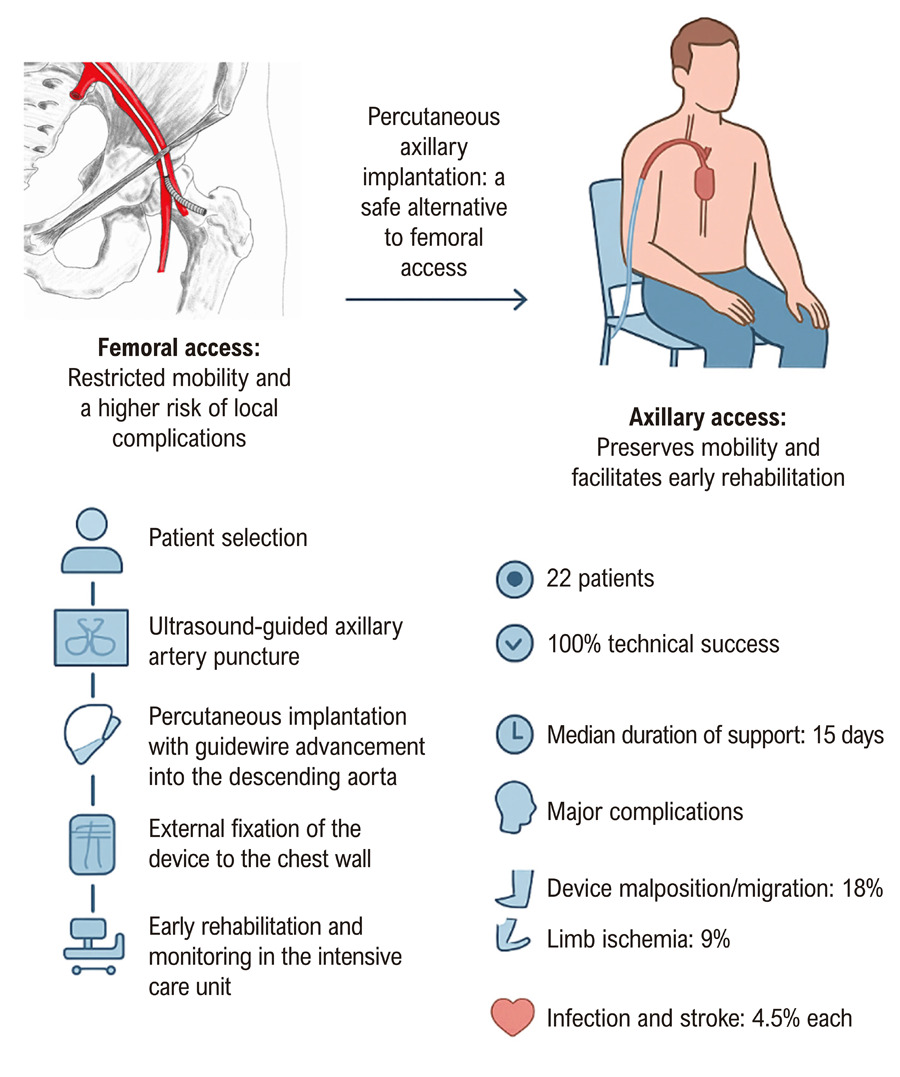
Between December 2020 and December 2023, 22 patients underwent percutaneous axillary IABP implantation. The mean age was 53 ± 10.7 years. All patients were hospitalized with refractory HF and were listed for heart transplantation. The procedure was successfully performed in all patients selected for the axillary approach. The median duration of support was 15 days (interquartile range: 7–28 days). Observed complications included device migration (18.2%), limb ischemia (9.1%), and isolated infectious and neurological events. Half of the patients either underwent heart transplantation or were successfully weaned from mechanical support.

Conclusion

The initial experience with percutaneous axillary IABP implantation demonstrated that the technique is feasible, safe, and reproducible. Further studies are needed to establish the role of this strategy within the continuum of care for patients hospitalized with advanced HF while awaiting heart transplantation.
  • Heart Failure
  • Heart Transplantation
  • Heart-Assist Devices
  • Intra-Aortic Balloon Pumping
Read Full Article
Creative Commons Attribution (CC BY) Creative Commons license
25/09/2026 DOI: 10.36660/abc.20250735i Views 9
In-Hospital Mortality Predictors in Patients with Acute Myocardial Infarction and Cardiogenic Shock Using Intra-Aortic Balloon Pump
ABC
Original Article

In-Hospital Mortality Predictors in Patients with Acute Myocardial Infarction and Cardiogenic Shock Using Intra-Aortic Balloon Pump

Rossana Dall’Orto Elias et al. Isabella Pedrosa Assunção Julliane Vasconcelos Joviano Santos Maria da Gloria Rodrigues-Machado José Luiz Barros Pena

Abstract

Background

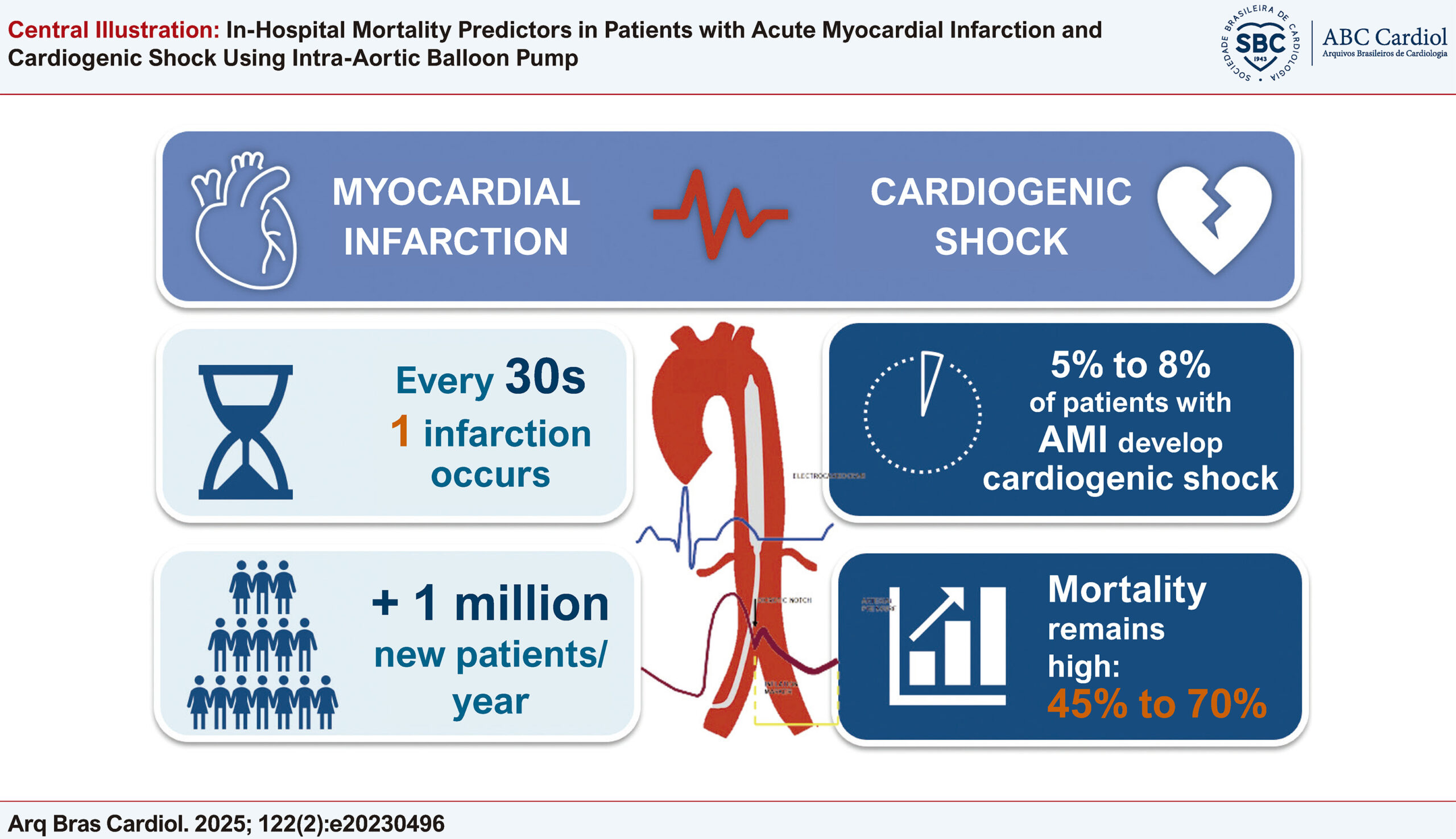
Patients with ST-segment elevation myocardial infarction (STEMI) and cardiogenic shock (CS) have a high risk of death. New types of mechanical devices have limited availability in Brazil. The use of intra-aortic balloon pump (IABP), although new guidelines downgraded its recommendation, is the most widely used mechanical support strategy. However, little is known about the clinical predictors of its effectiveness in reducing mortality in this group of patients.

Objectives

To assess the predictors of IABP effectiveness in reducing in-hospital mortality in patients with STEMI and CS.

Methods

This observational, retrospective, descriptive, single-center study involved 98 patients with STEMI and CS treated with IABP, in an intensive care unit. We compared patients who survived (42 men and 13 women) and those did not (30 men and 13 women) using clinical predictors of IABP effectiveness in reducing in-hospital death, considering a statistical significance level of 5% (p < 0.05).

Results

The use of IABP in patients less than 1 day after infarction (odds ratio [OR]: 0.12; 95% confidence interval [CI]: 0.02 to 0.85; p = 0.034) was a factor that increased the risk of in-hospital death. Younger age (OR: 1.09; 95% CI: 1.02 to 1.16; p = 0.010) and dyslipidemia (OR: 0.19; 95% CI: 0.05 to 0.81; p = 0.024) were predictors of reduced in-hospital mortality. For each additional year of age, the risk of death increased 1.07-fold.

Conclusion

In patients with STEMI and CS, the use of IABP reduced in-hospital mortality when it was used for 2 or more days, as well as in younger patients and those with dyslipidemia. Additional studies are needed to confirm these findings.

  • Cardiogenic shock
  • Hospital Mortality
  • Intra-Aortic Balloon Pumping
  • ST Elevation Myocardial Infarction
Read Full Article
Creative Commons Attribution (CC BY) Creative Commons license
21/02/2025 DOI: 10.36660/abc.20230496i Views 2
Figure 1
ABC
Case Report

The Effects of Exercise on Cardiogenic Shock with an Intra-Aortic Balloon Pump: A Case Report

Vanessa M. Ferreira et al. Dayane Nunes Rodrigues Carlos Alberto Mendez Contreras João M. Rossi … Rui Fernando Ramos Gustavo Oliveira Mayron F. Oliveira

Abstract

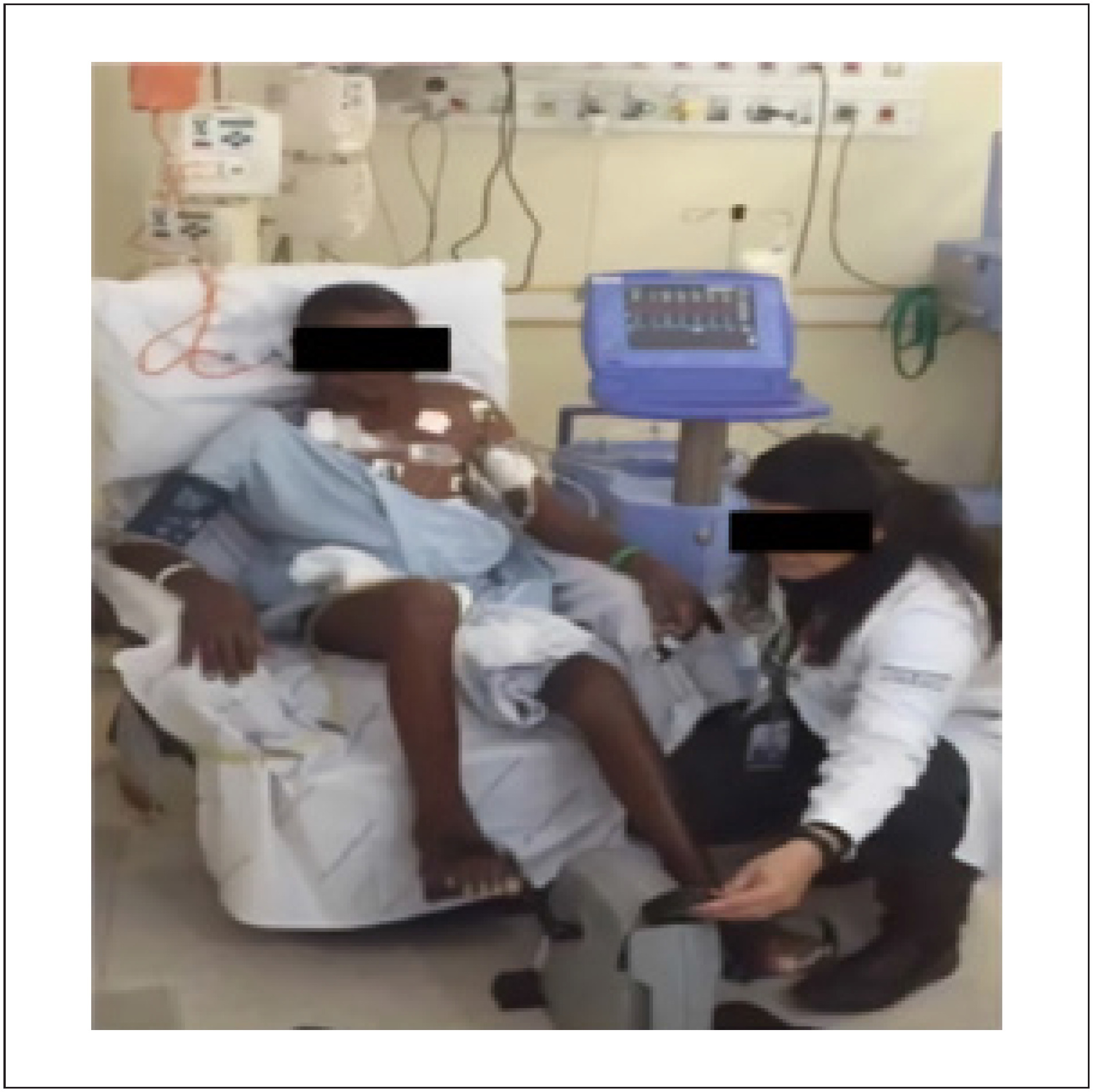
This case report describes the exercise program on a hospitalized 54-year-old male patient with cardiogenic shock waiting for a heart transplant assisted by an intra-aortic balloon pump, a temporary mechanical circulatory support device.

The temporary mechanical circulatory support device, an intra-aortic balloon pump, was placed in the left subclavian artery, enabling the exercise protocol. Measurements and values from Swan-Ganz catheter, blood sample, brain natriuretic peptide (NT-proBNP), and high-sensitivity C-reactive protein (hs-CRP), as well as the six-minute walk test (6MWT) and venous oxygen saturation (SvO2) were obtained before and after an exercise protocol. The exercise training protocol involved the use of an unloaded bed cycle ergometer once a day, for a maximum of 30 minutes, to the tolerance limit.

No adverse events or events related to the dislocation of the intra-aortic balloon pump were observed during the exercise protocol. The exercise program resulted in higher SvO2 levels, with an increased 6MWT with lower Borg dyspnea scores (312 meters vs. 488 meters and five points vs. three points, respectively). After completing the ten-day exercise protocol, the patient underwent a non-complicated heart transplant surgery and a full recovery in the ICU.

This study showed that exercise is a feasible option for patients with cardiogenic shock who are using an intra-aortic balloon pump and that it is well-tolerated with no reported adverse events.

  • Cardiac Rehabilitation
  • Cardiogenic shock
  • Exercise
  • Intra-Aortic Balloon Pumping
  • physical therapy modalities
Read Full Article
Creative Commons Attribution (CC BY) Creative Commons license
18/03/2024 DOI: 10.36660/abc.20230537 Views 1
ABCHF
Case Report

Incessant Malignant Ventricular Arrhythmia in a Patient with Advanced Heart Failure: A Case Report

Ciro Mancilha Murad et al. Iáscara Wozniak de Campos

Introduction

The occurrence of refractory ventricular arrhythmia in patients with heart failure (HF) is a therapeutic dilemma. These patients, especially in the presence of advanced disease, may experience multiple triggering factors for ventricular arrhythmia, such as myocardial fibrosis, ischemia, hydroelectrolytic disorders, ventricular distention, the arrhythmogenic potential of drugs, and the underlying disease itself.– Conversely, sustained ventricular arrhythmias cause hemodynamic compromise, resulting in further ischemia and ventricular distension. This can lead to a vicious cycle of hemodynamic worsening with an increasingly arrhythmogenic myocardium. Usual treatment consists of direct current (DC) cardioversion, antiarrhythmic drugs, myocardial revascularization (when indicated), and catheter ablation. However, invasive procedures are always considered high risk in such cases. We report the case of a patient with incessant ventricular arrhythmia resistant to several types of treatment.

[…]

  • Heart Failure
  • Intra-Aortic Balloon Pumping
  • Tachycardia, Ventricular
Read Full Article
Creative Commons Attribution (CC BY) Creative Commons license
29/06/2022 DOI: 10.36660/abchf.20220047 Views 1
Figure 1
ABCHF
Viewpoint

Intra-Aortic Balloon Pump Placement in the Axillary Artery: Where are We?

Gustavo André Boeing Boros et al. Claudia Yanet San Martin de Bernoche Pedro Felipe Gomes Nicz

The prevalence of patients with heart failure (HF) in Brazil is high, with an increasing number of hospitalizations for advanced HF in tertiary care services. This suggests that patients’ conditions are persistently more severe, with recurrent episodes of pulmonary congestion or low cardiac output requiring frequent hospitalization. Multidisciplinary clinical support and optimized medical therapy are fundamental in the treatment of these patients. However, in refractory cases, bridge or destination therapies such as circulatory or ventricular assist devices (VADs) and heart transplantation may be indicated.,

Patients with decompensated INTERMACS 2 or 1 HF may have an indication for mechanical circulatory support (MCS) during hospital stay. Devices currently available in Brazil include intra-aortic balloon pump (IABP), Impella CP, venoarterial extracorporeal membrane oxygenation, and Centrimag. The IABP is the most used device in Brazil and worldwide due to easy access, cost-effectiveness, and simple implant procedure and management. Despite having a modest effect on cardiac output, the IABP has a significant impact on circulatory hemodynamics, is simpler to use, and has an equal or superior safety profile compared with more modern devices.–

[…]

  • Axillary Artery
  • Heart Failure
  • Intra-Aortic Balloon Pumping
Read Full Article
Creative Commons Attribution (CC BY) Creative Commons license
29/06/2022 DOI: 10.36660/abchf.20220034
ABCHF
Viewpoint

Use of Intra-Aortic Balloon Pump in Cardiogenic Shock Associated with Advanced Heart Failure: An Outdated Strategy?

Ciro Mancilha Murad et al. Sandrigo Mangini

The use of an intra-aortic balloon pump (IABP) was first described in the 1960s., It is a short-term circulatory assist device that uses helium gas for inflation of a balloon positioned in the descending aorta during diastole and active deflation during systole. The most evident hemodynamic effects are increased coronary perfusion, reduced left ventricular afterload, and an increase in cardiac output by 0.5 to 1 L/min., Due to its greater availability, lower cost, easy implantation, and low complication rates, IABP quickly became the most used percutaneous device in cardiogenic shock. Nevertheless, in spite of the advantages described and the extensive clinical experience, there are still some controversies in relation to its use.

The randomized IABP-SHOCK II Trial evaluated the use of IABP versus clinical treatment in patients with post-acute myocardial infarction (AMI) cardiogenic shock. In this study, the use of IABP did not reduce the primary endpoint of 30-day mortality or the relevant secondary outcomes, and, from then on, the use of IABP in post-AMI cardiogenic shock started to be discouraged by guidelines, with class III, level of evidence B for routine use (not recommended)., It is, however, noteworthy that other devices that provide greater hemodynamic support compared to IABP have also not shown a benefit in increasing survival in post-AMI cardiogenic shock.

[…]

  • Heart Failure
  • Heart Transplantation
  • Intra-Aortic Balloon Pumping
Read Full Article
Creative Commons Attribution (CC BY) Creative Commons license
29/06/2022 DOI: 10.36660/abchf.20220033

How to cite this article

EndNote RIS

Electronic Document Format (Vancouver)

Rocha BAM, Melo PHMC, Mapa L, Oliveira RN, Freire AF, Mejía HPG, Bellini VC, et al. Percutaneous Axillary Intra-Aortic Balloon Pump Implantation in Patients Hospitalized with Heart Failure: Initial Brazilian Experience. Arquivos Brasileiros de Cardiologia 2026;123(8):e20250735.

Electronic Document Format (ABNT)

Rocha, Bruno Alves da Mota; Melo, Pedro H. M. C. de; Mapa, Luis; Oliveira, Rafael Nunes; Freire, Antônio Fernando; Mejía, Hernán Patricio García; Bellini, Vanessa Corcioli; Kopel, Liliane; Lage, Silvia Gelás; Marcondes-Braga, Fabiana Goulart; Mangini, Sandrigo; Ávila, Monica S.; Campos, Iascara Wozniak de; Bacal, Fernando; Brito Jr, Fábio Sândoli de; Abizaid, Alexandre A.; Nicz, Pedro Felipe Gomes. Percutaneous Axillary Intra-Aortic Balloon Pump Implantation in Patients Hospitalized with Heart Failure: Initial Brazilian Experience. Arquivos Brasileiros de Cardiologia, v. 123, n. 8, e20250735, Sep. 2026.

Electronic Document Format (APA)

Rocha, B. A. M., Melo, P. H. M. C. , Mapa, L., Oliveira, R. N., Freire, A. F., Mejía, H. P. G., Bellini, V. C., Kopel, L., Lage, S. G., Marcondes-Braga, F. G., Mangini, S., Ávila, M. S., Campos, I. W. , Bacal, F., Brito Jr, F. S. , Abizaid, A. A., & Nicz, P. F. G. (2026). Percutaneous Axillary Intra-Aortic Balloon Pump Implantation in Patients Hospitalized with Heart Failure: Initial Brazilian Experience. Arquivos Brasileiros de Cardiologia, 123(8), e20250735.

Electronic Document Format (ISO)

Rocha, Bruno Alves da Mota and Melo, Pedro H. M. C. de and Mapa, Luis and Oliveira, Rafael Nunes and Freire, Antônio Fernando and Mejía, Hernán Patricio García and Bellini, Vanessa Corcioli and Kopel, Liliane and Lage, Silvia Gelás and Marcondes-Braga, Fabiana Goulart and Mangini, Sandrigo and Ávila, Monica S. and Campos, Iascara Wozniak de and Bacal, Fernando and Brito Jr, Fábio Sândoli de and Abizaid, Alexandre A. and Nicz, Pedro Felipe Gomes. Percutaneous Axillary Intra-Aortic Balloon Pump Implantation in Patients Hospitalized with Heart Failure: Initial Brazilian Experience. Arquivos Brasileiros de Cardiologia [online]. 2026, vol. 123, n. 8, [cited 2026-10-14], e20250735. Available from: <https://journals.cardiol.br/en/article/percutaneous-axillary-intra-aortic-balloon-pump-implantation-in-patients-hospitalized-with-heart-failure-initial-brazilian-experience/>. ISSN 0066-782X

EndNote RIS

Electronic Document Format (Vancouver)

Elias RD, Assunção IP, Santos JVJ, Rodrigues-Machado MG, Pena JLB. In-Hospital Mortality Predictors in Patients with Acute Myocardial Infarction and Cardiogenic Shock Using Intra-Aortic Balloon Pump. Arquivos Brasileiros de Cardiologia 2025;122(2):e20230496.

Electronic Document Format (ABNT)

Elias, Rossana Dall’Orto; Assunção, Isabella Pedrosa; Santos, Julliane Vasconcelos Joviano; Rodrigues-Machado, Maria da Gloria; Pena, José Luiz Barros. In-Hospital Mortality Predictors in Patients with Acute Myocardial Infarction and Cardiogenic Shock Using Intra-Aortic Balloon Pump. Arquivos Brasileiros de Cardiologia, v. 122, n. 2, e20230496, Feb. 2025.

Electronic Document Format (APA)

Elias, R. D., Assunção, I. P., Santos, J. V. J., Rodrigues-Machado, M. G., & Pena, J. L. B. (2025). In-Hospital Mortality Predictors in Patients with Acute Myocardial Infarction and Cardiogenic Shock Using Intra-Aortic Balloon Pump. Arquivos Brasileiros de Cardiologia, 122(2), e20230496.

Electronic Document Format (ISO)

Elias, Rossana Dall’Orto and Assunção, Isabella Pedrosa and Santos, Julliane Vasconcelos Joviano and Rodrigues-Machado, Maria da Gloria and Pena, José Luiz Barros. In-Hospital Mortality Predictors in Patients with Acute Myocardial Infarction and Cardiogenic Shock Using Intra-Aortic Balloon Pump. Arquivos Brasileiros de Cardiologia [online]. 2025, vol. 122, n. 2, [cited 2026-10-14], e20230496. Available from: <https://journals.cardiol.br/en/article/in-hospital-mortality-predictors-in-patients-with-acute-myocardial-infarction-and-cardiogenic-shock-using-intra-aortic-balloon-pump/>. ISSN 0066-782X

EndNote RIS

Electronic Document Format (Vancouver)

Ferreira VM, Rodrigues DN, Contreras CAM, Rossi JM, Ramos RF, Oliveira G, Oliveira MF, et al. The Effects of Exercise on Cardiogenic Shock with an Intra-Aortic Balloon Pump: A Case Report. Arquivos Brasileiros de Cardiologia 2024;121(1):e20230537.

Electronic Document Format (ABNT)

Ferreira, Vanessa M.; Rodrigues, Dayane Nunes; Contreras, Carlos Alberto Mendez; Rossi, João M.; Ramos, Rui Fernando; Oliveira, Gustavo; Oliveira, Mayron F.. The Effects of Exercise on Cardiogenic Shock with an Intra-Aortic Balloon Pump: A Case Report. Arquivos Brasileiros de Cardiologia, v. 121, n. 1, e20230537, Mar. 2024.

Electronic Document Format (APA)

Ferreira, V. M., Rodrigues, D. N., Contreras, C. A. M., Rossi, J. M., Ramos, R. F., Oliveira, G., & Oliveira, M. F. (2024). The Effects of Exercise on Cardiogenic Shock with an Intra-Aortic Balloon Pump: A Case Report. Arquivos Brasileiros de Cardiologia, 121(1), e20230537.

Electronic Document Format (ISO)

Ferreira, Vanessa M. and Rodrigues, Dayane Nunes and Contreras, Carlos Alberto Mendez and Rossi, João M. and Ramos, Rui Fernando and Oliveira, Gustavo and Oliveira, Mayron F.. The Effects of Exercise on Cardiogenic Shock with an Intra-Aortic Balloon Pump: A Case Report. Arquivos Brasileiros de Cardiologia [online]. 2024, vol. 121, n. 1, [cited 2026-10-14], e20230537. Available from: <https://journals.cardiol.br/en/article/the-effects-of-exercise-on-cardiogenic-shock-with-an-intra-aortic-balloon-pump-a-case-report/>. ISSN 0066-782X

EndNote RIS

Electronic Document Format (Vancouver)

Murad CM, Campos IW. Incessant Malignant Ventricular Arrhythmia in a Patient with Advanced Heart Failure: A Case Report. ABC: Heart Failure & Cardiomyopathy 2022;2(2):232-3.

Electronic Document Format (ABNT)

Murad, Ciro Mancilha; Campos, Iáscara Wozniak de. Incessant Malignant Ventricular Arrhythmia in a Patient with Advanced Heart Failure: A Case Report. ABC: Heart Failure & Cardiomyopathy, v. 2, n. 2, p. 232-233, Jun. 2022.

Electronic Document Format (APA)

Murad, C. M., & Campos, I. W. (2022). Incessant Malignant Ventricular Arrhythmia in a Patient with Advanced Heart Failure: A Case Report. ABC: Heart Failure & Cardiomyopathy, 2(2), 232-233.

Electronic Document Format (ISO)

Murad, Ciro Mancilha and Campos, Iáscara Wozniak de. Incessant Malignant Ventricular Arrhythmia in a Patient with Advanced Heart Failure: A Case Report. ABC: Heart Failure & Cardiomyopathy [online]. 2022, vol. 2, n. 2, [cited 2026-10-14], pp. 232-233. Available from: <https://journals.cardiol.br/en/article/incessant-malignant-ventricular-arrhythmia-in-a-patient-with-advanced-heart-failure-a-case-report/>

EndNote RIS

Electronic Document Format (Vancouver)

Boros GAB, Bernoche CYSM, Nicz PFG. Intra-Aortic Balloon Pump Placement in the Axillary Artery: Where are We?. ABC: Heart Failure & Cardiomyopathy 2022;2(2):209-11.

Electronic Document Format (ABNT)

Boros, Gustavo André Boeing; Bernoche, Claudia Yanet San Martin de; Nicz, Pedro Felipe Gomes. Intra-Aortic Balloon Pump Placement in the Axillary Artery: Where are We?. ABC: Heart Failure & Cardiomyopathy, v. 2, n. 2, p. 209-211, Jun. 2022.

Electronic Document Format (APA)

Boros, G. A. B., Bernoche, C. Y. S. M. , & Nicz, P. F. G. (2022). Intra-Aortic Balloon Pump Placement in the Axillary Artery: Where are We?. ABC: Heart Failure & Cardiomyopathy, 2(2), 209-211.

Electronic Document Format (ISO)

Boros, Gustavo André Boeing and Bernoche, Claudia Yanet San Martin de and Nicz, Pedro Felipe Gomes. Intra-Aortic Balloon Pump Placement in the Axillary Artery: Where are We?. ABC: Heart Failure & Cardiomyopathy [online]. 2022, vol. 2, n. 2, [cited 2026-10-14], pp. 209-211. Available from: <https://journals.cardiol.br/en/article/intra-aortic-balloon-pump-placement-in-the-axillary-artery-where-are-we/>

EndNote RIS

Electronic Document Format (Vancouver)

Murad CM, Mangini S. Use of Intra-Aortic Balloon Pump in Cardiogenic Shock Associated with Advanced Heart Failure: An Outdated Strategy?. ABC: Heart Failure & Cardiomyopathy 2022;2(2):206-8.

Electronic Document Format (ABNT)

Murad, Ciro Mancilha; Mangini, Sandrigo. Use of Intra-Aortic Balloon Pump in Cardiogenic Shock Associated with Advanced Heart Failure: An Outdated Strategy?. ABC: Heart Failure & Cardiomyopathy, v. 2, n. 2, p. 206-208, Jun. 2022.

Electronic Document Format (APA)

Murad, C. M., & Mangini, S. (2022). Use of Intra-Aortic Balloon Pump in Cardiogenic Shock Associated with Advanced Heart Failure: An Outdated Strategy?. ABC: Heart Failure & Cardiomyopathy, 2(2), 206-208.

Electronic Document Format (ISO)

Murad, Ciro Mancilha and Mangini, Sandrigo. Use of Intra-Aortic Balloon Pump in Cardiogenic Shock Associated with Advanced Heart Failure: An Outdated Strategy?. ABC: Heart Failure & Cardiomyopathy [online]. 2022, vol. 2, n. 2, [cited 2026-10-14], pp. 206-208. Available from: <https://journals.cardiol.br/en/article/use-of-intra-aortic-balloon-pump-in-cardiogenic-shock-associated-with-advanced-heart-failure-an-outdated-strategy/>

  • About ABC Family
  • Internal Regulation
  • Editorial Board
  • Brazilian Society of Cardiology (SBC)

Issues

SBC Guidelines

  • Videos
  • Podcasts
  • News