ABC Family Arquivos Brasileiros de Cardiologia International Journal of Cardiovascular Sciences ABC Heart Failure & Cardiomyopathy ABC Imagem Cardiovascular
Português English
ABC Family
Português English
  • About
    • About ABC Family
    • Internal Regulation
    • Editorial Board
    • Brazilian Society of Cardiology (SBC)
  • Issues
  • SBC Guidelines
  • Content
    • Videos
    • Podcasts
    • News
  • About
    • About ABC Family
    • Internal Regulation
    • Editorial Board
    • Brazilian Society of Cardiology (SBC)
  • Issues
  • SBC Guidelines
  • Content
    • Videos
    • Podcasts
    • News

ABC Family

  • ABC Family
  • Arquivos Brasileiros de Cardiologia
  • International Journal of Cardiovascular Sciences
  • ABC Heart Failure & Cardiomyopathy
  • ABC Imagem Cardiovascular
Search in

No content found.

Journals
Ordering
Article types
Others

  1. Home
  2. Keyword: Catheter Ablation
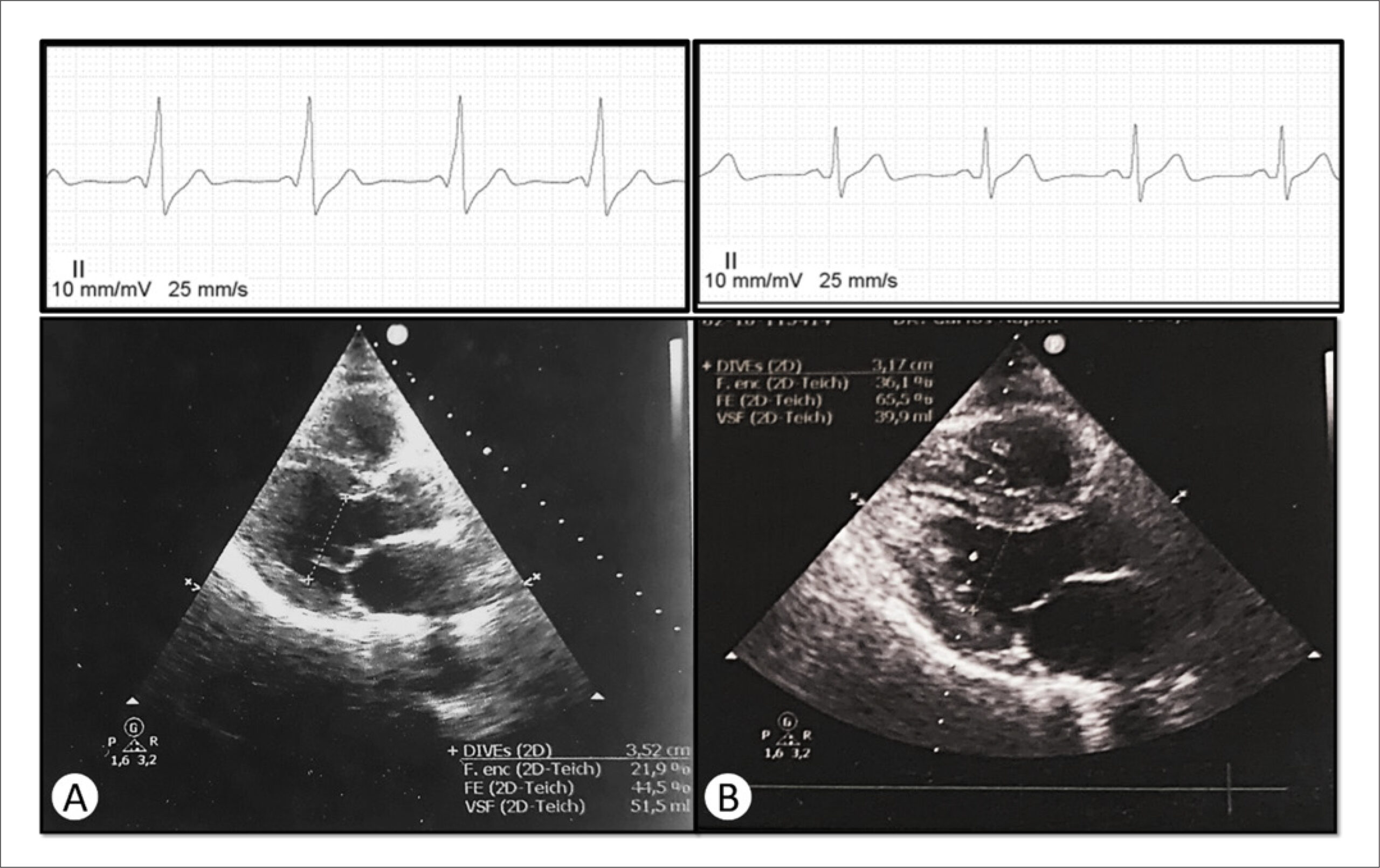
Figure 1
ABCHF
Case Report

Wolff–Parkinson–White Syndrome in a Heart Transplant Recipient

Adir Schreiber Junior et al. Lucas Simonetto Faganello Ana Paula Arbo Magalhães Kaleb Pinto Spannemberger … Eduardo Caberlon Leandro Ioschpe Zimerman Mauricio Pimentel

Abstract

A 44-year-old woman underwent heart transplantation due to refractory angina and advanced heart failure. During the postoperative period, she developed episodes of supraventricular tachycardia and intermittent ventricular pre-excitation on the electrocardiogram. After an initial period of pharmacological management, she underwent successful radiofrequency ablation of a left posteroseptal accessory pathway. A review of the literature regarding Wolff–Parkinson–White syndrome in heart transplant recipients is also presented.
  • Catheter Ablation
  • Heart Transplantation
  • Wolff-Parkinson White Syndrome
Read Full Article
Creative Commons Attribution (CC BY) Creative Commons license
28/09/2026 DOI: 10.36660/abchf.20260017i Views 2
Impact of Catheter Ablation on LVEF in Patients with Atrial Fibrillation and Heart Failure with Reduced Ejection Fraction: A Systematic Review
ABC
Review Article

Impact of Catheter Ablation on LVEF in Patients with Atrial Fibrillation and Heart Failure with Reduced Ejection Fraction: A Systematic Review

Antonio Maria Zacarias Araújo Monteiro et al. Maria Giovanna da Cruz Tocantins Jéssica Batista Souza Renan de Jesus da Silva Albuquerque … João Vitor Ferreira de Oliveira Roni Oliveira Pinheiro Ster Marques de Lima Silva

Abstract

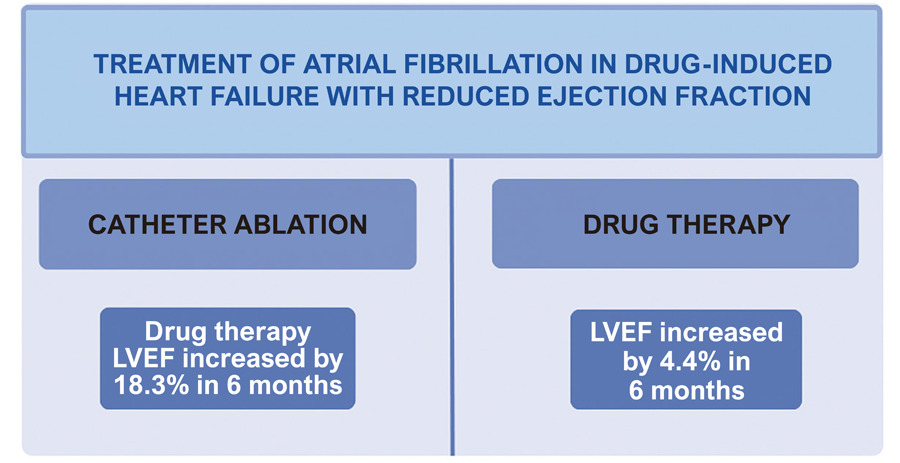
Atrial fibrillation (AF) is a condition that frequently affects patients with heart failure with reduced ejection fraction (HFrEF) and is associated with worsening left ventricular ejection fraction (LVEF) and unfavorable clinical outcomes. Catheter ablation has been proposed as a strategy to restore sinus rhythm; however, its effects on LVEF remain heterogeneous in the literature. To evaluate the impact of catheter ablation, compared with medical therapy, on LVEF in patients with AF and HFrEF. A systematic review of randomized clinical trials was conducted in accordance with the PRISMA guidelines. The primary outcome was improvement in LVEF, while secondary outcomes included cardiovascular mortality, all-cause mortality, and hospitalizations due to heart failure. Other exploratory outcomes were also considered. The included randomized clinical trials demonstrated improvement in LVEF among patients undergoing catheter ablation compared with those receiving medical therapy. In the CAMERA-MRI study, an absolute increase of 18.3% in LVEF was observed after six months. In the CASTLE-AF trial, catheter ablation was also associated with a lower incidence of cardiovascular mortality and heart failure hospitalizations. In the absence of a meta-analysis, no quantitative synthesis of the effects was performed. The available evidence from individual randomized trials suggests that catheter ablation may be associated with improvement in LVEF and more favorable clinical outcomes in patients with AF and HFrEF. However, given the lack of quantitative synthesis, these findings should be interpreted with caution.

  • Atrial Fibrillation
  • Catheter Ablation
  • Drug Therapy
  • Heart Failure
Read Full Article
Creative Commons Attribution (CC BY) Creative Commons license
24/07/2026 DOI: 10.36660/abc.20260117i Views 1
Figure 1
ABC
Research Letter

Reversibility of Heart Failure after Catheter Ablation in Patients with Ventricular Pre-Excitation-Induced Cardiomyopathy

Samuel Santos Boa Morte et al. Luiz Pereira de Magalhães Jussara de Oliveira Pinheiro Duarte Alex Teixeira Guabiru … Adimeia Souza Santos Eduardo Faria Soares de Magalhães Roque Aras

Introduction

Ventricular pre-excitation is characterized by the presence of an atrioventricular accessory pathway, predisposing patients to cardiac arrhythmias that may lead to syncope, palpitations, or sudden death. Although rare, a possible complication is the development of heart failure (HF), referred to as pre-excitation–induced cardiomyopathy. It has been suggested that the eccentric ventricular activation caused by the accessory pathway leads to mechanical ventricular dyssynchrony, resulting in structural alterations and ventricular dysfunction. Case reports have described improvement of HF after catheter ablation of the accessory pathway. It is important to alert the medical community to this rare entity, which should be considered in patients with ventricular pre-excitation and reduced ejection fraction, as it represents a potentially reversible cause of HF following ablation.

[…]

  • Cardiomyopathies
  • Catheter Ablation
  • Heart Failure
Read Full Article
Creative Commons Attribution (CC BY) Creative Commons license
17/07/2026 DOI: 10.36660/abc.20250192i Views 2
Long-Term Clinical Outcomes of Catheter Ablation in Hypertrophic Cardiomyopathy and Atrial Fibrillation: A Systematic Review and Meta-Analysis
IJCS
Original Article

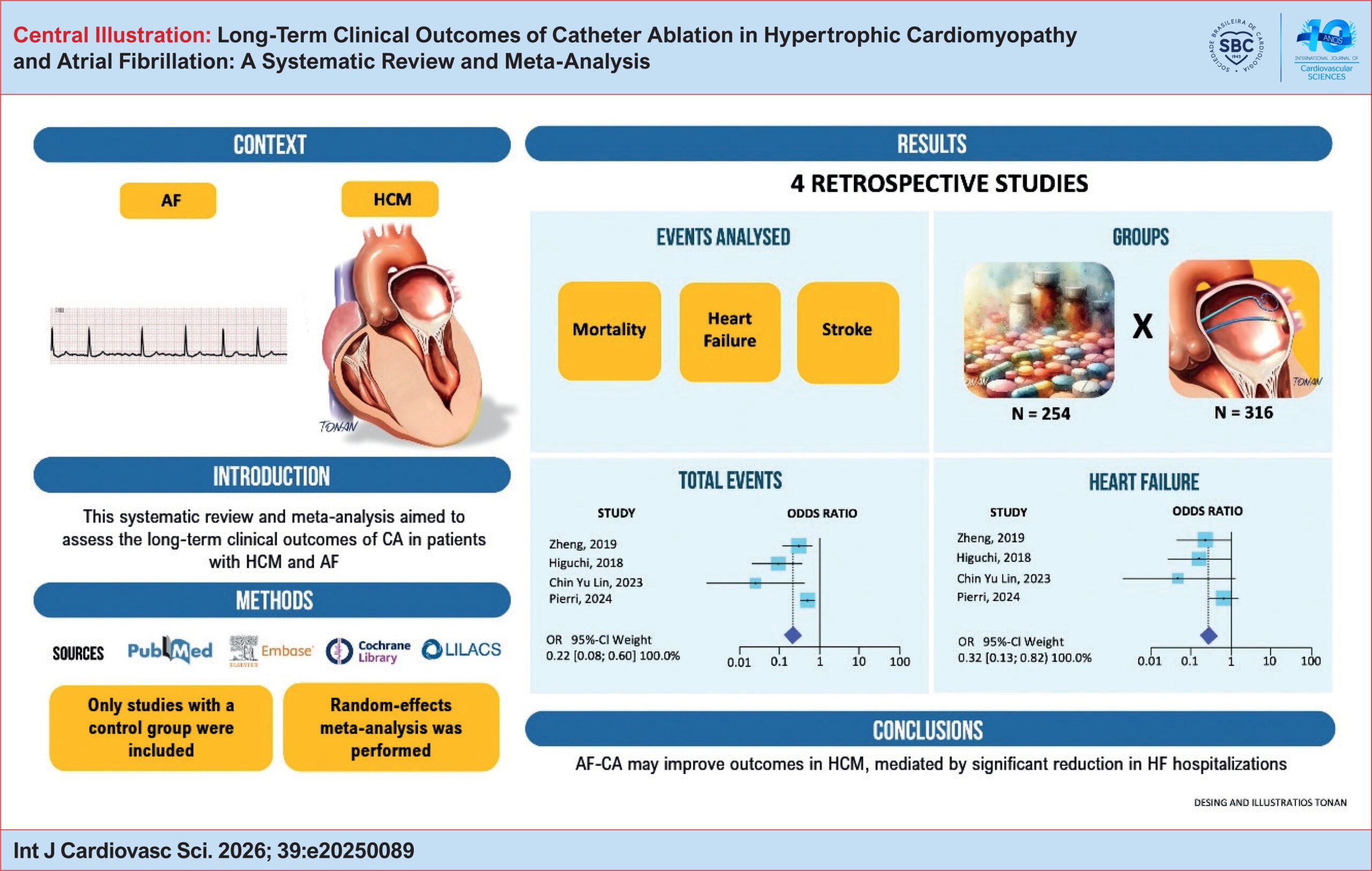
Long-Term Clinical Outcomes of Catheter Ablation in Hypertrophic Cardiomyopathy and Atrial Fibrillation: A Systematic Review and Meta-Analysis

Acácio Fernandes Cardoso et al. Fernanda Cristina Poscai Ribeiro Luiz Claudio Behrmann Martins Glaucylara Reis Geovanini … Cynthia Aparecida da Silva Rocha Nemer Luiz Pichara Áleff Mascarenhas da Silva

Abstract

Background:

Patients with hypertrophic cardiomyopathy (HCM) are at increased risk of atrial fibrillation (AF). However, the benefits of catheter ablation (CA) for reducing adverse clinical outcomes in this population are not well established.

Objective:

To assess the long-term impact of CA on clinical outcomes in patients with HCM and AF through a systematic review and meta-analysis.

Methods:

Controlled studies of patients with HCM and AF undergoing CA were identified through PubMed/MEDLINE, Embase, LILACS, and Cochrane. Meta-analysis employed a random-effects model in R Studio, version 4.3.2, with p < 0.05 considered significant.

Results:

Four retrospective cohort studies met inclusion criteria, all with long follow-up period (5.52 ± 0.91 years). Arrhythmia-free survival after multiple CA ranged from 36.3% to 82%. Combined event analysis (mortality, stroke, and heart failure) yielded odds ratio 0.22 (95% confidence interval 0.08 to 0.60; p < 0.05; I² = 64%). In individual analysis, only heart failure hospitalizations were significantly lower in the CA group (odds ratio 0.32; 95% confidence interval 0.13 to 0.82; p = 0.01).

Conclusions:

This study suggests that CA may improve clinical outcomes in patients with HCM and AF, particularly by improving heart failure hospitalizations. Studies with greater methodological rigor are needed to prove this hypothesis, since only four studies were included in this systematic review.

  • Atrial Fibrillation
  • Catheter Ablation
  • Heart Failure
  • Hypertrophic Cardiomyopathy
Read Full Article
Creative Commons Attribution (CC BY) Creative Commons license
02/03/2026 DOI: 10.36660/ijcs.20250089 Views 6
ABC
Original Article

Brazilian Registry of Pulsed Field Catheter Ablation for the Treatment of Patients with Atrial Fibrillation

Bruna Miers May et al. Nilson Araujo Junior Silvia Helena Cardoso Boghossian Jacob Atie … Washington A. Maciel Carina Abigail Hardy Alexander Romeno Janner Dal Forno Eduardo B. Saad Claudio Munhoz Angelo Amato Vincenzo de Paola Mauricio Scanavacca Andre Zimerman José Tarcísio Medeiros de Vasconcelos André d’Avila

Abstract

Background:

Pulsed field ablation (PFA), a new catheter-based, non-thermal ablation technique, enhances the safety and efficacy of catheter ablation of atrial fibrillation (AF) compared to conventional thermal methods. While widely adopted in Europe and the United States, its application in Brazil is recent and remains undocumented.

Objective:

This study reports the initial multicenter Brazilian experience with the pulse field ablation to treat patients with AF, emphasizing its rapid adoption and short learning curve.

Methods:

A retrospective analysis of 394 consecutive procedures, performed by 60 operators across multiple Brazilian centers, was conducted. Data encompassed patient demographics, procedural metrics, imaging modalities, and ablation outcomes. A sub-analysis compared high-volume operators (n=139 procedures) with others (n=255). All statistical tests were two-tailed, with a p-value threshold of <0.05 for statistical significance.

Results:

Paroxysmal AF was predominant (62%), with pulmonary vein isolation (PVI) only as the primary lesion set in 54%. General anesthesia was near-universal (98%), and no major complications occurred. High-volume centers had significantly shorter procedure and ablation times (82 ± 27 vs. 131 ± 76 minutes; p<0.001 and 33 ± 14 vs. 50 ± 33 minutes; p<0.001, respectively), alongside fewer additional lesions after remapping (7% vs. 30%; p<0.001), suggesting a rapid learning curve.

Conclusion:

Pulsed field ablation demonstrates high acute efficacy, safety, and ease of adoption in Brazil, with a notably short learning curve, as evidenced by the efficiency of high-volume operators. Long-term outcome studies are warranted.

  • Atrial Fibrillation
  • Brazil
  • Catheter Ablation
Read Full Article
Creative Commons Attribution (CC BY) Creative Commons license
02/03/2026 DOI: 10.36660/abc.20250416i Views 1
ABC
Letter to the Editor

Predictors of Atrial Arrhythmia Recurrence after Catheter Ablation: Socioeconomic Impact in Low to Middle-Income Countries

Marwan Shawki et al. Thalys Sampaio Rodrigues Levindo Jose Garcia Quarto

To the Editor,

We read with great interest the article by Ternes et al., recently published in the Arquivos Brasileiros de Cardiologia, with its accompanying insightful editorial., This multicentre prospective cohort study of consecutive patients across three centres in Brazil provided valuable insights into the predictors of atrial arrhythmia recurrence following first-time catheter ablation. It highlighted its clinical setting in a middle-income country and reported outcomes similar to those in high-income countries. However, the results must be interpreted cautiously, and some points merit further discussion.

[…]

  • Atrial Fibrillation
  • Catheter Ablation
  • Socioeconomic Disparities in Health
Read Full Article
Creative Commons Attribution (CC BY) Creative Commons license
25/08/2025 DOI: 10.36660/abc.20250248i Views 1
Pulsed Field Ablation Versus Very High-Power Short-Duration Radiofrequency Ablation in Atrial Fibrillation: A Systematic Review and Meta-Analysis
ABC
Original Article

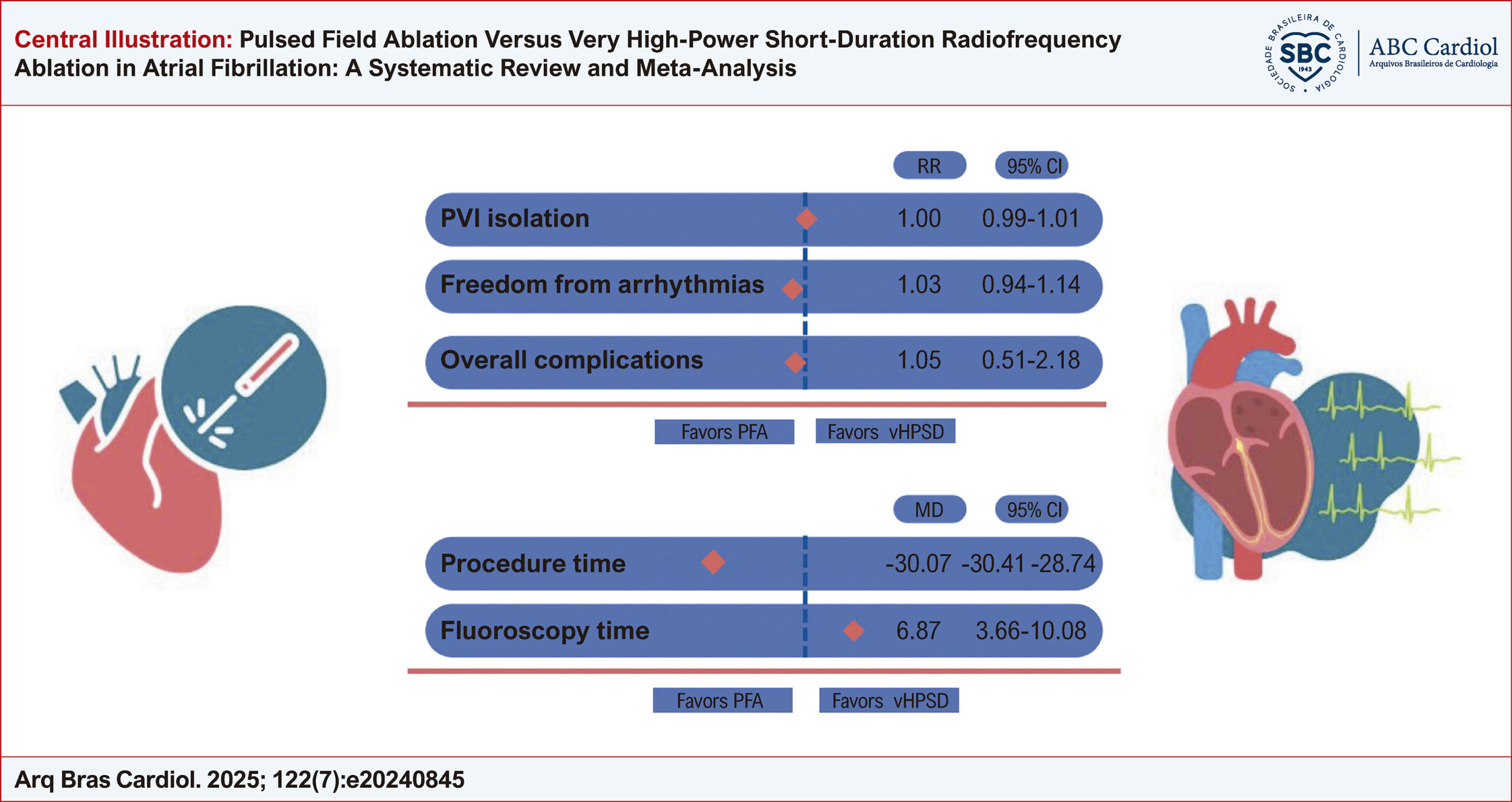
Pulsed Field Ablation Versus Very High-Power Short-Duration Radiofrequency Ablation in Atrial Fibrillation: A Systematic Review and Meta-Analysis

Asad Iqbal et al. Wellgner Fernandes Oliveira Amador Martin Cevallos-Cueva Maaz Ahmad … Juan Alejandro Pinilla Alarcón Radamés Vieira Diniz

Abstract

Background

Pulmonary vein isolation (PVI) is a cornerstone treatment for atrial fibrillation (AF). Pulsed-field ablation (PFA) and very high-power short-duration (vHPSD) radiofrequency (RF) ablation are emerging technologies, but their comparative efficacy and safety remain unclear.

Objectives

To assess the efficacy and safety of PFA compared to vHPSD RF ablation for AF.

Methods

A systematic search of PubMed, Embase, Web of Science, and Cochrane databases identified studies comparing PFA and vHPSD ablation. Outcomes included PVI success, skin-to-skin procedure time, fluoroscopy time, freedom from atrial arrhythmias, and complications such as cardiac tamponade, stroke, and vascular access events. Continuous outcomes were analyzed using mean differences (MD), while binary outcomes were assessed with risk ratios (RR) and 95% confidence intervals (CI). A significance threshold of p < 0.05 was considered for statistical analyses. This study is registered in PROSPERO (CRD42024619301).

Results

Four observational studies with 605 patients were included, of whom 315 (52%) underwent PFA. PFA and vHPSD achieved similar PVI success (RR 1.00; 95% CI 0.99–1.01; p = 1). PFA reduced procedure time (MD -30.07 min; 95% CI -31.41 to -28.74; p<0.01) but increased fluoroscopy time (MD 6.87 min; 95% CI 3.66–10.08; p<0.01). Freedom from atrial arrhythmias was comparable (RR 1.03; 95% CI 0.94–1.14; p=0.5). Complication rates, including cardiac tamponade, stroke, and vascular access issues, showed no significant differences between groups.

Conclusion

PFA significantly shortens procedure time but requires longer fluoroscopy compared to vHPSD. Both techniques exhibit comparable efficacy for PVI and arrhythmia freedom, with similar safety profiles.

  • Atrial Fibrillation
  • Catheter Ablation
  • Efficacy
  • Safety
Read Full Article
Creative Commons Attribution (CC BY) Creative Commons license
18/08/2025 DOI: 10.36660/abc.20240845i Views 3
ABC
Letter to the Editor

How to Improve Clinical Outcomes in Women with Atrial Fibrillation

Naoya Kataoka et al. Teruhiko Imamura

To the editor

Anticoagulation is a standard therapeutic approach for patients with atrial fibrillation (AF), requiring careful consideration of the balance between antithrombotic efficacy and the risk of hemorrhagic complications. The authors examined the rate of anticoagulant prescriptions among patients admitted to the emergency department with symptomatic AF, revealing a higher prevalence of non-prescription in women compared to men. This observation raises several important concerns.

[…]

  • Anticoagulation
  • Catheter Ablation
  • Stroke
Read Full Article
Creative Commons Attribution (CC BY) Creative Commons license
27/06/2025 DOI: 10.36660/abc.20250095i Views 1
Brazilian Multicenter Registry of Alcohol Septal Ablation for Patients with Symptomatic Hypertrophic Obstructive Cardiomyopathy – BRASA Registry
ABC
Original Article

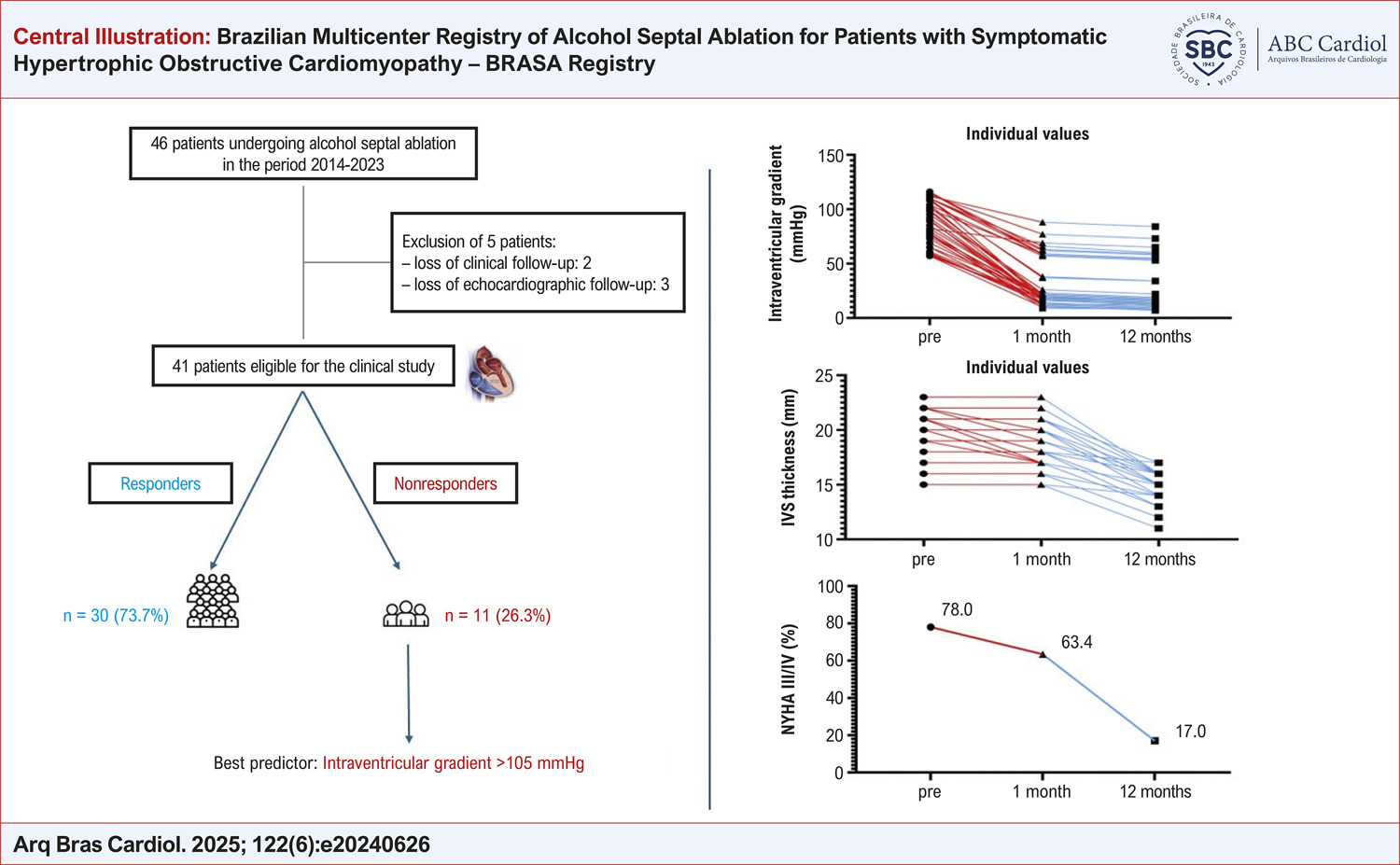
Brazilian Multicenter Registry of Alcohol Septal Ablation for Patients with Symptomatic Hypertrophic Obstructive Cardiomyopathy – BRASA Registry

Pedro Jallad et al. Marilia Soliani Pedro Henrique Almeida Marins Fábio Fernandes … Edmundo Arteaga-Fernandez Vagner Madrini Pedro Lemos Neto Charles Mady Felix Ramires Alexandre A. Abizaid Fábio Sândoli de Brito Jr Henrique Barbosa Ribeiro

Abstract

Background

Alcohol septal ablation (ASA) is an alternative to surgical myectomy for patients with symptomatic hypertrophic obstructive cardiomyopathy (HOCM) and significant left ventricular (LV) outflow tract (LVOT) obstruction. Although widely studied worldwide, data on ASA outcomes in Brazil are still limited.

Objective

To assess the safety and effectiveness of ASA in symptomatic HOCM patients receiving optimal medical therapy using current techniques across multiple centers in Brazil.

Methods

Patients with HOCM and angina (classified by the Canadian Cardiovascular Society [CCS]) or dyspnea (classified by the New York Heart Association [NYHA]) class >II who did not respond to optimal medical treatment were included. The primary efficacy endpoint was defined as a reduction of more than 50% in the maximum resting LVOT gradient, with a final gradient <50 mmHg. Patients were classified as responders or nonresponders. A p-value <0.05 was considered statistically significant.

Results

A total of 41 patients (median age 66.4 years; 73% female) underwent ASA. At baseline, 93.2% were in NYHA class III/IV or CCS class III/IV. The mean LV ejection fraction (LVEF) was 66.4%, and the mean LVOT gradient was 88.4 mmHg. After 12 months, 92.8% had improved to NYHA class I/II or CCS class I/II (p<0.01). The mean LVOT gradient dropped from 88.4 mmHg to 27.0 mmHg (p=0.003), and interventricular septum (IVS) thickness decreased from 19.3 mm to 14.7 mm (p=0.048). Responders had lower baseline gradients (73.4 vs 112.6 mmHg, p=0.04) and fewer hospitalizations (21.1% vs 82.4%, p=0.04). Complete atrioventricular block occurred in 16.7% of patients, and 4.8% required pacemakers. No deaths were reported during a median follow-up of 394 days. At the last in-person evaluation, 78.4% were in functional class I/II.

Conclusions

ASA is a safe, effective option for relieving symptoms in selected HOCM patients. It reduces LVOT gradient and septal thickness. Patients with higher baseline gradients were less likely to respond to the procedure.

  • Catheter Ablation
  • Hypertrophic Cardiomyopathy
  • Intervenção Coronária Percutânea
Read Full Article
Creative Commons Attribution (CC BY) Creative Commons license
27/06/2025 DOI: 10.36660/abc.20240626i Views 1
Figure 1
ABCIC
Review Article

My Approach to Intracardiac Echocardiography During Atrial Fibrillation Ablation

Simone Nascimento dos Santos et al. Benhur Davi Henz Maria Eduarda Leite da Silva Luiz Roberto Leite da Silva

Abstract

Atrial fibrillation (AF) is the most common arrhythmia encountered in clinical practice and is associated with serious complications such as stroke and heart failure. The prevalence of AF is increasing significantly due to population aging and related comorbidities. In addition, advances in technology — particularly the detection of AF through wearable devices such as smartwatches — have enabled earlier diagnosis. Intracardiac echocardiography (ICE) is a valuable imaging modality in electrophysiology and hemodynamic labs and is well-supported by the literature.– Since the early studies conducted at the Mayo Clinic,, ICE has rapidly become an indispensable tool for assessing cardiac anatomy. ICE enables real-time visualization of catheter positioning, tissue contact, its relationship to arrhythmogenic substrates and ablation targets, lesion formation, and procedural complications. Several recent studies have demonstrated the benefits of ICE in complex ablations, including reduced procedure times and complication rates, such as lower risks of cardiac tamponade and mortality, along with higher success rates (Central Illustration).– ICE-guided procedures are increasingly used in clinical practice across a variety of settings. They are considered feasible, safe, and associated with decreased fluoroscopy exposure — or even complete fluoroless procedures, as implemented by several groups in Brazil and worldwide.,– This article provides a step-by-step “My Approach to” guide on how to perform ICE during AF ablation.

  • Atrial Fibrillation
  • Catheter Ablation
  • Intracardiac Echocardiography
Read Full Article
Creative Commons Attribution (CC BY) Creative Commons license
17/06/2025 DOI: 10.36660/abcimg.20250021i Views 4
ABC
Editorial

Atrioesophageal Fistula After Catheter Ablation of Atrial Fibrillation: Can We Really Prevent It?

Luiz Eduardo Montenegro Camanho

Catheter ablation of atrial fibrillation (AF) is a widely used and established procedure in clinical practice. Several randomized studies have demonstrated the superiority of this method in patients with paroxysmal/persistent AF who are symptomatic and refractory to antiarrhythmic therapy, with a strong positive impact on quality of life and in reducing the clinical recurrence of this arrhythmia, regardless of the type of energy used.– The primary objective of the procedure is the electrical isolation of the pulmonary veins, associated or not with more extensive lesions, particularly of the posterior wall.

The main complications related to the procedure, such as death, per-procedure thromboembolic event, atrioesophageal fistula (AEF), cardiac tamponade, severe pulmonary vein stenosis, and permanent phrenic nerve palsy are, in reality, infrequent complications (0.02 to 1.3%). A recent publication demonstrated a decrease in these complications in recent years (2018-2022) when compared to the previous five years (3.8 versus 5.3%).

[…]

  • Atrial Fibrillation
  • Catheter Ablation
  • esophageal fistula
Read Full Article
Creative Commons Attribution (CC BY) Creative Commons license
30/05/2025 DOI: 10.36660/abc.20250148i Views 1
ABC
Editorial

High-Power Short Duration or Pulsed Field Ablation: What is the Best Choice for AF Ablation?

José Carlos Pachon-M et al. Enrique I. Pachon-M Tasso J. Lobo Tomas G. Santillana-P Carlos Thiene C. Pachon

Conclusion

Both methods highlight the advancements in AF ablation techniques, focusing on improving procedural efficiency and safety. The HPSD meta-analysis demonstrates that high-power, short-duration radiofrequency ablation reduces AF recurrence and procedural times while minimizing complications like esophageal injury. On the other hand, the PFA meta-analysis shows that pulsed field ablation offers shorter procedural times compared to traditional thermal ablation, with no significant difference in complications or AF recurrence. Finally, a highly relevant issue that has not been adequately considered in these studies is the extent of vagal denervation resulting from these techniques. It is well established that a greater degree of vagal denervation, including the potential incorporation of cardioneuroablation, is strongly associated with a significant reduction in long-term recurrence rates.

[…]

  • Atrial Fibrillation
  • Cardiac Arrhythmias
  • Catheter Ablation
  • Irreversible Electroporation Therapy
Read Full Article
Creative Commons Attribution (CC BY) Creative Commons license
07/04/2025 DOI: 10.36660/abc.20250057i Views 2
ABC
Viewpoint

Treating Patients with Heart Failure with Reduced Ejection Fraction (HFrEF) and Atrial Fibrillation: We Need to Talk About the Fifth Pillar

Mauricio Pimentel et al. Lucas Simonetto Faganello Ana Paula Arbo Magalhães Eduardo Caberlon Leandro Ioschpe Zimerman

Heart failure with reduced ejection fraction (HFrEF) is a complex clinical syndrome characterized by symptoms of dyspnea and worsening functional capacity resulting from reduced cardiac output in patients with left ventricular ejection fraction (LVEF) ≤40%. HFrEF represents an important public health problem, being one of the main causes of hospital admission, with high morbidity and mortality rates. Based on large randomized clinical trials, the standard treatment for patients with HFrEF until the late 1990s consisted of angiotensin-converting enzyme inhibitors (ACEIs) or angiotensin receptor blockers (ARBs), beta-blockers, and mineralocorticoid receptor antagonists (MRAs). After about two decades, a new era in the treatment of HFrEF began with the publication of randomized clinical trials on new classes of drugs: angiotensin receptor-neprilysin inhibitors (ARNIs) and sodium-glucose co-transporter 2 (SGLT2) inhibitors. Based on this evidence, the guidelines defined the four pillars of HFrEF treatment: ACEIs or ARNIs, beta-blockers, MRAs, and SGLT2 inhibitors., In addition to pharmacological treatment, the implantation of a cardioverter-defibrillator and cardiac resynchronization therapy are also indicated for patients with specific clinical features.

Atrial fibrillation (AF) and HFrEF share common risk factors and often coexist, leading to exacerbation of clinical condition and poorer prognosis for both. The diagnosis of AF in patients with HFrEF is associated with increased mortality. HFrEF is a risk factor for increased incidence of AF and is associated with a higher risk of stroke in patients with AF. The importance of determining the best therapeutic approach for patients with AF and HFrEF led to randomized clinical trials comparing rhythm control and heart rate control strategies. The Dofetilide in Patients with Congestive Heart Failure and Left Ventricular Dysfunction (DIAMOND-CHF) study compared the use of dofetilide with placebo in patients with ventricular dysfunction. In the analysis of patients with AF, it was shown that the use of dofetilide resulted in a higher rate of reversion and maintenance of sinus rhythm, but with no effect on overall mortality. The Rhythm Control versus Rate Control for Atrial Fibrillation and Heart Failure (AF-CHF) study compared rhythm control strategies (cardioversion and antiarrhythmic drug, with amiodarone being the drug of choice) to heart rate control in patients with LVEF ≤ 35%. The rhythm control strategy did not show a reduction in cardiovascular mortality compared to heart rate control. It is important to note that, during follow-up, 58% of the patients in the rhythm control group had a recurrence of AF. In fact, the rhythm control strategy was not very effective in maintaining patients in sinus rhythm.

[…]

  • Atrial Fibrillation
  • Catheter Ablation
  • Heart Failure
Read Full Article
Creative Commons Attribution (CC BY) Creative Commons license
31/03/2025 DOI: 10.36660/abc.20240585i Views 1
Esophageal Protection Strategies for Ablation of Atrial Fibrillation: Comparative Results of Consecutive Endoscopic Evaluation
ABC
Original Article

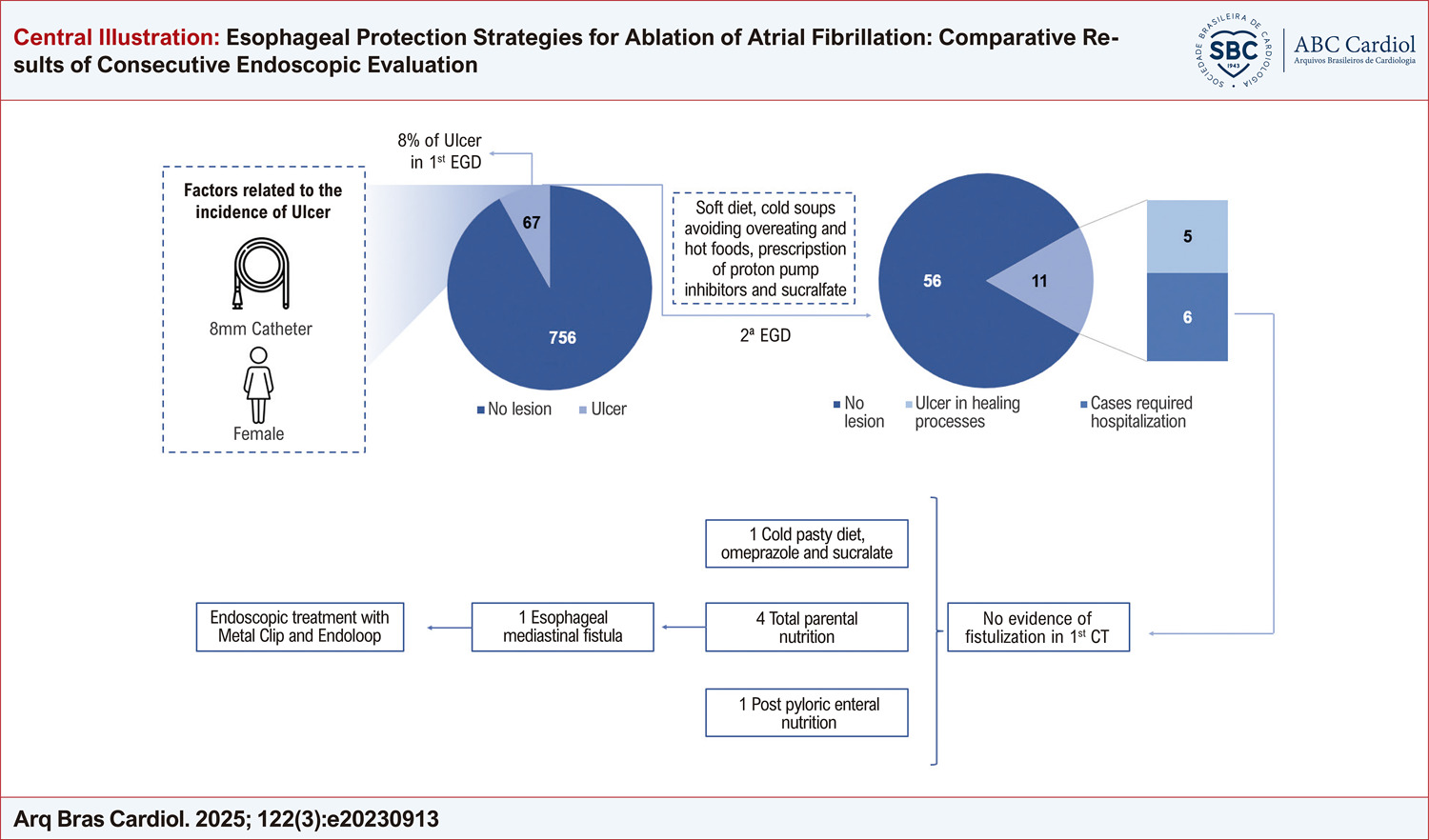
Esophageal Protection Strategies for Ablation of Atrial Fibrillation: Comparative Results of Consecutive Endoscopic Evaluation

Alberto Pereira Ferraz et al. Cristiano Faria Pisani Esteban Wisnivesky Rocca Rivarola Tan Chen Wu … Francisco Carlos da Costa Darrieux Rafael Alvarenga Scanavacca Muhieddine Omar Chokr Carina Abigail Hardy Sissy Lara de Melo Denise Tessariol Hachul Beatriz Hachul de Campos Mauricio Ibrahim Scanavacca

Abstract

Background

Atrial-esophageal fistula following AF ablation remains a concern. There is no standardized approach to minimize its risk and morbidity.

Objective

To present the seven-year experience of a systematic endoscopic surveillance of esophageal injury after AF catheter ablation.

Methods

This is a retrospective single center registry of systematic endoscopic evaluation after AF ablation in consecutive procedures performed from 2016 to 2022. A p-value of <0.05 was considered statistically significant.

Results

823 AF ablation with controlled esophagogastroduodenoscopy (EGD) were analyzed. Most patients (n=588, 71.4%) were male, 575 (69.9%) had paroxysmal AF. Esophageal temperature monitoring was performed using a single sensor in 310 patients (40.3%) and a multi–sensor probe in 306 (39.8%). Lesions were presented in 217 EGD (26.5%): hematoma-ecchymosis in 27 (3.3%), erythema in 14 (1.7%), erosion in 78 (9.5%) and ulcer in 67 (8.2%) patients. No esophageal protective strategy was associated with more ulcers, except the use of 8mm tip-catheter (14.7% of ulcers with 8mm tip catheter vs 6.7% with other catheters, p = 0.001). Thermal lesions were early detected and treated. Most lesions were considered healed at endoscopy, but one patient who underwent pulmonary vein isolation with an 8m tip catheter had esophageal fistula, treated successfully with endoscopic metal clip and endoloop technique.

Conclusion

The incidence of esophageal lesions at routine EGD following AF ablation is high, although in most of the cases they heal spontaneously. Patients who underwent ablation with the 8mm tip catheter had more severe thermal lesions. Early esophagus endoscopy may help the diagnosis of early-stage lesions and the prevention of fistula formation after AF ablation.

  • Atrial Fibrillation
  • Catheter Ablation
  • Endoscopy
  • esophageal fistula
Read Full Article
Creative Commons Attribution (CC BY) Creative Commons license
24/03/2025 DOI: 10.36660/abc.20230913i Views 2
ABC
Editorial

Does Posterior Wall Isolation in Catheter Ablation of Persistent Atrial Fibrillation Change Clinical Outcomes?

Luiz Eduardo Montenegro Camanho

Atrial fibrillation (AF) is arguably the most common arrhythmia in clinical practice, characterized by chaotic and rapid atrial electrical activity with consequent loss of atrial contraction and its serious clinical consequences, which are already widely known. The diagnosis is electrocardiographic and has several forms of presentation, with the persistent form, being classically, that which lasts more than 7 days and less than a year. The early persistent form is when the duration is more than 7 days but less than 3 months, and the long-term persistent form is when it has persisted for more than a year. The progressive change from the paroxysmal to the persistent form of the arrhythmia varies from 8 to 36% depending on the observation time of the cohort and is always associated with worse clinical outcomes.,

Electrical isolation of the pulmonary veins, regardless of the energy source used, has become the gold standard invasive strategy for the treatment of AF in all its forms of presentation, with widely proven efficacy and results based on the pathophysiology of the arrhythmia.

[…]

  • Atrial Fibrillation
  • Catheter Ablation
  • Electrocardiography
Read Full Article
Creative Commons Attribution (CC BY) Creative Commons license
17/02/2025 DOI: 10.36660/abc.20240815i
Efficacy and Safety of Adjunctive Posterior Wall Isolation in Patients with Persistent Atrial Fibrillation: A Systematic Review and Meta-Analysis
ABC
Original Article

Efficacy and Safety of Adjunctive Posterior Wall Isolation in Patients with Persistent Atrial Fibrillation: A Systematic Review and Meta-Analysis

João Vitor Levindo Coelho Novaes et al. David de Pádua Brasil Flavia Maria de Freitas Faria Isadora Soares Bicalho Garcia … Camila Ribeiro Pimenta Nathalia Sernizon Guimarães Marcus Vinicius Bolivar Malachias

Abstract

Background

In patients with persistent atrial fibrillation (AF), addition of posterior wall isolation (PWI) to pulmonary vein isolation (PVI) is controversial.

Objective

Compare PVI plus PWI versus PVI alone in patients with persistent AF.

Methods

We searched PubMed (by MEDLINE), Embase, LILACS, CENTRAL (by Cochrane Library), and Clinicaltrials.gov databases for randomized trials comparing PVI + PWI and PVI alone in persistent AF. The outcomes were: (i) AF recurrence; (ii) composite of recurrent atrial arrhythmias (i.e., AF, atrial tachycardia, or atrial flutter); (iii) major clinical complications (i.e., pericardial effusion or tamponade, sinus node dysfunction, or atrioesophageal fistula); (iv) mean ablation time. Risk of bias and quality of evidence were evaluated using the Cochrane Risk of Bias 2.0 tool and GRADE, respectively. Statistical significance was set at 5%, and subgroup and sensitivity analyses were performed.

Results

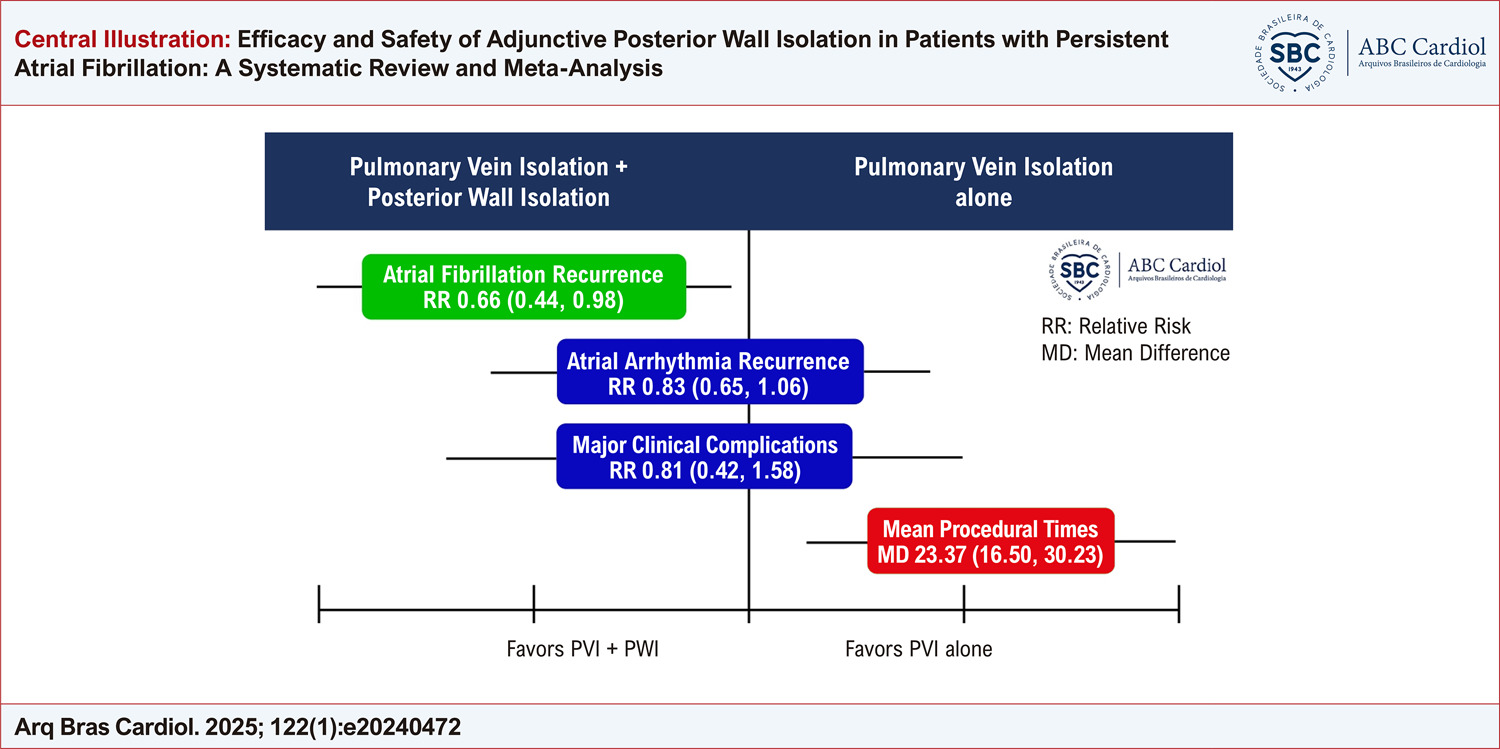
We included eight studies and 1119 patients, of which 561 underwent PVI + PWI. During follow-up (12 – 24 months), recurrence of AF was significantly reduced with adjunctive PWI (RR 0.66, 95% CI 0.44-0.98). Composite of recurrent atrial arrhythmias did not differ significantly (RR 0.83, 95% CI 0.65-1.06). Major clinical complications (RR 0.81, 95% CI 0.42-1.58) were similar, with PVI alone having a shorter mean procedure time (mean difference -23.37 minutes, 95% CI -30.23, -16.50).

Conclusion

Adjunctive PWI appears to be effective in improving recurrent AF, but not recurrence of all atrial arrhythmias. Procedure time was longer with PVI + PWI without significant change in overall safety. Further studies should focus on long-term benefit.

  • Atrial Fibrillation
  • Cardiac Electrophysiology
  • Catheter Ablation
Read Full Article
Creative Commons Attribution (CC BY) Creative Commons license
03/02/2025 DOI: 10.36660/abc.20240472i Views 7
The Southern Brazilian Registry of Atrial Fibrillation (SBR-AF Registry): Predictors of Atrial Arrhythmia Recurrence after First-Time Catheter Ablation
ABC
Original Article

The Southern Brazilian Registry of Atrial Fibrillation (SBR-AF Registry): Predictors of Atrial Arrhythmia Recurrence after First-Time Catheter Ablation

Caique M. P. Ternes et al. Luis E. Rohde Alexander Dal Forno Andrei Lewandowski … Helcio Garcia Nascimento Gabriel Odozynski Claudio Ferreira Enrico G. Ferro Carisi A. Polanczyk André Zimerman Lucas S. Faganello Eric Pasqualotto Grazyelle Damasceno Leandro I. Zimerman Andre d’Avila

Abstract

Background

Treatment of atrial fibrillation (AF) with catheter ablation (CA) has evolved significantly. However, real-world data on long-term outcomes are limited, particularly in low- and middle-income countries.

Objective

This multicenter prospective cohort of consecutive patients aimed to evaluate the safety and efficacy of first-time CA for AF in Southern Brazil from 2009 to 2024.

Methods

The primary outcome was any atrial tachyarrhythmia (ATA) recurrence. Multivariable Cox proportional hazards model assessed independent predictors of recurrence.

Results

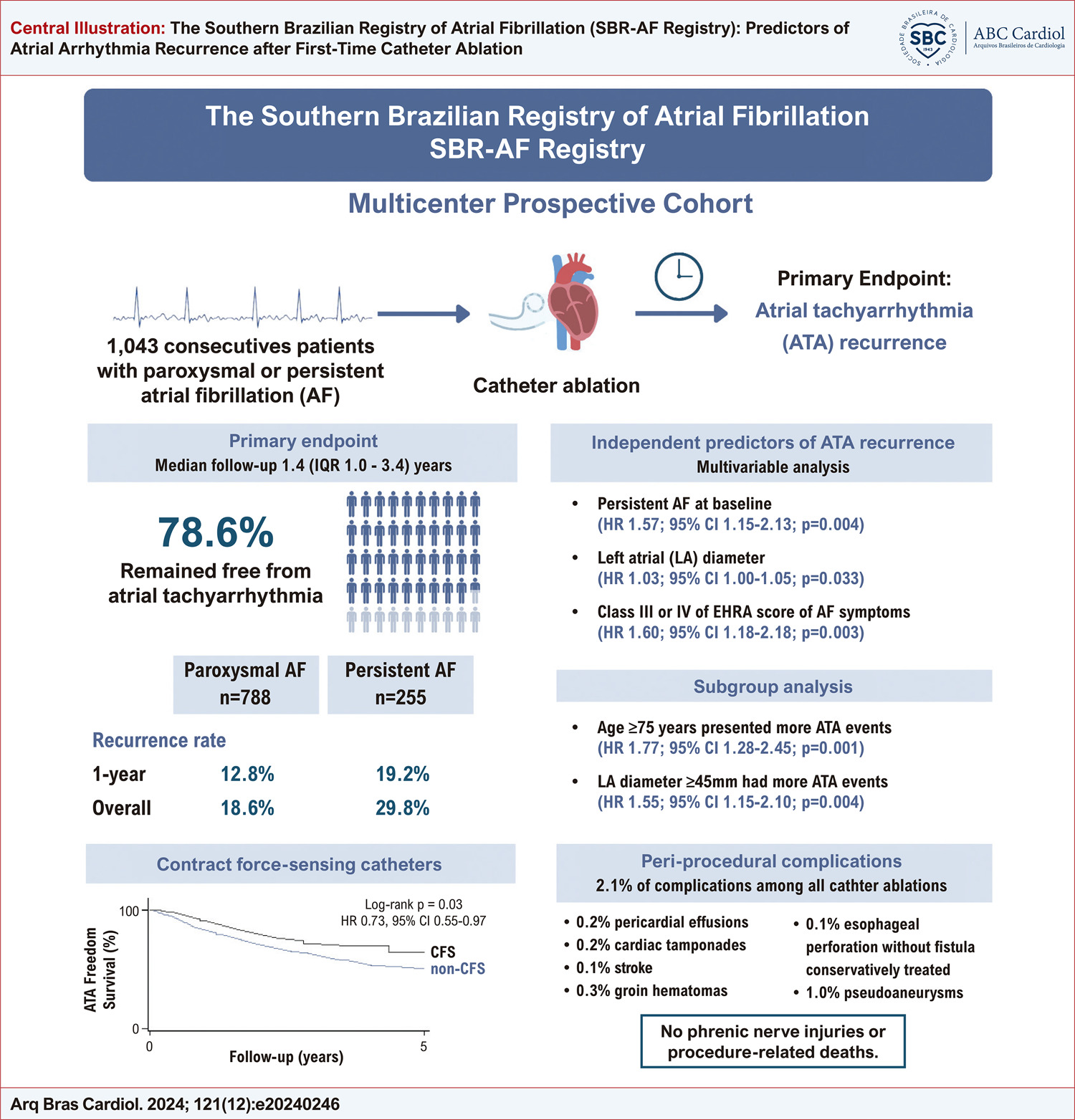
Among 1,043 patients (mean age 67.3 ± 11.3 years, 27.9% female), 75.5% had paroxysmal AF. At a median follow-up of 1.4 (1.0 – 3.4) years, 21.4% had ATA recurrence. Recurrence rates were 18.6% for paroxysmal and 29.8% for persistent AF, and 67.3% of events occurred within the first year after CA. Predictors of recurrence were persistent AF at baseline (hazard ratio [HR] 1.57, 95% confidence interval [CI] 1.15-2.13; p = 0.004), enlargement of left atrial diameter (HR 1.03, 95% CI 1.00-1.05; p = 0.033), and higher EHRA score of AF symptoms (HR 1.60, 95% CI 1.18-2.18; p = 0.003). Recurrence rates decreased over time according to the procedure’s calendar year, with a 9% relative reduction per consecutive year (HR 0.91; p < 0.001). There was a 2.1% rate of procedure-related adverse events.

Conclusions

In the largest cohort study of consecutive AF ablations in Latin America, predictors of ATA recurrence were related to later stages of AF. Complication and recurrence rates were comparable to those in high-income countries, underscoring the global applicability of CA for AF management.

  • Atrial Fibrillation
  • Catheter Ablation
  • Prognosis
Read Full Article
Creative Commons Attribution (CC BY) Creative Commons license
27/01/2025 DOI: 10.36660/abc.20240246i Views 1
High Power Short Duration Atrial Fibrillation Ablation: Long-Term Predictors of Success and Recurrence – A Multivariate Analysis
ABC
Original Article

High Power Short Duration Atrial Fibrillation Ablation: Long-Term Predictors of Success and Recurrence – A Multivariate Analysis

Fabricio Vassallo et al. Christiano Cunha Lucas Corsino Eduardo Serpa … Aloyr Simões Jr Dalton Hespanhol Carlos Volponi Lovatto Dalbian Gasparini Luiz Fernando Barbosa Andre Schmidt

Abstract

Background

Point-by-point ablation with a high-power short-duration (HPSD) technique in atrial fibrillation (AF) ablation is used worldwide. Little data is available with the HPSD and dragging technique (DT).

Objective

To perform a multivariate analysis of clinical and procedural predictors of success and recurrence in HPSD with DT.

Methods

214 patients in the first AF ablation in sinus rhythm were prospectively enrolled. DT with radiofrequency power of 50 W and contact force (CF) of 10–20 g and 5–10 g at a flow rate of 40 mL/min were applied on the anterior and posterior walls, respectively. Statistical significance was defined as p < 0.05.

Results

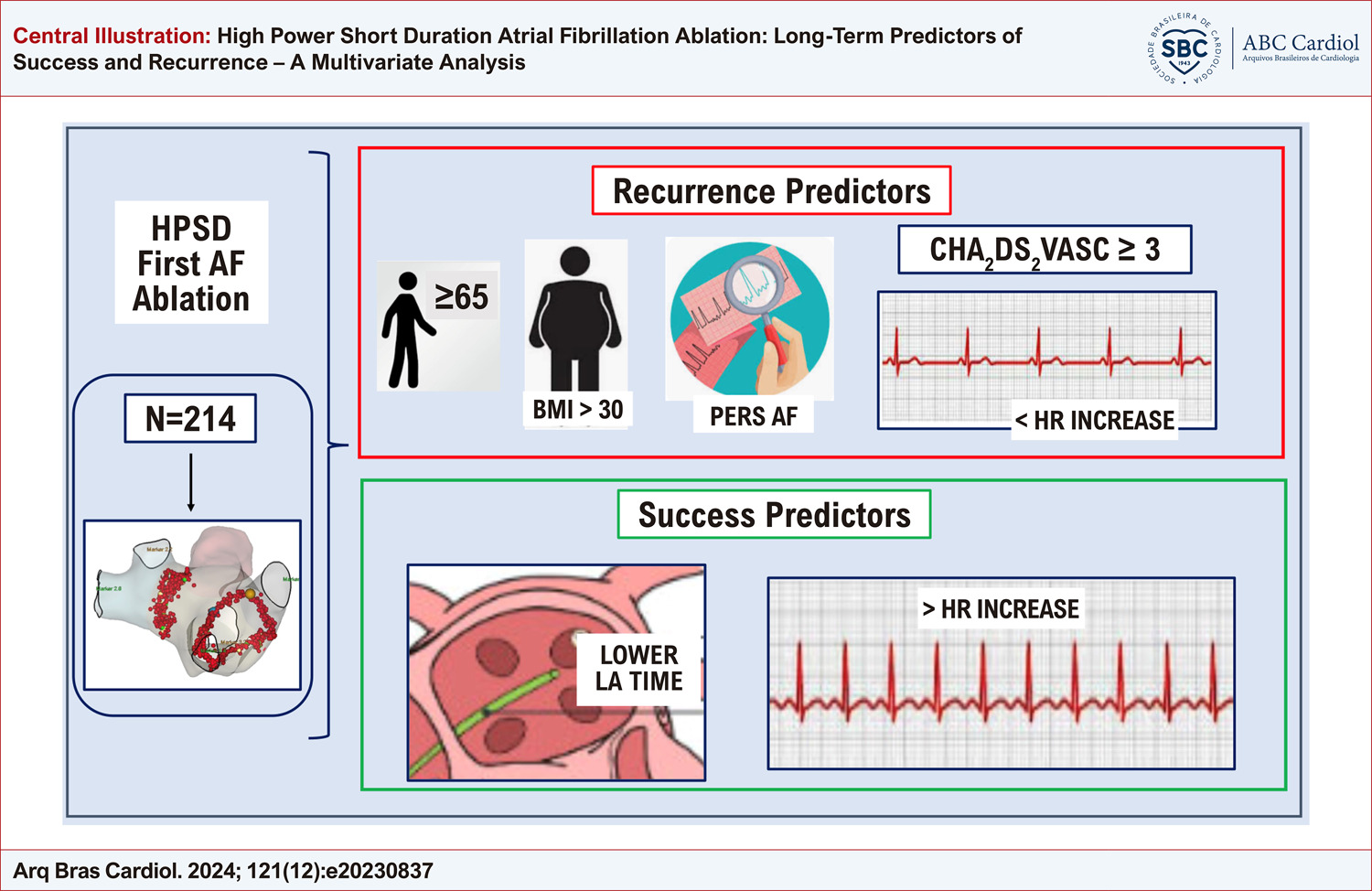
143 (66.8%) males, paroxysmal AF (PAF) in 124 (57.9%), with 61.1±12.3 years and followed for 32.8±13.2 months. After 90 days, AF occurred in 43 (20.1%) patients, 19 (15.3%) from PAF, and 24 (26.7%) in persistent AF (PersAF). Multivariate analysis indicated as clinical predictors of recurrence: age ≥ 65 years (p=0.006); obesity [body mass index > 30 (p=0.009)]; CHA2DS2VASC score ≥ 3 (p=0.003); and PersAF (p=0.045). The procedural predictor of recurrence was a heart rate increase < 10% (p=0.006). Predictors of success were an increase in heart rate ≥ 30% (p=0.04) and < 60 min in left atrium time (LAT) (p=0.007).

Conclusion

AF ablation with DT and HPSD clinical and procedural predictors of recurrence were ≥ 65 years, obesity, a CHA2DS2VASC ≥ 3, PersAF, and a heart rate increase of < 10% after ablation. Success predictors were an increase of ≥ 30% in heart rate and low LAT (< 60 min).

  • Atrial Fibrillation
  • Catheter Ablation
  • Recidivism
  • Tachycardia
Read Full Article
Creative Commons Attribution (CC BY) Creative Commons license
13/12/2024 DOI: 10.36660/abc.20230837i Views 1
ABC
Editorial

Impact of Pulsed Field Ablation on Atrial Fibrillation

Mauricio Scanavacca et al. Cristiano Pisani

Atrial fibrillation (AF) is the most common cardiac arrhythmia in clinical practice, with an increasing incidence in more elderly patients. It is well known that AF is a substantial risk factor for cardiovascular events, increasing morbidity and mortality among affected patients, in addition to causing reduced physical and cognitive capacity and quality of life.– Current treatment of AF is based on modification of aggravating clinical factors, introduction of anticoagulants based on individualized risk-benefit ratio, medications to control heart rate and antiarrhythmics to control rhythm, and electrical cardioversion in patients with persistent AF.

In patients who are refractory or intolerant to medical treatment, catheter ablation with electrical pulmonary vein isolation has been recommended with increasing enthusiasm by international guidelines. In fact, technological adjustments achieved in recent years in point-to-point radiofrequency ablation and balloon cryoablation have promoted greater effectiveness of the procedure and increased safety with both technologies, as demonstrated in numerous recent comparative scientific studies.,

[…]

  • Atrial Fibrillation
  • Catheter Ablation
  • Electroporation
  • Pulsed Field Ablation
Read Full Article
Creative Commons Attribution (CC BY) Creative Commons license
15/11/2024 DOI: 10.36660/abc.20240565i Views 1
Figure 1
IJCS
Case Report

Arrhythmogenic Substrate Ablation in a Patient With Brugada Syndrome and Electrical Storm

Arnóbio Dias da Ponte Filho et al. Ronaldo Vasconcelos Tavora Francisco Rodrigues dos Santos Neto André Gustavo da Silva Rezende Ieda Prata Costa

Abstract

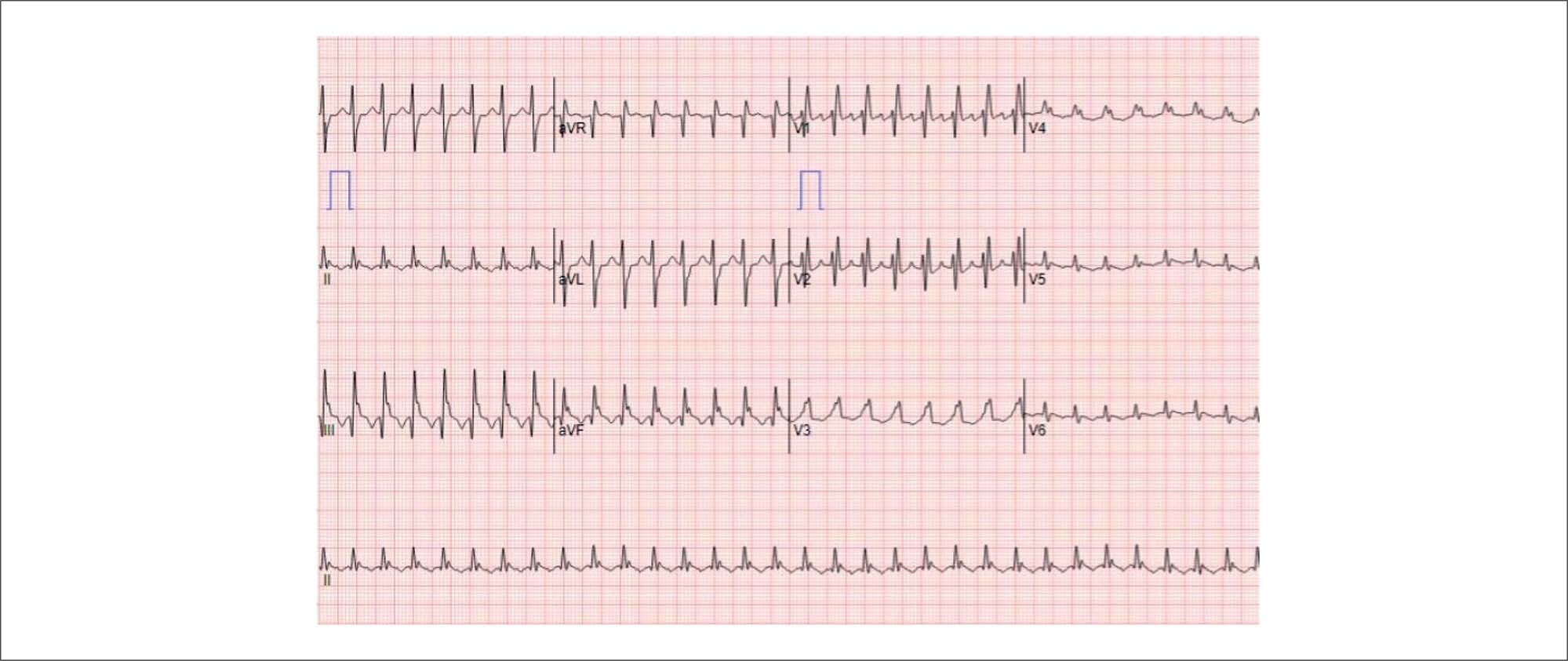
Despite being a rare condition, Brugada syndrome (BrS) poses a significant risk of arrhythmic death, and managing associated ventricular arrhythmias is particularly challenging. Here, we present a case where percutaneous ablation targeted an arrhythmogenic substrate in a patient with BrS and recurrent ventricular fibrillation (VF). Epicardial mapping revealed abnormal potential areas in the right ventricle’s outflow tract and free wall. Injection of warmed saline into the pericardial space caused further delay in local electrograms and expanded the abnormal potential area. Radiofrequency applications in this region successfully eliminated abnormal electrograms, leading to the disappearance of the coved-shape ST-segment elevation in leads V1-V2. No recurrence of ventricular arrhythmias was reported in a twelve-month follow-up.

  • Brugada Syndrome
  • Catheter Ablation
  • Epicardial Mapping
  • Ventricular tachycardia
Read Full Article
Creative Commons Attribution (CC BY) Creative Commons license
16/09/2024 DOI: 10.36660/ijcs.20230150 Views 1
ABC
Editorial

Can Pre-Ablation Serum Biomarkers be Used to Predict Arrhythmia Recurrence after Ablation Index-Guided Atrial Fibrillation Ablation?

Muhieddine Omar Chokr

Invasive treatment of atrial fibrillation (AF) has been established as the most effective treatment in controlling and curing this arrhythmia. In most cases, triggers originating from the pulmonary veins are responsible for triggering AF in its paroxysmal form. In its persistent form, different electrophysiological mechanisms are involved. The longer the evolution time, the more complex the invasive treatment strategy becomes. Despite the technological evolution with different electroanatomical mapping systems and the formation of increasingly effective radiofrequency lesions in the atrium wall, recurrences remain a challenge to be avoided.

Creating long-lasting ablation lesions during pulmonary vein isolation for AF is of critical importance to prevent late vein reconnection. Such reconnection is responsible for the vast majority of arrhythmia recurrences in patients with paroxysmal AF. Despite technological improvements, the proportion of veins that remain chronically isolated after radiofrequency ablation is still disappointingly low. This has led to great interest in producing more effective ablation lesions.

[…]

  • Atrial Fibrillation
  • Biomarkers
  • Catheter Ablation
Read Full Article
Creative Commons Attribution (CC BY) Creative Commons license
12/08/2024 DOI: 10.36660/abc.20240355i Views 1
ABC
Editorial

Evaluation of Catheter Ablation Using the PVAC Gold Catheter in Elderly Patients with Atrial Fibrillation

José Carlos Pachon-M et al. Tomas G. Santillana-P Enrique I. Pachon-M

Atrial fibrillation (AF) represents one of the most significant challenges in contemporary cardiological practice, especially in elderly patients, where the complexity of treatment is amplified by prevalent comorbidities and the fragility of this population. In this context, the study “Randomized Study Comparing Radiofrequency Ablation with the PVAC Gold System vs. Antiarrhythmic Drugs in Elderly Patients with Symptomatic Atrial Fibrillation” recently published in the ABC Cardiol by Martins et al., is remarkable. It offers crucial insights into therapeutic options, risks, and benefits for these patients. Additionally, this article is led by a team with remarkable international experience in AF ablation, navigating the challenges with astute clinical judgment having been a pioneer in several procedures.

This group of frequently polymedicated patients constantly inspires the search for therapies that reduce medication dependence and enhance quality of life. The prospect of eliminating AF through ablation and reducing multiple medications is highly appealing.,

[…]

  • Atrial Fibrillation
  • Catheter Ablation
  • Catheters
Read Full Article
Creative Commons Attribution (CC BY) Creative Commons license
02/08/2024 DOI: 10.36660/abc.20240306i
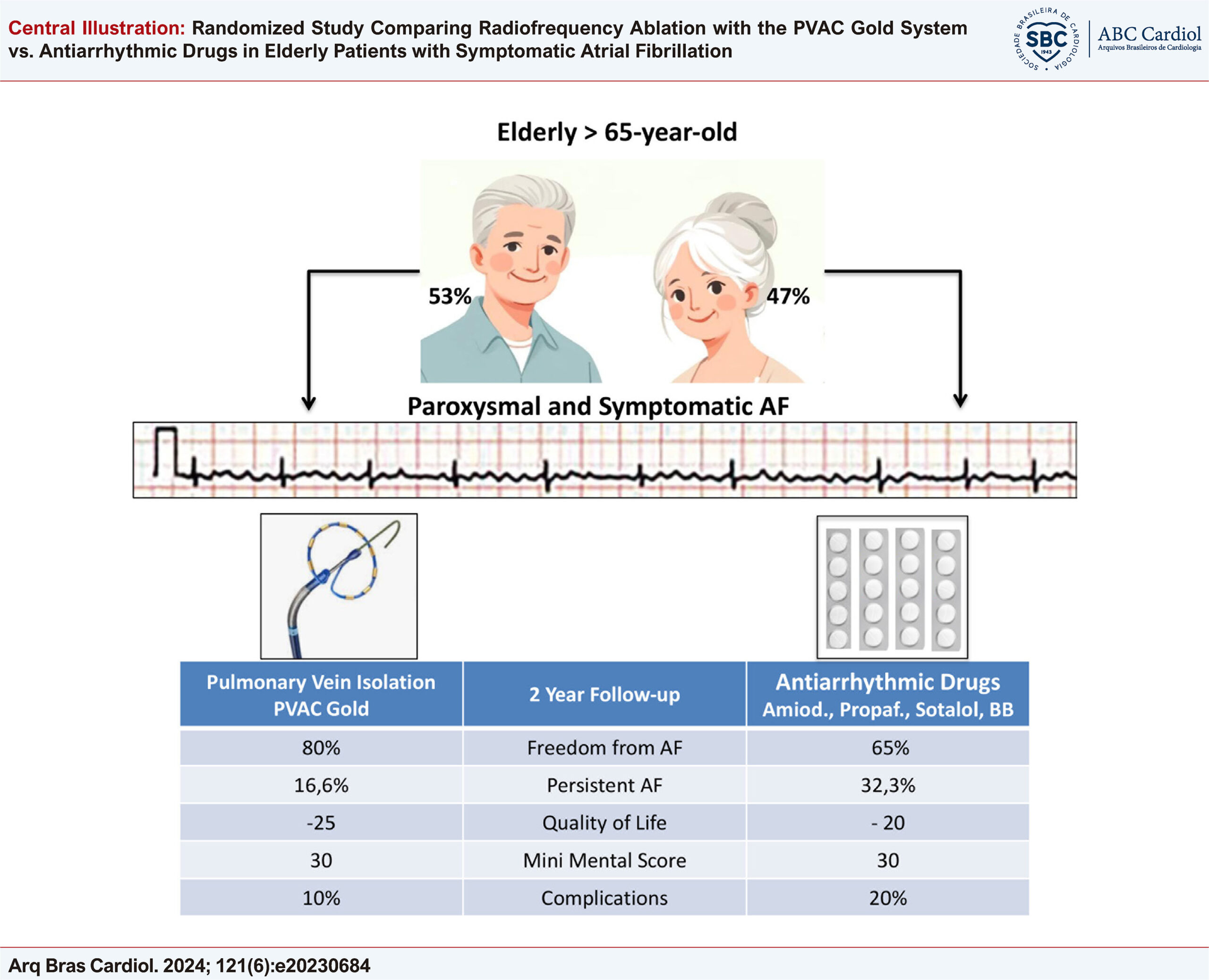
Randomized Study Comparing Radiofrequency Ablation with the PVAC Gold System vs. Antiarrhythmic Drugs in Elderly Patients with Symptomatic Atrial Fibrillation
ABC
Original Article

Randomized Study Comparing Radiofrequency Ablation with the PVAC Gold System vs. Antiarrhythmic Drugs in Elderly Patients with Symptomatic Atrial Fibrillation

Luiz Claudio Berhmann Martins et al. Cristiano F. Pisani Fabio K. Dorfman Francisco C. C. Darrieux … Tan C. Wu Alberto P. Ferraz Denise T. Hachul Claudio Campi de Castro Rogério Ruscitto do Prado Luciana V. F. Souza Luciana Sacilloto Gabrielle D. A. Pessente Cesar J. Grupi Muhieddine Omar Chokr Cesar H. Nomura Kátia Rodrigues de Oliveira Conrado P. Balbo Sissy L. Melo Pedro Veronese Mauricio I. Scanavacca

Abstract

Background

There are no randomized studies comparing the maintenance of sinus rhythm after catheter ablation (CA) concerning treatment with antiarrhythmic drugs (AA) in elderly patients with paroxysmal atrial fibrillation (AF).

Objectives

To compare the clinical results of pulmonary vein (PV) isolation with the second-generation PVAC Gold catheter against AA treatment in elderly people with recurrent symptomatic paroxysmal AF, refractory to at least one AA, and without structural heart disease.

Methods

Sixty patients with paroxysmal AF ≥ 65 years old were randomized to two forms of treatment: group 1: CA and group 2: AA drugs. The primary outcome was the AF recurrence-free rate after at least one year of follow-up. Secondary outcomes were: progression to persistent forms of AF, impact on quality of life (QOLF), and complications. The significance level adopted in the statistical analysis was 5% (p<0.05).

Results

The AF recurrence-free rate was 80% (10% with amiodarone) in the CA group, after 1.3 procedures per patient and 65% in the AA group (60% with amiodarone), (p = 0.119) in an average follow-up of 719 days (Q1: 566; Q3: 730). The persistent AF free rate was 83.4% in the AC group and 67.7% in the AA group (p = 0.073) Both strategies showed an improvement in the AFQoL score during follow-up (p < 0.001), with no difference between the groups. Although without clinical repercussions or impact on the intellectual assessment test, 25% of patients in the CA group showed signs of cerebral embolization on brain MRI.

Conclusions

Both strategies for maintaining sinus rhythm promoted an improvement in the quality of life of elderly patients with symptomatic AF, with no statistical difference in the clinical outcomes. Additional studies using technologies with a better safety profile are needed to evaluate the benefits of CA in elderly patients with AF.

  • Anti-Arrhythmia Agents
  • Atrial Fibrillation
  • Catheter Ablation
  • Quality of life
  • Stroke
Read Full Article
Creative Commons Attribution (CC BY) Creative Commons license
02/08/2024 DOI: 10.36660/abc.20230684i Views 3
Can Pre-Ablation Biomarkers Be Used to Predict Arrhythmia Recurrence after Ablation Index-Guided Atrial Fibrillation Ablation?
ABC
Original Article

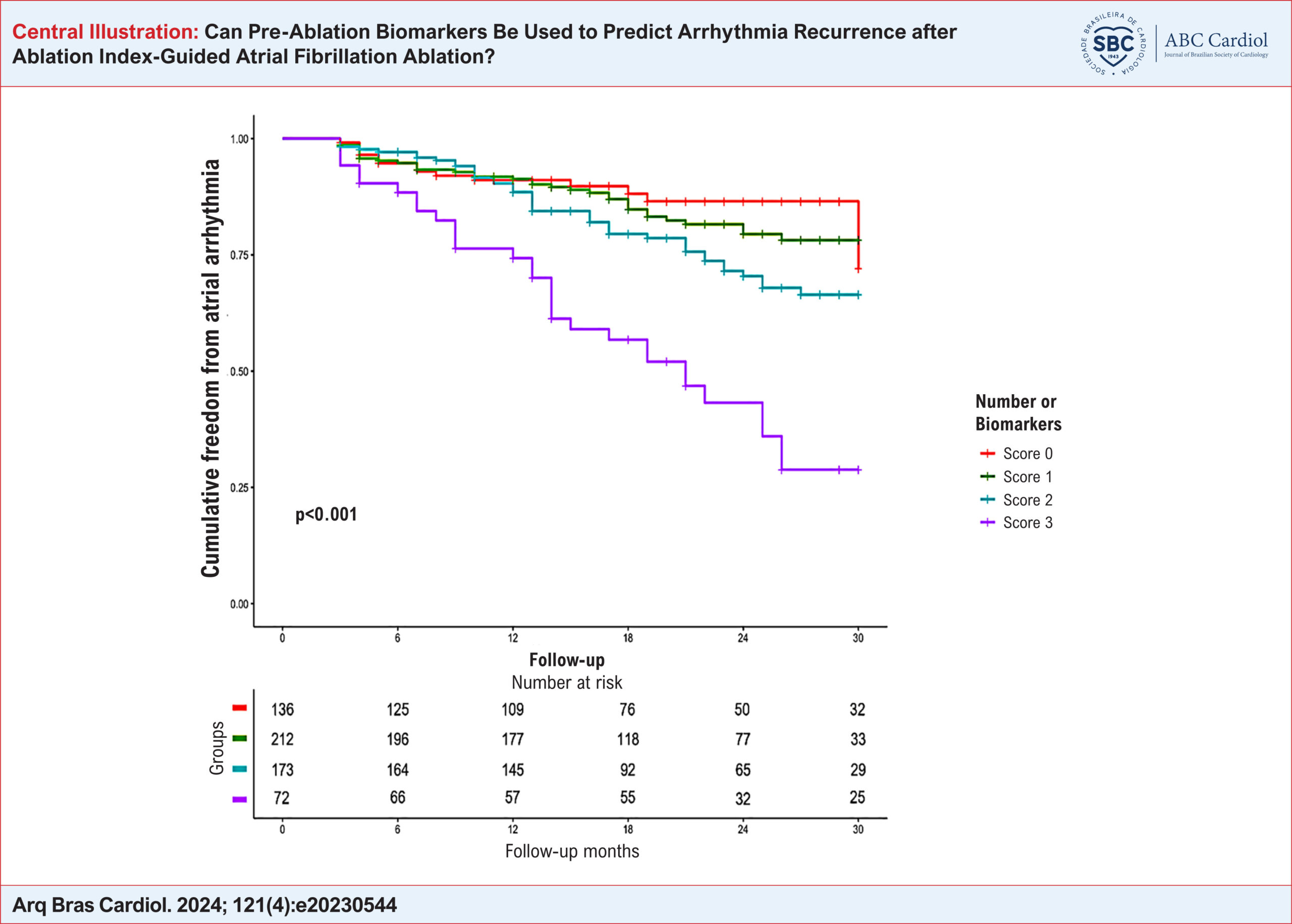
Can Pre-Ablation Biomarkers Be Used to Predict Arrhythmia Recurrence after Ablation Index-Guided Atrial Fibrillation Ablation?

Andreia Palma et al. Pedro A. Sousa Carolina Saleiro Sérgio Barra … Natália António Luis Adão João Primo Ana Lebreiro Paulo Fonseca Luís Elvas Lino Gonçalves

Abstract

Background:

Ablation Index (AI) software has allowed better atrial fibrillation (AF) ablation results, but recurrence rates remain significant. Specific serum biomarkers have been associated with this recurrence.

Objectives:

To evaluate whether certain biomarkers could be used (either individually or combined) to predict arrhythmia recurrence after AI-guided AF ablation.

Methods:

Prospective multicenter observational study of consecutive patients referred for AF ablation from January 2018 to March 2021. Hemoglobin, brain natriuretic peptide (BNP), C-reactive protein, high sensitivity cardiac troponin I, creatinine clearance, thyroid-stimulating hormone (TSH) and free thyroxine (FT4) were assessed for their ability to predict arrhythmia recurrence during follow-up. Statistical significance was accepted for p values of<0.05.

Results:

A total of 593 patients were included – 412 patients with paroxysmal AF and 181 with persistent AF. After a mean follow-up of 24±6 months, overall single-procedure freedom from atrial arrhythmia was 76.4%. Individually, all biomarkers had no or only modest predictive power for recurrence. However, a TSH value >1.8 μUI/mL (HR=1.82 [95% CI, 1.89-2.80], p=0.006) was an independent predictor of arrhythmia recurrence. When assessing TSH, FT4 and BNP values in combination, each additional “abnormal” biomarker value was associated with a lower freedom from arrhythmia recurrence (87.1 % for no biomarker vs. 83.5% for one vs. 75.1% for two vs. 43.3% for three biomarkers, p<0.001). Patients with three “abnormal” biomarkers had a threefold higher risk of AF recurrence compared with no “abnormal” biomarker (HR=2.88 [95% CI, 1.39-5.17], p=0.003).

Conclusions:

When used in combination, abnormal TSH, FT4 and BNP values can be a useful tool for predicting arrhythmia recurrence after AI-guided AF ablation.

  • Atrial Fibrillation
  • Biomarkers
  • Cardiac Arrhythmias
  • Catheter Ablation
Read Full Article
Creative Commons Attribution (CC BY) Creative Commons license
29/04/2024 DOI: 10.36660/abc.20230544i Views 1

Could not load more articles. Please try again.

How to cite this article

EndNote RIS

Electronic Document Format (Vancouver)

Schreiber Junior A, Faganello LS, Magalhães APA, Spannemberger KP, Caberlon E, Zimerman LI, Pimentel M, et al. Wolff–Parkinson–White Syndrome in a Heart Transplant Recipient. ABC Heart Fail Cardiomyop 2026;6:e20260017.

Electronic Document Format (ABNT)

Schreiber Junior, Adir; Faganello, Lucas Simonetto; Magalhães, Ana Paula Arbo; Spannemberger, Kaleb Pinto; Caberlon, Eduardo; Zimerman, Leandro Ioschpe; Pimentel, Mauricio. Wolff–Parkinson–White Syndrome in a Heart Transplant Recipient. ABC Heart Fail Cardiomyop, v. 6, e20260017, Sep. 2026.

Electronic Document Format (APA)

Schreiber Junior, A., Faganello, L. S., Magalhães, A. P. A., Spannemberger, K. P., Caberlon, E., Zimerman, L. I., & Pimentel, M. (2026). Wolff–Parkinson–White Syndrome in a Heart Transplant Recipient. ABC Heart Fail Cardiomyop, 6, e20260017.

Electronic Document Format (ISO)

Schreiber Junior, Adir and Faganello, Lucas Simonetto and Magalhães, Ana Paula Arbo and Spannemberger, Kaleb Pinto and Caberlon, Eduardo and Zimerman, Leandro Ioschpe and Pimentel, Mauricio. Wolff–Parkinson–White Syndrome in a Heart Transplant Recipient. ABC Heart Fail Cardiomyop [online]. 2026, vol. 6, [cited 2026-10-14], e20260017. Available from: <https://journals.cardiol.br/en/article/wolff-parkinson-white-syndrome-in-a-heart-transplant-recipient/>

EndNote RIS

Electronic Document Format (Vancouver)

Monteiro AMZA, Tocantins MGC, Souza JB, Albuquerque RJS, Oliveira JVF, Pinheiro RO, Silva SML, et al. Impact of Catheter Ablation on LVEF in Patients with Atrial Fibrillation and Heart Failure with Reduced Ejection Fraction: A Systematic Review. Arquivos Brasileiros de Cardiologia 2026;123(6):e20260117.

Electronic Document Format (ABNT)

Monteiro, Antonio Maria Zacarias Araújo; Tocantins, Maria Giovanna da Cruz; Souza, Jéssica Batista; Albuquerque, Renan de Jesus da Silva; Oliveira, João Vitor Ferreira de; Pinheiro, Roni Oliveira; Silva, Ster Marques de Lima. Impact of Catheter Ablation on LVEF in Patients with Atrial Fibrillation and Heart Failure with Reduced Ejection Fraction: A Systematic Review. Arquivos Brasileiros de Cardiologia, v. 123, n. 6, e20260117, Jul. 2026.

Electronic Document Format (APA)

Monteiro, A. M. Z. A., Tocantins, M. G. C., Souza, J. B., Albuquerque, R. J. S., Oliveira, J. V. F. , Pinheiro, R. O., & Silva, S. M. L. (2026). Impact of Catheter Ablation on LVEF in Patients with Atrial Fibrillation and Heart Failure with Reduced Ejection Fraction: A Systematic Review. Arquivos Brasileiros de Cardiologia, 123(6), e20260117.

Electronic Document Format (ISO)

Monteiro, Antonio Maria Zacarias Araújo and Tocantins, Maria Giovanna da Cruz and Souza, Jéssica Batista and Albuquerque, Renan de Jesus da Silva and Oliveira, João Vitor Ferreira de and Pinheiro, Roni Oliveira and Silva, Ster Marques de Lima. Impact of Catheter Ablation on LVEF in Patients with Atrial Fibrillation and Heart Failure with Reduced Ejection Fraction: A Systematic Review. Arquivos Brasileiros de Cardiologia [online]. 2026, vol. 123, n. 6, [cited 2026-10-14], e20260117. Available from: <https://journals.cardiol.br/en/article/impact-of-catheter-ablation-on-lvef-in-patients-with-atrial-fibrillation-and-heart-failure-with-reduced-ejection-fraction-a-systematic-review/>. ISSN 0066-782X

EndNote RIS

Electronic Document Format (Vancouver)

Morte SSB, Magalhães LP, Duarte JOP, Guabiru AT, Santos AS, Magalhães EFS, Aras R, et al. Reversibility of Heart Failure after Catheter Ablation in Patients with Ventricular Pre-Excitation-Induced Cardiomyopathy. Arquivos Brasileiros de Cardiologia 2026;123(5):e20250192.

Electronic Document Format (ABNT)

Morte, Samuel Santos Boa; Magalhães, Luiz Pereira de; Duarte, Jussara de Oliveira Pinheiro; Guabiru, Alex Teixeira; Santos, Adimeia Souza; Magalhães, Eduardo Faria Soares de; Aras, Roque. Reversibility of Heart Failure after Catheter Ablation in Patients with Ventricular Pre-Excitation-Induced Cardiomyopathy. Arquivos Brasileiros de Cardiologia, v. 123, n. 5, e20250192, Jul. 2026.

Electronic Document Format (APA)

Morte, S. S. B., Magalhães, L. P. , Duarte, J. O. P., Guabiru, A. T., Santos, A. S., Magalhães, E. F. S. , & Aras, R. (2026). Reversibility of Heart Failure after Catheter Ablation in Patients with Ventricular Pre-Excitation-Induced Cardiomyopathy. Arquivos Brasileiros de Cardiologia, 123(5), e20250192.

Electronic Document Format (ISO)

Morte, Samuel Santos Boa and Magalhães, Luiz Pereira de and Duarte, Jussara de Oliveira Pinheiro and Guabiru, Alex Teixeira and Santos, Adimeia Souza and Magalhães, Eduardo Faria Soares de and Aras, Roque. Reversibility of Heart Failure after Catheter Ablation in Patients with Ventricular Pre-Excitation-Induced Cardiomyopathy. Arquivos Brasileiros de Cardiologia [online]. 2026, vol. 123, n. 5, [cited 2026-10-14], e20250192. Available from: <https://journals.cardiol.br/en/article/reversibility-of-heart-failure-after-catheter-ablation-in-patients-with-ventricular-pre-excitation-induced-cardiomyopathy/>. ISSN 0066-782X

EndNote RIS

Electronic Document Format (Vancouver)

Cardoso AF, Ribeiro FCP, Martins LCB, Geovanini GR, Rocha CAS, Pichara NL, Silva M, et al. Long-Term Clinical Outcomes of Catheter Ablation in Hypertrophic Cardiomyopathy and Atrial Fibrillation: A Systematic Review and Meta-Analysis. International Journal of Cardiovascular Sciences 2026;39:e20250089.

Electronic Document Format (ABNT)

Cardoso, Acácio Fernandes; Ribeiro, Fernanda Cristina Poscai; Martins, Luiz Claudio Behrmann; Geovanini, Glaucylara Reis; Rocha, Cynthia Aparecida da Silva; Pichara, Nemer Luiz; Silva, Áleff Mascarenhas da. Long-Term Clinical Outcomes of Catheter Ablation in Hypertrophic Cardiomyopathy and Atrial Fibrillation: A Systematic Review and Meta-Analysis. International Journal of Cardiovascular Sciences, v. 39, e20250089, Mar. 2026.

Electronic Document Format (APA)

Cardoso, A. F., Ribeiro, F. C. P., Martins, L. C. B., Geovanini, G. R., Rocha, C. A. S., Pichara, N. L., & Silva, M. (2026). Long-Term Clinical Outcomes of Catheter Ablation in Hypertrophic Cardiomyopathy and Atrial Fibrillation: A Systematic Review and Meta-Analysis. International Journal of Cardiovascular Sciences, 39, e20250089.

Electronic Document Format (ISO)

Cardoso, Acácio Fernandes and Ribeiro, Fernanda Cristina Poscai and Martins, Luiz Claudio Behrmann and Geovanini, Glaucylara Reis and Rocha, Cynthia Aparecida da Silva and Pichara, Nemer Luiz and Silva, Áleff Mascarenhas da. Long-Term Clinical Outcomes of Catheter Ablation in Hypertrophic Cardiomyopathy and Atrial Fibrillation: A Systematic Review and Meta-Analysis. International Journal of Cardiovascular Sciences [online]. 2026, vol. 39, [cited 2026-10-14], e20250089. Available from: <https://journals.cardiol.br/en/article/long-term-clinical-outcomes-of-catheter-ablation-in-hypertrophic-cardiomyopathy-and-atrial-fibrillation-a-systematic-review-and-meta-analysis/>. ISSN 2359-4802

EndNote RIS

Electronic Document Format (Vancouver)

May BM, Araujo Junior N, Boghossian SHC, Atie J, Maciel WA, Hardy CA, Forno ARJD, et al. Brazilian Registry of Pulsed Field Catheter Ablation for the Treatment of Patients with Atrial Fibrillation. Arquivos Brasileiros de Cardiologia 2026;123(1):e20250416.

Electronic Document Format (ABNT)

May, Bruna Miers; Araujo Junior, Nilson; Boghossian, Silvia Helena Cardoso; Atie, Jacob; Maciel, Washington A.; Hardy, Carina Abigail; Forno, Alexander Romeno Janner Dal; Saad, Eduardo B.; Munhoz, Claudio; Paola, Angelo Amato Vincenzo de; Scanavacca, Mauricio; Zimerman, Andre; Vasconcelos, José Tarcísio Medeiros de; d’Avila, André. Brazilian Registry of Pulsed Field Catheter Ablation for the Treatment of Patients with Atrial Fibrillation. Arquivos Brasileiros de Cardiologia, v. 123, n. 1, e20250416, Mar. 2026.

Electronic Document Format (APA)

May, B. M., Araujo Junior, N., Boghossian, S. H. C., Atie, J., Maciel, W. A., Hardy, C. A., Forno, A. R. J. D., Saad, E. B., Munhoz, C., Paola, A. A. V. , Scanavacca, M., Zimerman, A., Vasconcelos, J. T. M. , & d’Avila, A. (2026). Brazilian Registry of Pulsed Field Catheter Ablation for the Treatment of Patients with Atrial Fibrillation. Arquivos Brasileiros de Cardiologia, 123(1), e20250416.

Electronic Document Format (ISO)

May, Bruna Miers and Araujo Junior, Nilson and Boghossian, Silvia Helena Cardoso and Atie, Jacob and Maciel, Washington A. and Hardy, Carina Abigail and Forno, Alexander Romeno Janner Dal and Saad, Eduardo B. and Munhoz, Claudio and Paola, Angelo Amato Vincenzo de and Scanavacca, Mauricio and Zimerman, Andre and Vasconcelos, José Tarcísio Medeiros de and d’Avila, André. Brazilian Registry of Pulsed Field Catheter Ablation for the Treatment of Patients with Atrial Fibrillation. Arquivos Brasileiros de Cardiologia [online]. 2026, vol. 123, n. 1, [cited 2026-10-14], e20250416. Available from: <https://journals.cardiol.br/en/article/brazilian-registry-of-pulsed-field-catheter-ablation-for-the-treatment-of-patients-with-atrial-fibrillation/>. ISSN 0066-782X

EndNote RIS

Electronic Document Format (Vancouver)

Shawki M, Rodrigues TS, Quarto LJG. Predictors of Atrial Arrhythmia Recurrence after Catheter Ablation: Socioeconomic Impact in Low to Middle-Income Countries. Arquivos Brasileiros de Cardiologia 2025;122(7):e20250248.

Electronic Document Format (ABNT)

Shawki, Marwan; Rodrigues, Thalys Sampaio; Quarto, Levindo Jose Garcia. Predictors of Atrial Arrhythmia Recurrence after Catheter Ablation: Socioeconomic Impact in Low to Middle-Income Countries. Arquivos Brasileiros de Cardiologia, v. 122, n. 7, e20250248, Aug. 2025.

Electronic Document Format (APA)

Shawki, M., Rodrigues, T. S., & Quarto, L. J. G. (2025). Predictors of Atrial Arrhythmia Recurrence after Catheter Ablation: Socioeconomic Impact in Low to Middle-Income Countries. Arquivos Brasileiros de Cardiologia, 122(7), e20250248.

Electronic Document Format (ISO)

Shawki, Marwan and Rodrigues, Thalys Sampaio and Quarto, Levindo Jose Garcia. Predictors of Atrial Arrhythmia Recurrence after Catheter Ablation: Socioeconomic Impact in Low to Middle-Income Countries. Arquivos Brasileiros de Cardiologia [online]. 2025, vol. 122, n. 7, [cited 2026-10-14], e20250248. Available from: <https://journals.cardiol.br/en/article/predictors-of-atrial-arrhythmia-recurrence-after-catheter-ablation-socioeconomic-impact-in-low-to-middle-income-countries/>. ISSN 0066-782X

EndNote RIS

Electronic Document Format (Vancouver)

Iqbal A, Amador WFO, Cevallos-Cueva M, Ahmad M, Alarcón JAP, Diniz RV. Pulsed Field Ablation Versus Very High-Power Short-Duration Radiofrequency Ablation in Atrial Fibrillation: A Systematic Review and Meta-Analysis. Arquivos Brasileiros de Cardiologia 2025;122(7):e20240845.

Electronic Document Format (ABNT)

Iqbal, Asad; Amador, Wellgner Fernandes Oliveira; Cevallos-Cueva, Martin; Ahmad, Maaz; Alarcón, Juan Alejandro Pinilla; Diniz, Radamés Vieira. Pulsed Field Ablation Versus Very High-Power Short-Duration Radiofrequency Ablation in Atrial Fibrillation: A Systematic Review and Meta-Analysis. Arquivos Brasileiros de Cardiologia, v. 122, n. 7, e20240845, Aug. 2025.

Electronic Document Format (APA)

Iqbal, A., Amador, W. F. O., Cevallos-Cueva, M., Ahmad, M., Alarcón, J. A. P., & Diniz, R. V. (2025). Pulsed Field Ablation Versus Very High-Power Short-Duration Radiofrequency Ablation in Atrial Fibrillation: A Systematic Review and Meta-Analysis. Arquivos Brasileiros de Cardiologia, 122(7), e20240845.

Electronic Document Format (ISO)

Iqbal, Asad and Amador, Wellgner Fernandes Oliveira and Cevallos-Cueva, Martin and Ahmad, Maaz and Alarcón, Juan Alejandro Pinilla and Diniz, Radamés Vieira. Pulsed Field Ablation Versus Very High-Power Short-Duration Radiofrequency Ablation in Atrial Fibrillation: A Systematic Review and Meta-Analysis. Arquivos Brasileiros de Cardiologia [online]. 2025, vol. 122, n. 7, [cited 2026-10-14], e20240845. Available from: <https://journals.cardiol.br/en/article/pulsed-field-ablation-versus-very-high-power-short-duration-radiofrequency-ablation-in-atrial-fibrillation-a-systematic-review-and-meta-analysis/>. ISSN 0066-782X

EndNote RIS

Electronic Document Format (Vancouver)

Kataoka N, Imamura T. How to Improve Clinical Outcomes in Women with Atrial Fibrillation. Arquivos Brasileiros de Cardiologia 2025;122(6):e20250095.

Electronic Document Format (ABNT)

Kataoka, Naoya; Imamura, Teruhiko. How to Improve Clinical Outcomes in Women with Atrial Fibrillation. Arquivos Brasileiros de Cardiologia, v. 122, n. 6, e20250095, Jun. 2025.

Electronic Document Format (APA)

Kataoka, N., & Imamura, T. (2025). How to Improve Clinical Outcomes in Women with Atrial Fibrillation. Arquivos Brasileiros de Cardiologia, 122(6), e20250095.

Electronic Document Format (ISO)

Kataoka, Naoya and Imamura, Teruhiko. How to Improve Clinical Outcomes in Women with Atrial Fibrillation. Arquivos Brasileiros de Cardiologia [online]. 2025, vol. 122, n. 6, [cited 2026-10-14], e20250095. Available from: <https://journals.cardiol.br/en/article/how-to-improve-clinical-outcomes-in-women-with-atrial-fibrillation/>. ISSN 0066-782X

EndNote RIS

Electronic Document Format (Vancouver)

Jallad P, Soliani M, Marins PHA, Fernandes F, Arteaga-Fernandez E, Madrini V, Lemos Neto P, et al. Brazilian Multicenter Registry of Alcohol Septal Ablation for Patients with Symptomatic Hypertrophic Obstructive Cardiomyopathy – BRASA Registry. Arquivos Brasileiros de Cardiologia 2025;122(6):e20240626.

Electronic Document Format (ABNT)

Jallad, Pedro; Soliani, Marilia; Marins, Pedro Henrique Almeida; Fernandes, Fábio; Arteaga-Fernandez, Edmundo; Madrini, Vagner; Lemos Neto, Pedro; Mady, Charles; Ramires, Felix; Abizaid, Alexandre A.; Brito Jr, Fábio Sândoli de; Ribeiro, Henrique Barbosa. Brazilian Multicenter Registry of Alcohol Septal Ablation for Patients with Symptomatic Hypertrophic Obstructive Cardiomyopathy – BRASA Registry. Arquivos Brasileiros de Cardiologia, v. 122, n. 6, e20240626, Jun. 2025.

Electronic Document Format (APA)

Jallad, P., Soliani, M., Marins, P. H. A., Fernandes, F., Arteaga-Fernandez, E., Madrini, V., Lemos Neto, P., Mady, C., Ramires, F., Abizaid, A. A., Brito Jr, F. S. , & Ribeiro, H. B. (2025). Brazilian Multicenter Registry of Alcohol Septal Ablation for Patients with Symptomatic Hypertrophic Obstructive Cardiomyopathy – BRASA Registry. Arquivos Brasileiros de Cardiologia, 122(6), e20240626.

Electronic Document Format (ISO)

Jallad, Pedro and Soliani, Marilia and Marins, Pedro Henrique Almeida and Fernandes, Fábio and Arteaga-Fernandez, Edmundo and Madrini, Vagner and Lemos Neto, Pedro and Mady, Charles and Ramires, Felix and Abizaid, Alexandre A. and Brito Jr, Fábio Sândoli de and Ribeiro, Henrique Barbosa. Brazilian Multicenter Registry of Alcohol Septal Ablation for Patients with Symptomatic Hypertrophic Obstructive Cardiomyopathy – BRASA Registry. Arquivos Brasileiros de Cardiologia [online]. 2025, vol. 122, n. 6, [cited 2026-10-14], e20240626. Available from: <https://journals.cardiol.br/en/article/brazilian-multicenter-registry-of-alcohol-septal-ablation-for-patients-with-symptomatic-hypertrophic-obstructive-cardiomyopathy-brasa-registry/>. ISSN 0066-782X

EndNote RIS

Electronic Document Format (Vancouver)

Santos SN, Henz BD, Silva MEL, Silva LRL. My Approach to Intracardiac Echocardiography During Atrial Fibrillation Ablation. ABC Imagem Cardiovascular 2025;38(2):e20250021.

Electronic Document Format (ABNT)

Santos, Simone Nascimento dos; Henz, Benhur Davi; Silva, Maria Eduarda Leite da; Silva, Luiz Roberto Leite da. My Approach to Intracardiac Echocardiography During Atrial Fibrillation Ablation. ABC Imagem Cardiovascular, v. 38, n. 2, e20250021, Jun. 2025.

Electronic Document Format (APA)

Santos, S. N. , Henz, B. D., Silva, M. E. L. , & Silva, L. R. L. (2025). My Approach to Intracardiac Echocardiography During Atrial Fibrillation Ablation. ABC Imagem Cardiovascular, 38(2), e20250021.

Electronic Document Format (ISO)

Santos, Simone Nascimento dos and Henz, Benhur Davi and Silva, Maria Eduarda Leite da and Silva, Luiz Roberto Leite da. My Approach to Intracardiac Echocardiography During Atrial Fibrillation Ablation. ABC Imagem Cardiovascular [online]. 2025, vol. 38, n. 2, [cited 2026-10-14], e20250021. Available from: <https://journals.cardiol.br/en/article/my-approach-to-intracardiac-echocardiography-during-atrial-fibrillation-ablation/>. ISSN 2318-8219

EndNote RIS

Electronic Document Format (Vancouver)

Camanho LEM. Atrioesophageal Fistula After Catheter Ablation of Atrial Fibrillation: Can We Really Prevent It?. Arquivos Brasileiros de Cardiologia 2025;122(3):e20250148.

Electronic Document Format (ABNT)

Camanho, Luiz Eduardo Montenegro. Atrioesophageal Fistula After Catheter Ablation of Atrial Fibrillation: Can We Really Prevent It?. Arquivos Brasileiros de Cardiologia, v. 122, n. 3, e20250148, May. 2025.

Electronic Document Format (APA)

Camanho, L. E. M. (2025). Atrioesophageal Fistula After Catheter Ablation of Atrial Fibrillation: Can We Really Prevent It?. Arquivos Brasileiros de Cardiologia, 122(3), e20250148.

Electronic Document Format (ISO)

Camanho, Luiz Eduardo Montenegro. Atrioesophageal Fistula After Catheter Ablation of Atrial Fibrillation: Can We Really Prevent It?. Arquivos Brasileiros de Cardiologia [online]. 2025, vol. 122, n. 3, [cited 2026-10-14], e20250148. Available from: <https://journals.cardiol.br/en/article/atrioesophageal-fistula-after-catheter-ablation-of-atrial-fibrillation-can-we-really-prevent-it/>. ISSN 0066-782X

EndNote RIS

Electronic Document Format (Vancouver)

Pachon-M JC, Pachon-M EI, Lobo TJ, Santillana-P TG, Pachon CTC. High-Power Short Duration or Pulsed Field Ablation: What is the Best Choice for AF Ablation?. Arquivos Brasileiros de Cardiologia 2025;122(2):e20250057.

Electronic Document Format (ABNT)

Pachon-M, José Carlos; Pachon-M, Enrique I.; Lobo, Tasso J.; Santillana-P, Tomas G.; Pachon, Carlos Thiene C.. High-Power Short Duration or Pulsed Field Ablation: What is the Best Choice for AF Ablation?. Arquivos Brasileiros de Cardiologia, v. 122, n. 2, e20250057, Apr. 2025.

Electronic Document Format (APA)

Pachon-M, J. C., Pachon-M, E. I., Lobo, T. J., Santillana-P, T. G., & Pachon, C. T. C. (2025). High-Power Short Duration or Pulsed Field Ablation: What is the Best Choice for AF Ablation?. Arquivos Brasileiros de Cardiologia, 122(2), e20250057.

Electronic Document Format (ISO)

Pachon-M, José Carlos and Pachon-M, Enrique I. and Lobo, Tasso J. and Santillana-P, Tomas G. and Pachon, Carlos Thiene C.. High-Power Short Duration or Pulsed Field Ablation: What is the Best Choice for AF Ablation?. Arquivos Brasileiros de Cardiologia [online]. 2025, vol. 122, n. 2, [cited 2026-10-14], e20250057. Available from: <https://journals.cardiol.br/en/article/high-power-short-duration-or-pulsed-field-ablation-what-is-the-best-choice-for-af-ablation/>. ISSN 0066-782X

EndNote RIS

Electronic Document Format (Vancouver)

Pimentel M, Faganello LS, Magalhães APA, Caberlon E, Zimerman LI. Treating Patients with Heart Failure with Reduced Ejection Fraction (HFrEF) and Atrial Fibrillation: We Need to Talk About the Fifth Pillar. Arquivos Brasileiros de Cardiologia 2025;122(4):e20240585.

Electronic Document Format (ABNT)

Pimentel, Mauricio; Faganello, Lucas Simonetto; Magalhães, Ana Paula Arbo; Caberlon, Eduardo; Zimerman, Leandro Ioschpe. Treating Patients with Heart Failure with Reduced Ejection Fraction (HFrEF) and Atrial Fibrillation: We Need to Talk About the Fifth Pillar. Arquivos Brasileiros de Cardiologia, v. 122, n. 4, e20240585, Mar. 2025.

Electronic Document Format (APA)

Pimentel, M., Faganello, L. S., Magalhães, A. P. A., Caberlon, E., & Zimerman, L. I. (2025). Treating Patients with Heart Failure with Reduced Ejection Fraction (HFrEF) and Atrial Fibrillation: We Need to Talk About the Fifth Pillar. Arquivos Brasileiros de Cardiologia, 122(4), e20240585.

Electronic Document Format (ISO)

Pimentel, Mauricio and Faganello, Lucas Simonetto and Magalhães, Ana Paula Arbo and Caberlon, Eduardo and Zimerman, Leandro Ioschpe. Treating Patients with Heart Failure with Reduced Ejection Fraction (HFrEF) and Atrial Fibrillation: We Need to Talk About the Fifth Pillar. Arquivos Brasileiros de Cardiologia [online]. 2025, vol. 122, n. 4, [cited 2026-10-14], e20240585. Available from: <https://journals.cardiol.br/en/article/treating-patients-with-heart-failure-with-reduced-ejection-fraction-hfref-and-atrial-fibrillation-we-need-to-talk-about-the-fifth-pillar/>. ISSN 0066-782X

EndNote RIS

Electronic Document Format (Vancouver)

Ferraz AP, Pisani CF, Rivarola EWR, Wu TC, Darrieux FCC, Scanavacca RA, Chokr MO, et al. Esophageal Protection Strategies for Ablation of Atrial Fibrillation: Comparative Results of Consecutive Endoscopic Evaluation. Arquivos Brasileiros de Cardiologia 2025;122(3):e20230913.

Electronic Document Format (ABNT)

Ferraz, Alberto Pereira; Pisani, Cristiano Faria; Rivarola, Esteban Wisnivesky Rocca; Wu, Tan Chen; Darrieux, Francisco Carlos da Costa; Scanavacca, Rafael Alvarenga; Chokr, Muhieddine Omar; Hardy, Carina Abigail; Melo, Sissy Lara de; Hachul, Denise Tessariol; Campos, Beatriz Hachul de; Scanavacca, Mauricio Ibrahim. Esophageal Protection Strategies for Ablation of Atrial Fibrillation: Comparative Results of Consecutive Endoscopic Evaluation. Arquivos Brasileiros de Cardiologia, v. 122, n. 3, e20230913, Mar. 2025.

Electronic Document Format (APA)

Ferraz, A. P., Pisani, C. F., Rivarola, E. W. R., Wu, T. C., Darrieux, F. C. C., Scanavacca, R. A., Chokr, M. O., Hardy, C. A., Melo, S. L. , Hachul, D. T., Campos, B. H. , & Scanavacca, M. I. (2025). Esophageal Protection Strategies for Ablation of Atrial Fibrillation: Comparative Results of Consecutive Endoscopic Evaluation. Arquivos Brasileiros de Cardiologia, 122(3), e20230913.

Electronic Document Format (ISO)

Ferraz, Alberto Pereira and Pisani, Cristiano Faria and Rivarola, Esteban Wisnivesky Rocca and Wu, Tan Chen and Darrieux, Francisco Carlos da Costa and Scanavacca, Rafael Alvarenga and Chokr, Muhieddine Omar and Hardy, Carina Abigail and Melo, Sissy Lara de and Hachul, Denise Tessariol and Campos, Beatriz Hachul de and Scanavacca, Mauricio Ibrahim. Esophageal Protection Strategies for Ablation of Atrial Fibrillation: Comparative Results of Consecutive Endoscopic Evaluation. Arquivos Brasileiros de Cardiologia [online]. 2025, vol. 122, n. 3, [cited 2026-10-14], e20230913. Available from: <https://journals.cardiol.br/en/article/esophageal-protection-strategies-for-ablation-of-atrial-fibrillation-comparative-results-of-consecutive-endoscopic-evaluation/>. ISSN 0066-782X

EndNote RIS

Electronic Document Format (Vancouver)

Camanho LEM. Does Posterior Wall Isolation in Catheter Ablation of Persistent Atrial Fibrillation Change Clinical Outcomes?. Arquivos Brasileiros de Cardiologia 2025;122(1):e20240815.

Electronic Document Format (ABNT)

Camanho, Luiz Eduardo Montenegro. Does Posterior Wall Isolation in Catheter Ablation of Persistent Atrial Fibrillation Change Clinical Outcomes?. Arquivos Brasileiros de Cardiologia, v. 122, n. 1, e20240815, Feb. 2025.

Electronic Document Format (APA)

Camanho, L. E. M. (2025). Does Posterior Wall Isolation in Catheter Ablation of Persistent Atrial Fibrillation Change Clinical Outcomes?. Arquivos Brasileiros de Cardiologia, 122(1), e20240815.

Electronic Document Format (ISO)

Camanho, Luiz Eduardo Montenegro. Does Posterior Wall Isolation in Catheter Ablation of Persistent Atrial Fibrillation Change Clinical Outcomes?. Arquivos Brasileiros de Cardiologia [online]. 2025, vol. 122, n. 1, [cited 2026-10-14], e20240815. Available from: <https://journals.cardiol.br/en/article/does-posterior-wall-isolation-in-catheter-ablation-of-persistent-atrial-fibrillation-change-clinical-outcomes/>. ISSN 0066-782X

EndNote RIS

Electronic Document Format (Vancouver)

Novaes JVLC, Brasil DP, Faria FMF, Garcia ISB, Pimenta CR, Guimarães NS, Malachias MVB, et al. Efficacy and Safety of Adjunctive Posterior Wall Isolation in Patients with Persistent Atrial Fibrillation: A Systematic Review and Meta-Analysis. Arquivos Brasileiros de Cardiologia 2025;122(1):e20240472.

Electronic Document Format (ABNT)

Novaes, João Vitor Levindo Coelho; Brasil, David de Pádua; Faria, Flavia Maria de Freitas; Garcia, Isadora Soares Bicalho; Pimenta, Camila Ribeiro; Guimarães, Nathalia Sernizon; Malachias, Marcus Vinicius Bolivar. Efficacy and Safety of Adjunctive Posterior Wall Isolation in Patients with Persistent Atrial Fibrillation: A Systematic Review and Meta-Analysis. Arquivos Brasileiros de Cardiologia, v. 122, n. 1, e20240472, Feb. 2025.

Electronic Document Format (APA)

Novaes, J. V. L. C., Brasil, D. P., Faria, F. M. F., Garcia, I. S. B., Pimenta, C. R., Guimarães, N. S., & Malachias, M. V. B. (2025). Efficacy and Safety of Adjunctive Posterior Wall Isolation in Patients with Persistent Atrial Fibrillation: A Systematic Review and Meta-Analysis. Arquivos Brasileiros de Cardiologia, 122(1), e20240472.

Electronic Document Format (ISO)

Novaes, João Vitor Levindo Coelho and Brasil, David de Pádua and Faria, Flavia Maria de Freitas and Garcia, Isadora Soares Bicalho and Pimenta, Camila Ribeiro and Guimarães, Nathalia Sernizon and Malachias, Marcus Vinicius Bolivar. Efficacy and Safety of Adjunctive Posterior Wall Isolation in Patients with Persistent Atrial Fibrillation: A Systematic Review and Meta-Analysis. Arquivos Brasileiros de Cardiologia [online]. 2025, vol. 122, n. 1, [cited 2026-10-14], e20240472. Available from: <https://journals.cardiol.br/en/article/efficacy-and-safety-of-adjunctive-posterior-wall-isolation-in-patients-with-persistent-atrial-fibrillation-a-systematic-review-and-meta-analysis/>. ISSN 0066-782X

EndNote RIS

Electronic Document Format (Vancouver)

Ternes CMP, Rohde LE, Forno AD, Lewandowski A, Nascimento HG, Odozynski G, Ferreira C, et al. The Southern Brazilian Registry of Atrial Fibrillation (SBR-AF Registry): Predictors of Atrial Arrhythmia Recurrence after First-Time Catheter Ablation. Arquivos Brasileiros de Cardiologia 2025;122(1):e20240246.

Electronic Document Format (ABNT)

Ternes, Caique M. P.; Rohde, Luis E.; Forno, Alexander Dal; Lewandowski, Andrei; Nascimento, Helcio Garcia; Odozynski, Gabriel; Ferreira, Claudio; Ferro, Enrico G.; Polanczyk, Carisi A.; Zimerman, André; Faganello, Lucas S.; Pasqualotto, Eric; Damasceno, Grazyelle; Zimerman, Leandro I.; d’Avila, Andre. The Southern Brazilian Registry of Atrial Fibrillation (SBR-AF Registry): Predictors of Atrial Arrhythmia Recurrence after First-Time Catheter Ablation. Arquivos Brasileiros de Cardiologia, v. 122, n. 1, e20240246, Jan. 2025.

Electronic Document Format (APA)

Ternes, C. M. P., Rohde, L. E., Forno, A. D., Lewandowski, A., Nascimento, H. G., Odozynski, G., Ferreira, C., Ferro, E. G., Polanczyk, C. A., Zimerman, A., Faganello, L. S., Pasqualotto, E., Damasceno, G., Zimerman, L. I., & d’Avila, A. (2025). The Southern Brazilian Registry of Atrial Fibrillation (SBR-AF Registry): Predictors of Atrial Arrhythmia Recurrence after First-Time Catheter Ablation. Arquivos Brasileiros de Cardiologia, 122(1), e20240246.

Electronic Document Format (ISO)

Ternes, Caique M. P. and Rohde, Luis E. and Forno, Alexander Dal and Lewandowski, Andrei and Nascimento, Helcio Garcia and Odozynski, Gabriel and Ferreira, Claudio and Ferro, Enrico G. and Polanczyk, Carisi A. and Zimerman, André and Faganello, Lucas S. and Pasqualotto, Eric and Damasceno, Grazyelle and Zimerman, Leandro I. and d’Avila, Andre. The Southern Brazilian Registry of Atrial Fibrillation (SBR-AF Registry): Predictors of Atrial Arrhythmia Recurrence after First-Time Catheter Ablation. Arquivos Brasileiros de Cardiologia [online]. 2025, vol. 122, n. 1, [cited 2026-10-14], e20240246. Available from: <https://journals.cardiol.br/en/article/the-southern-brazilian-registry-of-atrial-fibrillation-sbr-af-registry-predictors-of-atrial-arrhythmia-recurrence-after-first-time-catheter-ablation/>. ISSN 0066-782X

EndNote RIS

Electronic Document Format (Vancouver)

Vassallo F, Cunha C, Corsino L, Serpa E, Simões Jr A, Hespanhol D, Lovatto CV, et al. High Power Short Duration Atrial Fibrillation Ablation: Long-Term Predictors of Success and Recurrence – A Multivariate Analysis. Arquivos Brasileiros de Cardiologia 2024;121(12):e20230837.

Electronic Document Format (ABNT)

Vassallo, Fabricio; Cunha, Christiano; Corsino, Lucas; Serpa, Eduardo; Simões Jr, Aloyr; Hespanhol, Dalton; Lovatto, Carlos Volponi; Gasparini, Dalbian; Barbosa, Luiz Fernando; Schmidt, Andre. High Power Short Duration Atrial Fibrillation Ablation: Long-Term Predictors of Success and Recurrence – A Multivariate Analysis. Arquivos Brasileiros de Cardiologia, v. 121, n. 12, e20230837, Dec. 2024.

Electronic Document Format (APA)

Vassallo, F., Cunha, C., Corsino, L., Serpa, E., Simões Jr, A., Hespanhol, D., Lovatto, C. V., Gasparini, D., Barbosa, L. F., & Schmidt, A. (2024). High Power Short Duration Atrial Fibrillation Ablation: Long-Term Predictors of Success and Recurrence – A Multivariate Analysis. Arquivos Brasileiros de Cardiologia, 121(12), e20230837.

Electronic Document Format (ISO)

Vassallo, Fabricio and Cunha, Christiano and Corsino, Lucas and Serpa, Eduardo and Simões Jr, Aloyr and Hespanhol, Dalton and Lovatto, Carlos Volponi and Gasparini, Dalbian and Barbosa, Luiz Fernando and Schmidt, Andre. High Power Short Duration Atrial Fibrillation Ablation: Long-Term Predictors of Success and Recurrence – A Multivariate Analysis. Arquivos Brasileiros de Cardiologia [online]. 2024, vol. 121, n. 12, [cited 2026-10-14], e20230837. Available from: <https://journals.cardiol.br/en/article/high-power-short-duration-atrial-fibrillation-ablation-long-term-predictors-of-success-and-recurrence-a-multivariate-analysis/>. ISSN 0066-782X

EndNote RIS

Electronic Document Format (Vancouver)

Scanavacca M, Pisani C. Impact of Pulsed Field Ablation on Atrial Fibrillation. Arquivos Brasileiros de Cardiologia 2024;121(10):e20240565.

Electronic Document Format (ABNT)

Scanavacca, Mauricio; Pisani, Cristiano. Impact of Pulsed Field Ablation on Atrial Fibrillation. Arquivos Brasileiros de Cardiologia, v. 121, n. 10, e20240565, Nov. 2024.

Electronic Document Format (APA)

Scanavacca, M., & Pisani, C. (2024). Impact of Pulsed Field Ablation on Atrial Fibrillation. Arquivos Brasileiros de Cardiologia, 121(10), e20240565.

Electronic Document Format (ISO)

Scanavacca, Mauricio and Pisani, Cristiano. Impact of Pulsed Field Ablation on Atrial Fibrillation. Arquivos Brasileiros de Cardiologia [online]. 2024, vol. 121, n. 10, [cited 2026-10-14], e20240565. Available from: <https://journals.cardiol.br/en/article/impact-of-pulsed-field-ablation-on-atrial-fibrillation/>. ISSN 0066-782X

EndNote RIS

Electronic Document Format (Vancouver)

Ponte Filho AD, Tavora RV, Santos Neto FR, Rezende AGS, Costa IP. Arrhythmogenic Substrate Ablation in a Patient With Brugada Syndrome and Electrical Storm. International Journal of Cardiovascular Sciences 2024;37:e20230150.

Electronic Document Format (ABNT)

Ponte Filho, Arnóbio Dias da; Tavora, Ronaldo Vasconcelos; Santos Neto, Francisco Rodrigues dos; Rezende, André Gustavo da Silva; Costa, Ieda Prata. Arrhythmogenic Substrate Ablation in a Patient With Brugada Syndrome and Electrical Storm. International Journal of Cardiovascular Sciences, v. 37, e20230150, Sep. 2024.

Electronic Document Format (APA)

Ponte Filho, A. D. , Tavora, R. V., Santos Neto, F. R. , Rezende, A. G. S., & Costa, I. P. (2024). Arrhythmogenic Substrate Ablation in a Patient With Brugada Syndrome and Electrical Storm. International Journal of Cardiovascular Sciences, 37, e20230150.

Electronic Document Format (ISO)

Ponte Filho, Arnóbio Dias da and Tavora, Ronaldo Vasconcelos and Santos Neto, Francisco Rodrigues dos and Rezende, André Gustavo da Silva and Costa, Ieda Prata. Arrhythmogenic Substrate Ablation in a Patient With Brugada Syndrome and Electrical Storm. International Journal of Cardiovascular Sciences [online]. 2024, vol. 37, [cited 2026-10-14], e20230150. Available from: <https://journals.cardiol.br/en/article/arrhythmogenic-substrate-ablation-in-a-patient-with-brugada-syndrome-and-electrical-storm/>. ISSN 2359-4802

EndNote RIS

Electronic Document Format (Vancouver)

Chokr MO. Can Pre-Ablation Serum Biomarkers be Used to Predict Arrhythmia Recurrence after Ablation Index-Guided Atrial Fibrillation Ablation?. Arquivos Brasileiros de Cardiologia 2024;121(4):e20240355.

Electronic Document Format (ABNT)

Chokr, Muhieddine Omar. Can Pre-Ablation Serum Biomarkers be Used to Predict Arrhythmia Recurrence after Ablation Index-Guided Atrial Fibrillation Ablation?. Arquivos Brasileiros de Cardiologia, v. 121, n. 4, e20240355, Aug. 2024.

Electronic Document Format (APA)

Chokr, M. O. (2024). Can Pre-Ablation Serum Biomarkers be Used to Predict Arrhythmia Recurrence after Ablation Index-Guided Atrial Fibrillation Ablation?. Arquivos Brasileiros de Cardiologia, 121(4), e20240355.

Electronic Document Format (ISO)

Chokr, Muhieddine Omar. Can Pre-Ablation Serum Biomarkers be Used to Predict Arrhythmia Recurrence after Ablation Index-Guided Atrial Fibrillation Ablation?. Arquivos Brasileiros de Cardiologia [online]. 2024, vol. 121, n. 4, [cited 2026-10-14], e20240355. Available from: <https://journals.cardiol.br/en/article/can-pre-ablation-serum-biomarkers-be-used-to-predict-arrhythmia-recurrence-after-ablation-index-guided-atrial-fibrillation-ablation/>. ISSN 0066-782X

EndNote RIS

Electronic Document Format (Vancouver)

Pachon-M JC, Santillana-P TG, Pachon-M EI. Evaluation of Catheter Ablation Using the PVAC Gold Catheter in Elderly Patients with Atrial Fibrillation. Arquivos Brasileiros de Cardiologia 2024;121(6):e20240306.

Electronic Document Format (ABNT)

Pachon-M, José Carlos; Santillana-P, Tomas G.; Pachon-M, Enrique I.. Evaluation of Catheter Ablation Using the PVAC Gold Catheter in Elderly Patients with Atrial Fibrillation. Arquivos Brasileiros de Cardiologia, v. 121, n. 6, e20240306, Aug. 2024.

Electronic Document Format (APA)

Pachon-M, J. C., Santillana-P, T. G., & Pachon-M, E. I. (2024). Evaluation of Catheter Ablation Using the PVAC Gold Catheter in Elderly Patients with Atrial Fibrillation. Arquivos Brasileiros de Cardiologia, 121(6), e20240306.

Electronic Document Format (ISO)

Pachon-M, José Carlos and Santillana-P, Tomas G. and Pachon-M, Enrique I.. Evaluation of Catheter Ablation Using the PVAC Gold Catheter in Elderly Patients with Atrial Fibrillation. Arquivos Brasileiros de Cardiologia [online]. 2024, vol. 121, n. 6, [cited 2026-10-14], e20240306. Available from: <https://journals.cardiol.br/en/article/evaluation-of-catheter-ablation-using-the-pvac-gold-catheter-in-elderly-patients-with-atrial-fibrillation/>. ISSN 0066-782X

EndNote RIS

Electronic Document Format (Vancouver)

Martins LCB, Pisani CF, Dorfman FK, Darrieux FCC, Wu TC, Ferraz AP, Hachul DT, et al. Randomized Study Comparing Radiofrequency Ablation with the PVAC Gold System vs. Antiarrhythmic Drugs in Elderly Patients with Symptomatic Atrial Fibrillation. Arquivos Brasileiros de Cardiologia 2024;121(6):e20230684.

Electronic Document Format (ABNT)

Martins, Luiz Claudio Berhmann; Pisani, Cristiano F.; Dorfman, Fabio K.; Darrieux, Francisco C. C.; Wu, Tan C.; Ferraz, Alberto P.; Hachul, Denise T.; Castro, Claudio Campi de; Prado, Rogério Ruscitto do; Souza, Luciana V. F.; Sacilloto, Luciana; Pessente, Gabrielle D. A.; Grupi, Cesar J.; Chokr, Muhieddine Omar; Nomura, Cesar H.; Oliveira, Kátia Rodrigues de; Balbo, Conrado P.; Melo, Sissy L.; Veronese, Pedro; Scanavacca, Mauricio I.. Randomized Study Comparing Radiofrequency Ablation with the PVAC Gold System vs. Antiarrhythmic Drugs in Elderly Patients with Symptomatic Atrial Fibrillation. Arquivos Brasileiros de Cardiologia, v. 121, n. 6, e20230684, Aug. 2024.

Electronic Document Format (APA)

Martins, L. C. B., Pisani, C. F., Dorfman, F. K., Darrieux, F. C. C., Wu, T. C., Ferraz, A. P., Hachul, D. T., Castro, C. C. , Prado, R. R. , Souza, L. V. F., Sacilloto, L., Pessente, G. D. A., Grupi, C. J., Chokr, M. O., Nomura, C. H., Oliveira, K. R. , Balbo, C. P., Melo, S. L., Veronese, P., & Scanavacca, M. I. (2024). Randomized Study Comparing Radiofrequency Ablation with the PVAC Gold System vs. Antiarrhythmic Drugs in Elderly Patients with Symptomatic Atrial Fibrillation. Arquivos Brasileiros de Cardiologia, 121(6), e20230684.

Electronic Document Format (ISO)

Martins, Luiz Claudio Berhmann and Pisani, Cristiano F. and Dorfman, Fabio K. and Darrieux, Francisco C. C. and Wu, Tan C. and Ferraz, Alberto P. and Hachul, Denise T. and Castro, Claudio Campi de and Prado, Rogério Ruscitto do and Souza, Luciana V. F. and Sacilloto, Luciana and Pessente, Gabrielle D. A. and Grupi, Cesar J. and Chokr, Muhieddine Omar and Nomura, Cesar H. and Oliveira, Kátia Rodrigues de and Balbo, Conrado P. and Melo, Sissy L. and Veronese, Pedro and Scanavacca, Mauricio I.. Randomized Study Comparing Radiofrequency Ablation with the PVAC Gold System vs. Antiarrhythmic Drugs in Elderly Patients with Symptomatic Atrial Fibrillation. Arquivos Brasileiros de Cardiologia [online]. 2024, vol. 121, n. 6, [cited 2026-10-14], e20230684. Available from: <https://journals.cardiol.br/en/article/randomized-study-comparing-radiofrequency-ablation-with-the-pvac-gold-system-vs-antiarrhythmic-drugs-in-elderly-patients-with-symptomatic-atrial-fibrillation/>. ISSN 0066-782X

EndNote RIS

Electronic Document Format (Vancouver)

Palma A, Sousa PA, Saleiro C, Barra S, António N, Adão L, Primo J, et al. Can Pre-Ablation Biomarkers Be Used to Predict Arrhythmia Recurrence after Ablation Index-Guided Atrial Fibrillation Ablation?. Arquivos Brasileiros de Cardiologia 2024;121(4):e20230544.

Electronic Document Format (ABNT)

Palma, Andreia; Sousa, Pedro A.; Saleiro, Carolina; Barra, Sérgio; António, Natália; Adão, Luis; Primo, João; Lebreiro, Ana; Fonseca, Paulo; Elvas, Luís; Gonçalves, Lino. Can Pre-Ablation Biomarkers Be Used to Predict Arrhythmia Recurrence after Ablation Index-Guided Atrial Fibrillation Ablation?. Arquivos Brasileiros de Cardiologia, v. 121, n. 4, e20230544, Apr. 2024.

Electronic Document Format (APA)

Palma, A., Sousa, P. A., Saleiro, C., Barra, S., António, N., Adão, L., Primo, J., Lebreiro, A., Fonseca, P., Elvas, L., & Gonçalves, L. (2024). Can Pre-Ablation Biomarkers Be Used to Predict Arrhythmia Recurrence after Ablation Index-Guided Atrial Fibrillation Ablation?. Arquivos Brasileiros de Cardiologia, 121(4), e20230544.

Electronic Document Format (ISO)

Palma, Andreia and Sousa, Pedro A. and Saleiro, Carolina and Barra, Sérgio and António, Natália and Adão, Luis and Primo, João and Lebreiro, Ana and Fonseca, Paulo and Elvas, Luís and Gonçalves, Lino. Can Pre-Ablation Biomarkers Be Used to Predict Arrhythmia Recurrence after Ablation Index-Guided Atrial Fibrillation Ablation?. Arquivos Brasileiros de Cardiologia [online]. 2024, vol. 121, n. 4, [cited 2026-10-14], e20230544. Available from: <https://journals.cardiol.br/en/article/can-pre-ablation-biomarkers-be-used-to-predict-arrhythmia-recurrence-after-ablation-index-guided-atrial-fibrillation-ablation/>. ISSN 0066-782X

  • About ABC Family
  • Internal Regulation
  • Editorial Board
  • Brazilian Society of Cardiology (SBC)

Issues

SBC Guidelines

  • Videos
  • Podcasts
  • News