ABC Family Arquivos Brasileiros de Cardiologia International Journal of Cardiovascular Sciences ABC Heart Failure & Cardiomyopathy ABC Imagem Cardiovascular
Português English
ABC Family
Português English
  • About
    • About ABC Family
    • Internal Regulation
    • Editorial Board
    • Brazilian Society of Cardiology (SBC)
  • Issues
  • SBC Guidelines
  • Content
    • Videos
    • Podcasts
    • News
  • About
    • About ABC Family
    • Internal Regulation
    • Editorial Board
    • Brazilian Society of Cardiology (SBC)
  • Issues
  • SBC Guidelines
  • Content
    • Videos
    • Podcasts
    • News

ABC Family

  • ABC Family
  • Arquivos Brasileiros de Cardiologia
  • International Journal of Cardiovascular Sciences
  • ABC Heart Failure & Cardiomyopathy
  • ABC Imagem Cardiovascular
Search in

No content found.

Journals
Ordering
Article types
Others

  1. Home
  2. Keyword: Arteriovenous Fistula
Figure 1
ABC
Research Letter

Never Stop Looking – the Heart is Not Always the Answer

Daniel Inácio Cazeiro et al. Diogo Ferreira Lia Bruno Ana Isabel Ferreira … João Leitão Fausto J. Pinto Rui Plácido

Case presentation

A 63-year-old woman presented with a two-year history of worsening fatigue, dyspnea (World Health Organization functional class III), and palpitations. The echocardiogram had demonstrated a high probability of pulmonary hypertension (PH), and she was subsequently referred to a PH expert center. Her past medical history included systemic arterial hypertension, iron deficiency anemia secondary to gastrointestinal bleeding from duodenal telangiectasias (endoscopically treated), and a previous extraforaminal L3-L4 discectomy due to lumbar herniated disk with associated radiculopathy, performed at another hospital two years before the first appointment. The post-operative period was complicated by severe acute anemia of unclear etiology, which required nine red blood cell transfusions.

At the time of referral, the patient was taking furosemide 40 mg once daily (OD), candesartan 16 mg + hydrochlorothiazide 12.5 mg OD, simvastatin 20 mg OD, and alprazolam 0.25 mg OD. She had a history of smoking but no significant occupational exposures, and her family history was unremarkable.

[…]

  • Arteriovenous Fistula
  • Pulmonary Hypertension
  • Therapeutics
Read Full Article
Creative Commons Attribution (CC BY) Creative Commons license
02/03/2026 DOI: 10.36660/abc.20250425i Views 1
Figure 1
ABC
Image

Silent Giant: Right Coronary Artery Ectasia with a Hidden Fistula to the Coronary Sinus in an Asymptomatic Patient

Inês Ferreira Neves et al. André Ferreira Inês Almeida Tânia Branco Mano Lídia de Sousa

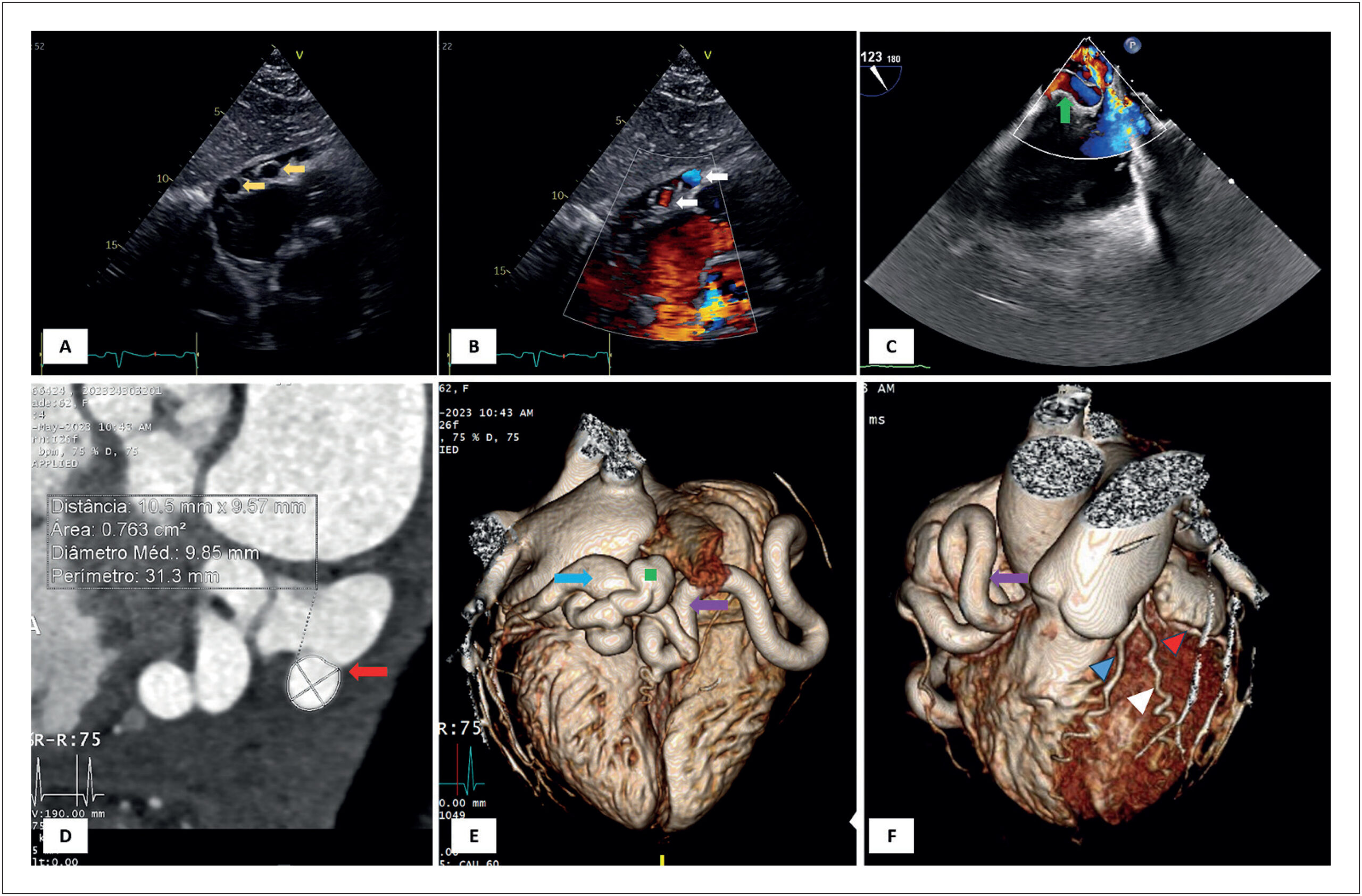
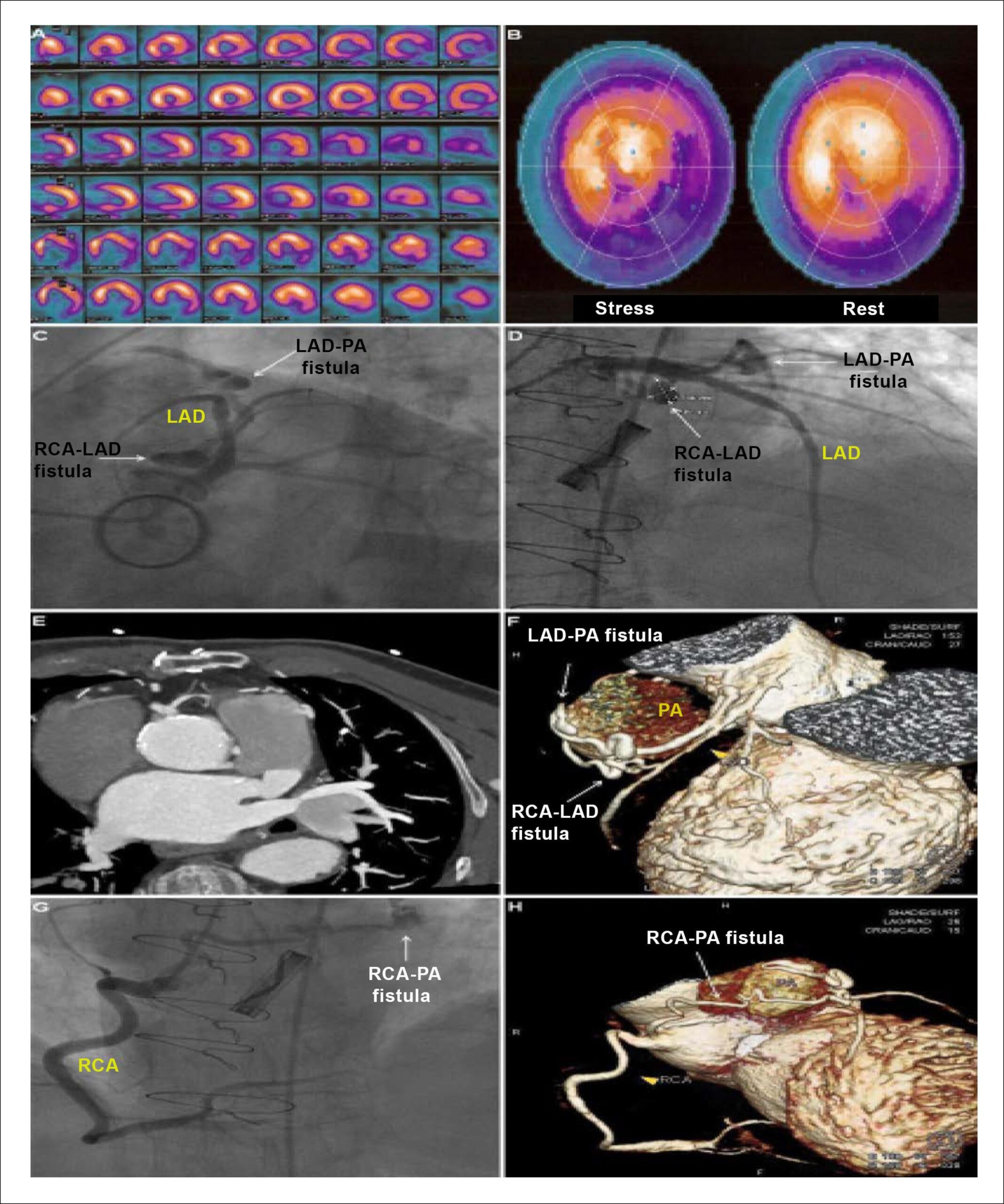
A 62-year-old woman, asymptomatic and without significant medical history, was referred to a routine transthoracic echocardiogram (TTE). The TTE had no abnormal findings but showed, in subcostal view, three round images adjacent to the lateral wall of the right atrium. Color Doppler showed that these were apparently vascularized (, panels A and B, supplemental and ). A transesophageal echocardiogram showed a giant right coronary artery (RCA), apparently originating from the RCA ostium, with turbulent flow inside (, panel C, supplemental ). It was not possible to observe shunts or fistulae in this imaging modality. Given the suspicion of a fistula to the RCA, computed tomography coronary angiography was performed, showing an ectatic RCA with a normal origin, a diameter of 10,5 mm, and a tortuous trajectory, with fistulation to the coronary sinus in its final segment ( panels D to F). Right heart catheterization demonstrated a non-significant left-to-right shunt (Qp: Qs ratio of 1.60). Cardiac magnetic resonance imaging (MRI) had no evidence of perfusion defects during hyperemia, thus excluding the coronary “steal phenomenon”. After a multidisciplinary team discussion, since the patient was asymptomatic and the fistula had no hemodynamic significance, no invasive treatment was performed at this time.

Coronary arteriovenous fistulas are rare, with an incidence of 0.002%., The majority of these are congenital and asymptomatic at presentation. Coronary steal can lead to several complications, including ischemia., The treatment approach remains controversial. The presence of symptoms, significant left-right shunt, and large fistula are the most frequent indications for percutaneous or surgical approach.,

[…]

  • Arteriovenous Fistula
  • Congenital Heart Defects
  • Coronary sinus
  • Coronary Vessels
Read Full Article
Creative Commons Attribution (CC BY) Creative Commons license
28/07/2025 DOI: 10.36660/abc.20240574i
Figure 1
ABC
Image

A Rare Coronary Anomaly in the Adult: Large-Caliber Arteriovenous Fistula

Pedro Garcia Brás et al. Duarte Cacela Rui Cerejo Rui Rodrigues

Case description

A 57-year-old Caucasian male patient with a past medical history of hypertension and pulmonary emphysema presented to the Cardiology outpatient clinic with exertional dyspnea, peripheral edema, orthopnea, and new-onset atrial fibrillation, with a III/VI continuous murmur, raising the possibility of an intrathoracic arteriovenous communication.

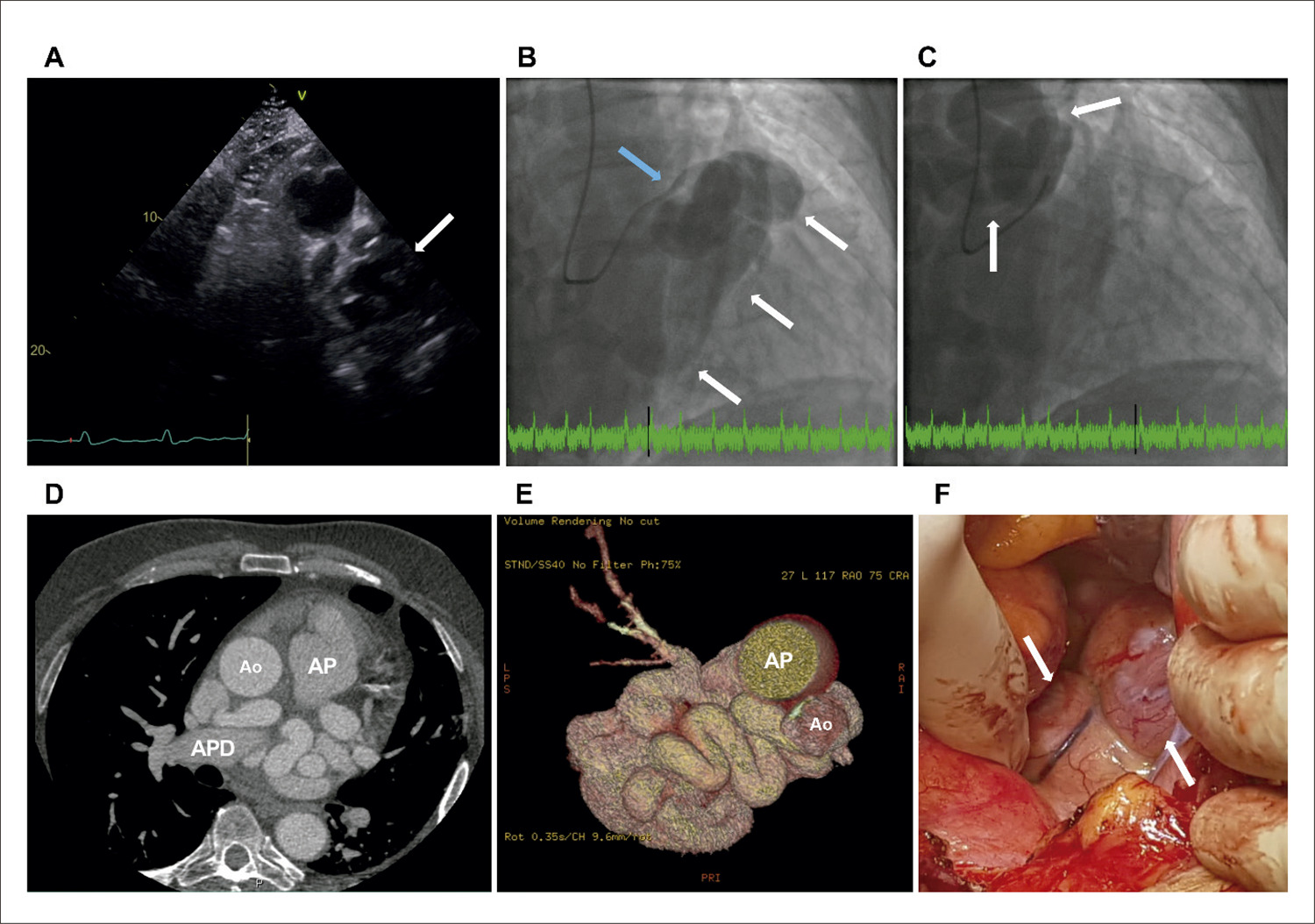
A transthoracic echocardiogram revealed a dilated left ventricle with mildly reduced global systolic function (ejection fraction of 44%), biatrial enlargement, and mild pericardial effusion. Notably, this study showed multiple ‘rosary-like’ folds (, , Supplementary Videos S1-S2) with color Doppler flow, revealing a possible coronary fistula. The Qp/Qs ratio was normal. ,

[…]

  • Arteriovenous Fistula
  • Computerized Tomography Coronary Angiogram
  • Coronary Angiography
  • Coronary Disease
  • Echocardiography
Read Full Article
Creative Commons Attribution (CC BY) Creative Commons license
26/02/2024 DOI: 10.36660/abc.20230307 Views 2
Figure 1
ABCIC
Image

Aortocaval Fistula: A Rare Complication of Ruptured Abdominal Aortic Aneurysm

Karoline Evelyn Barbosa Gomes et al. Eduardo Koltun Sanvesso Edwaldo Edner Joviliano Maurício Serra Ribeiro Elisa Helena Subtil Zampieri

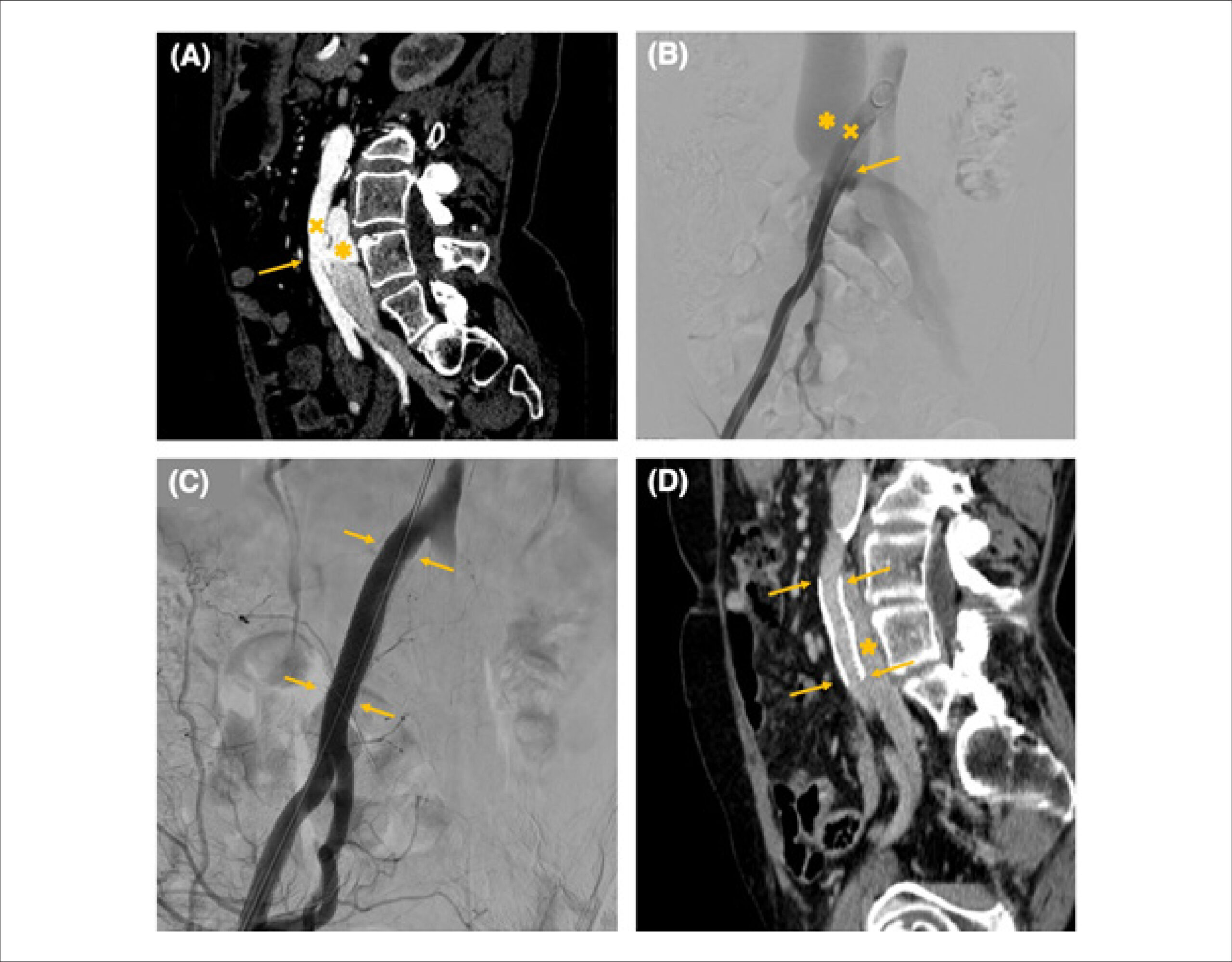
Aortocaval fistula is a rare complication of aortic aneurysm, occurring in approximately 0.2% to 6.04% of all abdominal aortic aneurysms. It may occur in the context of aortic aneurysm rupture, aortitis, Ehlers-Danlos syndrome, Marfan syndrome, or penetrating abdominal trauma., The classic clinical signs are abdominal pain, abdominal thrill, and symptoms of decompensated heart failure. It is usually diagnosed via computed tomography angiography, and typical findings include early contrast enhancement of the inferior vena cava (prior to contrast of the renal and hepatic parenchyma) and retrograde enhancement of the renal or iliac veins. Open surgical treatment has high associated morbidity and mortality, with reported rates of approximately 30%. With the advent of endovascular therapy, these rates have been reduced, with success rates as high as 96%.

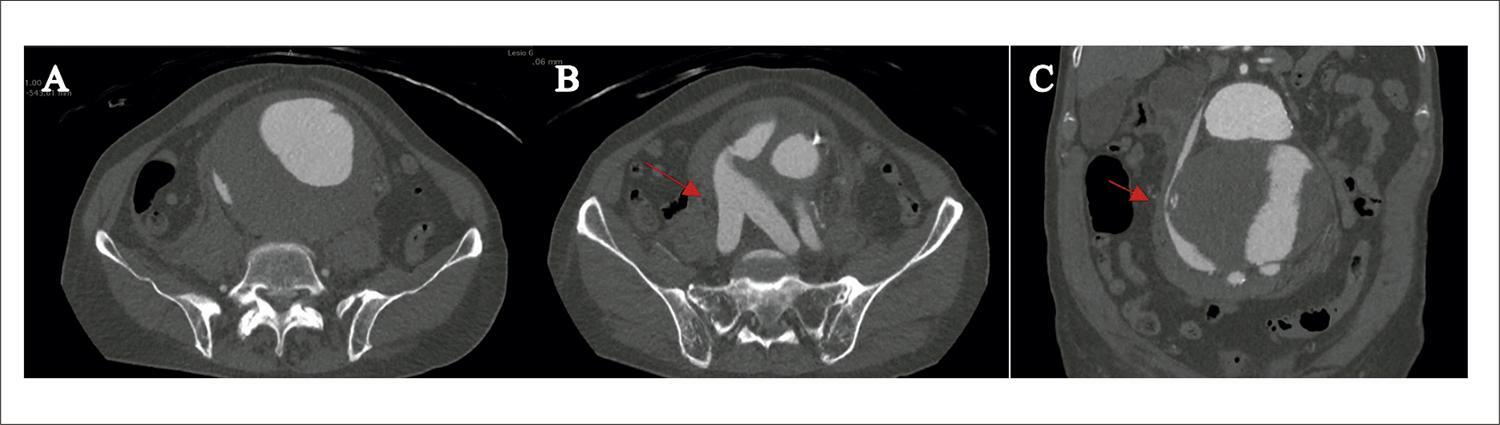
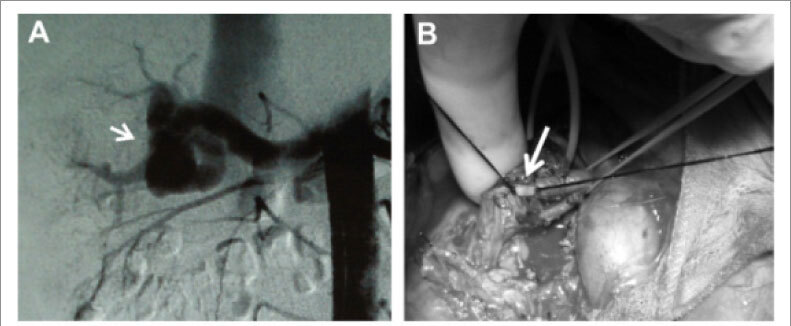
An 85-year-old male patient, with hypertension and history of tobacco use, was admitted to the emergency unit with a history of sudden onset of abdominal pain four days prior, associated with a pulsating abdominal mass in the hypogastric region. Tomography angiography of the total aorta was performed, showing a pararenal abdominal aortic aneurysm with a diameter of 11.5 cm, extending from the right renal artery to the aortic bifurcation, with signs of tamponade rupture into the retroperitoneum (), associated with an aortocaval fistula with a point of communication at the level of the iliac veins. In the tomography image, retrograde and early enhancement of the iliac veins was observed in the arterial phase ( and ). During clinical evaluation, the patient presented hemodynamic instability, and an emergency surgical procedure was indicated. Intraoperatively (), an aneurysm with signs of rupture was found, showing thrill on palpation. The patient evolved with refractory hypotension and died.

[…]

  • Aortic Rupture
  • Arteriovenous Fistula
  • Vascular Surgical Procedures
Read Full Article
Creative Commons Attribution (CC BY) Creative Commons license
10/05/2023 DOI: 10.36660/abcimg.2023369i Views 1
ABC
Editorial

Catheter Ablation Without Use of X-rays to Treat Atrial Fibrillation and Atrial Arrhythmia

Leandro Ioschpe Zimerman

Radiofrequency ablation is a well-established method and is increasingly used in the treatment of tachyarrhythmia. Traditionally, it is done by placing fluoroscopy-guided intracavitary catheters. Over the years, however, a number of problems related to exposure to radiation have become more evident, such as cataracts, genetic mutations, cancer. It is not by chance that the number of tumors in the left cerebral hemisphere, which receives the greatest amount of radiation, is greater than in the right hemisphere, in interventionists. It is important to remember that the risk of cancer is linear with exposure, without a defined threshold, and that there is a cumulative effect. In longer procedures, even severe skin lesions can develop in patients. To reduce these risks to patients and the medical staff, several actions were taken: fluoroscopic devices and methods with less radiation, personal protective equipment, such as an apron, thyroid protection, goggles, cap and even leaded gloves. Protection increased, but at the expense of orthopedic problems due to the weight that was carried, in so many procedures, for so long. New solutions were created, such as suspended lead aprons. But along with this increase in personal protection, the idea of effectively performing the procedure with the least amount of radiation possible gained momentum. For this, the development of three-dimensional mapping systems was the driving force required. This, associated with the use of ablation catheters by contact, made it possible to perform procedures, including complex ones, manipulating catheters and applying energy efficiently and safely, without requiring fluoroscopic imaging. In less complex procedures, especially on the right side of the heart, ablations without fluoroscopy were described. , In pregnant women, it has become a feasible solution. Even for the more complex procedures, “near-zero” fluoroscopy was recommended. “Near-zero” because it was still necessary to use fluoroscopy at times, such as transseptal puncture, for example.

At the same time, ultrasound has been increasingly used in invasive cardiac procedures and, more specifically, in electrophysiology. Vascular ultrasound is used to support vascular punctures and to reduce AV fistulas and pseudoaneurysms. Transesophageal echo is useful to rule out atrial appendage thrombus and to assist transseptal puncture. Even more useful is intracardiac echo, which assists transseptal puncture, shows pulmonary vein ostia, rules out pericardial effusion, shows recesses during cavotricuspid isthmus ablation and confirms adequate catheter contact.

[…]
  • Arteriovenous Fistula
  • Efficacy
  • Fluoroscopy
  • Personal Protective Equipment
  • Radio Waves/adverse effects
  • Radiofrequency Ablation/methods
  • Safety
Read Full Article
Creative Commons Attribution (CC BY) Creative Commons license
03/07/2020 DOI: 10.36660/abc.20200451 Views 1
Figure 1
ABC
Original Article

Does Mean Platelet Volume Decrease in the presence of Coronary Artery Fistula?

Isa Sincer et al. Yusuf Çekici Mehmet Cosgun Gulali Aktas … Yilmaz Gunes Emrah Erdal Asli Kurtar Mansiroglu Mehmet Inanır

Abstract

Background:

Coronary artery fistula (CAF) is an abnormal connection that links a coronary artery to a cardiac chamber or another major blood vessel. Several studies have shown the association between mean platelet volume (MPV) and cardiovascular diseases. In the literature, there is no previous study about the association between hematologic parameters and congenital CAF. For this reason, we aimed to investigate the association of MPV with CAF.

Methods:

70 patients with normal coronary arteries and 50 with coronary artery fistulas were included. Routine blood and biochemical parameters were measured before the arteriography. Differences between groups for continuous variables were analyzed with t- test or Mann-Whitney test. P values < 0.05 were considered significant. Regression analysis was used to find independent predictors of CAF.

Results:

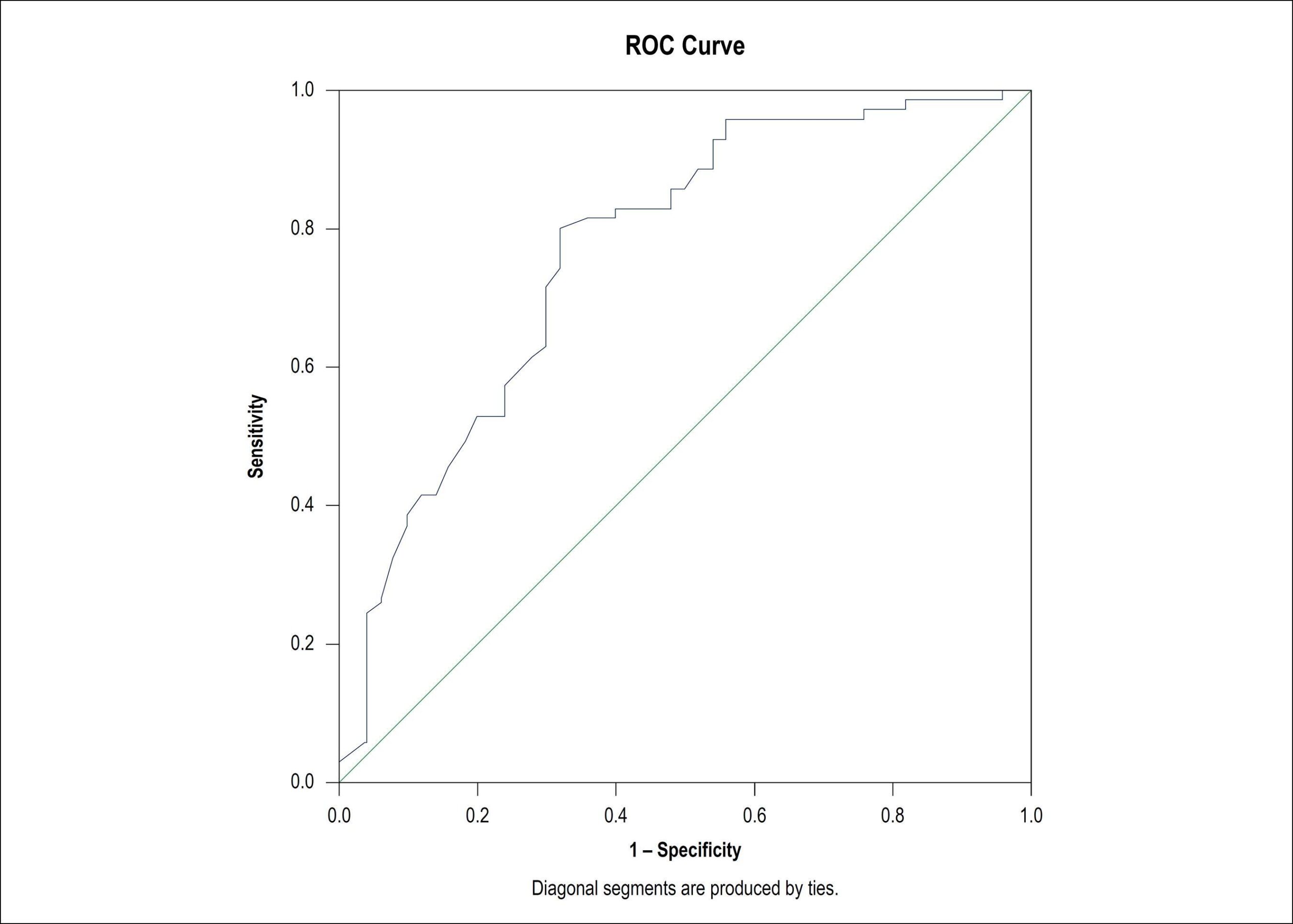
Baseline patient demographics, including age and clinical risk factors, were similar between the groups. Compared to the control group, median (IQR) High-density lipoprotein cholesterol (HDL) levels were significantly higher (p=0.04) and MPV levels were significantly lower in the CAF group (8.84 ± 1.71fL vs. 10.43 ± 1.34, p < 0.001). In the multivariate analysis, only MPV was a significant predictor of CAF (p < 0.001, 95% CI for OR: 0.438 (0.306-0.629). A negative correlation was found between MPV and fistulae in Pearson's correlation test (r: -0.454, p < 0.001). An MPV level of < 9,6 fL showed sensitivity, specificity, positive predictive value and negative predictive value of 80%, 68%, 71% and 78% respectively (AUC = 0.766, 95% CI, 0.678-0.854) for the prediction of CAF.

Conclusion:

The present study suggests that MPV may decrease in patients with CAF.

  • Angiography
  • Arteriovenous Fistula
  • Coronary Artery Disease
  • Endothelium / dysfunction
  • Mean Platelet Volume
Read Full Article
Creative Commons Attribution (CC BY) Creative Commons license
27/06/2019 DOI: 10.5935/abc.20190088
Arteriovenous and Intercoronary Fistulae Presenting as Heart Failure in an Adult
ABC
Image

Arteriovenous and Intercoronary Fistulae Presenting as Heart Failure in an Adult

Emmanouil Petrou et al. Chrysafios Girasis

A

[…]

  • Arteriovenous Fistula
  • Heart Failure
  • Heart Valve Diseases/surgery
Read Full Article
Creative Commons Attribution (CC BY) Creative Commons license
01/11/2015 DOI: 10.5935/abc.20150139
Figure 1
ABC
Case Report

Coronary Fistulas in a Patient with a Novel Long QT Syndrome Mutation

Rui Plácido et al. Nuno Cortez-Dias Arminda Veiga Cláudia Jorge … Gábriel Miltenberger-Miltény Fausto Pinto

Introduction

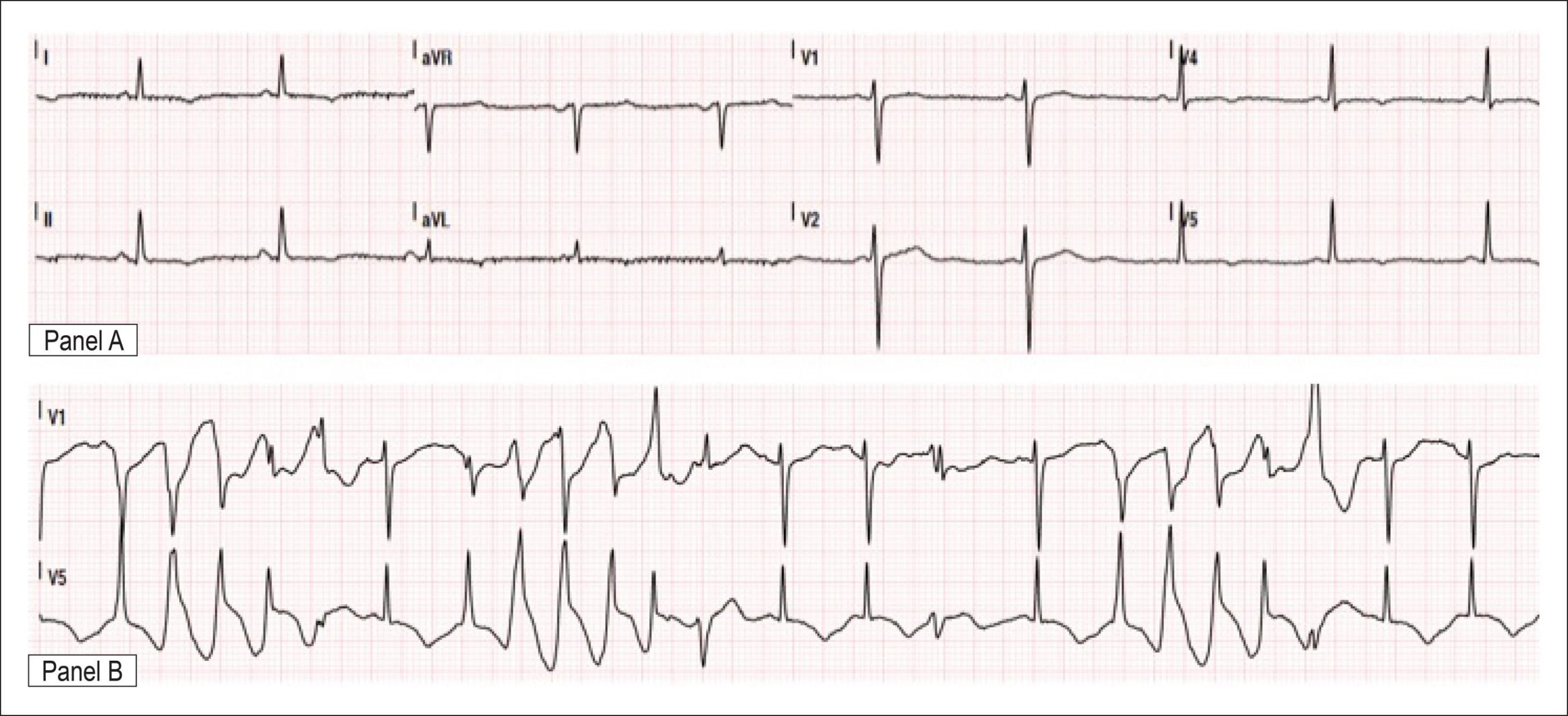
The congenital long QT syndrome (LQTS) is a genetic cardiac channelophathy with variable penetrance characterized by corrected QT (QTc) interval prolongation and predisposition to polymorphic ventricular tachycardia (PVT), which normally presents with syncope or sudden death. It can be caused by mutations in different ion channels, resulting in prolongation of the myocardial repolarization. The clinical course of LQTS throughout a patient’s lifetime is significantly influenced by the genotype and acquired factors that additionally compromise myocardial repolarization, including drug use, serum electrolyte abnormalities, autoimmune diseases, severe bradycardia, acute heart failure decompensation and myocardial ischemia.

This report presents the first description of PVT precipitated by myocardial ischemia secondary to multiple coronary fistulas in a patient with a novel LQTS-causing mutation.

[…]

  • Arteriovenous Fistula
  • Channelopathies
  • Coronary Vessel Anomalies
  • Long QT Syndrome
  • Tachycardia, Ventricular
  • Torsades de Pointes
Read Full Article
Creative Commons Attribution (CC BY) Creative Commons license
01/11/2015 DOI: 10.5935/abc.20150047 Views 1
Left Internal Mammary Artery Graft-to-Pulmonary Artery Fistula
ABC
Image

Left Internal Mammary Artery Graft-to-Pulmonary Artery Fistula

Emmanouil Petrou et al. Ioannis Iakovou

A

n

[…]

  • Arteriovenous Fistula
  • Mammary Arteries
  • Myocardial Revascularization
  • Pulmonary Artery
Read Full Article
Creative Commons Attribution (CC BY) Creative Commons license
01/11/2014 DOI: 10.5935/abc.20140160
Three cases of hypertension and Renal Arteriovenous fistula with a de novo fistula
ABC
Case Report

Three cases of hypertension and Renal Arteriovenous fistula with a de novo fistula

Natalia Correa Vieira Melo et al. Juliano Sacramento Mundim Elerson Carlos Costalonga Antonio Marmo Lucon … Jose Luiz Santello Jose Nery Praxedes

The Renal Arteriovenous Fistula (RAVF) is a rare and potentially reversible cause of hypertension and kidney and/or heart failure. The treatment of RAVF aims at preserving the most of the renal parenchyma and, concomitantly, eradicating the symptoms and hemodynamic effects caused by the RAVF. The present study reports three cases of RAVF, including one case of a de novo idiopathic RAVF, which presented with hypertension and kidney and/or heart failure and describes the therapeutic measures used to treat these patients as well as the outcomes.

  • Arteriovenous Fistula
  • Heart Failure
  • Hypertension
  • Renal Insufficiency
Read Full Article
Creative Commons Attribution (CC BY) Creative Commons license
20/07/2009 DOI: 10.1590/S0066-782X2009000500018 Views 1
Pulmonary hypertension secondary to coronary-to-pulmonary artery fistula
ABC
Case Report

Pulmonary hypertension secondary to coronary-to-pulmonary artery fistula

José Ramos Filho et al. Otávio Andrade Carneiro da Silva Diego Oliveira Vilarinho Filipe Giordano Guilherme … Jomara Custódio Ferreira Aline Miranda de Souza

The coronary fistula is an anomaly characterized by the communication between a coronary artery and a cardiac chamber, pulmonary artery, coronary sinus and pulmonary veins. It represents 0.2 to 0.4% of the congenital cardiopathies and 0.1% to 0.2% of the adult population submitted to coronary angiography. We report the clinical case of a 64-year-old female patient, whose anomaly was diagnosed during a clinical investigation due to chest discomfort, dyspnea and syncope; the surgical correction was indicated, with opening of the pulmonary artery through extracorporeal circulation.

  • Arteriovenous Fistula
  • Pulmonary Artery
  • Pulmonary Hypertension
Read Full Article
Creative Commons Attribution (CC BY) Creative Commons license
11/08/2008 DOI: 10.1590/S0066-782X2008001400013 Views 2
Traumatic fistula between the brachiocephalic trunk and the brachiocephalic vein due to gunshot wound
ABC
Relato de Caso

Traumatic fistula between the brachiocephalic trunk and the brachiocephalic vein due to gunshot wound

Pedro Paulo Martins de Oliveira et al. Orlando Petrucci Karlos Alexandre de Souza Vilarinho Lindemberg Mota Silveira … Reinaldo Wilson Vieira Domingo Marcolino Braile

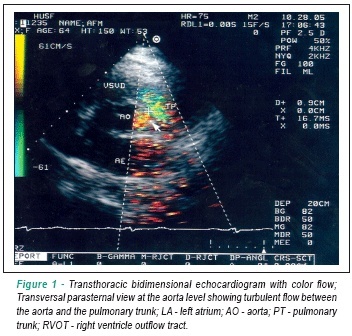
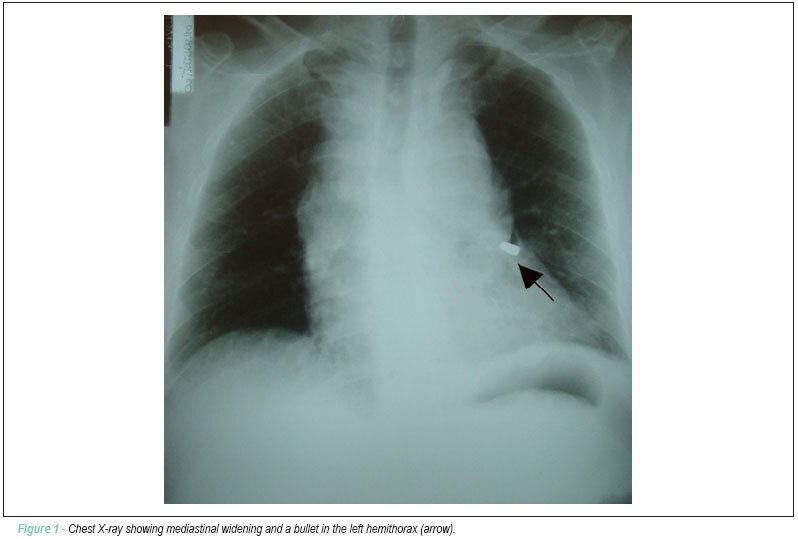
We describe the case of a 49-year old male patient who suffered a gunshot wound in the chest which transfixed the medial mediastinum. He was hemodynamically stable, but had tachycardia and tachypnea. He was submitted to integrated work-up with chest radiogram, transthoracic echocardiography, computerized chest tomography, and arteriography of the aortic arch. A traumatic fistula was evidenced between the brachiocephalic trunk and the brachiocephalic vein. Surgical repair was performed using extracorporeal circulation and deep hypothermia with total circulatory arrest. The patient progressed well and was discharged on the fifth day postoperatively.

  • Arteriovenous Fistula
  • brachiocephalic trunk
  • firearms
Read Full Article
Creative Commons Attribution (CC BY) Creative Commons license
29/05/2008 DOI: 10.1590/S0066-782X2008000400013

How to cite this article

EndNote RIS

Electronic Document Format (Vancouver)

Cazeiro DI, Ferreira D, Bruno L, Ferreira AI, Leitão J, Pinto FJ, Plácido R, et al. Never Stop Looking – the Heart is Not Always the Answer. Arquivos Brasileiros de Cardiologia 2026;123(1):e20250425.

Electronic Document Format (ABNT)

Cazeiro, Daniel Inácio; Ferreira, Diogo; Bruno, Lia; Ferreira, Ana Isabel; Leitão, João; Pinto, Fausto J.; Plácido, Rui. Never Stop Looking – the Heart is Not Always the Answer. Arquivos Brasileiros de Cardiologia, v. 123, n. 1, e20250425, Mar. 2026.

Electronic Document Format (APA)

Cazeiro, D. I., Ferreira, D., Bruno, L., Ferreira, A. I., Leitão, J., Pinto, F. J., & Plácido, R. (2026). Never Stop Looking – the Heart is Not Always the Answer. Arquivos Brasileiros de Cardiologia, 123(1), e20250425.

Electronic Document Format (ISO)

Cazeiro, Daniel Inácio and Ferreira, Diogo and Bruno, Lia and Ferreira, Ana Isabel and Leitão, João and Pinto, Fausto J. and Plácido, Rui. Never Stop Looking – the Heart is Not Always the Answer. Arquivos Brasileiros de Cardiologia [online]. 2026, vol. 123, n. 1, [cited 2026-10-14], e20250425. Available from: <https://journals.cardiol.br/en/article/never-stop-looking-the-heart-is-not-always-the-answer/>. ISSN 0066-782X

EndNote RIS

Electronic Document Format (Vancouver)

Neves IF, Ferreira A, Almeida I, Mano TB, Sousa L. Silent Giant: Right Coronary Artery Ectasia with a Hidden Fistula to the Coronary Sinus in an Asymptomatic Patient. Arquivos Brasileiros de Cardiologia 2025;122(6):e20240574.

Electronic Document Format (ABNT)

Neves, Inês Ferreira; Ferreira, André; Almeida, Inês; Mano, Tânia Branco; Sousa, Lídia de. Silent Giant: Right Coronary Artery Ectasia with a Hidden Fistula to the Coronary Sinus in an Asymptomatic Patient. Arquivos Brasileiros de Cardiologia, v. 122, n. 6, e20240574, Jul. 2025.

Electronic Document Format (APA)

Neves, I. F., Ferreira, A., Almeida, I., Mano, T. B., & Sousa, L. (2025). Silent Giant: Right Coronary Artery Ectasia with a Hidden Fistula to the Coronary Sinus in an Asymptomatic Patient. Arquivos Brasileiros de Cardiologia, 122(6), e20240574.

Electronic Document Format (ISO)

Neves, Inês Ferreira and Ferreira, André and Almeida, Inês and Mano, Tânia Branco and Sousa, Lídia de. Silent Giant: Right Coronary Artery Ectasia with a Hidden Fistula to the Coronary Sinus in an Asymptomatic Patient. Arquivos Brasileiros de Cardiologia [online]. 2025, vol. 122, n. 6, [cited 2026-10-14], e20240574. Available from: <https://journals.cardiol.br/en/article/silent-giant-right-coronary-artery-ectasia-with-a-hidden-fistula-to-the-coronary-sinus-in-an-asymptomatic-patient/>. ISSN 0066-782X

EndNote RIS

Electronic Document Format (Vancouver)

Brás PG, Cacela D, Cerejo R, Rodrigues R. A Rare Coronary Anomaly in the Adult: Large-Caliber Arteriovenous Fistula. Arquivos Brasileiros de Cardiologia 2024;121(1):e2023037.

Electronic Document Format (ABNT)

Brás, Pedro Garcia; Cacela, Duarte; Cerejo, Rui; Rodrigues, Rui. A Rare Coronary Anomaly in the Adult: Large-Caliber Arteriovenous Fistula. Arquivos Brasileiros de Cardiologia, v. 121, n. 1, e2023037, Feb. 2024.

Electronic Document Format (APA)

Brás, P. G., Cacela, D., Cerejo, R., & Rodrigues, R. (2024). A Rare Coronary Anomaly in the Adult: Large-Caliber Arteriovenous Fistula. Arquivos Brasileiros de Cardiologia, 121(1), e2023037.

Electronic Document Format (ISO)

Brás, Pedro Garcia and Cacela, Duarte and Cerejo, Rui and Rodrigues, Rui. A Rare Coronary Anomaly in the Adult: Large-Caliber Arteriovenous Fistula. Arquivos Brasileiros de Cardiologia [online]. 2024, vol. 121, n. 1, [cited 2026-10-14], e2023037. Available from: <https://journals.cardiol.br/en/article/a-rare-coronary-anomaly-in-the-adult-large-caliber-arteriovenous-fistula/>. ISSN 0066-782X

EndNote RIS

Electronic Document Format (Vancouver)

Gomes KEB, Sanvesso EK, Joviliano EE, Ribeiro MS, Zampieri EHS. Aortocaval Fistula: A Rare Complication of Ruptured Abdominal Aortic Aneurysm. ABC Imagem Cardiovascular 2023;36(2):e369.

Electronic Document Format (ABNT)

Gomes, Karoline Evelyn Barbosa; Sanvesso, Eduardo Koltun; Joviliano, Edwaldo Edner; Ribeiro, Maurício Serra; Zampieri, Elisa Helena Subtil. Aortocaval Fistula: A Rare Complication of Ruptured Abdominal Aortic Aneurysm. ABC Imagem Cardiovascular, v. 36, n. 2, e369, May. 2023.

Electronic Document Format (APA)

Gomes, K. E. B., Sanvesso, E. K., Joviliano, E. E., Ribeiro, M. S., & Zampieri, E. H. S. (2023). Aortocaval Fistula: A Rare Complication of Ruptured Abdominal Aortic Aneurysm. ABC Imagem Cardiovascular, 36(2), e369.

Electronic Document Format (ISO)

Gomes, Karoline Evelyn Barbosa and Sanvesso, Eduardo Koltun and Joviliano, Edwaldo Edner and Ribeiro, Maurício Serra and Zampieri, Elisa Helena Subtil. Aortocaval Fistula: A Rare Complication of Ruptured Abdominal Aortic Aneurysm. ABC Imagem Cardiovascular [online]. 2023, vol. 36, n. 2, [cited 2026-10-14], e369. Available from: <https://journals.cardiol.br/en/article/aortocaval-fistula-a-rare-complication-of-ruptured-abdominal-aortic-aneurysm/>. ISSN 2318-8219

EndNote RIS

Electronic Document Format (Vancouver)

Zimerman LI. Catheter Ablation Without Use of X-rays to Treat Atrial Fibrillation and Atrial Arrhythmia. Arquivos Brasileiros de Cardiologia 2020;114(6):1027-8.

Electronic Document Format (ABNT)

Zimerman, Leandro Ioschpe. Catheter Ablation Without Use of X-rays to Treat Atrial Fibrillation and Atrial Arrhythmia. Arquivos Brasileiros de Cardiologia, v. 114, n. 6, p. 1027-1028, Jul. 2020.

Electronic Document Format (APA)

Zimerman, L. I. (2020). Catheter Ablation Without Use of X-rays to Treat Atrial Fibrillation and Atrial Arrhythmia. Arquivos Brasileiros de Cardiologia, 114(6), 1027-1028.

Electronic Document Format (ISO)

Zimerman, Leandro Ioschpe. Catheter Ablation Without Use of X-rays to Treat Atrial Fibrillation and Atrial Arrhythmia. Arquivos Brasileiros de Cardiologia [online]. 2020, vol. 114, n. 6, [cited 2026-10-14], pp. 1027-1028. Available from: <https://journals.cardiol.br/en/article/catheter-ablation-without-use-of-x-rays-to-treat-atrial-fibrillation-and-atrial-arrhythmia/>. ISSN 0066-782X

EndNote RIS

Electronic Document Format (Vancouver)

Sincer I, Çekici Y, Cosgun M, Aktas G, Gunes Y, Erdal E, Mansiroglu AK, et al. Does Mean Platelet Volume Decrease in the presence of Coronary Artery Fistula?. Arquivos Brasileiros de Cardiologia 2019;113(1):71-6.

Electronic Document Format (ABNT)

Sincer, Isa; Çekici, Yusuf; Cosgun, Mehmet; Aktas, Gulali; Gunes, Yilmaz; Erdal, Emrah; Mansiroglu, Asli Kurtar; Inanır, Mehmet. Does Mean Platelet Volume Decrease in the presence of Coronary Artery Fistula?. Arquivos Brasileiros de Cardiologia, v. 113, n. 1, p. 71-76, Jun. 2019.

Electronic Document Format (APA)

Sincer, I., Çekici, Y., Cosgun, M., Aktas, G., Gunes, Y., Erdal, E., Mansiroglu, A. K., & Inanır, M. (2019). Does Mean Platelet Volume Decrease in the presence of Coronary Artery Fistula?. Arquivos Brasileiros de Cardiologia, 113(1), 71-76.

Electronic Document Format (ISO)

Sincer, Isa and Çekici, Yusuf and Cosgun, Mehmet and Aktas, Gulali and Gunes, Yilmaz and Erdal, Emrah and Mansiroglu, Asli Kurtar and Inanır, Mehmet. Does Mean Platelet Volume Decrease in the presence of Coronary Artery Fistula?. Arquivos Brasileiros de Cardiologia [online]. 2019, vol. 113, n. 1, [cited 2026-10-14], pp. 71-76. Available from: <https://journals.cardiol.br/en/article/does-mean-platelet-volume-decrease-in-the-presence-of-coronary-artery-fistula/>. ISSN 0066-782X

EndNote RIS

Electronic Document Format (Vancouver)

Petrou E, Girasis C. Arteriovenous and Intercoronary Fistulae Presenting as Heart Failure in an Adult. Arquivos Brasileiros de Cardiologia 2015;105(5):545-6.

Electronic Document Format (ABNT)

Petrou, Emmanouil; Girasis, Chrysafios. Arteriovenous and Intercoronary Fistulae Presenting as Heart Failure in an Adult. Arquivos Brasileiros de Cardiologia, v. 105, n. 5, p. 545-546, Oct. 2015.

Electronic Document Format (APA)

Petrou, E., & Girasis, C. (2015). Arteriovenous and Intercoronary Fistulae Presenting as Heart Failure in an Adult. Arquivos Brasileiros de Cardiologia, 105(5), 545-546.

Electronic Document Format (ISO)

Petrou, Emmanouil and Girasis, Chrysafios. Arteriovenous and Intercoronary Fistulae Presenting as Heart Failure in an Adult. Arquivos Brasileiros de Cardiologia [online]. 2015, vol. 105, n. 5, [cited 2026-10-14], pp. 545-546. Available from: <https://journals.cardiol.br/en/article/arteriovenous-and-intercoronary-fistulae-presenting-as-heart-failure-in-an-adult/>. ISSN 0066-782X

EndNote RIS

Electronic Document Format (Vancouver)

Plácido R, Cortez-Dias N, Veiga A, Jorge C, Miltenberger-Miltény G, Pinto F. Coronary Fistulas in a Patient with a Novel Long QT Syndrome Mutation. Arquivos Brasileiros de Cardiologia 2015;105(5):536-9.

Electronic Document Format (ABNT)

Plácido, Rui; Cortez-Dias, Nuno; Veiga, Arminda; Jorge, Cláudia; Miltenberger-Miltény, Gábriel; Pinto, Fausto. Coronary Fistulas in a Patient with a Novel Long QT Syndrome Mutation. Arquivos Brasileiros de Cardiologia, v. 105, n. 5, p. 536-539, Oct. 2015.

Electronic Document Format (APA)

Plácido, R., Cortez-Dias, N., Veiga, A., Jorge, C., Miltenberger-Miltény, G., & Pinto, F. (2015). Coronary Fistulas in a Patient with a Novel Long QT Syndrome Mutation. Arquivos Brasileiros de Cardiologia, 105(5), 536-539.

Electronic Document Format (ISO)

Plácido, Rui and Cortez-Dias, Nuno and Veiga, Arminda and Jorge, Cláudia and Miltenberger-Miltény, Gábriel and Pinto, Fausto. Coronary Fistulas in a Patient with a Novel Long QT Syndrome Mutation. Arquivos Brasileiros de Cardiologia [online]. 2015, vol. 105, n. 5, [cited 2026-10-14], pp. 536-539. Available from: <https://journals.cardiol.br/en/article/coronary-fistulas-in-a-patient-with-a-novel-long-qt-syndrome-mutation/>. ISSN 0066-782X

EndNote RIS

Electronic Document Format (Vancouver)

Petrou E, Iakovou I. Left Internal Mammary Artery Graft-to-Pulmonary Artery Fistula. Arquivos Brasileiros de Cardiologia 2014;103(5):e72.

Electronic Document Format (ABNT)

Petrou, Emmanouil; Iakovou, Ioannis. Left Internal Mammary Artery Graft-to-Pulmonary Artery Fistula. Arquivos Brasileiros de Cardiologia, v. 103, n. 5, e72, Oct. 2014.

Electronic Document Format (APA)

Petrou, E., & Iakovou, I. (2014). Left Internal Mammary Artery Graft-to-Pulmonary Artery Fistula. Arquivos Brasileiros de Cardiologia, 103(5), e72.

Electronic Document Format (ISO)

Petrou, Emmanouil and Iakovou, Ioannis. Left Internal Mammary Artery Graft-to-Pulmonary Artery Fistula. Arquivos Brasileiros de Cardiologia [online]. 2014, vol. 103, n. 5, [cited 2026-10-14], e72. Available from: <https://journals.cardiol.br/en/article/left-internal-mammary-artery-graft-to-pulmonary-artery-fistula/>. ISSN 0066-782X

EndNote RIS

Electronic Document Format (Vancouver)

Melo NCV, Mundim JS, Costalonga EC, Lucon AM, Santello JL, Praxedes JN. Three cases of hypertension and Renal Arteriovenous fistula with a de novo fistula. Arquivos Brasileiros de Cardiologia 2009;92(5):e63-5.

Electronic Document Format (ABNT)

Melo, Natalia Correa Vieira; Mundim, Juliano Sacramento; Costalonga, Elerson Carlos; Lucon, Antonio Marmo; Santello, Jose Luiz; Praxedes, Jose Nery. Three cases of hypertension and Renal Arteriovenous fistula with a de novo fistula. Arquivos Brasileiros de Cardiologia, v. 92, n. 5, p. e63-e65, Jul. 2009.

Electronic Document Format (APA)

Melo, N. C. V., Mundim, J. S., Costalonga, E. C., Lucon, A. M., Santello, J. L., & Praxedes, J. N. (2009). Three cases of hypertension and Renal Arteriovenous fistula with a de novo fistula. Arquivos Brasileiros de Cardiologia, 92(5), e63-e65.

Electronic Document Format (ISO)

Melo, Natalia Correa Vieira and Mundim, Juliano Sacramento and Costalonga, Elerson Carlos and Lucon, Antonio Marmo and Santello, Jose Luiz and Praxedes, Jose Nery. Three cases of hypertension and Renal Arteriovenous fistula with a de novo fistula. Arquivos Brasileiros de Cardiologia [online]. 2009, vol. 92, n. 5, [cited 2026-10-14], pp. e63-e65. Available from: <https://journals.cardiol.br/en/article/three-cases-of-hypertension-and-renal-arteriovenous-fistula-with-a-de-novo-fistula/>. ISSN 0066-782X

EndNote RIS

Electronic Document Format (Vancouver)

Ramos Filho J, Silva OAC, Vilarinho DO, Guilherme FG, Ferreira JC, Souza AM. Pulmonary hypertension secondary to coronary-to-pulmonary artery fistula. Arquivos Brasileiros de Cardiologia 2008;91(2):e11-3.

Electronic Document Format (ABNT)

Ramos Filho, José; Silva, Otávio Andrade Carneiro da; Vilarinho, Diego Oliveira; Guilherme, Filipe Giordano; Ferreira, Jomara Custódio; Souza, Aline Miranda de. Pulmonary hypertension secondary to coronary-to-pulmonary artery fistula. Arquivos Brasileiros de Cardiologia, v. 91, n. 2, p. e11-e13, Aug. 2008.

Electronic Document Format (APA)

Ramos Filho, J., Silva, O. A. C. , Vilarinho, D. O., Guilherme, F. G., Ferreira, J. C., & Souza, A. M. (2008). Pulmonary hypertension secondary to coronary-to-pulmonary artery fistula. Arquivos Brasileiros de Cardiologia, 91(2), e11-e13.

Electronic Document Format (ISO)

Ramos Filho, José and Silva, Otávio Andrade Carneiro da and Vilarinho, Diego Oliveira and Guilherme, Filipe Giordano and Ferreira, Jomara Custódio and Souza, Aline Miranda de. Pulmonary hypertension secondary to coronary-to-pulmonary artery fistula. Arquivos Brasileiros de Cardiologia [online]. 2008, vol. 91, n. 2, [cited 2026-10-14], pp. e11-e13. Available from: <https://journals.cardiol.br/en/article/pulmonary-hypertension-secondary-to-coronary-to-pulmonary-artery-fistula/>. ISSN 0066-782X

EndNote RIS

Electronic Document Format (Vancouver)

Oliveira PPM, Petrucci O, Vilarinho KAS, Silveira LM, Vieira RW, Braile DM. Traumatic fistula between the brachiocephalic trunk and the brachiocephalic vein due to gunshot wound. Arquivos Brasileiros de Cardiologia 2008;90(4):e21-3.

Electronic Document Format (ABNT)

Oliveira, Pedro Paulo Martins de; Petrucci, Orlando; Vilarinho, Karlos Alexandre de Souza; Silveira, Lindemberg Mota; Vieira, Reinaldo Wilson; Braile, Domingo Marcolino. Traumatic fistula between the brachiocephalic trunk and the brachiocephalic vein due to gunshot wound. Arquivos Brasileiros de Cardiologia, v. 90, n. 4, p. e21-e23, May. 2008.

Electronic Document Format (APA)

Oliveira, P. P. M. , Petrucci, O., Vilarinho, K. A. S., Silveira, L. M., Vieira, R. W., & Braile, D. M. (2008). Traumatic fistula between the brachiocephalic trunk and the brachiocephalic vein due to gunshot wound. Arquivos Brasileiros de Cardiologia, 90(4), e21-e23.

Electronic Document Format (ISO)

Oliveira, Pedro Paulo Martins de and Petrucci, Orlando and Vilarinho, Karlos Alexandre de Souza and Silveira, Lindemberg Mota and Vieira, Reinaldo Wilson and Braile, Domingo Marcolino. Traumatic fistula between the brachiocephalic trunk and the brachiocephalic vein due to gunshot wound. Arquivos Brasileiros de Cardiologia [online]. 2008, vol. 90, n. 4, [cited 2026-10-14], pp. e21-e23. Available from: <https://journals.cardiol.br/en/article/traumatic-fistula-between-the-brachiocephalic-trunk-and-the-brachiocephalic-vein-due-to-gunshot-wound/>. ISSN 0066-782X

  • About ABC Family
  • Internal Regulation
  • Editorial Board
  • Brazilian Society of Cardiology (SBC)

Issues

SBC Guidelines

  • Videos
  • Podcasts
  • News