ABC Family Arquivos Brasileiros de Cardiologia International Journal of Cardiovascular Sciences ABC Heart Failure & Cardiomyopathy ABC Imagem Cardiovascular
Português English
ABC Family
Português English
  • About
    • About ABC Family
    • Internal Regulation
    • Editorial Board
    • Brazilian Society of Cardiology (SBC)
  • Issues
  • SBC Guidelines
  • Content
    • Videos
    • Podcasts
    • News
  • About
    • About ABC Family
    • Internal Regulation
    • Editorial Board
    • Brazilian Society of Cardiology (SBC)
  • Issues
  • SBC Guidelines
  • Content
    • Videos
    • Podcasts
    • News

ABC Family

  • ABC Family
  • Arquivos Brasileiros de Cardiologia
  • International Journal of Cardiovascular Sciences
  • ABC Heart Failure & Cardiomyopathy
  • ABC Imagem Cardiovascular
Search in

No content found.

Journals
Ordering
Article types
Others

  1. Home
  2. Keyword: Adenosine
ABC
Editorial

The Adenosine System as a Target in the Search for a New Class of Antihypertensives

Roberto Jorge da Silva Franco

Cardiovascular (CV) complications are one of the main factors of early mortality in the current global scenario and have become a major challenge in the search to control their rise in both developing and developed countries. It has therefore become immensely important to look for different therapeutic possibilities and treatments for the growing burden of CV diseases. Adenosine receptors (AR) may be an innovative tool of choice in understanding the signaling mechanism that can lead to CV complications.

Adenosine mediation involves the activation of a family of four G protein-coupled AR: A1, A2A, A2B, and A3. A3AR is the only adenosine subtype to be overexpressed in inflammatory and cancer cells, thus making it a potential target for therapy. A3AR showed a dual nature under different pathophysiological conditions and could be protective/harmful in ischemic conditions, pro/anti-inflammatory, and pro/antitumor depending on the systems investigated. Until recently, the biggest and most intriguing challenge was understanding whether, and in which cases, selective A3 agonists or antagonists would be the best choice.

[…]

  • Adenosine
  • antihypertensive agents
  • Cardiovascular Diseases/complications
  • Hypertension
  • Mortality
Read Full Article
Creative Commons Attribution (CC BY) Creative Commons license
06/05/2024 DOI: 10.36660/abc.20240129 Views 1
Figure 1
ABC
Research Letter

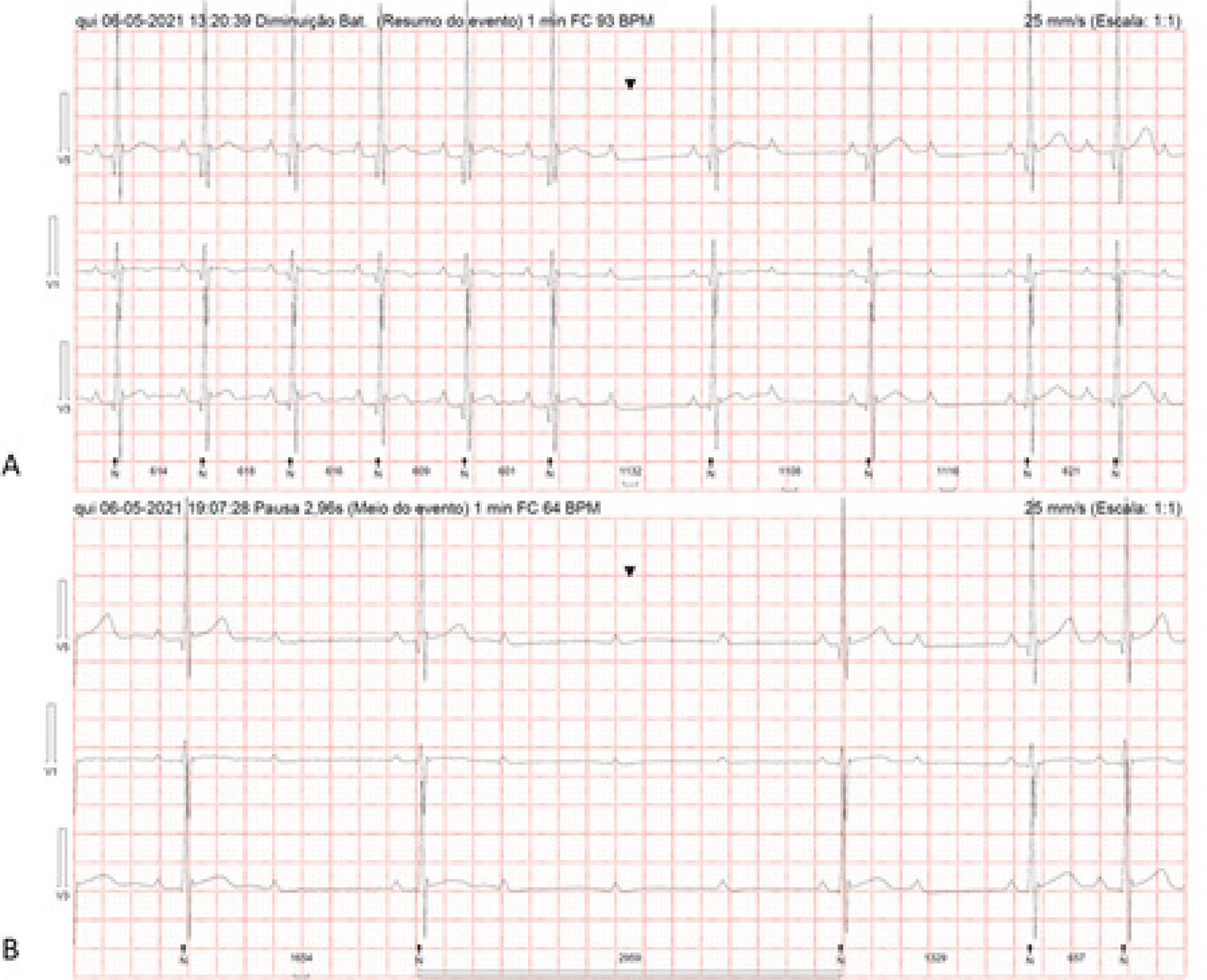
An Unusual Presentation of Lyme Carditis and Adenosine-Sensitive Atrioventricular Block

André Alexandre et al. Diana Ribeiro Maria João Sousa Hipólito Reis … João Silveira Severo Torres

Introduction

Lyme carditis (LC) is a relatively rare manifestation of the early disseminated stage of LC. , The most frequent presentation of LC is atrioventricular (AV) block characterized by rapid fluctuations in the grade and that occurs in approximately 80-90% of patients. , Other possible clinical manifestations of LC are myocarditis, pericarditis, dilated cardiomyopathy, and heart failure. , The clinical course is usually mild, short-term, and in most cases completely reversible after adequate antibiotic treatment. Indeed, high-grade AV block associated with Lyme disease typically resolves within the first ten days of antibiotic therapy. The authors present a case of a young female diagnosed with early disseminated Lyme disease and cardiac manifestations, in whom AV conduction disturbances persisted after four weeks of appropriate antibiotic treatment and led to an alternative diagnosis.

[…]

  • Adenosine
  • Atrioventricular block
  • cardiomyopathy
  • Lyme Disease
  • Theophyline
Read Full Article
Creative Commons Attribution (CC BY) Creative Commons license
05/02/2024 DOI: 10.36660/abc.20230228 Views 1
Figure 1
ABC
Original Article

Prognostic Value of Adenosine Stress Perfusion Cardiac Magnetic Resonance Imaging in Older Adults with Known or Suspected Coronary Artery Disease

Yodying Kaolawanich et al. Thananya Boonyasirinant

Abstract

Background:

There is limited data on the prognostic value of stress cardiac magnetic resonance (CMR) in older adults.

Objective:

To determine the prognostic value of adenosine stress CMR in older individuals with known or suspected coronary artery disease (CAD).

Methods:

Between 2010 and 2015, consecutive patients aged 65 years or older referred for adenosine stress CMR were followed for the occurrence of severe cardiac events (cardiac death and nonfatal myocardial infarction) and major adverse cardiovascular events (MACE) that also included hospitalization for heart failure and ischemic stroke. Univariate and multivariate analyses were performed to determine the prognostic value of myocardial ischemia, with p-value <0.05 considered statistically significant.

Results:

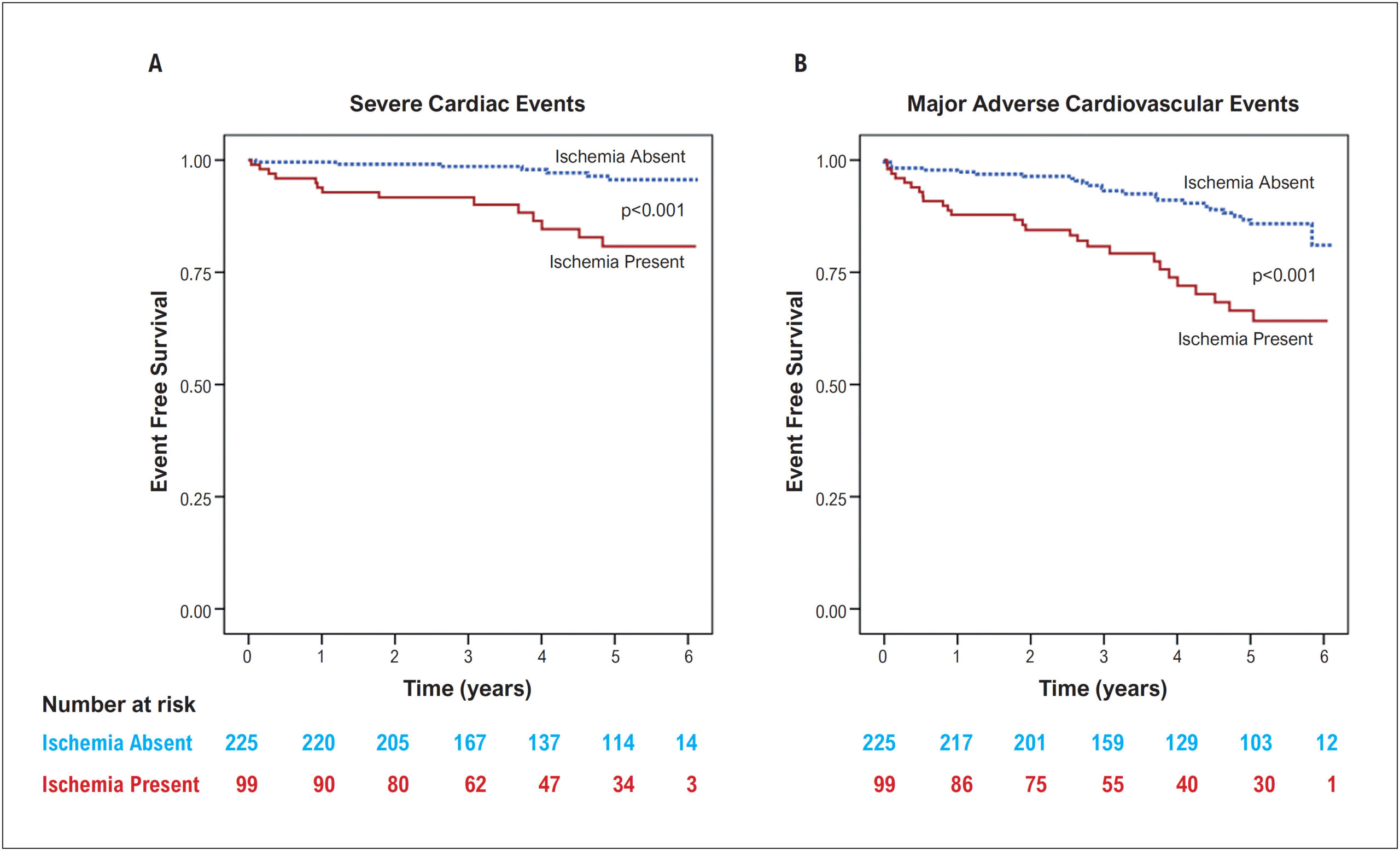
After a mean follow-up period of 50.4 months in 324 patients (48% male, 73±7 years), 21 severe cardiac events and 52 MACE occurred. Patients with myocardial ischemia (n=99) had significantly higher rates of severe cardiac events (HR 5.25 [95% CI 2.11-13.04], p<0.001) and MACE (HR 3.01 [95% CI 1.75-5.20], p<0.001) than those without ischemia. Multivariable analysis determined ischemia as an independent predictor of severe cardiac events (HR 3.14 [95% CI 1.22-8.07], p=0.02) and MACE (HR 1.91 [95%CI 1.02-3.59], p=0.04). Ischemia provided an incremental prognostic value over clinical factors and left ventricular ejection fraction for predicting severe cardiac events and MACE (p<0.01 for both). No severe adverse events occurred during or immediately after CMR examinations.

Conclusion:

Adenosine stress CMR is safe and has prognostic value in older adults with known or suspected CAD.

  • Adenosine
  • Cardiac Magnetic Resonance Imaging
  • Coronary Artery Disease
  • Elderly
  • stress test
Read Full Article
Creative Commons Attribution (CC BY) Creative Commons license
11/07/2022 DOI: 10.36660/abc.20210530
Figure 1
ABC
Review Article

Evaluation of Myocardial Perfusion by Computed Tomography – Principles, Technical Background and Recommendations

Tiago Augusto Magalhães et al. Roberto Caldeira Cury Rodrigo Julio Cerci José Rodrigues Parga Filho … Ilan Gottlieb Marcelo Souto Nacif Ibraim Masciarelli Pinto Carlos Eduardo Rochitte Fabio Vilas-Boas Paulo R. Schvartzman

Abstract

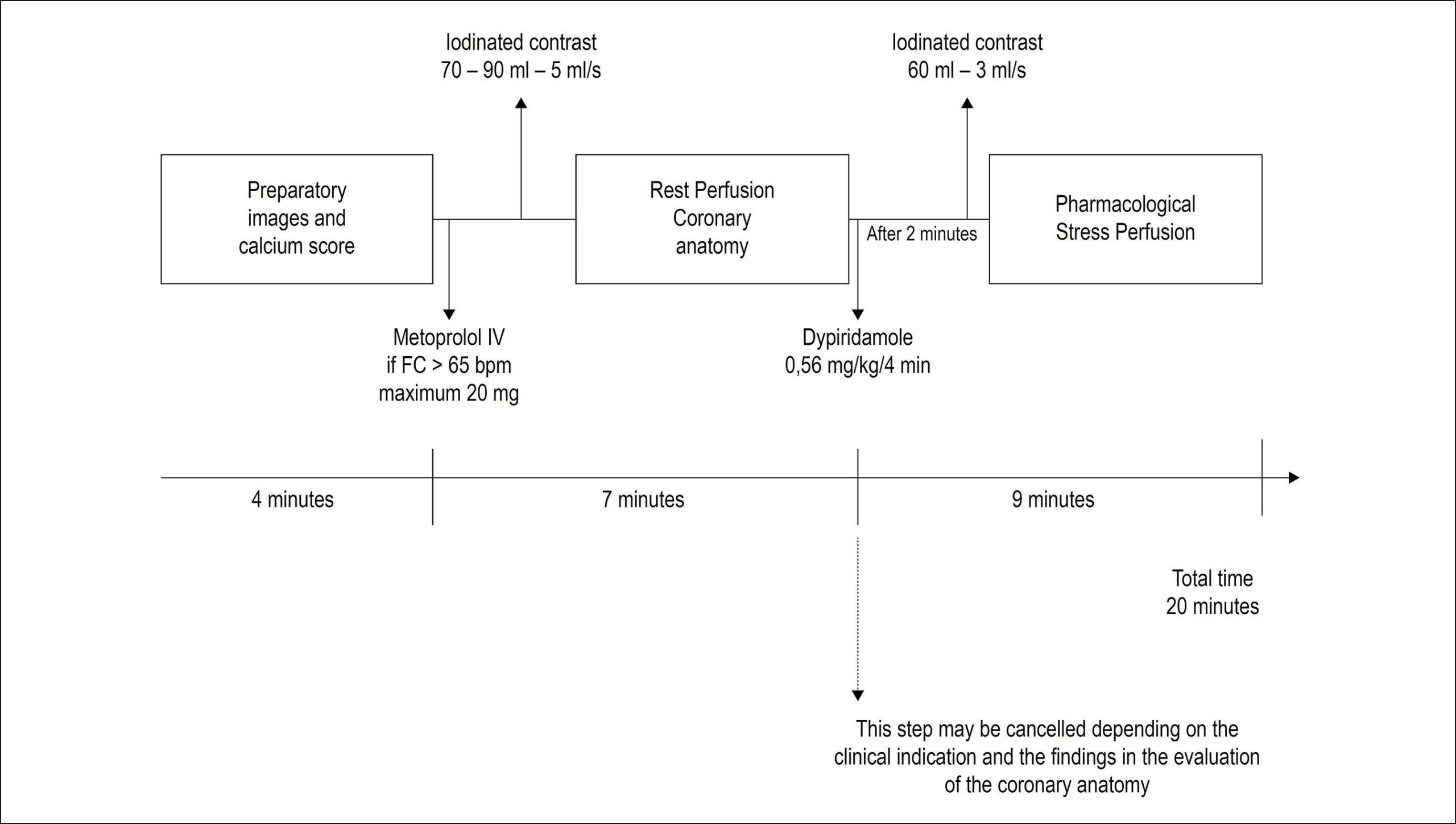
Coronary computed tomography angiography (CCTA) has gained a prominent role in the evaluation of coronary artery disease. However, its anatomical nature does not allow the evaluation of the functional repercussion of coronary obstructions. It has been made possible to evaluate Myocardial computed tomography perfusion (Myocardial CTP) recently, based on myocardial contrast changes related to coronary stenoses. Several studies have validated this technique against the anatomical reference method (cardiac catheterization) and other functional methods, including myocardial perfusion scintigraphy and fractional flow reserve. The Myocardial CTP is performed in conjunction with the CCTA, a combined analysis of anatomy and function. The stress phase (with assessment of myocardial perfusion) can be performed before or after the resting phase (assessment of resting perfusion and coronary arteries), and different acquisition parameters are proposed according to the protocol and type of equipment used. Stressors used are based on coronary vasodilation (e.g. dipyridamole, adenosine). Image interpretation, similar to other perfusion assessment methods, is based on the identification and quantification of myocardial perfusion defects. The integration of both perfusion and anatomical findings is fundamental for the examination interpretation algorithm, allowing to define if the stenoses identified are hemodynamically significant and may be related to myocardial ischemia.

  • Adenosine
  • Computed Tomography Angiography/ methods
  • Coronary Artery Disease
  • Dipyridamole
  • Myocardial Perfusion Imaging/methods
  • Vasodilatation
Read Full Article
Creative Commons Attribution (CC BY) Creative Commons license
04/11/2019 DOI: 10.5935/abc.20190217
Myocardial contrast echocardiography in patients with suspected or known coronary artery disease: comparison with myocardial nuclear scintigraphy
ABC
Artigo Original

Myocardial contrast echocardiography in patients with suspected or known coronary artery disease: comparison with myocardial nuclear scintigraphy

Marcia Carrinho et al. Alvaro Moraes Fernando Morcerf Caio Medeiros … Márcia Castier Luis José Martins Romeo

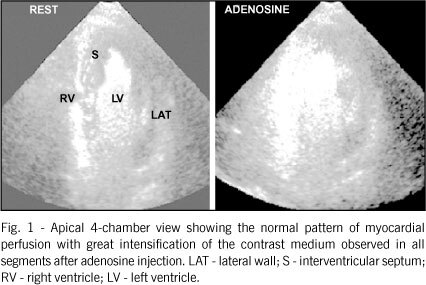
OBJECTIVE: To compare myocardial contrast echocardiography (MCE) using PESDA and adenosine in bolus (ADN) with myocardial nuclear scintigraphy (NS) in patients (pts) undergoing routine investigation with a high probability of having coronary artery disease. METHODS: This study comprised 125 pts (85 men) with 58.4 ± 10.6 years, who underwent MCE and NS within 4 weeks. MCE was performed with PESDA in a continuous infusion at rest and after administration of an adenosine bolus. The LV walls was divided into 3 territories related to the coronary arteries, in a total of 375 territories. MCE was normal when an increase in contrast intensity occurred after ADN. The reduction in contrast intensity at rest or after ADN was defined as an abnormal MCE result. NS was performed according to classical protocols. When compared per patient, both examinations were considered concordant when they were normal or abnormal, independent of its location. The comparison by territory was considered concordant when perfusion defects existed or not in the same territory. The chi-square test was used to determine the significance of concordance. RESULTS: In 106/125 pts, MCE and NS were concordant (84.8% – P < 0.001). Concordance occurred in 342/375 territories (91.2% – P < 0.001). For the LAD territory, concordance was 87.2%; for the RCA, 93.6%; and for the CX, 92.8% (P < 0.001). CONCLUSION: An excellent concordance exists between MCE and NS in assessing pts for coronary artery disease; therefore, MCE may represent a good alternative for assessing myocardial perfusion.

  • Adenosine
  • Coronary Artery Disease
  • echocardiographic contrast medium
  • Echocardiography
  • myocardial nuclear scintigraphy
  • myocardial perfusion
Read Full Article
Creative Commons Attribution (CC BY) Creative Commons license
11/11/2004 DOI: 10.1590/S0066-782X2004001700008
Influence of caffeine on blood pressure and platelet aggregation
ABC
Original Article

Influence of caffeine on blood pressure and platelet aggregation

José Wilson S. Cavalcante et al. Paulo Roberto M. Santos Jr. Marcus G. F. de Menezes Hedylamar Oliveira Marques … Leonardo Pessoa Cavalcante Walewska S. Pacheco

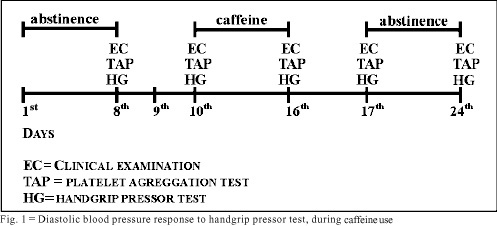
OBJECTIVE: Studies have demonstrated that methylxanthines, such as caffeine, are A1 and A2 adenosine receptor antagonists found in the brain, heart, lungs, peripheral vessels, and platelets. Considering the high consumption of products with caffeine in their composition, in Brazil and throughout the rest of the world, the authors proposed to observe the effects of this substance on blood pressure and platelet aggregation. METHODS: Thirteen young adults, ranging from 21 to 27 years of age, participated in this study. Each individual took 750mg/day of caffeine (250mg tid), over a period of seven days. The effects on blood pressure were analyzed through the pressor test with handgrip, and platelet aggregation was analyzed using adenosine diphosphate, collagen, and adrenaline. RESULTS: Diastolic pressure showed a significant increase 24 hours after the first intake (p<0.05). This effect, however, disappeared in the subsequent days. The platelet aggregation tests did not reveal statistically significant alterations, at any time during the study. CONCLUSION: The data suggest that caffeine increases diastolic blood pressure at the beginning of caffeine intake. This hypertensive effect disappears with chronic use. The absence of alterations in platelet aggregation indicates the need for larger randomized studies.

  • Adenosine
  • Blood Pressure
  • caffeine
Read Full Article
Creative Commons Attribution (CC BY) Creative Commons license
08/01/2002 DOI: 10.1590/S0066-782X2000000800002

How to cite this article

EndNote RIS

Electronic Document Format (Vancouver)

Franco RJS. The Adenosine System as a Target in the Search for a New Class of Antihypertensives. Arquivos Brasileiros de Cardiologia 2024;121(2):e20240129.

Electronic Document Format (ABNT)

Franco, Roberto Jorge da Silva. The Adenosine System as a Target in the Search for a New Class of Antihypertensives. Arquivos Brasileiros de Cardiologia, v. 121, n. 2, e20240129, May. 2024.

Electronic Document Format (APA)

Franco, R. J. S. (2024). The Adenosine System as a Target in the Search for a New Class of Antihypertensives. Arquivos Brasileiros de Cardiologia, 121(2), e20240129.

Electronic Document Format (ISO)

Franco, Roberto Jorge da Silva. The Adenosine System as a Target in the Search for a New Class of Antihypertensives. Arquivos Brasileiros de Cardiologia [online]. 2024, vol. 121, n. 2, [cited 2026-10-14], e20240129. Available from: <https://journals.cardiol.br/en/article/the-adenosine-system-as-a-target-in-the-search-for-a-new-class-of-antihypertensives/>. ISSN 0066-782X

EndNote RIS

Electronic Document Format (Vancouver)

Alexandre A, Ribeiro D, Sousa MJ, Reis H, Silveira J, Torres S. An Unusual Presentation of Lyme Carditis and Adenosine-Sensitive Atrioventricular Block. Arquivos Brasileiros de Cardiologia 2024;121(1):e20230228.

Electronic Document Format (ABNT)

Alexandre, André; Ribeiro, Diana; Sousa, Maria João; Reis, Hipólito; Silveira, João; Torres, Severo. An Unusual Presentation of Lyme Carditis and Adenosine-Sensitive Atrioventricular Block. Arquivos Brasileiros de Cardiologia, v. 121, n. 1, e20230228, Feb. 2024.

Electronic Document Format (APA)

Alexandre, A., Ribeiro, D., Sousa, M. J., Reis, H., Silveira, J., & Torres, S. (2024). An Unusual Presentation of Lyme Carditis and Adenosine-Sensitive Atrioventricular Block. Arquivos Brasileiros de Cardiologia, 121(1), e20230228.

Electronic Document Format (ISO)

Alexandre, André and Ribeiro, Diana and Sousa, Maria João and Reis, Hipólito and Silveira, João and Torres, Severo. An Unusual Presentation of Lyme Carditis and Adenosine-Sensitive Atrioventricular Block. Arquivos Brasileiros de Cardiologia [online]. 2024, vol. 121, n. 1, [cited 2026-10-14], e20230228. Available from: <https://journals.cardiol.br/en/article/an-unusual-presentation-of-lyme-carditis-and-adenosine-sensitive-atrioventricular-block/>. ISSN 0066-782X

EndNote RIS

Electronic Document Format (Vancouver)

Kaolawanich Y, Boonyasirinant T. Prognostic Value of Adenosine Stress Perfusion Cardiac Magnetic Resonance Imaging in Older Adults with Known or Suspected Coronary Artery Disease. Arquivos Brasileiros de Cardiologia 2022;119(1):97-106.

Electronic Document Format (ABNT)

Kaolawanich, Yodying; Boonyasirinant, Thananya. Prognostic Value of Adenosine Stress Perfusion Cardiac Magnetic Resonance Imaging in Older Adults with Known or Suspected Coronary Artery Disease. Arquivos Brasileiros de Cardiologia, v. 119, n. 1, p. 97-106, Jul. 2022.

Electronic Document Format (APA)

Kaolawanich, Y., & Boonyasirinant, T. (2022). Prognostic Value of Adenosine Stress Perfusion Cardiac Magnetic Resonance Imaging in Older Adults with Known or Suspected Coronary Artery Disease. Arquivos Brasileiros de Cardiologia, 119(1), 97-106.

Electronic Document Format (ISO)

Kaolawanich, Yodying and Boonyasirinant, Thananya. Prognostic Value of Adenosine Stress Perfusion Cardiac Magnetic Resonance Imaging in Older Adults with Known or Suspected Coronary Artery Disease. Arquivos Brasileiros de Cardiologia [online]. 2022, vol. 119, n. 1, [cited 2026-10-14], pp. 97-106. Available from: <https://journals.cardiol.br/en/article/prognostic-value-of-adenosine-stress-perfusion-cardiac-magnetic-resonance-imaging-in-older-adults-with-known-or-suspected-coronary-artery-disease/>. ISSN 0066-782X

EndNote RIS

Electronic Document Format (Vancouver)

Magalhães TA, Cury RC, Cerci RJ, Parga Filho JR, Gottlieb I, Nacif MS, Pinto IM, et al. Evaluation of Myocardial Perfusion by Computed Tomography – Principles, Technical Background and Recommendations. Arquivos Brasileiros de Cardiologia 2019;113(4):758-67.

Electronic Document Format (ABNT)

Magalhães, Tiago Augusto; Cury, Roberto Caldeira; Cerci, Rodrigo Julio; Parga Filho, José Rodrigues; Gottlieb, Ilan; Nacif, Marcelo Souto; Pinto, Ibraim Masciarelli; Rochitte, Carlos Eduardo; Vilas-Boas, Fabio; Schvartzman, Paulo R.. Evaluation of Myocardial Perfusion by Computed Tomography – Principles, Technical Background and Recommendations. Arquivos Brasileiros de Cardiologia, v. 113, n. 4, p. 758-767, Nov. 2019.

Electronic Document Format (APA)

Magalhães, T. A., Cury, R. C., Cerci, R. J., Parga Filho, J. R., Gottlieb, I., Nacif, M. S., Pinto, I. M., Rochitte, C. E., Vilas-Boas, F., & Schvartzman, P. R. (2019). Evaluation of Myocardial Perfusion by Computed Tomography – Principles, Technical Background and Recommendations. Arquivos Brasileiros de Cardiologia, 113(4), 758-767.

Electronic Document Format (ISO)

Magalhães, Tiago Augusto and Cury, Roberto Caldeira and Cerci, Rodrigo Julio and Parga Filho, José Rodrigues and Gottlieb, Ilan and Nacif, Marcelo Souto and Pinto, Ibraim Masciarelli and Rochitte, Carlos Eduardo and Vilas-Boas, Fabio and Schvartzman, Paulo R.. Evaluation of Myocardial Perfusion by Computed Tomography – Principles, Technical Background and Recommendations. Arquivos Brasileiros de Cardiologia [online]. 2019, vol. 113, n. 4, [cited 2026-10-14], pp. 758-767. Available from: <https://journals.cardiol.br/en/article/evaluation-of-myocardial-perfusion-by-computed-tomography-principles-technical-background-and-recommendations/>. ISSN 0066-782X

EndNote RIS

Electronic Document Format (Vancouver)

Carrinho M, Moraes A, Morcerf F, Medeiros C, Castier M, Romeo LJM. Myocardial contrast echocardiography in patients with suspected or known coronary artery disease: comparison with myocardial nuclear scintigraphy. Arquivos Brasileiros de Cardiologia 2004;83(5):414-8.

Electronic Document Format (ABNT)

Carrinho, Marcia; Moraes, Alvaro; Morcerf, Fernando; Medeiros, Caio; Castier, Márcia; Romeo, Luis José Martins. Myocardial contrast echocardiography in patients with suspected or known coronary artery disease: comparison with myocardial nuclear scintigraphy. Arquivos Brasileiros de Cardiologia, v. 83, n. 5, p. 414-418, Nov. 2004.

Electronic Document Format (APA)

Carrinho, M., Moraes, A., Morcerf, F., Medeiros, C., Castier, M., & Romeo, L. J. M. (2004). Myocardial contrast echocardiography in patients with suspected or known coronary artery disease: comparison with myocardial nuclear scintigraphy. Arquivos Brasileiros de Cardiologia, 83(5), 414-418.

Electronic Document Format (ISO)

Carrinho, Marcia and Moraes, Alvaro and Morcerf, Fernando and Medeiros, Caio and Castier, Márcia and Romeo, Luis José Martins. Myocardial contrast echocardiography in patients with suspected or known coronary artery disease: comparison with myocardial nuclear scintigraphy. Arquivos Brasileiros de Cardiologia [online]. 2004, vol. 83, n. 5, [cited 2026-10-14], pp. 414-418. Available from: <https://journals.cardiol.br/en/article/myocardial-contrast-echocardiography-in-patients-with-suspected-or-known-coronary-artery-disease-comparison-with-myocardial-nuclear-scintigraphy/>. ISSN 0066-782X

EndNote RIS

Electronic Document Format (Vancouver)

Cavalcante JWS, Santos Jr. PRM, Menezes MGF, Marques HO, Cavalcante LP, Pacheco WS. Influence of caffeine on blood pressure and platelet aggregation. Arquivos Brasileiros de Cardiologia 2002;75(2):102-5.

Electronic Document Format (ABNT)

Cavalcante, José Wilson S.; Santos Jr., Paulo Roberto M.; Menezes, Marcus G. F. de; Marques, Hedylamar Oliveira; Cavalcante, Leonardo Pessoa; Pacheco, Walewska S.. Influence of caffeine on blood pressure and platelet aggregation. Arquivos Brasileiros de Cardiologia, v. 75, n. 2, p. 102-105, Jan. 2002.

Electronic Document Format (APA)

Cavalcante, J. W. S., Santos Jr., P. R. M., Menezes, M. G. F. , Marques, H. O., Cavalcante, L. P., & Pacheco, W. S. (2002). Influence of caffeine on blood pressure and platelet aggregation. Arquivos Brasileiros de Cardiologia, 75(2), 102-105.

Electronic Document Format (ISO)

Cavalcante, José Wilson S. and Santos Jr., Paulo Roberto M. and Menezes, Marcus G. F. de and Marques, Hedylamar Oliveira and Cavalcante, Leonardo Pessoa and Pacheco, Walewska S.. Influence of caffeine on blood pressure and platelet aggregation. Arquivos Brasileiros de Cardiologia [online]. 2002, vol. 75, n. 2, [cited 2026-10-14], pp. 102-105. Available from: <https://journals.cardiol.br/en/article/influence-of-caffeine-on-blood-pressure-and-platelet-aggregation/>. ISSN 0066-782X

  • About ABC Family
  • Internal Regulation
  • Editorial Board
  • Brazilian Society of Cardiology (SBC)

Issues

SBC Guidelines

  • Videos
  • Podcasts
  • News