ABC Family Arquivos Brasileiros de Cardiologia International Journal of Cardiovascular Sciences ABC Heart Failure & Cardiomyopathy ABC Imagem Cardiovascular
Português English
ABC Family
Português English
  • About
    • About ABC Family
    • Internal Regulation
    • Editorial Board
    • Brazilian Society of Cardiology (SBC)
  • Issues
  • SBC Guidelines
  • Content
    • Videos
    • Podcasts
    • News
  • About
    • About ABC Family
    • Internal Regulation
    • Editorial Board
    • Brazilian Society of Cardiology (SBC)
  • Issues
  • SBC Guidelines
  • Content
    • Videos
    • Podcasts
    • News

ABC Family

  • ABC Family
  • Arquivos Brasileiros de Cardiologia
  • International Journal of Cardiovascular Sciences
  • ABC Heart Failure & Cardiomyopathy
  • ABC Imagem Cardiovascular
Search in

No content found.

Journals
Ordering
Article types
Others

  1. Home
  2. Keyword: Cholesterol, LDL
Attainment of LDL-Cholesterol Goals in Patients with Previous Myocardial Infarction: A Real-World Cross-Sectional Analysis
ABC
Original Article

Attainment of LDL-Cholesterol Goals in Patients with Previous Myocardial Infarction: A Real-World Cross-Sectional Analysis

Daniel A. Gomes et al. Mariana Sousa Paiva Pedro Freitas Francisco Albuquerque … Maria Rita Lima Rita Reis Santos João Presume Marisa Trabulo Carlos Aguiar Jorge Ferreira António M. Ferreira Miguel Mendes

Abstract

Background:

The European Society of Cardiology guidelines recommend an LDL-cholesterol (LDL-C) < 55 mg/dL for patients with established cardiovascular disease. While the Friedewald equation to estimate LDL-C is still widely used, the newer Martin-Hopkins equation has shown greater accuracy.

Objectives:

We aimed to assess: A) the proportion of patients reaching LDL-C goal and the therapies used in a tertiary center; B) the impact of using the Martin-Hopkins method instead of Friedewald’s on the proportion of controlled patients.

Methods:

A single-center cross-sectional study including consecutive post-myocardial infarction patients followed by 20 cardiologists in a tertiary hospital. Data was collected retrospectively from clinical appointments that took place after April 2022. For each patient, the LDL-C levels and attainment of goals were estimated from an ambulatory lipid profile using both Friedewald and Martin-Hopkins equations. A two-tailed p-value of < 0.05 was considered statistically significant for all tests.

Results:

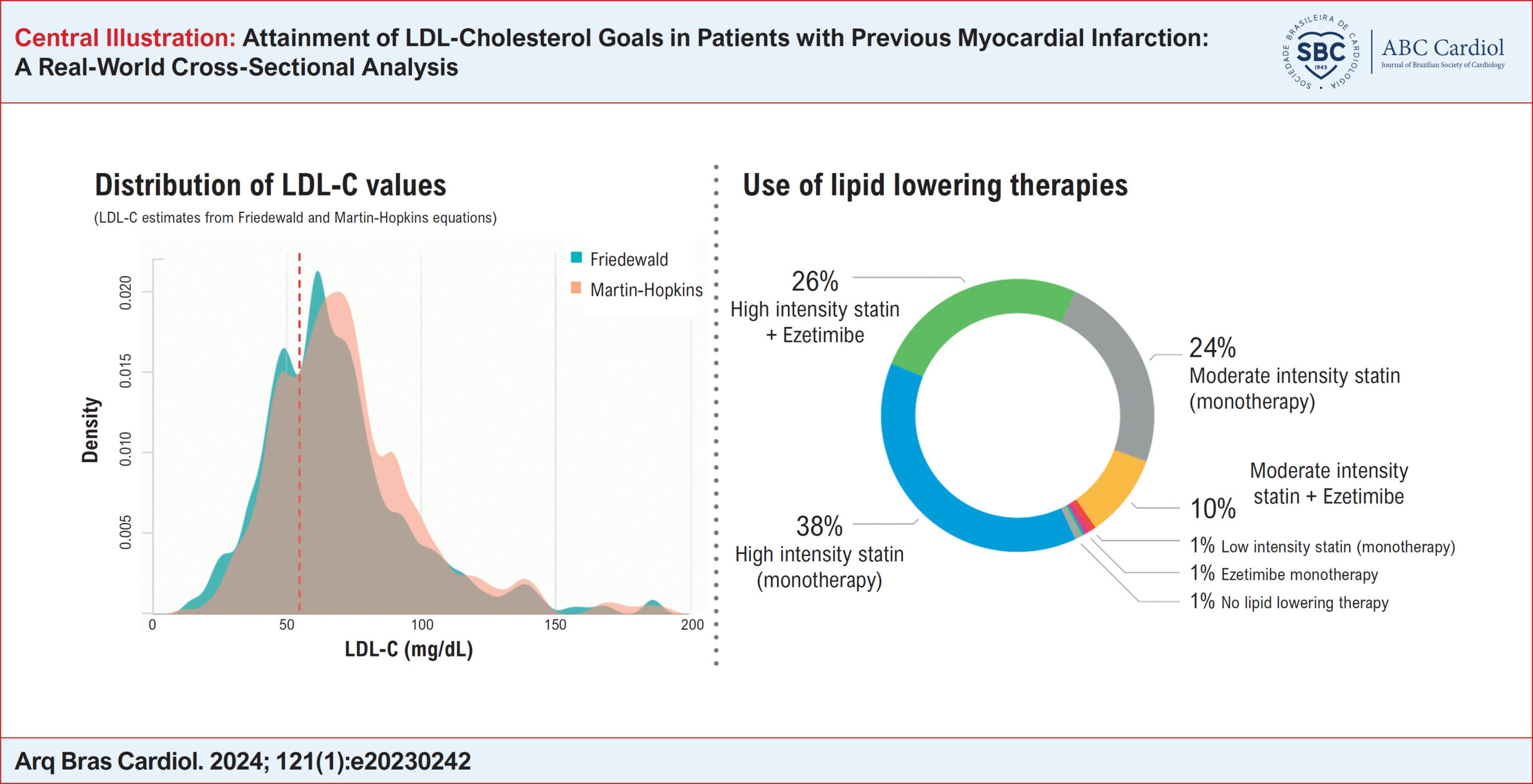
Overall, 400 patients were included (aged 67 ± 13 years, 77% male). Using Friedewald’s equation, the median LDL-C under therapy was 64 (50-81) mg/dL, and 31% had LDL-C within goals. High-intensity statins were used in 64% of patients, 37% were on ezetimibe, and 0.5% were under PCSK9 inhibitors. Combination therapy of high-intensity statin + ezetimibe was used in 102 patients (26%). Applying the Martin-Hopkins method would reclassify a total of 31 patients (7.8%). Among those deemed controlled by Friedewald’s equation, 27 (21.6%) would have a Martin-Hopkins’ LDL-C above goals.

Conclusions:

Less than one-third of post-myocardial infarction patients had LDL-C within the goal. Applying the Martin-Hopkins equation would reclassify one-fifth of presumably controlled patients into the non-controlled group.
  • Atherosclerosis
  • Cholesterol, LDL
  • Secondary Prevention
Read Full Article
Creative Commons Attribution (CC BY) Creative Commons license
08/03/2024 DOI: 10.36660/abc.20230242 Views 1
Two-Year Follow-Up of Chronic Ischemic Heart Disease Patients in a Specialized Center in Brazil
ABC
Original Article

Two-Year Follow-Up of Chronic Ischemic Heart Disease Patients in a Specialized Center in Brazil

Eduardo Martelli Moreira et al. Henrique Trombini Pinesi Eduardo Bello Martins Fábio Grunspun Pitta … Paula Mathias Paulino Bolta Carlos Alexandre Wainrober Segre Desiderio Favarato Fabiana Hanna Rached Whady Armindo Hueb Eduardo Gomes Lima Roberto Kalil Filho Cibele Larrosa Garzillo Carlos Vicente Serrano Jr

Abstract

Background

The incidence of cardiovascular events in patients with chronic ischemic heart disease (CIHD) may vary significantly among countries. Although populous, Brazil is often underrepresented in international records.

Objectives

This study aimed to describe the quality of care and the two-year incidence of cardiovascular events and associated prognostic factors in CIHD patients in a tertiary public health care center in Brazil.

Methods

Patients with CIHD who reported for clinical evaluation at Instituto do Coração (São Paulo, Brazil) were registered and followed for two years. The primary endpoint was a composite of myocardial infarction (MI), stroke, or death. A significance level of 0.05 was adopted.

Results

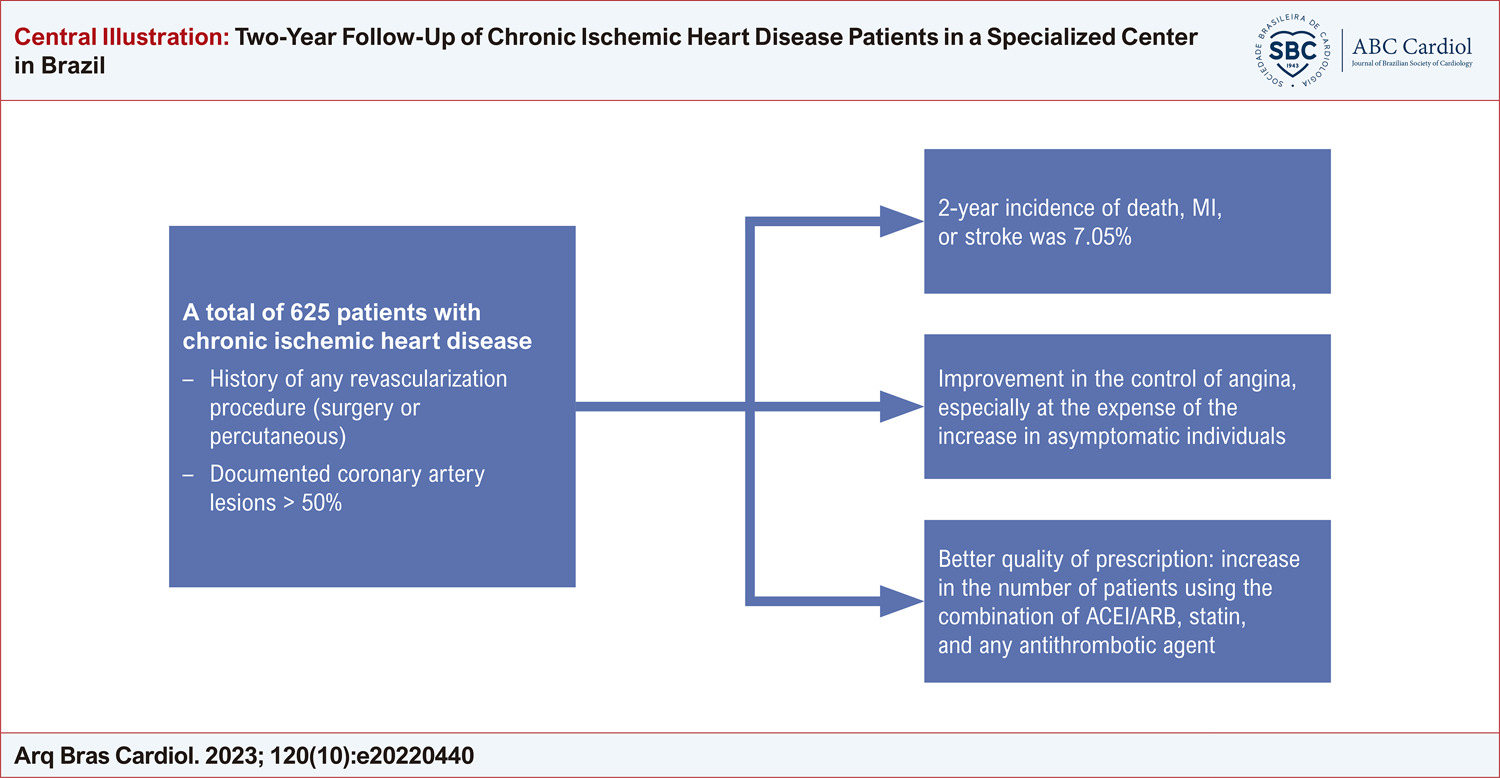
From January 2016 to December 2018, 625 participants were included in the study. Baseline characteristics show that 33.1% were women, median age 66.1 [59.6 – 71.9], 48.6% had diabetes, 83.1% had hypertension, 62.6% had previous MI, and 70.4% went through some revascularization procedure. At a median follow-up (FU) of 881 days, we noted 37 (7.05%) primary endpoints. After adjustments, age, previous stroke, and LDL-cholesterol were independently associated with the primary endpoint. Comparing baseline versus FU, participants experienced relief of angina based on the Canadian Cardiovascular Society (CCS) scale according to the following percentages: 65.7% vs. 81.7% were asymptomatic and 4.2% vs. 2.9% CCS 3 or 4 (p < 0.001). They also experienced better quality of medication prescription: 65.8% vs. 73.6% (p < 0.001). However, there was no improvement in LDL-cholesterol or blood pressure control.

Conclusion

This study shows that CIHD patients had a two-year incidence of the primary composite endpoint of 7.05%, and the reduction of LDL-cholesterol was the only modifiable risk factor associated with prognosis.

  • Angina Pectoris
  • Cholesterol, LDL
  • Myocardial Infarction
  • Myocardial Ischemia
  • Quality of Health Care
Read Full Article
Creative Commons Attribution (CC BY) Creative Commons license
27/10/2023 DOI: 10.36660/abc.20220440 Views 2
ABC
Editorial

Friedewald, Martin/Hopkins, or Sampson/NIH: Which is the Best Method to Estimate LDL-Cholesterol?

Fernando Cesena

Atherosclerotic cardiovascular disease (ASCVD) is the main cause of death in Brazil and most of the world. Reduction in low-density lipoprotein cholesterol (LDL-c) is the first lipid goal to prevent ASCVD. The decision on the initiation or intensification of LDL-c lowering drug therapy is based on the risk of events and the LDL-c level, so an accurate determination of LDL-c is highly desirable.

The gold standard method to determine the plasma concentration of LDL-c is β-quantification, an expensive, time-consuming procedure based on ultracentrifugation and precipitation. Direct methods that use proprietary chemicals instead of ultracentrifugation are also time-consuming and costly. Moreover, they lack standardization, and the accuracy is not always good.

[…]

  • Cholesterol, LDL
  • Hypercholesterolemia
  • Hyperlipidemias
  • Laboratory Tests/methods
Read Full Article
Creative Commons Attribution (CC BY) Creative Commons license
05/08/2022 DOI: 10.36660/abc.20220455 Views 1
Figure 1
ABC
Original Article

Comparison of Novel Martin/Hopkins and Sampson Equations for Calculation of Low-Density Lipoprotein Cholesterol in Diabetic Patients

Abdulrahman Naser et al. Khagani Isgandarov Tolga Sinan Güvenç Rengin Çetin Güvenç Müslüm Şahin

Abstract

Background

The accurate determination of low-density lipoprotein cholesterol (LDL-C) is important to reach guideline-recommended LDL-C concentrations and to reduce adverse cardiovascular outcomes in diabetic patients. The commonly used Friedewald equation (LDL-Cf), gives inaccurate results in diabetic patients due to accompanying diabetic dyslipidemia. Recently two new equations – Martin/Hopkins (LDL-Cmh) and Sampson (LDL-Cs) – were developed to improve the accuracy of LDL-C estimation, but data are insufficient to suggest the superiority of one equation over the other one.

Objective

The present study compared the accuracy and clinical usefulness of novel Martin/Hopkins and Sampson equations in diabetic patients.

Methods

This study included 402 patients with diabetes. Patients’ cardiovascular risk and LDL-C targets were calculated per European guidelines. Calculated LDL-Cmh, LDL-Cs, and LDL-Cf concentrations were compared with direct LDL-C concentration (LDL-Cd) to test agreement between these equations and LDL-Cd. A p-value <0.05 was accepted as statistically significant.

Results

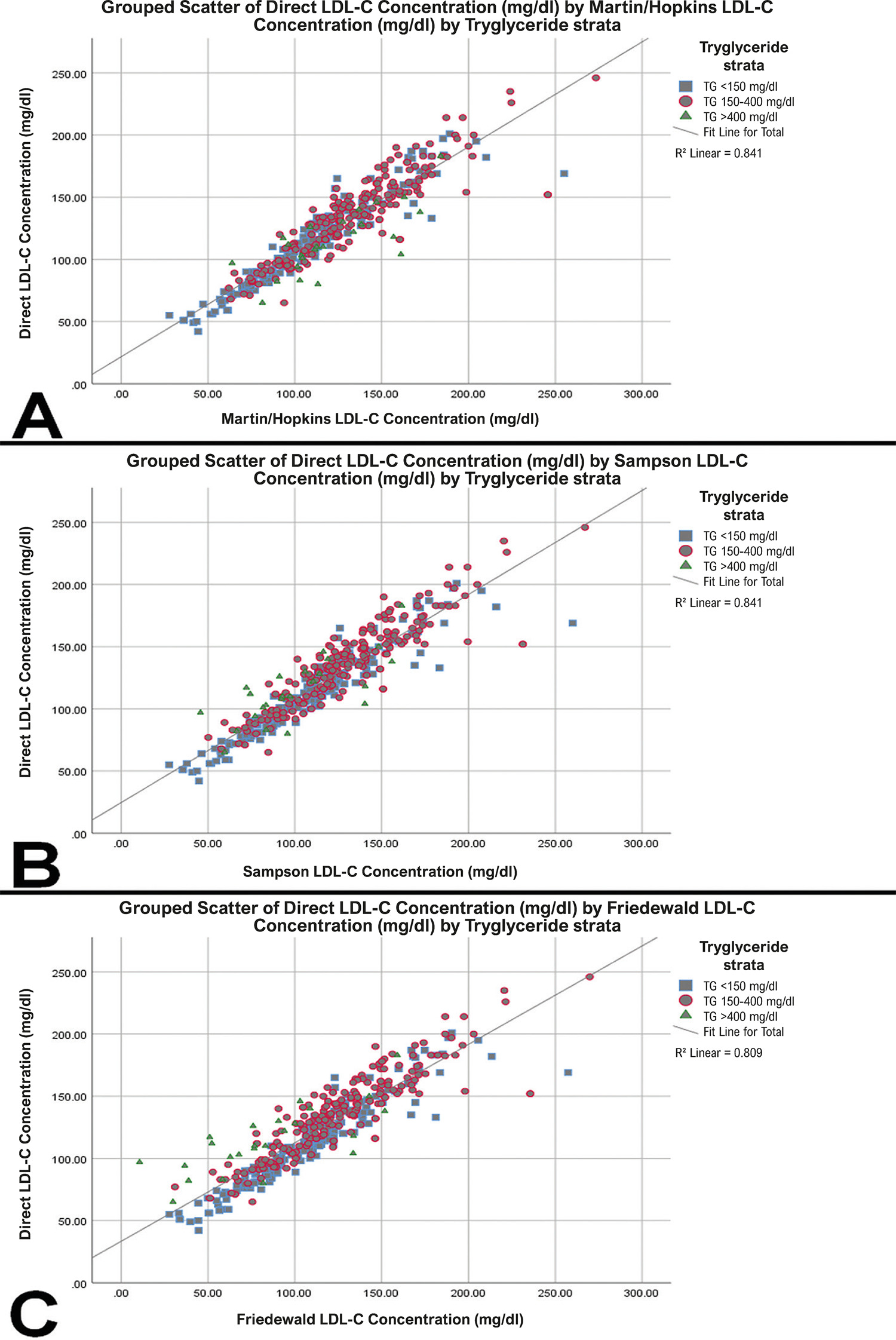
Both LDL-Cmh and LDL-Cs had a better agreement with LDL-Cd as compared to LDL-Cf, but no statistical differences were found among novel equations for agreement with LDL-Cd (Cronbach’s alpha 0.955 for both, p=1). Likewise, LDL-Cmh and LDL-Cs showed a similar degree of agreement with LDL-Cd in determining whether a patient was in a guideline-recommended LDL-C target (96.3% for LDL-Cmh and 96.0% for LDL-Cs), which were marginally better than LDL-Cf (94.6%). In patients with a triglyceride concentration >400 mg/dl, agreement with LDL-Cd was poor, regardless of the method used.

Conclusion

Martin/Hopkins and Sampson’s equations show a similar accuracy for calculating LDL-C concentrations in patients with diabetes, and both equations were marginally better than the Friedewald equation.

  • Atherosclerosis, Dyslipidemias
  • Cholesterol, LDL
  • Coronary Artery Disease
  • Diabetes Mellitus
  • Lipoproteins, LDL
  • Metabolic Diseases
Read Full Article
Creative Commons Attribution (CC BY) Creative Commons license
27/06/2022 DOI: 10.36660/abc.20210641 Views 2
ABC
Editorial

Changes in Our Times and in Cholesterol Targets

Tania Leme da Rocha Martinez

Since the 80s, many approaches have emerged regarding the interpretation of cholesterol levels in clinical practice.

There have even been medical meetings with titles such as: “Cholesterol: Myth or Truth”?

[…]

  • Cardiovascular Diseases/prevention and control
  • Cholesterol, LDL
  • Hydroxymethylglutaryl-CoA Reductase Inhibitors
  • Risk Factors
Read Full Article
Creative Commons Attribution (CC BY) Creative Commons license
28/09/2020 DOI: 10.36660/abc.20200670 Views 1
Figure 1
ABC
Review Article

PCSK9 Inhibitors: Clinical Relevance, Molecular Mechanisms, and Safety in Clinical Practice

Filipe Ferrari et al. Ricardo Stein Marcelo Trotte Motta Emilio Hideyuki Moriguchi

Abstract

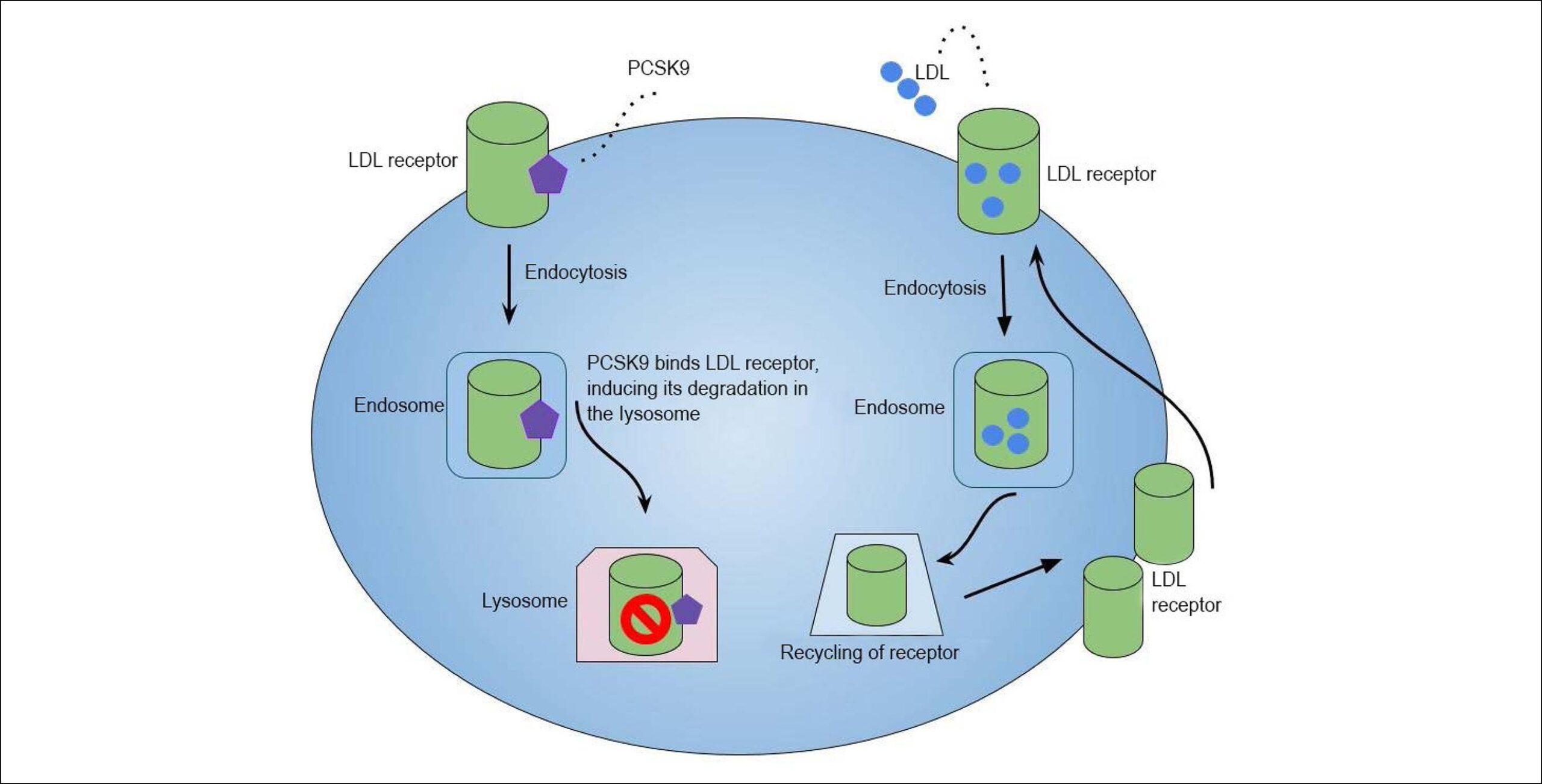
Coronary artery disease (CAD) is one of the leading causes of mortality. High circulating levels of low-density lipoprotein (LDL) in the blood are associated with cardiovascular mortality, whether through an etiological role or through its association with the progression of CAD per se. Randomized clinical trials have shown that, when LDL levels are reduced, cardiovascular risk is also reduced, which reinforces this association. The first major trial involving a hypolipidemic agent of the statin family, the Scandinavian Simvastatin Survival Study (4S), was published in 1994 and found a significant reduction in mortality in patients at high cardiovascular risk. However, even in subsequent studies with different statins, a residual risk persisted, and this seems not to have changed over time; it is speculated that this risk may be due to statin intolerance. In this scenario, the potential exists for novel hypolipidemic agents to drive a true revolution in the therapy of dyslipidemia. The recent discovery of PCSK9 inhibitors (PCSK9i), a class of hypolipidemic monoclonal antibodies, is extremely promising. PCSK9 inhibition is capable of promoting a mean LDL reduction of up to 60%, with potential for very significant clinical repercussions, as every 38 mg/dL reduction in LDL appears to be associated with a 22% reduction in cardiovascular risk. This review addresses a brief history of PCSK9i, major trials of these drugs, cardiovascular outcomes, and aspects related to their efficacy and safety. Finally, the molecular mechanisms and possible pleiotropic effects of PCSK9i are also discussed.

  • Anticholesteromic Agents
  • Cardiovascular Diseases/physiopathology
  • Cholesterol, LDL
  • Coronary Artery Disease / mortality
  • Lipoproteins
  • Proprotein Convertase 9
Read Full Article
Creative Commons Attribution (CC BY) Creative Commons license
28/02/2019 DOI: 10.5935/abc.20190029 Views 1
Figure 1
ABC
Original Article

Evaluation of Collagen Fibers, MMP2, MMP9, 8-OHdG and Apoptosis in the Aorta of Ovariectomized LDL Knockout Mice Submitted to Aerobic Exercise

Laura Beatriz M. Maifrino et al. Nathalia E. A. de Lima Mara R. Marques Clever G. Cardoso … Lidiane B. de Souza Tabata de Carvalho Tomé Hananiah Tardivo Quintana Flavia de Oliveira Beatriz da Costa Aguiar Alves Reis Fernando Luiz Affonso Fonseca

Abstract

Background:

In menopause, there is greater cellular exposure to oxidative stress, related to the decreased antioxidative effects of estrogen. These metabolic changes favor the progression of cardiovascular diseases, such as atherosclerosis. Abnormal function of the aorta – the most important artery – is associated with many cardiovascular diseases. Collagen, especially types I and III, is one of the most important aortic wall components and it can be affected by many factors, including menopause. The 8-OHdG is one of the main markers of DNA oxidative damage induced by reactive oxygen species (ROS).

Objective:

We aimed to investigate effects of moderate aerobic training on the ascending aorta of LDL-knockout (LDL-KO) and ovariectomized female mice.

Methods:

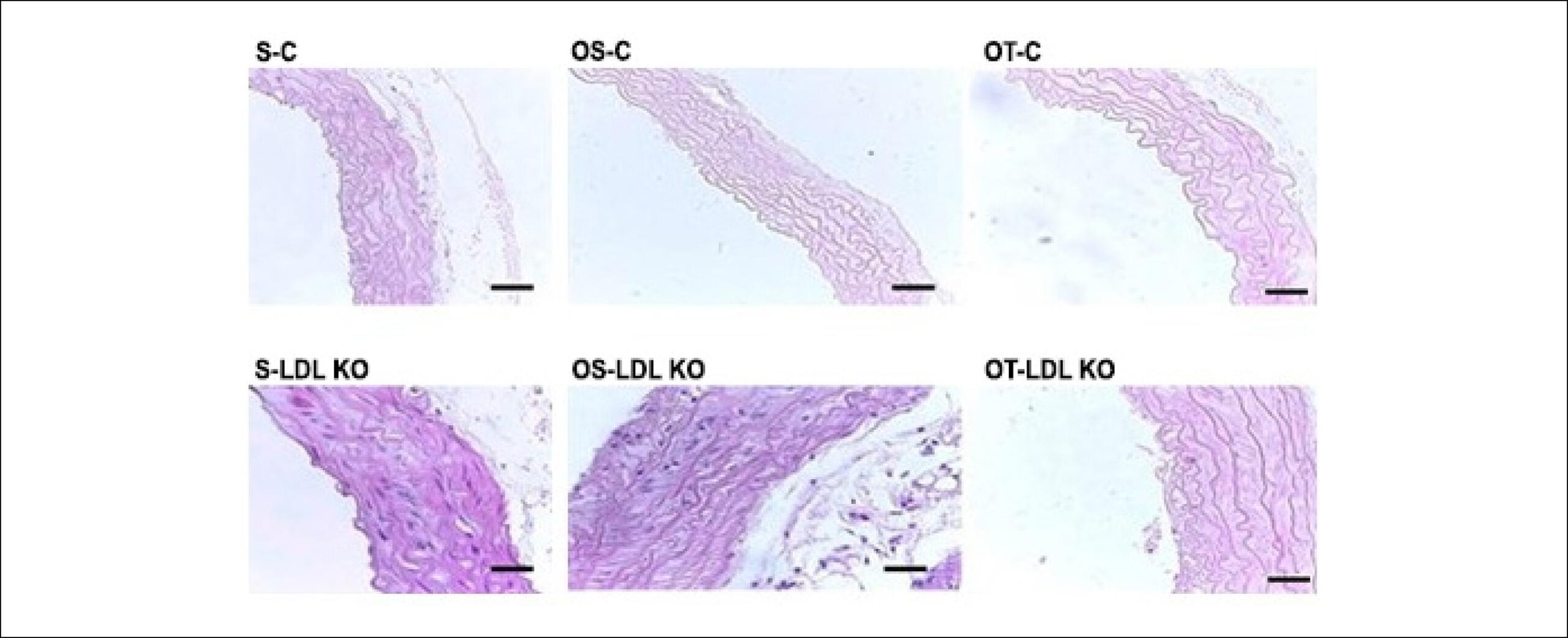
A total of 15 C57BL/6 mice and 15 LDL-KO mice were divided into experimental groups. The thickness and volume density of types I and III collagen fibers were performed by morphoquantitative analysis, whereas the MMP-2 and MMP-9 and 8-OHdG were detected by immunohistochemistry and apoptosis was detected by the TUNEL assay. The significance level for all tests was p < 0.05.

Results:

Exercise causes an increase in the thickness of the aorta in LDL-KO groups, particularly accentuated in the ovariectomized groups. The type I collagen fibers showed an increase in volume density influenced by training in both Control groups and in the LDL-KO group. Type III collagen density decreased in both groups. The MMP-2 showed moderade immunostaining in the tunica media in LDL-KO groups, which did not occur in the control groups and the MMP-9 stained irregularly in all tissues. The marker 8-OhdG was stronger in the exercise training groups. Additionally, the ovariectomy, the exercise training and the LDL-KO treatments increased apoptosis.

Conclusion:

These results suggest that moderate-intensity aerobic exercise in ovariectomized mice associated to an increase in LDL rate possibly increases oxidative stress and apoptosis induction.

  • Cardiovascuar Diseases
  • Cholesterol, LDL
  • Exercise
  • Fibrillar Collagens/analysis
  • Menopause
  • Ovariectomy
  • Rats
Read Full Article
Creative Commons Attribution (CC BY) Creative Commons license
17/12/2018 DOI: 10.5935/abc.20180263 Views 1
ABC
Counterpoint

Counterpoint: Flexibilization of Fasting for Laboratory Determination of the Lipid Profile in Brazil: Science or Convenience?

Maria Cristina de Oliveira Izar

National and international guidelines for the management of dyslipidemias classically recommend measuring lipid profiles after fasting for at least 8 h.– Lipid targets for assessing cardiovascular risk traditionally rely on plasma total-cholesterol and low-density lipoprotein-cholesterol (LDL-c) levels, with the latter being calculated by the Friedewald equation.

Some imprecision due to low or high triglycerides in calculating LDL-cholesterol may affect cardiovascular risk assessment, the definition of a therapeutic target, and the need to intensify the treatment., Accurate results require triglyceride levels below 400 mg/dL, but above 100 mg/dL the calculated LDL-c starts to be underestimated, when compared to ultracentrifugation measurements. Another limitation to the use of the formula is that samples must not contain beta-VLDL, as in the case of type III hyperlipoproteinemia. When one of these conditions are not satisfied, the equation cannot be used due to imprecision.–

[…]

  • Cholesterol
  • Cholesterol, HDL
  • Cholesterol, LDL
  • Dyslipidemias
  • Fasting
  • Lipids
  • Triglycerides
Read Full Article
Creative Commons Attribution (CC BY) Creative Commons license
01/11/2018 DOI: 10.5935/abc.20180192 Views 1
ABC
Viewpoint

Flexibilization of Fasting for Laboratory Determination of the Lipid Profile in Brazil: Science or Convenience?

Caio Maurício Mendes de Cordova et al. Caroline Galgowski

A statement endorsed by medical specialty associations has been published in our country recommending the flexibilization of fasting before blood drawing for the laboratory determination of the lipid profile encompassing total cholesterol (TC), high-density lipoprotein cholesterol (HDL-c), triglycerides (TG) content and the corresponding calculation of non-HDL-cholesterol (TC – HDL-c). It was considered that non-fasting results do not clinically differ from fasting ones, and prospective studies and meta-analyses have consistently demonstrated that non-HDL-C at a non-fasting state would be at least as good as LDL-c in the prediction of CVD. It was also recommended that when TG > 4.52 mmol/L the formula proposed by Martin et al. should be used for LDL-c estimation.

The statement was based on the European Consensus on the matter published by Nordestgaard et al. However, the automatic application of this approach in Brazil deserves deeper consideration, considering the impact that it may cause on patient care. Furthermore, it is far from a consensus among clinical laboratory scientists and professionals in the country, as it became evident during the 44th Brazilian Congress of Clinical Analysis held last June 11-14th, 2017, and the 51st Brazilian Congress of Clinical Pathology and Laboratory Medicine, held last September 26-29th, 2017.

[…]

  • Cholesterol
  • Cholesterol, HDL
  • Cholesterol, LDL
  • Fasting
  • Lipids
  • Triglycerides
Read Full Article
Creative Commons Attribution (CC BY) Creative Commons license
01/11/2018 DOI: 10.5935/abc.20180174 Views 1
ABC
Review Article

Phytosterols in the Treatment of Hypercholesterolemia and Prevention of Cardiovascular Diseases

Carlos Eduardo Cabral et al. Márcia Regina Simas Torres Klein

Abstract

Phytosterols are bioactive compounds found in foods of plant origin, which can be divided into plant sterols and plant stanols. Clinical studies consistently indicate that the intake of phytosterols (2 g/day) is associated with a significant reduction (8-10%) in levels of low-density lipoprotein cholesterol (LDL-cholesterol). Thus, several guidelines recommend the intake of 2 g/day of plant sterols and/or stanols in order to reduce LDL-cholesterol levels. As the typical western diet contains only about 300 mg/day of phytosterols, foods enriched with phytosterols are usually used to achieve the recommended intake. Although phytosterols decrease LDL-cholesterol levels, there is no evidence that they reduce the risk of cardiovascular diseases; on the contrary, some studies suggest an increased risk of atherosclerosis with increasing serum levels of phytosterols. This review aims to address the evidence available in the literature on the relationship between phytosterols and risk of cardiovascular disease.

  • Atherosclerosis
  • Cardiovascular Diseases
  • Cholesterol, LDL
  • Phytosterols
Read Full Article
Creative Commons Attribution (CC BY) Creative Commons license
01/11/2017 DOI: 10.5935/abc.20170158 Views 1
Figure 1
ABC
Original Article

Discordant Lipid Pattern and Carotid Atherosclerotic Plaque. Importance of Remnant Cholesterol

Walter Masson et al. Martín Lobo Graciela Molinero Daniel Siniawski

Abstract

Background:

Subjects with levels of non-HDL-C 30 mg/dL above those of LDL-C (lipid discordance) or with high remnant cholesterol levels could have a greater residual cardiovascular risk.

Objectives:

Methods:

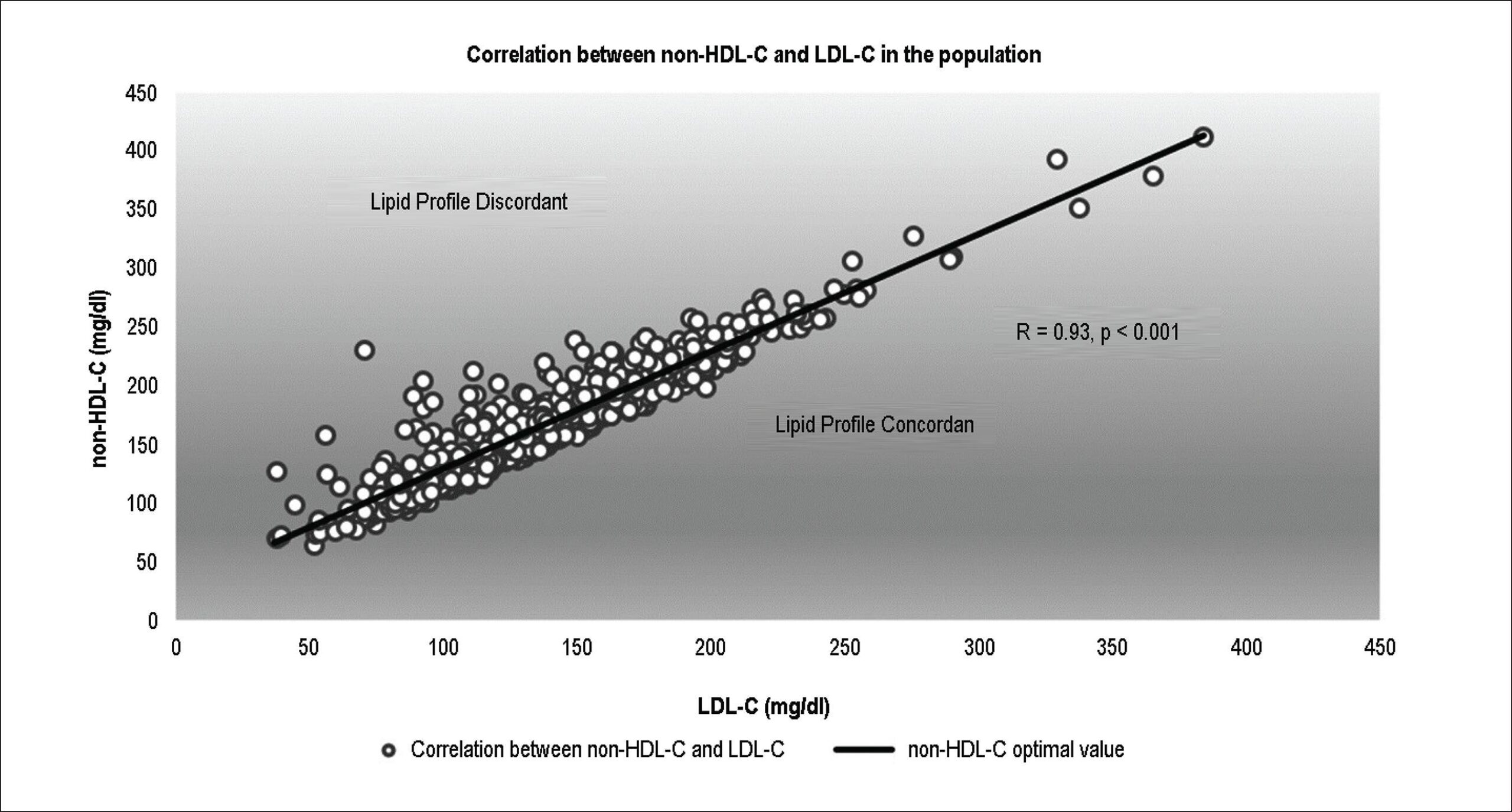
Primary prevention patients without diabetes or lipid-lowering therapy were included. Regardless of the LDL-C level, we define “lipid discordance” if the non-HDL-C value exceeded 30 mg/dL that of LDL-C. Remnant cholesterol was calculated as total cholesterol minus HDL-C minus LDL-C when triglycerides were < 4.0 mmol/L. Ultrasound was used to assess carotid plaque occurrence. Multiple regression logistic models were performed.

Results:

The study included 772 patients (mean age 52 ± 11 years, 66% women). The prevalence of lipid discordance was 34%. Male sex and body mass index were independently associated with discordant lipid pattern. The prevalence of carotid plaque was higher in subjects with lipid discordance (40.2% vs. 29.2, p = 0.002). The multivariate analysis showed that the discordant lipid pattern was associated with the greater probability of carotid plaque (OR 1.58, 95% CI 1.08-2.34, p = 0.02). Similarly, a significant association between calculated remnant cholesterol and carotid plaque was found.

Conclusion:

Lipid discordance and presence of a higher level of calculated remnant cholesterol are associated with subclinical atherosclerosis. Our findings could be used to improve the residual cardiovascular risk evaluation.

  • Atherosclerosis / complications
  • Carotid Arteries
  • Cholesterol, LDL
  • Cholesterol, VLDL
  • Lipoproteins, LDL
  • Plaque, Atherosclerotic
Read Full Article
Creative Commons Attribution (CC BY) Creative Commons license
01/06/2017 DOI: 10.5935/abc.20170069 Views 1
Figure 1
ABC
Original Article

Association between LDL-C, Non HDL-C, and Apolipoprotein B Levels with Coronary Plaque Regression

Walter Masson et al. Daniel Siniawski Martín Lobo Graciela Molinero … Mariano Giorgi Melina Huerín

Background:

Previous reports have inferred a linear relationship between LDL-C and changes in coronary plaque volume (CPV) measured by intravascular ultrasound. However, these publications included a small number of studies and did not explore other lipid markers.

Objective:

To assess the association between changes in lipid markers and regression of CPV using published data.

Methods:

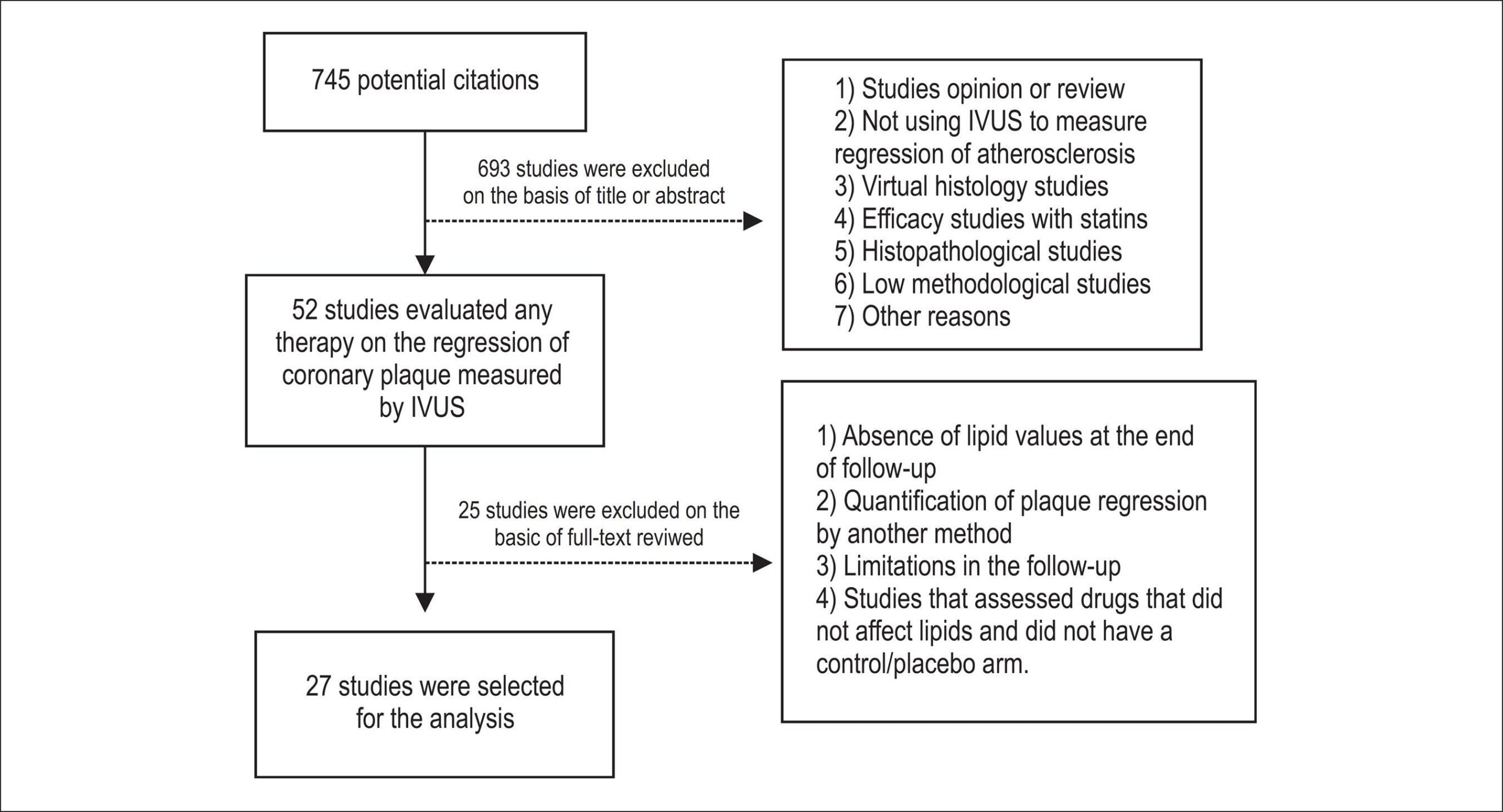
We collected data from the control, placebo and intervention arms in studies that compared the effect of lipidlowering treatments on CPV, and from the placebo and control arms in studies that tested drugs that did not affect lipids. Baseline and final measurements of plaque volume, expressed in mm3, were extracted and the percentage changes after the interventions were calculated. Performing three linear regression analyses, we assessed the relationship between percentage and absolute changes in lipid markers and percentage variations in CPV.

Results:

Twenty-seven studies were selected. Correlations between percentage changes in LDL-C, non-HDL-C, and apolipoprotein B (ApoB) and percentage changes in CPV were moderate (r = 0.48, r = 0.47, and r = 0.44, respectively). Correlations between absolute differences in LDL-C, non‑HDL-C, and ApoB with percentage differences in CPV were stronger (r = 0.57, r = 0.52, and r = 0.79). The linear regression model showed a statistically significant association between a reduction in lipid markers and regression of plaque volume.

Conclusion:

A significant association between changes in different atherogenic particles and regression of CPV was observed. The absolute reduction in ApoB showed the strongest correlation with coronary plaque regression.

  • Apolipoprotein B/ therapeutic use
  • Atherosclerosis / physiopathology
  • Cardiovascular Diseases
  • Cholesterol, LDL
  • Lipoproteins, LDL
Read Full Article
Creative Commons Attribution (CC BY) Creative Commons license
19/05/2015 DOI: 10.5935/abc.20150050 Views 1

How to cite this article

EndNote RIS

Electronic Document Format (Vancouver)

Gomes DA, Paiva MS, Freitas P, Albuquerque F, Lima MR, Santos RR, Presume J, et al. Attainment of LDL-Cholesterol Goals in Patients with Previous Myocardial Infarction: A Real-World Cross-Sectional Analysis. Arquivos Brasileiros de Cardiologia 2024;121(1):e20230242.

Electronic Document Format (ABNT)

Gomes, Daniel A.; Paiva, Mariana Sousa; Freitas, Pedro; Albuquerque, Francisco; Lima, Maria Rita; Santos, Rita Reis; Presume, João; Trabulo, Marisa; Aguiar, Carlos; Ferreira, Jorge; Ferreira, António M.; Mendes, Miguel. Attainment of LDL-Cholesterol Goals in Patients with Previous Myocardial Infarction: A Real-World Cross-Sectional Analysis. Arquivos Brasileiros de Cardiologia, v. 121, n. 1, e20230242, Mar. 2024.

Electronic Document Format (APA)

Gomes, D. A., Paiva, M. S., Freitas, P., Albuquerque, F., Lima, M. R., Santos, R. R., Presume, J., Trabulo, M., Aguiar, C., Ferreira, J., Ferreira, A. M., & Mendes, M. (2024). Attainment of LDL-Cholesterol Goals in Patients with Previous Myocardial Infarction: A Real-World Cross-Sectional Analysis. Arquivos Brasileiros de Cardiologia, 121(1), e20230242.

Electronic Document Format (ISO)

Gomes, Daniel A. and Paiva, Mariana Sousa and Freitas, Pedro and Albuquerque, Francisco and Lima, Maria Rita and Santos, Rita Reis and Presume, João and Trabulo, Marisa and Aguiar, Carlos and Ferreira, Jorge and Ferreira, António M. and Mendes, Miguel. Attainment of LDL-Cholesterol Goals in Patients with Previous Myocardial Infarction: A Real-World Cross-Sectional Analysis. Arquivos Brasileiros de Cardiologia [online]. 2024, vol. 121, n. 1, [cited 2026-10-14], e20230242. Available from: <https://journals.cardiol.br/en/article/attainment-of-ldl-cholesterol-goals-in-patients-with-previous-myocardial-infarction-a-real-world-cross-sectional-analysis/>. ISSN 0066-782X

EndNote RIS

Electronic Document Format (Vancouver)

Moreira EM, Pinesi HT, Martins EB, Pitta FG, Bolta PMP, Segre CAW, Favarato D, et al. Two-Year Follow-Up of Chronic Ischemic Heart Disease Patients in a Specialized Center in Brazil. Arquivos Brasileiros de Cardiologia 2023;120(10):e20220440.

Electronic Document Format (ABNT)

Moreira, Eduardo Martelli; Pinesi, Henrique Trombini; Martins, Eduardo Bello; Pitta, Fábio Grunspun; Bolta, Paula Mathias Paulino; Segre, Carlos Alexandre Wainrober; Favarato, Desiderio; Rached, Fabiana Hanna; Hueb, Whady Armindo; Lima, Eduardo Gomes; Kalil Filho, Roberto; Garzillo, Cibele Larrosa; Serrano Jr, Carlos Vicente. Two-Year Follow-Up of Chronic Ischemic Heart Disease Patients in a Specialized Center in Brazil. Arquivos Brasileiros de Cardiologia, v. 120, n. 10, e20220440, Oct. 2023.

Electronic Document Format (APA)

Moreira, E. M., Pinesi, H. T., Martins, E. B., Pitta, F. G., Bolta, P. M. P., Segre, C. A. W., Favarato, D., Rached, F. H., Hueb, W. A., Lima, E. G., Kalil Filho, R., Garzillo, C. L., & Serrano Jr, C. V. (2023). Two-Year Follow-Up of Chronic Ischemic Heart Disease Patients in a Specialized Center in Brazil. Arquivos Brasileiros de Cardiologia, 120(10), e20220440.

Electronic Document Format (ISO)

Moreira, Eduardo Martelli and Pinesi, Henrique Trombini and Martins, Eduardo Bello and Pitta, Fábio Grunspun and Bolta, Paula Mathias Paulino and Segre, Carlos Alexandre Wainrober and Favarato, Desiderio and Rached, Fabiana Hanna and Hueb, Whady Armindo and Lima, Eduardo Gomes and Kalil Filho, Roberto and Garzillo, Cibele Larrosa and Serrano Jr, Carlos Vicente. Two-Year Follow-Up of Chronic Ischemic Heart Disease Patients in a Specialized Center in Brazil. Arquivos Brasileiros de Cardiologia [online]. 2023, vol. 120, n. 10, [cited 2026-10-14], e20220440. Available from: <https://journals.cardiol.br/en/article/two-year-follow-up-of-chronic-ischemic-heart-disease-patients-in-a-specialized-center-in-brazil/>. ISSN 0066-782X

EndNote RIS

Electronic Document Format (Vancouver)

Cesena F. Friedewald, Martin/Hopkins, or Sampson/NIH: Which is the Best Method to Estimate LDL-Cholesterol?. Arquivos Brasileiros de Cardiologia 2022;119(2):234-5.

Electronic Document Format (ABNT)

Cesena, Fernando. Friedewald, Martin/Hopkins, or Sampson/NIH: Which is the Best Method to Estimate LDL-Cholesterol?. Arquivos Brasileiros de Cardiologia, v. 119, n. 2, p. 234-235, Aug. 2022.

Electronic Document Format (APA)

Cesena, F. (2022). Friedewald, Martin/Hopkins, or Sampson/NIH: Which is the Best Method to Estimate LDL-Cholesterol?. Arquivos Brasileiros de Cardiologia, 119(2), 234-235.

Electronic Document Format (ISO)

Cesena, Fernando. Friedewald, Martin/Hopkins, or Sampson/NIH: Which is the Best Method to Estimate LDL-Cholesterol?. Arquivos Brasileiros de Cardiologia [online]. 2022, vol. 119, n. 2, [cited 2026-10-14], pp. 234-235. Available from: <https://journals.cardiol.br/en/article/friedewald-martin-hopkins-or-sampson-nih-which-is-the-best-method-to-estimate-ldl-cholesterol/>. ISSN 0066-782X

EndNote RIS

Electronic Document Format (Vancouver)

Naser A, Isgandarov K, Güvenç TS, Güvenç R, Şahin M. Comparison of Novel Martin/Hopkins and Sampson Equations for Calculation of Low-Density Lipoprotein Cholesterol in Diabetic Patients. Arquivos Brasileiros de Cardiologia 2022;119(2):225-33.

Electronic Document Format (ABNT)

Naser, Abdulrahman; Isgandarov, Khagani; Güvenç, Tolga Sinan; Güvenç, Rengin Çetin; Şahin, Müslüm. Comparison of Novel Martin/Hopkins and Sampson Equations for Calculation of Low-Density Lipoprotein Cholesterol in Diabetic Patients. Arquivos Brasileiros de Cardiologia, v. 119, n. 2, p. 225-233, Jun. 2022.

Electronic Document Format (APA)

Naser, A., Isgandarov, K., Güvenç, T. S., Güvenç, R. , & Şahin, M. (2022). Comparison of Novel Martin/Hopkins and Sampson Equations for Calculation of Low-Density Lipoprotein Cholesterol in Diabetic Patients. Arquivos Brasileiros de Cardiologia, 119(2), 225-233.

Electronic Document Format (ISO)

Naser, Abdulrahman and Isgandarov, Khagani and Güvenç, Tolga Sinan and Güvenç, Rengin Çetin and Şahin, Müslüm. Comparison of Novel Martin/Hopkins and Sampson Equations for Calculation of Low-Density Lipoprotein Cholesterol in Diabetic Patients. Arquivos Brasileiros de Cardiologia [online]. 2022, vol. 119, n. 2, [cited 2026-10-14], pp. 225-233. Available from: <https://journals.cardiol.br/en/article/comparison-of-novel-martin-hopkins-and-sampson-equations-for-calculation-of-low-density-lipoprotein-cholesterol-in-diabetic-patients/>. ISSN 0066-782X

EndNote RIS

Electronic Document Format (Vancouver)

Martinez TLR. Changes in Our Times and in Cholesterol Targets. Arquivos Brasileiros de Cardiologia 2020;115(3):450-1.

Electronic Document Format (ABNT)

Martinez, Tania Leme da Rocha. Changes in Our Times and in Cholesterol Targets. Arquivos Brasileiros de Cardiologia, v. 115, n. 3, p. 450-451, Sep. 2020.

Electronic Document Format (APA)

Martinez, T. L. R. (2020). Changes in Our Times and in Cholesterol Targets. Arquivos Brasileiros de Cardiologia, 115(3), 450-451.

Electronic Document Format (ISO)

Martinez, Tania Leme da Rocha. Changes in Our Times and in Cholesterol Targets. Arquivos Brasileiros de Cardiologia [online]. 2020, vol. 115, n. 3, [cited 2026-10-14], pp. 450-451. Available from: <https://journals.cardiol.br/en/article/changes-in-our-times-and-in-cholesterol-targets/>. ISSN 0066-782X

EndNote RIS

Electronic Document Format (Vancouver)

Ferrari F, Stein R, Motta MT, Moriguchi EH. PCSK9 Inhibitors: Clinical Relevance, Molecular Mechanisms, and Safety in Clinical Practice. Arquivos Brasileiros de Cardiologia 2019;112(4):453-60.

Electronic Document Format (ABNT)

Ferrari, Filipe; Stein, Ricardo; Motta, Marcelo Trotte; Moriguchi, Emilio Hideyuki. PCSK9 Inhibitors: Clinical Relevance, Molecular Mechanisms, and Safety in Clinical Practice. Arquivos Brasileiros de Cardiologia, v. 112, n. 4, p. 453-460, Feb. 2019.

Electronic Document Format (APA)

Ferrari, F., Stein, R., Motta, M. T., & Moriguchi, E. H. (2019). PCSK9 Inhibitors: Clinical Relevance, Molecular Mechanisms, and Safety in Clinical Practice. Arquivos Brasileiros de Cardiologia, 112(4), 453-460.

Electronic Document Format (ISO)

Ferrari, Filipe and Stein, Ricardo and Motta, Marcelo Trotte and Moriguchi, Emilio Hideyuki. PCSK9 Inhibitors: Clinical Relevance, Molecular Mechanisms, and Safety in Clinical Practice. Arquivos Brasileiros de Cardiologia [online]. 2019, vol. 112, n. 4, [cited 2026-10-14], pp. 453-460. Available from: <https://journals.cardiol.br/en/article/pcsk9-inhibitors-clinical-relevance-molecular-mechanisms-and-safety-in-clinical-practice/>. ISSN 0066-782X

EndNote RIS

Electronic Document Format (Vancouver)

Maifrino LBM, Lima NEA, Marques MR, Cardoso CG, Souza LB, Tomé TC, Quintana HT, et al. Evaluation of Collagen Fibers, MMP2, MMP9, 8-OHdG and Apoptosis in the Aorta of Ovariectomized LDL Knockout Mice Submitted to Aerobic Exercise. Arquivos Brasileiros de Cardiologia 2018;112(2):180-8.

Electronic Document Format (ABNT)

Maifrino, Laura Beatriz M.; Lima, Nathalia E. A. de; Marques, Mara R.; Cardoso, Clever G.; Souza, Lidiane B. de; Tomé, Tabata de Carvalho; Quintana, Hananiah Tardivo; Oliveira, Flavia de; Reis, Beatriz da Costa Aguiar Alves; Fonseca, Fernando Luiz Affonso. Evaluation of Collagen Fibers, MMP2, MMP9, 8-OHdG and Apoptosis in the Aorta of Ovariectomized LDL Knockout Mice Submitted to Aerobic Exercise. Arquivos Brasileiros de Cardiologia, v. 112, n. 2, p. 180-188, Dec. 2018.

Electronic Document Format (APA)

Maifrino, L. B. M., Lima, N. E. A. , Marques, M. R., Cardoso, C. G., Souza, L. B. , Tomé, T. C., Quintana, H. T., Oliveira, F. , Reis, B. C. A. A., & Fonseca, F. L. A. (2018). Evaluation of Collagen Fibers, MMP2, MMP9, 8-OHdG and Apoptosis in the Aorta of Ovariectomized LDL Knockout Mice Submitted to Aerobic Exercise. Arquivos Brasileiros de Cardiologia, 112(2), 180-188.

Electronic Document Format (ISO)

Maifrino, Laura Beatriz M. and Lima, Nathalia E. A. de and Marques, Mara R. and Cardoso, Clever G. and Souza, Lidiane B. de and Tomé, Tabata de Carvalho and Quintana, Hananiah Tardivo and Oliveira, Flavia de and Reis, Beatriz da Costa Aguiar Alves and Fonseca, Fernando Luiz Affonso. Evaluation of Collagen Fibers, MMP2, MMP9, 8-OHdG and Apoptosis in the Aorta of Ovariectomized LDL Knockout Mice Submitted to Aerobic Exercise. Arquivos Brasileiros de Cardiologia [online]. 2018, vol. 112, n. 2, [cited 2026-10-14], pp. 180-188. Available from: <https://journals.cardiol.br/en/article/evaluation-of-collagen-fibers-mmp2-mmp9-8-ohdg-and-apoptosis-in-the-aorta-of-ovariectomized-ldl-knockout-mice-submitted-to-aerobic-exercise/>. ISSN 0066-782X

EndNote RIS

Electronic Document Format (Vancouver)

Izar MCO. Counterpoint: Flexibilization of Fasting for Laboratory Determination of the Lipid Profile in Brazil: Science or Convenience?. Arquivos Brasileiros de Cardiologia 2018;111(5):750-2.

Electronic Document Format (ABNT)

Izar, Maria Cristina de Oliveira. Counterpoint: Flexibilization of Fasting for Laboratory Determination of the Lipid Profile in Brazil: Science or Convenience?. Arquivos Brasileiros de Cardiologia, v. 111, n. 5, p. 750-752, Oct. 2018.

Electronic Document Format (APA)

Izar, M. C. O. (2018). Counterpoint: Flexibilization of Fasting for Laboratory Determination of the Lipid Profile in Brazil: Science or Convenience?. Arquivos Brasileiros de Cardiologia, 111(5), 750-752.

Electronic Document Format (ISO)

Izar, Maria Cristina de Oliveira. Counterpoint: Flexibilization of Fasting for Laboratory Determination of the Lipid Profile in Brazil: Science or Convenience?. Arquivos Brasileiros de Cardiologia [online]. 2018, vol. 111, n. 5, [cited 2026-10-14], pp. 750-752. Available from: <https://journals.cardiol.br/en/article/counterpoint-flexibilization-of-fasting-for-laboratory-determination-of-the-lipid-profile-in-brazil-science-or-convenience/>. ISSN 0066-782X

EndNote RIS

Electronic Document Format (Vancouver)

Cordova CMM, Galgowski C. Flexibilization of Fasting for Laboratory Determination of the Lipid Profile in Brazil: Science or Convenience?. Arquivos Brasileiros de Cardiologia 2018;111(5):747-9.

Electronic Document Format (ABNT)

Cordova, Caio Maurício Mendes de; Galgowski, Caroline. Flexibilization of Fasting for Laboratory Determination of the Lipid Profile in Brazil: Science or Convenience?. Arquivos Brasileiros de Cardiologia, v. 111, n. 5, p. 747-749, Oct. 2018.

Electronic Document Format (APA)

Cordova, C. M. M. , & Galgowski, C. (2018). Flexibilization of Fasting for Laboratory Determination of the Lipid Profile in Brazil: Science or Convenience?. Arquivos Brasileiros de Cardiologia, 111(5), 747-749.

Electronic Document Format (ISO)

Cordova, Caio Maurício Mendes de and Galgowski, Caroline. Flexibilization of Fasting for Laboratory Determination of the Lipid Profile in Brazil: Science or Convenience?. Arquivos Brasileiros de Cardiologia [online]. 2018, vol. 111, n. 5, [cited 2026-10-14], pp. 747-749. Available from: <https://journals.cardiol.br/en/article/flexibilization-of-fasting-for-laboratory-determination-of-the-lipid-profile-in-brazil-science-or-convenience/>. ISSN 0066-782X

EndNote RIS

Electronic Document Format (Vancouver)

Cabral CE, Klein MRST. Phytosterols in the Treatment of Hypercholesterolemia and Prevention of Cardiovascular Diseases. Arquivos Brasileiros de Cardiologia 2017;109(5):475-82.

Electronic Document Format (ABNT)

Cabral, Carlos Eduardo; Klein, Márcia Regina Simas Torres. Phytosterols in the Treatment of Hypercholesterolemia and Prevention of Cardiovascular Diseases. Arquivos Brasileiros de Cardiologia, v. 109, n. 5, p. 475-482, Oct. 2017.

Electronic Document Format (APA)

Cabral, C. E., & Klein, M. R. S. T. (2017). Phytosterols in the Treatment of Hypercholesterolemia and Prevention of Cardiovascular Diseases. Arquivos Brasileiros de Cardiologia, 109(5), 475-482.

Electronic Document Format (ISO)

Cabral, Carlos Eduardo and Klein, Márcia Regina Simas Torres. Phytosterols in the Treatment of Hypercholesterolemia and Prevention of Cardiovascular Diseases. Arquivos Brasileiros de Cardiologia [online]. 2017, vol. 109, n. 5, [cited 2026-10-14], pp. 475-482. Available from: <https://journals.cardiol.br/en/article/phytosterols-in-the-treatment-of-hypercholesterolemia-and-prevention-of-cardiovascular-diseases/>. ISSN 0066-782X

EndNote RIS

Electronic Document Format (Vancouver)

Masson W, Lobo M, Molinero G, Siniawski D. Discordant Lipid Pattern and Carotid Atherosclerotic Plaque. Importance of Remnant Cholesterol. Arquivos Brasileiros de Cardiologia 2017;108(6):526-32.

Electronic Document Format (ABNT)

Masson, Walter; Lobo, Martín; Molinero, Graciela; Siniawski, Daniel. Discordant Lipid Pattern and Carotid Atherosclerotic Plaque. Importance of Remnant Cholesterol. Arquivos Brasileiros de Cardiologia, v. 108, n. 6, p. 526-532, May. 2017.

Electronic Document Format (APA)

Masson, W., Lobo, M., Molinero, G., & Siniawski, D. (2017). Discordant Lipid Pattern and Carotid Atherosclerotic Plaque. Importance of Remnant Cholesterol. Arquivos Brasileiros de Cardiologia, 108(6), 526-532.

Electronic Document Format (ISO)

Masson, Walter and Lobo, Martín and Molinero, Graciela and Siniawski, Daniel. Discordant Lipid Pattern and Carotid Atherosclerotic Plaque. Importance of Remnant Cholesterol. Arquivos Brasileiros de Cardiologia [online]. 2017, vol. 108, n. 6, [cited 2026-10-14], pp. 526-532. Available from: <https://journals.cardiol.br/en/article/discordant-lipid-pattern-and-carotid-atherosclerotic-plaque-importance-of-remnant-cholesterol/>. ISSN 0066-782X

EndNote RIS

Electronic Document Format (Vancouver)

Masson W, Siniawski D, Lobo M, Molinero G, Giorgi M, Huerín M. Association between LDL-C, Non HDL-C, and Apolipoprotein B Levels with Coronary Plaque Regression. Arquivos Brasileiros de Cardiologia 2015;105(1):11-9.

Electronic Document Format (ABNT)

Masson, Walter; Siniawski, Daniel; Lobo, Martín; Molinero, Graciela; Giorgi, Mariano; Huerín, Melina. Association between LDL-C, Non HDL-C, and Apolipoprotein B Levels with Coronary Plaque Regression. Arquivos Brasileiros de Cardiologia, v. 105, n. 1, p. 11-19, May. 2015.

Electronic Document Format (APA)

Masson, W., Siniawski, D., Lobo, M., Molinero, G., Giorgi, M., & Huerín, M. (2015). Association between LDL-C, Non HDL-C, and Apolipoprotein B Levels with Coronary Plaque Regression. Arquivos Brasileiros de Cardiologia, 105(1), 11-19.

Electronic Document Format (ISO)

Masson, Walter and Siniawski, Daniel and Lobo, Martín and Molinero, Graciela and Giorgi, Mariano and Huerín, Melina. Association between LDL-C, Non HDL-C, and Apolipoprotein B Levels with Coronary Plaque Regression. Arquivos Brasileiros de Cardiologia [online]. 2015, vol. 105, n. 1, [cited 2026-10-14], pp. 11-19. Available from: <https://journals.cardiol.br/en/article/association-between-ldl-c-non-hdl-c-and-apolipoprotein-b-levels-with-coronary-plaque-regression/>. ISSN 0066-782X

  • About ABC Family
  • Internal Regulation
  • Editorial Board
  • Brazilian Society of Cardiology (SBC)

Issues

SBC Guidelines

  • Videos
  • Podcasts
  • News