ABC Family Arquivos Brasileiros de Cardiologia International Journal of Cardiovascular Sciences ABC Heart Failure & Cardiomyopathy ABC Imagem Cardiovascular
Português English
ABC Family
Português English
  • About
    • About ABC Family
    • Internal Regulation
    • Editorial Board
    • Brazilian Society of Cardiology (SBC)
  • Issues
  • SBC Guidelines
  • Content
    • Videos
    • Podcasts
    • News
  • About
    • About ABC Family
    • Internal Regulation
    • Editorial Board
    • Brazilian Society of Cardiology (SBC)
  • Issues
  • SBC Guidelines
  • Content
    • Videos
    • Podcasts
    • News

ABC Family

  • ABC Family
  • Arquivos Brasileiros de Cardiologia
  • International Journal of Cardiovascular Sciences
  • ABC Heart Failure & Cardiomyopathy
  • ABC Imagem Cardiovascular
Search in

No content found.

Journals
Ordering
Article types
Others

  1. Home
  2. Keyword: Energy metabolism
ABC
Editorial

L-Carnitine Supplementation in the Diabetic Heart

Filipe Welson Leal Pereira et al. Sergio Alberto Rupp de Paiva

Carnitine is a non-essential nutrient, which is derived from amino acids. The main food source of carnitine is red meat, poultry and dairy products. Part of the carnitine can be produced endogenously, from lysine and methionine mainly by the liver and kidneys. It acts primarily as an enzymatic cofactor for the transport of long-chain fatty acids from the cytoplasm into the mitochondria, and subsequent degradation to beta-oxidation, being a very important energy metabolism pathway. Therefore, carnitine is essential as fuel for muscles, and more than 95% of the total body carnitine is found in skeletal muscle. The liver, heart, brain and kidneys have the remainder of the body’s carnitine reserves or are able to synthesize it. This distribution shows the importance of carnitine in these organs. L-carnitine supplementation has been studied in sarcopenia, in liver diseases, in heart failure, in kidney diseases and in neurological diseases. ,

Most studies have shown the benefit of L-carnitine on cardiovascular risk factors. L-carnitine supplementation reduces hypertension, hyperlipidemia, hyperglycemia, insulin-dependent diabetes mellitus, insulin resistance, obesity, inflammation and oxidative stress. , –

[…]

  • Carnitine
  • Energy metabolism
  • Polymerase Chain Reaction
Read Full Article
Creative Commons Attribution (CC BY) Creative Commons license
25/10/2021 DOI: 10.36660/abc.20210717 Views 1
IJCS
Viewpoint

Physical Exercise, Energy Expenditure and Weight Loss: An Assumption not Always Observed in Practice

Vitor Barreto Paravidino et al. Mauro Felippe Felix Mediano Rosely Sichieri

The increased prevalence of overweight and obesity observed in recent decades has been attributed mainly to behavioral changes, such as excessive food consumption and reduction in physical activity level over time, leading to a positive energy balance. Due to the technological advances in recent years, less physical effort is required to perform daily tasks. Moreover, the lifestyle has become more sedentary, with an increasing amount of time spent using digital gadgets, such as computers, televisions and mobile phones. However, Westerterp & Speakman did not find a decrease in physical activity energy expenditure during the last 30 years preceding their study, despite an increase in the prevalence of obesity. Other studies have also reported that the total energy expenditure of rural populations was similar to that of populations living in developed countries, despite the clear difference in behavioral patterns, particularly in relation to daily physical activities.– This study aimed at presenting the “compensatory effect” as a possible explanation for these findings. When there is an increase in physical activity at a given time, behavioral and metabolic changes take place to maintain an energy setpoint, as presented below.

Physical exercise has been recommended as an important component for the prevention and treatment of obesity. For substantial adults’ health benefits, at least 150 minutes of moderate-intensity aerobic exercise, or 75 minutes of vigorous-intensity aerobic exercise; in addition, 2-3 times per week of resistance training is recommended. However, for a clinically significant reduction in body weight, Donnelly et al., recommended that individuals should gradually increase the amount of physical activity and achieve a weekly volume of moderate physical exercise of over 250 minutes. The authors also reported a dose-response effect between physical activity and weight loss.

[…]

  • Energy metabolism
  • Exercise
  • Lifestyle
  • Overweight
  • Sedentary Behavior
  • Weight loss Programs
Read Full Article
Creative Commons Attribution (CC BY) Creative Commons license
12/05/2021 DOI: 10.36660/ijcs.20200090 Views 3
Figure 1
ABC
Original Article

Euterpe Oleracea Mart. (Açaí) Reduces Oxidative Stress and Improves Energetic Metabolism in Myocardial Ischemia-Reperfusion Injury in Rats

Patricia Alegre et al. Livia Mathias Maria Angelica Lourenço Priscila Portugal dos Santos … Andrea Gonçalves Ana Angélica Fernandes Paula Schmidt Azevedo Gaiolla Marcos Ferreira Minicucci Leonardo Zornoff Sergio Alberto Rupp Paiva Bertha Furlan Polegato

Abstract

Background:

Euterpe oleracea Mart. (açaí) is a fruit with high antioxidant capacity and could be an adjuvant strategy to attenuate ischemia-reperfusion injury.

Objective:

To evaluate the influence of açaí in global ischemia-reperfusion model in rats.

Methods:

Wistar rats were assigned to 2 groups: Control (C: receiving standard chow; n = 9) and Açaí (A: receiving standard chow supplemented with 5% açaí; n = 10). After six weeks, the animals were subjected to the global ischemia-reperfusion protocol and an isolated heart study to evaluate left ventricular function. Level of significance adopted: 5%.

Results:

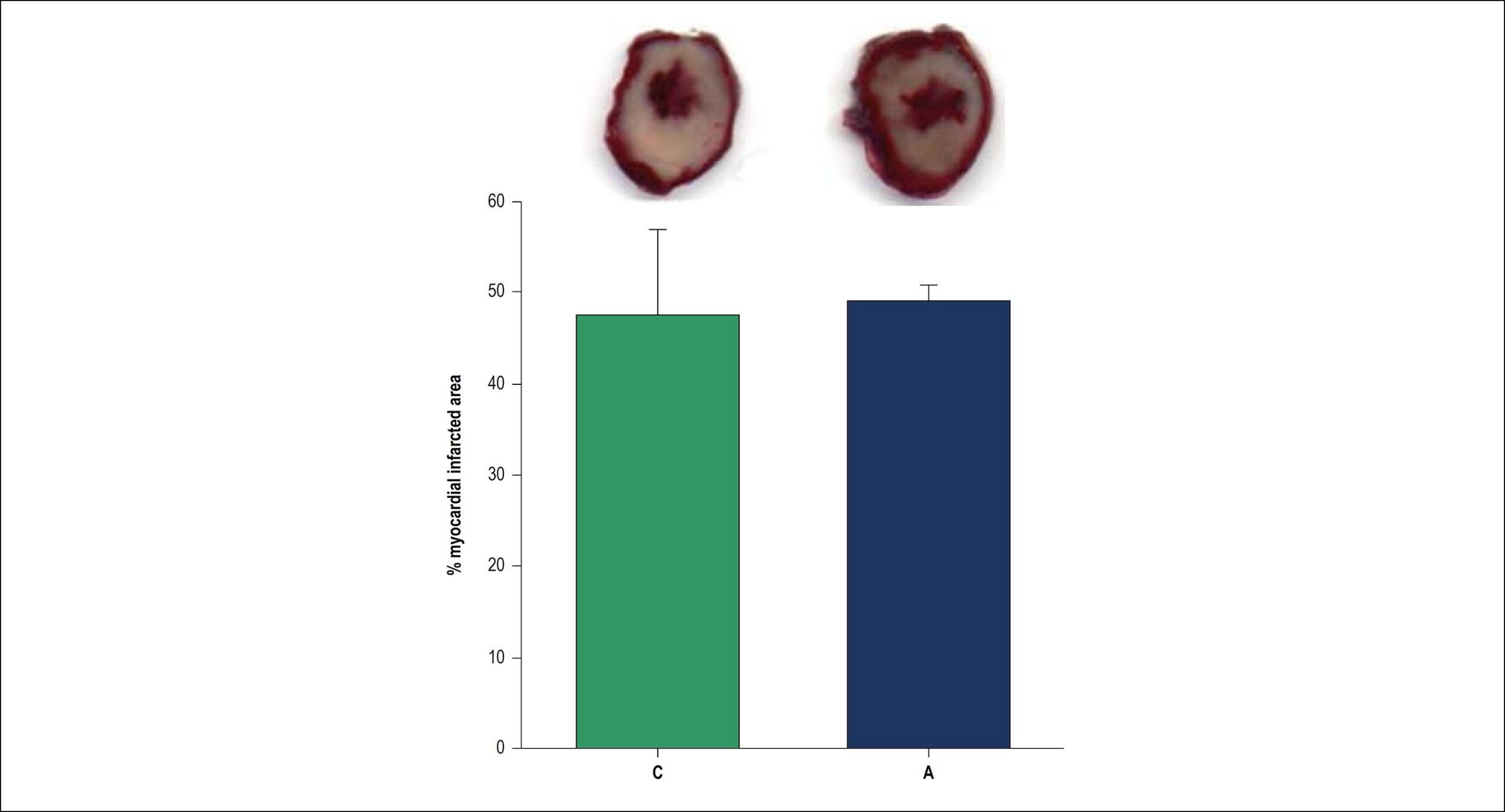
There was no difference between the groups in initial body weight, final body weight and daily feed intake. Group A presented lower lipid hydroperoxide myocardial concentration and higher catalase activity, superoxide dismutase and glutathione peroxidase than group C. We also observed increased myocardial activity of b-hydroxyacyl coenzyme-A dehydrogenase, pyruvate dehydrogenase, citrate synthase, complex I, complex II and ATP synthase in the A group as well as lower activity of the lactate dehydrogenase and phosphofructokinase enzymes. The systolic function was similar between the groups, and the A group presented poorer diastolic function than the C group. We did not observe any difference between the groups in relation to myocardial infarction area, total and phosphorylated NF-kB, total and acetylated FOXO1, SIRT1 and Nrf-2 protein expression.

Conclusion:

despite improving energy metabolism and attenuating oxidative stress, açai supplementation did not decrease the infarcted area or improve left ventricular function in the global ischemia-reperfusion model.

  • Chemical Reactions
  • Energy metabolism
  • Euterpe Olerácea
  • Myocardial Ischemia
  • myocardial reperfusion, injury
  • Oxidative Stress
  • Rats
Read Full Article
Creative Commons Attribution (CC BY) Creative Commons license
14/11/2019 DOI: 10.36660/abc.20180140
Evaluation of the metabolism of high energy phosphates in patients with Chagas' disease
ABC
Artigo Original

Evaluation of the metabolism of high energy phosphates in patients with Chagas' disease

Ana Maria Betim Paes Leme et al. Vera Maria Cury Salemi José Rodrigues Parga Bárbara Maria Ianni … Charles Mady Robert G. Weiss Roberto Kalil-Filho

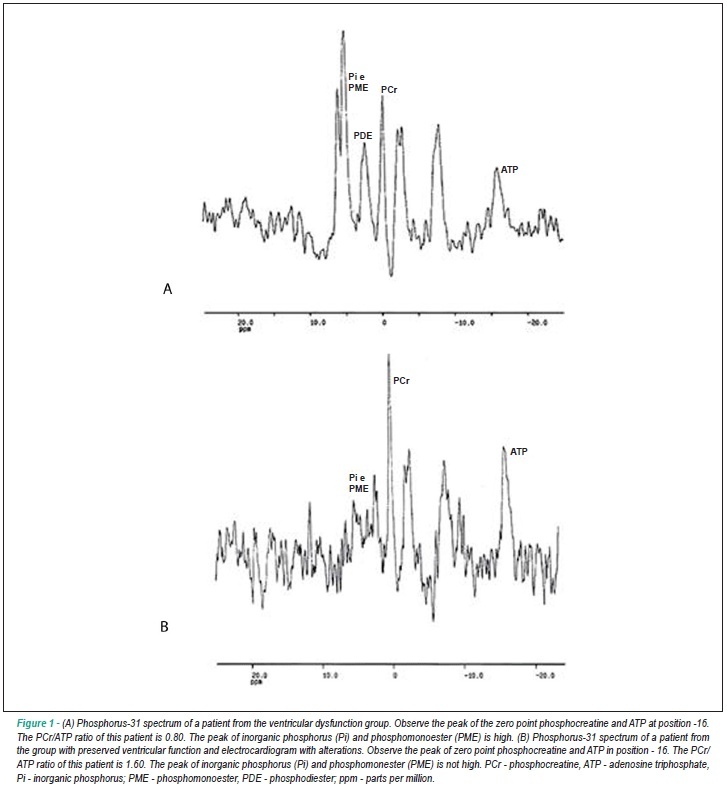
BACKGROUND: Abnormalities in myocardial metabolism have been observed in patients with heart failure of different etiologies. Magnetic resonance spectroscopy (MRS) with phosphorus-31 is a noninvasive technique that allows detection of myocardial metabolic changes. OBJECTIVE: To determine the resting metabolism of high-energy phosphates in patients with Chagas’ disease (CD) by MRS with phosphorus-31. METHODS: We studied 39 patients with CD, 23 with preserved ventricular function (PF Group) and 16 with ventricular dysfunction (VD Group), assessed by Doppler echocardiography. MRS of the anterosseptal region was performed in 39 patients and 8 normal subjects (C Group) through a Phillips 1.5 Tesla device, obtaining the phosphocreatine/beta-adenosine triphosphate myocardial ratio (PCr/β-ATP). RESULTS: The levels of cardiac PCr/β-ATP were reduced in VD Group in relation to PF Group, and the latter presented reduced levels compared to C Group (VD Group: 0.89 ± 0.31 vs PF Group: 1.47 ± 0.34 vs C Group: 1.88 ± 0.08, p < 0.001). A correlation was found between left ventricular ejection fraction and PCr/β-ATP in 39 patients (r = 0.64, p < 0.001). Patients under functional class I (n = 22) presented PCr/β-ATP of 1.45 ± 0.35, and those in functional classes II and III (n = 17), PCr/β-ATP of 0.94 ± 0.36 (p < 0.001). CONCLUSION: The 31-phosphorus MRS was able to detect non-invasively changes in the rest energy metabolism of patients with Chagas' disease, with and without systolic dysfunction. These changes were related to the severity of heart impairment.

  • Chagas Cardiomyopathy
  • Chagas disease
  • Energy metabolism
Read Full Article
Creative Commons Attribution (CC BY) Creative Commons license
30/07/2010 DOI: 10.1590/S0066-782X2010005000099
Circuit weight training vs jogging in metabolic risk factors of overweight/obese women
ABC
Artigo Original

Circuit weight training vs jogging in metabolic risk factors of overweight/obese women

Carlos Alexandre Fett et al. Waléria Christiane Rezende Fett Julio Sérgio Marchini

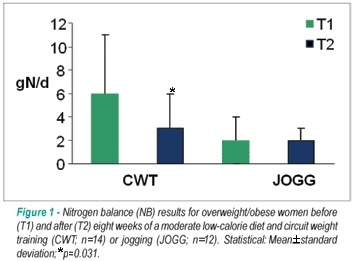
BACKGROUND: Resisted and aerobic exercises are recommended to reduce weight and improve health, but which exercise modality offers the best results is still unclear. OBJECTIVE: The aims of this study were to compare circuit weight training (CWT) with jogging (JOGG) on multiple cardiovascular disease (CVD), metabolic risk factors and fitness of overweight and obese women (body composition, lipid profile, uric acid, glucose, metabolic equivalent (MET), heart rate, blood pressure, flexibility, resting energy expenditure (REE) and nitrogen balance (NB)). METHODS: Fifty women were randomly divided in two groups, but only 26 finished it: CWT (n=14; 36±12 years old; body mass index, BMI=32±7 kg/m²) and JOGG (n=12; 37±9; BMI=29±2). The first month of training consisted of 60 min x 03 days/week and the second month of training consisted of 04 days/week for both protocols and a dietary reeducation. RESULTS: Both groups reduced total body mass, fat body mass, BMI, plasma uric acid and increase in MET (p<0.05); there was no change in lean body mass, REE and resting heart rate. CWT reduced total cholesterol, plasma triglycerides, NB and increased flexibility; JOGG reduced waist/hip ratio, glucose, systolic blood pressure, high-density lipoprotein cholesterol, and increased the total cholesterol/high-density lipoprotein cholesterol ratio (p<0.05). CONCLUSION: Both protocols improved CVD and metabolic risk factors. The CWT presented favorable changes regarding lipid profile and flexibility; JOGG on glucose, waist/hip ratio and blood pressure. These results suggest that resisted exercise combined with aerobics should be considered for obese people. Nevertheless, regarding some basal differences between the groups , it was not possible to conclude that changes were due to exercise type or intra-group variability.

  • Energy metabolism
  • Obesity
  • Overweight
  • physical fitness
  • uric acid
Read Full Article
Creative Commons Attribution (CC BY) Creative Commons license
11/01/2010 DOI: 10.1590/S0066-782X2009001100013 Views 2
ABC
Artigo Original

Cardiovascular risk factors in adolescents with different levels of energy expenditure

Italo Quenni Araujo de Vasconcelos et al. Antonio Stabelini Neto Luís Paulo Gomes Mascarenhas Rodrigo Bozza … Anderson Zampier Ulbrich Wagner de Campos Renata Labronici Bertin

BACKGROUND: Physical inactivity in adolescence is related to body fat accumulation, which apparently can increase the probability of onset and development of metabolic changes. OBJECTIVE: To verify the predisposition to cardiovascular risk factors in adolescents with different levels of energy expenditure. METHODS: A total of 108 young men and 132 young women aged between 12 and 16 years were selected. Daily energy expenditure was obtained using the questionnaire proposed by Bouchard et al. The sample was previously divided according to the quartiles of energy expenditure (Kcal/kg/day) into three groups: sedentary (SG), moderately active (MG), and active (AG). The enzyme-colorimetric method was used to determine the total cholesterol (TC), HDL-C, and triglycerides (TG) levels. LDL-C was calculated using the Friedewald et al’s formula. The one-factor analysis of variance was used for statistical analysis, considering p<0.05. RESULTS: For the male gender, significant differences were found between the groups for the TC variable (mg/dl); AG (121.56±19.15) was different from MG (142.70±27.65) and from SG (145.63±36.54). Likewise, MG was different from SG (F=3.70 and p=0.03). For the TG variable (mg/dl), AG (65.69±18.95) was different from MG (82.25±33.73) and from SG (97.44±45.95). Also, MG was different from SG (F=3.40 and p=0.04). For the female gender, no significant differences were found in relation to daily energy expenditure. CONCLUSION: More active young men show lower TC and TG levels in comparison with their moderately active and sedentary peers.

  • Adolescent
  • Energy metabolism
  • Risk Factors
Read Full Article
Creative Commons Attribution (CC BY) Creative Commons license
11/11/2008 DOI: 10.1590/S0066-782X2008001600004 Views 1

How to cite this article

EndNote RIS

Electronic Document Format (Vancouver)

Pereira FWL, Paiva SAR. L-Carnitine Supplementation in the Diabetic Heart. Arquivos Brasileiros de Cardiologia 2021;117(4):726-7.

Electronic Document Format (ABNT)

Pereira, Filipe Welson Leal; Paiva, Sergio Alberto Rupp de. L-Carnitine Supplementation in the Diabetic Heart. Arquivos Brasileiros de Cardiologia, v. 117, n. 4, p. 726-727, Oct. 2021.

Electronic Document Format (APA)

Pereira, F. W. L., & Paiva, S. A. R. (2021). L-Carnitine Supplementation in the Diabetic Heart. Arquivos Brasileiros de Cardiologia, 117(4), 726-727.

Electronic Document Format (ISO)

Pereira, Filipe Welson Leal and Paiva, Sergio Alberto Rupp de. L-Carnitine Supplementation in the Diabetic Heart. Arquivos Brasileiros de Cardiologia [online]. 2021, vol. 117, n. 4, [cited 2026-10-14], pp. 726-727. Available from: <https://journals.cardiol.br/en/article/l-carnitine-supplementation-in-the-diabetic-heart/>. ISSN 0066-782X

EndNote RIS

Electronic Document Format (Vancouver)

Paravidino VB, Mediano MFF, Sichieri R. Physical Exercise, Energy Expenditure and Weight Loss: An Assumption not Always Observed in Practice. International Journal of Cardiovascular Sciences 2021;34(6):734-6.

Electronic Document Format (ABNT)

Paravidino, Vitor Barreto; Mediano, Mauro Felippe Felix; Sichieri, Rosely. Physical Exercise, Energy Expenditure and Weight Loss: An Assumption not Always Observed in Practice. International Journal of Cardiovascular Sciences, v. 34, n. 6, p. 734-736, May. 2021.

Electronic Document Format (APA)

Paravidino, V. B., Mediano, M. F. F., & Sichieri, R. (2021). Physical Exercise, Energy Expenditure and Weight Loss: An Assumption not Always Observed in Practice. International Journal of Cardiovascular Sciences, 34(6), 734-736.

Electronic Document Format (ISO)

Paravidino, Vitor Barreto and Mediano, Mauro Felippe Felix and Sichieri, Rosely. Physical Exercise, Energy Expenditure and Weight Loss: An Assumption not Always Observed in Practice. International Journal of Cardiovascular Sciences [online]. 2021, vol. 34, n. 6, [cited 2026-10-14], pp. 734-736. Available from: <https://journals.cardiol.br/en/article/physical-exercise-energy-expenditure-and-weight-loss-an-assumption-not-always-observed-in-practice/>. ISSN 2359-4802

EndNote RIS

Electronic Document Format (Vancouver)

Alegre P, Mathias L, Lourenço MA, Santos PP, Gonçalves A, Fernandes AA, Gaiolla PSA, et al. Euterpe Oleracea Mart. (Açaí) Reduces Oxidative Stress and Improves Energetic Metabolism in Myocardial Ischemia-Reperfusion Injury in Rats. Arquivos Brasileiros de Cardiologia 2019;114(1):78-86.

Electronic Document Format (ABNT)

Alegre, Patricia; Mathias, Livia; Lourenço, Maria Angelica; Santos, Priscila Portugal dos; Gonçalves, Andrea; Fernandes, Ana Angélica; Gaiolla, Paula Schmidt Azevedo; Minicucci, Marcos Ferreira; Zornoff, Leonardo; Paiva, Sergio Alberto Rupp; Polegato, Bertha Furlan. Euterpe Oleracea Mart. (Açaí) Reduces Oxidative Stress and Improves Energetic Metabolism in Myocardial Ischemia-Reperfusion Injury in Rats. Arquivos Brasileiros de Cardiologia, v. 114, n. 1, p. 78-86, Nov. 2019.

Electronic Document Format (APA)

Alegre, P., Mathias, L., Lourenço, M. A., Santos, P. P. , Gonçalves, A., Fernandes, A. A., Gaiolla, P. S. A., Minicucci, M. F., Zornoff, L., Paiva, S. A. R., & Polegato, B. F. (2019). Euterpe Oleracea Mart. (Açaí) Reduces Oxidative Stress and Improves Energetic Metabolism in Myocardial Ischemia-Reperfusion Injury in Rats. Arquivos Brasileiros de Cardiologia, 114(1), 78-86.

Electronic Document Format (ISO)

Alegre, Patricia and Mathias, Livia and Lourenço, Maria Angelica and Santos, Priscila Portugal dos and Gonçalves, Andrea and Fernandes, Ana Angélica and Gaiolla, Paula Schmidt Azevedo and Minicucci, Marcos Ferreira and Zornoff, Leonardo and Paiva, Sergio Alberto Rupp and Polegato, Bertha Furlan. Euterpe Oleracea Mart. (Açaí) Reduces Oxidative Stress and Improves Energetic Metabolism in Myocardial Ischemia-Reperfusion Injury in Rats. Arquivos Brasileiros de Cardiologia [online]. 2019, vol. 114, n. 1, [cited 2026-10-14], pp. 78-86. Available from: <https://journals.cardiol.br/en/article/euterpe-oleracea-mart-acai-reduces-oxidative-stress-and-improves-energetic-metabolism-in-myocardial-ischemia-reperfusion-injury-in-rats/>. ISSN 0066-782X

EndNote RIS

Electronic Document Format (Vancouver)

Leme AMBP, Salemi VMC, Parga JR, Ianni BM, Mady C, Weiss RG, Kalil-Filho R, et al. Evaluation of the metabolism of high energy phosphates in patients with Chagas’ disease. Arquivos Brasileiros de Cardiologia 2010;95(2):264-73.

Electronic Document Format (ABNT)

Leme, Ana Maria Betim Paes; Salemi, Vera Maria Cury; Parga, José Rodrigues; Ianni, Bárbara Maria; Mady, Charles; Weiss, Robert G.; Kalil-Filho, Roberto. Evaluation of the metabolism of high energy phosphates in patients with Chagas’ disease. Arquivos Brasileiros de Cardiologia, v. 95, n. 2, p. 264-273, Jul. 2010.

Electronic Document Format (APA)

Leme, A. M. B. P., Salemi, V. M. C., Parga, J. R., Ianni, B. M., Mady, C., Weiss, R. G., & Kalil-Filho, R. (2010). Evaluation of the metabolism of high energy phosphates in patients with Chagas’ disease. Arquivos Brasileiros de Cardiologia, 95(2), 264-273.

Electronic Document Format (ISO)

Leme, Ana Maria Betim Paes and Salemi, Vera Maria Cury and Parga, José Rodrigues and Ianni, Bárbara Maria and Mady, Charles and Weiss, Robert G. and Kalil-Filho, Roberto. Evaluation of the metabolism of high energy phosphates in patients with Chagas’ disease. Arquivos Brasileiros de Cardiologia [online]. 2010, vol. 95, n. 2, [cited 2026-10-14], pp. 264-273. Available from: <https://journals.cardiol.br/en/article/evaluation-of-the-metabolism-of-high-energy-phosphates-in-patients-with-chagas-disease/>. ISSN 0066-782X

EndNote RIS

Electronic Document Format (Vancouver)

Fett CA, Fett WCR, Marchini JS. Circuit weight training vs jogging in metabolic risk factors of overweight/obese women. Arquivos Brasileiros de Cardiologia 2010;93(5):519-25.

Electronic Document Format (ABNT)

Fett, Carlos Alexandre; Fett, Waléria Christiane Rezende; Marchini, Julio Sérgio. Circuit weight training vs jogging in metabolic risk factors of overweight/obese women. Arquivos Brasileiros de Cardiologia, v. 93, n. 5, p. 519-525, Jan. 2010.

Electronic Document Format (APA)

Fett, C. A., Fett, W. C. R., & Marchini, J. S. (2010). Circuit weight training vs jogging in metabolic risk factors of overweight/obese women. Arquivos Brasileiros de Cardiologia, 93(5), 519-525.

Electronic Document Format (ISO)

Fett, Carlos Alexandre and Fett, Waléria Christiane Rezende and Marchini, Julio Sérgio. Circuit weight training vs jogging in metabolic risk factors of overweight/obese women. Arquivos Brasileiros de Cardiologia [online]. 2010, vol. 93, n. 5, [cited 2026-10-14], pp. 519-525. Available from: <https://journals.cardiol.br/en/article/circuit-weight-training-vs-jogging-in-metabolic-risk-factors-of-overweight-obese-women/>. ISSN 0066-782X

EndNote RIS

Electronic Document Format (Vancouver)

Vasconcelos IQA, Stabelini Neto A, Mascarenhas LPG, Bozza R, Ulbrich AZ, Campos W, Bertin RL, et al. Cardiovascular risk factors in adolescents with different levels of energy expenditure. Arquivos Brasileiros de Cardiologia 2008;91(4):227-33.

Electronic Document Format (ABNT)

Vasconcelos, Italo Quenni Araujo de; Stabelini Neto, Antonio; Mascarenhas, Luís Paulo Gomes; Bozza, Rodrigo; Ulbrich, Anderson Zampier; Campos, Wagner de; Bertin, Renata Labronici. Cardiovascular risk factors in adolescents with different levels of energy expenditure. Arquivos Brasileiros de Cardiologia, v. 91, n. 4, p. 227-233, Nov. 2008.

Electronic Document Format (APA)

Vasconcelos, I. Q. A. , Stabelini Neto, A., Mascarenhas, L. P. G., Bozza, R., Ulbrich, A. Z., Campos, W. , & Bertin, R. L. (2008). Cardiovascular risk factors in adolescents with different levels of energy expenditure. Arquivos Brasileiros de Cardiologia, 91(4), 227-233.

Electronic Document Format (ISO)

Vasconcelos, Italo Quenni Araujo de and Stabelini Neto, Antonio and Mascarenhas, Luís Paulo Gomes and Bozza, Rodrigo and Ulbrich, Anderson Zampier and Campos, Wagner de and Bertin, Renata Labronici. Cardiovascular risk factors in adolescents with different levels of energy expenditure. Arquivos Brasileiros de Cardiologia [online]. 2008, vol. 91, n. 4, [cited 2026-10-14], pp. 227-233. Available from: <https://journals.cardiol.br/en/article/cardiovascular-risk-factors-in-adolescents-with-different-levels-of-energy-expenditure/>. ISSN 0066-782X

  • About ABC Family
  • Internal Regulation
  • Editorial Board
  • Brazilian Society of Cardiology (SBC)

Issues

SBC Guidelines

  • Videos
  • Podcasts
  • News