ABC Family Arquivos Brasileiros de Cardiologia International Journal of Cardiovascular Sciences ABC Heart Failure & Cardiomyopathy ABC Imagem Cardiovascular
Português English
ABC Family
Português English
  • About
    • About ABC Family
    • Internal Regulation
    • Editorial Board
    • Brazilian Society of Cardiology (SBC)
  • Issues
  • SBC Guidelines
  • Content
    • Videos
    • Podcasts
    • News
  • About
    • About ABC Family
    • Internal Regulation
    • Editorial Board
    • Brazilian Society of Cardiology (SBC)
  • Issues
  • SBC Guidelines
  • Content
    • Videos
    • Podcasts
    • News

ABC Family

  • ABC Family
  • Arquivos Brasileiros de Cardiologia
  • International Journal of Cardiovascular Sciences
  • ABC Heart Failure & Cardiomyopathy
  • ABC Imagem Cardiovascular
Search in

No content found.

Journals
Ordering
Article types
Others

  1. Home
  2. Keyword: Arrhythmias Cardiacs
Figure 1
IJCS
Case Report

Cardiocerebral Infarction: A Combination to Prevent

Margarida Cabral et al. Ana Ponciano Beatriz Santos João Morais

Background

The acute complications of myocardial infarction (MI), such as mechanical, arrhythmic, ischemic, and inflammatory sequelae, may be responsible for significant cardiovascular morbimortality.

Life-threatening arrhythmias, namely ventricular fibrillation or tachycardia, may be a challenging complication requiring a prompt approach. In some cases, acute ischemia leads to polymorphic ventricular tachycardia (PVT), and, rarely, to potentially lethal torsades de pointes ventricular tachycardia. –

[…]

  • Arrhythmias Cardiacs
  • Cerebral Infarction/complications
  • Myocardial Infarction
  • Stroke
  • Ventricular Fibrillation
Read Full Article
Creative Commons Attribution (CC BY) Creative Commons license
01/08/2022 DOI: 10.36660/ijcs.20210276
Figure 1
ABC
Original Article

Predictors of Total Mortality and Serious Arrhythmic Events in Non-Ischemic Heart Failure Patients: The Role of Galectin-3

Adriano Nunes Kochi et al. Mauricio Pimentel Michael Andrades Tiago Zimerman … Leandro Ioschpe Zimerman Luis Eduardo Rohde

Abstract

Background:

Risk stratification remains clinically challenging in patients with heart failure (HF) of non-ischemic etiology. Galectin-3 is a serum marker of fibrosis that might help in prognostication.

Objective:

To determine the role of galectin-3 as a predictor of major arrhythmic events and overall mortality.

Methods:

We conducted a prospective cohort study that enrolled 148 non-ischemic HF patients. All patients underwent a comprehensive baseline clinical and laboratory assessment, including levels of serum galectin-3. The primary outcome was the occurrence of arrhythmic syncope, appropriate implantable cardioverter defibrillator therapy, sustained ventricular tachycardia, or sudden cardiac death. The secondary outcome was all-cause death. For all statistical tests, a two-tailed p-value<0.05 was considered significant.

Results:

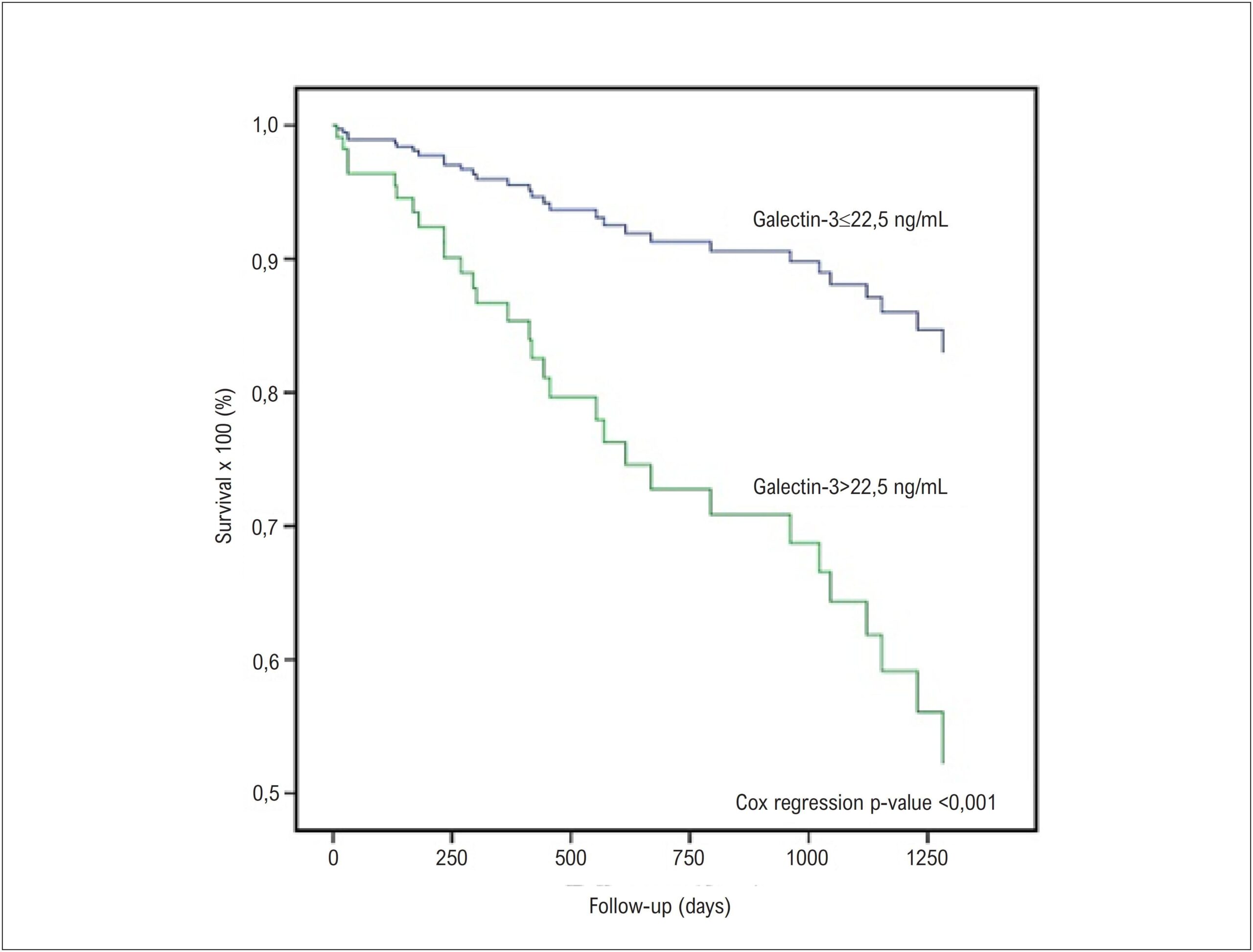
In a median follow-up of 941 days, the primary and secondary outcomes occurred in 26 (17.5%) and 30 (20%) patients, respectively. Serum galectin-3>22.5 ng/mL (highest quartile) did not predict serious arrhythmic events (HR: 1.98, p=0.152). Independent predictors of the primary outcome were left ventricular end-diastolic diameter (LVEDD)>73mm (HR: 3.70, p=0.001), exercise periodic breathing (EPB) on cardiopulmonary exercise testing (HR: 2.67, p=0.01), and non-sustained ventricular tachycardia (NSVT)>8 beats on Holter monitoring (HR: 3.47, p=0.027). Predictors of all-cause death were galectin-3>22.5 ng/mL (HR: 3.69, p=0.001), LVEDD>73mm (HR: 3.35, p=0.003), EPB (HR: 3.06, p=0.006), and NSVT>8 beats (HR: 3.95, p=0.007). The absence of all risk predictors was associated with a 91.1% negative predictive value for the primary outcome and 96.6% for total mortality.

Conclusions:

In non-ischemic HF patients, elevated galectin-3 levels did not predict major arrhythmic events but were associated with total mortality. Absence of risk predictors revealed a prevalent subgroup of HF patients with an excellent prognosis.
  • Apoptosis
  • Arrhythmias Cardiacs
  • Death, Sudden
  • Defibrillators, Implantable
  • Galectin 3
  • Heart Failure
  • Mortality
Read Full Article
Creative Commons Attribution (CC BY) Creative Commons license
20/09/2021 DOI: 10.36660/abc.20200353 Views 3
Figure 1
ABC
Original Article

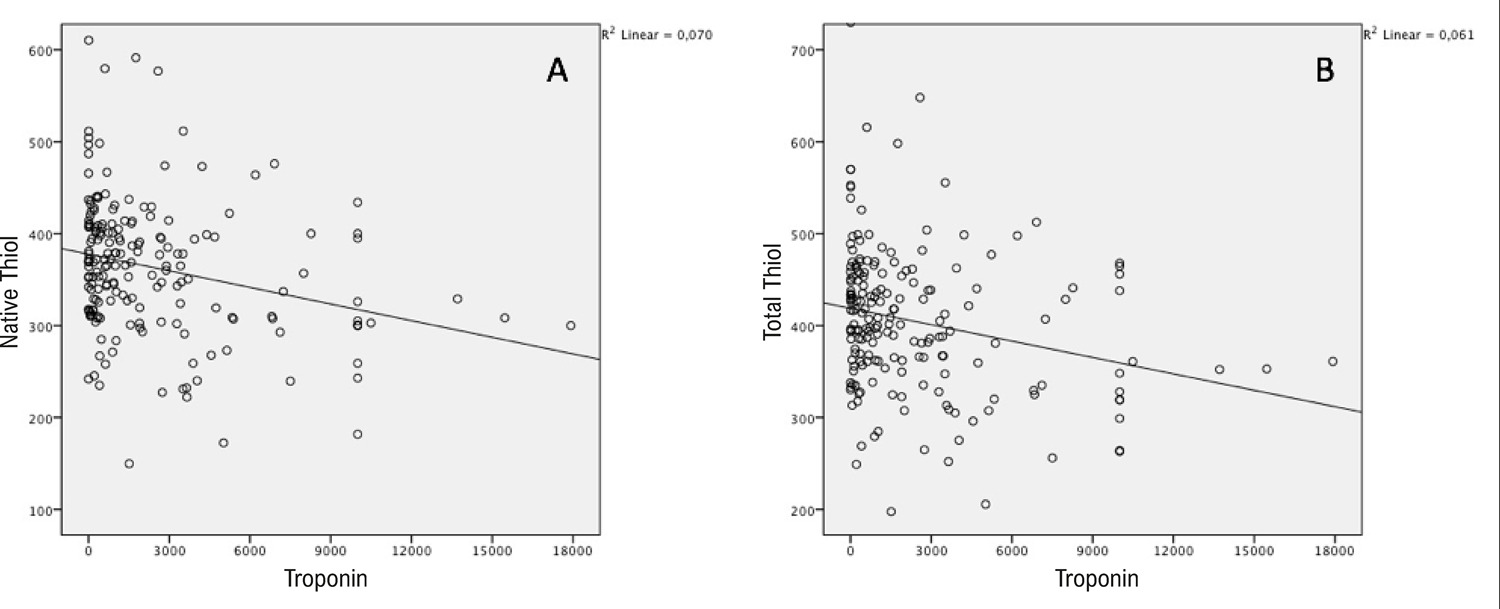
Association between Plasma Thiol Parameters and Troponin Levels in Patients with Acute Coronary Syndrome and Prediction of In-Hospital Ventricular Arrhythmia

Mehmet Erdoğan et al. Selcuk Ozturk Elçin Özdemir Tutar Esma Arslan … Muhammet Cihat Çelik Serdal Baştuğ Salim Neşelioğlu

Abstract

Background

Ventricular arrhythmias (VAs) are the main cause of in-hospital mortality and morbidity in acute coronary syndrome (ACS) patients and its relationship with thiol is not known.

Objective

To investigate the relationship between plasma thiol levels and troponin levels in patients with ACS and to estimate in-hospital VA development during hospital stay.

Method

The study included 231 consecutive ST-segment elevation ACS (STE-ACS) and non-ST-segment elevation ACS (NSTE-ACS) patients. After application of exclusion criteria, 191 patients were included in the statistical analysis. Patients were classified into two groups: STE-ACS group (n=94) and NSTE-ACS group (n=97). Plasma thiol, disulphide and troponin levels were measured and troponin-to-native thiol ratio (TNTR) was calculated. A two-sided p value of less than 0.05 was considered to be statistically significant.

Results

Plasma native thiol, total thiol, disulphide and their ratios were similar between the groups. TNTR was significantly higher in the STE-ACS group compared to the NSTE-ACS group. Troponin and thiol levels correlated negatively and significantly. Native thiol was found to be an independent predictor of VA development in STE-ACS patients and in all ACS patients. TNTR was found to be an independent predictor of VA development in NSTE-ACS patients and in all ACS patients.

Conclusion

Plasma thiol levels can be used to identify ACS patients at high risk for in-hospital VA development. Correlation between troponin and thiol levels may suggest that thiols may be an important marker for diagnosis and prognosis of ACS with the help of future studies.

  • Acetyl- CoA-Acyltransferase
  • Arrhythmias Cardiacs
  • Atherosclerosis
  • Coronary Acute, Syndrome
  • Coronary Artery Disease
  • Oxidative Stress
Read Full Article
Creative Commons Attribution (CC BY) Creative Commons license
16/07/2021 DOI: 10.36660/abc.20190672
IJCS
Original Article

Treatment of Hepatitis C with Direct-Acting Antivirals does not Induce Significant Arrhythmias

André Gustavo da Silva Rezende et al. Edmundo Pessoa Lopes Andrea Doria Batista Norma Arteiro Filgueira … Williane Emanuelle Rodrigues Costa Poline Maria de Sousa Felix Brivaldo Markman Filho

Abstract

Background

Chronic Hepatitis C (CHC) therapy with direct-acting antivirals (DAAs) has high efficacy and safety, but some cases of bradyarrhythmias have been described.

Objective

To evaluate heart rhythm disorders during DAA treatments.

Methods

Forty-eight patients with CHC (mean 61 years of age; 56% males; 73% HCV genotype 1) were evaluated before and during treatment with DAAs, analyzed by a resting 12-lead ECG [PR, QRS, and QT corrected (QTc) intervals measured] and a 24-h-Holter system, to evaluate the heart rate (HR) and the occurrence of arrhythmias. The Student’s t-test or the Wilcoxon-Mann-Whitney test for continuous, independent variables were performed with a statistically significant p-value < 0.05.

Results

The electrocardiographic parameters before and during treatment were: PR interval (147.2 ± 15.6 vs 144.9 ± 15.6 ms; p = 0.21), QTc interval (427 ± 22.3 vs 421.7 ± 25.3 ms; p = 0.24), minimum HR (52.7 ± 8.4 vs 53.2 ± 8.5 bpm; p = 0.49), median HR (74.2 ± 10.4 vs 75.2 ± 9 bpm; p = 0.83), and maximum HR (117.4 ± 16.8 vs 117.9 ± 16.3 bpm; p = 0.25). These parameters proved to be similar among 11 beta-blockers or 22 ribavirin users. During treatment, the 21 cirrhotic patients presented significantly lower median HRs (72.1 ± 9.0 vs 77.9 ± 8.2 bpm; p = 0.02) and maximum HRs (108.9 ± 15.2 vs. 125.1 ± 13.2 bpm, p < 0.0001) through a 24-h-Holter monitoring than the patients without cirrhosis. No clinically relevant arrhythmias were detected.

Conclusion

DAAs do not significantly influence heart rate or induce significant cardiac arrhythmias in patients with CHC.

  • Antiviral Agents
  • Arrhythmias Cardiacs
  • Drug Resistance Viral
  • Hepatitis C/treatment
  • Sofosbuvir/ therapeutic use
Read Full Article
Creative Commons Attribution (CC BY) Creative Commons license
23/06/2021 DOI: 10.36660/ijcs.20200220 Views 1
Figure 1
ABC
Research Letter

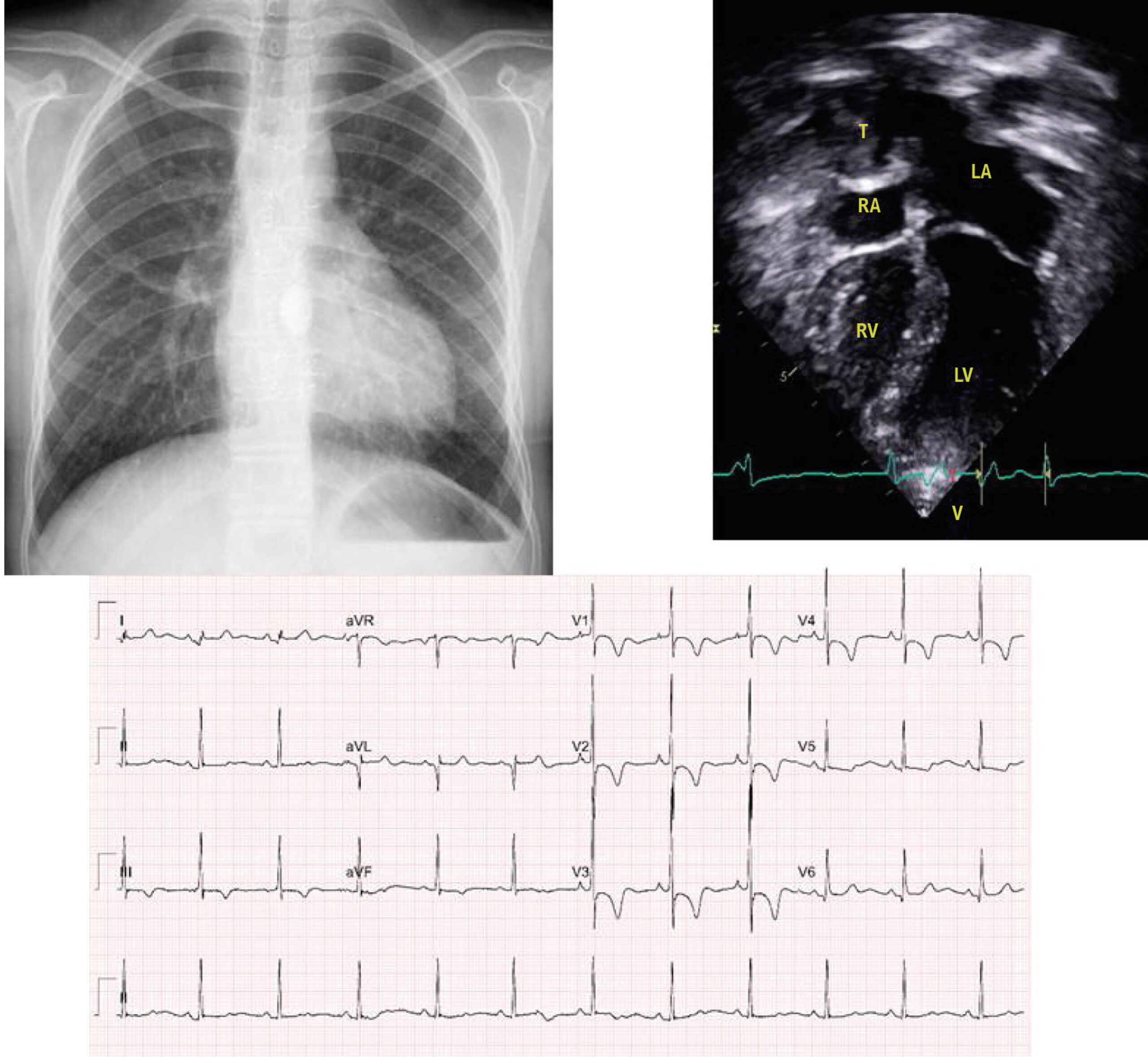
17-Year-Old Man with Pulmonary Atresia and Intact Ventricular Septum Submitted to Fontan Operation, and with Persistent Coronary-Cavitary Fistula

Edmar Atik

Introduction

Pulmonary atresia with intact ventricular septum is a congenital anomaly with total interruption of blood flow between the right ventricle and the pulmonary trunk, and in general it is not accompanied by associated defects, except for interatrial septal defect, present in 20%, with predominance of patent foramen ovale. Valve atresia results from the lack of embryological development of this fibrous structure, which can be located at the valve level (fibrous membrane) but also at the infundibular level (blind fundus). As a consequence, myocardial hypertrophy and hypoplasia of the right ventricle, hypoplasia of the ring and tricuspid valve, mild tricuspid insufficiency and pulmonary flow dependent on the ductus arteriosus appear. In view of greater hypertension in right ventricle, direct connections with the coronary circulation are formed through sinusoids, with flow towards the aorta. In this situation, it is said that the coronary circulation is dependent on the right ventricle, and when these connections are present in great magnitude, they predispose to myocardial infarction, arrhythmias and right ventricular volume overload, due to retrograde flow from the aorta.

In cases where valve atresia develops later in the fetus, the right ventricular cavity may be well formed with its three portions, the entrance route, the trabecular and the exit route and, as a consequence, there is marked tricuspid insufficiency, even with Ebstein-type alteration of the redundant and myxomatous valve, ventricular wall thinning, ventricular dysfunction and right heart failure, the latter superimposed on hypoxia. In general, it is not accompanied by other associated defects and the pulmonary arteries are of adequate size. In these cases, there is no connection between the right ventricle and the coronary arteries by sinusoids.

[…]

  • Arrhythmias Cardiacs
  • Cardiomegaly
  • Coronary-Cavitary Fistula
  • Fontan Surgery
  • Heart Defects, Congenital
  • Pulmonary Atresia/surgery
  • Right Ventricle/Abnormalities
Read Full Article
Creative Commons Attribution (CC BY) Creative Commons license
14/06/2021 DOI: 10.36660/abc.20201011
Figure 1
ABC
Original Article

Healthcare Utilization and Costs Reduction after Radiofrequency Ablation For Atrial Fibrillation in the Brazilian Private Healthcare System

Eduardo Benchimol Saad et al. Daiane Oliveira Tayar Rodrigo Antonini Ribeiro Silvio Mauro Junqueira Jr. … Priscila Andrade Andre d'Avila

Abstract

Background:

Atrial fibrillation (AF) is the most common arrhythmia worldwide, with significantly associated hospitalizations. Considering its growing incidence, the AF related economic burden to healthcare systems is increasing. Healthcare expenditures might be substantially reduced after AF radiofrequency ablation (AFRA).

Objective:

To compare resource utilization and costs before and after AFRA in a cohort of patients from the Brazilian private healthcare system.

Methods:

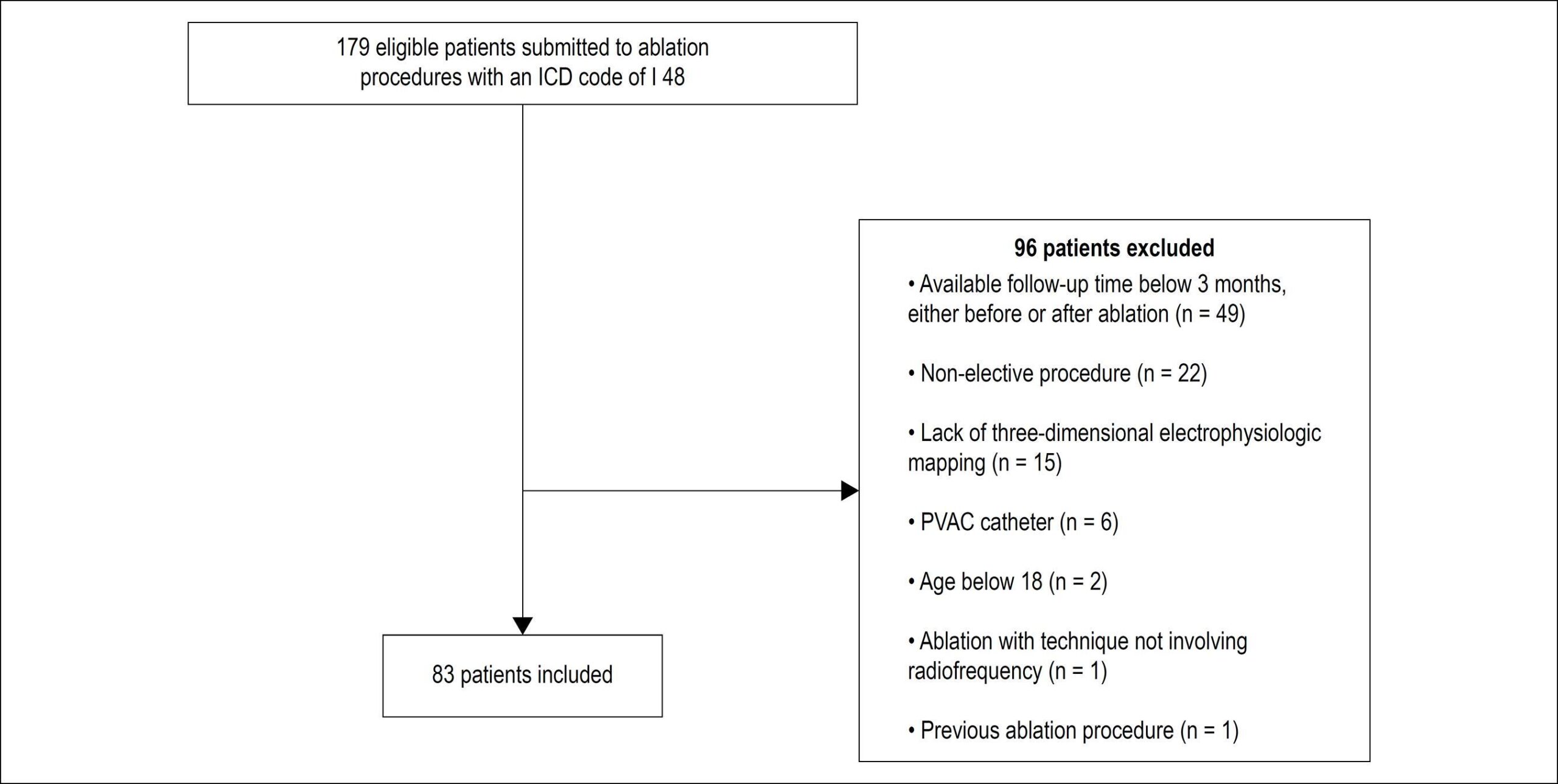
We conducted a retrospective cohort study, based on patients’ billing information from an administrative database. Eighty-three adult patients who had an AFRA procedure between 2014 and 2015 were included. Healthcare resource utilization related to cardiovascular causes, including ambulatory and hospital care, as well as its costs, were analyzed. A p-value of less than 0.05 was considered statistically significant.

Results:

Mean follow-up was 14.7 ± 7.1 and 10.7 ± 5.4 months before and after AFRA, respectively. The 1-year AF recurrence-free rate was 83.6%. Before AFRA, median monthly total costs were Brazilian Reais (BRL) 286 (interquartile range [IQR]: 137-766), which decreased by 63.5% (p = 0.001) after the procedure, to BRL 104 (IQR: 57-232). Costs were reduced both in the emergency (by 58.6%, p < 0.001) and outpatient settings (by 56%, p < 0.001); there were no significant differences in the outpatient visits, inpatient elective admissions and elective admission costs before and after AFRA. The monthly median emergency department visits were reduced (p < 0.001).

Conclusion:

In this cohort, overall healthcare costs were reduced by 63.5%. A longer follow-up could be useful to evaluate if long-term cost reduction is maintained.

  • Arrhythmias Cardiacs
  • Atrial Fibrillation
  • Care Costs/trends
  • Catheter Ablation
  • Hospital Costs
  • Hospitalization
Read Full Article
Creative Commons Attribution (CC BY) Creative Commons license
29/07/2019 DOI: 10.5935/abc.20190139 Views 2

How to cite this article

EndNote RIS

Electronic Document Format (Vancouver)

Cabral M, Ponciano A, Santos B, Morais J. Cardiocerebral Infarction: A Combination to Prevent. International Journal of Cardiovascular Sciences 2022;36:e20210276.

Electronic Document Format (ABNT)

Cabral, Margarida; Ponciano, Ana; Santos, Beatriz; Morais, João. Cardiocerebral Infarction: A Combination to Prevent. International Journal of Cardiovascular Sciences, v. 36, e20210276, Jul. 2022.

Electronic Document Format (APA)

Cabral, M., Ponciano, A., Santos, B., & Morais, J. (2022). Cardiocerebral Infarction: A Combination to Prevent. International Journal of Cardiovascular Sciences, 36, e20210276.

Electronic Document Format (ISO)

Cabral, Margarida and Ponciano, Ana and Santos, Beatriz and Morais, João. Cardiocerebral Infarction: A Combination to Prevent. International Journal of Cardiovascular Sciences [online]. 2022, vol. 36, [cited 2026-10-14], e20210276. Available from: <https://journals.cardiol.br/en/article/cardiocerebral-infarction-a-combination-to-prevent/>. ISSN 2359-4802

EndNote RIS

Electronic Document Format (Vancouver)

Kochi AN, Pimentel M, Andrades M, Zimerman T, Zimerman LI, Rohde LE. Predictors of Total Mortality and Serious Arrhythmic Events in Non-Ischemic Heart Failure Patients: The Role of Galectin-3. Arquivos Brasileiros de Cardiologia 2021;117(3):531-4.

Electronic Document Format (ABNT)

Kochi, Adriano Nunes; Pimentel, Mauricio; Andrades, Michael; Zimerman, Tiago; Zimerman, Leandro Ioschpe; Rohde, Luis Eduardo. Predictors of Total Mortality and Serious Arrhythmic Events in Non-Ischemic Heart Failure Patients: The Role of Galectin-3. Arquivos Brasileiros de Cardiologia, v. 117, n. 3, p. 531-541, Sep. 2021.

Electronic Document Format (APA)

Kochi, A. N., Pimentel, M., Andrades, M., Zimerman, T., Zimerman, L. I., & Rohde, L. E. (2021). Predictors of Total Mortality and Serious Arrhythmic Events in Non-Ischemic Heart Failure Patients: The Role of Galectin-3. Arquivos Brasileiros de Cardiologia, 117(3), 531-541.

Electronic Document Format (ISO)

Kochi, Adriano Nunes and Pimentel, Mauricio and Andrades, Michael and Zimerman, Tiago and Zimerman, Leandro Ioschpe and Rohde, Luis Eduardo. Predictors of Total Mortality and Serious Arrhythmic Events in Non-Ischemic Heart Failure Patients: The Role of Galectin-3. Arquivos Brasileiros de Cardiologia [online]. 2021, vol. 117, n. 3, [cited 2026-10-14], pp. 531-541. Available from: <https://journals.cardiol.br/en/article/predictors-of-total-mortality-and-serious-arrhythmic-events-in-non-ischemic-heart-failure-patients-the-role-of-galectin-3/>. ISSN 0066-782X

EndNote RIS

Electronic Document Format (Vancouver)

Erdoğan M, Ozturk S, Tutar E, Arslan E, Çelik MC, Baştuğ S, Neşelioğlu S, et al. Association between Plasma Thiol Parameters and Troponin Levels in Patients with Acute Coronary Syndrome and Prediction of In-Hospital Ventricular Arrhythmia. Arquivos Brasileiros de Cardiologia 2021;117(3):465-73.

Electronic Document Format (ABNT)

Erdoğan, Mehmet; Ozturk, Selcuk; Tutar, Elçin Özdemir; Arslan, Esma; Çelik, Muhammet Cihat; Baştuğ, Serdal; Neşelioğlu, Salim. Association between Plasma Thiol Parameters and Troponin Levels in Patients with Acute Coronary Syndrome and Prediction of In-Hospital Ventricular Arrhythmia. Arquivos Brasileiros de Cardiologia, v. 117, n. 3, p. 465-473, Jul. 2021.

Electronic Document Format (APA)

Erdoğan, M., Ozturk, S., Tutar, E. , Arslan, E., Çelik, M. C., Baştuğ, S., & Neşelioğlu, S. (2021). Association between Plasma Thiol Parameters and Troponin Levels in Patients with Acute Coronary Syndrome and Prediction of In-Hospital Ventricular Arrhythmia. Arquivos Brasileiros de Cardiologia, 117(3), 465-473.

Electronic Document Format (ISO)

Erdoğan, Mehmet and Ozturk, Selcuk and Tutar, Elçin Özdemir and Arslan, Esma and Çelik, Muhammet Cihat and Baştuğ, Serdal and Neşelioğlu, Salim. Association between Plasma Thiol Parameters and Troponin Levels in Patients with Acute Coronary Syndrome and Prediction of In-Hospital Ventricular Arrhythmia. Arquivos Brasileiros de Cardiologia [online]. 2021, vol. 117, n. 3, [cited 2026-10-14], pp. 465-473. Available from: <https://journals.cardiol.br/en/article/association-between-plasma-thiol-parameters-and-troponin-levels-in-patients-with-acute-coronary-syndrome-and-prediction-of-in-hospital-ventricular-arrhythmia/>. ISSN 0066-782X

EndNote RIS

Electronic Document Format (Vancouver)

Rezende AGS, Lopes EP, Batista AD, Filgueira NA, Costa WER, Felix PMS, Markman Filho B, et al. Treatment of Hepatitis C with Direct-Acting Antivirals does not Induce Significant Arrhythmias. International Journal of Cardiovascular Sciences 2021;35(5):578-84.

Electronic Document Format (ABNT)

Rezende, André Gustavo da Silva; Lopes, Edmundo Pessoa; Batista, Andrea Doria; Filgueira, Norma Arteiro; Costa, Williane Emanuelle Rodrigues; Felix, Poline Maria de Sousa; Markman Filho, Brivaldo. Treatment of Hepatitis C with Direct-Acting Antivirals does not Induce Significant Arrhythmias. International Journal of Cardiovascular Sciences, v. 35, n. 5, p. 578-584, Jun. 2021.

Electronic Document Format (APA)

Rezende, A. G. S., Lopes, E. P., Batista, A. D., Filgueira, N. A., Costa, W. E. R., Felix, P. M. S., & Markman Filho, B. (2021). Treatment of Hepatitis C with Direct-Acting Antivirals does not Induce Significant Arrhythmias. International Journal of Cardiovascular Sciences, 35(5), 578-584.

Electronic Document Format (ISO)

Rezende, André Gustavo da Silva and Lopes, Edmundo Pessoa and Batista, Andrea Doria and Filgueira, Norma Arteiro and Costa, Williane Emanuelle Rodrigues and Felix, Poline Maria de Sousa and Markman Filho, Brivaldo. Treatment of Hepatitis C with Direct-Acting Antivirals does not Induce Significant Arrhythmias. International Journal of Cardiovascular Sciences [online]. 2021, vol. 35, n. 5, [cited 2026-10-14], pp. 578-584. Available from: <https://journals.cardiol.br/en/article/treatment-of-hepatitis-c-with-direct-acting-antivirals-does-not-induce-significant-arrhythmias/>. ISSN 2359-4802

EndNote RIS

Electronic Document Format (Vancouver)

Atik E. 17-Year-Old Man with Pulmonary Atresia and Intact Ventricular Septum Submitted to Fontan Operation, and with Persistent Coronary-Cavitary Fistula. Arquivos Brasileiros de Cardiologia 2021;116(6):1161-4.

Electronic Document Format (ABNT)

Atik, Edmar. 17-Year-Old Man with Pulmonary Atresia and Intact Ventricular Septum Submitted to Fontan Operation, and with Persistent Coronary-Cavitary Fistula. Arquivos Brasileiros de Cardiologia, v. 116, n. 6, p. 1161-1164, Jun. 2021.

Electronic Document Format (APA)

Atik, E. (2021). 17-Year-Old Man with Pulmonary Atresia and Intact Ventricular Septum Submitted to Fontan Operation, and with Persistent Coronary-Cavitary Fistula. Arquivos Brasileiros de Cardiologia, 116(6), 1161-1164.

Electronic Document Format (ISO)

Atik, Edmar. 17-Year-Old Man with Pulmonary Atresia and Intact Ventricular Septum Submitted to Fontan Operation, and with Persistent Coronary-Cavitary Fistula. Arquivos Brasileiros de Cardiologia [online]. 2021, vol. 116, n. 6, [cited 2026-10-14], pp. 1161-1164. Available from: <https://journals.cardiol.br/en/article/17-year-old-man-with-pulmonary-atresia-and-intact-ventricular-septum-submitted-to-fontan-operation-and-with-persistent-coronary-cavitary-fistula/>. ISSN 0066-782X

EndNote RIS

Electronic Document Format (Vancouver)

Saad EB, Tayar DO, Ribeiro RA, Junqueira Jr. SM, Andrade P, d’Avila A. Healthcare Utilization and Costs Reduction after Radiofrequency Ablation For Atrial Fibrillation in the Brazilian Private Healthcare System. Arquivos Brasileiros de Cardiologia 2019;113(2):252-7.

Electronic Document Format (ABNT)

Saad, Eduardo Benchimol; Tayar, Daiane Oliveira; Ribeiro, Rodrigo Antonini; Junqueira Jr., Silvio Mauro; Andrade, Priscila; d’Avila, Andre. Healthcare Utilization and Costs Reduction after Radiofrequency Ablation For Atrial Fibrillation in the Brazilian Private Healthcare System. Arquivos Brasileiros de Cardiologia, v. 113, n. 2, p. 252-257, Jul. 2019.

Electronic Document Format (APA)

Saad, E. B., Tayar, D. O., Ribeiro, R. A., Junqueira Jr., S. M., Andrade, P., & d’Avila, A. (2019). Healthcare Utilization and Costs Reduction after Radiofrequency Ablation For Atrial Fibrillation in the Brazilian Private Healthcare System. Arquivos Brasileiros de Cardiologia, 113(2), 252-257.

Electronic Document Format (ISO)

Saad, Eduardo Benchimol and Tayar, Daiane Oliveira and Ribeiro, Rodrigo Antonini and Junqueira Jr., Silvio Mauro and Andrade, Priscila and d’Avila, Andre. Healthcare Utilization and Costs Reduction after Radiofrequency Ablation For Atrial Fibrillation in the Brazilian Private Healthcare System. Arquivos Brasileiros de Cardiologia [online]. 2019, vol. 113, n. 2, [cited 2026-10-14], pp. 252-257. Available from: <https://journals.cardiol.br/en/article/healthcare-utilization-and-costs-reduction-after-radiofrequency-ablation-for-atrial-fibrillation-in-the-brazilian-private-healthcare-system/>. ISSN 0066-782X

  • About ABC Family
  • Internal Regulation
  • Editorial Board
  • Brazilian Society of Cardiology (SBC)

Issues

SBC Guidelines

  • Videos
  • Podcasts
  • News