ABC Family Arquivos Brasileiros de Cardiologia International Journal of Cardiovascular Sciences ABC Heart Failure & Cardiomyopathy ABC Imagem Cardiovascular
Português English
ABC Family
Português English
  • About
    • About ABC Family
    • Internal Regulation
    • Editorial Board
    • Brazilian Society of Cardiology (SBC)
  • Issues
  • SBC Guidelines
  • Content
    • Videos
    • Podcasts
    • News
  • About
    • About ABC Family
    • Internal Regulation
    • Editorial Board
    • Brazilian Society of Cardiology (SBC)
  • Issues
  • SBC Guidelines
  • Content
    • Videos
    • Podcasts
    • News

ABC Family

  • ABC Family
  • Arquivos Brasileiros de Cardiologia
  • International Journal of Cardiovascular Sciences
  • ABC Heart Failure & Cardiomyopathy
  • ABC Imagem Cardiovascular
Search in

No content found.

Journals
Ordering
Article types
Others

  1. Home
  2. Keyword: Acute Myocardial Infarction
Risk Factors, Management, and Evolution after the First Acute Myocardial Infarction: A Real-World Study Comparing Cohorts of Women and Men in the TriNetX Network
ABC
Original Article

Risk Factors, Management, and Evolution after the First Acute Myocardial Infarction: A Real-World Study Comparing Cohorts of Women and Men in the TriNetX Network

Camila Mota Guida et al. Eduardo Juvenal de Souza Leandro Menezes Alves da Costa Thiago Luis Scudeler … Rafael Amorim Belo Nunes Gustavo Bernardes de Figueiredo Oliveira

Abstract

Background:

International cohort studies have consistently demonstrated an unfavorable prognosis in female patients after the first acute myocardial infarction (AMI) over the past decades. However, national data on this topic are limited.

Objectives:

This study aims to compare national cohorts of men and women hospitalized due to the first acute myocardial infarction, examining long-term outcomes.

Methods:

A retrospective, observational study using real-world data extracted from the global TriNetX platform, including patients of both sexes with a confirmed diagnosis of AMI according to the International Classification of Diseases (ICD), version 11, code I21. The level of statistical significance adopted in the analysis was 5% (0.05). The primary outcome assessed was a composite of death, new hospitalization for AMI, myocardial revascularization procedures, or heart failure after the hospital phase with a 5-year follow-up.

Results:

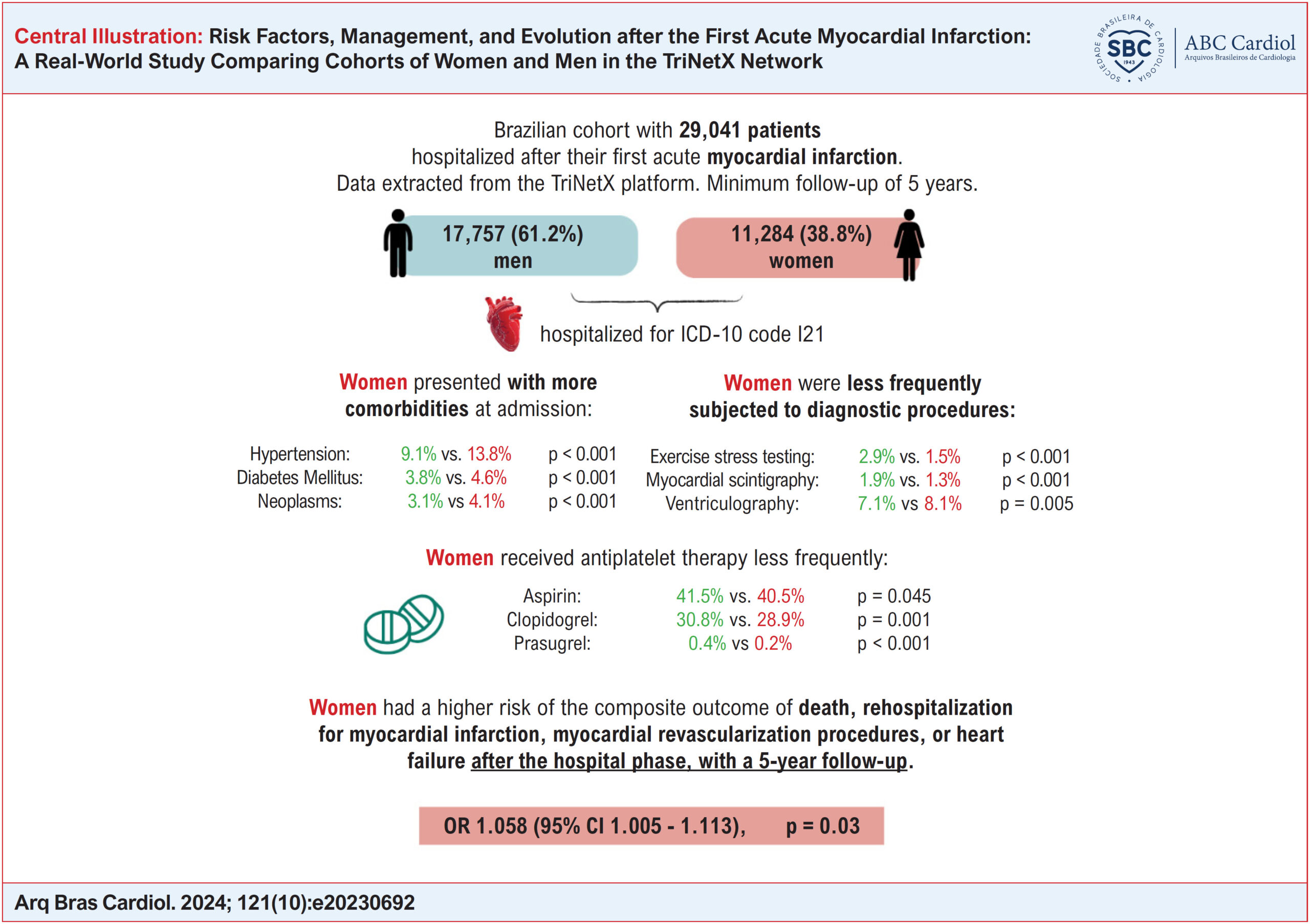
Data from 29,041 patients were evaluated, of which 11,284 (38.4%) were women. The mean age of the female and male populations was 64.4 and 59.8 years, respectively. The group of women showed a higher occurrence of the composite outcome of death, new hospitalization for AMI, myocardial revascularization procedures, or heart failure after the hospital phase with a 5-year follow-up (OR 1.058; CI 1.005 – 1.113; p = 0.03).

Conclusions:

In this large Brazilian cohort, the female sex was associated with a higher occurrence of cardiovascular events within 5 years after hospital discharge.
  • Acute Myocardial Infarction
  • Cardiovascular Disease in Women
  • Risk Factors
Read Full Article
Creative Commons Attribution (CC BY) Creative Commons license
28/10/2024 DOI: 10.36660/abc.20230692i
Effect of Ticagrelor on Left Ventricular Function in Patients with Mildly Reduced Ejection Fraction after Acute Myocardial Infarction
IJCS
Original Article

Effect of Ticagrelor on Left Ventricular Function in Patients with Mildly Reduced Ejection Fraction after Acute Myocardial Infarction

Ilkin Guliyev et al. Engin Algül Gökhan Gökalp Faruk Aydınyılmaz … Nail Burak Özbeyaz Hamza Sunman

Abstract

Background

There are limited data about the effect of new P2Y12 inhibitors on left ventricular ejection fraction (LVEF) after acute myocardial infarction (AMI).

Objectives

We aimed to investigate the effect of ticagrelor on left ventricular function, compared to clopidogrel in patients with heart failure with mildly reduced ejection fraction (HFmrEF) after AMI.

Methods

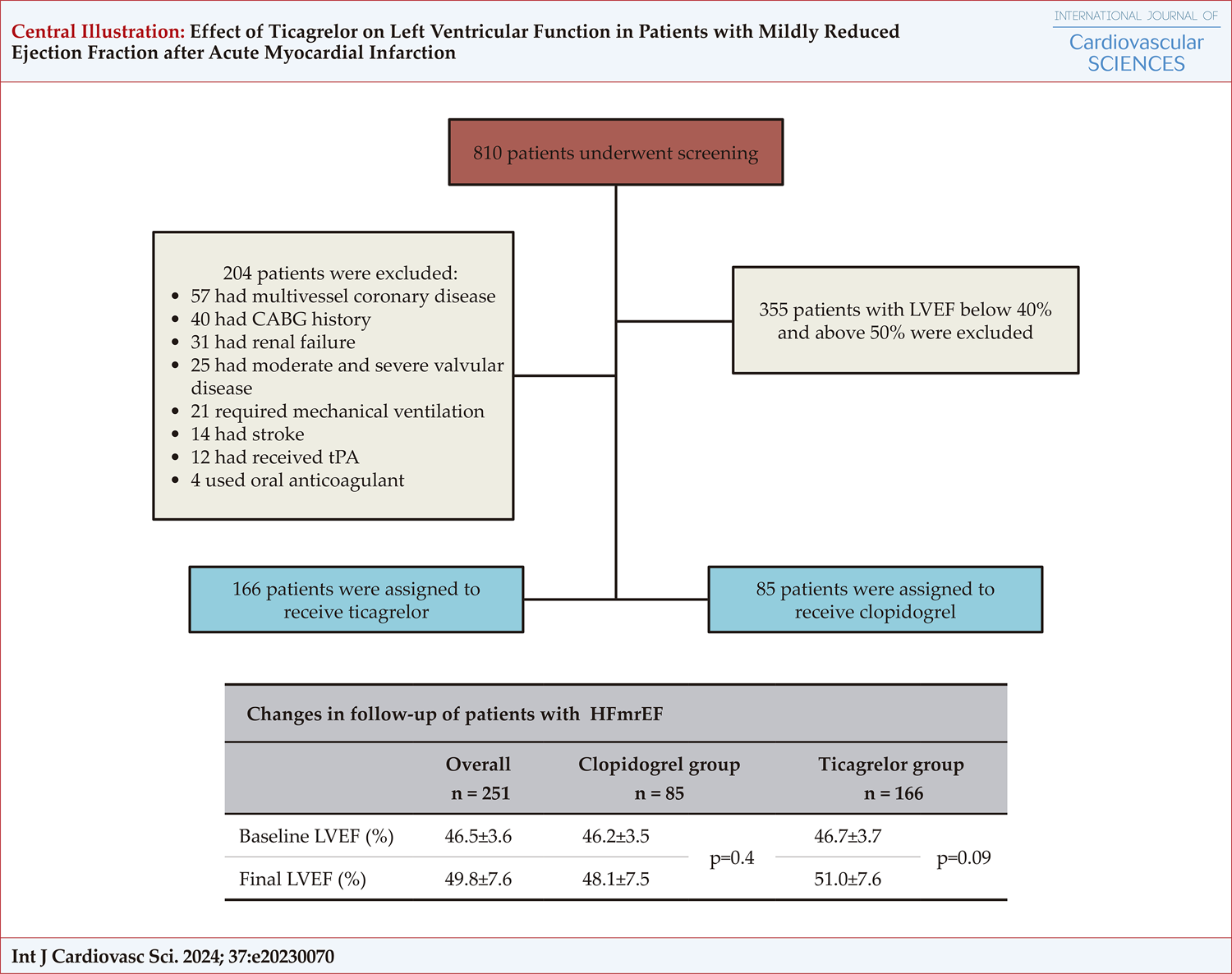
In this cross-sectional, single-center study, we included 251 patients with LVEF between 40% and 50% after AMI before discharge. The patients were divided into 2 groups according to the use of ticagrelor (166 patients) and clopidogrel (85 patients). At the end of the 12-month period, LVEF changes were assessed by echocardiography. P < 0.05 was considered statistically significant.

Results

The mean LVEF before discharge was 46.5% ± 3.6%, and no difference was observed between the ticagrelor and clopidogrel groups (p = 0.20). At the end of the first year, the mean LVEF of the patients increased to 49.8% ± 7.6% in both groups. The use of ticagrelor (β ± SE = 2.05 ± 0.93; p = 0.029), low creatinine level (β ± SE = −10.44 ± 2.35; p < 0.001), low troponin level (β ± SE = −0.38 ± 0.14; p = 0.006), and low heart rate (β ± SE = −0.98 ± 0.33; p = 0.003) were found to be independent predictors of the increase in LVEF (β ± SE 2.05 ± 0.93; 95% confidence interval: 0.21 to 3.90; p = 0.029).

Conclusion

In our study, ticagrelor improved left ventricular function in 12 months follow-up compared to clopidogrel in patients with HFmrEF after AMI.

  • Acute Myocardial Infarction
  • Clopidogrel
  • Systolic Heart Failure
  • Ticagrelor
Read Full Article
Creative Commons Attribution (CC BY) Creative Commons license
11/03/2024 DOI: 10.36660/ijcs.20230070
Figure 1
ABC
Original Article

Assessment of the Impact of the Implementation of a Pre-Hospital Ambulance System on Acute Myocardial Infarction Mortality in a Developing Country

Rodrigo Costa Pereira Vieira et al. Milena Soriano Marcolino Luis Gustavo Silva e Silva Daniella Nunes Pereira … Bruno Ramos Nascimento Alzira de Oliveira Jorge Antonio Luiz P Ribeiro

Abstract

Background

The effective management of patients with acute myocardial infarction (AMI) is time-dependent.

Objectives

To assess the impacts of the implementation of prehospital care on admission rates and mortality associated with AMI.

Methods

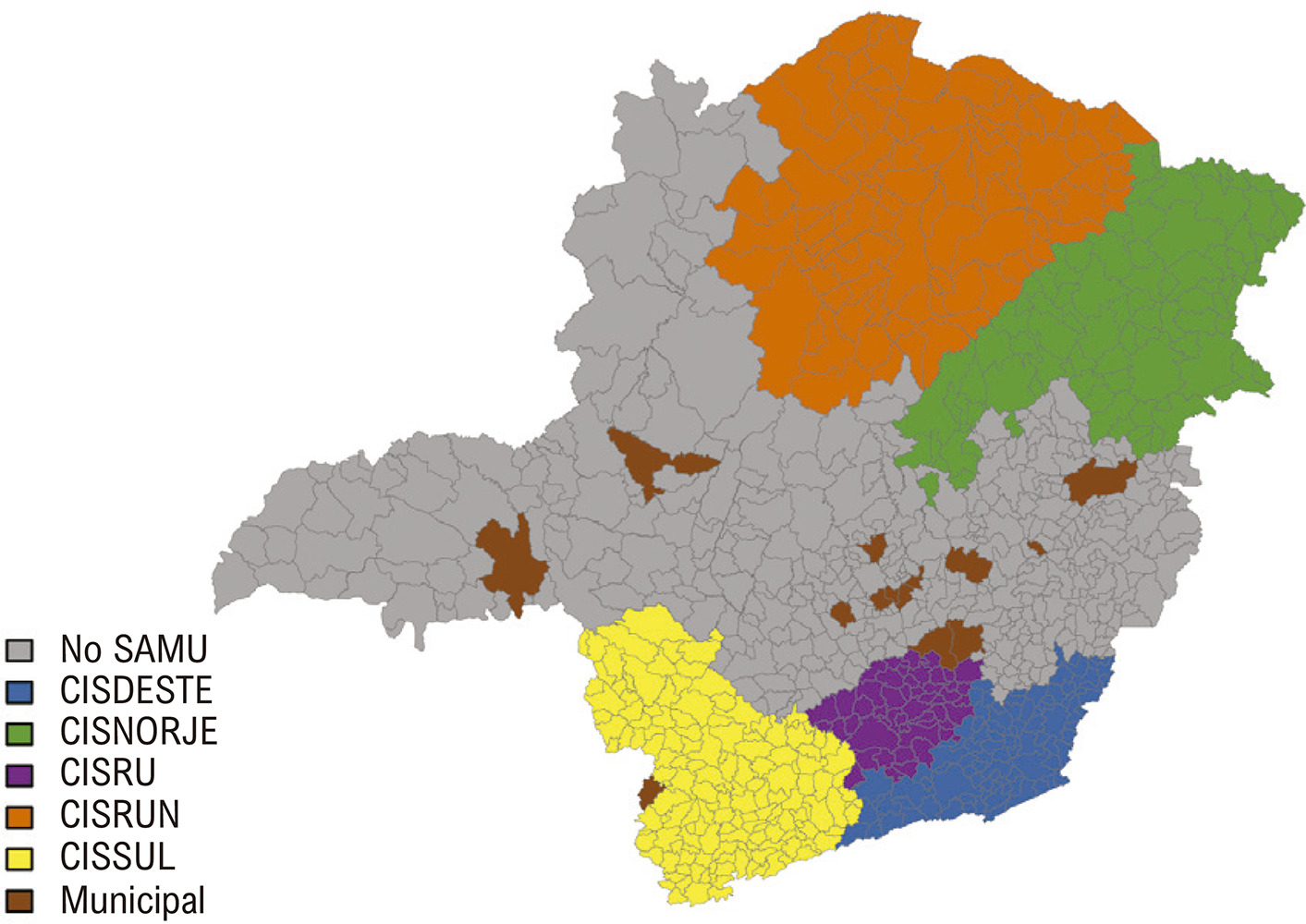
Retrospective, ecological study, which assessed data from the Brazilian Universal Health System, from all 853 municipalities of Minas Gerais, from 2008 to 2016. Excessive skewness of general and in-hospital mortality rates was smoothed using the empirical Bayes method. This study assessed the relationship between Mobile Emergency Care Service (SAMU) in each municipality and the following 3 outcomes: mortality rate due to AMI, AMI in-hospital mortality, and AMI hospitalization rate, using the Poisson hierarchical model. Rates were corrected by age structure and detrended by seasonality and temporal influences. A confidence interval of 95% was adopted.

Results

AMI mortality rates decreased throughout the study, on average 2% per year, with seasonal variation. AMI in-hospital mortality also showed a decreasing trend, from 13.81% in 2008 to 11.43% in 2016. SAMU implementation was associated with decreased AMI mortality (odds ratio [OR] = 0.967, 95% confidence interval [CI] 0.936 to 0.998) and AMI in-hospital mortality (OR = 0.914, 95% CI 0.845 to 0.986), with no relation with hospitalizations (OR = 1.003, 95% CI 0.927 to 1.083).

Conclusion

SAMU implementation was associated with a modest but significant decrease in AMI in-hospital mortality. This finding reinforces the key role of prehospital care in AMI care and the need for investments on this service to improve clinical outcomes in low- and middle-income countries.

  • Acute Myocardial Infarction
  • Emergency Medical Services
  • Hospital Mortality
Read Full Article
Creative Commons Attribution (CC BY) Creative Commons license
15/09/2022 DOI: 10.36660/abc.20210953 Views 1
Figure 1
ABC
Original Article

Predictors of Hospital Mortality Based on Primary Angioplasty Treatment: A Multicenter Case-Control Study

Pedro Paulo Neves de Castro et al. Marco Antonio Nazaré Castro Guilherme Abreu Nascimento Isabel Moura José Luiz Barros Pena

Abstract

Background

Identification of high-risk patients undergoing primary angioplasty (PCI) is essential.

Objective

Identify factors related to the causes of death in PCI patients.

Methods

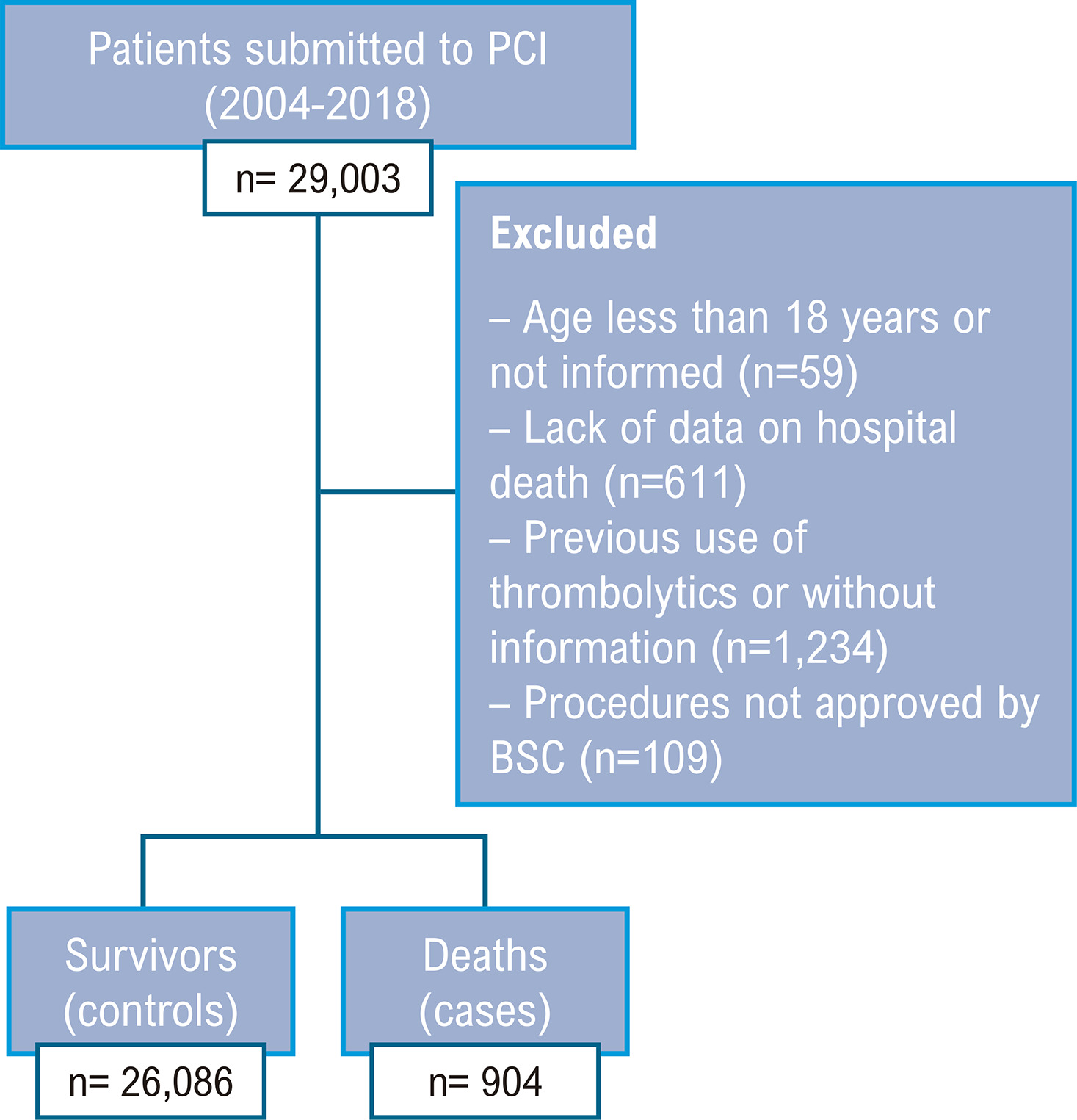
This work consisted of a multicenter case-control study using a Brazilian registry of cardiovascular interventions as the data source. The association between each variable and death was assessed using a binary logistic regression model, p <0.05 was considered significant.

Results

A total of 26,990 records were analyzed, of which 18,834 (69.8%) were male patients, with a median age of 61 (±17) years. In the multivariate analysis, the main variables related to the causes of death with their respective odds ratios and 95%confidence intervals (CI) were advanced age, 70-79 years (2.46; 1.64-3.79) and ≥ 80 years (3.69; 2.38-5.81), p<0.001; the classification of Killip II (2.71; 1.92-3.83), Killip III (8.14; 5.67-11.64), and Killip IV (19.83; 14.85-26.69), p<0.001; accentuated global dysfunction (3.63; 2,39-5.68), p<0.001; and the occurrence of infarction after intervention (5.01; 2.57-9.46), p<0.001. The main protective factor was the post-intervention thrombolysis in myocardial infarction (TIMI) III flow (0.18; 0.13-0.24), p<0.001, followed by TIMI II (0.59; 0.41 -0.86), p=0.005, and male (0.79; 0.64-0.98), p = 0.032; dyslipidemia (0.69; 0.59-0.85), p<0.001; and number of lesions treated (0.86; 0.9-0.94), p<0.001.

Conclusion

The predictors of mortality in patients undergoing PCI were Killip’s classification, reinfarction, advanced age, severe left ventricular dysfunction, female gender, and post-intervention TIMI 0 / I flow.

  • Acute Myocardial Infarction
  • Database
  • Mortality
  • Myocardial Reperfusion
  • Percutaneous Coronary Intervention
Read Full Article
Creative Commons Attribution (CC BY) Creative Commons license
05/08/2022 DOI: 10.36660/abc.20210015
ABC
Editorial

Pterostilbene after Acute Myocardial Infarction: Effect on Heart and Lung Tissues

Bruna Paola Murino Rafacho

Cardiovascular diseases are the main cause of death worldwide. , In Brazil, ischemic heart diseases are the leading cause of cardiovascular death, and acute myocardial infarction presented a mortality rate of 9.06% until October 2021.

Myocardial ischemia generates reactive oxygen species (ROS) and reactive nitrogen species (RNS), which, in turn, increases pro-inflammatory mediators that might activate different pathways to promote repairing of the infarcted region, a process known as cardiac remodeling. – However, when there is prolonged production of reactive species, incapacity of the antioxidant system and amplification of inflammatory and metabolic changes in the heart, non-infarcted region is impaired, leading to progressive changes in ventricular geometry. Progressively, changes can occur in the left and right ventricles associated with hemodynamic changes in the pulmonary vessels and consequent pulmonary hypertension. , In this context, the search for treatments that might attenuate cardiac and pulmonary changes focusing on redox balance stand out.

[…]

  • Acute Myocardial Infarction
  • Oxidative Stress
  • Pterostilbene
Read Full Article
Creative Commons Attribution (CC BY) Creative Commons license
07/03/2022 DOI: 10.36660/abc.20211017
ABCIC
Editorial

Therapeutic Application of Ultrasound and Microbubbles (Sonothrombolysis) in Patients with Acute Myocardial Infarction

Jeane Mike Tsutsui et al. Wilson Mathias Júnior

[…]

  • Acute Myocardial Infarction
  • Microbubbles
  • Sonothrombolysis
Read Full Article
Creative Commons Attribution (CC BY) Creative Commons license
14/01/2022 DOI: 10.5935/2318-8219.20200040
Figure 1
ABC
Original Article

Long-term Outcomes of Drug-eluting versus Bare-metal stent for ST-elevation Myocardial Infarction

Liping Wang et al. Hongyun Wang Pingshuan Dong Zhuanzhen Li … Yanyu Wang Nana Duan Yuwei Zhao Shaoxin Wang

Background:

Long-term outcomes of drug-eluting stents (DES) versus bare-metal stents (BMS) in patients with ST-segment elevation myocardial infarction (STEMI) remain uncertain.

Objective:

To investigate long-term outcomes of drug-eluting stents (DES) versus bare-metal stents (BMS) in patients with ST-segment elevation myocardial infarction (STEMI).

Methods:

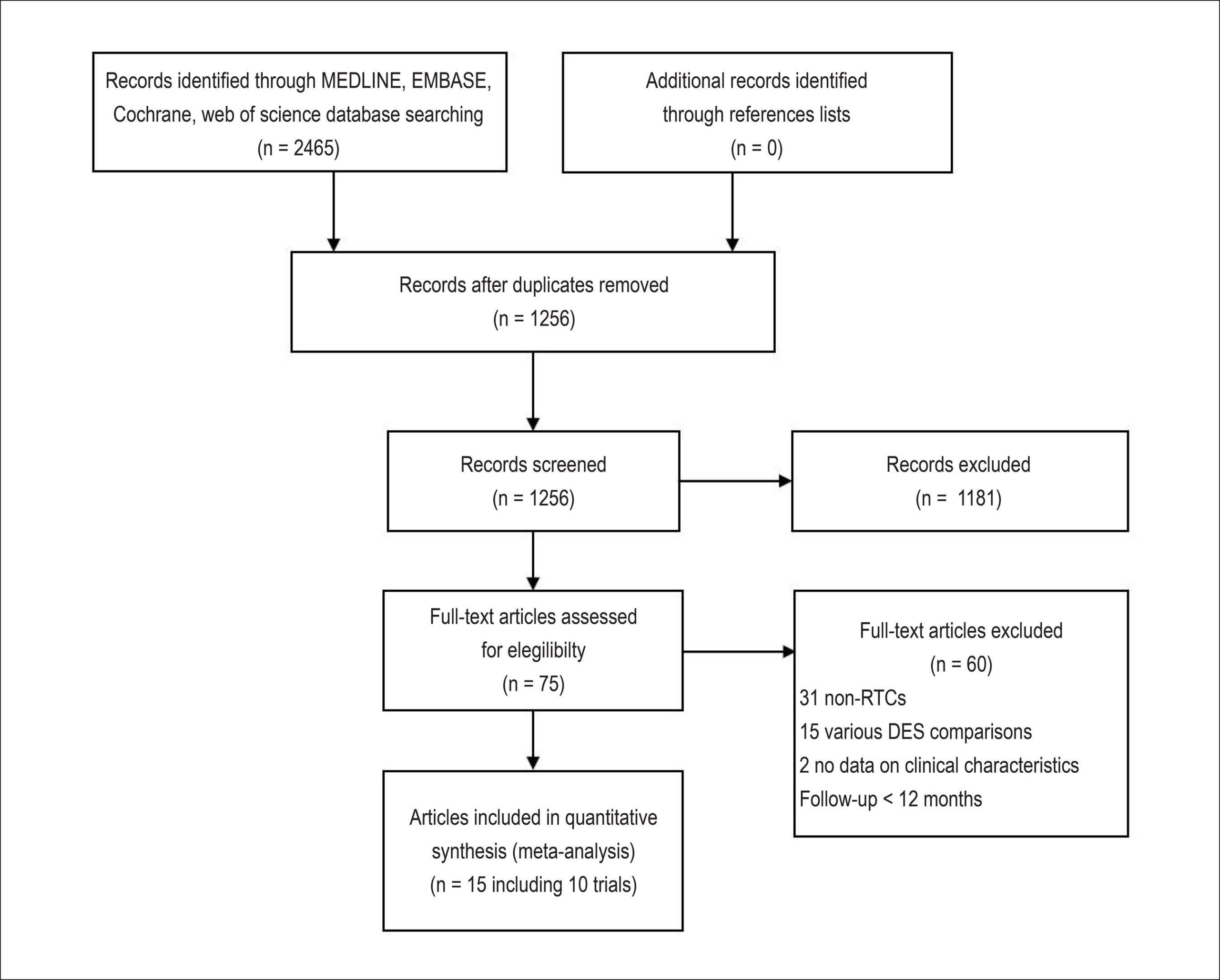
We performed search of MEDLINE, EMBASE, the Cochrane library, and ISI Web of Science (until February 2013) for randomized trials comparing more than 12-month efficacy or safety of DES with BMS in patients with STEMI. Pooled estimate was presented with risk ratio (RR) and its 95% confidence interval (CI) using random-effects model.

Results:

Ten trials with 7,592 participants with STEMI were included. The overall results showed that there was no significant difference in the incidence of all-cause death and definite/probable stent thrombosis between DES and BMS at long-term follow-up. Patients receiving DES implantation appeared to have a lower 1-year incidence of recurrent myocardial infarction than those receiving BMS (RR = 0.75, 95% CI 0.56 to 1.00, p= 0.05). Moreover, the risk of target vessel revascularization (TVR) after receiving DES was consistently lowered during long-term observation (all p< 0.01). In subgroup analysis, the use of everolimus-eluting stents (EES) was associated with reduced risk of stent thrombosis in STEMI patients (RR = 0.37, p=0.02).

Conclusions:

DES did not increase the risk of stent thrombosis in patients with STEMI compared with BMS. Moreover, the use of DES did lower long-term risk of repeat revascularization and might decrease the occurrence of reinfarction.

  • Acute Myocardial Infarction
  • Bare-metal stents
  • Drug-Eluting Stents
  • Long-term outcomes
  • Meta-Analysis
Read Full Article
Creative Commons Attribution (CC BY) Creative Commons license
06/06/2014 DOI: 10.5935/abc.20140070 Views 1
CRP levels are higher in patients with ST elevation than non-ST elevation acute coronary syndrome
ABC
Artigo Original

CRP levels are higher in patients with ST elevation than non-ST elevation acute coronary syndrome

Syed Shahid Habib et al. Mohammad Ibrahim Kurdi Zohair Al Aseri Mohammad Owais Suriya

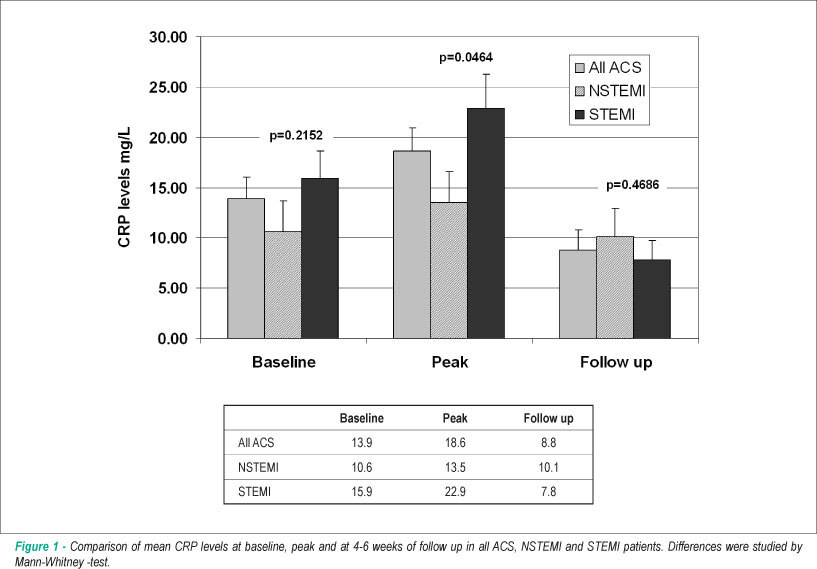
BACKGROUND: There is intense interest in the use of high-sensitivity C-reactive protein (hsCRP) for risk assessment. Elevated hsCRP concentrations early in acute coronary syndrome (ACS), prior to the tissue necrosis, may be a surrogate marker for cardiovascular co-morbidities. OBJECTIVE: Therefore we aimed to study different follow up measurements of hsCRP levels in acute coronary syndrome patients and to compare the difference between non-ST elevation myocardial infarction (NSTEMI) and ST myocardial infarction (STEMI) patients. METHODS: This is an observational study. Of the 89 patients recruited 60 patients had acute myocardial infarction (AMI). Three serial hsCRP levels at baseline on admission to hospital before 12 hours of symptom onset, peak levels at 36-48 hours and follow up levels after 4-6 weeks were analyzed and compared between non-ST elevation AMI and ST elevation AMI. RESULTS: STEMI patients had significantly higher BMI compared to NSTEMI patients. Creatine kinase myocardial bound (CKMB) and Aspartate aminotransferase (AST) levels were significantly higher in STEMI patients compared to NSTEMI patients (p<0.05). CRP levels at baseline and at follow up did not significantly differ between the two groups (p= 0.2152, p=0.4686 respectively). There was a significant difference regarding peak CRP levels between the two groups, as STEMI patients had significantly higher peak CRP levels compared to NSTEMI patients (p=0.0464). CONCLUSION: STEMI patients have significantly higher peak CRP levels compared to NSTEMI patients. These data suggest that inflammatory processes play an independent role in the pathogenesis of myocardial infarction. Thus, CRP assessment may assist in risk stratification after myocardial infarction.

  • Acute coronary syndrome
  • Acute Myocardial Infarction
  • C-Reactive Protein
  • Inflammation
Read Full Article
Creative Commons Attribution (CC BY) Creative Commons license
03/12/2010 DOI: 10.1590/S0066-782X2010005000161
Acute coronary syndrome registry at a cardiology emergency center
ABC
Artigo Original

Acute coronary syndrome registry at a cardiology emergency center

Elizabete Silva dos Santos et al. Luiz Minuzzo Marcos Paulo Pereira Maria Teresa Cabrera Castillo … Manoel Ângelo Gomes Palácio Rui Fernando Ramos Ari Timerman Leopoldo Soares Piegas

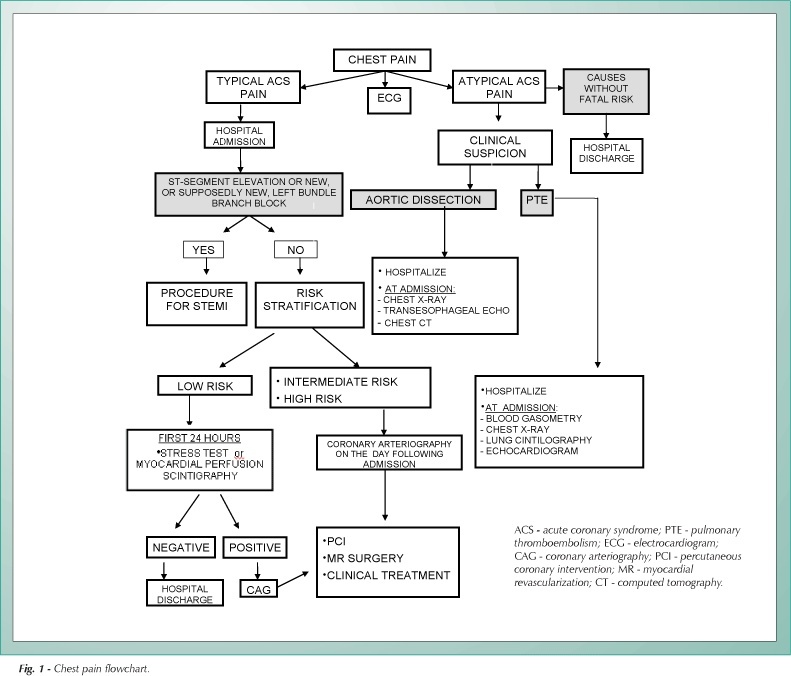
OBJECTIVE: Describe clinical characteristics of patients (P) admitted to hospital with suspected acute coronary syndrome (ACS), identifying medical treatment and in-hospital mortality. METHODS: Evaluated were 860 patients with ACS from January through December, 2003. We evaluated baseline characteristics, ACS mode of presentation, medication during hospital stay, indication for clinical treatment or myocardial revascularization (MR) and in-hospital mortality. RESULTS: Five hundred and three (58.3%) were male, mean age 62.6 years (± 11.9). Seventy-eight (9.1%) were discharged with the diagnosis of acute ST-elevation myocardial infarction (STEMI), 238 (27.7%) with non-ST-elevation myocardial infarction (non-STEMI), 516 (60%) with unstable angina (UA), two (0.2%) with atypical manifestations of ACS and 26 (3%) with non-cardiac chest pain. During hospitalization, 87.9% of patients were given a beta-blocker, 95.9% acetylsalicylic acid, 89.9% anti-thrombin therapy, 86.2% intravenous nitroglycerin, 6.4% glycoprotein (GP) IIb/IIIa receptor inhibitor, 35.9% clopidogrel, 77.9% angiotensin-converting enzyme inhibitor, and 70,9% statin drugs. Coronary arteriography was performed in 72 patients (92.3%) with STEMI, and in 452 (59.8%) with non-STEMI ACS (p< 0.0001). Myocardial revascularization (MR) surgery was indicated for 12.9% and percutaneous coronary intervention for 26.6%. In-hospital mortality was 4.8%, and no difference was recorded between the proportion of deaths among patients with STEMI and non-STEMI ACS (6.4% versus 4.8%; p = 0.578). CONCLUSION: In this registry, we provide a description of ACS patient, which allows the evaluation of the demographic characteristics, medical treatment prescribed, and in-hospital mortality. A greater awareness of our reality may help the medical community to adhere more strictly to the procedures set by guidelines.

  • Acute coronary syndrome
  • Acute Myocardial Infarction
  • Chest Pain
  • registry
  • Unstable Angina
Read Full Article
Creative Commons Attribution (CC BY) Creative Commons license
06/03/2007 DOI: 10.1590/S0066-782X2006001800008 Views 1
ABC
Original Article

Acute Myocardial Infarction: The First Manifestation of Ischemic Heart Disease and Relation to Risk Factors

Waldomiro Carlos Manfroi et al. Carolina Peukert Clarissa Bacha Berti Clarissa Noer … Danielle de Ávila Gutierres Felipe Theodoro Bezerra Gaspar Carvalho da Silva

OBJECTIVE: To assess the association between cardiovascular risk factors and acute myocardial infarction as the first manifestation of ischemic heart disease, correlating them with coronary angiographic findings. METHODS: We carried out a cross-sectional study of 104 patients with previous acute myocardial infarction, who were divided into 2 groups according to the presence or absence of angina prior to acute myocardial infarction. We assessed the presence of angina preceding acute myocardial infarction and risk factors, such as age >55 years, male sex, smoking, systemic arterial hypertension, lipid profile, diabetes mellitus, obesity, sedentary lifestyle, and familial history of ischemic heart disease. On coronary angiography, the severity of coronary heart disease and presence of left ventricular hypertrophy were assessed. RESULTS: Of the 104 patients studied, 72.1% were males, 90.4% were white, 73.1% were older than 55 years, and 53.8% were hypertensive. Acute myocardial infarction was the first manifestation of ischemic heart disease in 49% of the patients. The associated risk factors were systemic arterial hypertension (RR=0.19; 95% CI=0.06-0.59; P=0.04) and left ventricular hypertrophy (RR=0.27; 95% CI=0,.8-0.88; P=0.03). The remaining risk factors were not statistically significant. CONCLUSION: Prevalence of acute myocardial infarction as the first manifestation of ischemic heart disease is high, approximately 50%. Hypertensive individuals more frequently have symptoms preceding acute myocardial infarction, probably due to ventricular hypertrophy associated with high blood pressure levels.

  • Acute Myocardial Infarction
  • Risk Factors
Read Full Article
Creative Commons Attribution (CC BY) Creative Commons license
31/01/2007 DOI: 10.1590/S0066-782X2002000400006
ABC
Artigo Original

Difference in the case-fatality rate of acute myocardial infarction between men and women submitted to primary angioplasty

Luiz Carlos Santana Passos et al. Antonio Alberto Lopes Fábio Peroba Esteves Fabiano Marins de Oliveira Santos

PURPOSE: To compare the in-hospital case-fatality rate of men and women submitted to percutaneous transluminal coronary angioplasty (PTCA) as a strategy of reperfusion in acute myocardial infarction (MI). METHODS: A retrospective cohort study based on information abstracted from medical records of MI patients admitted to a hospital where PTCA is used as the prefered method for early myocardial reperfusion. A total of 83 patients, 35 (42%) women and 48 (58%) men, who met the criteria for early myocardial reperfusion was included in the analysis. RESULTS: The mean age of women was higher than that of men (66±10 vs 58±11 years; p<0.001). The women also had a higher frequency of diabetes mellitus (37.1% vs 6.4%; p<0.001). Despite these differences in age and in the frequency of diabetes mellitus, the percentage of patients in whom the PTCA was considered successful was similar between men (83.3%) and women (82.3%). The case-fatality rate was also similar between men and women; 14.6% and 14.3%, respectively. CONCLUSION: The possibility that the excess risk of death in women with MI may be reduced and even eliminated with the use of PTCA, supports to the need for the development of a clinical trial to assess this question.

  • Acute Myocardial Infarction
  • case-fatality rate
  • primary coronary angioplasty
Read Full Article
Creative Commons Attribution (CC BY) Creative Commons license
31/01/2007 DOI: 10.1590/S0066-782X1998001000005 Views 1
ABC
Artigo Original

Risk factors for acute myocardial infarction in Brazil (FRICAS study)

Marco Aurélio Dias da Silva et al. Amanda G. M. R. Sousa Hernan Schargodsky

PURPOSE: To determine risk factors related to acute myocardial infarction (AMI) in Brazil. METHODS: Five hundred ninety one patients were selected in 20 medical centers in Brazil, between January/94 and March/95. Two-hundred-ninety-nine patients were cases, and 292 controls with a variety of acute diseases not related to the suspected or known risk factors for acute myocardial infarction. All data were collected through a structured questionnaire filled by the patients. The evaluation of the variables was done through univariate analysis with a significance level of 5%. RESULTS: The factors related to acute myocardial infarction were respectively to cases and controls: Hypercholesterolemia – 210.93±46.74mg/dl and 185.71±45.45mg/dl, (p=0.000); smoking – 41.69% and 27.20% (p=0.000); hypertension – 52.35% and 20.88% (p=0.000); diabetes – 19.70% and 9.93% (p=0.001); family history – related to the patient’s father in 42.14% and 33.22% (p=0.025) and to the mother in 42.14% and 30.82% (p=0.007); socioeconomic level – 88.99% and 60.20% owned house (p=0.002); 44.45% and 33.21% owned car (p=0.010); physical activity – 56.83% and 48.28% had the habit of walking in the year prior to study entry (p=0.029); diet – 38.79% and 28.42% consumed canned food (p=0.013). The mean weight was 72.50±26.89kg and 69±12.26kg (p=0.0271). The mean height was 166.56±8.81cm and 166.66±8.47cm. CONCLUSION: This study confirmed the importance of hypercholesterolemia, hypertension, diabetes mellitus, overweight and family history as risk factors for acute myocardial infarction. There was a significant relation between socioeconomic level and the prevalence of acute myocardial infarction.

  • Acute Myocardial Infarction
  • case-control study
  • coronary risk factors
Read Full Article
Creative Commons Attribution (CC BY) Creative Commons license
31/01/2007 DOI: 10.1590/S0066-782X1998001100005 Views 2
Coronary artery bypass grafting in acute myocardial infarction: analysis of preoperative predictors of mortality
ABC
Artigo Original

Coronary artery bypass grafting in acute myocardial infarction: analysis of preoperative predictors of mortality

Renata Teixeira Ladeira et al. Fabio Biscegli Jatene Rosangela Monteiro Simone Pereira Zucato … Luciano Moreira Baracioli Alexandre Ciappina Hueb Luis Alberto Oliveira Dallan Luiz Boro Puig Sérgio Almeida Oliveira José Carlos Nicolau

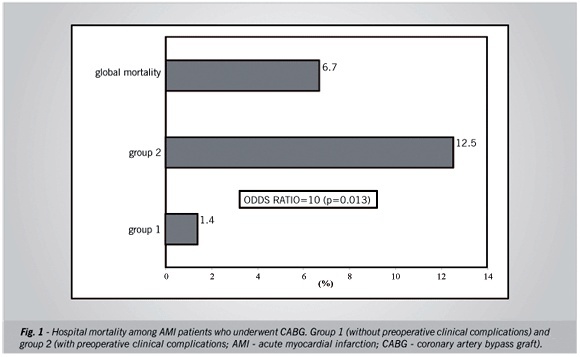
OBJECTIVE: To assess preoperative predictors of mortality in patients undergoing coronary artery bypass grafting (CABG) within the first 30 days of acute myocardial infarction (AMI). METHODS: Between March 1998 and July 2002, 753 AMI patients were consecutively and prospectively entered into a database, 135 (17.9%) of whom underwent isolated CABG and were enrolled in this study. The following prognostic factors were assessed by multivariate analysis: age, gender, diabetes, history of previous AMI, CABG or coronary angioplasty (PTCA), anterior infarct location, Q-wave AMI, the use of fibrinolytics, elapsed time from AMI to the procedure, and presence of complications in the preoperative period. RESULTS: Overall in-hospital mortality was 6.7%, ranging from 12.5% in patients with preoperative complications to 1.4% in those with no complications. Only history of previous angioplasty (p = 0.037) and cardiogenic shock (p = 0.002) showed a statistically significant correlation with postoperative mortality. The use of thrombolytics, on the other hand, in the initial management of AMI showed a negative correlation with mortality (p = 0.035). CONCLUSION: CABG in the acute phase of MI is associated with distinct operative mortality, depending on the patient’s preoperative clinical condition. Among those factors analyzed, preoperative cardiogenic shock and history of previous angioplasty were predictive of worse prognosis in this group of patients.

  • Acute Myocardial Infarction
  • Mortality
  • Surgery
Read Full Article
Creative Commons Attribution (CC BY) Creative Commons license
16/10/2006 DOI: 10.1590/S0066-782X2006001600005 Views 2
QT interval dispersion analysis in acute myocardial infarction patients: coronary reperfusion effect
ABC
Artigo Original

QT interval dispersion analysis in acute myocardial infarction patients: coronary reperfusion effect

Neuza Helena Moreira Lopes et al. César Grupi Cleberson H. Dina Aécio F. T. de Gois … Ludhmila A. Hajjar Beatriz Ayub Carlos Eduardo Rochitte José Antonio Franchini Ramires Whady A. Hueb Roberto Kalil

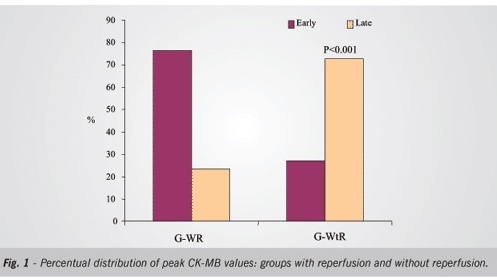
OBJECTIVE: To study the effect of early reperfusion of infarct-related artery on QT(deltaQT) dispersion interval, as well as how valuable it is as a marker for coronary reperfusion and ventricular arrhythmias. METHODS: One hundred and six patients with reperfusion (WR) and 48 without reperfusion (WtR) who have received thrombolytic therapy in the acute phase of infarction were studied. ECG carried out on admission as well as on day 4 of patient’s course were analyzed. deltaQT – defined as the difference between maximum and minimum QT interval – was measured by 12-lead ECG. RESULTS: The reperfusion group showed significant deltaQT reduction – from 89.66±20,47ms down to 70.95±21.65ms (p<0.001). On the other hand, the group without reperfusion showed deltaQT significant increase – from 81.27±20.52ms up to 91.85±24.66ms (p<0.001). Logistic regression analysis showed that reduction magnitude beween pre- and post-thrombolysis deltaQT was the independent factor to most effectively identify coronary reperfusion (OR 1.045, p<0.0001; CI 95%). No significant difference was found in dispersion measures when patients with ventricular arrhythmias were compared with those with no arryhthmias in the course of the first 48 hours. CONCLUSION: The study shows that deltaQT is significantly reduced in patients with acute myocardial infarction submitted to successful thrombolysis, and is increased in infarcted patients with closed artery. deltaQT reduction between the pre- and post-thrombolysis condition was a predictor for coronary reperfusion of those patients, and did not show correlation to ventricular arrhythmias.

  • Acute Myocardial Infarction
  • coronary reperfusion
  • QT dispersion
Read Full Article
Creative Commons Attribution (CC BY) Creative Commons license
28/09/2006 DOI: 10.1590/S0066-782X2006001500005 Views 2
Analysis of electrocardiographic recordings associated with acute myocardial infarction
ABC
Artigo Original

Analysis of electrocardiographic recordings associated with acute myocardial infarction

Paulo Henrique Garcia Mansur et al. Lacordaire Kemel Pimenta Cury João Batista Destro-Filho Elmiro Santos Resende … José Paulo Breda Destro Luana Michelli de Oliveira Diego Carvalho Gomes de Moraes Geraldo Rubens Ramos de Freitas Lucila Soares da Silva Rocha

OBJECTIVE: Evaluate correlations between variations in eletrocardiogram (ECG) recordings and acute myocardial infarction. METHODS: Use of a low-cost software to digitalize printed and/or “.pdf” file format ECG recordings. Calculation of ST-segment area and amplitudes of the J and Y points. RESULTS: The amplitude of the Y point holds maximum correlation with troponin concentration. ST-segment elevation is not a good statistical indicator of myocardial infarction severity. There is a strong negative correlation between the amplitude of the J point and the amount of magnesium ions, but no statistical correlation with sodium or calcium ions. Neither method for calculating the ST-segment area (pixel counts and interpolation) indicated any significant differences in the results. CONCLUSION: The software used proved to be functional and cost-effective. Y point amplitude is a sensitive marker of myocardial infarction, and is also a calculation method both simpler to use and less subject to error than the calculation of the ST-segment elevation area.

  • Acute Myocardial Infarction
  • eletrocardiogram
  • Telemedicine
Read Full Article
Creative Commons Attribution (CC BY) Creative Commons license
28/09/2006 DOI: 10.1590/S0066-782X2006001500007 Views 1
ABC
Artigo Original

Monocytosis is an independent risk marker for coronary artery disease

Abrahão Afiune Neto et al. Antonio de Pádua Mansur Solange Desirée Avakian Everly P. S. G. Gomes José Antonio F. Ramires

OBJECTIVES: Inflammation and activation of immune system cells play an important role in the pathogenesis of atherosclerosis. This study analyzes the white blood count, including neutrophils, eosinophils, lymphocytes, monocytes and basophils, of patients with chronic coronary artery disease (CAD) and acute myocardial infarction (AMI). METHODS: The white blood cell count was analyzed in 232 patients without diabetes between the ages of 15 and 88. One hundred and forty-two patients were angiographically diagnosed with CAD (57 with stable CAD and 85 with AMI) and compared to 90 control individuals. The control and CAD groups were similar in respect to age, body mass index, family history, smoking habits, hypertension, HDL and LDL (all variables with p > 0.25). RESULTS: The univariate analysis revealed a higher prevalence of leukocytosis in the CAD group, which in turn was higher in the AMI patients than the stable CAD patients. The same trend was observed for monocytes. However, the distribution of all other cells in the complete blood count (CBC) was similar. Multivariate analysis using the logistic regression method with the stepwise (all variables) and backward models (p < 0.25), showed that monocytosis was an independent variable for CAD and AMI. CONCLUSION: The number of monocytes, one of the most important components of the inflammatory process in the atherosclerosis plaque was an independent risk marker for CAD and AMI.

  • Acute Myocardial Infarction
  • Atherosclerosis
  • Coronary Artery Disease
  • hemograma, leukocytosis
  • Inflammation
  • monocytosis
Read Full Article
Creative Commons Attribution (CC BY) Creative Commons license
30/03/2006 DOI: 10.1590/S0066-782X2006000300013 Views 1
ABC
Artigo Original

Renal function outcome in acute myocardial infarction as a prognostic factor of in-hospital events and at one-year follow-up

Eduardo Pimenta et al. Rui Fernando Ramos Carlos Gun Elizabeth S. Santos … Ari Timerman Leopoldo S. Piegas

OBJECTIVE: To analyze the role of renal dysfunction at admission or during hospitalization in patients with acute myocardial infarction (AMI). METHODS: Two hundred and seventy-four patients with AMI were assessed between January 2000 and December 2001. Renal function was monitored by serum creatinine (Cr) measurement at admission and peak level during hospitalization. Creatinine clearance (CrCl) was estimated by the Cockcroft-Gault formula. In-hospital and one-year morbidity and mortality were evaluated. RESULTS: Mean age of the population studied was 62.2 ± 13.5, and 73% of the patients were male. Renal function was more reduced in male patients and in those with systemic arterial hypertension and prior CABG. Multivariate analysis showed higher hospital mortality rates associated with increased peak serum Cr levels (OR: 1.18 95% CI:1.18-2.77 p = 0.006), decreased baseline CrCl (OR:0.96 95% CI:0.93-0.99 p = 0.025) and peak CrCl (OR:0.96 95% CI:0.92-0.99 p = 0.023). Percent difference between baseline CrCl and the lowest CrCl obtained during hospitalization also indicated higher mortality rates (OR: 1.04 95% CI: 1.00-1.07 p = 0.033). No change was observed in the one-year morbidity and mortality from worsening of renal function. CONCLUSION: Renal dysfunction at admission and its deterioration during hospitalization have proved to be a major prognostic marker for immediate poor outcome.

  • Acute Myocardial Infarction
  • Cardiovascular Diseases
  • Renal Insufficiency
Read Full Article
Creative Commons Attribution (CC BY) Creative Commons license
30/03/2006 DOI: 10.1590/S0066-782X2006000300003 Views 1
Gender influence on the immediate and medium-term progression after primary percutaneous coronary intervention and analysis of independent risk factors for death or events
ABC
Artigo Original

Gender influence on the immediate and medium-term progression after primary percutaneous coronary intervention and analysis of independent risk factors for death or events

Rodrigo Trajano Sandoval Peixoto et al. Edison Carvalho Sandoval Peixoto Marcello Augustus Sena Angelo Leone Tedeschi … Ivana Picone Borges Maurício Bastos Freitas Rachid

OBJECTIVE: Determine gender-related differences and risk factors for death and events, both in-hospital and at six-month evolution, of patients admitted within the first twelve hours of ST-segment elevation acute myocardial infarction and who underwent primary percutaneous coronary intervention. METHODS: Between July 1998 and December 2000, 199 consecutive patients were enrolled in the study, with elevation myocardial infarction and without cardiogenic shock, outcome, in-hospital and six-month progression were studied. RESULTS: Clinical characteristics were similar in both groups, except that women were older than men (67.04 ± 11.53 x 59.70 ± 10.88, p < 0.0001). In-hospital mortality was higher among women (9.1% x 1.5%, p = 0.0171), as was the incidence of major events (12.1% x 3.0%, p = 0.0026). The difference in mortality rates remained the same at six months (12.1% x 1.5%, p = 0.0026). The multivariate analysis predicted death: female gender and an age over eighty years, and major events and/or stable angina multivessel: disease and severe ventricular dysfunction. CONCLUSION: Female gender and an age over eighty years were independent predictors of mortality, six months of patients who had undergone primary percutaneous intervention.

  • Acute Myocardial Infarction
  • Gender
  • primary coronary angioplasty
  • Risk Factors
Read Full Article
Creative Commons Attribution (CC BY) Creative Commons license
30/03/2006 DOI: 10.1590/S0066-782X2006000300009 Views 1
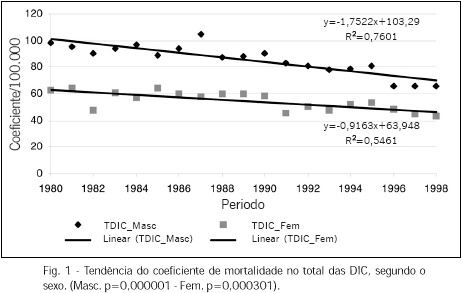
Mortality trend due to ischemic heart diseases in the city of Curitiba - Brazil, from 1980 to 1998
ABC
Original Article

Mortality trend due to ischemic heart diseases in the city of Curitiba – Brazil, from 1980 to 1998

Edevar Daniel et al. Helio Germiniani Eleusis Ronconi de Nazareno Simone Viana Braga … Anderson Marcelo Winkler Claudio L. Pereira da Cunha

OBJECTIVE: To assess mortality trends due to ischemic heart diseases, per sex, and acute myocardial infarction, per sex and age range, from 1980 to 1998, in the city of Curitiba. METHODS: Data of death due to ischemic heart disease and acute myocardial infarction from Sistema de Informação sobre Mortalidade do Ministério da Saúde (Information System on Mortality of Ministry of Health), per sex, age range and domicile location in Curitiba were used. Population data were obtained from Fundação Instituto Brasileiro de Geografia e Estatística (Brazilian Institute of Geography and Statistics Foundation). Mortality rates were adjusted per age through direct method, by using the population of Curitiba, in 1980, as reference. The analysis of trend was calculated through simple linear regression, with a significance level of 5%. RESULTS: Mortality rates due to ischemic heart diseases showed a decrease trend among both sexes. In age ranges of acute myocardial infarction, male sex showed a decrease until 79 years of age, among female sex individuals, the decrease was until 59 years of age. They were shown stable after those periods. Among the remaining ischemic diseases, female sex individuals showed a greater decrease than male sex ones. CONCLUSION: The study demonstrates a trend of reduction of mortality due to ischemic heart diseases, in both sexes, in the city of Curitiba, from 1980 to 1998. In acute myocardial infarction, such reduction has been happening in a more pronounced way among men, achieving stability, from 60 years of age, among women. The reasons for differentiated reduction trend between sexes are not clear, remaining as na important matter for new investigations.

  • Acute Myocardial Infarction
  • ischemic heart diseases
  • Mortality
  • trend studies
Read Full Article
Creative Commons Attribution (CC BY) Creative Commons license
29/09/2005 DOI: 10.1590/S0066-782X2005001500005
Risk factors associated with acute myocardial infarction in the São Paulo metropolitan region: a developed region in a developing country
ABC
Artigo Original

Risk factors associated with acute myocardial infarction in the São Paulo metropolitan region: a developed region in a developing country

Álvaro Avezum et al. Leopoldo Soares Piegas Júlio César R. Pereira

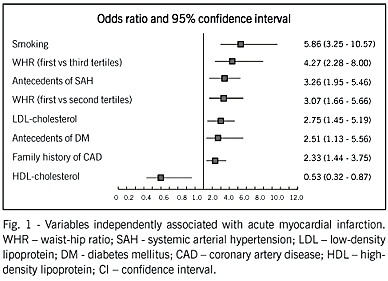
OBJECTIVE: To identify the risk factors associated with acute myocardial infarction (AMI) and their respective powers of association in the São Paulo metropolitan region. METHODS: The cases comprised patients diagnosed with first AMI with an ST segment elevation. The controls were individuals with no known cardiovascular disease. The study comprised 271 cases and 282 controls from 12 hospitals. Risk factors were as follows: ethnic group; educational level; marital status; family income; family history of coronary artery disease; antecedents of arterial hypertension and of diabetes mellitus; hormonal replacement in women; smoking; physical activity; alcohol consumption; total cholesterol, LDL-cholesterol, HDL-cholesterol, triglyceride, and glucose levels; body mass index; and waist-hip ratio (WHR). RESULTS: The following risk factors showed and independent association with AMI: smoking [odds ratio (OR)=5.86; 95% confidence interval (CI) 3.25-10.57; P < 0.00001); waist-hip ratio (first vs. third tertile) (OR=4.27; 95% CI 2.28-8.00; P<0.00001); antecedents of arterial hypertension (OR=3.26; 95% CI 1.95-5.46; P< 0.00001); waist-hip ratio (first vs second tertile) (OR=3.07; 95% CI 1.66-5.66; P=0.0003); LDL-cholesterol level (OR=2.75; 95% CI 1.45-5.19; P=0.0018); antecedents of diabetes mellitus (OR= 2.51; 95% CI 1.45-5.19; P=0.023); family history of coronary artery disease (OR=2.33; 95% CI 1.44-3.75; P=0.0005); and HDL-cholesterol level (OR=0.53; 95% CI 0.32-0.87; P=0.011). CONCLUSION: Smoking, waist-hip ratio, antecedents of arterial hypertension and of diabetes mellitus, family history of coronary artery disease, and LDL-cholesterol and HDL-cholesterol levels showed to be independently associated with AMI within the São Paulo metropolitan region.

  • Acute Myocardial Infarction
  • case-control study
  • Risk Factors
Read Full Article
Creative Commons Attribution (CC BY) Creative Commons license
19/08/2005 DOI: 10.1590/S0066-782X2005000300003
Temporal tendency of in-hospital lethality due to acute myocardial infarction: 1994-2003
ABC
Artigo Original

Temporal tendency of in-hospital lethality due to acute myocardial infarction: 1994-2003

Marco Antonio de Mattos et al. Daniele Gusmão Toledo Carlos Eduardo de Mattos Bernardo Rangel Tura … Diego Neri Benevides Gadelha Aristarco Gonçalves de Siqueira Filho

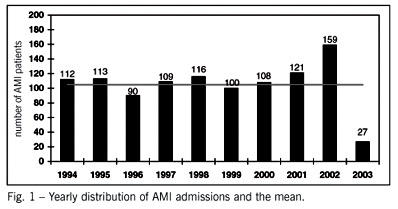
OBJECTIVE: To analyze the temporal tendency of lethality due to acute myocardial infarction (AMI) and if the change in behavior directly interfered in such lethality. METHODS: 1055 non-selected patients, who were hospitalized in coronary unit from 1994 to 2003, were assessed. Clinical and therapeutic profile-related variables were analyzed. The statistic analysis used the exponential damping of temporal series and other techniques, such as the logistic linear regression. RESULTS: The average lethality was 10.8%, being 12% in 1994 and 7% in 2002 (p=0.000), a relative reduction of 58%. There was no significant variation in the risk profile of the patients. There were 67.4% of men and 32.4% of women, with an average age of 60.93 and 64.84 years old, respectively. It was observed a significant increase in the percentage of cardiac catheterization (from 14% to 51%), in the angioplasty carried out 24 hours after the infarction (from 2% to 33%), in the surgery for myocardial revascularization (from 4% to 7%) and in the primary angioplasty (from 4% to 11%) with p=0.000, p=0.021, p=0.000 and p=0.000, respectively, for linear tendency. In the first 24 hours there was an increase of the use of aspirin and beta-blockers, from 78% to 100% and, from 33% to 76% (p=0.003 and p=0.004, respectively) along the years. After the analysis, the myocardial reperfusion therapy, the use of aspirin and beta-blocker in the first 24 hours of the AMI (p=0.010, p=0.024 and p=0.035, respectively) kept on being lethality determiners. CONCLUSION: There was a decrease in lethality and the change of behavior in the treatment of AMI along the years was responsible for the reduction of lethality in that temporal series.

  • Acute Myocardial Infarction
  • in-hospital lethality
  • temporal tendency
Read Full Article
Creative Commons Attribution (CC BY) Creative Commons license
24/05/2005 DOI: 10.1590/S0066-782X2005000500012 Views 1
The A1166C polymorphism of the angiotensin II type-1 receptor in acute myocardial infarction
ABC
Artigo Original

The A1166C polymorphism of the angiotensin II type-1 receptor in acute myocardial infarction

Messias Antônio de Araújo et al. Bruno Soares Menezes Clauber Lourenço Elisângela Rosa Cordeiro … Renata Rispoli Gatti Luiz Ricardo Goulart

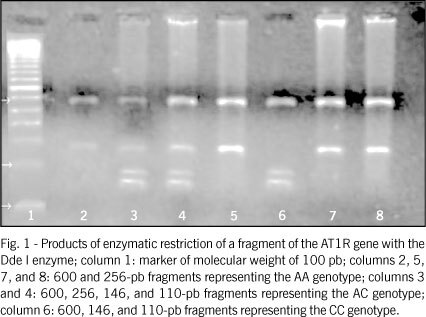
OBJECTIVE: To assess the association of the A1166C polymorphism of the angiotensin II type-1 receptor (AT1R) gene with acute myocardial infarction and also with the severity of coronary artery disease. METHODS: A prospective, cross-sectional study was carried out with 110 patients with acute myocardial infarction, who, on coronary angiography, had significant lesions (> 50%) assessed according to 3 criteria of severity: number of vessels affected, morphology of the atherosclerotic plaque, and coronary risk score. The control group comprised 104 individuals with no coronary lesions. The A1166C polymorphism of AT1R gene was determined by polymerase chain reaction in the DNA of leukocytes in peripheral blood. The classic coronary risk factors were analyzed in all individuals. RESULTS: When stratifying the genotypes in regard to risk factors, only smoking predominated in the AC heterozygous patients (P = 0.02). The genotypic frequency in the infarcted patients was as follows: AA = 54.5%; AC = 35.5%; and CC = 10%, which was similar and nonsignificant in regard to that in the control group (P = 0.83). No risk increase occurred for acute myocardial infarction when comparing the genotypes as follows: CC vs AA (OR = 1.35; 95% CI = 0.50 – 3.59); AC vs AA (OR = 1.03; 95% CI = 0.58 – 1.84); and AA+AC vs AA (OR = 1.33; 95% CI = 0.51 – 3.45). None of the severity criteria showed a significant correlation with the genotypes. CONCLUSION: According to our results, no correlation exists between the A1166C polymorphism of the angiotensin II type-1 receptor (AT1R) gene and acute myocardial infarction or the severity of coronary artery disease.

  • A1166C polymorphism
  • Acute Myocardial Infarction
  • angiotensin II
  • Coronary Artery Disease
Read Full Article
Creative Commons Attribution (CC BY) Creative Commons license
11/11/2004 DOI: 10.1590/S0066-782X2004001700007
ABC
Artigo Original

Anti-beta2-glycoprotein I antibodies as risk factors for acute myocardial infarction

Aline Ranzolin et al. Jussara Marilú Bohn Gary L. Norman Euler Manenti … Luis Carlos Bodanese Carlos Alberto von Mühlen Henrique Luiz Staub

OBJECTIVE: To determine whether high levels of antibodies against the phospholipid beta2-glycoprotein I (beta2-gpI) cofactor are associated with an increase in the risk of acute myocardial infarction. METHODS: The study comprised 82 patients with acute myocardial infarction and 82 controls, who were assessed in regard to age, sex, race, hypertension, smoking, previous heart disease, history of diabetes mellitus, and hypercholesterolemia. The following antibodies were detected using immunoassay: anticardiolipin and anti-beta2-gpI IgA, IgG, and IgM. Adjusted odds ratios (OR) for risk factors were obtained through logistic regression. RESULTS: The mean ages of the cases and controls were, respectively, 57.7 and 51.1 years (P=0.003). Men (P=0.005) and the white race predominated in both groups (P=0.798). Of the risk factors, a history of diabetes (OR=5.3; 95% CI: 1.9 to 14.9; P=0.001) and previous heart disease (OR=4.7; 95% CI: 2.0 to 10.7; P<0.001) were the most consistent associations with myocardial infarction. The frequency of anticardiolipin IgG, IgM, and IgA antibodies did not differ between cases and controls (P=1.000). Anti-beta2-gpI IgA antibodies were more frequent in cases than in controls (P=0.054). The adjusted OR for anti-beta2-gpI IgA antibodies was 3.4 (95% CI: 1.3 to 9.1; P=0.015). CONCLUSION: Anti-beta2-gpI IgA antibodies, but not anticardiolipin antibodies, seemed to behave as independent risk factors for myocardial infarction, which may represent a link between autoimmunity and atherosclerosis in patients with acute myocardial infarction.

  • Acute Myocardial Infarction
  • anti-beta2-glycoprotein I antibodies
  • antiphospholipid antibodies
Read Full Article
Creative Commons Attribution (CC BY) Creative Commons license
17/08/2004 DOI: 10.1590/S0066-782X2004001400005 Views 2
ABC
Artigo Original

Evaluation of systolic, diastolic, and pulse pressure as risk factors for severe coronary arteriosclerotic disease in women with unstable angina non-ST-elevation acute myocardial infarction

José Marconi Almeida de Sousa et al. João L. V. Hermann João B. Guimarães Pedro Paulo O. Menezes Antonio Carlos Camargo Carvalho

OBJECTIVE: To evaluate pressures assessed at the aortic root as risk factors for severe atherosclerotic coronary heart disease in women with unstable angina/compatible clinical history associated with increase in cardiac enzymes (total CPK and CK-MB) 2 times greater than the standard value used in the hospital, with the absence of new Q waves on the electrocardiogram (UA/NSTEMI). METHODS: Five hundred and ninety-three female patients with clinical diagnosis of UA/NSTEMI underwent cinecoronariography from March 1993 to August 2001, and the risk factors for CHD were studied. During examination the pressures, at the aortic root, and coronary obstructions were visually assessed by 2 interventional cardiologists, and those stenosis over 70% were considered severe. RESULTS: Eight-one per cent of the population was white and 18.3% was black. Mean age was 59.2±11.2 years, and it was significantly higher in patients with severe coronary lesions: 61.9 ± 10.8 years versus 56.4 ± 10.8 years; smoking, diabetes mellitus and climacteric were more frequent in patients with CHD. The average mean arterial pressure and mean systolic blood pressure was the same in both groups, however, average left ventricle diastolic pressure (17.6 ± 8.7 x 15.1 ± 8.1, p=0.001), and aortic pulse pressure were significantly greater in patients with CHD (75.5 ± 22 x 70 ± 19, p=0.002), while average aortic diastolic pressure was significantly greater in patients without CHD (79.8 ± 16 x 75.3 ± 17.5, p=0.003). In the multivariated analysis, pulse pressure > 80 mmHg and systolic blood pressure > 165 were independently associated with severe CHD with odds ratio of 2.12 and 2.09, p 80 mmHg and systolic blood pressure > 165 mmHG determined risk two times greater of severe coronary disease.

  • Acute Myocardial Infarction
  • coronary arterioscherotic disease
  • Hypertension
  • Unstable Angina
Read Full Article
Creative Commons Attribution (CC BY) Creative Commons license
08/06/2004 DOI: 10.1590/S0066-782X2004000500005

Could not load more articles. Please try again.

How to cite this article

EndNote RIS

Electronic Document Format (Vancouver)

Guida CM, Souza EJ, Costa LMA, Scudeler TL, Nunes RAB, Oliveira GBF. Risk Factors, Management, and Evolution after the First Acute Myocardial Infarction: A Real-World Study Comparing Cohorts of Women and Men in the TriNetX Network. Arquivos Brasileiros de Cardiologia 2024;121(10):e20230692.

Electronic Document Format (ABNT)

Guida, Camila Mota; Souza, Eduardo Juvenal de; Costa, Leandro Menezes Alves da; Scudeler, Thiago Luis; Nunes, Rafael Amorim Belo; Oliveira, Gustavo Bernardes de Figueiredo. Risk Factors, Management, and Evolution after the First Acute Myocardial Infarction: A Real-World Study Comparing Cohorts of Women and Men in the TriNetX Network. Arquivos Brasileiros de Cardiologia, v. 121, n. 10, e20230692, Oct. 2024.

Electronic Document Format (APA)

Guida, C. M., Souza, E. J. , Costa, L. M. A. , Scudeler, T. L., Nunes, R. A. B., & Oliveira, G. B. F. (2024). Risk Factors, Management, and Evolution after the First Acute Myocardial Infarction: A Real-World Study Comparing Cohorts of Women and Men in the TriNetX Network. Arquivos Brasileiros de Cardiologia, 121(10), e20230692.

Electronic Document Format (ISO)

Guida, Camila Mota and Souza, Eduardo Juvenal de and Costa, Leandro Menezes Alves da and Scudeler, Thiago Luis and Nunes, Rafael Amorim Belo and Oliveira, Gustavo Bernardes de Figueiredo. Risk Factors, Management, and Evolution after the First Acute Myocardial Infarction: A Real-World Study Comparing Cohorts of Women and Men in the TriNetX Network. Arquivos Brasileiros de Cardiologia [online]. 2024, vol. 121, n. 10, [cited 2026-10-14], e20230692. Available from: <https://journals.cardiol.br/en/article/risk-factors-management-and-evolution-after-the-first-acute-myocardial-infarction-a-real-world-study-comparing-cohorts-of-women-and-men-in-the-trinetx-network/>. ISSN 0066-782X

EndNote RIS

Electronic Document Format (Vancouver)

Guliyev I, Algül E, Gökalp G, Aydınyılmaz F, Özbeyaz NB, Sunman H. Effect of Ticagrelor on Left Ventricular Function in Patients with Mildly Reduced Ejection Fraction after Acute Myocardial Infarction. International Journal of Cardiovascular Sciences 2024;37:e20230070.

Electronic Document Format (ABNT)

Guliyev, Ilkin; Algül, Engin; Gökalp, Gökhan; Aydınyılmaz, Faruk; Özbeyaz, Nail Burak; Sunman, Hamza. Effect of Ticagrelor on Left Ventricular Function in Patients with Mildly Reduced Ejection Fraction after Acute Myocardial Infarction. International Journal of Cardiovascular Sciences, v. 37, e20230070, Mar. 2024.

Electronic Document Format (APA)

Guliyev, I., Algül, E., Gökalp, G., Aydınyılmaz, F., Özbeyaz, N. B., & Sunman, H. (2024). Effect of Ticagrelor on Left Ventricular Function in Patients with Mildly Reduced Ejection Fraction after Acute Myocardial Infarction. International Journal of Cardiovascular Sciences, 37, e20230070.

Electronic Document Format (ISO)

Guliyev, Ilkin and Algül, Engin and Gökalp, Gökhan and Aydınyılmaz, Faruk and Özbeyaz, Nail Burak and Sunman, Hamza. Effect of Ticagrelor on Left Ventricular Function in Patients with Mildly Reduced Ejection Fraction after Acute Myocardial Infarction. International Journal of Cardiovascular Sciences [online]. 2024, vol. 37, [cited 2026-10-14], e20230070. Available from: <https://journals.cardiol.br/en/article/effect-of-ticagrelor-on-left-ventricular-function-in-patients-with-mildly-reduced-ejection-fraction-after-acute-myocardial-infarction/>. ISSN 2359-4802

EndNote RIS

Electronic Document Format (Vancouver)

Vieira RCP, Marcolino MS, Silva LG, Pereira DN, Nascimento BR, Jorge AO, Ribeiro ALP, et al. Assessment of the Impact of the Implementation of a Pre-Hospital Ambulance System on Acute Myocardial Infarction Mortality in a Developing Country. Arquivos Brasileiros de Cardiologia 2022;119(5):756-63.

Electronic Document Format (ABNT)

Vieira, Rodrigo Costa Pereira; Marcolino, Milena Soriano; Silva, Luis Gustavo e; Pereira, Daniella Nunes; Nascimento, Bruno Ramos; Jorge, Alzira de Oliveira; Ribeiro, Antonio Luiz P. Assessment of the Impact of the Implementation of a Pre-Hospital Ambulance System on Acute Myocardial Infarction Mortality in a Developing Country. Arquivos Brasileiros de Cardiologia, v. 119, n. 5, p. 756-763, Sep. 2022.

Electronic Document Format (APA)

Vieira, R. C. P., Marcolino, M. S., Silva, L. G. , Pereira, D. N., Nascimento, B. R., Jorge, A. O., & Ribeiro, A. L. P. (2022). Assessment of the Impact of the Implementation of a Pre-Hospital Ambulance System on Acute Myocardial Infarction Mortality in a Developing Country. Arquivos Brasileiros de Cardiologia, 119(5), 756-763.

Electronic Document Format (ISO)

Vieira, Rodrigo Costa Pereira and Marcolino, Milena Soriano and Silva, Luis Gustavo e and Pereira, Daniella Nunes and Nascimento, Bruno Ramos and Jorge, Alzira de Oliveira and Ribeiro, Antonio Luiz P. Assessment of the Impact of the Implementation of a Pre-Hospital Ambulance System on Acute Myocardial Infarction Mortality in a Developing Country. Arquivos Brasileiros de Cardiologia [online]. 2022, vol. 119, n. 5, [cited 2026-10-14], pp. 756-763. Available from: <https://journals.cardiol.br/en/article/assessment-of-the-impact-of-the-implementation-of-a-pre-hospital-ambulance-system-on-acute-myocardial-infarction-mortality-in-a-developing-country/>. ISSN 0066-782X

EndNote RIS

Electronic Document Format (Vancouver)

Castro PPN, Castro MAN, Nascimento GA, Moura I, Pena JLB. Predictors of Hospital Mortality Based on Primary Angioplasty Treatment: A Multicenter Case-Control Study. Arquivos Brasileiros de Cardiologia 2022;119(3):448-57.

Electronic Document Format (ABNT)

Castro, Pedro Paulo Neves de; Castro, Marco Antonio Nazaré; Nascimento, Guilherme Abreu; Moura, Isabel; Pena, José Luiz Barros. Predictors of Hospital Mortality Based on Primary Angioplasty Treatment: A Multicenter Case-Control Study. Arquivos Brasileiros de Cardiologia, v. 119, n. 3, p. 448-457, Aug. 2022.

Electronic Document Format (APA)

Castro, P. P. N. , Castro, M. A. N., Nascimento, G. A., Moura, I., & Pena, J. L. B. (2022). Predictors of Hospital Mortality Based on Primary Angioplasty Treatment: A Multicenter Case-Control Study. Arquivos Brasileiros de Cardiologia, 119(3), 448-457.

Electronic Document Format (ISO)

Castro, Pedro Paulo Neves de and Castro, Marco Antonio Nazaré and Nascimento, Guilherme Abreu and Moura, Isabel and Pena, José Luiz Barros. Predictors of Hospital Mortality Based on Primary Angioplasty Treatment: A Multicenter Case-Control Study. Arquivos Brasileiros de Cardiologia [online]. 2022, vol. 119, n. 3, [cited 2026-10-14], pp. 448-457. Available from: <https://journals.cardiol.br/en/article/predictors-of-hospital-mortality-based-on-primary-angioplasty-treatment-a-multicenter-case-control-study/>. ISSN 0066-782X

EndNote RIS

Electronic Document Format (Vancouver)

Rafacho BPM. Pterostilbene after Acute Myocardial Infarction: Effect on Heart and Lung Tissues. Arquivos Brasileiros de Cardiologia 2022;118(2):446-7.

Electronic Document Format (ABNT)

Rafacho, Bruna Paola Murino. Pterostilbene after Acute Myocardial Infarction: Effect on Heart and Lung Tissues. Arquivos Brasileiros de Cardiologia, v. 118, n. 2, p. 446-447, Mar. 2022.

Electronic Document Format (APA)

Rafacho, B. P. M. (2022). Pterostilbene after Acute Myocardial Infarction: Effect on Heart and Lung Tissues. Arquivos Brasileiros de Cardiologia, 118(2), 446-447.

Electronic Document Format (ISO)

Rafacho, Bruna Paola Murino. Pterostilbene after Acute Myocardial Infarction: Effect on Heart and Lung Tissues. Arquivos Brasileiros de Cardiologia [online]. 2022, vol. 118, n. 2, [cited 2026-10-14], pp. 446-447. Available from: <https://journals.cardiol.br/en/article/pterostilbene-after-acute-myocardial-infarction-effect-on-heart-and-lung-tissues/>. ISSN 0066-782X

EndNote RIS

Electronic Document Format (Vancouver)

Tsutsui JM, Mathias Júnior W. Therapeutic Application of Ultrasound and Microbubbles (Sonothrombolysis) in Patients with Acute Myocardial Infarction. Arquivos Brasileiros de Cardiologia Imagem cardiovascular 2022;33(3):1-3.

Electronic Document Format (ABNT)

Tsutsui, Jeane Mike; Mathias Júnior, Wilson. Therapeutic Application of Ultrasound and Microbubbles (Sonothrombolysis) in Patients with Acute Myocardial Infarction. Arquivos Brasileiros de Cardiologia Imagem cardiovascular, v. 33, n. 3, p. 1-3, Jan. 2022.

Electronic Document Format (APA)

Tsutsui, J. M., & Mathias Júnior, W. (2022). Therapeutic Application of Ultrasound and Microbubbles (Sonothrombolysis) in Patients with Acute Myocardial Infarction. Arquivos Brasileiros de Cardiologia Imagem cardiovascular, 33(3), 1-3.

Electronic Document Format (ISO)

Tsutsui, Jeane Mike and Mathias Júnior, Wilson. Therapeutic Application of Ultrasound and Microbubbles (Sonothrombolysis) in Patients with Acute Myocardial Infarction. Arquivos Brasileiros de Cardiologia Imagem cardiovascular [online]. 2022, vol. 33, n. 3, [cited 2026-10-14], pp. 1-3. Available from: <https://journals.cardiol.br/en/article/therapeutic-application-of-ultrasound-and-microbubbles-sonothrombolysis-in-patients-with-acute-myocardial-infarction/>. ISSN 2318-8219

EndNote RIS

Electronic Document Format (Vancouver)

Wang L, Wang H, Dong P, Li Z, Wang Y, Duan N, Zhao Y, et al. Long-term Outcomes of Drug-eluting versus Bare-metal stent for ST-elevation Myocardial Infarction. Arquivos Brasileiros de Cardiologia 2014;102(6):529-38.

Electronic Document Format (ABNT)

Wang, Liping; Wang, Hongyun; Dong, Pingshuan; Li, Zhuanzhen; Wang, Yanyu; Duan, Nana; Zhao, Yuwei; Wang, Shaoxin. Long-term Outcomes of Drug-eluting versus Bare-metal stent for ST-elevation Myocardial Infarction. Arquivos Brasileiros de Cardiologia, v. 102, n. 6, p. 529-538, Jun. 2014.

Electronic Document Format (APA)

Wang, L., Wang, H., Dong, P., Li, Z., Wang, Y., Duan, N., Zhao, Y., & Wang, S. (2014). Long-term Outcomes of Drug-eluting versus Bare-metal stent for ST-elevation Myocardial Infarction. Arquivos Brasileiros de Cardiologia, 102(6), 529-538.

Electronic Document Format (ISO)

Wang, Liping and Wang, Hongyun and Dong, Pingshuan and Li, Zhuanzhen and Wang, Yanyu and Duan, Nana and Zhao, Yuwei and Wang, Shaoxin. Long-term Outcomes of Drug-eluting versus Bare-metal stent for ST-elevation Myocardial Infarction. Arquivos Brasileiros de Cardiologia [online]. 2014, vol. 102, n. 6, [cited 2026-10-14], pp. 529-538. Available from: <https://journals.cardiol.br/en/article/long-term-outcomes-of-drug-eluting-versus-bare-metal-stent-for-st-elevation-myocardial-infarction/>. ISSN 0066-782X

EndNote RIS

Electronic Document Format (Vancouver)

Habib SS, Kurdi MI, Aseri ZA, Suriya MO. CRP levels are higher in patients with ST elevation than non-ST elevation acute coronary syndrome. Arquivos Brasileiros de Cardiologia 2010;96(1):13-7.

Electronic Document Format (ABNT)

Habib, Syed Shahid; Kurdi, Mohammad Ibrahim; Aseri, Zohair Al; Suriya, Mohammad Owais. CRP levels are higher in patients with ST elevation than non-ST elevation acute coronary syndrome. Arquivos Brasileiros de Cardiologia, v. 96, n. 1, p. 13-17, Dec. 2010.

Electronic Document Format (APA)

Habib, S. S., Kurdi, M. I., Aseri, Z. A., & Suriya, M. O. (2010). CRP levels are higher in patients with ST elevation than non-ST elevation acute coronary syndrome. Arquivos Brasileiros de Cardiologia, 96(1), 13-17.

Electronic Document Format (ISO)

Habib, Syed Shahid and Kurdi, Mohammad Ibrahim and Aseri, Zohair Al and Suriya, Mohammad Owais. CRP levels are higher in patients with ST elevation than non-ST elevation acute coronary syndrome. Arquivos Brasileiros de Cardiologia [online]. 2010, vol. 96, n. 1, [cited 2026-10-14], pp. 13-17. Available from: <https://journals.cardiol.br/en/article/crp-levels-are-higher-in-patients-with-st-elevation-than-non-st-elevation-acute-coronary-syndrome/>. ISSN 0066-782X

EndNote RIS

Electronic Document Format (Vancouver)

Santos ES, Minuzzo L, Pereira MP, Castillo MTC, Palácio MG, Ramos RF, Timerman A, et al. Acute coronary syndrome registry at a cardiology emergency center. Arquivos Brasileiros de Cardiologia 2007;87(5):597-602.

Electronic Document Format (ABNT)

Santos, Elizabete Silva dos; Minuzzo, Luiz; Pereira, Marcos Paulo; Castillo, Maria Teresa Cabrera; Palácio, Manoel Ângelo Gomes; Ramos, Rui Fernando; Timerman, Ari; Piegas, Leopoldo Soares. Acute coronary syndrome registry at a cardiology emergency center. Arquivos Brasileiros de Cardiologia, v. 87, n. 5, p. 597-602, Mar. 2007.

Electronic Document Format (APA)

Santos, E. S. , Minuzzo, L., Pereira, M. P., Castillo, M. T. C., Palácio, M. G., Ramos, R. F., Timerman, A., & Piegas, L. S. (2007). Acute coronary syndrome registry at a cardiology emergency center. Arquivos Brasileiros de Cardiologia, 87(5), 597-602.

Electronic Document Format (ISO)

Santos, Elizabete Silva dos and Minuzzo, Luiz and Pereira, Marcos Paulo and Castillo, Maria Teresa Cabrera and Palácio, Manoel Ângelo Gomes and Ramos, Rui Fernando and Timerman, Ari and Piegas, Leopoldo Soares. Acute coronary syndrome registry at a cardiology emergency center. Arquivos Brasileiros de Cardiologia [online]. 2007, vol. 87, n. 5, [cited 2026-10-14], pp. 597-602. Available from: <https://journals.cardiol.br/en/article/acute-coronary-syndrome-registry-at-a-cardiology-emergency-center/>. ISSN 0066-782X

EndNote RIS

Electronic Document Format (Vancouver)

Manfroi WC, Peukert C, Berti CB, Noer C, Gutierres D, Silva FTBGC. Acute Myocardial Infarction: The First Manifestation of Ischemic Heart Disease and Relation to Risk Factors. Arquivos Brasileiros de Cardiologia 2007;78(4):392-5.

Electronic Document Format (ABNT)

Manfroi, Waldomiro Carlos; Peukert, Carolina; Berti, Clarissa Bacha; Noer, Clarissa; Gutierres, Danielle de Ávila; Silva, Felipe Theodoro Bezerra Gaspar Carvalho da. Acute Myocardial Infarction: The First Manifestation of Ischemic Heart Disease and Relation to Risk Factors. Arquivos Brasileiros de Cardiologia, v. 78, n. 4, p. 392-395, Jan. 2007.

Electronic Document Format (APA)

Manfroi, W. C., Peukert, C., Berti, C. B., Noer, C., Gutierres, D. , & Silva, F. T. B. G. C. (2007). Acute Myocardial Infarction: The First Manifestation of Ischemic Heart Disease and Relation to Risk Factors. Arquivos Brasileiros de Cardiologia, 78(4), 392-395.

Electronic Document Format (ISO)

Manfroi, Waldomiro Carlos and Peukert, Carolina and Berti, Clarissa Bacha and Noer, Clarissa and Gutierres, Danielle de Ávila and Silva, Felipe Theodoro Bezerra Gaspar Carvalho da. Acute Myocardial Infarction: The First Manifestation of Ischemic Heart Disease and Relation to Risk Factors. Arquivos Brasileiros de Cardiologia [online]. 2007, vol. 78, n. 4, [cited 2026-10-14], pp. 392-395. Available from: <https://journals.cardiol.br/en/article/acute-myocardial-infarction-the-first-manifestation-of-ischemic-heart-disease-and-relation-to-risk-factors/>. ISSN 0066-782X

EndNote RIS

Electronic Document Format (Vancouver)

Passos LCS, Lopes AA, Esteves FP, Santos FMO. Difference in the case-fatality rate of acute myocardial infarction between men and women submitted to primary angioplasty. Arquivos Brasileiros de Cardiologia 2007;71(4):587-90.

Electronic Document Format (ABNT)

Passos, Luiz Carlos Santana; Lopes, Antonio Alberto; Esteves, Fábio Peroba; Santos, Fabiano Marins de Oliveira. Difference in the case-fatality rate of acute myocardial infarction between men and women submitted to primary angioplasty. Arquivos Brasileiros de Cardiologia, v. 71, n. 4, p. 587-590, Jan. 2007.

Electronic Document Format (APA)

Passos, L. C. S., Lopes, A. A., Esteves, F. P., & Santos, F. M. O. (2007). Difference in the case-fatality rate of acute myocardial infarction between men and women submitted to primary angioplasty. Arquivos Brasileiros de Cardiologia, 71(4), 587-590.

Electronic Document Format (ISO)

Passos, Luiz Carlos Santana and Lopes, Antonio Alberto and Esteves, Fábio Peroba and Santos, Fabiano Marins de Oliveira. Difference in the case-fatality rate of acute myocardial infarction between men and women submitted to primary angioplasty. Arquivos Brasileiros de Cardiologia [online]. 2007, vol. 71, n. 4, [cited 2026-10-14], pp. 587-590. Available from: <https://journals.cardiol.br/en/article/difference-in-the-case-fatality-rate-of-acute-myocardial-infarction-between-men-and-women-submitted-to-primary-angioplasty/>. ISSN 0066-782X

EndNote RIS

Electronic Document Format (Vancouver)

Silva MAD, Sousa AGMR, Schargodsky H. Risk factors for acute myocardial infarction in Brazil (FRICAS study). Arquivos Brasileiros de Cardiologia 2007;71(5):667-75.

Electronic Document Format (ABNT)

Silva, Marco Aurélio Dias da; Sousa, Amanda G. M. R.; Schargodsky, Hernan. Risk factors for acute myocardial infarction in Brazil (FRICAS study). Arquivos Brasileiros de Cardiologia, v. 71, n. 5, p. 667-675, Jan. 2007.

Electronic Document Format (APA)

Silva, M. A. D. , Sousa, A. G. M. R., & Schargodsky, H. (2007). Risk factors for acute myocardial infarction in Brazil (FRICAS study). Arquivos Brasileiros de Cardiologia, 71(5), 667-675.

Electronic Document Format (ISO)

Silva, Marco Aurélio Dias da and Sousa, Amanda G. M. R. and Schargodsky, Hernan. Risk factors for acute myocardial infarction in Brazil (FRICAS study). Arquivos Brasileiros de Cardiologia [online]. 2007, vol. 71, n. 5, [cited 2026-10-14], pp. 667-675. Available from: <https://journals.cardiol.br/en/article/risk-factors-for-acute-myocardial-infarction-in-brazil-fricas-study/>. ISSN 0066-782X

EndNote RIS

Electronic Document Format (Vancouver)

Ladeira RT, Jatene FB, Monteiro R, Zucato SP, Baracioli LM, Hueb AC, Dallan LAO, et al. Coronary artery bypass grafting in acute myocardial infarction: analysis of preoperative predictors of mortality. Arquivos Brasileiros de Cardiologia 2006;87(3):254-9.

Electronic Document Format (ABNT)

Ladeira, Renata Teixeira; Jatene, Fabio Biscegli; Monteiro, Rosangela; Zucato, Simone Pereira; Baracioli, Luciano Moreira; Hueb, Alexandre Ciappina; Dallan, Luis Alberto Oliveira; Puig, Luiz Boro; Oliveira, Sérgio Almeida; Nicolau, José Carlos. Coronary artery bypass grafting in acute myocardial infarction: analysis of preoperative predictors of mortality. Arquivos Brasileiros de Cardiologia, v. 87, n. 3, p. 254-259, Oct. 2006.

Electronic Document Format (APA)

Ladeira, R. T., Jatene, F. B., Monteiro, R., Zucato, S. P., Baracioli, L. M., Hueb, A. C., Dallan, L. A. O., Puig, L. B., Oliveira, S. A., & Nicolau, J. C. (2006). Coronary artery bypass grafting in acute myocardial infarction: analysis of preoperative predictors of mortality. Arquivos Brasileiros de Cardiologia, 87(3), 254-259.

Electronic Document Format (ISO)

Ladeira, Renata Teixeira and Jatene, Fabio Biscegli and Monteiro, Rosangela and Zucato, Simone Pereira and Baracioli, Luciano Moreira and Hueb, Alexandre Ciappina and Dallan, Luis Alberto Oliveira and Puig, Luiz Boro and Oliveira, Sérgio Almeida and Nicolau, José Carlos. Coronary artery bypass grafting in acute myocardial infarction: analysis of preoperative predictors of mortality. Arquivos Brasileiros de Cardiologia [online]. 2006, vol. 87, n. 3, [cited 2026-10-14], pp. 254-259. Available from: <https://journals.cardiol.br/en/article/coronary-artery-bypass-grafting-in-acute-myocardial-infarction-analysis-of-preoperative-predictors-of-mortality/>. ISSN 0066-782X

EndNote RIS

Electronic Document Format (Vancouver)

Lopes NHM, Grupi C, Dina CH, Gois AFT, Hajjar LA, Ayub B, Rochitte CE, et al. QT interval dispersion analysis in acute myocardial infarction patients: coronary reperfusion effect. Arquivos Brasileiros de Cardiologia 2006;87(2):91-8.

Electronic Document Format (ABNT)

Lopes, Neuza Helena Moreira; Grupi, César; Dina, Cleberson H.; Gois, Aécio F. T. de; Hajjar, Ludhmila A.; Ayub, Beatriz; Rochitte, Carlos Eduardo; Ramires, José Antonio Franchini; Hueb, Whady A.; Kalil, Roberto. QT interval dispersion analysis in acute myocardial infarction patients: coronary reperfusion effect. Arquivos Brasileiros de Cardiologia, v. 87, n. 2, p. 91-98, Sep. 2006.

Electronic Document Format (APA)

Lopes, N. H. M., Grupi, C., Dina, C. H., Gois, A. F. T. , Hajjar, L. A., Ayub, B., Rochitte, C. E., Ramires, J. A. F., Hueb, W. A., & Kalil, R. (2006). QT interval dispersion analysis in acute myocardial infarction patients: coronary reperfusion effect. Arquivos Brasileiros de Cardiologia, 87(2), 91-98.

Electronic Document Format (ISO)

Lopes, Neuza Helena Moreira and Grupi, César and Dina, Cleberson H. and Gois, Aécio F. T. de and Hajjar, Ludhmila A. and Ayub, Beatriz and Rochitte, Carlos Eduardo and Ramires, José Antonio Franchini and Hueb, Whady A. and Kalil, Roberto. QT interval dispersion analysis in acute myocardial infarction patients: coronary reperfusion effect. Arquivos Brasileiros de Cardiologia [online]. 2006, vol. 87, n. 2, [cited 2026-10-14], pp. 91-98. Available from: <https://journals.cardiol.br/en/article/qt-interval-dispersion-analysis-in-acute-myocardial-infarction-patients-coronary-reperfusion-effect/>. ISSN 0066-782X

EndNote RIS

Electronic Document Format (Vancouver)

Mansur PHG, Cury LKP, Destro-Filho JB, Resende ES, Destro JPB, Oliveira LM, Moraes DCG, et al. Analysis of electrocardiographic recordings associated with acute myocardial infarction. Arquivos Brasileiros de Cardiologia 2006;87(2):106-14.

Electronic Document Format (ABNT)

Mansur, Paulo Henrique Garcia; Cury, Lacordaire Kemel Pimenta; Destro-Filho, João Batista; Resende, Elmiro Santos; Destro, José Paulo Breda; Oliveira, Luana Michelli de; Moraes, Diego Carvalho Gomes de; Freitas, Geraldo Rubens Ramos de; Rocha, Lucila Soares da Silva. Analysis of electrocardiographic recordings associated with acute myocardial infarction. Arquivos Brasileiros de Cardiologia, v. 87, n. 2, p. 106-114, Sep. 2006.

Electronic Document Format (APA)

Mansur, P. H. G., Cury, L. K. P., Destro-Filho, J. B., Resende, E. S., Destro, J. P. B., Oliveira, L. M. , Moraes, D. C. G. , Freitas, G. R. R. , & Rocha, L. S. S. (2006). Analysis of electrocardiographic recordings associated with acute myocardial infarction. Arquivos Brasileiros de Cardiologia, 87(2), 106-114.

Electronic Document Format (ISO)

Mansur, Paulo Henrique Garcia and Cury, Lacordaire Kemel Pimenta and Destro-Filho, João Batista and Resende, Elmiro Santos and Destro, José Paulo Breda and Oliveira, Luana Michelli de and Moraes, Diego Carvalho Gomes de and Freitas, Geraldo Rubens Ramos de and Rocha, Lucila Soares da Silva. Analysis of electrocardiographic recordings associated with acute myocardial infarction. Arquivos Brasileiros de Cardiologia [online]. 2006, vol. 87, n. 2, [cited 2026-10-14], pp. 106-114. Available from: <https://journals.cardiol.br/en/article/analysis-of-electrocardiographic-recordings-associated-with-acute-myocardial-infarction/>. ISSN 0066-782X

EndNote RIS

Electronic Document Format (Vancouver)

Afiune Neto A, Mansur AP, Avakian SD, Gomes EPSG, Ramires JAF. Monocytosis is an independent risk marker for coronary artery disease. Arquivos Brasileiros de Cardiologia 2006;86(3):240-4.

Electronic Document Format (ABNT)

Afiune Neto, Abrahão; Mansur, Antonio de Pádua; Avakian, Solange Desirée; Gomes, Everly P. S. G.; Ramires, José Antonio F.. Monocytosis is an independent risk marker for coronary artery disease. Arquivos Brasileiros de Cardiologia, v. 86, n. 3, p. 240-244, Mar. 2006.

Electronic Document Format (APA)

Afiune Neto, A., Mansur, A. P., Avakian, S. D., Gomes, E. P. S. G., & Ramires, J. A. F. (2006). Monocytosis is an independent risk marker for coronary artery disease. Arquivos Brasileiros de Cardiologia, 86(3), 240-244.

Electronic Document Format (ISO)

Afiune Neto, Abrahão and Mansur, Antonio de Pádua and Avakian, Solange Desirée and Gomes, Everly P. S. G. and Ramires, José Antonio F.. Monocytosis is an independent risk marker for coronary artery disease. Arquivos Brasileiros de Cardiologia [online]. 2006, vol. 86, n. 3, [cited 2026-10-14], pp. 240-244. Available from: <https://journals.cardiol.br/en/article/monocytosis-is-an-independent-risk-marker-for-coronary-artery-disease/>. ISSN 0066-782X

EndNote RIS

Electronic Document Format (Vancouver)

Pimenta E, Ramos RF, Gun C, Santos ES, Timerman A, Piegas LS. Renal function outcome in acute myocardial infarction as a prognostic factor of in-hospital events and at one-year follow-up. Arquivos Brasileiros de Cardiologia 2006;86(3):170-4.

Electronic Document Format (ABNT)

Pimenta, Eduardo; Ramos, Rui Fernando; Gun, Carlos; Santos, Elizabeth S.; Timerman, Ari; Piegas, Leopoldo S.. Renal function outcome in acute myocardial infarction as a prognostic factor of in-hospital events and at one-year follow-up. Arquivos Brasileiros de Cardiologia, v. 86, n. 3, p. 170-174, Mar. 2006.

Electronic Document Format (APA)

Pimenta, E., Ramos, R. F., Gun, C., Santos, E. S., Timerman, A., & Piegas, L. S. (2006). Renal function outcome in acute myocardial infarction as a prognostic factor of in-hospital events and at one-year follow-up. Arquivos Brasileiros de Cardiologia, 86(3), 170-174.

Electronic Document Format (ISO)

Pimenta, Eduardo and Ramos, Rui Fernando and Gun, Carlos and Santos, Elizabeth S. and Timerman, Ari and Piegas, Leopoldo S.. Renal function outcome in acute myocardial infarction as a prognostic factor of in-hospital events and at one-year follow-up. Arquivos Brasileiros de Cardiologia [online]. 2006, vol. 86, n. 3, [cited 2026-10-14], pp. 170-174. Available from: <https://journals.cardiol.br/en/article/renal-function-outcome-in-acute-myocardial-infarction-as-a-prognostic-factor-of-in-hospital-events-and-at-one-year-follow-up/>. ISSN 0066-782X

EndNote RIS

Electronic Document Format (Vancouver)

Peixoto RTS, Peixoto ECS, Sena MA, Tedeschi AL, Borges IP, Rachid MBF. Gender influence on the immediate and medium-term progression after primary percutaneous coronary intervention and analysis of independent risk factors for death or events. Arquivos Brasileiros de Cardiologia 2006;86(3):211-8.

Electronic Document Format (ABNT)

Peixoto, Rodrigo Trajano Sandoval; Peixoto, Edison Carvalho Sandoval; Sena, Marcello Augustus; Tedeschi, Angelo Leone; Borges, Ivana Picone; Rachid, Maurício Bastos Freitas. Gender influence on the immediate and medium-term progression after primary percutaneous coronary intervention and analysis of independent risk factors for death or events. Arquivos Brasileiros de Cardiologia, v. 86, n. 3, p. 211-218, Mar. 2006.

Electronic Document Format (APA)

Peixoto, R. T. S., Peixoto, E. C. S., Sena, M. A., Tedeschi, A. L., Borges, I. P., & Rachid, M. B. F. (2006). Gender influence on the immediate and medium-term progression after primary percutaneous coronary intervention and analysis of independent risk factors for death or events. Arquivos Brasileiros de Cardiologia, 86(3), 211-218.

Electronic Document Format (ISO)

Peixoto, Rodrigo Trajano Sandoval and Peixoto, Edison Carvalho Sandoval and Sena, Marcello Augustus and Tedeschi, Angelo Leone and Borges, Ivana Picone and Rachid, Maurício Bastos Freitas. Gender influence on the immediate and medium-term progression after primary percutaneous coronary intervention and analysis of independent risk factors for death or events. Arquivos Brasileiros de Cardiologia [online]. 2006, vol. 86, n. 3, [cited 2026-10-14], pp. 211-218. Available from: <https://journals.cardiol.br/en/article/gender-influence-on-the-immediate-and-medium-term-progression-after-primary-percutaneous-coronary-intervention-and-analysis-of-independent-risk-factors-for-death-or-events/>. ISSN 0066-782X

EndNote RIS

Electronic Document Format (Vancouver)

Daniel E, Germiniani H, Nazareno ER, Braga SV, Winkler AM, Cunha CLP. Mortality trend due to ischemic heart diseases in the city of Curitiba – Brazil, from 1980 to 1998. Arquivos Brasileiros de Cardiologia 2005;85(2):100-4.

Electronic Document Format (ABNT)

Daniel, Edevar; Germiniani, Helio; Nazareno, Eleusis Ronconi de; Braga, Simone Viana; Winkler, Anderson Marcelo; Cunha, Claudio L. Pereira da. Mortality trend due to ischemic heart diseases in the city of Curitiba – Brazil, from 1980 to 1998. Arquivos Brasileiros de Cardiologia, v. 85, n. 2, p. 100-104, Sep. 2005.

Electronic Document Format (APA)

Daniel, E., Germiniani, H., Nazareno, E. R. , Braga, S. V., Winkler, A. M., & Cunha, C. L. P. (2005). Mortality trend due to ischemic heart diseases in the city of Curitiba – Brazil, from 1980 to 1998. Arquivos Brasileiros de Cardiologia, 85(2), 100-104.

Electronic Document Format (ISO)

Daniel, Edevar and Germiniani, Helio and Nazareno, Eleusis Ronconi de and Braga, Simone Viana and Winkler, Anderson Marcelo and Cunha, Claudio L. Pereira da. Mortality trend due to ischemic heart diseases in the city of Curitiba – Brazil, from 1980 to 1998. Arquivos Brasileiros de Cardiologia [online]. 2005, vol. 85, n. 2, [cited 2026-10-14], pp. 100-104. Available from: <https://journals.cardiol.br/article/mortality-trend-due-to-ischemic-heart-diseases-in-the-city-of-curitiba-brazil-from-1980-to-1998/>. ISSN 0066-782X

EndNote RIS

Electronic Document Format (Vancouver)

Avezum , Piegas LS, Pereira JCR. Risk factors associated with acute myocardial infarction in the São Paulo metropolitan region: a developed region in a developing country. Arquivos Brasileiros de Cardiologia 2005;84(3):206-13.

Electronic Document Format (ABNT)

Avezum, Álvaro; Piegas, Leopoldo Soares; Pereira, Júlio César R.. Risk factors associated with acute myocardial infarction in the São Paulo metropolitan region: a developed region in a developing country. Arquivos Brasileiros de Cardiologia, v. 84, n. 3, p. 206-213, Aug. 2005.

Electronic Document Format (APA)

Avezum, , Piegas, L. S., & Pereira, J. C. R. (2005). Risk factors associated with acute myocardial infarction in the São Paulo metropolitan region: a developed region in a developing country. Arquivos Brasileiros de Cardiologia, 84(3), 206-213.

Electronic Document Format (ISO)

Avezum, Álvaro and Piegas, Leopoldo Soares and Pereira, Júlio César R.. Risk factors associated with acute myocardial infarction in the São Paulo metropolitan region: a developed region in a developing country. Arquivos Brasileiros de Cardiologia [online]. 2005, vol. 84, n. 3, [cited 2026-10-14], pp. 206-213. Available from: <https://journals.cardiol.br/article/risk-factors-associated-with-acute-myocardial-infarction-in-the-sao-paulo-metropolitan-region-a-developed-region-in-a-developing-country/>. ISSN 0066-782X

EndNote RIS

Electronic Document Format (Vancouver)

Mattos MA, Toledo DG, Mattos CE, Tura BR, Gadelha DNB, Siqueira Filho AG. Temporal tendency of in-hospital lethality due to acute myocardial infarction: 1994-2003. Arquivos Brasileiros de Cardiologia 2005;84(5):416-21.

Electronic Document Format (ABNT)

Mattos, Marco Antonio de; Toledo, Daniele Gusmão; Mattos, Carlos Eduardo de; Tura, Bernardo Rangel; Gadelha, Diego Neri Benevides; Siqueira Filho, Aristarco Gonçalves de. Temporal tendency of in-hospital lethality due to acute myocardial infarction: 1994-2003. Arquivos Brasileiros de Cardiologia, v. 84, n. 5, p. 416-421, May. 2005.

Electronic Document Format (APA)

Mattos, M. A. , Toledo, D. G., Mattos, C. E. , Tura, B. R., Gadelha, D. N. B., & Siqueira Filho, A. G. (2005). Temporal tendency of in-hospital lethality due to acute myocardial infarction: 1994-2003. Arquivos Brasileiros de Cardiologia, 84(5), 416-421.

Electronic Document Format (ISO)

Mattos, Marco Antonio de and Toledo, Daniele Gusmão and Mattos, Carlos Eduardo de and Tura, Bernardo Rangel and Gadelha, Diego Neri Benevides and Siqueira Filho, Aristarco Gonçalves de. Temporal tendency of in-hospital lethality due to acute myocardial infarction: 1994-2003. Arquivos Brasileiros de Cardiologia [online]. 2005, vol. 84, n. 5, [cited 2026-10-14], pp. 416-421. Available from: <https://journals.cardiol.br/en/article/temporal-tendency-of-in-hospital-lethality-due-to-acute-myocardial-infarction-1994-2003/>. ISSN 0066-782X

EndNote RIS

Electronic Document Format (Vancouver)

Araújo MA, Menezes BS, Lourenço C, Cordeiro ER, Gatti RR, Goulart LR. The A1166C polymorphism of the angiotensin II type-1 receptor in acute myocardial infarction. Arquivos Brasileiros de Cardiologia 2004;83(5):404-8.

Electronic Document Format (ABNT)

Araújo, Messias Antônio de; Menezes, Bruno Soares; Lourenço, Clauber; Cordeiro, Elisângela Rosa; Gatti, Renata Rispoli; Goulart, Luiz Ricardo. The A1166C polymorphism of the angiotensin II type-1 receptor in acute myocardial infarction. Arquivos Brasileiros de Cardiologia, v. 83, n. 5, p. 404-408, Nov. 2004.

Electronic Document Format (APA)

Araújo, M. A. , Menezes, B. S., Lourenço, C., Cordeiro, E. R., Gatti, R. R., & Goulart, L. R. (2004). The A1166C polymorphism of the angiotensin II type-1 receptor in acute myocardial infarction. Arquivos Brasileiros de Cardiologia, 83(5), 404-408.

Electronic Document Format (ISO)

Araújo, Messias Antônio de and Menezes, Bruno Soares and Lourenço, Clauber and Cordeiro, Elisângela Rosa and Gatti, Renata Rispoli and Goulart, Luiz Ricardo. The A1166C polymorphism of the angiotensin II type-1 receptor in acute myocardial infarction. Arquivos Brasileiros de Cardiologia [online]. 2004, vol. 83, n. 5, [cited 2026-10-14], pp. 404-408. Available from: <https://journals.cardiol.br/en/article/the-a1166c-polymorphism-of-the-angiotensin-ii-type-1-receptor-in-acute-myocardial-infarction/>. ISSN 0066-782X

EndNote RIS

Electronic Document Format (Vancouver)

Ranzolin A, Bohn JM, Norman GL, Manenti E, Bodanese LC, Mühlen CA, Staub HL, et al. Anti-beta2-glycoprotein I antibodies as risk factors for acute myocardial infarction. Arquivos Brasileiros de Cardiologia 2004;83(2):137-40.

Electronic Document Format (ABNT)

Ranzolin, Aline; Bohn, Jussara Marilú; Norman, Gary L.; Manenti, Euler; Bodanese, Luis Carlos; Mühlen, Carlos Alberto von; Staub, Henrique Luiz. Anti-beta2-glycoprotein I antibodies as risk factors for acute myocardial infarction. Arquivos Brasileiros de Cardiologia, v. 83, n. 2, p. 137-140, Aug. 2004.

Electronic Document Format (APA)

Ranzolin, A., Bohn, J. M., Norman, G. L., Manenti, E., Bodanese, L. C., Mühlen, C. A. , & Staub, H. L. (2004). Anti-beta2-glycoprotein I antibodies as risk factors for acute myocardial infarction. Arquivos Brasileiros de Cardiologia, 83(2), 137-140.

Electronic Document Format (ISO)

Ranzolin, Aline and Bohn, Jussara Marilú and Norman, Gary L. and Manenti, Euler and Bodanese, Luis Carlos and Mühlen, Carlos Alberto von and Staub, Henrique Luiz. Anti-beta2-glycoprotein I antibodies as risk factors for acute myocardial infarction. Arquivos Brasileiros de Cardiologia [online]. 2004, vol. 83, n. 2, [cited 2026-10-14], pp. 137-140. Available from: <https://journals.cardiol.br/en/article/anti-beta2-glycoprotein-i-antibodies-as-risk-factors-for-acute-myocardial-infarction/>. ISSN 0066-782X

EndNote RIS

Electronic Document Format (Vancouver)

Sousa JMA, Hermann JLV, Guimarães JB, Menezes PPO, Carvalho ACC. Evaluation of systolic, diastolic, and pulse pressure as risk factors for severe coronary arteriosclerotic disease in women with unstable angina non-ST-elevation acute myocardial infarction. Arquivos Brasileiros de Cardiologia 2004;82(5):426-9.

Electronic Document Format (ABNT)

Sousa, José Marconi Almeida de; Hermann, João L. V.; Guimarães, João B.; Menezes, Pedro Paulo O.; Carvalho, Antonio Carlos Camargo. Evaluation of systolic, diastolic, and pulse pressure as risk factors for severe coronary arteriosclerotic disease in women with unstable angina non-ST-elevation acute myocardial infarction. Arquivos Brasileiros de Cardiologia, v. 82, n. 5, p. 426-429, Jun. 2004.

Electronic Document Format (APA)

Sousa, J. M. A. , Hermann, J. L. V., Guimarães, J. B., Menezes, P. P. O., & Carvalho, A. C. C. (2004). Evaluation of systolic, diastolic, and pulse pressure as risk factors for severe coronary arteriosclerotic disease in women with unstable angina non-ST-elevation acute myocardial infarction. Arquivos Brasileiros de Cardiologia, 82(5), 426-429.

Electronic Document Format (ISO)

Sousa, José Marconi Almeida de and Hermann, João L. V. and Guimarães, João B. and Menezes, Pedro Paulo O. and Carvalho, Antonio Carlos Camargo. Evaluation of systolic, diastolic, and pulse pressure as risk factors for severe coronary arteriosclerotic disease in women with unstable angina non-ST-elevation acute myocardial infarction. Arquivos Brasileiros de Cardiologia [online]. 2004, vol. 82, n. 5, [cited 2026-10-14], pp. 426-429. Available from: <https://journals.cardiol.br/en/article/evaluation-of-systolic-diastolic-and-pulse-pressure-as-risk-factors-for-severe-coronary-arteriosclerotic-disease-in-women-with-unstable-angina-non-st-elevation-acute-myocardial-infarction/>. ISSN 0066-782X

  • About ABC Family
  • Internal Regulation
  • Editorial Board
  • Brazilian Society of Cardiology (SBC)

Issues

SBC Guidelines

  • Videos
  • Podcasts
  • News