ABC Family Arquivos Brasileiros de Cardiologia International Journal of Cardiovascular Sciences ABC Heart Failure & Cardiomyopathy ABC Imagem Cardiovascular
Português English
ABC Family
Português English
  • About
    • About ABC Family
    • Internal Regulation
    • Editorial Board
    • Brazilian Society of Cardiology (SBC)
  • Issues
  • SBC Guidelines
  • Content
    • Videos
    • Podcasts
    • News
  • About
    • About ABC Family
    • Internal Regulation
    • Editorial Board
    • Brazilian Society of Cardiology (SBC)
  • Issues
  • SBC Guidelines
  • Content
    • Videos
    • Podcasts
    • News

ABC Family

  • ABC Family
  • Arquivos Brasileiros de Cardiologia
  • International Journal of Cardiovascular Sciences
  • ABC Heart Failure & Cardiomyopathy
  • ABC Imagem Cardiovascular
Search in

No content found.

Journals
Ordering
Article types
Others

  1. Home
  2. Keyword: Oxidation-Reduction
Figure 1
ABC
Original Article

Strength Training Reduces Cardiac and Renal Oxidative Stress in Rats with Renovascular Hypertension

Rodrigo Miguel-dos-Santos et al. Jucilene Freitas dos Santos Fabricio Nunes Macedo Anderson Carlos Marçal … Valter J. Santana Filho Rogerio Brandão Wichi Sandra Lauton-Santos

Abstract

Background

Strength training has beneficial effects on kidney disease, in addition to helping improve antioxidant defenses in healthy animals.

Objective

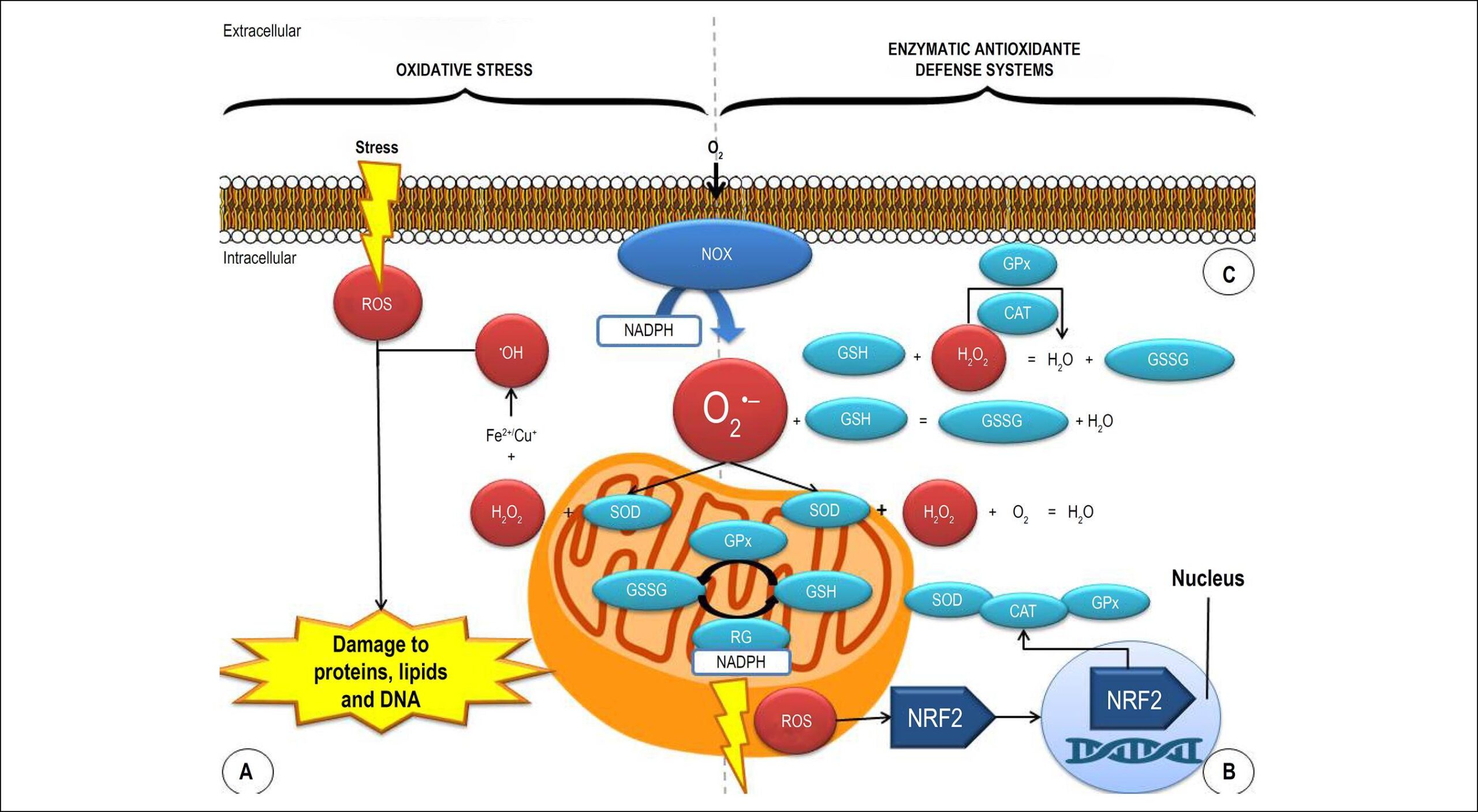
To verify if strength training reduces oxidative damage to the heart and contralateral kidney caused by the renovascular hypertension induction surgery, as well as to evaluate alterations in the activity of superoxide dismutase (SOD), catalase (CAT), and glutathione peroxidase (GPx) endogenous antioxidant enzymes.

Methods

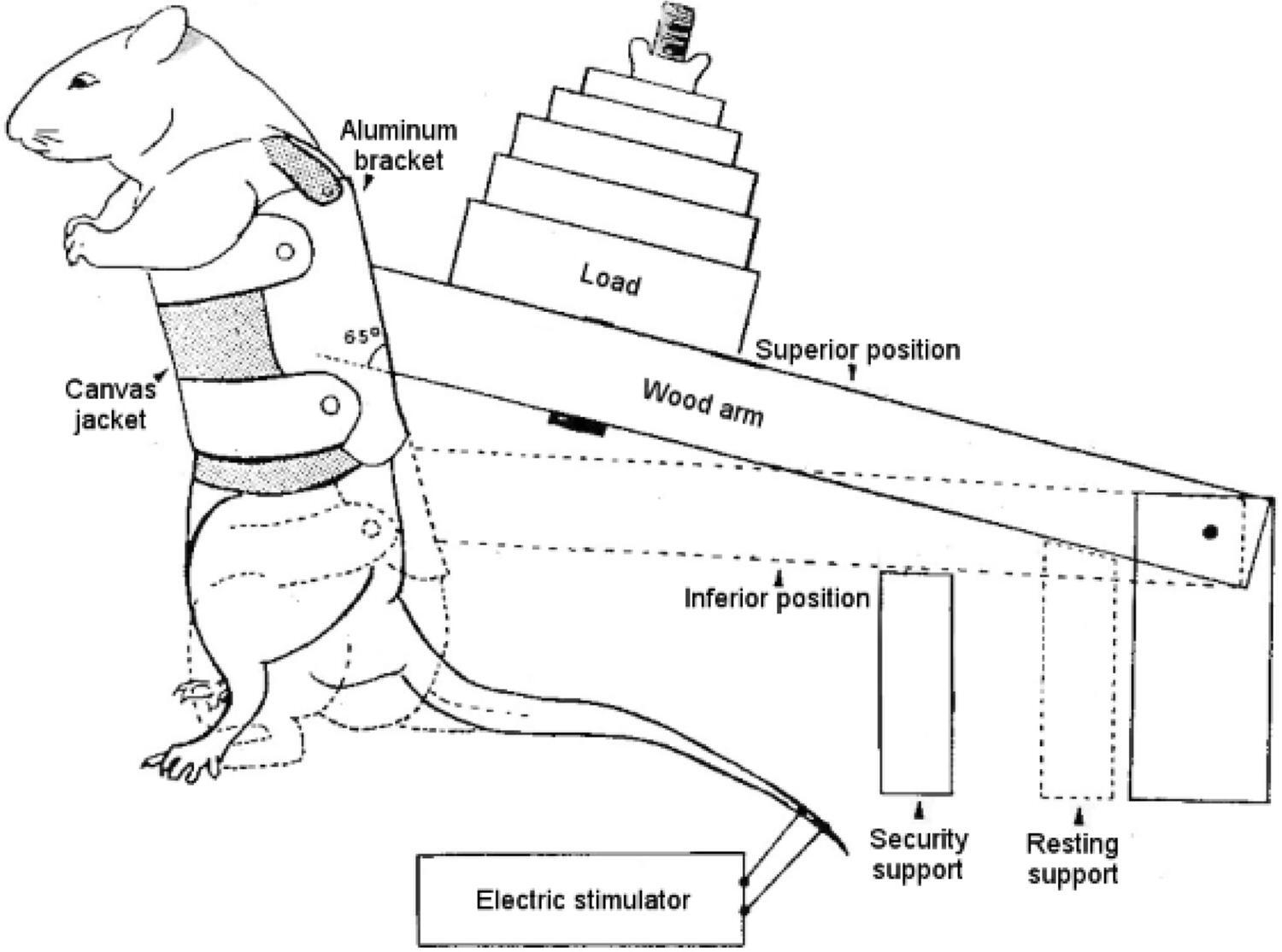
Eighteen male rats were divided into three groups (n=6/group): sham, hypertensive, and trained hypertensive. The animals were induced to renovascular hypertension through left renal artery ligation. Strength training was initiated four weeks after the induction of renovascular hypertension, continued for a 12-weeks period, and was performed at 70% of 1RM. After the training period, the animals were euthanized and the right kidney and heart were removed for quantitation of hydroperoxides, malondialdehyde and sulfhydryl groups, which are markers of oxidative damage. In addition, the activity of SOD, CAT, and GPx antioxidant enzymes was also measured. The adopted significance level was 5% (p < 0.05).

Results

After strength training, a reduction in oxidative damage to lipids and proteins was observed, as could be seen by reducing hydroperoxides and total sulfhydryl levels, respectively. Furthermore, an increased activity of superoxide dismutase, catalase, and glutathione peroxidase antioxidant enzymes was observed.

Conclusion

Strength training is able to potentially reduce oxidative damage by increasing the activity of antioxidant enzymes. (Arq Bras Cardiol. 2021; 116(1):4-11)
  • Antioxidants
  • hypertension, renovascular
  • Oxidation-Reduction
  • Oxidative Stress
  • Renal Arterial Obstruction
  • Resistance Training
Read Full Article
Creative Commons Attribution (CC BY) Creative Commons license
03/02/2021 DOI: 10.36660/abc.20190391
Figure 1
ABC
Review Article

Kidney Disease in Diabetes Mellitus: Cross-Linking between Hyperglycemia, Redox Imbalance and Inflammation

Rayne Gomes Amorim et al. Glaucevane da Silva Guedes Sandra Mary Lima Vasconcelos Juliana Célia de Farias Santos

Abstract

Chronic hyperglycemia is the key point of macro- and microvascular complications associated with diabetes mellitus. Excess glucose is responsible for inducing redox imbalance and both systemic and intrarenal inflammation, playing a critical role in the pathogenesis of diabetic kidney disease, which is currently the leading cause of dialysis in the world. The pathogenesis of the disease is complex, multifactorial and not fully elucidated; many factors and mechanisms are involved in the development, progression and clinical outcomes of the disease. Despite the disparate mechanisms involved in renal damage related to diabetes mellitus, the metabolic mechanisms involving oxidative/inflammatory pathways are widely accepted. The is clear evidence that a chronic hyperglycemic state triggers oxidative stress and inflammation mediated by altered metabolic pathways in a self-perpetuating cycle, promoting progression of cell injury and of end-stage renal disease. The present study presents an update on metabolic pathways that involve redox imbalance and inflammation induced by chronic exposure to hyperglycemia in the pathogenesis of diabetic kidney disease.

  • Diabetes Mellitus/complications
  • Inflammation
  • Kidney, Diseases
  • Oxidation-Reduction
  • Oxidative Stress
  • renal dialysis
Read Full Article
Creative Commons Attribution (CC BY) Creative Commons license
06/06/2019 DOI: 10.5935/abc.20190077 Views 1
Redox unbalance: NADPH oxidase as therapeutic target in blood pressure control
ABC
Review Article

Redox unbalance: NADPH oxidase as therapeutic target in blood pressure control

Luiza A. Rabêlo et al. Valéria Nunes de Souza Lucas José Sá da Fonseca Walkyria O. Sampaio

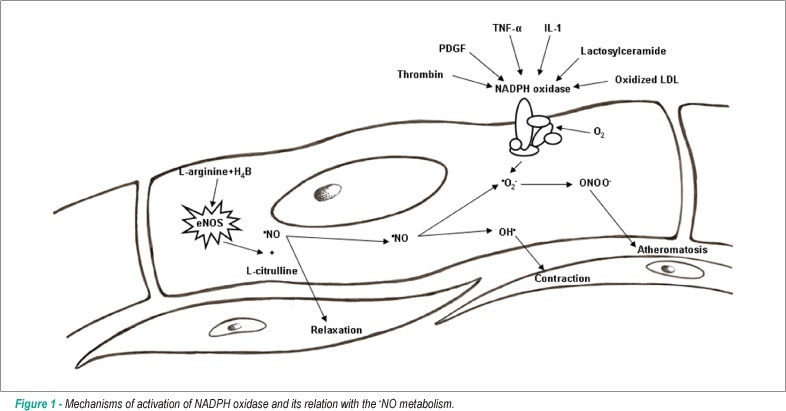
Several studies refer to reactive oxygen and nitrogen species (RONS) as important agents in the pathogenesis of a number of heart diseases, including high blood pressure, arteriosclerosis and heart failure. Such species are highly bioactive molecules and a short life due chiefly to reduction of molecular oxygen. The enzyme complex of NADPH oxidase is the main source of these reactive species in vascular system. Under physiological conditions, formation and elimination of these substances seem balanced in vascular wall. During redox Unbalance, nonetheless, there is increase in NADPH oxidase activity and predominance of pro-oxidizing agents, surpassing the anti-oxidant capacity of the organism self-defense. Besides this, such enzyme hyperactivity reduces the bioavailability of nitric oxide, capital for vasodilation and maintenance of normal vascular function. In spite of NADPH oxidase being directly connected to the endothelial dysfunction, it was firstly described as for its expression in phagocytes, where its activity determines efficiency of organism defense mechanisms against pathogens. Slight differences between structural units of NADPH oxidases, depending on the type of cell which expresses it, may create therapeutic implications, allowing to selectively inhibiting redox unbalance triggered by NADPH oxidase, without compromising, however, its participation in physiological cellular signaling which make sure protection against micro-organisms.

  • Cardiovascular Diseases
  • NADPH Oxidase
  • NADPH oxidase inhibitors
  • Oxidation-Reduction
  • reactive nitrogen species
  • Reactive Oxygen Species
Read Full Article
Creative Commons Attribution (CC BY) Creative Commons license
22/09/2010 DOI: 10.1590/S0066-782X2010000500018

How to cite this article

EndNote RIS

Electronic Document Format (Vancouver)

Miguel-dos-Santos R, Santos JF, Macedo FN, Marçal AC, Santana Filho VJ, Wichi RB, Lauton-Santos S, et al. Strength Training Reduces Cardiac and Renal Oxidative Stress in Rats with Renovascular Hypertension. Arquivos Brasileiros de Cardiologia 2021;116(1):4-11.

Electronic Document Format (ABNT)

Miguel-dos-Santos, Rodrigo; Santos, Jucilene Freitas dos; Macedo, Fabricio Nunes; Marçal, Anderson Carlos; Santana Filho, Valter J.; Wichi, Rogerio Brandão; Lauton-Santos, Sandra. Strength Training Reduces Cardiac and Renal Oxidative Stress in Rats with Renovascular Hypertension. Arquivos Brasileiros de Cardiologia, v. 116, n. 1, p. 4-11, Feb. 2021.

Electronic Document Format (APA)

Miguel-dos-Santos, R., Santos, J. F. , Macedo, F. N., Marçal, A. C., Santana Filho, V. J., Wichi, R. B., & Lauton-Santos, S. (2021). Strength Training Reduces Cardiac and Renal Oxidative Stress in Rats with Renovascular Hypertension. Arquivos Brasileiros de Cardiologia, 116(1), 4-11.

Electronic Document Format (ISO)

Miguel-dos-Santos, Rodrigo and Santos, Jucilene Freitas dos and Macedo, Fabricio Nunes and Marçal, Anderson Carlos and Santana Filho, Valter J. and Wichi, Rogerio Brandão and Lauton-Santos, Sandra. Strength Training Reduces Cardiac and Renal Oxidative Stress in Rats with Renovascular Hypertension. Arquivos Brasileiros de Cardiologia [online]. 2021, vol. 116, n. 1, [cited 2026-10-15], pp. 4-11. Available from: <https://journals.cardiol.br/en/article/strength-training-reduces-cardiac-and-renal-oxidative-stress-in-rats-with-renovascular-hypertension/>. ISSN 0066-782X

EndNote RIS

Electronic Document Format (Vancouver)

Amorim RG, Guedes GS, Vasconcelos SML, Santos JCF. Kidney Disease in Diabetes Mellitus: Cross-Linking between Hyperglycemia, Redox Imbalance and Inflammation. Arquivos Brasileiros de Cardiologia 2019;112(5):577-8.

Electronic Document Format (ABNT)

Amorim, Rayne Gomes; Guedes, Glaucevane da Silva; Vasconcelos, Sandra Mary Lima; Santos, Juliana Célia de Farias. Kidney Disease in Diabetes Mellitus: Cross-Linking between Hyperglycemia, Redox Imbalance and Inflammation. Arquivos Brasileiros de Cardiologia, v. 112, n. 5, p. 577-587, Jun. 2019.

Electronic Document Format (APA)

Amorim, R. G., Guedes, G. S., Vasconcelos, S. M. L., & Santos, J. C. F. (2019). Kidney Disease in Diabetes Mellitus: Cross-Linking between Hyperglycemia, Redox Imbalance and Inflammation. Arquivos Brasileiros de Cardiologia, 112(5), 577-587.

Electronic Document Format (ISO)

Amorim, Rayne Gomes and Guedes, Glaucevane da Silva and Vasconcelos, Sandra Mary Lima and Santos, Juliana Célia de Farias. Kidney Disease in Diabetes Mellitus: Cross-Linking between Hyperglycemia, Redox Imbalance and Inflammation. Arquivos Brasileiros de Cardiologia [online]. 2019, vol. 112, n. 5, [cited 2026-10-15], pp. 577-587. Available from: <https://journals.cardiol.br/en/article/kidney-disease-in-diabetes-mellitus-cross-linking-between-hyperglycemia-redox-imbalance-and-inflammation/>. ISSN 0066-782X

EndNote RIS

Electronic Document Format (Vancouver)

Rabêlo LA, Souza VN, Fonseca LJS, Sampaio WO. Redox unbalance: NADPH oxidase as therapeutic target in blood pressure control. Arquivos Brasileiros de Cardiologia 2010;94(5):684-93.

Electronic Document Format (ABNT)

Rabêlo, Luiza A.; Souza, Valéria Nunes de; Fonseca, Lucas José Sá da; Sampaio, Walkyria O.. Redox unbalance: NADPH oxidase as therapeutic target in blood pressure control. Arquivos Brasileiros de Cardiologia, v. 94, n. 5, p. 684-693, Sep. 2010.

Electronic Document Format (APA)

Rabêlo, L. A., Souza, V. N. , Fonseca, L. J. S. , & Sampaio, W. O. (2010). Redox unbalance: NADPH oxidase as therapeutic target in blood pressure control. Arquivos Brasileiros de Cardiologia, 94(5), 684-693.

Electronic Document Format (ISO)

Rabêlo, Luiza A. and Souza, Valéria Nunes de and Fonseca, Lucas José Sá da and Sampaio, Walkyria O.. Redox unbalance: NADPH oxidase as therapeutic target in blood pressure control. Arquivos Brasileiros de Cardiologia [online]. 2010, vol. 94, n. 5, [cited 2026-10-15], pp. 684-693. Available from: <https://journals.cardiol.br/en/article/redox-unbalance-nadph-oxidase-as-therapeutic-target-in-blood-pressure-control/>. ISSN 0066-782X

  • About ABC Family
  • Internal Regulation
  • Editorial Board
  • Brazilian Society of Cardiology (SBC)

Issues

SBC Guidelines

  • Videos
  • Podcasts
  • News