| ABC
ABC Family Arquivos Brasileiros de Cardiologia International Journal of Cardiovascular Sciences ABC Heart Failure & Cardiomyopathy ABC Imagem Cardiovascular
Português English
ABC Family | ABC
Português English
  • About
    • About the Journal
    • Internal Regulation
    • Editors Section
    • Editorial Board
    • History
    • SBC Award
  • Instructions to Authors
    • Guidelines for Publication
    • Editorial Policy
    • Ethics Policy
    • Policy on the Use of Artificial Intelligence
    • Mandatory Publication Form
    • Publication Fee
  • Issues
  • SBC Guidelines
  • Abstracts
    • How to Publish an Abstract Supplement?
    • Supplements from the Brazilian Congress of Cardiology
  • About
    • About the Journal
    • Internal Regulation
    • Editors Section
    • Editorial Board
    • History
    • SBC Award
  • Instructions to Authors
    • Guidelines for Publication
    • Editorial Policy
    • Ethics Policy
    • Policy on the Use of Artificial Intelligence
    • Mandatory Publication Form
    • Publication Fee
  • Issues
  • SBC Guidelines
  • Abstracts
    • How to Publish an Abstract Supplement?
    • Supplements from the Brazilian Congress of Cardiology

ABC Family

  • ABC Family
  • Arquivos Brasileiros de Cardiologia
  • International Journal of Cardiovascular Sciences
  • ABC Heart Failure & Cardiomyopathy
  • ABC Imagem Cardiovascular
Search in

No content found.

Journals
Ordering
Article types
Others

  1. Home
  2. ABC
  3. Issues
  4. 2020, Volume 114, Number 2
Editorial

DNA Damage in Chronic Heart Failure: Consequences Beyond those in the Heart

Camila Renata Corrêa et al. Jéssica Leite Garcia

Chronic heart failure (CHF) affects approximately 1% to 2% of the population of developed countries and its prevalence increases approximately 1% in individuals aged 55 to 64 years and up to 17.4% in individuals aged 85 years and over., CHF is a complex disease with multiple causes and myocardial infarction (MI) is the most common cause. It is characterized by structural or functional cardiac alterations, affecting the ventilatory mechanics that impairs the oxygen uptake and supply to the systems, inducing oxidative stress.

Oxidative stress, also currently called redox imbalance, is known to be associated with the development of several pathologies, either as a trigger or consequence. The biological system of redox reactions may break out of its equilibrium status when the formation of oxidizing species overcomes the antioxidant defense. This scenario favors the oxidation of biomolecules (lipids, proteins, DNA) resulting in their structural and functional damage, that is, contributing to significant pathological outcomes.

[…]

Read Full Article
Creative Commons Attribution (CC BY) Creative Commons license
20/03/2020 DOI: 10.36660/abc.20190884
Figure 1
Original Article

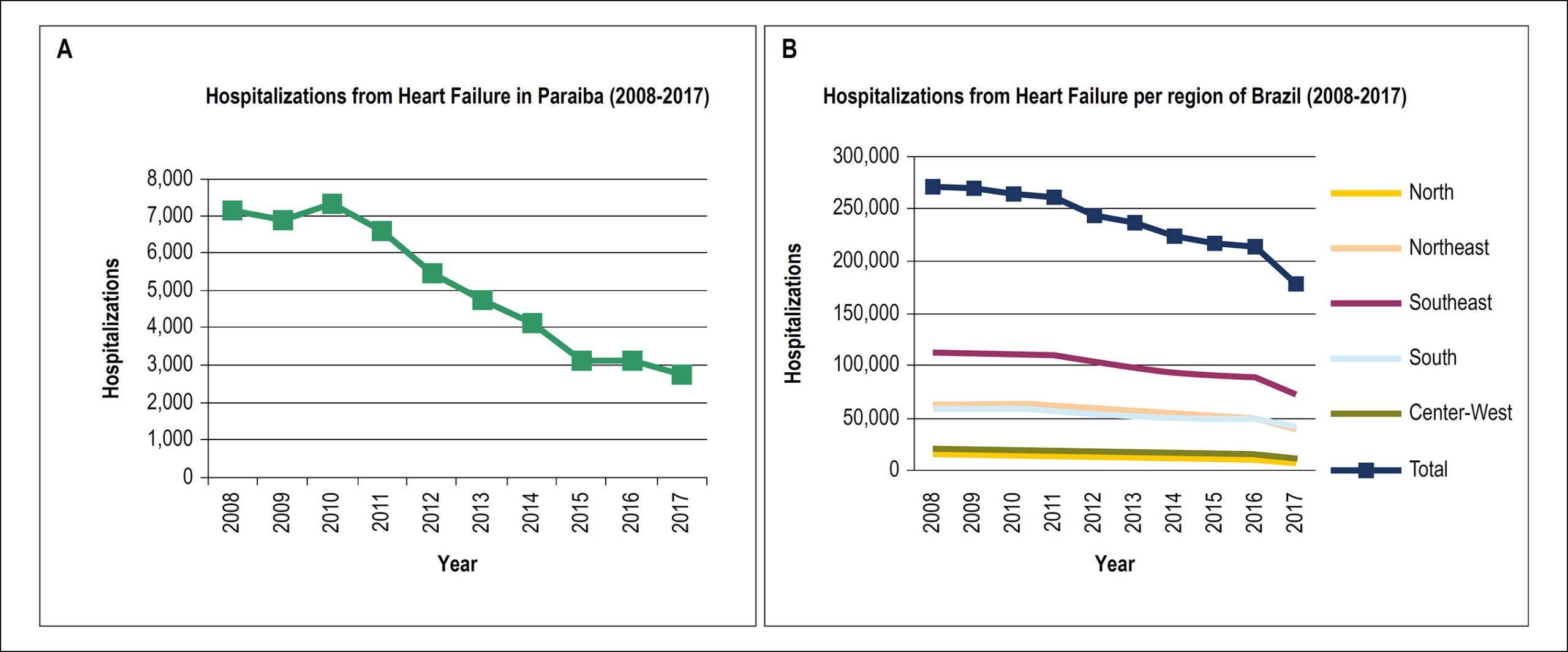
A 10-Year Trend Analysis of Heart Failure in the Less Developed Brazil

Amanda D. F. Fernandes et al. Gilson C. Fernandes Manuel Rivera Mazza Leonardo M. Knijnik … Gustavo Soares Fernandes Andre Telis de Vilela Amit Badiye Sandra V. Chaparro

Abstract

Background:

Data on heart failure (HF) epidemiology in less developed areas of Brazil are scarce.

Objective:

Our aim was to determine the HF morbidity and mortality in Paraiba and Brazil and its 10-year trends.

Methods:

A retrospective search was conducted from 2008 to 2017 using the DATASUS database and included patients ≥ 15 years old with a primary diagnosis of HF. Data on in-hospital and population morbidity and mortality were collected and stratified by year, gender and age. Pearson correlation and linear-by-linear association test for trends were calculated, with a level of significance of 5%.

Results:

From 2008 to 2017, HF admissions decreased 62% (p = 0.004) in Paraiba and 34% (p = 0.004) in Brazil. The in-hospital mortality rate increased in Paraiba and Brazil [65.1% (p = 0.006) and 30.1% (p = 0.003), respectively], but the absolute in-hospital mortality had a significant decrease only in Paraiba [37.5% (p = 0.013)], which was maintained after age stratification, except for groups 15-19, 60-69 and > 80 years. It was observed an increase in the hospital stay [44% (p = 0.004) in Paraiba and 12.3% (p = 0.004) in Brazil]. From 2008 to 2015, mortality rate for HF in the population decreased 10.7% (p = 0.047) in Paraiba and 7.7% (p = 0.017) in Brazil.

Conclusions:

Although HF mortality rate has been decreasing in Paraiba and Brazil, an increase in the in-hospital mortality rate and length of stay for HF has been observed. Hospital-based clinical studies should be performed to identify the causes for these trends of increase.

  • Comorbidity
  • Heart Failure / mortality
  • Heart Failure/epidemiology
  • Heart Failure/physiopathology
  • Heart Failure/trends
  • Hospitalization
Read Full Article
Creative Commons Attribution (CC BY) Creative Commons license
20/03/2020 DOI: 10.36660/abc.20180321
Editorial

Clinical Significance of Statistical Differences

Luiz Maurino Abreu

Diabetes is a serious chronic condition that occurs when your body cannot produce any or enough insulin or cannot effectively use the insulin it produces, resulting in high blood glucose levels. The so-called type 1 diabetes is caused by a set of genetic, environmental and autoimmune factors affecting insulin-producing pancreatic beta cells.

Elevated blood glucose levels even below the diagnostic threshold of diabetes are associated with complications with the greatest impact on morbidity and mortality among people with diabetes. Systematic reviews involving 102 prospective studies in diabetic patients indicate that the relative risk of cardiovascular disease (CVD) is between 1.6 and 2.6, greater in younger people and slightly higher in women.

[…]

  • Arrhythmias,Cardiac
  • Data Interpretation, Statistical
  • Diabetes Mellitus/complications, Risk Factors
  • Electrocardiography/methods
  • Prevention and Control
Read Full Article
Creative Commons Attribution (CC BY) Creative Commons license
20/03/2020 DOI: 10.36660/abc.20200006 Views 2
Figure 1
Original Article

Quantification of DNA Damage in Different Tissues in Rats with Heart Failure

Giuseppe Potrick Stefani et al. Ramiro Barcos Nunes Douglas Dalcin Rossato Vitor Scotta Hentschke … Marlise Di Domenico Pedro Dal Lago Cláudia Ramos Rhoden

Abstract

Background:

Chronic heart failure (CHF) is a complex syndrome which comprises structural and functional alterations in the heart in maintaining the adequate blood demand to all tissues. Few investigations sought to evaluate oxidative DNA damage in CHF.

Objective:

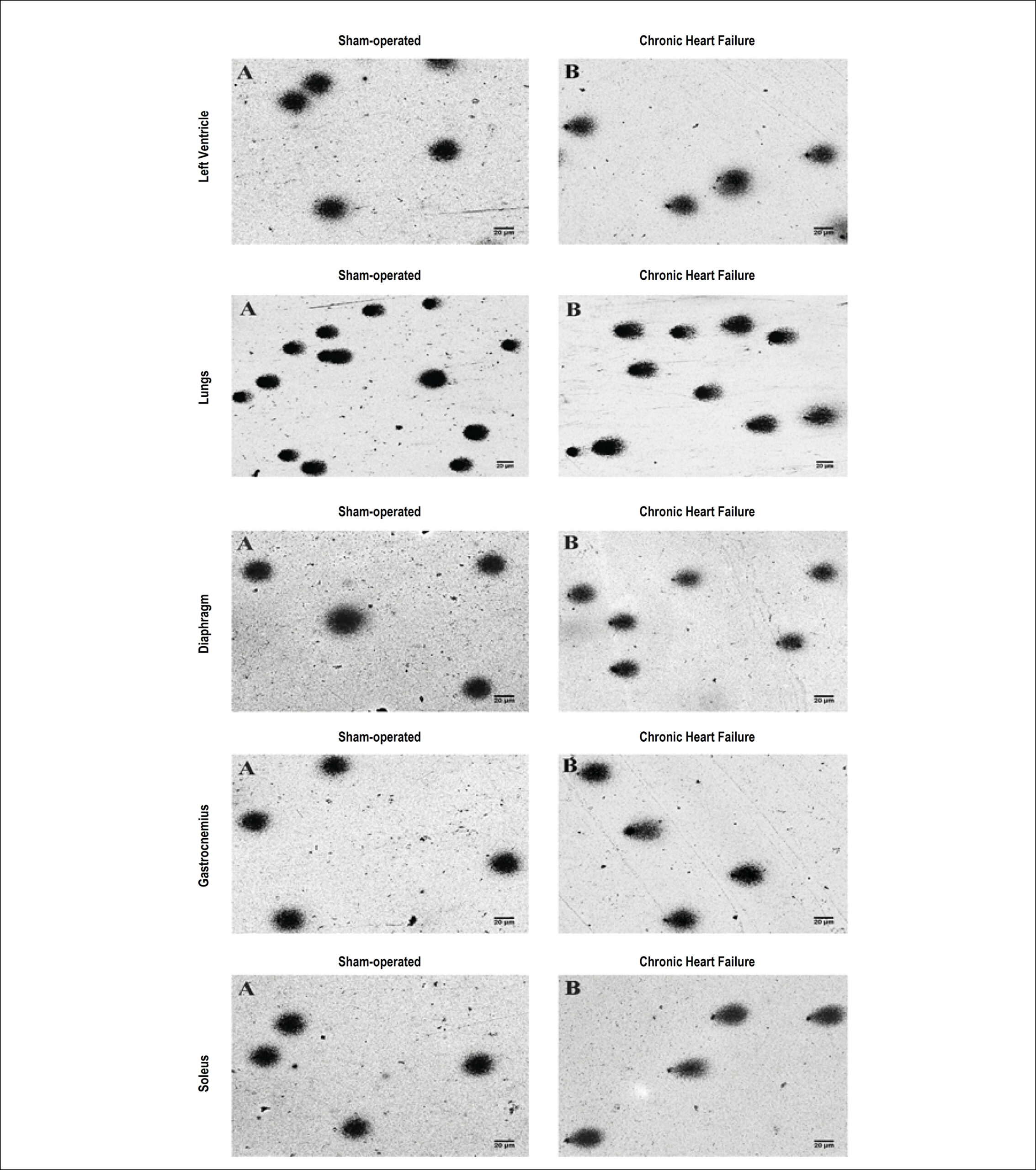
To quantify the DNA damage using the comet assay in left ventricle (LV), lungs, diaphragm, gastrocnemius and soleus in rats with CHF.

Methods:

Twelve male Wistar rats (300 to 330 g) were selected for the study: Sham (n = 6) and CHF (n = 6). The animals underwent myocardial infarction by the ligation of the left coronary artery. After six weeks, the animals were euthanized. It was performed a cell suspension of the tissues. The comet assay was performed to evaluate single and double strand breaks in DNA. Significance level (p) considered < 0.05.

Results:

The CHF group showed higher values of left ventricle end-diastolic pressure (LVEDP), pulmonary congestion, cardiac hypertrophy and lower values of maximal positive and negative derivatives of LV pressure, LV systolic pressure (p < 0.05). CHF group showed higher DNA damage (% tail DNA, tail moment and Olive tail moment) compared to Sham (p < 0.001). The tissue with the highest damage was the soleus, compared to LV and gastrocnemius in CHF group (p < 0.05).

Conclusion:

Our results indicates that the CHF affects all tissues, both centrally and peripherically, being more affected in skeletal muscle (soleus) and is positively correlated with LV dysfunction.

  • Comet Assay
  • DNA Damage
  • Heart Failure
  • Rats
  • Rats Inbred Strains
  • Tissue Distribution
Read Full Article
Creative Commons Attribution (CC BY) Creative Commons license
20/03/2020 DOI: 10.36660/abc.20180198 Views 2
Editorial

Death from Cancer and Cardiovascular Disease between Two Brazils

Sílvia Marinho Martins

Introduction

Population aging has been represented as one of the main global trends in future prospects, and Brazil is increasingly becoming established within this scenario. While life expectancy is estimated to be over 83 years in countries like Japan, Switzerland, and Spain, in others such as Nigeria and Somalia individuals reach an average age of 55. In 2018, life expectancy was estimated at 71 years in Brazil. The relationship between health and development is quite complex, and it presents countless interactions. Both life expectancy and main causes of death appear as indicators of a region or a country’s quality of life. They are signs of lifestyle (and advice regarding adequate change), preventative healthcare services provided to the community and advances in diagnostic techniques. Health conditions are influenced by the socio-economic environment, given that higher indicators of income and educational level manifest as adoption of healthier lifestyle habits and, naturally, access to more effective treatment.

In the past, communicable diseases represented the leading cause of death. In low-income countries, 52% of deaths were caused by communicable diseases, conditions resulting from pregnancy and childbirth, and other issues related to nutritional deficiencies. In contrast, in high-income countries, these causes accounted for at most 7% of deaths. It is estimated that, by 2030, most countries will have made the much acclaimed epidemiological transition and have profiles with a higher prevalence of non-communicable diseases.

[…]

Read Full Article
Creative Commons Attribution (CC BY) Creative Commons license
20/03/2020 DOI: 10.36660/abc.20200017
Editorial

Invasive Physiological Assessment: From Binary to Continuous

Daniel Chamié et al. Alexandre Abizaid

Described by Pijls et al., in 1993, and based on extensive validation and robust clinical data, fractional flow reserve (FFR) was incorporated into the guidelines of myocardial revascularization to guide the need for revascularization of angiographically intermediate stenosis in patients with stable coronary artery disease (CAD).– The broadest arguments for this decision were: (1) by depicting a complex tridimensional structure as a planar silhouette coronary angiography suffers from well-known limitations, it presents large variability in estimating coronary stenosis severity, and it has low ability in predicting the functional significance of epicardial coronary stenoses, and (2) revascularization in stable coronary artery disease based solely on the severity of luminal narrowing, as determined by coronary angiography, does not improve clinical outcomes as compared to optimized medical treatment or versus revascularization of only physiologically significant lesions.–

The central premise of invasive assessment of coronary physiology is to identify myocardial ischemia with superior spatial resolution (per vessel) compared to non-invasive methods (per territory), aiding in the identification of lesions (and, therefore, patients) that are more likely to benefit from revascularization. However, despite the clinical benefits and guideline recommendations, the FFR uptake in clinical practice remains low (< 10%) in most catheterization laboratories around the globe. Costs, time added to procedures, patient discomfort to hyperemic stimulus or contraindications to adenosine use, as well as difficulties in interpretation of physiological traces in certain anatomic situations (e.g., serial/diffuse stenosis), are some of the reasons for FFR underutilization.

[…]

  • Coronary stenosis
  • Fractional Flow Reserve
  • Myocardial Coronary Artery Disease
  • Myocardial Ischemia
  • Percutaneous Coronary Intervention
  • Risk Factors
Read Full Article
Creative Commons Attribution (CC BY) Creative Commons license
20/03/2020 DOI: 10.36660/abc.20200054 Views 1
Figure 1
Viewpoint

Treatment of Aortic Stenosis in Elderly Individuals in Brazil: How Long Can We Wait?

Marcelo Antônio Cartaxo Queiroga Lopes et al. Bruno Ramos Nascimento Gláucia Maria Moraes de Oliveira

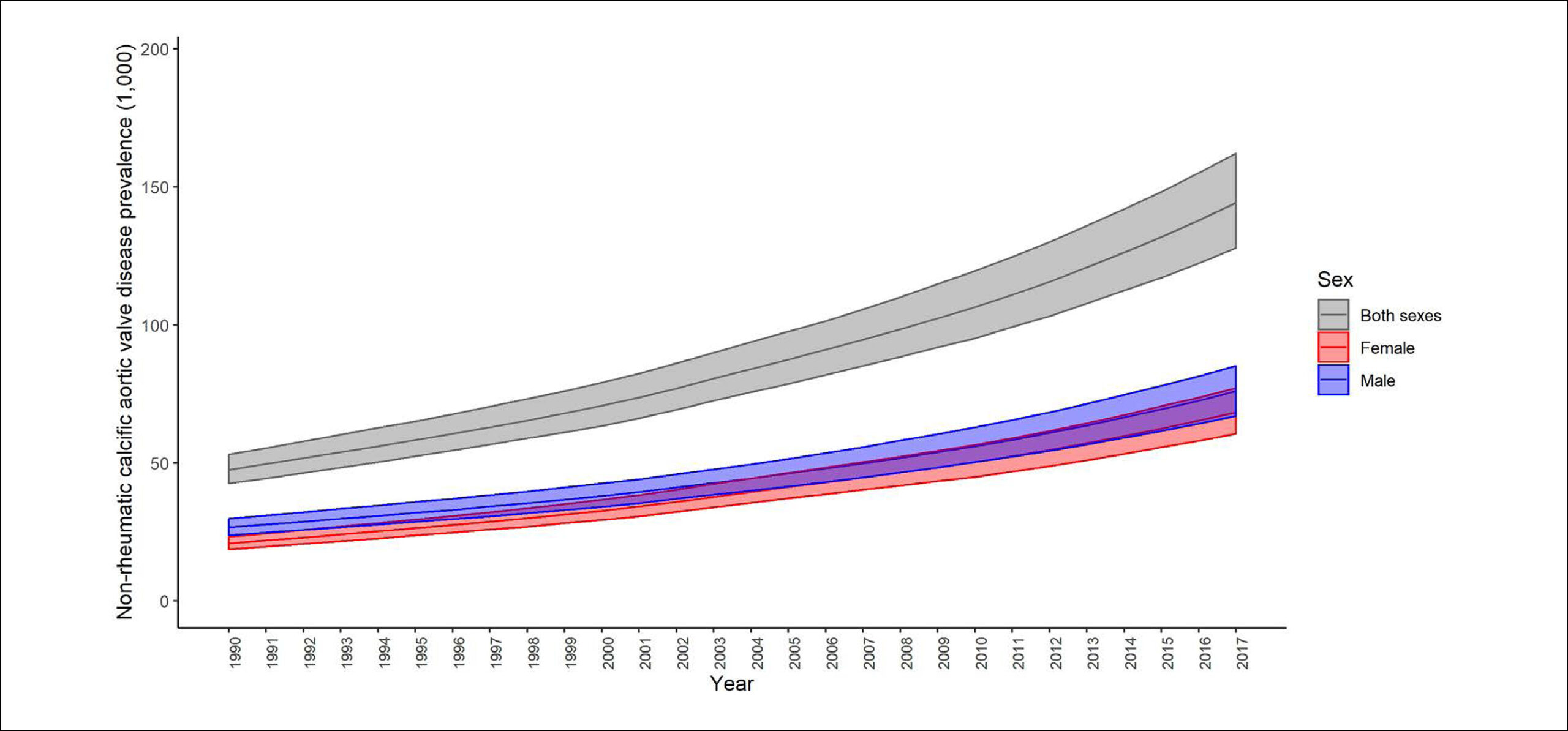
The growing life expectancy of the population is increasing the occurrence of diseases affecting the elderly age group, notably the non-rheumatic degenerative valvular diseases and, in particular, aortic stenosis, whose prevalence in elderly individuals older than 75 years has been estimated at 3 to 5%. This is the most common valvular heart disease among elderly individuals, and its severe form is associated with high morbidity and mortality. The life expectancy of patients with aortic stenosis presenting with heart failure and rhythm disturbances is estimated to be less than 2 years. The standard treatment for this disease is cardiac surgery with replacement of the aortic valve by a prosthesis. However, due to high surgical risk, especially in very elderly patients with associated comorbidities, cardiac surgery is contraindicated in about 30% of the cases or is performed with high morbidity and mortality rates according to preoperative scores. For these critically ill patients, a new, less invasive technique consisting of transcatheter aortic valve implantation (TAVI) of a bioprosthesis has been considered the therapeutic option of choice, initially tested in patients at very high surgical risk, but currently with evidence of noninferiority compared to open surgery in lower-risk individuals., The first TAVI procedure in the world was performed in France in 2002 by Professor Alain Cribier, and the method was pioneered in Brazil in 2008. Since then, a considerable number of patients has been treated. However, despite robust evidence of safety and efficacy, this therapy has still not been incorporated into the supplemental or public health care systems (Sistema Único de Saúde [SUS]) in the country.

Despite the fact that TAVI has already been evaluated and accepted in the health care systems of several countries with evidence of cost-effectiveness even in individuals at intermediate operative risk, the Ministry of Health, based on a position stand from the National Commission for Incorporation of Technologies in the SUS (Conitec), established in 2013, in response to a request by the Brazilian Society for Hemodynamics and of Interventional Cardiology (SBHCI) acting as the petitioner, considered that there was no convenience in incorporating this therapy in Brazil. Conitec, at the time, based on the opinion of a reviewer and disregarding the opinion of prestigious national universities presented in a public consultation on the subject, recommended against the incorporation of the procedure, justifying this decision on three points: a) TAVI would not be a safe and effective procedure due to an allegedly high incidence of stroke within the first 30 days after the procedure, b) the budgetary impact of incorporating TAVI into the SUS would approach 1 billion reais per year, and c) methodological inaccuracies could have affected the economic model presented by the petitioner and the PARTNER B study, which served as the main background for the incorporation of this procedure by all health technology assessment agencies in the world that have requested the incorporation of this technology.

[…]

  • Aged
  • aging
  • Heart Valve Prosthesis
  • Heart Valve Prosthesis Implantation
  • Life Expectancy
  • Stenosis Valve Aortic/surgery
  • Transcatheter Aortic Valve Replacement/trends
Read Full Article
Creative Commons Attribution (CC BY) Creative Commons license
20/03/2020 DOI: 10.36660/abc.2020003 Views 1
Editorial

New Paradigms in the Evaluation of Diastolic Function by Cardiac Magnetic Resonance Imaging in Aortic Valvopathy

Vera Maria Cury Salemi et al. Marcelo Dantas Tavares de Melo José de Arimatéia Batista Araujo Filho

The noninvasive analysis of left ventricular diastolic function is a challenge in clinical practice. Estimation of the time constant of isovolumetric relaxation – or Tau constant – is the best and most established parameter for ventricular diastolic function analysis. However, this measure is obtained through an invasive assessment and it is very difficult to acquire. In clinical practice, echocardiography is considered a key tool, among all the complementary exams that can be used to evaluate diastolic function, validated in relation to the pressure-volume curves by catheterization, restricting the invasive evaluation to be used in exceptional cases. Thus, echocardiography remains the first-line noninvasive method, providing data on early diastolic dysfunction through indices that reflect relaxation, compliance, and also indirect measurements of ventricular filling pressures.

The latest recommendations for diastolic dysfunction assessment by echocardiography basically include analysis of the left ventricle without structural changes and preserved ejection fraction, as well as a flowchart for cases of left ventricular ejection fraction reduction/structural change. However, the classification of the degree of diastolic dysfunction and its application in the therapeutic management of valvular heart disease remains controversial., Moreover, aortic stenosis may be associated with mitral annulus calcification, which may lead to a reduction of the mitral orifice area, with an increase in early transmitral diastolic velocity (E), while the Doppler lateral mitral annulus velocity (e’) may be reduced due to limitation of the posterior cusp excursion, which may lead to an artificial increase in the E/e’ ratio. In aortic regurgitation, however, the aortic reflux jet may interfere with the mitral flow, which, when significant, can lead to a restrictive ventricular filling pattern; however, the accuracy of E/e’ ratio is questionable.

[…]

  • Aortic Stenosis
  • Aortic Valvopathy
  • Cardiac magnetic resonance
  • Diastolic Function
  • Echocardiography
Read Full Article
Creative Commons Attribution (CC BY) Creative Commons license
20/03/2020 DOI: 10.36660/abc.20190903
Editorial

Short Editorial – Effect of Passive Smoking on Blood Pressure Response to Epinephrine and Felypressin in 1K1C Hypertensive Rats Treated or not with Atenolol

Paulo J. F. Tucci

I begin this text highlighting the importance of multidisciplinarity in the development of knowledge.

In 1842, Johann Christian Doppler, an Austrian physicist, defined that the frequency of the star’s light changed with its motion, as it moved closer or away. One and a half century later, such “useless curiosity” started to be applied for the diagnosis of congenital heart diseases. And for a long time, we do know when the train is coming or going.

[…]

  • Anesthesia, Dental
  • Atenolol
  • Epinephrine
  • Felipressin
  • Hypertension
  • Rats
  • Tobacco Use Disorder
  • Tobacco/adverse effects
Read Full Article
Creative Commons Attribution (CC BY) Creative Commons license
20/03/2020 DOI: 10.36660/abc.20200032 Views 2
Figure 1
Clinical Update

Update of the Brazilian Guideline on Nuclear Cardiology – 2020

Luiz Eduardo Mastrocola et al. Barbara Juarez Amorim João Vicente Vitola Simone Cristina Soares Brandão … Gabriel Blacher Grossman Ronaldo de Souza Leão Lima Rafael Willain Lopes William Azem Chalela Lara Cristiane Terra Ferreira Carreira José Roberto Nolasco de Araújo Cláudio Tinoco Mesquita José Claudio Meneghetti

1. Introduction

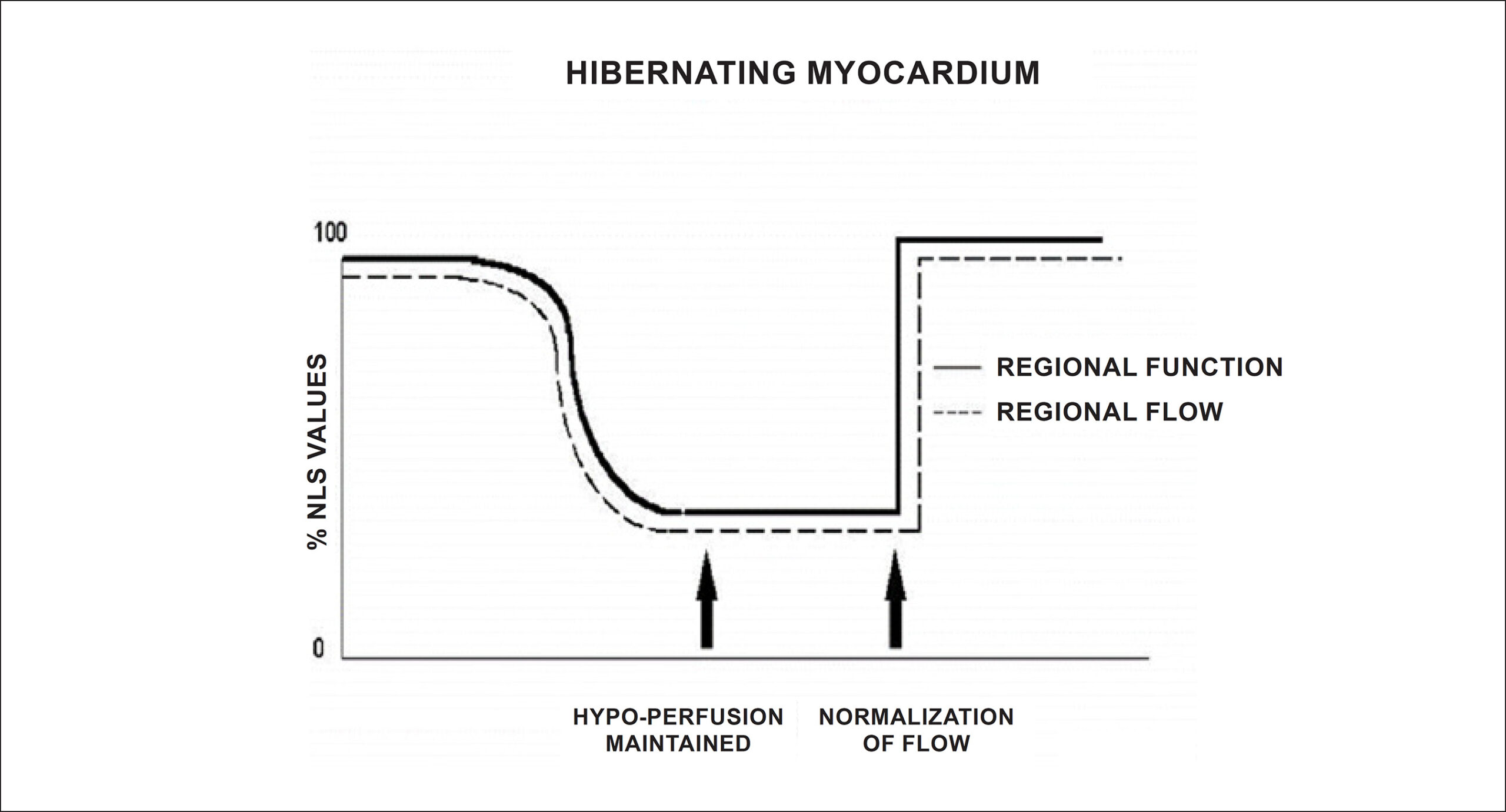
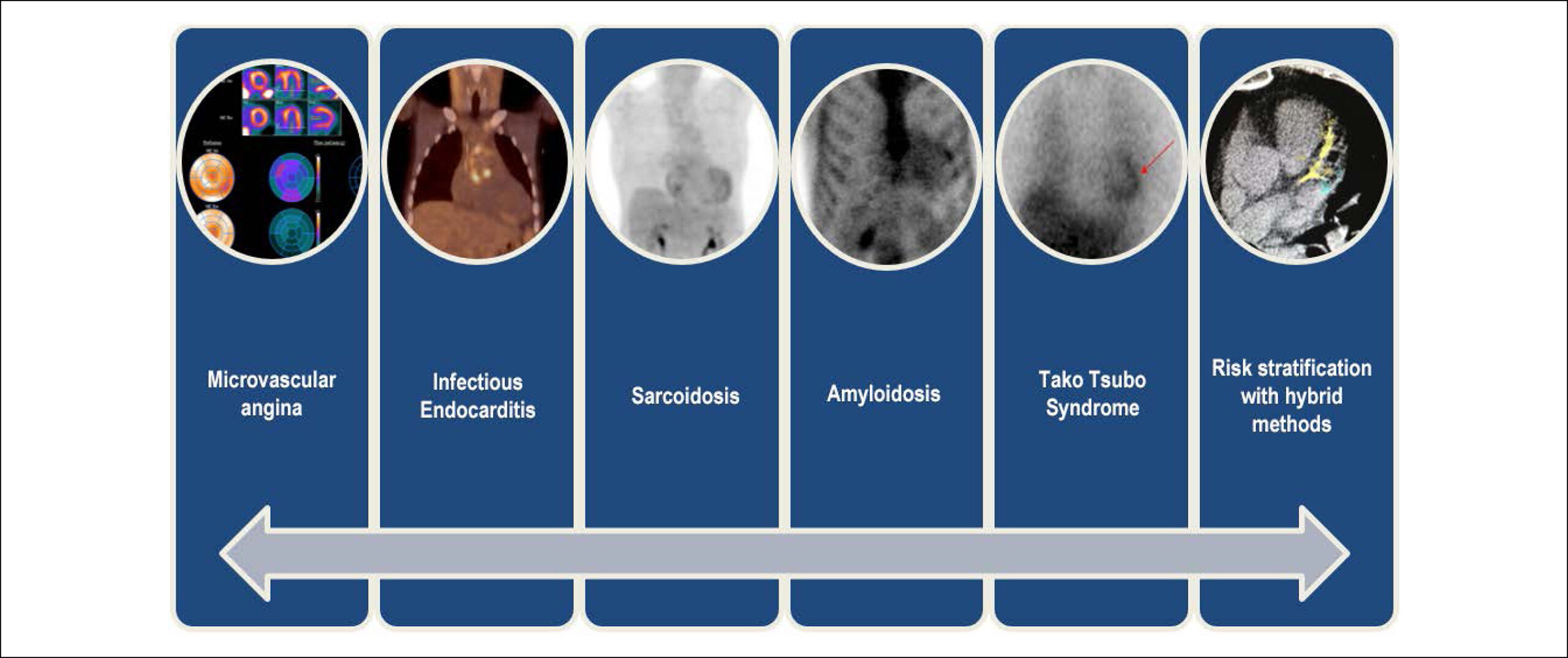
Nuclear cardiology is a non-anatomical, physiological imaging method. The use of radioactive or radiopharmaceutical substances makes it possible to study several physiopathological mechanisms of cardiovascular disease in vivo. Via this imaging technique, it is also possible to visualize and accompany an instituted therapy’s physiological effects on cardiac function, on the cellular and biochemical level. Of all the applications of nuclear medicine in cardiology, scintigraphy or myocardial perfusion imaging with technetium-99m-labeled radiopharmaceuticals synchronized with electrocardiogram (Gated-SPECT), is the most common exam in clinical practice. For this reason, this technique will be the most discussed in these Guidelines.

Recent years have, however, seen a growing concern among the scientific community regarding rational and optimized use of ionizing radiation in medicine. Cardiovascular imaging, moreover, encompasses all functional and anatomical imaging techniques and should, in this context, be used rationally and cost-effectively. Other applications of nuclear medicine in cardiology have also emerged and gained prominence during the past decades, especially positron emission tomography (PET) for the study of coronary flow reserve, cardiac sympathetic activity, and inflammatory/infectious processes, and cardiac amyloidosis (CA). All of these aspects have been taken into consideration and will be covered in detail in the chapters developed herein.

[…]

Read Full Article
Creative Commons Attribution (CC BY) Creative Commons license
20/03/2020 DOI: 10.36660/abc.20200087 Views 1
Figure 1
Original Article

Prognostic Prediction of Cardiopulmonary Exercise Test Parameters in Heart Failure Patients with Atrial Fibrillation

António Valentim Gonçalves et al. Tiago Pereira-da-Silva Rui Soares Joana Feliciano … Rita Ilhão Moreira Pedro Rio Ana Abreu Rui Cruz Ferreira

Abstract

Background:

Atrial fibrillation (AF) is associated with increased mortality in heart failure (HF) patients.

Objective:

To evaluate whether the risk of AF patients can be precisely stratified by relation with cardiopulmonary exercise test (CPET) cut-offs for heart transplantation (HT) selection.

Methods:

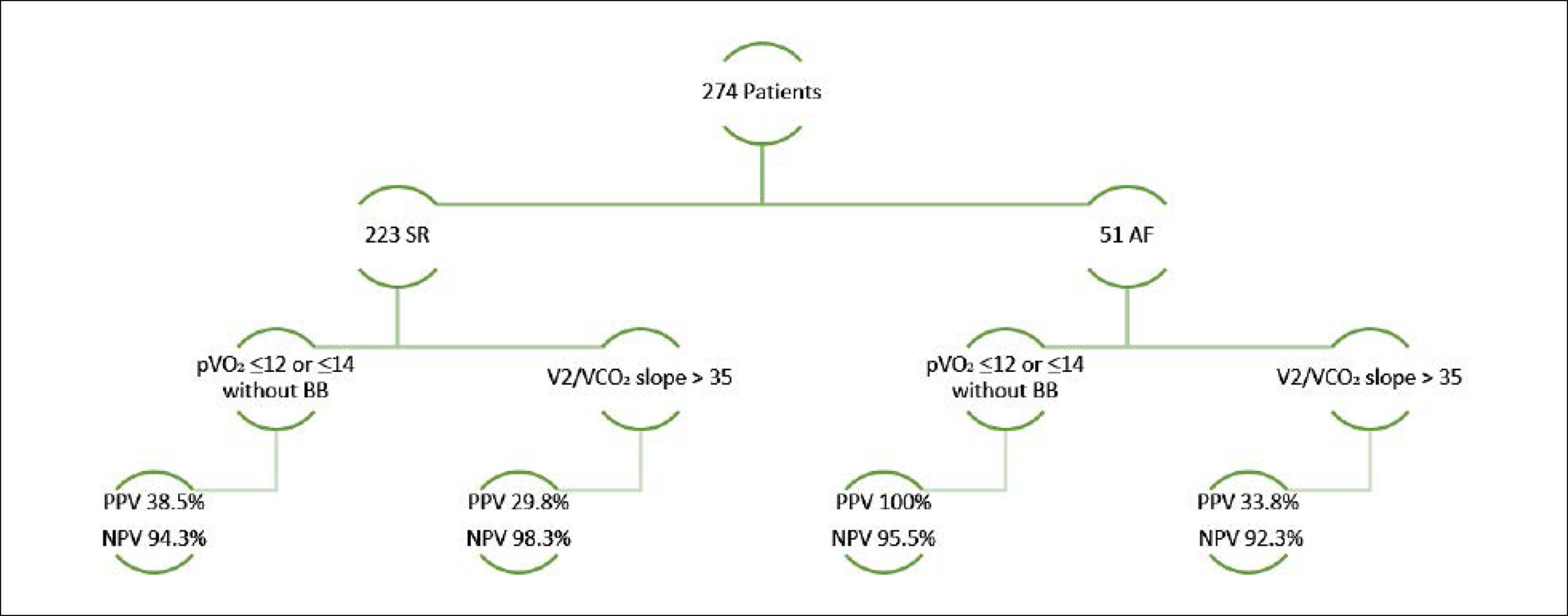
Prospective evaluation of 274 consecutive HF patients with left ventricular ejection fraction ≤ 40%. The primary endpoint was a composite of cardiac death or urgent HT in 1-year follow-up. The primary endpoint was analysed by several CPET parameters for the highest area under the curve and for positive (PPV) and negative predictive value (NPV) in AF and sinus rhythm (SR) patients to detect if the current cut-offs for HT selection can precisely stratify the AF group. Statistical differences with a p-value <0.05 were considered significant.

Results:

There were 51 patients in the AF group and 223 in the SR group. The primary outcome was higher in the AF group (17.6% vs 8.1%, p = 0.038). The cut-off value of pVO2 for HT selection showed a PPV of 100% and an NPV of 95.5% for the primary outcome in the AF group, with a PPV of 38.5% and an NPV of 94.3% in the SR group. The cut-off value of VE/VCO2 slope showed lower values of PPV (33.3%) and similar NPV (92.3%) to pVO2 results in the AF group.

Conclusion:

Despite the fact that AF carries a worse prognosis for HF patients, the current cut-off of pVO2 for HT selection can precisely stratify this high-risk group.

  • Atrial Fibrillation / mortality
  • Exercise Test
  • Heart Failure
  • Oxygen Consumption
  • Peak Expiratory Flow Rate
  • Prognosis
Read Full Article
Creative Commons Attribution (CC BY) Creative Commons license
20/03/2020 DOI: 10.36660/abc.20180193 Views 1
Editorial

Heart Failure Trends in Paraíba: Earlier Diagnosis or Better Treatment? – That is One of the Questions

Ana Teresa Timóteo

Heart Failure (HF) is a clinical syndrome with high prevalence, morbidity and mortality worldwide.– It is also one of the main causes for hospital admissions with elevated direct and indirect costs.– The prevalence of HF is expected to increase due to the increase in cardiovascular risk factors in the general population and to the increase in life expectancy. Elderly patients are more prone to the development of HF, as well as of admissions for HF. For that reason, an increase in the economic burden of HF is expected in the next decades.–

Previously published data showed, however, some epidemiological differences according to the world region, when comparing developing and developed countries. Recently published data from the European Society of cardiology Heart Failure Long-term Registry, a registry that included a wide spectrum of countries with very different socio-economic backgrounds, from Southern, Western, Northern and Eastern Europe, as well as Middle East and Northern Africa, showed significant between-region differences in baseline characteristics, clinical characteristics and also treatment and outcomes in patients with acute and chronic HF.

[…]

  • Comorbidity
  • Health Care Costs
  • Heart Failure / mortality
  • Heart Failure/epidemiology
  • Heart Failure/physiopathology
  • Heart Failure/trends
  • Hospitalization
Read Full Article
Creative Commons Attribution (CC BY) Creative Commons license
20/03/2020 DOI: 10.36660/abc.20190898 Views 1
Erratum

Erratum

December 2019 Issue, vol.113 (6), page 1138

In Short Editrorial “Admission NT-ProBNP in Myocardial Infarction: an Alert Sign?”, consider Luís Beck-da-Silva as the correct form for the name of the author Luís Beck da Silva.

[…]

Read Full Article
Creative Commons Attribution (CC BY) Creative Commons license
20/03/2020 DOI: 10.36660/abc.20200088
Figure 1
Image

Abdominal Pain: an Uncommon Presentation of Myocardial Rupture

Daniel Seabra et al. Ana Neto Inês Oliveira Rui Pontes dos Santos … João Azevedo Paula Pinto

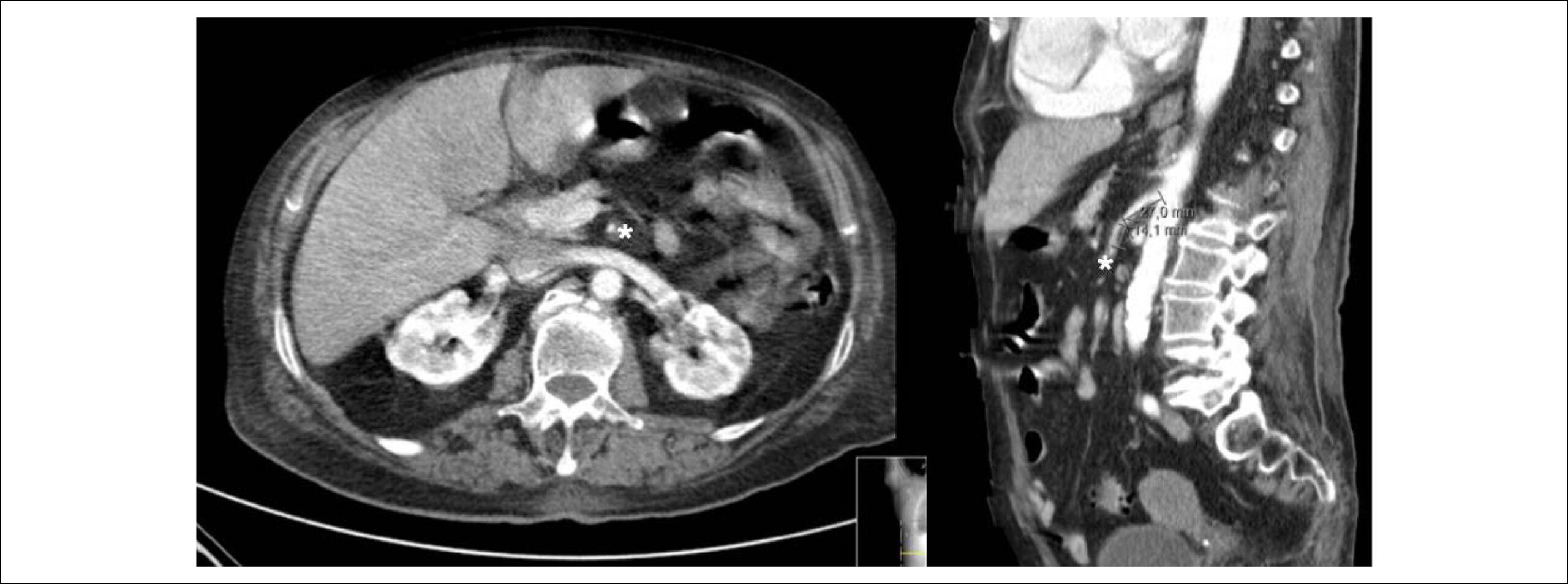
An 84-years-old woman with hypertension and dyslipidemia was admitted in the emergency room with acute abdominal pain; patient complained of chest pain three weeks before hospital admission. On physical examination, she was hypotensive, tachycardic (with arrhythmic pulse), tachypneic and with diffuse abdominal pain. Electrocardiogram showed atrial fibrillation with rapid ventricular response, complete left bundle branch block and inferior Q waves. Abdominal computed tomography (CT) revealed a thrombus in the superior mesenteric artery (, white asterisk). The patient showed a clinical course with congestive heart failure and low cardiac output. Transthoracic echocardiogram (-) showed mild left ventricular dilatation with a mild dysfunction and a pseudoaneurysm of the basal half of the posterior and inferior walls with left-to-right shunt, confirmed by color Doppler imaging (-). Cardiac CT () revealed contained myocardial rupture, located at the basal segments of the inferior and posterior septal walls, extending to the free wall of the right ventricle, forming a pseudo-cavity, which communicates with the true cavity of the right ventricle (). Despite vasopressor and inotropic support and proposal for cardiac surgery, the patient had an unfavorable course.

[…]

  • Abdominal Pain
  • Dyslipidemias
  • Echocardiography, Doppler/methods
  • Hypertension
  • Myocardial Infarction/complications
  • Thrombosis/surgery
  • Tomography, X Ray-Computed/methods
Read Full Article
Creative Commons Attribution (CC BY) Creative Commons license
20/03/2020 DOI: 10.36660/abc.20190495
Figure 1
Original Article

Evaluation of Myocardial Ischemia with iFR (Instantaneous Wave-Free Ratio in the Catheterization Laboratory: A Pilot Study

Heitor Cruz Alves Vieira et al. Maria Cristina Meira Ferreira Leonardo Cruz Nunes Carlos José Francisco Cardoso … Emilia Matos do Nascimento Gláucia Maria Moraes de Oliveira

Abstract

Background:

The Instantaneous Wave-Free Ratio (iFR) is an invasive functional evaluation method that does not require vasoactive drugs to induce maximum hyperemia

Objective:

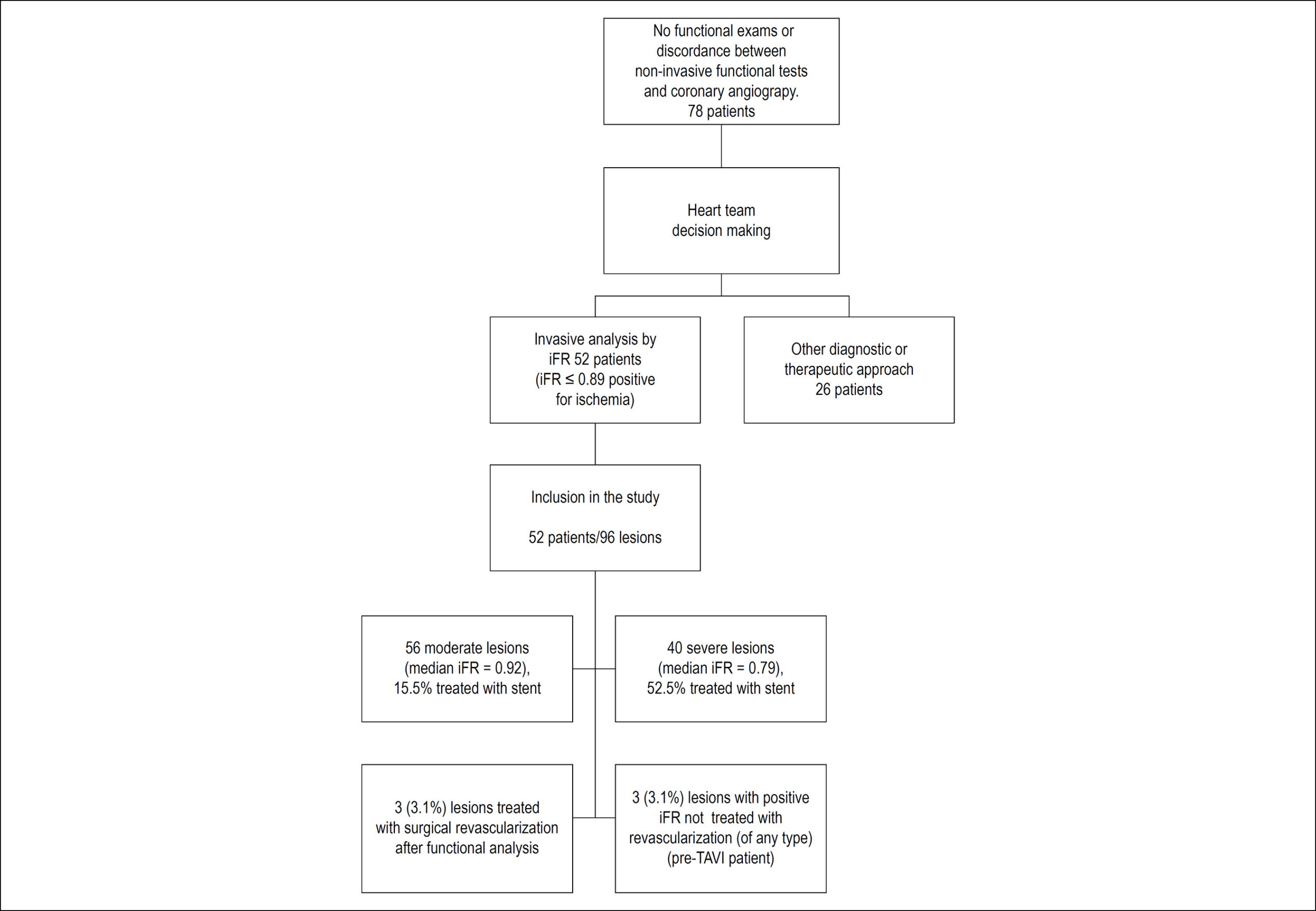
To evaluate the contribution of the iFR to the therapeutic decision-making of coronary lesions in the absence of non-invasive diagnostic methods for ischemia, or in case of discordance between these methods and coronary angiography.

Method:

We studied patients older than 18 years, of both sexes, consecutively referred for percutaneous treatment between May 2014 and March 2018. Coronary stenotic lesions were classified by visual estimation of the stenosis diameter into moderate (41-70% stenosis) or severe (71%-90%). An iFR ≤ 0.89 was considered positive for ischemia. Logistic regression was performed using the elastic net, with placement of stents as outcome variable, and age, sex, arterial hypertension, diabetes, dyslipidemia, smoking, family history, obesity and acute myocardial infarction (AMI) as independent variables. Classification trees, ROC curves, and Box Plot graphs were constructed using the R software. A p-value < 0.05 was considered statistically significant.

Results:

Fifty-two patients with 96 stenotic lesions (56 moderate, 40 severe) were evaluated. The iFR cut-off point of 0.87 showed a sensitivity of 0.57 and 1-specificity of 0.88, demonstrating high accuracy in reclassifying the lesions. Diabetes mellitus, dyslipidemia, and presence of moderate lesions with an iFR < 0.87 were predictors of stent implantation. Stents were used in 32% of lesions in patients with stable coronary artery disease and AMI with or without ST elevation (non-culprit lesions).

Conclusion:

The iFR has an additional value to the therapeutic decision making in moderate and severe coronary stenotic lesions, by contributing to the reclassification of lesions and decreasing the need for stenting.

  • Coronary Artery Disease
  • Myocardial Ischemia, Fractional Flow Reserve Myocardial
  • Percutaneous Coronary Intervention
  • Risk Factors
  • Stents
Read Full Article
Creative Commons Attribution (CC BY) Creative Commons license
20/03/2020 DOI: 10.36660/abc.20180298
Figure 1
Original Article

Passive Cigarette Smoking Impact on Blood Pressure Response to Epinephrine and Felypressin in 1K1C Hypertensive Rats Treated or not with Atenolol

Camila A. Fleury et al. Elizandra P. M. Almeida Thiago J. Dionisio Adriana M. Calvo … Gabriela M. Oliveira Sandra L. Amaral Carlos F. Santos Flávio A. C. Faria

Abstract

Background:

Cigarette smoking is usually associated with hypertension and may modify vasoconstrictor response.

Objective:

The present study aimed to analyze and compare the interaction of passive cigarette smoking and hypertension on epinephrine and felypressin blood pressure effects after intravascular injection.

Method:

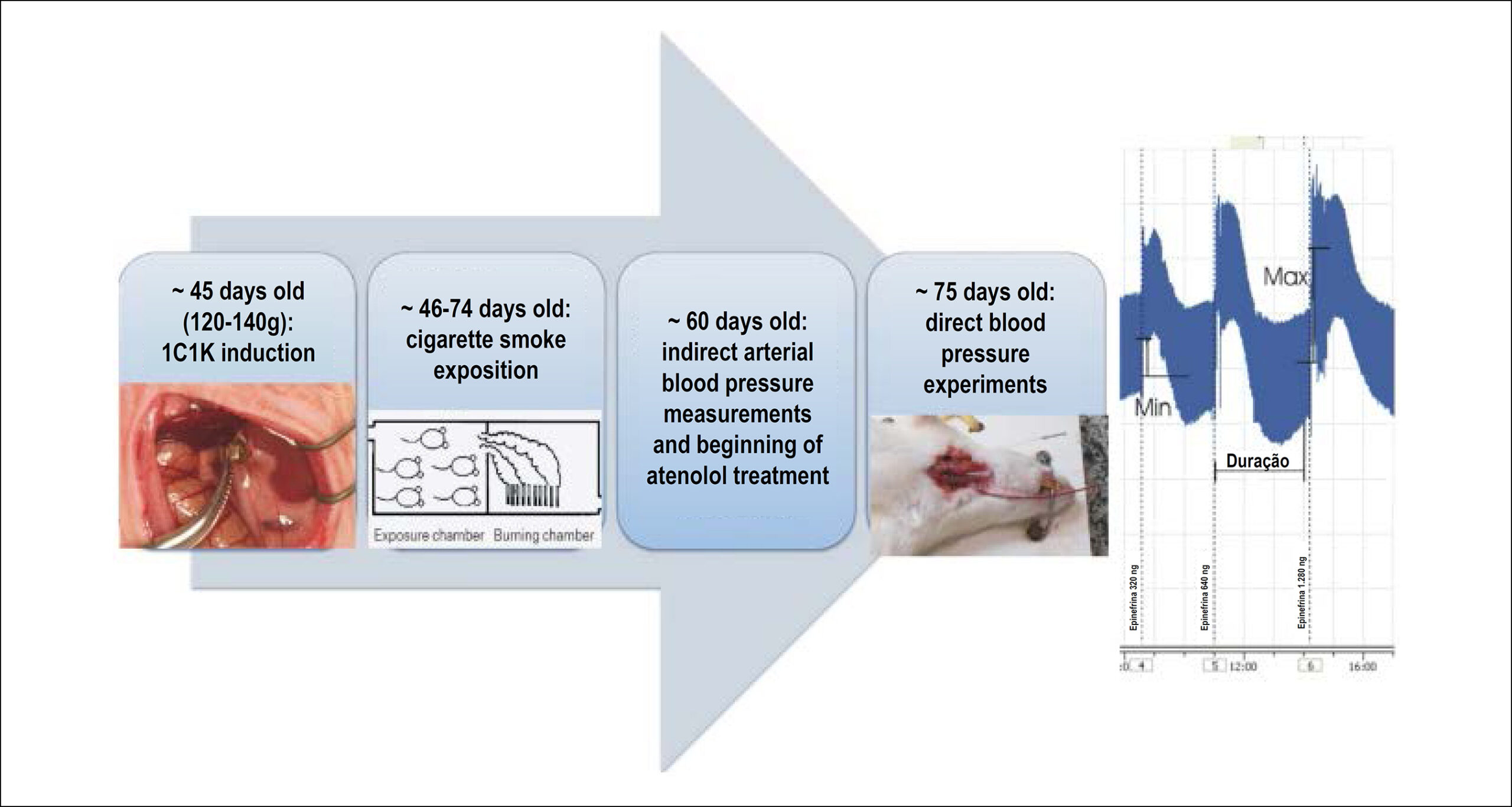
45-day male Wistar rats had the main left renal artery partially constricted and the right kidney removed (1K1C model). Rats were placed in the chamber for exposition to passive cigarette smoking (10 cigarettes) during 10 min (6 days a week). Hypertensive rats received atenolol (90 mg/kg/day) by gavage for two weeks. Hypotensive and hypertensive response, response duration and heart rate were recorded from direct blood pressure values. The significance level was 5%.

Results:

Passive cigarette smoking increased maximal hypertensive response to epinephrine in normotensive and 1K1C-atenolol treated rats and to felypressin only in 1K1C-atenolol treated rats; it also reduced epinephrine hypotensive response. Epinephrine increased heart rate in normotensive and hypertensive passive smokers or non-smoker rats. Comparing the two vasoconstrictors, epinephrine showed greater hypertensive response in normotensive smokers, 1K1C-atenolol treated smokers and non-smokers. However, in normotensive-nonsmoker rats, felypressin showed a greater and longer hypertensive effect.

Conclusions:

Our results suggest that passive cigarette smoking may reduce epinephrine vasodilation and increase hypertensive response when compared to felypressin. Therefore, felypressin may be safe for hypertensive patients to avoid tachycardia and atenolol interaction, but for normotensive and non-smoker patients, epinephrine may be safer than felypressin.

  • Atenolol
  • Epinephrine
  • Felypressin
  • Hypertension
  • Nicotine/adverse effects
  • Rats
  • Tobacco Smoke Pollution
  • Tobacco Use Disorder
Read Full Article
Creative Commons Attribution (CC BY) Creative Commons license
20/03/2020 DOI: 10.36660/abc.20180433 Views 1
Figure 1
Review Article

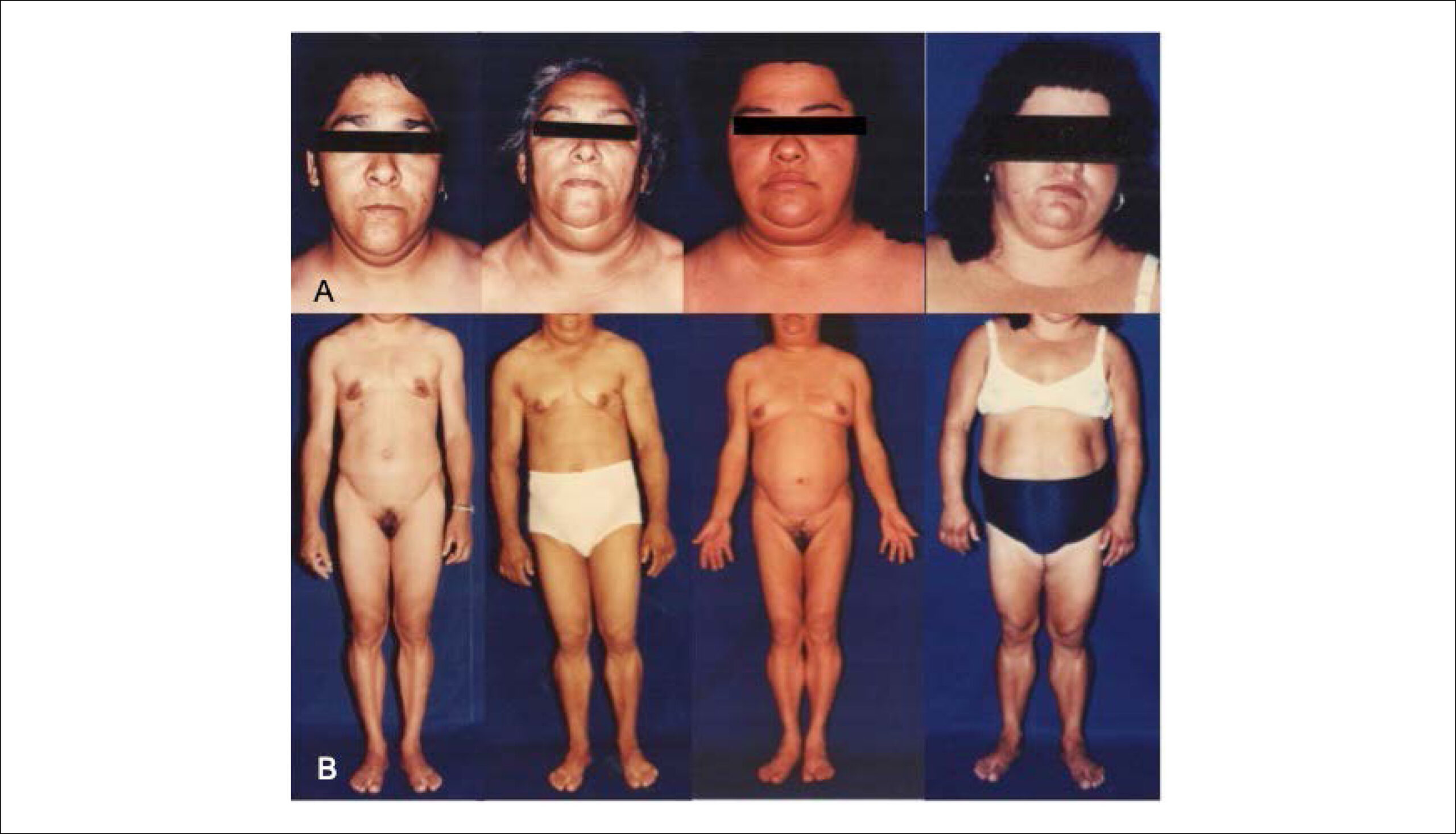
Cardiac Alterations in Patients with Familial Lipodystrophy

Minna Moreira Dias Romano et al. Paula Ananda Chacon Inês Fernanda Naira Zambelli Ramalho Maria Cristina Foss André Schmidt

Abstract

Familial lipodystrophy is a rare genetic condition in which individuals have, besides metabolic changes and body fat deposits, a type of cardiomyopathy that has not been well studied. Many of the patients develop cardiovascular changes, the most commonly reported in the literature being the expression of a type of hypertrophic cardiomyopathy. This article, presented as a bibliographic review, reviews the clinical and cardiovascular imaging aspects in this scenario of cardiomyopathy in a rare metabolic disease, based on the latest scientific evidence published in the area. Despite the frequent association of congenital lipodystrophy and ventricular hypertrophy described in the literature, the pathophysiological mechanisms of this cardiomyopathy have not yet been definitively elucidated, and new information on cardiac morphological aspects is emerging in the aegis of recent and advanced imaging methods, such as cardiac magnetic resonance.

  • Cardiomyopathy, Hypertrophic, Magnetic Resonance Imaging/trends
  • Lipodystrophy, Familial Partial/genetics
  • Metabolic Diseases/complications
Read Full Article
Creative Commons Attribution (CC BY) Creative Commons license
20/03/2020 DOI: 10.36660/abc.20190016
Editorial

What is the Real Clinical Significance of Carotid Sinus Hypersensitivity in Clinical Practice? A Dilemma Still Waiting for Answers

Tan Chen Wu

Carotid sinus hypersensitivity (CSH) is defined by pause ≥ 3 seconds (sinus or atrioventricular block) and/or systolic blood pressure drop ≥ 50mmHg during carotid sinus massage (CSM). The prevalence of CSH varies according to the method and population evaluated in up to 68% of elderly patients with syncope and 35% of asymptomatic individuals over 65 years of age. Therefore, the cause-effect relationship between carotid sinus hypersensitivity and syncope should always be questioned, and may only be a casual finding and not necessarily the carotid sinus syndrome (CSS), one of the causes of syncope seen mainly in elderly patients.

The clinical relevance of CSH obtained with CSM was questioned in a study recently published by Wu et al. The authors compared the response to CSM between 99 patients with syncope to clarify and 66 asymptomatic patients and found similar rates of CSH between the two groups, with cardioinhibitory response in 24.2 and 25.8% and vasodepressor response in 8.1 and 13.6%, in symptomatic and asymptomatic patients respectively (p = 0.466). Therefore, CSH may be a nonspecific response in the evaluation of syncope in these patients with dubious clinical significance, especially in the elderly population with multiple comorbidities, often with the possibility of varying etiologies.

[…]

  • Aged
  • Cardiac Pacing, Artificial
  • Carotid Sinus Massage/physiopathology
  • Hypotension
  • Mortality
  • Syncope
Read Full Article
Creative Commons Attribution (CC BY) Creative Commons license
20/03/2020 DOI: 10.36660/abc.20200005
Original Article

Evaluation of Electrocardiographic Ventricular Depolarization and Repolarization Variables in Type 1 Diabetes Mellitus

Mehmet Inanır et al. Yilmaz Gunes Isa Sincer Emrah Erdal

Abstract

Background:

The risk of cardiovascular events and sudden death increases with type 1 diabetes mellitus (T1DM).

Objective:

To evaluate electrocardiographic markers of arrhythmias in T1DM patients.

Methods:

Electrocardiographic parameters reflecting ventricular depolarization and repolarization, namely, QT, QTc, QTd, QTdc, Tp-e, JT, and JTc intervals and Tp-e/QT and Tp-e/QTc ratios, of 46 patients diagnosed with T1DM were retrospectively analyzed and compared with 46 healthy age-, sex-, and body mass-matched controls. Correlations between T1DM duration, hemoglobin A1c (HbA1c), and ventricular repolarization variables were analyzed. P values lower than 0.05 were considered statistically significant.

Results:

Diabetes duration was 16.6 ± 7.1 years, and HbA1c was 10.81% ± 3.27% in the T1DM group. In comparison with the control group, heart rate, QTc, QTd, QTdc, Tp-e and JTc intervals, Tp-e/QT ratio (p < 0.001), and Tp-e/QTc ratio (p = 0.007) were significantly higher in T1DM patients. T1DM duration and HbA1c levels were significantly correlated with QTc, QTd, QTdc, Tp-e, and JTc intervals and Tp-e/QT and Tp-e/QTc ratios.

Conclusions:

In T1DM patients, potential electrocardiographic repolarization predictors were significantly increased in correlation with disease duration and HbA1c levels. These findings may contribute to the understanding of sudden cardiac death in patients with T1DM.

  • Arrhythmias Cardiac
  • Diabetes Complications
  • Electrocardiography/methods
  • Prevention and Control
  • Risk Factors
Read Full Article
Creative Commons Attribution (CC BY) Creative Commons license
20/03/2020 DOI: 10.36660/abc.20180343 Views 2
Editorial

Cardiopulmonary Exercise Test in the Evaluation of Heart Transplant Candidates with Atrial Fibrillation

Miguel Mendes

Clinical application of the study findings

The main conclusions of the article are as follows:

[…]

Read Full Article
Creative Commons Attribution (CC BY) Creative Commons license
20/03/2020 DOI: 10.36660/abc.20200051 Views 1
Figure 1
Editorial

Nuclear Cardiology in 2020 – Perspectives of the New SBC Guideline

Cláudio Tinoco Mesquita et al. Wilter dos Santos Ker Jader Cunha de Azevedo

French physicist François Arago’s quote is one of the most powerful summaries of scientific activity, starting with the search for existing knowledge, followed by the discovery of new information and culminating in their prompt communication. This flow is essential for scientific progress to reach and transform society. Thus, in the medical area, guidelines are considered to be essential for the organization and guidance of conducts and knowledge in a structured manner and within a pre-established method. The development of consistent and up-to-date guidelines is one of the most important tasks of a medical specialty society and involves the considerable effort of multiple specialists in the field of knowledge, reviewers, layout editors, among others. In addition to the arduous and complex task, the preparation of recommendations has against it the uninterrupted flow of publications that appear every day and that can change the current state of knowledge. We should highlight the amplitude, up-to-date status, and extensive applicability of this Nuclear Cardiology Guideline jointly developed by the Nuclear Cardiology Area of the Department of Ergometry, Exercise, Nuclear Cardiology and Cardiovascular Rehabilitation (DERC), by the Department of Cardiovascular Imaging (DIC) of the Brazilian Society of Cardiology (SBC) and the Brazilian Society of Nuclear Medicine (SBMN).

[…]

  • Biomedical Technology/trends
  • Coronary Artery Disease/diagnostic imaging
  • Myocardial Perfusion Imaging/methods
  • Positron Emission Tomography Computed Tomography/trends
  • Prognosis
  • Tomography Emission-Computed, Single/methods
Read Full Article
Creative Commons Attribution (CC BY) Creative Commons license
20/03/2020 DOI: 10.36660/abc.20190874 Views 1
Letter to the Editor

How to Approach Elevated NT-pro BNP Level on Admission to Prevent Left Ventricular Aneurysm Following Acute ST-Segment Elevation Myocardial Infarction

Teruhiko Imamura

I have read with great interest the article written by Celebi and colleagues, demonstrating that elevated plasma N-terminal pro-B-type natriuretic peptide (NT-pro BNP) level on admission is a significant predictive biomarker of development of left ventricular aneurysm following acute ST-segment elevation myocardial infarction (STEMI) in the current era.

Their findings are straightforward and would lead us the next concerns. The first concern is reversibility of NT-pro BNP and its impact on post-STEMI outcomes. Is the reduction of NT-pro BNP following STEMI associated with a lower rate of left ventricular aneurysm formation?

[…]

  • Coronary Aneurysm/complications
  • Heart Failure/physiopathology
  • Indicators of Morbidity and Mortality
  • Natriuretic Peptide, B-Type
  • ST Elevation Myocardial Infarction
  • Stroke Volume
Read Full Article
Creative Commons Attribution (CC BY) Creative Commons license
20/03/2020 DOI: 10.36660/abc.20190773 Views 2
Editorial

Atherosclerosis, Inflammation, and Genetics – And you Thought it Was Just LDL-cholesterol

Luis Henrique Wolff Gowdak

As the twentieth century unfolded, based on numerous epidemiological observations and intervention trials, cardiovascular risk factors were identified and targeted with the aim of decreasing cardiovascular disease burden worldwide. Along the centuries, changes in human eating patterns, a progressive decrease in physical activity, and a higher prevalence of obesity, all of which are contributing factors to the alarming rates of diabetes, hypertension, and hypercholesterolemia we see in our daily practice, have led us to assume that atherosclerosis-related disorders (myocardial infarction, ischemic cardiomyopathy, stroke, and peripheral artery disease) are an inevitable consequence of the evolutionary process we have to face in present times. However, due to advances in noninvasive imaging of the vascular system, atherosclerotic lesions in the aorta and coronary and carotid arteries happen to be found in mummies from ancient Egypt, whose estimated mean age at the time of death was only 45 years.

If the so-called “classical risk factors” were less prevalent in ancient times, different, non-traditional factors must have played a significant role in the development and progression of atherosclerosis. Microbial and parasitic inflammatory burdens that were likely present in ancient cultures inherently lacking modern hygiene and antimicrobials could have evoked a chronic inflammatory status. Given that patients with today’s chronic systemic inflammatory diseases, including human immunodeficiency virus infection, systemic lupus erythematosus, and rheumatoid arthritis experience early-onset atherosclerosis and coronary events, is it possible that the chronic inflammatory load secondary to infection resulted in atherosclerosis in ancient times? Moreover, atherosclerosis is a complex, multifactorial biological process, and, as such, it is also subject to gene-environment interplay; therefore, although the contribution of today’s classical risk factors to the development of atherosclerosis is inquestionable, their role in the appearance of atherosclerotic lesions in the vascular tree involves not only inflammation and activation of the immune system but also genetic factors that facilitate or oppose the formation of lipid accumulation in the arterial wall.

[…]

  • Atherosclerosis / physiopathology
  • Coronary Artery Disease / history
  • Inflammation
  • Mortality and Morbidity
  • Polymorphism, Genetic
  • Risk Factors
Read Full Article
Creative Commons Attribution (CC BY) Creative Commons license
20/03/2020 DOI: 10.36660/abc.20200038 Views 1
Figure 1
Original Article

Trends in Mortality Rates from Cardiovascular Disease and Cancer between 2000 and 2015 in the Most Populous Capital Cities of the Five Regions of Brazil

Wolney de Andrade Martins et al. Maria Luiza Garcia Rosa Ricardo Cardoso de Matos Willian Douglas de Souza Silva … Erito Marques de Souza Filho Antonio José Lagoeiro Jorge Mario Luiz Ribeiro Eduardo Nani Silva

Abstract

Background:

In many cities around the world, the mortality rate from cancer (CA) has exceeded that from disease of the circulatory system (DCS).

Objectives:

To compare the mortality curves from DCS and CA in the most populous capital cities of the five regions of Brazil.

Methods:

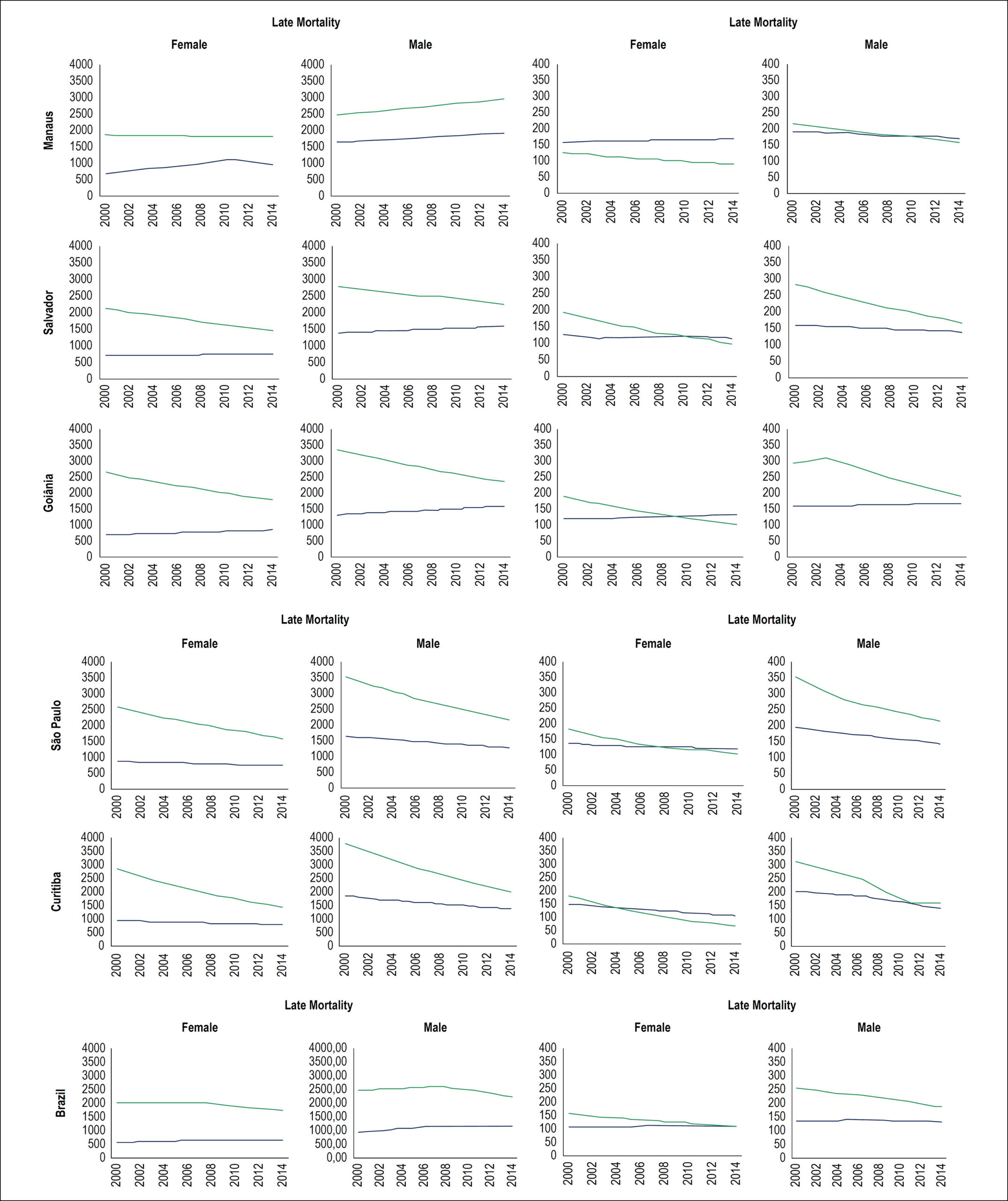
Data of mortality rates from DCS and CA between 2000 and 2015 were collected from the Mortality Information System of Manaus, Salvador, Goiania, Sao Paulo and Curitiba, and categorized by age range into early (30-69 years) and late (≥ 70 years), and by gender of the individuals. Chapters II and IX of the International Classification of Diseases-10 were used for the analysis of causes of deaths. The Joinpoint regression model was used to assess the tendency of the estimated annual percentage change of mortality rate, and the Monte Carlo permutation test was used to detect when changes occurred. Statistical significance was set at 5%.

Results:

There was a consistent decrease in early and late mortality from DCS in both genders in the cities studied, except for late mortality in men in Manaus. There was a tendency of decrease of mortality rates from CA in São Paulo and Curitiba, and of increase in the rates from CA in Goiania. In Salvador, there was a decrease in early mortality from CA in men and women and an increase in late mortality in both genders.

Conclusion:

There was a progressive and marked decrease in the mortality rate from DCS and a maintenance or slight increase in CA mortality in the five capital cities studied. These phenomena may lead to the intersection of the curves, with predominance of mortality from CA (old and new cases).

  • Cardiovascular Diseases, mortality
  • Coronary Artery Diseases/physiopathology
  • Epidemiology
  • Neoplasms/mortality
Read Full Article
Creative Commons Attribution (CC BY) Creative Commons license
20/03/2020 DOI: 10.36660/abc.20180304

Could not load more articles. Please try again.

How to cite this article

EndNote RIS

Electronic Document Format (Vancouver)

Corrêa CR, Garcia JL. DNA Damage in Chronic Heart Failure: Consequences Beyond those in the Heart. Arquivos Brasileiros de Cardiologia 2020;114(2):243-4.

Electronic Document Format (ABNT)

Corrêa, Camila Renata; Garcia, Jéssica Leite. DNA Damage in Chronic Heart Failure: Consequences Beyond those in the Heart. Arquivos Brasileiros de Cardiologia, v. 114, n. 2, p. 243-244, Mar. 2020.

Electronic Document Format (APA)

Corrêa, C. R., & Garcia, J. L. (2020). DNA Damage in Chronic Heart Failure: Consequences Beyond those in the Heart. Arquivos Brasileiros de Cardiologia, 114(2), 243-244.

Electronic Document Format (ISO)

Corrêa, Camila Renata and Garcia, Jéssica Leite. DNA Damage in Chronic Heart Failure: Consequences Beyond those in the Heart. Arquivos Brasileiros de Cardiologia [online]. 2020, vol. 114, n. 2, [cited 2026-10-15], pp. 243-244. Available from: <https://journals.cardiol.br/en/article/dna-damage-in-chronic-heart-failure-consequences-beyond-those-in-the-heart/>. ISSN 0066-782X

EndNote RIS

Electronic Document Format (Vancouver)

Fernandes ADF, Fernandes GC, Mazza MR, Knijnik LM, Fernandes GS, Vilela AT, Badiye A, et al. A 10-Year Trend Analysis of Heart Failure in the Less Developed Brazil. Arquivos Brasileiros de Cardiologia 2020;114(2):222-31.

Electronic Document Format (ABNT)

Fernandes, Amanda D. F.; Fernandes, Gilson C.; Mazza, Manuel Rivera; Knijnik, Leonardo M.; Fernandes, Gustavo Soares; Vilela, Andre Telis de; Badiye, Amit; Chaparro, Sandra V.. A 10-Year Trend Analysis of Heart Failure in the Less Developed Brazil. Arquivos Brasileiros de Cardiologia, v. 114, n. 2, p. 222-231, Mar. 2020.

Electronic Document Format (APA)

Fernandes, A. D. F., Fernandes, G. C., Mazza, M. R., Knijnik, L. M., Fernandes, G. S., Vilela, A. T. , Badiye, A., & Chaparro, S. V. (2020). A 10-Year Trend Analysis of Heart Failure in the Less Developed Brazil. Arquivos Brasileiros de Cardiologia, 114(2), 222-231.

Electronic Document Format (ISO)

Fernandes, Amanda D. F. and Fernandes, Gilson C. and Mazza, Manuel Rivera and Knijnik, Leonardo M. and Fernandes, Gustavo Soares and Vilela, Andre Telis de and Badiye, Amit and Chaparro, Sandra V.. A 10-Year Trend Analysis of Heart Failure in the Less Developed Brazil. Arquivos Brasileiros de Cardiologia [online]. 2020, vol. 114, n. 2, [cited 2026-10-15], pp. 222-231. Available from: <https://journals.cardiol.br/en/article/a-10-year-trend-analysis-of-heart-failure-in-the-less-developed-brazil/>. ISSN 0066-782X

EndNote RIS

Electronic Document Format (Vancouver)

Abreu LM. Clinical Significance of Statistical Differences. Arquivos Brasileiros de Cardiologia 2020;114(2):281-3.

Electronic Document Format (ABNT)

Abreu, Luiz Maurino. Clinical Significance of Statistical Differences. Arquivos Brasileiros de Cardiologia, v. 114, n. 2, p. 281-283, Mar. 2020.

Electronic Document Format (APA)

Abreu, L. M. (2020). Clinical Significance of Statistical Differences. Arquivos Brasileiros de Cardiologia, 114(2), 281-283.

Electronic Document Format (ISO)

Abreu, Luiz Maurino. Clinical Significance of Statistical Differences. Arquivos Brasileiros de Cardiologia [online]. 2020, vol. 114, n. 2, [cited 2026-10-15], pp. 281-283. Available from: <https://journals.cardiol.br/en/article/clinical-significance-of-statistical-differences/>. ISSN 0066-782X

EndNote RIS

Electronic Document Format (Vancouver)

Stefani GP, Nunes RB, Rossato DD, Hentschke VS, Domenico MD, Lago PD, Rhoden CR, et al. Quantification of DNA Damage in Different Tissues in Rats with Heart Failure. Arquivos Brasileiros de Cardiologia 2020;114(2):234-42.

Electronic Document Format (ABNT)

Stefani, Giuseppe Potrick; Nunes, Ramiro Barcos; Rossato, Douglas Dalcin; Hentschke, Vitor Scotta; Domenico, Marlise Di; Lago, Pedro Dal; Rhoden, Cláudia Ramos. Quantification of DNA Damage in Different Tissues in Rats with Heart Failure. Arquivos Brasileiros de Cardiologia, v. 114, n. 2, p. 234-242, Mar. 2020.

Electronic Document Format (APA)

Stefani, G. P., Nunes, R. B., Rossato, D. D., Hentschke, V. S., Domenico, M. D., Lago, P. D., & Rhoden, C. R. (2020). Quantification of DNA Damage in Different Tissues in Rats with Heart Failure. Arquivos Brasileiros de Cardiologia, 114(2), 234-242.

Electronic Document Format (ISO)

Stefani, Giuseppe Potrick and Nunes, Ramiro Barcos and Rossato, Douglas Dalcin and Hentschke, Vitor Scotta and Domenico, Marlise Di and Lago, Pedro Dal and Rhoden, Cláudia Ramos. Quantification of DNA Damage in Different Tissues in Rats with Heart Failure. Arquivos Brasileiros de Cardiologia [online]. 2020, vol. 114, n. 2, [cited 2026-10-15], pp. 234-242. Available from: <https://journals.cardiol.br/en/article/quantification-of-dna-damage-in-different-tissues-in-rats-with-heart-failure/>. ISSN 0066-782X

EndNote RIS

Electronic Document Format (Vancouver)

Martins SM. Death from Cancer and Cardiovascular Disease between Two Brazils. Arquivos Brasileiros de Cardiologia 2020;114(2):207-8.

Electronic Document Format (ABNT)

Martins, Sílvia Marinho. Death from Cancer and Cardiovascular Disease between Two Brazils. Arquivos Brasileiros de Cardiologia, v. 114, n. 2, p. 207-208, Mar. 2020.

Electronic Document Format (APA)

Martins, S. M. (2020). Death from Cancer and Cardiovascular Disease between Two Brazils. Arquivos Brasileiros de Cardiologia, 114(2), 207-208.

Electronic Document Format (ISO)

Martins, Sílvia Marinho. Death from Cancer and Cardiovascular Disease between Two Brazils. Arquivos Brasileiros de Cardiologia [online]. 2020, vol. 114, n. 2, [cited 2026-10-15], pp. 207-208. Available from: <https://journals.cardiol.br/en/article/death-from-cancer-and-cardiovascular-disease-between-two-brazils/>. ISSN 0066-782X

EndNote RIS

Electronic Document Format (Vancouver)

Chamié D, Abizaid A. Invasive Physiological Assessment: From Binary to Continuous. Arquivos Brasileiros de Cardiologia 2020;114(2):265-7.

Electronic Document Format (ABNT)

Chamié, Daniel; Abizaid, Alexandre. Invasive Physiological Assessment: From Binary to Continuous. Arquivos Brasileiros de Cardiologia, v. 114, n. 2, p. 265-267, Mar. 2020.

Electronic Document Format (APA)

Chamié, D., & Abizaid, A. (2020). Invasive Physiological Assessment: From Binary to Continuous. Arquivos Brasileiros de Cardiologia, 114(2), 265-267.

Electronic Document Format (ISO)

Chamié, Daniel and Abizaid, Alexandre. Invasive Physiological Assessment: From Binary to Continuous. Arquivos Brasileiros de Cardiologia [online]. 2020, vol. 114, n. 2, [cited 2026-10-15], pp. 265-267. Available from: <https://journals.cardiol.br/en/article/invasive-physiological-assessment-from-binary-to-continuous/>. ISSN 0066-782X

EndNote RIS

Electronic Document Format (Vancouver)

Lopes MACQ, Nascimento BR, Oliveira GMM. Treatment of Aortic Stenosis in Elderly Individuals in Brazil: How Long Can We Wait?. Arquivos Brasileiros de Cardiologia 2020;114(2):313-8.

Electronic Document Format (ABNT)

Lopes, Marcelo Antônio Cartaxo Queiroga; Nascimento, Bruno Ramos; Oliveira, Gláucia Maria Moraes de. Treatment of Aortic Stenosis in Elderly Individuals in Brazil: How Long Can We Wait?. Arquivos Brasileiros de Cardiologia, v. 114, n. 2, p. 313-318, Mar. 2020.

Electronic Document Format (APA)

Lopes, M. A. C. Q., Nascimento, B. R., & Oliveira, G. M. M. (2020). Treatment of Aortic Stenosis in Elderly Individuals in Brazil: How Long Can We Wait?. Arquivos Brasileiros de Cardiologia, 114(2), 313-318.

Electronic Document Format (ISO)

Lopes, Marcelo Antônio Cartaxo Queiroga and Nascimento, Bruno Ramos and Oliveira, Gláucia Maria Moraes de. Treatment of Aortic Stenosis in Elderly Individuals in Brazil: How Long Can We Wait?. Arquivos Brasileiros de Cardiologia [online]. 2020, vol. 114, n. 2, [cited 2026-10-15], pp. 313-318. Available from: <https://journals.cardiol.br/en/article/treatment-of-aortic-stenosis-in-elderly-individuals-in-brazil-how-long-can-we-wait/>. ISSN 0066-782X

EndNote RIS

Electronic Document Format (Vancouver)

Salemi VMC, Melo MDT, Araujo Filho JAB. New Paradigms in the Evaluation of Diastolic Function by Cardiac Magnetic Resonance Imaging in Aortic Valvopathy. Arquivos Brasileiros de Cardiologia 2020;114(2):293-4.

Electronic Document Format (ABNT)

Salemi, Vera Maria Cury; Melo, Marcelo Dantas Tavares de; Araujo Filho, José de Arimatéia Batista. New Paradigms in the Evaluation of Diastolic Function by Cardiac Magnetic Resonance Imaging in Aortic Valvopathy. Arquivos Brasileiros de Cardiologia, v. 114, n. 2, p. 293-294, Mar. 2020.

Electronic Document Format (APA)

Salemi, V. M. C., Melo, M. D. T. , & Araujo Filho, J. A. B. (2020). New Paradigms in the Evaluation of Diastolic Function by Cardiac Magnetic Resonance Imaging in Aortic Valvopathy. Arquivos Brasileiros de Cardiologia, 114(2), 293-294.

Electronic Document Format (ISO)

Salemi, Vera Maria Cury and Melo, Marcelo Dantas Tavares de and Araujo Filho, José de Arimatéia Batista. New Paradigms in the Evaluation of Diastolic Function by Cardiac Magnetic Resonance Imaging in Aortic Valvopathy. Arquivos Brasileiros de Cardiologia [online]. 2020, vol. 114, n. 2, [cited 2026-10-15], pp. 293-294. Available from: <https://journals.cardiol.br/en/article/new-paradigms-in-the-evaluation-of-diastolic-function-by-cardiac-magnetic-resonance-imaging-in-aortic-valvopathy/>. ISSN 0066-782X

EndNote RIS

Electronic Document Format (Vancouver)

Tucci PJF. Short Editorial – Effect of Passive Smoking on Blood Pressure Response to Epinephrine and Felypressin in 1K1C Hypertensive Rats Treated or not with Atenolol. Arquivos Brasileiros de Cardiologia 2020;114(2):304.

Electronic Document Format (ABNT)

Tucci, Paulo J. F.. Short Editorial – Effect of Passive Smoking on Blood Pressure Response to Epinephrine and Felypressin in 1K1C Hypertensive Rats Treated or not with Atenolol. Arquivos Brasileiros de Cardiologia, v. 114, n. 2, p. 304-304, Mar. 2020.

Electronic Document Format (APA)

Tucci, P. J. F. (2020). Short Editorial – Effect of Passive Smoking on Blood Pressure Response to Epinephrine and Felypressin in 1K1C Hypertensive Rats Treated or not with Atenolol. Arquivos Brasileiros de Cardiologia, 114(2), 304-304.

Electronic Document Format (ISO)

Tucci, Paulo J. F.. Short Editorial – Effect of Passive Smoking on Blood Pressure Response to Epinephrine and Felypressin in 1K1C Hypertensive Rats Treated or not with Atenolol. Arquivos Brasileiros de Cardiologia [online]. 2020, vol. 114, n. 2, [cited 2026-10-15], pp. 304-304. Available from: <https://journals.cardiol.br/en/article/short-editorial-effect-of-passive-smoking-on-blood-pressure-response-to-epinephrine-and-felypressin-in-1k1c-hypertensive-rats-treated-or-not-with-atenolol/>. ISSN 0066-782X

EndNote RIS

Electronic Document Format (Vancouver)

Mastrocola LE, Amorim BJ, Vitola JV, Brandão SCS, Grossman GB, Lima RSL, Lopes RW, et al. Update of the Brazilian Guideline on Nuclear Cardiology – 2020. Arquivos Brasileiros de Cardiologia 2020;114(2):325-49.

Electronic Document Format (ABNT)

Mastrocola, Luiz Eduardo; Amorim, Barbara Juarez; Vitola, João Vicente; Brandão, Simone Cristina Soares; Grossman, Gabriel Blacher; Lima, Ronaldo de Souza Leão; Lopes, Rafael Willain; Chalela, William Azem; Carreira, Lara Cristiane Terra Ferreira; Araújo, José Roberto Nolasco de; Mesquita, Cláudio Tinoco; Meneghetti, José Claudio. Update of the Brazilian Guideline on Nuclear Cardiology – 2020. Arquivos Brasileiros de Cardiologia, v. 114, n. 2, p. 325-429, Mar. 2020.

Electronic Document Format (APA)

Mastrocola, L. E., Amorim, B. J., Vitola, J. V., Brandão, S. C. S., Grossman, G. B., Lima, R. S. L., Lopes, R. W., Chalela, W. A., Carreira, L. C. T. F., Araújo, J. R. N. , Mesquita, C. T., & Meneghetti, J. C. (2020). Update of the Brazilian Guideline on Nuclear Cardiology – 2020. Arquivos Brasileiros de Cardiologia, 114(2), 325-429.

Electronic Document Format (ISO)

Mastrocola, Luiz Eduardo and Amorim, Barbara Juarez and Vitola, João Vicente and Brandão, Simone Cristina Soares and Grossman, Gabriel Blacher and Lima, Ronaldo de Souza Leão and Lopes, Rafael Willain and Chalela, William Azem and Carreira, Lara Cristiane Terra Ferreira and Araújo, José Roberto Nolasco de and Mesquita, Cláudio Tinoco and Meneghetti, José Claudio. Update of the Brazilian Guideline on Nuclear Cardiology – 2020. Arquivos Brasileiros de Cardiologia [online]. 2020, vol. 114, n. 2, [cited 2026-10-15], pp. 325-429. Available from: <https://journals.cardiol.br/en/article/update-of-the-brazilian-guideline-on-nuclear-cardiology-2020/>. ISSN 0066-782X

EndNote RIS

Electronic Document Format (Vancouver)

Gonçalves AV, Pereira-da-Silva T, Soares R, Feliciano J, Moreira RI, Rio P, Abreu A, et al. Prognostic Prediction of Cardiopulmonary Exercise Test Parameters in Heart Failure Patients with Atrial Fibrillation. Arquivos Brasileiros de Cardiologia 2020;114(2):209-18.

Electronic Document Format (ABNT)

Gonçalves, António Valentim; Pereira-da-Silva, Tiago; Soares, Rui; Feliciano, Joana; Moreira, Rita Ilhão; Rio, Pedro; Abreu, Ana; Ferreira, Rui Cruz. Prognostic Prediction of Cardiopulmonary Exercise Test Parameters in Heart Failure Patients with Atrial Fibrillation. Arquivos Brasileiros de Cardiologia, v. 114, n. 2, p. 209-218, Mar. 2020.

Electronic Document Format (APA)

Gonçalves, A. V., Pereira-da-Silva, T., Soares, R., Feliciano, J., Moreira, R. I., Rio, P., Abreu, A., & Ferreira, R. C. (2020). Prognostic Prediction of Cardiopulmonary Exercise Test Parameters in Heart Failure Patients with Atrial Fibrillation. Arquivos Brasileiros de Cardiologia, 114(2), 209-218.

Electronic Document Format (ISO)

Gonçalves, António Valentim and Pereira-da-Silva, Tiago and Soares, Rui and Feliciano, Joana and Moreira, Rita Ilhão and Rio, Pedro and Abreu, Ana and Ferreira, Rui Cruz. Prognostic Prediction of Cardiopulmonary Exercise Test Parameters in Heart Failure Patients with Atrial Fibrillation. Arquivos Brasileiros de Cardiologia [online]. 2020, vol. 114, n. 2, [cited 2026-10-15], pp. 209-218. Available from: <https://journals.cardiol.br/en/article/prognostic-prediction-of-cardiopulmonary-exercise-test-parameters-in-heart-failure-patients-with-atrial-fibrillation/>. ISSN 0066-782X

EndNote RIS

Electronic Document Format (Vancouver)

Timóteo AT. Heart Failure Trends in Paraíba: Earlier Diagnosis or Better Treatment? – That is One of the Questions. Arquivos Brasileiros de Cardiologia 2020;114(2):232-3.

Electronic Document Format (ABNT)

Timóteo, Ana Teresa. Heart Failure Trends in Paraíba: Earlier Diagnosis or Better Treatment? – That is One of the Questions. Arquivos Brasileiros de Cardiologia, v. 114, n. 2, p. 232-233, Mar. 2020.

Electronic Document Format (APA)

Timóteo, A. T. (2020). Heart Failure Trends in Paraíba: Earlier Diagnosis or Better Treatment? – That is One of the Questions. Arquivos Brasileiros de Cardiologia, 114(2), 232-233.

Electronic Document Format (ISO)

Timóteo, Ana Teresa. Heart Failure Trends in Paraíba: Earlier Diagnosis or Better Treatment? – That is One of the Questions. Arquivos Brasileiros de Cardiologia [online]. 2020, vol. 114, n. 2, [cited 2026-10-15], pp. 232-233. Available from: <https://journals.cardiol.br/en/article/heart-failure-trends-in-paraiba-earlier-diagnosis-or-better-treatment-that-is-one-of-the-questions/>. ISSN 0066-782X

EndNote RIS

Electronic Document Format (Vancouver)

. Erratum. Arquivos Brasileiros de Cardiologia 2020;114(2):430.

Electronic Document Format (ABNT)

. Erratum. Arquivos Brasileiros de Cardiologia, v. 114, n. 2, p. 430-430, Mar. 2020.

Electronic Document Format (APA)

(2020). Erratum. Arquivos Brasileiros de Cardiologia, 114(2), 430-430.

Electronic Document Format (ISO)

. Erratum. Arquivos Brasileiros de Cardiologia [online]. 2020, vol. 114, n. 2, [cited 2026-10-15], pp. 430-430. Available from: <https://journals.cardiol.br/en/article/erratum-25/>. ISSN 0066-782X

EndNote RIS

Electronic Document Format (Vancouver)

Seabra D, Ana Neto , Oliveira I, Santos RP, Azevedo J, Pinto P. Abdominal Pain: an Uncommon Presentation of Myocardial Rupture. Arquivos Brasileiros de Cardiologia 2020;114(2):319-22.

Electronic Document Format (ABNT)

Seabra, Daniel; Ana Neto, ; Oliveira, Inês; Santos, Rui Pontes dos; Azevedo, João; Pinto, Paula. Abdominal Pain: an Uncommon Presentation of Myocardial Rupture. Arquivos Brasileiros de Cardiologia, v. 114, n. 2, p. 319-322, Mar. 2020.

Electronic Document Format (APA)

Seabra, D., Ana Neto, , Oliveira, I., Santos, R. P. , Azevedo, J., & Pinto, P. (2020). Abdominal Pain: an Uncommon Presentation of Myocardial Rupture. Arquivos Brasileiros de Cardiologia, 114(2), 319-322.

Electronic Document Format (ISO)

Seabra, Daniel and Ana Neto and Oliveira, Inês and Santos, Rui Pontes dos and Azevedo, João and Pinto, Paula. Abdominal Pain: an Uncommon Presentation of Myocardial Rupture. Arquivos Brasileiros de Cardiologia [online]. 2020, vol. 114, n. 2, [cited 2026-10-15], pp. 319-322. Available from: <https://journals.cardiol.br/en/article/abdominal-pain-an-uncommon-presentation-of-myocardial-rupture/>. ISSN 0066-782X

EndNote RIS

Electronic Document Format (Vancouver)

Vieira HCA, Ferreira MCM, Nunes LC, Cardoso CJF, Nascimento EM, Oliveira GMM. Evaluation of Myocardial Ischemia with iFR (Instantaneous Wave-Free Ratio in the Catheterization Laboratory: A Pilot Study. Arquivos Brasileiros de Cardiologia 2020;114(2):256-64.

Electronic Document Format (ABNT)

Vieira, Heitor Cruz Alves; Ferreira, Maria Cristina Meira; Nunes, Leonardo Cruz; Cardoso, Carlos José Francisco; Nascimento, Emilia Matos do; Oliveira, Gláucia Maria Moraes de. Evaluation of Myocardial Ischemia with iFR (Instantaneous Wave-Free Ratio in the Catheterization Laboratory: A Pilot Study. Arquivos Brasileiros de Cardiologia, v. 114, n. 2, p. 256-264, Mar. 2020.

Electronic Document Format (APA)

Vieira, H. C. A., Ferreira, M. C. M., Nunes, L. C., Cardoso, C. J. F., Nascimento, E. M. , & Oliveira, G. M. M. (2020). Evaluation of Myocardial Ischemia with iFR (Instantaneous Wave-Free Ratio in the Catheterization Laboratory: A Pilot Study. Arquivos Brasileiros de Cardiologia, 114(2), 256-264.

Electronic Document Format (ISO)

Vieira, Heitor Cruz Alves and Ferreira, Maria Cristina Meira and Nunes, Leonardo Cruz and Cardoso, Carlos José Francisco and Nascimento, Emilia Matos do and Oliveira, Gláucia Maria Moraes de. Evaluation of Myocardial Ischemia with iFR (Instantaneous Wave-Free Ratio in the Catheterization Laboratory: A Pilot Study. Arquivos Brasileiros de Cardiologia [online]. 2020, vol. 114, n. 2, [cited 2026-10-15], pp. 256-264. Available from: <https://journals.cardiol.br/en/article/evaluation-of-myocardial-ischemia-with-ifr-instantaneous-wave-free-ratio-in-the-catheterization-laboratory-a-pilot-study/>. ISSN 0066-782X

EndNote RIS

Electronic Document Format (Vancouver)

Fleury CA, Almeida EPM, Dionisio TJ, Calvo AM, Oliveira GM, Amaral SL, Santos CF, et al. Passive Cigarette Smoking Impact on Blood Pressure Response to Epinephrine and Felypressin in 1K1C Hypertensive Rats Treated or not with Atenolol. Arquivos Brasileiros de Cardiologia 2020;114(2):295-303.

Electronic Document Format (ABNT)

Fleury, Camila A.; Almeida, Elizandra P. M.; Dionisio, Thiago J.; Calvo, Adriana M.; Oliveira, Gabriela M.; Amaral, Sandra L.; Santos, Carlos F.; Faria, Flávio A. C.. Passive Cigarette Smoking Impact on Blood Pressure Response to Epinephrine and Felypressin in 1K1C Hypertensive Rats Treated or not with Atenolol. Arquivos Brasileiros de Cardiologia, v. 114, n. 2, p. 295-303, Mar. 2020.

Electronic Document Format (APA)

Fleury, C. A., Almeida, E. P. M., Dionisio, T. J., Calvo, A. M., Oliveira, G. M., Amaral, S. L., Santos, C. F., & Faria, F. A. C. (2020). Passive Cigarette Smoking Impact on Blood Pressure Response to Epinephrine and Felypressin in 1K1C Hypertensive Rats Treated or not with Atenolol. Arquivos Brasileiros de Cardiologia, 114(2), 295-303.

Electronic Document Format (ISO)

Fleury, Camila A. and Almeida, Elizandra P. M. and Dionisio, Thiago J. and Calvo, Adriana M. and Oliveira, Gabriela M. and Amaral, Sandra L. and Santos, Carlos F. and Faria, Flávio A. C.. Passive Cigarette Smoking Impact on Blood Pressure Response to Epinephrine and Felypressin in 1K1C Hypertensive Rats Treated or not with Atenolol. Arquivos Brasileiros de Cardiologia [online]. 2020, vol. 114, n. 2, [cited 2026-10-15], pp. 295-303. Available from: <https://journals.cardiol.br/en/article/passive-cigarette-smoking-impact-on-blood-pressure-response-to-epinephrine-and-felypressin-in-1k1c-hypertensive-rats-treated-or-not-with-atenolol/>. ISSN 0066-782X

EndNote RIS

Electronic Document Format (Vancouver)

Romano MMD, Inês PAC, Ramalho FNZ, Foss MC, Schmidt A. Cardiac Alterations in Patients with Familial Lipodystrophy. Arquivos Brasileiros de Cardiologia 2020;114(2):305-12.

Electronic Document Format (ABNT)

Romano, Minna Moreira Dias; Inês, Paula Ananda Chacon; Ramalho, Fernanda Naira Zambelli; Foss, Maria Cristina; Schmidt, André. Cardiac Alterations in Patients with Familial Lipodystrophy. Arquivos Brasileiros de Cardiologia, v. 114, n. 2, p. 305-312, Mar. 2020.

Electronic Document Format (APA)

Romano, M. M. D., Inês, P. A. C., Ramalho, F. N. Z., Foss, M. C., & Schmidt, A. (2020). Cardiac Alterations in Patients with Familial Lipodystrophy. Arquivos Brasileiros de Cardiologia, 114(2), 305-312.

Electronic Document Format (ISO)

Romano, Minna Moreira Dias and Inês, Paula Ananda Chacon and Ramalho, Fernanda Naira Zambelli and Foss, Maria Cristina and Schmidt, André. Cardiac Alterations in Patients with Familial Lipodystrophy. Arquivos Brasileiros de Cardiologia [online]. 2020, vol. 114, n. 2, [cited 2026-10-15], pp. 305-312. Available from: <https://journals.cardiol.br/en/article/cardiac-alterations-in-patients-with-familial-lipodystrophy/>. ISSN 0066-782X

EndNote RIS

Electronic Document Format (Vancouver)

Wu TC. What is the Real Clinical Significance of Carotid Sinus Hypersensitivity in Clinical Practice? A Dilemma Still Waiting for Answers. Arquivos Brasileiros de Cardiologia 2020;114(2):254-5.

Electronic Document Format (ABNT)

Wu, Tan Chen. What is the Real Clinical Significance of Carotid Sinus Hypersensitivity in Clinical Practice? A Dilemma Still Waiting for Answers. Arquivos Brasileiros de Cardiologia, v. 114, n. 2, p. 254-255, Mar. 2020.

Electronic Document Format (APA)

Wu, T. C. (2020). What is the Real Clinical Significance of Carotid Sinus Hypersensitivity in Clinical Practice? A Dilemma Still Waiting for Answers. Arquivos Brasileiros de Cardiologia, 114(2), 254-255.

Electronic Document Format (ISO)

Wu, Tan Chen. What is the Real Clinical Significance of Carotid Sinus Hypersensitivity in Clinical Practice? A Dilemma Still Waiting for Answers. Arquivos Brasileiros de Cardiologia [online]. 2020, vol. 114, n. 2, [cited 2026-10-15], pp. 254-255. Available from: <https://journals.cardiol.br/en/article/what-is-the-real-clinical-significance-of-carotid-sinus-hypersensitivity-in-clinical-practice-a-dilemma-still-waiting-for-answers/>. ISSN 0066-782X

EndNote RIS

Electronic Document Format (Vancouver)

Inanır M, Gunes Y, Sincer I, Erdal E. Evaluation of Electrocardiographic Ventricular Depolarization and Repolarization Variables in Type 1 Diabetes Mellitus. Arquivos Brasileiros de Cardiologia 2020;114(2):275-80.

Electronic Document Format (ABNT)

Inanır, Mehmet; Gunes, Yilmaz; Sincer, Isa; Erdal, Emrah. Evaluation of Electrocardiographic Ventricular Depolarization and Repolarization Variables in Type 1 Diabetes Mellitus. Arquivos Brasileiros de Cardiologia, v. 114, n. 2, p. 275-280, Mar. 2020.

Electronic Document Format (APA)

Inanır, M., Gunes, Y., Sincer, I., & Erdal, E. (2020). Evaluation of Electrocardiographic Ventricular Depolarization and Repolarization Variables in Type 1 Diabetes Mellitus. Arquivos Brasileiros de Cardiologia, 114(2), 275-280.

Electronic Document Format (ISO)

Inanır, Mehmet and Gunes, Yilmaz and Sincer, Isa and Erdal, Emrah. Evaluation of Electrocardiographic Ventricular Depolarization and Repolarization Variables in Type 1 Diabetes Mellitus. Arquivos Brasileiros de Cardiologia [online]. 2020, vol. 114, n. 2, [cited 2026-10-15], pp. 275-280. Available from: <https://journals.cardiol.br/en/article/evaluation-of-electrocardiographic-ventricular-depolarization-and-repolarization-variables-in-type-1-diabetes-mellitus/>. ISSN 0066-782X

EndNote RIS

Electronic Document Format (Vancouver)

Mendes M. Cardiopulmonary Exercise Test in the Evaluation of Heart Transplant Candidates with Atrial Fibrillation. Arquivos Brasileiros de Cardiologia 2020;114(2):219-21.

Electronic Document Format (ABNT)

Mendes, Miguel. Cardiopulmonary Exercise Test in the Evaluation of Heart Transplant Candidates with Atrial Fibrillation. Arquivos Brasileiros de Cardiologia, v. 114, n. 2, p. 219-221, Mar. 2020.

Electronic Document Format (APA)

Mendes, M. (2020). Cardiopulmonary Exercise Test in the Evaluation of Heart Transplant Candidates with Atrial Fibrillation. Arquivos Brasileiros de Cardiologia, 114(2), 219-221.

Electronic Document Format (ISO)

Mendes, Miguel. Cardiopulmonary Exercise Test in the Evaluation of Heart Transplant Candidates with Atrial Fibrillation. Arquivos Brasileiros de Cardiologia [online]. 2020, vol. 114, n. 2, [cited 2026-10-15], pp. 219-221. Available from: <https://journals.cardiol.br/en/article/cardiopulmonary-exercise-test-in-the-evaluation-of-heart-transplant-candidates-with-atrial-fibrillation/>. ISSN 0066-782X

EndNote RIS

Electronic Document Format (Vancouver)

Mesquita CT, Ker WS, Azevedo JC. Nuclear Cardiology in 2020 – Perspectives of the New SBC Guideline. Arquivos Brasileiros de Cardiologia 2020;114(2):196-8.

Electronic Document Format (ABNT)

Mesquita, Cláudio Tinoco; Ker, Wilter dos Santos; Azevedo, Jader Cunha de. Nuclear Cardiology in 2020 – Perspectives of the New SBC Guideline. Arquivos Brasileiros de Cardiologia, v. 114, n. 2, p. 196-198, Mar. 2020.

Electronic Document Format (APA)

Mesquita, C. T., Ker, W. S., & Azevedo, J. C. (2020). Nuclear Cardiology in 2020 – Perspectives of the New SBC Guideline. Arquivos Brasileiros de Cardiologia, 114(2), 196-198.

Electronic Document Format (ISO)

Mesquita, Cláudio Tinoco and Ker, Wilter dos Santos and Azevedo, Jader Cunha de. Nuclear Cardiology in 2020 – Perspectives of the New SBC Guideline. Arquivos Brasileiros de Cardiologia [online]. 2020, vol. 114, n. 2, [cited 2026-10-15], pp. 196-198. Available from: <https://journals.cardiol.br/en/article/nuclear-cardiology-in-2020-perspectives-of-the-new-sbc-guideline/>. ISSN 0066-782X

EndNote RIS

Electronic Document Format (Vancouver)

Imamura T. How to Approach Elevated NT-pro BNP Level on Admission to Prevent Left Ventricular Aneurysm Following Acute ST-Segment Elevation Myocardial Infarction. Arquivos Brasileiros de Cardiologia 2020;114(2):323-4.

Electronic Document Format (ABNT)

Imamura, Teruhiko. How to Approach Elevated NT-pro BNP Level on Admission to Prevent Left Ventricular Aneurysm Following Acute ST-Segment Elevation Myocardial Infarction. Arquivos Brasileiros de Cardiologia, v. 114, n. 2, p. 323-324, Mar. 2020.

Electronic Document Format (APA)

Imamura, T. (2020). How to Approach Elevated NT-pro BNP Level on Admission to Prevent Left Ventricular Aneurysm Following Acute ST-Segment Elevation Myocardial Infarction. Arquivos Brasileiros de Cardiologia, 114(2), 323-324.

Electronic Document Format (ISO)

Imamura, Teruhiko. How to Approach Elevated NT-pro BNP Level on Admission to Prevent Left Ventricular Aneurysm Following Acute ST-Segment Elevation Myocardial Infarction. Arquivos Brasileiros de Cardiologia [online]. 2020, vol. 114, n. 2, [cited 2026-10-15], pp. 323-324. Available from: <https://journals.cardiol.br/en/article/how-to-approach-elevated-nt-pro-bnp-level-on-admission-to-prevent-left-ventricular-aneurysm-following-acute-st-segment-elevation-myocardial-infarction/>. ISSN 0066-782X

EndNote RIS

Electronic Document Format (Vancouver)

Gowdak LHW. Atherosclerosis, Inflammation, and Genetics – And you Thought it Was Just LDL-cholesterol. Arquivos Brasileiros de Cardiologia 2020;114(2):273-4.

Electronic Document Format (ABNT)

Gowdak, Luis Henrique Wolff. Atherosclerosis, Inflammation, and Genetics – And you Thought it Was Just LDL-cholesterol. Arquivos Brasileiros de Cardiologia, v. 114, n. 2, p. 273-274, Mar. 2020.

Electronic Document Format (APA)

Gowdak, L. H. W. (2020). Atherosclerosis, Inflammation, and Genetics – And you Thought it Was Just LDL-cholesterol. Arquivos Brasileiros de Cardiologia, 114(2), 273-274.

Electronic Document Format (ISO)

Gowdak, Luis Henrique Wolff. Atherosclerosis, Inflammation, and Genetics – And you Thought it Was Just LDL-cholesterol. Arquivos Brasileiros de Cardiologia [online]. 2020, vol. 114, n. 2, [cited 2026-10-15], pp. 273-274. Available from: <https://journals.cardiol.br/en/article/atherosclerosis-inflammation-and-genetics-and-you-thought-it-was-just-ldl-cholesterol/>. ISSN 0066-782X

EndNote RIS

Electronic Document Format (Vancouver)

Martins WA, Rosa MLG, Matos RC, Silva WDS, Souza Filho EM, Jorge AJL, Ribeiro ML, et al. Trends in Mortality Rates from Cardiovascular Disease and Cancer between 2000 and 2015 in the Most Populous Capital Cities of the Five Regions of Brazil. Arquivos Brasileiros de Cardiologia 2020;114(2):199-206.

Electronic Document Format (ABNT)

Martins, Wolney de Andrade; Rosa, Maria Luiza Garcia; Matos, Ricardo Cardoso de; Silva, Willian Douglas de Souza; Souza Filho, Erito Marques de; Jorge, Antonio José Lagoeiro; Ribeiro, Mario Luiz; Silva, Eduardo Nani. Trends in Mortality Rates from Cardiovascular Disease and Cancer between 2000 and 2015 in the Most Populous Capital Cities of the Five Regions of Brazil. Arquivos Brasileiros de Cardiologia, v. 114, n. 2, p. 199-206, Mar. 2020.

Electronic Document Format (APA)

Martins, W. A., Rosa, M. L. G., Matos, R. C. , Silva, W. D. S., Souza Filho, E. M. , Jorge, A. J. L., Ribeiro, M. L., & Silva, E. N. (2020). Trends in Mortality Rates from Cardiovascular Disease and Cancer between 2000 and 2015 in the Most Populous Capital Cities of the Five Regions of Brazil. Arquivos Brasileiros de Cardiologia, 114(2), 199-206.

Electronic Document Format (ISO)

Martins, Wolney de Andrade and Rosa, Maria Luiza Garcia and Matos, Ricardo Cardoso de and Silva, Willian Douglas de Souza and Souza Filho, Erito Marques de and Jorge, Antonio José Lagoeiro and Ribeiro, Mario Luiz and Silva, Eduardo Nani. Trends in Mortality Rates from Cardiovascular Disease and Cancer between 2000 and 2015 in the Most Populous Capital Cities of the Five Regions of Brazil. Arquivos Brasileiros de Cardiologia [online]. 2020, vol. 114, n. 2, [cited 2026-10-15], pp. 199-206. Available from: <https://journals.cardiol.br/en/article/trends-in-mortality-rates-from-cardiovascular-disease-and-cancer-between-2000-and-2015-in-the-most-populous-capital-cities-of-the-five-regions-of-brazil/>. ISSN 0066-782X

Sede – Rio de Janeiro
Av. Marechal Câmara, 160
3º andar – Sala: 330 – Centro
Rio de Janeiro – CEP: 20020-907
Tel.: (55 +21) 3478-2700
ou (21) 99386-3961
E-mail: revista@cardiol.br

Sede – São Paulo
Alameda Santos, 705 – 11º andar
Cerqueira César | São Paulo
CEP: 01419-001
Tel.: (55 +11) 3411-5500
E-mail: revista@cardiol.br

  • About the Journal
  • Internal Regulation
  • Editors Section
  • Editorial Board
  • History
  • SBC Award

  • Guidelines for Publication
  • Editorial Policy
  • Ethics Policy
  • Policy on the Use of Artificial Intelligence
  • Mandatory Publication Form
  • Publication Fee

Issues

SBC Guidelines

  • How to Publish an Abstract Supplement?
  • Supplements from the Brazilian Congress of Cardiology