ABC Family Arquivos Brasileiros de Cardiologia International Journal of Cardiovascular Sciences ABC Heart Failure & Cardiomyopathy ABC Imagem Cardiovascular
Português English
ABC Family
Português English
  • About
    • About ABC Family
    • Internal Regulation
    • Editorial Board
    • Brazilian Society of Cardiology (SBC)
  • Issues
  • SBC Guidelines
  • Content
    • Videos
    • Podcasts
    • News
  • About
    • About ABC Family
    • Internal Regulation
    • Editorial Board
    • Brazilian Society of Cardiology (SBC)
  • Issues
  • SBC Guidelines
  • Content
    • Videos
    • Podcasts
    • News

ABC Family

  • ABC Family
  • Arquivos Brasileiros de Cardiologia
  • International Journal of Cardiovascular Sciences
  • ABC Heart Failure & Cardiomyopathy
  • ABC Imagem Cardiovascular
Search in

No content found.

Journals
Ordering
Article types
Others

  1. Home
  2. Keyword: Polymorphism, Genetic
ABC
Letter to the Editor

Paraoxonase-1 Genotype and Angiogram Positive Coronary Artery Disease

Rujittika Mungmunpuntipantip et al. Viroj Wiwanitkit

Dear Editor,

We would like to share ideas on the publication “Association of Paraoxonase-1 Genotype and Phenotype with Angiogram Positive Coronary Artery Disease”. Soflaei et al. noted that The presence of the G allele of the rs662 single nucleotide polymorphism is independently associated with an increased risk of coronary artery disease (CAD). The effect of polymorphism is investigated in this study. CAD might or might not be impacted by the hereditary component studied in this report. We both concur that CAD may be related to the underlying genetic component under research. However, CAD has been linked to numerous genetic variations. Examples of gene polymorphisms include the effect of polymorphisms (M235T and T174M) on the angiotensinogen gene (AGT), TGFB1 rs1800469, and BCMO1 rs6564851.– Future research should examine the implications of unexpected, possibly perplexing genetic variants.

[…]

  • Coronary Artery Disease/genetics
  • Genetic Predisposition to Disease
  • Mortality
  • Polymorphism, Genetic
  • Risk Factors
Read Full Article
Creative Commons Attribution (CC BY) Creative Commons license
07/04/2023 DOI: 10.36660/abc.20220665 Views 1
ABC
Editorial

Atherosclerosis, Inflammation, and Genetics – And you Thought it Was Just LDL-cholesterol

Luis Henrique Wolff Gowdak

As the twentieth century unfolded, based on numerous epidemiological observations and intervention trials, cardiovascular risk factors were identified and targeted with the aim of decreasing cardiovascular disease burden worldwide. Along the centuries, changes in human eating patterns, a progressive decrease in physical activity, and a higher prevalence of obesity, all of which are contributing factors to the alarming rates of diabetes, hypertension, and hypercholesterolemia we see in our daily practice, have led us to assume that atherosclerosis-related disorders (myocardial infarction, ischemic cardiomyopathy, stroke, and peripheral artery disease) are an inevitable consequence of the evolutionary process we have to face in present times. However, due to advances in noninvasive imaging of the vascular system, atherosclerotic lesions in the aorta and coronary and carotid arteries happen to be found in mummies from ancient Egypt, whose estimated mean age at the time of death was only 45 years.

If the so-called “classical risk factors” were less prevalent in ancient times, different, non-traditional factors must have played a significant role in the development and progression of atherosclerosis. Microbial and parasitic inflammatory burdens that were likely present in ancient cultures inherently lacking modern hygiene and antimicrobials could have evoked a chronic inflammatory status. Given that patients with today’s chronic systemic inflammatory diseases, including human immunodeficiency virus infection, systemic lupus erythematosus, and rheumatoid arthritis experience early-onset atherosclerosis and coronary events, is it possible that the chronic inflammatory load secondary to infection resulted in atherosclerosis in ancient times? Moreover, atherosclerosis is a complex, multifactorial biological process, and, as such, it is also subject to gene-environment interplay; therefore, although the contribution of today’s classical risk factors to the development of atherosclerosis is inquestionable, their role in the appearance of atherosclerotic lesions in the vascular tree involves not only inflammation and activation of the immune system but also genetic factors that facilitate or oppose the formation of lipid accumulation in the arterial wall.

[…]

  • Atherosclerosis / physiopathology
  • Coronary Artery Disease / history
  • Inflammation
  • Mortality and Morbidity
  • Polymorphism, Genetic
  • Risk Factors
Read Full Article
Creative Commons Attribution (CC BY) Creative Commons license
20/03/2020 DOI: 10.36660/abc.20200038 Views 1
ABC
Original Article

Association between Periodontitis, Genetic Polymorphisms and Presence of Coronary Artery Disease in Southern Brazil

Luiz Otavio Rocha et al. Eduarda Rocha Guilherme de Menezes Succi Rui Barbosa de Brito Junior

Abstract

Background:

Periodontitis and coronary artery disease (CAD) share an inflammatory etiology; there is a recent concern regarding the investigation of an association between these two conditions. Current theories indicate that cytokines and proteins have an important role in this process. C-reactive protein and interleukin-6 are inflammatory derivatives produced in the presence of periodontitis and in the pathophysiology of coronary disease. The polymorphisms of CRP + 1444 C > T and IL6-174 G > C are recognized in the literature as being related to CAD.

Objective:

This study investigates the association between periodontitis and coronary artery disease, through the presence of PCR and IL-6 polymorphisms.

Methods:

We selected 80 patients who underwent diagnostic catheterization in the HU of UFSM. The presence of periodontitis was determined by the Community Periodontal Index, whereas the CAD was established by the medical report. DNA was collected from a saliva sample and the presence of polymorphism was determined by PCR and restriction enzymes. A significance level of 5% was adopted.

Results:

The mean age of all participants (p = 0.035, OR 2.65; 95%CI: (1.02-6.87) male gender (p = 0.012, OR 3.37; 95% CI: (1.28- (p = 0.013, OR 3.66; 95% CI: (1.27-10.5)), PCR polymorphism + 1444C > T (p = 0.001, OR 6.37; 95% CI:, (2.25-17.9)) and IL6 -174 G > C polymorphism (p = 0.025, OR 2.87, 95% CI: (1.09-7.55)) were statistically associated with the presence of CAD. Age > 60 years and presence of the PCR +1444 C > T polymorphism remained independently associated with CAD after adjustment by logistic regression.

Conclusions:

The presence of the PCR + 1444 C > T polymorphism in this study was independently associated with the presence of coronary artery disease.

  • C-Reactive Protein
  • Coronary Artery Disease
  • Epidemiology
  • Periodontitis
  • Polymorphism, Genetic
Read Full Article
Creative Commons Attribution (CC BY) Creative Commons license
20/03/2020 DOI: 10.36660/abc.20180296 Views 1
Figura 1
IJCS
Original Article

Influence of ACE Polymorphism on Echocardiographic Data of Patients with Heart Failure

Silene Jacinto da Silva et al. Salvador Rassi Alexandre da Costa Pereira

Abstract

Background:

Angiotensin converting enzyme (ACE) polymorphism has been associated with different clinical and echocardiographic parameters in patients with heart failure (HF). However, no studies have been investigated such association with HF caused by Chagas disease.

Objectives:

To perform a genetic study to evaluate the frequency of ACE polymorphism in patients with HF caused by Chagas disease attending a university hospital in the central-west region and its association with echocardiographic findings.

Methods:

Descriptive study of ACE polymorphism (I/D) and echocardiographic data of 103 patients with HF caused by Chagas disease. Echocardiographic parameters were compared between the genotypes using the ANOVA test.

Results:

Genotypic distribution of the ACE polymorphism was 16.5% DD, 57.3% DI and 26.2% II. There was no statistically significant difference in the distribution of genotypes between men and women. The echocardiographic findings were: left ventricular ejection fraction: 43.8 ± 14.8 (DD) vs. 42.3 ± 11.6 (ID) vs. 44.9 ± 13.0 (II), p = 0.664; left ventricular diastolic diameter: 59.2 ± 9.7 (DD) vs. 60.3 ± 7.6 (ID) vs. 59.7 ± 78.1 (II), p = 0.879; left ventricular systolic diameter: 48.6 ± 12.8 (DD) vs. 50.6 ± 9.7 (ID) vs. 49.3 ± 11.9 (II), p = 0.753; and left atrial volume: 44.9 ± 10.1 (DD) vs. 40.9 ± 9.6 (ID) vs. 38.2 ± 7.8 (II), p = 0.068. Significant correlation coefficients were found for gender, age, ethnicity, heart rate and dyslipidemia.

Conclusion:

ACE polymorphism was not associated with echocardiographic findings in patients with HF caused by Chagas disease.

  • Angiotensins
  • Chagas disease
  • Echocardiography/methods
  • Heart Failure
  • Polymorphism, Genetic
Read Full Article
Creative Commons Attribution (CC BY) Creative Commons license
01/01/2019 DOI: 10.5935/2359-4802.20180081 Views 1
Figure 1
ABC
Original Article

Genetic Risk Analysis of Coronary Artery Disease in a Population-based Study in Portugal, Using a Genetic Risk Score of 31 Variants

Andreia Pereira et al. Maria Isabel Mendonça Sofia Borges Sónia Freitas … Eva Henriques Mariana Rodrigues Ana Isabel Freitas Ana Célia Sousa António Brehm Roberto Palma dos Reis

Abstract

Background:

Genetic risk score can quantify individual’s predisposition to coronary artery disease; however, its usefulness as an independent risk predictor remains inconclusive.

Objective:

To evaluate the incremental predictive value of a genetic risk score to traditional risk factors associated with coronary disease.

Methods:

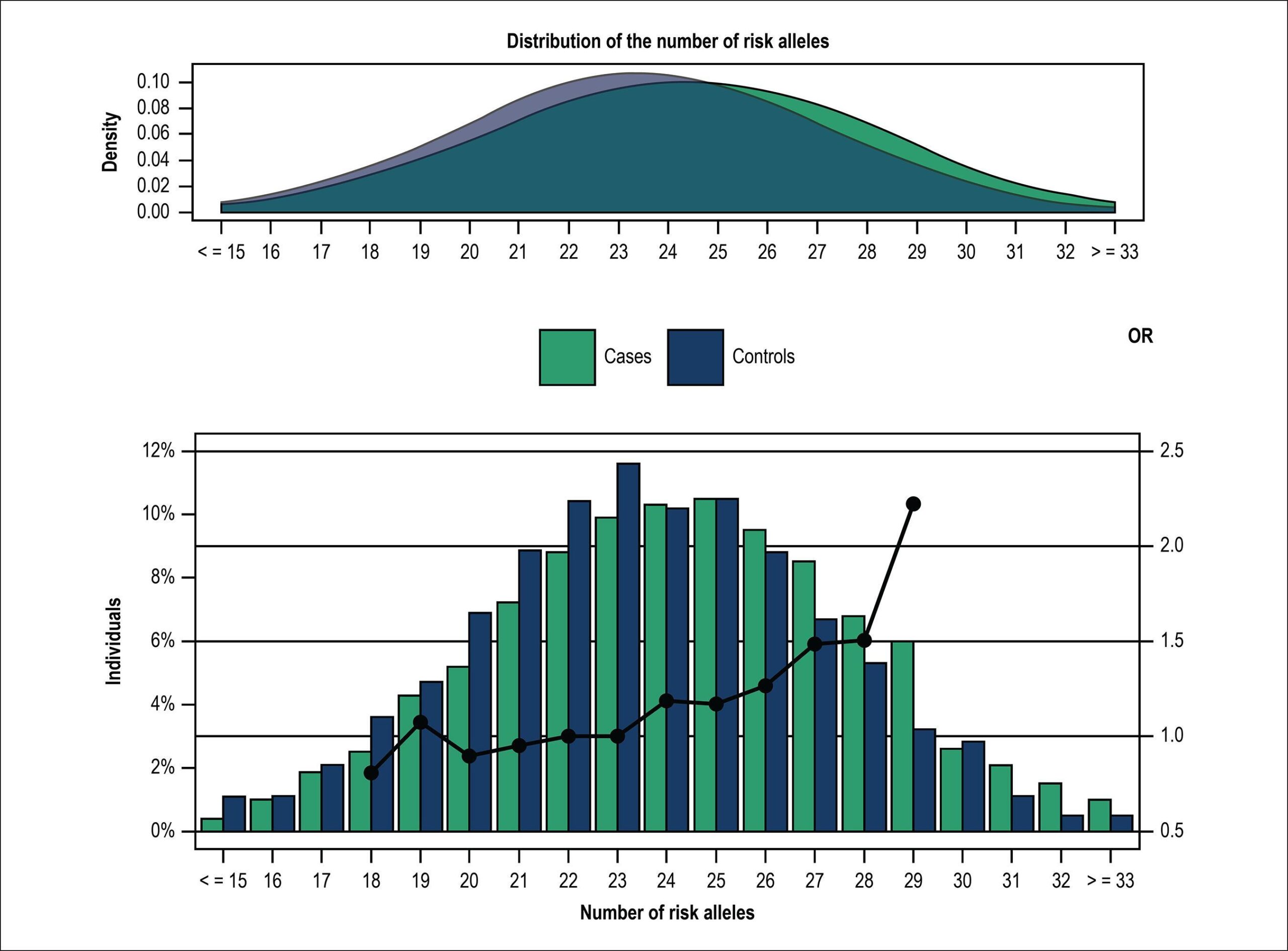
Thirty-three genetic variants previously associated with coronary disease were analyzed in a case-control population with 2,888 individuals. A multiplicative genetic risk score was calculated and then divided into quartiles, with the 1st quartile as the reference class. Coronary risk was determined by logistic regression analysis. Then, a second logistic regression was performed with traditional risk factors and the last quartile of the genetic risk score. Based on this model, two ROC curves were constructed with and without the genetic score and compared by the Delong test. Statistical significance was considered when p values were less than 0.05.

Results:

The last quartile of the multiplicative genetic risk score revealed a significant increase in coronary artery disease risk (OR = 2.588; 95% CI: 2.090-3.204; p < 0.0001). The ROC curve based on traditional risk factors estimated an AUC of 0.72, which increased to 0.74 when the genetic risk score was added, revealing a better fit of the model (p < 0.0001).

Conclusions:

In conclusion, a multilocus genetic risk score was associated with an increased risk for coronary disease in our population. The usual model of traditional risk factors can be improved by incorporating genetic data.

  • Coronary Artery Disease / history
  • Coronary Artery Disease / morbidity
  • Epidemiology
  • Mortality
  • Polymorphism, Genetic
  • Risk Factors
Read Full Article
Creative Commons Attribution (CC BY) Creative Commons license
02/07/2018 DOI: 10.5935/abc.20180107 Views 2
ABC
Editorial

Genetic Risk in Coronary Artery Disease

Paula F. Martinez et al. Marina P. Okoshi

Coronary artery disease (CAD) is a leading cause of death worldwide. It is most commonly caused by atherosclerosis in coronary arteries. Coronary artery disease has a complex etiology, mainly a combination of traditional risk factors and genetic predisposition. Traditional risk factors include type 2 diabetes, dyslipidemia, arterial hypertension, and cigarette smoking. However, these are not sufficient to identify high risk asymptomatic individuals and do not explain all cases of CAD. In fact, hereditary influence on CAD susceptibility accounts for between 40% and 50% of cases.

Polymorphisms are common genetic variations, defined as being present in more than 1% of the population. A polymorphism is a nucleotide substitution that does not alter the primary amino acid structure of the resulting protein. A single-nucleotide polymorphism (SNP) is a variation in DNA in a single nucleotide that occurs at a specific position in the genome. An SNP may be a marker of disease susceptibility. Populations of healthy and affected individuals can be evaluated by genotyping SNP within a gene and its regulatory sequences. Genome-wide association studies (GWAS) have been used to create genetic risk scores to improve CAD risk prediction.– However, their value as an independent risk predictor for CAD is not clear.

[…]

  • Coronary Artery Disease/genetics
  • Genome-Wide Association Study
  • Polymorphism, Genetic
Read Full Article
Creative Commons Attribution (CC BY) Creative Commons license
01/07/2018 DOI: 10.5935/abc.20180130 Views 1
ABC
Original Article

Association of Multiple Genetic Variants with the Extension and Severity of Coronary Artery Disease

Simone Cristina Pinto Matheus Fischer et al. Simone Pires Pinto Lívia Campos do Amaral Silva Lins Henrique Tria Bianco … Carlos Manoel de Castro Monteiro Luiz Fernando Muniz Pinheiro Francisco Antonio Helfenstein Fonseca Maria Cristina de Oliveira Izar

Abstract

Background:

Metabolic syndrome (MS) is a condition that, when associated with ischemic heart disease and cardiovascular events, can be influenced by genetic variants and determine more severe coronary atherosclerosis.

Objectives:

To examine the contribution of genetic polymorphisms to the extension and severity of coronary disease in subjects with MS and recent acute coronary syndrome (ACS).

Methods:

Patients (n = 116, 68% males) aged 56 (9) years, with criteria for MS, were prospectively enrolled to the study during the hospitalization period after an ACS. Clinical and laboratory parameters, high-sensitivity C-reactive protein, thiobarbituric acid reactive substances, adiponectin, endothelial function, and the Gensini score were assessed. Polymorphisms of paraoxonase-1 (PON-1), methylenotetrahydrofolate reductase (MTHFR), endothelial nitric oxide synthase (ENOS), angiotensin-converting enzyme (ACE), angiotensin II type 1 receptor (AT1R), apolipoprotein C3 (APOC3), lipoprotein lipase (LPL) were analysed by polymerase chain reaction (PCR) technique, followed by the identification of restriction fragment length polymorphisms (RFLP, and a genetic score was calculated. Parametric and non-parametric tests were used, as appropriate. Significance was set at p < 0.05.

Results:

Polymorphisms of PON-1, MTHFR and ENOS were not in the Hardy-Weinberg equilibrium. The DD genotype of LPL was associated with higher severity and greater extension of coronary lesions. Genetic score tended to be higher in patients with Gensini score < P50 (13.7 ± 1.5 vs. 13.0 ± 1.6, p = 0.066), with an inverse correlation between genetic and Gensini scores (R = -0.194, p = 0.078).

Conclusions:

The LPL polymorphism contributed to the severity of coronary disease in patients with MS and recent ACS. Combined polymorphisms were associated with the extension of coronary disease, and the lower the genetic score the more severe the disease.

  • Coronary Artery Disease / genetic
  • Metabolic Syndrome
  • Polymorphism, Genetic
  • Sedentary Lifestyle
Read Full Article
Creative Commons Attribution (CC BY) Creative Commons license
01/02/2018 DOI: 10.5935/abc.20170177 Views 1
ABC
Editorial

Cardiovascular Risk Stratification: From Phenotype to Genotype?

Marcio Sommer Bittencourt

Cardiovascular risk scores, such as the Framingham score, have been strongly recommended by clinical guidelines on the assessment of cardiovascular risk. However, several studies have shown limitations for their use,, particularly in patients at intermediate risk, young patients with a definite family history, and women. Among different tools aimed at improving risk stratification by complementary methods, the use of genetic information has been proposed to enhance risk prediction.

Although many genetic polymorphisms have been associated with increased cardiovascular risk, the additional value of their use in the clinical practice has not been defined yet. One of the reason for such limitation lies on the fact that atherosclerosis is a multifactorial disease, and the individual role of each polymorphism is limited. Since many polymorphisms associated with atherosclerotic disease have been identified, some authors have investigated combinations of several polymorphisms aiming to develop genetic scores that serve as stronger predictors of cardiovascular risk. Nevertheless, despite great enthusiasm about the role of genetic information on the development of cardiovascular risk, previous data have suggested that even with the combination of more than 50 polymorphisms, the best risk stratification achieved was still poor, and of low clinical value in its current form.

[…]

  • Acute Coronary Syndrome/genetic
  • Metabolic Syndrome
  • Polymorphism, Genetic
  • Risk Assessment
  • Risk Factors
Read Full Article
Creative Commons Attribution (CC BY) Creative Commons license
01/01/2018 DOI: 10.5935/abc.20180010 Views 2
ABC
Original Article

Angiotensin-Converting Enzyme ID Polymorphism in Patients with Heart Failure Secondary to Chagas Disease

Silene Jacinto da Silva et al. Salvador Rassi Alexandre da Costa Pereira

Abstract

Background:

Changes in the angiotensin-converting enzyme (ACE) gene may contribute to the increase in blood pressure and consequently to the onset of heart failure (HF). The role of polymorphism is very controversial, and its identification in patients with HF secondary to Chagas disease in the Brazilian population is required.

Objective:

To determine ACE polymorphism in patients with HF secondary to Chagas disease and patients with Chagas disease without systolic dysfunction, and to evaluate the relationship of the ACE polymorphism with different clinical variables.

Methods:

This was a comparative clinical study with 193 participants, 103 of them with HF secondary to Chagas disease and 90 with Chagas disease without systolic dysfunction. All patients attended the outpatient department of the General Hospital of the Federal University of Goias general hospital. Alleles I and D of ACE polymorphism were identified by polymerase chain reaction of the respective intron 16 fragments in the ACE gene and visualized by electrophoresis.

Results:

In the group of HF patients, 63% were male, whereas 53.6% of patients with Chagas disease without systolic dysfunction were female (p = 0,001). The time from diagnosis varied from 1 to 50 years. Distribution of DD, ID and II genotypes was similar between the two groups, without statistical significance (p = 0,692). There was no difference in clinical characteristics or I/D genotypes between the groups. Age was significantly different between the groups (p = 0,001), and mean age of patients with HF was 62.5 years.

Conclusion:

No differences were observed in the distribution of (Insertion/Deletion) genotype frequencies of ACE polymorphism between the studied groups. The use of this genetic biomarker was not useful in detecting a possible relationship between ACE polymorphism and clinical manifestations in HF secondary to Chagas disease.

  • Chagas Cardiomyopathy
  • Chagas disease
  • Heart Failure
  • Polymorphism, Genetic
Read Full Article
Creative Commons Attribution (CC BY) Creative Commons license
28/09/2017 DOI: 10.5935/abc.20170137 Views 1
Figure 1
IJCS
Original Article

Hierarchical Analysis of Hypertension with the Polymorphic Variant of the ACE Gene and Other Risk Factors in the Elderly

Breno Barreto Ribeiro et al. Pedro Eleutério dos Santos Neto Jairo Evangelista Nascimento João Marcus Oliveira Andrade … Alanna Fernandes Paraíso Sérgio Henrique Sousa Santos Marise Fagundes Silveira Andréa Maria Eleutério de Barros Lima Martins

Abstract

Background:

Hypertension is a clinical condition of multifactorial etiology that imposes serious harm to the health of elderly individuals. Despite the fact that cardiovascular disorders influence the development of hypertension in this age group, several other genetic and environmental factors have been described in the literature, including the polymorphic variant of the angiotensin-converting enzyme (ACE) gene and the distribution of body fat.

Objective:

To assess the prevalence of hypertension among elderly individuals and its possible correlation with the I/D polymorphic variant of the ACE gene and other associated risk factors.

Methods:

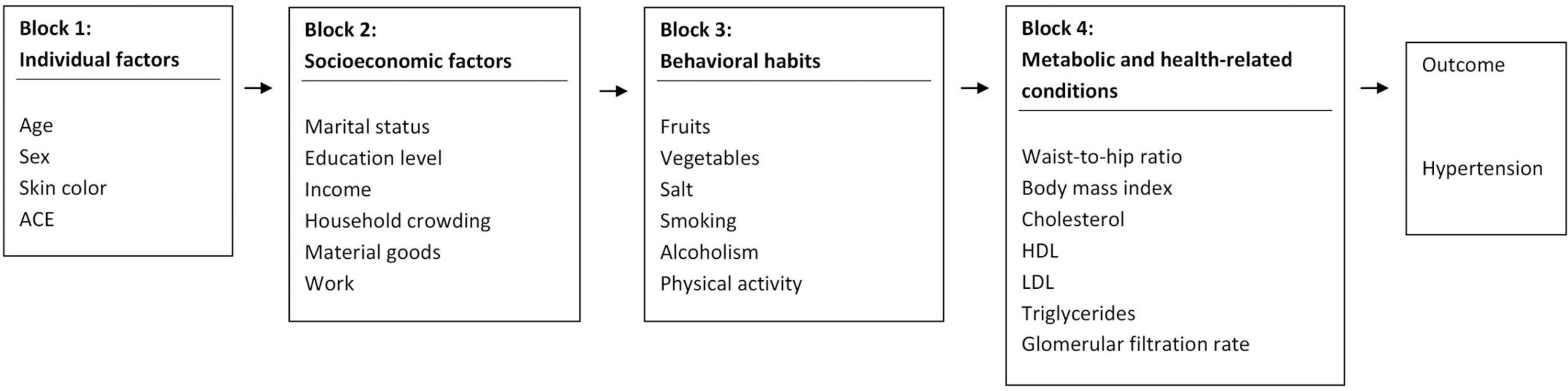
Population-based study using a hierarchical model and including 387 elderly individuals residing in the urban area of Ibiaí (Minas Gerais, Brazil).

Results:

On statistical analysis, the polymorphic variant of the ACE gene was not associated with hypertension (p = 0.316). On the other hand, there was a significant association between hypertension and the variables female sex, absence of a partner, consumption of more than one portion of salt per day, and changes in body mass index and waist-to-hip ratio.

Conclusion:

Although the polymorphic variant of the ACE gene showed no influence on the prevalence of hypertension in elderly individuals, some variables such as individual, socioeconomic, metabolic, and behavioral habits were associated with this condition.

  • Aged
  • Hypertension
  • Peptidyl-Dipeptidase A
  • Polymorphism, Genetic
  • Prevalence
  • Risk Factors
Read Full Article
Creative Commons Attribution (CC BY) Creative Commons license
01/01/2017 DOI: 10.5935/2359-4802.20170031 Views 2
Figure 1
ABC
Original Article

Influence of Angiotensin-Converting-Enzyme Gene Polymorphism on Echocardiographic Data of Patients with Ischemic Heart Failure

Gustavo Salgado Duque et al. Dayse Aparecida da Silva Felipe Neves de Albuquerque Roberta Siuffo Schneider … Alinne Gimenez Roberto Pozzan Ricardo Mourilhe Rocha Denilson Campos de Albuquerque

Abstract

Background:

Association between angiotensin-converting-enzyme (ACE) gene polymorphisms and different clinical and echocardiographic outcomes has been described in patients with heart failure (HF) and coronary artery disease. Studying the genetic profile of the local population with both diseases is necessary to assess the occurrence of that association.

Objectives:

To assess the frequency of ACE gene polymorphisms in patients with ischemic HF in a Rio de Janeiro population, as well as its association with echocardiographic findings.

Methods:

Genetic assessment of I/D ACE polymorphism in association with clinical, laboratory and echocardiographic analysis of 99 patients.

Results:

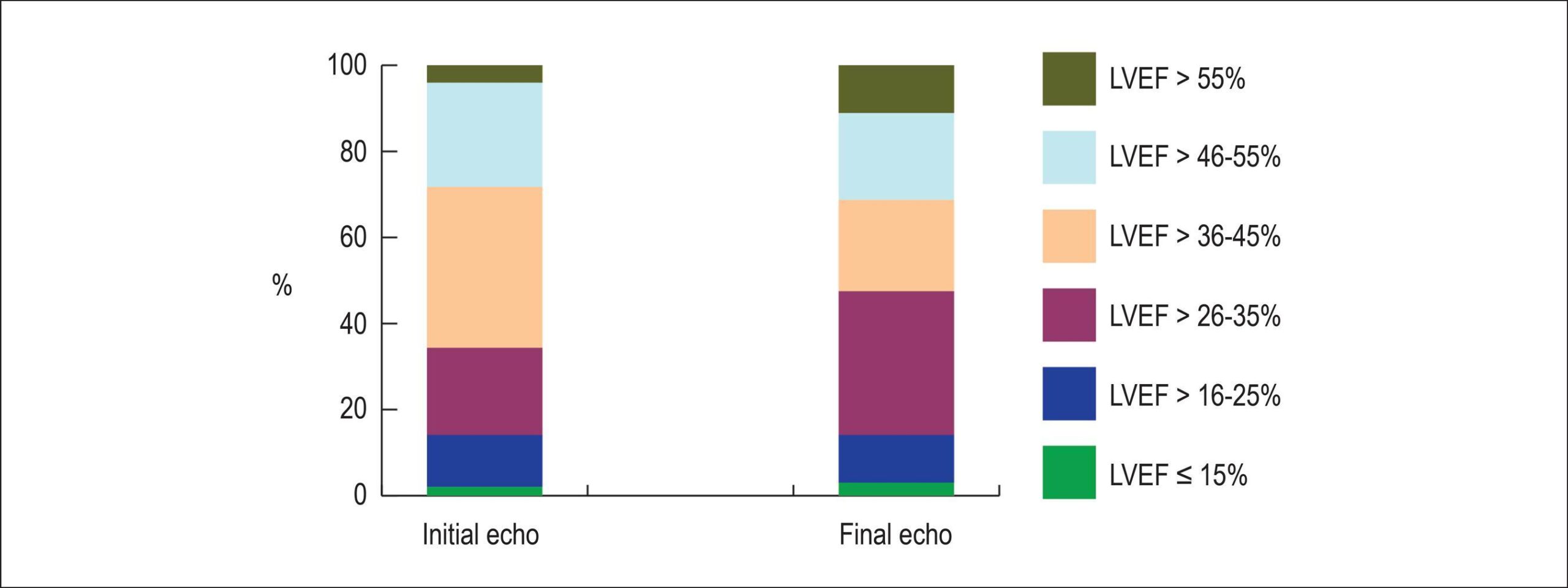
The allele frequency was: 53 I alleles, and 145 D alleles. Genotype frequencies were: 49.5% DD; 47.48% DI; 3.02% II. Drug treatment was optimized: 98% on beta-blockers, and 84.8% on ACE inhibitors or angiotensin-receptor blocker. Echocardiographic findings: difference between left ventricular diastolic diameters (ΔLVDD) during follow-up: 2.98±8.94 (DD) vs. 0.68±8.12 (DI) vs. -11.0±7.00 (II), p=0.018; worsening during follow-up of the LV systolic diameter (LVSD): 65.3% DD vs. 19.0% DI vs. 0.0% II, p=0.01; of the LV diastolic diameter (LVDD): 65.3% DD vs. 46.8% DI vs. 0.0% II, p=0.03; and of the LV ejection fraction (LVEF): 67.3% DD vs. 40.4% DI vs. 33.3% II, p=0.024. Correlated with D allele: ΔLVEF, ΔLVSD, ΔLVDD.

Conclusions:

More DD genotype patients had worsening of the LVEF, LVSD and LVDD, followed by DI genotype patients, while II genotype patients had the best outcome. The same pattern was observed for ΔLVDD.

  • Angiotensin-Converting Enzyme Inhibitors
  • Echocardiography/methods
  • Heart Failure
  • Polymorphism, Genetic
Read Full Article
Creative Commons Attribution (CC BY) Creative Commons license
27/10/2016 DOI: 10.5935/abc.20160145 Views 1
Figure 1
ABC
Original Article

Assessment of Galectin-3 Polymorphism in Subjects with Chronic Chagas Disease

Gabriela da Silva Cruz et al. Ana Luiza Dias Angelo Ticiana Ferreira Larocca Carolina Thé Macedo … Márcia Noya-Rabelo Luís Claudio Lemos Correia Jorge Andion Torreão Bruno Solano de Freitas Souza Ricardo Ribeiro dos Santos Milena Botelho Pereira Soares

Abstract

Background:

Galectin-3, a β-galactoside binding lectin, has been described as a mediator of cardiac fibrosis in experimental studies and as a risk factor associated with cardiovascular events in subjects with heart failure. Previous studies have evaluated the genetic susceptibility to Chagas disease in humans, including the polymorphisms of cytokine genes, demonstrating correlations between the genetic polymorphism and cardiomyopathy development in the chronic phase. However, the relationship between the galectin-3 single nucleotide polymorphism (SNP) and phenotypic variations in Chagas disease has not been evaluated.

Objective:

The present study aimed to determine whether genetic polymorphisms of galectin-3 may predispose to the development of cardiac forms of Chagas disease.

Methods:

Fifty-five subjects with Chagas disease were enrolled in this observational study. Real-time polymerase chain reaction (PCR) was used for genotyping the variants rs4644 and rs4652 of the galectin-3 gene.

Results:

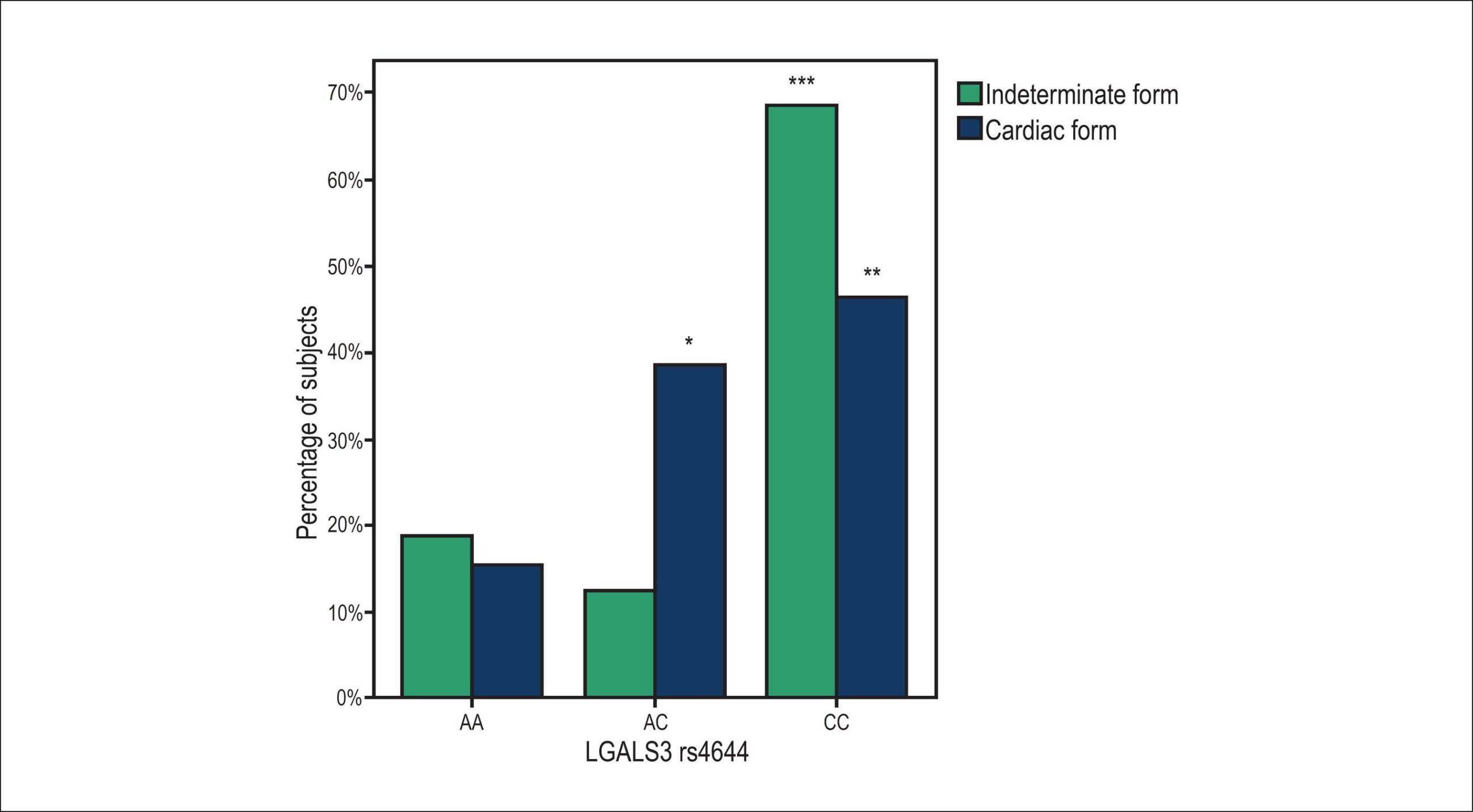
For the SNP rs4644, the relative risk for the cardiac form was not associated with the genotypes AA (OR = 0.79, p = 0.759), AC (OR = 4.38, p = 0.058), or CC (OR = 0.39, p = 0.127). Similarly, for the SNP rs4652, no association was found between the genotypes AA (OR = 0.64, p = 0.571), AC (OR = 2.85, p = 0.105), or CC (OR = 0.49, p = 0.227) and the cardiac form of the disease.

Conclusion:

Our results showed no association between the different genotypes for both SNPs of the galectin-3 gene and the cardiac form of Chagas disease. (Arq Bras Cardiol. 2015; [online].ahead print, PP.0-0)

  • Chagas Cardiomyopathy
  • Chagas disease
  • Galectin 3
  • Heart Failure
  • Polymorphism, Genetic
Read Full Article
Creative Commons Attribution (CC BY) Creative Commons license
25/08/2015 DOI: 10.5935/abc.20150105
ABC
Original Article

p.Q192R SNP of PON1 seems not to be Associated with Carotid Atherosclerosis Risk Factors in an Asymptomatic and Normolipidemic Brazilian Population Sample

Daniel Zanetti Scherrer et al. Vanessa Helena de Souza Zago Isabela Calanca Vieira Eliane Soler Parra … Natália Baratella Panzoldo Fernanda Alexandre Rodrigo Secolin Jamal Baracat Eder Carlos Rocha Quintão Eliana Cotta de Faria

Background:

Evidences suggest that paraoxonase 1 (PON1) confers important antioxidant and anti-inflammatory properties when associated with high-density lipoprotein (HDL).

Objective:

To investigate the relationships between p.Q192R SNP ofPON1, biochemical parameters and carotid atherosclerosis in an asymptomatic, normolipidemic Brazilian population sample.

Methods:

We studied 584 volunteers (females n = 326, males n = 258; 19-75 years of age). Total genomic DNA was extracted and SNP was detected in the TaqMan® SNP OpenArray® genotyping platform (Applied Biosystems, Foster City, CA). Plasma lipoproteins and apolipoproteins were determined and PON1 activity was measured using paraoxon as a substrate. High-resolution β-mode ultrasonography was used to measure cIMT and the presence of carotid atherosclerotic plaques in a subgroup of individuals (n = 317).

Results:

The presence of p.192Q was associated with a significant increase in PON1 activity (RR = 12.30 (11.38); RQ = 46.96 (22.35); QQ = 85.35 (24.83) μmol/min; p < 0.0001), HDL-C (RR= 45 (37); RQ = 62 (39); QQ = 69 (29) mg/dL; p < 0.001) and apo A-I (RR = 140.76 ± 36.39; RQ = 147.62 ± 36.92; QQ = 147.49 ± 36.65 mg/dL; p = 0.019). Stepwise regression analysis revealed that heterozygous and p.192Q carriers influenced by 58% PON1 activity towards paraoxon. The univariate linear regression analysis demonstrated that p.Q192R SNP was not associated with mean cIMT; as a result, in the multiple regression analysis, no variables were selected with 5% significance. In logistic regression analysis, the studied parameters were not associated with the presence of carotid plaques.

Conclusion:

In low-risk individuals, the presence of the p.192Q variant ofPON1 is associated with a beneficial plasma lipid profile but not with carotid atherosclerosis.

  • Carotid Artery Diseases / physiopathology
  • Lipoproteins, HDL
  • Paraoxonase-1 / genetics
  • Polymorphism, Genetic
Read Full Article
Creative Commons Attribution (CC BY) Creative Commons license
29/05/2015 DOI: 10.5935/abc.20150053 Views 2
ABC
Original Article

APOE and LDLR Gene Polymorphisms and Dyslipidemia Tracking. Rio de Janeiro Study

Rossana Ghessa Andrade de Freitas et al. Erika Maria Gonçalves Campana Roberto Pozzan Andréa Araujo Brandão … Ayrton Pires Brandão Maria Eliane Campos Magalhães Dayse Aparecida da Silva

Background:

Studies show an association between changes in apolipoprotein E (ApoE) and LDLR receptor with the occurrence of dyslipidemia.

Objectives:

To investigate the association between polymorphisms of the APOE (ε2, ε3, ε4) and LDLR (A370T) genes with the persistence of abnormal serum lipid levels in young individuals followed up for 17 years in the Rio de Janeiro Study.

Methods:

The study included 56 individuals (35 males) who underwent three assessments at different ages: A1 (mean age 13.30 ± 1.53 years), A2 (22.09 ± 1.91 years) and A3 (31.23 ± 1.99 years). Clinical evaluation with measurement of blood pressure (BP) and body mass index (BMI) was conducted at all three assessments. Measurement of waist circumference (WC) and serum lipids, and analysis of genetic polymorphisms by PCR-RFLP were performed at A2 and A3. Based on dyslipidemia tracking, three groups were established: 0 (no abnormal lipid value at A2 and A3), 1 (up to one abnormal lipid value at A2 or A3) and 2 (one or more abnormal lipid values at A2 and A3).

Results:

Compared with groups 0 and 1, group 2 presented higher mean values of BP, BMI, WC, LDL-c and TG (p < 0.01) and lower mean values of HDL-c (p = 0.001). Across the assessments, all individuals with APOE genotypes ε2/ε4 and ε4/ε4 maintained at least one abnormal lipid variable, whereas those with genotype ε2/ε3 did not show abnormal values (χ2 = 16.848, p = 0.032). For the LDLR genotypes, there was no significant difference among the groups.

Conclusions:

APOE gene polymorphisms were associated with dyslipidemia in young individuals followed up longitudinally from childhood.

  • Apolipoproteins E
  • Dyslipidemias
  • Epidemiology
  • Polymorphism, Genetic
  • Young Adult
Read Full Article
Creative Commons Attribution (CC BY) Creative Commons license
05/05/2015 DOI: 10.5935/abc.20150036 Views 1
Figure 1
ABC
Original Article

Survival and Predictive Factors of Lethality in Hemodyalisis: D/I Polymorphism of The Angiotensin I-Converting Enzyme and of the Angiotensinogen M235T Genes

Mauro Alves et al. Nelson Albuquerque de Souza e Silva Lucia Helena Alvares Salis Basilio de Bragança Pereira … Paulo Henrique Godoy Emília Matos do Nascimento Jose Mario Franco Oliveira

Background:

End-stage kidney disease patients continue to have markedly increased cardiovascular disease morbidity and mortality. Analysis of genetic factors connected with the renin-angiotensin system that influences the survival of the patients with end-stage kidney disease supports the ongoing search for improved outcomes.

Objective:

To assess survival and its association with the polymorphism of renin-angiotensin system genes: angiotensin I-converting enzyme insertion/deletion and angiotensinogen M235T in patients undergoing hemodialysis.

Methods:

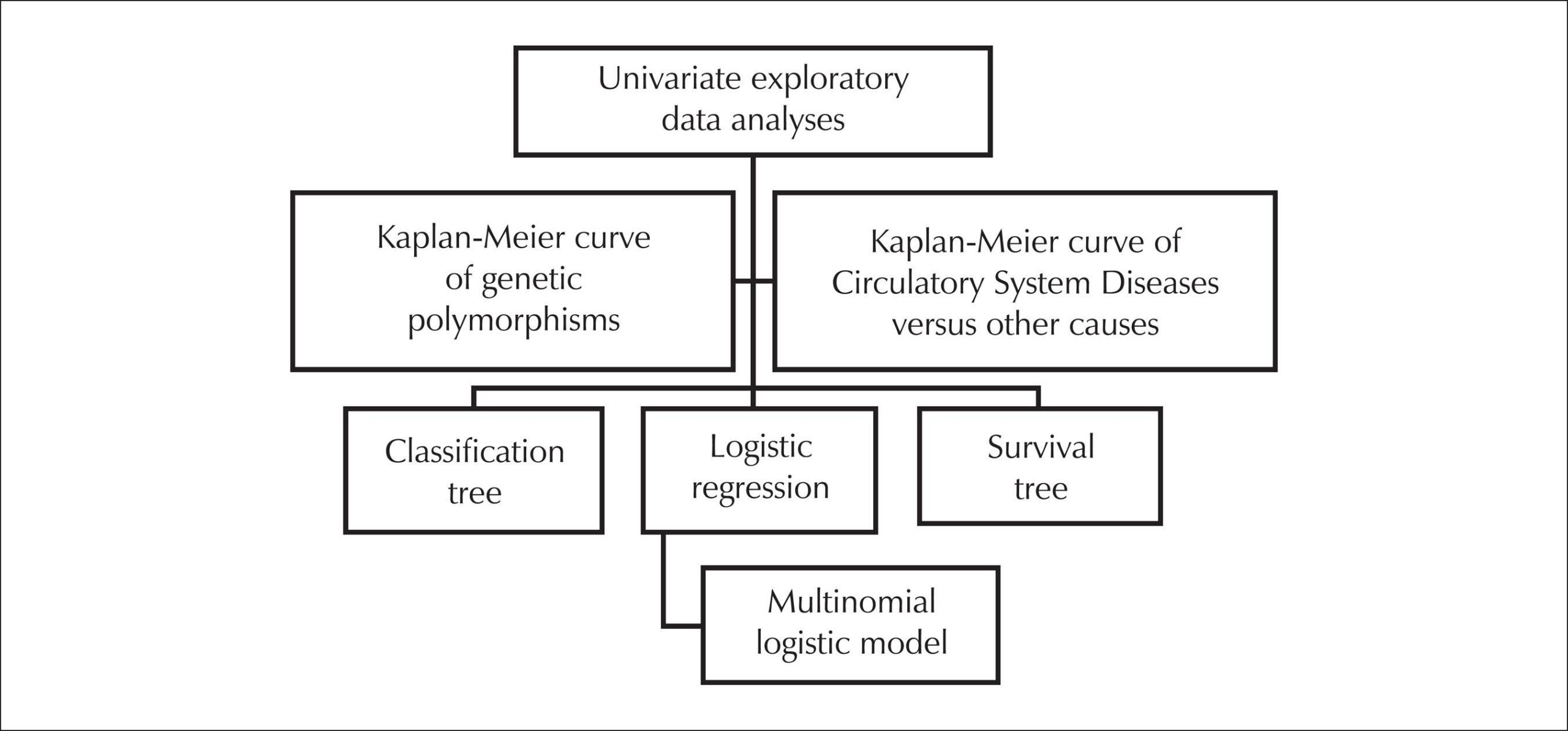
Our study was designed to examine the role of renin-angiotensin system genes. It was an observational study. We analyzed 473 chronic hemodialysis patients in four dialysis units in the state of Rio de Janeiro. Survival rates were calculated by the Kaplan-Meier method and the differences between the curves were evaluated by Tarone-Ware, Peto-Prentice, and log rank tests. We also used logistic regression analysis and the multinomial model. A p value ≤ 0.05 was considered to be statistically significant. The local medical ethics committee gave their approval to this study.

Results:

The mean age of patients was 45.8 years old. The overall survival rate was 48% at 11 years. The major causes of death were cardiovascular diseases (34%) and infections (15%). Logistic regression analysis found statistical significance for the following variables: age (p = 0.000038), TT angiotensinogen (p = 0.08261), and family income greater than five times the minimum wage (p = 0.03089), the latter being a protective factor.

Conclusions:

The survival of hemodialysis patients is likely to be influenced by the TT of the angiotensinogen M235T gene.

  • Kidney Failure, Chronic
  • lethality
  • Peptidyl-Dipeptidase A
  • Polymorphism, Genetic
  • renal dialysis
  • Survival Analysis
Read Full Article
Creative Commons Attribution (CC BY) Creative Commons license
29/07/2014 DOI: 10.5935/abc.20140105 Views 1
ABC
Letter to the Editor

Angiotensin-converting Enzyme Genetic Polymorphism

Somsri Wiwanitkit et al. Viroj Wiwanitkit

Sir Editor,

The recent report on “angiotensin-converting enzyme (ACE) genetic polymorphism.” is very interesting. Albuquerque et al. concluded that “the DD genotype was independently associated with worse echocardiographic outcome, while the DI genotype, with best echocardiographic profile.” In fact, the polymorphism of ACE is different in different countries and the relationship to clinical disorder is widely mentioned. The study of ACE polymorphism has proved to be useful in management of cardiac patients, especially for selection of proper cardiac drug. However, the relationship to cardiac pathology is still controversial. Similar to the present study, the ventricular function abnormality determined by EKG was proposed for interrelationship with ACE polymorphism by Yu Jin et al. Nevertheless, the small sample size in the published studies, is the main obstacle for conclusions. The effect of race in clinical relationship of ACE polymorphism requires a very large study in order to lead to conclusions.

[…]

  • Peptidyl-Dipeptidase A
  • Polymorphism, Genetic
Read Full Article
Creative Commons Attribution (CC BY) Creative Commons license
01/06/2014 DOI: 10.5935/abc.20140077 Views 1
Figure 1
ABC
Viewpoint

Back to Basics: PCSK9 as a New Target for the LDL Receptor

Pablo Corral

Introduction

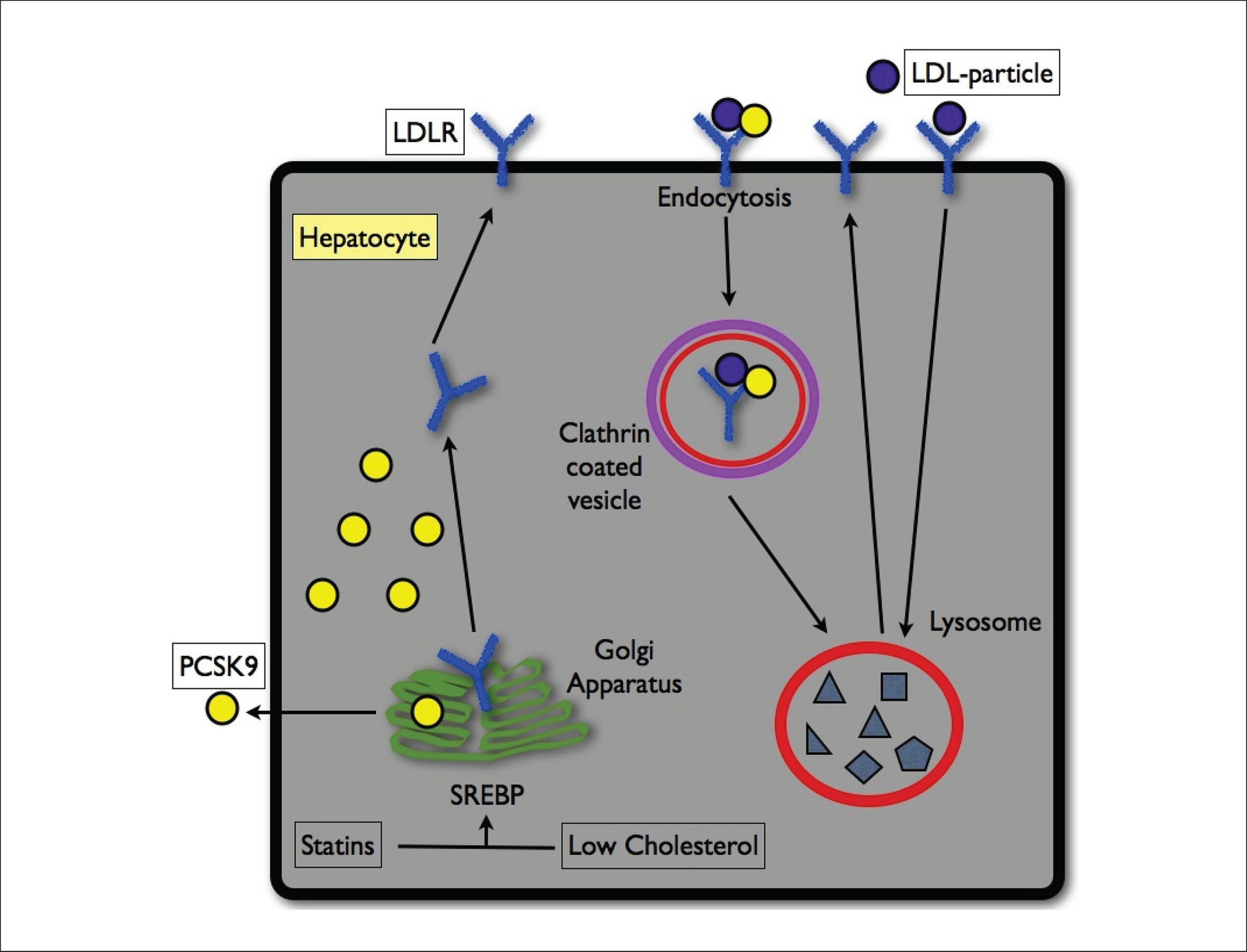
Forty years after Goldstein and Brown’s discovery of the low density lipoprotein receptor (LDLR) and 25 years after the introduction of the statins, a cornerstone of the atherosclerotic disease management, the view of the scientific community studying the process of atherosclerosis turns once again to the LDLR through the action mechanism of proprotein convertase subtilisin/kexin type 9 (PCSK9).

The assessment of genetic polymorphism with unexpected results in large studies revived the hypothesis about the important role of high density lipoprotein cholesterol (HDL-C) in lipoprotein metabolism; the apparent eternal debate about the contribution of triglycerides (TG) and their remnants to the phenomenon of atherogenesis. Such advances have lead to the re-prioritization of LDL management as a central and primary objective towards the prevention of the morbidity and mortality main cause in the Western world, atherosclerosis.

[…]

  • Atherosclerosis
  • PCSK9 Protein, human
  • Polymorphism, Genetic
  • Receptors, LDL
  • trends
Read Full Article
Creative Commons Attribution (CC BY) Creative Commons license
01/01/2014 DOI: 10.5935/abc.20130248 Views 1
Genetic polymorphism G894T and the prognosis of heart failure outpatients
ABC
Artigo Original

Genetic polymorphism G894T and the prognosis of heart failure outpatients

Oziel Marcio Araujo Tardin et al. Sabrina Bernardez Pereira Monica Wanderley Monçores Velloso Henrique Miller Balieiro … Bruno Costa Thiago Oliveira e Alves Camila Giro Leandro Pontes Pessoa Georgina Severo Ribeiro Evandro Tinoco Mesquita

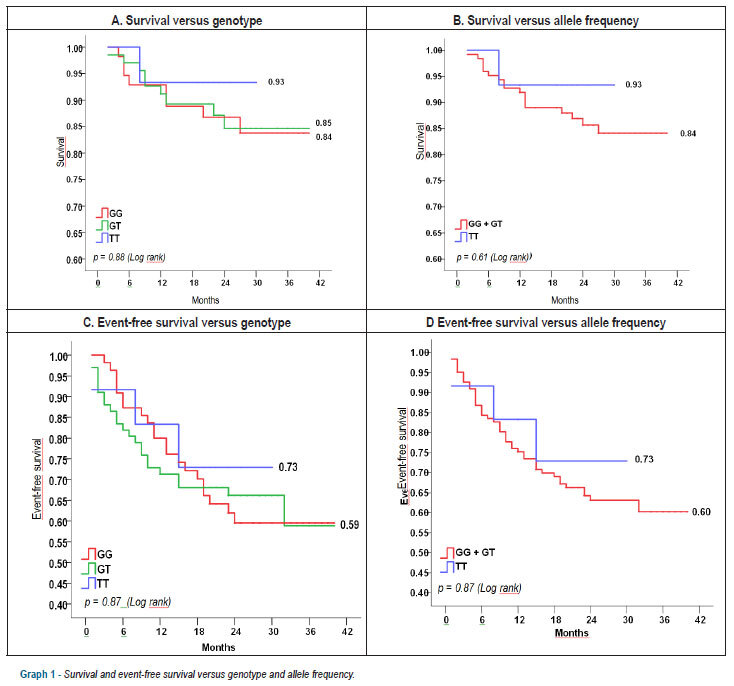
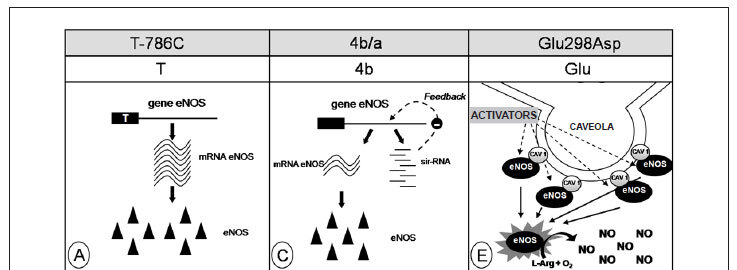
BACKGROUND: Previous studies have analyzed the role of the genetic polymorphism of endothelial nitric oxide synthase on heart failure prognosis. However, there are no studies relating the G894T and heart failure in Brazil. OBJECTIVE: To evaluate the association between G894T GP and the prognosis of a sample of Brazilian outpatients with heart failure. METHODS: Cohort study included 145 patients with systolic heart failure, followed for up to 40 months (mean = 22), at two university hospitals, in the State of Rio de Janeiro. We evaluated the relationship between G894T and the following outcomes: reverse remodeling, improvement in functional class (NYHA), and mortality and hospitalization rates. The diameters of the left atrium and ventricle, as well as the ejection fraction of the left ventricle, were evaluated at baseline and at 6 months to assess reverse remodeling. The improvement in functional class was evaluated after 6 months, and mortality rate and hospitalization were evaluated during follow-up. Race was self-declared. G894T polymorphism was analyzed by polymerase chain reaction and restriction fragment length polymorphism. RESULTS: The genotypic frequencies were GG (40%), GT (48.3%) and TT (11.7%). The allele frequency was guanine (64.1%) and thiamine (35.8%). There were no differences between the genotype or allelic frequencies according to self-declared race, either as baseline characteristics. There was no relationship between genotype or allele frequency and the outcome measures. CONCLUSION: No association was observed between the G894T polymorphism (Glu298Asp) and prognosis in this sample of Brazilian outpatients with systolic heart failure.

  • Ethnicity and Health
  • Heart Failure
  • Nitric Oxide
  • Polymorphism, Genetic
Read Full Article
Creative Commons Attribution (CC BY) Creative Commons license
14/08/2013 DOI: 10.5935/abc.20130167 Views 2
ABC
Original Article

Effects of atorvastatin and T-786C polymorphism of eNOS gene on plasma metabolic lipid parameters

Vanessa Helena de Souza Zago et al. José Eduardo Tanus dos Santos Mirian Regina Gardin Danelon Roger Marcelo Mesquita da Silva … Natália Baratella Panzoldo Eliane Soler Parra Fernanda Alexandre Vítor Wilson de Moura Virgínio Eder Carlos Rocha Quintão Eliana Cotta de Faria

BACKGROUND: Endothelial nitric oxide synthase (eNOS) activity may be modulated by high-density lipoprotein cholesterol (HDL-C), statins or polymorphisms, such as the T-786C of eNOS. OBJECTIVE: This study aimed at evaluating if the T-786C polymorphism is associated with changes of atorvastatin effects on the lipid profile, on the concentrations of metabolites of nitric oxide (NO) and of high sensitivity C-reactive protein (hsCRP). METHODS: Thirty male volunteers, asymptomatic, aged between 18 and 56 years were genotyped and classified according to absence (TT, n = 15) or presence (CC, n = 15) of the polymorphism. They were randomly selected for the use of placebo or atorvastatin (10 mg/day/14 days). After each treatment lipids, lipoproteins, HDL2 and HDL3 composition, cholesteryl ester transfer protein (CETP) activity, metabolites of NO and hsCRP were evaluated. RESULTS: The comparisons between genotypes after placebo showed an increase in CETP activity in a polymorphism-dependent way (TT, 12±7; CC, 22±12; p < 0.05). The interaction analyses between treatments indicated that atorvastatin has an effect on cholesterol, LDL, nitrite and lipid-protein ratios (HDL2 and HDL3) (p < 0.001) in both genotypes. Interestingly, we observed genotype/drug interactions on CETP (p < 0.07) and lipoprotein (a) (Lp(a)) (p < 0.056), leading to a borderline decrease in CETP, but with no effect on Lp(a). HsCRP showed no alteration. CONCLUSION: These results suggest that statin treatment may be relevant for primary prevention of atherosclerosis in patients with the T-786C polymorphism of eNOS, considering the effects on lipid metabolism.

  • Lipid Metabolism
  • Lipid Regulating Agents
  • Nitric Oxide
  • Polymorphism, Genetic
  • Protein C
Read Full Article
Creative Commons Attribution (CC BY) Creative Commons license
18/12/2012 DOI: 10.1590/S0066-782X2012005000120 Views 1
ABC
Artigo Original

Beta1-adrenergic receptor polymorphisms associated with atrial fibrillation in systolic heart failure

Bruno Costa do Nascimento et al. Sabrina Bernardez Pereira Georgina Severo Ribeiro Evandro Tinoco Mesquita

BACKGROUND: The sympathetic nervous system is of great importance in the pathogenesis of atrial fibrillation in systolic heart failure. The identification of polymorphisms in the beta1-adrenergic receptor gene (ADBR1) represents an important step in understanding this pathogenesis. OBJECTIVE: This study assessed the association between the two functional polymorphisms of the beta1-adrenergic receptor gene (ADBR1), Ser49Gly and Arg389Gly, and the presence of atrial fibrillation in patients with systolic heart failure. METHODS: Case-control study with 144 patients with systolic heart failure, including 24 with atrial fibrillation (cases) and 120 without atrial fibrillation (controls). Genomic DNA was extracted from peripheral blood leukocytes and the genotypes of Ser49Gly and Arg389Gly polymorphisms were identified in all individuals by PCR/RFLP (polymerase chain reaction / restriction fragment length polymorphism). RESULTS: Mean age was 59 ± 13 years, 70% of patients were males, 42% had ischemic causes and 74% had hypertension. Genotypes Ser49Ser and Arg389Arg were significantly associated with atrial fibrillation (p = 0.005 and p = 0.01, respectively). After logistic regression, both adjusted for left atrial size and age, the significant association persisted (Arg389Arg – odds ratios: 2.78, 95% confidence interval = 1.02 to 7.56 and Ser49Ser – odds ratios: 8.02, 95% confidence interval = 1.02 to 63.82). CONCLUSION: Both genotypes were associated with atrial fibrillation in patients; however, only Ser49Gly polymorphism was is in Hardy-Weinberg equilibrium.

  • Atrial Fibrillation
  • Genotype
  • Heart Failure
  • Polymorphism, Genetic
Read Full Article
Creative Commons Attribution (CC BY) Creative Commons license
12/04/2012 DOI: 10.1590/S0066-782X2012005000037
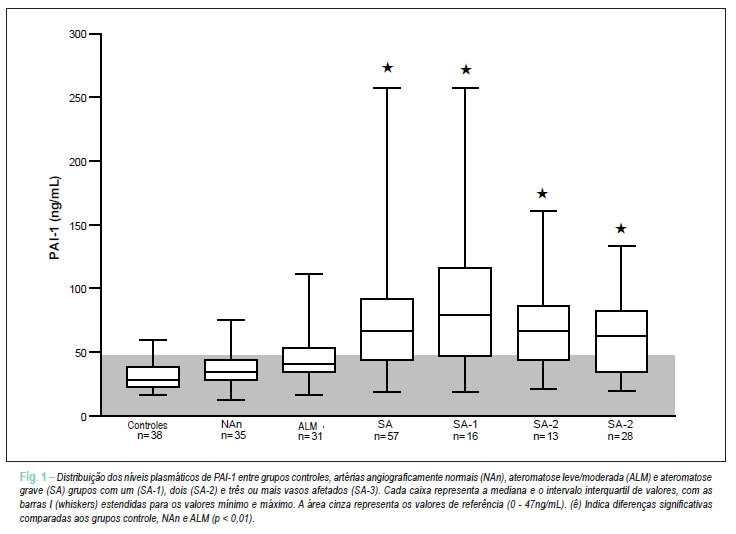
PAI-1 4G/5G polymorphism and plasma levels association in patients with coronary artery disease
ABC
Artigo Original

PAI-1 4G/5G polymorphism and plasma levels association in patients with coronary artery disease

Luciana Moreira Lima et al. Maria das Graças Carvalho Cirilo Pereira Fonseca Neto José Carlos Faria Garcia Marinez Oliveira Sousa

BACKGROUND: Type-1 plasminogen activator inhibitor (PAI-1) 4G/5G polymorphism may influence the PAI-1 expression. High plasma levels of PAI-1 are associated with coronary artery disease (CAD). OBJECTIVE: This study investigated the influence of PAI-1 4G/5G polymorphism on plasma PAI-1 levels and its association with CAD assessed by coronary angiography. METHODS: Blood sample of 35 individuals with angiographycally normal coronary arteries, 31 individuals presenting mild/moderate atheromatosis, 57 individuals presenting severe atheromatosis and 38 healthy individuals (controls) were evaluated. In patients and controls, the PAI-1 4G/5G polymorphism was determined by PCR amplification using allele-specific primers. Plasma PAI-1 levels were quantified by ELISA assay (American Diagnostica). RESULTS: No difference was found between groups regarding age, gender and body mass index. Plasma PAI-1 levels and 4G/4G genotype frequency were significantly higher in the severe atheromatosis group compared to the other groups (p<0.001). Furthermore, patients with 4G/4G genotype (r=0.28, p 70% (p<0.001). CONCLUSION: The most important finding of this study was the association between 4G/4G genotype, high plasma PAI-1 levels and coronary stenosis higher than 70% in Brazilian individuals. Whether high plasma PAI-1 levels are a decisive factor for atherosclerosis worsening or it is a consequence remains to be established.

  • Coronary Disease
  • Plasminogen activator inhibitor 1
  • Polymorphism, Genetic
Read Full Article
Creative Commons Attribution (CC BY) Creative Commons license
21/10/2011 DOI: 10.1590/S0066-782X2011005000110 Views 1
Pharmacogenetic implications of the eNOS polymorphisms for cardiovascular action drugs
ABC
Atualização

Pharmacogenetic implications of the eNOS polymorphisms for cardiovascular action drugs

Pâmela Souza Silva et al. Riccardo Lacchini Valéria de Aguiar Gomes José Eduardo Tanus-Santos

The pharmacogenetics is one of the most promising fields of medicine. The conclusion of the Genome Project allowed this field to start discovering complex factors modulating the response to drugs, and new technologies are close a great expansion of the area. The cardiovascular diseases are currently among the major causes of hospitalizations and death, and have been the target of a large part of genetic studies of complex diseases. Parallel to the susceptibility to disease markers identification, it is necessary to investigate how different genetic profiles can change the responses to the currently used drugs. The biological system that controls the endothelial production of the nitric oxide has been one of the greatest targets in the pharmacological responses to the drugs used in the cardiovascular diseases therapy. This review aims at approaching the current knowledge on interaction among the genetic variations of eNOS and the pharmacological responses to the drugs used in the cardiovascular system.

  • Cardiovascular Diseases
  • Nitric Oxide
  • Pharmacogenetics
  • Polymorphism, Genetic
Read Full Article
Creative Commons Attribution (CC BY) Creative Commons license
25/03/2011 DOI: 10.1590/S0066-782X2011000200017 Views 1
ABC
Artigo Original

Influence of genetic combinations on HDL-C levels in a Southern Brazilian population

Fabiana Michelsen de Andrade et al. Marilu Fiegenbaum Silvana de Almeida Mara Helena Hutz

BACKGROUND: Low HDL-C levels are important predictors of coronary disease, the first cause of death worldwide. Many factors affect HDL-C levels, such as polymorphisms of genes encoding for key proteins of the reverse cholesterol transport pathway. OBJECTIVE: To investigate the influence of seven polymorphisms of the CETP, APOA1, ABCA1 and SCARB1 genes on HDL-C levels in a southern Brazilian population. METHODS: The polymorphisms were investigated in a sample of 500 individuals of European descent, but HDL-C levels from only 360 individuals were adjusted for cofactors using multiple linear regressions in the association study. The sample was divided in tertiles according to adjusted HDL-C levels, and allele and haplotype frequencies were compared between the 1st and 3rd tertiles of adjusted HDL-C levels. RESULTS: When combinations of risk alleles were tested, the frequency of allele combinations in three genes (haplotype 1 of APOA1 gene, variant 2S of SCARB1 gene, and allele B1 of CETP gene) was significantly higher in the lower tertile of adjusted HDL-C (28.3%) than in the upper tertile (14.9%; p=0.008), which indicated that the presence of these variants increased 2.26 times the chances of having HDL-C levels below 39.8 mg/dl. CONCLUSION: These markers, when studied separately, are expected to have a small influence on the characteristic under analysis, but greater influence was detected when the markers were studied in combination. In a population of southern Brazilians, our data showed a significant influence of variant combinations of APOA1, SCARB1 and CETP genes on HDL-c levels.

  • Cholesterol
  • Polymorphism, Genetic
  • population
  • south region
Read Full Article
Creative Commons Attribution (CC BY) Creative Commons license
08/09/2010 DOI: 10.1590/S0066-782X2010005000121 Views 2
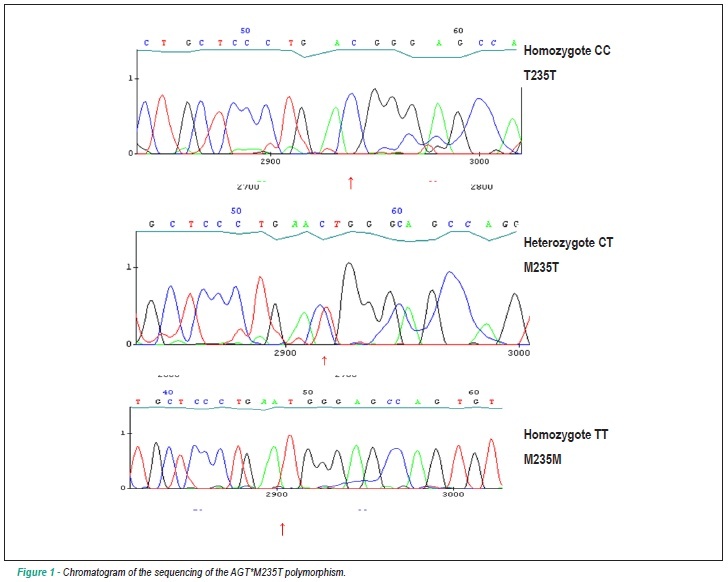
AGT*M235T polymorphism in acute ischemic cardiac dysfunction: the gisca project
ABC
Artigo Original

AGT*M235T polymorphism in acute ischemic cardiac dysfunction: the gisca project

Claudia Guerra Murad Saud et al. Amália Faria dos Reis Arlisa Monteiro de Castro Dias Rosemery Nunes Cardoso … Ana Cristina Klem Vargas Carneiro Leandro Pereira de Souza Ana Beatriz Monteiro Fonseca Georgina Severo Ribeiro Carlos Augusto Cardozo de Faria

BACKGROUND: AGT*M235T polymorphism has been associated with high serum angiotensinogen (AGT) levels, systemic hypertension and cardiac dysfunction (CD). OBJECTIVE: To test the hypothesis of AGT*M235T polymorphism being associated with the risk of developing cardiac dysfunction (heart failure or asymptomatic left ventricular systolic dysfunction) after acute coronary syndrome (ACS) during hospitalization. METHODS: A total of 363 patients (mean age of 62 ± 12 years), of whom 233 (64%) were men and 130 (36%) were women, all from the same cohort and hospitalized for ACS, were studied. Clinical and genetic data from the 117 (32.2%) patients who developed cardiac dysfunction (case group) were compared to those of the 246 (67.8%) who did not develop this condition (control group). The AGT*M235T polymorphism was determined by sequence analysis and was in Hardy-Weinberg equilibrium. RESULTS: There was a significant difference in the distribution of genotypes among women, with a predominance of the *235MM genotype in the control group (p = 0.001) and of the *235T allele in the case group. In the logistic regression models, the diagnosis of anterior wall myocardial infarction at admission was related to an increased risk of CD in both genders, whereas unstable angina at admission.; absence of the *235T allele; blood glucose <100 mg/dl; use of betablocker; serum creatinine level 60 and < 90 bpm; and current cigarette smoking were related to a lower risk of CD. CONCLUSION: This study suggests that the absence of the AGT *235T allele contributes to a reduced risk of cardiac dysfunction after acute coronary syndrome.

  • Acute coronary syndrome
  • Angiotensinogen
  • Heart Failure
  • Hypertension
  • Polymorphism, Genetic
  • Ventricular Dysfunction, Left
Read Full Article
Creative Commons Attribution (CC BY) Creative Commons license
18/06/2010 DOI: 10.1590/S0066-782X2010005000070 Views 1

Could not load more articles. Please try again.

How to cite this article

EndNote RIS

Electronic Document Format (Vancouver)

Mungmunpuntipantip R, Wiwanitkit V. Paraoxonase-1 Genotype and Angiogram Positive Coronary Artery Disease. Arquivos Brasileiros de Cardiologia 2023;120(3):e20220665.

Electronic Document Format (ABNT)

Mungmunpuntipantip, Rujittika; Wiwanitkit, Viroj. Paraoxonase-1 Genotype and Angiogram Positive Coronary Artery Disease. Arquivos Brasileiros de Cardiologia, v. 120, n. 3, e20220665, Apr. 2023.

Electronic Document Format (APA)

Mungmunpuntipantip, R., & Wiwanitkit, V. (2023). Paraoxonase-1 Genotype and Angiogram Positive Coronary Artery Disease. Arquivos Brasileiros de Cardiologia, 120(3), e20220665.

Electronic Document Format (ISO)

Mungmunpuntipantip, Rujittika and Wiwanitkit, Viroj. Paraoxonase-1 Genotype and Angiogram Positive Coronary Artery Disease. Arquivos Brasileiros de Cardiologia [online]. 2023, vol. 120, n. 3, [cited 2026-10-14], e20220665. Available from: <https://journals.cardiol.br/en/article/paraoxonase-1-genotype-and-angiogram-positive-coronary-artery-disease/>. ISSN 0066-782X

EndNote RIS

Electronic Document Format (Vancouver)

Gowdak LHW. Atherosclerosis, Inflammation, and Genetics – And you Thought it Was Just LDL-cholesterol. Arquivos Brasileiros de Cardiologia 2020;114(2):273-4.

Electronic Document Format (ABNT)

Gowdak, Luis Henrique Wolff. Atherosclerosis, Inflammation, and Genetics – And you Thought it Was Just LDL-cholesterol. Arquivos Brasileiros de Cardiologia, v. 114, n. 2, p. 273-274, Mar. 2020.

Electronic Document Format (APA)

Gowdak, L. H. W. (2020). Atherosclerosis, Inflammation, and Genetics – And you Thought it Was Just LDL-cholesterol. Arquivos Brasileiros de Cardiologia, 114(2), 273-274.

Electronic Document Format (ISO)

Gowdak, Luis Henrique Wolff. Atherosclerosis, Inflammation, and Genetics – And you Thought it Was Just LDL-cholesterol. Arquivos Brasileiros de Cardiologia [online]. 2020, vol. 114, n. 2, [cited 2026-10-14], pp. 273-274. Available from: <https://journals.cardiol.br/en/article/atherosclerosis-inflammation-and-genetics-and-you-thought-it-was-just-ldl-cholesterol/>. ISSN 0066-782X

EndNote RIS

Electronic Document Format (Vancouver)

Rocha LO, Rocha E, Succi GM, Brito Junior RB. Association between Periodontitis, Genetic Polymorphisms and Presence of Coronary Artery Disease in Southern Brazil. Arquivos Brasileiros de Cardiologia 2020;114(2):268-72.

Electronic Document Format (ABNT)

Rocha, Luiz Otavio; Rocha, Eduarda; Succi, Guilherme de Menezes; Brito Junior, Rui Barbosa de. Association between Periodontitis, Genetic Polymorphisms and Presence of Coronary Artery Disease in Southern Brazil. Arquivos Brasileiros de Cardiologia, v. 114, n. 2, p. 268-272, Mar. 2020.

Electronic Document Format (APA)

Rocha, L. O., Rocha, E., Succi, G. M., & Brito Junior, R. B. (2020). Association between Periodontitis, Genetic Polymorphisms and Presence of Coronary Artery Disease in Southern Brazil. Arquivos Brasileiros de Cardiologia, 114(2), 268-272.

Electronic Document Format (ISO)

Rocha, Luiz Otavio and Rocha, Eduarda and Succi, Guilherme de Menezes and Brito Junior, Rui Barbosa de. Association between Periodontitis, Genetic Polymorphisms and Presence of Coronary Artery Disease in Southern Brazil. Arquivos Brasileiros de Cardiologia [online]. 2020, vol. 114, n. 2, [cited 2026-10-14], pp. 268-272. Available from: <https://journals.cardiol.br/en/article/association-between-periodontitis-genetic-polymorphisms-and-presence-of-coronary-artery-disease-in-southern-brazil/>. ISSN 0066-782X

EndNote RIS

Electronic Document Format (Vancouver)

Silva SJ, Rassi S, Pereira AC. Influence of ACE Polymorphism on Echocardiographic Data of Patients with Heart Failure. International Journal of Cardiovascular Sciences 2019;32(1):55-60.

Electronic Document Format (ABNT)

Silva, Silene Jacinto da; Rassi, Salvador; Pereira, Alexandre da Costa. Influence of ACE Polymorphism on Echocardiographic Data of Patients with Heart Failure. International Journal of Cardiovascular Sciences, v. 32, n. 1, p. 55-60, Dec. 2018.

Electronic Document Format (APA)

Silva, S. J. , Rassi, S., & Pereira, A. C. (2019). Influence of ACE Polymorphism on Echocardiographic Data of Patients with Heart Failure. International Journal of Cardiovascular Sciences, 32(1), 55-60.

Electronic Document Format (ISO)

Silva, Silene Jacinto da and Rassi, Salvador and Pereira, Alexandre da Costa. Influence of ACE Polymorphism on Echocardiographic Data of Patients with Heart Failure. International Journal of Cardiovascular Sciences [online]. 2019, vol. 32, n. 1, [cited 2026-10-14], pp. 55-60. Available from: <https://journals.cardiol.br/en/article/influence-of-ace-polymorphism-on-echocardiographic-data-of-patients-with-heart-failure/>. ISSN 2359-4802

EndNote RIS

Electronic Document Format (Vancouver)

Pereira A, Mendonça MI, Borges S, Freitas S, Henriques E, Rodrigues M, Freitas AI, et al. Genetic Risk Analysis of Coronary Artery Disease in a Population-based Study in Portugal, Using a Genetic Risk Score of 31 Variants. Arquivos Brasileiros de Cardiologia 2018;111(1):50-61.

Electronic Document Format (ABNT)

Pereira, Andreia; Mendonça, Maria Isabel; Borges, Sofia; Freitas, Sónia; Henriques, Eva; Rodrigues, Mariana; Freitas, Ana Isabel; Sousa, Ana Célia; Brehm, António; Reis, Roberto Palma dos. Genetic Risk Analysis of Coronary Artery Disease in a Population-based Study in Portugal, Using a Genetic Risk Score of 31 Variants. Arquivos Brasileiros de Cardiologia, v. 111, n. 1, p. 50-61, Jul. 2018.

Electronic Document Format (APA)

Pereira, A., Mendonça, M. I., Borges, S., Freitas, S., Henriques, E., Rodrigues, M., Freitas, A. I., Sousa, A. C., Brehm, A., & Reis, R. P. (2018). Genetic Risk Analysis of Coronary Artery Disease in a Population-based Study in Portugal, Using a Genetic Risk Score of 31 Variants. Arquivos Brasileiros de Cardiologia, 111(1), 50-61.

Electronic Document Format (ISO)

Pereira, Andreia and Mendonça, Maria Isabel and Borges, Sofia and Freitas, Sónia and Henriques, Eva and Rodrigues, Mariana and Freitas, Ana Isabel and Sousa, Ana Célia and Brehm, António and Reis, Roberto Palma dos. Genetic Risk Analysis of Coronary Artery Disease in a Population-based Study in Portugal, Using a Genetic Risk Score of 31 Variants. Arquivos Brasileiros de Cardiologia [online]. 2018, vol. 111, n. 1, [cited 2026-10-14], pp. 50-61. Available from: <https://journals.cardiol.br/en/article/genetic-risk-analysis-of-coronary-artery-disease-in-a-population-based-study-in-portugal-using-a-genetic-risk-score-of-31-variants/>. ISSN 0066-782X

EndNote RIS

Electronic Document Format (Vancouver)

Martinez PF, Okoshi MP. Genetic Risk in Coronary Artery Disease. Arquivos Brasileiros de Cardiologia 2018;111(1):62-3.

Electronic Document Format (ABNT)

Martinez, Paula F.; Okoshi, Marina P.. Genetic Risk in Coronary Artery Disease. Arquivos Brasileiros de Cardiologia, v. 111, n. 1, p. 62-63, Jun. 2018.

Electronic Document Format (APA)

Martinez, P. F., & Okoshi, M. P. (2018). Genetic Risk in Coronary Artery Disease. Arquivos Brasileiros de Cardiologia, 111(1), 62-63.

Electronic Document Format (ISO)

Martinez, Paula F. and Okoshi, Marina P.. Genetic Risk in Coronary Artery Disease. Arquivos Brasileiros de Cardiologia [online]. 2018, vol. 111, n. 1, [cited 2026-10-14], pp. 62-63. Available from: <https://journals.cardiol.br/en/article/genetic-risk-in-coronary-artery-disease/>. ISSN 0066-782X

EndNote RIS

Electronic Document Format (Vancouver)

Fischer SCPM, Pinto SP, Lins LCAS, Bianco HT, Monteiro CMC, Pinheiro LFM, Fonseca FAH, et al. Association of Multiple Genetic Variants with the Extension and Severity of Coronary Artery Disease. Arquivos Brasileiros de Cardiologia 2018;110(1):16-23.

Electronic Document Format (ABNT)

Fischer, Simone Cristina Pinto Matheus; Pinto, Simone Pires; Lins, Lívia Campos do Amaral Silva; Bianco, Henrique Tria; Monteiro, Carlos Manoel de Castro; Pinheiro, Luiz Fernando Muniz; Fonseca, Francisco Antonio Helfenstein; Izar, Maria Cristina de Oliveira. Association of Multiple Genetic Variants with the Extension and Severity of Coronary Artery Disease. Arquivos Brasileiros de Cardiologia, v. 110, n. 1, p. 16-23, Jan. 2018.

Electronic Document Format (APA)

Fischer, S. C. P. M., Pinto, S. P., Lins, L. C. A. S., Bianco, H. T., Monteiro, C. M. C., Pinheiro, L. F. M., Fonseca, F. A. H., & Izar, M. C. O. (2018). Association of Multiple Genetic Variants with the Extension and Severity of Coronary Artery Disease. Arquivos Brasileiros de Cardiologia, 110(1), 16-23.

Electronic Document Format (ISO)

Fischer, Simone Cristina Pinto Matheus and Pinto, Simone Pires and Lins, Lívia Campos do Amaral Silva and Bianco, Henrique Tria and Monteiro, Carlos Manoel de Castro and Pinheiro, Luiz Fernando Muniz and Fonseca, Francisco Antonio Helfenstein and Izar, Maria Cristina de Oliveira. Association of Multiple Genetic Variants with the Extension and Severity of Coronary Artery Disease. Arquivos Brasileiros de Cardiologia [online]. 2018, vol. 110, n. 1, [cited 2026-10-14], pp. 16-23. Available from: <https://journals.cardiol.br/en/article/association-of-multiple-genetic-variants-with-the-extension-and-severity-of-coronary-artery-disease/>. ISSN 0066-782X

EndNote RIS

Electronic Document Format (Vancouver)

Bittencourt MS. Cardiovascular Risk Stratification: From Phenotype to Genotype?. Arquivos Brasileiros de Cardiologia 2018;110(1):4.

Electronic Document Format (ABNT)

Bittencourt, Marcio Sommer. Cardiovascular Risk Stratification: From Phenotype to Genotype?. Arquivos Brasileiros de Cardiologia, v. 110, n. 1, p. 4-4, Dec. 2017.

Electronic Document Format (APA)

Bittencourt, M. S. (2018). Cardiovascular Risk Stratification: From Phenotype to Genotype?. Arquivos Brasileiros de Cardiologia, 110(1), 4-4.

Electronic Document Format (ISO)

Bittencourt, Marcio Sommer. Cardiovascular Risk Stratification: From Phenotype to Genotype?. Arquivos Brasileiros de Cardiologia [online]. 2018, vol. 110, n. 1, [cited 2026-10-14], pp. 4-4. Available from: <https://journals.cardiol.br/en/article/cardiovascular-risk-stratification-from-phenotype-to-genotype/>. ISSN 0066-782X

EndNote RIS

Electronic Document Format (Vancouver)

Silva SJ, Rassi S, Pereira AC. Angiotensin-Converting Enzyme ID Polymorphism in Patients with Heart Failure Secondary to Chagas Disease. Arquivos Brasileiros de Cardiologia 2017;109(4):307-12.

Electronic Document Format (ABNT)

Silva, Silene Jacinto da; Rassi, Salvador; Pereira, Alexandre da Costa. Angiotensin-Converting Enzyme ID Polymorphism in Patients with Heart Failure Secondary to Chagas Disease. Arquivos Brasileiros de Cardiologia, v. 109, n. 4, p. 307-312, Sep. 2017.

Electronic Document Format (APA)

Silva, S. J. , Rassi, S., & Pereira, A. C. (2017). Angiotensin-Converting Enzyme ID Polymorphism in Patients with Heart Failure Secondary to Chagas Disease. Arquivos Brasileiros de Cardiologia, 109(4), 307-312.

Electronic Document Format (ISO)

Silva, Silene Jacinto da and Rassi, Salvador and Pereira, Alexandre da Costa. Angiotensin-Converting Enzyme ID Polymorphism in Patients with Heart Failure Secondary to Chagas Disease. Arquivos Brasileiros de Cardiologia [online]. 2017, vol. 109, n. 4, [cited 2026-10-14], pp. 307-312. Available from: <https://journals.cardiol.br/en/article/angiotensin-converting-enzyme-id-polymorphism-in-patients-with-heart-failure-secondary-to-chagas-disease/>. ISSN 0066-782X

EndNote RIS

Electronic Document Format (Vancouver)

Ribeiro BB, Santos Neto PE, Nascimento JE, Andrade JMO, Paraíso AF, Santos SHS, Silveira MF, et al. Hierarchical Analysis of Hypertension with the Polymorphic Variant of the ACE Gene and Other Risk Factors in the Elderly. International Journal of Cardiovascular Sciences 2017;30(1):52-60.

Electronic Document Format (ABNT)

Ribeiro, Breno Barreto; Santos Neto, Pedro Eleutério dos; Nascimento, Jairo Evangelista; Andrade, João Marcus Oliveira; Paraíso, Alanna Fernandes; Santos, Sérgio Henrique Sousa; Silveira, Marise Fagundes; Martins, Andréa Maria Eleutério de Barros Lima. Hierarchical Analysis of Hypertension with the Polymorphic Variant of the ACE Gene and Other Risk Factors in the Elderly. International Journal of Cardiovascular Sciences, v. 30, n. 1, p. 52-60, Dec. 2016.

Electronic Document Format (APA)

Ribeiro, B. B., Santos Neto, P. E. , Nascimento, J. E., Andrade, J. M. O., Paraíso, A. F., Santos, S. H. S., Silveira, M. F., & Martins, A. M. E. B. L. (2017). Hierarchical Analysis of Hypertension with the Polymorphic Variant of the ACE Gene and Other Risk Factors in the Elderly. International Journal of Cardiovascular Sciences, 30(1), 52-60.

Electronic Document Format (ISO)

Ribeiro, Breno Barreto and Santos Neto, Pedro Eleutério dos and Nascimento, Jairo Evangelista and Andrade, João Marcus Oliveira and Paraíso, Alanna Fernandes and Santos, Sérgio Henrique Sousa and Silveira, Marise Fagundes and Martins, Andréa Maria Eleutério de Barros Lima. Hierarchical Analysis of Hypertension with the Polymorphic Variant of the ACE Gene and Other Risk Factors in the Elderly. International Journal of Cardiovascular Sciences [online]. 2017, vol. 30, n. 1, [cited 2026-10-14], pp. 52-60. Available from: <https://journals.cardiol.br/en/article/hierarchical-analysis-of-hypertension-with-the-polymorphic-variant-of-the-ace-gene-and-other-risk-factors-in-the-elderly/>. ISSN 2359-4802

EndNote RIS

Electronic Document Format (Vancouver)

Duque GS, Silva DA, Albuquerque FN, Schneider RS, Gimenez A, Pozzan R, Rocha RM, et al. Influence of Angiotensin-Converting-Enzyme Gene Polymorphism on Echocardiographic Data of Patients with Ischemic Heart Failure. Arquivos Brasileiros de Cardiologia 2016;107(5):446-54.

Electronic Document Format (ABNT)

Duque, Gustavo Salgado; Silva, Dayse Aparecida da; Albuquerque, Felipe Neves de; Schneider, Roberta Siuffo; Gimenez, Alinne; Pozzan, Roberto; Rocha, Ricardo Mourilhe; Albuquerque, Denilson Campos de. Influence of Angiotensin-Converting-Enzyme Gene Polymorphism on Echocardiographic Data of Patients with Ischemic Heart Failure. Arquivos Brasileiros de Cardiologia, v. 107, n. 5, p. 446-454, Oct. 2016.

Electronic Document Format (APA)

Duque, G. S., Silva, D. A. , Albuquerque, F. N. , Schneider, R. S., Gimenez, A., Pozzan, R., Rocha, R. M., & Albuquerque, D. C. (2016). Influence of Angiotensin-Converting-Enzyme Gene Polymorphism on Echocardiographic Data of Patients with Ischemic Heart Failure. Arquivos Brasileiros de Cardiologia, 107(5), 446-454.

Electronic Document Format (ISO)

Duque, Gustavo Salgado and Silva, Dayse Aparecida da and Albuquerque, Felipe Neves de and Schneider, Roberta Siuffo and Gimenez, Alinne and Pozzan, Roberto and Rocha, Ricardo Mourilhe and Albuquerque, Denilson Campos de. Influence of Angiotensin-Converting-Enzyme Gene Polymorphism on Echocardiographic Data of Patients with Ischemic Heart Failure. Arquivos Brasileiros de Cardiologia [online]. 2016, vol. 107, n. 5, [cited 2026-10-14], pp. 446-454. Available from: <https://journals.cardiol.br/en/article/influence-of-angiotensin-converting-enzyme-gene-polymorphism-on-echocardiographic-data-of-patients-with-ischemic-heart-failure/>. ISSN 0066-782X

EndNote RIS

Electronic Document Format (Vancouver)

Cruz GS, Angelo ALD, Larocca TF, Macedo CT, Noya-Rabelo M, Correia LCL, Torreão JA, et al. Assessment of Galectin-3 Polymorphism in Subjects with Chronic Chagas Disease. Arquivos Brasileiros de Cardiologia 2015;105(5):472-8.

Electronic Document Format (ABNT)

Cruz, Gabriela da Silva; Angelo, Ana Luiza Dias; Larocca, Ticiana Ferreira; Macedo, Carolina Thé; Noya-Rabelo, Márcia; Correia, Luís Claudio Lemos; Torreão, Jorge Andion; Souza, Bruno Solano de Freitas; Santos, Ricardo Ribeiro dos; Soares, Milena Botelho Pereira. Assessment of Galectin-3 Polymorphism in Subjects with Chronic Chagas Disease. Arquivos Brasileiros de Cardiologia, v. 105, n. 5, p. 472-478, Aug. 2015.

Electronic Document Format (APA)

Cruz, G. S., Angelo, A. L. D., Larocca, T. F., Macedo, C. T., Noya-Rabelo, M., Correia, L. C. L., Torreão, J. A., Souza, B. S. F., Santos, R. R. , & Soares, M. B. P. (2015). Assessment of Galectin-3 Polymorphism in Subjects with Chronic Chagas Disease. Arquivos Brasileiros de Cardiologia, 105(5), 472-478.

Electronic Document Format (ISO)

Cruz, Gabriela da Silva and Angelo, Ana Luiza Dias and Larocca, Ticiana Ferreira and Macedo, Carolina Thé and Noya-Rabelo, Márcia and Correia, Luís Claudio Lemos and Torreão, Jorge Andion and Souza, Bruno Solano de Freitas and Santos, Ricardo Ribeiro dos and Soares, Milena Botelho Pereira. Assessment of Galectin-3 Polymorphism in Subjects with Chronic Chagas Disease. Arquivos Brasileiros de Cardiologia [online]. 2015, vol. 105, n. 5, [cited 2026-10-14], pp. 472-478. Available from: <https://journals.cardiol.br/en/article/assessment-of-galectin-3-polymorphism-in-subjects-with-chronic-chagas-disease/>. ISSN 0066-782X

EndNote RIS

Electronic Document Format (Vancouver)

Scherrer DZ, Zago VHS, Vieira IC, Parra ES, Panzoldo NB, Alexandre F, Secolin R, et al. p.Q192R SNP of PON1 seems not to be Associated with Carotid Atherosclerosis Risk Factors in an Asymptomatic and Normolipidemic Brazilian Population Sample. Arquivos Brasileiros de Cardiologia 2015;105(1):45-52.

Electronic Document Format (ABNT)

Scherrer, Daniel Zanetti; Zago, Vanessa Helena de Souza; Vieira, Isabela Calanca; Parra, Eliane Soler; Panzoldo, Natália Baratella; Alexandre, Fernanda; Secolin, Rodrigo; Baracat, Jamal; Quintão, Eder Carlos Rocha; Faria, Eliana Cotta de. p.Q192R SNP of PON1 seems not to be Associated with Carotid Atherosclerosis Risk Factors in an Asymptomatic and Normolipidemic Brazilian Population Sample. Arquivos Brasileiros de Cardiologia, v. 105, n. 1, p. 45-52, May. 2015.

Electronic Document Format (APA)

Scherrer, D. Z., Zago, V. H. S., Vieira, I. C., Parra, E. S., Panzoldo, N. B., Alexandre, F., Secolin, R., Baracat, J., Quintão, E. C. R., & Faria, E. C. (2015). p.Q192R SNP of PON1 seems not to be Associated with Carotid Atherosclerosis Risk Factors in an Asymptomatic and Normolipidemic Brazilian Population Sample. Arquivos Brasileiros de Cardiologia, 105(1), 45-52.

Electronic Document Format (ISO)

Scherrer, Daniel Zanetti and Zago, Vanessa Helena de Souza and Vieira, Isabela Calanca and Parra, Eliane Soler and Panzoldo, Natália Baratella and Alexandre, Fernanda and Secolin, Rodrigo and Baracat, Jamal and Quintão, Eder Carlos Rocha and Faria, Eliana Cotta de. p.Q192R SNP of PON1 seems not to be Associated with Carotid Atherosclerosis Risk Factors in an Asymptomatic and Normolipidemic Brazilian Population Sample. Arquivos Brasileiros de Cardiologia [online]. 2015, vol. 105, n. 1, [cited 2026-10-14], pp. 45-52. Available from: <https://journals.cardiol.br/en/article/p-q192r-snp-of-pon1-seems-not-to-be-associated-with-carotid-atherosclerosis-risk-factors-in-an-asymptomatic-and-normolipidemic-brazilian-population-sample/>. ISSN 0066-782X

EndNote RIS

Electronic Document Format (Vancouver)

Freitas RGA, Campana EMG, Pozzan R, Brandão AA, Brandão AP, Magalhães MEC, Silva DA, et al. APOE and LDLR Gene Polymorphisms and Dyslipidemia Tracking. Rio de Janeiro Study. Arquivos Brasileiros de Cardiologia 2015;104(6):468-74.

Electronic Document Format (ABNT)

Freitas, Rossana Ghessa Andrade de; Campana, Erika Maria Gonçalves; Pozzan, Roberto; Brandão, Andréa Araujo; Brandão, Ayrton Pires; Magalhães, Maria Eliane Campos; Silva, Dayse Aparecida da. APOE and LDLR Gene Polymorphisms and Dyslipidemia Tracking. Rio de Janeiro Study. Arquivos Brasileiros de Cardiologia, v. 104, n. 6, p. 468-474, May. 2015.

Electronic Document Format (APA)

Freitas, R. G. A. , Campana, E. M. G., Pozzan, R., Brandão, A. A., Brandão, A. P., Magalhães, M. E. C., & Silva, D. A. (2015). APOE and LDLR Gene Polymorphisms and Dyslipidemia Tracking. Rio de Janeiro Study. Arquivos Brasileiros de Cardiologia, 104(6), 468-474.

Electronic Document Format (ISO)

Freitas, Rossana Ghessa Andrade de and Campana, Erika Maria Gonçalves and Pozzan, Roberto and Brandão, Andréa Araujo and Brandão, Ayrton Pires and Magalhães, Maria Eliane Campos and Silva, Dayse Aparecida da. APOE and LDLR Gene Polymorphisms and Dyslipidemia Tracking. Rio de Janeiro Study. Arquivos Brasileiros de Cardiologia [online]. 2015, vol. 104, n. 6, [cited 2026-10-14], pp. 468-474. Available from: <https://journals.cardiol.br/en/article/apoe-and-ldlr-gene-polymorphisms-and-dyslipidemia-tracking-rio-de-janeiro-study/>. ISSN 0066-782X

EndNote RIS

Electronic Document Format (Vancouver)

Alves M, Silva NAS, Salis LHA, Pereira BB, Godoy PH, Nascimento EM, Oliveira JMF, et al. Survival and Predictive Factors of Lethality in Hemodyalisis: D/I Polymorphism of The Angiotensin I-Converting Enzyme and of the Angiotensinogen M235T Genes. Arquivos Brasileiros de Cardiologia 2014;103(3):209-1.

Electronic Document Format (ABNT)

Alves, Mauro; Silva, Nelson Albuquerque de Souza e; Salis, Lucia Helena Alvares; Pereira, Basilio de Bragança; Godoy, Paulo Henrique; Nascimento, Emília Matos do; Oliveira, Jose Mario Franco. Survival and Predictive Factors of Lethality in Hemodyalisis: D/I Polymorphism of The Angiotensin I-Converting Enzyme and of the Angiotensinogen M235T Genes. Arquivos Brasileiros de Cardiologia, v. 103, n. 3, p. 209-219, Jul. 2014.

Electronic Document Format (APA)

Alves, M., Silva, N. A. S. , Salis, L. H. A., Pereira, B. B., Godoy, P. H., Nascimento, E. M. , & Oliveira, J. M. F. (2014). Survival and Predictive Factors of Lethality in Hemodyalisis: D/I Polymorphism of The Angiotensin I-Converting Enzyme and of the Angiotensinogen M235T Genes. Arquivos Brasileiros de Cardiologia, 103(3), 209-219.

Electronic Document Format (ISO)

Alves, Mauro and Silva, Nelson Albuquerque de Souza e and Salis, Lucia Helena Alvares and Pereira, Basilio de Bragança and Godoy, Paulo Henrique and Nascimento, Emília Matos do and Oliveira, Jose Mario Franco. Survival and Predictive Factors of Lethality in Hemodyalisis: D/I Polymorphism of The Angiotensin I-Converting Enzyme and of the Angiotensinogen M235T Genes. Arquivos Brasileiros de Cardiologia [online]. 2014, vol. 103, n. 3, [cited 2026-10-14], pp. 209-219. Available from: <https://journals.cardiol.br/en/article/survival-and-predictive-factors-of-lethality-in-hemodyalisis-d-i-polymorphism-of-the-angiotensin-i-converting-enzyme-and-of-the-angiotensinogen-m235t-genes/>. ISSN 0066-782X

EndNote RIS

Electronic Document Format (Vancouver)

Wiwanitkit S, Wiwanitkit V. Angiotensin-converting Enzyme Genetic Polymorphism. Arquivos Brasileiros de Cardiologia 2014;102(6):611-2.

Electronic Document Format (ABNT)

Wiwanitkit, Somsri; Wiwanitkit, Viroj. Angiotensin-converting Enzyme Genetic Polymorphism. Arquivos Brasileiros de Cardiologia, v. 102, n. 6, p. 611-612, May. 2014.

Electronic Document Format (APA)

Wiwanitkit, S., & Wiwanitkit, V. (2014). Angiotensin-converting Enzyme Genetic Polymorphism. Arquivos Brasileiros de Cardiologia, 102(6), 611-612.

Electronic Document Format (ISO)

Wiwanitkit, Somsri and Wiwanitkit, Viroj. Angiotensin-converting Enzyme Genetic Polymorphism. Arquivos Brasileiros de Cardiologia [online]. 2014, vol. 102, n. 6, [cited 2026-10-14], pp. 611-612. Available from: <https://journals.cardiol.br/en/article/angiotensin-converting-enzyme-genetic-polymorphism/>. ISSN 0066-782X

EndNote RIS

Electronic Document Format (Vancouver)

Corral P. Back to Basics: PCSK9 as a New Target for the LDL Receptor. Arquivos Brasileiros de Cardiologia 2014;102(1):e5.

Electronic Document Format (ABNT)

Corral, Pablo. Back to Basics: PCSK9 as a New Target for the LDL Receptor. Arquivos Brasileiros de Cardiologia, v. 102, n. 1, e5, Dec. 2013.

Electronic Document Format (APA)

Corral, P. (2014). Back to Basics: PCSK9 as a New Target for the LDL Receptor. Arquivos Brasileiros de Cardiologia, 102(1), e5.

Electronic Document Format (ISO)

Corral, Pablo. Back to Basics: PCSK9 as a New Target for the LDL Receptor. Arquivos Brasileiros de Cardiologia [online]. 2014, vol. 102, n. 1, [cited 2026-10-14], e5. Available from: <https://journals.cardiol.br/en/article/back-to-basics-pcsk9-as-a-new-target-for-the-ldl-receptor/>. ISSN 0066-782X

EndNote RIS

Electronic Document Format (Vancouver)

Tardin OMA, Pereira SB, Velloso MWM, Balieiro HM, Costa B, Alves TO, Giro C, et al. Genetic polymorphism G894T and the prognosis of heart failure outpatients. Arquivos Brasileiros de Cardiologia 2013;101(4):352-8.

Electronic Document Format (ABNT)

Tardin, Oziel Marcio Araujo; Pereira, Sabrina Bernardez; Velloso, Monica Wanderley Monçores; Balieiro, Henrique Miller; Costa, Bruno; Alves, Thiago Oliveira e; Giro, Camila; Pessoa, Leandro Pontes; Ribeiro, Georgina Severo; Mesquita, Evandro Tinoco. Genetic polymorphism G894T and the prognosis of heart failure outpatients. Arquivos Brasileiros de Cardiologia, v. 101, n. 4, p. 352-358, Aug. 2013.

Electronic Document Format (APA)

Tardin, O. M. A., Pereira, S. B., Velloso, M. W. M., Balieiro, H. M., Costa, B., Alves, T. O. , Giro, C., Pessoa, L. P., Ribeiro, G. S., & Mesquita, E. T. (2013). Genetic polymorphism G894T and the prognosis of heart failure outpatients. Arquivos Brasileiros de Cardiologia, 101(4), 352-358.

Electronic Document Format (ISO)

Tardin, Oziel Marcio Araujo and Pereira, Sabrina Bernardez and Velloso, Monica Wanderley Monçores and Balieiro, Henrique Miller and Costa, Bruno and Alves, Thiago Oliveira e and Giro, Camila and Pessoa, Leandro Pontes and Ribeiro, Georgina Severo and Mesquita, Evandro Tinoco. Genetic polymorphism G894T and the prognosis of heart failure outpatients. Arquivos Brasileiros de Cardiologia [online]. 2013, vol. 101, n. 4, [cited 2026-10-14], pp. 352-358. Available from: <https://journals.cardiol.br/en/article/genetic-polymorphism-g894t-and-the-prognosis-of-heart-failure-outpatients/>. ISSN 0066-782X

EndNote RIS

Electronic Document Format (Vancouver)

Zago VHS, Santos JET, Danelon MRG, Silva RMM, Panzoldo NB, Parra ES, Alexandre F, et al. Effects of atorvastatin and T-786C polymorphism of eNOS gene on plasma metabolic lipid parameters. Arquivos Brasileiros de Cardiologia 2012;100(1):14-20.

Electronic Document Format (ABNT)

Zago, Vanessa Helena de Souza; Santos, José Eduardo Tanus dos; Danelon, Mirian Regina Gardin; Silva, Roger Marcelo Mesquita da; Panzoldo, Natália Baratella; Parra, Eliane Soler; Alexandre, Fernanda; Virgínio, Vítor Wilson de Moura; Quintão, Eder Carlos Rocha; Faria, Eliana Cotta de. Effects of atorvastatin and T-786C polymorphism of eNOS gene on plasma metabolic lipid parameters. Arquivos Brasileiros de Cardiologia, v. 100, n. 1, p. 14-20, Dec. 2012.

Electronic Document Format (APA)

Zago, V. H. S., Santos, J. E. T. , Danelon, M. R. G., Silva, R. M. M. , Panzoldo, N. B., Parra, E. S., Alexandre, F., Virgínio, V. W. M., Quintão, E. C. R., & Faria, E. C. (2012). Effects of atorvastatin and T-786C polymorphism of eNOS gene on plasma metabolic lipid parameters. Arquivos Brasileiros de Cardiologia, 100(1), 14-20.

Electronic Document Format (ISO)

Zago, Vanessa Helena de Souza and Santos, José Eduardo Tanus dos and Danelon, Mirian Regina Gardin and Silva, Roger Marcelo Mesquita da and Panzoldo, Natália Baratella and Parra, Eliane Soler and Alexandre, Fernanda and Virgínio, Vítor Wilson de Moura and Quintão, Eder Carlos Rocha and Faria, Eliana Cotta de. Effects of atorvastatin and T-786C polymorphism of eNOS gene on plasma metabolic lipid parameters. Arquivos Brasileiros de Cardiologia [online]. 2012, vol. 100, n. 1, [cited 2026-10-14], pp. 14-20. Available from: <https://journals.cardiol.br/en/article/effects-of-atorvastatin-and-t-786c-polymorphism-of-enos-gene-on-plasma-metabolic-lipid-parameters/>. ISSN 0066-782X

EndNote RIS

Electronic Document Format (Vancouver)

Nascimento BC, Pereira SB, Ribeiro GS, Mesquita ET. Beta1-adrenergic receptor polymorphisms associated with atrial fibrillation in systolic heart failure. Arquivos Brasileiros de Cardiologia 2012;98(5):384-9.

Electronic Document Format (ABNT)

Nascimento, Bruno Costa do; Pereira, Sabrina Bernardez; Ribeiro, Georgina Severo; Mesquita, Evandro Tinoco. Beta1-adrenergic receptor polymorphisms associated with atrial fibrillation in systolic heart failure. Arquivos Brasileiros de Cardiologia, v. 98, n. 5, p. 384-389, Apr. 2012.

Electronic Document Format (APA)

Nascimento, B. C. , Pereira, S. B., Ribeiro, G. S., & Mesquita, E. T. (2012). Beta1-adrenergic receptor polymorphisms associated with atrial fibrillation in systolic heart failure. Arquivos Brasileiros de Cardiologia, 98(5), 384-389.

Electronic Document Format (ISO)

Nascimento, Bruno Costa do and Pereira, Sabrina Bernardez and Ribeiro, Georgina Severo and Mesquita, Evandro Tinoco. Beta1-adrenergic receptor polymorphisms associated with atrial fibrillation in systolic heart failure. Arquivos Brasileiros de Cardiologia [online]. 2012, vol. 98, n. 5, [cited 2026-10-14], pp. 384-389. Available from: <https://journals.cardiol.br/en/article/beta1-adrenergic-receptor-polymorphisms-associated-with-atrial-fibrillation-in-systolic-heart-failure/>. ISSN 0066-782X

EndNote RIS

Electronic Document Format (Vancouver)

Lima LM, Carvalho MG, Fonseca Neto CP, Garcia JCF, Sousa MO. PAI-1 4G/5G polymorphism and plasma levels association in patients with coronary artery disease. Arquivos Brasileiros de Cardiologia 2011;97(6):462-389.

Electronic Document Format (ABNT)

Lima, Luciana Moreira; Carvalho, Maria das Graças; Fonseca Neto, Cirilo Pereira; Garcia, José Carlos Faria; Sousa, Marinez Oliveira. PAI-1 4G/5G polymorphism and plasma levels association in patients with coronary artery disease. Arquivos Brasileiros de Cardiologia, v. 97, n. 6, p. 462-389, Oct. 2011.

Electronic Document Format (APA)

Lima, L. M., Carvalho, M. G., Fonseca Neto, C. P., Garcia, J. C. F., & Sousa, M. O. (2011). PAI-1 4G/5G polymorphism and plasma levels association in patients with coronary artery disease. Arquivos Brasileiros de Cardiologia, 97(6), 462-389.

Electronic Document Format (ISO)

Lima, Luciana Moreira and Carvalho, Maria das Graças and Fonseca Neto, Cirilo Pereira and Garcia, José Carlos Faria and Sousa, Marinez Oliveira. PAI-1 4G/5G polymorphism and plasma levels association in patients with coronary artery disease. Arquivos Brasileiros de Cardiologia [online]. 2011, vol. 97, n. 6, [cited 2026-10-14], pp. 462-389. Available from: <https://journals.cardiol.br/en/article/pai-1-4g-5g-polymorphism-and-plasma-levels-association-in-patients-with-coronary-artery-disease/>. ISSN 0066-782X

EndNote RIS

Electronic Document Format (Vancouver)

Silva PS, Lacchini R, Gomes VA, Tanus-Santos JE. Pharmacogenetic implications of the eNOS polymorphisms for cardiovascular action drugs. Arquivos Brasileiros de Cardiologia 2011;96(2):e27-34.

Electronic Document Format (ABNT)

Silva, Pâmela Souza; Lacchini, Riccardo; Gomes, Valéria de Aguiar; Tanus-Santos, José Eduardo. Pharmacogenetic implications of the eNOS polymorphisms for cardiovascular action drugs. Arquivos Brasileiros de Cardiologia, v. 96, n. 2, p. e27-e34, Mar. 2011.

Electronic Document Format (APA)

Silva, P. S., Lacchini, R., Gomes, V. A., & Tanus-Santos, J. E. (2011). Pharmacogenetic implications of the eNOS polymorphisms for cardiovascular action drugs. Arquivos Brasileiros de Cardiologia, 96(2), e27-e34.

Electronic Document Format (ISO)

Silva, Pâmela Souza and Lacchini, Riccardo and Gomes, Valéria de Aguiar and Tanus-Santos, José Eduardo. Pharmacogenetic implications of the eNOS polymorphisms for cardiovascular action drugs. Arquivos Brasileiros de Cardiologia [online]. 2011, vol. 96, n. 2, [cited 2026-10-14], pp. e27-e34. Available from: <https://journals.cardiol.br/en/article/pharmacogenetic-implications-of-the-enos-polymorphisms-for-cardiovascular-action-drugs/>. ISSN 0066-782X

EndNote RIS

Electronic Document Format (Vancouver)

Andrade FM, Fiegenbaum M, Almeida S, Hutz MH. Influence of genetic combinations on HDL-C levels in a Southern Brazilian population. Arquivos Brasileiros de Cardiologia 2010;95(4):430-5.

Electronic Document Format (ABNT)

Andrade, Fabiana Michelsen de; Fiegenbaum, Marilu; Almeida, Silvana de; Hutz, Mara Helena. Influence of genetic combinations on HDL-C levels in a Southern Brazilian population. Arquivos Brasileiros de Cardiologia, v. 95, n. 4, p. 430-435, Sep. 2010.

Electronic Document Format (APA)

Andrade, F. M. , Fiegenbaum, M., Almeida, S. , & Hutz, M. H. (2010). Influence of genetic combinations on HDL-C levels in a Southern Brazilian population. Arquivos Brasileiros de Cardiologia, 95(4), 430-435.

Electronic Document Format (ISO)

Andrade, Fabiana Michelsen de and Fiegenbaum, Marilu and Almeida, Silvana de and Hutz, Mara Helena. Influence of genetic combinations on HDL-C levels in a Southern Brazilian population. Arquivos Brasileiros de Cardiologia [online]. 2010, vol. 95, n. 4, [cited 2026-10-14], pp. 430-435. Available from: <https://journals.cardiol.br/en/article/influence-of-genetic-combinations-on-hdl-c-levels-in-a-southern-brazilian-population/>. ISSN 0066-782X

EndNote RIS

Electronic Document Format (Vancouver)

Saud CGM, Reis AF, Dias AMC, Cardoso RN, Carneiro ACKV, Souza LP, Fonseca ABM, et al. AGT*M235T polymorphism in acute ischemic cardiac dysfunction: the gisca project. Arquivos Brasileiros de Cardiologia 2010;95(2):144-52.

Electronic Document Format (ABNT)

Saud, Claudia Guerra Murad; Reis, Amália Faria dos; Dias, Arlisa Monteiro de Castro; Cardoso, Rosemery Nunes; Carneiro, Ana Cristina Klem Vargas; Souza, Leandro Pereira de; Fonseca, Ana Beatriz Monteiro; Ribeiro, Georgina Severo; Faria, Carlos Augusto Cardozo de. AGT*M235T polymorphism in acute ischemic cardiac dysfunction: the gisca project. Arquivos Brasileiros de Cardiologia, v. 95, n. 2, p. 144-152, Jun. 2010.

Electronic Document Format (APA)

Saud, C. G. M., Reis, A. F. , Dias, A. M. C., Cardoso, R. N., Carneiro, A. C. K. V., Souza, L. P. , Fonseca, A. B. M., Ribeiro, G. S., & Faria, C. A. C. (2010). AGT*M235T polymorphism in acute ischemic cardiac dysfunction: the gisca project. Arquivos Brasileiros de Cardiologia, 95(2), 144-152.

Electronic Document Format (ISO)

Saud, Claudia Guerra Murad and Reis, Amália Faria dos and Dias, Arlisa Monteiro de Castro and Cardoso, Rosemery Nunes and Carneiro, Ana Cristina Klem Vargas and Souza, Leandro Pereira de and Fonseca, Ana Beatriz Monteiro and Ribeiro, Georgina Severo and Faria, Carlos Augusto Cardozo de. AGT*M235T polymorphism in acute ischemic cardiac dysfunction: the gisca project. Arquivos Brasileiros de Cardiologia [online]. 2010, vol. 95, n. 2, [cited 2026-10-14], pp. 144-152. Available from: <https://journals.cardiol.br/en/article/agtm235t-polymorphism-in-acute-ischemic-cardiac-dysfunction-the-gisca-project/>. ISSN 0066-782X

  • About ABC Family
  • Internal Regulation
  • Editorial Board
  • Brazilian Society of Cardiology (SBC)

Issues

SBC Guidelines

  • Videos
  • Podcasts
  • News