ABC Family Arquivos Brasileiros de Cardiologia International Journal of Cardiovascular Sciences ABC Heart Failure & Cardiomyopathy ABC Imagem Cardiovascular
Português English
ABC Family
Português English
  • About
    • About ABC Family
    • Internal Regulation
    • Editorial Board
    • Brazilian Society of Cardiology (SBC)
  • Issues
  • SBC Guidelines
  • Content
    • Videos
    • Podcasts
    • News
  • About
    • About ABC Family
    • Internal Regulation
    • Editorial Board
    • Brazilian Society of Cardiology (SBC)
  • Issues
  • SBC Guidelines
  • Content
    • Videos
    • Podcasts
    • News

ABC Family

  • ABC Family
  • Arquivos Brasileiros de Cardiologia
  • International Journal of Cardiovascular Sciences
  • ABC Heart Failure & Cardiomyopathy
  • ABC Imagem Cardiovascular
Search in

No content found.

Journals
Ordering
Article types
Others

  1. Home
  2. Keyword: Hypotension
Figure 1
IJCS
Original Article

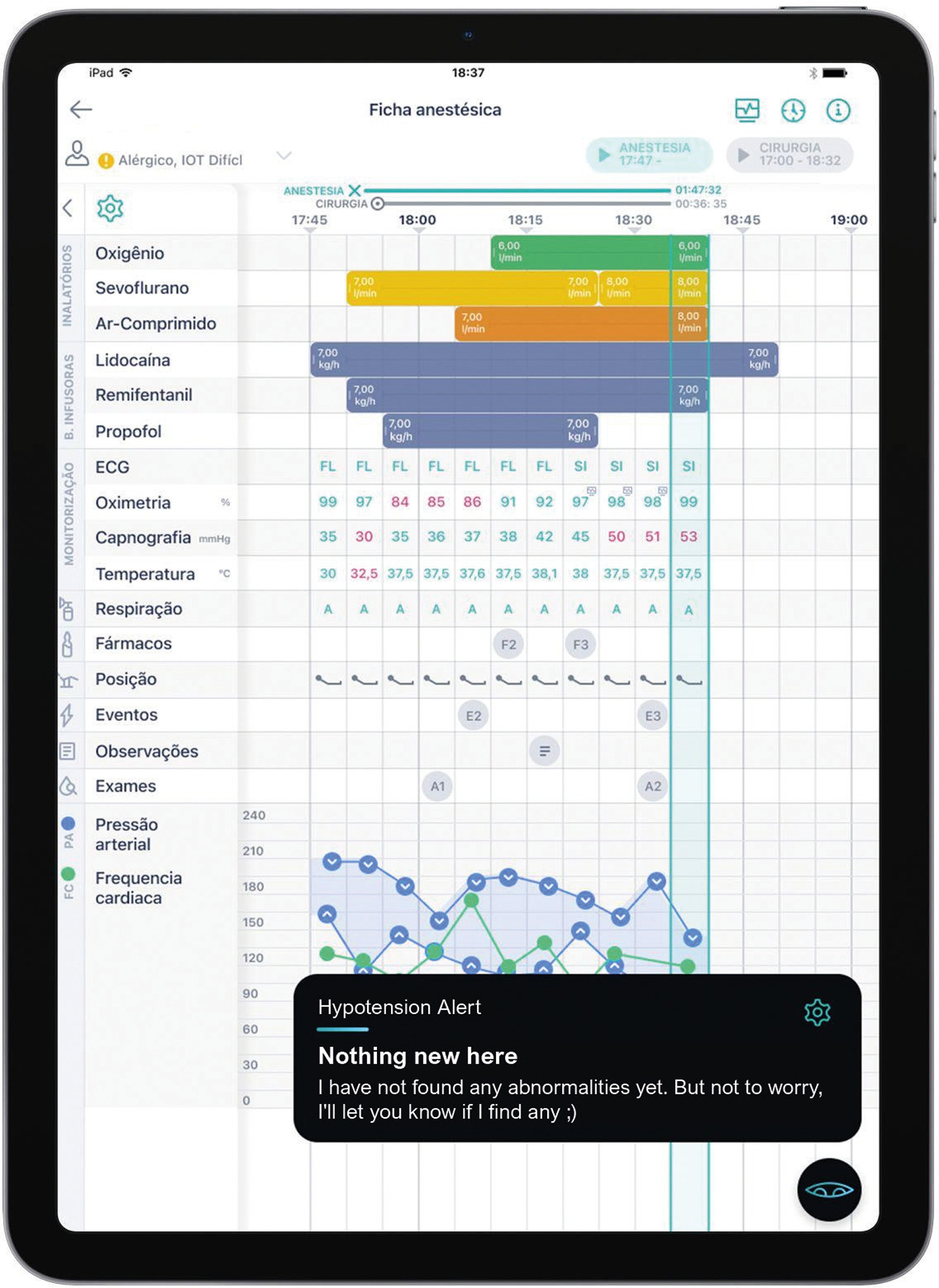
Artificial Intelligence as a Tool to Support Decision-Making in the Management of Intraoperative Hypotension

Giorgio Pretto et al. Diogenes de Oliveira Silva Victor Hugo de Freitas Morales

Abstract

Introduction

Intraoperative hypotension (IOH) is a frequent complication associated with adverse cardiovascular, cerebral, and renal outcomes, with increased mortality. Recent evidence indicates that cumulative exposure time to hypotension is a significant factor, related to both the duration and severity of hypotensive episodes. The Hypotension Prediction Index (HPI) algorithm, with active alerts, showed that hypotension periods can be significantly reduced.

Objectives

To describe an artificial intelligence (AI) algorithm for hypotension prediction integrated into real-time anesthesia record-keeping software and Clinical Decision Support Systems (CDSS) that can warn anesthesiologists about the possibility of the onset of hypotension up to 20 minutes in advance.

Methods

This prediction tool incorporates four machine learning classifier models developed using the XGBoost, a supervised learning library that works with decision trees with gradient boosting. These models were trained, validated, and tested based on a database of approximately 0.5 million anesthesia records, using real world data.

Results

Accuracy ranged from 84.92% to 89.07%, and sensitivity ranged from 82.15% to 90.86%, with the best results found in five-minute predictions and the worst in twenty minute predictions. The algorithm was tested in all types of surgical procedures but only using adult data. Separate analyses were performed on small, medium, and large procedures of different surgical specialties with similar results.

Conclusions

The present study demonstrated the use of an AI algorithm integrated into anesthesia record-keeping software, showing a high accuracy for hypotension prediction. This algorithm is available for all types of anesthesia care in adult procedures.
  • Anesthesia
  • Artificial Intelligence
  • Clinical Decision Support Systems
  • Hypotension
  • Patient Outcome Assessment
Read Full Article
Creative Commons Attribution (CC BY) Creative Commons license
28/02/2025 DOI: 10.36660/ijcs.20240221 Views 1
ABC
Editorial

What is the Real Clinical Significance of Carotid Sinus Hypersensitivity in Clinical Practice? A Dilemma Still Waiting for Answers

Tan Chen Wu

Carotid sinus hypersensitivity (CSH) is defined by pause ≥ 3 seconds (sinus or atrioventricular block) and/or systolic blood pressure drop ≥ 50mmHg during carotid sinus massage (CSM). The prevalence of CSH varies according to the method and population evaluated in up to 68% of elderly patients with syncope and 35% of asymptomatic individuals over 65 years of age. Therefore, the cause-effect relationship between carotid sinus hypersensitivity and syncope should always be questioned, and may only be a casual finding and not necessarily the carotid sinus syndrome (CSS), one of the causes of syncope seen mainly in elderly patients.

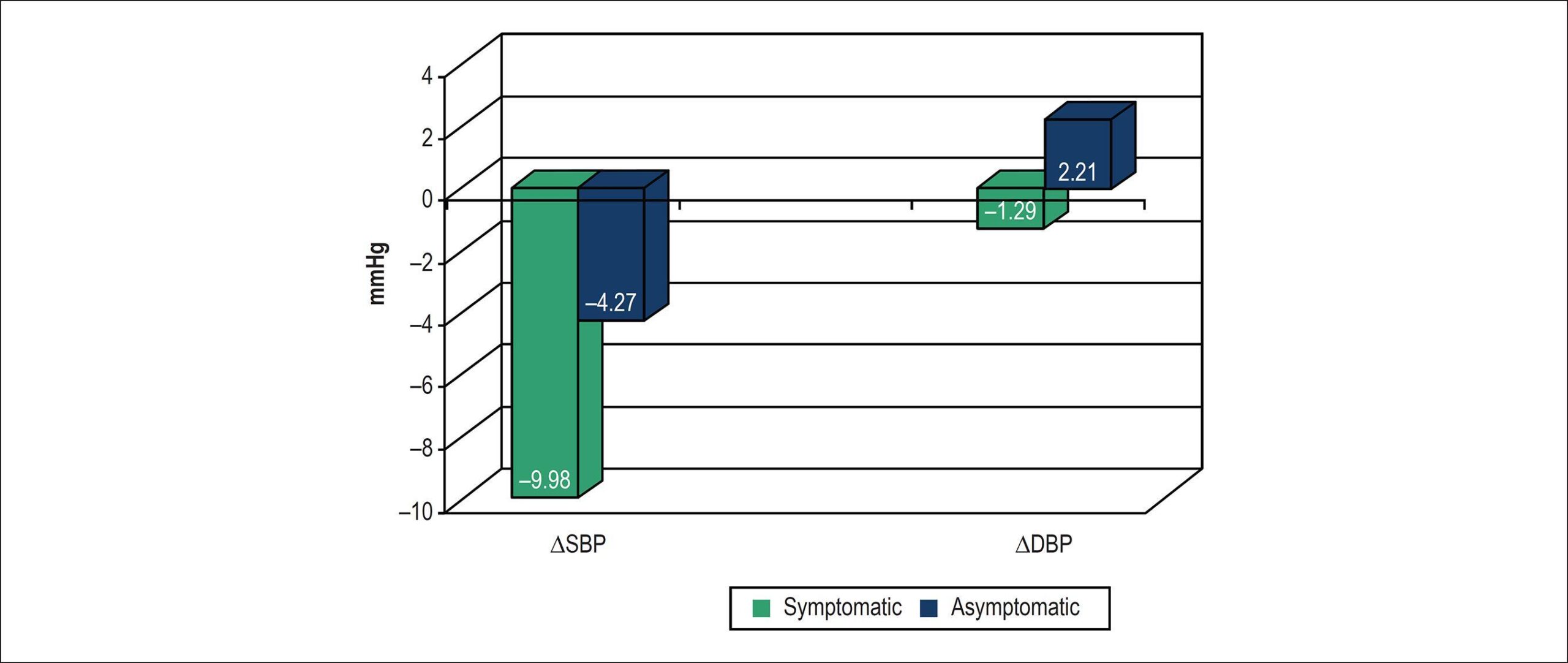
The clinical relevance of CSH obtained with CSM was questioned in a study recently published by Wu et al. The authors compared the response to CSM between 99 patients with syncope to clarify and 66 asymptomatic patients and found similar rates of CSH between the two groups, with cardioinhibitory response in 24.2 and 25.8% and vasodepressor response in 8.1 and 13.6%, in symptomatic and asymptomatic patients respectively (p = 0.466). Therefore, CSH may be a nonspecific response in the evaluation of syncope in these patients with dubious clinical significance, especially in the elderly population with multiple comorbidities, often with the possibility of varying etiologies.

[…]

  • Aged
  • Cardiac Pacing, Artificial
  • Carotid Sinus Massage/physiopathology
  • Hypotension
  • Mortality
  • Syncope
Read Full Article
Creative Commons Attribution (CC BY) Creative Commons license
20/03/2020 DOI: 10.36660/abc.20200005
Figure 1
ABC
Original Article

Carotid Sinus Massage in Syncope Evaluation: A Nonspecific and Dubious Diagnostic Method

Tan Chen Wu et al. Denise T. Hachul Francisco Carlos da Costa Darrieux Maurício I. Scanavacca

Abstract

Background:

Carotid sinus hypersensitivity (CSH) is a frequent finding in the evaluation of syncope. However, its significance in the clinical setting is still dubious. A new criterion was proposed by Solari et al. with a symptomatic systolic blood pressure (SBP) cut-off value of ≤ 85 mmHg to refine the vasodepressor (VD) response diagnosis.

Objective:

To determine and compare the response to carotid sinus massage (CSM) in patients with and without syncope according to standard and proposed criteria.

Methods:

CSM was performed in 99 patients with and 66 patients without syncope. CSH was defined as cardioinhibitory (CI) for asystole ≥ 3 seconds, or as VD for SBP decrease ≥ 50 mmHg.

Results:

No differences in the hemodynamic responses were observed during CSM between the groups, with 24.2% and 25.8% CI, and 8.1% and 13.6% VD in the symptomatic and asymptomatic groups, respectively (p = 0.466). A p value 2.5 seconds, regardless of the pattern of response or the presence of previous syncope.

Conclusion:

The response to CSM in patients with and without syncope was similar; therefore, CSH may be an unspecific condition. Clinical correlation and other methods of evaluation, such as long-lasting ECG monitoring, may be necessary to confirm CSH as the cause of syncope.

  • Accidental Falls
  • Aged
  • Carotid Sinus / physiopathology
  • Hypotension
  • Syncope
Read Full Article
Creative Commons Attribution (CC BY) Creative Commons license
01/07/2018 DOI: 10.5935/abc.20180114
Figure 1
ABC
Image

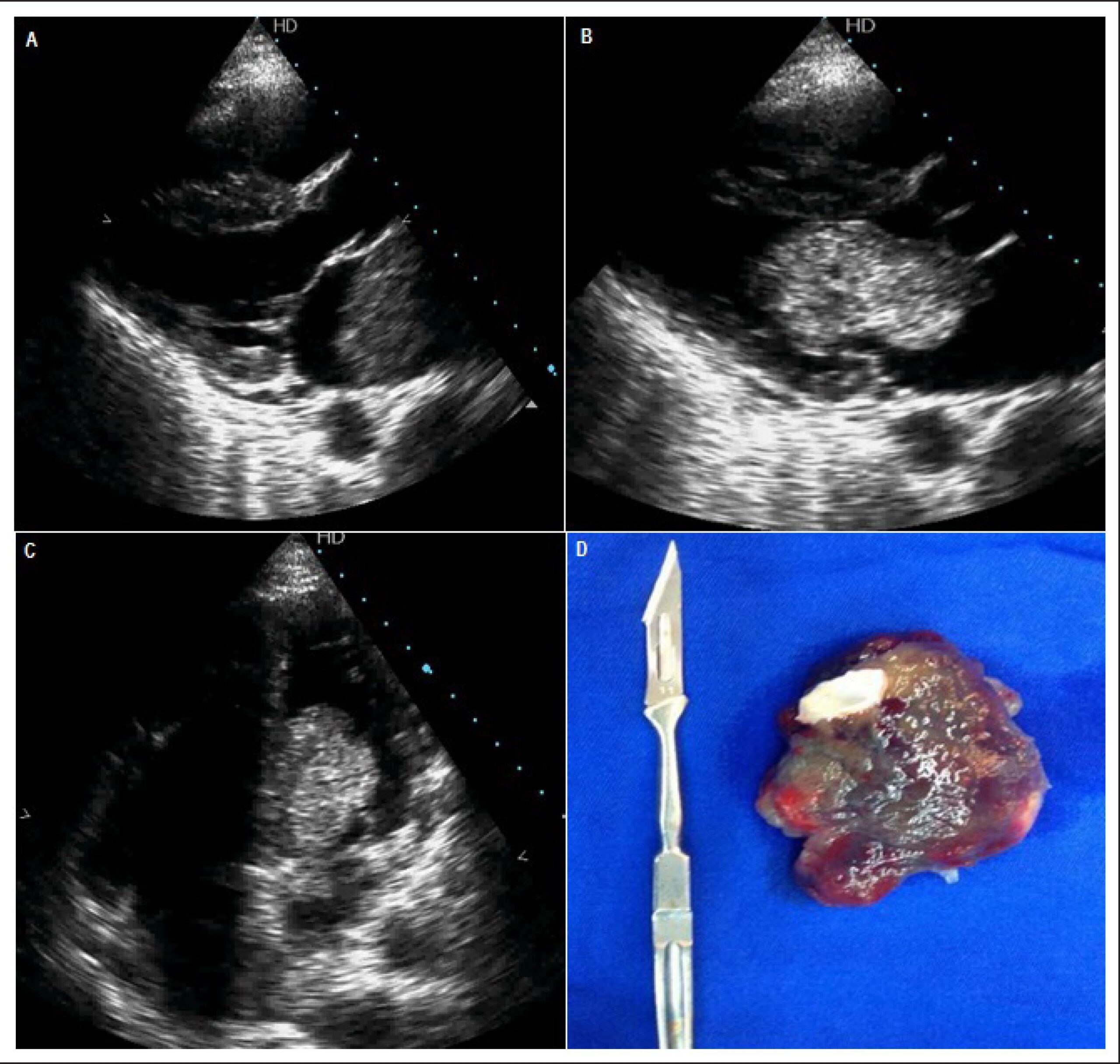
Patient with Atrial Myxoma and Signs of Obstruction of the Left Ventricular Outflow Tract

Antonio Fernando Diniz Freire et al. Alexandre Anderson de Sousa Soares Tatiana de Carvalho Andreucci Torres Leal Mucio Tavares de Oliveira Junior Alexandre de Matos Soeiro

Female patient, 45 years-old, reported dyspnea on routine efforts with 6 months of evolution with dry cough. Previously healthy she refused to take regular medication. According to the physical examination, she had a heart rate of 105 bpm, blood pressure of 90x60mmHg, respiratory frequency 30 incursions per minute, arterial saturation of 88%, slow capillary filling time, rhythmic sounds, diastolic rumble murmur (+++/6) in mitral focus and bibasal pulmonary crepitations. Chest X-Ray showed a discreet widening of the mediastinum. Chest CT was performed to evaluate the mediastinum and pulmonary parenchyma and an intracardiac mass was found. It evolved with hypotension and worsening of pulmonary congestion.

Emergency echocardiogram showed a moving rounded hyperechoic image in the left atrium, measuring 66x36mm with a pedicle adhered to the membrane of the oval fossa dislocating to the left ventricle (LV) during systole causing hemodynamic repercussion (signs of LV outflow tract obstruction). The patient underwent emergency surgery. Retraction of the tumor revealed a cleft in the anterior cusp of the mitral valve and it was closed. In the immediate postoperative, the patient developed cardiogenic shock refractory to vasoactive drugs; an intra-aortic balloon was implanted, but the patient died 30 hours later. Anatomopathological confirmed the diagnosis of a myxoma: 7.5×4.6×3.4cm. In conclusion, the atrial myxoma with obstruction of the outflow tract of the LV is rare, its clinical manifestations can mislead the evaluator, clinical suspicion and the correct use of propaedeutic are essential for early diagnosis and successful clinical treatment.

[…]

  • Heart Atria/abnormalities
  • Hypotension
  • Myxoma/surgery
  • Tomography
Read Full Article
Creative Commons Attribution (CC BY) Creative Commons license
01/03/2017 DOI: 10.5935/abc.20170007
Figure 1
IJCS
Original Article

Green Tea Attenuates Hypotension Induced by Physical Exercise: A Randomized, Placebo Controlled Study

Manoel Miranda Neto et al. Raquel Suelen Brito da Silva Taís Feitosa da Silva Fabiano Ferreira de Lima Alexandre Sérgio Silva

Abstract

Background:

Studies have shown that chronic administration of green tea decreases blood pressure (BP) at rest, while a single exercise session also promotes reduction of BP.

Objective:

To investigate whether if a single dose of green tea prior to aerobic exercise session improves post-exercise hypotension (PEH).

Methods:

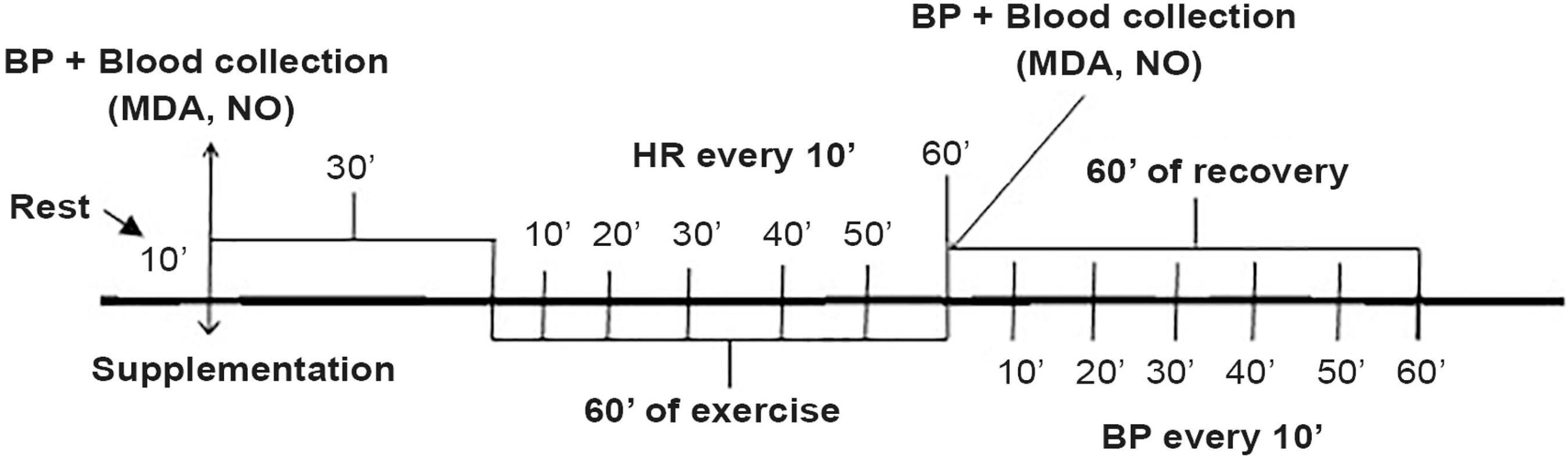
Randomized, double-blind, placebo controlled study. Fifteen hypertensive patients (53 ± 3.3 years) participated in two study sessions: green tea+exercise (GTE) and placebo+exercise (PLE). Thirty minutes after ingesting 2 g of green tea or placebo, they performed 60 minutes of treadmill walking at 60 to 85% of maximum heart rate. BP was measured at rest and at every 10 minutes after exercise for 60 minutes. Blood samples were taken before ingestion of green tea or placebo and immediately after exercise to determine malondialdehyde (MDA) and nitrite (NO) concentrations.

Results:

On PLE day, systolic PEH was detected at all post-exercise time points (BP reduction by 6.5-11.8 mmHg), whereas on GTE day, PEH was found only at 20 and 40 minutes post-exercise (BP reduction by 5.9 and 5.8 mmHg, respectively). BP reduction was significantly higher in PLE at 10, 20 and 30 minutes post-exercise compared with GTE. In addition, GTE resulted in hypertensive diastolic response, while on PLE day, diastolic PEH was seen only at 20 minutes post-exercise. No changes in MDA or NO concentrations in response to exercise were observed.

Conclusion:

Green tea supplementation prior to an aerobic exercise session attenuated systolic PEH and induced diastolic hypertensive response to aerobic exercise in hypertensive patients.

  • Antioxidants
  • Camellia sinensis / drug effects
  • Exercise
  • Hypotension
  • Oxidative Stress
Read Full Article
Creative Commons Attribution (CC BY) Creative Commons license
01/01/2017 DOI: 10.5935/2359-4802.20170062
Figure 1
ABC
Case Report

Profound Sustained Hypotension Following Renal Denervation: A Dramatic Success?

Ganiga Srinivasaiah Sridhar et al. Timothy Watson Chee Kok Han Wan Azman Wan Ahmad

Introduction

A 67-year-old woman with drug-refractory essential hypertension was admitted for renal sympathetic denervation (RDN). The secondary causes of hypertension were fully investigated in this patient. A 24-h ambulatory blood pressure (BP) monitor documented a mean daytime BP of 172/101 mmHg, a mean nighttime BP of 151/84 mmHg, and an overall mean BP of 167/97 mmHg despite compliance with metoprolol (50 mg twice daily), amlodipine (10 mg once daily), lisinopril (20 mg once daily), prazosin (2 mg thrice daily), and hydrochlorothiazide (50 mg once daily).

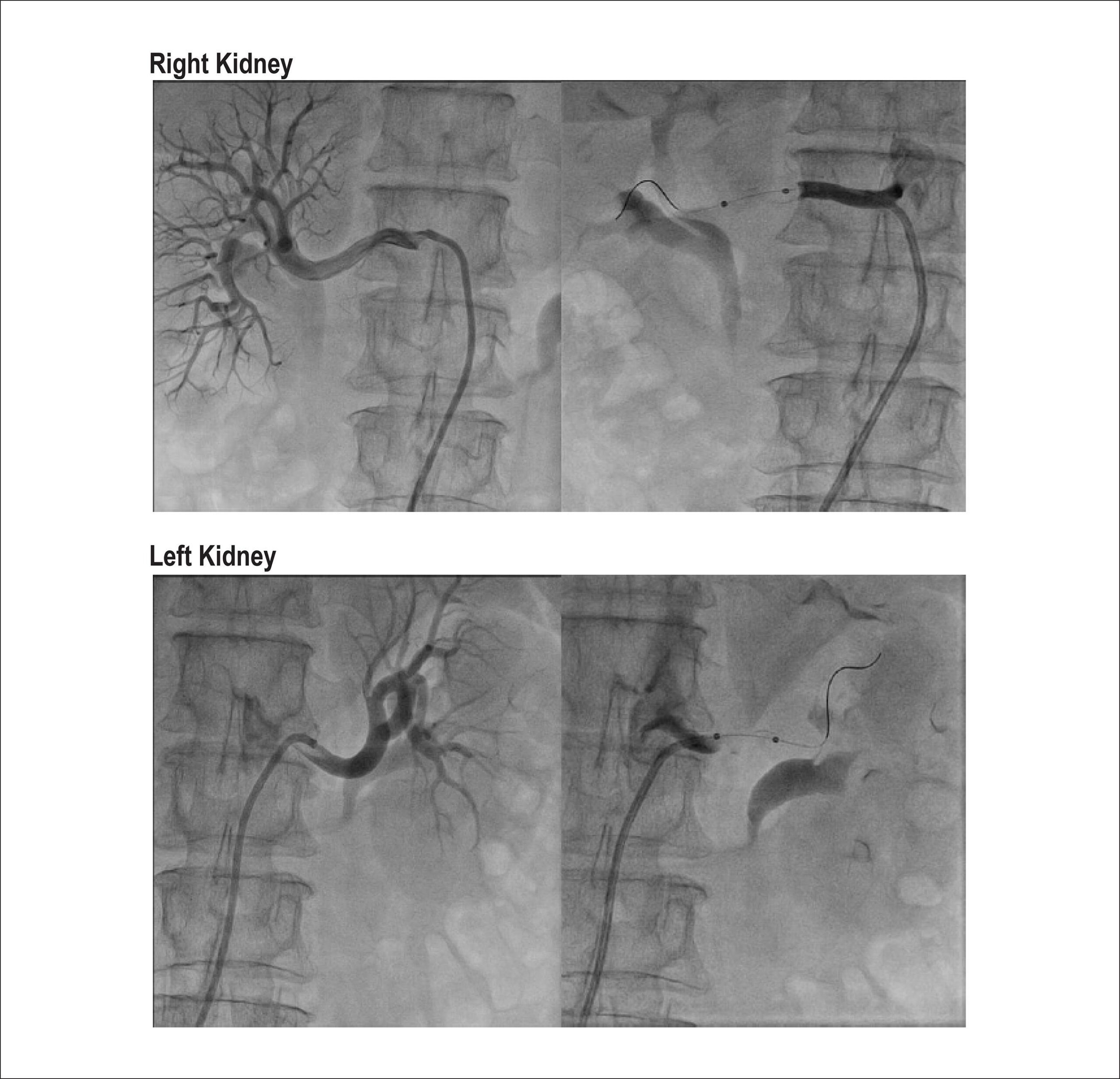
The patient was fasted for 4 h. Her usual antihypertensive drug therapy was continued. After the administration of 5,000 international units of heparin and 100 μg of fentanyl, a 7-F Renal Double Curve guide catheter (Cordis Corporation, Fremont, CA ,USA) was inserted into the right renal artery (no accessory vessel). A 0.014-in Runthrough floppy guide wire (Terumo Medical Corporation, Somerset, NJ, USA) was advanced into place. A 6-mm ONESHOTTM (Covidien, Mansfield, MA, USA) irrigated RDN balloon was advanced into place (), and a single ablation was performed. The procedure was then repeated on the other side. The patient remained hemodynamically stable throughout and at the completion of the procedure with a BP of 150/80 mmHg. Hemostasis was achieved with the Perclose ProGlide Suture-Mediated Closure System (Abbott Vascular, Santa Clara, CA, USA), and the patient was then returned to our ward for monitoring.

[…]

  • Hypertension
  • Hypotension
  • Management
  • Medication Therapy
  • Sympatectomy
Read Full Article
Creative Commons Attribution (CC BY) Creative Commons license
01/08/2015 DOI: 10.5935/abc.20150100
A review on post-exercise hypotension in hypertensive individuals
ABC
Atualização

A review on post-exercise hypotension in hypertensive individuals

Paulo Gomes Anunciação et al. Marcos Doederlein Polito

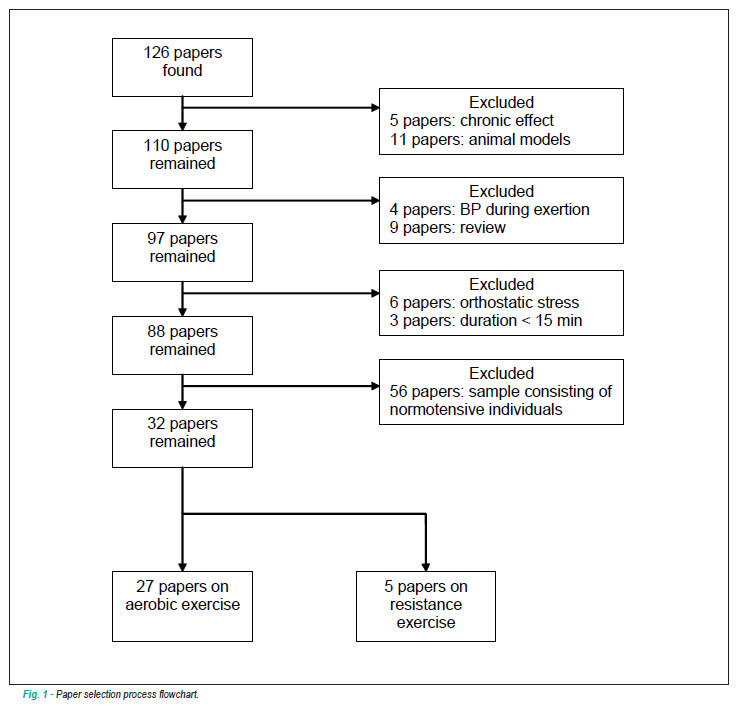
Post-exercise hypotension (PEH) may follow a session of physical exercises. This effect has high clinical relevance for hypertensive individuals. Although there are several studies on the subject, an analysis is still lacking on a state-of-art approach considering different types of exercises. Using a review of literature, the aim of this paper was to verify the relationship between aerobic exercise and resistance exercise in PEH in hypertensive people. For the purpose of this study, Scielo and Medlinedatabases were surveyed, and the main inclusion criteria were studies on the subject in English language and a sample of hypertensive adults. One hundred and twenty-six studies were found. However, only 32 papers, 5 of which on resistance exercise and 27 on aerobic exercise were used for this study. Although the studies surveyed used different prescription models for resistance exercise, PEH was observed mainly in the laboratory setting. After aerobic exercise, it was noted that PEH occurred for longer periods. However, there are differences of opinion as to the best intensity and duration of the exercise to be prescribed. Therefore, in hypertensive individuals declines in arterial pressure following aerobic exercise are apparently greater than those observed with resistance exercise. Nevertheless, in order to achieve sounder conclusions, further studies on ambulatory blood pressure monitoring should be conducted.

  • Exercise
  • Hypertension
  • Hypotension
Read Full Article
Creative Commons Attribution (CC BY) Creative Commons license
04/03/2011 DOI: 10.1590/S0066-782X2011005000025
Effects of rest interval between exercise sets on blood pressure after resistance exercises
ABC
Artigo Original

Effects of rest interval between exercise sets on blood pressure after resistance exercises

João Veloso et al. Marcos D. Polito Tiago Riera Rodrigo Celes … José Carlos Vidal Martim Bottaro

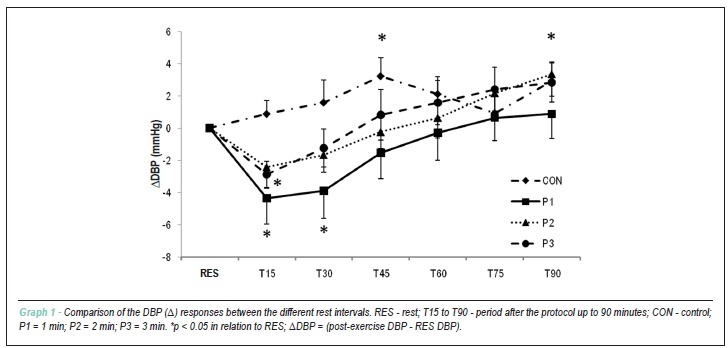
BACKGROUND: Although studies have demonstrated the occurrence of postexercise hypotension (PEH) in resistance exercises, there is still no consensus on an ideal protocol. OBJECTIVE: To evaluate the effects of different rest intervals (RI) between resistance exercise (RE) sets on postexercise blood pressure (BP). METHODS: Sixteen sedentary non-hypertensive young men performed three RE protocols with RI of 1 (P1), 2 (2) and 3 (P3) minutes between the sets, as well as a control protocol (CON), in a counterbalanced manner. The RE protocols consisted of three sets of eight repetitions in six exercises. The loads used in the 1st, 2nd, and 3rd exercise sets were 80%, 70% and 60% of one repetition maximum (1RM), respectively. Measurements were taken at rest (RES), 15 (T15), 30 (T30), 45 (T45), 60 (T60), 75 (T75), and 90 (T90) minutes after the session. Factorial analysis of variance (Anova) was carried out, followed by post hoc LSD. RESULTS: No significant change was found in systolic BP after the protocols. A significant increase in diastolic BP was verified after CON at timepoints T45 and T90. Significant reduction in diastolic BP occurred after P1 and P3, with duration of 30 and 15 minutes, respectively. No significant differences were found in the systolic and diastolic BP responses between the protocols with different RI. CONCLUSION: RI does not seem to influence systolic BP reduction after an RE session. However, reductions in diastolic BP (P1 and P3) lasting up to 30 minutes were observed.

  • Cardiovascular Physiological Phenomena
  • Exercise
  • Hypotension
Read Full Article
Creative Commons Attribution (CC BY) Creative Commons license
26/03/2010 DOI: 10.1590/S0066-782X2010005000019 Views 1

How to cite this article

EndNote RIS

Electronic Document Format (Vancouver)

Pretto G, Silva DO, Morales VHF. Artificial Intelligence as a Tool to Support Decision-Making in the Management of Intraoperative Hypotension. International Journal of Cardiovascular Sciences 2025;38:e20240221.

Electronic Document Format (ABNT)

Pretto, Giorgio; Silva, Diogenes de Oliveira; Morales, Victor Hugo de Freitas. Artificial Intelligence as a Tool to Support Decision-Making in the Management of Intraoperative Hypotension. International Journal of Cardiovascular Sciences, v. 38, e20240221, Feb. 2025.

Electronic Document Format (APA)

Pretto, G., Silva, D. O., & Morales, V. H. F. (2025). Artificial Intelligence as a Tool to Support Decision-Making in the Management of Intraoperative Hypotension. International Journal of Cardiovascular Sciences, 38, e20240221.

Electronic Document Format (ISO)

Pretto, Giorgio and Silva, Diogenes de Oliveira and Morales, Victor Hugo de Freitas. Artificial Intelligence as a Tool to Support Decision-Making in the Management of Intraoperative Hypotension. International Journal of Cardiovascular Sciences [online]. 2025, vol. 38, [cited 2026-10-14], e20240221. Available from: <https://journals.cardiol.br/en/article/artificial-intelligence-as-a-tool-to-support-decision-making-in-the-management-of-intraoperative-hypotension/>. ISSN 2359-4802

EndNote RIS

Electronic Document Format (Vancouver)

Wu TC. What is the Real Clinical Significance of Carotid Sinus Hypersensitivity in Clinical Practice? A Dilemma Still Waiting for Answers. Arquivos Brasileiros de Cardiologia 2020;114(2):254-5.

Electronic Document Format (ABNT)

Wu, Tan Chen. What is the Real Clinical Significance of Carotid Sinus Hypersensitivity in Clinical Practice? A Dilemma Still Waiting for Answers. Arquivos Brasileiros de Cardiologia, v. 114, n. 2, p. 254-255, Mar. 2020.

Electronic Document Format (APA)

Wu, T. C. (2020). What is the Real Clinical Significance of Carotid Sinus Hypersensitivity in Clinical Practice? A Dilemma Still Waiting for Answers. Arquivos Brasileiros de Cardiologia, 114(2), 254-255.

Electronic Document Format (ISO)

Wu, Tan Chen. What is the Real Clinical Significance of Carotid Sinus Hypersensitivity in Clinical Practice? A Dilemma Still Waiting for Answers. Arquivos Brasileiros de Cardiologia [online]. 2020, vol. 114, n. 2, [cited 2026-10-14], pp. 254-255. Available from: <https://journals.cardiol.br/en/article/what-is-the-real-clinical-significance-of-carotid-sinus-hypersensitivity-in-clinical-practice-a-dilemma-still-waiting-for-answers/>. ISSN 0066-782X

EndNote RIS

Electronic Document Format (Vancouver)

Wu TC, Hachul DT, Darrieux FCC, Scanavacca MI. Carotid Sinus Massage in Syncope Evaluation: A Nonspecific and Dubious Diagnostic Method. Arquivos Brasileiros de Cardiologia 2018;111(1):84-91.

Electronic Document Format (ABNT)

Wu, Tan Chen; Hachul, Denise T.; Darrieux, Francisco Carlos da Costa; Scanavacca, Maurício I.. Carotid Sinus Massage in Syncope Evaluation: A Nonspecific and Dubious Diagnostic Method. Arquivos Brasileiros de Cardiologia, v. 111, n. 1, p. 84-91, Jun. 2018.

Electronic Document Format (APA)

Wu, T. C., Hachul, D. T., Darrieux, F. C. C., & Scanavacca, M. I. (2018). Carotid Sinus Massage in Syncope Evaluation: A Nonspecific and Dubious Diagnostic Method. Arquivos Brasileiros de Cardiologia, 111(1), 84-91.

Electronic Document Format (ISO)

Wu, Tan Chen and Hachul, Denise T. and Darrieux, Francisco Carlos da Costa and Scanavacca, Maurício I.. Carotid Sinus Massage in Syncope Evaluation: A Nonspecific and Dubious Diagnostic Method. Arquivos Brasileiros de Cardiologia [online]. 2018, vol. 111, n. 1, [cited 2026-10-14], pp. 84-91. Available from: <https://journals.cardiol.br/en/article/carotid-sinus-massage-in-syncope-evaluation-a-nonspecific-and-dubious-diagnostic-method-2/>. ISSN 0066-782X

EndNote RIS

Electronic Document Format (Vancouver)

Freire AFD, Soares AAS, Leal TCAT, Oliveira Junior MT, Soeiro AM. Patient with Atrial Myxoma and Signs of Obstruction of the Left Ventricular Outflow Tract. Arquivos Brasileiros de Cardiologia 2017;108(3):281-2.

Electronic Document Format (ABNT)

Freire, Antonio Fernando Diniz; Soares, Alexandre Anderson de Sousa; Leal, Tatiana de Carvalho Andreucci Torres; Oliveira Junior, Mucio Tavares de; Soeiro, Alexandre de Matos. Patient with Atrial Myxoma and Signs of Obstruction of the Left Ventricular Outflow Tract. Arquivos Brasileiros de Cardiologia, v. 108, n. 3, p. 281-282, Feb. 2017.

Electronic Document Format (APA)

Freire, A. F. D., Soares, A. A. S., Leal, T. C. A. T., Oliveira Junior, M. T. , & Soeiro, A. M. (2017). Patient with Atrial Myxoma and Signs of Obstruction of the Left Ventricular Outflow Tract. Arquivos Brasileiros de Cardiologia, 108(3), 281-282.

Electronic Document Format (ISO)

Freire, Antonio Fernando Diniz and Soares, Alexandre Anderson de Sousa and Leal, Tatiana de Carvalho Andreucci Torres and Oliveira Junior, Mucio Tavares de and Soeiro, Alexandre de Matos. Patient with Atrial Myxoma and Signs of Obstruction of the Left Ventricular Outflow Tract. Arquivos Brasileiros de Cardiologia [online]. 2017, vol. 108, n. 3, [cited 2026-10-14], pp. 281-282. Available from: <https://journals.cardiol.br/en/article/patient-with-atrial-myxoma-and-signs-of-obstruction-of-the-left-ventricular-outflow-tract/>. ISSN 0066-782X

EndNote RIS

Electronic Document Format (Vancouver)

Miranda Neto M, Silva RSB, Silva TF, Lima FF, Silva AS. Green Tea Attenuates Hypotension Induced by Physical Exercise: A Randomized, Placebo Controlled Study. International Journal of Cardiovascular Sciences 2017;30(4):325-33.

Electronic Document Format (ABNT)

Miranda Neto, Manoel; Silva, Raquel Suelen Brito da; Silva, Taís Feitosa da; Lima, Fabiano Ferreira de; Silva, Alexandre Sérgio. Green Tea Attenuates Hypotension Induced by Physical Exercise: A Randomized, Placebo Controlled Study. International Journal of Cardiovascular Sciences, v. 30, n. 4, p. 325-333, Dec. 2016.

Electronic Document Format (APA)

Miranda Neto, M., Silva, R. S. B. , Silva, T. F. , Lima, F. F. , & Silva, A. S. (2017). Green Tea Attenuates Hypotension Induced by Physical Exercise: A Randomized, Placebo Controlled Study. International Journal of Cardiovascular Sciences, 30(4), 325-333.

Electronic Document Format (ISO)

Miranda Neto, Manoel and Silva, Raquel Suelen Brito da and Silva, Taís Feitosa da and Lima, Fabiano Ferreira de and Silva, Alexandre Sérgio. Green Tea Attenuates Hypotension Induced by Physical Exercise: A Randomized, Placebo Controlled Study. International Journal of Cardiovascular Sciences [online]. 2017, vol. 30, n. 4, [cited 2026-10-14], pp. 325-333. Available from: <https://journals.cardiol.br/en/article/green-tea-attenuates-hypotension-induced-by-physical-exercise-a-randomized-placebo-controlled-study/>. ISSN 2359-4802

EndNote RIS

Electronic Document Format (Vancouver)

Sridhar GS, Watson T, Han CK, Ahmad WAW. Profound Sustained Hypotension Following Renal Denervation: A Dramatic Success?. Arquivos Brasileiros de Cardiologia 2015;105(2):202-4.

Electronic Document Format (ABNT)

Sridhar, Ganiga Srinivasaiah; Watson, Timothy; Han, Chee Kok; Ahmad, Wan Azman Wan. Profound Sustained Hypotension Following Renal Denervation: A Dramatic Success?. Arquivos Brasileiros de Cardiologia, v. 105, n. 2, p. 202-204, Jul. 2015.

Electronic Document Format (APA)

Sridhar, G. S., Watson, T., Han, C. K., & Ahmad, W. A. W. (2015). Profound Sustained Hypotension Following Renal Denervation: A Dramatic Success?. Arquivos Brasileiros de Cardiologia, 105(2), 202-204.

Electronic Document Format (ISO)

Sridhar, Ganiga Srinivasaiah and Watson, Timothy and Han, Chee Kok and Ahmad, Wan Azman Wan. Profound Sustained Hypotension Following Renal Denervation: A Dramatic Success?. Arquivos Brasileiros de Cardiologia [online]. 2015, vol. 105, n. 2, [cited 2026-10-14], pp. 202-204. Available from: <https://journals.cardiol.br/en/article/profound-sustained-hypotension-following-renal-denervation-a-dramatic-success/>. ISSN 0066-782X

EndNote RIS

Electronic Document Format (Vancouver)

Anunciação PG, Polito MD. A review on post-exercise hypotension in hypertensive individuals. Arquivos Brasileiros de Cardiologia 2011;96(5):e100-9.

Electronic Document Format (ABNT)

Anunciação, Paulo Gomes; Polito, Marcos Doederlein. A review on post-exercise hypotension in hypertensive individuals. Arquivos Brasileiros de Cardiologia, v. 96, n. 5, p. e100-e109, Mar. 2011.

Electronic Document Format (APA)

Anunciação, P. G., & Polito, M. D. (2011). A review on post-exercise hypotension in hypertensive individuals. Arquivos Brasileiros de Cardiologia, 96(5), e100-e109.

Electronic Document Format (ISO)

Anunciação, Paulo Gomes and Polito, Marcos Doederlein. A review on post-exercise hypotension in hypertensive individuals. Arquivos Brasileiros de Cardiologia [online]. 2011, vol. 96, n. 5, [cited 2026-10-14], pp. e100-e109. Available from: <https://journals.cardiol.br/en/article/a-review-on-post-exercise-hypotension-in-hypertensive-individuals/>. ISSN 0066-782X

EndNote RIS

Electronic Document Format (Vancouver)

Veloso J, Polito MD, Riera T, Celes R, Vidal JC, Bottaro M. Effects of rest interval between exercise sets on blood pressure after resistance exercises. Arquivos Brasileiros de Cardiologia 2010;94(4):512-8.

Electronic Document Format (ABNT)

Veloso, João; Polito, Marcos D.; Riera, Tiago; Celes, Rodrigo; Vidal, José Carlos; Bottaro, Martim. Effects of rest interval between exercise sets on blood pressure after resistance exercises. Arquivos Brasileiros de Cardiologia, v. 94, n. 4, p. 512-518, Mar. 2010.

Electronic Document Format (APA)

Veloso, J., Polito, M. D., Riera, T., Celes, R., Vidal, J. C., & Bottaro, M. (2010). Effects of rest interval between exercise sets on blood pressure after resistance exercises. Arquivos Brasileiros de Cardiologia, 94(4), 512-518.

Electronic Document Format (ISO)

Veloso, João and Polito, Marcos D. and Riera, Tiago and Celes, Rodrigo and Vidal, José Carlos and Bottaro, Martim. Effects of rest interval between exercise sets on blood pressure after resistance exercises. Arquivos Brasileiros de Cardiologia [online]. 2010, vol. 94, n. 4, [cited 2026-10-14], pp. 512-518. Available from: <https://journals.cardiol.br/en/article/effects-of-rest-interval-between-exercise-sets-on-blood-pressure-after-resistance-exercises/>. ISSN 0066-782X

  • About ABC Family
  • Internal Regulation
  • Editorial Board
  • Brazilian Society of Cardiology (SBC)

Issues

SBC Guidelines

  • Videos
  • Podcasts
  • News