ABC Family Arquivos Brasileiros de Cardiologia International Journal of Cardiovascular Sciences ABC Heart Failure & Cardiomyopathy ABC Imagem Cardiovascular
Português English
ABC Family
Português English
  • About
    • About ABC Family
    • Internal Regulation
    • Editorial Board
    • Brazilian Society of Cardiology (SBC)
  • Issues
  • SBC Guidelines
  • Content
    • Videos
    • Podcasts
    • News
  • About
    • About ABC Family
    • Internal Regulation
    • Editorial Board
    • Brazilian Society of Cardiology (SBC)
  • Issues
  • SBC Guidelines
  • Content
    • Videos
    • Podcasts
    • News

ABC Family

  • ABC Family
  • Arquivos Brasileiros de Cardiologia
  • International Journal of Cardiovascular Sciences
  • ABC Heart Failure & Cardiomyopathy
  • ABC Imagem Cardiovascular
Search in

No content found.

Journals
Ordering
Article types
Others

  1. Home
  2. Keyword: Mortality and Morbidity
IJCS
Editorial

The Role of Pharmacists in Antihypertensive Pharmacotherapy

Christianne Bretas Vieira Scaramello et al. Flavia Valeria dos Santos Almeida

Hypertension encompasses a preventable risk factor associated with a significant global burden of cardiovascular disease (CVD) and premature death. Its prevalence is rising worldwide due to population aging, unbalanced diets, and sedentary, especially in low- and middle-income countries. Prevalence data in Brazil vary according to the database. However, about 30% of adults present blood pressure of 140/90 mmHg or more, with CVD representing 22.6% premature passing. This link between hypertension and CVDs-related deaths highlights the relevance of blood pressure control.

In 2021, the World Health Organization elaborated evidence-based guidance for the pharmacological treatment of nonpregnant adults with an accurate diagnosis of hypertension who have already received counseling for lifestyle modification. It is crucial to set blood pressure threshold to pharmacological therapy beginning and treatment targets. In addition, the determination of follow-up visits to adjust monotherapy or dual therapy embracing single or dual pill combination medications is mandatory. Comorbidities, unwanted effects, cost, and acceptability must also be evaluated. In 2020, the Brazilian Society of Cardiology also published decision and therapeutic goals for hypertension management.

[…]
  • Epidemiology
  • Hypertension
  • medication adherence
  • Mortality and Morbidity
  • Patient Care Management
  • Risk Factors
  • Urban Area
Read Full Article
Creative Commons Attribution (CC BY) Creative Commons license
04/09/2022 DOI: 10.36660/ijcs.20220065 Views 3
Figura 1
IJCS
Original Article

Factors Predicting Heart Failure in Children Admitted to a Pediatric Emergency Ward in a Developing Country

Uchenna Onubogu

Abstract

Background

Heart failure is an important cause of morbidity and mortality in children.

Objective

To determine the clinical characteristics of children with acute heart failure syndrome in the emergency ward of River state university teaching hospital, Nigeria and identify factors associated with poor outcomes.

Methods

This was an 18month retrospective review of the acute heart failure register. Poor outcome measures were defined as the persistence of heart failure after 4 days on admission or death.

Results

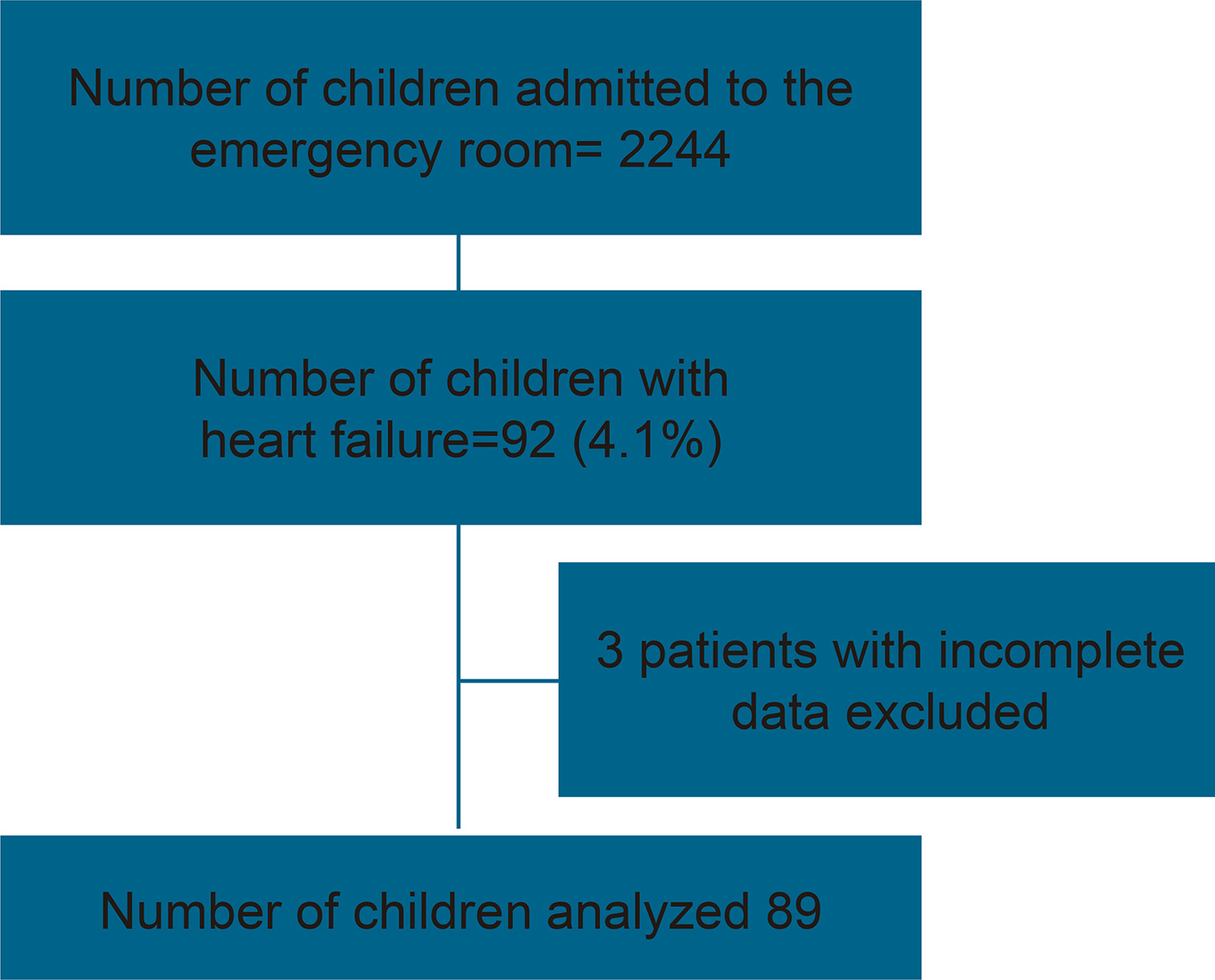
Ninety-two (4.1%) of 2,244 children admitted were in heart failure, Non-cardiac disorders [bronchopneumonia 32(36%), sepsis 21(24%), severe malaria 10(11%), sickle cell anaemia 8(9%) and tuberculosis 3(3%)] contributed to 74(83%) while congenital heart disease(CHD) was 15(17%). Seventy-four (83%) were discharged, 10(11%) died and 4(5%) left against medical advice. The median time to resolution of heart failure was significantly 24 hours longer for malnourished children than those with normal-nutritional status, 72Vs48hrs, log rank:0.001. Those with modified Ross score of >7 and sepsis were more likely to die, OR,8.8(95% CI,1.2 to 72.5,p = 0.02) and 3.9(95% CI,1.01 to 15.2;p =0.04). Age <2yrs(OR,3.1,CI,1.2 to 8.5,p = 0.02), and CHD (OR 3.6,95% CI,1.1 to 12,P=0.02) were associated with a higher likelihood of having a poor outcome. Each unit increase in weight for age Z score of 1, decreased the odds of having a poor outcome, OR,0.77 (95% CI,0.63 to 0.95)p=0.016.

Conclusion

Heart failure in our setting is predominantly caused by non-cardiac disorders. Modified Ross score of >7 and sepsis are risk factors for mortality in children with heart failure. Int J Cardiovasc Sci. 2020; [online].ahead print, PP.0-0

  • Child
  • Critical Care Outcomes
  • Emergency Service Hospital
  • Heart Failure
  • Mortality and Morbidity
  • Pediatric Emergency
Read Full Article
Creative Commons Attribution (CC BY) Creative Commons license
06/11/2020 DOI: 10.36660/ijcs.20190212
ABC
Editorial

Atherosclerosis, Inflammation, and Genetics – And you Thought it Was Just LDL-cholesterol

Luis Henrique Wolff Gowdak

As the twentieth century unfolded, based on numerous epidemiological observations and intervention trials, cardiovascular risk factors were identified and targeted with the aim of decreasing cardiovascular disease burden worldwide. Along the centuries, changes in human eating patterns, a progressive decrease in physical activity, and a higher prevalence of obesity, all of which are contributing factors to the alarming rates of diabetes, hypertension, and hypercholesterolemia we see in our daily practice, have led us to assume that atherosclerosis-related disorders (myocardial infarction, ischemic cardiomyopathy, stroke, and peripheral artery disease) are an inevitable consequence of the evolutionary process we have to face in present times. However, due to advances in noninvasive imaging of the vascular system, atherosclerotic lesions in the aorta and coronary and carotid arteries happen to be found in mummies from ancient Egypt, whose estimated mean age at the time of death was only 45 years.

If the so-called “classical risk factors” were less prevalent in ancient times, different, non-traditional factors must have played a significant role in the development and progression of atherosclerosis. Microbial and parasitic inflammatory burdens that were likely present in ancient cultures inherently lacking modern hygiene and antimicrobials could have evoked a chronic inflammatory status. Given that patients with today’s chronic systemic inflammatory diseases, including human immunodeficiency virus infection, systemic lupus erythematosus, and rheumatoid arthritis experience early-onset atherosclerosis and coronary events, is it possible that the chronic inflammatory load secondary to infection resulted in atherosclerosis in ancient times? Moreover, atherosclerosis is a complex, multifactorial biological process, and, as such, it is also subject to gene-environment interplay; therefore, although the contribution of today’s classical risk factors to the development of atherosclerosis is inquestionable, their role in the appearance of atherosclerotic lesions in the vascular tree involves not only inflammation and activation of the immune system but also genetic factors that facilitate or oppose the formation of lipid accumulation in the arterial wall.

[…]

  • Atherosclerosis / physiopathology
  • Coronary Artery Disease / history
  • Inflammation
  • Mortality and Morbidity
  • Polymorphism, Genetic
  • Risk Factors
Read Full Article
Creative Commons Attribution (CC BY) Creative Commons license
20/03/2020 DOI: 10.36660/abc.20200038 Views 1

How to cite this article

EndNote RIS

Electronic Document Format (Vancouver)

Scaramello CBV, Almeida FVS. The Role of Pharmacists in Antihypertensive Pharmacotherapy. International Journal of Cardiovascular Sciences 2022;35(3):327-8.

Electronic Document Format (ABNT)

Scaramello, Christianne Bretas Vieira; Almeida, Flavia Valeria dos Santos. The Role of Pharmacists in Antihypertensive Pharmacotherapy. International Journal of Cardiovascular Sciences, v. 35, n. 3, p. 327-328, Nov. 2021.

Electronic Document Format (APA)

Scaramello, C. B. V., & Almeida, F. V. S. (2022). The Role of Pharmacists in Antihypertensive Pharmacotherapy. International Journal of Cardiovascular Sciences, 35(3), 327-328.

Electronic Document Format (ISO)

Scaramello, Christianne Bretas Vieira and Almeida, Flavia Valeria dos Santos. The Role of Pharmacists in Antihypertensive Pharmacotherapy. International Journal of Cardiovascular Sciences [online]. 2022, vol. 35, n. 3, [cited 2026-10-14], pp. 327-328. Available from: <https://journals.cardiol.br/en/article/the-role-of-pharmacists-in-antihypertensive-pharmacotherapy/>. ISSN 2359-4802

EndNote RIS

Electronic Document Format (Vancouver)

Onubogu U. Factors Predicting Heart Failure in Children Admitted to a Pediatric Emergency Ward in a Developing Country. International Journal of Cardiovascular Sciences 2020;33(6):673-85.

Electronic Document Format (ABNT)

Onubogu, Uchenna. Factors Predicting Heart Failure in Children Admitted to a Pediatric Emergency Ward in a Developing Country. International Journal of Cardiovascular Sciences, v. 33, n. 6, p. 673-685, Nov. 2020.

Electronic Document Format (APA)

Onubogu, U. (2020). Factors Predicting Heart Failure in Children Admitted to a Pediatric Emergency Ward in a Developing Country. International Journal of Cardiovascular Sciences, 33(6), 673-685.

Electronic Document Format (ISO)

Onubogu, Uchenna. Factors Predicting Heart Failure in Children Admitted to a Pediatric Emergency Ward in a Developing Country. International Journal of Cardiovascular Sciences [online]. 2020, vol. 33, n. 6, [cited 2026-10-14], pp. 673-685. Available from: <https://journals.cardiol.br/en/article/factors-predicting-heart-failure-in-children-admitted-to-a-pediatric-emergency-ward-in-a-developing-country/>. ISSN 2359-4802

EndNote RIS

Electronic Document Format (Vancouver)

Gowdak LHW. Atherosclerosis, Inflammation, and Genetics – And you Thought it Was Just LDL-cholesterol. Arquivos Brasileiros de Cardiologia 2020;114(2):273-4.

Electronic Document Format (ABNT)

Gowdak, Luis Henrique Wolff. Atherosclerosis, Inflammation, and Genetics – And you Thought it Was Just LDL-cholesterol. Arquivos Brasileiros de Cardiologia, v. 114, n. 2, p. 273-274, Mar. 2020.

Electronic Document Format (APA)

Gowdak, L. H. W. (2020). Atherosclerosis, Inflammation, and Genetics – And you Thought it Was Just LDL-cholesterol. Arquivos Brasileiros de Cardiologia, 114(2), 273-274.

Electronic Document Format (ISO)

Gowdak, Luis Henrique Wolff. Atherosclerosis, Inflammation, and Genetics – And you Thought it Was Just LDL-cholesterol. Arquivos Brasileiros de Cardiologia [online]. 2020, vol. 114, n. 2, [cited 2026-10-14], pp. 273-274. Available from: <https://journals.cardiol.br/en/article/atherosclerosis-inflammation-and-genetics-and-you-thought-it-was-just-ldl-cholesterol/>. ISSN 0066-782X

  • About ABC Family
  • Internal Regulation
  • Editorial Board
  • Brazilian Society of Cardiology (SBC)

Issues

SBC Guidelines

  • Videos
  • Podcasts
  • News