ABC Family Arquivos Brasileiros de Cardiologia International Journal of Cardiovascular Sciences ABC Heart Failure & Cardiomyopathy ABC Imagem Cardiovascular
Português English
ABC Family
Português English
  • About
    • About ABC Family
    • Internal Regulation
    • Editorial Board
    • Brazilian Society of Cardiology (SBC)
  • Issues
  • SBC Guidelines
  • Content
    • Videos
    • Podcasts
    • News
  • About
    • About ABC Family
    • Internal Regulation
    • Editorial Board
    • Brazilian Society of Cardiology (SBC)
  • Issues
  • SBC Guidelines
  • Content
    • Videos
    • Podcasts
    • News

ABC Family

  • ABC Family
  • Arquivos Brasileiros de Cardiologia
  • International Journal of Cardiovascular Sciences
  • ABC Heart Failure & Cardiomyopathy
  • ABC Imagem Cardiovascular
Search in

No content found.

Journals
Ordering
Article types
Others

  1. Home
  2. Keyword: Heart Valve Prosthesis Implantation
Temporal Trends and In-hospital Outcomes of Transcatheter Aortic Valve Implantation in Bicuspid Aortic Valves in Brazil: A Propensity-Matched Analysis
ABC
Original Article

Temporal Trends and In-hospital Outcomes of Transcatheter Aortic Valve Implantation in Bicuspid Aortic Valves in Brazil: A Propensity-Matched Analysis

Pedro Calomeni et al. Fernando Bernardi Fábio Sandoli de Brito Jr Marcella Sousa Abizaid … Francisco Ribeiro Barbosa Pedro Alves Lemos Fausto Feres Dimytri Alexandre Siqueira Ricardo Costa Rogério Sarmento-Leite Fernanda Mangione José Armando Mangione Luiz Eduardo Koenig São Thiago Valter Correia de Lima Adriano Dias Dourado Oliveira Marcos Antônio Marino Carlos José Francisco Cardoso Paulo Ricardo Avancini Caramori Rogério Tadeu Tumelero Antenor Lages Fortes Portela Maurício Lopes Prudente Leônidas Alvarenga Henriques Fábio Solano de Freitas Souza Cristiano Guedes Bezerra Guy Fernandes de Almeida Prado Junior Leandro Zacarias Figueiredo de Freitas Ederlon Ferreira Nogueira George César Ximenes Meireles Renato Bastos Pope Ênio Eduardo Guérios Pedro Beraldo de Andrade Luciano de Moura Santos Augusto Celso Lopes Vinicius Borges Cardozo Esteves Cleverson Zukowski Alexandre Abizaid Henrique Barbosa Ribeiro

ABSTRACT

Background:

Bicuspid aortic valve (BAV) is a significant risk factor for aortic stenosis (AS). Yet, the outcomes of transcatheter aortic valve implantation (TAVI) remain unclear, as most randomized trials excluded such patients. Furthermore, most published evidence on TAVI in BAV comes from high-income countries, which may not reflect realities of underserved populations.

Objectives:

Evaluate temporal trends, procedural, and in-hospital outcomes between BAV and tricuspid aortic valve (TAV) patients.

Methods:

Retrospective observational study based on a Brazilian multicenter registry of TAVI patients between January 2009 and December 2021. We performed propensity score matching to adjust comparisons. A p-value <0.05 was considered statistically significant for all analyses.

Results:

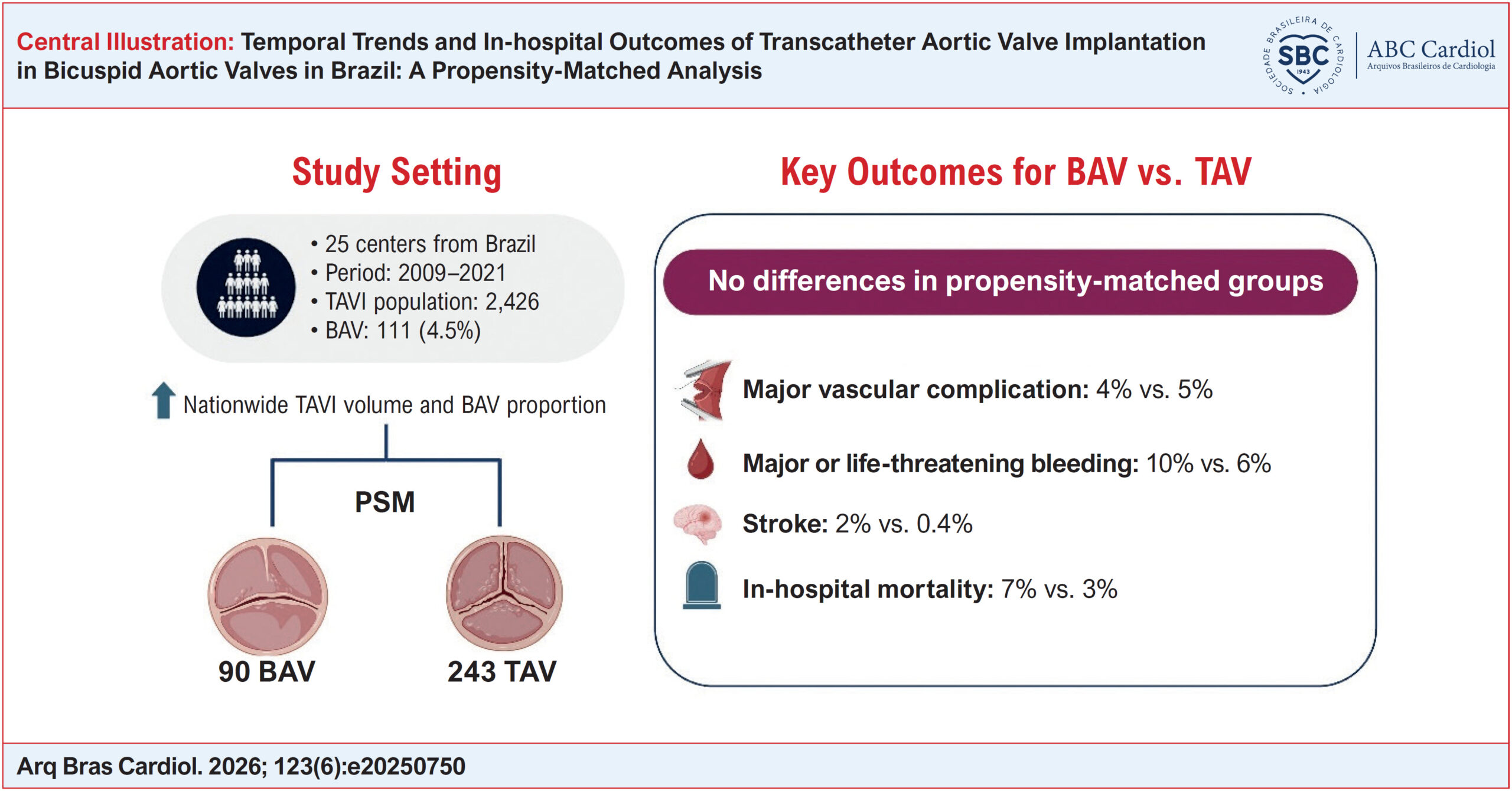
Among 2,426 patients from 25 centers, 111 had BAV. TAVI procedures increased over time in both groups. After one-to-three matching, 90 BAV and 243 TAV patients were included. No significant differences were observed in rates of major vascular complications (4% vs. 5%; p=0.99), major or life-threatening bleeding (10% vs. 6%; p=0.34), stroke (2% vs. 0.4%; p=0.37), or in-hospital mortality (7% vs. 3%; p=0.21). Over time, there was a significant reduction in in-hospital mortality (p<0.01) and major procedural complications (p<0.01 for vascular, bleeding, and stroke events), regardless of valve type.

Conclusion:

During the study period, annual TAVI procedures increased in both BAV and TAV patients, although the prevalence of BAV remained relatively low. No significant differences were observed in procedural or clinical outcomes between the propensity-matched groups. Both valve types showed reductions in procedural complications and in-hospital mortality over time.
  • Aortic Valve Stenosis
  • Bicuspid Aortic Valve Disease
  • Heart Valve Prosthesis Implantation
  • Transcatheter Aortic Valve Replacement
Read Full Article
Creative Commons Attribution (CC BY) Creative Commons license
10/08/2026 DOI: 10.36660/abc.20250750i
Transcatheter Aortic Valve Implantation vs. Aortic Valve Surgery in a Brazilian Public Health System (SUS) Hospital: Periprocedural Outcomes and Costs
ABC
Original Article

Transcatheter Aortic Valve Implantation vs. Aortic Valve Surgery in a Brazilian Public Health System (SUS) Hospital: Periprocedural Outcomes and Costs

Gabriel Prado Saad et al. Alberto Collella Cervone José Henrique Delamain Vitor Belloti … Ana Paula Beck da Silva Etges Giullia Sarabando Perez Bruna Bronhara Damiani Mario Issa Farid Samaan Auristela Isabel de Oliveira Ramos Fausto Feres Dimytri Alexandre Alvim de Siqueira

Abstract

Background

Transcatheter aortic valve implantation (TAVI) has emerged as a preferred treatment for severe, symptomatic aortic stenosis (AS). However, comparative data with surgical aortic valve replacement (SAVR) within the Brazilian public health system (SUS) remain limited.

Objective

To compare clinical outcomes and perform a cost-analysis of TAVI versus SAVR in SUS patients.

Methods

This retrospective, single-center study evaluated clinical outcomes and direct medical costs, using a statistical significance threshold of 5%.

Results

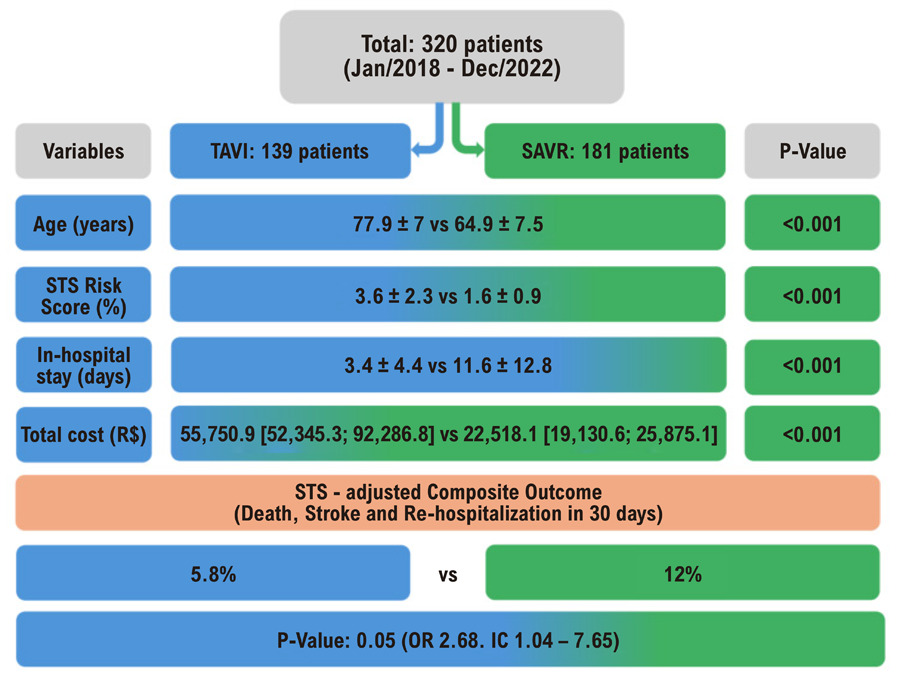
Between 01/2018 and 12/2022, 320 patients (139 TAVI, 181 SAVR) were included. TAVI patients were older (77.9 vs. 64.9 years, p<0.001) and had higher surgical risk (STS 3.62% vs. 1.64%, p<0.001). Mortality (2.9% vs. 5.0%) and stroke rates (1.4% vs. 3.3%) were numerically lower for TAVI, but not statistically significant. In a risk-adjusted composite outcome (death, stroke, re-hospitalization), TAVI showed potential superiority (5.8% vs. 12%, OR 2.68, 95% CI 1.04-7.65, p=0.05), though not statistically significant. TAVI was associated with a shorter hospital stay (2.0 vs. 8.0 days, p<0.001). TAVI’s total cost was significantly higher than SAVR’s (R$ 55,750.90 [52,345.30; 92,286.80] vs R$ 22,518.10 [19,130.60; 25,875.10, – p<0.001]).

Conclusions

In this study, TAVI displayed similar clinical outcomes compared to SAVR, while being performed on older patients with higher surgical risk. From an economic perspective, costs of TAVI treatment were significantly higher than SAVR, driven mainly by device costs, while in-hospital length of stay was significantly lower. With extended follow-up and reduced procedural costs, TAVI may become a cost-effective option in the SUS.

  • Aortic Valve Stenosis
  • Costs and Cost Analysis
  • Heart Valve Prosthesis Implantation
  • Transcatheter Aortic Valve Replacement
Read Full Article
Creative Commons Attribution (CC BY) Creative Commons license
15/12/2025 DOI: 10.36660/abc.20250021i Views 3
Figure 1
ABC
Research Letter

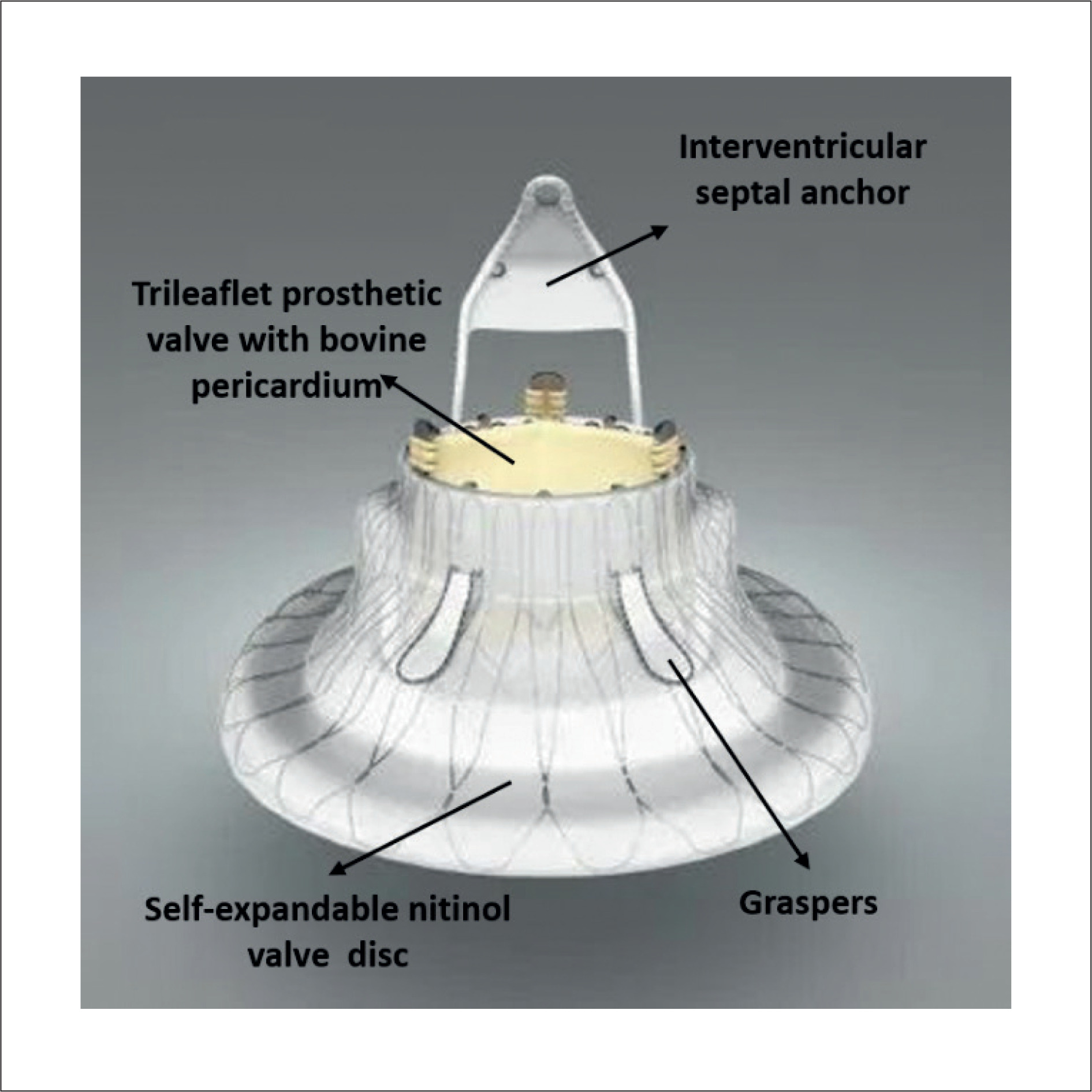
First Performance of Transjugular Transcatheter Tricuspid Valve Replacement with the Lux-Valve Plus System in Latin America. A Case Report

Vinicius Esteves et al. Pedro Beraldo de Andrade Sergio Kreimer Fernanda Almeida Esteves … Francisco Monteiro de Almeida Magalhães Thomas Modine

Introduction

The prevalence of tricuspid regurgitation (TR) increases with age, concomitant left-side heart disease, and chronic atrial fibrillation. Moderate or severe TR is associated with excess mortality and poor outcomes. The interventional treatment of choice is tricuspid valve repair, with a prosthetic ring capable of reducing the tricuspid annulus diameter, improving valve leaflet coaptation, and correcting regurgitation. Valve replacement is reserved for patients who do not have anatomical conditions for repair. However, an isolated surgical approach to the tricuspid valve continues to be rarely indicated, and there are still no data showing improved survival with TR surgical treatment alone, making this condition undertreated in clinical practice, despite the increased mortality rate in patients with moderate to severe TR clinically-only managed.

Based on these observations, the treatment of TR has recently been shifting from a conservative to a more interventional approach. This shift has led to first-in-human attempts at transcatheter tricuspid valve interventions (TTVI). Several devices have been developed, with strategies based on reducing the valve annulus, improving coaptation between the leaflets, or valve replacement. In a propensity-matched case-control study, TTVI was associated with 40% greater survival and freedom from heart failure rehospitalization.

[…]

  • Heart Failure
  • Heart Valve Prosthesis Implantation
  • Tricuspid Valve Insufficiency
Read Full Article
Creative Commons Attribution (CC BY) Creative Commons license
18/10/2024 DOI: 10.36660/abc.20240201i Views 2
In-Hospital Outcomes in the Brazilian Registry of Transcatheter Aortic Valve Implantation – 14-Year Analysis
ABC
Original Article

In-Hospital Outcomes in the Brazilian Registry of Transcatheter Aortic Valve Implantation – 14-Year Analysis

Maria Cristina Meira Ferreira et al. Viviana de Mello Guzzo Lemke Maria Sanali Moura de Oliveira Paiva Emilia Matos do Nascimento … Basílio de Bragança Pereira Gláucia Maria Moraes de Oliveira

Abstract

Background

Transcatheter aortic valve implantation (TAVI) has had an exponential increase of its indication, being incorporated into the Brazilian Unified Public Health System in 2022, thus requiring assessment of its use in Brazil.

Objeticve

To assess the factors associated with in-hospital mortality and non-fatal complications in both genders in the Brazilian Registry of Transcatheter Aortic Valve Implantation and New Technologies (RIBAC-NT) population.

Method

Analysis of the RIBAC-NT database from 2008 to 2022 was performed. Logistic models and machine learning were used for statistical assessment of the association between variables and outcomes. The software R was used and a 5% significance level, adopted.

Results

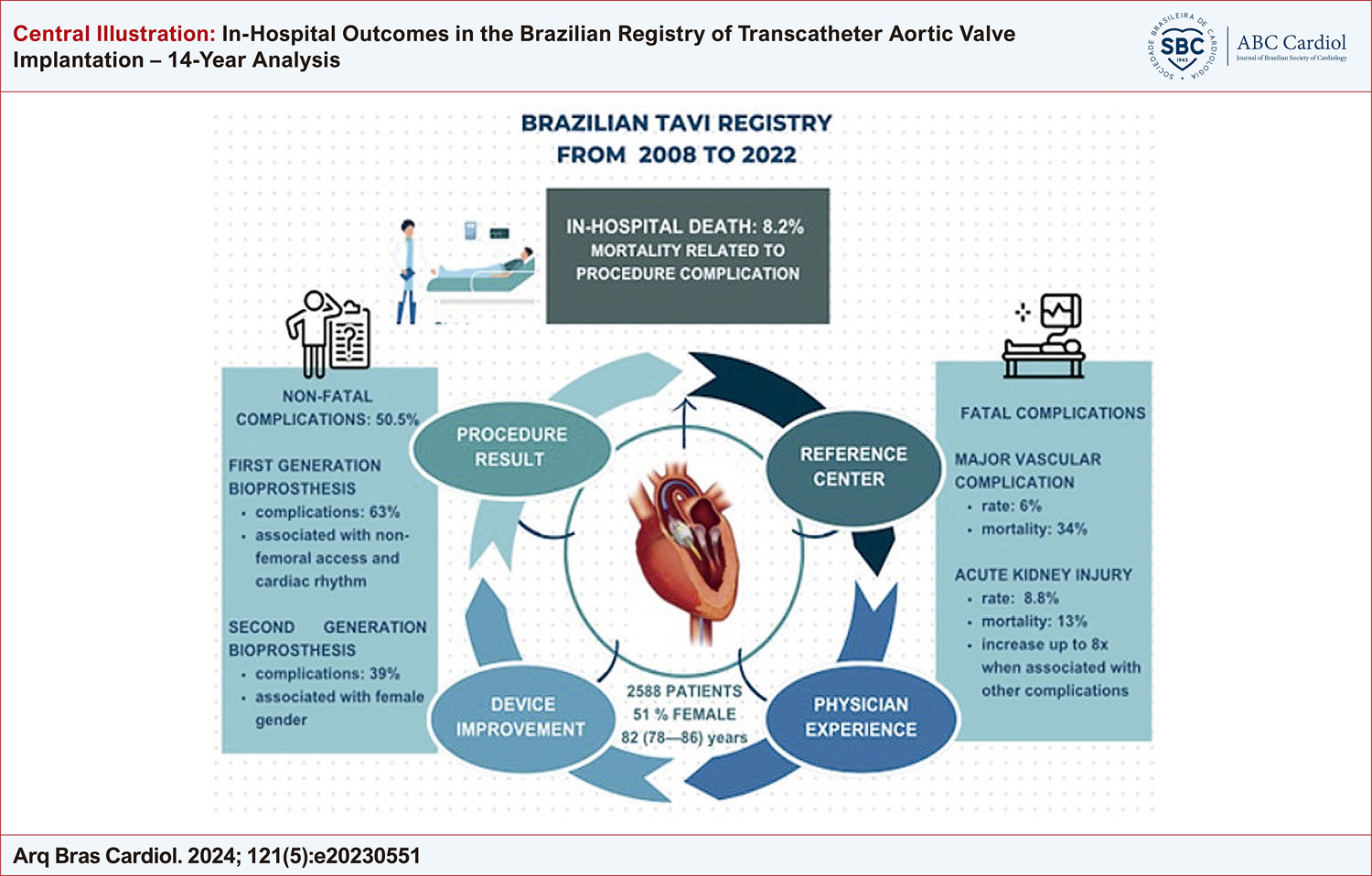
Analysis of 2588 patients (women, 51.2%; in-hospital death, 8.2%). Mortality was associated with procedural complications, of which major vascular complication (VC) and acute kidney injury (AKI) stood out (p<0.001). Major VC occurred in 6% of the patients, with 34% mortality; AKI occurred in 8.8%, with 13% mortality, which increased up to 8 times when AKI coexisted with other complications. Non-fatal complications occurred in 50.5% of all patients, affecting 63% of those with 1st generation (1G) bioprosthesis and 39% of those with 2nd generation (2G) bioprosthesis (p<0,001). Non-femoral access and heart rhythm influenced non-fatal complications in patients with 1G prostheses, while complications in patients with 2G prosthesis associated with the female gender (39.6% vs. 30.4%, p=0.003).

Conclusion

In-hospital mortality in the RIBAC-NT population was directly associated with procedural complications, mainly major VC and AKI. The occurrence of non-fatal complications differed according to gender and bioprosthesis type.

  • Aortic Valve Disease
  • Aortic Valve Stenosis
  • Heart Valve Prosthesis
  • Heart Valve Prosthesis Implantation
  • Transcatheter Aortic Valve Replacement
Read Full Article
Creative Commons Attribution (CC BY) Creative Commons license
14/10/2024 DOI: 10.36660/abc.20230551i
Figure 1
ABCIC
Review Article

My Approach To Manage Valve Prosthetic Dysfunction: What is the Role of Tomography?

Jorge Andion Torreão

Abstract

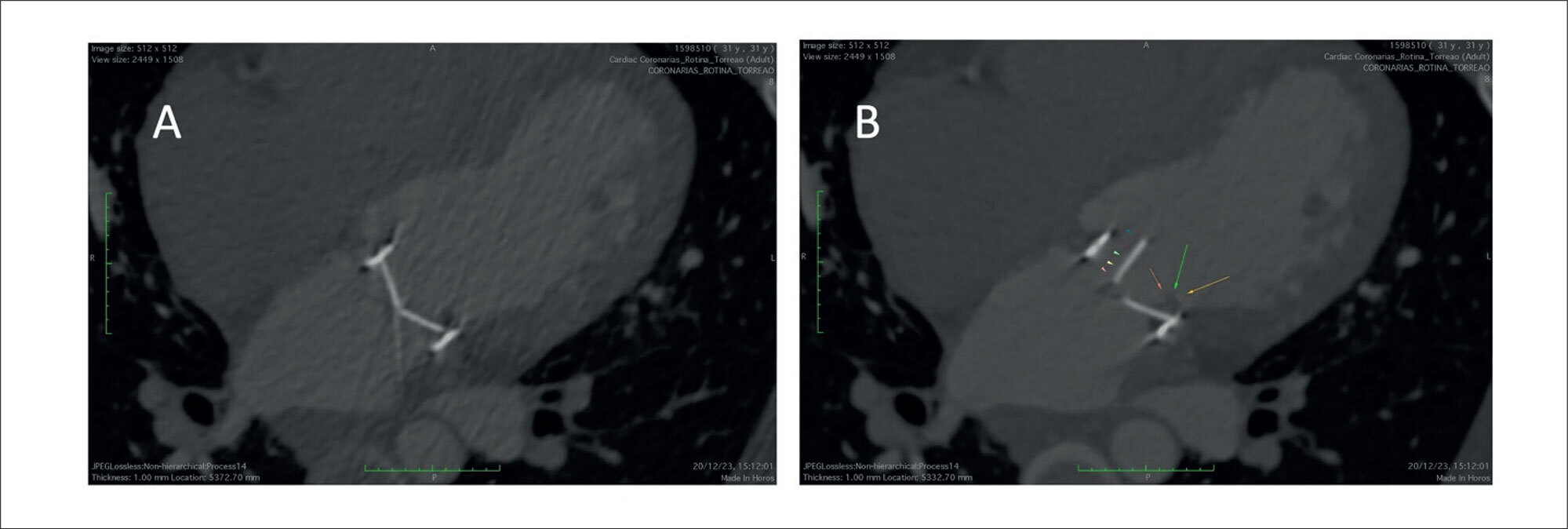
The prevalence of valvular heart disease remains significant worldwide, as does the resulting use of valve replacement devices. Currently, mechanical valve prostheses (MVP), biological valve prostheses (BVP), and transcatheter valve prostheses are available. Computer tomography (CT) provides excellent spatial resolution and plays a critical role in the diagnostic process for prosthetic valve dysfunction (PVD). CT allows proper visualization of leaflet calcification/thickening (biological) or leaflet motion and angulation (mechanical). CT plays a fundamental role in the diagnosis of pannus and/or thrombus and in the characterization of paravalvular complications (e.g., dehiscence, fistula, leak, abscess, and pseudoaneurysm). Finally, CT has an established role as a necessary tool for planning percutaneous (valve-in-valve [VIV]) or surgical interventions to replace dysfunctional biological prostheses (Central Figure).

  • Emission-Computed Tomography
  • Heart Valve Diseases
  • Heart Valve Prosthesis Implantation
Read Full Article
Creative Commons Attribution (CC BY) Creative Commons license
13/09/2024 DOI: 10.36660/abcimg.20240041i Views 1
Clinical and Echocardiographic Aspects of Patient-Prosthesis Mismatch in Patients With Prosthetic Aortic Valves
ABCIC
Original Article

Clinical and Echocardiographic Aspects of Patient-Prosthesis Mismatch in Patients With Prosthetic Aortic Valves

Irving Gabriel Araújo Bispo et al. Daniela Fernanda Alli Hemerly Alberto Takeshi Kyiose Claudio Henrique Fischer Valdir Ambrosio Moises

Abstract

Introduction:

Patient-prosthesis mismatch (PPM) is considered to occur if a prosthetic heart valve has a high transvalvular pressure gradient and a reduced indexed valve area, despite normally functioning discs. PPM may have clinical and hemodynamic repercussions for patients.

Objective:

To analyze the clinical and echocardiographic characteristics of PPM in patients with prosthetic aortic valves.

Methods:

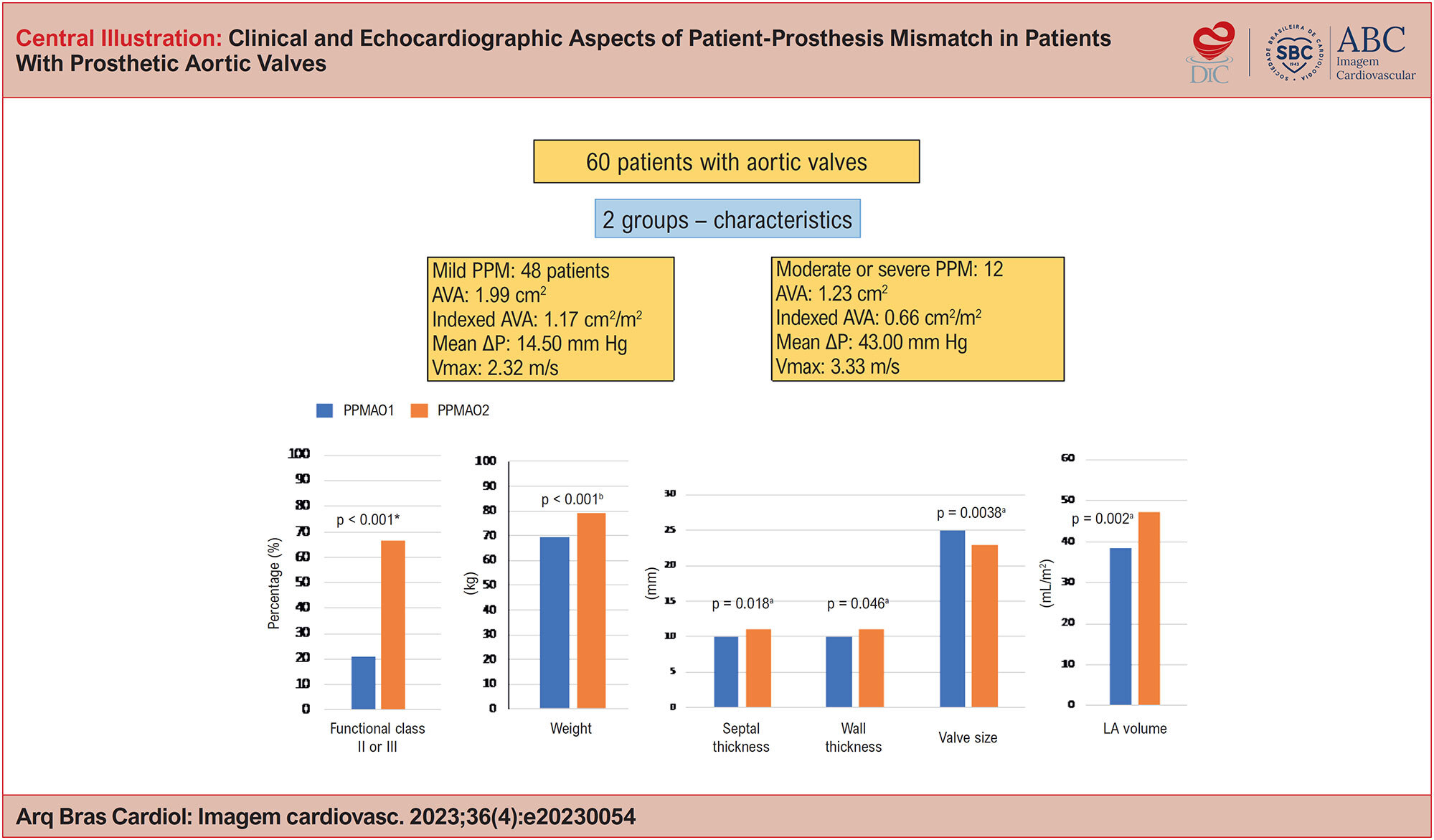
Patients aged 18 years or over with a biological or mechanical aortic valve undergoing follow-up since February 2010 were included. PPM was considered mild if the indexed valve area was ≥ 0.85 cm2/m2 and severe if ≤ 0.65 cm2/m2. Variables were compared between groups with moderate or severe PPM (PPMAO2) and mild PPM (PPMAO1); significant if p<0.05.

Results:

Sixty patients (36 women) with prosthetic aortic valves (29 biological and 31 mechanical) were included. PPMAO2 was diagnosed in 12 patients (20%), who had a mean valve area of 0.66 cm²/m² and mean gradient of 24 mm Hg. Functional class II or III was more frequent in the PPMAO2 group (66.7%) than in the PPMAO1 group (20.8%); p<0.001. Left atrial volume (51 ± 16 mL/m2 x 40 ± 12 mL/m2; p=0.002) and left ventricular septal and wall thicknesses (10.83 mm x 10 mm; p=0.018) were higher in the PPMAO2 group.

Conclusions:

Moderate or severe PPM occurred in 20% of patients. These patients were more symptomatic and had higher left atrial volumes and left ventricular myocardial wall thickness.

  • Aortic Valve
  • Echocardiography
  • Heart Valve Prosthesis Implantation
Read Full Article
Creative Commons Attribution (CC BY) Creative Commons license
21/12/2023 DOI: 10.36660/abcimg.20230054i
Figure 1
ABCIC
Case Report

Prosthetic Aortic Valve Endocarditis With Extensive Para-Aortic Abscess: The Relevance of Multimodal Imaging

Bernardo Boccalon et al. André Barcellos Amon Thiago Ferreira Serafini Álvaro Schmidt Albrecht … Murilo Foppa Angela Barreto Santiago Santos

Introduction

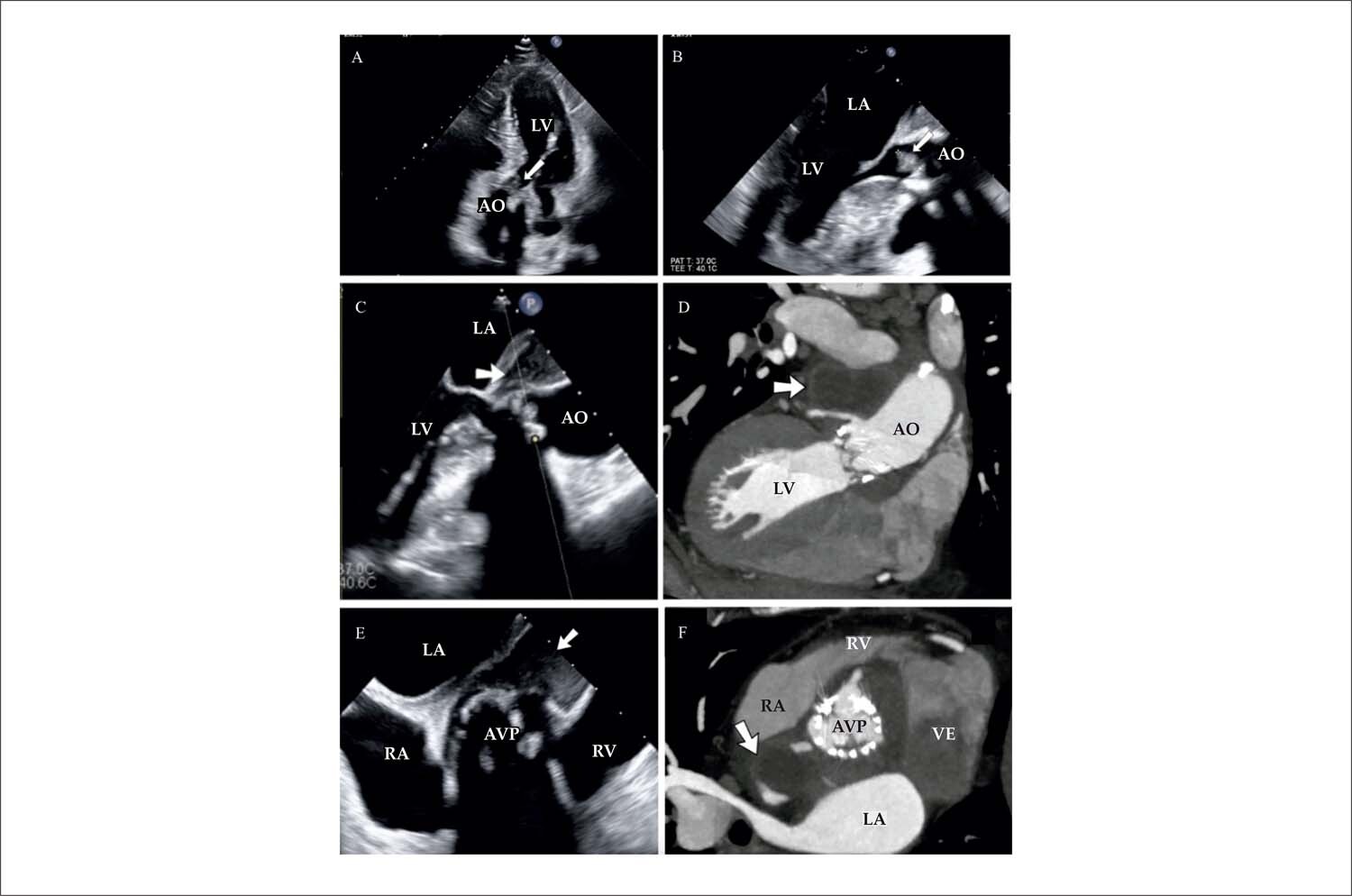
Infectious endocarditis (IE) is defined as the infection of the endocardium or prosthetic material in the heart, whose pathogenesis is bacterial adherence to the vulnerable endocardium or implanted prosthetic material during a bacteremia. Its clinical presentation is highly variable, depending on the micro-organism that causes it, underlying heart conditions and preexisting comorbidities. The annual estimated incidence of IE is up to 10/100,000 in western countries, and mortality of up to 30% in 30 days.

[…]

  • Diagnostic Imaging
  • Endocarditis
  • Heart Valve Prosthesis Implantation
Read Full Article
Creative Commons Attribution (CC BY) Creative Commons license
26/09/2023 DOI: 10.36660/abcimg.20230068i Views 1
ABC
Letter to the Editor

Mechanical Valve Implants: What Are Their Long-Term Effects?

Eldys Myler Santos Marinho et al. Júlio Martinez Martinez Santos Bruno da Silva Brito Achilles de Souza Andrade Johnnatas Mikael Lopes

Surgical procedures for replacing body structures through prostheses are perhaps the medical interventions that require great expertise and continuous monitoring, prolonging the lives and health of countless people. This was a theme of the research entitled “ Clinical Features and Survival Analysis of Patients after Mechanical Heart Valve Replacement, with an Emphasis on Prosthetic Valve Thrombosis ” by Tagliari et al. published in volume 119, number 5 of this journal.

Among the various contributions the study brings us, some findings need further clarification so mechanical valve implant interventions can be useful clinically and in public health.

[…]

  • Death
  • Embolism
  • Heart Valve Prosthesis Implantation
  • Survival Analysis
  • Thrombosis
Read Full Article
Creative Commons Attribution (CC BY) Creative Commons license
17/07/2023 DOI: 10.36660/abc.20220875 Views 1
Figure 1
ABC
Original Article

Clinical Features and Survival Analysis of Patients after Mechanical Heart Valve Replacement, with an Emphasis on Prosthetic Valve Thrombosis

Fábio Tagliari et al. Marcelo Goulart Correia Guilherme Dalcol Amorim Alexandre Siciliano Colafranceschi … João Manoel Pedroso Luiz Fernando Rodrigues Junior Thaisa Rodrigues Tagliari Clara Weksler Cristiane Lamas

Abstract

Background

Valvular heart diseases are highly prevalent in the world, and surgical valve replacement has improved patients’ survival.

Objectives

To describe clinical and laboratory data of patients undergoing mechanical valve replacement, and to determine the incidence of prosthetic valve thrombosis (PVT).

Methods

Retrospective cohort study with a follow-up of up to nine years. The study variables were collected from conventional and electronic medical charts. Statistical calculations were performed using the Jamovi software version 1.2.2.; a p<0.05 was considered statistically significant. Kaplan Meier curves were constructed, and Cox regression analysis was performed for analysis of factors related to mortality.

Results

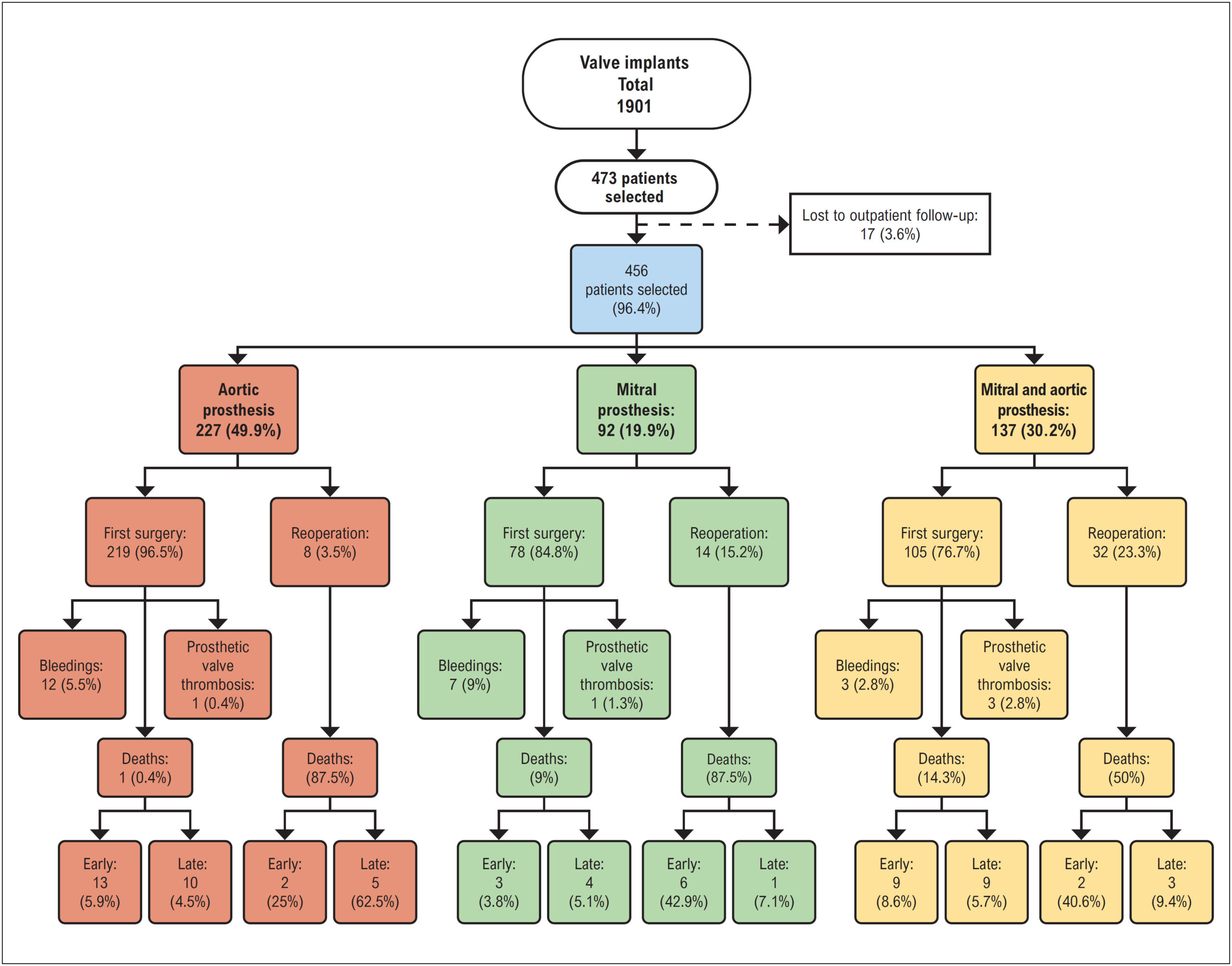
A total of 473 patients were included, mean age of 46.9 ±11.3 years. Rheumatic disease was the most common etiology. In a mean follow-up period of 4.43 years, mortality rate was 16.1%. Patients with aortic prosthesis showed higher survival than patients with double implant (mitral and aortic) (p=0.026). Of the factors adjusted for mortality, only functional class and chronic renal failure showed statistically significant association. The incidence of PVT was 0.24/100 patients/year, and the first event occurred more than 1000 days after the implant. Smoking and pannus formation were significantly associated with PVT. No differences were found in INR variability between patients with and without thrombosis by prosthetic position, but significant differences were found in INR before thrombosis as compared with patients without thrombosis (INR= 2.20 [1.80-2.20] vs. 2.80 [2.20-3.40]; p= 0.040). The incidence of stroke and bleeding was 4.4% and 5.2% respectively.

Conclusions

The study population was young, and rheumatic valve disease was common in this group. The prevalence of PVT was similar to that described in the literature, despite the low income and low educational level of our sample.

  • Anticoagulants
  • Brazil
  • Heart Valve Prosthesis Implantation
  • Survival Analysis
  • Thrombosis
Read Full Article
Creative Commons Attribution (CC BY) Creative Commons license
25/11/2022 DOI: 10.36660/abc.20210544 Views 1
Figure 2
ABC
Original Article

Long-Term Ventricular Pacing Dependency and Pacemaker Implantation Predictors after Transcatheter Aortic Valve Replacement – A 1-Year Follow-Up

Ricardo Alves Pinto et al. Tânia Proença Miguel Martins Carvalho Gonçalo Pestana … Ana Lebreiro Luis Adão Filipe Macedo

Abstract

Background

Conduction disturbances (CD) are the most frequent complication after transcatheter aortic valve replacement (TAVR), and there continues to be a lack of consensus on their management.

Objective

To assess new CD and permanent pacemaker (PPM) implantation after TAVR and to evaluate the ventricular pacing percentage (VP) up to 1 year of follow-up.

Methods

Patients who underwent TAVR from October 2014 to November 2019 were enrolled; patients with previous PPM were excluded. Clinical, procedure, ECG, and PPM data were collected up to 1 year after implantation. The significance level adopted in the statistical analysis was 0.05.

Results

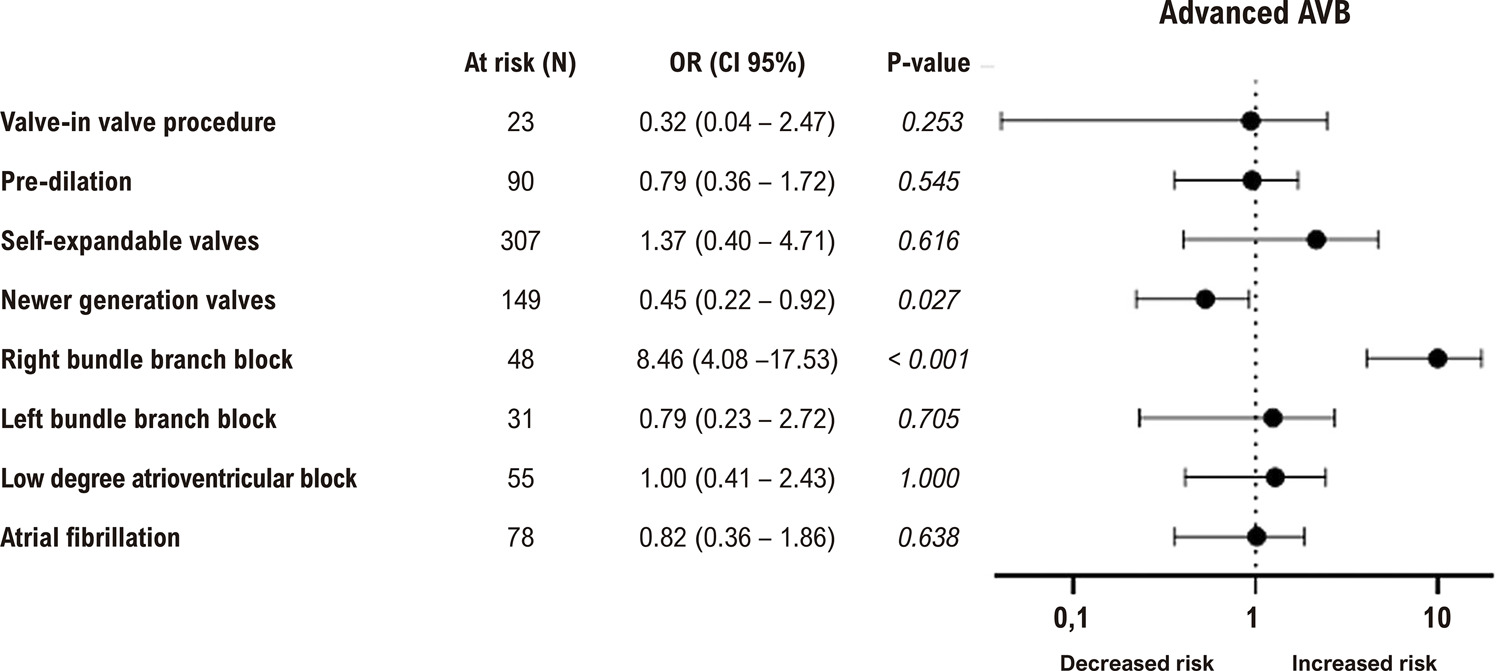
A total of 340 patients underwent TAVR. The most frequent CD was the new left bundle branch block (LBBB; 32.2%), which 56% resolved after 6 months. Right bundle branch block (RBBB) was the biggest risk factor for advanced atrioventricular block (AVB) [OR=8.46; p<0.001] and PPM implantation [OR=5.18, p<0.001], followed by previous low-grade AVB [OR=2.25; p=0.016 for PPM implantation]. Regarding procedure characteristics, newer generation valves and valve-in-valve procedures were associated with fewer CDs. Overall, 18.5% of patients had a PPM implanted post-TAVR. At first PPM evaluation, patients with advanced AVB had a median percentage of VP of 80% and 83% at one year. Regarding patients with LBBB plus low-grade AVB, median VP was lower (6% at first assessment, p=0.036; 2% at one year, p = 0.065).

Conclusion

LBBB was the most frequent CD after TAVR, with more than half being resolved in the first six months. RBBB was the major risk factor for advanced AVB and PPM implantation. Advanced AVB was associated with a higher percentage of VP at 1 year of follow-up.

  • Aortic Valve Stenosis
  • Atrioventriclar Block
  • Cardiac Conduction System Disease
  • Heart Valve Prosthesis Implantation
  • Pacemaker,Artificial
  • Transcatheter Aortic Valve Replacement
Read Full Article
Creative Commons Attribution (CC BY) Creative Commons license
18/07/2022 DOI: 10.36660/abc.20210613 Views 2
ABCIC
Image

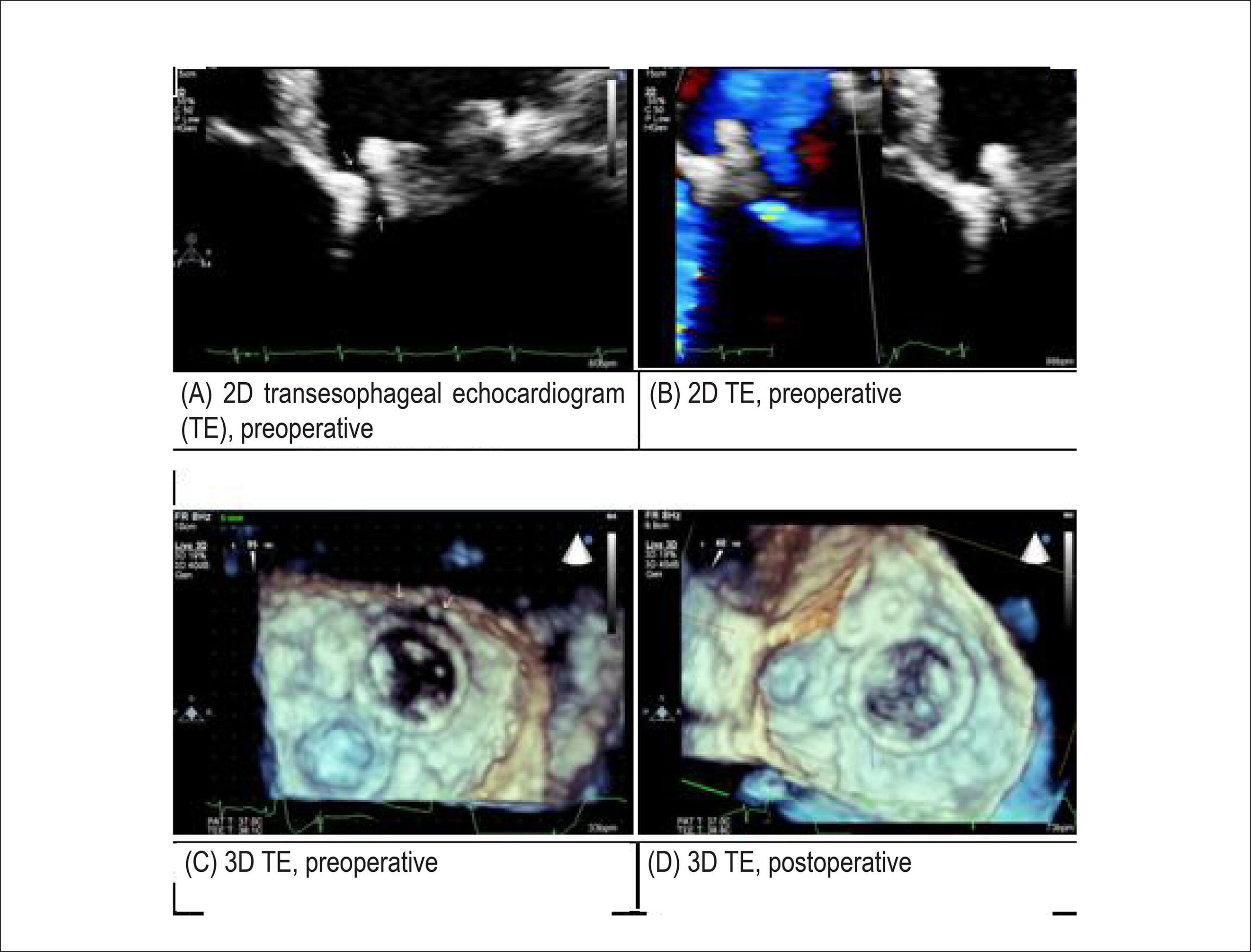
Pseudoaneurysm with Fistula in Metal Aortic Prosthesis and Tubular Prosthesis in Ascending Aorta: Contribution of 3D Echocardiography

Irving Gabriel Araújo Bispo et al. Vera Márcia L Gimenes Mercedes Maldonado Andrade

[…]

  • Aneurysm, False/diagnostic imaging
  • Aorta
  • Fistula
  • Heart Valve Prosthesis
  • Heart Valve Prosthesis Implantation
Read Full Article
Creative Commons Attribution (CC BY) Creative Commons license
20/01/2022 DOI: 10.5935/2318-8219.20170030 Views 1
Figure 1
ABC
Original Article

C-reactive Protein as a Prognostic Marker of 1-Year Mortality after Transcatheter Aortic Valve Implantation in Aortic Stenosis

André Luiz Silveira Sousa et al. Luiz Antônio Ferreira Carvalho Constantino González Salgado Rafael Lauria de Oliveira … Luciana Cristina Correia Lima e Lima Nelson Durval Ferreira Gomes de Mattos Francisco Eduardo Sampaio Fagundes Alexandre Siciliano Colafranceschi Evandro Tinoco Mesquita

Abstract

Background:

C-reactive protein (CRP) is an inflammation biomarker that can be a predictor of adverse events in cardiovascular procedures. Its use in the assessment of long-term prognosis of transcatheter aortic valve implantation (TAVI) is still incipient.

Objective:

To evaluate CRP as a prognostic marker in the first year after TAVI in aortic stenosis (AoS).

Methods:

CRP was assessed on the first postoperative week in a retrospective cohort of patients with AoS. Pre- and post- CRP levels were correlated with mortality, and predictors of 1-year mortality were investigated. Multivariate Cox regression was performed to identify independent factors of 1-year mortality.

Results:

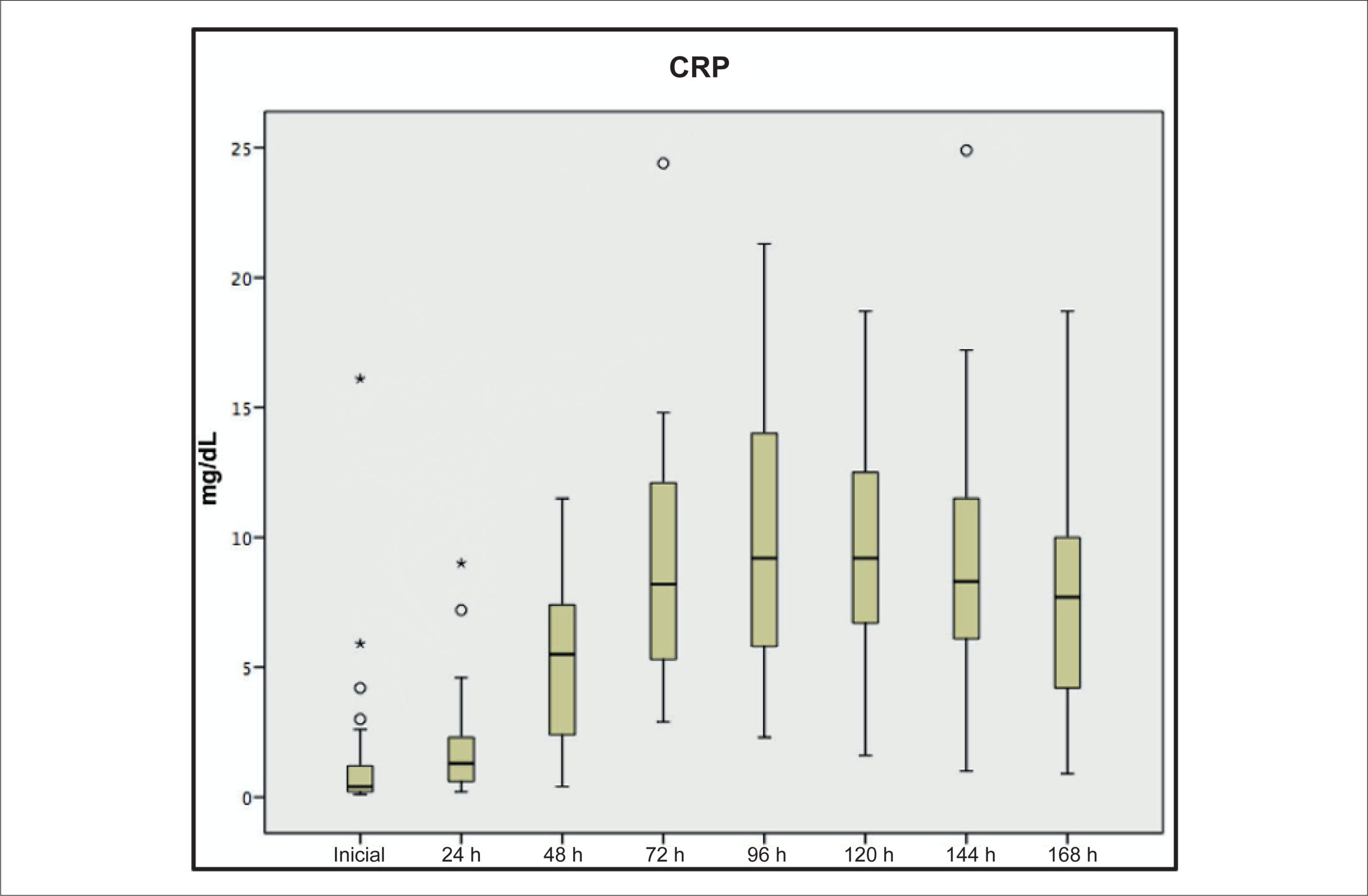
This study evaluated 130 patients who underwent TAVI, with median age of 83 years, and 49% of women. High pre-TAVI CRP (> 0.5 mg/dL) was observed in 34.5% of the cases. Peak CRP was 7.0 (5.3-12.1) mg/dL no quarto dia. The rate of 1-year mortality was 14.5% (n = 19), being greater in the groups with high pre-TAVI CRP (68.8% vs 29.1%; p = 0,004) and with peak CRP ≥ 10.0 mg/dL (64.7% vs 30.8%; p = 0,009). Independent predictors of mortality were acute renal failure (ARF) (hazard ratio [HR] = 7.43; 95% confidence interval [95%CI], 2.1-24.7; p = 0,001), high pre-TAVI CRP (HR 4.15; 95%CI, 1.3-12.9; p = 0.01), and large blood transfusion [HR 4,68; 1,3-16,7; p = 0.02].

Conclusions:

High pre-TAVI CRP showed to be an independent predictor of 1-year mortality, as well as the presence of ARF and large blood transfusions.

  • Aortic Valve Stenosis
  • Bomarkers
  • C-Reactive Protein
  • Heart Valve Prosthesis Implantation
  • Inflammation
  • Transcatheter Aortic Valve Replacement
Read Full Article
Creative Commons Attribution (CC BY) Creative Commons license
22/11/2021 DOI: 10.36660/abc.20190715 Views 1
ABC
Research Letter

Porcine Valve Bioprosthesis: a Legacy from Mario Vrandecic

Erika Correa Vrandecic et al. Ektor Correa Vrandecic Bayard Gontijo Filho Rossana Dall’Orto Elias … Braulio Roberto Gonçalves Marinho Couto Marcus Vinicius Bolivar Malachias

Heart valve disease currently occupies the spotlight in cardiovascular medicine due to recent advances in imaging techniques and emerging therapeutic possibilities, attracting the attention of physicians, researchers, device manufacturers, and investors. Brazil has a prominent international role in the history and technological development of prosthetic heart valves used to treat this disease.

The first worldwide implantation of a commercially available porcine valve bioprosthesis occurred in October 1968. About half a century later, in September 2019, passes on the physician and scientist Mario Vrandecic, creator of the only heart valve bioprosthesis made from porcine tissue produced in Brazil and approved by the United States (US) Food and Drug Administration (FDA), globally used for decades in the treatment of heart valve disease.

[…]

  • Bioprosthesis/trends
  • Heart Valve Diseases/surgery
  • Heart Valve Prosthesis Implantation
  • Mario Vranderic
Read Full Article
Creative Commons Attribution (CC BY) Creative Commons license
16/04/2021 DOI: 10.36660/abc.20201110 Views 1
Figure 1
ABC
Viewpoint

Treatment of Aortic Stenosis in Elderly Individuals in Brazil: How Long Can We Wait?

Marcelo Antônio Cartaxo Queiroga Lopes et al. Bruno Ramos Nascimento Gláucia Maria Moraes de Oliveira

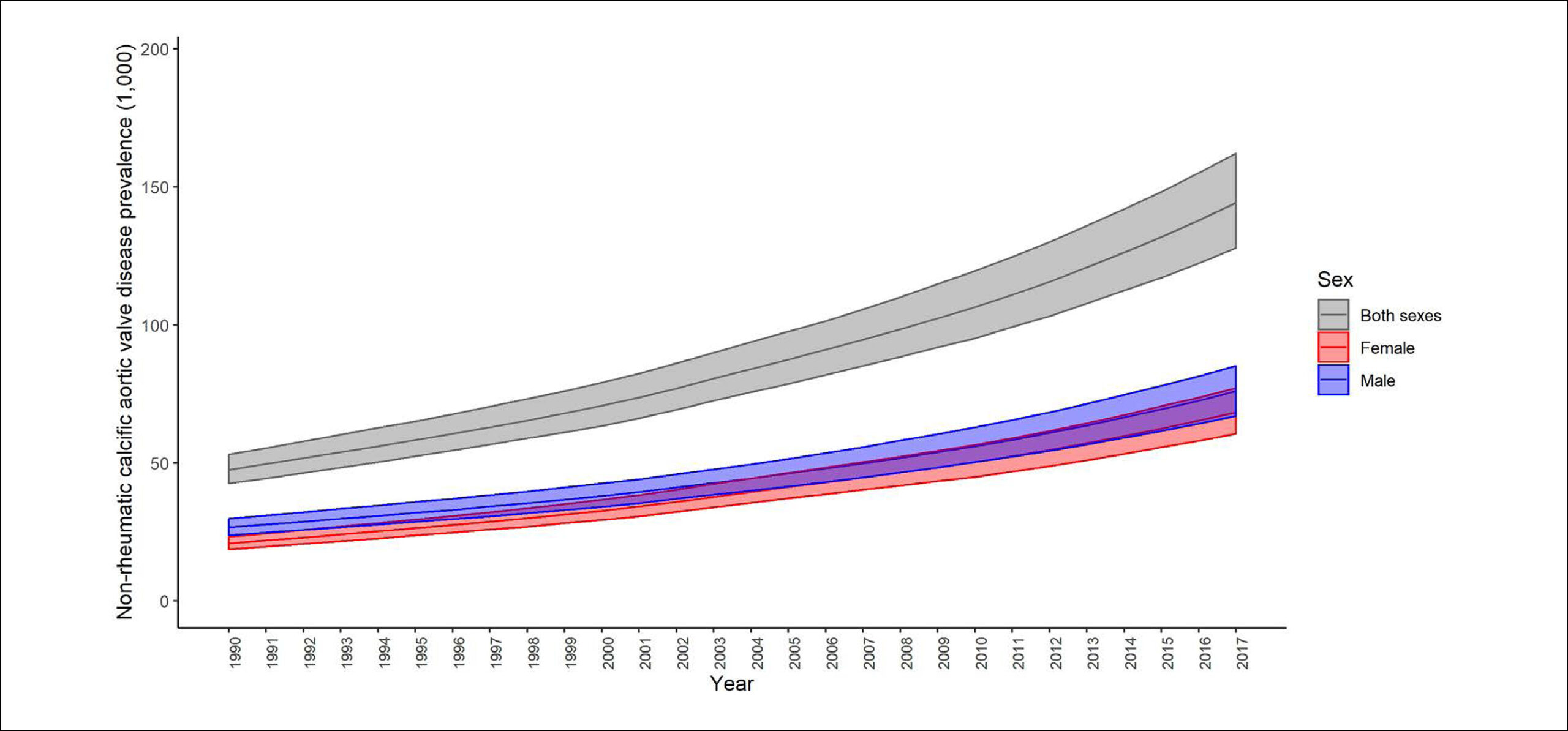
The growing life expectancy of the population is increasing the occurrence of diseases affecting the elderly age group, notably the non-rheumatic degenerative valvular diseases and, in particular, aortic stenosis, whose prevalence in elderly individuals older than 75 years has been estimated at 3 to 5%. This is the most common valvular heart disease among elderly individuals, and its severe form is associated with high morbidity and mortality. The life expectancy of patients with aortic stenosis presenting with heart failure and rhythm disturbances is estimated to be less than 2 years. The standard treatment for this disease is cardiac surgery with replacement of the aortic valve by a prosthesis. However, due to high surgical risk, especially in very elderly patients with associated comorbidities, cardiac surgery is contraindicated in about 30% of the cases or is performed with high morbidity and mortality rates according to preoperative scores. For these critically ill patients, a new, less invasive technique consisting of transcatheter aortic valve implantation (TAVI) of a bioprosthesis has been considered the therapeutic option of choice, initially tested in patients at very high surgical risk, but currently with evidence of noninferiority compared to open surgery in lower-risk individuals., The first TAVI procedure in the world was performed in France in 2002 by Professor Alain Cribier, and the method was pioneered in Brazil in 2008. Since then, a considerable number of patients has been treated. However, despite robust evidence of safety and efficacy, this therapy has still not been incorporated into the supplemental or public health care systems (Sistema Único de Saúde [SUS]) in the country.

Despite the fact that TAVI has already been evaluated and accepted in the health care systems of several countries with evidence of cost-effectiveness even in individuals at intermediate operative risk, the Ministry of Health, based on a position stand from the National Commission for Incorporation of Technologies in the SUS (Conitec), established in 2013, in response to a request by the Brazilian Society for Hemodynamics and of Interventional Cardiology (SBHCI) acting as the petitioner, considered that there was no convenience in incorporating this therapy in Brazil. Conitec, at the time, based on the opinion of a reviewer and disregarding the opinion of prestigious national universities presented in a public consultation on the subject, recommended against the incorporation of the procedure, justifying this decision on three points: a) TAVI would not be a safe and effective procedure due to an allegedly high incidence of stroke within the first 30 days after the procedure, b) the budgetary impact of incorporating TAVI into the SUS would approach 1 billion reais per year, and c) methodological inaccuracies could have affected the economic model presented by the petitioner and the PARTNER B study, which served as the main background for the incorporation of this procedure by all health technology assessment agencies in the world that have requested the incorporation of this technology.

[…]

  • Aged
  • aging
  • Heart Valve Prosthesis
  • Heart Valve Prosthesis Implantation
  • Life Expectancy
  • Stenosis Valve Aortic/surgery
  • Transcatheter Aortic Valve Replacement/trends
Read Full Article
Creative Commons Attribution (CC BY) Creative Commons license
20/03/2020 DOI: 10.36660/abc.2020003 Views 1
Figure 1
ABC
Original Article

The Role of Quantitative Aortographic Assessment of Aortic Regurgitation by Videodensitometry in the Guidance of Transcatheter Aortic Valve Implantation

Yosuke Miyazaki et al. Rodrigo Modolo Mohammad Abdelghani Hiroki Tateishi … Rafael Cavalcante Carlos Collet Taku Asano Yuki Katagiri Erhan Tenekecioglu Rogério Sarmento-Leite José A. Mangione Alexandre Abizaid Osama I.I. Soliman Yoshinobu Onuma Patrick W. Serruys Pedro A. Lemos Fabio S. de Brito Jr.

Abstract

Background:

Balloon post-dilatation (BPD) is often needed for optimizing transcatheter heart valve (THV) implantation, since paravalvular leak (PVL) after transcatheter aortic valve implantation is associated with poor outcome and mortality. Quantitative assessment of PVL severity before and after BPD is mandatory to properly assess PVL, thus improving implantation results and outcomes.

Objective:

To investigate a quantitative angiographic assessment of aortic regurgitation (AR) by videodensitometry before and after BPD.

Methods:

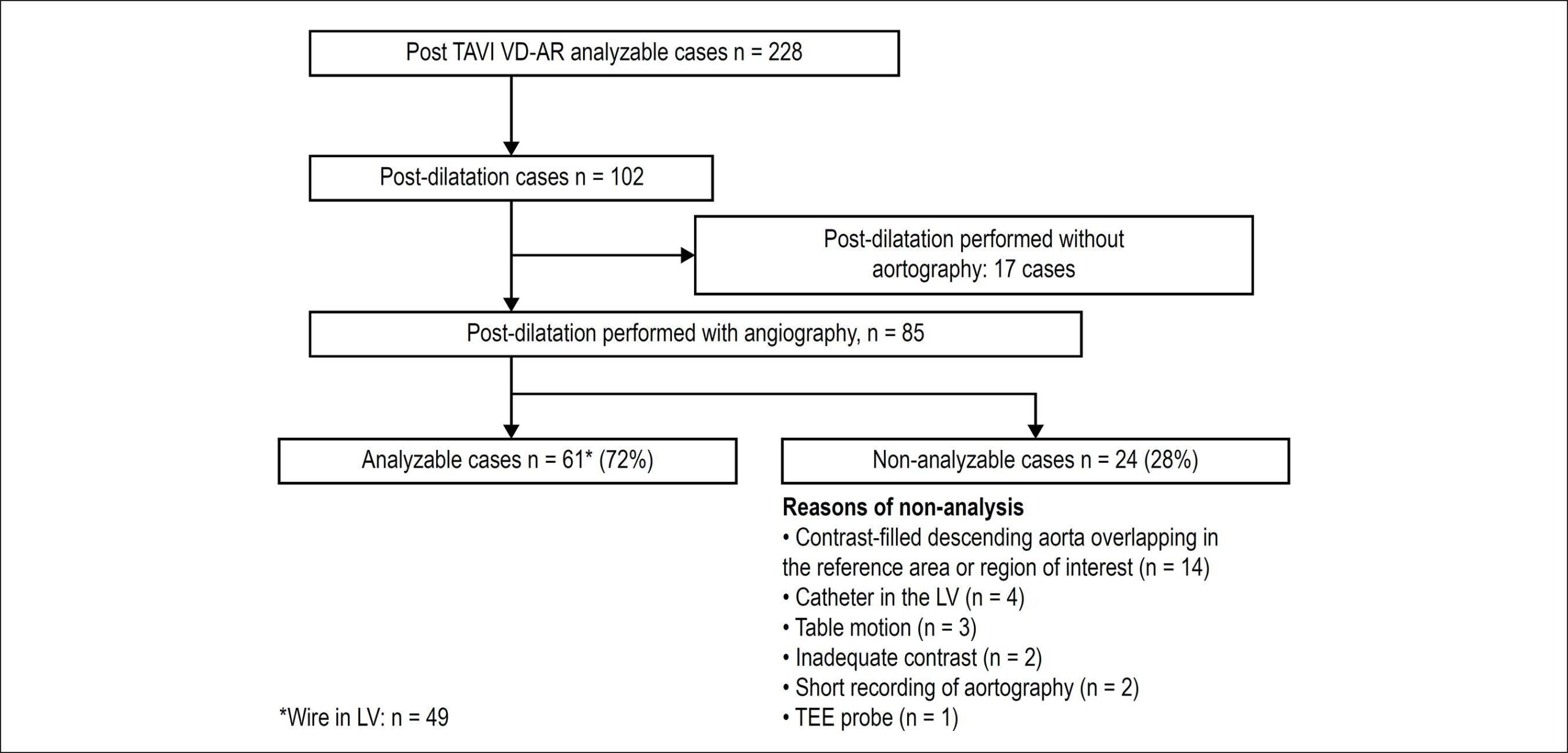
Videodensitometric-AR assessments (VD-AR) before and after BPD were analysed in 61 cases.

Results:

VD-AR decreased significantly from 24.0[18.0-30.5]% to 12.0[5.5-19.0]% (p < 0.001, a two-tailed p 17%) was observed in 47 patients (77%) before and in 19 patients (31%) after BPD.

Conclusions:

VD-AR after THV implantation provides a quantitative assessment of post-TAVI regurgitation and can help in the decision-making process on performing BPD and in determining its efficacy.

  • Angiography/evaluation
  • Aortic Valve Insufficiency/diagnostic imaging
  • Heart Valve Prosthesis Implantation
  • Transcatheter Aortic Valve Replacement
Read Full Article
Creative Commons Attribution (CC BY) Creative Commons license
01/08/2018 DOI: 10.5935/abc.20180139 Views 1
Figure 1
ABC
Original Article

Progression and Prognosis of Paravalvular Regurgitation After Transcatheter Aortic Valve Implantation

Rafael Alexandre Meneguz-Moreno et al. Antônio de Castro-Filho Auristela Isabel de Oliveira Ramos Mayra Zumarraga … David Le Bihan Rodrigo Barretto Dimytri Alexandre de Alvim Siqueira Alexandre Antonio Cunha Abizaid Amanda Guerra de Moraes Rego Sousa J. Eduardo Sousa

Abstract

Background:

The impact of paravalvular regurgitation (PVR) following transcatheter aortic valve implantation (TAVI) remains uncertain.

Objective:

To evaluate the impact of PVR on mortality and hospital readmission one year after TAVI.

Methods:

Between January 2009 and June 2015, a total of 251 patients underwent TAVI with three different prostheses at two cardiology centers. Patients were assessed according to PVR severity after the procedure.

Results:

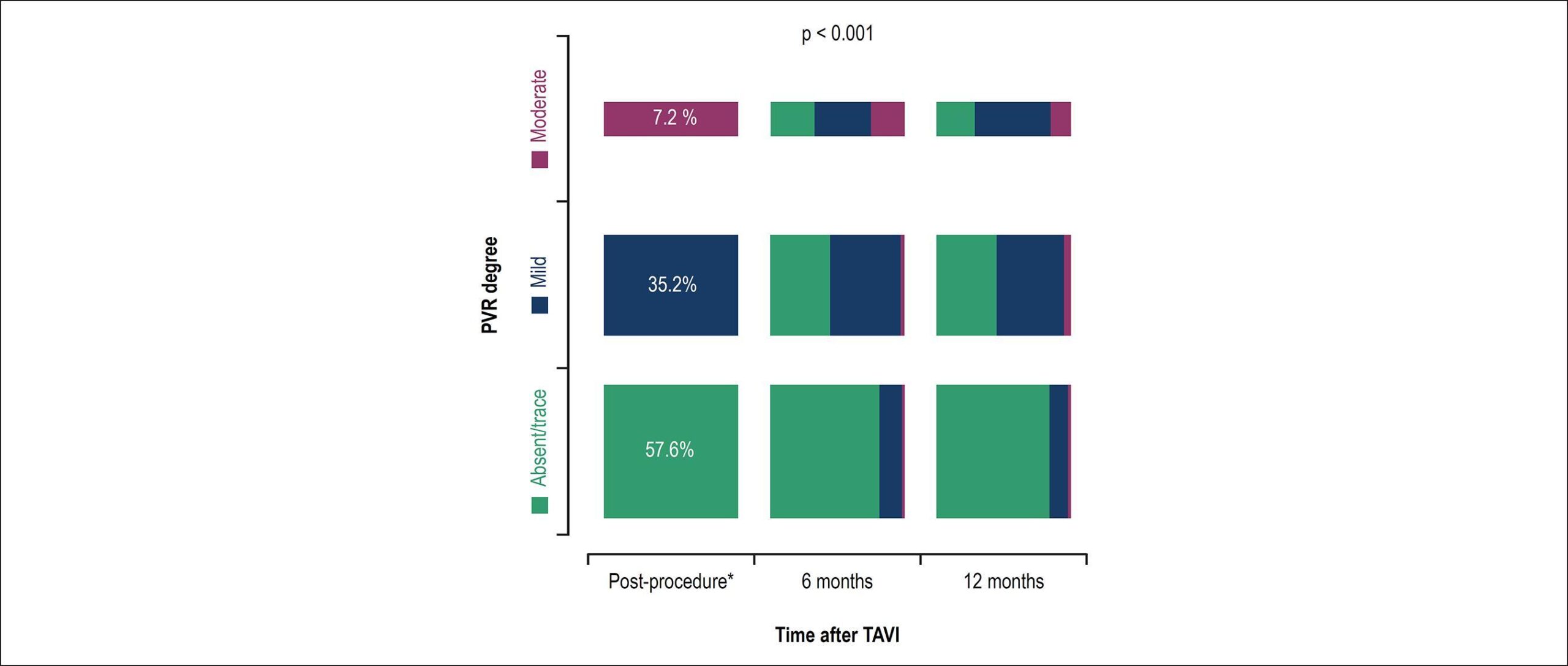
PVR was classified as absent/trace or mild in 92.0% (n = 242) and moderate/severe in 7.1% (n = 18). The moderate/severe PVR group showed higher levels of aortic calcification (22% vs. 6%, p = 0.03), higher serum creatinine (1.5 ± 0.7 vs. 1.2 ± 0.4 mg/dL, p = 0.014), lower aortic valve area (0.6 ± 0.1 vs. 0.7 ± 0.2 cm2, p = 0.05), and lower left ventricular ejection fraction (49.2 ± 14.8% vs. 58.8 ± 12.1%, p = 0.009). Patients with moderate/severe PVR had more need for post-dilatation (p = 0.025) and use of larger-diameter balloons (p = 0.043). At one year, all-cause mortality was similar in both groups (16.7% vs. 12%, p = 0.08), as well as rehospitalization (11.1% vs. 7.3%, p = 0.915). PVR grade significantly reduced throughout the first year after the procedure (p < 0.01). The presence of moderate/severe PVR was not associated with higher one-year mortality rates (HR: 0.76, 95% CI: 0.27-2.13, p = 0.864), rehospitalization (HR: 1.08, 95% CI: 0.25-4.69, p=0.915), or composite outcome (HR: 0.77, 95% CI: 0.28-2.13, p = 0.613).

Conclusion:

In this sample, moderate/severe PVR was not a predictor of long-term mortality or rehospitalization. (Arq Bras Cardiol. 2017; [online].ahead print, PP.0-0)

  • Aortic Valve Insufficiency / complications
  • Heart Valve Prosthesis Implantation
  • Mortality
  • Prognosis
Read Full Article
Creative Commons Attribution (CC BY) Creative Commons license
13/11/2017 DOI: 10.5935/abc.20170172 Views 2
Figure 1
ABC
Image

Transcatheter Aortic Valve Implantation with Embolic Protection System in a Patient with Left Ventricle Apical Thrombus

João Gonçalves Almeida et al. Sara Ferreira Daniel Caeiro José Ribeiro Vasco Gama Ribeiro

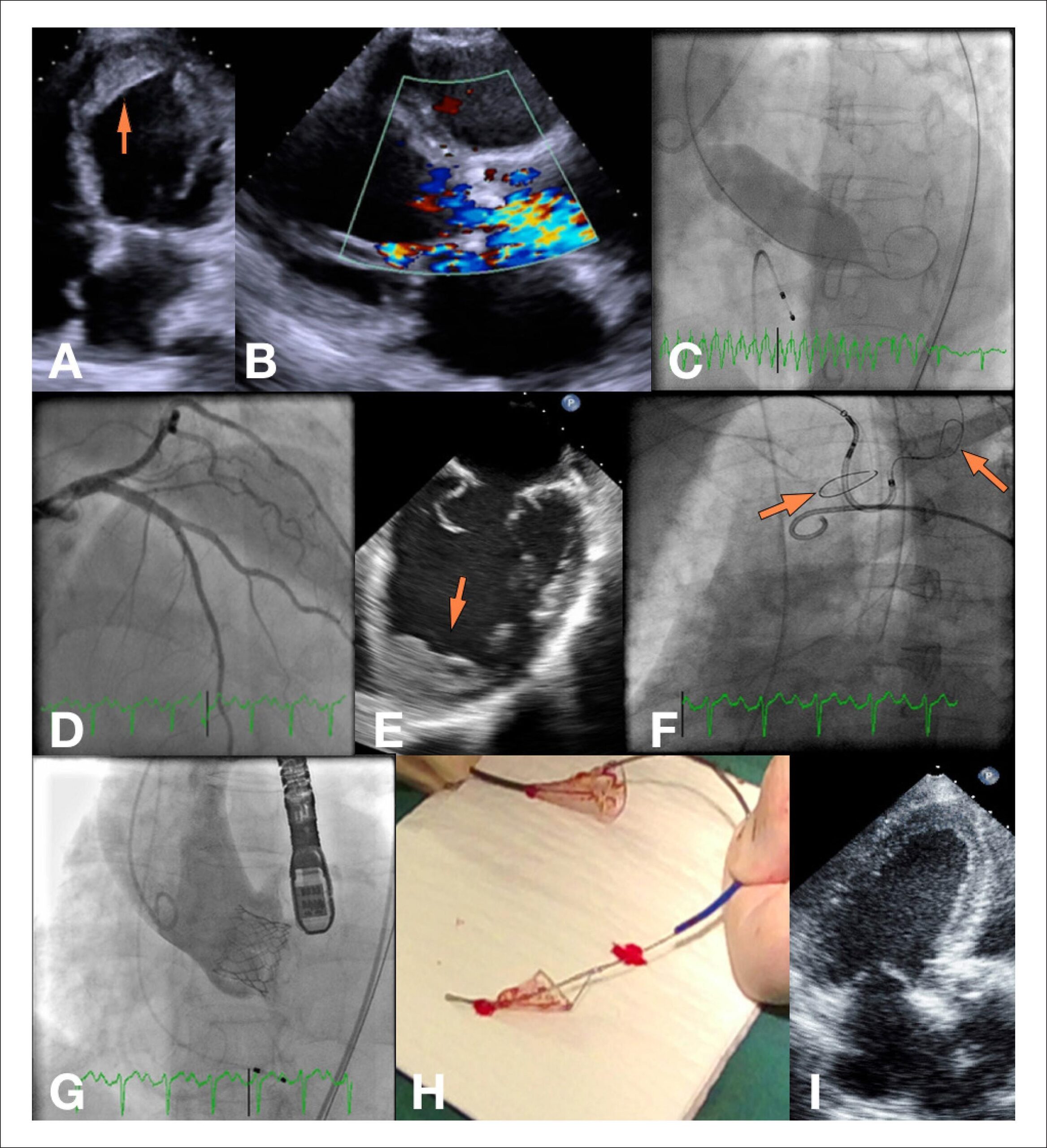
A 68-year-old woman was admitted in our acute cardiac care unit due to cardiogenic shock. The transthoracic echocardiography (TTE) showed severe aortic stenosis, severe left ventricle (LV) systolic dysfunction (ejection fraction 20%) and a large apical thrombus (). We performed an emergent percutaneous aortic balloon valvuloplasty (). During the procedure, the coronary angiography revealed no epicardial coronary disease (). Despite some mild clinical and hemodynamic improvement (mean gradient reduced from 40 to 30 mmHg), she remained in New York Heart Association (NYHA) class IV.

[…]

  • Embolic Protection Devices
  • Heart Valve Prosthesis Implantation
  • Shock, Cardiogenic
Read Full Article
Creative Commons Attribution (CC BY) Creative Commons license
01/11/2017 DOI: 10.5935/abc.20170109 Views 1
Figure 1
ABC
Case Report

Combined Mitral and Aortic Valvar Bioprosthesis Transcatheter Transapical Implant: First Description in Brazil

Roney Orismar Sampaio et al. Milena Ribeiro Paixão Thais Taveira Miranda Elinthon Tavares Veronese … José Honório de Almeida Palma Flávio Tarasoutchi

Introduction

From the earliest days of the heart surgery, the valves, when the reparation was not possible, were replaced by prosthetics using cardiopulmonary bypass. The good results of these procedures are well known. In the recent years, minimally invasive alternatives have been developed, aiming to make possible the treatment of individuals under high risk of complications and death caused by the conventional procedure. In 2002, the first transcatheter valvar implantation was made, which revolutionized the treatment of severe aortic stenosis. The equipment, techniques and skills have progressively evolved since then. More recently, from 2009, transcatheter mitral valvar implants for treatment of the prosthesis dysfunction (valve-in-valve) started to be performed. Currently, the transcatheter valvar implantation is one of the fields of greater development in cardiology.

[…]

  • Heart Valve Prosthesis
  • Heart Valve Prosthesis Implantation
  • Transcatheter Aortic Valve Replacement
Read Full Article
Creative Commons Attribution (CC BY) Creative Commons license
01/11/2017 DOI: 10.5935/abc.20170118 Views 1
Figure 1
ABC
Original Article

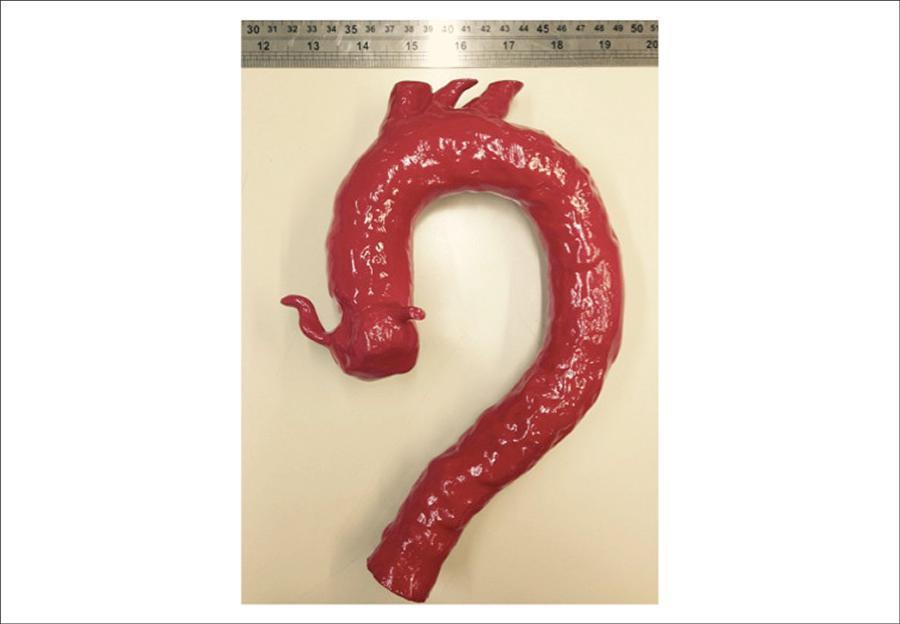
Influence of the tilt angle of Percutaneous Aortic Prosthesis on Velocity and Shear Stress Fields

Bruno Alvares de Azevedo Gomes et al. Gabriel Cordeiro Camargo Jorge Roberto Lopes dos Santos Luis Fernando Alzuguir Azevedo … Ângela Ourivio Nieckele Aristarco Gonçalves Siqueira-Filho Glaucia Maria Moraes de Oliveira

Abstract

Background:

Due to the nature of the percutaneous prosthesis deployment process, a variation in its final position is expected. Prosthetic valve placement will define the spatial location of its effective orifice in relation to the aortic annulus. The blood flow pattern in the ascending aorta is related to the aortic remodeling process, and depends on the spatial location of the effective orifice. The hemodynamic effect of small variations in the angle of inclination of the effective orifice has not been studied in detail.

Objective:

To implement an in vitro simulation to characterize the hydrodynamic blood flow pattern associated with small variations in the effective orifice inclination.

Methods:

A three-dimensional aortic phantom was constructed, reproducing the anatomy of one patient submitted to percutaneous aortic valve implantation. Flow analysis was performed by use of the Particle Image Velocimetry technique. The flow pattern in the ascending aorta was characterized for six flow rate levels. In addition, six angles of inclination of the effective orifice were assessed.

Results:

The effective orifice at the -4° and -2° angles directed the main flow towards the anterior wall of the aortic model, inducing asymmetric and high shear stress in that region. However, the effective orifice at the +3° and +5° angles mimics the physiological pattern, centralizing the main flow and promoting a symmetric distribution of shear stress.

Conclusion:

The measurements performed suggest that small changes in the angle of inclination of the percutaneous prosthesis aid in the generation of a physiological hemodynamic pattern, and can contribute to reduce aortic remodeling.

  • Heart Valve Prosthesis Implantation
  • Hemodynamics
  • Regional Blood Flow
  • Shear Stress
Read Full Article
Creative Commons Attribution (CC BY) Creative Commons license
07/08/2017 DOI: 10.5935/abc.20170115 Views 1
Transcatheter Valve-in-Valve Repositioning of CoreValve® Evolut™ Rin Aortic Prosthesis
ABC
Image

Transcatheter Valve-in-Valve Repositioning of CoreValve® Evolut™ Rin Aortic Prosthesis

Ana Isabel Azevedo et al. Ricardo Ladeiras-Lopes Alberto Rodrigues Pedro Braga Vasco Gama Ribeiro

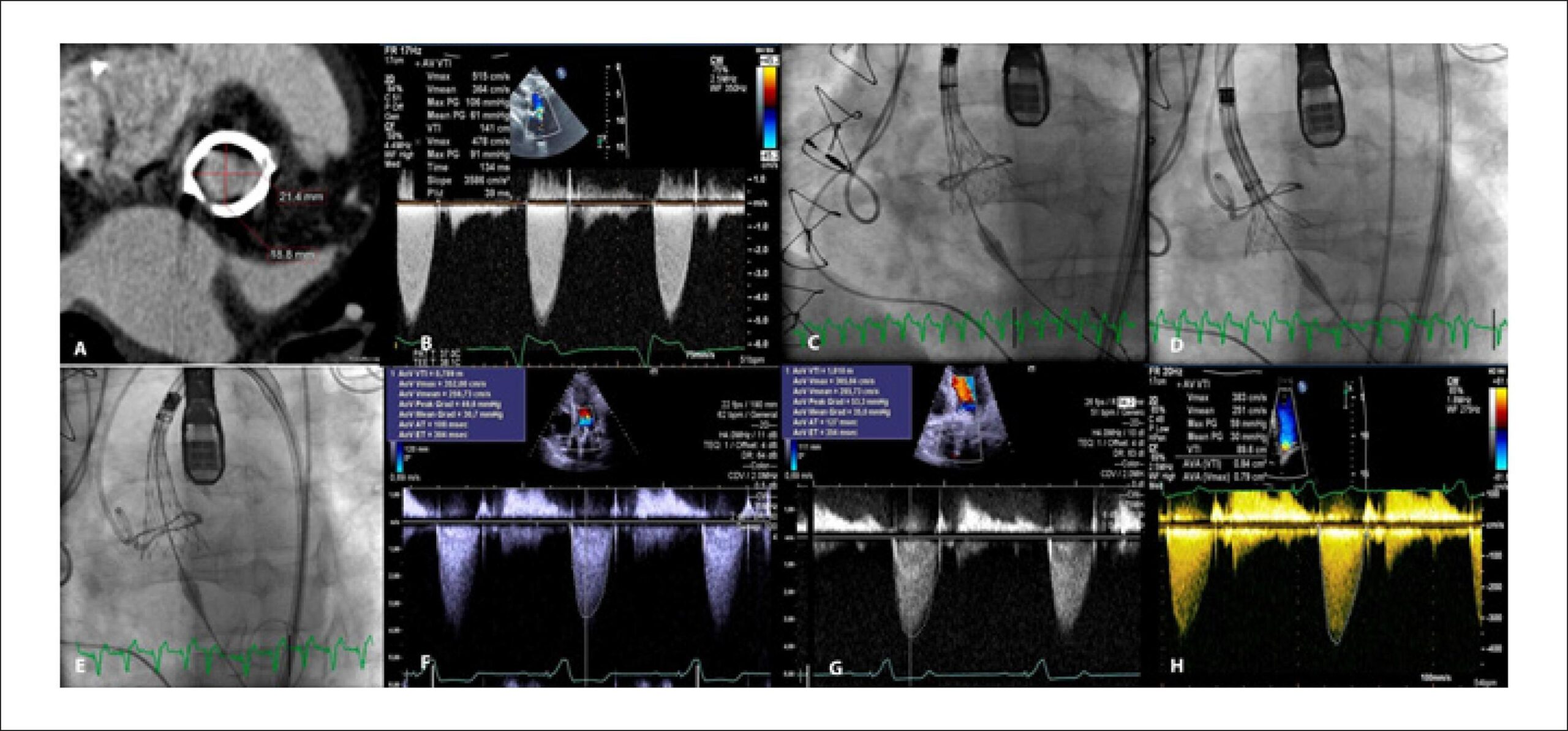
A 41-year-old man with history of surgical replacement of the aortic valve with a 21mm-Mitroflow bioprosthesis (1A), presented with functional class IV heart failure. Transesophageal echocardiography confirmed severe bioprosthesis obstruction (1B). We implanted a 23mm-CoreValve® Evolut™ R (Medtronic, Minneapolis, USA) in the aortic bioprosthesis, by transfemoral approach. The valve was recaptured and repositioned during deployment (1C-E). Immediate (1F), one (1G) and three-month (1H) transthoracic echocardiography confirmed significant reduction in transaortic gradients. The patient remained in functional class I.

Our experience in repositioning the valve during a valve-in-valve procedure demonstrates the usefulness of this resource in such challenging procedures.

[…]

  • Aortic Vave, Bioprosthesis
  • Heart Failure
  • Heart Valve Prosthesis Implantation
Read Full Article
Creative Commons Attribution (CC BY) Creative Commons license
01/01/2016 DOI: 10.5935/abc.20160007 Views 1
Figure 1
ABC
Case Report

Percutaneous Treatment of Mitral Paraprosthetic Regurgitation: an Alternative to Surgery

Roney Orismar Sampaio et al. Alessandra Gomes de Oliveira George Barreto Miranda Pedro Alves Lemos Neto … Marcelo Luiz Campos Vieira Flávio Tarasoutchi

Introduction

Paraprosthetic regurgitation occurs in approximately 7%–17% of patients undergoing mitral valve replacement and 2%–10% of patients undergoing aortic valve replacement,. Typically, this regurgitation is discrete and does imply major clinical complications; however, when it is moderate or severe, the consequences can be serious, leading to heart failure and/or hemolysis,. It is estimated that approximately 1%–5% of cases develop to more clinically severe conditions,. The main causes of paraprosthetic regurgitation are calcification of the valvular annulus, infection, suture technique, and size and shape of the prosthesis,.

Usually, surgical treatment is considered as the first treatment option for symptomatic patients. In 1992, however, an alternative treatment via percutaneous occlusion of the paravalvular orifice was proposed for cases in which the patient faces high risk from surgical treatment–.

[…]

  • Atrioventricular block
  • Heart Failure
  • Heart Valve Prosthesis Implantation
  • Hemolysis
  • Mitral Valve/surgery
  • Prosthesis-Related Infections / complications
Read Full Article
Creative Commons Attribution (CC BY) Creative Commons license
01/10/2015 DOI: 10.5935/abc.20150115 Views 1
Figure 1
ABC
Image

Cardiac Tamponade Caused by Compression of Right Cardiac Chamber: a Hidden Enemy

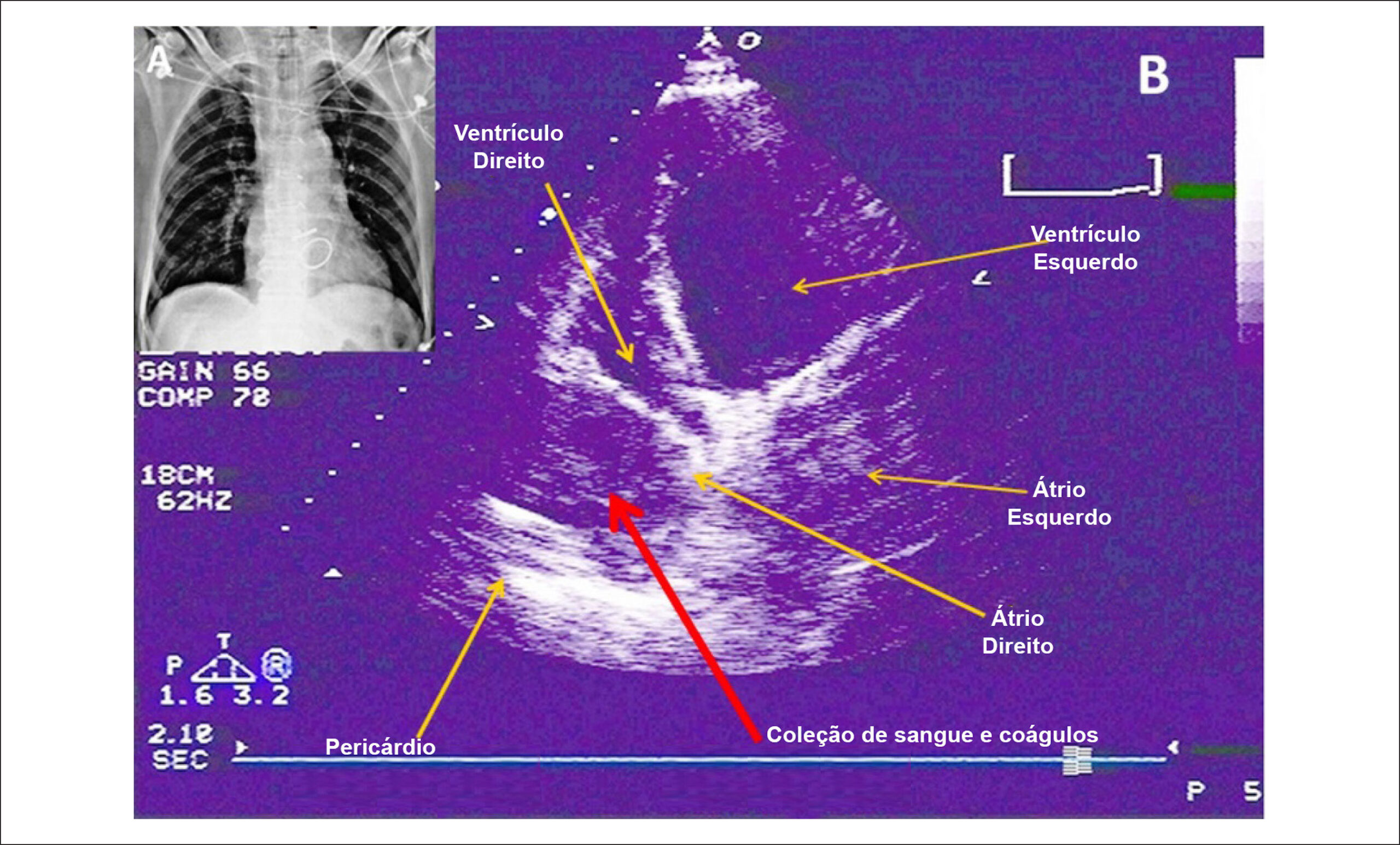
Paulo Roberto Barbosa Evora et al. Minna Moreira D. Romano Luis Gustavo Gali Alfredo José Rodrigues

A

[…]

  • Cardiac Tamponade
  • Echocardiography
  • Heart Atria/abnormalities
  • Heart Valve Prosthesis Implantation
Read Full Article
Creative Commons Attribution (CC BY) Creative Commons license
01/12/2014 DOI: 10.5935/abc.20140195 Views 1
ABC
Review Article

Antithrombotic strategy in the three first months following bioprosthetic heart valve implantation

André R. Durães et al. Milena A. O. Durães Luis C. L. Correia Roque Aras

Heart valve prosthesis unquestionably improve quality of life and survival of patients with severe valvular heart disease, but the need for antithrombotic therapy to prevent thromboembolic complications is a major challenge to clinicians and their patients. Of the articles analyzed, most were retrospective series of cases or historical cohorts obtained from the database. The few published randomized trials showed no statistical power to assess the primary outcome of death or thromboembolic event. In this article, we decided to perform a systematic literature review, in an attempt to answer the following question: what is the best antithrombotic strategy in the first three months after bioprosthetic heart valve implantation (mitral and aortic)? After two reviewers applying the extraction criteria, we found 1968 references, selecting 31 references (excluding papers truncated, which combined bioprosthesis with mechanical prosthesis, or without follow-up). Based on this literature review, there was a low level of evidence for any antithrombotic therapeutic strategy evaluated. It´s therefore interesting to use aspirin 75 to 100 mg / day as antithrombotic strategy after bioprosthesis replacement in the aortic position, regardless of etiology, for patients without other risk factors such as atrial fibrillation or previous thromboembolic event. In the mitral position, the risk of embolism, although low, is more relevant than in the aortic position, according to published series and retrospective cohorts comprised mostly of elderly non-rheumatic patients.

  • Fibrinolytic Agents
  • Heart Valve Prosthesis Implantation
  • Platelet Aggregation Inhibitors
  • Thromboembolism
Read Full Article
Creative Commons Attribution (CC BY) Creative Commons license
08/10/2013 DOI: 10.5935/abc.20130202 Views 1
ABC
Review Article

Severe aortic stenosis in asymptomatic patients: the dilemma of clinical versus surgical treatment

Marcelo Katz et al. Flávio Tarasoutchi Max Grinberg

Aortic valve stenosis has become increasingly prevalent, in agreement with the aging of the population. Thus, it has become increasingly common to treat asymptomatic patients with severe aortic stenosis. Although the patients with asymptomatic aortic stenosis belong to the same group, they are heterogeneous from a clinical, laboratory and echocardiographic point of view. The treatment of these patients raises the dilemma of the clinical versus the surgical treatment: should we submit the patient to the risks of surgery or keep the patient under clinical observation, running the risk of irreversible myocardial damage or even sudden death? Under this perspective and based on the current literature, this study supplies tools that help to stratify the patients. The valvular area, degree of calcification, transvalvular aortic flow velocity, left ventricular hypertrophy and stress test alterations are the factors that place asymptomatic individuals with severe aortic stenosis in a group called very-high risk, in which the surgical approach starts to be considered.

  • Aortic Valve Stenosis
  • clinical
  • Heart Valve Prosthesis Implantation
  • symptoms
  • Ventricular Dysfunction, Left
Read Full Article
Creative Commons Attribution (CC BY) Creative Commons license
26/01/2011 DOI: 10.1590/S0066-782X2010001400019 Views 1

Could not load more articles. Please try again.

How to cite this article

EndNote RIS

Electronic Document Format (Vancouver)

Calomeni P, Bernardi F, Brito Jr FS, Abizaid MS, Barbosa FR, Lemos PA, Feres F, et al. Temporal Trends and In-hospital Outcomes of Transcatheter Aortic Valve Implantation in Bicuspid Aortic Valves in Brazil: A Propensity-Matched Analysis. Arquivos Brasileiros de Cardiologia 2026;123(6):e20250750.

Electronic Document Format (ABNT)

Calomeni, Pedro; Bernardi, Fernando; Brito Jr, Fábio Sandoli de; Abizaid, Marcella Sousa; Barbosa, Francisco Ribeiro; Lemos, Pedro Alves; Feres, Fausto; Siqueira, Dimytri Alexandre; Costa, Ricardo; Sarmento-Leite, Rogério; Mangione, Fernanda; Mangione, José Armando; Thiago, Luiz Eduardo Koenig São; Lima, Valter Correia de; Oliveira, Adriano Dias Dourado; Marino, Marcos Antônio; Cardoso, Carlos José Francisco; Caramori, Paulo Ricardo Avancini; Tumelero, Rogério Tadeu; Portela, Antenor Lages Fortes; Prudente, Maurício Lopes; Henriques, Leônidas Alvarenga; Souza, Fábio Solano de Freitas; Bezerra, Cristiano Guedes; Prado Junior, Guy Fernandes de Almeida; Freitas, Leandro Zacarias Figueiredo de; Nogueira, Ederlon Ferreira; Meireles, George César Ximenes; Pope, Renato Bastos; Guérios, Ênio Eduardo; Andrade, Pedro Beraldo de; Santos, Luciano de Moura; Lopes, Augusto Celso; Esteves, Vinicius Borges Cardozo; Zukowski, Cleverson; Abizaid, Alexandre; Ribeiro, Henrique Barbosa. Temporal Trends and In-hospital Outcomes of Transcatheter Aortic Valve Implantation in Bicuspid Aortic Valves in Brazil: A Propensity-Matched Analysis. Arquivos Brasileiros de Cardiologia, v. 123, n. 6, e20250750, Aug. 2026.

Electronic Document Format (APA)

Calomeni, P., Bernardi, F., Brito Jr, F. S. , Abizaid, M. S., Barbosa, F. R., Lemos, P. A., Feres, F., Siqueira, D. A., Costa, R., Sarmento-Leite, R., Mangione, F., Mangione, J. A., Thiago, L. E. K. S., Lima, V. C. , Oliveira, A. D. D., Marino, M. A., Cardoso, C. J. F., Caramori, P. R. A., Tumelero, R. T., Portela, A. L. F., Prudente, M. L., Henriques, L. A., Souza, F. S. F., Bezerra, C. G., Prado Junior, G. F. A., Freitas, L. Z. F. , Nogueira, E. F., Meireles, G. C. X., Pope, R. B., Guérios, E., Andrade, P. B. , Santos, L. M., Lopes, A. C., Esteves, V. B. C., Zukowski, C., Abizaid, A., & Ribeiro, H. B. (2026). Temporal Trends and In-hospital Outcomes of Transcatheter Aortic Valve Implantation in Bicuspid Aortic Valves in Brazil: A Propensity-Matched Analysis. Arquivos Brasileiros de Cardiologia, 123(6), e20250750.

Electronic Document Format (ISO)

Calomeni, Pedro and Bernardi, Fernando and Brito Jr, Fábio Sandoli de and Abizaid, Marcella Sousa and Barbosa, Francisco Ribeiro and Lemos, Pedro Alves and Feres, Fausto and Siqueira, Dimytri Alexandre and Costa, Ricardo and Sarmento-Leite, Rogério and Mangione, Fernanda and Mangione, José Armando and Thiago, Luiz Eduardo Koenig São and Lima, Valter Correia de and Oliveira, Adriano Dias Dourado and Marino, Marcos Antônio and Cardoso, Carlos José Francisco and Caramori, Paulo Ricardo Avancini and Tumelero, Rogério Tadeu and Portela, Antenor Lages Fortes and Prudente, Maurício Lopes and Henriques, Leônidas Alvarenga and Souza, Fábio Solano de Freitas and Bezerra, Cristiano Guedes and Prado Junior, Guy Fernandes de Almeida and Freitas, Leandro Zacarias Figueiredo de and Nogueira, Ederlon Ferreira and Meireles, George César Ximenes and Pope, Renato Bastos and Guérios, Ênio Eduardo and Andrade, Pedro Beraldo de and Santos, Luciano de Moura and Lopes, Augusto Celso and Esteves, Vinicius Borges Cardozo and Zukowski, Cleverson and Abizaid, Alexandre and Ribeiro, Henrique Barbosa. Temporal Trends and In-hospital Outcomes of Transcatheter Aortic Valve Implantation in Bicuspid Aortic Valves in Brazil: A Propensity-Matched Analysis. Arquivos Brasileiros de Cardiologia [online]. 2026, vol. 123, n. 6, [cited 2026-10-14], e20250750. Available from: <https://journals.cardiol.br/en/article/temporal-trends-and-in-hospital-outcomes-of-transcatheter-aortic-valve-implantation-in-bicuspid-aortic-valves-in-brazil-a-propensity-matched-analysis/>. ISSN 0066-782X

EndNote RIS

Electronic Document Format (Vancouver)

Saad GP, Cervone AC, Delamain JH, Belloti V, Etges APBS, Perez GS, Damiani BB, et al. Transcatheter Aortic Valve Implantation vs. Aortic Valve Surgery in a Brazilian Public Health System (SUS) Hospital: Periprocedural Outcomes and Costs. Arquivos Brasileiros de Cardiologia 2025;122(10):e20250021.

Electronic Document Format (ABNT)

Saad, Gabriel Prado; Cervone, Alberto Collella; Delamain, José Henrique; Belloti, Vitor; Etges, Ana Paula Beck da Silva; Perez, Giullia Sarabando; Damiani, Bruna Bronhara; Issa, Mario; Samaan, Farid; Ramos, Auristela Isabel de Oliveira; Feres, Fausto; Siqueira, Dimytri Alexandre Alvim de. Transcatheter Aortic Valve Implantation vs. Aortic Valve Surgery in a Brazilian Public Health System (SUS) Hospital: Periprocedural Outcomes and Costs. Arquivos Brasileiros de Cardiologia, v. 122, n. 10, e20250021, Dec. 2025.

Electronic Document Format (APA)

Saad, G. P., Cervone, A. C., Delamain, J. H., Belloti, V., Etges, A. P. B. S., Perez, G. S., Damiani, B. B., Issa, M., Samaan, F., Ramos, A. I. O., Feres, F., & Siqueira, D. A. A. (2025). Transcatheter Aortic Valve Implantation vs. Aortic Valve Surgery in a Brazilian Public Health System (SUS) Hospital: Periprocedural Outcomes and Costs. Arquivos Brasileiros de Cardiologia, 122(10), e20250021.

Electronic Document Format (ISO)

Saad, Gabriel Prado and Cervone, Alberto Collella and Delamain, José Henrique and Belloti, Vitor and Etges, Ana Paula Beck da Silva and Perez, Giullia Sarabando and Damiani, Bruna Bronhara and Issa, Mario and Samaan, Farid and Ramos, Auristela Isabel de Oliveira and Feres, Fausto and Siqueira, Dimytri Alexandre Alvim de. Transcatheter Aortic Valve Implantation vs. Aortic Valve Surgery in a Brazilian Public Health System (SUS) Hospital: Periprocedural Outcomes and Costs. Arquivos Brasileiros de Cardiologia [online]. 2025, vol. 122, n. 10, [cited 2026-10-14], e20250021. Available from: <https://journals.cardiol.br/en/article/transcatheter-aortic-valve-implantation-vs-aortic-valve-surgery-in-a-brazilian-public-health-system-sus-hospital-periprocedural-outcomes-and-costs/>. ISSN 0066-782X

EndNote RIS

Electronic Document Format (Vancouver)

Esteves V, Andrade PB, Kreimer S, Esteves FA, Magalhães FMA, Modine T. First Performance of Transjugular Transcatheter Tricuspid Valve Replacement with the Lux-Valve Plus System in Latin America. A Case Report. Arquivos Brasileiros de Cardiologia 2024;121(10):e20240201.

Electronic Document Format (ABNT)

Esteves, Vinicius; Andrade, Pedro Beraldo de; Kreimer, Sergio; Esteves, Fernanda Almeida; Magalhães, Francisco Monteiro de Almeida; Modine, Thomas. First Performance of Transjugular Transcatheter Tricuspid Valve Replacement with the Lux-Valve Plus System in Latin America. A Case Report. Arquivos Brasileiros de Cardiologia, v. 121, n. 10, e20240201, Oct. 2024.

Electronic Document Format (APA)

Esteves, V., Andrade, P. B. , Kreimer, S., Esteves, F. A., Magalhães, F. M. A., & Modine, T. (2024). First Performance of Transjugular Transcatheter Tricuspid Valve Replacement with the Lux-Valve Plus System in Latin America. A Case Report. Arquivos Brasileiros de Cardiologia, 121(10), e20240201.

Electronic Document Format (ISO)

Esteves, Vinicius and Andrade, Pedro Beraldo de and Kreimer, Sergio and Esteves, Fernanda Almeida and Magalhães, Francisco Monteiro de Almeida and Modine, Thomas. First Performance of Transjugular Transcatheter Tricuspid Valve Replacement with the Lux-Valve Plus System in Latin America. A Case Report. Arquivos Brasileiros de Cardiologia [online]. 2024, vol. 121, n. 10, [cited 2026-10-14], e20240201. Available from: <https://journals.cardiol.br/en/article/first-performance-of-transjugular-transcatheter-tricuspid-valve-replacement-with-the-lux-valve-plus-system-in-latin-america-a-case-report/>. ISSN 0066-782X

EndNote RIS

Electronic Document Format (Vancouver)

Ferreira MCM, Lemke VMG, Paiva MSMO, Nascimento EM, Pereira BB, Oliveira GMM. In-Hospital Outcomes in the Brazilian Registry of Transcatheter Aortic Valve Implantation – 14-Year Analysis. Arquivos Brasileiros de Cardiologia 2024;121(5):e20230551.

Electronic Document Format (ABNT)

Ferreira, Maria Cristina Meira; Lemke, Viviana de Mello Guzzo; Paiva, Maria Sanali Moura de Oliveira; Nascimento, Emilia Matos do; Pereira, Basílio de Bragança; Oliveira, Gláucia Maria Moraes de. In-Hospital Outcomes in the Brazilian Registry of Transcatheter Aortic Valve Implantation – 14-Year Analysis. Arquivos Brasileiros de Cardiologia, v. 121, n. 5, e20230551, Oct. 2024.

Electronic Document Format (APA)

Ferreira, M. C. M., Lemke, V. M. G., Paiva, M. S. M. O., Nascimento, E. M. , Pereira, B. B., & Oliveira, G. M. M. (2024). In-Hospital Outcomes in the Brazilian Registry of Transcatheter Aortic Valve Implantation – 14-Year Analysis. Arquivos Brasileiros de Cardiologia, 121(5), e20230551.

Electronic Document Format (ISO)

Ferreira, Maria Cristina Meira and Lemke, Viviana de Mello Guzzo and Paiva, Maria Sanali Moura de Oliveira and Nascimento, Emilia Matos do and Pereira, Basílio de Bragança and Oliveira, Gláucia Maria Moraes de. In-Hospital Outcomes in the Brazilian Registry of Transcatheter Aortic Valve Implantation – 14-Year Analysis. Arquivos Brasileiros de Cardiologia [online]. 2024, vol. 121, n. 5, [cited 2026-10-14], e20230551. Available from: <https://journals.cardiol.br/en/article/in-hospital-outcomes-in-the-brazilian-registry-of-transcatheter-aortic-valve-implantation-14-year-analysis/>. ISSN 0066-782X

EndNote RIS

Electronic Document Format (Vancouver)

Torreão JA. My Approach To Manage Valve Prosthetic Dysfunction: What is the Role of Tomography?. ABC Imagem Cardiovascular 2024;37(3):e20240041.

Electronic Document Format (ABNT)

Torreão, Jorge Andion. My Approach To Manage Valve Prosthetic Dysfunction: What is the Role of Tomography?. ABC Imagem Cardiovascular, v. 37, n. 3, e20240041, Sep. 2024.

Electronic Document Format (APA)

Torreão, J. A. (2024). My Approach To Manage Valve Prosthetic Dysfunction: What is the Role of Tomography?. ABC Imagem Cardiovascular, 37(3), e20240041.

Electronic Document Format (ISO)

Torreão, Jorge Andion. My Approach To Manage Valve Prosthetic Dysfunction: What is the Role of Tomography?. ABC Imagem Cardiovascular [online]. 2024, vol. 37, n. 3, [cited 2026-10-14], e20240041. Available from: <https://journals.cardiol.br/en/article/my-approach-to-manage-valve-prosthetic-dysfunction-what-is-the-role-of-tomography/>. ISSN 2318-8219

EndNote RIS

Electronic Document Format (Vancouver)

Bispo IGA, Hemerly DFA, Kyiose AT, Fischer CH, Moises VA. Clinical and Echocardiographic Aspects of Patient-Prosthesis Mismatch in Patients With Prosthetic Aortic Valves. ABC Imagem Cardiovascular 2023;36(4):e20230054.

Electronic Document Format (ABNT)

Bispo, Irving Gabriel Araújo; Hemerly, Daniela Fernanda Alli; Kyiose, Alberto Takeshi; Fischer, Claudio Henrique; Moises, Valdir Ambrosio. Clinical and Echocardiographic Aspects of Patient-Prosthesis Mismatch in Patients With Prosthetic Aortic Valves. ABC Imagem Cardiovascular, v. 36, n. 4, e20230054, Dec. 2023.

Electronic Document Format (APA)

Bispo, I. G. A., Hemerly, D. F. A., Kyiose, A. T., Fischer, C. H., & Moises, V. A. (2023). Clinical and Echocardiographic Aspects of Patient-Prosthesis Mismatch in Patients With Prosthetic Aortic Valves. ABC Imagem Cardiovascular, 36(4), e20230054.

Electronic Document Format (ISO)

Bispo, Irving Gabriel Araújo and Hemerly, Daniela Fernanda Alli and Kyiose, Alberto Takeshi and Fischer, Claudio Henrique and Moises, Valdir Ambrosio. Clinical and Echocardiographic Aspects of Patient-Prosthesis Mismatch in Patients With Prosthetic Aortic Valves. ABC Imagem Cardiovascular [online]. 2023, vol. 36, n. 4, [cited 2026-10-14], e20230054. Available from: <https://journals.cardiol.br/en/article/clinical-and-echocardiographic-aspects-of-patient-prosthesis-mismatch-in-patients-with-prosthetic-aortic-valves/>. ISSN 2318-8219

EndNote RIS

Electronic Document Format (Vancouver)

Boccalon B, Amon AB, Serafini TF, Albrecht S, Foppa M, Santos ABS. Prosthetic Aortic Valve Endocarditis With Extensive Para-Aortic Abscess: The Relevance of Multimodal Imaging. ABC Imagem Cardiovascular 2023;36(3):e20230068.

Electronic Document Format (ABNT)

Boccalon, Bernardo; Amon, André Barcellos; Serafini, Thiago Ferreira; Albrecht, Álvaro Schmidt; Foppa, Murilo; Santos, Angela Barreto Santiago. Prosthetic Aortic Valve Endocarditis With Extensive Para-Aortic Abscess: The Relevance of Multimodal Imaging. ABC Imagem Cardiovascular, v. 36, n. 3, e20230068, Sep. 2023.

Electronic Document Format (APA)

Boccalon, B., Amon, A. B., Serafini, T. F., Albrecht, S., Foppa, M., & Santos, A. B. S. (2023). Prosthetic Aortic Valve Endocarditis With Extensive Para-Aortic Abscess: The Relevance of Multimodal Imaging. ABC Imagem Cardiovascular, 36(3), e20230068.

Electronic Document Format (ISO)

Boccalon, Bernardo and Amon, André Barcellos and Serafini, Thiago Ferreira and Albrecht, Álvaro Schmidt and Foppa, Murilo and Santos, Angela Barreto Santiago. Prosthetic Aortic Valve Endocarditis With Extensive Para-Aortic Abscess: The Relevance of Multimodal Imaging. ABC Imagem Cardiovascular [online]. 2023, vol. 36, n. 3, [cited 2026-10-14], e20230068. Available from: <https://journals.cardiol.br/en/article/prosthetic-aortic-valve-endocarditis-with-extensive-para-aortic-abscess-the-relevance-of-multimodal-imaging/>. ISSN 2318-8219

EndNote RIS

Electronic Document Format (Vancouver)

Marinho EMS, Santos JMM, Brito BS, Andrade AS, Lopes JM. Mechanical Valve Implants: What Are Their Long-Term Effects?. Arquivos Brasileiros de Cardiologia 2023;120(6):e20220875.

Electronic Document Format (ABNT)

Marinho, Eldys Myler Santos; Santos, Júlio Martinez Martinez; Brito, Bruno da Silva; Andrade, Achilles de Souza; Lopes, Johnnatas Mikael. Mechanical Valve Implants: What Are Their Long-Term Effects?. Arquivos Brasileiros de Cardiologia, v. 120, n. 6, e20220875, Jul. 2023.

Electronic Document Format (APA)

Marinho, E. M. S., Santos, J. M. M., Brito, B. S., Andrade, A. S., & Lopes, J. M. (2023). Mechanical Valve Implants: What Are Their Long-Term Effects?. Arquivos Brasileiros de Cardiologia, 120(6), e20220875.

Electronic Document Format (ISO)

Marinho, Eldys Myler Santos and Santos, Júlio Martinez Martinez and Brito, Bruno da Silva and Andrade, Achilles de Souza and Lopes, Johnnatas Mikael. Mechanical Valve Implants: What Are Their Long-Term Effects?. Arquivos Brasileiros de Cardiologia [online]. 2023, vol. 120, n. 6, [cited 2026-10-14], e20220875. Available from: <https://journals.cardiol.br/en/article/mechanical-valve-implants-what-are-their-long-term-effects/>. ISSN 0066-782X

EndNote RIS

Electronic Document Format (Vancouver)

Tagliari F, Correia MG, Amorim GD, Colafranceschi AS, Pedroso JM, Rodrigues Junior LF, Tagliari TR, et al. Clinical Features and Survival Analysis of Patients after Mechanical Heart Valve Replacement, with an Emphasis on Prosthetic Valve Thrombosis. Arquivos Brasileiros de Cardiologia 2022;119(5):734-4.

Electronic Document Format (ABNT)

Tagliari, Fábio; Correia, Marcelo Goulart; Amorim, Guilherme Dalcol; Colafranceschi, Alexandre Siciliano; Pedroso, João Manoel; Rodrigues Junior, Luiz Fernando; Tagliari, Thaisa Rodrigues; Weksler, Clara; Lamas, Cristiane. Clinical Features and Survival Analysis of Patients after Mechanical Heart Valve Replacement, with an Emphasis on Prosthetic Valve Thrombosis. Arquivos Brasileiros de Cardiologia, v. 119, n. 5, p. 734-744, Nov. 2022.

Electronic Document Format (APA)

Tagliari, F., Correia, M. G., Amorim, G. D., Colafranceschi, A. S., Pedroso, J. M., Rodrigues Junior, L. F., Tagliari, T. R., Weksler, C., & Lamas, C. (2022). Clinical Features and Survival Analysis of Patients after Mechanical Heart Valve Replacement, with an Emphasis on Prosthetic Valve Thrombosis. Arquivos Brasileiros de Cardiologia, 119(5), 734-744.

Electronic Document Format (ISO)

Tagliari, Fábio and Correia, Marcelo Goulart and Amorim, Guilherme Dalcol and Colafranceschi, Alexandre Siciliano and Pedroso, João Manoel and Rodrigues Junior, Luiz Fernando and Tagliari, Thaisa Rodrigues and Weksler, Clara and Lamas, Cristiane. Clinical Features and Survival Analysis of Patients after Mechanical Heart Valve Replacement, with an Emphasis on Prosthetic Valve Thrombosis. Arquivos Brasileiros de Cardiologia [online]. 2022, vol. 119, n. 5, [cited 2026-10-14], pp. 734-744. Available from: <https://journals.cardiol.br/en/article/clinical-features-and-survival-analysis-of-patients-after-mechanical-heart-valve-replacement-with-an-emphasis-on-prosthetic-valve-thrombosis/>. ISSN 0066-782X

EndNote RIS

Electronic Document Format (Vancouver)

Pinto RA, Proença T, Carvalho MM, Pestana G, Lebreiro A, Adão L, Macedo F, et al. Long-Term Ventricular Pacing Dependency and Pacemaker Implantation Predictors after Transcatheter Aortic Valve Replacement – A 1-Year Follow-Up. Arquivos Brasileiros de Cardiologia 2022;119(4):522-30.

Electronic Document Format (ABNT)

Pinto, Ricardo Alves; Proença, Tânia; Carvalho, Miguel Martins; Pestana, Gonçalo; Lebreiro, Ana; Adão, Luis; Macedo, Filipe. Long-Term Ventricular Pacing Dependency and Pacemaker Implantation Predictors after Transcatheter Aortic Valve Replacement – A 1-Year Follow-Up. Arquivos Brasileiros de Cardiologia, v. 119, n. 4, p. 522-530, Jul. 2022.

Electronic Document Format (APA)

Pinto, R. A., Proença, T., Carvalho, M. M., Pestana, G., Lebreiro, A., Adão, L., & Macedo, F. (2022). Long-Term Ventricular Pacing Dependency and Pacemaker Implantation Predictors after Transcatheter Aortic Valve Replacement – A 1-Year Follow-Up. Arquivos Brasileiros de Cardiologia, 119(4), 522-530.

Electronic Document Format (ISO)

Pinto, Ricardo Alves and Proença, Tânia and Carvalho, Miguel Martins and Pestana, Gonçalo and Lebreiro, Ana and Adão, Luis and Macedo, Filipe. Long-Term Ventricular Pacing Dependency and Pacemaker Implantation Predictors after Transcatheter Aortic Valve Replacement – A 1-Year Follow-Up. Arquivos Brasileiros de Cardiologia [online]. 2022, vol. 119, n. 4, [cited 2026-10-14], pp. 522-530. Available from: <https://journals.cardiol.br/en/article/long-term-ventricular-pacing-dependency-and-pacemaker-implantation-predictors-after-transcatheter-aortic-valve-replacement-a-1-year-follow-up/>. ISSN 0066-782X

EndNote RIS

Electronic Document Format (Vancouver)

Bispo IGA, Gimenes VML, Andrade MM. Pseudoaneurysm with Fistula in Metal Aortic Prosthesis and Tubular Prosthesis in Ascending Aorta: Contribution of 3D Echocardiography. Arquivos Brasileiros de Cardiologia Imagem cardiovascular 2022;30(4):152-3.

Electronic Document Format (ABNT)

Bispo, Irving Gabriel Araújo; Gimenes, Vera Márcia L; Andrade, Mercedes Maldonado. Pseudoaneurysm with Fistula in Metal Aortic Prosthesis and Tubular Prosthesis in Ascending Aorta: Contribution of 3D Echocardiography. Arquivos Brasileiros de Cardiologia Imagem cardiovascular, v. 30, n. 4, p. 152-153, Jan. 2022.

Electronic Document Format (APA)

Bispo, I. G. A., Gimenes, V. M. L., & Andrade, M. M. (2022). Pseudoaneurysm with Fistula in Metal Aortic Prosthesis and Tubular Prosthesis in Ascending Aorta: Contribution of 3D Echocardiography. Arquivos Brasileiros de Cardiologia Imagem cardiovascular, 30(4), 152-153.

Electronic Document Format (ISO)

Bispo, Irving Gabriel Araújo and Gimenes, Vera Márcia L and Andrade, Mercedes Maldonado. Pseudoaneurysm with Fistula in Metal Aortic Prosthesis and Tubular Prosthesis in Ascending Aorta: Contribution of 3D Echocardiography. Arquivos Brasileiros de Cardiologia Imagem cardiovascular [online]. 2022, vol. 30, n. 4, [cited 2026-10-14], pp. 152-153. Available from: <https://journals.cardiol.br/en/article/pseudoaneurysm-with-fistula-in-metal-aortic-prosthesis-and-tubular-prosthesis-in-ascending-aorta-contribution-of-3d-echocardiography/>. ISSN 2318-8219

EndNote RIS

Electronic Document Format (Vancouver)

Sousa ALS, Carvalho LAF, Salgado CG, Oliveira RL, Lima LCC, Mattos NDFG, Fagundes FES, et al. C-reactive Protein as a Prognostic Marker of 1-Year Mortality after Transcatheter Aortic Valve Implantation in Aortic Stenosis. Arquivos Brasileiros de Cardiologia 2021;117(5):1018-27.

Electronic Document Format (ABNT)

Sousa, André Luiz Silveira; Carvalho, Luiz Antônio Ferreira; Salgado, Constantino González; Oliveira, Rafael Lauria de; Lima, Luciana Cristina Correia e; Mattos, Nelson Durval Ferreira Gomes de; Fagundes, Francisco Eduardo Sampaio; Colafranceschi, Alexandre Siciliano; Mesquita, Evandro Tinoco. C-reactive Protein as a Prognostic Marker of 1-Year Mortality after Transcatheter Aortic Valve Implantation in Aortic Stenosis. Arquivos Brasileiros de Cardiologia, v. 117, n. 5, p. 1018-1027, Nov. 2021.

Electronic Document Format (APA)

Sousa, A. L. S., Carvalho, L. A. F., Salgado, C. G., Oliveira, R. L. , Lima, L. C. C. , Mattos, N. D. F. G. , Fagundes, F. E. S., Colafranceschi, A. S., & Mesquita, E. T. (2021). C-reactive Protein as a Prognostic Marker of 1-Year Mortality after Transcatheter Aortic Valve Implantation in Aortic Stenosis. Arquivos Brasileiros de Cardiologia, 117(5), 1018-1027.

Electronic Document Format (ISO)

Sousa, André Luiz Silveira and Carvalho, Luiz Antônio Ferreira and Salgado, Constantino González and Oliveira, Rafael Lauria de and Lima, Luciana Cristina Correia e and Mattos, Nelson Durval Ferreira Gomes de and Fagundes, Francisco Eduardo Sampaio and Colafranceschi, Alexandre Siciliano and Mesquita, Evandro Tinoco. C-reactive Protein as a Prognostic Marker of 1-Year Mortality after Transcatheter Aortic Valve Implantation in Aortic Stenosis. Arquivos Brasileiros de Cardiologia [online]. 2021, vol. 117, n. 5, [cited 2026-10-14], pp. 1018-1027. Available from: <https://journals.cardiol.br/en/article/c-reactive-protein-as-a-prognostic-marker-of-1-year-mortality-after-transcatheter-aortic-valve-implantation-in-aortic-stenosis/>. ISSN 0066-782X

EndNote RIS

Electronic Document Format (Vancouver)

Vrandecic EC, Vrandecic EC, Gontijo Filho B, Elias RD, Couto BRGM, Malachias MVB. Porcine Valve Bioprosthesis: a Legacy from Mario Vrandecic. Arquivos Brasileiros de Cardiologia 2021;116(4):840-3.

Electronic Document Format (ABNT)

Vrandecic, Erika Correa; Vrandecic, Ektor Correa; Gontijo Filho, Bayard; Elias, Rossana Dall’Orto; Couto, Braulio Roberto Gonçalves Marinho; Malachias, Marcus Vinicius Bolivar. Porcine Valve Bioprosthesis: a Legacy from Mario Vrandecic. Arquivos Brasileiros de Cardiologia, v. 116, n. 4, p. 840-843, Apr. 2021.

Electronic Document Format (APA)

Vrandecic, E. C., Vrandecic, E. C., Gontijo Filho, B., Elias, R. D., Couto, B. R. G. M., & Malachias, M. V. B. (2021). Porcine Valve Bioprosthesis: a Legacy from Mario Vrandecic. Arquivos Brasileiros de Cardiologia, 116(4), 840-843.

Electronic Document Format (ISO)

Vrandecic, Erika Correa and Vrandecic, Ektor Correa and Gontijo Filho, Bayard and Elias, Rossana Dall’Orto and Couto, Braulio Roberto Gonçalves Marinho and Malachias, Marcus Vinicius Bolivar. Porcine Valve Bioprosthesis: a Legacy from Mario Vrandecic. Arquivos Brasileiros de Cardiologia [online]. 2021, vol. 116, n. 4, [cited 2026-10-14], pp. 840-843. Available from: <https://journals.cardiol.br/en/article/porcine-valve-bioprosthesis-a-legacy-from-mario-vrandecic/>. ISSN 0066-782X

EndNote RIS

Electronic Document Format (Vancouver)

Lopes MACQ, Nascimento BR, Oliveira GMM. Treatment of Aortic Stenosis in Elderly Individuals in Brazil: How Long Can We Wait?. Arquivos Brasileiros de Cardiologia 2020;114(2):313-8.

Electronic Document Format (ABNT)

Lopes, Marcelo Antônio Cartaxo Queiroga; Nascimento, Bruno Ramos; Oliveira, Gláucia Maria Moraes de. Treatment of Aortic Stenosis in Elderly Individuals in Brazil: How Long Can We Wait?. Arquivos Brasileiros de Cardiologia, v. 114, n. 2, p. 313-318, Mar. 2020.

Electronic Document Format (APA)

Lopes, M. A. C. Q., Nascimento, B. R., & Oliveira, G. M. M. (2020). Treatment of Aortic Stenosis in Elderly Individuals in Brazil: How Long Can We Wait?. Arquivos Brasileiros de Cardiologia, 114(2), 313-318.

Electronic Document Format (ISO)

Lopes, Marcelo Antônio Cartaxo Queiroga and Nascimento, Bruno Ramos and Oliveira, Gláucia Maria Moraes de. Treatment of Aortic Stenosis in Elderly Individuals in Brazil: How Long Can We Wait?. Arquivos Brasileiros de Cardiologia [online]. 2020, vol. 114, n. 2, [cited 2026-10-14], pp. 313-318. Available from: <https://journals.cardiol.br/en/article/treatment-of-aortic-stenosis-in-elderly-individuals-in-brazil-how-long-can-we-wait/>. ISSN 0066-782X

EndNote RIS

Electronic Document Format (Vancouver)

Miyazaki Y, Modolo R, Abdelghani M, Tateishi H, Cavalcante R, Collet C, Asano T, et al. The Role of Quantitative Aortographic Assessment of Aortic Regurgitation by Videodensitometry in the Guidance of Transcatheter Aortic Valve Implantation. Arquivos Brasileiros de Cardiologia 2018;111(2):193-202.

Electronic Document Format (ABNT)

Miyazaki, Yosuke; Modolo, Rodrigo; Abdelghani, Mohammad; Tateishi, Hiroki; Cavalcante, Rafael; Collet, Carlos; Asano, Taku; Katagiri, Yuki; Tenekecioglu, Erhan; Sarmento-Leite, Rogério; Mangione, José A.; Abizaid, Alexandre; Soliman, Osama I.I.; Onuma, Yoshinobu; Serruys, Patrick W.; Lemos, Pedro A.; Brito Jr., Fabio S. de. The Role of Quantitative Aortographic Assessment of Aortic Regurgitation by Videodensitometry in the Guidance of Transcatheter Aortic Valve Implantation. Arquivos Brasileiros de Cardiologia, v. 111, n. 2, p. 193-202, Jul. 2018.

Electronic Document Format (APA)

Miyazaki, Y., Modolo, R., Abdelghani, M., Tateishi, H., Cavalcante, R., Collet, C., Asano, T., Katagiri, Y., Tenekecioglu, E., Sarmento-Leite, R., Mangione, J. A., Abizaid, A., Soliman, O. I., Onuma, Y., Serruys, P. W., Lemos, P. A., & Brito Jr., F. S. (2018). The Role of Quantitative Aortographic Assessment of Aortic Regurgitation by Videodensitometry in the Guidance of Transcatheter Aortic Valve Implantation. Arquivos Brasileiros de Cardiologia, 111(2), 193-202.

Electronic Document Format (ISO)

Miyazaki, Yosuke and Modolo, Rodrigo and Abdelghani, Mohammad and Tateishi, Hiroki and Cavalcante, Rafael and Collet, Carlos and Asano, Taku and Katagiri, Yuki and Tenekecioglu, Erhan and Sarmento-Leite, Rogério and Mangione, José A. and Abizaid, Alexandre and Soliman, Osama I.I. and Onuma, Yoshinobu and Serruys, Patrick W. and Lemos, Pedro A. and Brito Jr., Fabio S. de. The Role of Quantitative Aortographic Assessment of Aortic Regurgitation by Videodensitometry in the Guidance of Transcatheter Aortic Valve Implantation. Arquivos Brasileiros de Cardiologia [online]. 2018, vol. 111, n. 2, [cited 2026-10-14], pp. 193-202. Available from: <https://journals.cardiol.br/en/article/the-role-of-quantitative-aortographic-assessment-of-aortic-regurgitation-by-videodensitometry-in-the-guidance-of-transcatheter-aortic-valve-implantation/>. ISSN 0066-782X

EndNote RIS

Electronic Document Format (Vancouver)

Meneguz-Moreno RA, Castro-Filho A, Ramos AIO, Zumarraga M, Bihan DL, Barretto R, Siqueira DAA, et al. Progression and Prognosis of Paravalvular Regurgitation After Transcatheter Aortic Valve Implantation. Arquivos Brasileiros de Cardiologia 2017;109(6):590-8.

Electronic Document Format (ABNT)

Meneguz-Moreno, Rafael Alexandre; Castro-Filho, Antônio de; Ramos, Auristela Isabel de Oliveira; Zumarraga, Mayra; Bihan, David Le; Barretto, Rodrigo; Siqueira, Dimytri Alexandre de Alvim; Abizaid, Alexandre Antonio Cunha; Sousa, Amanda Guerra de Moraes Rego; Sousa, J. Eduardo. Progression and Prognosis of Paravalvular Regurgitation After Transcatheter Aortic Valve Implantation. Arquivos Brasileiros de Cardiologia, v. 109, n. 6, p. 590-598, Nov. 2017.

Electronic Document Format (APA)

Meneguz-Moreno, R. A., Castro-Filho, A. , Ramos, A. I. O., Zumarraga, M., Bihan, D. L., Barretto, R., Siqueira, D. A. A., Abizaid, A. A. C., Sousa, A. G. M. R., & Sousa, J. E. (2017). Progression and Prognosis of Paravalvular Regurgitation After Transcatheter Aortic Valve Implantation. Arquivos Brasileiros de Cardiologia, 109(6), 590-598.

Electronic Document Format (ISO)

Meneguz-Moreno, Rafael Alexandre and Castro-Filho, Antônio de and Ramos, Auristela Isabel de Oliveira and Zumarraga, Mayra and Bihan, David Le and Barretto, Rodrigo and Siqueira, Dimytri Alexandre de Alvim and Abizaid, Alexandre Antonio Cunha and Sousa, Amanda Guerra de Moraes Rego and Sousa, J. Eduardo. Progression and Prognosis of Paravalvular Regurgitation After Transcatheter Aortic Valve Implantation. Arquivos Brasileiros de Cardiologia [online]. 2017, vol. 109, n. 6, [cited 2026-10-14], pp. 590-598. Available from: <https://journals.cardiol.br/en/article/progression-and-prognosis-of-paravalvular-regurgitation-after-transcatheter-aortic-valve-implantation/>. ISSN 0066-782X

EndNote RIS

Electronic Document Format (Vancouver)

Almeida JG, Ferreira S, Caeiro D, Ribeiro J, Ribeiro VG. Transcatheter Aortic Valve Implantation with Embolic Protection System in a Patient with Left Ventricle Apical Thrombus. Arquivos Brasileiros de Cardiologia 2017;109(5):495-6.

Electronic Document Format (ABNT)

Almeida, João Gonçalves; Ferreira, Sara; Caeiro, Daniel; Ribeiro, José; Ribeiro, Vasco Gama. Transcatheter Aortic Valve Implantation with Embolic Protection System in a Patient with Left Ventricle Apical Thrombus. Arquivos Brasileiros de Cardiologia, v. 109, n. 5, p. 495-496, Oct. 2017.

Electronic Document Format (APA)

Almeida, J. G., Ferreira, S., Caeiro, D., Ribeiro, J., & Ribeiro, V. G. (2017). Transcatheter Aortic Valve Implantation with Embolic Protection System in a Patient with Left Ventricle Apical Thrombus. Arquivos Brasileiros de Cardiologia, 109(5), 495-496.

Electronic Document Format (ISO)

Almeida, João Gonçalves and Ferreira, Sara and Caeiro, Daniel and Ribeiro, José and Ribeiro, Vasco Gama. Transcatheter Aortic Valve Implantation with Embolic Protection System in a Patient with Left Ventricle Apical Thrombus. Arquivos Brasileiros de Cardiologia [online]. 2017, vol. 109, n. 5, [cited 2026-10-14], pp. 495-496. Available from: <https://journals.cardiol.br/en/article/transcatheter-aortic-valve-implantation-with-embolic-protection-system-in-a-patient-with-left-ventricle-apical-thrombus/>. ISSN 0066-782X

EndNote RIS

Electronic Document Format (Vancouver)

Sampaio RO, Paixão MR, Miranda TT, Veronese ET, Palma JHA, Tarasoutchi F. Combined Mitral and Aortic Valvar Bioprosthesis Transcatheter Transapical Implant: First Description in Brazil. Arquivos Brasileiros de Cardiologia 2017;109(5):491-4.

Electronic Document Format (ABNT)

Sampaio, Roney Orismar; Paixão, Milena Ribeiro; Miranda, Thais Taveira; Veronese, Elinthon Tavares; Palma, José Honório de Almeida; Tarasoutchi, Flávio. Combined Mitral and Aortic Valvar Bioprosthesis Transcatheter Transapical Implant: First Description in Brazil. Arquivos Brasileiros de Cardiologia, v. 109, n. 5, p. 491-494, Oct. 2017.

Electronic Document Format (APA)

Sampaio, R. O., Paixão, M. R., Miranda, T. T., Veronese, E. T., Palma, J. H. A., & Tarasoutchi, F. (2017). Combined Mitral and Aortic Valvar Bioprosthesis Transcatheter Transapical Implant: First Description in Brazil. Arquivos Brasileiros de Cardiologia, 109(5), 491-494.

Electronic Document Format (ISO)

Sampaio, Roney Orismar and Paixão, Milena Ribeiro and Miranda, Thais Taveira and Veronese, Elinthon Tavares and Palma, José Honório de Almeida and Tarasoutchi, Flávio. Combined Mitral and Aortic Valvar Bioprosthesis Transcatheter Transapical Implant: First Description in Brazil. Arquivos Brasileiros de Cardiologia [online]. 2017, vol. 109, n. 5, [cited 2026-10-14], pp. 491-494. Available from: <https://journals.cardiol.br/en/article/combined-mitral-and-aortic-valvar-bioprosthesis-transcatheter-transapical-implant-first-description-in-brazil/>. ISSN 0066-782X

EndNote RIS

Electronic Document Format (Vancouver)

Gomes BAA, Camargo GC, Santos JRL, Azevedo LFA, Nieckele O, Siqueira-Filho AG, Oliveira GMM, et al. Influence of the tilt angle of Percutaneous Aortic Prosthesis on Velocity and Shear Stress Fields. Arquivos Brasileiros de Cardiologia 2017;109(3):231-40.

Electronic Document Format (ABNT)

Gomes, Bruno Alvares de Azevedo; Camargo, Gabriel Cordeiro; Santos, Jorge Roberto Lopes dos; Azevedo, Luis Fernando Alzuguir; Nieckele, Ângela Ourivio; Siqueira-Filho, Aristarco Gonçalves; Oliveira, Glaucia Maria Moraes de. Influence of the tilt angle of Percutaneous Aortic Prosthesis on Velocity and Shear Stress Fields. Arquivos Brasileiros de Cardiologia, v. 109, n. 3, p. 231-240, Aug. 2017.

Electronic Document Format (APA)

Gomes, B. A. A., Camargo, G. C., Santos, J. R. L. , Azevedo, L. F. A., Nieckele, O., Siqueira-Filho, A. G., & Oliveira, G. M. M. (2017). Influence of the tilt angle of Percutaneous Aortic Prosthesis on Velocity and Shear Stress Fields. Arquivos Brasileiros de Cardiologia, 109(3), 231-240.

Electronic Document Format (ISO)

Gomes, Bruno Alvares de Azevedo and Camargo, Gabriel Cordeiro and Santos, Jorge Roberto Lopes dos and Azevedo, Luis Fernando Alzuguir and Nieckele, Ângela Ourivio and Siqueira-Filho, Aristarco Gonçalves and Oliveira, Glaucia Maria Moraes de. Influence of the tilt angle of Percutaneous Aortic Prosthesis on Velocity and Shear Stress Fields. Arquivos Brasileiros de Cardiologia [online]. 2017, vol. 109, n. 3, [cited 2026-10-14], pp. 231-240. Available from: <https://journals.cardiol.br/en/article/influence-of-the-tilt-angle-of-percutaneous-aortic-prosthesis-on-velocity-and-shear-stress-fields/>. ISSN 0066-782X

EndNote RIS

Electronic Document Format (Vancouver)

Azevedo AI, Ladeiras-Lopes R, Rodrigues A, Braga P, Ribeiro VG. Transcatheter Valve-in-Valve Repositioning of CoreValve® Evolut™ Rin Aortic Prosthesis. Arquivos Brasileiros de Cardiologia 2016;106(1):76.

Electronic Document Format (ABNT)

Azevedo, Ana Isabel; Ladeiras-Lopes, Ricardo; Rodrigues, Alberto; Braga, Pedro; Ribeiro, Vasco Gama. Transcatheter Valve-in-Valve Repositioning of CoreValve® Evolut™ Rin Aortic Prosthesis. Arquivos Brasileiros de Cardiologia, v. 106, n. 1, p. 76-76, Dec. 2015.

Electronic Document Format (APA)

Azevedo, A. I., Ladeiras-Lopes, R., Rodrigues, A., Braga, P., & Ribeiro, V. G. (2016). Transcatheter Valve-in-Valve Repositioning of CoreValve® Evolut™ Rin Aortic Prosthesis. Arquivos Brasileiros de Cardiologia, 106(1), 76-76.

Electronic Document Format (ISO)

Azevedo, Ana Isabel and Ladeiras-Lopes, Ricardo and Rodrigues, Alberto and Braga, Pedro and Ribeiro, Vasco Gama. Transcatheter Valve-in-Valve Repositioning of CoreValve® Evolut™ Rin Aortic Prosthesis. Arquivos Brasileiros de Cardiologia [online]. 2016, vol. 106, n. 1, [cited 2026-10-14], pp. 76-76. Available from: <https://journals.cardiol.br/en/article/transcatheter-valve-in-valve-repositioning-of-corevalve-evolut-rin-aortic-prosthesis/>. ISSN 0066-782X

EndNote RIS

Electronic Document Format (Vancouver)

Sampaio RO, Oliveira AG, Miranda GB, Lemos Neto PA, Vieira MLC, Tarasoutchi F. Percutaneous Treatment of Mitral Paraprosthetic Regurgitation: an Alternative to Surgery. Arquivos Brasileiros de Cardiologia 2015;105(4):440-2.

Electronic Document Format (ABNT)

Sampaio, Roney Orismar; Oliveira, Alessandra Gomes de; Miranda, George Barreto; Lemos Neto, Pedro Alves; Vieira, Marcelo Luiz Campos; Tarasoutchi, Flávio. Percutaneous Treatment of Mitral Paraprosthetic Regurgitation: an Alternative to Surgery. Arquivos Brasileiros de Cardiologia, v. 105, n. 4, p. 440-442, Sep. 2015.

Electronic Document Format (APA)

Sampaio, R. O., Oliveira, A. G. , Miranda, G. B., Lemos Neto, P. A., Vieira, M. L. C., & Tarasoutchi, F. (2015). Percutaneous Treatment of Mitral Paraprosthetic Regurgitation: an Alternative to Surgery. Arquivos Brasileiros de Cardiologia, 105(4), 440-442.

Electronic Document Format (ISO)

Sampaio, Roney Orismar and Oliveira, Alessandra Gomes de and Miranda, George Barreto and Lemos Neto, Pedro Alves and Vieira, Marcelo Luiz Campos and Tarasoutchi, Flávio. Percutaneous Treatment of Mitral Paraprosthetic Regurgitation: an Alternative to Surgery. Arquivos Brasileiros de Cardiologia [online]. 2015, vol. 105, n. 4, [cited 2026-10-14], pp. 440-442. Available from: <https://journals.cardiol.br/en/article/percutaneous-treatment-of-mitral-paraprosthetic-regurgitation-an-alternative-to-surgery/>. ISSN 0066-782X

EndNote RIS

Electronic Document Format (Vancouver)

Evora PRB, Romano MMD, Gali LG, Rodrigues AJ. Cardiac Tamponade Caused by Compression of Right Cardiac Chamber: a Hidden Enemy. Arquivos Brasileiros de Cardiologia 2014;103(6):e87.

Electronic Document Format (ABNT)

Evora, Paulo Roberto Barbosa; Romano, Minna Moreira D.; Gali, Luis Gustavo; Rodrigues, Alfredo José. Cardiac Tamponade Caused by Compression of Right Cardiac Chamber: a Hidden Enemy. Arquivos Brasileiros de Cardiologia, v. 103, n. 6, p. e87-e87, Nov. 2014.

Electronic Document Format (APA)

Evora, P. R. B., Romano, M. M. D., Gali, L. G., & Rodrigues, A. J. (2014). Cardiac Tamponade Caused by Compression of Right Cardiac Chamber: a Hidden Enemy. Arquivos Brasileiros de Cardiologia, 103(6), e87-e87.

Electronic Document Format (ISO)

Evora, Paulo Roberto Barbosa and Romano, Minna Moreira D. and Gali, Luis Gustavo and Rodrigues, Alfredo José. Cardiac Tamponade Caused by Compression of Right Cardiac Chamber: a Hidden Enemy. Arquivos Brasileiros de Cardiologia [online]. 2014, vol. 103, n. 6, [cited 2026-10-14], pp. e87-e87. Available from: <https://journals.cardiol.br/en/article/cardiac-tamponade-caused-by-compression-of-right-cardiac-chamber-a-hidden-enemy/>. ISSN 0066-782X

EndNote RIS

Electronic Document Format (Vancouver)

Durães AR, Durães MAO, Correia LCL, Aras R. Antithrombotic strategy in the three first months following bioprosthetic heart valve implantation. Arquivos Brasileiros de Cardiologia 2013;101(5):466-72.

Electronic Document Format (ABNT)

Durães, André R.; Durães, Milena A. O.; Correia, Luis C. L.; Aras, Roque. Antithrombotic strategy in the three first months following bioprosthetic heart valve implantation. Arquivos Brasileiros de Cardiologia, v. 101, n. 5, p. 466-472, Oct. 2013.

Electronic Document Format (APA)

Durães, A. R., Durães, M. A. O., Correia, L. C. L., & Aras, R. (2013). Antithrombotic strategy in the three first months following bioprosthetic heart valve implantation. Arquivos Brasileiros de Cardiologia, 101(5), 466-472.

Electronic Document Format (ISO)

Durães, André R. and Durães, Milena A. O. and Correia, Luis C. L. and Aras, Roque. Antithrombotic strategy in the three first months following bioprosthetic heart valve implantation. Arquivos Brasileiros de Cardiologia [online]. 2013, vol. 101, n. 5, [cited 2026-10-14], pp. 466-472. Available from: <https://journals.cardiol.br/en/article/antithrombotic-strategy-in-the-three-first-months-following-bioprosthetic-heart-valve-implantation/>. ISSN 0066-782X

EndNote RIS

Electronic Document Format (Vancouver)

Katz M, Tarasoutchi F, Grinberg M. Severe aortic stenosis in asymptomatic patients: the dilemma of clinical versus surgical treatment. Arquivos Brasileiros de Cardiologia 2011;95(4):541-6.

Electronic Document Format (ABNT)

Katz, Marcelo; Tarasoutchi, Flávio; Grinberg, Max. Severe aortic stenosis in asymptomatic patients: the dilemma of clinical versus surgical treatment. Arquivos Brasileiros de Cardiologia, v. 95, n. 4, p. 541-546, Jan. 2011.

Electronic Document Format (APA)

Katz, M., Tarasoutchi, F., & Grinberg, M. (2011). Severe aortic stenosis in asymptomatic patients: the dilemma of clinical versus surgical treatment. Arquivos Brasileiros de Cardiologia, 95(4), 541-546.

Electronic Document Format (ISO)

Katz, Marcelo and Tarasoutchi, Flávio and Grinberg, Max. Severe aortic stenosis in asymptomatic patients: the dilemma of clinical versus surgical treatment. Arquivos Brasileiros de Cardiologia [online]. 2011, vol. 95, n. 4, [cited 2026-10-14], pp. 541-546. Available from: <https://journals.cardiol.br/en/article/severe-aortic-stenosis-in-asymptomatic-patients-the-dilemma-of-clinical-versus-surgical-treatment/>. ISSN 0066-782X

  • About ABC Family
  • Internal Regulation
  • Editorial Board
  • Brazilian Society of Cardiology (SBC)

Issues

SBC Guidelines

  • Videos
  • Podcasts
  • News