ABC Family Arquivos Brasileiros de Cardiologia International Journal of Cardiovascular Sciences ABC Heart Failure & Cardiomyopathy ABC Imagem Cardiovascular
Português English
ABC Family
Português English
  • About
    • About ABC Family
    • Internal Regulation
    • Editorial Board
    • Brazilian Society of Cardiology (SBC)
  • Issues
  • SBC Guidelines
  • Content
    • Videos
    • Podcasts
    • News
  • About
    • About ABC Family
    • Internal Regulation
    • Editorial Board
    • Brazilian Society of Cardiology (SBC)
  • Issues
  • SBC Guidelines
  • Content
    • Videos
    • Podcasts
    • News

ABC Family

  • ABC Family
  • Arquivos Brasileiros de Cardiologia
  • International Journal of Cardiovascular Sciences
  • ABC Heart Failure & Cardiomyopathy
  • ABC Imagem Cardiovascular
Search in

No content found.

Journals
Ordering
Article types
Others

  1. Home
  2. Keyword: Data Interpretation, Statistical
ABC
Letter to the Editor

CHA2DS2-VASc Score: What More Can it Predict?

Adnaldo da Silveira Maia

Dear Editor,

Kalkan et al. assessed the predictive value of the congestive heart failure, hypertension, age, diabetes mellitus, prior stroke, vascular disease, age, sex category (CHA2DS2-VASc) score for residual SYNTAX score (rSS) among patients with ST-segment elevation acute myocardial infarction (STEMI). The study included 688 patients divided into a low rSS group (group 1; scores up to 8) and a high rSS group (group 2; scores above 8).

[…]

  • Atrial Fibrillation
  • Covid-19/complications
  • Data Interpretation, Statistical
  • Myocardial Revascularization
  • ST Elevation Myocardial Infarction
Read Full Article
Creative Commons Attribution (CC BY) Creative Commons license
07/04/2023 DOI: 10.36660/abc.20220672 Views 1
ABC
Editorial

Pre-Clinical Meta-Analysis: Another Brick in the Wall

Amanda Gomes Pereira et al. André Monti Garzesi Sergio Alberto Rupp Paiva Bertha Furlan Polegato

Currently, systematic review and meta-analysis are considered level 1 of scientific evidence and it is widely used in epidemiology and evidence-based medicine. The term meta-analysis comes from the Greek and means “analysis of analyses”, referring to its definition “statistical analysis of a large collection of analysis results from individual studies for the purpose of integrating the findings” proposed by the statistician Gene V. Glass in 1976.

Despite the similarities, it is important to note that meta-analysis and systematic review are not synonymous. Meta-analysis is often, but not always, preceded by a systematic review, which aim to gather similar studies that meet the strict approach eligibility criteria in order to answer a specific research question, whereas meta-analysis integrates the results of included studies by statistical techniques.,

[…]

  • Data Interpretation, Statistical
  • Meta-Analysis
  • Scientific Publications
  • systematic review
Read Full Article
Creative Commons Attribution (CC BY) Creative Commons license
07/12/2020 DOI: 10.36660/abc.20200551 Views 1
ABC
Editorial

Clinical Significance of Statistical Differences

Luiz Maurino Abreu

Diabetes is a serious chronic condition that occurs when your body cannot produce any or enough insulin or cannot effectively use the insulin it produces, resulting in high blood glucose levels. The so-called type 1 diabetes is caused by a set of genetic, environmental and autoimmune factors affecting insulin-producing pancreatic beta cells.

Elevated blood glucose levels even below the diagnostic threshold of diabetes are associated with complications with the greatest impact on morbidity and mortality among people with diabetes. Systematic reviews involving 102 prospective studies in diabetic patients indicate that the relative risk of cardiovascular disease (CVD) is between 1.6 and 2.6, greater in younger people and slightly higher in women.

[…]

  • Arrhythmias,Cardiac
  • Data Interpretation, Statistical
  • Diabetes Mellitus/complications, Risk Factors
  • Electrocardiography/methods
  • Prevention and Control
Read Full Article
Creative Commons Attribution (CC BY) Creative Commons license
20/03/2020 DOI: 10.36660/abc.20200006 Views 2
IJCS
Original Article

Effect of Hospital Accreditation Process in Outcomes of Patients with Acute Coronary Syndrome

Carolina de Deus Leite et al. Thiago Carvalho Pereira Matheus Pamponet Freitas Natália Lima Walsh Tinôco … Flávia Guimarães Pereira Roberta Vicente Leite Viana Menezes Milena Quadros Sampaio Andrade Samantha Pereira Rosa Vilas Boas Paulo José Bastos Barbosa Gilson Soares Feitosa-Filho

Abstract

Background:

Hospital accreditation has as goal the standardization of patient care, aiming quality improvement. On 2015, a cardiology reference hospital was evaluated and got level 3 from ONA in care given to Acute Coronary Syndrome (ACS) patients.

Objetive:

To compare length of stay (LOS) at Coronary Care Unit (CCU) and the total LOS at the hospital of ACS patients before and after ONA 3 accreditation. Other clinical outcomes were also analyzed.

Methods:

Systematic and prospective registry of admitted ACS patients at CCU, whose population was divided into pre-accreditation (period 1) and post-accreditation (period 2). Descriptive analysis was performed. For statistical analysis the Mann-Whitney test, chi-squared, Fisher’s exact test and Multiple Linear Regression were performed. P value was considered statistically significant when < 0,05.

Results:

372 patients were admitted with ACS, 186 in period 1, of which 47 (25,3%) with ST segment Elevation Myocardial Infarction (STEMI), and 186 in period 2, of which 70 (37,6%) with STEMI. The mean age was 65,9 years (± 12,2). About the CCU LOS, there was a reduction from 3 (IQR: 2-4) to 2,5 days (IQR: 2-4; p value = 0,088). Regarding the hospital LOS, there was also a reduction from 8 (IQR: 5-12,25) to 6 days (IQR:4-11; p value = 0,004). Analyzing the type of ACS, there was a significant reduction only at the hospital LOS in non-STEMI patients: 8 to 6 days (p value = 0,001). Other hospitalization length of stay and clinical outcomes did not present a significant reduction in the comparison.

Conclusion:

After the ONA 3 accreditation, there was a reduction of hospital LOS. There were no significant differences in the other outcomes analyzed.

  • Acute coronary syndrome
  • Consensus
  • Coronary Care Units
  • Data Interpretation, Statistical
  • Hospital Accreditation
Read Full Article
Creative Commons Attribution (CC BY) Creative Commons license
15/04/2019 DOI: 10.5935/2359-4802.20190034 Views 2
Figure 1
IJCS
Original Article

The Relationship Between Gensini Score and In-Hospital Mortality in Patients with ST-Segment Elevation Myocardial Infarction

Erkan Yildirim et al. Atila Iyisoy Murat Celik Uygar Cagdas Yuksel … Cengizhan Acikel Baris Bugan Yalcin Gokoglan

Abstract

Background:

To date, several validated patient-based risk scores have been established to predict mortality and morbidity in patients presenting with ST-segment elevation myocardial infarction (STEMI). The Gensini score was originally developed to quantify the severity of coronary artery disease (CAD).

Objectives:

We intend to assess the association between severity of CAD assessed by Gensini score and in-hospital mortality in patients with STEMI undergoing primary percutaneous coronary intervention (P-PCI).

Methods:

A total of 539 patients presenting with acute STEMI, who underwent P-PCI within the first 12 hours from the onset of symptoms, were included. The severity of CAD was expressed as the sum of the Gensini scores for each lesion. Patients’ demographic variables, medical histories and clinical features, as well as in hospital major adverse events were obtained from the medical reports.

Results:

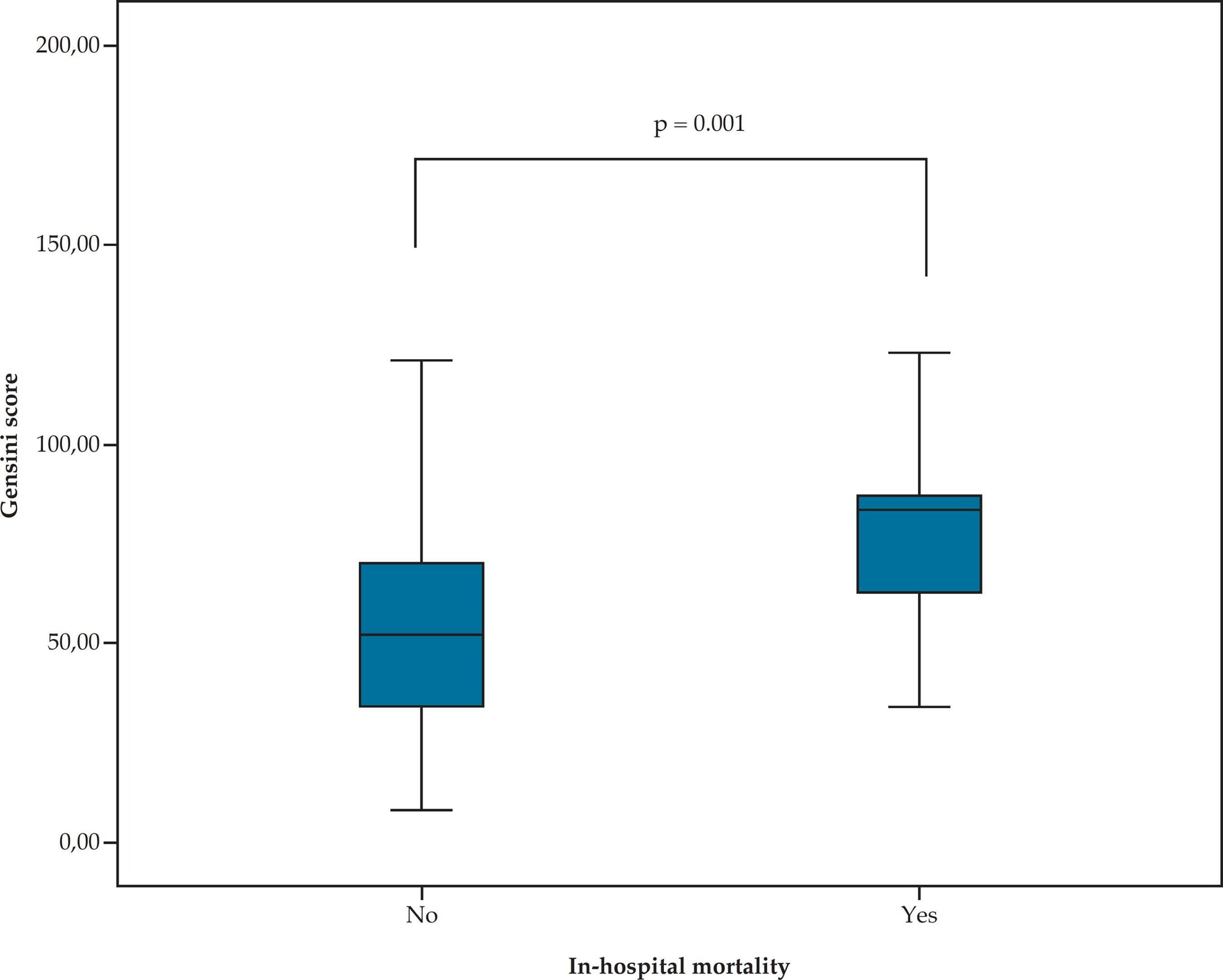
Of these 539 patients, 416 (77.2%) were male and mean age was 59.14 ± 12.68 years. In-hospital mortality rate was 5.4% (29 patients; 16 men). Mortality rate was 10.5% in female patients and 3.8% in males (P = 0.004). Mean Gensini scores were significantly different in the comparison between patients who survived (54.54 ± 26.34) and those who died (80.17 ± 26.51) (P = 0.001). The multivariable Cox proportional hazards regression analysis model revealed that the Gensini score (P = 0.037), female gender (P = 0.039), serum urea levels (P = 0.041), uric acid levels (P = 0.008) and LVEF (P = 0.001) were independently associated with in-hospital mortality in patients with STEMI undergoing P-PCI.

Conclusion:

The Gensini score is independently associated with in-hospital mortality in STEMI patients treated with P-PCI. Therefore, it might play an important role in risk stratification of STEMI patients.

  • Data Interpretation, Statistical
  • Hospital Mortality
  • Myocardial Infarction
  • Percutaneous Coronary Intervention
Read Full Article
Creative Commons Attribution (CC BY) Creative Commons license
01/01/2017 DOI: 10.5935/2359-4802.20170017 Views 2
ABC
Editorial

Cardiovascular Risk Factors: From Consolidated Knowledge to a Call for Action

Guilherme Brasil Grezzana et al. Lucia Campos Pellanda

Since the decade of 1950, the most prominent journal in cardiology in Brazil, Arquivos Brasileiros de Cardiologia (ABC), has been indexed in Medline. A total of 7,102 articles have been published since then, on various subjects related to clinical, invasive, surgical cardiology, as well as diagnostic methods.

We performed a systematic review of articles published in ABC during the period from January 2001 to June 2015 containing the MeSH term “cardiovascular risk factors”. Of the 3,087 titles of articles published in the period, 116 articles were identified. The abstracts of these articles were reviewed, and 107 articles, in which assessment of cardiovascular risk factors was the main topic, were included. The sample was composed by 102 original articles, 3 letters and 2 editorials. When specific topics were assessed, “cardiovascular factor or cardiovascular risk” was generally described in 88 articles, 6 articles focused on quality of life and cardiovascular risk factor, 4 articles described epidemiological factors and risk factors, 5 articles specifically explored systemic arterial hypertension and risk factors, 3 were guidelines on risk factors and 1 articles related risk factor with public health. However, when we focused only on isolated risk factors, there has been a clear preponderance of articles involving arterial hypertension (18% between 2010 and 2013) and a trend of increase in the number of articles on diabetes (approximately 10%) published on ABC in the last years.

[…]

  • Cardiovascular Diseases
  • Data Interpretation, Statistical
  • epidemiologic studies
  • Journals Articles
  • Prevention
  • Risk Factors
Read Full Article
Creative Commons Attribution (CC BY) Creative Commons license
01/10/2015 DOI: 10.5935/abc.20150128 Views 2
Figure 1
ABC
Original Article

Acute Coronary Syndrome Treatment Costs from the Perspective of the Supplementary Health System

Vanessa Teich et al. Tony Piha Lucas Fahham Haline Bianca Squiassi … Everton de Matos Paloni Paulo Miranda Denizar Vianna Araújo

Abstract

Background:

Acute coronary syndrome (ACS) is defined as a “group of clinical symptoms compatible with acute myocardial ischemia”, representing the leading cause of death worldwide, with a high clinical and financial impact. In this sense, the development of economic studies assessing the costs related to the treatment of ACS should be considered.

Objective:

To evaluate costs and length of hospital stay between groups of patients treated for ACS undergoing angioplasty with or without stent implantation (stent+ / stent-), coronary artery bypass surgery (CABG) and treated only clinically (Clinical) from the perspective of the Brazilian Supplementary Health System (SHS).

Methods:

A retrospective analysis of medical claims of beneficiaries of health plans was performed considering hospitalization costs and length of hospital stay for management of patients undergoing different types of treatment for ACS, between Jan/2010 and Jun/2012.

Results:

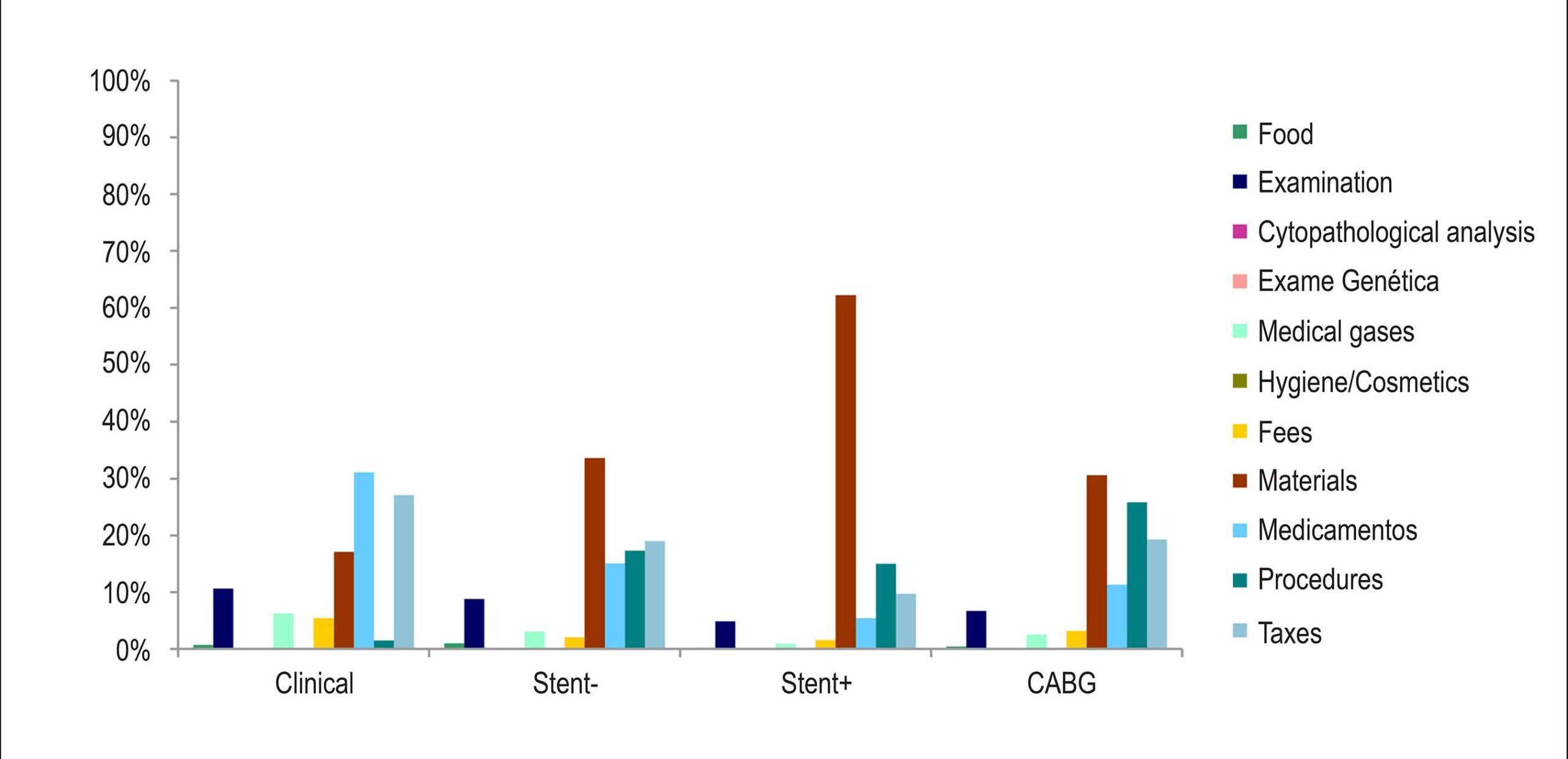
The average costs per patient were R$ 18,261.77, R$ 30,611.07, R$ 37,454.94 and R$ 40,883.37 in the following groups: Clinical, stent-, stent+ and CABG, respectively. The average costs per day of hospitalization were R$ 1,987.03, R$ 4,024.72, R$ 6,033.40 and R$ 2,663.82, respectively. The average results for length of stay were 9.19 days, 7.61 days, 6.19 days and 15.20 days in these same groups. The differences were significant between all groups except Clinical and stent- and between stent + and CABG groups for cost analysis.

Conclusion:

Hospitalization costs of SCA are high in the Brazilian SHS, being significantly higher when interventional procedures are required.

  • Acute Coronary Syndrome / economy
  • Data Interpretation, Statistical
  • Health Care Costs
  • Health Expenditures
  • Prepaid Health Plans
Read Full Article
Creative Commons Attribution (CC BY) Creative Commons license
01/10/2015 DOI: 10.5935/abc.20150129 Views 2
Figure 1
ABC
Original Article

Evolution of Cardiovascular Diseases Mortality in the Counties of the State of Rio de Janeiro from 1979 to 2010

Gabriel Porto Soares et al. Carlos Henrique Klein Nelson Albuquerque de Souza e Silva Glaucia Maria Moraes de Oliveira

Background:

Cardiovascular Diseases (CVD) are the leading cause of death in Brazil.

Objective:

To estimate total CVD, cerebrovascular disease (CBVD), and ischemic heart disease (IHD) mortality rates in adults in the counties of the state of Rio de Janeiro (SRJ), from 1979 to 2010.

Methods:

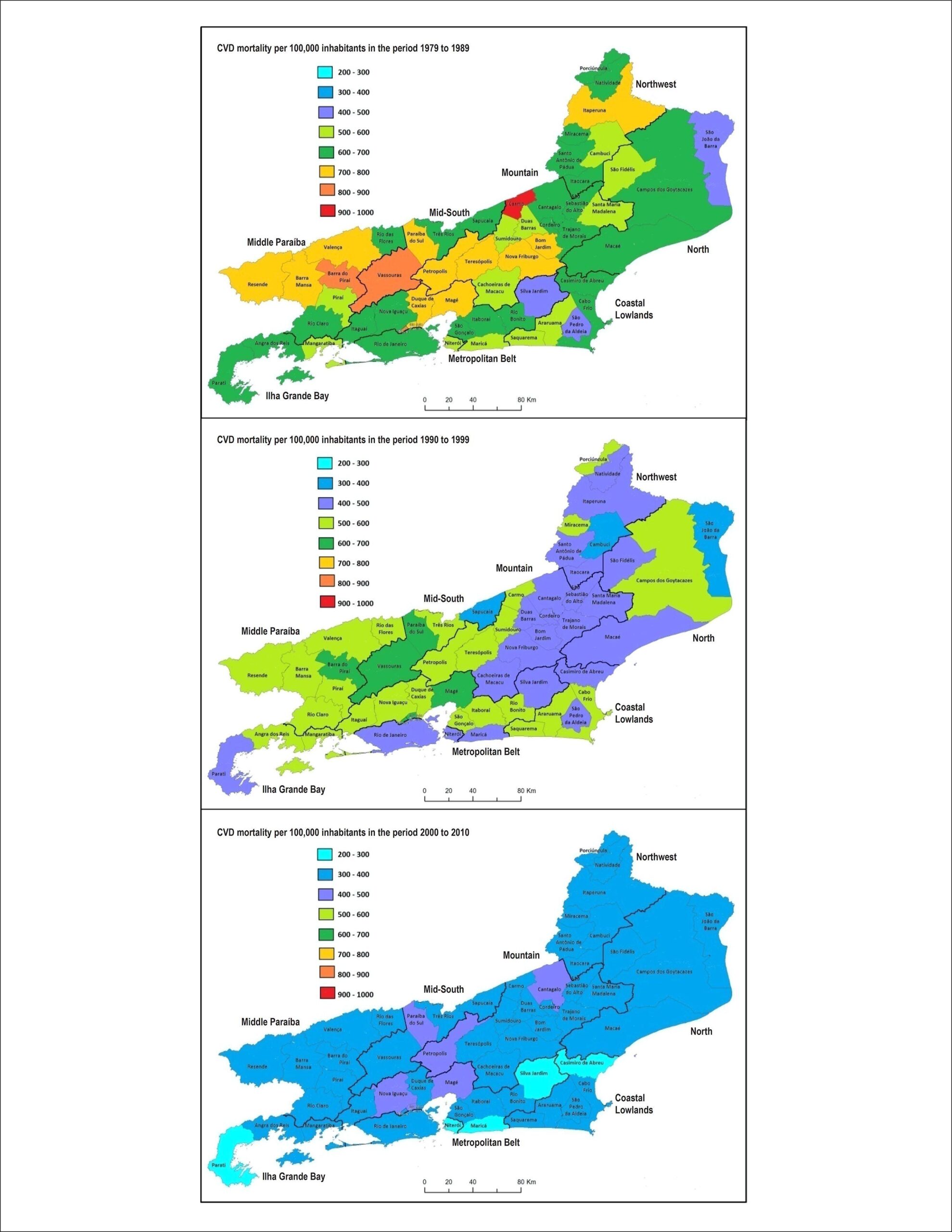
The counties of the SRJ were analysed according to their denominations stablished by the geopolitical structure of 1950, Each new county that have since been created, splitting from their original county, was grouped according to their former origin. Population Data were obtained from the Brazilian Institute of Geography and Statistics (IBGE), and data on deaths were obtained from DataSus/MS. Mean CVD, CBVD, and IHD mortality rates were estimated, compensated for deaths from ill-defined causes, and adjusted for age and sex using the direct method for three periods: 1979–1989, 1990–1999, and 2000–2010, Such results were spatially represented in maps. Tables were also constructed showing the mortality rates for each disease and year period.

Results:

There was a significant reduction in mortality rates across the three disease groups over the the three defined periods in all the county clusters analysed, Despite an initial mortality rate variation among the counties, it was observed a homogenization of such rates at the final period (2000–2010). The drop in CBVD mortality was greater than that in IHD mortality.

Conclusion:

Mortality due to CVD has steadily decreased in the SRJ in the last three decades. This reduction cannot be explained by greater access to high technology procedures or better control of cardiovascular risk factors as these facts have not occurred or happened in low proportion of cases with the exception of smoking which has decreased significantly. Therefore, it is necessary to seek explanations for this decrease, which may be related to improvements in the socioeconomic conditions of the population.

  • Cardiovascular Diseases, mortality
  • Data Interpretation, Statistical
  • Demographic Data
  • Local Government
Read Full Article
Creative Commons Attribution (CC BY) Creative Commons license
17/03/2015 DOI: 10.5935/abc.20150019 Views 2

How to cite this article

EndNote RIS

Electronic Document Format (Vancouver)

Maia AS. CHA2DS2-VASc Score: What More Can it Predict?. Arquivos Brasileiros de Cardiologia 2023;120(4):e20220672.

Electronic Document Format (ABNT)

Maia, Adnaldo da Silveira. CHA2DS2-VASc Score: What More Can it Predict?. Arquivos Brasileiros de Cardiologia, v. 120, n. 4, e20220672, Apr. 2023.

Electronic Document Format (APA)

Maia, A. S. (2023). CHA2DS2-VASc Score: What More Can it Predict?. Arquivos Brasileiros de Cardiologia, 120(4), e20220672.

Electronic Document Format (ISO)

Maia, Adnaldo da Silveira. CHA2DS2-VASc Score: What More Can it Predict?. Arquivos Brasileiros de Cardiologia [online]. 2023, vol. 120, n. 4, [cited 2026-10-14], e20220672. Available from: <https://journals.cardiol.br/en/article/cha2ds2-vasc-score-what-more-can-it-predict/>. ISSN 0066-782X

EndNote RIS

Electronic Document Format (Vancouver)

Pereira AG, Garzesi AM, Paiva SAR, Polegato BF. Pre-Clinical Meta-Analysis: Another Brick in the Wall. Arquivos Brasileiros de Cardiologia 2020;115(5):894-5.

Electronic Document Format (ABNT)

Pereira, Amanda Gomes; Garzesi, André Monti; Paiva, Sergio Alberto Rupp; Polegato, Bertha Furlan. Pre-Clinical Meta-Analysis: Another Brick in the Wall. Arquivos Brasileiros de Cardiologia, v. 115, n. 5, p. 894-895, Dec. 2020.

Electronic Document Format (APA)

Pereira, A. G., Garzesi, A. M., Paiva, S. A. R., & Polegato, B. F. (2020). Pre-Clinical Meta-Analysis: Another Brick in the Wall. Arquivos Brasileiros de Cardiologia, 115(5), 894-895.

Electronic Document Format (ISO)

Pereira, Amanda Gomes and Garzesi, André Monti and Paiva, Sergio Alberto Rupp and Polegato, Bertha Furlan. Pre-Clinical Meta-Analysis: Another Brick in the Wall. Arquivos Brasileiros de Cardiologia [online]. 2020, vol. 115, n. 5, [cited 2026-10-14], pp. 894-895. Available from: <https://journals.cardiol.br/en/article/pre-clinical-meta-analysis-another-brick-in-the-wall/>. ISSN 0066-782X

EndNote RIS

Electronic Document Format (Vancouver)

Abreu LM. Clinical Significance of Statistical Differences. Arquivos Brasileiros de Cardiologia 2020;114(2):281-3.

Electronic Document Format (ABNT)

Abreu, Luiz Maurino. Clinical Significance of Statistical Differences. Arquivos Brasileiros de Cardiologia, v. 114, n. 2, p. 281-283, Mar. 2020.

Electronic Document Format (APA)

Abreu, L. M. (2020). Clinical Significance of Statistical Differences. Arquivos Brasileiros de Cardiologia, 114(2), 281-283.

Electronic Document Format (ISO)

Abreu, Luiz Maurino. Clinical Significance of Statistical Differences. Arquivos Brasileiros de Cardiologia [online]. 2020, vol. 114, n. 2, [cited 2026-10-14], pp. 281-283. Available from: <https://journals.cardiol.br/en/article/clinical-significance-of-statistical-differences/>. ISSN 0066-782X

EndNote RIS

Electronic Document Format (Vancouver)

Leite CD, Pereira TC, Freitas MP, Tinôco NLW, Pereira FG, Menezes RVLV, Andrade MQS, et al. Effect of Hospital Accreditation Process in Outcomes of Patients with Acute Coronary Syndrome. International Journal of Cardiovascular Sciences 2019;32(6):607-14.

Electronic Document Format (ABNT)

Leite, Carolina de Deus; Pereira, Thiago Carvalho; Freitas, Matheus Pamponet; Tinôco, Natália Lima Walsh; Pereira, Flávia Guimarães; Menezes, Roberta Vicente Leite Viana; Andrade, Milena Quadros Sampaio; Boas, Samantha Pereira Rosa Vilas; Barbosa, Paulo José Bastos; Feitosa-Filho, Gilson Soares. Effect of Hospital Accreditation Process in Outcomes of Patients with Acute Coronary Syndrome. International Journal of Cardiovascular Sciences, v. 32, n. 6, p. 607-614, Apr. 2019.

Electronic Document Format (APA)

Leite, C. D., Pereira, T. C., Freitas, M. P., Tinôco, N. L. W., Pereira, F. G., Menezes, R. V. L. V., Andrade, M. Q. S., Boas, S. P. R. V., Barbosa, P. J. B., & Feitosa-Filho, G. S. (2019). Effect of Hospital Accreditation Process in Outcomes of Patients with Acute Coronary Syndrome. International Journal of Cardiovascular Sciences, 32(6), 607-614.

Electronic Document Format (ISO)

Leite, Carolina de Deus and Pereira, Thiago Carvalho and Freitas, Matheus Pamponet and Tinôco, Natália Lima Walsh and Pereira, Flávia Guimarães and Menezes, Roberta Vicente Leite Viana and Andrade, Milena Quadros Sampaio and Boas, Samantha Pereira Rosa Vilas and Barbosa, Paulo José Bastos and Feitosa-Filho, Gilson Soares. Effect of Hospital Accreditation Process in Outcomes of Patients with Acute Coronary Syndrome. International Journal of Cardiovascular Sciences [online]. 2019, vol. 32, n. 6, [cited 2026-10-14], pp. 607-614. Available from: <https://journals.cardiol.br/en/article/effect-of-hospital-accreditation-process-in-outcomes-of-patients-with-acute-coronary-syndrome/>. ISSN 2359-4802

EndNote RIS

Electronic Document Format (Vancouver)

Yildirim E, Iyisoy A, Celik M, Yuksel UC, Acikel C, Bugan B, Gokoglan Y, et al. The Relationship Between Gensini Score and In-Hospital Mortality in Patients with ST-Segment Elevation Myocardial Infarction. International Journal of Cardiovascular Sciences 2017;30(1):32-41.

Electronic Document Format (ABNT)

Yildirim, Erkan; Iyisoy, Atila; Celik, Murat; Yuksel, Uygar Cagdas; Acikel, Cengizhan; Bugan, Baris; Gokoglan, Yalcin. The Relationship Between Gensini Score and In-Hospital Mortality in Patients with ST-Segment Elevation Myocardial Infarction. International Journal of Cardiovascular Sciences, v. 30, n. 1, p. 32-41, Dec. 2016.

Electronic Document Format (APA)

Yildirim, E., Iyisoy, A., Celik, M., Yuksel, U. C., Acikel, C., Bugan, B., & Gokoglan, Y. (2017). The Relationship Between Gensini Score and In-Hospital Mortality in Patients with ST-Segment Elevation Myocardial Infarction. International Journal of Cardiovascular Sciences, 30(1), 32-41.

Electronic Document Format (ISO)

Yildirim, Erkan and Iyisoy, Atila and Celik, Murat and Yuksel, Uygar Cagdas and Acikel, Cengizhan and Bugan, Baris and Gokoglan, Yalcin. The Relationship Between Gensini Score and In-Hospital Mortality in Patients with ST-Segment Elevation Myocardial Infarction. International Journal of Cardiovascular Sciences [online]. 2017, vol. 30, n. 1, [cited 2026-10-14], pp. 32-41. Available from: <https://journals.cardiol.br/en/article/the-relationship-between-gensini-score-and-in-hospital-mortality-in-patients-with-st-segment-elevation-myocardial-infarction/>. ISSN 2359-4802

EndNote RIS

Electronic Document Format (Vancouver)

Grezzana GB, Pellanda LC. Cardiovascular Risk Factors: From Consolidated Knowledge to a Call for Action. Arquivos Brasileiros de Cardiologia 2015;105(4):325-7.

Electronic Document Format (ABNT)

Grezzana, Guilherme Brasil; Pellanda, Lucia Campos. Cardiovascular Risk Factors: From Consolidated Knowledge to a Call for Action. Arquivos Brasileiros de Cardiologia, v. 105, n. 4, p. 325-327, Sep. 2015.

Electronic Document Format (APA)

Grezzana, G. B., & Pellanda, L. C. (2015). Cardiovascular Risk Factors: From Consolidated Knowledge to a Call for Action. Arquivos Brasileiros de Cardiologia, 105(4), 325-327.

Electronic Document Format (ISO)

Grezzana, Guilherme Brasil and Pellanda, Lucia Campos. Cardiovascular Risk Factors: From Consolidated Knowledge to a Call for Action. Arquivos Brasileiros de Cardiologia [online]. 2015, vol. 105, n. 4, [cited 2026-10-14], pp. 325-327. Available from: <https://journals.cardiol.br/en/article/cardiovascular-risk-factors-from-consolidated-knowledge-to-a-call-for-action/>. ISSN 0066-782X

EndNote RIS

Electronic Document Format (Vancouver)

Teich V, Piha T, Fahham L, Squiassi HB, Paloni EM, Miranda P, Araújo DV, et al. Acute Coronary Syndrome Treatment Costs from the Perspective of the Supplementary Health System. Arquivos Brasileiros de Cardiologia 2015;105(4):339-44.

Electronic Document Format (ABNT)

Teich, Vanessa; Piha, Tony; Fahham, Lucas; Squiassi, Haline Bianca; Paloni, Everton de Matos; Miranda, Paulo; Araújo, Denizar Vianna. Acute Coronary Syndrome Treatment Costs from the Perspective of the Supplementary Health System. Arquivos Brasileiros de Cardiologia, v. 105, n. 4, p. 339-344, Sep. 2015.

Electronic Document Format (APA)

Teich, V., Piha, T., Fahham, L., Squiassi, H. B., Paloni, E. M., Miranda, P., & Araújo, D. V. (2015). Acute Coronary Syndrome Treatment Costs from the Perspective of the Supplementary Health System. Arquivos Brasileiros de Cardiologia, 105(4), 339-344.

Electronic Document Format (ISO)

Teich, Vanessa and Piha, Tony and Fahham, Lucas and Squiassi, Haline Bianca and Paloni, Everton de Matos and Miranda, Paulo and Araújo, Denizar Vianna. Acute Coronary Syndrome Treatment Costs from the Perspective of the Supplementary Health System. Arquivos Brasileiros de Cardiologia [online]. 2015, vol. 105, n. 4, [cited 2026-10-14], pp. 339-344. Available from: <https://journals.cardiol.br/en/article/acute-coronary-syndrome-treatment-costs-from-the-perspective-of-the-supplementary-health-system/>. ISSN 0066-782X

EndNote RIS

Electronic Document Format (Vancouver)

Soares GP, Klein CH, Silva NAS, Oliveira GMM. Evolution of Cardiovascular Diseases Mortality in the Counties of the State of Rio de Janeiro from 1979 to 2010. Arquivos Brasileiros de Cardiologia 2015;104(5):356-65.

Electronic Document Format (ABNT)

Soares, Gabriel Porto; Klein, Carlos Henrique; Silva, Nelson Albuquerque de Souza e; Oliveira, Glaucia Maria Moraes de. Evolution of Cardiovascular Diseases Mortality in the Counties of the State of Rio de Janeiro from 1979 to 2010. Arquivos Brasileiros de Cardiologia, v. 104, n. 5, p. 356-365, Mar. 2015.

Electronic Document Format (APA)

Soares, G. P., Klein, C. H., Silva, N. A. S. , & Oliveira, G. M. M. (2015). Evolution of Cardiovascular Diseases Mortality in the Counties of the State of Rio de Janeiro from 1979 to 2010. Arquivos Brasileiros de Cardiologia, 104(5), 356-365.

Electronic Document Format (ISO)

Soares, Gabriel Porto and Klein, Carlos Henrique and Silva, Nelson Albuquerque de Souza e and Oliveira, Glaucia Maria Moraes de. Evolution of Cardiovascular Diseases Mortality in the Counties of the State of Rio de Janeiro from 1979 to 2010. Arquivos Brasileiros de Cardiologia [online]. 2015, vol. 104, n. 5, [cited 2026-10-14], pp. 356-365. Available from: <https://journals.cardiol.br/en/article/evolution-of-cardiovascular-diseases-mortality-in-the-counties-of-the-state-of-rio-de-janeiro-from-1979-to-2010/>. ISSN 0066-782X

  • About ABC Family
  • Internal Regulation
  • Editorial Board
  • Brazilian Society of Cardiology (SBC)

Issues

SBC Guidelines

  • Videos
  • Podcasts
  • News