ABC Family Arquivos Brasileiros de Cardiologia International Journal of Cardiovascular Sciences ABC Heart Failure & Cardiomyopathy ABC Imagem Cardiovascular
Português English
ABC Family
Português English
  • About
    • About ABC Family
    • Internal Regulation
    • Editorial Board
    • Brazilian Society of Cardiology (SBC)
  • Issues
  • SBC Guidelines
  • Content
    • Videos
    • Podcasts
    • News
  • About
    • About ABC Family
    • Internal Regulation
    • Editorial Board
    • Brazilian Society of Cardiology (SBC)
  • Issues
  • SBC Guidelines
  • Content
    • Videos
    • Podcasts
    • News

ABC Family

  • ABC Family
  • Arquivos Brasileiros de Cardiologia
  • International Journal of Cardiovascular Sciences
  • ABC Heart Failure & Cardiomyopathy
  • ABC Imagem Cardiovascular
Search in

No content found.

Journals
Ordering
Article types
Others

  1. Home
  2. Keyword: Coronary Artery Disease/diagnostic imaging
Figure 1
ABC
Editorial

Nuclear Cardiology in 2020 – Perspectives of the New SBC Guideline

Cláudio Tinoco Mesquita et al. Wilter dos Santos Ker Jader Cunha de Azevedo

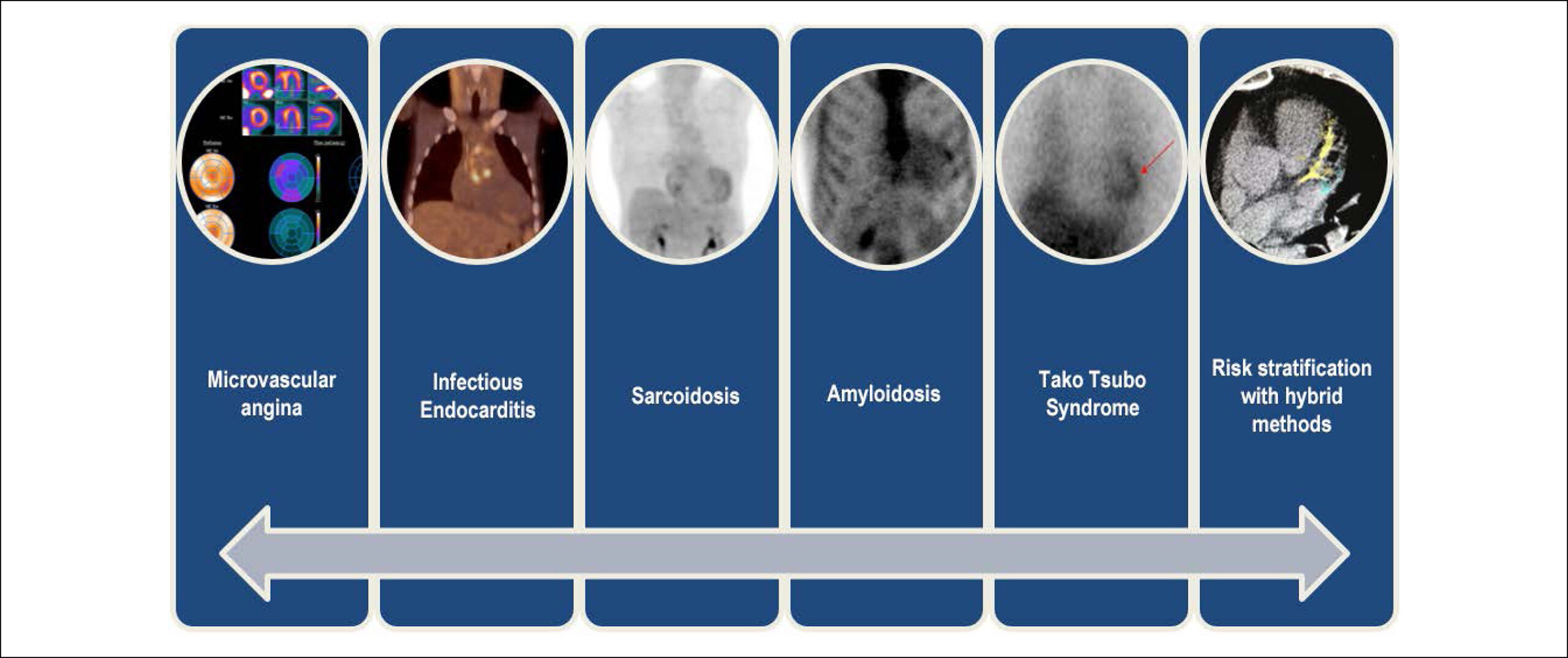
French physicist François Arago’s quote is one of the most powerful summaries of scientific activity, starting with the search for existing knowledge, followed by the discovery of new information and culminating in their prompt communication. This flow is essential for scientific progress to reach and transform society. Thus, in the medical area, guidelines are considered to be essential for the organization and guidance of conducts and knowledge in a structured manner and within a pre-established method. The development of consistent and up-to-date guidelines is one of the most important tasks of a medical specialty society and involves the considerable effort of multiple specialists in the field of knowledge, reviewers, layout editors, among others. In addition to the arduous and complex task, the preparation of recommendations has against it the uninterrupted flow of publications that appear every day and that can change the current state of knowledge. We should highlight the amplitude, up-to-date status, and extensive applicability of this Nuclear Cardiology Guideline jointly developed by the Nuclear Cardiology Area of the Department of Ergometry, Exercise, Nuclear Cardiology and Cardiovascular Rehabilitation (DERC), by the Department of Cardiovascular Imaging (DIC) of the Brazilian Society of Cardiology (SBC) and the Brazilian Society of Nuclear Medicine (SBMN).

[…]
  • Biomedical Technology/trends
  • Coronary Artery Disease/diagnostic imaging
  • Myocardial Perfusion Imaging/methods
  • Positron Emission Tomography Computed Tomography/trends
  • Prognosis
  • Tomography Emission-Computed, Single/methods
Read Full Article
Creative Commons Attribution (CC BY) Creative Commons license
20/03/2020 DOI: 10.36660/abc.20190874 Views 1
Figure 1
IJCS
Case Report

Quantification of Myocardial Ischemia: Comparison between Myocardial SPECT and 13NH3 PET/TC

Angelica Mazzoletti et al. Francesco Dondi Maria Gazzilli Raffaele Giubbini

Introduction

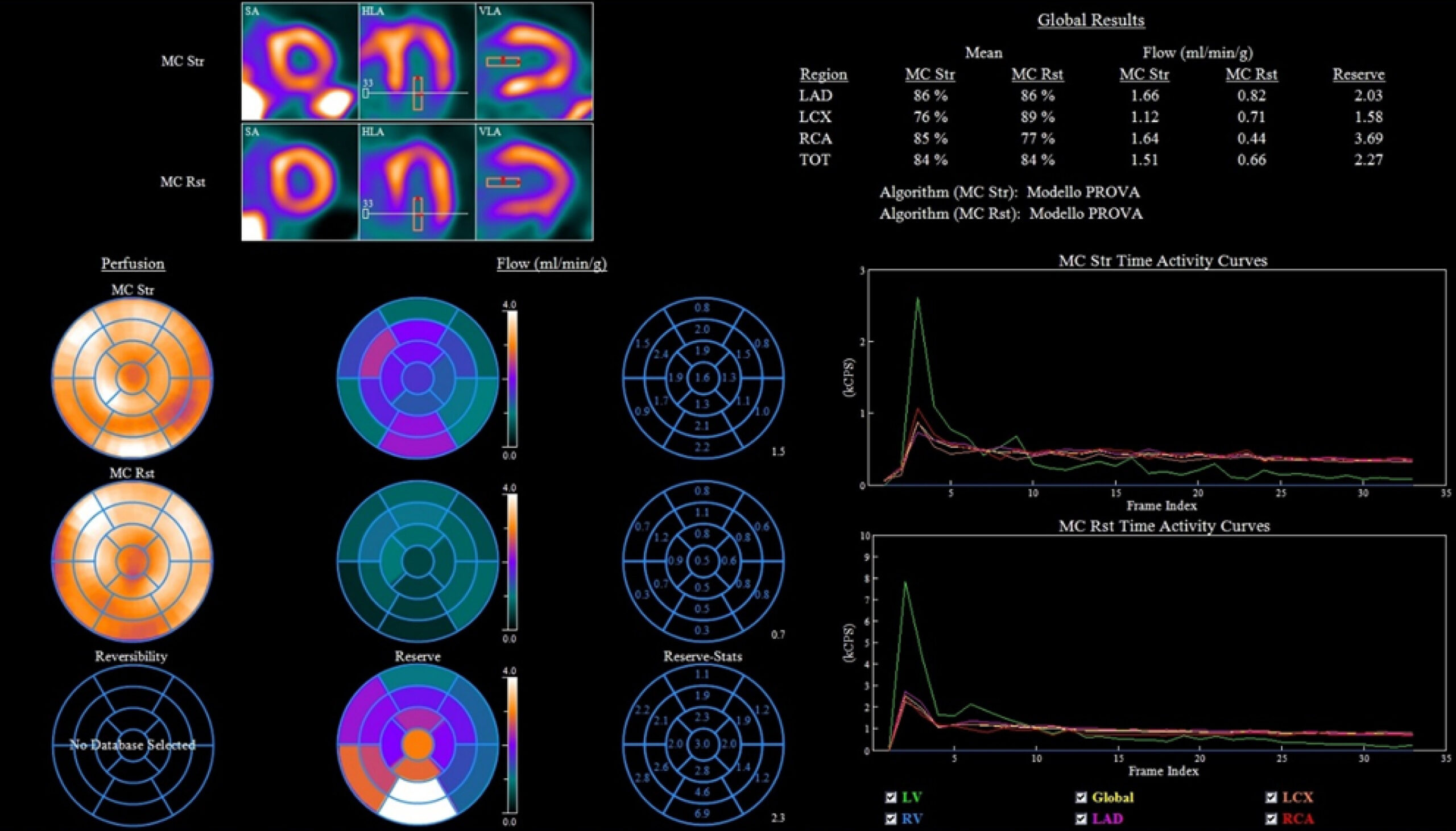
Myocardial perfusion is a very important tool to diagnose and quantify hypoperfusion related to coronary artery disease (CAD). Single-photon emission computed tomography (SPECT) myocardial perfusion imaging (MPI) is a widely available nuclear medicine imaging tool. Cardiac 13N-ammonia positron emission tomography/computed tomography (13NH3 PET/CT) has increased its capability to provide quantitative measures of myocardial blood flow at rest and under stress, as well as of coronary flow reserve (CFR), in addition to better image quality.

[…]

  • Coronary Artery Disease/diagnostic imaging
  • Myocardial Ischemia/diagnosis
  • Positron-Emission Tomography/method
  • Tomography, Emission-Computed, Single-Photon/methods
Read Full Article
Creative Commons Attribution (CC BY) Creative Commons license
08/08/2019 DOI: 10.5935/2359-4802.20190035 Views 2
ABC
Editorial

Appropriate Use Criteria for Coronary Angiography at Two Hospitals in Southern Brazil: "Doing the Right Things And Doing Things Right"

Marco A. Magalhaes et al. Jamil R. Cade

Cardiovascular disease and particularly coronary artery disease (CAD) remain a global health issue, notwithstanding major advances in cardiovascular care that have resulted in a reduction in CAD mortality over the last decades. Indeed, the most recent trends point towards a bottoming out of CAD mortality rates and, for certain subgroups, rates might even be increasing. The reasons for these alarming trends relate to the prevalence of risk factors, health care system failures in dealing with chronic diseases, unequal access to technology, decreasing levels of investment in cardiovascular research, and persistent heterogeneity in the quality of care.

In contrast, cardiovascular health care costs continue to follow a linear upward trend. As a consequence, the delivery of high-value cardiovascular care has been reduced. In the long run, cardiovascular research and innovation should stimulate the development of novel drugs and therapies. In the short term, for struggling health care systems facing escalating costs, avoiding inappropriate tests and ineffective therapies is part of a value-based healthcare agenda., The fundamental concept of moving from volume to value may mitigate conflicting expectations among payers, providers, patients and physicians, who should share a common objective of reducing unwarranted health costs while improving outcomes.

[…]

  • Coronary Angiography
  • Coronary Artery Disease/diagnostic imaging
  • Epidemiology
  • Percutaneous Coronary Intervention/methods
  • Síndrome Coronariana Aguda
Read Full Article
Creative Commons Attribution (CC BY) Creative Commons license
06/06/2019 DOI: 10.5935/abc.20190084 Views 1
ABC
Original Article

Analysis of the Appropriate Use Criteria for Coronary Angiography in Two Cardiology Services of Southern Brazil

Luis Sérgio Carvalho Luciano et al. Roberto Léo da Silva Ozir Miguel Londero Filho Leandro Waldrich … Luciano Panata Ana Paula Trombetta Julio Cesar Preve Tammuz Fattah Luiz Carlos Giuliano Luiz Eduardo Koenig São Thiago

Abstract

Background:

Despite its great relevance, there are no studies in our country evaluating the application of the 2012 guidelines for the appropriate use of cardiac diagnostic catheterization.

Objective:

To analyze the adequacy of coronary angiography performed in two hospitals in the southern region of Brazil.

Methods:

This is a multicenter cross-sectional study, which analyzed indications, results and proposals for the treatment of 737 coronary angiograms performed in a tertiary hospital with multiple specialties (Hospital A) and a tertiary cardiology hospital (Hospital B). Elective or emergency coronary angiographies were included, except for cases of acute myocardial infarction with ST segment elevation. The level of statistical significance adopted was 5% (p < 0.05).

Results:

Of the 737 coronary angiograms, 63.9% were performed in male patients. The mean age was 61.6 years. The indication was acute coronary syndrome in 57.1%, and investigation of coronary artery disease in 42.9% of the cases. Regarding appropriation, 80.6% were classified as appropriate, 15.1% occasionally appropriate, and 4.3% rarely appropriate. The proposed treatment was clinical for 62.7%, percutaneous coronary intervention for 24.6%, and myocardial revascularization surgery for 12.7% of the cases. Of the coronary angiographies classified as rarely appropriate, 56.2% were related to non-performance of previous functional tests, and 21.9% showed severe coronary lesions. However, regardless of the outcome of coronary angiography, all patients in this group were indicated for clinical treatment.

Conclusion:

We observed a low number of rarely appropriate coronary angiograms in our sample. The guideline recommendation in these cases was adequate, and no patient required revascularization treatment. Most of these cases are due to non-performance of functional tests.

  • Acute coronary syndrome
  • Coronary Angiography
  • Coronary Artery Disease/diagnostic imaging
  • Epidemiology
  • Multicenter Study
  • Percutaneous Coronary Intervention
Read Full Article
Creative Commons Attribution (CC BY) Creative Commons license
14/03/2019 DOI: 10.5935/abc.20190055 Views 2
ABC
Viewpoint

Coronary Computed Tomography Angiography Takes the Center Stage and Here is Why

Illan Gottlieb et al. Marcio Sommer Bittencourt Carlos Eduardo Rochitte João L. Cavalcante

Max Planck once said that “A new scientific truth does not triumph by convincing its opponents and making them see the light, but rather because its opponents eventually die, and a new generation grows up that is familiar with it.” In its beginnings, coronary computed tomography angiography (CCTA) was accused of having too low accuracy for the diagnosis of obstructive coronary artery disease (CAD) to be used in clinical practice. Over the last decade, major technical developments such as larger axial coverage (from 2 cm to 16 cm) and improved temporal resolution, have enabled CCTA to become by far the most accurate non-invasive imaging method for diagnosis of obstructive CAD, with sensitivity and specificity of approximately 95% and 90%, respectively.

Then CCTA was burdened with the accusation of exposing patients to radiation doses so high, that warranted some society guidelines to specifically point this out and limit its use. At that time, CCTA exposed patients to doses ranging from 20 to 25 mSV, while triphasic abdomen CT exposed patients to 30 to 40 mSv and scintigraphic myocardial perfusion studies with Thallium used up to 40 mSv. In 2018, radiation exposure from CCTA dropped to well below 5 mSv (most advanced clinical centers use much less), a fraction of the dose used in myocardial perfusion studies with MIBI tetrophosmin. Then the cost-effectiveness wave came with societies rightfully demanding proof that CCTA offered more value at an acceptable cost compared to other imaging modalities, and CCTA once again proved to be more cost-effective than other modalities. Although one hardly finds cost-effectiveness studies comparing nuclear scans with ECG treadmill tests, providing better diagnosis performance is not enough anymore. More recently, this strategy has even been put into challenge in large randomized clinical trials comparing CCTA with the standard of care in the investigation of suspected CAD both in the acute and in the outpatient settings.–

[…]

  • Computed Tomography Angiography
  • Coronary Artery Disease/diagnostic imaging
  • Coronary Artery Disease/physiopathology
  • Coronary Artery Disease/prevention and control
  • Tomography, X-Ray Computed
Read Full Article
Creative Commons Attribution (CC BY) Creative Commons license
01/01/2019 DOI: 10.5935/abc.20190003 Views 1

How to cite this article

EndNote RIS

Electronic Document Format (Vancouver)

Mesquita CT, Ker WS, Azevedo JC. Nuclear Cardiology in 2020 – Perspectives of the New SBC Guideline. Arquivos Brasileiros de Cardiologia 2020;114(2):196-8.

Electronic Document Format (ABNT)

Mesquita, Cláudio Tinoco; Ker, Wilter dos Santos; Azevedo, Jader Cunha de. Nuclear Cardiology in 2020 – Perspectives of the New SBC Guideline. Arquivos Brasileiros de Cardiologia, v. 114, n. 2, p. 196-198, Mar. 2020.

Electronic Document Format (APA)

Mesquita, C. T., Ker, W. S., & Azevedo, J. C. (2020). Nuclear Cardiology in 2020 – Perspectives of the New SBC Guideline. Arquivos Brasileiros de Cardiologia, 114(2), 196-198.

Electronic Document Format (ISO)

Mesquita, Cláudio Tinoco and Ker, Wilter dos Santos and Azevedo, Jader Cunha de. Nuclear Cardiology in 2020 – Perspectives of the New SBC Guideline. Arquivos Brasileiros de Cardiologia [online]. 2020, vol. 114, n. 2, [cited 2026-10-14], pp. 196-198. Available from: <https://journals.cardiol.br/en/article/nuclear-cardiology-in-2020-perspectives-of-the-new-sbc-guideline/>. ISSN 0066-782X

EndNote RIS

Electronic Document Format (Vancouver)

Mazzoletti A, Dondi F, Gazzilli M, Giubbini R. Quantification of Myocardial Ischemia: Comparison between Myocardial SPECT and 13NH3 PET/TC. International Journal of Cardiovascular Sciences 2019;33(2):188-91.

Electronic Document Format (ABNT)

Mazzoletti, Angelica; Dondi, Francesco; Gazzilli, Maria; Giubbini, Raffaele. Quantification of Myocardial Ischemia: Comparison between Myocardial SPECT and 13NH3 PET/TC. International Journal of Cardiovascular Sciences, v. 33, n. 2, p. 188-191, Aug. 2019.

Electronic Document Format (APA)

Mazzoletti, A., Dondi, F., Gazzilli, M., & Giubbini, R. (2019). Quantification of Myocardial Ischemia: Comparison between Myocardial SPECT and 13NH3 PET/TC. International Journal of Cardiovascular Sciences, 33(2), 188-191.

Electronic Document Format (ISO)

Mazzoletti, Angelica and Dondi, Francesco and Gazzilli, Maria and Giubbini, Raffaele. Quantification of Myocardial Ischemia: Comparison between Myocardial SPECT and 13NH3 PET/TC. International Journal of Cardiovascular Sciences [online]. 2019, vol. 33, n. 2, [cited 2026-10-14], pp. 188-191. Available from: <https://journals.cardiol.br/en/article/quantification-of-myocardial-ischemia-comparison-between-myocardial-spect-and-13nh3-pet-tc/>. ISSN 2359-4802

EndNote RIS

Electronic Document Format (Vancouver)

Magalhaes MA, Cade JR. Appropriate Use Criteria for Coronary Angiography at Two Hospitals in Southern Brazil: “Doing the Right Things And Doing Things Right”. Arquivos Brasileiros de Cardiologia 2019;112(5):532-3.

Electronic Document Format (ABNT)

Magalhaes, Marco A.; Cade, Jamil R.. Appropriate Use Criteria for Coronary Angiography at Two Hospitals in Southern Brazil: “Doing the Right Things And Doing Things Right”. Arquivos Brasileiros de Cardiologia, v. 112, n. 5, p. 532-533, Jun. 2019.

Electronic Document Format (APA)

Magalhaes, M. A., & Cade, J. R. (2019). Appropriate Use Criteria for Coronary Angiography at Two Hospitals in Southern Brazil: “Doing the Right Things And Doing Things Right”. Arquivos Brasileiros de Cardiologia, 112(5), 532-533.

Electronic Document Format (ISO)

Magalhaes, Marco A. and Cade, Jamil R.. Appropriate Use Criteria for Coronary Angiography at Two Hospitals in Southern Brazil: “Doing the Right Things And Doing Things Right”. Arquivos Brasileiros de Cardiologia [online]. 2019, vol. 112, n. 5, [cited 2026-10-14], pp. 532-533. Available from: <https://journals.cardiol.br/en/article/appropriate-use-criteria-for-coronary-angiography-at-two-hospitals-in-southern-brazil-doing-the-right-things-and-doing-things-right/>. ISSN 0066-782X

EndNote RIS

Electronic Document Format (Vancouver)

Luciano LSC, Silva RL, Londero Filho OM, Waldrich L, Panata L, Trombetta AP, Preve JC, et al. Analysis of the Appropriate Use Criteria for Coronary Angiography in Two Cardiology Services of Southern Brazil. Arquivos Brasileiros de Cardiologia 2019;112(5):526-31.

Electronic Document Format (ABNT)

Luciano, Luis Sérgio Carvalho; Silva, Roberto Léo da; Londero Filho, Ozir Miguel; Waldrich, Leandro; Panata, Luciano; Trombetta, Ana Paula; Preve, Julio Cesar; Fattah, Tammuz; Giuliano, Luiz Carlos; Thiago, Luiz Eduardo Koenig São. Analysis of the Appropriate Use Criteria for Coronary Angiography in Two Cardiology Services of Southern Brazil. Arquivos Brasileiros de Cardiologia, v. 112, n. 5, p. 526-531, Mar. 2019.

Electronic Document Format (APA)

Luciano, L. S. C., Silva, R. L. , Londero Filho, O. M., Waldrich, L., Panata, L., Trombetta, A. P., Preve, J. C., Fattah, T., Giuliano, L. C., & Thiago, L. E. K. S. (2019). Analysis of the Appropriate Use Criteria for Coronary Angiography in Two Cardiology Services of Southern Brazil. Arquivos Brasileiros de Cardiologia, 112(5), 526-531.

Electronic Document Format (ISO)

Luciano, Luis Sérgio Carvalho and Silva, Roberto Léo da and Londero Filho, Ozir Miguel and Waldrich, Leandro and Panata, Luciano and Trombetta, Ana Paula and Preve, Julio Cesar and Fattah, Tammuz and Giuliano, Luiz Carlos and Thiago, Luiz Eduardo Koenig São. Analysis of the Appropriate Use Criteria for Coronary Angiography in Two Cardiology Services of Southern Brazil. Arquivos Brasileiros de Cardiologia [online]. 2019, vol. 112, n. 5, [cited 2026-10-14], pp. 526-531. Available from: <https://journals.cardiol.br/en/article/analysis-of-the-appropriate-use-criteria-for-coronary-angiography-in-two-cardiology-services-of-southern-brazil/>. ISSN 0066-782X

EndNote RIS

Electronic Document Format (Vancouver)

Gottlieb I, Bittencourt MS, Rochitte CE, Cavalcante JL. Coronary Computed Tomography Angiography Takes the Center Stage and Here is Why. Arquivos Brasileiros de Cardiologia 2019;112(1):104-6.

Electronic Document Format (ABNT)

Gottlieb, Illan; Bittencourt, Marcio Sommer; Rochitte, Carlos Eduardo; Cavalcante, João L.. Coronary Computed Tomography Angiography Takes the Center Stage and Here is Why. Arquivos Brasileiros de Cardiologia, v. 112, n. 1, p. 104-106, Dec. 2018.

Electronic Document Format (APA)

Gottlieb, I., Bittencourt, M. S., Rochitte, C. E., & Cavalcante, J. L. (2019). Coronary Computed Tomography Angiography Takes the Center Stage and Here is Why. Arquivos Brasileiros de Cardiologia, 112(1), 104-106.

Electronic Document Format (ISO)

Gottlieb, Illan and Bittencourt, Marcio Sommer and Rochitte, Carlos Eduardo and Cavalcante, João L.. Coronary Computed Tomography Angiography Takes the Center Stage and Here is Why. Arquivos Brasileiros de Cardiologia [online]. 2019, vol. 112, n. 1, [cited 2026-10-14], pp. 104-106. Available from: <https://journals.cardiol.br/en/article/coronary-computed-tomography-angiography-takes-the-center-stage-and-here-is-why/>. ISSN 0066-782X

  • About ABC Family
  • Internal Regulation
  • Editorial Board
  • Brazilian Society of Cardiology (SBC)

Issues

SBC Guidelines

  • Videos
  • Podcasts
  • News