ABC Family Arquivos Brasileiros de Cardiologia International Journal of Cardiovascular Sciences ABC Heart Failure & Cardiomyopathy ABC Imagem Cardiovascular
Português English
ABC Family
Português English
  • About
    • About ABC Family
    • Internal Regulation
    • Editorial Board
    • Brazilian Society of Cardiology (SBC)
  • Issues
  • SBC Guidelines
  • Content
    • Videos
    • Podcasts
    • News
  • About
    • About ABC Family
    • Internal Regulation
    • Editorial Board
    • Brazilian Society of Cardiology (SBC)
  • Issues
  • SBC Guidelines
  • Content
    • Videos
    • Podcasts
    • News

ABC Family

  • ABC Family
  • Arquivos Brasileiros de Cardiologia
  • International Journal of Cardiovascular Sciences
  • ABC Heart Failure & Cardiomyopathy
  • ABC Imagem Cardiovascular
Search in

No content found.

Journals
Ordering
Article types
Others

  1. Home
  2. Keyword: Aortic Stenosis
ABC
Editorial

The Forgotten Valve is not to be Forgiven: Tricuspid Regurgitation Impact on Clinical Outcomes after Transcatheter Aortic Valve Implantation

Gabriel Kanhouche et al. Henrique B. Ribeiro

Severe aortic stenosis (AS) is a frequent and potentially severe disease if left untreated. Despite the widespread adoption of surgical aortic valve replacement (SAVR) and more recently transcatheter aortic valve implantation (TAVI), mortality rates in the mid- to long-term follow-up remain relatively high, especially for higher-risk patients. , Yet, transfemoral TAVI became the dominant approach for patients with age > 70 years, enabling a significant reduction in the all-cause and cardiac mortality rates with respect to SAVR, even though the prognosis of a certain subgroup of patients is still jeopardized. Therefore, prior studies in the TAVI field have focused on helping in risk stratifying such patients. For instance, Genereux et al. , have shown that the extent of cardiac damage among patients with AS undergoing TAVI could play an important role. Accordingly, a stepwise impact in the mortality at follow-up was demonstrated when patients with AS also had left chamber involvement, with or without mitral regurgitation, followed by pulmonary hypertension, with or without tricuspid regurgitation (TR), and finally with right ventricle dysfunction. Of note, the last two stages (with moderate or severe TR and right ventricle dysfunction) represent the highest mortality rate, up to 20% at 1 year. Apart from TR grade, there is controversy on whether the changes in TR grade in the follow-up might also affect the clinical outcomes.

In this journal issue, Erbano et al. evaluated the association between TR and mortality in a systematic review and meta-analysis of patients with AS undergoing TAVI and further assessed the changes in TR severity post-TAVI and its relationship with short and mid-term mortality. The primary endpoint was defined as the incidence of all-cause mortality according to TR grade at baseline. Secondary endpoints included cardiac mortality and heart failure hospitalization. The authors included 24 studies and more than 45.000 patients, whose mean age was 81.7±8.5 years; 52% were female, with a mean Society of Thoracic Surgeons (STS) score of 8.2±6.0. Approximately 22% of patients had moderate or severe TR at baseline. After a mean follow-up of 1.2 years, pooled analysis of 14 studies revealed that higher grades of TR were associated with a worse prognosis. Severe TR was associated with an 83% increased mortality compared to no/mild TR in the short-term and 56% in the mid-term. In the pooled analysis, the persistence of moderate/severe TR grades, after a mean follow-up of 21 months post-TAVI, was also associated with a 2-fold increase in all-cause mortality.

[…]
  • Aortic Stenosis
  • Extravalvular Cardiac Damage
  • TAVI
  • Transcatheter Aortic Valve Implantation
  • tricuspid regurgitation
Read Full Article
Creative Commons Attribution (CC BY) Creative Commons license
14/08/2023 DOI: 10.36660/abc.20230410
Figure 1
ABCIC
My Approach To

My Approach to Aortic Stenosis Assessment with Discrepant Quantification

Adenalva Lima de Souza Beck et al. Luiz Carlos Madruga Ribeiro

Introduction

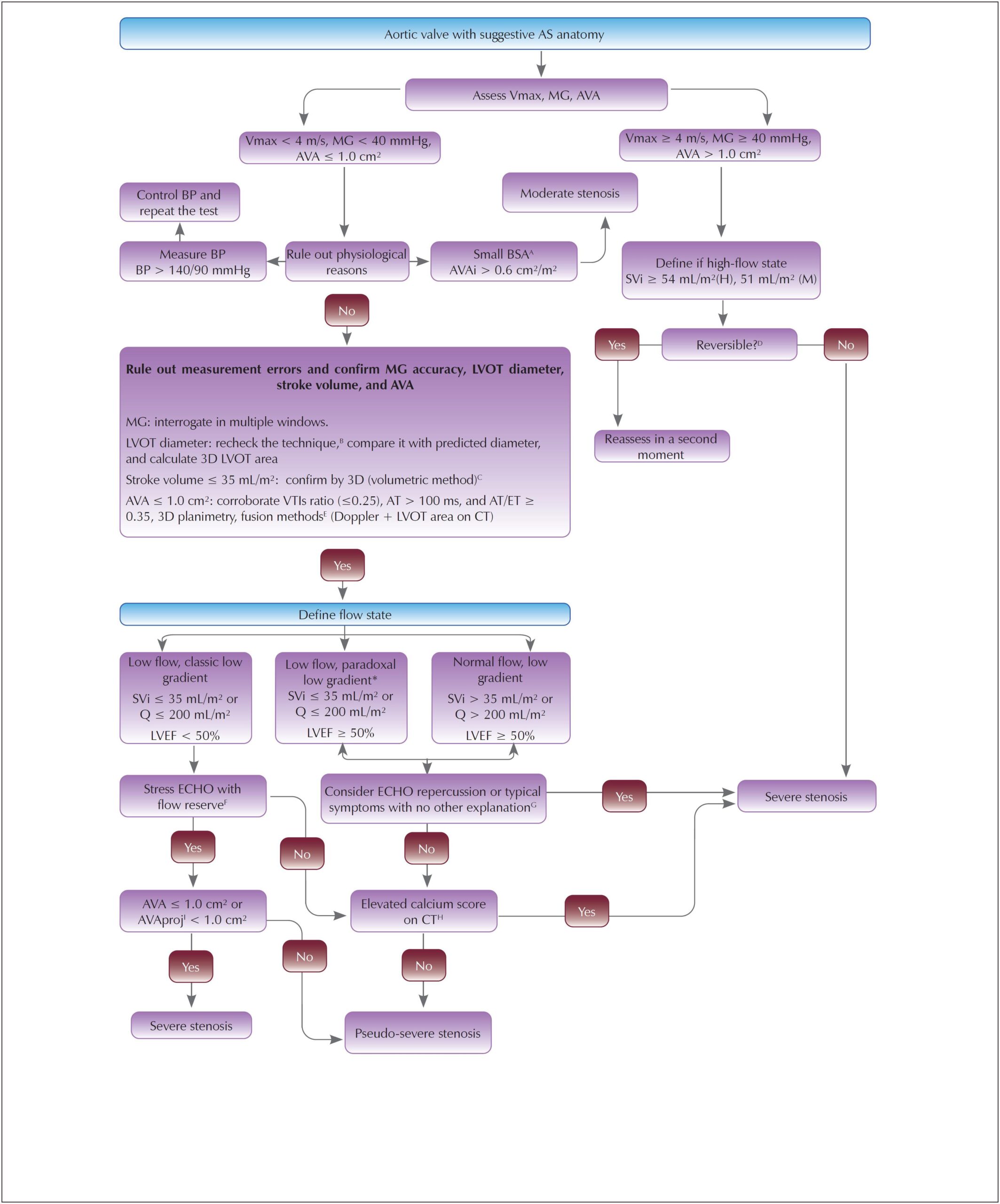
Aortic stenosis (AS) is the most common primary valve disease and an important cause of morbidity and mortality worldwide. Echocardiography is the first-line method for its diagnosis, quantification of severity, prognosis, and determination of intervention timing.

The association of maximum velocity (Vmax) ≥ 4m/s, aortic valve area (AVA) ≤ 1.0 cm², and mean gradient (MG) ≥ 40 mmHg defines the diagnosis of classic severe AS. However, MG and AVA are discrepant (AVA ≤ 1.0 cm², MG < 40 mmHg) in 30–40% of the population with severe AS, leading to low-gradient AS (LGAS), the focus of this article. Less frequently, high-gradient AS can also occur in cases of MG ≥ 40 mmHg and AVA > 1.0 cm² due to high flow situations.

[…]

  • Aortic Stenosis
  • Diagnosis
  • Echocardiography
Read Full Article
Creative Commons Attribution (CC BY) Creative Commons license
30/03/2022 DOI: 10.47593/2675-312X/20223501ecom21
ABC
Original Article

The Dysfunctional Scenario of the Major Components Responsible for Myocardial Calcium Balance in Heart Failure Induced by Aortic Stenosis

Vitor Loureiro da Silva et al. Sérgio Luiz Borges de Souza Gustavo Augusto Ferreira Mota Dijon H. S. Campos … Alexandre Barroso Melo Danielle Fernandes Vileigas Paula Grippa Sant’Ana Priscila Murucci Coelho Silméia Garcia Zanati Bazan André Soares Leopoldo Antônio Carlos Cicogna

Abstract

Background

Maladaptive cardiac remodelling is characterized by diastolic and systolic dysfunction, culminating in heart failure. In this context, the dysfunctional scenario of cardiac calcium (Ca2+) handling has been poorly studied. An experimental model of aortic stenosis has been extensively used to improve knowledge about the key mechanisms of cardiac pathologic remodelling.

Objective

To understand the dysfunctional process of the major components responsible for Ca2+ balance and its influence on cardiac function in heart failure induced by aortic stenosis.

Methods

Male 21-day-old Wistar rats were distributed into two groups: control (sham; n= 28) and aortic stenosis (AoS; n= 18). Cardiac function was analysed by echocardiogram, isolated papillary muscle, and isolated cardiomyocytes. In the papillary muscle assay, SERCA2a and L-type Ca2+ channel activity was evaluated. The isolated cardiomyocyte assay evaluated Ca2+ handling. Ca2+ handling protein expression was analysed by western blot. Statistical significance was set at p <0.05.

Results

Papillary muscles and cardiomyocytes from AoS hearts displayed mechanical malfunction. AoS rats presented a slower time to the Ca2+ peak, reduced Ca2+ myofilament sensitivity, impaired sarcoplasmic reticulum Ca2+ influx and reuptake ability, and SERCA2a and L-type calcium channel (LTCC) dysfunction. Moreover, AoS animals presented increased expression of SERCA2a, LTCCs, and the Na+/Ca2+ exchanger.

Conclusion

Systolic and diastolic heart failure due to supravalvular aortic stenosis was paralleled by impairment of cellular Ca2+ influx and inhibition of sarcoplasmic reticulum Ca2+ reuptake due to LTCC and SERCA2a dysfunction, as well as changes in Ca2+ handling and expression of the major proteins responsible for cellular Ca2+ homeostasis.

  • Aortic Stenosis
  • calcium handling proteins
  • Heart Failure
  • isolated cardiomyocytes
  • papillary muscle
Read Full Article
Creative Commons Attribution (CC BY) Creative Commons license
28/02/2022 DOI: 10.36660/abc.20200618
Figure 1
ABCHF
Review Article

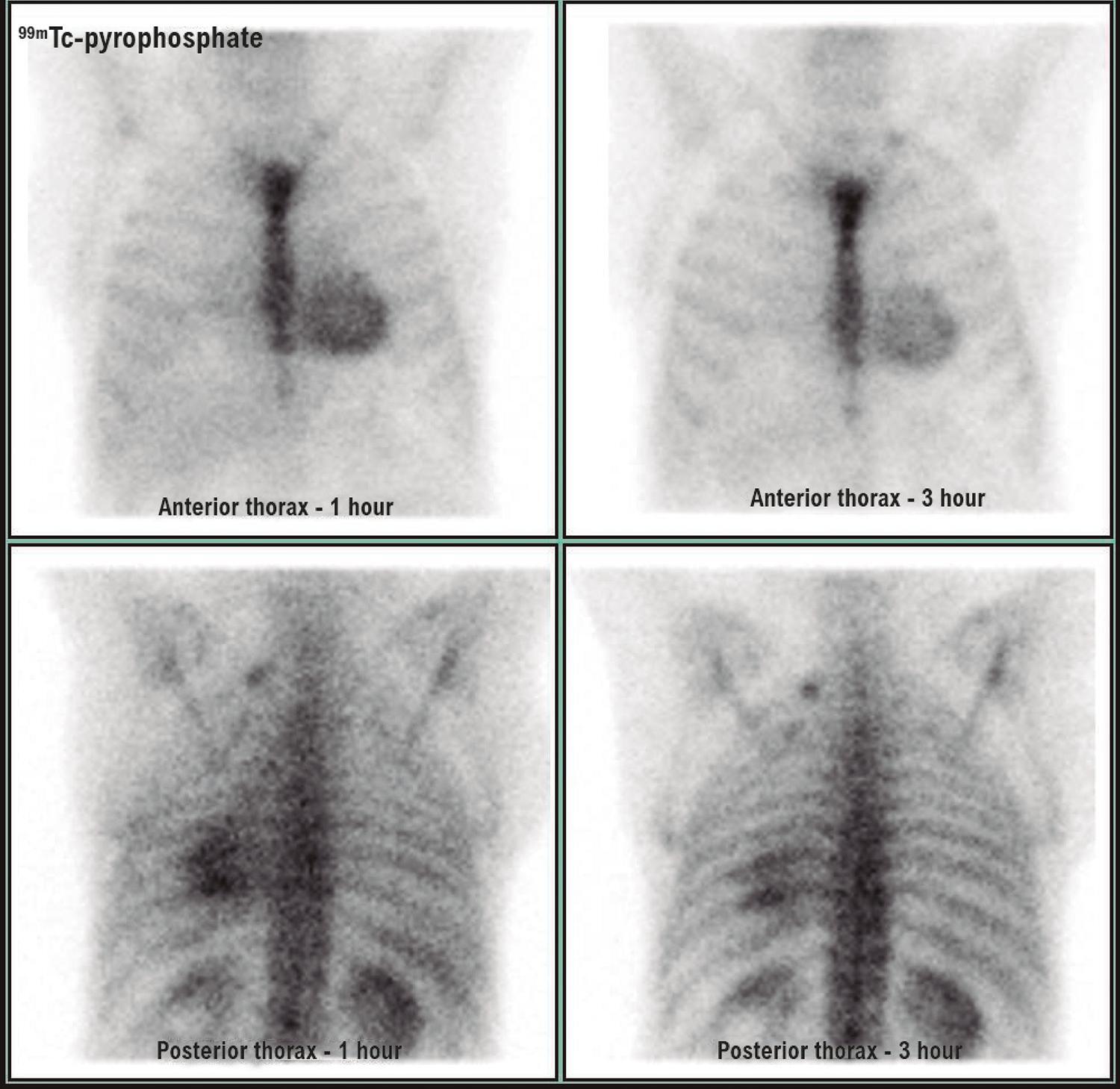
Cardiac Amyloidosis and Aortic Stenosis: When to Consider it and How to Treat it?

Marcelo Kirschbaum et al. Aristóteles Conte Alencar Neto Vitor Emer de Egypto Rosa Félix José Alvarez Ramires … Alexandre Antonio Cunha Abizaid Fábio Sandoli de Brito Junior Flávio Tarasoutchi Roberto Kalil Filho Fábio Fernandes

Abstract

Aortic stenosis is the most prevalent valve disease in clinical practice. The wild form of transthyretin amyloidosis has an increased incidence in elderly individuals, usually over 70 years of age. Amyloidosis and aortic stenosis are 2 diseases that affect similar populations; therefore, they may coexist in the same patient.

Patients with amyloidosis and aortic stenosis have disproportionately higher serum levels of troponin and NT-proBNP compared to patients with pure severe aortic stenosis in addition to greater ventricular hypertrophy. Therapeutic decisions for these patients must be individualized and promptly discussed by the heart team. In this article, we discuss this association and possible valve therapies, in addition to the possibility of specific treatment for amyloidosis.

  • Amyloidosis
  • Aortic Stenosis
  • Heart Failure
  • Preserved Ejection Fraction
Read Full Article
Creative Commons Attribution (CC BY) Creative Commons license
10/12/2021 DOI: 10.36660/abchf.20210027 Views 1
ABC
Original Article

Heyde’s Syndrome: Therapeutic Strategies and Long-Term Follow-Up

Vitor Emer Egypto Rosa et al. Henrique Barbosa Ribeiro João Ricardo Cordeiro Fernandes Antonio de Santis … Guilherme Sobreira Spina Milena Ribeiro Paixão Lucas José Tachotti Pires Marcelo Bettega Tarso Augusto Duenhas Accorsi Roney Orismar Sampaio Flávio Tarasoutchi

Abstract

Background

Heyde’s syndrome is the association of severe aortic stenosis with episodes of gastrointestinal bleeding due to angiodysplastic lesion. Little is known about the factors associated with new episodes of bleeding and long-term outcomes. Furthermore, most data are restricted to case reports and small case series.

Objective

To assess the clinical, laboratory and echocardiography profile of patients with Heyde’s syndrome who underwent valve intervention or drug therapy.

Methods

Prospective cohort of 24 consecutive patients from 2005 to 2018. Clinical, laboratory and echocardiography data were assessed, as well as those related to valve intervention and outcomes after diagnosis. A P <0.05 was used to indicate statistical significance.

Results

Half of the 24 patients presented with bleeding requiring blood transfusion on admission. Angiodysplasias were more frequently found in the ascending colon (62%). Valve intervention (surgical or transcatheter) was performed in 70.8% of the patients, and 29.2% remained on drug therapy. News episodes of bleeding occurred in 25% of the cases, and there was no difference between clinical and intervention groups (28.6 vs 23.5%, p = 1.00; respectively). Mortality at 2-year and 5-year was 16% and 25%, with no difference between the groups (log-rank p = 0.185 and 0.737, respectively).

Conclusions

Patients with Heyde’s syndrome had a high rate of bleeding requiring blood transfusion on admission, suggesting that it is a severe disease with high mortality risk. No difference was found between clinical and intervention group regarding the rate of rebleeding and late mortality.

  • Angiodysplasia
  • Aortic Stenosis
  • Echocardiography/methods
  • Hemorrhage
  • Mortality
  • Thoracic Surgery
Read Full Article
Creative Commons Attribution (CC BY) Creative Commons license
02/07/2021 DOI: 10.36660/abc.20200371
IJCS
Editorial

Elevated Lipoprotein(A) in Children and Adolescents: Early Identification is Key for Successful Intervention

Sergio Emanuel Kaiser

Over the last decades, numerous studies have demonstrated that elevated lipoprotein (Lp)(a) is a powerful and independent risk factor for coronary heart disease,, ischemic stroke, and calcific aortic stenosis. Even in patients treated with statins who achieve LDL-cholesterol goals below 70 mg/dL, elevated Lp(a) levels remain independently related to an increased risk of atherosclerotic events.

The LDL particle has a unique molecular structure, as exemplified by its covalent bond with an apolipoprotein(a) that bears resemblance to plasminogen and may well represent an evolutionary deviation of this well-known plasmin precursor. Lp(a) is synthesized by the liver and the amount of circulating particles in the bloodstream is almost exclusively determined by inheritance, leaving very little space for environmental influence. The distribution of Lp(a) levels in the population is highly skewed with approximately 80% of people exhibiting plasma concentrations below 50 mg/dL, and the remaining 20% with a wide range of values above that limit.

[…]

  • Adolescents
  • Aortic Stenosis
  • Atherosclerosis
  • Child
  • Coronary Artery Diseases
  • Lipoprotein(a)
  • Statins/therapeutic, use
Read Full Article
Creative Commons Attribution (CC BY) Creative Commons license
01/02/2021 DOI: 10.36660/ijcs.20200303
ABC
Editorial

New Paradigms in the Evaluation of Diastolic Function by Cardiac Magnetic Resonance Imaging in Aortic Valvopathy

Vera Maria Cury Salemi et al. Marcelo Dantas Tavares de Melo José de Arimatéia Batista Araujo Filho

The noninvasive analysis of left ventricular diastolic function is a challenge in clinical practice. Estimation of the time constant of isovolumetric relaxation – or Tau constant – is the best and most established parameter for ventricular diastolic function analysis. However, this measure is obtained through an invasive assessment and it is very difficult to acquire. In clinical practice, echocardiography is considered a key tool, among all the complementary exams that can be used to evaluate diastolic function, validated in relation to the pressure-volume curves by catheterization, restricting the invasive evaluation to be used in exceptional cases. Thus, echocardiography remains the first-line noninvasive method, providing data on early diastolic dysfunction through indices that reflect relaxation, compliance, and also indirect measurements of ventricular filling pressures.

The latest recommendations for diastolic dysfunction assessment by echocardiography basically include analysis of the left ventricle without structural changes and preserved ejection fraction, as well as a flowchart for cases of left ventricular ejection fraction reduction/structural change. However, the classification of the degree of diastolic dysfunction and its application in the therapeutic management of valvular heart disease remains controversial., Moreover, aortic stenosis may be associated with mitral annulus calcification, which may lead to a reduction of the mitral orifice area, with an increase in early transmitral diastolic velocity (E), while the Doppler lateral mitral annulus velocity (e’) may be reduced due to limitation of the posterior cusp excursion, which may lead to an artificial increase in the E/e’ ratio. In aortic regurgitation, however, the aortic reflux jet may interfere with the mitral flow, which, when significant, can lead to a restrictive ventricular filling pattern; however, the accuracy of E/e’ ratio is questionable.

[…]

  • Aortic Stenosis
  • Aortic Valvopathy
  • Cardiac magnetic resonance
  • Diastolic Function
  • Echocardiography
Read Full Article
Creative Commons Attribution (CC BY) Creative Commons license
20/03/2020 DOI: 10.36660/abc.20190903
Cardiac remodeling: serial analysis and indexes for early detection of ventricular dysfunction
ABC
Artigo Original

Cardiac remodeling: serial analysis and indexes for early detection of ventricular dysfunction

Olga de Castro Mendes et al. Dijon Henrique S. de Campos Ricardo Luiz Damatto Mário Mateus Sugizaki … Carlos Roberto Padovani Katashi Okoshi Antônio Carlos Cicogna

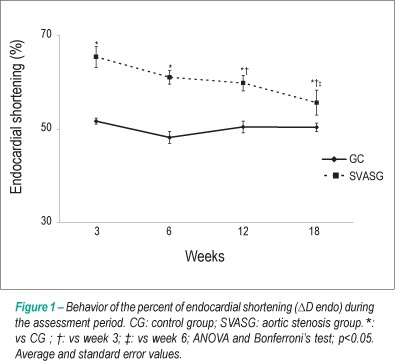
BACKGROUND: Supravalvar aortic stenosis (SVAS) is used to study overload-induced cardiac remodeling (CR). In this model, neither CR behavior since beginning stage nor the best parameters to identify ventricular dysfunction are clearly stated. Objective: 1) Characterizing, early and evolutively, morphological and functional modifications during CR in rats with SVAS and 2) identifying the most sensitive index for detecting the moment when the diastolic and systolic dysfunction first appeared in the left ventricle (LV). METHODS: Wistar Rats were divided into two groups – control (CG, n=13) and SVAS (SVASG, n=24) – and studied in post-surgical 3rd, 6th, 12th and 18th weeks. Hearts were analyzed by means of an echocardiogram (ECHO). RESULTS: By the end of the experiment, ratios between the LV, right ventricle and atria and the final body weight were increased in the SVASG. The ECHO showed that the left atrium underwent significant remodeling from the 6th on. The percent of endocardial shortening underwent significant drop as of the 12nd week and the percent of, as of the 18th week, in the SVASG. The ratio between E- wave and A-wave (E/A) was higher in CG compared to the SVASG in all events analyzed. CONCLUSIONS: During the remodeling process, the left ventricle of rats with SVAS presented concentric hypertrophy, early diastolic dysfunction and improvement of systolic function, with posterior performance deterioration. Besides this, the study found out the most sensitive echocardiographic indexes for detecting systolic and diastolic dysfunction are, respectively, the ratio E/A and the percent of endocardial shortening.

  • Aortic Stenosis
  • Echocardiography
  • Rats
  • Supravalvular
  • Ventricular Dysfunction
  • Ventricular Remodeling
Read Full Article
Creative Commons Attribution (CC BY) Creative Commons license
22/09/2010 DOI: 10.1590/S0066-782X2010000100011 Views 1
Echocardiographic criteria for the definition of ventricular dysfunction severity in aortic banded rats
ABC
Artigo Original

Echocardiographic criteria for the definition of ventricular dysfunction severity in aortic banded rats

Vanessa Oliveira Moreira et al. Ana Valéria Barros de Castro Marcelle Yumi Yaegaschi Antonio Carlos Cicogna … Marina Politi Okoshi Camila Alves Pereira Flávio Ferrari Aragon Mário Batista Bruno Carlos Roberto Padovani Katashi Okoshi

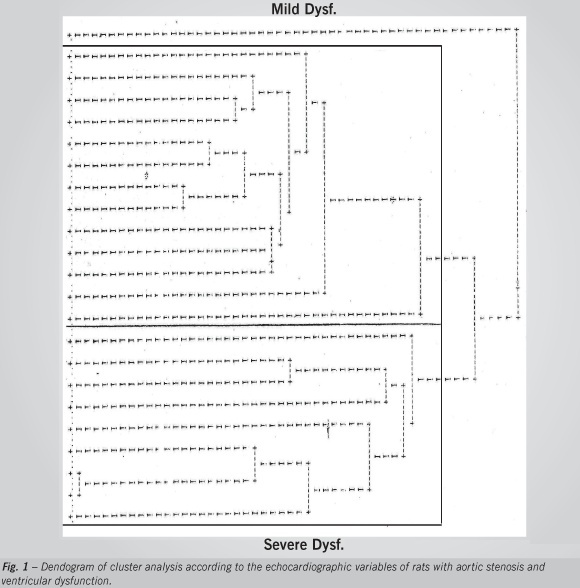
OBJECTIVE: The purpose of this study was to identify echocar-diographic parameters that allow distinguishing different levels of cardiac dysfunction in aortic banded rats. METHODS: Wistar male rats (90-100 g) were subjected to aortic banding (n=23) or a sham operation (n=12). The following echocardiographic parameters were evaluated and used to group rats into groups with similar characteristics using cluster analysis: absolute values and after normalization to body weight of left ventricular end-diastolic diameter (LVDD) and left atrial systolic diameter; left ventricular end-systolic diameter (LVSD); LV weight to body weight ratio (LVW/BW); three indexes of left ventricular shortening (endocardial fractional shortening, EFS; midwall FS, MFS; and posterior wall shortening velocity, (PWSV). RESULTS: The cluster analysis could group aortic banded rats into two groups: mild (n=13) and severe (n=9) stage of heart failure. There was no overlapping among the values of the 95% confidence interval of the following parameters between the two groups: LVDD, LVSD, EFS, MFS, LVW/BW, and PWSV. CONCLUSION: It is feasible to distinguish two groups of aortic banded rats according to the level of cardiac dysfunction using those echocardiographic parameters. This allows to perform longitudinal studies in homogeneous groups of rats with aortic banding and cardiac dysfunction.

  • Aortic Stenosis
  • Cluster Analysis
  • Echocardiogram
  • Rats
  • Ventricular Dysfunction
Read Full Article
Creative Commons Attribution (CC BY) Creative Commons license
26/06/2006 DOI: 10.1590/S0066-782X2006000600005
Critical left ventricular volume in aortic stenosis in first year of life: its importance in patients selection candidates to univentricular surgical correction pos-valvotomy
ABC
Artigo Original

Critical left ventricular volume in aortic stenosis in first year of life: its importance in patients selection candidates to univentricular surgical correction pos-valvotomy

Marco Aurélio Santos et al. Vitor Manuel Pereira Azevedo Maria Ourinda Mesquita da Cunha

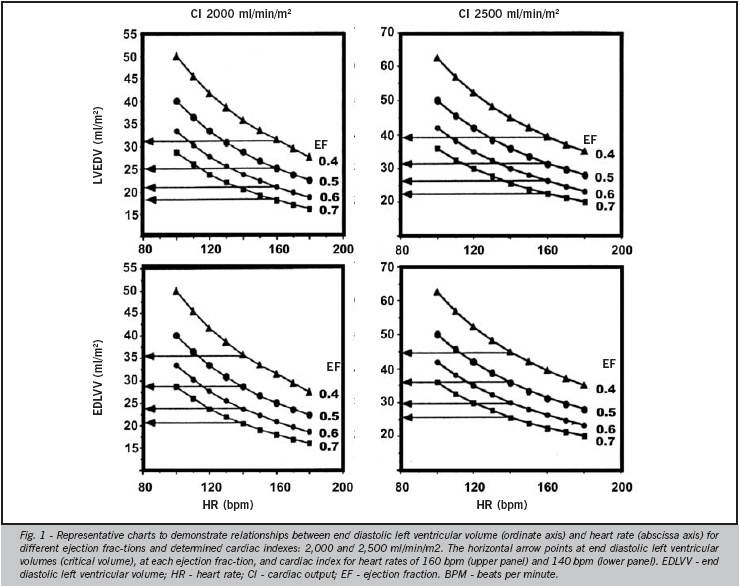
OBJECTIVE: Analysis of critical end diastolic left ventricular volume (EDLVV), defined as the lowest acceptable volume to keep cardiac output, in the selection of patients with post-valvotomy aortic stenosis, candidates to univentricular correction. METHODS: A retrospective study in 21 patients with aortic stenosis, during the first year of life, and 232 patients compiled from literature. Values of end diastolic volume (EDLVV), from 20 to 60 ml/m2 were determined as normal. The EDLVV of deceased patients was compared to that from survival patients. A correlation between the age and EDLVV was carried out at the time of valvotomy, between the groups. Finally, the critical EDLVV through the theoretical relationship between the EDLVV and heart rate for different ejection fractions and designated cardiac indexes (CI): 2,000 and 2,500 20-60 ml/min/m2 was determined. RESULTS: For EDLVV values 60 ml/m2, there was statistical significance between deceased and survival patients (p< 0.0001). However, in the range between 20 and 60 ml/m2, that significance was lower (p=0.0309). A greater incidence of death took place among those who showed it in the first week of life. For a CI of 2,500 ml/min/m2 and a heart rate (HR) of 140 bpm, critical EDLVV will be 26 ml/m2 if left ventricular ejection fraction (LVEF) is 0.70, and 44.5 ml/m2, if LVFE is 0.40. CONCLUSION: The analysis of critical end diastolic left ventricular volume (EDLVV) can add another parameter in the indication of univentricular correction in patients with post-valvotomy aortic stenosis, during the first year of life.

  • Aortic Stenosis
  • left ventricular volume
  • Prognostic
  • univentricular correction
Read Full Article
Creative Commons Attribution (CC BY) Creative Commons license
10/10/2005 DOI: 10.1590/S0066-782X2005001600007
ABC
Original Article

Neonate Aortic Stenosis: Importance of Myocardial Perfusion in Prognosis

Marco Aurélio Santos et al. Vitor Manuel Pereira Azevedo

OBJECTIVE: To analyze our experience with percutaneous aortic balloon valvuloplasty in newborn infants with aortic stenosis, emphasizing the extraordinary importance of myocardial perfusion.METHODS: Over a 10-year-period, 21 neonates underwent percutaneous aortic balloon valvuloplasty. Age ranged from 2 to 27 days, weight ranged from 2.2 to 4.1 kg and 19 were males. All patients presented with congestive heart failure that could not be treated clinically. The onset of symptoms in the first week of life occurred in 9 patients considered as having critical aortic stenosis. Severe aortic stenosis occurred in 12 patients with the onset of symptoms in the second week of life.RESULTS: Mortality reached 100% in the patients with critical aortic stenosis. The procedure was considered effective in the 12 patients with severe aortic stenosis. Vascular complications included the loss of pulse in 12 patients and rupture of the femoral artery in 2 patients. Cardiac complications included acute aortic regurgitation in 2 patients and myocardial perforation in one. In an 8.2±1.3-year follow-up, 5 of the 12 patients died (2 patients due to septicemia and 3 patients due to congestive heart failure). Five of the other 7 patients underwent a new procedure and 2 required surgery.CONCLUSION: Percutaneous aortic valvuloplasty in neonates is not an effective procedure in the 1st week of life, because at this age the common presentation is cardiogenic shock. It is possible that, in those patients with critical aortic stenosis, dilation of the aortic valve during fetal life may change the prognosis of its clinical outcome.

  • Aortic Stenosis
  • endocardial fibroelastosis
  • Myocardial Ischemia
  • valvuloplasty through balloon catheter
Read Full Article
Creative Commons Attribution (CC BY) Creative Commons license
09/10/2002 DOI: 10.1590/S0066-782X2002001200005 Views 1
ABC
Original Article

Aortic stenosis. Gender influence on left ventricular geometry and function in patients under 70 years of age

Antonio Sérgio Cordeiro da Rocha et al. Maria Auxiliadora Vellasco Pereira Nazareth de Novaes Rocha Rita de Cássia Villela Soares … Celso Garcia, Rosana Grandelle Paulo Roberto Dutra da Silva

OBJECTIVE: To verify if adaptive left ventricle (LV) characteristics are also present in individuals under 70 years of age with severe aortic stenosis (AS). METHODS: The study comprised 40 consecutive patients under 70 years of age with AS and no associated coronary artery disease, referred for valve surgery. Out of the 40 patients, 22 were men and 18 women, and the mean age was 49.8±14.3 years. Cardiac symptoms, presence of systemic hypertension (SH), functional class according to the New York Heart Association (NYHA), and valve lesion etiology were considered. LV cavity dimensions, ejection fraction (EF), fractional shortening (FS), mass (MS), and relative diastolic thickness (RDT) were examined by Doppler echocardiography. RESULTS: Fourteen (63.6%) men and 11 (61.6%) women were classified as NYHA class III/IV (p=0.70). There was no difference in the frequency of angina, syncope or dyspnea between genders. The incidence of SH was greater in women than in men (10 versus 2, p=0.0044). Women had a smaller LV end-diastolic diameter index (32.1±6.5 x 36.5±5.3mm/m², p=0.027), LV end-systolic diameter index (19.9±5.9 x 26.5±6.4mm/m², p=0.0022) and LV mass index (MS) (211.4±71.1 x 270.9±74.9g/m², p=0.017) when compared with men. EF (66.2±13.4 x 52.0±14.6%, p=0.0032), FS (37.6±10.7 x 27.9±9.6%, p=0.0046) and RDT (0.58±0.22 x 0.44±0.09, p=0.0095) were significantly greater in women than in men. CONCLUSION: It is the patient gender rather than age that influences left ventricular adaptive response to AS.

  • Aortic Stenosis
  • Gender
  • Left Ventricular Function
  • Ventricular Hypertrophy
Read Full Article
Creative Commons Attribution (CC BY) Creative Commons license
08/01/2002 DOI: 10.1590/S0066-782X1999000400007 Views 2
ABC
Original Article

Edmar Atik et al. Miguel Barbero-Marcial Elisa R. Iwahashi Jorge Y. Afiune Munir Ebaid

OBJECTIVE – To assess neonates with aortic stenosis with early decompensation operated upon. (LCO) (CHF). METHODS – A and retrospective study analyzing 6 neonates with LCO, group I (GI), and 12 neonates with CHF, group II (GII). Clinical radiographic, electrocardiographic and echocardiographic findings also provided comparative bases for the study, as did surgical and evolutional findings. RESULTS – The mean ages at hospitalization and surgery (p = 0.0031) were 14.3 and 14.8 days in GI and 35.4 and 42.8 days in GII, respectively. Cardiac murmurs were more intense in GII (p = 0.0220). The aortic ring was smaller in GI (8.0 ± 2.5mm) as compared to GII (11.4±1.4mm) (p = 0.2882). Ventricular function was reduced to 18±5.5% and 33.3±7.6% in GI and GII, respectively (p = 0.0162). Aortic atresia, however, was present only in 2 neonates in GI. Five of 6 patients in GI died but all patients in GII survived (p=0.0007). In the latter group, 84.6% of the patients were in functional class I (FC-I) in the long-term follow-up, with moderate residual lesions in 6 neonates, discrete residual lesions in 4, and reoperation in 2. CONCLUSION – Aortic stenosis is a severe anomaly of the neonate, whose immediate evolution depends on the pre-operative anatomic and functional findings, and the late evolution essentially depends on the anatomic features of the valve.

  • Aortic Stenosis
  • Congenital Heart Disease
  • neonate
  • Surgery
Read Full Article
Creative Commons Attribution (CC BY) Creative Commons license
08/01/2002 DOI: 10.1590/S0066-782X1999001000003

How to cite this article

EndNote RIS

Electronic Document Format (Vancouver)

Kanhouche G, Ribeiro HB. The Forgotten Valve is not to be Forgiven: Tricuspid Regurgitation Impact on Clinical Outcomes after Transcatheter Aortic Valve Implantation. Arquivos Brasileiros de Cardiologia 2023;120(7):e20230410.

Electronic Document Format (ABNT)

Kanhouche, Gabriel; Ribeiro, Henrique B.. The Forgotten Valve is not to be Forgiven: Tricuspid Regurgitation Impact on Clinical Outcomes after Transcatheter Aortic Valve Implantation. Arquivos Brasileiros de Cardiologia, v. 120, n. 7, e20230410, Aug. 2023.

Electronic Document Format (APA)

Kanhouche, G., & Ribeiro, H. B. (2023). The Forgotten Valve is not to be Forgiven: Tricuspid Regurgitation Impact on Clinical Outcomes after Transcatheter Aortic Valve Implantation. Arquivos Brasileiros de Cardiologia, 120(7), e20230410.

Electronic Document Format (ISO)

Kanhouche, Gabriel and Ribeiro, Henrique B.. The Forgotten Valve is not to be Forgiven: Tricuspid Regurgitation Impact on Clinical Outcomes after Transcatheter Aortic Valve Implantation. Arquivos Brasileiros de Cardiologia [online]. 2023, vol. 120, n. 7, [cited 2026-10-14], e20230410. Available from: <https://journals.cardiol.br/en/article/the-forgotten-valve-is-not-to-be-forgiven-tricuspid-regurgitation-impact-on-clinical-outcomes-after-transcatheter-aortic-valve-implantation/>. ISSN 0066-782X

EndNote RIS

Electronic Document Format (Vancouver)

Beck ALS, Ribeiro LCM. My Approach to Aortic Stenosis Assessment with Discrepant Quantification. ABC Imagem Cardiovascular 2022;35(1):ecom21.

Electronic Document Format (ABNT)

Beck, Adenalva Lima de Souza; Ribeiro, Luiz Carlos Madruga. My Approach to Aortic Stenosis Assessment with Discrepant Quantification. ABC Imagem Cardiovascular, v. 35, n. 1, ecom21, Mar. 2022.

Electronic Document Format (APA)

Beck, A. L. S., & Ribeiro, L. C. M. (2022). My Approach to Aortic Stenosis Assessment with Discrepant Quantification. ABC Imagem Cardiovascular, 35(1), ecom21.

Electronic Document Format (ISO)

Beck, Adenalva Lima de Souza and Ribeiro, Luiz Carlos Madruga. My Approach to Aortic Stenosis Assessment with Discrepant Quantification. ABC Imagem Cardiovascular [online]. 2022, vol. 35, n. 1, [cited 2026-10-14], ecom21. Available from: <https://journals.cardiol.br/en/article/my-approach-to-aortic-stenosis-assessment-with-discrepant-quantification/>. ISSN 2318-8219

EndNote RIS

Electronic Document Format (Vancouver)

Silva VL, Souza SLB, Mota GAF, Campos DHS, Melo AB, Vileigas DF, Sant’Ana PG, et al. The Dysfunctional Scenario of the Major Components Responsible for Myocardial Calcium Balance in Heart Failure Induced by Aortic Stenosis. Arquivos Brasileiros de Cardiologia 2022;118(2):463-75.

Electronic Document Format (ABNT)

Silva, Vitor Loureiro da; Souza, Sérgio Luiz Borges de; Mota, Gustavo Augusto Ferreira; Campos, Dijon H. S.; Melo, Alexandre Barroso; Vileigas, Danielle Fernandes; Sant’Ana, Paula Grippa; Coelho, Priscila Murucci; Bazan, Silméia Garcia Zanati; Leopoldo, André Soares; Cicogna, Antônio Carlos. The Dysfunctional Scenario of the Major Components Responsible for Myocardial Calcium Balance in Heart Failure Induced by Aortic Stenosis. Arquivos Brasileiros de Cardiologia, v. 118, n. 2, p. 463-475, Feb. 2022.

Electronic Document Format (APA)

Silva, V. L. , Souza, S. L. B. , Mota, G. A. F., Campos, D. H. S., Melo, A. B., Vileigas, D. F., Sant’Ana, P. G., Coelho, P. M., Bazan, S. G. Z., Leopoldo, A. S., & Cicogna, A. C. (2022). The Dysfunctional Scenario of the Major Components Responsible for Myocardial Calcium Balance in Heart Failure Induced by Aortic Stenosis. Arquivos Brasileiros de Cardiologia, 118(2), 463-475.

Electronic Document Format (ISO)

Silva, Vitor Loureiro da and Souza, Sérgio Luiz Borges de and Mota, Gustavo Augusto Ferreira and Campos, Dijon H. S. and Melo, Alexandre Barroso and Vileigas, Danielle Fernandes and Sant’Ana, Paula Grippa and Coelho, Priscila Murucci and Bazan, Silméia Garcia Zanati and Leopoldo, André Soares and Cicogna, Antônio Carlos. The Dysfunctional Scenario of the Major Components Responsible for Myocardial Calcium Balance in Heart Failure Induced by Aortic Stenosis. Arquivos Brasileiros de Cardiologia [online]. 2022, vol. 118, n. 2, [cited 2026-10-14], pp. 463-475. Available from: <https://journals.cardiol.br/en/article/the-dysfunctional-scenario-of-the-major-components-responsible-for-myocardial-calcium-balance-in-heart-failure-induced-by-aortic-stenosis/>. ISSN 0066-782X

EndNote RIS

Electronic Document Format (Vancouver)

Kirschbaum M, Alencar Neto AC, Rosa VEE, Ramires FJA, Abizaid AAC, Brito Junior FS, Tarasoutchi F, et al. Cardiac Amyloidosis and Aortic Stenosis: When to Consider it and How to Treat it?. Phenomenology, Humanities and Sciences – Fenomenologia, Humanidades e Ciências 2021;1(2):90-4.

Electronic Document Format (ABNT)

Kirschbaum, Marcelo; Alencar Neto, Aristóteles Conte; Rosa, Vitor Emer de Egypto; Ramires, Félix José Alvarez; Abizaid, Alexandre Antonio Cunha; Brito Junior, Fábio Sandoli de; Tarasoutchi, Flávio; Kalil Filho, Roberto; Fernandes, Fábio. Cardiac Amyloidosis and Aortic Stenosis: When to Consider it and How to Treat it?. Phenomenology, Humanities and Sciences – Fenomenologia, Humanidades e Ciências, v. 1, n. 2, p. 90-94, Dec. 2021.

Electronic Document Format (APA)

Kirschbaum, M., Alencar Neto, A. C., Rosa, V. E. E., Ramires, F. J. A., Abizaid, A. A. C., Brito Junior, F. S. , Tarasoutchi, F., Kalil Filho, R., & Fernandes, F. (2021). Cardiac Amyloidosis and Aortic Stenosis: When to Consider it and How to Treat it?. Phenomenology, Humanities and Sciences – Fenomenologia, Humanidades e Ciências, 1(2), 90-94.

Electronic Document Format (ISO)

Kirschbaum, Marcelo and Alencar Neto, Aristóteles Conte and Rosa, Vitor Emer de Egypto and Ramires, Félix José Alvarez and Abizaid, Alexandre Antonio Cunha and Brito Junior, Fábio Sandoli de and Tarasoutchi, Flávio and Kalil Filho, Roberto and Fernandes, Fábio. Cardiac Amyloidosis and Aortic Stenosis: When to Consider it and How to Treat it?. Phenomenology, Humanities and Sciences – Fenomenologia, Humanidades e Ciências [online]. 2021, vol. 1, n. 2, [cited 2026-10-14], pp. 90-94. Available from: <https://journals.cardiol.br/en/article/cardiac-amyloidosis-and-aortic-stenosis-when-to-consider-it-and-how-to-treat-it/>

EndNote RIS

Electronic Document Format (Vancouver)

Rosa VEE, Ribeiro HB, Fernandes JRC, Santis A, Spina GS, Paixão MR, Pires LJT, et al. Heyde’s Syndrome: Therapeutic Strategies and Long-Term Follow-Up. Arquivos Brasileiros de Cardiologia 2021;117(3):512-7.

Electronic Document Format (ABNT)

Rosa, Vitor Emer Egypto; Ribeiro, Henrique Barbosa; Fernandes, João Ricardo Cordeiro; Santis, Antonio de; Spina, Guilherme Sobreira; Paixão, Milena Ribeiro; Pires, Lucas José Tachotti; Bettega, Marcelo; Accorsi, Tarso Augusto Duenhas; Sampaio, Roney Orismar; Tarasoutchi, Flávio. Heyde’s Syndrome: Therapeutic Strategies and Long-Term Follow-Up. Arquivos Brasileiros de Cardiologia, v. 117, n. 3, p. 512-517, Jul. 2021.

Electronic Document Format (APA)

Rosa, V. E. E., Ribeiro, H. B., Fernandes, J. R. C., Santis, A. , Spina, G. S., Paixão, M. R., Pires, L. J. T., Bettega, M., Accorsi, T. A. D., Sampaio, R. O., & Tarasoutchi, F. (2021). Heyde’s Syndrome: Therapeutic Strategies and Long-Term Follow-Up. Arquivos Brasileiros de Cardiologia, 117(3), 512-517.

Electronic Document Format (ISO)

Rosa, Vitor Emer Egypto and Ribeiro, Henrique Barbosa and Fernandes, João Ricardo Cordeiro and Santis, Antonio de and Spina, Guilherme Sobreira and Paixão, Milena Ribeiro and Pires, Lucas José Tachotti and Bettega, Marcelo and Accorsi, Tarso Augusto Duenhas and Sampaio, Roney Orismar and Tarasoutchi, Flávio. Heyde’s Syndrome: Therapeutic Strategies and Long-Term Follow-Up. Arquivos Brasileiros de Cardiologia [online]. 2021, vol. 117, n. 3, [cited 2026-10-14], pp. 512-517. Available from: <https://journals.cardiol.br/en/article/heydes-syndrome-therapeutic-strategies-and-long-term-follow-up/>. ISSN 0066-782X

EndNote RIS

Electronic Document Format (Vancouver)

Kaiser SE. Elevated Lipoprotein(A) in Children and Adolescents: Early Identification is Key for Successful Intervention. International Journal of Cardiovascular Sciences 2021;34(1):19-20.

Electronic Document Format (ABNT)

Kaiser, Sergio Emanuel. Elevated Lipoprotein(A) in Children and Adolescents: Early Identification is Key for Successful Intervention. International Journal of Cardiovascular Sciences, v. 34, n. 1, p. 19-20, Jan. 2021.

Electronic Document Format (APA)

Kaiser, S. E. (2021). Elevated Lipoprotein(A) in Children and Adolescents: Early Identification is Key for Successful Intervention. International Journal of Cardiovascular Sciences, 34(1), 19-20.

Electronic Document Format (ISO)

Kaiser, Sergio Emanuel. Elevated Lipoprotein(A) in Children and Adolescents: Early Identification is Key for Successful Intervention. International Journal of Cardiovascular Sciences [online]. 2021, vol. 34, n. 1, [cited 2026-10-14], pp. 19-20. Available from: <https://journals.cardiol.br/en/article/elevated-lipoproteina-in-children-and-adolescents-early-identification-is-key-for-successful-intervention/>. ISSN 2359-4802

EndNote RIS

Electronic Document Format (Vancouver)

Salemi VMC, Melo MDT, Araujo Filho JAB. New Paradigms in the Evaluation of Diastolic Function by Cardiac Magnetic Resonance Imaging in Aortic Valvopathy. Arquivos Brasileiros de Cardiologia 2020;114(2):293-4.

Electronic Document Format (ABNT)

Salemi, Vera Maria Cury; Melo, Marcelo Dantas Tavares de; Araujo Filho, José de Arimatéia Batista. New Paradigms in the Evaluation of Diastolic Function by Cardiac Magnetic Resonance Imaging in Aortic Valvopathy. Arquivos Brasileiros de Cardiologia, v. 114, n. 2, p. 293-294, Mar. 2020.

Electronic Document Format (APA)

Salemi, V. M. C., Melo, M. D. T. , & Araujo Filho, J. A. B. (2020). New Paradigms in the Evaluation of Diastolic Function by Cardiac Magnetic Resonance Imaging in Aortic Valvopathy. Arquivos Brasileiros de Cardiologia, 114(2), 293-294.

Electronic Document Format (ISO)

Salemi, Vera Maria Cury and Melo, Marcelo Dantas Tavares de and Araujo Filho, José de Arimatéia Batista. New Paradigms in the Evaluation of Diastolic Function by Cardiac Magnetic Resonance Imaging in Aortic Valvopathy. Arquivos Brasileiros de Cardiologia [online]. 2020, vol. 114, n. 2, [cited 2026-10-14], pp. 293-294. Available from: <https://journals.cardiol.br/en/article/new-paradigms-in-the-evaluation-of-diastolic-function-by-cardiac-magnetic-resonance-imaging-in-aortic-valvopathy/>. ISSN 0066-782X

EndNote RIS

Electronic Document Format (Vancouver)

Mendes OC, Campos DHS, Damatto RL, Sugizaki MM, Padovani CR, Okoshi K, Cicogna AC, et al. Cardiac remodeling: serial analysis and indexes for early detection of ventricular dysfunction. Arquivos Brasileiros de Cardiologia 2010;94(1):62-70.

Electronic Document Format (ABNT)

Mendes, Olga de Castro; Campos, Dijon Henrique S. de; Damatto, Ricardo Luiz; Sugizaki, Mário Mateus; Padovani, Carlos Roberto; Okoshi, Katashi; Cicogna, Antônio Carlos. Cardiac remodeling: serial analysis and indexes for early detection of ventricular dysfunction. Arquivos Brasileiros de Cardiologia, v. 94, n. 1, p. 62-70, Sep. 2010.

Electronic Document Format (APA)

Mendes, O. C., Campos, D. H. S. , Damatto, R. L., Sugizaki, M. M., Padovani, C. R., Okoshi, K., & Cicogna, A. C. (2010). Cardiac remodeling: serial analysis and indexes for early detection of ventricular dysfunction. Arquivos Brasileiros de Cardiologia, 94(1), 62-70.

Electronic Document Format (ISO)

Mendes, Olga de Castro and Campos, Dijon Henrique S. de and Damatto, Ricardo Luiz and Sugizaki, Mário Mateus and Padovani, Carlos Roberto and Okoshi, Katashi and Cicogna, Antônio Carlos. Cardiac remodeling: serial analysis and indexes for early detection of ventricular dysfunction. Arquivos Brasileiros de Cardiologia [online]. 2010, vol. 94, n. 1, [cited 2026-10-14], pp. 62-70. Available from: <https://journals.cardiol.br/en/article/cardiac-remodeling-serial-analysis-and-indexes-for-early-detection-of-ventricular-dysfunction/>. ISSN 0066-782X

EndNote RIS

Electronic Document Format (Vancouver)

Moreira VO, Castro AVB, Yaegaschi MY, Cicogna AC, Okoshi MP, Pereira CA, Aragon FF, et al. Echocardiographic criteria for the definition of ventricular dysfunction severity in aortic banded rats. Arquivos Brasileiros de Cardiologia 2006;86(6):432-8.

Electronic Document Format (ABNT)

Moreira, Vanessa Oliveira; Castro, Ana Valéria Barros de; Yaegaschi, Marcelle Yumi; Cicogna, Antonio Carlos; Okoshi, Marina Politi; Pereira, Camila Alves; Aragon, Flávio Ferrari; Bruno, Mário Batista; Padovani, Carlos Roberto; Okoshi, Katashi. Echocardiographic criteria for the definition of ventricular dysfunction severity in aortic banded rats. Arquivos Brasileiros de Cardiologia, v. 86, n. 6, p. 432-438, Jun. 2006.

Electronic Document Format (APA)

Moreira, V. O., Castro, A. V. B. , Yaegaschi, M. Y., Cicogna, A. C., Okoshi, M. P., Pereira, C. A., Aragon, F. F., Bruno, M. B., Padovani, C. R., & Okoshi, K. (2006). Echocardiographic criteria for the definition of ventricular dysfunction severity in aortic banded rats. Arquivos Brasileiros de Cardiologia, 86(6), 432-438.

Electronic Document Format (ISO)

Moreira, Vanessa Oliveira and Castro, Ana Valéria Barros de and Yaegaschi, Marcelle Yumi and Cicogna, Antonio Carlos and Okoshi, Marina Politi and Pereira, Camila Alves and Aragon, Flávio Ferrari and Bruno, Mário Batista and Padovani, Carlos Roberto and Okoshi, Katashi. Echocardiographic criteria for the definition of ventricular dysfunction severity in aortic banded rats. Arquivos Brasileiros de Cardiologia [online]. 2006, vol. 86, n. 6, [cited 2026-10-14], pp. 432-438. Available from: <https://journals.cardiol.br/en/article/echocardiographic-criteria-for-the-definition-of-ventricular-dysfunction-severity-in-aortic-banded-rats/>. ISSN 0066-782X

EndNote RIS

Electronic Document Format (Vancouver)

Santos MA, Azevedo VMP, Cunha MOM. Critical left ventricular volume in aortic stenosis in first year of life: its importance in patients selection candidates to univentricular surgical correction pos-valvotomy. Arquivos Brasileiros de Cardiologia 2005;85(3):186-90.

Electronic Document Format (ABNT)

Santos, Marco Aurélio; Azevedo, Vitor Manuel Pereira; Cunha, Maria Ourinda Mesquita da. Critical left ventricular volume in aortic stenosis in first year of life: its importance in patients selection candidates to univentricular surgical correction pos-valvotomy. Arquivos Brasileiros de Cardiologia, v. 85, n. 3, p. 186-190, Oct. 2005.

Electronic Document Format (APA)

Santos, M. A., Azevedo, V. M. P., & Cunha, M. O. M. (2005). Critical left ventricular volume in aortic stenosis in first year of life: its importance in patients selection candidates to univentricular surgical correction pos-valvotomy. Arquivos Brasileiros de Cardiologia, 85(3), 186-190.

Electronic Document Format (ISO)

Santos, Marco Aurélio and Azevedo, Vitor Manuel Pereira and Cunha, Maria Ourinda Mesquita da. Critical left ventricular volume in aortic stenosis in first year of life: its importance in patients selection candidates to univentricular surgical correction pos-valvotomy. Arquivos Brasileiros de Cardiologia [online]. 2005, vol. 85, n. 3, [cited 2026-10-14], pp. 186-190. Available from: <https://journals.cardiol.br/en/article/critical-left-ventricular-volume-in-aortic-stenosis-in-first-year-of-life-its-importance-in-patients-selection-candidates-to-univentricular-surgical-correction-pos-valvotomy/>. ISSN 0066-782X

EndNote RIS

Electronic Document Format (Vancouver)

Santos MA, Azevedo VMP. Neonate Aortic Stenosis: Importance of Myocardial Perfusion in Prognosis. Arquivos Brasileiros de Cardiologia 2002;79(3):251-5.

Electronic Document Format (ABNT)

Santos, Marco Aurélio; Azevedo, Vitor Manuel Pereira. Neonate Aortic Stenosis: Importance of Myocardial Perfusion in Prognosis. Arquivos Brasileiros de Cardiologia, v. 79, n. 3, p. 251-255, Oct. 2002.

Electronic Document Format (APA)

Santos, M. A., & Azevedo, V. M. P. (2002). Neonate Aortic Stenosis: Importance of Myocardial Perfusion in Prognosis. Arquivos Brasileiros de Cardiologia, 79(3), 251-255.

Electronic Document Format (ISO)

Santos, Marco Aurélio and Azevedo, Vitor Manuel Pereira. Neonate Aortic Stenosis: Importance of Myocardial Perfusion in Prognosis. Arquivos Brasileiros de Cardiologia [online]. 2002, vol. 79, n. 3, [cited 2026-10-14], pp. 251-255. Available from: <https://journals.cardiol.br/en/article/neonate-aortic-stenosis-importance-of-myocardial-perfusion-in-prognosis/>. ISSN 0066-782X

EndNote RIS

Electronic Document Format (Vancouver)

Rocha ASC, Pereira MAV, Rocha NN, Soares RCV, Garcia C, Grandelle R, Silva PRD, et al. Aortic stenosis. Gender influence on left ventricular geometry and function in patients under 70 years of age. Arquivos Brasileiros de Cardiologia 2002;72(4):479-82.

Electronic Document Format (ABNT)

Rocha, Antonio Sérgio Cordeiro da; Pereira, Maria Auxiliadora Vellasco; Rocha, Nazareth de Novaes; Soares, Rita de Cássia Villela; Garcia, Celso; Grandelle, Rosana; Silva, Paulo Roberto Dutra da. Aortic stenosis. Gender influence on left ventricular geometry and function in patients under 70 years of age. Arquivos Brasileiros de Cardiologia, v. 72, n. 4, p. 479-482, Jan. 2002.

Electronic Document Format (APA)

Rocha, A. S. C. , Pereira, M. A. V., Rocha, N. N., Soares, R. C. V., Garcia, C., Grandelle, R., & Silva, P. R. D. (2002). Aortic stenosis. Gender influence on left ventricular geometry and function in patients under 70 years of age. Arquivos Brasileiros de Cardiologia, 72(4), 479-482.

Electronic Document Format (ISO)

Rocha, Antonio Sérgio Cordeiro da and Pereira, Maria Auxiliadora Vellasco and Rocha, Nazareth de Novaes and Soares, Rita de Cássia Villela and Garcia, Celso and Grandelle, Rosana and Silva, Paulo Roberto Dutra da. Aortic stenosis. Gender influence on left ventricular geometry and function in patients under 70 years of age. Arquivos Brasileiros de Cardiologia [online]. 2002, vol. 72, n. 4, [cited 2026-10-14], pp. 479-482. Available from: <https://journals.cardiol.br/en/article/aortic-stenosis-gender-influence-on-left-ventricular-geometry-and-function-in-patients-under-70-years-of-age/>. ISSN 0066-782X

EndNote RIS

Electronic Document Format (Vancouver)

Atik E, Barbero-Marcial M, Iwahashi ER, Afiune JY, Ebaid M. . Arquivos Brasileiros de Cardiologia 2002;73(4):354-8.

Electronic Document Format (ABNT)

Atik, Edmar; Barbero-Marcial, Miguel; Iwahashi, Elisa R.; Afiune, Jorge Y.; Ebaid, Munir. . Arquivos Brasileiros de Cardiologia, v. 73, n. 4, p. 354-358, Jan. 2002.

Electronic Document Format (APA)

Atik, E., Barbero-Marcial, M., Iwahashi, E. R., Afiune, J. Y., & Ebaid, M. (2002). . Arquivos Brasileiros de Cardiologia, 73(4), 354-358.

Electronic Document Format (ISO)

Atik, Edmar and Barbero-Marcial, Miguel and Iwahashi, Elisa R. and Afiune, Jorge Y. and Ebaid, Munir. . Arquivos Brasileiros de Cardiologia [online]. 2002, vol. 73, n. 4, [cited 2026-10-14], pp. 354-358. Available from: <https://journals.cardiol.br/en/article/17660/>. ISSN 0066-782X

  • About ABC Family
  • Internal Regulation
  • Editorial Board
  • Brazilian Society of Cardiology (SBC)

Issues

SBC Guidelines

  • Videos
  • Podcasts
  • News