ABC Family Arquivos Brasileiros de Cardiologia International Journal of Cardiovascular Sciences ABC Heart Failure & Cardiomyopathy ABC Imagem Cardiovascular
Português English
ABC Family
Português English
  • About
    • About ABC Family
    • Internal Regulation
    • Editorial Board
    • Brazilian Society of Cardiology (SBC)
  • Issues
  • SBC Guidelines
  • Content
    • Videos
    • Podcasts
    • News
  • About
    • About ABC Family
    • Internal Regulation
    • Editorial Board
    • Brazilian Society of Cardiology (SBC)
  • Issues
  • SBC Guidelines
  • Content
    • Videos
    • Podcasts
    • News

ABC Family

  • ABC Family
  • Arquivos Brasileiros de Cardiologia
  • International Journal of Cardiovascular Sciences
  • ABC Heart Failure & Cardiomyopathy
  • ABC Imagem Cardiovascular
Search in

No content found.

Journals
Ordering
Article types
Others

  1. Home
  2. Keyword: Diastolic Function
ABCIC
Editorial

My Approach to Analyze Diastolic Function in Indeterminate Cases by the 2016 American Society of Echocardiography Guideline?

Renato Hortegal et al. Henry Abensur

[…]

  • Diagnosis
  • Diastolic Function
  • Parameters
Read Full Article
Creative Commons Attribution (CC BY) Creative Commons license
14/01/2022 DOI: 10.5935/2318-8219.20200041 Views 2
Figure 1
ABCIC
Original Article

Left Atrial Reserve Function in Assessing Indeterminate Diastolic Function

Silvio Henrique Barberato et al. Rafael Borsoi

Abstract

Background

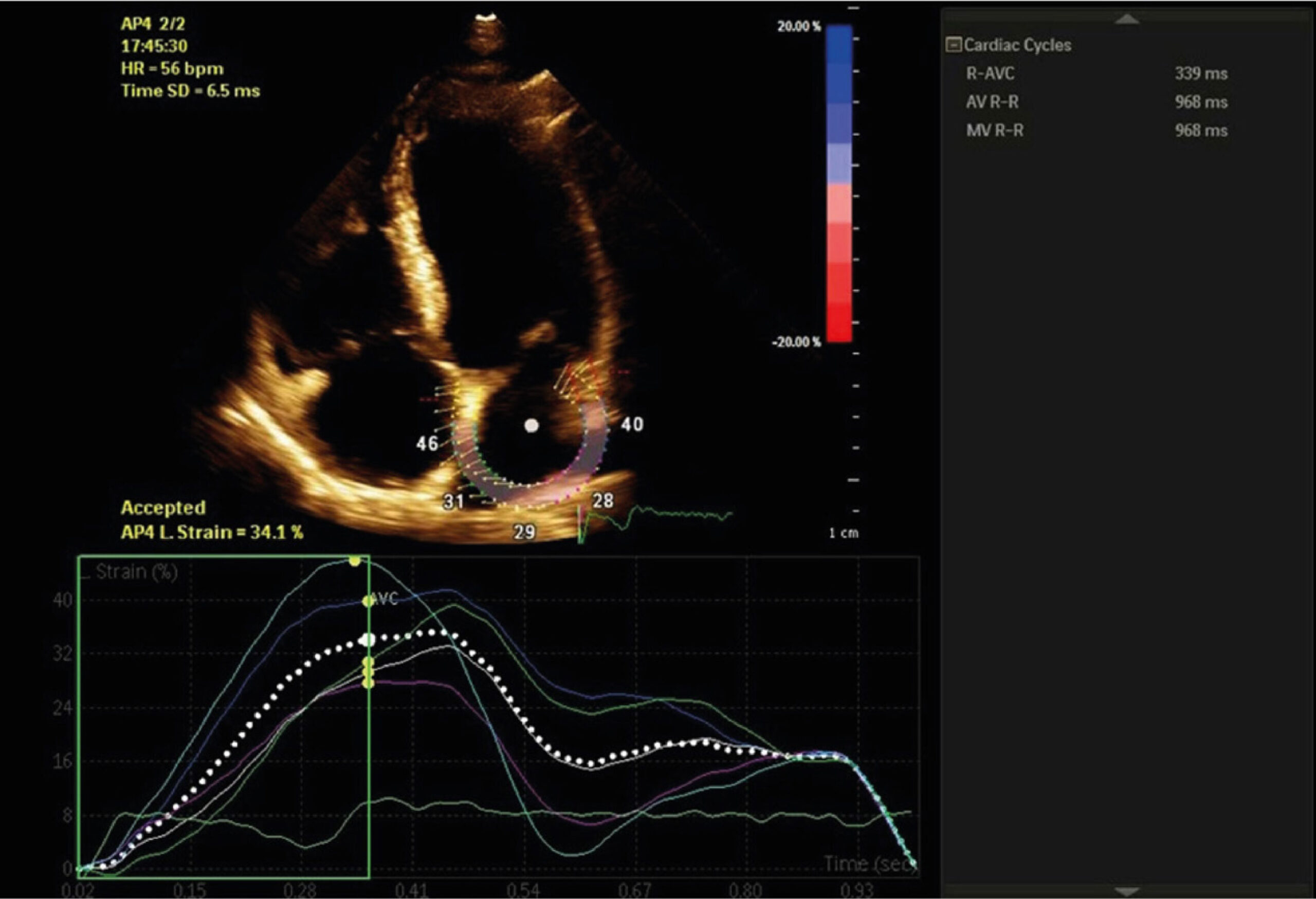
Elevation of left ventricular filling pressures secondary to diastolic dysfunction plays a central role in the pathophysiology of heart failure. However, international guidelines still fail to diagnose diastolic dysfunction in some cases.

Objective

To evaluate left atrial reservoir function in indeterminate diastolic function

Method

Observational study with individuals in sinus rhythm and preserved left ventricular ejection fraction, submitted to echocardiogram and divided into three groups according to the combined analysis of E/e´ ratio and indexed left atrium volume: Group 1, if normal left ventricular filling pressures; Group 2, if increased left ventricular filling pressures and Group 3, if indeterminate left ventricular filling pressures. Two-dimensional speckle tracking was used to measure peak left atrial strain (LAS). Analysis of variance, Student’s t test and receiver-operator curve (ROC) were used in the statistical analysis.

Results

We included 58 patients who had 61 ± 14 years old, 57% of whom were women, and had average left ventricular ejection fraction 62 ± 7%. Groups 2 and 3 had lower LAS than Group 1 (20 ± 5% versus 22 ± 6% versus 30 ± 8%, respectively, p = 0.004), but did not differ between them (p = 0.93). LAS was a good predictor of elevated left ventricular filling pressures (p = 0.026; area under the curve = 0.80), obtaining sensitivity of 60% and specificity of 80% with a cut-off value ≤ 20%.

Conclusion

The findings suggest that the left atrial reservoir function of individuals with indeterminate diastolic function is similar to that of individuals with advanced diastolic dysfunction, rendering LAS the potential to support the reclassification of indeterminate diastolic function.

  • Diastolic Function
  • Echocardiography
  • Heart Failure
  • Left atrium
Read Full Article
Creative Commons Attribution (CC BY) Creative Commons license
21/06/2021 DOI: 10.47593/2675-312X/20213402eabc196
Figure 1
ABCIC
Original Article

Echocardiographic Correlation Between Right Ventricular Diastolic Function and Age and Gender in Subjects With Preserved Systolic Function

Leonardo Lasari Melo et al. Ana Cristina Camarozano Daniela de Castro Carmo Jerônimo Antonio Fortunato … Rubens Zenóbio Darwich Cintia Rocha Fortes de Sá Liz Andréa Villela Baroncini

Abstract

Introduction:

Right ventricular (RV) systolic and diastolic functions influence the outcomes of cardiovascular diseases. However, right chamber size and function have not been uniformly assessed by age and sex.

Objective:

To evaluate RV diastolic function by age and sex in an outpatient population with preserved left ventricular (LV) and RV systolic function using transthoracic echocardiography.

Method:

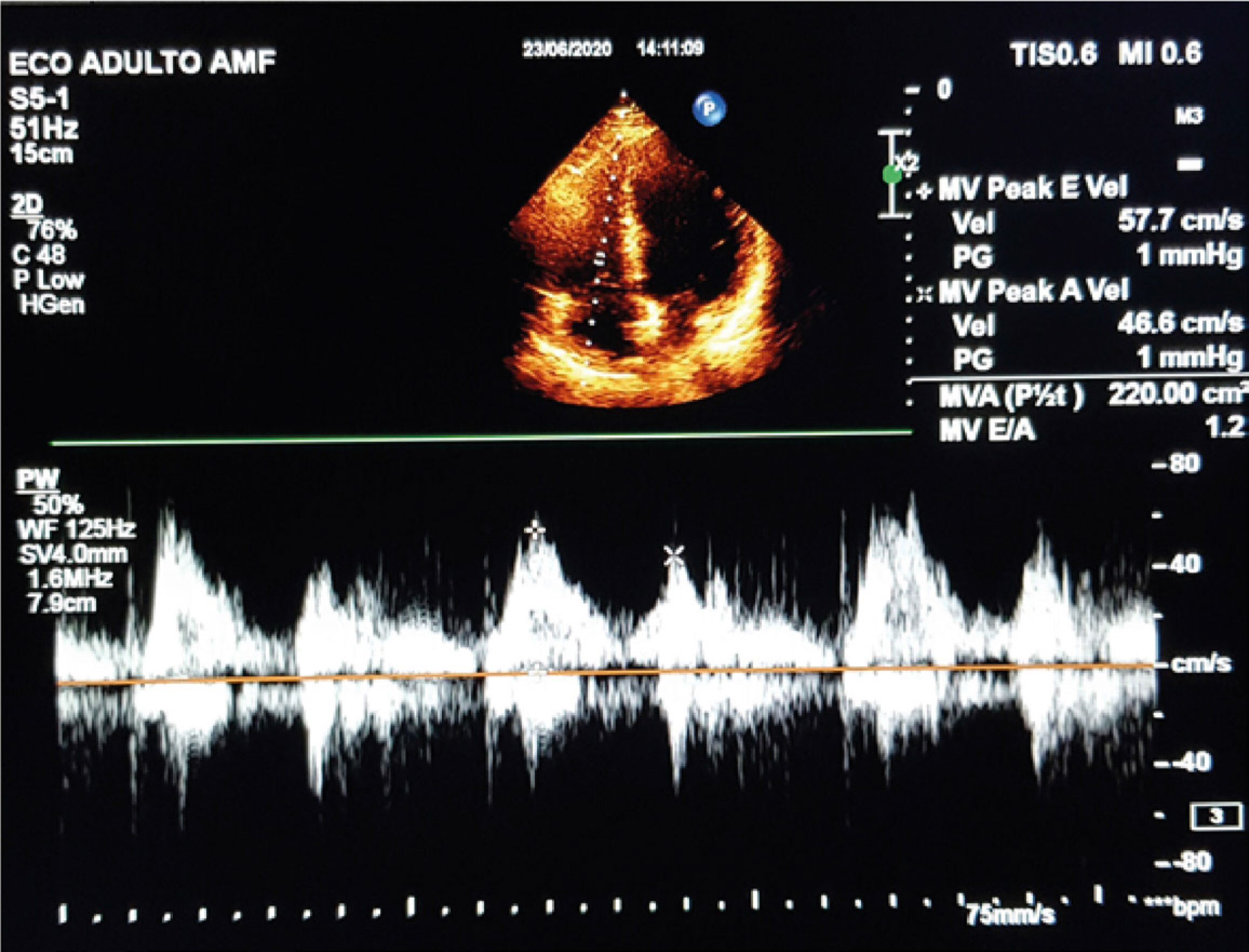
This observational cross-sectional study included a total of 97 patients (56 women) aged 61.5 ± 12.5 years. The assessed parameters included RV E/A ratio; peak E-wave and A-wave velocity, E-wave acceleration and deceleration time, and integral E-wave and A-wave velocity-time; and pulmonary artery systolic pressure (PASP), tricuspid reflux velocity, inferior vena cava diameter, and right atrial volume.

Results:

A reduced E-wave was observed with increasing age (Pearson’s correlation coefficient [PCC], −.30; p = 0.003). The same was observed for the E/A ratio (PCC, −0.21; p = 0.035). There was a significant positive association between age and PASP results (PCC, 0.40; p = 0.004) and tricuspid reflux velocity (PCC, 0.36; p = 0.008). There was no significant intersex difference in echocardiography variables.

Conclusion:

The present study showed the impact of age on RV diastolic function indices, which remained within the normal range, in subjects with preserved LV and RV function. The study did not evidence a significant difference between genders in relation to the diastolic function of the right ventricle.

  • Diastolic Function
  • Echocardiography
  • Right ventricle
Read Full Article
Creative Commons Attribution (CC BY) Creative Commons license
15/06/2021 DOI: 10.47593/2675-312X/20213402eabc126 Views 2
ABC
Editorial

New Paradigms in the Evaluation of Diastolic Function by Cardiac Magnetic Resonance Imaging in Aortic Valvopathy

Vera Maria Cury Salemi et al. Marcelo Dantas Tavares de Melo José de Arimatéia Batista Araujo Filho

The noninvasive analysis of left ventricular diastolic function is a challenge in clinical practice. Estimation of the time constant of isovolumetric relaxation – or Tau constant – is the best and most established parameter for ventricular diastolic function analysis. However, this measure is obtained through an invasive assessment and it is very difficult to acquire. In clinical practice, echocardiography is considered a key tool, among all the complementary exams that can be used to evaluate diastolic function, validated in relation to the pressure-volume curves by catheterization, restricting the invasive evaluation to be used in exceptional cases. Thus, echocardiography remains the first-line noninvasive method, providing data on early diastolic dysfunction through indices that reflect relaxation, compliance, and also indirect measurements of ventricular filling pressures.

The latest recommendations for diastolic dysfunction assessment by echocardiography basically include analysis of the left ventricle without structural changes and preserved ejection fraction, as well as a flowchart for cases of left ventricular ejection fraction reduction/structural change. However, the classification of the degree of diastolic dysfunction and its application in the therapeutic management of valvular heart disease remains controversial., Moreover, aortic stenosis may be associated with mitral annulus calcification, which may lead to a reduction of the mitral orifice area, with an increase in early transmitral diastolic velocity (E), while the Doppler lateral mitral annulus velocity (e’) may be reduced due to limitation of the posterior cusp excursion, which may lead to an artificial increase in the E/e’ ratio. In aortic regurgitation, however, the aortic reflux jet may interfere with the mitral flow, which, when significant, can lead to a restrictive ventricular filling pattern; however, the accuracy of E/e’ ratio is questionable.

[…]

  • Aortic Stenosis
  • Aortic Valvopathy
  • Cardiac magnetic resonance
  • Diastolic Function
  • Echocardiography
Read Full Article
Creative Commons Attribution (CC BY) Creative Commons license
20/03/2020 DOI: 10.36660/abc.20190903
Influence of subclinical atherosclerosis on diastolic function in individuals free of cardiovascular disease
ABC
Artigo Original

Influence of subclinical atherosclerosis on diastolic function in individuals free of cardiovascular disease

Maristela Magnavita Oliveira Garcia et al. Marília Galeffi Rodrigues Joaquim Antônio dos Reis Neto Luis Claudio Correia

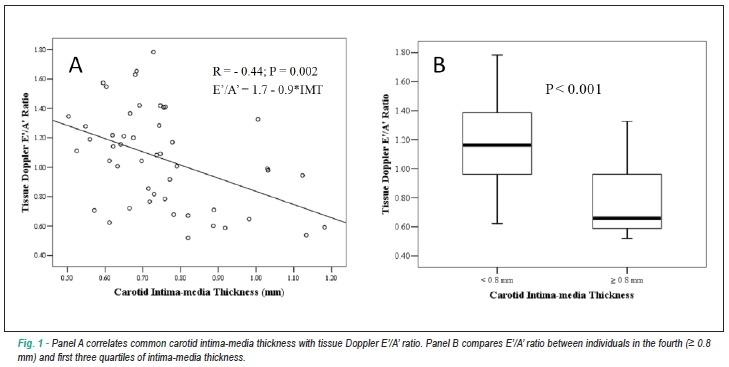
BACKGROUND: It is plausible that subclinical atherosclerosis alters coronary reserve and impairs diastolic function of the left ventricle. However, the relationship between subclinical stages of atherosclerosis and diastolic function has not been established in subjects free of cardiovascular disease. OBJECTIVE: To test the hypothesis that subclinical atherosclerosis has a negative association with diastolic function. METHODS: Individuals > 35 years old, free of cardiovascular disease, with normal blood pressure and negative treadmill stress test, were selected to have common carotid intima-media thickness (IMT) assessed by ultrasound and parameters of diastolic function by echocardiography, primarily tissue Doppler E’/A’ ratio. RESULTS: Forty-eight subjects were studied, aged 56 ± 10 years, 67% females. Composite common carotid IMT had a significant negative correlation with tissue Doppler E’/A’ ratio (r = – 0.437, p = 0.002). Individuals in the fourth quartile of IMT had a significant lower tissue Doppler E’/A’ ratio (0.76 ± 0.25), as compared with the first (1.2 ± 0.29), second (1.2 ± 0.36) and third quartiles (1.1 ± 0.25) – p = 0.002. Composite common carotid IMT in the fourth quartile (> 0.8 mm) independently predicted E’/A’ ratio (p = 0.02), after adjustment for potentially confounding variables, such as age, female gender, waist circumference, diastolic blood pressure, HDL-cholesterol and Framingham Risk. CONCLUSION: Early stage of subclinical atherosclerotic disease is negatively associated with diastolic function parameters in healthy individuals, regardless of age and clinical characteristics.

  • Carotid Intima-Media Thickness
  • Diastolic Function
  • Subclinical atherosclerosis
Read Full Article
Creative Commons Attribution (CC BY) Creative Commons license
27/08/2010 DOI: 10.1590/S0066-782X2010005000114 Views 1
Postischemic stunned myocardium does not alter cardiac response to an elevation in contractile frequency
ABC
Artigo Original

Postischemic stunned myocardium does not alter cardiac response to an elevation in contractile frequency

Orlando Sant'Ana Jr et al. Roberto J. Nogueira Neif Murad Antonio Carlos Lopes Paulo J. F. Tucci

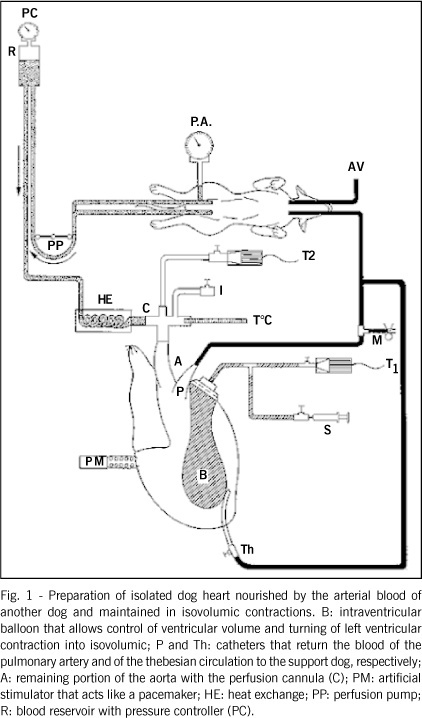
OBJECTIVE:To assess the influence of the postischemia/reperfusion stunned myocardium (PIRSM) on the inotropic and lusitropic effects of heart rate (HR). METHODS: Nine preparations of isolated dog hearts in isovolumic contraction and nourished by the arterial blood of another dog underwent heart rate elevation from 60 bpm to 200 bpm, in 20-bpm stages. The following variables were assessed before (B) and after (A) ischemia (15 min) and reperfusion (30 min): the pressure developed during contraction (PD), its first positive (+dP/dt) and negative (-dP/dt) derivative, the time of maximum pressure (TMP), the pressure at rest (Pr), and the time necessary for the developed pressure to decrease by 90% of its maximum value (time for relaxation – TR90%). RESULTS: The stimulating effects of HR elevation on inotropism and relaxation were similar before and after ischemia/reperfusion as follows: +dP/dt values increased, TMP decreased, -dP/dt values were intensified, and TR90% decreased. The values of PD did not change, and Pr increased. CONCLUSION: The results confirmed the positive inotropic effect of HR elevation (Bowditch effect) and the depressive action of ischemia/reperfusion. They also evidenced that PIRSM does not alter the stimulating action of the Bowditch effect, in accordance with the current concept that PIRSM does not impair calcium myocardial kinetics, favoring the prevalent hypothesis that the decrease in the contractile capacity after ischemia/reperfusion depends on the reduction of the myofilament responsiveness to calcium.

  • Bowditch effect
  • Diastolic Function
  • Heart Rate
  • postischemia/reperfusion stunned myocardium
  • systolic function
Read Full Article
Creative Commons Attribution (CC BY) Creative Commons license
14/02/2005 DOI: 10.1590/S0066-782X2005000100009
Ductus venosus flow and myocardial hypertrophy in fetuses of diabetic mothers
ABC
Artigo Original

Ductus venosus flow and myocardial hypertrophy in fetuses of diabetic mothers

Paulo Zielinsky et al. Silvana Marcantonio Luiz Henrique Nicoloso Stelamaris Luchese … Domingos Hatem Marlui Scheid João Luiz Mânica Eduardo Ioschpe Gus Fabíola Satler Antônio L. Piccoli Jr.

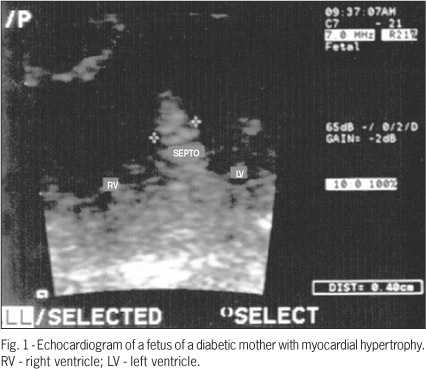
OBJECTIVE: To test the hypothesis that the pulsatility index of ductus venosus (PIDV) is greater in the fetuses of diabetic mothers (FDM) with myocardial hypertrophy (MH) than in the FDM with no MH and in the control fetuses of nondiabetic mothers (FNDM). Comparing the results with mitral and tricuspid diastolic peak flows. METHODS: The cross-sectional study included fetuses with gestational ages ranging from 20 weeks to term, divided into the following 3 groups: 56 FDM with MH (group I), 36 FDM with no MH (group II), and 53 FNDM (group III, control). The Doppler echocardiogram assessed the PIDV through the ratio (systolic velocity – presystolic velocity)/mean velocity. The mitral and tricuspid E and A waves were also assessed. RESULTS: The mean PIDV in groups I, II, and III were 1.13 ± 0.64, 0.84 ± 0.38, and 0.61±0.17, respectively. Using ANOVA and the Tukey test, a statistically significant difference was found in the 3 groups (P = 0.015 between groups I and II; P < 0.001 between groups I and III; and P = 0.017 between groups II and III). The mean mitral E wave was significantly greater in group I (0.39 ± 0.12 m/s) than in groups II (0.32 ± 0.08 m/s) (P = 0.024) and III (0.32 ± 0.08 m/s) (P = 0.023). The mean tricuspid E wave was also greater in group I (0.43 ± 0.1 m/s) than in group III (0.35 ± 0.10 m/s) (P = 0.031). CONCLUSION: The PIDV is significantly greater in FDM with MH than in FDM with no MH and in FNDM. Because the PIDV may represent modifications in ventricular compliance, this index may be a more sensitive parameter for assessing fetal diastolic function.

  • Diastolic Function
  • ductus venosus
  • fetal myocardial hypertrophy
  • maternal diabetes
Read Full Article
Creative Commons Attribution (CC BY) Creative Commons license
17/08/2004 DOI: 10.1590/S0066-782X2004001300005 Views 1
ABC
Original Article

Right ventricular diastolic dysfunction in the postoperative period of tetralogy of Fallot

Silvia Meyer Cardoso et al. Nelson Itiro Miyague

OBJECTIVE: To assess right ventricular diastolic function in the intermediate postoperative period of repair of tetralogy of Fallot. METHODS: We carried out a case-control study with 60 patients divided into 2 groups as follows: 1) group I – 30 patients who had undergone repair of tetralogy of Fallot and 2) group II – 30 healthy children. The 2 groups were paired for age, sex, and body surface. The flows in the pulmonary and tricuspid valves were analyzed with Doppler echocardiography. The presence of anterograde flow at the end of diastole in the pulmonary artery defined restrictive right ventricular physiology. Surgical, radiological, electrocardiographic, and echocardiographic variables were analized in the group I. RESULTS: The velocity of the A wave and the E/A ratio for the tricuspid valve showed significant differences between the groups. Cases with E/A < 1.30 predominated in inspiration (group I – 19/30, and group II – 5/30). The duration of the QRS complex on the electrocardiogram was significantly increased in patients with E/A <1.30. Nineteen (63.3%) patients had restrictive right ventricular physiology, which had a longer postoperative period, longer duration of the QRS complex, and a lower E/A ratio in inspiration. The surgical and radiological variables showed no statistical difference. CONCLUSION: Restrictive right ventricular physiology was detected on the intermediate follow-up of most patients undergoing repair of tetralogy of Fallot. The postoperative period and QRS duration were increased in patients with impairment in diastolic function.

  • Congenital Heart Disease
  • Diastolic Function
  • Tetralogy of Fallot
Read Full Article
Creative Commons Attribution (CC BY) Creative Commons license
02/04/2003 DOI: 10.1590/S0066-782X2003000200008
Left Ventricular Diastolic Function in Essential Hypertensive Patients: Influence of Age and Left Ventricular Geometry
ABC
Original Article

Left Ventricular Diastolic Function in Essential Hypertensive Patients: Influence of Age and Left Ventricular Geometry

Eduardo Cantoni Rosa et al. Valdir Ambrósio Moysés Ivan Rivera Ricardo da Cintra Sesso … Nárcia Kohlmann Maria Tereza Zanella Artur Beltrame Ribeiro Osvaldo Kohlmann Jr.

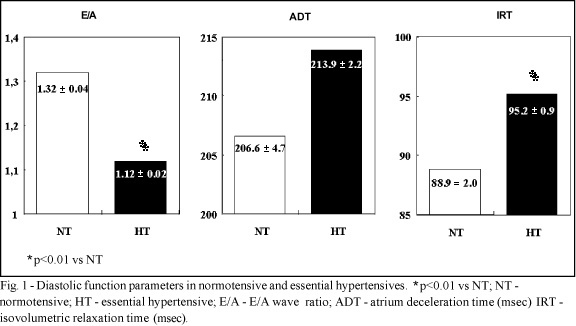
PURPOSE – To evaluate diastolic dysfunction (DD) in essential hypertension and the influence of age and cardiac geometry on this parameter. METHODS – Four hundred sixty essential hypertensive patients (HT) underwent Doppler echocardiography to obtain E/A wave ratio (E/A), atrial deceleration time (ADT), and isovolumetric relaxation time (IRT). All patients were grouped according to cardiac geometric patterns (NG – normal geometry; CR – concentric remodeling; CH- concentric hypertrophy; EH – eccentric hypertrophy) and to age (60 years). One hundred six normotensives (NT) persons were also evaluated. RESULTS – A worsening of diastolic function in the HT compared with the NT, including HT with NG (E/A: NT – 1.38±0.03 vs HT – 1.27±0.02, p<0.01), was observed. A higher prevalence of DD occurred parallel to age and cardiac geometry also in the prehypertrophic groups (CR). Multiple regression analysis identified age as the most important predictor of DD (r²=0.30, p<0.01). CONCLUSION – DD was prevalent in this hypertensive population, being highly affected by age and less by heart structural parameters. DD is observed in incipient stages of hypertensive heart disease, and thus its early detection may help in the risk stratification of hypertensive patients.

  • age
  • cardiac geometry
  • Diastolic Function
  • Essential Hypertension
Read Full Article
Creative Commons Attribution (CC BY) Creative Commons license
13/08/2002 DOI: 10.1590/S0066-782X2002000500004 Views 2
ABC
Original Article

Congestive heart failure. Correlation between functional class and systolic and diastolic functions assessed by Doppler echocardiography

Cesar Selem Kamel et al. Aristarco G. Siqueira-Filho Luiz Felipe Mena Barreto Marcos Benchimol

OBJECTIVE: To evaluate the influence of systolic or diastolic dysfunction, or both on congestive heart failure functional class. METHODS: Thirty-six consecutive patients with a clinical diagnosis of congestive heart failure with sinus rhythm, who were seen between September and November of 1998 answered an adapted questionnaire about tolerance to physical activity for the determination of NYHA functional class. The patients were studied with transthoracic Doppler echocardiography. Two groups were compared: group 1 (19 patients in functional classes I and II) and group 2 (17 patients in functional classes III and IV). RESULTS: The average ejection fraction was significantly higher in group 1 (44.84%±8.04% vs. 32.59%±11.48% with p=0.0007). The mean ratio of the initial/final maximum diastolic filling velocity (E/A) of the left ventricle was significantly smaller in group 1 (1.07±0.72 vs. 1.98±1.49 with p=0.03). The average maximum systolic pulmonary venous velocity (S) was significantly higher in group 1 (53.53cm/s ± 12.02cm/s vs. 43.41cm/s ± 13.55cm/s with p=0.02). The mean ratio of maximum systolic/diastolic pulmonary venous velocity was significantly higher in group 1 (1.52±0.48 vs. 1.08±0.48 with p=0.01). A predominance of pseudo-normal and restrictive diastolic patterns existed in group 2 (58.83% in group 2 vs. 21.06% in group 1 with p=0.03). CONCLUSION: Both the systolic dysfunction index and the patterns of diastolic dysfunction evaluated by Doppler echocardiography worsened with the evolution of congestive heart failure.

  • congestive heart failure
  • Diastolic Function
  • Functional Class
  • systolic function
Read Full Article
Creative Commons Attribution (CC BY) Creative Commons license
08/01/2002 DOI: 10.1590/S0066-782X2001000200004 Views 1
ABC
Artigo Original

Maximal functional capacity and diastolic function in patients with cardiomyopathy due to Chagas' disease without congestive heart failure

Charles Mady et al. Barbara M. Ianni Edmundo Arteaga Vera Maria Cury Salemi … Paulo R. Santos Silva Rita Helena A. Cardoso Dalia Ballas

PURPOSE: To identify early cardiac dysfunctions in asymptomatic patients with Chagas’ cardiomyopathy. METHODS: We studied 38 male individuals: control group consisting of 20 sedentary normal individuals and Chagas’ group, of 18 asymptomatic patients with Chagas’ disease, with suggestive electrocardiographic alterations and normal fractional shortening (FS) on echocardiogram. Both groups were submitted to evaluation of the maximal functional capacity, with measurements of maximal O2 consumption (VO2max), O2-pulse rate (PO2max), maximal ventilation (VEmax), maximal heart rate (HRmax), and anaerobic threshold of the VO2max(VO2-AT). Left ventricular diastolic function was evaluated by conventional echocardiography (E wave, A wave and E/A ratio). RESULTS: No significant differences occurred between the two groups with regard to FS (p=0.212) and age means (p=0.060). The 2 groups were significantly different (p<0.001) regarding the parameters VO2max, PO2max, VEmax, HRmax and VO2-AT, E wave and E/A ratio. There was no difference (p=0.520) in A wave. CONCLUSION: Impaired ventricular function may account for the above mentioned differences, a consequence of both systolic and diastolic dysfunctions.

  • Chagas disease
  • Diastolic Function
  • maximal functional capacity
Read Full Article
Creative Commons Attribution (CC BY) Creative Commons license
02/02/2001 DOI: 10.1590/S0066-782X1997001000003 Views 2

How to cite this article

EndNote RIS

Electronic Document Format (Vancouver)

Hortegal R, Abensur H. My Approach to Analyze Diastolic Function in Indeterminate Cases by the 2016 American Society of Echocardiography Guideline?. Arquivos Brasileiros de Cardiologia Imagem cardiovascular 2022;33(3):1-7.

Electronic Document Format (ABNT)

Hortegal, Renato; Abensur, Henry. My Approach to Analyze Diastolic Function in Indeterminate Cases by the 2016 American Society of Echocardiography Guideline?. Arquivos Brasileiros de Cardiologia Imagem cardiovascular, v. 33, n. 3, p. 1-7, Jan. 2022.

Electronic Document Format (APA)

Hortegal, R., & Abensur, H. (2022). My Approach to Analyze Diastolic Function in Indeterminate Cases by the 2016 American Society of Echocardiography Guideline?. Arquivos Brasileiros de Cardiologia Imagem cardiovascular, 33(3), 1-7.

Electronic Document Format (ISO)

Hortegal, Renato and Abensur, Henry. My Approach to Analyze Diastolic Function in Indeterminate Cases by the 2016 American Society of Echocardiography Guideline?. Arquivos Brasileiros de Cardiologia Imagem cardiovascular [online]. 2022, vol. 33, n. 3, [cited 2026-10-14], pp. 1-7. Available from: <https://journals.cardiol.br/en/article/my-approach-to-analyze-diastolic-function-in-indeterminate-cases-by-the-2016-american-society-of-echocardiography-guideline/>. ISSN 2318-8219

EndNote RIS

Electronic Document Format (Vancouver)

Barberato SH, Borsoi R. Left Atrial Reserve Function in Assessing Indeterminate Diastolic Function. ABC Imagem Cardiovascular 2021;34(2):eabc196.

Electronic Document Format (ABNT)

Barberato, Silvio Henrique; Borsoi, Rafael. Left Atrial Reserve Function in Assessing Indeterminate Diastolic Function. ABC Imagem Cardiovascular, v. 34, n. 2, eabc196, Jun. 2021.

Electronic Document Format (APA)

Barberato, S. H., & Borsoi, R. (2021). Left Atrial Reserve Function in Assessing Indeterminate Diastolic Function. ABC Imagem Cardiovascular, 34(2), eabc196.

Electronic Document Format (ISO)

Barberato, Silvio Henrique and Borsoi, Rafael. Left Atrial Reserve Function in Assessing Indeterminate Diastolic Function. ABC Imagem Cardiovascular [online]. 2021, vol. 34, n. 2, [cited 2026-10-14], eabc196. Available from: <https://journals.cardiol.br/en/article/left-atrial-reserve-function-in-assessing-indeterminate-diastolic-function/>. ISSN 2318-8219

EndNote RIS

Electronic Document Format (Vancouver)

Melo LL, Camarozano AC, Carmo DC, Fortunato JA, Darwich RZ, Sá CRF, Baroncini LAV, et al. Echocardiographic Correlation Between Right Ventricular Diastolic Function and Age and Gender in Subjects With Preserved Systolic Function. ABC Imagem Cardiovascular 2021;34(2):eabc126.

Electronic Document Format (ABNT)

Melo, Leonardo Lasari; Camarozano, Ana Cristina; Carmo, Daniela de Castro; Fortunato, Jerônimo Antonio; Darwich, Rubens Zenóbio; Sá, Cintia Rocha Fortes de; Baroncini, Liz Andréa Villela. Echocardiographic Correlation Between Right Ventricular Diastolic Function and Age and Gender in Subjects With Preserved Systolic Function. ABC Imagem Cardiovascular, v. 34, n. 2, eabc126, Jun. 2021.

Electronic Document Format (APA)

Melo, L. L., Camarozano, A. C., Carmo, D. C., Fortunato, J. A., Darwich, R. Z., Sá, C. R. F. , & Baroncini, L. A. V. (2021). Echocardiographic Correlation Between Right Ventricular Diastolic Function and Age and Gender in Subjects With Preserved Systolic Function. ABC Imagem Cardiovascular, 34(2), eabc126.

Electronic Document Format (ISO)

Melo, Leonardo Lasari and Camarozano, Ana Cristina and Carmo, Daniela de Castro and Fortunato, Jerônimo Antonio and Darwich, Rubens Zenóbio and Sá, Cintia Rocha Fortes de and Baroncini, Liz Andréa Villela. Echocardiographic Correlation Between Right Ventricular Diastolic Function and Age and Gender in Subjects With Preserved Systolic Function. ABC Imagem Cardiovascular [online]. 2021, vol. 34, n. 2, [cited 2026-10-14], eabc126. Available from: <https://journals.cardiol.br/en/article/echocardiographic-correlation-between-right-ventricular-diastolic-function-and-age-and-gender-in-subjects-with-preserved-systolic-function/>. ISSN 2318-8219

EndNote RIS

Electronic Document Format (Vancouver)

Salemi VMC, Melo MDT, Araujo Filho JAB. New Paradigms in the Evaluation of Diastolic Function by Cardiac Magnetic Resonance Imaging in Aortic Valvopathy. Arquivos Brasileiros de Cardiologia 2020;114(2):293-4.

Electronic Document Format (ABNT)

Salemi, Vera Maria Cury; Melo, Marcelo Dantas Tavares de; Araujo Filho, José de Arimatéia Batista. New Paradigms in the Evaluation of Diastolic Function by Cardiac Magnetic Resonance Imaging in Aortic Valvopathy. Arquivos Brasileiros de Cardiologia, v. 114, n. 2, p. 293-294, Mar. 2020.

Electronic Document Format (APA)

Salemi, V. M. C., Melo, M. D. T. , & Araujo Filho, J. A. B. (2020). New Paradigms in the Evaluation of Diastolic Function by Cardiac Magnetic Resonance Imaging in Aortic Valvopathy. Arquivos Brasileiros de Cardiologia, 114(2), 293-294.

Electronic Document Format (ISO)

Salemi, Vera Maria Cury and Melo, Marcelo Dantas Tavares de and Araujo Filho, José de Arimatéia Batista. New Paradigms in the Evaluation of Diastolic Function by Cardiac Magnetic Resonance Imaging in Aortic Valvopathy. Arquivos Brasileiros de Cardiologia [online]. 2020, vol. 114, n. 2, [cited 2026-10-14], pp. 293-294. Available from: <https://journals.cardiol.br/en/article/new-paradigms-in-the-evaluation-of-diastolic-function-by-cardiac-magnetic-resonance-imaging-in-aortic-valvopathy/>. ISSN 0066-782X

EndNote RIS

Electronic Document Format (Vancouver)

Garcia MMO, Rodrigues MG, Reis Neto JA, Correia LC. Influence of subclinical atherosclerosis on diastolic function in individuals free of cardiovascular disease. Arquivos Brasileiros de Cardiologia 2010;95(4):473-9.

Electronic Document Format (ABNT)

Garcia, Maristela Magnavita Oliveira; Rodrigues, Marília Galeffi; Reis Neto, Joaquim Antônio dos; Correia, Luis Claudio. Influence of subclinical atherosclerosis on diastolic function in individuals free of cardiovascular disease. Arquivos Brasileiros de Cardiologia, v. 95, n. 4, p. 473-479, Aug. 2010.

Electronic Document Format (APA)

Garcia, M. M. O., Rodrigues, M. G., Reis Neto, J. A. , & Correia, L. C. (2010). Influence of subclinical atherosclerosis on diastolic function in individuals free of cardiovascular disease. Arquivos Brasileiros de Cardiologia, 95(4), 473-479.

Electronic Document Format (ISO)

Garcia, Maristela Magnavita Oliveira and Rodrigues, Marília Galeffi and Reis Neto, Joaquim Antônio dos and Correia, Luis Claudio. Influence of subclinical atherosclerosis on diastolic function in individuals free of cardiovascular disease. Arquivos Brasileiros de Cardiologia [online]. 2010, vol. 95, n. 4, [cited 2026-10-14], pp. 473-479. Available from: <https://journals.cardiol.br/en/article/influence-of-subclinical-atherosclerosis-on-diastolic-function-in-individuals-free-of-cardiovascular-disease/>. ISSN 0066-782X

EndNote RIS

Electronic Document Format (Vancouver)

Sant’Ana Jr O, Nogueira RJ, Murad N, Lopes AC, Tucci PJF. Postischemic stunned myocardium does not alter cardiac response to an elevation in contractile frequency. Arquivos Brasileiros de Cardiologia 2005;84(1):38-43.

Electronic Document Format (ABNT)

Sant’Ana Jr, Orlando; Nogueira, Roberto J.; Murad, Neif; Lopes, Antonio Carlos; Tucci, Paulo J. F.. Postischemic stunned myocardium does not alter cardiac response to an elevation in contractile frequency. Arquivos Brasileiros de Cardiologia, v. 84, n. 1, p. 38-43, Feb. 2005.

Electronic Document Format (APA)

Sant’Ana Jr, O., Nogueira, R. J., Murad, N., Lopes, A. C., & Tucci, P. J. F. (2005). Postischemic stunned myocardium does not alter cardiac response to an elevation in contractile frequency. Arquivos Brasileiros de Cardiologia, 84(1), 38-43.

Electronic Document Format (ISO)

Sant’Ana Jr, Orlando and Nogueira, Roberto J. and Murad, Neif and Lopes, Antonio Carlos and Tucci, Paulo J. F.. Postischemic stunned myocardium does not alter cardiac response to an elevation in contractile frequency. Arquivos Brasileiros de Cardiologia [online]. 2005, vol. 84, n. 1, [cited 2026-10-14], pp. 38-43. Available from: <https://journals.cardiol.br/en/article/postischemic-stunned-myocardium-does-not-alter-cardiac-response-to-an-elevation-in-contractile-frequency/>. ISSN 0066-782X

EndNote RIS

Electronic Document Format (Vancouver)

Zielinsky P, Marcantonio S, Nicoloso LH, Luchese S, Hatem D, Scheid M, Mânica JL, et al. Ductus venosus flow and myocardial hypertrophy in fetuses of diabetic mothers. Arquivos Brasileiros de Cardiologia 2004;83(1):45-50.

Electronic Document Format (ABNT)

Zielinsky, Paulo; Marcantonio, Silvana; Nicoloso, Luiz Henrique; Luchese, Stelamaris; Hatem, Domingos; Scheid, Marlui; Mânica, João Luiz; Gus, Eduardo Ioschpe; Satler, Fabíola; Piccoli Jr., Antônio L.. Ductus venosus flow and myocardial hypertrophy in fetuses of diabetic mothers. Arquivos Brasileiros de Cardiologia, v. 83, n. 1, p. 45-50, Aug. 2004.

Electronic Document Format (APA)

Zielinsky, P., Marcantonio, S., Nicoloso, L. H., Luchese, S., Hatem, D., Scheid, M., Mânica, J. L., Gus, E. I., Satler, F., & Piccoli Jr., A. L. (2004). Ductus venosus flow and myocardial hypertrophy in fetuses of diabetic mothers. Arquivos Brasileiros de Cardiologia, 83(1), 45-50.

Electronic Document Format (ISO)

Zielinsky, Paulo and Marcantonio, Silvana and Nicoloso, Luiz Henrique and Luchese, Stelamaris and Hatem, Domingos and Scheid, Marlui and Mânica, João Luiz and Gus, Eduardo Ioschpe and Satler, Fabíola and Piccoli Jr., Antônio L.. Ductus venosus flow and myocardial hypertrophy in fetuses of diabetic mothers. Arquivos Brasileiros de Cardiologia [online]. 2004, vol. 83, n. 1, [cited 2026-10-14], pp. 45-50. Available from: <https://journals.cardiol.br/en/article/ductus-venosus-flow-and-myocardial-hypertrophy-in-fetuses-of-diabetic-mothers/>. ISSN 0066-782X

EndNote RIS

Electronic Document Format (Vancouver)

Cardoso SM, Miyague NI. Right ventricular diastolic dysfunction in the postoperative period of tetralogy of Fallot. Arquivos Brasileiros de Cardiologia 2003;80(2):198-201.

Electronic Document Format (ABNT)

Cardoso, Silvia Meyer; Miyague, Nelson Itiro. Right ventricular diastolic dysfunction in the postoperative period of tetralogy of Fallot. Arquivos Brasileiros de Cardiologia, v. 80, n. 2, p. 198-201, Apr. 2003.

Electronic Document Format (APA)

Cardoso, S. M., & Miyague, N. I. (2003). Right ventricular diastolic dysfunction in the postoperative period of tetralogy of Fallot. Arquivos Brasileiros de Cardiologia, 80(2), 198-201.

Electronic Document Format (ISO)

Cardoso, Silvia Meyer and Miyague, Nelson Itiro. Right ventricular diastolic dysfunction in the postoperative period of tetralogy of Fallot. Arquivos Brasileiros de Cardiologia [online]. 2003, vol. 80, n. 2, [cited 2026-10-14], pp. 198-201. Available from: <https://journals.cardiol.br/en/article/right-ventricular-diastolic-dysfunction-in-the-postoperative-period-of-tetralogy-of-fallot/>. ISSN 0066-782X

EndNote RIS

Electronic Document Format (Vancouver)

Rosa EC, Moysés VA, Rivera I, Sesso RC, Kohlmann N, Zanella MT, Ribeiro AB, et al. Left Ventricular Diastolic Function in Essential Hypertensive Patients: Influence of Age and Left Ventricular Geometry. Arquivos Brasileiros de Cardiologia 2002;78(5):472-7.

Electronic Document Format (ABNT)

Rosa, Eduardo Cantoni; Moysés, Valdir Ambrósio; Rivera, Ivan; Sesso, Ricardo da Cintra; Kohlmann, Nárcia; Zanella, Maria Tereza; Ribeiro, Artur Beltrame; Kohlmann Jr., Osvaldo. Left Ventricular Diastolic Function in Essential Hypertensive Patients: Influence of Age and Left Ventricular Geometry. Arquivos Brasileiros de Cardiologia, v. 78, n. 5, p. 472-477, Aug. 2002.

Electronic Document Format (APA)

Rosa, E. C., Moysés, V. A., Rivera, I., Sesso, R. C., Kohlmann, N., Zanella, M. T., Ribeiro, A. B., & Kohlmann Jr., O. (2002). Left Ventricular Diastolic Function in Essential Hypertensive Patients: Influence of Age and Left Ventricular Geometry. Arquivos Brasileiros de Cardiologia, 78(5), 472-477.

Electronic Document Format (ISO)

Rosa, Eduardo Cantoni and Moysés, Valdir Ambrósio and Rivera, Ivan and Sesso, Ricardo da Cintra and Kohlmann, Nárcia and Zanella, Maria Tereza and Ribeiro, Artur Beltrame and Kohlmann Jr., Osvaldo. Left Ventricular Diastolic Function in Essential Hypertensive Patients: Influence of Age and Left Ventricular Geometry. Arquivos Brasileiros de Cardiologia [online]. 2002, vol. 78, n. 5, [cited 2026-10-14], pp. 472-477. Available from: <https://journals.cardiol.br/en/article/left-ventricular-diastolic-function-in-essential-hypertensive-patients-influence-of-age-and-left-ventricular-geometry/>. ISSN 0066-782X

EndNote RIS

Electronic Document Format (Vancouver)

Kamel CS, Siqueira-Filho AG, Barreto LFM, Benchimol M. Congestive heart failure. Correlation between functional class and systolic and diastolic functions assessed by Doppler echocardiography. Arquivos Brasileiros de Cardiologia 2002;76(2):132-5.

Electronic Document Format (ABNT)

Kamel, Cesar Selem; Siqueira-Filho, Aristarco G.; Barreto, Luiz Felipe Mena; Benchimol, Marcos. Congestive heart failure. Correlation between functional class and systolic and diastolic functions assessed by Doppler echocardiography. Arquivos Brasileiros de Cardiologia, v. 76, n. 2, p. 132-135, Jan. 2002.

Electronic Document Format (APA)

Kamel, C. S., Siqueira-Filho, A. G., Barreto, L. F. M., & Benchimol, M. (2002). Congestive heart failure. Correlation between functional class and systolic and diastolic functions assessed by Doppler echocardiography. Arquivos Brasileiros de Cardiologia, 76(2), 132-135.

Electronic Document Format (ISO)

Kamel, Cesar Selem and Siqueira-Filho, Aristarco G. and Barreto, Luiz Felipe Mena and Benchimol, Marcos. Congestive heart failure. Correlation between functional class and systolic and diastolic functions assessed by Doppler echocardiography. Arquivos Brasileiros de Cardiologia [online]. 2002, vol. 76, n. 2, [cited 2026-10-14], pp. 132-135. Available from: <https://journals.cardiol.br/en/article/congestive-heart-failure-correlation-between-functional-class-and-systolic-and-diastolic-functions-assessed-by-doppler-echocardiography/>. ISSN 0066-782X

EndNote RIS

Electronic Document Format (Vancouver)

Mady C, Ianni BM, Arteaga E, Salemi VMC, Silva PRS, Cardoso RHA, Ballas D, et al. Maximal functional capacity and diastolic function in patients with cardiomyopathy due to Chagas’ disease without congestive heart failure. Arquivos Brasileiros de Cardiologia 2001;69(4):237-41.

Electronic Document Format (ABNT)

Mady, Charles; Ianni, Barbara M.; Arteaga, Edmundo; Salemi, Vera Maria Cury; Silva, Paulo R. Santos; Cardoso, Rita Helena A.; Ballas, Dalia. Maximal functional capacity and diastolic function in patients with cardiomyopathy due to Chagas’ disease without congestive heart failure. Arquivos Brasileiros de Cardiologia, v. 69, n. 4, p. 237-241, Feb. 2001.

Electronic Document Format (APA)

Mady, C., Ianni, B. M., Arteaga, E., Salemi, V. M. C., Silva, P. R. S., Cardoso, R. H. A., & Ballas, D. (2001). Maximal functional capacity and diastolic function in patients with cardiomyopathy due to Chagas’ disease without congestive heart failure. Arquivos Brasileiros de Cardiologia, 69(4), 237-241.

Electronic Document Format (ISO)

Mady, Charles and Ianni, Barbara M. and Arteaga, Edmundo and Salemi, Vera Maria Cury and Silva, Paulo R. Santos and Cardoso, Rita Helena A. and Ballas, Dalia. Maximal functional capacity and diastolic function in patients with cardiomyopathy due to Chagas’ disease without congestive heart failure. Arquivos Brasileiros de Cardiologia [online]. 2001, vol. 69, n. 4, [cited 2026-10-14], pp. 237-241. Available from: <https://journals.cardiol.br/en/article/maximal-functional-capacity-and-diastolic-function-in-patients-with-cardiomyopathy-due-to-chagas-disease-without-congestive-heart-failure/>. ISSN 0066-782X

  • About ABC Family
  • Internal Regulation
  • Editorial Board
  • Brazilian Society of Cardiology (SBC)

Issues

SBC Guidelines

  • Videos
  • Podcasts
  • News