ABC Family Arquivos Brasileiros de Cardiologia International Journal of Cardiovascular Sciences ABC Heart Failure & Cardiomyopathy ABC Imagem Cardiovascular
Português English
ABC Family
Português English
  • About
    • About ABC Family
    • Internal Regulation
    • Editorial Board
    • Brazilian Society of Cardiology (SBC)
  • Issues
  • SBC Guidelines
  • Content
    • Videos
    • Podcasts
    • News
  • About
    • About ABC Family
    • Internal Regulation
    • Editorial Board
    • Brazilian Society of Cardiology (SBC)
  • Issues
  • SBC Guidelines
  • Content
    • Videos
    • Podcasts
    • News

ABC Family

  • ABC Family
  • Arquivos Brasileiros de Cardiologia
  • International Journal of Cardiovascular Sciences
  • ABC Heart Failure & Cardiomyopathy
  • ABC Imagem Cardiovascular
Search in

No content found.

Journals
Ordering
Article types
Others

  1. Home
  2. Keyword: Arrhythmias,Cardiac
ABC
Editorial

Clinical Significance of Statistical Differences

Luiz Maurino Abreu

Diabetes is a serious chronic condition that occurs when your body cannot produce any or enough insulin or cannot effectively use the insulin it produces, resulting in high blood glucose levels. The so-called type 1 diabetes is caused by a set of genetic, environmental and autoimmune factors affecting insulin-producing pancreatic beta cells.

Elevated blood glucose levels even below the diagnostic threshold of diabetes are associated with complications with the greatest impact on morbidity and mortality among people with diabetes. Systematic reviews involving 102 prospective studies in diabetic patients indicate that the relative risk of cardiovascular disease (CVD) is between 1.6 and 2.6, greater in younger people and slightly higher in women.

[…]

  • Arrhythmias,Cardiac
  • Data Interpretation, Statistical
  • Diabetes Mellitus/complications, Risk Factors
  • Electrocardiography/methods
  • Prevention and Control
Read Full Article
Creative Commons Attribution (CC BY) Creative Commons license
20/03/2020 DOI: 10.36660/abc.20200006 Views 2
IJCS
Editorial

Conduction Abnormalities after Transcatheter Aortic Valve Replacement: Pretty Common, Fairly Predictable, Barely Avoidable

Mohammad Abdelghani

The cardiac conduction system is commonly diseased in patients with aortic valve disease, and the site of conduction defect in those with severe calcific aortic valve stenosis is most commonly the His bundle or infra-Hisian., The bundle of His traverses the membranous septum towards the left ventricular outflow tract (LVOT) running superficially over the crest of the ventricular septum, originating the left bundle branch. This anatomical course makes the His bundle and its left branch susceptible to mechanical injury during transcatheter aortic valve replacement (TAVR), which involves multiple mechanical manipulations with wires, catheters, balloons, and the transcatheter heart valve (THV) inflow within that vicinity. Atrioventricular and intra-ventricular conduction abnormalities are indeed a common finding in patients with severe aortic valve stenosis referred to TAVR and new onset persistent conduction abnormalities (NOPCAs) are a common complication arising during/after TAVR.

Unlike other periprocedural complications of TAVR, whose incidence has decreased over time, a regression in the incidence of NOPCAs after TAVR was neither seen with the introduction of new TAVR technologies/techniques nor it is foreseeable in the near future.

[…]

  • Aortic Valve Stenosis/complications
  • Aortic Valve Stenosis/physiopathology
  • Arrhythmias,Cardiac
  • Bundle-Branch Block/etiology
  • Pacemaker,Artificial
  • Transcatheter Aortic Valve Replacement/adverse effects
Read Full Article
Creative Commons Attribution (CC BY) Creative Commons license
03/10/2019 DOI: 10.5935/2359-4802.20190078
ABC
Editorial

Ventricular Pacing of Conventional Pacemakers in the Era of CRT

Silas dos Santos Galvão Filho

With the advent of cardiac resynchronization therapy (CRT), and the awareness of the impairment of ventricular systolic function caused by intraventricular conduction disorders, especially left bundle branch block, after more than 50 years of routine use, conventional right univentricular artificial cardiac pacing, particularly in its classical site – the apical region – is now being questioned. In fact, conventional right univentricular pacing usually generates a large QRS (often greater than 150 ms), with electrocardiographic pattern of left bundle branch block – more significant signs for the diagnosis of ventricular dyssynchrony that may require CRT.

Some studies have shown impairment of right univentricular pacing in patients with pacemakers compared to normal ventricular activation,– which prompted the development of algorithms of minimal ventricular pacing, favoring exclusive atrial pacing in currently available dual-chamber pacemakers, which have shown some benefits. However, when the reestablishment of heart rate requires ventricular pacing (in cases of AV blocks), these algorithms cannot be used. Other studies have shown deterioration of ventricular systolic function after initiation of right univentricular pacing., In order to minimize any impairment of right univentricular pacing in cases where it is necessary, multiple pacing sites have been tried: (outflow tract, mid-septal, inferior-septal, etc.) and, although no further evidence has been achieved, today, mid-septal pacing is the most commonly method in conventional pacemaker implants, to the detriment of apical pacing.

[…]

  • Arrhythmias,Cardiac
  • Bradycardia
  • Cardiac Pacing,Artificial/methods
  • Pacemaker, Artificial/utilization
  • Remodeling Atrial
Read Full Article
Creative Commons Attribution (CC BY) Creative Commons license
15/04/2019 DOI: 10.5935/abc.20190074 Views 2
Figure 1
ABC
Original Article

Paroxysmal Atrial Fibrillation in Females: Understanding gender diferences

Gabriel Odozynski et al. Alexander Romeno Janner Dal Forno Andrei Lewandowski Hélcio Garcia Nascimento André d'Avila

Abstract

Background:

The catheter ablation of atrial fibrillation (AF) is performed less frequently in women. In addition, there is divergent information in the literature regarding the effectiveness and safety for the ablative procedure to females.

Objectives:

The objective of this study was to compare the clinical characteristics and outcomes in men and women undergoing paroxysmal atrial fibrillation (PAF) ablation.

Methods:

Cohort study of patients undergoing first-ever PAF catheter ablation procedure refractory to antiarrhythmic drugs. The information was taken from patients’ records by means of a digital collection instrument and indexed to an online database (Syscardio®). Clinical characteristics and procedures were compared between each gender (M x F), adopting a level of statistical significance of 5%. The primary endpoint associated with efficacy was freedom from atrial arrhythmia over the follow-up time.

Results:

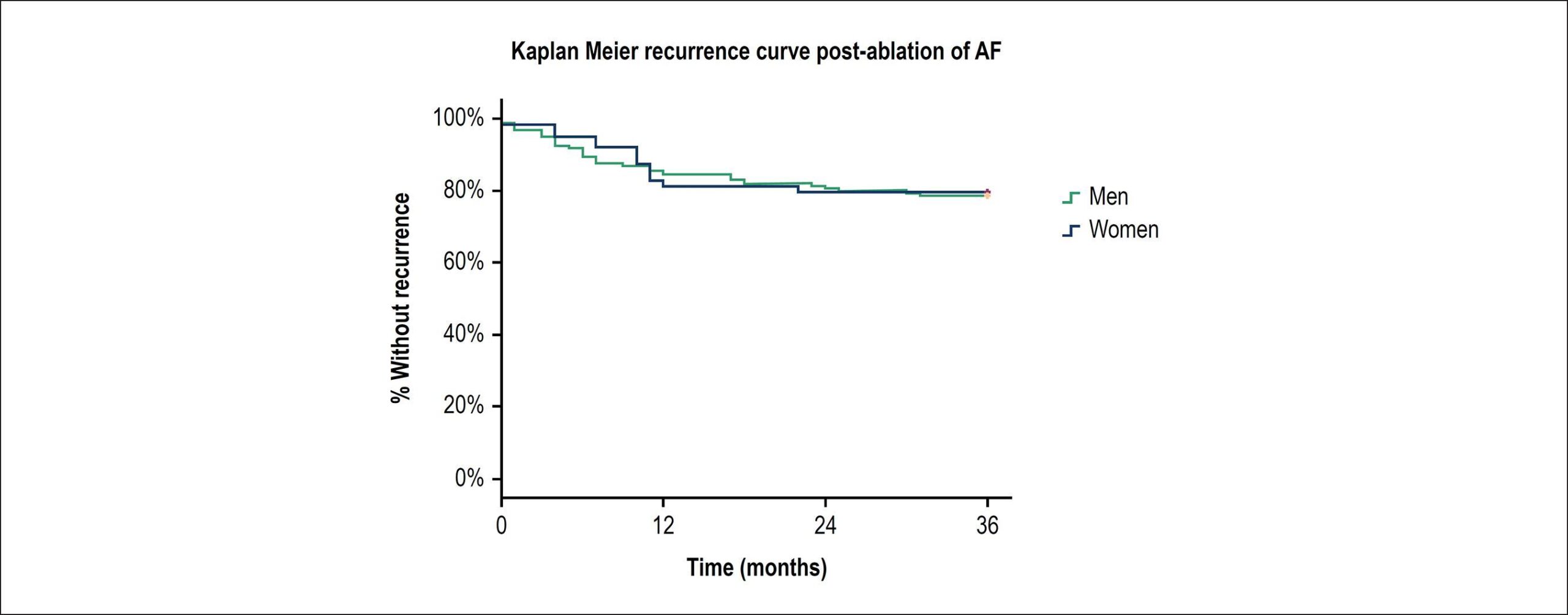
225 patients were included in the study, 64 (29%) women and 161 (71%) men. Women presented more symptoms due to AF according to the CCS-SAF score (1.8 ± 0.8M x 2.3 ± 0.8F p = 0.02) and higher CHADS2 score compared to men (0.9 ± 0.8M x 1.2 ± 1F). Post-ablation recurrence occurred in 20% of the patients, with no difference based on gender (21% M x 20% F p = 0.52). The rate of complications was less than 3% for both groups (p = 0.98).

Conclusion:

Women undergoing the first-ever PAF catheter ablation procedure present similar complication rate and clinical outcome compared to men. These findings suggest that the current underutilization of AF catheter ablation in women may represent a discrepancy in care.

  • Arrhythmias,Cardiac
  • Atrial Fibrillation
  • Cardiac Electrophysiology
  • Catheter Ablation
  • Gender
Read Full Article
Creative Commons Attribution (CC BY) Creative Commons license
03/05/2018 DOI: 10.5935/abc.20180069 Views 1
ABC
Original Article

Late Results of Cox Maze III Procedure in Patients with Atrial Fibrillation Associated with Structural Heart Disease

Gustavo Gir Gomes et al. Wagner Luis Gali Alvaro Valentim Lima Sarabanda Claudio Ribeiro da Cunha … Iruena Moraes Kessler Fernando Antibas Atik

Abstract

Background:

Cox-Maze III procedure is one of the surgical techniques used in the surgical treatment of atrial fibrillation (AF).

Objectives:

To determine late results of Cox-Maze III in terms of maintenance of sinus rhythm, and mortality and stroke rates.

Methods:

Between January 2006 and January 2013, 93 patients were submitted to the cut-and-sew Cox-Maze III procedure in combination with structural heart disease repair. Heart rhythm was determined by 24-hour Holter monitoring. Procedural success rates were determined by longitudinal methods and recurrence predictors by multivariate Cox regression models.

Results:

Thirteen patients that obtained hospital discharge alive were excluded due to lost follow-up. The remaining 80 patients were aged 49.9 ± 12 years and 47 (58.7%) of them were female. Involvement of mitral valve and rheumatic heart disease were found in 67 (83.7%) and 63 (78.7%) patients, respectively. Seventy patients (87.5%) had persistent or long-standing persistent AF. Mean follow-up with Holter monitoring was 27.5 months. There were no hospital deaths. Sinus rhythm maintenance rates were 88%, 85.1% and 80.6% at 6 months, 24 months and 36 months, respectively. Predictors of late recurrence of AF were female gender (HR 3.52; 95% CI 1.21-10.25; p = 0.02), coronary artery disease (HR 4.73 95% CI 1.37-16.36; p = 0.01) and greater left atrium diameter (HR 1.05; 95% CI 1.01-1.09; p = 0.02). Actuarial survival was 98.5% at 12, 24 and 48 months and actuarial freedom from stroke was 100%, 100% and 97.5% in the same time frames.

Conclusions:

The Cox-Maze III procedure, in our experience, is efficacious for sinus rhythm maintenance, with very low late mortality and stroke rates.

  • Arrhythmias,Cardiac
  • Atrial Fibrillation/surgery
  • Mitral Valve
  • Rheumatic Fever
Read Full Article
Creative Commons Attribution (CC BY) Creative Commons license
29/06/2017 DOI: 10.5935/abc.20170082 Views 2
Smoking is associated with remodeling of gap junction in the rat heart: smoker's paradox explanation?
ABC
Artigo Original

Smoking is associated with remodeling of gap junction in the rat heart: smoker's paradox explanation?

Rosangela Novo et al. Cristiana M. Freire Sergio Felisbino Marcos F. Minicucci … Paula S. Azevedo Leonardo A. M. Zornoff Sergio A. R. Paiva

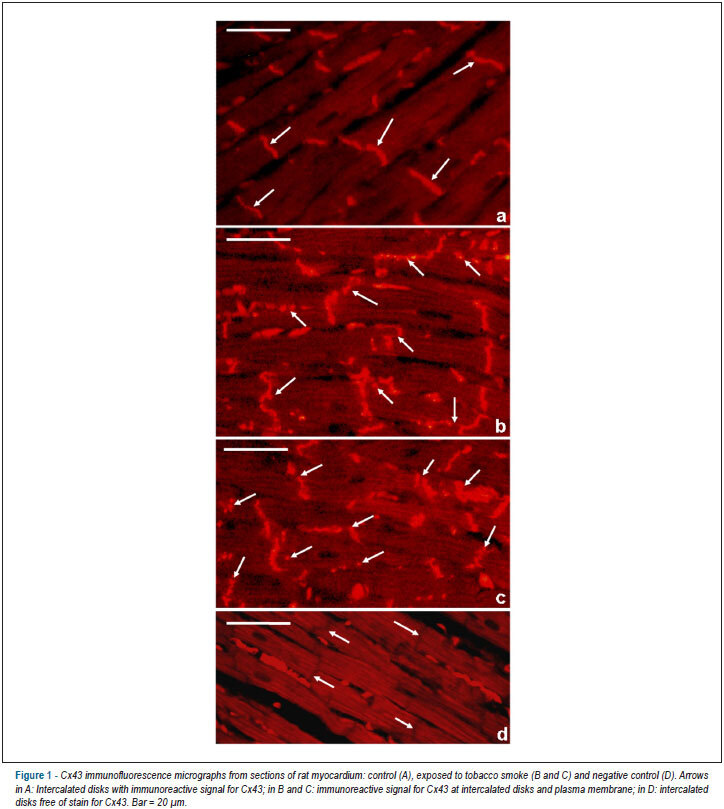
BACKGROUND: In a previous study utilizing the rat model, exposure to tobacco smoke for 5 weeks increased survival after AMI, despite similar age and infarct size between the smokers and nonsmokers, and absence of reperfusion. OBJECTIVE: Thus, this study aimed to analyze the effects of exposure to tobacco smoke on intensity, distribution or phosphorylation of connexin 43 in the rat heart. METHODS: Wistar rats weighing 100 g were randomly allocated into 2 groups: 1) Control (n = 25); 2) Exposed to tobacco smoke (ETS), n = 23. After 5 weeks, left ventricular morphometric analysis, immunohisthochemistry and western blotting for connexin 43 (Cx43) were performed. RESULTS: Collagen volume fraction, cross-sectional areas, and ventricular weight were not statistically different between control and ETS. ETS showed lower stain intensity of Cx43 at intercalated disks (Control: 2.32 ± 0.19; ETS: 1.73 ± 0.18; p = 0.04). The distribution of CX43 at intercalated disks did not differ between the groups (Control: 3.73 ± 0.12; ETS: 3.20 ± 0.17; p = 0.18). ETS rats showed higher levels of dephosphorylated form of Cx43 (Control: 0.45 ± 0.11; ETS: 0.90 ± 0.11; p = 0.03). On the other hand, total Cx43 did not differ between control and ETS groups (Control: 0.75 ± 0.19; ETS: 0.93 ± 0.27; p = 0.58). CONCLUSION: Exposure to tobacco smoke resulted in cardiac gap junction remodeling, characterized by alterations in the quantity and phosphorylation of the Cx43, in rats hearts. This finding could explain the smoker’s paradox observed in some studies.

  • Arrhythmias,Cardiac
  • Rats
  • smoke inhalation injury
  • smoking
Read Full Article
Creative Commons Attribution (CC BY) Creative Commons license
15/04/2013 DOI: 10.5935/abc.20130065 Views 1
Use of bipolar radiofrequency for the treatment of atrial fibrillation during cardiac surgery
ABC
Artigo Original

Use of bipolar radiofrequency for the treatment of atrial fibrillation during cardiac surgery

Leonardo Secchin Canale et al. Alexandre Siciliano Colafranceschi Andrey José Monteiro Marialda Coimbra … Clara Weksler Ernesto Koehler Bruno Miranda Marques Marco Antonio Mattos Fernando Eugênio dos Santos Cruz Filho Roberto Luiz Menssing da Silva Sá

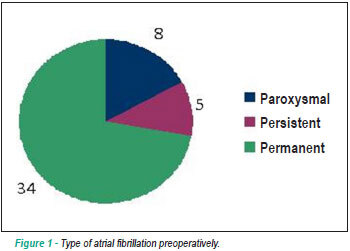
BACKGROUND: Atrial fibrillation with tissue ablation device through bipolar radiofrequency in conjunction with cardiac surgery has proven to be an effective method to treat this arrhythmia. OBJECTIVE: Describe the initial experience of the Instituto Nacional de Cardiologia in the surgical treatment of atrial fibrillation using bipolar radiofrequency device in patients undergoing cardiac surgery, reporting the results of postoperative follow-up of one year. METHODS: Between January 2008 and March 2009, 47 consecutive patients (36 women), with mean age of 53.7 ± 10.6 years, with atrial fibrillation for a mean period of 34.6 months (3-192 months) underwent surgical ablation of this arrhythmia, through bipolar radiofrequency during the procedure which led to the indication of surgery. Eight of them showed intermittent atrial fibrillation and 39, continued. Eighty-one percent underwent valve surgery as the main procedure. This is a one-year postoperative retrospective, observational evaluation of clinical variables and 24-h Holter. RESULTS: Out of the 47 patients, 40 survived one year. Out of these, 33 underwent 24 h Holter, at an average interval of 401 days after the surgery. The following rhythm distribution was found: 24 (73.0%) sinus, five (15.0%) atrial fibrillation, three (9.0%) atrial Flutter and one (3.0%) junctional rhythm. Two cerebrovascular accidents were observed, one of which was associated with supraventricular arrhythmia. CONCLUSION: Surgical ablation of atrial fibrillation with bipolar radiofrequency device concomitant with cardiac surgery is an effective method for treating this arrhythmia.

  • Ablation Techniques
  • Arrhythmias,Cardiac
  • Atrial Fibrillation
  • Atrial flutter
  • Thoracic Surgery
Read Full Article
Creative Commons Attribution (CC BY) Creative Commons license
29/04/2011 DOI: 10.1590/S0066-782X2011005000051 Views 1

How to cite this article

EndNote RIS

Electronic Document Format (Vancouver)

Abreu LM. Clinical Significance of Statistical Differences. Arquivos Brasileiros de Cardiologia 2020;114(2):281-3.

Electronic Document Format (ABNT)

Abreu, Luiz Maurino. Clinical Significance of Statistical Differences. Arquivos Brasileiros de Cardiologia, v. 114, n. 2, p. 281-283, Mar. 2020.

Electronic Document Format (APA)

Abreu, L. M. (2020). Clinical Significance of Statistical Differences. Arquivos Brasileiros de Cardiologia, 114(2), 281-283.

Electronic Document Format (ISO)

Abreu, Luiz Maurino. Clinical Significance of Statistical Differences. Arquivos Brasileiros de Cardiologia [online]. 2020, vol. 114, n. 2, [cited 2026-10-14], pp. 281-283. Available from: <https://journals.cardiol.br/en/article/clinical-significance-of-statistical-differences/>. ISSN 0066-782X

EndNote RIS

Electronic Document Format (Vancouver)

Abdelghani M. Conduction Abnormalities after Transcatheter Aortic Valve Replacement: Pretty Common, Fairly Predictable, Barely Avoidable. International Journal of Cardiovascular Sciences 2019;32(5):505-7.

Electronic Document Format (ABNT)

Abdelghani, Mohammad. Conduction Abnormalities after Transcatheter Aortic Valve Replacement: Pretty Common, Fairly Predictable, Barely Avoidable. International Journal of Cardiovascular Sciences, v. 32, n. 5, p. 505-507, Oct. 2019.

Electronic Document Format (APA)

Abdelghani, M. (2019). Conduction Abnormalities after Transcatheter Aortic Valve Replacement: Pretty Common, Fairly Predictable, Barely Avoidable. International Journal of Cardiovascular Sciences, 32(5), 505-507.

Electronic Document Format (ISO)

Abdelghani, Mohammad. Conduction Abnormalities after Transcatheter Aortic Valve Replacement: Pretty Common, Fairly Predictable, Barely Avoidable. International Journal of Cardiovascular Sciences [online]. 2019, vol. 32, n. 5, [cited 2026-10-14], pp. 505-507. Available from: <https://journals.cardiol.br/en/article/conduction-abnormalities-after-transcatheter-aortic-valve-replacement-pretty-common-fairly-predictable-barely-avoidable/>. ISSN 2359-4802

EndNote RIS

Electronic Document Format (Vancouver)

Galvão Filho SS. Ventricular Pacing of Conventional Pacemakers in the Era of CRT. Arquivos Brasileiros de Cardiologia 2019;112(4):422-3.

Electronic Document Format (ABNT)

Galvão Filho, Silas dos Santos. Ventricular Pacing of Conventional Pacemakers in the Era of CRT. Arquivos Brasileiros de Cardiologia, v. 112, n. 4, p. 422-423, Apr. 2019.

Electronic Document Format (APA)

Galvão Filho, S. S. (2019). Ventricular Pacing of Conventional Pacemakers in the Era of CRT. Arquivos Brasileiros de Cardiologia, 112(4), 422-423.

Electronic Document Format (ISO)

Galvão Filho, Silas dos Santos. Ventricular Pacing of Conventional Pacemakers in the Era of CRT. Arquivos Brasileiros de Cardiologia [online]. 2019, vol. 112, n. 4, [cited 2026-10-14], pp. 422-423. Available from: <https://journals.cardiol.br/en/article/ventricular-pacing-of-conventional-pacemakers-in-the-era-of-crt/>. ISSN 0066-782X

EndNote RIS

Electronic Document Format (Vancouver)

Odozynski G, Forno ARJD, Lewandowski A, Nascimento HG, d’Avila A. Paroxysmal Atrial Fibrillation in Females: Understanding gender diferences. Arquivos Brasileiros de Cardiologia 2018;110(5):449-54.

Electronic Document Format (ABNT)

Odozynski, Gabriel; Forno, Alexander Romeno Janner Dal; Lewandowski, Andrei; Nascimento, Hélcio Garcia; d’Avila, André. Paroxysmal Atrial Fibrillation in Females: Understanding gender diferences. Arquivos Brasileiros de Cardiologia, v. 110, n. 5, p. 449-454, May. 2018.

Electronic Document Format (APA)

Odozynski, G., Forno, A. R. J. D., Lewandowski, A., Nascimento, H. G., & d’Avila, A. (2018). Paroxysmal Atrial Fibrillation in Females: Understanding gender diferences. Arquivos Brasileiros de Cardiologia, 110(5), 449-454.

Electronic Document Format (ISO)

Odozynski, Gabriel and Forno, Alexander Romeno Janner Dal and Lewandowski, Andrei and Nascimento, Hélcio Garcia and d’Avila, André. Paroxysmal Atrial Fibrillation in Females: Understanding gender diferences. Arquivos Brasileiros de Cardiologia [online]. 2018, vol. 110, n. 5, [cited 2026-10-14], pp. 449-454. Available from: <https://journals.cardiol.br/en/article/paroxysmal-atrial-fibrillation-in-females-understanding-gender-diferences/>. ISSN 0066-782X

EndNote RIS

Electronic Document Format (Vancouver)

Gomes GG, Gali WL, Sarabanda AVL, Cunha CR, Kessler IM, Atik FA. Late Results of Cox Maze III Procedure in Patients with Atrial Fibrillation Associated with Structural Heart Disease. Arquivos Brasileiros de Cardiologia 2017;109(1):14-22.

Electronic Document Format (ABNT)

Gomes, Gustavo Gir; Gali, Wagner Luis; Sarabanda, Alvaro Valentim Lima; Cunha, Claudio Ribeiro da; Kessler, Iruena Moraes; Atik, Fernando Antibas. Late Results of Cox Maze III Procedure in Patients with Atrial Fibrillation Associated with Structural Heart Disease. Arquivos Brasileiros de Cardiologia, v. 109, n. 1, p. 14-22, Jun. 2017.

Electronic Document Format (APA)

Gomes, G. G., Gali, W. L., Sarabanda, A. V. L., Cunha, C. R. , Kessler, I. M., & Atik, F. A. (2017). Late Results of Cox Maze III Procedure in Patients with Atrial Fibrillation Associated with Structural Heart Disease. Arquivos Brasileiros de Cardiologia, 109(1), 14-22.

Electronic Document Format (ISO)

Gomes, Gustavo Gir and Gali, Wagner Luis and Sarabanda, Alvaro Valentim Lima and Cunha, Claudio Ribeiro da and Kessler, Iruena Moraes and Atik, Fernando Antibas. Late Results of Cox Maze III Procedure in Patients with Atrial Fibrillation Associated with Structural Heart Disease. Arquivos Brasileiros de Cardiologia [online]. 2017, vol. 109, n. 1, [cited 2026-10-14], pp. 14-22. Available from: <https://journals.cardiol.br/en/article/late-results-of-cox-maze-iii-procedure-in-patients-with-atrial-fibrillation-associated-with-structural-heart-disease/>. ISSN 0066-782X

EndNote RIS

Electronic Document Format (Vancouver)

Novo R, Freire CM, Felisbino S, Minicucci MF, Azevedo PS, Zornoff LAM, Paiva SAR, et al. Smoking is associated with remodeling of gap junction in the rat heart: smoker’s paradox explanation?. Arquivos Brasileiros de Cardiologia 2013;100(3):274-80.

Electronic Document Format (ABNT)

Novo, Rosangela; Freire, Cristiana M.; Felisbino, Sergio; Minicucci, Marcos F.; Azevedo, Paula S.; Zornoff, Leonardo A. M.; Paiva, Sergio A. R.. Smoking is associated with remodeling of gap junction in the rat heart: smoker’s paradox explanation?. Arquivos Brasileiros de Cardiologia, v. 100, n. 3, p. 274-280, Apr. 2013.

Electronic Document Format (APA)

Novo, R., Freire, C. M., Felisbino, S., Minicucci, M. F., Azevedo, P. S., Zornoff, L. A. M., & Paiva, S. A. R. (2013). Smoking is associated with remodeling of gap junction in the rat heart: smoker’s paradox explanation?. Arquivos Brasileiros de Cardiologia, 100(3), 274-280.

Electronic Document Format (ISO)

Novo, Rosangela and Freire, Cristiana M. and Felisbino, Sergio and Minicucci, Marcos F. and Azevedo, Paula S. and Zornoff, Leonardo A. M. and Paiva, Sergio A. R.. Smoking is associated with remodeling of gap junction in the rat heart: smoker’s paradox explanation?. Arquivos Brasileiros de Cardiologia [online]. 2013, vol. 100, n. 3, [cited 2026-10-14], pp. 274-280. Available from: <https://journals.cardiol.br/en/article/smoking-is-associated-with-remodeling-of-gap-junction-in-the-rat-heart-smokers-paradox-explanation/>. ISSN 0066-782X

EndNote RIS

Electronic Document Format (Vancouver)

Canale LS, Colafranceschi AS, Monteiro AJ, Coimbra M, Weksler C, Koehler E, Marques BM, et al. Use of bipolar radiofrequency for the treatment of atrial fibrillation during cardiac surgery. Arquivos Brasileiros de Cardiologia 2011;96(6):456-64.

Electronic Document Format (ABNT)

Canale, Leonardo Secchin; Colafranceschi, Alexandre Siciliano; Monteiro, Andrey José; Coimbra, Marialda; Weksler, Clara; Koehler, Ernesto; Marques, Bruno Miranda; Mattos, Marco Antonio; Cruz Filho, Fernando Eugênio dos Santos; Sá, Roberto Luiz Menssing da Silva. Use of bipolar radiofrequency for the treatment of atrial fibrillation during cardiac surgery. Arquivos Brasileiros de Cardiologia, v. 96, n. 6, p. 456-464, Apr. 2011.

Electronic Document Format (APA)

Canale, L. S., Colafranceschi, A. S., Monteiro, A. J., Coimbra, M., Weksler, C., Koehler, E., Marques, B. M., Mattos, M. A., Cruz Filho, F. E. S., & Sá, R. L. M. S. (2011). Use of bipolar radiofrequency for the treatment of atrial fibrillation during cardiac surgery. Arquivos Brasileiros de Cardiologia, 96(6), 456-464.

Electronic Document Format (ISO)

Canale, Leonardo Secchin and Colafranceschi, Alexandre Siciliano and Monteiro, Andrey José and Coimbra, Marialda and Weksler, Clara and Koehler, Ernesto and Marques, Bruno Miranda and Mattos, Marco Antonio and Cruz Filho, Fernando Eugênio dos Santos and Sá, Roberto Luiz Menssing da Silva. Use of bipolar radiofrequency for the treatment of atrial fibrillation during cardiac surgery. Arquivos Brasileiros de Cardiologia [online]. 2011, vol. 96, n. 6, [cited 2026-10-14], pp. 456-464. Available from: <https://journals.cardiol.br/en/article/use-of-bipolar-radiofrequency-for-the-treatment-of-atrial-fibrillation-during-cardiac-surgery/>. ISSN 0066-782X

  • About ABC Family
  • Internal Regulation
  • Editorial Board
  • Brazilian Society of Cardiology (SBC)

Issues

SBC Guidelines

  • Videos
  • Podcasts
  • News