| ABC
ABC Family Arquivos Brasileiros de Cardiologia International Journal of Cardiovascular Sciences ABC Heart Failure & Cardiomyopathy ABC Imagem Cardiovascular
Português English
ABC Family | ABC
Português English
  • About
    • About the Journal
    • Internal Regulation
    • Editors Section
    • Editorial Board
    • History
    • SBC Award
  • Instructions to Authors
    • Guidelines for Publication
    • Editorial Policy
    • Ethics Policy
    • Policy on the Use of Artificial Intelligence
    • Mandatory Publication Form
    • Publication Fee
  • Issues
  • SBC Guidelines
  • Abstracts
    • How to Publish an Abstract Supplement?
    • Supplements from the Brazilian Congress of Cardiology
  • About
    • About the Journal
    • Internal Regulation
    • Editors Section
    • Editorial Board
    • History
    • SBC Award
  • Instructions to Authors
    • Guidelines for Publication
    • Editorial Policy
    • Ethics Policy
    • Policy on the Use of Artificial Intelligence
    • Mandatory Publication Form
    • Publication Fee
  • Issues
  • SBC Guidelines
  • Abstracts
    • How to Publish an Abstract Supplement?
    • Supplements from the Brazilian Congress of Cardiology

ABC Family

  • ABC Family
  • Arquivos Brasileiros de Cardiologia
  • International Journal of Cardiovascular Sciences
  • ABC Heart Failure & Cardiomyopathy
  • ABC Imagem Cardiovascular
Search in

No content found.

Journals
Ordering
Article types
Others

  1. Home
  2. ABC
  3. Issues
  4. 2019, Volume 112, Number 5
Figure 2.1
Guideline

Brazilian Fetal Cardiology Guidelines – 2019

Simone R. F. Fontes Pedra et al. Paulo Zielinsky Cristiane Nogueira Binotto Cristiane Nunes Martins … Eduardo Sérgio Valério Borges da Fonseca Isabel Cristina Britto Guimarães Izabele Vian da Silveira Corrêa Karla Luiza Matos Pedrosa Lilian Maria Lopes Luiz Henrique Soares Nicoloso Marcia Ferreira Alves Barberato Marina Maccagnano Zamith

1. Introduction

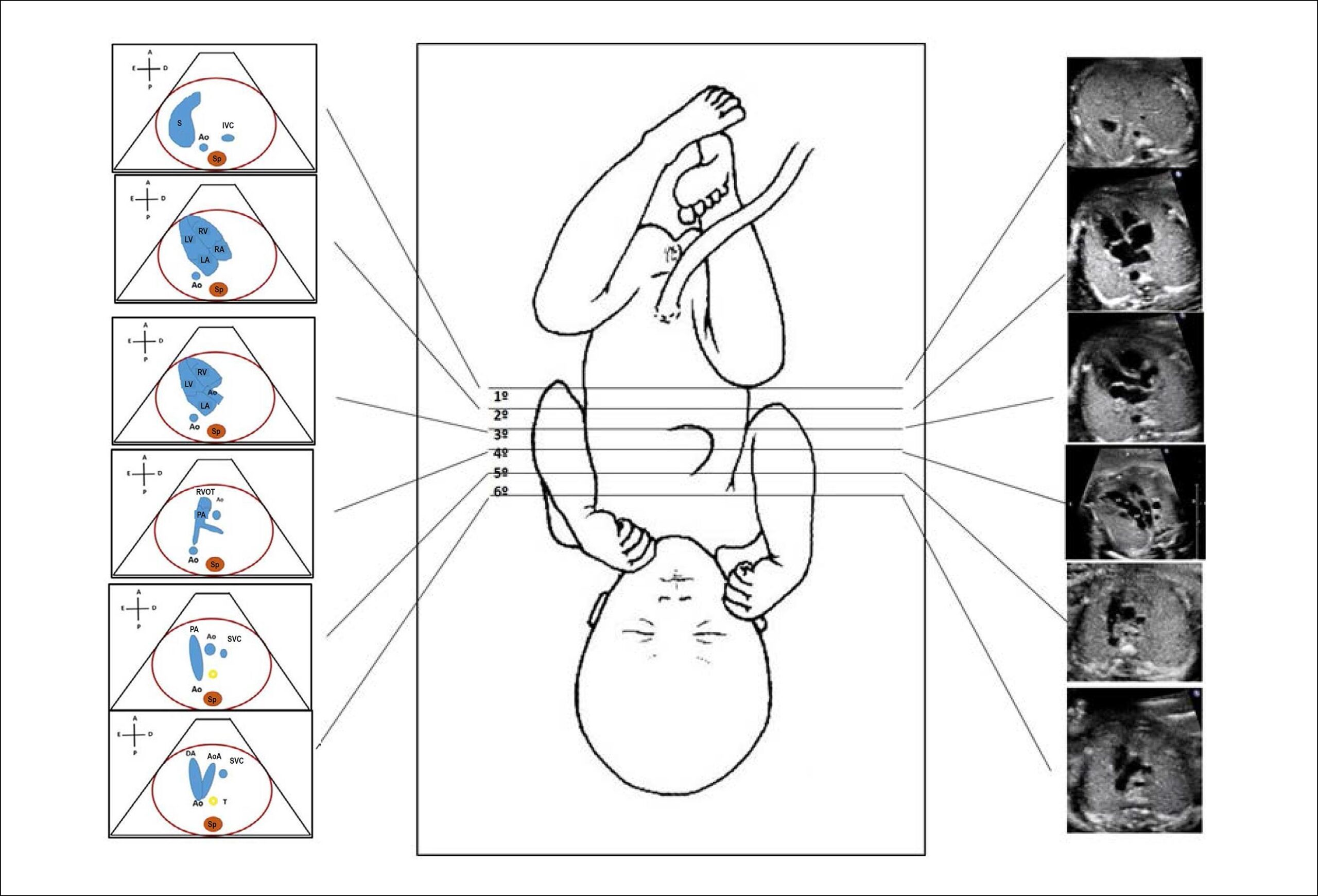
Over the years, Fetal Cardiology have been incorporated into the daily practice of Pediatric Cardiology. What was once restricted to a few fetal heart researchers, has slowly been incorporated into health institutions that deal with congenital heart diseases (CHD). Fetal echocardiography has generated extensive knowledge of the natural and modified history of heart diseases in utero, and normal fetal heart physiology and anatomy. The benefits of fetal diagnosis have become unquestionable over the years. Pioneers in the area succeeded in demystifying the fetal heart examination and proving the importance of screening for cardiac abnormalities during obstetric examinations. Prenatal detection rates have increased, and interest in fetal echocardiography is, thus, no longer merely a diagnostic tool; it has gone on to become a tool of the utmost importance in assisting medical and, progressively, interventional treatment of specific anomalies that occur in fetal life.

A vast body of literature currently supports the practice of Fetal Cardiology. In addition to diagnosis, anatomical and functional particularities may be identified in utero, with implications on the delivery planning and pre and postnatal management. Prenatal diagnosis has certainly led to increase the number of babies with complex heart diseases in Pediatric Cardiology hospital beds. Prior to this, children with complex heart diseases did not survive the immediate neonatal period and died in neonatal intensive care units without being diagnosed. Nowadays, these children require increasingly careful and specific management involving Pediatric Cardiology and thus modifying the practice of Neonatal Cardiology.

[…]
Read Full Article
Creative Commons Attribution (CC BY) Creative Commons license
06/06/2019 DOI: 10.5935/abc.20190075 Views 3
Continuous Intravenous Inotropes in Ward Units: Expanding Therapy Outside Intensive Care using a Safety-Oriented Protocol
Brief Communication

Continuous Intravenous Inotropes in Ward Units: Expanding Therapy Outside Intensive Care using a Safety-Oriented Protocol

Laura Caroline Tavares Hastenteufel et al. Nadine Clausell Jeruza Lavanholi Neyeloff Fernanda Bandeira Domingues … Larissa Gussatschenko Caballero Eneida Rejane Rabelo da Silva Lívia Adams Goldraich

Abstract

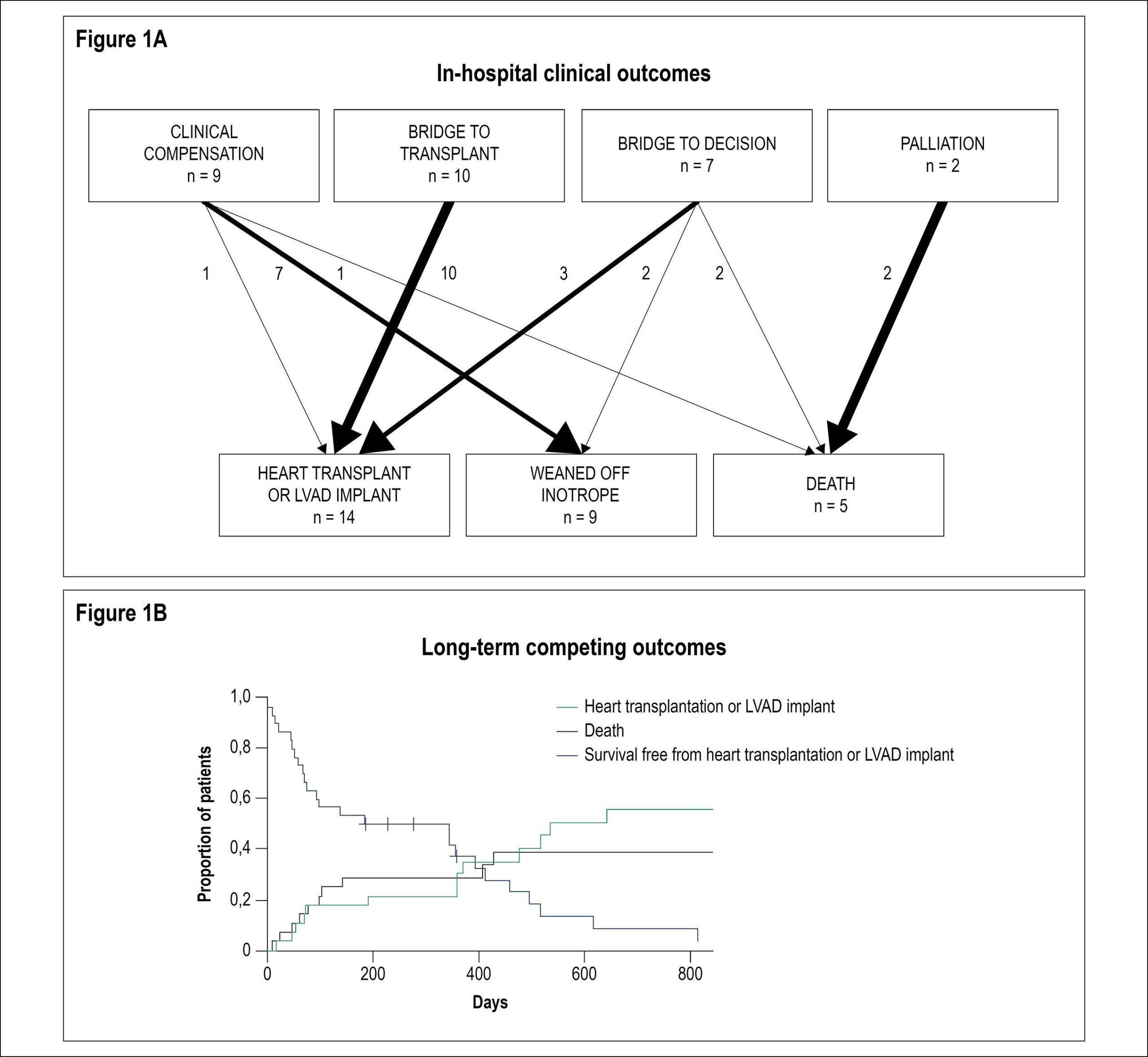
Selected clinically stable patients with heart failure (HF) who require prolonged intravenous inotropic therapy may benefit from its continuity out of the intensive care unit (ICU). We aimed to report on the initial experience and safety of a structured protocol for inotropic therapy in non-intensive care units in 28 consecutive patients hospitalized with HF that were discharged from ICU. The utilization of low to moderate inotropic doses oriented by a safety-focused process of care may reconfigure their role as a transition therapy while awaiting definitive advanced therapies and enable early ICU discharge.

  • Cardiotonic Agents
  • Dobutamine
  • Heart Failure/physiopathology
  • Inotropes
  • Milrinone
Read Full Article
Creative Commons Attribution (CC BY) Creative Commons license
06/06/2019 DOI: 10.5935/abc.20190078 Views 1
Editorial

Appropriate Use Criteria for Coronary Angiography at Two Hospitals in Southern Brazil: "Doing the Right Things And Doing Things Right"

Marco A. Magalhaes et al. Jamil R. Cade

Cardiovascular disease and particularly coronary artery disease (CAD) remain a global health issue, notwithstanding major advances in cardiovascular care that have resulted in a reduction in CAD mortality over the last decades. Indeed, the most recent trends point towards a bottoming out of CAD mortality rates and, for certain subgroups, rates might even be increasing. The reasons for these alarming trends relate to the prevalence of risk factors, health care system failures in dealing with chronic diseases, unequal access to technology, decreasing levels of investment in cardiovascular research, and persistent heterogeneity in the quality of care.

In contrast, cardiovascular health care costs continue to follow a linear upward trend. As a consequence, the delivery of high-value cardiovascular care has been reduced. In the long run, cardiovascular research and innovation should stimulate the development of novel drugs and therapies. In the short term, for struggling health care systems facing escalating costs, avoiding inappropriate tests and ineffective therapies is part of a value-based healthcare agenda., The fundamental concept of moving from volume to value may mitigate conflicting expectations among payers, providers, patients and physicians, who should share a common objective of reducing unwarranted health costs while improving outcomes.

[…]

  • Coronary Angiography
  • Coronary Artery Disease/diagnostic imaging
  • Epidemiology
  • Percutaneous Coronary Intervention/methods
  • Síndrome Coronariana Aguda
Read Full Article
Creative Commons Attribution (CC BY) Creative Commons license
06/06/2019 DOI: 10.5935/abc.20190084 Views 1
Figure 1
Clinicoradiological Correlation

Case 3/2019 – Type IIB Tricuspid Atresia, in Natural Evolution, at 21 Years of Age

Edmar Atik et al. Alessandra Costa Barreto Maria Angélica Binotto

Clinical data

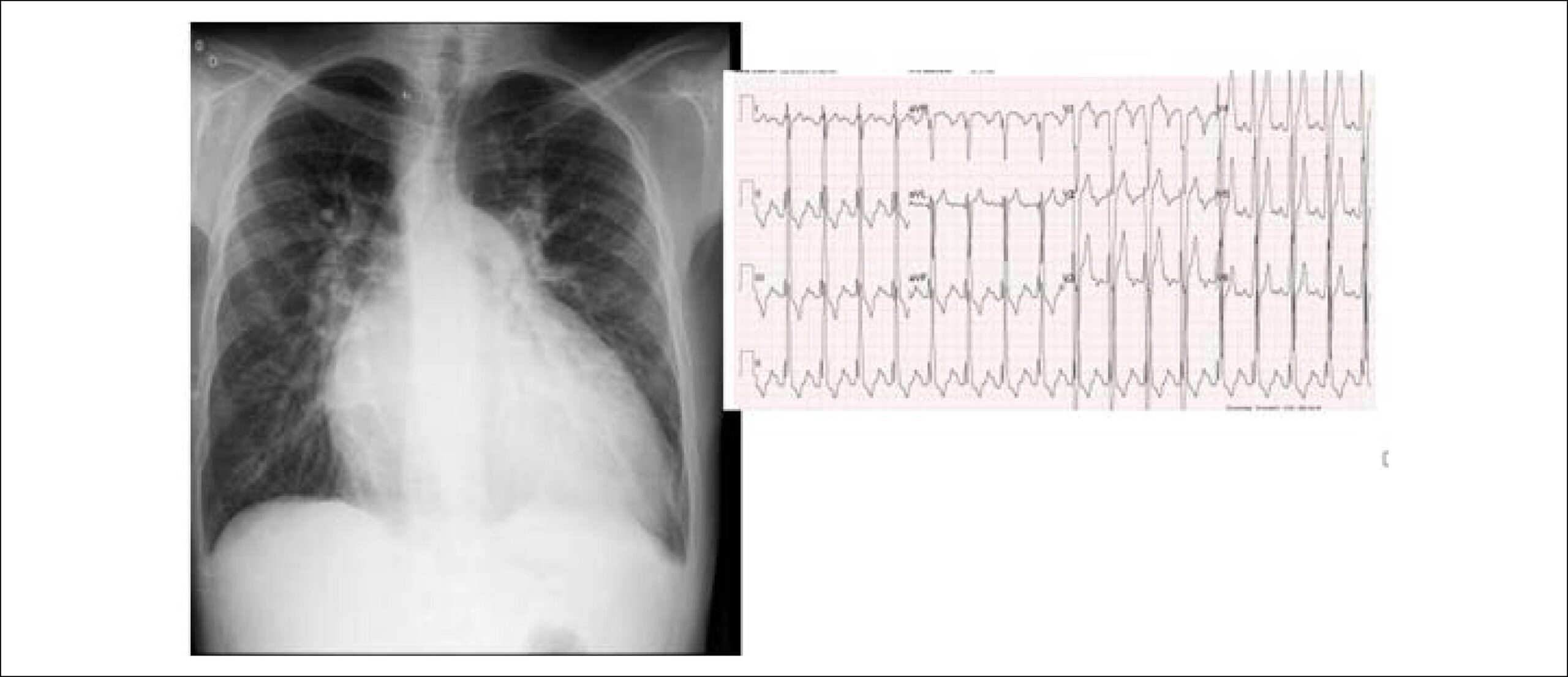
Patient remained asymptomatic from birth until 16 years of age, when he started to show progressive fatigue at exertion, with the use of anti-congestive medication such as furosemide, enalapril, spironolactone, and carvedilol, in addition to warfarin. The diagnosis of heart disease characterized by heart murmur was attained in the first month of life.

Physical examination: good overall status, eupneic, acyanotic, normal pulses in the 4 limbs. Weight: 63 kg, Height: 171 cm, right upper limb blood pressure: 130/90 mmHg, HR: 63 bpm, Sat O2: 89%.

[…]

  • Clinical Evolution/methods
  • Heart Defects, Congenital
  • Pulmonary Valve Stenosis
  • Tricuspid Atresia
Read Full Article
Creative Commons Attribution (CC BY) Creative Commons license
06/06/2019 DOI: 10.5935/abc.20190083 Views 1
Editorial

Left Atrial Stiffness, a Marker of Atrial Cardiomyopathy, and Atrial Fibrillation – Relationships and Predictors for Procedure Success after Catheter Ablation

Tan Chen Wu

Over the past years, catheter ablation (CA) for atrial fibrillation (AF) has established itself as a well-recognized strategy in the management of patients with AF and an important option for rhythm control. Although CA is more effective than antiarrhythmic drug therapy, AF recurrences are common during the follow-up.

Late recurrence, during the first 9 months after the blanking period, occurs in 25%-40% of cases and is predominantly linked to the recovery of electrical conduction between the pulmonary veins (PVs) and the left atrium (LA), irrespective of the type of AF. The incidence of very late recurrence (after more than 12 months postablation) has been shown to be higher than previously expected, with an annual recurrence rate estimated at 7.6%. Bunch et al. reported AF recurrence rates ranging from 52% (≤ 50 years + paroxysmal AF) to 75% (> 80 years + paroxysmal AF). In a series of 509 consecutive patients undergoing paroxysmal AF ablation by Teunissen et al., after a single procedure, antiarrhythmic drugs free success rate was 41.3%. The predominant mechanism of very late recurrence includes, in addition to the PV connection, the development of non-PV triggers, and development and maturation of substrate. The predictors appears to be the nonparoxysmal form of AF at baseline, organic heart disease, advanced age, and obesity.

[…]

  • Atrial Fibrillation
  • Atrial Function, Left
  • Atrial Remodeling
  • Catheter Ablation
  • Recurrence
  • Treatment Outcome
Read Full Article
Creative Commons Attribution (CC BY) Creative Commons license
06/06/2019 DOI: 10.5935/abc.20190087 Views 1
Letter to the Editor

Comment on Myocardial Perfusion Study in Obese Patients without Known Cardiac Ischemia

Claudio Tinoco Mesquita et al. Gustavo Gavina da Cruz

We congratulate Dippe et al. for their work that addressed the role of myocardial scintigraphy in the diagnosis of myocardial ischemia in obese patients. Despite limitations, body mass index (BMI) has been the most used anthropometric tool for assessing nutritional status in adults. Epidemiologic studies have identified high BMI as a risk factor for an expanding set of chronic diseases, including cardiovascular disease and diabetes mellitus. The Global Burden of Disease (GBD) Obesity Collaborators found that excess body weight accounted for about 4 million deaths in 2015. Nearly 70% of these deaths were due to cardiovascular disease, and more than 60% of them occurred among obese persons (BMI ≥ 30 Kg/m2). The use of a database of consecutive patients provides a sample of obese patients from the real-world scenario and portrays the current clinical practice in which the cardiologist faces major diagnostic challenges in obese patients. All diagnostic methods have significant challenges in obese patients such as the limitation of the acoustic window in the echocardiogram, higher incidence of photon attenuation on computed tomography and myocardial scintigraphy and bore size limitations to cardiac resonance imaging. Radiation-sparing techniques are more difficult to use in heavier patients. The finding that clinical data such as the presence of diabetes mellitus, older age and typical symptoms of angina highlights the need of careful clinical evaluation in order to adequate request ischemic screening tests in patients with suspected coronary artery disease, especially in the obese. Another important finding of their study was the absence of association between obesity alone, especially in the group with BMI greater than 40, with the presence of ischemia. A technical aspect that was not clear in the article and whether the authors used the prone acquisition when there was doubt about the presence of breast attenuation and also the technique used to quantify the visual or automatic ischemia.

[…]

  • Coronary Artery Disease
  • Diabetes Mellitus
  • Myocardial Ischemia
  • Myocardial Perfusion Imaging
  • Obesity/mortality
Read Full Article
Creative Commons Attribution (CC BY) Creative Commons license
06/06/2019 DOI: 10.5935/abc.20190082 Views 1
Editorial

Brazil: Two Realities for the Treatment of One Disease

Leonardo Guimarães et al. Adriano Caixeta

Current drug-eluting stents (DES) are safer and more effective (lower restenosis rates) than bare-metal stents (BMS),, and are able to reduce short- and long-term cardiovascular outcomes., In patients with ST segment elevation acute myocardial infarction (STEMI), the randomized study EXAMINATION evaluated 1,498 patients with STEMI, who were allocated for the treatment of percutaneous coronary intervention (PCI) with new-generation DES containing everolimus or BMS. After a 5-year follow-up, there was a relative reduction of combined outcomes and mortality of 20% and 30%, respectively, in favor of DES. Finally, despite the higher initial cost in the index procedure, DESs present better cost-effectiveness compared to BMS on long-term. In this context, in 2018, the most current Guideline for coronary artery bypass grafting of the European Society of Cardiology considers recommendation Class I the use of DES in any and all clinical settings, including STEMI.

Cardiovascular disease is the leading cause of death worldwide and diabetes mellitus is one of the most important risk factors for coronary atherosclerotic disease (CAD). Diabetic patients present 2 to 3-fold higher mortality after acute coronary syndrome compared to non-diabetics. Besides, as these patients present expressive endothelial dysfunction, high inflammatory response to vascular injury, diffuse CAD and coronary arteries of smaller caliber, they develop higher rates of in-stent restenosis., In view of that, using DES is even more imperative in patients with diabetes, and presents 87% less risk of in-stent restenosis and 77% less risk of revascularization of the target lesion compared to BMS.

[…]

  • Cardiovascular Diseases, mortality
  • Coronary Artery Disease
  • Diabetes Mellitus
  • Drug-Eluting Stents
  • Myocardial Revascularization
  • Percutaneous Coronary Intervention
  • ST Elevation Myocardial Infarction
Read Full Article
Creative Commons Attribution (CC BY) Creative Commons license
06/06/2019 DOI: 10.5935/abc.20190093 Views 1
Erratum

October issue of 2012, vol. 99(4), pages 1-10

I

n

[…]

Read Full Article
Creative Commons Attribution (CC BY) Creative Commons license
06/06/2019 DOI: 10.5935/abc.20190091 Views 1
Figure 1
Review Article

Kidney Disease in Diabetes Mellitus: Cross-Linking between Hyperglycemia, Redox Imbalance and Inflammation

Rayne Gomes Amorim et al. Glaucevane da Silva Guedes Sandra Mary Lima Vasconcelos Juliana Célia de Farias Santos

Abstract

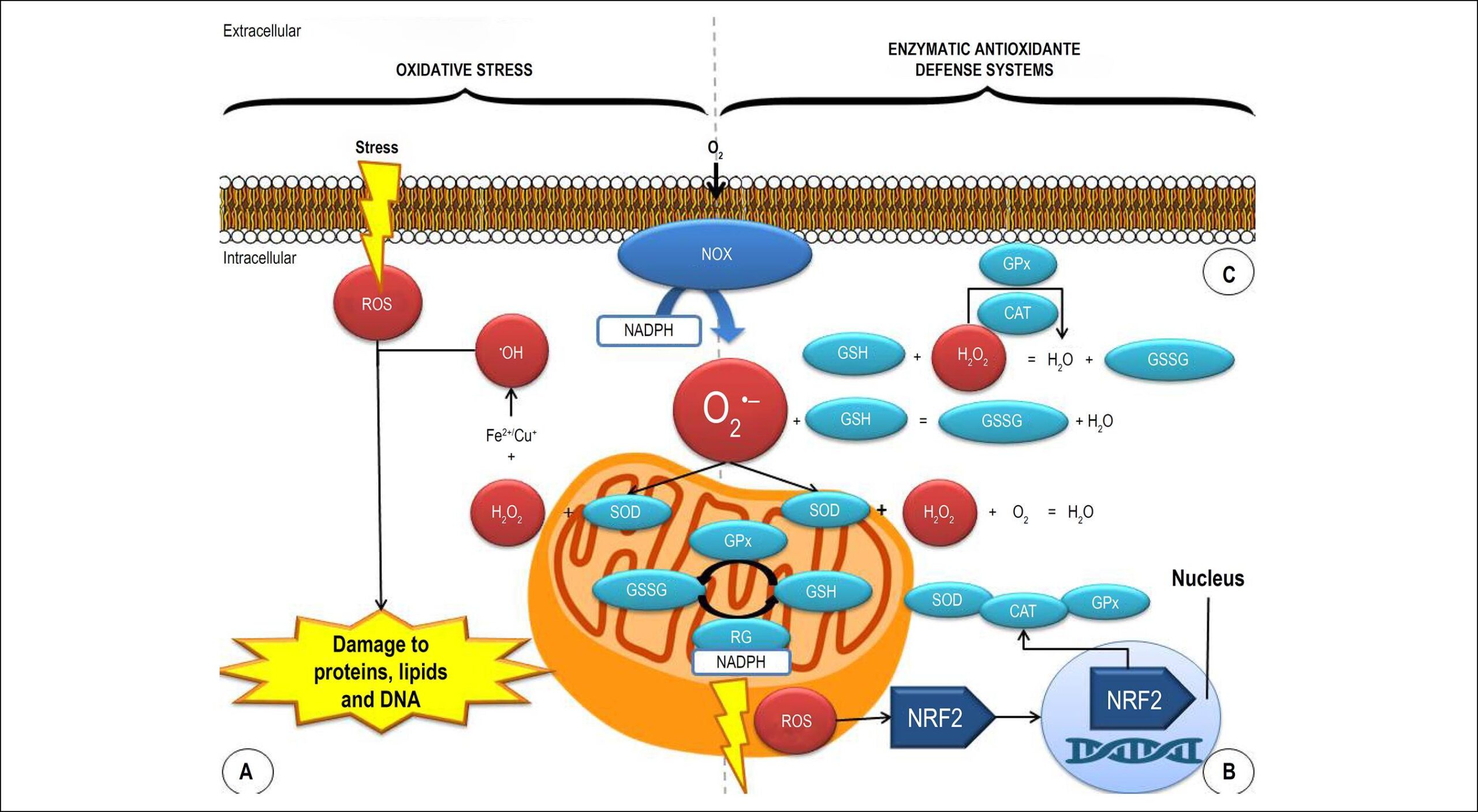
Chronic hyperglycemia is the key point of macro- and microvascular complications associated with diabetes mellitus. Excess glucose is responsible for inducing redox imbalance and both systemic and intrarenal inflammation, playing a critical role in the pathogenesis of diabetic kidney disease, which is currently the leading cause of dialysis in the world. The pathogenesis of the disease is complex, multifactorial and not fully elucidated; many factors and mechanisms are involved in the development, progression and clinical outcomes of the disease. Despite the disparate mechanisms involved in renal damage related to diabetes mellitus, the metabolic mechanisms involving oxidative/inflammatory pathways are widely accepted. The is clear evidence that a chronic hyperglycemic state triggers oxidative stress and inflammation mediated by altered metabolic pathways in a self-perpetuating cycle, promoting progression of cell injury and of end-stage renal disease. The present study presents an update on metabolic pathways that involve redox imbalance and inflammation induced by chronic exposure to hyperglycemia in the pathogenesis of diabetic kidney disease.

  • Diabetes Mellitus/complications
  • Inflammation
  • Kidney, Diseases
  • Oxidation-Reduction
  • Oxidative Stress
  • renal dialysis
Read Full Article
Creative Commons Attribution (CC BY) Creative Commons license
06/06/2019 DOI: 10.5935/abc.20190077 Views 1
Editorial

Unscheduled Return Visits to the Emergency Department after Cardiac Electronic Devices Implantation

Roberto Costa

In recent years, many initiatives have been made to improve the quality and efficiency of healthcare services leading to the creation and standardization of health quality indicators in order to improve the interaction between clinicians, researchers, and healthcare managers, enabling the generation of evidence-based strategies. In this context, the rate of hospital readmissions is one of the most important indicators to measure the quality of healthcare services.

The use of quality indicators to measure healthcare performance across different hospitals has been considered of great value for the improvement of healthcare routines, enhancing the expenditure rationalization of health services. In this scenario, the adoption of the International Consortium for Health Outcomes Measurement (ICHOM) as a strategy to measure outcomes across hospitals has increased worldwide and it is now gaining familiarity among Brazilian hospitals.

[…]

  • Cardiac Pacing, Artificial
  • Defibrillators, Implantable
  • Heart Failure
  • Intraoperative Complications/mortality
  • Pacemaker, Artificial/utilization
Read Full Article
Creative Commons Attribution (CC BY) Creative Commons license
06/06/2019 DOI: 10.5935/abc.20190063 Views 1
Editorial

Is There Any Cardiovascular Concern Regarding the Use of Aromatase Inhibitors in Breast Cancer?

Tatiana F. G. Galvão

Breast cancer is the most frequent malignancy in women worldwide, and the second leading cause of cancer mortality. Due to advances in prevention, early detection and treatment, breast cancer mortality has decreased by nearly 40% during the last four decades. However, this optimistic scenario has been counterbalanced by an increasing risk from cardiovascular disease (CVD) in breast cancer survivors. Indeed, CVD is a leading cause of mortality in breast cancer survivors.– The mechanisms by which these patients are at increased cardiovascular risk are multiple ones, including the effects of cancer itself (inflammation, oxidative stress, prothrombotic status, autonomic dysfunction, etc.) or due to the side effects related to chemotherapy and radiotherapy (metabolic dysfunction, cardiotoxicity). Some of these pathways may have prognostic significance: a previous investigation showed that autonomic modulation in breast cancer patients is an independent predictor of cardiovascular risk.

In this issue of the Arquivos Brasileiros de Cardiologia, the study “Changes in Cardiac Autonomic Modulation in Women with Breast Cancer Using Aromatase Inhibitors and the Relation with Biochemical Variables” was aimed to explore not breast cancer but the associations of one of its treatments (namely aromatase inhibitors, AI) with markers of autonomic dysfunction, as well as metabolic and inflammatory parameters in postmenopausal women. The rationale for exploring this specific therapy was based on a recent meta-analysis showing that prolonged AI use had a marginally effect of having a CVD event (odds ratio: 1.18, 95% CI = 1.00-1.40) as compared to placebo.

[…]

  • Aromatase Inhibitors
  • Blood Glicose
  • Breast Neoplasms
  • Cardiovascular Diseases / prevention & control
  • Cholesterol
  • Estrogen Replacement
Read Full Article
Creative Commons Attribution (CC BY) Creative Commons license
06/06/2019 DOI: 10.5935/abc.20190092 Views 2
Figure 1
Case Report

Report of a Family with Craniofrontonasal Syndrome and Wolff-Parkinson-White Syndrome: Is it a New Finding?

Celal Kilit et al. Türkan Pasali Kilit

Introduction

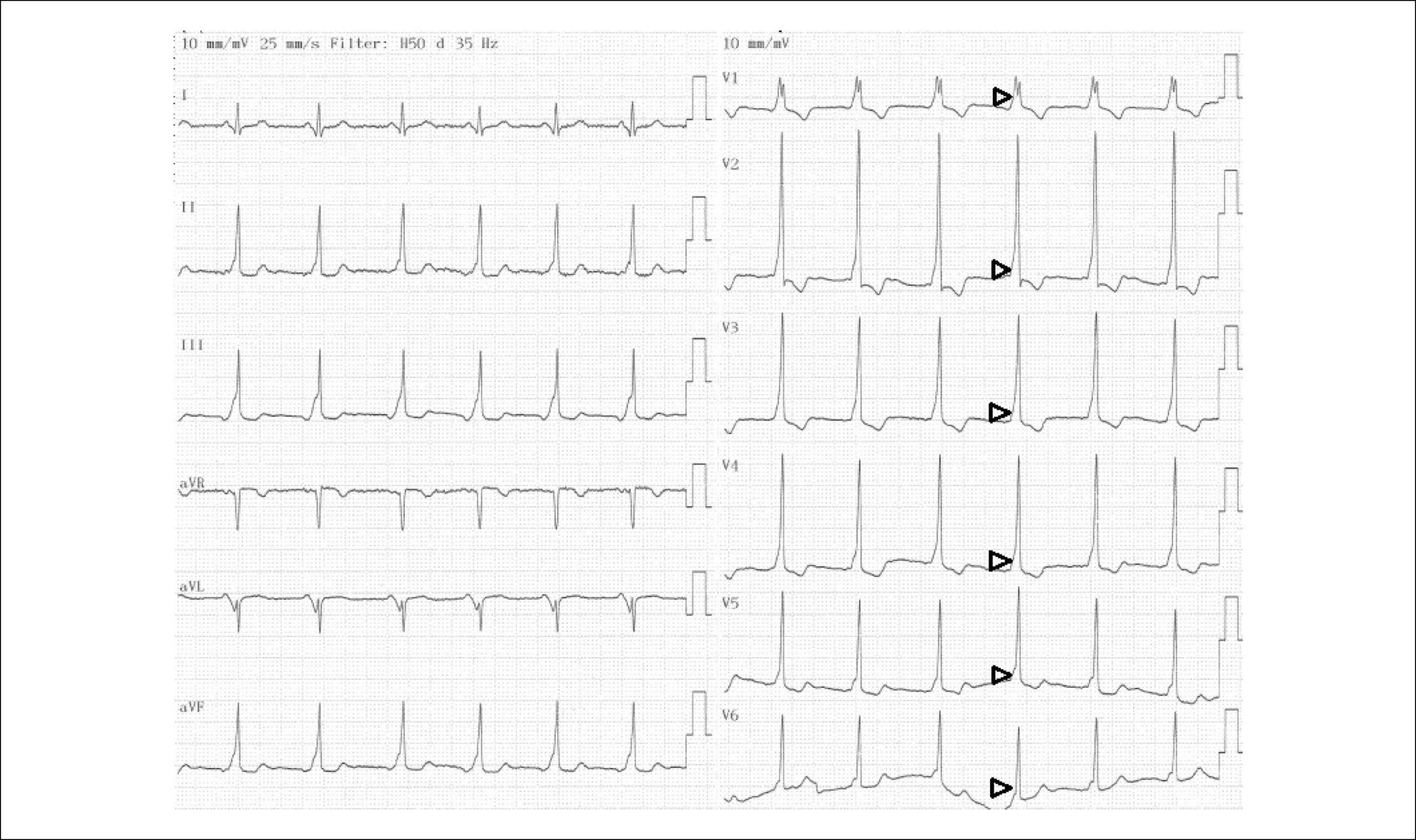
Craniofrontonasal syndrome (CFNS; OMIM# 304110) is one of the craniofacial conditions that fall into the group called Craniofacial Dysostosis syndromes. Alternative names are Craniofrontonasal Dysplasia and Craniofrontonasal Dysostosis. CFNS is a rare X-linked disorder caused by mutations in the ephrin-B1 gene (EFNB1). CFNS predominantly affects the head, face and limbs and characterized by coronal craniosynostosis, frontal bossing, severe hypertelorism, craniofacial asymmetry, down slant palpebral fissure, broad nasal root, bifid nasal tip, grooved fingernails, curly wiry hair, and abnormalities of the thoracic skeleton. Phenotypic expression varies greatly amongst affected individuals. Paradoxical to other X-linked conditions, CFNS generally affects females more frequently and more severely than males., Cellular or metabolic interference due to X inactivation explains this situation. There is no accurate measurement of its birth frequency and the incidence values that were reported ranged from 1:100,000 to 1:120,000. CFNS is not diagnosed in males unless they are a member of a family known to have the condition or the father of a daughter with the condition. In females, physical characteristics play a supportive role in establishing the diagnosis but the diagnosis CFNS is determined by the presence of a mutation in the EFNB1 gene.

Wolff-Parkinson-White (WPW) syndrome is a pre-excitation syndrome which is a common cause of supraventricular tachycardia with prevalence in Western countries of 1.5 to 3.1 per 1000 persons. It is maintained by accessory pathway or pathways secondary to a developmental cardiac defect in atrioventricular electrical insulation. Among patients with the WPW syndrome, 3.4% have first degree-relatives with a pre-excitation syndrome. A familial form of WPW has infrequently been reported and is usually inherited as an autosomal dominant trait.–

[…]

  • Comparative Studies
  • Craniofacial Abnormalities
  • Craniofacial Dysostose
  • Tachycardia, Supraventricular
  • Wolff-Parkinson White Syndrome
Read Full Article
Creative Commons Attribution (CC BY) Creative Commons license
06/06/2019 DOI: 10.5935/abc.20190033 Views 3
Figure 1
Updated

Updated Geriatric Cardiology Guidelines of the Brazilian Society of Cardiology – 2019

Gilson Soares Feitosa Filho et al. José Maria Peixoto José Elias Soares Pinheiro Abrahão Afiune Neto … Afonso Luiz Tavares de Albuquerque Álvaro César Cattani Amit Nussbacher Ana Amelia Camarano Angela Hermínia Sichinels Antonio Carlos Sobral Sousa Aristóteles Comte de Alencar Filho Claudia F. Gravina Dario Celestino Sobral Filho Eduardo Pitthan Elisa Franco de Assis Costa Elizabeth da Rosa Duarte Elizabete Viana de Freitas Emilio Hideyuki Moriguchi Evandro Tinoco Mesquita Fábio Fernandes Felipe Costa Fuchs Gilson Soares Feitosa Humberto Pierre Ilnei Pereira Filho Izo Helber Jairo Lins Borges Jéssica Myrian de Amorim Garcia José Antonio Gordillo de Souza José Carlos da Costa Zanon Josmar de Castro Alves Kalil Lays Mohallem Laura Mariana de Siqueira Mendonça Chaves Lídia Ana Zytynski Moura Márcia Cristina Amélia da Silva Maria Alice de Vilhena Toledo Maria Elisa Lucena Sales de Melo Assunção Mauricio Wajngarten Mauro José Oliveira Gonçalves Neuza Helena Moreira Lopes Nezilour Lobato Rodrigues Paulo Roberto Pereira Toscano Pedro Rousseff Ricardo Antonio Rosado Maia Roberto Alexandre Franken Roberto Dischinger Miranda Roberto Gamarski Ronaldo Fernandes Rosa Silvio Carlos de Moraes Santos Siulmara Cristina Galera Stela Maris da Silva Grespan Teresa Cristina Rogerio da Silva William Antonio de Magalhães Esteves

1. General Aspects of Old Age, Risk Factors, and Prevention

[…]

Read Full Article
Creative Commons Attribution (CC BY) Creative Commons license
06/06/2019 DOI: 10.5935/abc.20190086 Views 2
Editorial

Cardioprotective Effects of Resistance Training on Obesity

Marcelo Diarcadia Mariano Cezar et al. Luana Urbano Pagan Ricardo Luiz Damatto Aline Lima Mariana Janini Gomes

Obesity is characterized as a complex metabolic disorder and is associated with several complications such as cardiovascular diseases, diabetes, renal dysfunction, liver dysfunction and cancer, resulting in impairment of quality of life.

The pathogenesis of obesity has a multifactorial origin and the oxidative stress may play an important role. Studies on animals and cell culture have reported how oxidative stress can contribute to the development of obesity, causing increased preadipocytes proliferation, adipocyte differentiation, and size of mature adipocytes, resulting in increased production of pro-inflammatory cytokines such as tumor necrosis factor alpha (TNF-α).,

[…]

  • Cardiovascular Diseases, mortality
  • Diabetes Mellitus
  • Diet, High-fat
  • Exercise
  • Hypertension
  • Mice
  • Obesity/complications
  • Quality of life
Read Full Article
Creative Commons Attribution (CC BY) Creative Commons license
06/06/2019 DOI: 10.5935/abc.20190085
Editorial

Evidence based decision making between PCI and CABG

Carlos Collet

For the last five decades, coronary artery bypass grafting (CABG) surgery has been recommended for patients with unprotected left main (ULM) and multivessel coronary artery disease (MVD). In these populations, CABG reduces mortality compared to medical management. In patients with MVD, several randomized clinical trials established the superiority of CABG over percutaneous coronary interventions (PCI) in terms of hard clinical endpoints., In the ULM subgroup of the SYNTAX I trial, comparable outcomes between PCI and CABG were observed at five years. This finding triggered the design and execution of the EXCEL and NOBLE trials that confirmed equipoise in major adverse cardiovascular and cerebral events between PCI and CABG in patients with ULM coronary artery disease (CAD).,

The accumulation of evidence has allowed to better understand which patients may benefit from a determined revascularization strategy. In the current issue of the Journal, Negreiros de Andrade et al. present a study-level meta-analysis comparing clinical outcomes after PCI and CABG in patients with ULMCAD and MVD. The authors should be commended for the stratified analysis aiming at providing practical information for the cardiovascular community. Based on the current state of evidence we can state that 1) in patients with ULMCAD, PCI can be considered an alternative to CABG in patients with low anatomical complexity, and 2) patients with MVD have better clinical outcomes when treated with CABG. When these two populations were combined, the present meta-analysis showed an early (<30 days) benefit of PCI in terms of mortality and stroke, and long-term advantage of CABG in death and myocardial infarction.

[…]

  • Clinical Decision – Making
  • Coronary Vessels
  • Drug-Eluting Stents
  • Myocardial Revascularization/mortality
  • Percutaneous Coronary Intervention
  • Randomized Controlled Trials
  • Stents
Read Full Article
Creative Commons Attribution (CC BY) Creative Commons license
06/06/2019 DOI: 10.5935/abc.20190076 Views 1
Editorial

Control of Body Temperature during Physical Exercise

Ricardo Luiz Damatto, et al. Marcelo Diarcadia Mariano Cezar, Priscila Portugal dos Santos

Physical exercise is currently recommended for health promotion and as a non-pharmacological treatment of cardiovascular diseases. Regular exercise results in improved body composition and physical capacity, as well as decreased insulin resistance and arterial hypertension, leading to ameliorated quality of life.

During exercise, heat is a by-product of metabolism, which leads to increased body temperature. However, the human body needs to maintain a stable temperature, around 37ºC, using neural and cardiovascular mechanisms. The temperature-regulating center is found in the anterior hypothalamus. It receives information on the ambient temperature, through the skin thermoreceptors, and on the internal temperature, through the hypothalamic thermoreceptors. Thus, the hypothalamus promotes appropriate responses of heat generation or dissipation, which involve arteriovenous redistribution of blood. Therefore, individuals with cardiovascular comorbidities such as type II diabetes, hypercholesterolemia and arterial hypertension may present impairment of thermoregulation mechanisms.

[…]

  • Body Temperature Regulation
  • Exercise
  • Rats
  • Rats, Inbred SHR/physiology
Read Full Article
Creative Commons Attribution (CC BY) Creative Commons license
06/06/2019 DOI: 10.5935/abc.20190081 Views 1
Figure 1
Original Article

Resistance Exercise Modulates Oxidative Stress Parameters and TNF-α Content in the Heart of Mice with Diet-Induced Obesity

Pauline Souza Effting et al. Stella M. S. Brescianini Helen R. Sorato Bruna Barros Fernandes … Giulia dos S. Pedroso Fidelis Paulo Roberto L. da Silva Paulo César L. Silveira Renata T. Nesi Rolando B. Ceddia Ricardo A. Pinho

Abstract

Background:

Obesity can be characterized by low-grade chronic inflammation and is associated with an excesso production of reactive oxygen species, factors that contribute to coronary heart disease and other cardiomyopathies.

Objective:

To verify the effects of resistance exercise training on oxidative stress and inflammatory parameters on mice with obesity induced by a high-fat diet (HFD).

Methods:

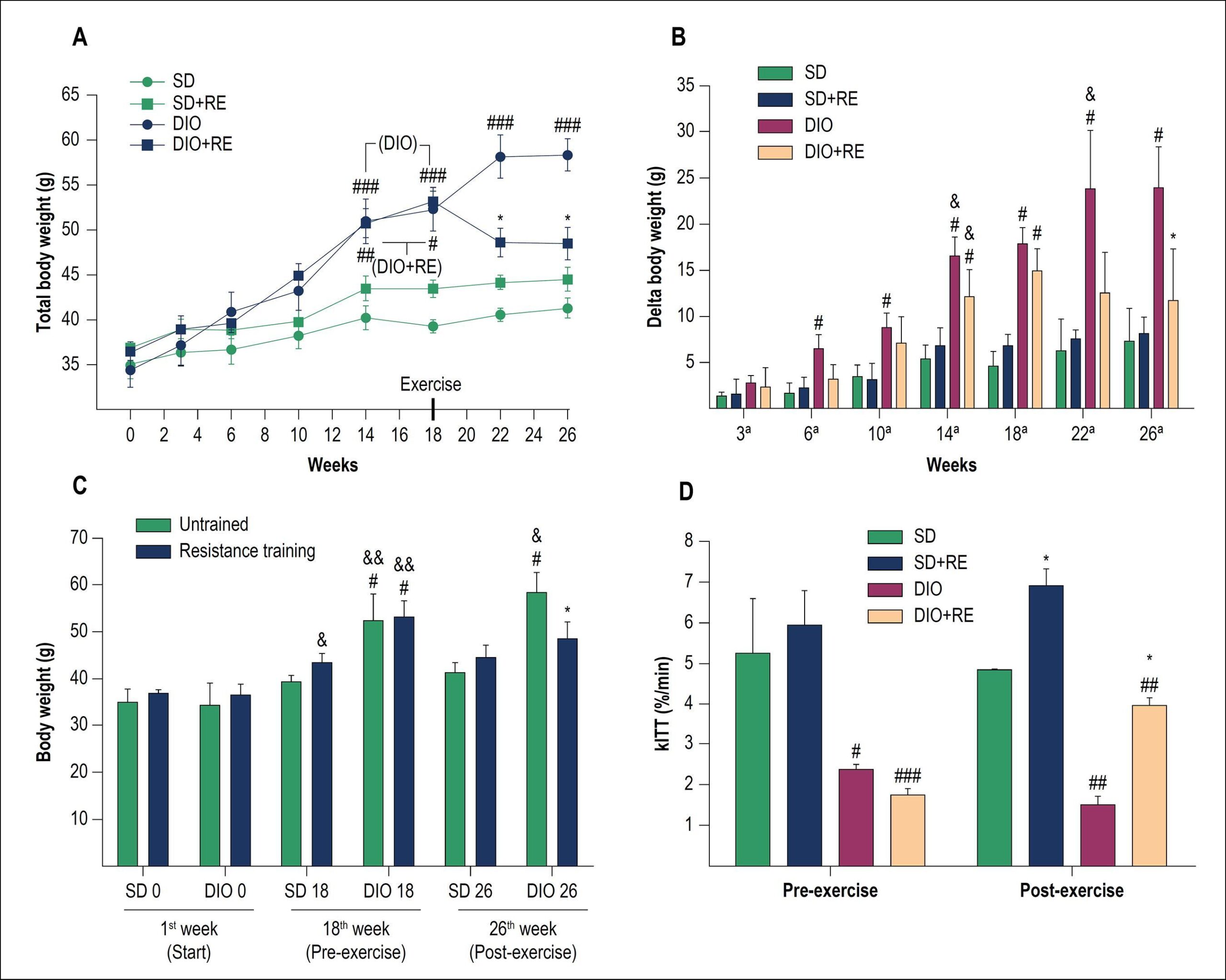
24 Swiss mice were divided into 4 groups: standard diet (SD), SD + resistance exercise (SD + RE), diet-induced obesity (DIO), DIO + RE. The animals were fed SD or HFD for 26 weeks and performed resistance exercises in the last 8 weeks of the study. The insulin tolerance test (ITT) and body weight monitoring were performed to assess the clinical parameters. Oxidative stress and inflammation parameters were evaluated in the cardiac tissue. Data were expressed by mean and standard deviation (p < 0.05).

Results:

The DIO group had a significant increase in reactive oxygen species levels and lipid peroxidation with reduction after exercise. Superoxide dismutase and the glutathione system showed no significant changes in DIO animals, with an increase in SD + RE. Only catalase activity decreased with both diet and exercise influence. There was an increase in tumor necrosis factor-alpha (TNF-α) in the DIO group, characterizing a possible inflammatory condition, with a decrease when exposed to resistance training (DIO+RE).

Conclusion:

The DIO resulted in a redox imbalance in cardiac tissue, but the RE was able to modulate these parameters, as well as to control the increase in TNF-α levels.

  • Diet, High-fat
  • Exercise
  • Mice
  • Obesity
  • Oxidative Stress
Read Full Article
Creative Commons Attribution (CC BY) Creative Commons license
25/04/2019 DOI: 10.5935/abc.20190072 Views 1
Original Article

Analysis of the Appropriate Use Criteria for Coronary Angiography in Two Cardiology Services of Southern Brazil

Luis Sérgio Carvalho Luciano et al. Roberto Léo da Silva Ozir Miguel Londero Filho Leandro Waldrich … Luciano Panata Ana Paula Trombetta Julio Cesar Preve Tammuz Fattah Luiz Carlos Giuliano Luiz Eduardo Koenig São Thiago

Abstract

Background:

Despite its great relevance, there are no studies in our country evaluating the application of the 2012 guidelines for the appropriate use of cardiac diagnostic catheterization.

Objective:

To analyze the adequacy of coronary angiography performed in two hospitals in the southern region of Brazil.

Methods:

This is a multicenter cross-sectional study, which analyzed indications, results and proposals for the treatment of 737 coronary angiograms performed in a tertiary hospital with multiple specialties (Hospital A) and a tertiary cardiology hospital (Hospital B). Elective or emergency coronary angiographies were included, except for cases of acute myocardial infarction with ST segment elevation. The level of statistical significance adopted was 5% (p < 0.05).

Results:

Of the 737 coronary angiograms, 63.9% were performed in male patients. The mean age was 61.6 years. The indication was acute coronary syndrome in 57.1%, and investigation of coronary artery disease in 42.9% of the cases. Regarding appropriation, 80.6% were classified as appropriate, 15.1% occasionally appropriate, and 4.3% rarely appropriate. The proposed treatment was clinical for 62.7%, percutaneous coronary intervention for 24.6%, and myocardial revascularization surgery for 12.7% of the cases. Of the coronary angiographies classified as rarely appropriate, 56.2% were related to non-performance of previous functional tests, and 21.9% showed severe coronary lesions. However, regardless of the outcome of coronary angiography, all patients in this group were indicated for clinical treatment.

Conclusion:

We observed a low number of rarely appropriate coronary angiograms in our sample. The guideline recommendation in these cases was adequate, and no patient required revascularization treatment. Most of these cases are due to non-performance of functional tests.

  • Acute coronary syndrome
  • Coronary Angiography
  • Coronary Artery Disease/diagnostic imaging
  • Epidemiology
  • Multicenter Study
  • Percutaneous Coronary Intervention
Read Full Article
Creative Commons Attribution (CC BY) Creative Commons license
14/03/2019 DOI: 10.5935/abc.20190055 Views 2
Figure 1
Original Article

Thermoregulation in Hypertensive Rats during Exercise: Effects of Physical Training

Luis Henrique Lobo Silame Gomes et al. Lucas Rios Drummond Helton Oliveira Campos Leonardo Mateus Teixeira de Rezende … Miguel Araújo Carneiro-Júnior Alessandro Oliveira Antônio José Natali Thales Nicolau Prímola-Gomes

Abstract

Background:

Spontaneously hypertensive rats (SHR) show deficit in thermal balance during physical exercise.

Objective:

To assess the effects of low-intensity physical exercise training on thermal balance of hypertensive rats undergoing an acute exercise protocol.

Methods:

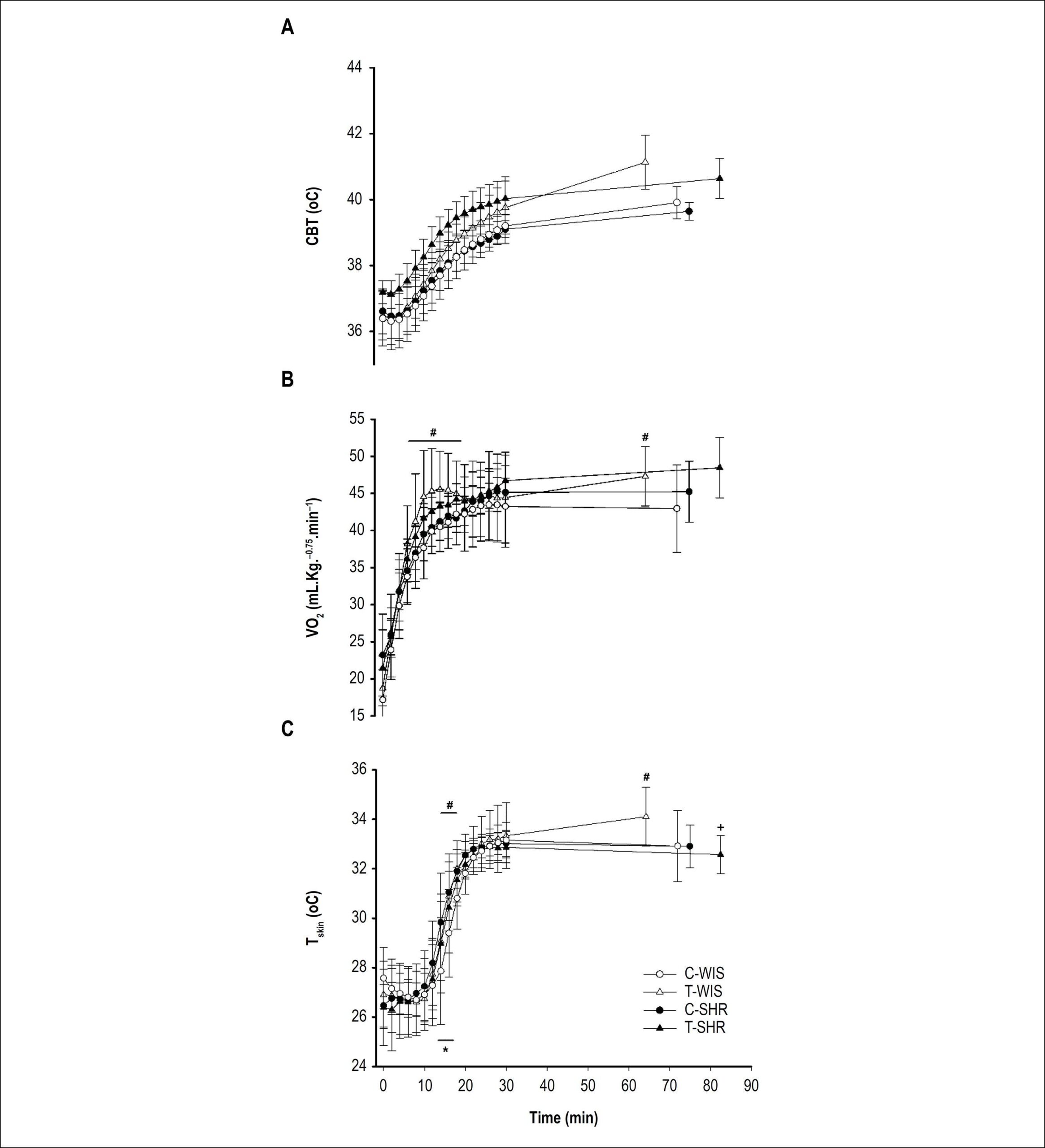
Sixteen-week-old male Wistar rats and SHR were allocated into four groups: control Wistar rats (C-WIS), trained Wistar (T-WIS), control SHR (C-SHR) and trained SHR (T-SHR). Treadmill exercise training was performed for 12 weeks. Blood pressure, resting heart rate and total exercise time was measured before and after the physical exercise program. After the exercise program, a temperature sensor was implanted in the abdominal cavity, and the animals subjected to an acute exercise protocol, during which internal body temperature, tail skin temperature and oxygen consumption until fatigue were continuously recorded. Mechanical efficiency (ME), work, heat dissipation threshold and sensitivity were calculated. Statistical significance was set at 5%.

Results:

Physical training and hypertension had no effect on thermal balance during physical exercise. Compared with C-WIS, the T-WIS group showed higher heat production, which was counterbalanced by higher heat dissipation. Hypertensive rats showed lower ME than normotensive rats, which was not reversed by the physical training.

Conclusion:

Low-intensity physical training did not affect thermal balance in SHR subjected to acute exercise.

  • Body Temperature Changes
  • Exercise/physiology
  • Fatigue
  • Hypertension
  • Physical Exertion
  • Rats
Read Full Article
Creative Commons Attribution (CC BY) Creative Commons license
14/03/2019 DOI: 10.5935/abc.20190050 Views 2
Original Article

Disparities In The Use Of Drug-eluting Stents For Diabetic Patients With ST-elevation Acute Myocardial Infarction Assisted In the Public versus Private Network – VICTIM Register

Jussiely Cunha Oliveira et al. Laís Costa Souza Oliveira Jeferson Cunha Oliveira Ikaro Daniel de Carvalho Barreto … Marcos Antonio Almeida-Santos Ticiane Clair Remacre Munareto Lima Larissa Andreline Maia Arcelino Isadora Soares Bispo Santos Silva Antônio Carlos Sobral Sousa José Augusto Soares Barreto-Filho

Abstract

Background:

Primary angioplasty (PA) with placement of either bare metal or drug-eluting stents (DES) represents the main strategy in the treatment of ST-elevation myocardial infarction (STEMI). Diabetic patients, however, represent a special population in STEMI, with high rates of restenosis and unfavorable clinical outcomes, and with the use of DES, level of evidence A and indication class II, being indicated to reduce these damages.

Objectives:

To evaluate the DES rate of use in patients with STEMI and in the subgroup of diabetics assisted in the public versus private health network in Sergipe.

Methods:

This is a population-based, cross-sectional study with a quantitative approach using the data from the VICTIM Register. These were collected in the only four hospitals with capacity to perform PA in Sergipe, from December 2014 to March 2017.

Results:

A total of 707 patients diagnosed with STEMI were evaluated, of which 589 were attended at SUS and 118 at the private network. The use of DES in PA was lower in SUS compared to the private network in both the total sample (10.5% vs 82.4%, p<0.001) and in subgroup diabetic patients (8.7% vs 90.6%, p < 0.001), respectively. In all hypotheses tested, the level of significance was 5% (p < 0.05).

Conclusions:

The study reveals a disparity in the use of DES during the performance of PA between the public and private network, both in the total sample and the subgroup for diabetics, with lower rates for SUS users, demonstrating the challenges that need to be overcome in order to achieve quality improvements of the services provided.

  • Angioplasty
  • Case-Control Studies
  • Diabetes Mellitus
  • Drug-Eluting
  • Hospitals, Public
  • Hospitals,Private
  • ST Elevation Myocardial Infarction
Read Full Article
Creative Commons Attribution (CC BY) Creative Commons license
14/03/2019 DOI: 10.5935/abc.20190054 Views 2
Figure 1
Original Article

Left Atrial Stiffness: A Predictor of Atrial Fibrillation Recurrence after Radiofrequency Catheter Ablation – A Systematic Review and Meta-Analysis

Eduardo Thadeu de Oliveira Correia et al. Letícia Mara dos Santos Barbetta Othon Moura Pereira da Silva Evandro Tinoco Mesquita

Abstract

Background:

Radiofrequency catheter ablation (RFCA) is a standard procedure for patients with atrial fibrillation (AF) not responsive to previous treatments, that has been increasingly considered as a first-line therapy. In this context, perioperative screening for risk factors has become important. A previous study showed that a high left atrial (LA) pressure is associated with AF recurrence after ablation, which may be secondary to a stiff left atrium.

Objective:

To investigate, through a systematic review and meta-analysis, if LA stiffness could be a predictor of AF recurrence after RFCA, and to discuss its clinical use.

Methods:

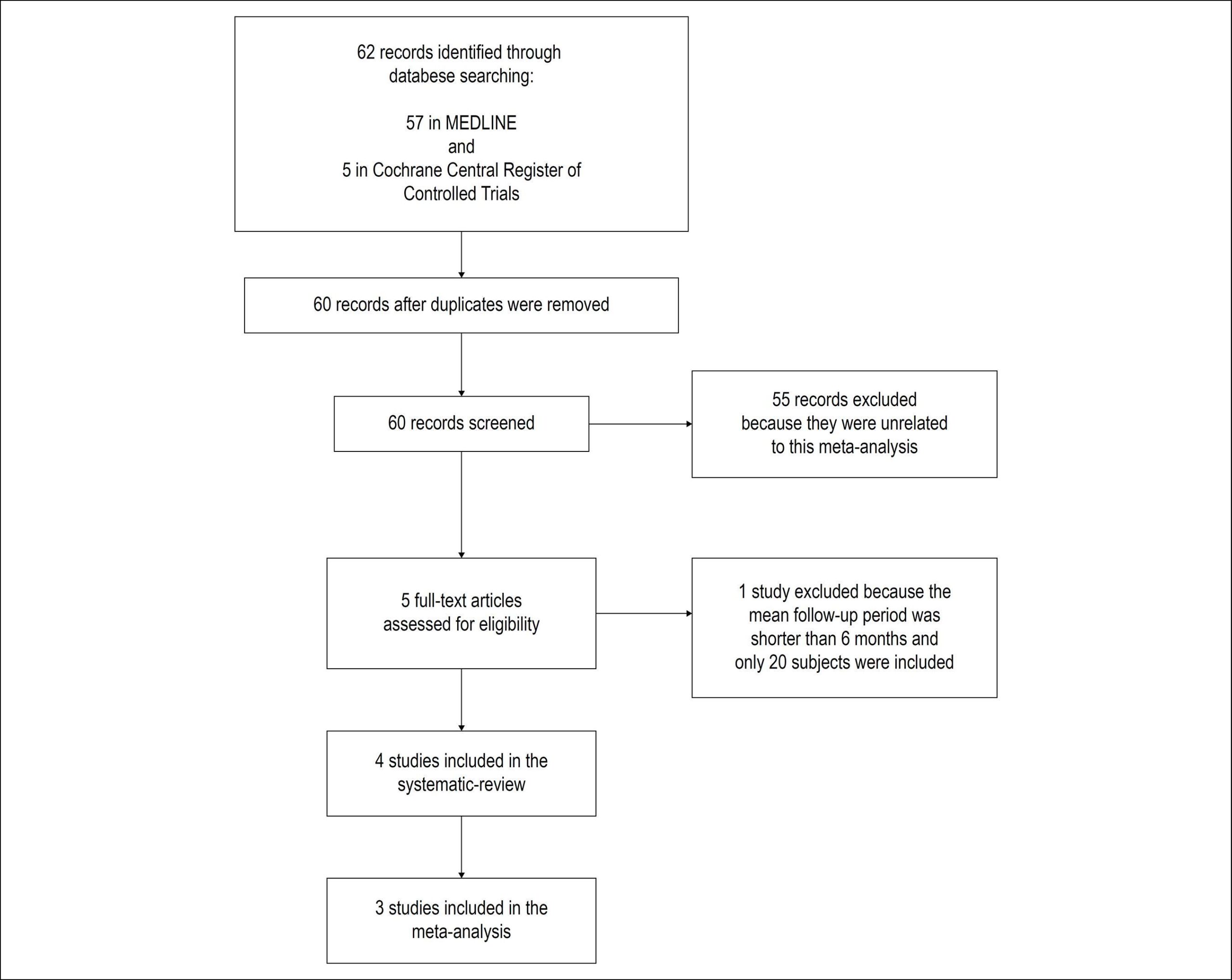
The meta-analysis followed the MOOSE recommendations. The search was performed in MEDLINE and Cochrane Central Register of Controlled Trials databases, until March 2018. Two authors performed screening, data extraction and quality assessment of the studies.

Results:

All studies were graded with good quality. A funnel plot was constructed, which did not show any publication bias. Four prospective observational studies were included in the systematic review and 3 of them in the meta-analysis. Statistical significance was defined at p value < 0.05. LA stiffness was a strong independent predictor of AF recurrence after RFCA (HR = 3.55, 95% CI 1.75-4.73, p = 0.0002).

Conclusion:

A non-invasive assessment of LA stiffness prior to ablation can be used as a potential screening factor to select or to closely follow patients with higher risks of AF recurrence and development of the stiff LA syndrome.

  • Atrial Fibrillation
  • Catheter Ablation/methods
  • Heart Atria
  • Metanalysis
  • Tachycardia, Paroxysmal
Read Full Article
Creative Commons Attribution (CC BY) Creative Commons license
07/03/2019 DOI: 10.5935/abc.20190040 Views 1
Figure 1
Viewpoint

Resident Macrophages Orchestrating Heart Rate

Diego Santos Souza et al. Tatiane de Oliveira Barreto Michael Nadson Santos Santana José Evaldo Rodrigues Menezes-Filho … Jader Santos Cruz Carla Maria Lins de Vasconcelos

Macrophages and the heartbeat

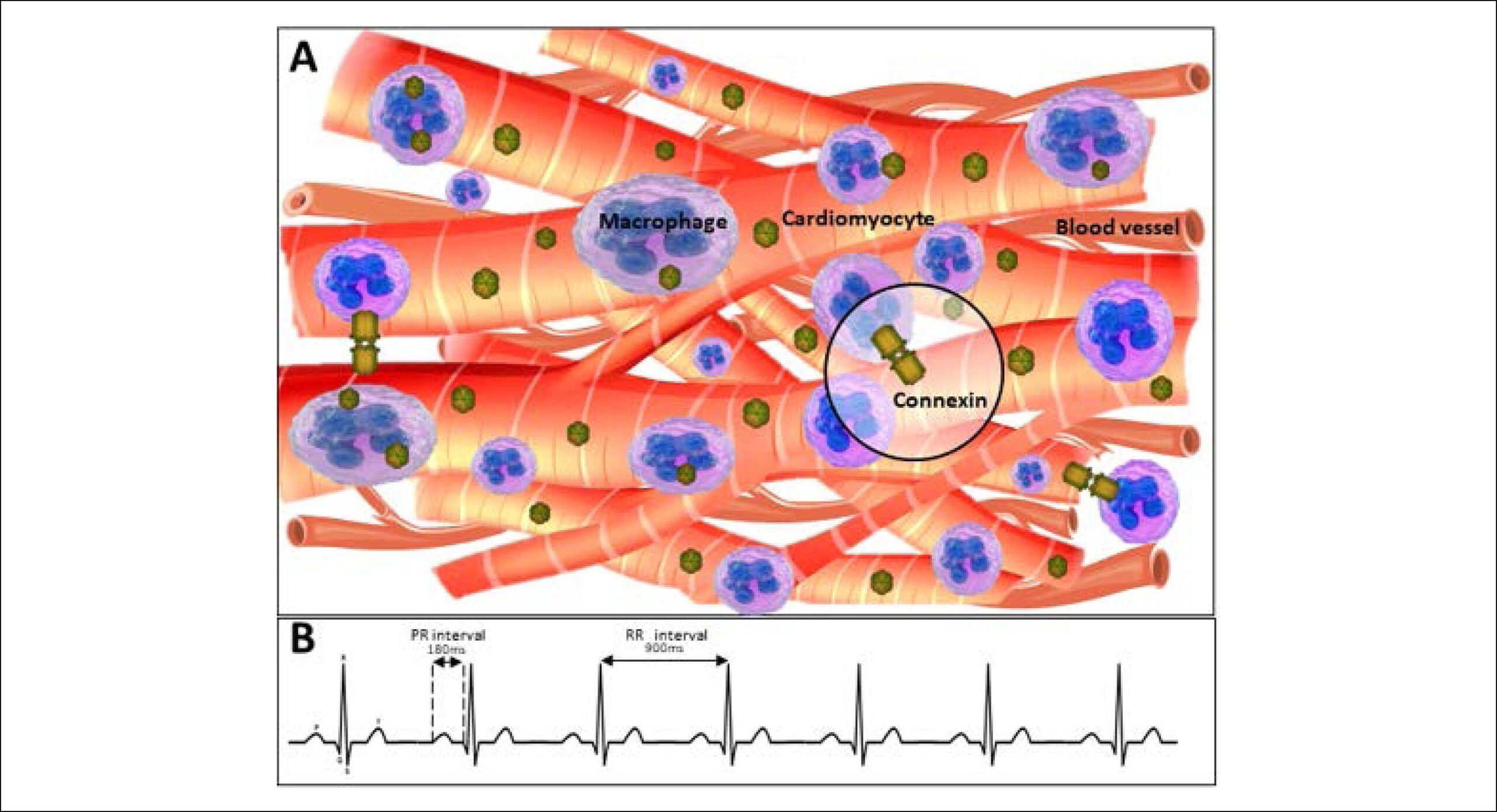
Cardiac function depends on the appropriate moment of contraction in several distinct regions, as well as the heart rate. Hulsmans et al. observed that mice that had their macrophage fauna weakened, had bradycardia and irregular beats. It is known that connexin-43 is predominant in ventricles of humans and that its reduction promotes bradycardia and AV block, thus, in observing specialized cells in non-muscular electrical conduction, they found that macrophages are electrically coupled to cardiomyocytes and that these resident macrophages facilitate electrical conduction through the AV node.

Such conducting cells interleave with macrophages expressing connexin-43 forming additional gap junctions between cardiomyocytes (). The investigators observed that the animals that had a reduction of resident macrophages, besides having bradycardia, had AV blockade of 2nd and 3rd degrees (), whose cause in humans is still unknown. Another intriguing point is that cardiac macrophages have a resting membrane potential of -35 mV on average and depolarize in synchrony with cardiomyocytes. This makes the membrane potential at the rest of the cardiomyocytes more positive and according to the results obtained by computational simulation, accelerate both depolarization and repolarization phases. The cardioprotective role of cardiac resident macrophages can go beyond the modulation of the electrophysiological properties of the coupled cardiomyocytes. The perivascular localization of cardiac macrophages makes them uniquely positioned to interpret systemic signals in the bloodstream.

[…]

Read Full Article
Creative Commons Attribution (CC BY) Creative Commons license
07/03/2019 DOI: 10.5935/abc.20190041 Views 1
Figure 1
Original Article

Changes in Cardiac Autonomic Modulation in Women with Breast Cancer Using Aromatase Inhibitors and the Relation with Biochemical Variables

Luana Almeida Gonzaga et al. Thais Reis Silva de Paulo Juliana Viezel Laís Manata Vanzella … Ismael Forte Freitas Jr. Luiz Carlos Marques Vanderlei

Abstract

Background:

The use of autonomic modulation as a predictor of cardiovascular risk in women with breast cancer is important.

Objective:

To evaluate the cardiac autonomic modulation of postmenopausal women using aromatase inhibitors for breast cancer treatment, as well as its relation with the following biochemical variables.

Methods:

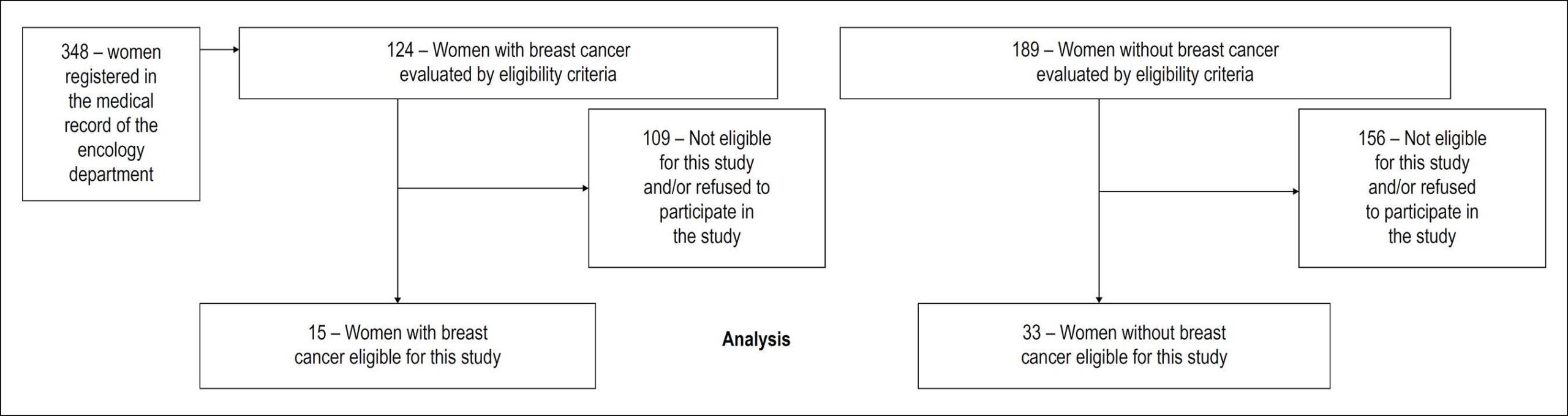
Postmenopausal women who did not have breast cancer (n = 33) and postmenopausal women with breast cancer (n = 15). For evaluation of the autonomic modulation the heart rate was recorded beat-to-beat for 30 minutes and the series of RR intervals obtained were used to calculate the following heart rate variability indices: Mean RR ms, SDNN (standard deviation of all normal RR intervals, expressed in milliseconds) ms, Mean HR, RMSSD (square root of the mean of the squared differences between adjacent normal RR interval) ms, NN50 (number of pairs of successive NNs that differ by more than 50 ms) count, pNN50% (proportion of NN50 divided by total number of NNs), RRtri (RR triangular), TINN (triangular interpolation of NN interval) ms, SD1 ms, SD2 ms, LF ms2, HF ms2, LH/HF ms2. The values of biochemical variables (fasting glycemia, triglycerides, HDL-cholesterol, and C-reactive protein) were analyzed by blood sample.

Results:

Lower values of heart rate variability indices were observed in postmenopausal women with breast cancer in relation to postmenopausal women who did not have breast cancer: Mean RR (p = 0.03); SDNN (p = 0.03); RMSSD (p = 0.03); NN50 count (p = 0.03); pNN50 % (p = 0.03); RRtri (p = 0.02); SD1 (p = 0.01); SD2 (p = 0.02); LF ms2 (p = 0.01); HF ms2 (p = 0.03).There was an inversely proportional correlation between the indices SDNN, SD2, and HFms2 with triglycerides (SDNN p = 0.04; SD2 p = 0.04; HF ms2 p = 0.04). No statistically significant correlations were found between heart rate variability indices and others variables. Statistical significance was set at 5% for all analyses.

Conclusion:

Women with breast cancer present reduced autonomic modulation and in these women of heart rate variability indices are inversely correlated with triglyceride values.

  • Aromatase Inhibitors
  • Blood Glucose
  • Breast Neoplasms
  • Cardiovascular Dieases/prevention and control
  • Cholesterol
  • Estrogen Replacement Therapy/adverse effects
Read Full Article
Creative Commons Attribution (CC BY) Creative Commons license
28/02/2019 DOI: 10.5935/abc.20190036 Views 1
Figure 1
Original Article

Unscheduled Emergency Visits after Cardiac Devices Implantation: Comparison between Cardioverter Defibrillators and Cardiac Resynchronization Therapy Devices in less than one year of Follow Up

Stefan Warpechowski Neto et al. Laura Lessa Gaudie Ley Eduardo Dytz Almeida Marco Aurélio Lumertz Saffi … Luiza Zwan Dutra Antonio Lessa Gaudie Ley Roberto Tofani Sant'Anna Gustavo Glotz de Lima Renato Abdala Karam Kalil Tiago Luiz Luz Leiria

Abstract

Background:

The use of Cardiovascular Implantable Electronic Devices (CIED), such as the Implantable Cardioverter Defibrillator (ICD) and Cardiac Resynchronization Therapy (CRT), is increasing. The number of leads may vary according to the device. Lead placement in the left ventricle increases surgical time and may be associated with greater morbidity after hospital discharge, an event that is often confused with the underlying disease severity.

Objective:

To evaluate the rate of unscheduled emergency hospitalizations and death after implantable device surgery stratified by the type of device.

Methods:

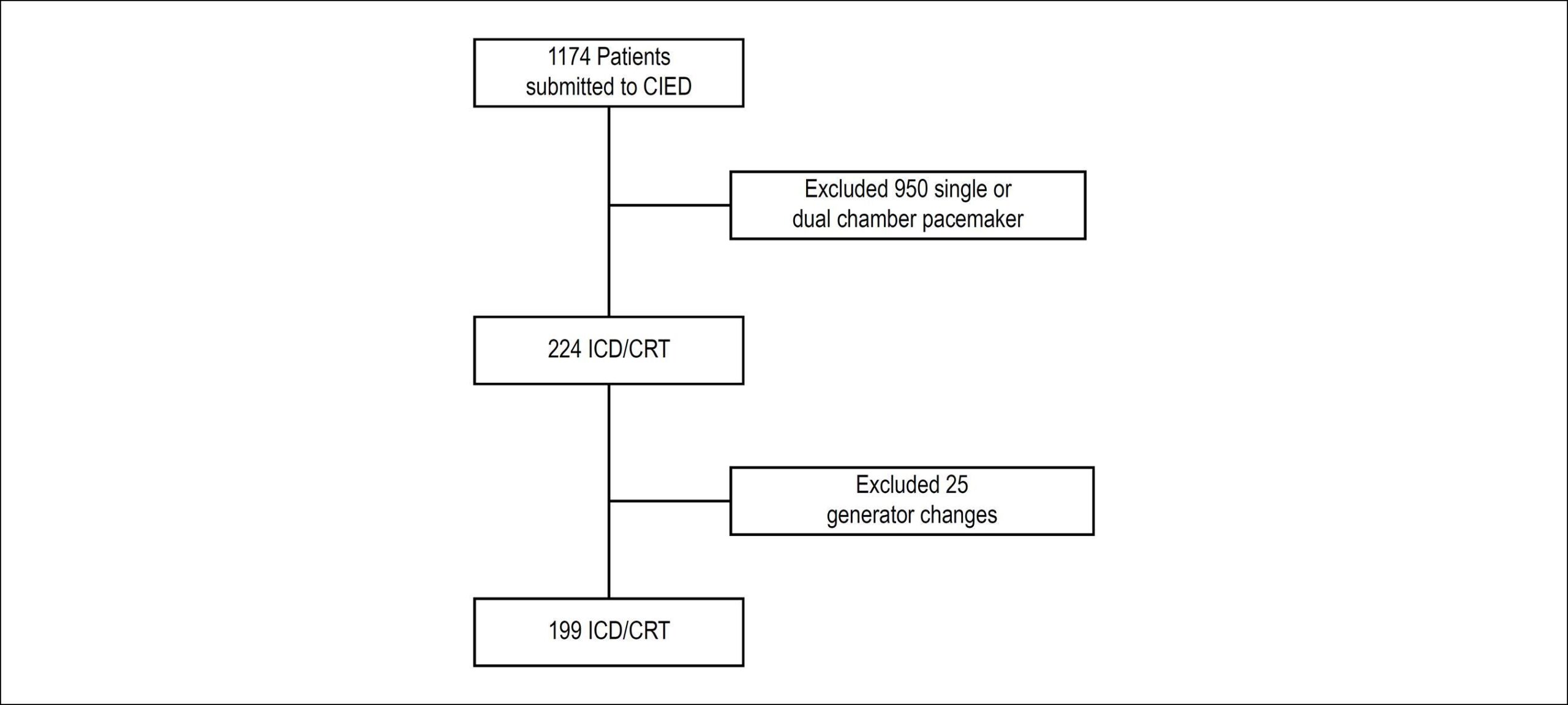
Prospective cohort study of 199 patients submitted to cardiac device implantation. The groups were stratified according to the type of device: ICD group (n = 124) and CRT group (n = 75). Probability estimates were analyzed by the Kaplan-Meier method according to the outcome. A value of p < 0.05 was considered significant in the statistical analyses.

Results:

Most of the sample comprised male patients (71.9%), with a mean age of 61.1 ± 14.2. Left ventricular ejection fraction was similar between the groups (CRT 37.4 ± 18.1 vs. ICD 39.1 ± 17.0, p = 0.532). The rate of unscheduled visits to the emergency unit related to the device was 4.8% in the ICD group and 10.6% in the CRT group (p = 0.20). The probability of device-related survival of the variable “death” was different between the groups (p = 0.008).

Conclusions:

Patients after CRT implantation show a higher probability of mortality after surgery at a follow-up of less than 1 year. The rate of unscheduled hospital visits, related or not to the implant, does not differ between the groups.

  • Cardiac resynchronization-therapy devices
  • Cardiac-Gated Imaging Techniques
  • Defibrillators, Implantable
  • Mortality
  • Patient Readmission
Read Full Article
Creative Commons Attribution (CC BY) Creative Commons license
21/02/2019 DOI: 10.5935/abc.20190018 Views 1

Could not load more articles. Please try again.

How to cite this article

EndNote RIS

Electronic Document Format (Vancouver)

Pedra SRFF, Zielinsky P, Binotto CN, Martins CN, Fonseca ESVB, Guimarães ICB, Corrêa IVS, et al. Brazilian Fetal Cardiology Guidelines – 2019. Arquivos Brasileiros de Cardiologia 2019;112(5):600-48.

Electronic Document Format (ABNT)

Pedra, Simone R. F. Fontes; Zielinsky, Paulo; Binotto, Cristiane Nogueira; Martins, Cristiane Nunes; Fonseca, Eduardo Sérgio Valério Borges da; Guimarães, Isabel Cristina Britto; Corrêa, Izabele Vian da Silveira; Pedrosa, Karla Luiza Matos; Lopes, Lilian Maria; Nicoloso, Luiz Henrique Soares; Barberato, Marcia Ferreira Alves; Zamith, Marina Maccagnano. Brazilian Fetal Cardiology Guidelines – 2019. Arquivos Brasileiros de Cardiologia, v. 112, n. 5, p. 600-648, Jun. 2019.

Electronic Document Format (APA)

Pedra, S. R. F. F., Zielinsky, P., Binotto, C. N., Martins, C. N., Fonseca, E. S. V. B. , Guimarães, I. C. B., Corrêa, I. V. S., Pedrosa, K. L. M., Lopes, L. M., Nicoloso, L. H. S., Barberato, M. F. A., & Zamith, M. M. (2019). Brazilian Fetal Cardiology Guidelines – 2019. Arquivos Brasileiros de Cardiologia, 112(5), 600-648.

Electronic Document Format (ISO)

Pedra, Simone R. F. Fontes and Zielinsky, Paulo and Binotto, Cristiane Nogueira and Martins, Cristiane Nunes and Fonseca, Eduardo Sérgio Valério Borges da and Guimarães, Isabel Cristina Britto and Corrêa, Izabele Vian da Silveira and Pedrosa, Karla Luiza Matos and Lopes, Lilian Maria and Nicoloso, Luiz Henrique Soares and Barberato, Marcia Ferreira Alves and Zamith, Marina Maccagnano. Brazilian Fetal Cardiology Guidelines – 2019. Arquivos Brasileiros de Cardiologia [online]. 2019, vol. 112, n. 5, [cited 2026-10-14], pp. 600-648. Available from: <https://journals.cardiol.br/en/article/brazilian-fetal-cardiology-guidelines-2019/>. ISSN 0066-782X

EndNote RIS

Electronic Document Format (Vancouver)

Hastenteufel LCT, Clausell N, Neyeloff JL, Domingues FB, Caballero LG, Silva ERR, Goldraich LA, et al. Continuous Intravenous Inotropes in Ward Units: Expanding Therapy Outside Intensive Care using a Safety-Oriented Protocol. Arquivos Brasileiros de Cardiologia 2019;112(5):573-6.

Electronic Document Format (ABNT)

Hastenteufel, Laura Caroline Tavares; Clausell, Nadine; Neyeloff, Jeruza Lavanholi; Domingues, Fernanda Bandeira; Caballero, Larissa Gussatschenko; Silva, Eneida Rejane Rabelo da; Goldraich, Lívia Adams. Continuous Intravenous Inotropes in Ward Units: Expanding Therapy Outside Intensive Care using a Safety-Oriented Protocol. Arquivos Brasileiros de Cardiologia, v. 112, n. 5, p. 573-576, Jun. 2019.

Electronic Document Format (APA)

Hastenteufel, L. C. T., Clausell, N., Neyeloff, J. L., Domingues, F. B., Caballero, L. G., Silva, E. R. R. , & Goldraich, L. A. (2019). Continuous Intravenous Inotropes in Ward Units: Expanding Therapy Outside Intensive Care using a Safety-Oriented Protocol. Arquivos Brasileiros de Cardiologia, 112(5), 573-576.

Electronic Document Format (ISO)

Hastenteufel, Laura Caroline Tavares and Clausell, Nadine and Neyeloff, Jeruza Lavanholi and Domingues, Fernanda Bandeira and Caballero, Larissa Gussatschenko and Silva, Eneida Rejane Rabelo da and Goldraich, Lívia Adams. Continuous Intravenous Inotropes in Ward Units: Expanding Therapy Outside Intensive Care using a Safety-Oriented Protocol. Arquivos Brasileiros de Cardiologia [online]. 2019, vol. 112, n. 5, [cited 2026-10-14], pp. 573-576. Available from: <https://journals.cardiol.br/en/article/continuous-intravenous-inotropes-in-ward-units-expanding-therapy-outside-intensive-care-using-a-safety-oriented-protocol/>. ISSN 0066-782X

EndNote RIS

Electronic Document Format (Vancouver)

Magalhaes MA, Cade JR. Appropriate Use Criteria for Coronary Angiography at Two Hospitals in Southern Brazil: “Doing the Right Things And Doing Things Right”. Arquivos Brasileiros de Cardiologia 2019;112(5):532-3.

Electronic Document Format (ABNT)

Magalhaes, Marco A.; Cade, Jamil R.. Appropriate Use Criteria for Coronary Angiography at Two Hospitals in Southern Brazil: “Doing the Right Things And Doing Things Right”. Arquivos Brasileiros de Cardiologia, v. 112, n. 5, p. 532-533, Jun. 2019.

Electronic Document Format (APA)

Magalhaes, M. A., & Cade, J. R. (2019). Appropriate Use Criteria for Coronary Angiography at Two Hospitals in Southern Brazil: “Doing the Right Things And Doing Things Right”. Arquivos Brasileiros de Cardiologia, 112(5), 532-533.

Electronic Document Format (ISO)

Magalhaes, Marco A. and Cade, Jamil R.. Appropriate Use Criteria for Coronary Angiography at Two Hospitals in Southern Brazil: “Doing the Right Things And Doing Things Right”. Arquivos Brasileiros de Cardiologia [online]. 2019, vol. 112, n. 5, [cited 2026-10-14], pp. 532-533. Available from: <https://journals.cardiol.br/en/article/appropriate-use-criteria-for-coronary-angiography-at-two-hospitals-in-southern-brazil-doing-the-right-things-and-doing-things-right/>. ISSN 0066-782X

EndNote RIS

Electronic Document Format (Vancouver)

Atik E, Barreto AC, Binotto MA. Case 3/2019 – Type IIB Tricuspid Atresia, in Natural Evolution, at 21 Years of Age. Arquivos Brasileiros de Cardiologia 2019;112(5):592-3.

Electronic Document Format (ABNT)

Atik, Edmar; Barreto, Alessandra Costa; Binotto, Maria Angélica. Case 3/2019 – Type IIB Tricuspid Atresia, in Natural Evolution, at 21 Years of Age. Arquivos Brasileiros de Cardiologia, v. 112, n. 5, p. 592-593, Jun. 2019.

Electronic Document Format (APA)

Atik, E., Barreto, A. C., & Binotto, M. A. (2019). Case 3/2019 – Type IIB Tricuspid Atresia, in Natural Evolution, at 21 Years of Age. Arquivos Brasileiros de Cardiologia, 112(5), 592-593.

Electronic Document Format (ISO)

Atik, Edmar and Barreto, Alessandra Costa and Binotto, Maria Angélica. Case 3/2019 – Type IIB Tricuspid Atresia, in Natural Evolution, at 21 Years of Age. Arquivos Brasileiros de Cardiologia [online]. 2019, vol. 112, n. 5, [cited 2026-10-14], pp. 592-593. Available from: <https://journals.cardiol.br/en/article/case-3-2019-type-iib-tricuspid-atresia-in-natural-evolution-at-21-years-of-age/>. ISSN 0066-782X

EndNote RIS

Electronic Document Format (Vancouver)

Wu TC. Left Atrial Stiffness, a Marker of Atrial Cardiomyopathy, and Atrial Fibrillation – Relationships and Predictors for Procedure Success after Catheter Ablation. Arquivos Brasileiros de Cardiologia 2019;112(5):509-10.

Electronic Document Format (ABNT)

Wu, Tan Chen. Left Atrial Stiffness, a Marker of Atrial Cardiomyopathy, and Atrial Fibrillation – Relationships and Predictors for Procedure Success after Catheter Ablation. Arquivos Brasileiros de Cardiologia, v. 112, n. 5, p. 509-510, Jun. 2019.

Electronic Document Format (APA)

Wu, T. C. (2019). Left Atrial Stiffness, a Marker of Atrial Cardiomyopathy, and Atrial Fibrillation – Relationships and Predictors for Procedure Success after Catheter Ablation. Arquivos Brasileiros de Cardiologia, 112(5), 509-510.

Electronic Document Format (ISO)

Wu, Tan Chen. Left Atrial Stiffness, a Marker of Atrial Cardiomyopathy, and Atrial Fibrillation – Relationships and Predictors for Procedure Success after Catheter Ablation. Arquivos Brasileiros de Cardiologia [online]. 2019, vol. 112, n. 5, [cited 2026-10-14], pp. 509-510. Available from: <https://journals.cardiol.br/en/article/left-atrial-stiffness-a-marker-of-atrial-cardiomyopathy-and-atrial-fibrillation-relationships-and-predictors-for-procedure-success-after-catheter-ablation/>. ISSN 0066-782X

EndNote RIS

Electronic Document Format (Vancouver)

Mesquita CT, Cruz GG. Comment on Myocardial Perfusion Study in Obese Patients without Known Cardiac Ischemia. Arquivos Brasileiros de Cardiologia 2019;112(5):597-9.

Electronic Document Format (ABNT)

Mesquita, Claudio Tinoco; Cruz, Gustavo Gavina da. Comment on Myocardial Perfusion Study in Obese Patients without Known Cardiac Ischemia. Arquivos Brasileiros de Cardiologia, v. 112, n. 5, p. 597-599, Jun. 2019.

Electronic Document Format (APA)

Mesquita, C. T., & Cruz, G. G. (2019). Comment on Myocardial Perfusion Study in Obese Patients without Known Cardiac Ischemia. Arquivos Brasileiros de Cardiologia, 112(5), 597-599.

Electronic Document Format (ISO)

Mesquita, Claudio Tinoco and Cruz, Gustavo Gavina da. Comment on Myocardial Perfusion Study in Obese Patients without Known Cardiac Ischemia. Arquivos Brasileiros de Cardiologia [online]. 2019, vol. 112, n. 5, [cited 2026-10-14], pp. 597-599. Available from: <https://journals.cardiol.br/en/article/comment-on-myocardial-perfusion-study-in-obese-patients-without-known-cardiac-ischemia/>. ISSN 0066-782X

EndNote RIS

Electronic Document Format (Vancouver)

Guimarães L, Caixeta A. Brazil: Two Realities for the Treatment of One Disease. Arquivos Brasileiros de Cardiologia 2019;112(5):571-2.

Electronic Document Format (ABNT)

Guimarães, Leonardo; Caixeta, Adriano. Brazil: Two Realities for the Treatment of One Disease. Arquivos Brasileiros de Cardiologia, v. 112, n. 5, p. 571-572, Jun. 2019.

Electronic Document Format (APA)

Guimarães, L., & Caixeta, A. (2019). Brazil: Two Realities for the Treatment of One Disease. Arquivos Brasileiros de Cardiologia, 112(5), 571-572.

Electronic Document Format (ISO)

Guimarães, Leonardo and Caixeta, Adriano. Brazil: Two Realities for the Treatment of One Disease. Arquivos Brasileiros de Cardiologia [online]. 2019, vol. 112, n. 5, [cited 2026-10-14], pp. 571-572. Available from: <https://journals.cardiol.br/en/article/brazil-two-realities-for-the-treatment-of-one-disease/>. ISSN 0066-782X

EndNote RIS

Electronic Document Format (Vancouver)

. October issue of 2012, vol. 99(4), pages 1-10. Arquivos Brasileiros de Cardiologia 2019;112(5):706.

Electronic Document Format (ABNT)

. October issue of 2012, vol. 99(4), pages 1-10. Arquivos Brasileiros de Cardiologia, v. 112, n. 5, p. 706-706, Jun. 2019.

Electronic Document Format (APA)

(2019). October issue of 2012, vol. 99(4), pages 1-10. Arquivos Brasileiros de Cardiologia, 112(5), 706-706.

Electronic Document Format (ISO)

. October issue of 2012, vol. 99(4), pages 1-10. Arquivos Brasileiros de Cardiologia [online]. 2019, vol. 112, n. 5, [cited 2026-10-14], pp. 706-706. Available from: <https://journals.cardiol.br/en/article/october-issue-of-2012-vol-994-pages-1-10/>. ISSN 0066-782X

EndNote RIS

Electronic Document Format (Vancouver)

Amorim RG, Guedes GS, Vasconcelos SML, Santos JCF. Kidney Disease in Diabetes Mellitus: Cross-Linking between Hyperglycemia, Redox Imbalance and Inflammation. Arquivos Brasileiros de Cardiologia 2019;112(5):577-8.

Electronic Document Format (ABNT)

Amorim, Rayne Gomes; Guedes, Glaucevane da Silva; Vasconcelos, Sandra Mary Lima; Santos, Juliana Célia de Farias. Kidney Disease in Diabetes Mellitus: Cross-Linking between Hyperglycemia, Redox Imbalance and Inflammation. Arquivos Brasileiros de Cardiologia, v. 112, n. 5, p. 577-587, Jun. 2019.

Electronic Document Format (APA)

Amorim, R. G., Guedes, G. S., Vasconcelos, S. M. L., & Santos, J. C. F. (2019). Kidney Disease in Diabetes Mellitus: Cross-Linking between Hyperglycemia, Redox Imbalance and Inflammation. Arquivos Brasileiros de Cardiologia, 112(5), 577-587.

Electronic Document Format (ISO)

Amorim, Rayne Gomes and Guedes, Glaucevane da Silva and Vasconcelos, Sandra Mary Lima and Santos, Juliana Célia de Farias. Kidney Disease in Diabetes Mellitus: Cross-Linking between Hyperglycemia, Redox Imbalance and Inflammation. Arquivos Brasileiros de Cardiologia [online]. 2019, vol. 112, n. 5, [cited 2026-10-14], pp. 577-587. Available from: <https://journals.cardiol.br/en/article/kidney-disease-in-diabetes-mellitus-cross-linking-between-hyperglycemia-redox-imbalance-and-inflammation/>. ISSN 0066-782X

EndNote RIS

Electronic Document Format (Vancouver)

Costa R. Unscheduled Return Visits to the Emergency Department after Cardiac Electronic Devices Implantation. Arquivos Brasileiros de Cardiologia 2019;112(5):499-500.

Electronic Document Format (ABNT)

Costa, Roberto. Unscheduled Return Visits to the Emergency Department after Cardiac Electronic Devices Implantation. Arquivos Brasileiros de Cardiologia, v. 112, n. 5, p. 499-500, Jun. 2019.

Electronic Document Format (APA)

Costa, R. (2019). Unscheduled Return Visits to the Emergency Department after Cardiac Electronic Devices Implantation. Arquivos Brasileiros de Cardiologia, 112(5), 499-500.

Electronic Document Format (ISO)

Costa, Roberto. Unscheduled Return Visits to the Emergency Department after Cardiac Electronic Devices Implantation. Arquivos Brasileiros de Cardiologia [online]. 2019, vol. 112, n. 5, [cited 2026-10-14], pp. 499-500. Available from: <https://journals.cardiol.br/en/article/unscheduled-return-visits-to-the-emergency-department-after-cardiac-electronic-devices-implantation/>. ISSN 0066-782X

EndNote RIS

Electronic Document Format (Vancouver)

Galvão TFG. Is There Any Cardiovascular Concern Regarding the Use of Aromatase Inhibitors in Breast Cancer?. Arquivos Brasileiros de Cardiologia 2019;112(5):489-90.

Electronic Document Format (ABNT)

Galvão, Tatiana F. G.. Is There Any Cardiovascular Concern Regarding the Use of Aromatase Inhibitors in Breast Cancer?. Arquivos Brasileiros de Cardiologia, v. 112, n. 5, p. 489-490, Jun. 2019.

Electronic Document Format (APA)

Galvão, T. F. G. (2019). Is There Any Cardiovascular Concern Regarding the Use of Aromatase Inhibitors in Breast Cancer?. Arquivos Brasileiros de Cardiologia, 112(5), 489-490.

Electronic Document Format (ISO)

Galvão, Tatiana F. G.. Is There Any Cardiovascular Concern Regarding the Use of Aromatase Inhibitors in Breast Cancer?. Arquivos Brasileiros de Cardiologia [online]. 2019, vol. 112, n. 5, [cited 2026-10-14], pp. 489-490. Available from: <https://journals.cardiol.br/en/article/is-there-any-cardiovascular-concern-regarding-the-use-of-aromatase-inhibitors-in-breast-cancer/>. ISSN 0066-782X

EndNote RIS

Electronic Document Format (Vancouver)

Kilit C, Kilit TP. Report of a Family with Craniofrontonasal Syndrome and Wolff-Parkinson-White Syndrome: Is it a New Finding?. Arquivos Brasileiros de Cardiologia 2019;112(5):594-6.

Electronic Document Format (ABNT)

Kilit, Celal; Kilit, Türkan Pasali. Report of a Family with Craniofrontonasal Syndrome and Wolff-Parkinson-White Syndrome: Is it a New Finding?. Arquivos Brasileiros de Cardiologia, v. 112, n. 5, p. 594-596, Jun. 2019.

Electronic Document Format (APA)

Kilit, C., & Kilit, T. P. (2019). Report of a Family with Craniofrontonasal Syndrome and Wolff-Parkinson-White Syndrome: Is it a New Finding?. Arquivos Brasileiros de Cardiologia, 112(5), 594-596.

Electronic Document Format (ISO)

Kilit, Celal and Kilit, Türkan Pasali. Report of a Family with Craniofrontonasal Syndrome and Wolff-Parkinson-White Syndrome: Is it a New Finding?. Arquivos Brasileiros de Cardiologia [online]. 2019, vol. 112, n. 5, [cited 2026-10-14], pp. 594-596. Available from: <https://journals.cardiol.br/en/article/report-of-a-family-with-craniofrontonasal-syndrome-and-wolff-parkinson-white-syndrome-is-it-a-new-finding/>. ISSN 0066-782X

EndNote RIS

Electronic Document Format (Vancouver)

Feitosa Filho GS, Peixoto JM, Pinheiro JES, Afiune Neto A, Albuquerque ALT, Cattani C, Nussbacher A, et al. Updated Geriatric Cardiology Guidelines of the Brazilian Society of Cardiology – 2019. Arquivos Brasileiros de Cardiologia 2019;112(5):649-705.

Electronic Document Format (ABNT)

Feitosa Filho, Gilson Soares; Peixoto, José Maria; Pinheiro, José Elias Soares; Afiune Neto, Abrahão; Albuquerque, Afonso Luiz Tavares de; Cattani, Álvaro César; Nussbacher, Amit; Camarano, Ana Amelia; Sichinels, Angela Hermínia; Sousa, Antonio Carlos Sobral; Alencar Filho, Aristóteles Comte de; Gravina, Claudia F.; Sobral Filho, Dario Celestino; Pitthan, Eduardo; Costa, Elisa Franco de Assis; Duarte, Elizabeth da Rosa; Freitas, Elizabete Viana de; Moriguchi, Emilio Hideyuki; Mesquita, Evandro Tinoco; Fernandes, Fábio; Fuchs, Felipe Costa; Feitosa, Gilson Soares; Pierre, Humberto; Pereira Filho, Ilnei; Helber, Izo; Borges, Jairo Lins; Garcia, Jéssica Myrian de Amorim; Souza, José Antonio Gordillo de; Zanon, José Carlos da Costa; Alves, Josmar de Castro; Mohallem, Kalil Lays; Chaves, Laura Mariana de Siqueira Mendonça; Moura, Lídia Ana Zytynski; Silva, Márcia Cristina Amélia da; Toledo, Maria Alice de Vilhena; Assunção, Maria Elisa Lucena Sales de Melo; Wajngarten, Mauricio; Gonçalves, Mauro José Oliveira; Lopes, Neuza Helena Moreira; Rodrigues, Nezilour Lobato; Toscano, Paulo Roberto Pereira; Rousseff, Pedro; Maia, Ricardo Antonio Rosado; Franken, Roberto Alexandre; Miranda, Roberto Dischinger; Gamarski, Roberto; Rosa, Ronaldo Fernandes; Santos, Silvio Carlos de Moraes; Galera, Siulmara Cristina; Grespan, Stela Maris da Silva; Silva, Teresa Cristina Rogerio da; Esteves, William Antonio de Magalhães. Updated Geriatric Cardiology Guidelines of the Brazilian Society of Cardiology – 2019. Arquivos Brasileiros de Cardiologia, v. 112, n. 5, p. 649-705, Jun. 2019.

Electronic Document Format (APA)

Feitosa Filho, G. S., Peixoto, J. M., Pinheiro, J. E. S., Afiune Neto, A., Albuquerque, A. L. T. , Cattani, C., Nussbacher, A., Camarano, A. A., Sichinels, A. H., Sousa, A. C. S., Alencar Filho, A. C. , Gravina, C. F., Sobral Filho, D. C., Pitthan, E., Costa, E. F. A., Duarte, E. R., Freitas, E. V. , Moriguchi, E. H., Mesquita, E. T., Fernandes, F., Fuchs, F. C., Feitosa, G. S., Pierre, H., Pereira Filho, I., Helber, I., Borges, J. L., Garcia, J. M. A., Souza, J. A. G. , Zanon, J. C. C., Alves, J. C., Mohallem, K. L., Chaves, L. M. S. M., Moura, L. A. Z., Silva, M. C. A. , Toledo, M. A. V., Assunção, M. E. L. S. M., Wajngarten, M., Gonçalves, M. J. O., Lopes, N. H. M., Rodrigues, N. L., Toscano, P. R. P., Rousseff, P., Maia, R. A. R., Franken, R. A., Miranda, R. D., Gamarski, R., Rosa, R. F., Santos, S. C. M., Galera, S. C., Grespan, S. M. S., Silva, T. C. R. , & Esteves, W. A. M. (2019). Updated Geriatric Cardiology Guidelines of the Brazilian Society of Cardiology – 2019. Arquivos Brasileiros de Cardiologia, 112(5), 649-705.

Electronic Document Format (ISO)

Feitosa Filho, Gilson Soares and Peixoto, José Maria and Pinheiro, José Elias Soares and Afiune Neto, Abrahão and Albuquerque, Afonso Luiz Tavares de and Cattani, Álvaro César and Nussbacher, Amit and Camarano, Ana Amelia and Sichinels, Angela Hermínia and Sousa, Antonio Carlos Sobral and Alencar Filho, Aristóteles Comte de and Gravina, Claudia F. and Sobral Filho, Dario Celestino and Pitthan, Eduardo and Costa, Elisa Franco de Assis and Duarte, Elizabeth da Rosa and Freitas, Elizabete Viana de and Moriguchi, Emilio Hideyuki and Mesquita, Evandro Tinoco and Fernandes, Fábio and Fuchs, Felipe Costa and Feitosa, Gilson Soares and Pierre, Humberto and Pereira Filho, Ilnei and Helber, Izo and Borges, Jairo Lins and Garcia, Jéssica Myrian de Amorim and Souza, José Antonio Gordillo de and Zanon, José Carlos da Costa and Alves, Josmar de Castro and Mohallem, Kalil Lays and Chaves, Laura Mariana de Siqueira Mendonça and Moura, Lídia Ana Zytynski and Silva, Márcia Cristina Amélia da and Toledo, Maria Alice de Vilhena and Assunção, Maria Elisa Lucena Sales de Melo and Wajngarten, Mauricio and Gonçalves, Mauro José Oliveira and Lopes, Neuza Helena Moreira and Rodrigues, Nezilour Lobato and Toscano, Paulo Roberto Pereira and Rousseff, Pedro and Maia, Ricardo Antonio Rosado and Franken, Roberto Alexandre and Miranda, Roberto Dischinger and Gamarski, Roberto and Rosa, Ronaldo Fernandes and Santos, Silvio Carlos de Moraes and Galera, Siulmara Cristina and Grespan, Stela Maris da Silva and Silva, Teresa Cristina Rogerio da and Esteves, William Antonio de Magalhães. Updated Geriatric Cardiology Guidelines of the Brazilian Society of Cardiology – 2019. Arquivos Brasileiros de Cardiologia [online]. 2019, vol. 112, n. 5, [cited 2026-10-14], pp. 649-705. Available from: <https://journals.cardiol.br/en/article/updated-geriatric-cardiology-guidelines-of-the-brazilian-society-of-cardiology-2019/>. ISSN 0066-782X

EndNote RIS

Electronic Document Format (Vancouver)

Cezar MDM, Pagan LU, Damatto RL, Lima A, Gomes MJ. Cardioprotective Effects of Resistance Training on Obesity. Arquivos Brasileiros de Cardiologia 2019;112(5):553-4.

Electronic Document Format (ABNT)

Cezar, Marcelo Diarcadia Mariano; Pagan, Luana Urbano; Damatto, Ricardo Luiz; Lima, Aline; Gomes, Mariana Janini. Cardioprotective Effects of Resistance Training on Obesity. Arquivos Brasileiros de Cardiologia, v. 112, n. 5, p. 553-554, Jun. 2019.

Electronic Document Format (APA)

Cezar, M. D. M., Pagan, L. U., Damatto, R. L., Lima, A., & Gomes, M. J. (2019). Cardioprotective Effects of Resistance Training on Obesity. Arquivos Brasileiros de Cardiologia, 112(5), 553-554.

Electronic Document Format (ISO)

Cezar, Marcelo Diarcadia Mariano and Pagan, Luana Urbano and Damatto, Ricardo Luiz and Lima, Aline and Gomes, Mariana Janini. Cardioprotective Effects of Resistance Training on Obesity. Arquivos Brasileiros de Cardiologia [online]. 2019, vol. 112, n. 5, [cited 2026-10-14], pp. 553-554. Available from: <https://journals.cardiol.br/en/article/cardioprotective-effects-of-resistance-training-on-obesity/>. ISSN 0066-782X

EndNote RIS

Electronic Document Format (Vancouver)

Collet C. Evidence based decision making between PCI and CABG. Arquivos Brasileiros de Cardiologia 2019;112(5):524-5.

Electronic Document Format (ABNT)

Collet, Carlos. Evidence based decision making between PCI and CABG. Arquivos Brasileiros de Cardiologia, v. 112, n. 5, p. 524-525, Jun. 2019.

Electronic Document Format (APA)

Collet, C. (2019). Evidence based decision making between PCI and CABG. Arquivos Brasileiros de Cardiologia, 112(5), 524-525.

Electronic Document Format (ISO)

Collet, Carlos. Evidence based decision making between PCI and CABG. Arquivos Brasileiros de Cardiologia [online]. 2019, vol. 112, n. 5, [cited 2026-10-14], pp. 524-525. Available from: <https://journals.cardiol.br/en/article/evidence-based-decision-making-between-pci-and-cabg/>. ISSN 0066-782X

EndNote RIS

Electronic Document Format (Vancouver)

Damatto RL, Cezar MDM, Santos PP. Control of Body Temperature during Physical Exercise. Arquivos Brasileiros de Cardiologia 2019;112(5):543-4.

Electronic Document Format (ABNT)

Damatto, Ricardo Luiz; Cezar, Marcelo Diarcadia Mariano; Santos, Priscila Portugal dos. Control of Body Temperature during Physical Exercise. Arquivos Brasileiros de Cardiologia, v. 112, n. 5, p. 543-544, Jun. 2019.

Electronic Document Format (APA)

Damatto, R. L., Cezar, M. D. M., & Santos, P. P. (2019). Control of Body Temperature during Physical Exercise. Arquivos Brasileiros de Cardiologia, 112(5), 543-544.

Electronic Document Format (ISO)

Damatto, Ricardo Luiz and Cezar, Marcelo Diarcadia Mariano and Santos, Priscila Portugal dos. Control of Body Temperature during Physical Exercise. Arquivos Brasileiros de Cardiologia [online]. 2019, vol. 112, n. 5, [cited 2026-10-14], pp. 543-544. Available from: <https://journals.cardiol.br/en/article/control-of-body-temperature-during-physical-exercise/>. ISSN 0066-782X

EndNote RIS

Electronic Document Format (Vancouver)

Effting PS, Brescianini SMS, Sorato HR, Fernandes BB, Fidelis GSP, Silva PRL, Silveira PCL, et al. Resistance Exercise Modulates Oxidative Stress Parameters and TNF-α Content in the Heart of Mice with Diet-Induced Obesity. Arquivos Brasileiros de Cardiologia 2019;112(5):545-52.

Electronic Document Format (ABNT)

Effting, Pauline Souza; Brescianini, Stella M. S.; Sorato, Helen R.; Fernandes, Bruna Barros; Fidelis, Giulia dos S. Pedroso; Silva, Paulo Roberto L. da; Silveira, Paulo César L.; Nesi, Renata T.; Ceddia, Rolando B.; Pinho, Ricardo A.. Resistance Exercise Modulates Oxidative Stress Parameters and TNF-α Content in the Heart of Mice with Diet-Induced Obesity. Arquivos Brasileiros de Cardiologia, v. 112, n. 5, p. 545-552, Apr. 2019.

Electronic Document Format (APA)

Effting, P. S., Brescianini, S. M. S., Sorato, H. R., Fernandes, B. B., Fidelis, G. S. P., Silva, P. R. L. , Silveira, P. C. L., Nesi, R. T., Ceddia, R. B., & Pinho, R. A. (2019). Resistance Exercise Modulates Oxidative Stress Parameters and TNF-α Content in the Heart of Mice with Diet-Induced Obesity. Arquivos Brasileiros de Cardiologia, 112(5), 545-552.

Electronic Document Format (ISO)

Effting, Pauline Souza and Brescianini, Stella M. S. and Sorato, Helen R. and Fernandes, Bruna Barros and Fidelis, Giulia dos S. Pedroso and Silva, Paulo Roberto L. da and Silveira, Paulo César L. and Nesi, Renata T. and Ceddia, Rolando B. and Pinho, Ricardo A.. Resistance Exercise Modulates Oxidative Stress Parameters and TNF-α Content in the Heart of Mice with Diet-Induced Obesity. Arquivos Brasileiros de Cardiologia [online]. 2019, vol. 112, n. 5, [cited 2026-10-14], pp. 545-552. Available from: <https://journals.cardiol.br/en/article/resistance-exercise-modulates-oxidative-stress-parameters-and-tnf-%ce%b1-content-in-the-heart-of-mice-with-diet-induced-obesity/>. ISSN 0066-782X

EndNote RIS

Electronic Document Format (Vancouver)

Luciano LSC, Silva RL, Londero Filho OM, Waldrich L, Panata L, Trombetta AP, Preve JC, et al. Analysis of the Appropriate Use Criteria for Coronary Angiography in Two Cardiology Services of Southern Brazil. Arquivos Brasileiros de Cardiologia 2019;112(5):526-31.

Electronic Document Format (ABNT)

Luciano, Luis Sérgio Carvalho; Silva, Roberto Léo da; Londero Filho, Ozir Miguel; Waldrich, Leandro; Panata, Luciano; Trombetta, Ana Paula; Preve, Julio Cesar; Fattah, Tammuz; Giuliano, Luiz Carlos; Thiago, Luiz Eduardo Koenig São. Analysis of the Appropriate Use Criteria for Coronary Angiography in Two Cardiology Services of Southern Brazil. Arquivos Brasileiros de Cardiologia, v. 112, n. 5, p. 526-531, Mar. 2019.

Electronic Document Format (APA)

Luciano, L. S. C., Silva, R. L. , Londero Filho, O. M., Waldrich, L., Panata, L., Trombetta, A. P., Preve, J. C., Fattah, T., Giuliano, L. C., & Thiago, L. E. K. S. (2019). Analysis of the Appropriate Use Criteria for Coronary Angiography in Two Cardiology Services of Southern Brazil. Arquivos Brasileiros de Cardiologia, 112(5), 526-531.

Electronic Document Format (ISO)

Luciano, Luis Sérgio Carvalho and Silva, Roberto Léo da and Londero Filho, Ozir Miguel and Waldrich, Leandro and Panata, Luciano and Trombetta, Ana Paula and Preve, Julio Cesar and Fattah, Tammuz and Giuliano, Luiz Carlos and Thiago, Luiz Eduardo Koenig São. Analysis of the Appropriate Use Criteria for Coronary Angiography in Two Cardiology Services of Southern Brazil. Arquivos Brasileiros de Cardiologia [online]. 2019, vol. 112, n. 5, [cited 2026-10-14], pp. 526-531. Available from: <https://journals.cardiol.br/en/article/analysis-of-the-appropriate-use-criteria-for-coronary-angiography-in-two-cardiology-services-of-southern-brazil/>. ISSN 0066-782X

EndNote RIS

Electronic Document Format (Vancouver)

Gomes LHLS, Drummond LR, Campos HO, Rezende LMT, Carneiro-Júnior MA, Oliveira A, Natali AJ, et al. Thermoregulation in Hypertensive Rats during Exercise: Effects of Physical Training. Arquivos Brasileiros de Cardiologia 2019;112(5):534-42.

Electronic Document Format (ABNT)

Gomes, Luis Henrique Lobo Silame; Drummond, Lucas Rios; Campos, Helton Oliveira; Rezende, Leonardo Mateus Teixeira de; Carneiro-Júnior, Miguel Araújo; Oliveira, Alessandro; Natali, Antônio José; Prímola-Gomes, Thales Nicolau. Thermoregulation in Hypertensive Rats during Exercise: Effects of Physical Training. Arquivos Brasileiros de Cardiologia, v. 112, n. 5, p. 534-542, Mar. 2019.

Electronic Document Format (APA)

Gomes, L. H. L. S., Drummond, L. R., Campos, H. O., Rezende, L. M. T. , Carneiro-Júnior, M. A., Oliveira, A., Natali, A. J., & Prímola-Gomes, T. N. (2019). Thermoregulation in Hypertensive Rats during Exercise: Effects of Physical Training. Arquivos Brasileiros de Cardiologia, 112(5), 534-542.

Electronic Document Format (ISO)

Gomes, Luis Henrique Lobo Silame and Drummond, Lucas Rios and Campos, Helton Oliveira and Rezende, Leonardo Mateus Teixeira de and Carneiro-Júnior, Miguel Araújo and Oliveira, Alessandro and Natali, Antônio José and Prímola-Gomes, Thales Nicolau. Thermoregulation in Hypertensive Rats during Exercise: Effects of Physical Training. Arquivos Brasileiros de Cardiologia [online]. 2019, vol. 112, n. 5, [cited 2026-10-14], pp. 534-542. Available from: <https://journals.cardiol.br/en/article/thermoregulation-in-hypertensive-rats-during-exercise-effects-of-physical-training/>. ISSN 0066-782X

EndNote RIS

Electronic Document Format (Vancouver)

Oliveira JC, Oliveira LCS, Oliveira JC, Barreto IDC, Almeida-Santos MA, Lima TCRM, Arcelino LAM, et al. Disparities In The Use Of Drug-eluting Stents For Diabetic Patients With ST-elevation Acute Myocardial Infarction Assisted In the Public versus Private Network – VICTIM Register. Arquivos Brasileiros de Cardiologia 2019;112(5):564-70.

Electronic Document Format (ABNT)

Oliveira, Jussiely Cunha; Oliveira, Laís Costa Souza; Oliveira, Jeferson Cunha; Barreto, Ikaro Daniel de Carvalho; Almeida-Santos, Marcos Antonio; Lima, Ticiane Clair Remacre Munareto; Arcelino, Larissa Andreline Maia; Silva, Isadora Soares Bispo Santos; Sousa, Antônio Carlos Sobral; Barreto-Filho, José Augusto Soares. Disparities In The Use Of Drug-eluting Stents For Diabetic Patients With ST-elevation Acute Myocardial Infarction Assisted In the Public versus Private Network – VICTIM Register. Arquivos Brasileiros de Cardiologia, v. 112, n. 5, p. 564-570, Mar. 2019.

Electronic Document Format (APA)

Oliveira, J. C., Oliveira, L. C. S., Oliveira, J. C., Barreto, I. D. C., Almeida-Santos, M. A., Lima, T. C. R. M., Arcelino, L. A. M., Silva, I. S. B. S., Sousa, A. C. S., & Barreto-Filho, J. A. S. (2019). Disparities In The Use Of Drug-eluting Stents For Diabetic Patients With ST-elevation Acute Myocardial Infarction Assisted In the Public versus Private Network – VICTIM Register. Arquivos Brasileiros de Cardiologia, 112(5), 564-570.

Electronic Document Format (ISO)

Oliveira, Jussiely Cunha and Oliveira, Laís Costa Souza and Oliveira, Jeferson Cunha and Barreto, Ikaro Daniel de Carvalho and Almeida-Santos, Marcos Antonio and Lima, Ticiane Clair Remacre Munareto and Arcelino, Larissa Andreline Maia and Silva, Isadora Soares Bispo Santos and Sousa, Antônio Carlos Sobral and Barreto-Filho, José Augusto Soares. Disparities In The Use Of Drug-eluting Stents For Diabetic Patients With ST-elevation Acute Myocardial Infarction Assisted In the Public versus Private Network – VICTIM Register. Arquivos Brasileiros de Cardiologia [online]. 2019, vol. 112, n. 5, [cited 2026-10-14], pp. 564-570. Available from: <https://journals.cardiol.br/en/article/disparities-in-the-use-of-drug-eluting-stents-for-diabetic-patients-with-st-elevation-acute-myocardial-infarction-assisted-in-the-public-versus-private-network-victim-register/>. ISSN 0066-782X

EndNote RIS

Electronic Document Format (Vancouver)

Correia ETO, Barbetta LMS, Silva OMP, Mesquita ET. Left Atrial Stiffness: A Predictor of Atrial Fibrillation Recurrence after Radiofrequency Catheter Ablation – A Systematic Review and Meta-Analysis. Arquivos Brasileiros de Cardiologia 2019;112(5):501-8.

Electronic Document Format (ABNT)

Correia, Eduardo Thadeu de Oliveira; Barbetta, Letícia Mara dos Santos; Silva, Othon Moura Pereira da; Mesquita, Evandro Tinoco. Left Atrial Stiffness: A Predictor of Atrial Fibrillation Recurrence after Radiofrequency Catheter Ablation – A Systematic Review and Meta-Analysis. Arquivos Brasileiros de Cardiologia, v. 112, n. 5, p. 501-508, Mar. 2019.

Electronic Document Format (APA)

Correia, E. T. O., Barbetta, L. M. S., Silva, O. M. P. , & Mesquita, E. T. (2019). Left Atrial Stiffness: A Predictor of Atrial Fibrillation Recurrence after Radiofrequency Catheter Ablation – A Systematic Review and Meta-Analysis. Arquivos Brasileiros de Cardiologia, 112(5), 501-508.

Electronic Document Format (ISO)

Correia, Eduardo Thadeu de Oliveira and Barbetta, Letícia Mara dos Santos and Silva, Othon Moura Pereira da and Mesquita, Evandro Tinoco. Left Atrial Stiffness: A Predictor of Atrial Fibrillation Recurrence after Radiofrequency Catheter Ablation – A Systematic Review and Meta-Analysis. Arquivos Brasileiros de Cardiologia [online]. 2019, vol. 112, n. 5, [cited 2026-10-14], pp. 501-508. Available from: <https://journals.cardiol.br/en/article/left-atrial-stiffness-a-predictor-of-atrial-fibrillation-recurrence-after-radiofrequency-catheter-ablation-a-systematic-review-and-meta-analysis/>. ISSN 0066-782X

EndNote RIS

Electronic Document Format (Vancouver)

Souza DS, Barreto TO, Santana MNS, Menezes-Filho JER, Cruz JS, Vasconcelos CML. Resident Macrophages Orchestrating Heart Rate. Arquivos Brasileiros de Cardiologia 2019;112(5):588-91.

Electronic Document Format (ABNT)

Souza, Diego Santos; Barreto, Tatiane de Oliveira; Santana, Michael Nadson Santos; Menezes-Filho, José Evaldo Rodrigues; Cruz, Jader Santos; Vasconcelos, Carla Maria Lins de. Resident Macrophages Orchestrating Heart Rate. Arquivos Brasileiros de Cardiologia, v. 112, n. 5, p. 588-591, Mar. 2019.

Electronic Document Format (APA)

Souza, D. S., Barreto, T. O., Santana, M. N. S., Menezes-Filho, J. E. R., Cruz, J. S., & Vasconcelos, C. M. L. (2019). Resident Macrophages Orchestrating Heart Rate. Arquivos Brasileiros de Cardiologia, 112(5), 588-591.

Electronic Document Format (ISO)

Souza, Diego Santos and Barreto, Tatiane de Oliveira and Santana, Michael Nadson Santos and Menezes-Filho, José Evaldo Rodrigues and Cruz, Jader Santos and Vasconcelos, Carla Maria Lins de. Resident Macrophages Orchestrating Heart Rate. Arquivos Brasileiros de Cardiologia [online]. 2019, vol. 112, n. 5, [cited 2026-10-14], pp. 588-591. Available from: <https://journals.cardiol.br/en/article/resident-macrophages-orchestrating-heart-rate/>. ISSN 0066-782X

EndNote RIS

Electronic Document Format (Vancouver)

Gonzaga LA, Paulo TRS, Viezel J, Vanzella LM, Freitas Jr. IF, Vanderlei LCM. Changes in Cardiac Autonomic Modulation in Women with Breast Cancer Using Aromatase Inhibitors and the Relation with Biochemical Variables. Arquivos Brasileiros de Cardiologia 2019;112(5):555-63.

Electronic Document Format (ABNT)

Gonzaga, Luana Almeida; Paulo, Thais Reis Silva de; Viezel, Juliana; Vanzella, Laís Manata; Freitas Jr., Ismael Forte; Vanderlei, Luiz Carlos Marques. Changes in Cardiac Autonomic Modulation in Women with Breast Cancer Using Aromatase Inhibitors and the Relation with Biochemical Variables. Arquivos Brasileiros de Cardiologia, v. 112, n. 5, p. 555-563, Feb. 2019.

Electronic Document Format (APA)

Gonzaga, L. A., Paulo, T. R. S. , Viezel, J., Vanzella, L. M., Freitas Jr., I. F., & Vanderlei, L. C. M. (2019). Changes in Cardiac Autonomic Modulation in Women with Breast Cancer Using Aromatase Inhibitors and the Relation with Biochemical Variables. Arquivos Brasileiros de Cardiologia, 112(5), 555-563.

Electronic Document Format (ISO)

Gonzaga, Luana Almeida and Paulo, Thais Reis Silva de and Viezel, Juliana and Vanzella, Laís Manata and Freitas Jr., Ismael Forte and Vanderlei, Luiz Carlos Marques. Changes in Cardiac Autonomic Modulation in Women with Breast Cancer Using Aromatase Inhibitors and the Relation with Biochemical Variables. Arquivos Brasileiros de Cardiologia [online]. 2019, vol. 112, n. 5, [cited 2026-10-14], pp. 555-563. Available from: <https://journals.cardiol.br/en/article/changes-in-cardiac-autonomic-modulation-in-women-with-breast-cancer-using-aromatase-inhibitors-and-the-relation-with-biochemical-variables/>. ISSN 0066-782X

EndNote RIS

Electronic Document Format (Vancouver)

Warpechowski Neto S, Ley LLG, Almeida ED, Saffi MAL, Dutra LZ, Ley ALG, Sant’Anna RT, et al. Unscheduled Emergency Visits after Cardiac Devices Implantation: Comparison between Cardioverter Defibrillators and Cardiac Resynchronization Therapy Devices in less than one year of Follow Up. Arquivos Brasileiros de Cardiologia 2019;112(5):491-8.

Electronic Document Format (ABNT)

Warpechowski Neto, Stefan; Ley, Laura Lessa Gaudie; Almeida, Eduardo Dytz; Saffi, Marco Aurélio Lumertz; Dutra, Luiza Zwan; Ley, Antonio Lessa Gaudie; Sant’Anna, Roberto Tofani; Lima, Gustavo Glotz de; Kalil, Renato Abdala Karam; Leiria, Tiago Luiz Luz. Unscheduled Emergency Visits after Cardiac Devices Implantation: Comparison between Cardioverter Defibrillators and Cardiac Resynchronization Therapy Devices in less than one year of Follow Up. Arquivos Brasileiros de Cardiologia, v. 112, n. 5, p. 491-498, Feb. 2019.

Electronic Document Format (APA)

Warpechowski Neto, S., Ley, L. L. G., Almeida, E. D., Saffi, M. A. L., Dutra, L. Z., Ley, A. L. G., Sant’Anna, R. T., Lima, G. G. , Kalil, R. A. K., & Leiria, T. L. L. (2019). Unscheduled Emergency Visits after Cardiac Devices Implantation: Comparison between Cardioverter Defibrillators and Cardiac Resynchronization Therapy Devices in less than one year of Follow Up. Arquivos Brasileiros de Cardiologia, 112(5), 491-498.

Electronic Document Format (ISO)

Warpechowski Neto, Stefan and Ley, Laura Lessa Gaudie and Almeida, Eduardo Dytz and Saffi, Marco Aurélio Lumertz and Dutra, Luiza Zwan and Ley, Antonio Lessa Gaudie and Sant’Anna, Roberto Tofani and Lima, Gustavo Glotz de and Kalil, Renato Abdala Karam and Leiria, Tiago Luiz Luz. Unscheduled Emergency Visits after Cardiac Devices Implantation: Comparison between Cardioverter Defibrillators and Cardiac Resynchronization Therapy Devices in less than one year of Follow Up. Arquivos Brasileiros de Cardiologia [online]. 2019, vol. 112, n. 5, [cited 2026-10-14], pp. 491-498. Available from: <https://journals.cardiol.br/en/article/unscheduled-emergency-visits-after-cardiac-devices-implantation-comparison-between-cardioverter-defibrillators-and-cardiac-resynchronization-therapy-devices-in-less-than-one-year-of-follow-up/>. ISSN 0066-782X

Sede – Rio de Janeiro
Av. Marechal Câmara, 160
3º andar – Sala: 330 – Centro
Rio de Janeiro – CEP: 20020-907
Tel.: (55 +21) 3478-2700
ou (21) 99386-3961
E-mail: revista@cardiol.br

Sede – São Paulo
Alameda Santos, 705 – 11º andar
Cerqueira César | São Paulo
CEP: 01419-001
Tel.: (55 +11) 3411-5500
E-mail: revista@cardiol.br

  • About the Journal
  • Internal Regulation
  • Editors Section
  • Editorial Board
  • History
  • SBC Award

  • Guidelines for Publication
  • Editorial Policy
  • Ethics Policy
  • Policy on the Use of Artificial Intelligence
  • Mandatory Publication Form
  • Publication Fee

Issues

SBC Guidelines

  • How to Publish an Abstract Supplement?
  • Supplements from the Brazilian Congress of Cardiology