ABC Family Arquivos Brasileiros de Cardiologia International Journal of Cardiovascular Sciences ABC Heart Failure & Cardiomyopathy ABC Imagem Cardiovascular
Português English
ABC Family
Português English
  • About
    • About ABC Family
    • Internal Regulation
    • Editorial Board
    • Brazilian Society of Cardiology (SBC)
  • Issues
  • SBC Guidelines
  • Content
    • Videos
    • Podcasts
    • News
  • About
    • About ABC Family
    • Internal Regulation
    • Editorial Board
    • Brazilian Society of Cardiology (SBC)
  • Issues
  • SBC Guidelines
  • Content
    • Videos
    • Podcasts
    • News

ABC Family

  • ABC Family
  • Arquivos Brasileiros de Cardiologia
  • International Journal of Cardiovascular Sciences
  • ABC Heart Failure & Cardiomyopathy
  • ABC Imagem Cardiovascular
Search in

No content found.

Journals
Ordering
Article types
Others

  1. Home
  2. Keyword: Clinical Decision – Making
ABC
Editorial

Revisiting a Timeless Skill: The Physical Examination in the Age of Technology-Driven Medicine

Sofia Cabral

Over the past few decades, clinical practice has witnessed a profound transformation, driven by increasing reliance on advanced imaging, laboratory diagnostics, and, more recently, artificial intelligence (AI)-assisted tools. Once the cornerstone of medical practice, the physical examination (PE) is now being overshadowed by a growing dependence on technology. Although these innovations have undoubtedly enhanced diagnostic accuracy, they have also led to an unintended consequence—the gradual decline of bedside examination skills, as clinicians increasingly rely on them instead of direct PE. While these resources provide invaluable diagnostic insights, they also carry risks, including false positives, incidental findings, and overtesting. These factors not only contribute to unnecessary interventions and rising healthcare costs but may also amplify patient concerns. This shift away from hands-on assessment is also partly driven by the time constraints of modern clinical practice, further weakening PE skills. This decline of PE has fuelled ongoing debate—and even polarization—among clinicians over its relevance in contemporary healthcare., This issue permeates all fields of medicine, and cardiology is no exception to its challenges.

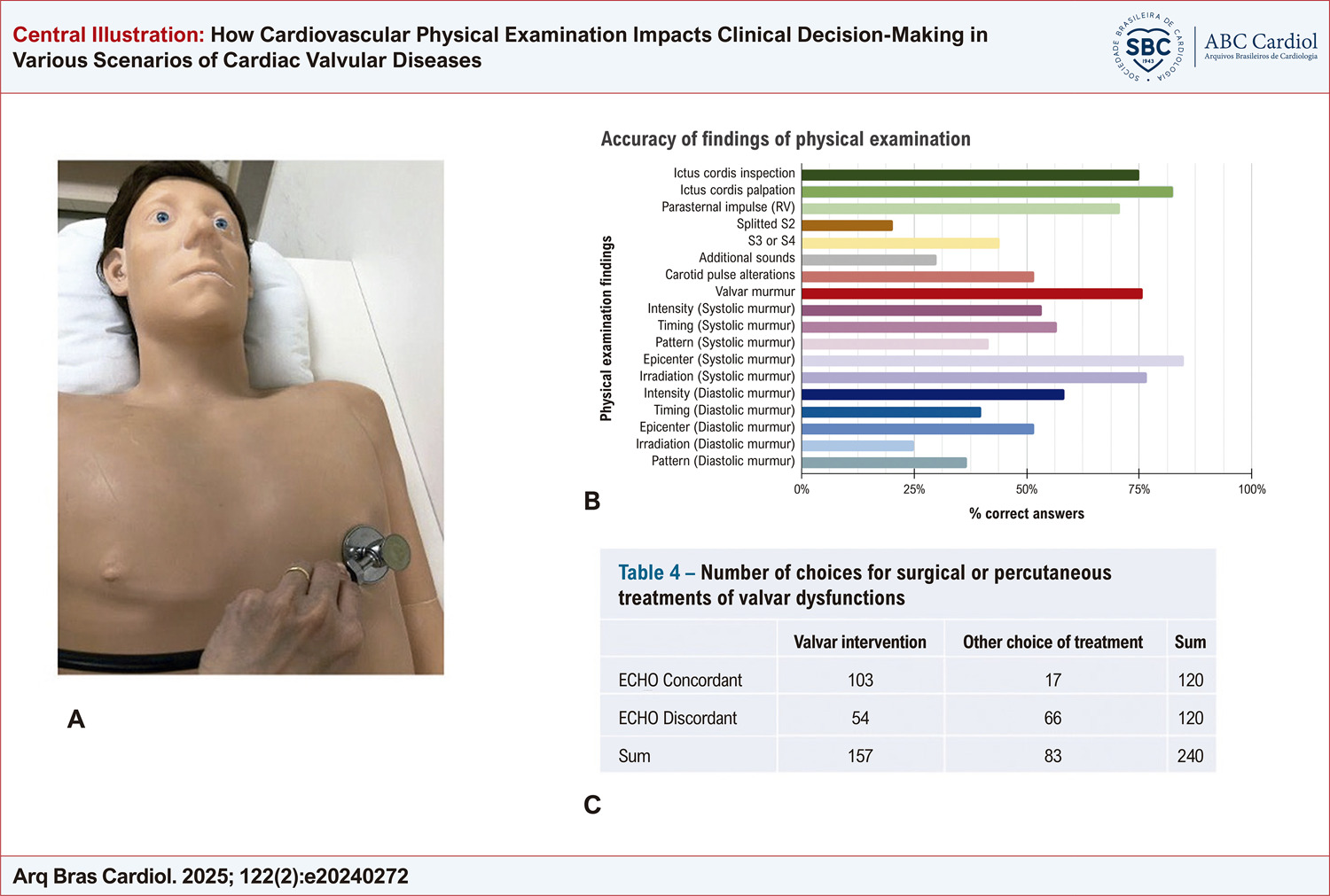
In their study, Teixeira et al. shed light on this pressing issue in modern medicine: the diminished emphasis on PE in clinical practice. This interventional study evaluated the impact of cardiovascular PE on clinical decision-making (CDM) in valvular disease scenarios. Sixty undergraduate students were exposed to four typical severe valvular disease scenarios (mitral stenosis [MS], mitral regurgitation [MR], aortic stenosis [AS], and aortic regurgitation [AR]), using a high-fidelity cardiopulmonary simulator in an objective structured clinical exam format. CDM-related questions were answered after reading the clinical synopsis and again after reviewing the echocardiogram (ECHO) report. Volunteers were randomly assigned to scenarios with or without PE before receiving an ECHO report, which was either consistent with symptoms and PE findings (Echo-concordant) or contained incomplete or misleading information (Echo-discordant). CDM was assessed based on responses regarding the type of valvular dysfunction, its etiology, confidence level in the diagnosis, requests for additional diagnostic tests, and treatment decisions. PE quality varied across valvular conditions, with systolic murmurs (AS, MR) recognized more accurately (>76%) than diastolic murmurs (MS, AR) (<60%), additional heart sounds (S3, S4) identified in 44% of cases, and MS showing the lowest detection accuracy. Overall diagnostic accuracy for identifying valvular dysfunction was high (kappa = 0.935, p<0.001), even when participants received ECHO-discordant reports. Volunteers who did not perform PE were less accurate in assessing the severity of valvular dysfunction after reviewing ECHO findings (p = 0.0047, kappa = 0.2887) and were less confident in their diagnosis. The confidence level in diagnosis increased only slightly (4%, p=0.03) after receiving ECHO reports in those who had the opportunity to conduct a PE. Surprisingly, a high number of complementary exams were requested regardless of PE performance, which influenced only the decision to perform cardiac catheterization. Final therapeutic decisions, however, were primarily guided by ECHO findings rather than PE (p=0.0607). This last result was somewhat expected and would likely occur in a postgraduate setting as well. Indeed, when evaluating the need for valvular intervention, a key consideration—besides symptomatic status—is assessing disease severity, which primarily depends on imaging or hemodynamic parameters.–

[…]
  • Clinical Decision – Making
  • Medical Education
  • Physical Examination
Read Full Article
Creative Commons Attribution (CC BY) Creative Commons license
28/04/2025 DOI: 10.36660/abc.20250124i Views 1
How Cardiovascular Physical Examination Impacts Clinical Decision-Making in Various Scenarios of Cardiac Valvular Diseases
ABC
Original Article

How Cardiovascular Physical Examination Impacts Clinical Decision-Making in Various Scenarios of Cardiac Valvular Diseases

Isabella Silveira Teixeira et al. Vinícius Lima Borges Natan Viola Henrique Turin Moreira … Antonio Pazin Filho André Schmidt José Antônio Marin-Neto Minna Moreira Dias Romano

Abstract

Background

Complementary diagnostic examinations have replaced the importance of Physical Examination (PE) in Clinical Decision-making (CDM).

Objective

To evaluate the impact of cardiovascular PE in scenarios of cardiac valvular diseases.

Methods

An interventional study with volunteers’ patients having or not having the opportunity to perform PE in scenarios of valvopathies. The PE was simulated in a high-fidelity cardiopulmonary simulator. Volunteers received questions about CDM before and after receiving an ECHO Concordant or ECHO Discordant report. Cohen´s kappa coefficient and square contingency tables compared diagnostic accuracy. ANOVA tests compared the number of requested tests; the significance level was set as p < 0.05.

Results

Sixty volunteers performed 239 clinical observations in 4 valvular dysfunctions. The diagnostic accuracy of valvular dysfunction was good (kappa = 0.935, p < 0.001). After receiving ECHO reports, the accuracy was worse without PE (p = 0.0047). The confidence level in diagnosis was 28.18% higher when PE was performed (p < 0.01). However, after receiving ECHO reports, diagnostic confidence levels were only 4% higher in the group with PE (p = 0.03). There were significantly more CATE requests when PE was not performed (p = 0.0326). The indication of valvular intervention was not related to having or not having the opportunity to perform PE (79 with PE vs 78 without PE, p = 0.0607), but was influenced by ECHO Concordant vs ECHO Discordant reports (p < 0.001).

Conclusions

Performing PE enhanced diagnosis confidence in valvulopathy scenarios and correct dysfunction grading. Treatment decisions were more based on ECHO reports than on PE when they were discordant, and requests for CATE increased when volunteers had no chance to perform PE.

  • Clinical Decision – Making
  • Echocardiography
  • Heart Valve Diseases
  • Physical Examination
Read Full Article
Creative Commons Attribution (CC BY) Creative Commons license
17/03/2025 DOI: 10.36660/abc.20240272i Views 3
Figure 1
ABC
Original Article

Deduction, Induction and the Art of Clinical Reasoning in Medical Education: Systematic Review and Bayesian Proposal

Marcos Roberto de-Sousa et al. Túlio Roberto Xavier de Aguiar

Abstract

Background

Clinical reasoning is at the core of medical practice and entangled in a conceptual confusion. The duality theory in probability allows to evaluate its objective and subjective aspects.

Objectives

To conduct a systematic review of the literature about clinical reasoning in decision making in medical education and to propose a “reasoning based on the Bayesian rule” (RBBR).

Methods

A systematic review on PubMed was conducted (until February 27, 2022), following a strict methodology, by a researcher experienced in systematic review. The RBBR, presented in the discussion section, was constructed in his undergraduate dissertation in Philosophy at Minas Gerais Federal University. Heart failure was used as example.

Results

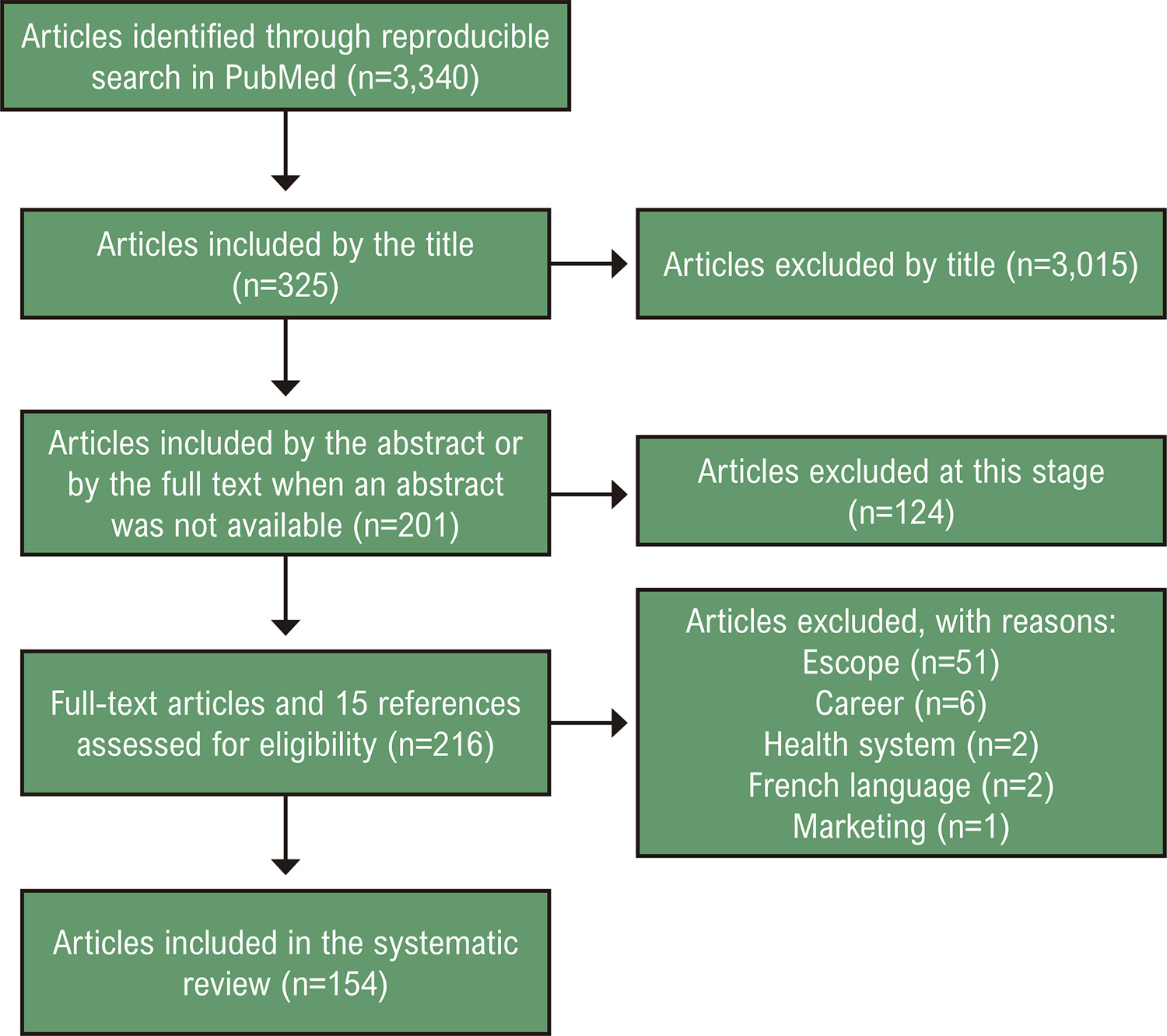
Of 3,340 articles retrieved, 154 were included: 24 discussing the uncertainty condition, 87 on vague concepts (case discussion, heuristics, list of cognitive biases, choosing wisely) subsumed under the term “art”, and 43 discussing the general idea of inductive or deductive reasoning. RBBR provides coherence and reproducibility rules, inference under uncertainty, and learning rule, and can incorporate those vague terms classified as “art”, arguments and evidence, from a subjective perspective about probability.

Conclusions

This systematic review shows that reasoning is grounded in uncertainty, predominantly probabilistic, and reviews possible errors of the hypothetico-deductive reasoning. RBBR is a two-step probabilistic reasoning that can be taught. The Bayes theorem is a linguistic tool, a general rule of reasoning, diagnosis, scientific communication and review of medical knowledge according to new evidence.

  • Bayes Theorem
  • Clinical Decision – Making
  • Education, Medical
  • Evidence-Based Medicine
  • Learning
  • Problem Solving
  • systematic review
Read Full Article
Creative Commons Attribution (CC BY) Creative Commons license
25/11/2022 DOI: 10.36660/abc.20220405 Views 1
Figure 1
ABC
Original Article

Teaching of Clinical Reasoning Guided by Illness Script Theory

Juliana de Cássia Vaz Oliveira et al. Aline Barbosa Peixoto Gustavo Eugênio Martins Marinho José Maria Peixoto

Abstract

Background

Teaching of clinical reasoning (CR) can be facilitated by educational strategies guided by illness script theory.

Objective

To evaluate the effects of an educational strategy guided by illness script theory on the diagnostic accuracy of chest pain in medical students.

Methods

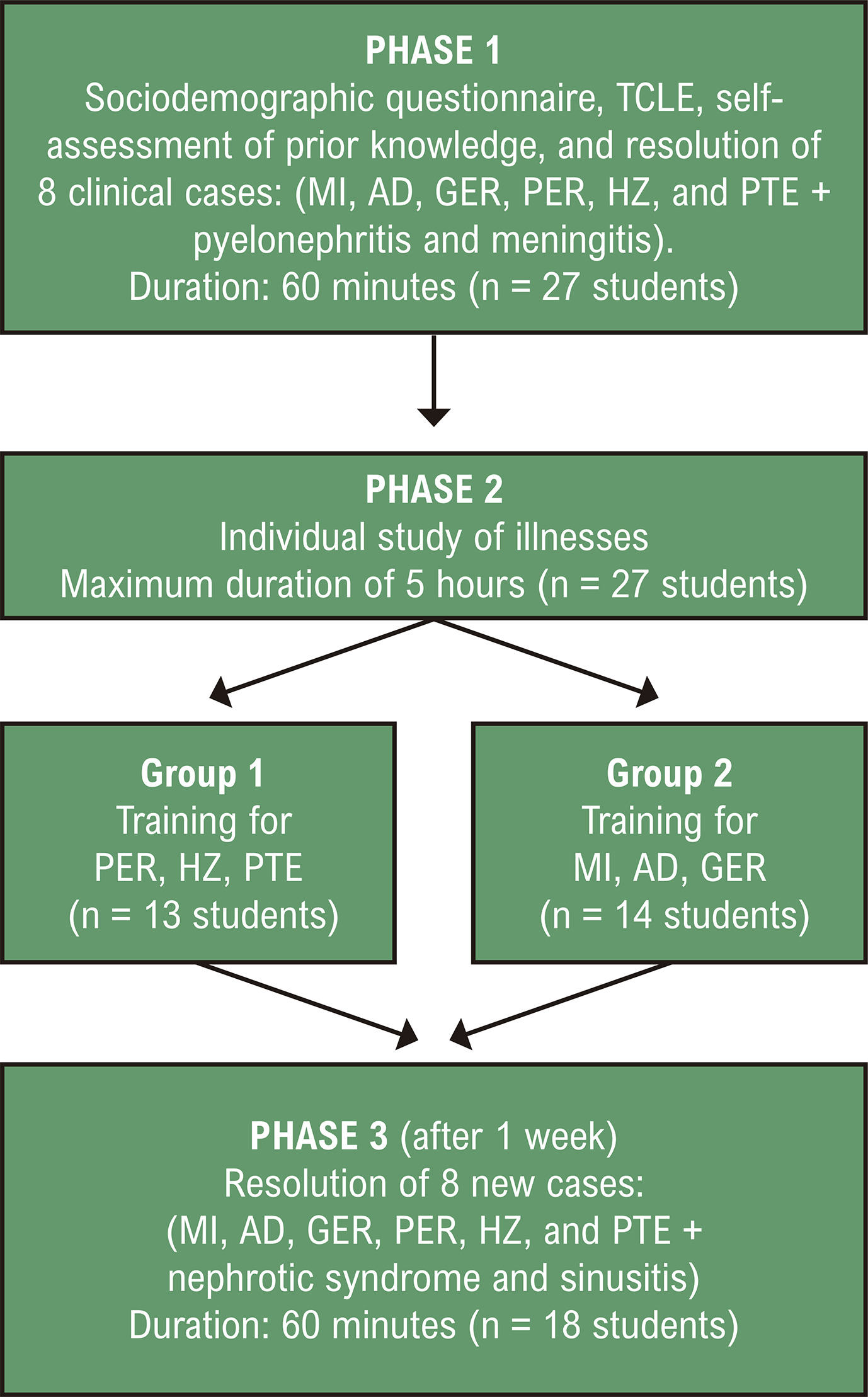
Experimental study in 3 phases, with 18 third-year medical students completing phase 3. Phases 1 and 2 had 27 students. In phase 1, each participant solved 8 clinical cases (6 of chest pain and 2 distractors). In phase 2, participants were divided into 2 groups, which distinctly trained 3 of the chest pain diagnoses from phase 1. In phase 3, after 1 week, each participant solved 8 new cases, with the same diagnoses as phase 1. Case resolution time and diagnostic accuracy were evaluated. The significance level adopted for statistical analysis was p < 0.05.

Results

In phase 3, both groups showed improved diagnostic accuracy and reduced case resolution time for the trained diagnoses, with no transfer of learning. For these diagnoses, the diagnostic accuracy scores in phases 1 and 3 were: group 1 = 1.00, IQR [0.00 to 1.00] versus 2.00, IQR [2.00 to 2.50], p = 0.017 and group 2 = 1.00, IQR [0.66 to 1.17] versus 3.00, IQR [1.33 to 3.00], p = 0.006. Case resolution times in seconds were: group 1: 485, IQR [450 to 583] versus 318, IQR [284 to 418], p = 0.027 and group 2: 655, IQR [543 to 740] versus 408, IQR [337 to 569], p = 0.010.

Conclusion

The proposed strategy seems to contribute to improved diagnostic accuracy, and it may be considered for teaching CR.

  • Cardiovascular Diseases
  • Clinical Decision – Making
  • Decision Making
  • Education,Medical
  • Learning
  • Students, Medical
Read Full Article
Creative Commons Attribution (CC BY) Creative Commons license
25/11/2022 DOI: 10.36660/abc.20220419 Views 1
ABC
Editorial

COVID-19 and Uncertainty: Lessons from the Frontline for Promoting Shared Decision Making

José Augusto Soares Barreto-Filho et al. André Veiga Luis Claudio Correia

COVID-19 has already become the largest and deadliest epidemic of the past hundred years. On a daily basis, healthcare professionals in the frontline are called upon to give answers and make decisions that directly affect the lives of infected patients, and scientists are summoned to the Herculean task of providing “effective medications” in record time for a recently discovered virus with devastating potential mortality. With a hitherto unseen avalanche of information, the debate on how to treat patients with COVID-19 has gone beyond the limits of the technical arena, taking on ideological and political aspects as well.

Science is based on facts. The fact is that we do not currently have an etiological treatment with proven efficacy and safety to combat SARS-CoV-2. At the moment, there are only promises in the pipeline. To exemplify, the most emblematic case of lack of rationality and scientific thinking is the polemic regarding chloroquine/hydroxychloroquine (CQ/HCQ) for treatment of COVID-19. CQ/HCQ is a drug that has been widely and successfully used in patients with malaria and systemic lupus erythematosus. Against COVID-19, the drug inhibits replication of SARS-CoV-2 in vitro , and it modulates the inflammatory cascade triggered by the virus. In vitro data demonstrate biological plausibility, but plausibility does not mean likelihood that a hypothesis is true. CQ/HCQ was, nevertheless, promoted to the category of “magic bullet” by a publication from France, whose methodology was characterized by high risk of bias and random error, meaning that it could not be defined as “scientific evidence.” This notwithstanding, the publication was overestimated, in an ideological manner, by the individuals who were least faithful to the precepts of the liturgy of science. Contaminated by this fallacy, feeling obligated to solve the pandemic magically, even presidents took on the role of drug advertisers, thus helping to viralize pseudoscience and amplify the false information problem.

[…]

  • Bioethics
  • Clinical Decision – Making
  • Coronavirus
  • COVID-19
  • Decision Making,Shared
  • Evidence-Based Medicine
  • Off Label Use
  • Pandemics
Read Full Article
Creative Commons Attribution (CC BY) Creative Commons license
28/08/2020 DOI: 10.36660/abc.20200582 Views 3
Figure 1
ABC
Review Article

Artificial Intelligence in Cardiology: Concepts, Tools and Challenges – “The Horse is the One Who Runs, You Must Be the Jockey”

Erito Marques de Souza Filho et al. Fernando de Amorim Fernandes Celine Lacerda de Abreu Soares Flavio Luiz Seixas … Alair Augusto Sarmet M.D. dos Santos Ronaldo Altenburg Gismondi Evandro Tinoco Mesquita Claudio Tinoco Mesquita

Abstract

The recent advances at hardware level and the increasing requirement of personalization of care associated with the urgent needs of value creation for the patients has helped Artificial Intelligence (AI) to promote a significant paradigm shift in the most diverse areas of medical knowledge, particularly in Cardiology, for its ability to support decision-making and improve diagnostic and prognostic performance. In this context, the present work does a non-systematic review of the main papers published on AI in Cardiology, focusing on its main applications, potential impacts and challenges.

  • Artificial Intelligence/trends
  • Cardiovascular Diseases
  • Clinical Decision – Making
  • Computer Systems/trends
  • Machine Learning/trends
Read Full Article
Creative Commons Attribution (CC BY) Creative Commons license
29/05/2020 DOI: 10.36660/abc.20180431
ABC
Editorial

Rational Use of Evidence-Based Medicine: Why We Resist So Much?

André Schmidt et al. Antonio Pazin-Filho

“Man is a rational animal who always loses his temper when he is called upon to act in accordance with the dictates of reason”

Oscar Wilde

[…]

  • Acute coronary syndrome
  • Clinical Decision – Making
  • Health Knowledge, Attitudes Practice, Evidence-Based Medicine
  • Myocardial Infarction
  • Prognosis
Read Full Article
Creative Commons Attribution (CC BY) Creative Commons license
15/07/2019 DOI: 10.5935/abc.20190100 Views 1
ABC
Editorial

Evidence based decision making between PCI and CABG

Carlos Collet

For the last five decades, coronary artery bypass grafting (CABG) surgery has been recommended for patients with unprotected left main (ULM) and multivessel coronary artery disease (MVD). In these populations, CABG reduces mortality compared to medical management. In patients with MVD, several randomized clinical trials established the superiority of CABG over percutaneous coronary interventions (PCI) in terms of hard clinical endpoints., In the ULM subgroup of the SYNTAX I trial, comparable outcomes between PCI and CABG were observed at five years. This finding triggered the design and execution of the EXCEL and NOBLE trials that confirmed equipoise in major adverse cardiovascular and cerebral events between PCI and CABG in patients with ULM coronary artery disease (CAD).,

The accumulation of evidence has allowed to better understand which patients may benefit from a determined revascularization strategy. In the current issue of the Journal, Negreiros de Andrade et al. present a study-level meta-analysis comparing clinical outcomes after PCI and CABG in patients with ULMCAD and MVD. The authors should be commended for the stratified analysis aiming at providing practical information for the cardiovascular community. Based on the current state of evidence we can state that 1) in patients with ULMCAD, PCI can be considered an alternative to CABG in patients with low anatomical complexity, and 2) patients with MVD have better clinical outcomes when treated with CABG. When these two populations were combined, the present meta-analysis showed an early (<30 days) benefit of PCI in terms of mortality and stroke, and long-term advantage of CABG in death and myocardial infarction.

[…]

  • Clinical Decision – Making
  • Coronary Vessels
  • Drug-Eluting Stents
  • Myocardial Revascularization/mortality
  • Percutaneous Coronary Intervention
  • Randomized Controlled Trials
  • Stents
Read Full Article
Creative Commons Attribution (CC BY) Creative Commons license
06/06/2019 DOI: 10.5935/abc.20190076 Views 1
ABC
Editorial

Toward a Patient-Centered, Data-Driven Cardiology

Antonio Luiz Ribeiro et al. Gláucia Maria Moraes de Oliveira

Beginning in the 1970s and 1980s, the emergence of randomized clinical trials and studies with large cohorts, associated with the development of the methodology for systematic reviews and meta-analyses, triggered a revolution in the way of thinking and performing healthcare practice. Evidence-based medicine (EBM), defined as the integration of the best research evidence with clinical experience and patient values, has become a new paradigm, orienting medical education and specialized publications. One of the principles of EBM was precisely the primacy of information obtained from randomized clinical trials and meta-analyses, which were placed at the top of an evidence hierarchy, valuing quantitative results more than clinical experience and expert opinion. Indeed, it has always been challenging for EBM to integrate empirical evidence with other types of medical knowledge, such as clinical expertise and pathophysiological rationale, or even with the preferences of individual patients.

The use of EBM in clinical practice also runs into the difficulty of finding robust evidence for all subgroups of clinical situations found in the real world, “gray areas” in which no reliable evidence can be obtained from the scientific literature to guide the physician in caring for his patient. Randomized clinical trials are expensive and generally require large study samples and long-term follow-up. There are several situations without evidence, or situations in which the evidence is inconsistent or of poor quality.

[…]

  • Access Health Technologies
  • Artificial Intelligence
  • Cardiology
  • Clinical Decision – Making
  • Diagnostic Equipment Digital
  • Evidence-Based Medicine/methods
  • Health Manager
  • Machine Learning/trends
  • Patient Centered Care
  • Physician-Patient Relations
Read Full Article
Creative Commons Attribution (CC BY) Creative Commons license
15/04/2019 DOI: 10.5935/abc.20190069 Views 2
ABC
Editorial

Cohort Studies with Mortality Data from the Brazilian Population: a Rising National Requirement

Thiago Veiga Jardim

Cohort studies assessing mortality predictors are extremely important to determine public health priorities and are a central issue in clinical decision making. These studies are particularly relevant in low-to-middle income countries whereas resources addressed to health care are limited and can be better managed. Nevertheless, traditionally epidemiological studies assessing the impact of different risk factors on mortality have historically been conducted in high-income countries.

Results from cohort studies conducted in the developed world have been extrapolated and widely used in developing countries. This can be an issue given population and disease management differences, reinforcing the need to increase publications of long-term follow-up cohort studies with mortality data from low-to-middle income countries.

[…]

  • Acute coronary syndrome
  • Clinical Decision – Making
  • Cohort Studies
  • Mortality
  • Public Health
  • Risk Factors
Read Full Article
Creative Commons Attribution (CC BY) Creative Commons license
01/03/2019 DOI: 10.5935/abc.20190038 Views 1
IJCS
Review Article

Performance of Diagnostic Tests for Intermediate Probabilities of Coronary Heart Disease: A Decision Making Analysis

Clarissa Antunes Thiers et al. João Luis Barbosa Bernardo Rangel Tura Edilson Fernandes Arruda Basilio de Bragança Pereira

Abstract

Patients with intermediate probability of coronary disease are a diagnostic challenge and it is precisely in this population where the degree of uncertainty is greater that the diagnostic tests have their greater applicability. However, according to the current definition, subjecting to tests a population with a disease probability between 10 and 90% can generate unnecessary tests and misleading results. Knowing the characteristics of each test, as well as risks and benefits of drug treatment for coronary disease and combining this information through diagnostic thresholds brings a new perspective to decision making. To review the origin of the currently recommended concepts of intermediate probability and to determine the thresholds for diagnosis and treatment of noninvasive tests and, based on them, propose a new concept of intermediate probability of coronary disease. Through the bibliographic review, meta-analyses were extracted in which data of sensitivity, specificity, positive and negative likelihood ratio, risks and benefits of the tests and treatment were provided. Using an algorithm developed by Pauker et al. it was possible to obtain the diagnostic and treatment thresholds adjusted for each tests in question. The concept of intermediate probability of coronary disease is quite broad, ranging, according to the authors, between 10 and 90%, 1 and 92%, 15 and 85%, with different rationale. Considering the discriminatory power of each test, risks and treatment benefits, the diagnostic and treatment thresholds were defined for exercise testing (22-58%), eco-stress (10-72%), myocardial scintigraphy (12-80%), nuclear magnetic resonance (16-80%) and coronary angiotomography (6.7-81%). The decision to submit to diagnostic tests should be individualized, taking into account the diagnostic and treatment thresholds of each method in question.

  • Clinical Decision – Making
  • Coronary Artery Disease
  • Diagnosis
  • Meta-Analysis
  • Probability
Read Full Article
Creative Commons Attribution (CC BY) Creative Commons license
21/09/2017 DOI: 10.5935/2359-4802.20170071 Views 1

How to cite this article

EndNote RIS

Electronic Document Format (Vancouver)

Cabral S. Revisiting a Timeless Skill: The Physical Examination in the Age of Technology-Driven Medicine. Arquivos Brasileiros de Cardiologia 2025;122(2):e20250124.

Electronic Document Format (ABNT)

Cabral, Sofia. Revisiting a Timeless Skill: The Physical Examination in the Age of Technology-Driven Medicine. Arquivos Brasileiros de Cardiologia, v. 122, n. 2, e20250124, Apr. 2025.

Electronic Document Format (APA)

Cabral, S. (2025). Revisiting a Timeless Skill: The Physical Examination in the Age of Technology-Driven Medicine. Arquivos Brasileiros de Cardiologia, 122(2), e20250124.

Electronic Document Format (ISO)

Cabral, Sofia. Revisiting a Timeless Skill: The Physical Examination in the Age of Technology-Driven Medicine. Arquivos Brasileiros de Cardiologia [online]. 2025, vol. 122, n. 2, [cited 2026-10-14], e20250124. Available from: <https://journals.cardiol.br/en/article/revisiting-a-timeless-skill-the-physical-examination-in-the-age-of-technology-driven-medicine/>. ISSN 0066-782X

EndNote RIS

Electronic Document Format (Vancouver)

Teixeira IS, Borges VL, Viola N, Moreira HT, Pazin Filho A, Schmidt A, Marin-Neto JA, et al. How Cardiovascular Physical Examination Impacts Clinical Decision-Making in Various Scenarios of Cardiac Valvular Diseases. Arquivos Brasileiros de Cardiologia 2025;122(2):e20240272.

Electronic Document Format (ABNT)

Teixeira, Isabella Silveira; Borges, Vinícius Lima; Viola, Natan; Moreira, Henrique Turin; Pazin Filho, Antonio; Schmidt, André; Marin-Neto, José Antônio; Romano, Minna Moreira Dias. How Cardiovascular Physical Examination Impacts Clinical Decision-Making in Various Scenarios of Cardiac Valvular Diseases. Arquivos Brasileiros de Cardiologia, v. 122, n. 2, e20240272, Mar. 2025.

Electronic Document Format (APA)

Teixeira, I. S., Borges, V. L., Viola, N., Moreira, H. T., Pazin Filho, A., Schmidt, A., Marin-Neto, J. A., & Romano, M. M. D. (2025). How Cardiovascular Physical Examination Impacts Clinical Decision-Making in Various Scenarios of Cardiac Valvular Diseases. Arquivos Brasileiros de Cardiologia, 122(2), e20240272.

Electronic Document Format (ISO)

Teixeira, Isabella Silveira and Borges, Vinícius Lima and Viola, Natan and Moreira, Henrique Turin and Pazin Filho, Antonio and Schmidt, André and Marin-Neto, José Antônio and Romano, Minna Moreira Dias. How Cardiovascular Physical Examination Impacts Clinical Decision-Making in Various Scenarios of Cardiac Valvular Diseases. Arquivos Brasileiros de Cardiologia [online]. 2025, vol. 122, n. 2, [cited 2026-10-14], e20240272. Available from: <https://journals.cardiol.br/en/article/how-cardiovascular-physical-examination-impacts-clinical-decision-making-in-various-scenarios-of-cardiac-valvular-diseases/>. ISSN 0066-782X

EndNote RIS

Electronic Document Format (Vancouver)

de-Sousa MR, Aguiar TRX. Deduction, Induction and the Art of Clinical Reasoning in Medical Education: Systematic Review and Bayesian Proposal. Arquivos Brasileiros de Cardiologia 2022;119(5 suppl 1):27-34.

Electronic Document Format (ABNT)

de-Sousa, Marcos Roberto; Aguiar, Túlio Roberto Xavier de. Deduction, Induction and the Art of Clinical Reasoning in Medical Education: Systematic Review and Bayesian Proposal. Arquivos Brasileiros de Cardiologia, v. 119, n. 5 suppl 1, p. 27-34, Nov. 2022.

Electronic Document Format (APA)

de-Sousa, M. R., & Aguiar, T. R. X. (2022). Deduction, Induction and the Art of Clinical Reasoning in Medical Education: Systematic Review and Bayesian Proposal. Arquivos Brasileiros de Cardiologia, 119(5 suppl 1), 27-34.

Electronic Document Format (ISO)

de-Sousa, Marcos Roberto and Aguiar, Túlio Roberto Xavier de. Deduction, Induction and the Art of Clinical Reasoning in Medical Education: Systematic Review and Bayesian Proposal. Arquivos Brasileiros de Cardiologia [online]. 2022, vol. 119, n. 5 suppl 1, [cited 2026-10-14], pp. 27-34. Available from: <https://journals.cardiol.br/en/article/deduction-induction-and-the-art-of-clinical-reasoning-in-medical-education-systematic-review-and-bayesian-proposal/>. ISSN 0066-782X

EndNote RIS

Electronic Document Format (Vancouver)

Oliveira JCV, Peixoto AB, Marinho GEM, Peixoto JM. Teaching of Clinical Reasoning Guided by Illness Script Theory. Arquivos Brasileiros de Cardiologia 2022;119(5 suppl 1):14-21.

Electronic Document Format (ABNT)

Oliveira, Juliana de Cássia Vaz; Peixoto, Aline Barbosa; Marinho, Gustavo Eugênio Martins; Peixoto, José Maria. Teaching of Clinical Reasoning Guided by Illness Script Theory. Arquivos Brasileiros de Cardiologia, v. 119, n. 5 suppl 1, p. 14-21, Nov. 2022.

Electronic Document Format (APA)

Oliveira, J. C. V., Peixoto, A. B., Marinho, G. E. M., & Peixoto, J. M. (2022). Teaching of Clinical Reasoning Guided by Illness Script Theory. Arquivos Brasileiros de Cardiologia, 119(5 suppl 1), 14-21.

Electronic Document Format (ISO)

Oliveira, Juliana de Cássia Vaz and Peixoto, Aline Barbosa and Marinho, Gustavo Eugênio Martins and Peixoto, José Maria. Teaching of Clinical Reasoning Guided by Illness Script Theory. Arquivos Brasileiros de Cardiologia [online]. 2022, vol. 119, n. 5 suppl 1, [cited 2026-10-14], pp. 14-21. Available from: <https://journals.cardiol.br/en/article/teaching-of-clinical-reasoning-guided-by-illness-script-theory/>. ISSN 0066-782X

EndNote RIS

Electronic Document Format (Vancouver)

Barreto-Filho JAS, Veiga A, Correia LC. COVID-19 and Uncertainty: Lessons from the Frontline for Promoting Shared Decision Making. Arquivos Brasileiros de Cardiologia 2020;115(2):149-51.

Electronic Document Format (ABNT)

Barreto-Filho, José Augusto Soares; Veiga, André; Correia, Luis Claudio. COVID-19 and Uncertainty: Lessons from the Frontline for Promoting Shared Decision Making. Arquivos Brasileiros de Cardiologia, v. 115, n. 2, p. 149-151, Aug. 2020.

Electronic Document Format (APA)

Barreto-Filho, J. A. S., Veiga, A., & Correia, L. C. (2020). COVID-19 and Uncertainty: Lessons from the Frontline for Promoting Shared Decision Making. Arquivos Brasileiros de Cardiologia, 115(2), 149-151.

Electronic Document Format (ISO)

Barreto-Filho, José Augusto Soares and Veiga, André and Correia, Luis Claudio. COVID-19 and Uncertainty: Lessons from the Frontline for Promoting Shared Decision Making. Arquivos Brasileiros de Cardiologia [online]. 2020, vol. 115, n. 2, [cited 2026-10-14], pp. 149-151. Available from: <https://journals.cardiol.br/en/article/covid-19-and-uncertainty-lessons-from-the-frontline-for-promoting-shared-decision-making/>. ISSN 0066-782X

EndNote RIS

Electronic Document Format (Vancouver)

Souza Filho EM, Fernandes FA, Soares CLA, Seixas FL, Santos AASM, Gismondi RA, Mesquita ET, et al. Artificial Intelligence in Cardiology: Concepts, Tools and Challenges – “The Horse is the One Who Runs, You Must Be the Jockey”. Arquivos Brasileiros de Cardiologia 2020;114(4):718-25.

Electronic Document Format (ABNT)

Souza Filho, Erito Marques de; Fernandes, Fernando de Amorim; Soares, Celine Lacerda de Abreu; Seixas, Flavio Luiz; Santos, Alair Augusto Sarmet M.D. dos; Gismondi, Ronaldo Altenburg; Mesquita, Evandro Tinoco; Mesquita, Claudio Tinoco. Artificial Intelligence in Cardiology: Concepts, Tools and Challenges – “The Horse is the One Who Runs, You Must Be the Jockey”. Arquivos Brasileiros de Cardiologia, v. 114, n. 4, p. 718-725, May. 2020.

Electronic Document Format (APA)

Souza Filho, E. M. , Fernandes, F. A., Soares, C. L. A., Seixas, F. L., Santos, A. A. S. M. , Gismondi, R. A., Mesquita, E. T., & Mesquita, C. T. (2020). Artificial Intelligence in Cardiology: Concepts, Tools and Challenges – “The Horse is the One Who Runs, You Must Be the Jockey”. Arquivos Brasileiros de Cardiologia, 114(4), 718-725.

Electronic Document Format (ISO)

Souza Filho, Erito Marques de and Fernandes, Fernando de Amorim and Soares, Celine Lacerda de Abreu and Seixas, Flavio Luiz and Santos, Alair Augusto Sarmet M.D. dos and Gismondi, Ronaldo Altenburg and Mesquita, Evandro Tinoco and Mesquita, Claudio Tinoco. Artificial Intelligence in Cardiology: Concepts, Tools and Challenges – “The Horse is the One Who Runs, You Must Be the Jockey”. Arquivos Brasileiros de Cardiologia [online]. 2020, vol. 114, n. 4, [cited 2026-10-14], pp. 718-725. Available from: <https://journals.cardiol.br/en/article/artificial-intelligence-in-cardiology-concepts-tools-and-challenges-the-horse-is-the-one-who-runs-you-must-be-the-jockey/>. ISSN 0066-782X

EndNote RIS

Electronic Document Format (Vancouver)

Schmidt A, Pazin-Filho A. Rational Use of Evidence-Based Medicine: Why We Resist So Much?. Arquivos Brasileiros de Cardiologia 2019;112(6):727-8.

Electronic Document Format (ABNT)

Schmidt, André; Pazin-Filho, Antonio. Rational Use of Evidence-Based Medicine: Why We Resist So Much?. Arquivos Brasileiros de Cardiologia, v. 112, n. 6, p. 727-728, Jul. 2019.

Electronic Document Format (APA)

Schmidt, A., & Pazin-Filho, A. (2019). Rational Use of Evidence-Based Medicine: Why We Resist So Much?. Arquivos Brasileiros de Cardiologia, 112(6), 727-728.

Electronic Document Format (ISO)

Schmidt, André and Pazin-Filho, Antonio. Rational Use of Evidence-Based Medicine: Why We Resist So Much?. Arquivos Brasileiros de Cardiologia [online]. 2019, vol. 112, n. 6, [cited 2026-10-14], pp. 727-728. Available from: <https://journals.cardiol.br/en/article/rational-use-of-evidence-based-medicine-why-we-resist-so-much/>. ISSN 0066-782X

EndNote RIS

Electronic Document Format (Vancouver)

Collet C. Evidence based decision making between PCI and CABG. Arquivos Brasileiros de Cardiologia 2019;112(5):524-5.

Electronic Document Format (ABNT)

Collet, Carlos. Evidence based decision making between PCI and CABG. Arquivos Brasileiros de Cardiologia, v. 112, n. 5, p. 524-525, Jun. 2019.

Electronic Document Format (APA)

Collet, C. (2019). Evidence based decision making between PCI and CABG. Arquivos Brasileiros de Cardiologia, 112(5), 524-525.

Electronic Document Format (ISO)

Collet, Carlos. Evidence based decision making between PCI and CABG. Arquivos Brasileiros de Cardiologia [online]. 2019, vol. 112, n. 5, [cited 2026-10-14], pp. 524-525. Available from: <https://journals.cardiol.br/en/article/evidence-based-decision-making-between-pci-and-cabg/>. ISSN 0066-782X

EndNote RIS

Electronic Document Format (Vancouver)

Ribeiro AL, Oliveira GMM. Toward a Patient-Centered, Data-Driven Cardiology. Arquivos Brasileiros de Cardiologia 2019;112(4):371-3.

Electronic Document Format (ABNT)

Ribeiro, Antonio Luiz; Oliveira, Gláucia Maria Moraes de. Toward a Patient-Centered, Data-Driven Cardiology. Arquivos Brasileiros de Cardiologia, v. 112, n. 4, p. 371-373, Apr. 2019.

Electronic Document Format (APA)

Ribeiro, A. L., & Oliveira, G. M. M. (2019). Toward a Patient-Centered, Data-Driven Cardiology. Arquivos Brasileiros de Cardiologia, 112(4), 371-373.

Electronic Document Format (ISO)

Ribeiro, Antonio Luiz and Oliveira, Gláucia Maria Moraes de. Toward a Patient-Centered, Data-Driven Cardiology. Arquivos Brasileiros de Cardiologia [online]. 2019, vol. 112, n. 4, [cited 2026-10-14], pp. 371-373. Available from: <https://journals.cardiol.br/en/article/toward-a-patient-centered-data-driven-cardiology/>. ISSN 0066-782X

EndNote RIS

Electronic Document Format (Vancouver)

Jardim TV. Cohort Studies with Mortality Data from the Brazilian Population: a Rising National Requirement. Arquivos Brasileiros de Cardiologia 2019;112(3):238-9.

Electronic Document Format (ABNT)

Jardim, Thiago Veiga. Cohort Studies with Mortality Data from the Brazilian Population: a Rising National Requirement. Arquivos Brasileiros de Cardiologia, v. 112, n. 3, p. 238-239, Feb. 2019.

Electronic Document Format (APA)

Jardim, T. V. (2019). Cohort Studies with Mortality Data from the Brazilian Population: a Rising National Requirement. Arquivos Brasileiros de Cardiologia, 112(3), 238-239.

Electronic Document Format (ISO)

Jardim, Thiago Veiga. Cohort Studies with Mortality Data from the Brazilian Population: a Rising National Requirement. Arquivos Brasileiros de Cardiologia [online]. 2019, vol. 112, n. 3, [cited 2026-10-14], pp. 238-239. Available from: <https://journals.cardiol.br/en/article/cohort-studies-with-mortality-data-from-the-brazilian-population-a-rising-national-requirement/>. ISSN 0066-782X

EndNote RIS

Electronic Document Format (Vancouver)

Thiers CA, Barbosa JL, Tura BR, Arruda EF, Pereira BB. Performance of Diagnostic Tests for Intermediate Probabilities of Coronary Heart Disease: A Decision Making Analysis. International Journal of Cardiovascular Sciences 2017;30(6):526-32.

Electronic Document Format (ABNT)

Thiers, Clarissa Antunes; Barbosa, João Luis; Tura, Bernardo Rangel; Arruda, Edilson Fernandes; Pereira, Basilio de Bragança. Performance of Diagnostic Tests for Intermediate Probabilities of Coronary Heart Disease: A Decision Making Analysis. International Journal of Cardiovascular Sciences, v. 30, n. 6, p. 526-532, Sep. 2017.

Electronic Document Format (APA)

Thiers, C. A., Barbosa, J. L., Tura, B. R., Arruda, E. F., & Pereira, B. B. (2017). Performance of Diagnostic Tests for Intermediate Probabilities of Coronary Heart Disease: A Decision Making Analysis. International Journal of Cardiovascular Sciences, 30(6), 526-532.

Electronic Document Format (ISO)

Thiers, Clarissa Antunes and Barbosa, João Luis and Tura, Bernardo Rangel and Arruda, Edilson Fernandes and Pereira, Basilio de Bragança. Performance of Diagnostic Tests for Intermediate Probabilities of Coronary Heart Disease: A Decision Making Analysis. International Journal of Cardiovascular Sciences [online]. 2017, vol. 30, n. 6, [cited 2026-10-14], pp. 526-532. Available from: <https://journals.cardiol.br/en/article/performance-of-diagnostic-tests-for-intermediate-probabilities-of-coronary-heart-disease-a-decision-making-analysis/>. ISSN 2359-4802

  • About ABC Family
  • Internal Regulation
  • Editorial Board
  • Brazilian Society of Cardiology (SBC)

Issues

SBC Guidelines

  • Videos
  • Podcasts
  • News