ABC Family Arquivos Brasileiros de Cardiologia International Journal of Cardiovascular Sciences ABC Heart Failure & Cardiomyopathy ABC Imagem Cardiovascular
Português English
ABC Family
Português English
  • About
    • About ABC Family
    • Internal Regulation
    • Editorial Board
    • Brazilian Society of Cardiology (SBC)
  • Issues
  • SBC Guidelines
  • Content
    • Videos
    • Podcasts
    • News
  • About
    • About ABC Family
    • Internal Regulation
    • Editorial Board
    • Brazilian Society of Cardiology (SBC)
  • Issues
  • SBC Guidelines
  • Content
    • Videos
    • Podcasts
    • News

ABC Family

  • ABC Family
  • Arquivos Brasileiros de Cardiologia
  • International Journal of Cardiovascular Sciences
  • ABC Heart Failure & Cardiomyopathy
  • ABC Imagem Cardiovascular
Search in

No content found.

Journals
Ordering
Article types
Others

  1. Home
  2. Keyword: Recurrence
ABC
Editorial

Recurrent Pericarditis: A Manifestation of Systemic Inflammation?

Marcio Roberto Moraes Carvalho

Recurrent pericarditis represents one of the most challenging manifestations of pericardial diseases, due to its impact on quality of life, the prolonged use of anti-inflammatory therapies, and the risk of progression to refractoriness., Although classically described as an episodic condition, evidence indicates that, in a significant proportion of cases, recurrence may reflect persistent underlying systemic inflammation, often of an autoinflammatory nature, not fully captured by conventional inflammatory markers., In this context, recurrent pericarditis has evolved from a local approach to a systemic entity; inflammasome and interleukin-1 activation support more severe and recurrent phenotypes.–

The Systemic Immune-Inflammation Index (SII), calculated as SII = (platelets × neutrophils)/lymphocytes, integrates central components of systemic inflammation and the immune response, reflecting the balance between innate and adaptive immunity and platelet activation.– It differs from composite diagnostic scores, such as the INFLA-score. The SII constitutes a continuous quantitative biomarker, intended for estimating the underlying systemic inflammatory burden and for temporal monitoring of immuno-inflammatory activity.–

[…]

  • Pericarditis
  • Recurrence
  • Systemic, Inflammation
Read Full Article
Creative Commons Attribution (CC BY) Creative Commons license
17/04/2026 DOI: 10.36660/abc.20260127i
ABCIC
Case Report

Recurrent Constrictive Pericarditis after Pericardiectomy: Case Report

Eduardo Cavalcanti Lapa Santos et al. Brivaldo Markman Filho Sandro Gonçalves de Lima Andréa Bezerra de Melo da Silveira Lordsleem … Arthur Cesário Holanda Fernanda Mariz Queiroga Pedrosa

[…]

  • Myocardium/atrophy
  • Pericardiectomy
  • Pericarditis, Constrictive
  • Recurrence
Read Full Article
Creative Commons Attribution (CC BY) Creative Commons license
20/01/2022 DOI: 10.5935/2318-8219.20170027 Views 1
ABC
Letter to the Editor

Recurrent Takotsubo Cardiomyopathy: A Puzzle Yet to be Solved

Kenan Yalta et al. Caglar Kaya

Reply

First, we thank the authors for the comments regarding our recent article in Arquivos Brasileiros de Cardiologia entitled “Factors Associated with Recurrence in Takotsubo Syndrome: A Systematic Review”. In the letter, the authors made some interesting additional comments regarding the mechanisms of Takotsubo recurrence related to mechanical triggers related to mid-ventricular gradient that may be related to associated hypertrophic cardiomyopathy (HCM) and a second mechanism related to severe adrenergic discharge.

One question they posed was related to the incidence of HCM and hypertensive heart disease in the data we analyzed. Actually, in the original papers that were revised, the authors did not mention HCM or hypertensive heart disease incidence. Some patients with Takotsubo Syndrome (TS) may present with systolic anterior motion of the mitral valve and ventricular obstruction; it is sometimes difficult to determine whether these features are related to TS or associated to HCM or even their combination and the clinic, electrocardiographic and image follow-up may reveal the diagnosis., About the impact of the surgical reconstruction on recurrence, in a brief review of literature we found one article describing a case of ventricular reconstruction in a female who remained with apical aneurism and recurrent embolic events. Therefore, in the case of permanent ventricular outflow obstruction in HCM who has TS, one may consider the indication of the HCM guidelines for surgical intervention.

[…]

  • Recurrence
  • systematic review
  • Takotsubo Cardiomyopathy
  • Takotsubo syndrome
Read Full Article
Creative Commons Attribution (CC BY) Creative Commons license
28/09/2020 DOI: 10.36660/abc.20200140 Views 1
Figure 1
ABC
Original Article

Factors Associated with Recurrence in Takotsubo Syndrome: A Systematic Review

Felipe Alverenga Duarte Campos et al. Luiz Eduardo Fonteles Ritt João Paulo Soares Costa Constança Margarida Cruz … Gilson Soares Feitosa-Filho Queila Borges de Oliveira Eduardo Sahade Darzé

Abstract

Background:

Takotsubo syndrome (TTS) is characterized by a temporary systolic dysfunction of the left ventricle (LV) related to a stressful event. However, the factors associated with its recurrence are still not well established.

Objective:

To analyze the main factors associated with TTS recurrence.

Methods:

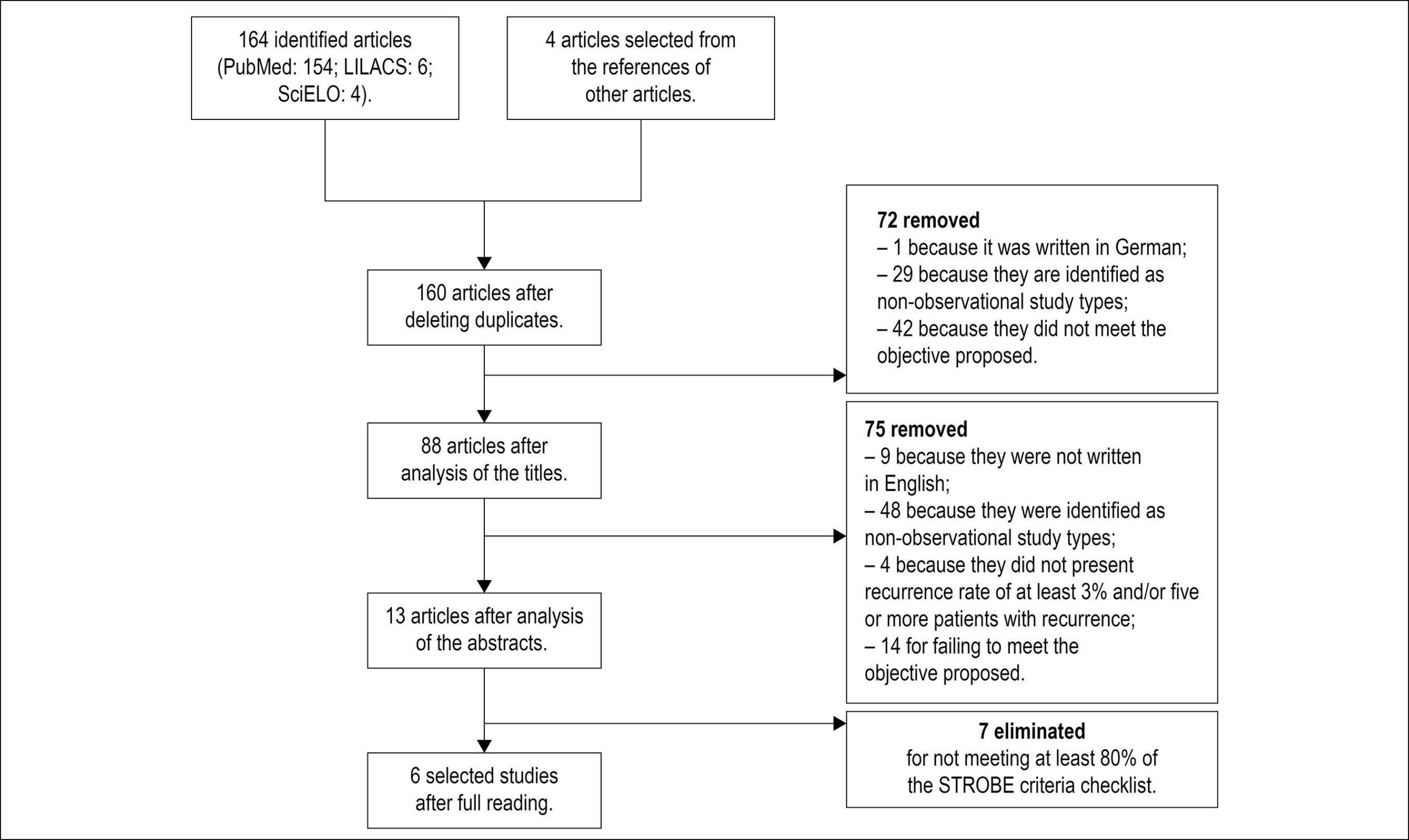
A systematic review was performed using the PRISMA model. Observational studies, published between January 2008 and October 2017, which presented a recurrence rate of at least 3% and/or 5 or more patients with recurrence, and who met at least 80% of the STROBE criteria were included.

Results:

six articles reached the criteria to compose this systematic review. The recurrence rate ranged from 1 to 3.5% per year (global recurrence rate 3.8%). One study associated higher recurrence rate with the female gender, four reported the time between the first and second episodes, one study associated body mass index (BMI) and hypercontractility of the LV middle anterior wall to a higher recurrence rate. No association between recurrence and electrocardiographic changes were determined. Beta-blockers use was not associated with recurrence rates.

Conclusions:

Female gender, time from the first episode of the syndrome, low BMI and midventricular obstruction were reported as potential predictors of TTS recurrence.

  • Recurrence
  • Takotsubo Cardiomyopathy
  • Takotsubo syndrome
Read Full Article
Creative Commons Attribution (CC BY) Creative Commons license
07/02/2020 DOI: 10.36660/abc.20180377
ABC
Editorial

Left Atrial Stiffness, a Marker of Atrial Cardiomyopathy, and Atrial Fibrillation – Relationships and Predictors for Procedure Success after Catheter Ablation

Tan Chen Wu

Over the past years, catheter ablation (CA) for atrial fibrillation (AF) has established itself as a well-recognized strategy in the management of patients with AF and an important option for rhythm control. Although CA is more effective than antiarrhythmic drug therapy, AF recurrences are common during the follow-up.

Late recurrence, during the first 9 months after the blanking period, occurs in 25%-40% of cases and is predominantly linked to the recovery of electrical conduction between the pulmonary veins (PVs) and the left atrium (LA), irrespective of the type of AF. The incidence of very late recurrence (after more than 12 months postablation) has been shown to be higher than previously expected, with an annual recurrence rate estimated at 7.6%. Bunch et al. reported AF recurrence rates ranging from 52% (≤ 50 years + paroxysmal AF) to 75% (> 80 years + paroxysmal AF). In a series of 509 consecutive patients undergoing paroxysmal AF ablation by Teunissen et al., after a single procedure, antiarrhythmic drugs free success rate was 41.3%. The predominant mechanism of very late recurrence includes, in addition to the PV connection, the development of non-PV triggers, and development and maturation of substrate. The predictors appears to be the nonparoxysmal form of AF at baseline, organic heart disease, advanced age, and obesity.

[…]

  • Atrial Fibrillation
  • Atrial Function, Left
  • Atrial Remodeling
  • Catheter Ablation
  • Recurrence
  • Treatment Outcome
Read Full Article
Creative Commons Attribution (CC BY) Creative Commons license
06/06/2019 DOI: 10.5935/abc.20190087 Views 1
Figure 1
ABC
Original Article

Predictors of Atrial Fibrillation Recurrence in Hyperthyroid and Euthyroid Patients

Muhammet Gürdoğan et al. Hasan Ari Erhan Tenekecioğlu Selma Ari … Tahsin Bozat Vedat Koca Mehmet Melek

Background:

Atrial fibrillation (AF) is the most common arrhythmia in adults, and is encountered in 10-15% of the patients with hyperthyroidism. Unless euthyroidism is restored, pharmacological or electrical cardioversion is controversial in patients with AF who remain hyperthyroid.

Objective:

The aim of this study was to assess the efficacy of electrical cardioversion and predictors of AF recurrence in hyperthyroid and euthyroid patients.

Methods:

The study included 33 hyperthyroid (21 males) and 48 euthyroid (17 males) patients with persistent AF. The patients were sedated with intravenous midazolam before undergoing electrical cardioversion delivered by synchronized biphasic shocks. Rates of AF recurrence were recorded.

Results:

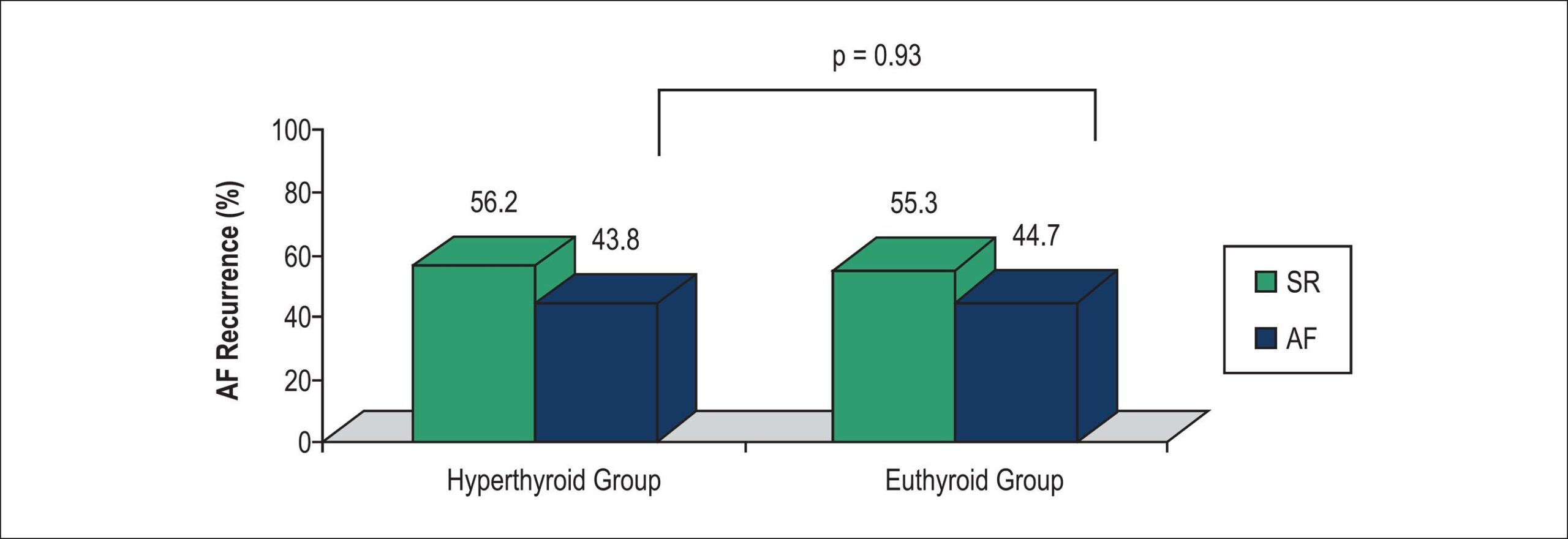
Mean follow-up was 23.63 ± 3.74 months in the hyperthyroid group and 22.78 ± 3.15 months in the euthyroid group (p = 0.51). AF recurred in 14 (43.8%) and 21 (44.7%) patients in each group, respectively (p = 0.93). Multivariate regression analysis in each group showed that AF duration was the only predictor of AF recurrence, with odds ratios of 1.38 (95% confidence interval [CI] = 1.05 – 1.82, p = 0.02) in the hyperthyroid group and 1.42 (95% CI = 1.05 – 1.91, p= 0.02) in the euthyroid group.

Conclusion:

Rates of long-term AF recurrence were similar in successfully cardioverted hyperthyroid and euthyroid patients. The only predictor of AF recurrence in both groups was AF duration.

  • Arrhythmias Cardiac
  • Atrial Fibrillation
  • Electric Countershock
  • Hyperthyreoidism
  • Recurrence
Read Full Article
Creative Commons Attribution (CC BY) Creative Commons license
26/01/2016 DOI: 10.5935/abc.20160013
Radiofrequency ablation of paroxysmal atrial fibrillation: factors determining long-term clinical efficacy
ABC
Artigo Original

Radiofrequency ablation of paroxysmal atrial fibrillation: factors determining long-term clinical efficacy

Raul José Pádua Sartini et al. Maurício Ibrahim Scanavacca Eduardo Sosa Luiz Felipe Moreira … Sissy Lara Carina Hardy Francisco Darrieux Denise Hachul

BACKGROUND: Most of the studies on this subject have reported predictors of recurrence of atrial fibrillation after catheter ablation with relatively short follow-up periods. OBJECTIVE: To retrospectively evaluate predictors of long-term recurrence of paroxysmal atrial fibrillation (AF) in patients undergoing pulmonary vein isolation following one single procedure. METHODS: The authors studied a total of 139 patients (102 men; mean age of 55 ± 12 years) undergoing radiofrequency ablation using the ostial or extra-ostial techniques for left atrial approach, combined or not with cavotricuspid isthmus ablation (CTI). Pre, intra and post-ablation variables were evaluated using univariate and multivariate analyses to determine the predictors of recurrence of AF after one procedure. RESULTS: After a 33 ± 12-month follow-up, we observed that a longer time of history of AF, use of more antiarrhythmic drugs, and recurrence of AF within 60 days post-procedure increased the risk of long-term recurrence of AF. On the other hand, the association of atrial flutter and concomitant CTI ablation reduced the risk of recurrence of AF. CONCLUSION: Clinical variables such as time of history of AF and a larger number of antiarrhythmic drugs already used influenced the outcomes of catheter ablation. In patients with associated atrial flutter, simultaneous CTI block significantly reduced the long-term recurrence of atrial fibrillation.

  • Atrial Fibrillation
  • Catheter Ablation
  • Follow-Up Studies
  • Recurrence
Read Full Article
Creative Commons Attribution (CC BY) Creative Commons license
28/04/2008 DOI: 10.1590/S0066-782X2008000200008 Views 1
ABC
Artigo Original

Analysis of atrial fibrillation recurrence during therapy with sotalol or quinidine

Henrique Horta Veloso et al. Angelo Amato Vincenzo de Paola

PURPOSE: To analyze the recurrences of atrial fibrillation in patients treated with sotalol or quinidine. METHODS: After conversion to sinus rhythm, 121 patients with paroxysmal atrial fibrillation were randomized to sotalol (58 patients) or quinidine (63 patients) and followed-up during 6 months. Symptoms and ventricular rates on the 12 lead electrocardiogram of the arrhythmic events were compared between the two groups. Clinical and echocardiographic characteristics were analyzed as predictors of atrial fibrillation recurrence. RESULTS: Seventeen (14%) patients relapsed into atrial fibrillation; 7 (12%) were treated with sotalol and 10 (16%) with quinidine. Recurrence occurred later in the sotalol group (median 69 days) in comparison with the quinidine group (median 10 days) (p=0.04). Symptoms were present in 14 (82%) patients during the initial crisis and in 10 (47%) during recurrence. Recurrence was less symptomatic during antiarrhythmic therapy (p<0.04), with no statistical differences between the two groups. Only patients treated with sotalol had ventricular rates during the recurrences lower than during initial crisis (p<0.02). All variables failed to predict recurrence of atrial fibrillation. CONCLUSIONS: evention of atrial fibrillation. Recurrence was less symptomatic during antiarrhythmic therapy. Patients treated with sotalol relapsed to atrial fibrillation later and had ventricular rates during recurrences significantly lower than during the initial crisis.

  • Atrial Fibrillation
  • quinidine
  • Recurrence
  • sotalol
Read Full Article
Creative Commons Attribution (CC BY) Creative Commons license
08/01/2002 DOI: 10.1590/S0066-782X1998000100009 Views 1

How to cite this article

EndNote RIS

Electronic Document Format (Vancouver)

Carvalho MRM. Recurrent Pericarditis: A Manifestation of Systemic Inflammation?. Arquivos Brasileiros de Cardiologia 2026;123(2):20260127.

Electronic Document Format (ABNT)

Carvalho, Marcio Roberto Moraes. Recurrent Pericarditis: A Manifestation of Systemic Inflammation?. Arquivos Brasileiros de Cardiologia, v. 123, n. 2, 20260127, Apr. 2026.

Electronic Document Format (APA)

Carvalho, M. R. M. (2026). Recurrent Pericarditis: A Manifestation of Systemic Inflammation?. Arquivos Brasileiros de Cardiologia, 123(2), 20260127.

Electronic Document Format (ISO)

Carvalho, Marcio Roberto Moraes. Recurrent Pericarditis: A Manifestation of Systemic Inflammation?. Arquivos Brasileiros de Cardiologia [online]. 2026, vol. 123, n. 2, [cited 2026-10-14], 20260127. Available from: <https://journals.cardiol.br/en/article/recurrent-pericarditis-a-manifestation-of-systemic-inflammation/>. ISSN 0066-782X

EndNote RIS

Electronic Document Format (Vancouver)

Santos ECL, Markman Filho B, Lima SG, Lordsleem ABMS, Holanda AC, Pedrosa FMQ. Recurrent Constrictive Pericarditis after Pericardiectomy: Case Report. Arquivos Brasileiros de Cardiologia Imagem cardiovascular 2022;30(4):145-8.

Electronic Document Format (ABNT)

Santos, Eduardo Cavalcanti Lapa; Markman Filho, Brivaldo; Lima, Sandro Gonçalves de; Lordsleem, Andréa Bezerra de Melo da Silveira; Holanda, Arthur Cesário; Pedrosa, Fernanda Mariz Queiroga. Recurrent Constrictive Pericarditis after Pericardiectomy: Case Report. Arquivos Brasileiros de Cardiologia Imagem cardiovascular, v. 30, n. 4, p. 145-148, Jan. 2022.

Electronic Document Format (APA)

Santos, E. C. L., Markman Filho, B., Lima, S. G. , Lordsleem, A. B. M. S., Holanda, A. C., & Pedrosa, F. M. Q. (2022). Recurrent Constrictive Pericarditis after Pericardiectomy: Case Report. Arquivos Brasileiros de Cardiologia Imagem cardiovascular, 30(4), 145-148.

Electronic Document Format (ISO)

Santos, Eduardo Cavalcanti Lapa and Markman Filho, Brivaldo and Lima, Sandro Gonçalves de and Lordsleem, Andréa Bezerra de Melo da Silveira and Holanda, Arthur Cesário and Pedrosa, Fernanda Mariz Queiroga. Recurrent Constrictive Pericarditis after Pericardiectomy: Case Report. Arquivos Brasileiros de Cardiologia Imagem cardiovascular [online]. 2022, vol. 30, n. 4, [cited 2026-10-14], pp. 145-148. Available from: <https://journals.cardiol.br/en/article/recurrent-constrictive-pericarditis-after-pericardiectomy-case-report/>. ISSN 2318-8219

EndNote RIS

Electronic Document Format (Vancouver)

Yalta K, Kaya C. Recurrent Takotsubo Cardiomyopathy: A Puzzle Yet to be Solved. Arquivos Brasileiros de Cardiologia 2020;115(3):590-1.

Electronic Document Format (ABNT)

Yalta, Kenan; Kaya, Caglar. Recurrent Takotsubo Cardiomyopathy: A Puzzle Yet to be Solved. Arquivos Brasileiros de Cardiologia, v. 115, n. 3, p. 590-591, Sep. 2020.

Electronic Document Format (APA)

Yalta, K., & Kaya, C. (2020). Recurrent Takotsubo Cardiomyopathy: A Puzzle Yet to be Solved. Arquivos Brasileiros de Cardiologia, 115(3), 590-591.

Electronic Document Format (ISO)

Yalta, Kenan and Kaya, Caglar. Recurrent Takotsubo Cardiomyopathy: A Puzzle Yet to be Solved. Arquivos Brasileiros de Cardiologia [online]. 2020, vol. 115, n. 3, [cited 2026-10-14], pp. 590-591. Available from: <https://journals.cardiol.br/en/article/recurrent-takotsubo-cardiomyopathy-a-puzzle-yet-to-be-solved/>. ISSN 0066-782X

EndNote RIS

Electronic Document Format (Vancouver)

Campos FAD, Ritt LEF, Costa JPS, Cruz CM, Feitosa-Filho GS, Oliveira QB, Darzé ES, et al. Factors Associated with Recurrence in Takotsubo Syndrome: A Systematic Review. Arquivos Brasileiros de Cardiologia 2020;114(3):477-83.

Electronic Document Format (ABNT)

Campos, Felipe Alverenga Duarte; Ritt, Luiz Eduardo Fonteles; Costa, João Paulo Soares; Cruz, Constança Margarida; Feitosa-Filho, Gilson Soares; Oliveira, Queila Borges de; Darzé, Eduardo Sahade. Factors Associated with Recurrence in Takotsubo Syndrome: A Systematic Review. Arquivos Brasileiros de Cardiologia, v. 114, n. 3, p. 477-483, Feb. 2020.

Electronic Document Format (APA)

Campos, F. A. D., Ritt, L. E. F., Costa, J. P. S., Cruz, C. M., Feitosa-Filho, G. S., Oliveira, Q. B. , & Darzé, E. S. (2020). Factors Associated with Recurrence in Takotsubo Syndrome: A Systematic Review. Arquivos Brasileiros de Cardiologia, 114(3), 477-483.

Electronic Document Format (ISO)

Campos, Felipe Alverenga Duarte and Ritt, Luiz Eduardo Fonteles and Costa, João Paulo Soares and Cruz, Constança Margarida and Feitosa-Filho, Gilson Soares and Oliveira, Queila Borges de and Darzé, Eduardo Sahade. Factors Associated with Recurrence in Takotsubo Syndrome: A Systematic Review. Arquivos Brasileiros de Cardiologia [online]. 2020, vol. 114, n. 3, [cited 2026-10-14], pp. 477-483. Available from: <https://journals.cardiol.br/en/article/factors-associated-with-recurrence-in-takotsubo-syndrome-a-systematic-review/>. ISSN 0066-782X

EndNote RIS

Electronic Document Format (Vancouver)

Wu TC. Left Atrial Stiffness, a Marker of Atrial Cardiomyopathy, and Atrial Fibrillation – Relationships and Predictors for Procedure Success after Catheter Ablation. Arquivos Brasileiros de Cardiologia 2019;112(5):509-10.

Electronic Document Format (ABNT)

Wu, Tan Chen. Left Atrial Stiffness, a Marker of Atrial Cardiomyopathy, and Atrial Fibrillation – Relationships and Predictors for Procedure Success after Catheter Ablation. Arquivos Brasileiros de Cardiologia, v. 112, n. 5, p. 509-510, Jun. 2019.

Electronic Document Format (APA)

Wu, T. C. (2019). Left Atrial Stiffness, a Marker of Atrial Cardiomyopathy, and Atrial Fibrillation – Relationships and Predictors for Procedure Success after Catheter Ablation. Arquivos Brasileiros de Cardiologia, 112(5), 509-510.

Electronic Document Format (ISO)

Wu, Tan Chen. Left Atrial Stiffness, a Marker of Atrial Cardiomyopathy, and Atrial Fibrillation – Relationships and Predictors for Procedure Success after Catheter Ablation. Arquivos Brasileiros de Cardiologia [online]. 2019, vol. 112, n. 5, [cited 2026-10-14], pp. 509-510. Available from: <https://journals.cardiol.br/en/article/left-atrial-stiffness-a-marker-of-atrial-cardiomyopathy-and-atrial-fibrillation-relationships-and-predictors-for-procedure-success-after-catheter-ablation/>. ISSN 0066-782X

EndNote RIS

Electronic Document Format (Vancouver)

Gürdoğan M, Ari H, Tenekecioğlu E, Ari S, Bozat T, Koca V, Melek M, et al. Predictors of Atrial Fibrillation Recurrence in Hyperthyroid and Euthyroid Patients. Arquivos Brasileiros de Cardiologia 2016;106(2):84-91.

Electronic Document Format (ABNT)

Gürdoğan, Muhammet; Ari, Hasan; Tenekecioğlu, Erhan; Ari, Selma; Bozat, Tahsin; Koca, Vedat; Melek, Mehmet. Predictors of Atrial Fibrillation Recurrence in Hyperthyroid and Euthyroid Patients. Arquivos Brasileiros de Cardiologia, v. 106, n. 2, p. 84-91, Jan. 2016.

Electronic Document Format (APA)

Gürdoğan, M., Ari, H., Tenekecioğlu, E., Ari, S., Bozat, T., Koca, V., & Melek, M. (2016). Predictors of Atrial Fibrillation Recurrence in Hyperthyroid and Euthyroid Patients. Arquivos Brasileiros de Cardiologia, 106(2), 84-91.

Electronic Document Format (ISO)

Gürdoğan, Muhammet and Ari, Hasan and Tenekecioğlu, Erhan and Ari, Selma and Bozat, Tahsin and Koca, Vedat and Melek, Mehmet. Predictors of Atrial Fibrillation Recurrence in Hyperthyroid and Euthyroid Patients. Arquivos Brasileiros de Cardiologia [online]. 2016, vol. 106, n. 2, [cited 2026-10-14], pp. 84-91. Available from: <https://journals.cardiol.br/en/article/predictors-of-atrial-fibrillation-recurrence-in-hyperthyroid-and-euthyroid-patients/>. ISSN 0066-782X

EndNote RIS

Electronic Document Format (Vancouver)

Sartini RJP, Scanavacca MI, Sosa E, Moreira LF, Lara S, Hardy C, Darrieux F, et al. Radiofrequency ablation of paroxysmal atrial fibrillation: factors determining long-term clinical efficacy. Arquivos Brasileiros de Cardiologia 2008;90(2):122-9.

Electronic Document Format (ABNT)

Sartini, Raul José Pádua; Scanavacca, Maurício Ibrahim; Sosa, Eduardo; Moreira, Luiz Felipe; Lara, Sissy; Hardy, Carina; Darrieux, Francisco; Hachul, Denise. Radiofrequency ablation of paroxysmal atrial fibrillation: factors determining long-term clinical efficacy. Arquivos Brasileiros de Cardiologia, v. 90, n. 2, p. 122-129, Apr. 2008.

Electronic Document Format (APA)

Sartini, R. J. P., Scanavacca, M. I., Sosa, E., Moreira, L. F., Lara, S., Hardy, C., Darrieux, F., & Hachul, D. (2008). Radiofrequency ablation of paroxysmal atrial fibrillation: factors determining long-term clinical efficacy. Arquivos Brasileiros de Cardiologia, 90(2), 122-129.

Electronic Document Format (ISO)

Sartini, Raul José Pádua and Scanavacca, Maurício Ibrahim and Sosa, Eduardo and Moreira, Luiz Felipe and Lara, Sissy and Hardy, Carina and Darrieux, Francisco and Hachul, Denise. Radiofrequency ablation of paroxysmal atrial fibrillation: factors determining long-term clinical efficacy. Arquivos Brasileiros de Cardiologia [online]. 2008, vol. 90, n. 2, [cited 2026-10-14], pp. 122-129. Available from: <https://journals.cardiol.br/en/article/radiofrequency-ablation-of-paroxysmal-atrial-fibrillation-factors-determining-long-term-clinical-efficacy/>. ISSN 0066-782X

EndNote RIS

Electronic Document Format (Vancouver)

Veloso HH, Paola AAV. Analysis of atrial fibrillation recurrence during therapy with sotalol or quinidine. Arquivos Brasileiros de Cardiologia 2002;70(1):43-9.

Electronic Document Format (ABNT)

Veloso, Henrique Horta; Paola, Angelo Amato Vincenzo de. Analysis of atrial fibrillation recurrence during therapy with sotalol or quinidine. Arquivos Brasileiros de Cardiologia, v. 70, n. 1, p. 43-49, Jan. 2002.

Electronic Document Format (APA)

Veloso, H. H., & Paola, A. A. V. (2002). Analysis of atrial fibrillation recurrence during therapy with sotalol or quinidine. Arquivos Brasileiros de Cardiologia, 70(1), 43-49.

Electronic Document Format (ISO)

Veloso, Henrique Horta and Paola, Angelo Amato Vincenzo de. Analysis of atrial fibrillation recurrence during therapy with sotalol or quinidine. Arquivos Brasileiros de Cardiologia [online]. 2002, vol. 70, n. 1, [cited 2026-10-14], pp. 43-49. Available from: <https://journals.cardiol.br/en/article/analysis-of-atrial-fibrillation-recurrence-during-therapy-with-sotalol-or-quinidine/>. ISSN 0066-782X

  • About ABC Family
  • Internal Regulation
  • Editorial Board
  • Brazilian Society of Cardiology (SBC)

Issues

SBC Guidelines

  • Videos
  • Podcasts
  • News