ABC Family Arquivos Brasileiros de Cardiologia International Journal of Cardiovascular Sciences ABC Heart Failure & Cardiomyopathy ABC Imagem Cardiovascular
Português English
ABC Family
Português English
  • About
    • About ABC Family
    • Internal Regulation
    • Editorial Board
    • Brazilian Society of Cardiology (SBC)
  • Issues
  • SBC Guidelines
  • Content
    • Videos
    • Podcasts
    • News
  • About
    • About ABC Family
    • Internal Regulation
    • Editorial Board
    • Brazilian Society of Cardiology (SBC)
  • Issues
  • SBC Guidelines
  • Content
    • Videos
    • Podcasts
    • News

ABC Family

  • ABC Family
  • Arquivos Brasileiros de Cardiologia
  • International Journal of Cardiovascular Sciences
  • ABC Heart Failure & Cardiomyopathy
  • ABC Imagem Cardiovascular
Search in

No content found.

Journals
Ordering
Article types
Others

  1. Home
  2. Keyword: Tachycardia, Supraventricular
Figure 1
ABC
Original Article

Validation of a Simple Electrocardiographic Algorithm for Detection of Ventricular Tachycardia

Francisco Santos Neto et al. Cristiano F. Pisani Francisco Carlos da Costa Darrieux Celia M. F. Cirino … Denise Tessariol Hachul Astrid M. Santos Andrés Ricardo Pérez-Riera Raimundo Barbosa-Barros Mauricio Scanavacca

Abstract

Background

The differential diagnosis of wide QRS complex tachycardia (WCT) between ventricular tachycardia (VT) or supraventricular tachycardia with aberrant conduction (SVT-A) is sometimes difficult in the emergency room.

Objective

The aim of this study was to evaluate the accuracy of a new simple electrocardiographic algorithm to recognize VT in patients with wide complex tachycardia.

Methods

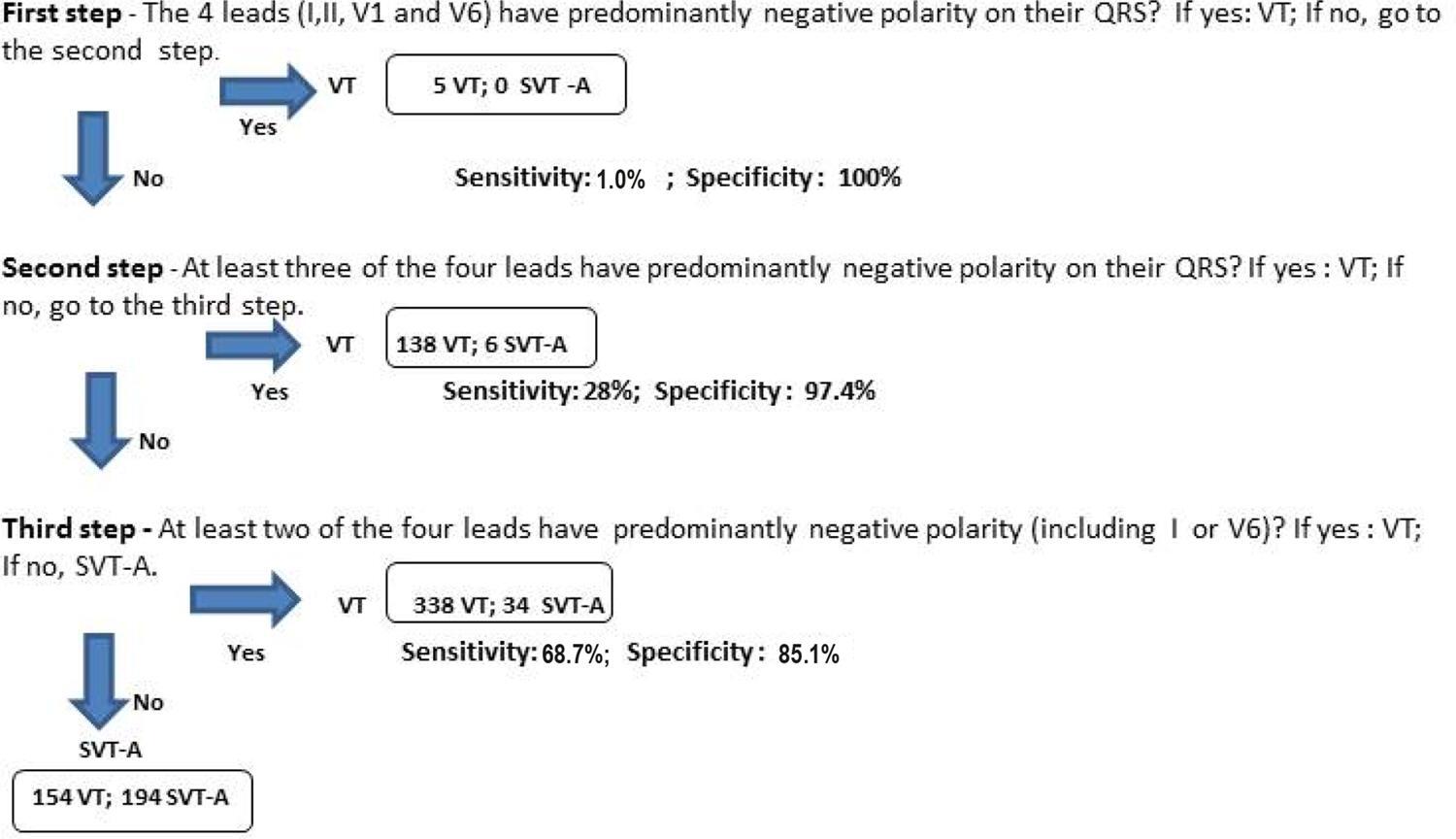
The 12-lead electrocardiograms (ECG) for WCT were prospectively obtained from 120 patients during electrophysiological study. Six physicians with different expertise analyzed the electrocardiographic recordings, and made the diagnosis based on the D12V16 algorithm, that involves the analysis of the predominant polarity of QRS in leads I, II, V1 and V6. The diagnosis was compared with that made using the traditional Brugada algorithm and the “gold-standard” electrophysiological study. Statistical analyses were performed with a significance level of 5% (p<0.05).

Results

According to the EPS study, 82 ECG recordings were VT and 38 SVT-A. Structural heart diseases were present in 71 (86.6%) patients with VT and in 8 (21.1%) with SVT-A. The Brugada algorithm had higher global sensitivity (87.2%), and the D12V16 algorithm had higher global specificity (85.1%) for VT. Both D12V16 and Brugada’s algorithms presented a high positive predictive value (90.9% vs 85.8%, respectively) and similar accuracy (73.8% vs 81.4%, respectively) for the diagnosis of VT. Experienced evaluators were more accurate using Brugada algorithm than the D12V16 algorithm, but the accuracy of both algorithms was similar according to less experienced examiners.

Conclusion

The simplified algorithm may be a useful method to recognize VT in the ECG, especially for less experienced doctors. (Arq Bras Cardiol. 2021; [online].ahead print, PP.0-0)
  • Arrhythmias Cardiac
  • Electrocardiography
  • Tachycardia, Supraventricular
  • Tachycardia, Ventricular
Read Full Article
Creative Commons Attribution (CC BY) Creative Commons license
08/02/2021 DOI: 10.36660/abc.20190501 Views 2
Figure 1
ABC
Case Report

Report of a Family with Craniofrontonasal Syndrome and Wolff-Parkinson-White Syndrome: Is it a New Finding?

Celal Kilit et al. Türkan Pasali Kilit

Introduction

Craniofrontonasal syndrome (CFNS; OMIM# 304110) is one of the craniofacial conditions that fall into the group called Craniofacial Dysostosis syndromes. Alternative names are Craniofrontonasal Dysplasia and Craniofrontonasal Dysostosis. CFNS is a rare X-linked disorder caused by mutations in the ephrin-B1 gene (EFNB1). CFNS predominantly affects the head, face and limbs and characterized by coronal craniosynostosis, frontal bossing, severe hypertelorism, craniofacial asymmetry, down slant palpebral fissure, broad nasal root, bifid nasal tip, grooved fingernails, curly wiry hair, and abnormalities of the thoracic skeleton. Phenotypic expression varies greatly amongst affected individuals. Paradoxical to other X-linked conditions, CFNS generally affects females more frequently and more severely than males., Cellular or metabolic interference due to X inactivation explains this situation. There is no accurate measurement of its birth frequency and the incidence values that were reported ranged from 1:100,000 to 1:120,000. CFNS is not diagnosed in males unless they are a member of a family known to have the condition or the father of a daughter with the condition. In females, physical characteristics play a supportive role in establishing the diagnosis but the diagnosis CFNS is determined by the presence of a mutation in the EFNB1 gene.

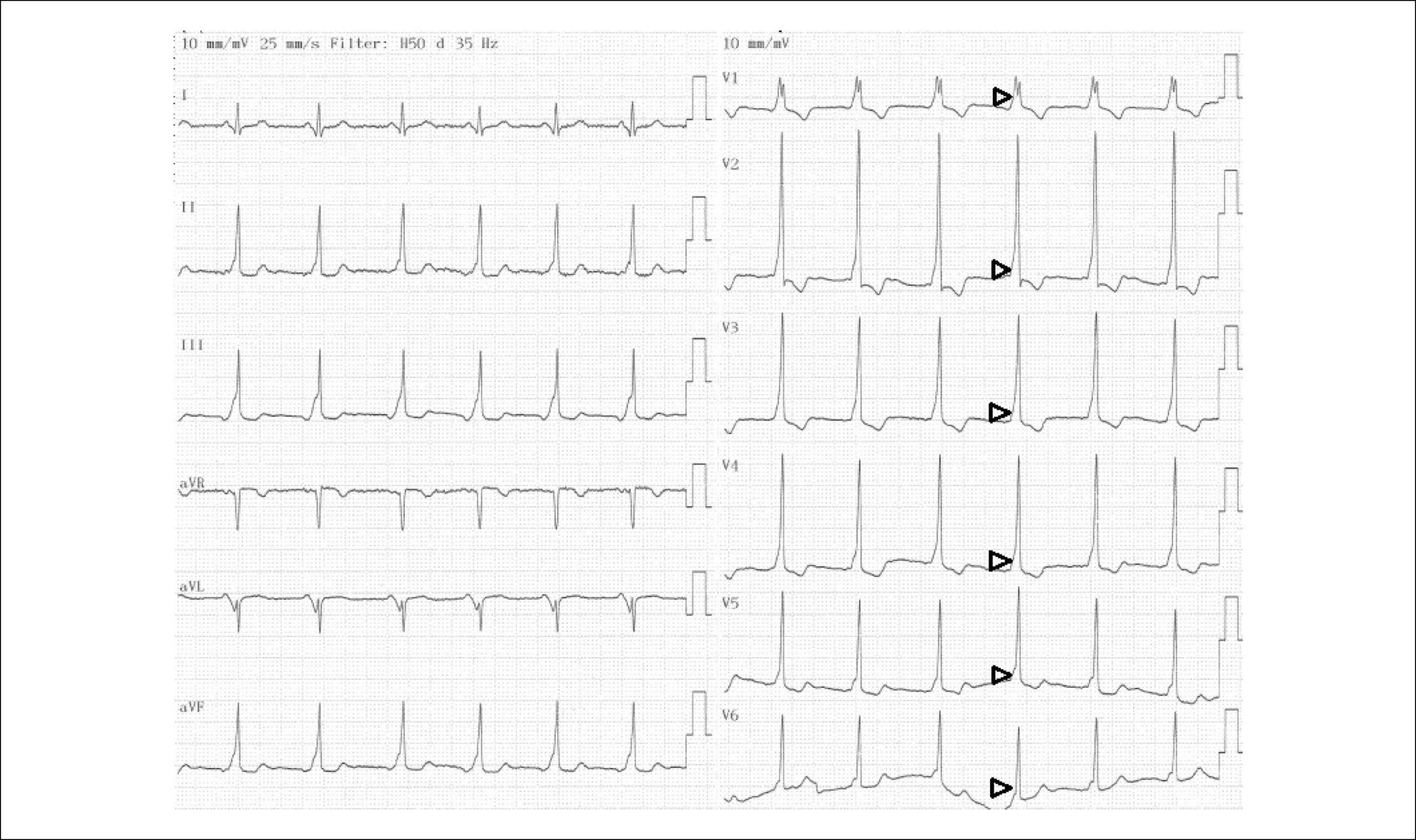
Wolff-Parkinson-White (WPW) syndrome is a pre-excitation syndrome which is a common cause of supraventricular tachycardia with prevalence in Western countries of 1.5 to 3.1 per 1000 persons. It is maintained by accessory pathway or pathways secondary to a developmental cardiac defect in atrioventricular electrical insulation. Among patients with the WPW syndrome, 3.4% have first degree-relatives with a pre-excitation syndrome. A familial form of WPW has infrequently been reported and is usually inherited as an autosomal dominant trait.–

[…]

  • Comparative Studies
  • Craniofacial Abnormalities
  • Craniofacial Dysostose
  • Tachycardia, Supraventricular
  • Wolff-Parkinson White Syndrome
Read Full Article
Creative Commons Attribution (CC BY) Creative Commons license
06/06/2019 DOI: 10.5935/abc.20190033 Views 3
Radiofrequency catheter ablation of left accessory pathways by transeptal approach
ABC
Artigo Original

Radiofrequency catheter ablation of left accessory pathways by transeptal approach

Márcio Augusto Silva et al. Elenir Nadalin Alessandro Kraemmer Gel Roberto Marmitt Berardi … José Carlos Moura Jorge Cláudio L. Pereira da Cunha

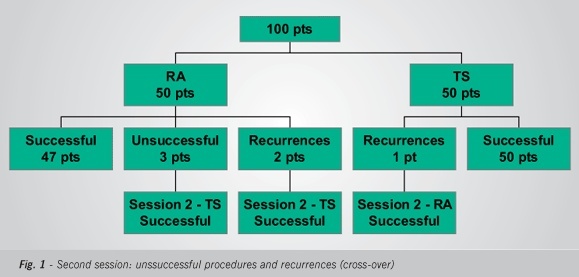
OBJECTIVE: To study a series of patients submitted to radiofrequency catheter ablation (RFA) of left accessory pathways (AP) using the transeptal approach (TSA) as compared to the conventional retrograde arterial approach (RAA). METHODS: One hundred consecutive patients (56 male; mean age of 34.3 ± 11 years) with 100 left APs (62 overt and 38 concealed) underwent catheter ablation using the TS method (50 patients) and the RA method (50 patients) in an alternate fashion. The analysis was performed according to the intention-to-treat principle. RESULTS: The transeptal puncture was successfully performed in 48 patients (96%). This access allowed primary success in the ablation in all the patients without any complication. When we compared this approach with the RAA there was no difference as regards the primary success (p = 0.2), recurrence rate (p = 1.0), fluoroscopy time (p = 0.63) and total time (p = 0.47). One patient in the RAA group presented a vascular complication. The TSA allowed shorter ablation times (p=0.01) and smaller number of radiofrequency applications (p = 0.003) as compared to the conventional RAA. The patients who had recurrence and unsuccessful ablation in the first session in each approach underwent another session with the opposite technique (cross-over), with a final ablation success rate of 100%. CONCLUSION: The TS and RA approaches showed similar efficacy and safety for the ablation of left accessory pathways. The TSA allowed shorter ablation times and smaller number of radiofrequency applications. When the techniques were used in a complementary fashion, they increased the final efficacy of the ablation.

  • Catheter Ablation
  • Heart Septum
  • Radio Waves
  • Tachycardia, Supraventricular
Read Full Article
Creative Commons Attribution (CC BY) Creative Commons license
29/05/2006 DOI: 10.1590/S0066-782X2006000500002 Views 1

How to cite this article

EndNote RIS

Electronic Document Format (Vancouver)

Santos Neto F, Pisani CF, Darrieux FCC, Cirino CMF, Hachul DT, Santos AM, Pérez-Riera AR, et al. Validation of a Simple Electrocardiographic Algorithm for Detection of Ventricular Tachycardia. Arquivos Brasileiros de Cardiologia 2021;116(3):454-63.

Electronic Document Format (ABNT)

Santos Neto, Francisco; Pisani, Cristiano F.; Darrieux, Francisco Carlos da Costa; Cirino, Celia M. F.; Hachul, Denise Tessariol; Santos, Astrid M.; Pérez-Riera, Andrés Ricardo; Barbosa-Barros, Raimundo; Scanavacca, Mauricio. Validation of a Simple Electrocardiographic Algorithm for Detection of Ventricular Tachycardia. Arquivos Brasileiros de Cardiologia, v. 116, n. 3, p. 454-463, Feb. 2021.

Electronic Document Format (APA)

Santos Neto, F., Pisani, C. F., Darrieux, F. C. C., Cirino, C. M. F., Hachul, D. T., Santos, A. M., Pérez-Riera, A. R., Barbosa-Barros, R., & Scanavacca, M. (2021). Validation of a Simple Electrocardiographic Algorithm for Detection of Ventricular Tachycardia. Arquivos Brasileiros de Cardiologia, 116(3), 454-463.

Electronic Document Format (ISO)

Santos Neto, Francisco and Pisani, Cristiano F. and Darrieux, Francisco Carlos da Costa and Cirino, Celia M. F. and Hachul, Denise Tessariol and Santos, Astrid M. and Pérez-Riera, Andrés Ricardo and Barbosa-Barros, Raimundo and Scanavacca, Mauricio. Validation of a Simple Electrocardiographic Algorithm for Detection of Ventricular Tachycardia. Arquivos Brasileiros de Cardiologia [online]. 2021, vol. 116, n. 3, [cited 2026-10-14], pp. 454-463. Available from: <https://journals.cardiol.br/en/article/validation-of-a-simple-electrocardiographic-algorithm-for-detection-of-ventricular-tachycardia/>. ISSN 0066-782X

EndNote RIS

Electronic Document Format (Vancouver)

Kilit C, Kilit TP. Report of a Family with Craniofrontonasal Syndrome and Wolff-Parkinson-White Syndrome: Is it a New Finding?. Arquivos Brasileiros de Cardiologia 2019;112(5):594-6.

Electronic Document Format (ABNT)

Kilit, Celal; Kilit, Türkan Pasali. Report of a Family with Craniofrontonasal Syndrome and Wolff-Parkinson-White Syndrome: Is it a New Finding?. Arquivos Brasileiros de Cardiologia, v. 112, n. 5, p. 594-596, Jun. 2019.

Electronic Document Format (APA)

Kilit, C., & Kilit, T. P. (2019). Report of a Family with Craniofrontonasal Syndrome and Wolff-Parkinson-White Syndrome: Is it a New Finding?. Arquivos Brasileiros de Cardiologia, 112(5), 594-596.

Electronic Document Format (ISO)

Kilit, Celal and Kilit, Türkan Pasali. Report of a Family with Craniofrontonasal Syndrome and Wolff-Parkinson-White Syndrome: Is it a New Finding?. Arquivos Brasileiros de Cardiologia [online]. 2019, vol. 112, n. 5, [cited 2026-10-14], pp. 594-596. Available from: <https://journals.cardiol.br/en/article/report-of-a-family-with-craniofrontonasal-syndrome-and-wolff-parkinson-white-syndrome-is-it-a-new-finding/>. ISSN 0066-782X

EndNote RIS

Electronic Document Format (Vancouver)

Silva MA, Nadalin E, Kraemmer A, Berardi GRM, Jorge JCM, Cunha CLP. Radiofrequency catheter ablation of left accessory pathways by transeptal approach. Arquivos Brasileiros de Cardiologia 2006;86(5):331-6.

Electronic Document Format (ABNT)

Silva, Márcio Augusto; Nadalin, Elenir; Kraemmer, Alessandro; Berardi, Gel Roberto Marmitt; Jorge, José Carlos Moura; Cunha, Cláudio L. Pereira da. Radiofrequency catheter ablation of left accessory pathways by transeptal approach. Arquivos Brasileiros de Cardiologia, v. 86, n. 5, p. 331-336, May. 2006.

Electronic Document Format (APA)

Silva, M. A., Nadalin, E., Kraemmer, A., Berardi, G. R. M., Jorge, J. C. M., & Cunha, C. L. P. (2006). Radiofrequency catheter ablation of left accessory pathways by transeptal approach. Arquivos Brasileiros de Cardiologia, 86(5), 331-336.

Electronic Document Format (ISO)

Silva, Márcio Augusto and Nadalin, Elenir and Kraemmer, Alessandro and Berardi, Gel Roberto Marmitt and Jorge, José Carlos Moura and Cunha, Cláudio L. Pereira da. Radiofrequency catheter ablation of left accessory pathways by transeptal approach. Arquivos Brasileiros de Cardiologia [online]. 2006, vol. 86, n. 5, [cited 2026-10-14], pp. 331-336. Available from: <https://journals.cardiol.br/en/article/radiofrequency-catheter-ablation-of-left-accessory-pathways-by-transeptal-approach/>. ISSN 0066-782X

  • About ABC Family
  • Internal Regulation
  • Editorial Board
  • Brazilian Society of Cardiology (SBC)

Issues

SBC Guidelines

  • Videos
  • Podcasts
  • News