ABC Family Arquivos Brasileiros de Cardiologia International Journal of Cardiovascular Sciences ABC Heart Failure & Cardiomyopathy ABC Imagem Cardiovascular
Português English
ABC Family
Português English
  • About
    • About ABC Family
    • Internal Regulation
    • Editorial Board
    • Brazilian Society of Cardiology (SBC)
  • Issues
  • SBC Guidelines
  • Content
    • Videos
    • Podcasts
    • News
  • About
    • About ABC Family
    • Internal Regulation
    • Editorial Board
    • Brazilian Society of Cardiology (SBC)
  • Issues
  • SBC Guidelines
  • Content
    • Videos
    • Podcasts
    • News

ABC Family

  • ABC Family
  • Arquivos Brasileiros de Cardiologia
  • International Journal of Cardiovascular Sciences
  • ABC Heart Failure & Cardiomyopathy
  • ABC Imagem Cardiovascular
Search in

No content found.

Journals
Ordering
Article types
Others

  1. Home
  2. Keyword: Drug-Eluting Stents
Figure 1
ABCIC
Case Report

Coronary Artery Disease In A Rare Anatomical Scenario: Type IV Duplicated Left Anterior Descending Artery

Matheus Sacco Gomes et al. Amanda Raquel Costa Cruz Bruno Leal Martins Mario Henrique Caliano … Patricia de Souza Magalhães Daniel Bandeira Ricardo Costa Marinella Patrizia Centemero

Introduction

Congenital coronary anomalies comprise a heterogeneous group of anatomical variations, most often identified incidentally during non-invasive imaging studies or invasive diagnostic and therapeutic procedures. Studies show that approximately 1.3% of individuals undergoing coronary angiography present some form of coronary anomaly. Although most are considered benign, certain anomalies may be associated with myocardial ischemia, ventricular arrhythmias, and, in rare cases, sudden cardiac death. It is important to emphasize that coexistence with obstructive coronary artery disease (CAD) may amplify their clinical impact.

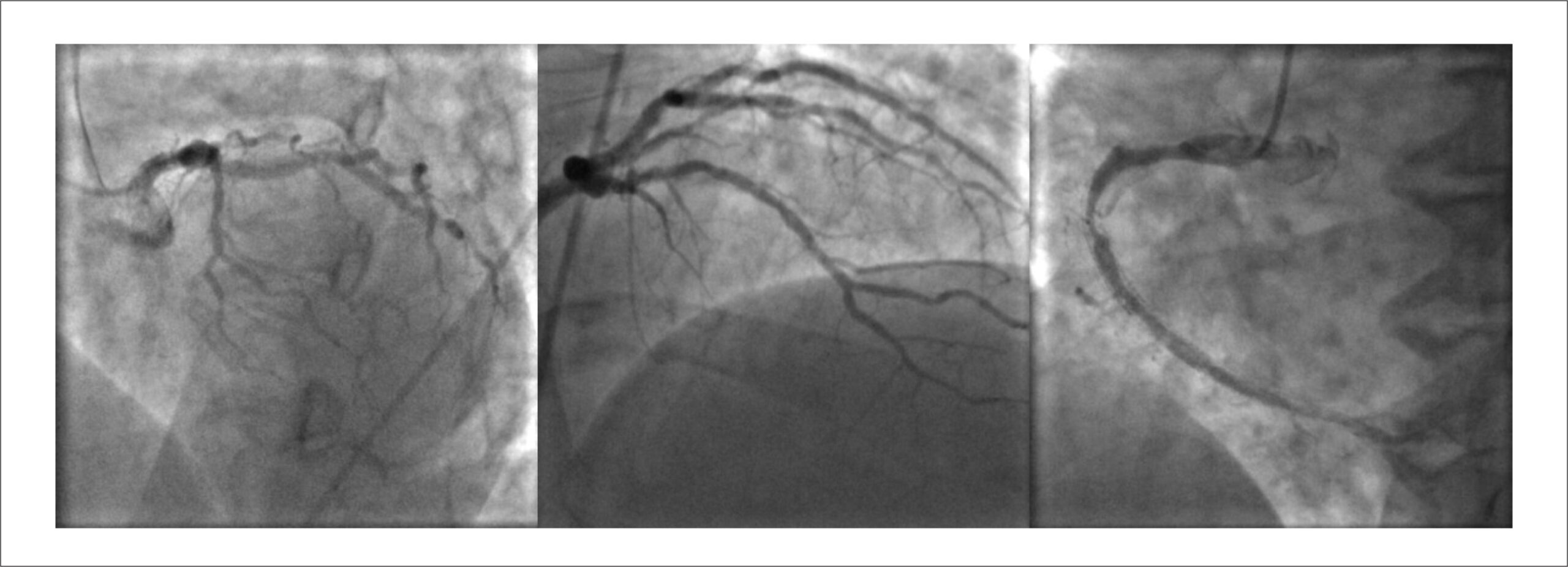
Among these variations, duplication of the left anterior descending (LAD) artery stands out due to its rarity and diagnostic relevance. According to the classification proposed by Spindola-Franco et al. (), this anomaly is divided into four types based on the origin and course of the branches. In Type I, the most frequent form, the short and long LAD originate from the bifurcation of the main LAD artery; the short LAD artery follows the anterior interventricular groove and terminates early, whereas the long LAD artery runs parallel along the left ventricular surface before rejoining the distal groove. In Type II, the short and long LAD also arise from the bifurcation of the main LAD artery; however, the long LAD artery courses to the right of the anterior interventricular groove before reaching the apex. In Type III, the long LAD artery has an initial intramyocardial trajectory before emerging distally on the epicardial surface. Finally, in Type IV, the rarest type, a short LAD artery originates from the left coronary artery, while a long LAD artery arises anomalously from the right coronary artery (RCA) or its sinus of Valsalva.² This long branch follows an intraseptal course before emerging in the anterior interventricular groove and reaching the apex, occurring in approximately 0.2% of patients undergoing coronary angiography.

[…]
  • Coronary Artery Disease
  • Drug-Eluting Stents
  • Interventional Ultrasonography
  • Percutaneous Coronary Intervention
Read Full Article
Creative Commons Attribution (CC BY) Creative Commons license
03/09/2026 DOI: 10.36660/abcimg.20260032i Views 1
Figure 1
ABC
Editorial

Small Vessels, Big Decisions

José Airton de Arruda et al. José de Ribamar Costa Junior

Percutaneous coronary intervention (PCI) in small-caliber vessels remains one of the most challenging scenarios in contemporary interventional cardiology.

Historically, a small vessel was considered to be one with a diameter ≤2.75 mm. With the technological evolution of devices and the greater refinement of interventional techniques, this concept has been progressively redefined. In contemporary practice, small vessels are standardized as those with a diameter <2.5 mm, while very small or extremely small vessels often include segments <2.25 mm.,

[…]

  • Coronary Restenosis
  • Coronary Vessels
  • Drug-Eluting Stents
  • Percutaneous Coronary Intervention
  • Sirolimus
Read Full Article
Creative Commons Attribution (CC BY) Creative Commons license
01/06/2026 DOI: 10.36660/abc.20260207i Views 2
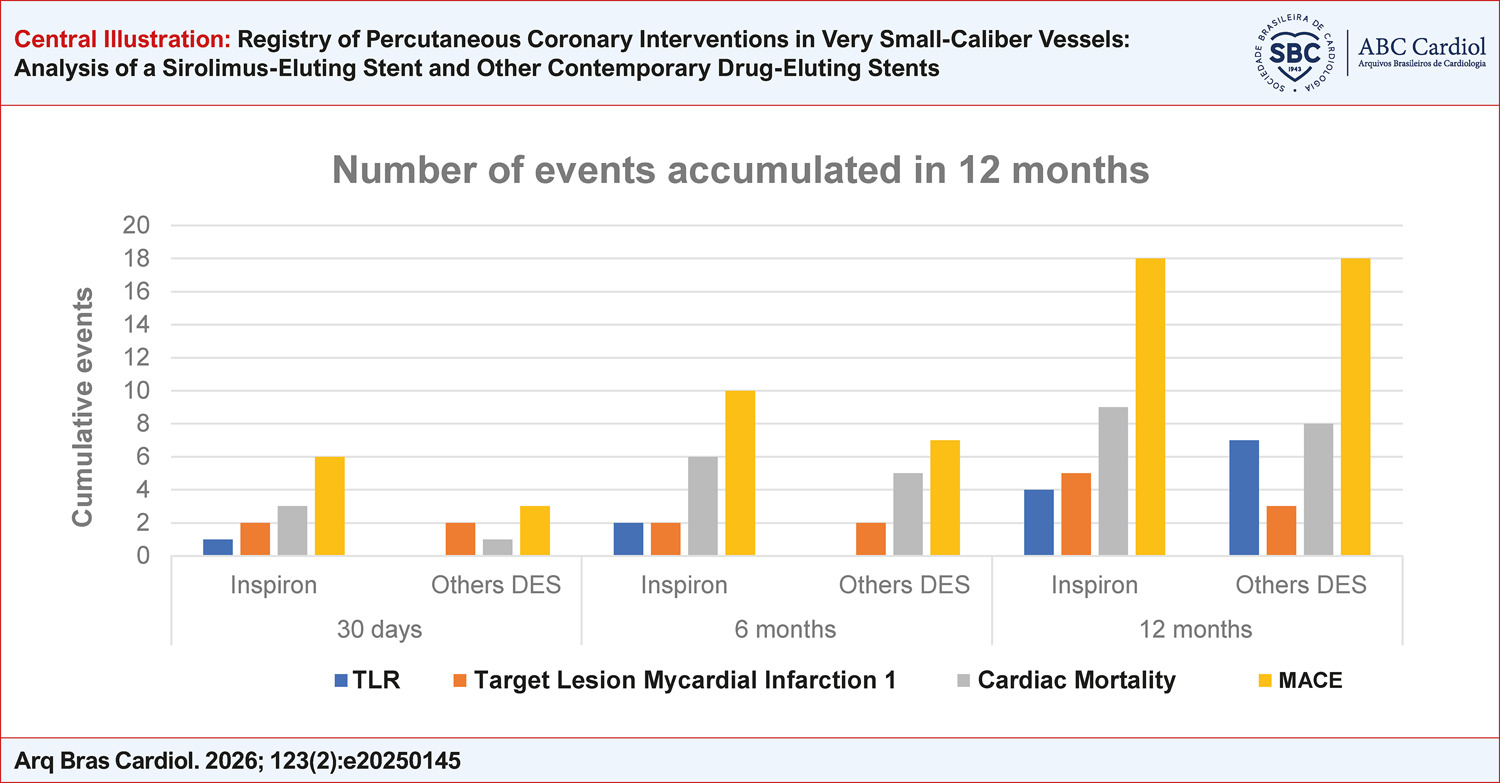
Registry of Percutaneous Coronary Interventions in Very Small-Caliber Vessels: Analysis of a Sirolimus-Eluting Stent and Other Contemporary Drug-Eluting Stents
ABC
Original Article

Registry of Percutaneous Coronary Interventions in Very Small-Caliber Vessels: Analysis of a Sirolimus-Eluting Stent and Other Contemporary Drug-Eluting Stents

João Vitor Slaviero et al. André Luiz Langer Manica Rogério Eduardo Gomes Sarmento Leite Eduarda Paiva Borsa … Marcia Moura Schmidt Rodrigo Campos Ogando Julia Kurtz Teixeira Raphael Boesche Guimarães Alexandre Damiani Azmus Carlos A. M. Gottschall

Abstract

Background

Percutaneous coronary intervention (PCI) in very small-caliber vessels (≤2.25 mm) presents technical challenges and is associated with poorer outcomes compared to larger vessels. The Inspiron® stent, a drug-eluting stent (DES) manufactured in Brazil, has been evaluated in multiple studies; however, data on its performance in vessels smaller than 2.5 mm are lacking.

Objectives

This study aimed to evaluate the clinical outcomes of PCI using DES in very small-caliber vessels and to compare the Inspiron® stent with other contemporary DES platforms. The primary endpoint was major adverse cardiac events (MACE), defined as cardiac death, target lesion myocardial infarction, and clinically driven target lesion revascularization.

Methods

We conducted an observational study including a consecutive sample at a Brazilian reference center from 2017 to 2021. Outcomes were assessed in-hospital, at 30 days, 6 months, and 12 months, using a 5% threshold for statistical significance.

Results

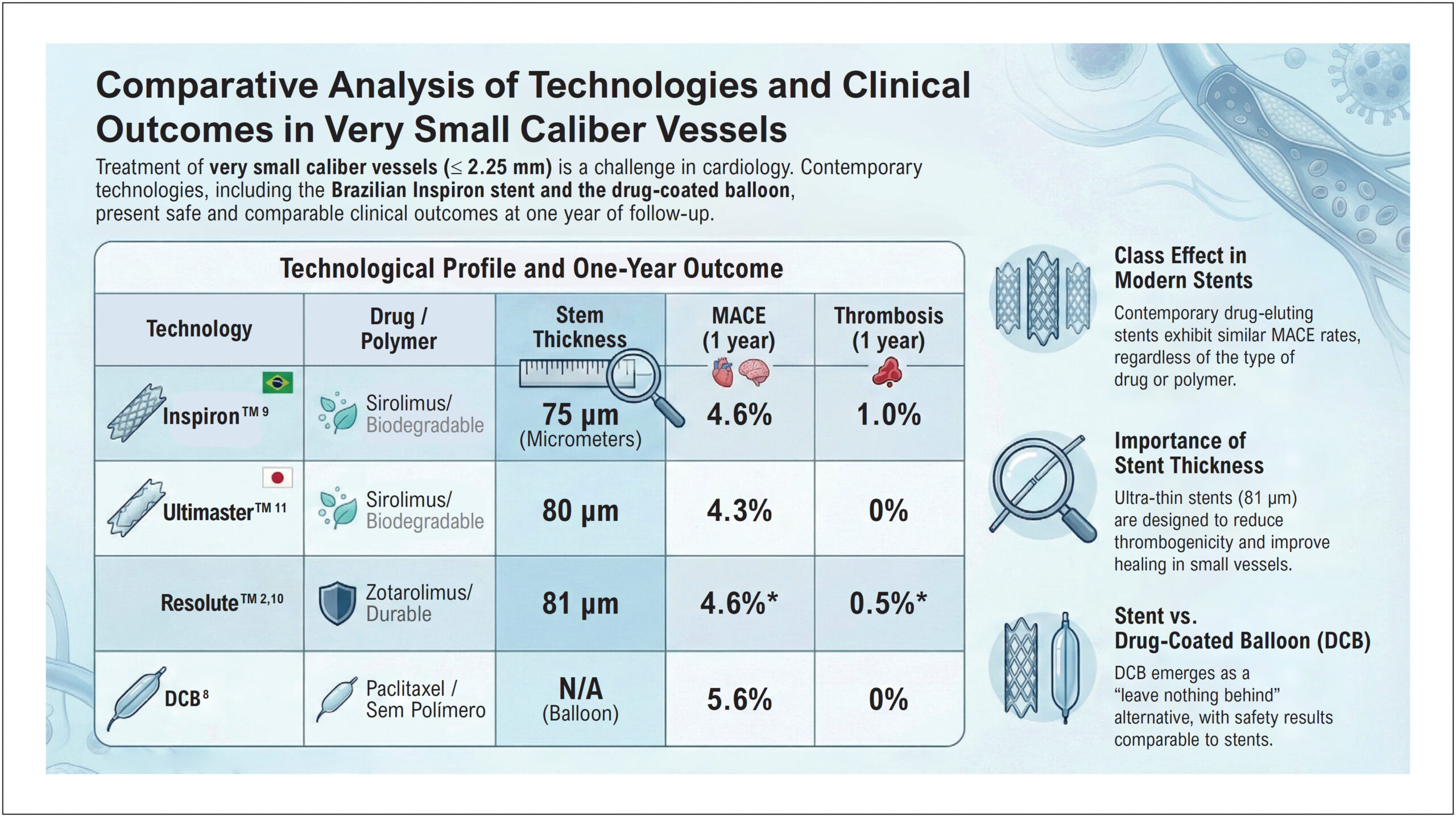
A total of 783 DES were implanted: 47% Inspiron® and 46.8% other DES. The mean patient age was 64.7 ± 11 years; 61% were male, and 42% had diabetes mellitus. At 12 months, the overall MACE rate was 4.54% (36/793), with no difference between groups (Inspiron®: 4.6% vs. other DES: 4.6%; p=1.000). Individual endpoints and stent thrombosis rates were also similar (4 [1.0%] vs. 2 [0.5%]; p=0.868).

Conclusion

our findings show that the Inspiron® stent has acceptable safety and efficacy and provides comparable 12-month clinical outcomes to other contemporary DES in very small-caliber coronary vessels.

  • Coronary Artery Disease
  • Drug-Eluting Stents
  • Percutaneous Coronary Intervention
  • Sirolimus
Read Full Article
Creative Commons Attribution (CC BY) Creative Commons license
16/03/2026 DOI: 10.36660/abc.20250145i Views 2
Figure 1
ABC
Editorial

Small-Vessel Coronary Disease and Drug-Coated Balloons: Time to Reconsider Our Strategy?

Guy F. A. Prado et al. Henrique Barbosa Ribeiro

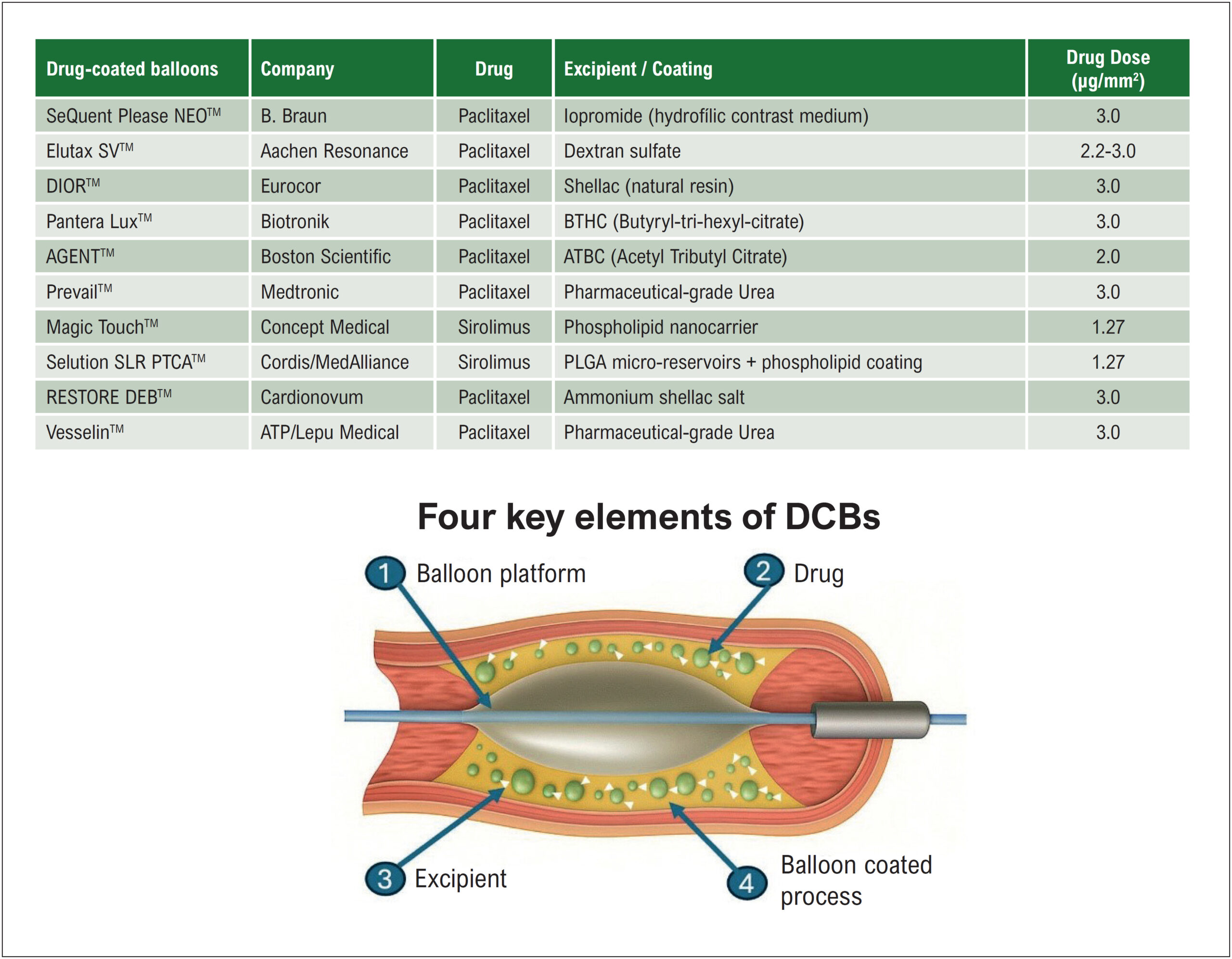
Percutaneous coronary intervention (PCI) with drug-eluting stents (DES) has dramatically transformed coronary revascularization, reducing restenosis and the need for repeat interventions. Nevertheless, despite major advances in stent bioengineering and procedural techniques, the permanent implantation of metallic platforms and polymer coatings remains associated with long-term stent failure, particularly in small coronary arteries, with an annual incidence of stent thrombosis of approximately 1–2%. The underlying mechanisms include neointimal hyperplasia, neoatherosclerosis, stent fracture, and the inability to achieve positive remodeling, all resulting from the “caging” of vessels with metallic struts. Against this background, the use of drug-coated balloons (DCBs) for the treatment of de novo lesions—embodying the “leave nothing behind” strategy—has emerged as an attractive alternative to overcome limitations inherent to stent implantation.

In recent years, an increasing number of trials have underscored the clinical relevance of DCB angioplasty for de novo lesions. The avoidance of permanent device implantation into the vessel wall is particularly appealing. On the other hand, a key objective of PCI is to achieve acute luminal gain while minimizing dissections and impaired flow—an aspect where stents retain a clear advantage. Still, PCI with DES in small arteries has consistently been associated with higher rates of target lesion failure. In this context, a DCB-based angioplasty is compelling. Recent evidence has suggested comparable outcomes between DCBs and DES in small-vessel disease; however, non-inferiority designs and small sample sizes have limited these findings.

[…]

  • Coronary Artery Disease
  • Drug-Eluting Stents
  • Percutaneous Coronary Intervention
Read Full Article
Creative Commons Attribution (CC BY) Creative Commons license
15/12/2025 DOI: 10.36660/abc.20250652i Views 2
Paclitaxel-Coated Balloons versus Drug-Eluting Stents in Small Vessel Coronary Artery Disease: A Systematic Review and Meta-Analysis
ABC
Original Article

Paclitaxel-Coated Balloons versus Drug-Eluting Stents in Small Vessel Coronary Artery Disease: A Systematic Review and Meta-Analysis

Marília Oberto da Silva Gobbo et al. Renan Yuji Ura Sudo Ancy Jenil Franco Mable Pereira … Tanize Louize Milbradt Zeynep Eylul Bakir Iago Zang Pires Stephen Akinfenwa Gustavo Luís Agostini Denise Pellegrini Paulo R. A. Caramori

Abstract

Background

Drug-eluting stents (DES) remain the standard of care for percutaneous coronary intervention in small vessel coronary artery disease (SVD). Paclitaxel-coated balloons (PCB) have emerged as an alternative, with recent trials suggesting favorable short- and mid-term outcomes, although most were limited by small sample sizes.

Objectives

To compare angiographic and clinical outcomes between DES and PCB in patients with SVD.

Methods

Searches were conducted in PubMed, Embase, the Cochrane Library, and ClinicalTrials.gov for studies comparing PCB and DES in SVD, defined as a reference vessel diameter < 3.0 mm. A random-effects meta-analysis was performed, and results were reported as mean differences (MD) or risk ratios (RR). Statistical significance was set at p < 0.05. Heterogeneity was assessed using the chi-square, Tau, and Tau2 tests. The review protocol was registered in PROSPERO (CRD42024506502).

Results

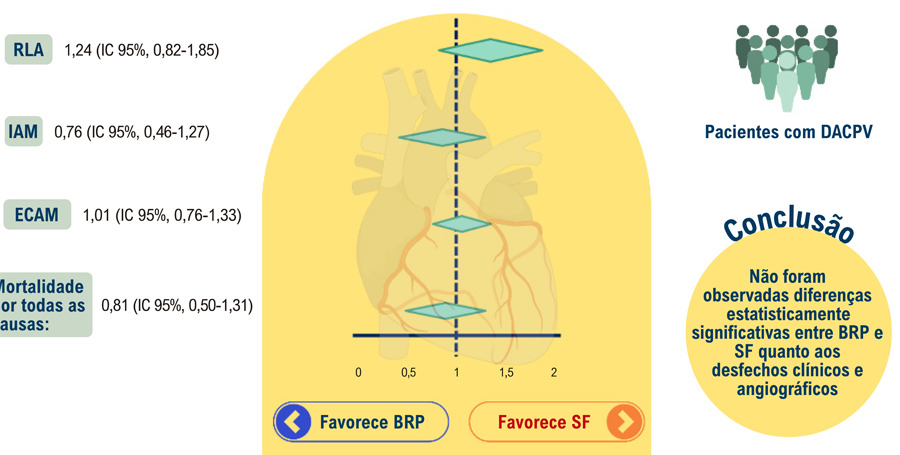
A total of 12 studies comprising 17,441 patients (mean age of 58-73 years) were included, with clinical follow-up of 8 to 36 months. All studies evaluated PCB. No significant differences were found between PCB and DES in target lesion revascularization (RR, 1.24; 95% CI, 0.82-1.85; p = 0.30), late lumen loss (MD, –0.09 mm; 95% CI, –0.41 to 0.23; p = 0.57), major adverse cardiovascular events (RR, 1.01; 95% CI, 0.76-1.33; p = 0.95), all-cause mortality (RR, 0.81; 95% CI, 0.50-1.31; p = 0.39), cardiovascular mortality (RR, 1.74; 95% CI, 0.78-3.89; p = 0.17), and myocardial infarction (RR, 0.76; 95% CI, 0.46-1.27; p = 0.30).

Conclusions

PCB angioplasty demonstrated clinical and angiographic outcomes comparable to DES in SVD, supporting its role as a safe, effective alternative in selected patients.

  • Coronary Artery Disease
  • Drug-Eluting Stents
  • Percutaneous Coronary Intervention
Read Full Article
Creative Commons Attribution (CC BY) Creative Commons license
15/12/2025 DOI: 10.36660/abc.20250069i Views 1
ABC
Editorial

Is it Time to Revisit Fractional Flow Reserve Thresholds?

Fernando Mendes Sant’Anna et al. Lucas Bonacossa Sant’Anna Sérgio Lívio Menezes Couceiro

Intracoronary physiological assessment is established as a valuable strategy to identify flow-limiting epicardial stenoses in patients with coronary artery disease (CAD) and to determine an indication for percutaneous coronary interventions (PCI).

It had been previously assumed that once the flow-limiting disease was confirmed with a pressure guidewire measurement, PCI guided by angiography should lead to effective restoration of vessel conductance. However, studies with physiological post-PCI evaluation based on fractional flow reserve (FFR) and non-hyperemic pressure ratios (NHPR) demonstrate that this supposition is not correct and that relying on angiographic guidance alone can be associated with suboptimal functional results post-PCI in many cases. , Moreover, it is well known that post-PCI FFR is a strong predictor of outcomes, and the lower the post-stent FFR, the worse the clinical follow-up.

[…]

  • Constriction Pathoçogic
  • Coronary Artery Disease, Percutaneous Coronary Intervention
  • Drug-Eluting Stents
  • Fractional Flow Reserve, Myocardial
  • Pericardium
Read Full Article
Creative Commons Attribution (CC BY) Creative Commons license
17/07/2023 DOI: 10.36660/abc.20230363
Central Illustration
ABC
Original Article

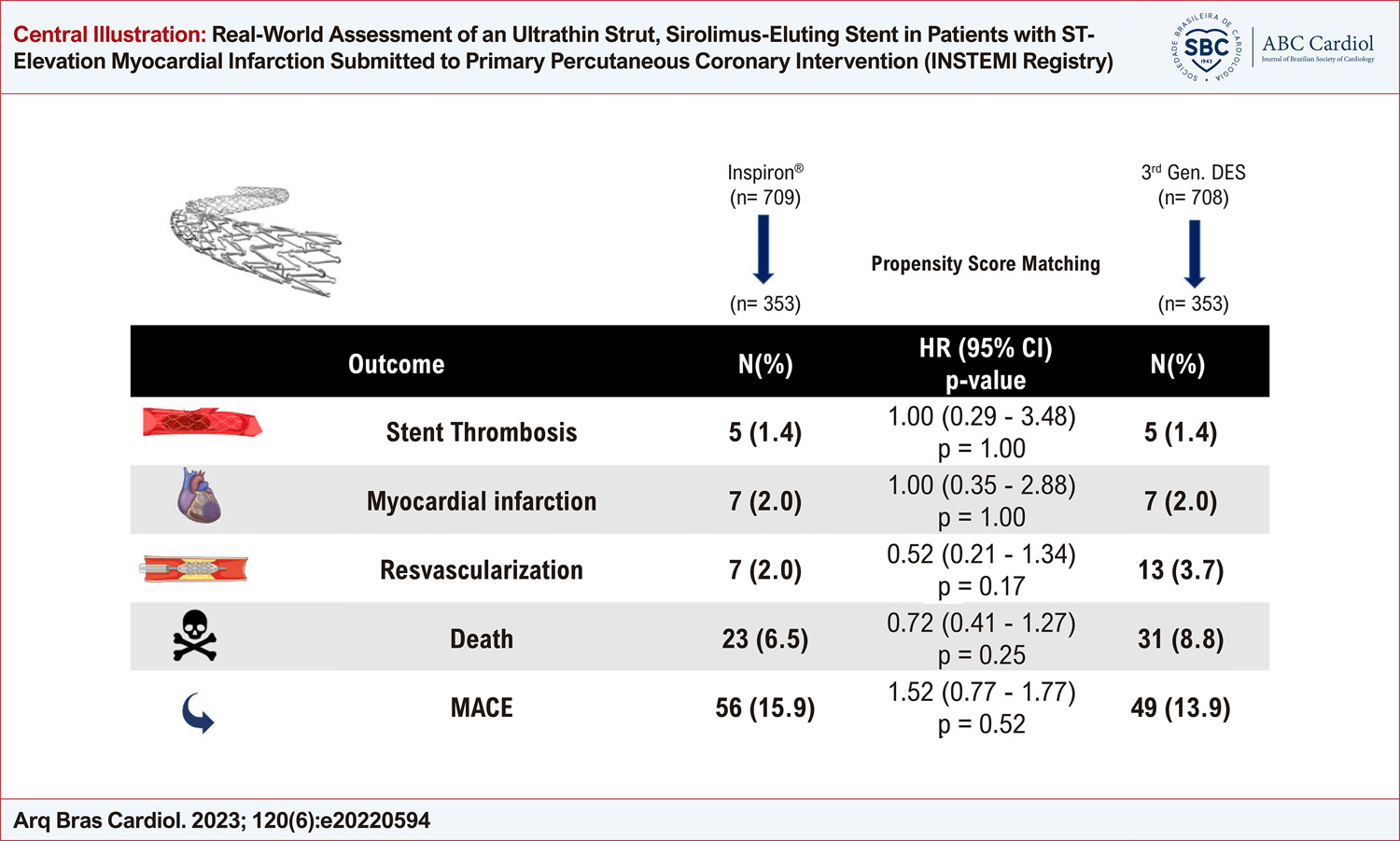
Real-World Assessment of an Ultrathin Strut, Sirolimus-Eluting Stent in Patients with ST-Elevation Myocardial Infarction Submitted to Primary Percutaneous Coronary Intervention (INSTEMI Registry)

Gustavo N. Araujo et al. Guilherme P. Machado Marcia Moura Anderson D. Silveira … Luiz Carlos Bergoli Felipe Costa Fuchs Sandro Cadaval Gonçalves Rodrigo Vugman Wainstein Pedro A. Lemos Alexandre S. Quadros Marco V. Wainstein

Abstract

Background

The current gold standard of coronary drug-eluting stents (DES) consists of metal alloys with thinner struts and bioresorbable polymers.

Objectives

Our aim was to compare an ultrathin strut, sirolimus-eluting stent (Inspiron®) with other third-generation DES platforms in patients with ST-elevation myocardial infarction (STEMI) submitted to primary percutaneous coronary intervention (PCI).

Methods

We analyzed data from a STEMI multicenter registry from reference centers in the South Region of Brazil. All patients were submitted to primary PCI, either with Inspiron® or other second- or third-generation DES. Propensity score matching (PSM) was computed to generate similar groups (Inspiron® versus other stents) in relation to clinical and procedural characteristics. All hypothesis tests had a two-sided significance level of 0.05.

Results

From January 2017 to January 2021, 1711 patients underwent primary PCI, and 1417 patients met our entry criteria (709 patients in the Inspiron® group and 708 patients in the other second- or third-generation DES group). After PSM, the study sample was comprised of 706 patients (353 patients in the Inspiron® group and 353 patients in the other the other second- or third-generation DES group). The rates of target vessel revascularization (OR 0.52, CI 0.21 – 1.34, p = 0.173), stent thrombosis (OR 1.00, CI 0.29 – 3.48, p = 1.000), mortality (HR 0.724, CI 0.41 – 1.27, p = 0.257), and major cardiovascular outcomes (OR 1.170, CI 0.77 – 1.77, p = 0.526) were similar between groups after a median follow-up of 17 months.

Conclusion

Our findings show that Inspiron® was effective and safe when compared to other second- or third-generation DES in a contemporary cohort of real-world STEMI patients submitted to primary PCI.

  • Angioplasty
  • Drug-Eluting Stents
  • Myocardial Infarction
Read Full Article
Creative Commons Attribution (CC BY) Creative Commons license
26/05/2023 DOI: 10.36660/abc.20220594 Views 1
ABC
Editorial

Brazilian Interventional Cardiology and Chronic Coronary Occlusions: Where Are We?

José Mariani Junior

The coronary atherosclerotic disease has several facets of clinical presentation; chronic coronary occlusion (CCO) is one that produces total obstruction of the lumen of the vessel, known or presumed for three months or more. It is present in 16-18% of patients with significant coronary disease.

Percutaneous treatment of this type of lesion is almost as old as the first coronary angioplasty performed by Andreas Gruntzig in 1979. Martin Kaltenbach first performed it in Frankfurt in the late 1970s and by Geoffrey Hartzler in Kansas City in the following decades., Since then, the growing and spectacular incorporation of technology into medicine, especially in Interventional Cardiology, associated with the knowledge and expertise of new techniques dedicated to complex coronary interventions, which include CCO, have allowed great, safe, and effective advances in the approach to these lesions.

[…]

  • Coronary Angiography/methods
  • Coronary Occlusion/mortality
  • Coronary Occlusion/therapy
  • Diagnostic Imaging/methods
  • Drug-Eluting Stents
  • Ultrasonography,Interventional/methods
Read Full Article
Creative Commons Attribution (CC BY) Creative Commons license
01/05/2023 DOI: 10.36660/abc.20230172
Figure 1
ABC
Original Article

Cost-effectiveness of Drug-Eluting Stents in Percutaneous Coronary Intervention in Brazil’s Unified Public Health System (SUS)

João Addison Pessoa et al. Esmeralci Ferreira Denizar Viana Araújo Edirley Maia … Felipe Souza Maia da Silva Maurício Salles de Oliveira Denilson Campos de Albuquerque

Abstract

Background

The use of drug-eluting stents (DESs), compared with bare-metal stents (BMSs), in percutaneous coronary intervention (PCI) has reduced the rate of restenosis, without an impact on mortality but with an increase in costs. Medical literature lacks randomized studies that economically compare these 2 stent types within the reality of the Brazilian Unified Public Health System (SUS).

Objective

To estimate the incremental cost-effectiveness ratio (ICER) between DES and BMS in SUS patients with single-vessel coronary artery disease.

Methods

Over a 3-year period, patients with symptomatic single-vessel coronary artery disease were randomized in a 1:2 ratio to receive a DES or BMS during PCI, with a 1-year clinical follow-up. The evaluation included in-stent restenosis (ISR), target lesion revascularization (TLR), major adverse events, and cost-effectiveness for each group. P-values <0.05 were considered significant.

Results

In the DES group, of 74 patients (96.1%) who completed the follow-up, 1 developed ISR (1.4%), 1 had TLR (1.4%), and 1 died (1.4%), with no cases of thrombosis. In the BMS group, of 141 patients (91.5%), ISR occurred in 14 (10.1%), TLR in 10 (7.3%), death in 3 (2.1%), and thrombosis in 1 (0.74%). In the economic analysis, the cost of the procedure was R$ 5,722.21 in the DES group and R$ 4,085.21 in the BMS group. The effectiveness by ISR and TLR was 8.7% for DES and 5.9% for BMS, with an ICER of R$ 18,816.09 and R$ 27,745.76, respectively.

Conclusions

In the SUS, DESs were cost-effective in accordance with the cost-effectiveness threshold recommended by the World Health Organization (Arq Bras Cardiol. 2020; 115(1):80-89)

  • Coronary Reestenosis
  • Cost-Benefit Analysis
  • Drug-Eluting Stents
  • Myocardial Infarction
  • Percutaneous Coronary Intervention
  • Unified Health System (SUS
Read Full Article
Creative Commons Attribution (CC BY) Creative Commons license
07/08/2020 DOI: 10.36660/abc.20180292 Views 1
ABC
Editorial

Drug-Eluting Stents for Everyone: Is the Price Worth It?

Marcos Danillo P Oliveira et al. Vanessa Teich Adriano Caixeta

Despite their initial revolutionary role for the interventional cardiology development, bare-metal stents (BMS) have as main drawback in-stent restenosis (ISR), which occurs in a significant proportion (up to 44%) of patients undergoing to percutaneous coronary interventions (PCI).

Drug-eluting stents (DES) became first available in the year 2,000. By locally releasing antiproliferative and anti-inflammatory drugs, there is an inhibition to the proliferation of smooth muscle cells, thereby mitigating a key factor to ISR. The introduction of second-generation DES, including everolimus-eluting and zotarolimus-eluting stents, has led to claims of improved safety with non-inferior efficacy compared with first generation DES devices, supported by numerous clinical trials.

[…]

  • Coronary Reestenosis
  • Cost-Benefit Analysis
  • Drug-Eluting Stents
  • Myocardial Infarction
  • Percutaneous Coronary Intervention
  • Unified Health System (SUS
Read Full Article
Creative Commons Attribution (CC BY) Creative Commons license
07/08/2020 DOI: 10.36660/abc.20200530
Figure 1
ABC
Case Report

A Rare Cause of Angina After Coronary Bypass Grafting; Left İnternal Mammary Artery to Pulmonary Artery Fistula and Successful Treatment with Transcatheter Coil Embolization

Ali Nazmi Calik et al. Can Yücel Karabay Evliya Akdeniz Yiğit Çanga … Baris Gungor Omer Kozan

Abstract

Fistula from left internal mammary artery (LIMA) to pulmonary artery (PA) is rarely encountered in daily practice. In recent years, endovascular therapy options have emerged for the treatment of fistula formations and replaced with surgery.

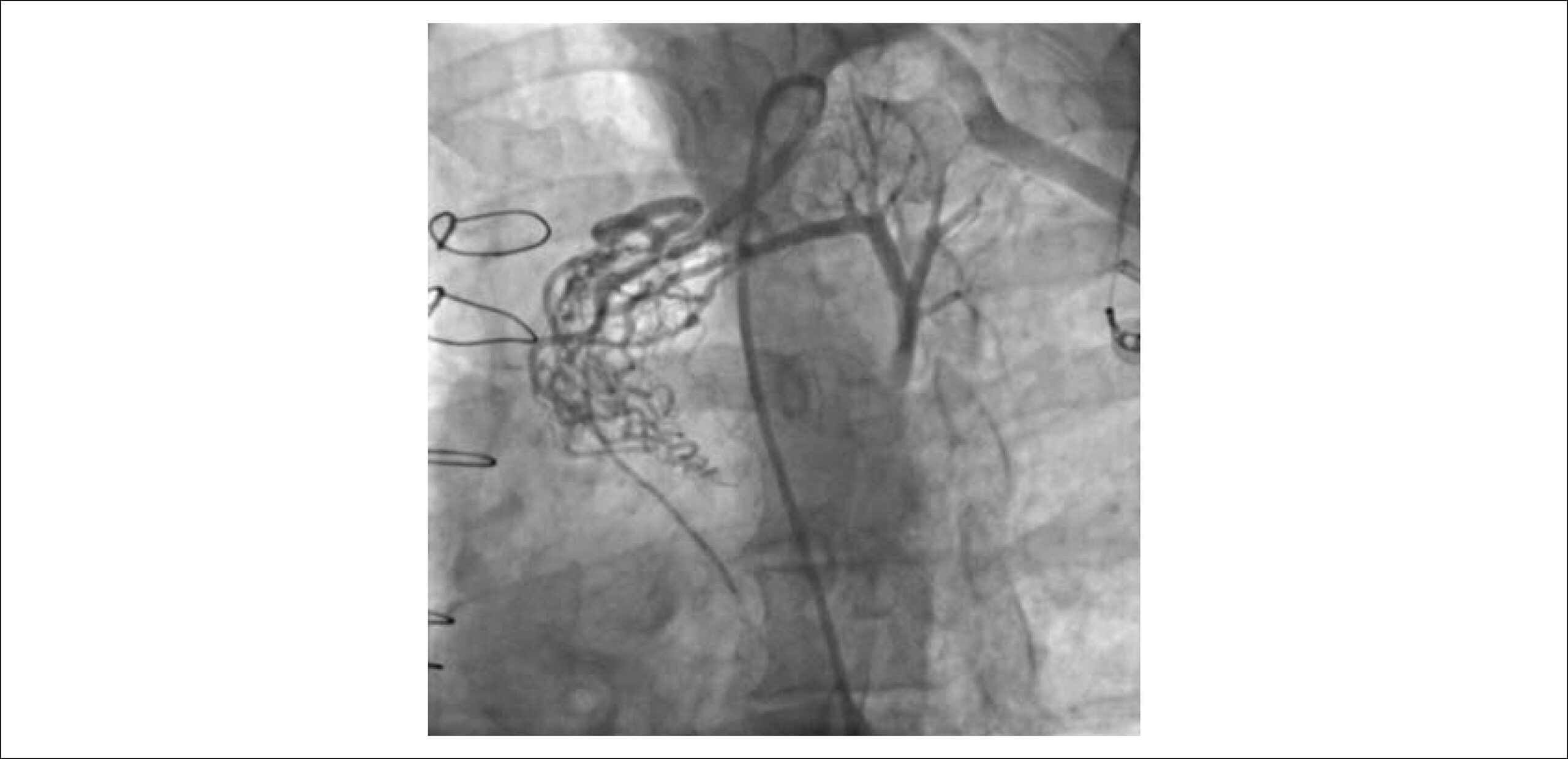
A 53-year-old man admitted to our outpatient clinic with symptoms of typical angina and shortness of breath despite optimal medical therapy. In his relevant history, he had a coronary artery bypass graft (CABG) operation in 2009 in which his LIMA was anastomosed to left anterior descending (LAD) and ramus artery sequentially. Coronary angiography including selective imaging of LIMA demonstrated a fistula formation originating from the proximal portion of the LIMA and draining to PA. After successful closure of fistula with transcatheter coil embolization, the patient was discharged without any complication and symptom.

In conclusion, although LIMA to PA fistula is an infrequent clinical condition, it should be considered as a potential cause of persistent angina after CABG operation. Treatment options include conservative medical therapy, surgical ligation and endovascular interventions. The best therapy should be individualised for each patient in respect to patient’s symptoms, surgical compatibility and anatomy of fistula.

  • Arterio-Arterial Fistula
  • Cardiac Catheterization
  • Drug-Eluting Stents
  • Embolization, Therapeutic
  • Mammary Arteries/surgery
  • Pulmonary Artery
  • Self Expandable Metallic Stents
Read Full Article
Creative Commons Attribution (CC BY) Creative Commons license
02/12/2019 DOI: 10.5935/abc.20190196 Views 2
Figure 1
ABC
Case Report

Extensive Anterior Myocardial Infarction … and Something Else?

Andrés Ricardo Pérez Riera et al. Raimundo Barbosa Barros Antônio Fernandes Silva e Sousa Neto Rodrigo Daminello Raimundo … Luiz Carlos de Abreu Kjell Nikus

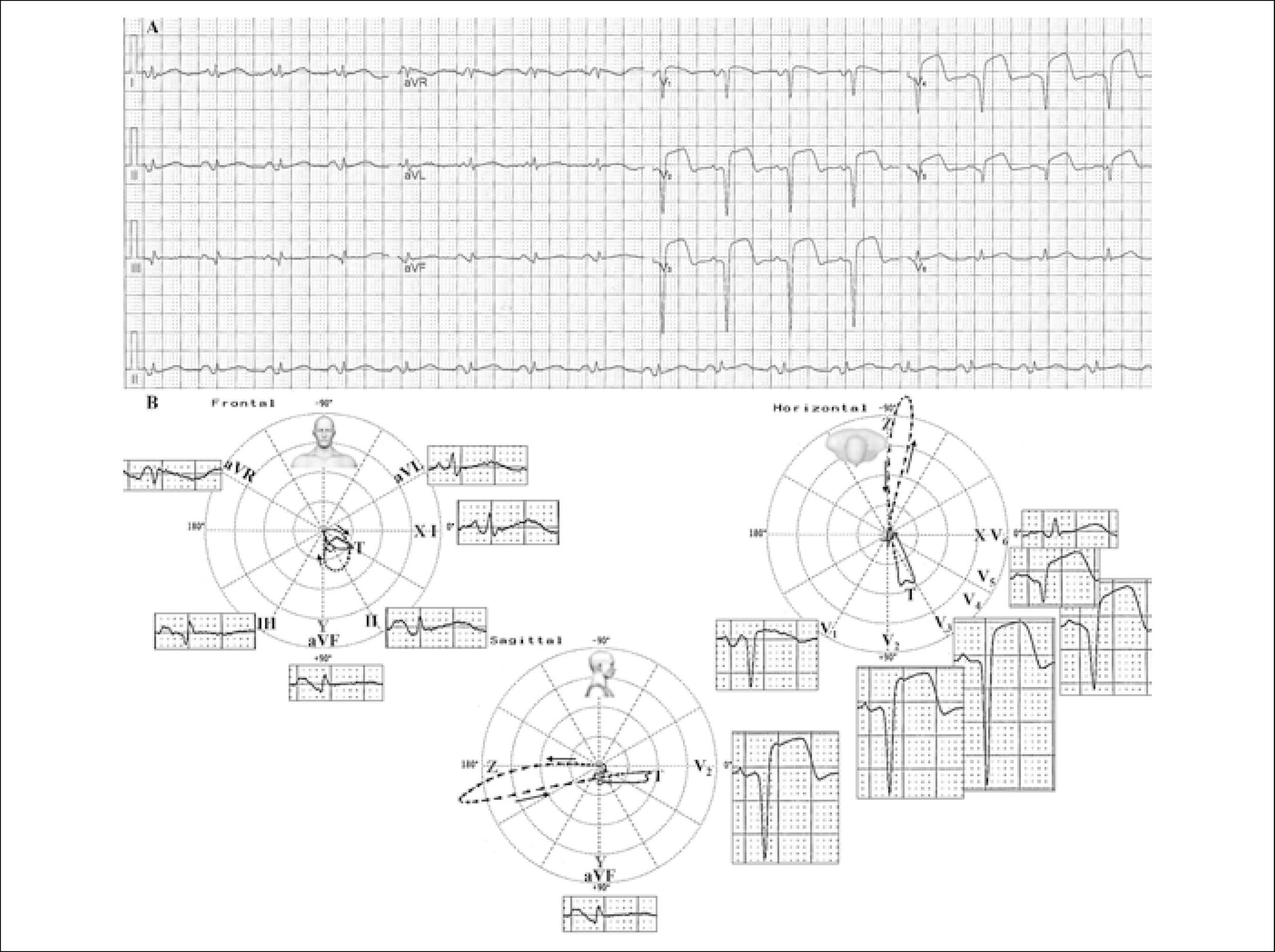
Case report

A 64-year-old Caucasian female, with a one-week history of stress angina. She was admitted to the hospital 2 hours after the onset of oppressive retrosternal pain at rest.

Risk factors: hypertension, smoker, dyslipidemia and diabetes.

[…]

  • Arrhythmias Cardiac
  • Diagnosis Imaging
  • Drug-Eluting Stents
  • Myocardial Infarction/physiopathology
  • P Wave
  • Percutaneous Coronary Intervention
  • Risk Factors
Read Full Article
Creative Commons Attribution (CC BY) Creative Commons license
15/07/2019 DOI: 10.5935/abc.20190096 Views 2
ABC
Editorial

Brazil: Two Realities for the Treatment of One Disease

Leonardo Guimarães et al. Adriano Caixeta

Current drug-eluting stents (DES) are safer and more effective (lower restenosis rates) than bare-metal stents (BMS),, and are able to reduce short- and long-term cardiovascular outcomes., In patients with ST segment elevation acute myocardial infarction (STEMI), the randomized study EXAMINATION evaluated 1,498 patients with STEMI, who were allocated for the treatment of percutaneous coronary intervention (PCI) with new-generation DES containing everolimus or BMS. After a 5-year follow-up, there was a relative reduction of combined outcomes and mortality of 20% and 30%, respectively, in favor of DES. Finally, despite the higher initial cost in the index procedure, DESs present better cost-effectiveness compared to BMS on long-term. In this context, in 2018, the most current Guideline for coronary artery bypass grafting of the European Society of Cardiology considers recommendation Class I the use of DES in any and all clinical settings, including STEMI.

Cardiovascular disease is the leading cause of death worldwide and diabetes mellitus is one of the most important risk factors for coronary atherosclerotic disease (CAD). Diabetic patients present 2 to 3-fold higher mortality after acute coronary syndrome compared to non-diabetics. Besides, as these patients present expressive endothelial dysfunction, high inflammatory response to vascular injury, diffuse CAD and coronary arteries of smaller caliber, they develop higher rates of in-stent restenosis., In view of that, using DES is even more imperative in patients with diabetes, and presents 87% less risk of in-stent restenosis and 77% less risk of revascularization of the target lesion compared to BMS.

[…]

  • Cardiovascular Diseases, mortality
  • Coronary Artery Disease
  • Diabetes Mellitus
  • Drug-Eluting Stents
  • Myocardial Revascularization
  • Percutaneous Coronary Intervention
  • ST Elevation Myocardial Infarction
Read Full Article
Creative Commons Attribution (CC BY) Creative Commons license
06/06/2019 DOI: 10.5935/abc.20190093 Views 1
ABC
Editorial

Evidence based decision making between PCI and CABG

Carlos Collet

For the last five decades, coronary artery bypass grafting (CABG) surgery has been recommended for patients with unprotected left main (ULM) and multivessel coronary artery disease (MVD). In these populations, CABG reduces mortality compared to medical management. In patients with MVD, several randomized clinical trials established the superiority of CABG over percutaneous coronary interventions (PCI) in terms of hard clinical endpoints., In the ULM subgroup of the SYNTAX I trial, comparable outcomes between PCI and CABG were observed at five years. This finding triggered the design and execution of the EXCEL and NOBLE trials that confirmed equipoise in major adverse cardiovascular and cerebral events between PCI and CABG in patients with ULM coronary artery disease (CAD).,

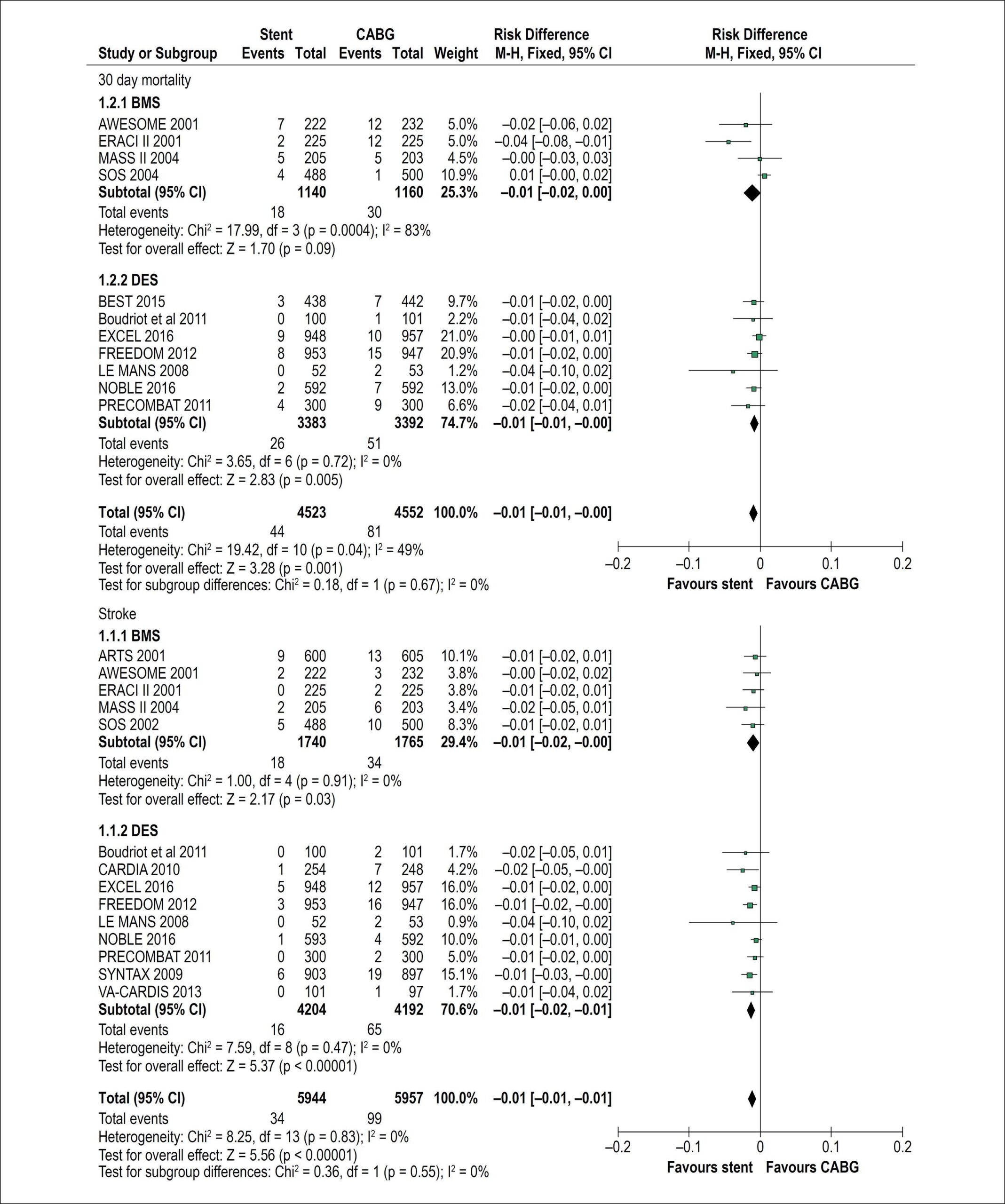
The accumulation of evidence has allowed to better understand which patients may benefit from a determined revascularization strategy. In the current issue of the Journal, Negreiros de Andrade et al. present a study-level meta-analysis comparing clinical outcomes after PCI and CABG in patients with ULMCAD and MVD. The authors should be commended for the stratified analysis aiming at providing practical information for the cardiovascular community. Based on the current state of evidence we can state that 1) in patients with ULMCAD, PCI can be considered an alternative to CABG in patients with low anatomical complexity, and 2) patients with MVD have better clinical outcomes when treated with CABG. When these two populations were combined, the present meta-analysis showed an early (<30 days) benefit of PCI in terms of mortality and stroke, and long-term advantage of CABG in death and myocardial infarction.

[…]

  • Clinical Decision – Making
  • Coronary Vessels
  • Drug-Eluting Stents
  • Myocardial Revascularization/mortality
  • Percutaneous Coronary Intervention
  • Randomized Controlled Trials
  • Stents
Read Full Article
Creative Commons Attribution (CC BY) Creative Commons license
06/06/2019 DOI: 10.5935/abc.20190076 Views 1
Figure 1
ABC
Original Article

Stent versus Coronary Artery Bypass Surgery in Multi-Vessel and Left Main Coronary Artery Disease: A Meta-Analysis of Randomized Trials with Subgroups Evaluation

Pedro José Negreiros de Andrade et al. João Luiz de Alencar Araripe Falcão Breno de Alencar Araripe Falcão Hermano Alexandre Lima Rocha

Abstract

Background:

Comparison between percutaneous coronary intervention (PCI) using stents and Coronary Artery Bypass Grafting (CABG) remains controversial.

Objective:

To conduct a systematic review with meta-analysis of PCI using Stents versus CABG in randomized controlled trials.

Methods:

Electronic databases were searched to identify randomized trials comparing PCI using Stents versus CABG for multi-vessel and unprotected left main coronary artery disease (LMCAD). 15 trials were found and their results were pooled. Differences between trials were considered significant if p < 0.05.

Results:

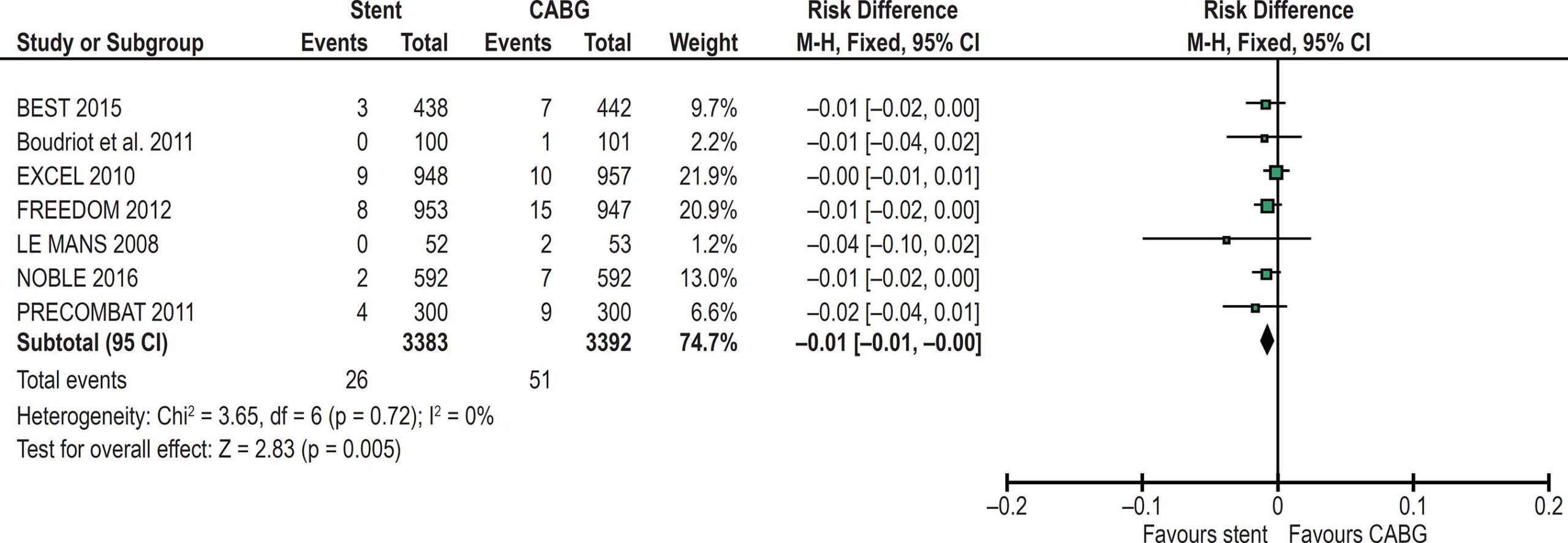
In the pooled data (n = 12,781), 30 days mortality and stroke were lower with PCI (1% versus 1.7%, p = 0.01 and 0.6% versus 1.7% p < 0.0001); There was no difference in one and two year mortality (3.3% versus 3.7%, p = 0.25; 6.3% versus 6.0%, p = 0.5). Long term mortality favored CABG (10.6% versus 9.4%, p = 0.04), particularly in trials of DES era (10.1% versus 8.5%, p = 0.01). In diabetics (n = 3,274) long term mortality favored CABG (13.7% versus 10.3%; p < 0.0001). In six trials of LMCAD (n = 4,700) there was no difference in 30 day mortality (0.6%versus 1.1%, p = 0.15), one year mortality (3% versus 3.7%, p = 0.18), and long term mortality (8.1% versus 8.1%) between PCI and CABG; the incidence of stroke was lower with PCI (0.3% versus 1.5%; p < 0.001). Diabetes and a high SYNTAX score were the subgroups that influenced more adversely the results of PCI.

Conclusion:

Compared with CABG, PCI using Stents showed lower 30 days mortality, higher late mortality and lower incidence of stroke. Diabetes and a high SYNTAX were the subgroups that influenced more adversely the results of PCI.

  • Coronary Vessels
  • Drug-Eluting Stents
  • Meta-Analysis
  • Myocardial Revascularization/mortality
  • Percutaneous Coronary Intervention
  • Randomized Controlled Trial
  • Stents
Read Full Article
Creative Commons Attribution (CC BY) Creative Commons license
21/02/2019 DOI: 10.5935/abc.20190027 Views 1
IJCS
Original Article

Incidence and Characteristics Angiographic of Patients with Acute Myocardial

Cynthia Kallás Bachur et al. José Alexandre Bachur Juliana Pereira Machado Eugenia Velludo Veiga … Sarah da Silva Candido Ricardo Barbosa Julia Granado Carraro Danielle de Freitas Gonçalves Maria Georgina Marques Tonello

Abstract

Background:

Acute myocardial infarction (AMI) is defined as the death of cardiomyocytes due to prolonged ischemia, caused by thrombosis and / or vasospasm on an atherosclerotic plaque.

Objective:

To determine the incidence of patients with myocardial infarction undergoing primary angioplasty; characterize the anthropometric variables and identify the risk factors in this population.

Methods:

This was a cross-sectional, observational, retrospective study in which we collected secondary data from medical records of a hospital in a city in the state of São Paulo, where the largest number of interventions is via Public Health System, patients with a diagnosis of Myocardial Infarction, undergoing primary coronary angioplasty, from January 2011 to December 2013.

Results:

The total sample consisted of 437 subjects, 282 male and 155 female. In this study, there was predominance of myocardial infarction in the anterior descending artery ADA (45.51%), followed by right coronary artery RCA (38.46%), in carrying out the rescue angioplasty and stent implantation in 96.62% of cases. There was a predominance of high blood pressure as risk factors for 73.71%, followed by smoking with 41.66% of the sample.

Conclusion:

According to the present study data, it appears a higher prevalence of infarction occurred in the ADA, with individuals performing the rescue angioplasty procedure and the placement of the stent, and a growing incidence of drug stent placement. We observed a high incidence of risk factors, prevailing hypertension. (Int J Cardiovasc Sci. 2018; [online].ahead print, PP.0-0).

  • Angioplasty
  • Drug-Eluting Stents
  • Hypertension
  • Myocardial Infarction
  • Risk Factors
  • Tobaco Use Disorder
Read Full Article
Creative Commons Attribution (CC BY) Creative Commons license
27/08/2018 DOI: 10.5935/2359-4802.20180061 Views 2
Figure 1
IJCS
Case Report

Sirolimus-Eluting Balloon Treatment of Distal Internal Mammary Artery Anastomosis: Optical Coherence Tomography Findings

Marcos Garcia-Guimarães et al. Ramón Maruri-Sanchez Javier Cuesta Fernando Rivero … Teresa Bastante Fernando Alfonso

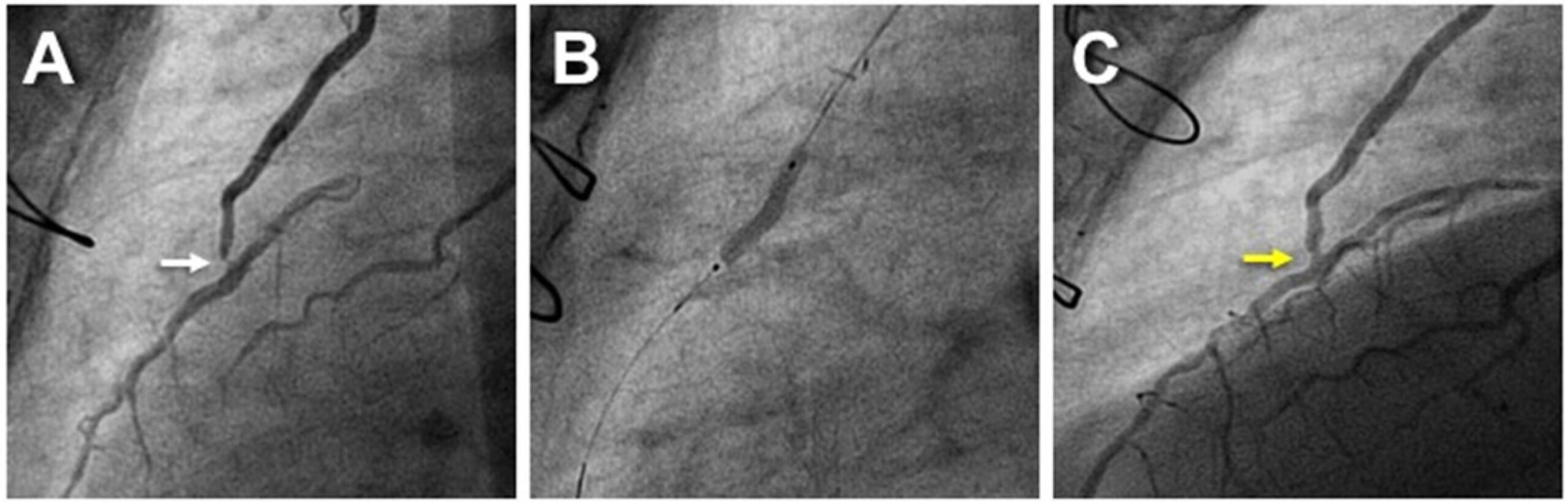
Drug-eluting balloons (DEB) represent an interesting alternative to current generation drug-eluting stents (DES) in selected anatomic scenarios, such as in-stent restenosis, small-vessel disease and bifurcation lesions, where the systematic implantation of DES may result less appealing., In particular, lesions located at the distal anastomosis of a bypass graft (an artificially created bifurcation) constitute a unique anatomic setting, where DEB may overcome some inherent limitations of DES resulting from the implantation of a metallic platform throughout the bypass graft into and across the native distal vessel.

Herein we present, to the best of our knowledge, the first report of the treatment of a lesion located at the distal anastomosis of a left internal mammary artery (LIMA) to the left anterior descending coronary artery (LAD) with a novel sirolimus-DEB. Interestingly, optical coherence tomography (OCT) findings proved to be of major value to guide the procedure.

[…]

  • Angioplasty, Balloon, Coronary/methods
  • Coronary Artery Disease/diagnosis
  • Drug-Eluting Stents
  • Sirolimus
  • Treatment Outcome
Read Full Article
Creative Commons Attribution (CC BY) Creative Commons license
01/01/2018 DOI: 10.5935/2359-4802.20180040 Views 1
Figure 1
IJCS
Original Article

Drug-eluting stents Versus Coronary Artery Bypass Grafting in Multivessel Disease and Left Main Obstruction: Meta-analysis of Randomized Clinical Trials

Pedro José Negreiros de Andrade et al. Hermano Alexandre Lima Rocha João Luiz de Alencar Araripe Falcão Antonio Thomaz de Andrade Breno de Alencar Araripe Falcão

Abstract

Background:

The choice between percutaneous coronary intervention (PCI) and coronary artery bypass grafting (CABG) remains controversial.

Objective:

To conduct a meta-analysis of randomized studies comparing drug-eluting stents (DES) and CABG in multivessel disease or obstruction of the left main coronary artery.

Method:

Electronic databases were searched systematically to evaluate results of randomized trials comparing PCI with DES versus CABG in multivessel disease and obstruction of the left main coronary artery. Ten studies were identified.

Results:

In the aggregated results (n = 9268), mortality at 30 days and incidence of stroke favored PCI (0.8% versus 1.5%, p = 0.005; 0.4% versus 1.5%, p < 0.0001, respectively). There was no difference in mortality at 1 year (3.4% versus 3.5%, p = 0.50). The late mortality favored CABG (10.1% versus 8.5%, p = 0.01). In patients with diabetes derived from four studies (n = 3830), late mortality favored CABG (12.5% versus 9.7%, p < 0.0001). In six studies of left main coronary artery obstruction (n = 4700), the incidence of stroke favored PCI (0.3% versus 1.5%, p < 0.001) and there was no difference in mortality at 30 days (0.8% versus 1.3%, p = 0.15), mortality at 1 year, or late mortality (8.1% versus 8.1%). The subgroups with high SYNTAX score and diabetes were those influencing most strongly and adversely the PCI results.

Conclusion:

When compared with PCI, CABG was superior in regards to late mortality and inferior in regards to 30-day mortality and incidence of stroke. Diabetes and SYNTAX score strongly impacted the results.

  • Drug-Eluting Stents
  • Meta-Analysis
  • Myocardial Revascularization
  • Randomized controlled trials as topic
Read Full Article
Creative Commons Attribution (CC BY) Creative Commons license
01/01/2018 DOI: 10.5935/2359-4802.20180005
Figure 1
ABC
Original Article

Impact of Paclitaxel-Eluting Balloons Compared to Second-Generation Drug-Eluting Stents for of In-Stent Restenosis in a Primarily Acute Coronary Syndrome Population

Guillaume Marquis-Gravel et al. Alexis Matteau Brian J Potter François Gobeil … Nicolas Noiseux Louis-Mathieu Stevens Samer Mansour

Abstract

Background:

The place of drug-eluting balloons (DEB) in the treatment of in-stent restenosis (ISR) is not well-defined, particularly in a population of all-comers with acute coronary syndromes (ACS).

Objective:

Compare the clinical outcomes of DEB with second-generation drug-eluting stents (DES) for the treatment of ISR in a real-world population with a high proportion of ACS.

Methods:

A retrospective analysis of consecutive patients with ISR treated with a DEB compared to patients treated with a second-generation DES was performed. The primary endpoint was a composite of major adverse cardiovascular events (MACE: all-cause death, non-fatal myocardial infarction, and target lesion revascularization). Comparisons were performed using Cox proportional hazards multivariate adjustment and Kaplan-Meier analysis with log-rank.

Results:

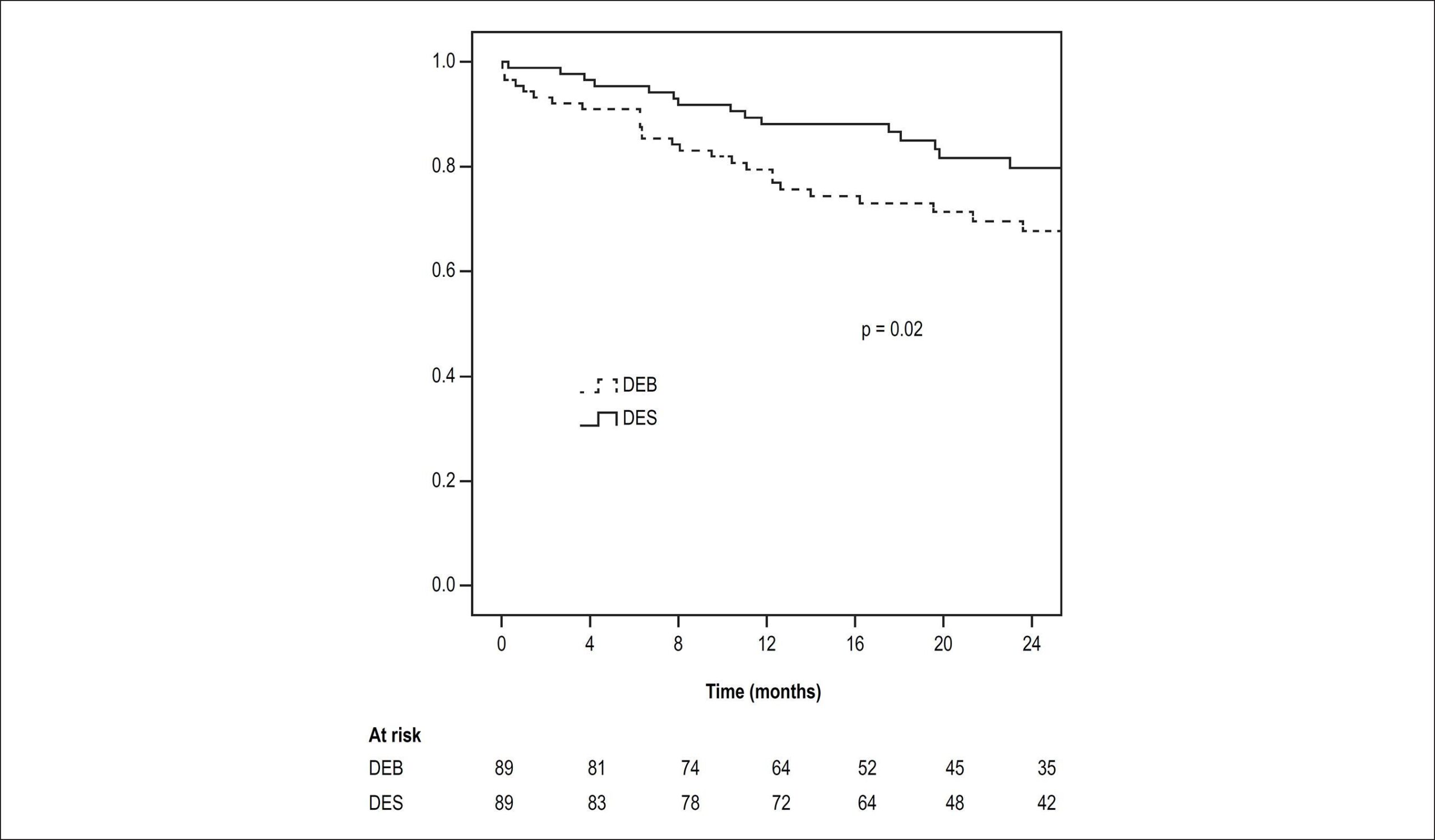
The cohort included 91 patients treated with a DEB and 89 patients treated with a DES (74% ACS). Median follow-up was 26 months. MACE occurred in 33 patients (36%) in the DEB group, compared to 17 patients (19%) in the DES group (p log-rank = 0.02). After multivariate adjustment, there was no significant difference between the groups (HR for DEB = 1.45 [95%CI: 0.75-2.83]; p = 0.27). Mortality rates at 1 year were 11% with DEB, and 3% with DES (p = 0.04; adjusted HR = 2.85 [95%CI: 0.98-8.32]; p = 0.06).

Conclusion:

In a population with a high proportion of ACS, a non-significant numerical signal towards increased rates of MACE with DEB compared to second-generation DES for the treatment of ISR was observed, mainly driven by a higher mortality rate. An adequately-powered randomized controlled trial is necessary to confirm these findings.

  • Acute coronary syndrome
  • Angioplasty, Balloon
  • Coronary Restenosis
  • Drug-Eluting Stents
  • Paclitaxel
Read Full Article
Creative Commons Attribution (CC BY) Creative Commons license
28/09/2017 DOI: 10.5935/abc.20170142
Figura 1
ABC
Image

Crescent Moon Image as a Peculiar Complication During Percutaneous Coronary Intervention of an In-Stent Chronic Total Occlusion

Mohsen Mohandes et al. Jordi Guarinos Cristina Moreno Sergio Rojas Alfredo Bardají

Case

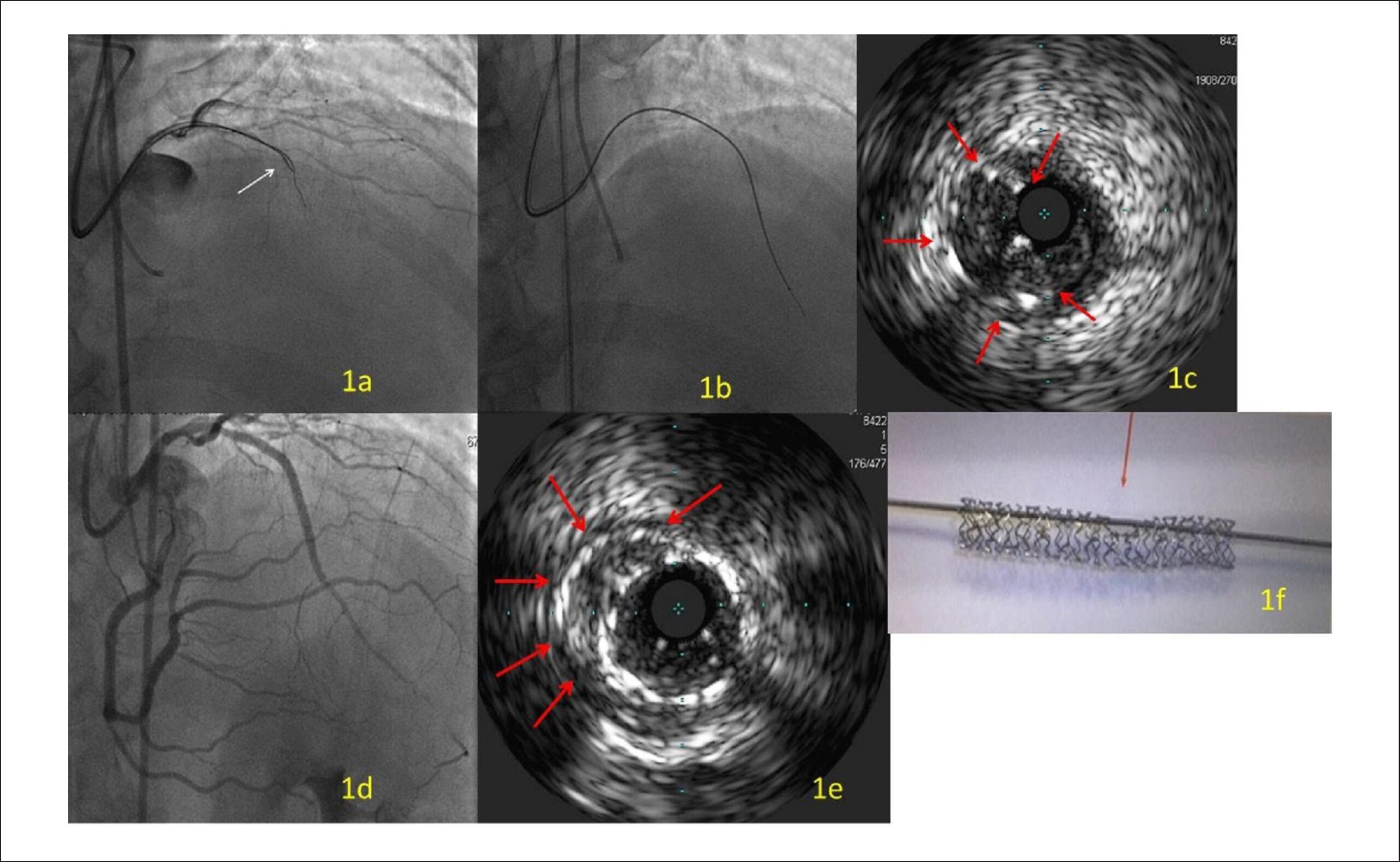
55-year-old male with history of ischemic cardiomyopathy with previous percutaneous coronary intervention (PCI) in the anterior descending coronary artery (LAD) middle segment was admitted to our hospital for chest pains. A new coronary angiogram showed in-stent chronic total occlusion (ISCTO) of LAD receiving collaterals from right coronary artery (RCA). Left circumflex (LCX) was totally occluded and RCA presented a significant mid-segment lesion. Complete percutaneous revascularization was planned. First attempt to recanalize the LAD failed because the lesion obstructed the passage of the balloon, so a second dedicated attempt was planned. Bilateral injection using radial and femoral arteries was used, and a Confianza Pro 9 (Asahi Intecc, Japan) guidewire was progressively advanced through the ISCTO () and the wire’s position in true lumen was verified by contralateral injection. Considering the lesion, which impeded the balloon’s passage, a microcatheter Tornus (Asahi Intecc, Japan) was utilized to penetrate and advance through and past the occlusion (). After balloon predilatation, intravascular ultrasound sonography (IVUS) verified the position of the wire in a very short segment into true lumen, but outside the previously implanted stent (). Several drug eluting stents (DES) were implanted and the artery was successfully recanalized, although a very distal embolization was detected (). A new IVUS examination showed partial crush of the previous stent in the shape of a crescent moon ().

[…]

  • Cardiac Catheters
  • Coronary Occlusion
  • Drug-Eluting Stents
  • Percutaneous Coronary Intervention
  • Ultrasonography, Interventional
Read Full Article
Creative Commons Attribution (CC BY) Creative Commons license
01/08/2017 DOI: 10.5935/abc.20170073
Figure 1
ABC
Brief Communication

Impact of Neointimal Calcifications on Acute Stent Performance during the Treatment of In-Stent Restenosis

Emile Mehanna et al. Guilherme Ferragut Attizzani Daisuke Nakamura Setsu Nishino … Anas Fares Reem Aoun Marco Aurelio Costa Hiram Grando Bezerra

Abstract

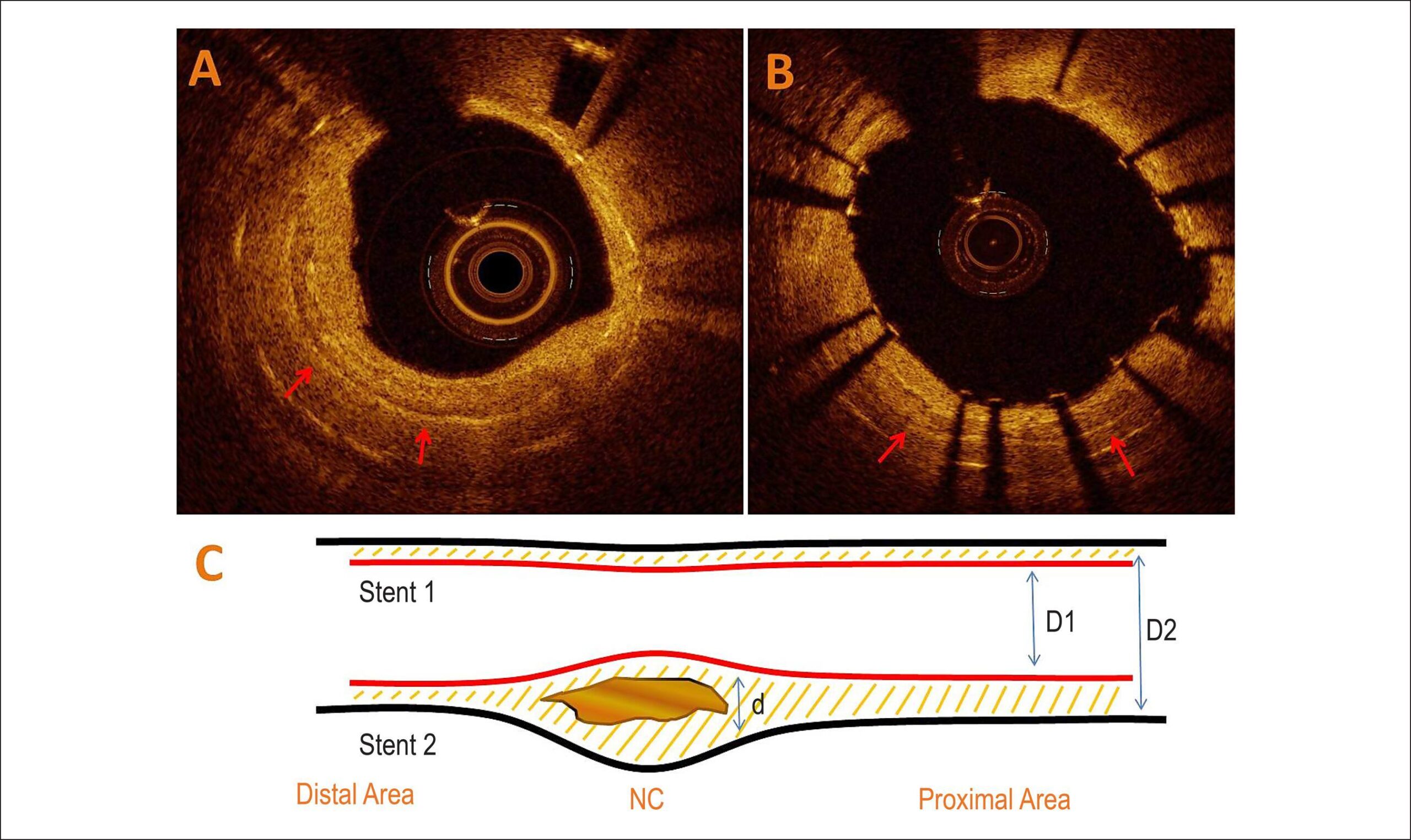
Optical coherence tomography (OCT) has become the invasive imaging modality of choice for coronary stent assessment due to its unmatched spatial resolution. Neointimal calcification (NC) is a rare finding, observed in 5-10% of in-stent restenosis (ISR) neointima. The impact of NC on percutaneous coronary intervention of ISR is unknown. We therefore present the outcome of six unique cases of ISR and NC in which OCT was used to evaluate the impact of NC on the quality of stent-in-stent deployment for the treatment of ISR. This series demonstrates for the first time the impact of NC on stent expansion, a finding which might help guiding percutaneous coronary intervention for ISR with NC.

  • Drug-Eluting Stents
  • in-stent restenosis
  • neointimal calcification
  • Optical coherence tomography
  • Percutaneous Coronary Intervention
Read Full Article
Creative Commons Attribution (CC BY) Creative Commons license
01/05/2016 DOI: 10.5935/abc.20160068
Figure 1
ABC
Original Article

First- Versus Second-Generation Drug-Eluting Stents in Acute Coronary Syndromes (Katowice-Zabrze Registry)

Damian Kawecki et al. Beata Morawiec Janusz Dola Wojciech Wanha … Grzegorz Smolka Aleksandra Pluta Kamil Marcinkiewicz Andrzej Ochała Ewa Nowalany-Kozielska Wojciech Wojakowski

Abstract

Background:

There are sparse data on the performance of different types of drug-eluting stents (DES) in acute and real-life setting.

Objective:

The aim of the study was to compare the safety and efficacy of first- versus second-generation DES in patients with acute coronary syndromes (ACS).

Methods:

This all-comer registry enrolled consecutive patients diagnosed with ACS and treated with percutaneous coronary intervention with the implantation of first- or second-generation DES in one-year follow-up. The primary efficacy endpoint was defined as major adverse cardiac and cerebrovascular event (MACCE), a composite of all-cause death, nonfatal myocardial infarction, target-vessel revascularization and stroke. The primary safety outcome was definite stent thrombosis (ST) at one year.

Results:

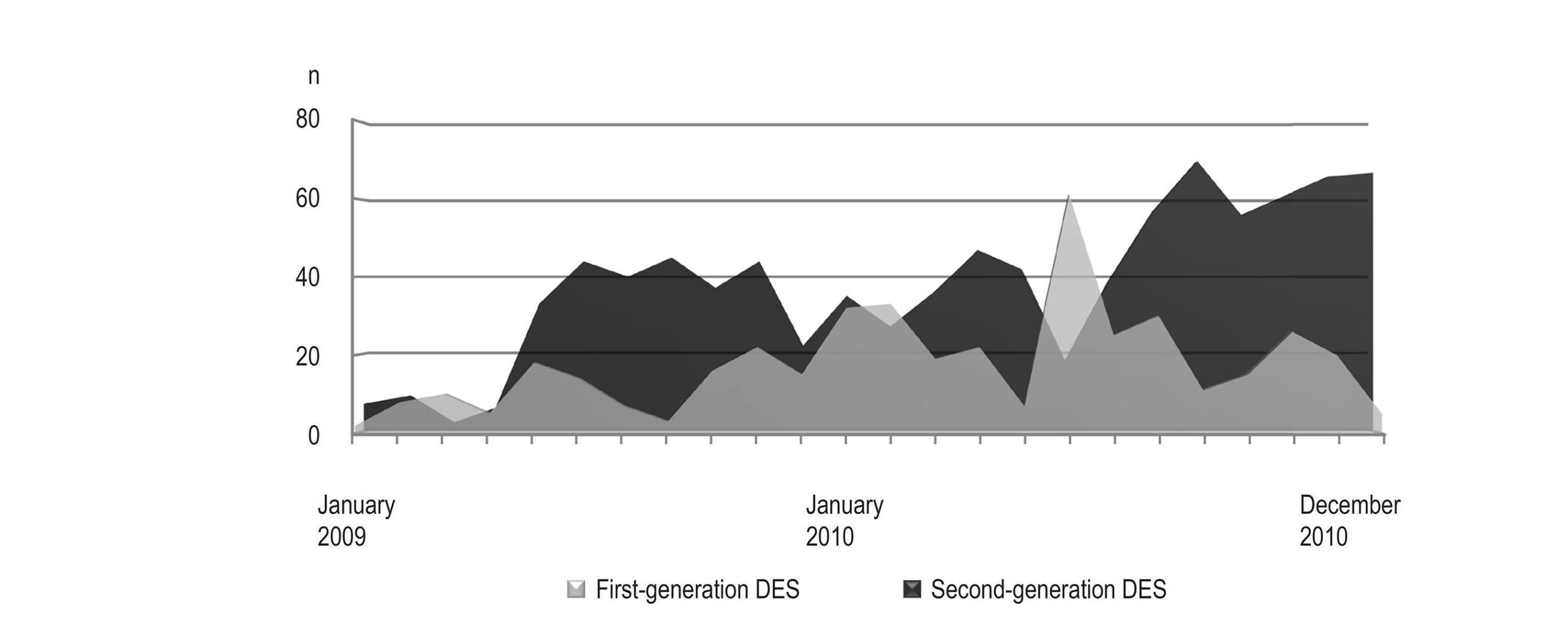
From the total of 1916 patients enrolled into the registry, 1328 patients were diagnosed with ACS. Of them, 426 were treated with first- and 902 with second-generation DES. There was no significant difference in the incidence of MACCE between two types of DES at one year. The rate of acute and subacute ST was higher in first- vs. second-generation DES (1.6% vs. 0.1%, p < 0.001, and 1.2% vs. 0.2%, p = 0.025, respectively), but there was no difference regarding late ST (0.7% vs. 0.2%, respectively, p = 0.18) and gastrointestinal bleeding (2.1% vs. 1.1%, p = 0.21). In Cox regression, first-generation DES was an independent predictor for cumulative ST (HR 3.29 [1.30-8.31], p = 0.01).

Conclusions:

In an all-comer registry of ACS, the one-year rate of MACCE was comparable in groups treated with first- and second-generation DES. The use of first-generation DES was associated with higher rates of acute and subacute ST and was an independent predictor of cumulative ST.

  • Acute coronary syndrome
  • Drug-Eluting Stents
  • Percutaneous Coronary Intervention
  • Thrombosis
Read Full Article
Creative Commons Attribution (CC BY) Creative Commons license
05/04/2016 DOI: 10.5935/abc.20160043
ABC
Original Article

Spectral Analysis Related to Bare-Metal and Drug-Eluting Coronary Stent Implantation

Rose Mary Ferreira Lisboa da Silva et al. Carlos Augusto Bueno Silva Otaviano José Greco Maria da Consolação Vieira Moreira

Background:

The autonomic nervous system plays a central role in cardiovascular regulation; sympathetic activation occurs during myocardial ischemia.

Objective:

To assess the spectral analysis of heart rate variability during stent implantation, comparing the types of stent.

Methods:

This study assessed 61 patients (mean age, 64.0 years; 35 men) with ischemic heart disease and indication for stenting. Stent implantation was performed under Holter monitoring to record the spectral analysis of heart rate variability (Fourier transform), measuring the low-frequency (LF) and high-frequency (HF) components, and the LF/HF ratio before and during the procedure.

Results:

Bare-metal stent was implanted in 34 patients, while the others received drug-eluting stents. The right coronary artery was approached in 21 patients, the left anterior descending, in 28, and the circumflex, in 9. As compared with the pre-stenting period, all patients showed an increase in LF and HF during stent implantation (658 versus 185 ms2, p = 0.00; 322 versus 121, p = 0.00, respectively), with no change in LF/HF. During stent implantation, LF was 864 ms2 in patients with bare-metal stents, and 398 ms2 in those with drug-eluting stents (p = 0.00). The spectral analysis of heart rate variability showed no association with diabetes mellitus, family history, clinical presentation, beta-blockers, age, and vessel or its segment.

Conclusions:

Stent implantation resulted in concomitant sympathetic and vagal activations. Diabetes mellitus, use of beta-blockers, and the vessel approached showed no influence on the spectral analysis of heart rate variability. Sympathetic activation was lower during the implantation of drug-eluting stents.

  • Drug-Eluting Stents
  • Heart Rate
  • Myocardial Ischemia
  • spectrum analysis
  • Stents
Read Full Article
Creative Commons Attribution (CC BY) Creative Commons license
15/07/2014 DOI: 10.5935/abc.20140094 Views 1
Figure 1
ABC
Original Article

Long-term Outcomes of Drug-eluting versus Bare-metal stent for ST-elevation Myocardial Infarction

Liping Wang et al. Hongyun Wang Pingshuan Dong Zhuanzhen Li … Yanyu Wang Nana Duan Yuwei Zhao Shaoxin Wang

Background:

Long-term outcomes of drug-eluting stents (DES) versus bare-metal stents (BMS) in patients with ST-segment elevation myocardial infarction (STEMI) remain uncertain.

Objective:

To investigate long-term outcomes of drug-eluting stents (DES) versus bare-metal stents (BMS) in patients with ST-segment elevation myocardial infarction (STEMI).

Methods:

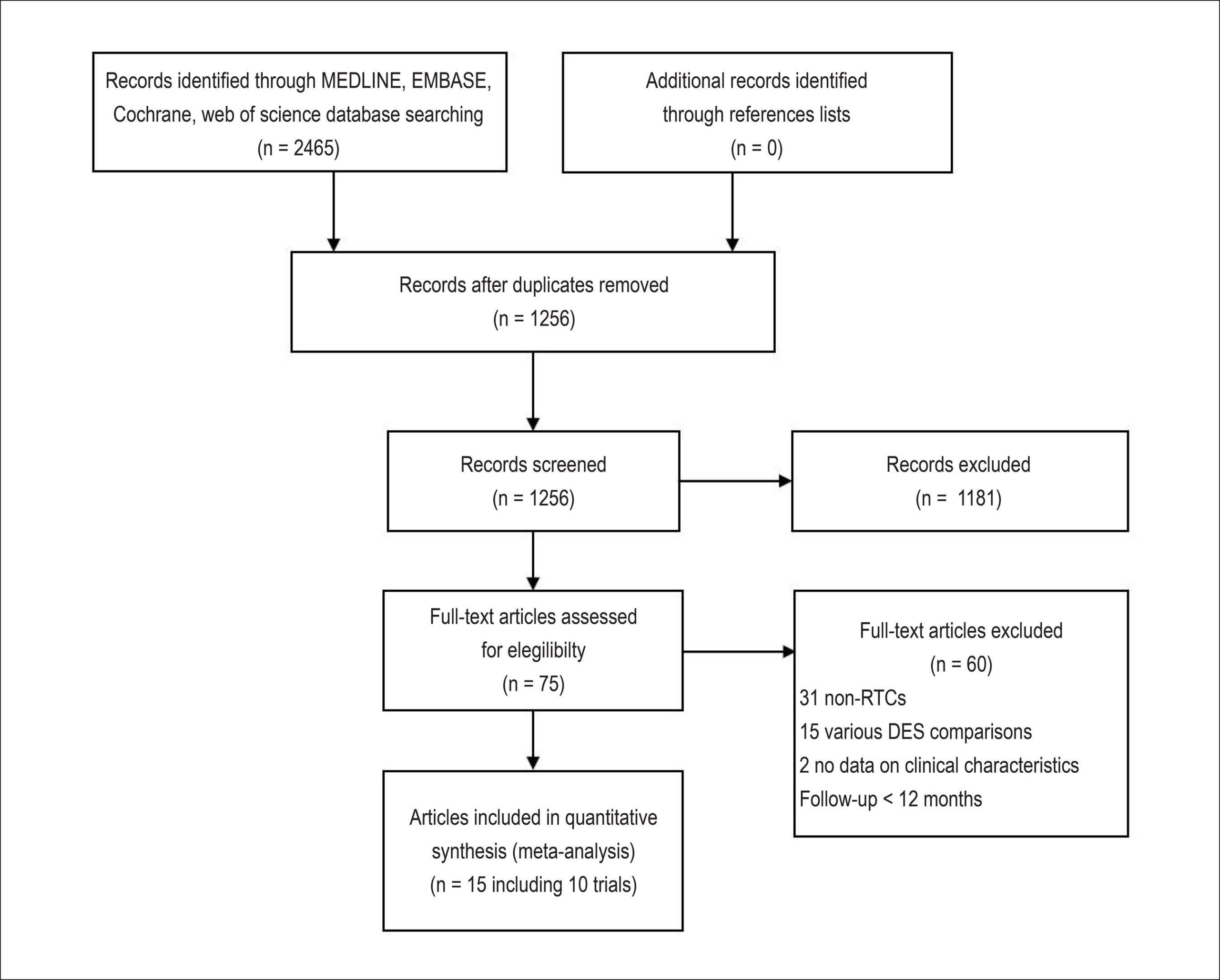
We performed search of MEDLINE, EMBASE, the Cochrane library, and ISI Web of Science (until February 2013) for randomized trials comparing more than 12-month efficacy or safety of DES with BMS in patients with STEMI. Pooled estimate was presented with risk ratio (RR) and its 95% confidence interval (CI) using random-effects model.

Results:

Ten trials with 7,592 participants with STEMI were included. The overall results showed that there was no significant difference in the incidence of all-cause death and definite/probable stent thrombosis between DES and BMS at long-term follow-up. Patients receiving DES implantation appeared to have a lower 1-year incidence of recurrent myocardial infarction than those receiving BMS (RR = 0.75, 95% CI 0.56 to 1.00, p= 0.05). Moreover, the risk of target vessel revascularization (TVR) after receiving DES was consistently lowered during long-term observation (all p< 0.01). In subgroup analysis, the use of everolimus-eluting stents (EES) was associated with reduced risk of stent thrombosis in STEMI patients (RR = 0.37, p=0.02).

Conclusions:

DES did not increase the risk of stent thrombosis in patients with STEMI compared with BMS. Moreover, the use of DES did lower long-term risk of repeat revascularization and might decrease the occurrence of reinfarction.

  • Acute Myocardial Infarction
  • Bare-metal stents
  • Drug-Eluting Stents
  • Long-term outcomes
  • Meta-Analysis
Read Full Article
Creative Commons Attribution (CC BY) Creative Commons license
06/06/2014 DOI: 10.5935/abc.20140070 Views 1

Could not load more articles. Please try again.

How to cite this article

EndNote RIS

Electronic Document Format (Vancouver)

Gomes MS, Cruz ARC, Martins BL, Caliano MH, Magalhães PS, Bandeira D, Costa R, et al. Coronary Artery Disease In A Rare Anatomical Scenario: Type IV Duplicated Left Anterior Descending Artery. ABC Imagem Cardiovascular 2026;39(3):e20260032.

Electronic Document Format (ABNT)

Gomes, Matheus Sacco; Cruz, Amanda Raquel Costa; Martins, Bruno Leal; Caliano, Mario Henrique; Magalhães, Patricia de Souza; Bandeira, Daniel; Costa, Ricardo; Centemero, Marinella Patrizia. Coronary Artery Disease In A Rare Anatomical Scenario: Type IV Duplicated Left Anterior Descending Artery. ABC Imagem Cardiovascular, v. 39, n. 3, e20260032, Sep. 2026.

Electronic Document Format (APA)

Gomes, M. S., Cruz, A. R. C., Martins, B. L., Caliano, M. H., Magalhães, P. S., Bandeira, D., Costa, R., & Centemero, M. P. (2026). Coronary Artery Disease In A Rare Anatomical Scenario: Type IV Duplicated Left Anterior Descending Artery. ABC Imagem Cardiovascular, 39(3), e20260032.

Electronic Document Format (ISO)

Gomes, Matheus Sacco and Cruz, Amanda Raquel Costa and Martins, Bruno Leal and Caliano, Mario Henrique and Magalhães, Patricia de Souza and Bandeira, Daniel and Costa, Ricardo and Centemero, Marinella Patrizia. Coronary Artery Disease In A Rare Anatomical Scenario: Type IV Duplicated Left Anterior Descending Artery. ABC Imagem Cardiovascular [online]. 2026, vol. 39, n. 3, [cited 2026-10-14], e20260032. Available from: <https://journals.cardiol.br/en/article/coronary-artery-disease-in-a-rare-anatomical-scenario-type-iv-duplicated-left-anterior-descending-artery/>. ISSN 2318-8219

EndNote RIS

Electronic Document Format (Vancouver)

Arruda JA, Costa Junior JR. Small Vessels, Big Decisions. Arquivos Brasileiros de Cardiologia 2026;123(2):e20260207.

Electronic Document Format (ABNT)

Arruda, José Airton de; Costa Junior, José de Ribamar. Small Vessels, Big Decisions. Arquivos Brasileiros de Cardiologia, v. 123, n. 2, e20260207, May. 2026.

Electronic Document Format (APA)

Arruda, J. A. , & Costa Junior, J. R. (2026). Small Vessels, Big Decisions. Arquivos Brasileiros de Cardiologia, 123(2), e20260207.

Electronic Document Format (ISO)

Arruda, José Airton de and Costa Junior, José de Ribamar. Small Vessels, Big Decisions. Arquivos Brasileiros de Cardiologia [online]. 2026, vol. 123, n. 2, [cited 2026-10-14], e20260207. Available from: <https://journals.cardiol.br/en/article/small-vessels-big-decisions/>. ISSN 0066-782X

EndNote RIS

Electronic Document Format (Vancouver)

Slaviero JV, Manica ALL, Leite REGS, Borsa EP, Schmidt MM, Ogando RC, Teixeira JK, et al. Registry of Percutaneous Coronary Interventions in Very Small-Caliber Vessels: Analysis of a Sirolimus-Eluting Stent and Other Contemporary Drug-Eluting Stents. Arquivos Brasileiros de Cardiologia 2026;123(2):e20250145.

Electronic Document Format (ABNT)

Slaviero, João Vitor; Manica, André Luiz Langer; Leite, Rogério Eduardo Gomes Sarmento; Borsa, Eduarda Paiva; Schmidt, Marcia Moura; Ogando, Rodrigo Campos; Teixeira, Julia Kurtz; Guimarães, Raphael Boesche; Azmus, Alexandre Damiani; Gottschall, Carlos A. M.. Registry of Percutaneous Coronary Interventions in Very Small-Caliber Vessels: Analysis of a Sirolimus-Eluting Stent and Other Contemporary Drug-Eluting Stents. Arquivos Brasileiros de Cardiologia, v. 123, n. 2, e20250145, Mar. 2026.

Electronic Document Format (APA)

Slaviero, J. V., Manica, A. L. L., Leite, R. E. G. S., Borsa, E. P., Schmidt, M. M., Ogando, R. C., Teixeira, J. K., Guimarães, R. B., Azmus, A. D., & Gottschall, C. A. M. (2026). Registry of Percutaneous Coronary Interventions in Very Small-Caliber Vessels: Analysis of a Sirolimus-Eluting Stent and Other Contemporary Drug-Eluting Stents. Arquivos Brasileiros de Cardiologia, 123(2), e20250145.

Electronic Document Format (ISO)

Slaviero, João Vitor and Manica, André Luiz Langer and Leite, Rogério Eduardo Gomes Sarmento and Borsa, Eduarda Paiva and Schmidt, Marcia Moura and Ogando, Rodrigo Campos and Teixeira, Julia Kurtz and Guimarães, Raphael Boesche and Azmus, Alexandre Damiani and Gottschall, Carlos A. M.. Registry of Percutaneous Coronary Interventions in Very Small-Caliber Vessels: Analysis of a Sirolimus-Eluting Stent and Other Contemporary Drug-Eluting Stents. Arquivos Brasileiros de Cardiologia [online]. 2026, vol. 123, n. 2, [cited 2026-10-14], e20250145. Available from: <https://journals.cardiol.br/en/article/registry-of-percutaneous-coronary-interventions-in-very-small-caliber-vessels-analysis-of-a-sirolimus-eluting-stent-and-other-contemporary-drug-eluting-stents/>. ISSN 0066-782X

EndNote RIS

Electronic Document Format (Vancouver)

Prado GFA, Ribeiro HB. Small-Vessel Coronary Disease and Drug-Coated Balloons: Time to Reconsider Our Strategy?. Arquivos Brasileiros de Cardiologia 2025;122(10):e20250652.

Electronic Document Format (ABNT)

Prado, Guy F. A.; Ribeiro, Henrique Barbosa. Small-Vessel Coronary Disease and Drug-Coated Balloons: Time to Reconsider Our Strategy?. Arquivos Brasileiros de Cardiologia, v. 122, n. 10, e20250652, Dec. 2025.

Electronic Document Format (APA)

Prado, G. F. A., & Ribeiro, H. B. (2025). Small-Vessel Coronary Disease and Drug-Coated Balloons: Time to Reconsider Our Strategy?. Arquivos Brasileiros de Cardiologia, 122(10), e20250652.

Electronic Document Format (ISO)

Prado, Guy F. A. and Ribeiro, Henrique Barbosa. Small-Vessel Coronary Disease and Drug-Coated Balloons: Time to Reconsider Our Strategy?. Arquivos Brasileiros de Cardiologia [online]. 2025, vol. 122, n. 10, [cited 2026-10-14], e20250652. Available from: <https://journals.cardiol.br/en/article/small-vessel-coronary-disease-and-drug-coated-balloons-time-to-reconsider-our-strategy/>. ISSN 0066-782X

EndNote RIS

Electronic Document Format (Vancouver)

Gobbo MOS, Sudo RYU, Franco AJ, Pereira M, Milbradt TL, Bakir ZE, Pires IZ, et al. Paclitaxel-Coated Balloons versus Drug-Eluting Stents in Small Vessel Coronary Artery Disease: A Systematic Review and Meta-Analysis. Arquivos Brasileiros de Cardiologia 2025;122(10):e20250069.

Electronic Document Format (ABNT)

Gobbo, Marília Oberto da Silva; Sudo, Renan Yuji Ura; Franco, Ancy Jenil; Pereira, Mable; Milbradt, Tanize Louize; Bakir, Zeynep Eylul; Pires, Iago Zang; Akinfenwa, Stephen; Agostini, Gustavo Luís; Pellegrini, Denise; Caramori, Paulo R. A.. Paclitaxel-Coated Balloons versus Drug-Eluting Stents in Small Vessel Coronary Artery Disease: A Systematic Review and Meta-Analysis. Arquivos Brasileiros de Cardiologia, v. 122, n. 10, e20250069, Dec. 2025.

Electronic Document Format (APA)

Gobbo, M. O. S., Sudo, R. Y. U., Franco, A. J., Pereira, M., Milbradt, T. L., Bakir, Z. E., Pires, I. Z., Akinfenwa, S., Agostini, G. L., Pellegrini, D., & Caramori, P. R. A. (2025). Paclitaxel-Coated Balloons versus Drug-Eluting Stents in Small Vessel Coronary Artery Disease: A Systematic Review and Meta-Analysis. Arquivos Brasileiros de Cardiologia, 122(10), e20250069.

Electronic Document Format (ISO)

Gobbo, Marília Oberto da Silva and Sudo, Renan Yuji Ura and Franco, Ancy Jenil and Pereira, Mable and Milbradt, Tanize Louize and Bakir, Zeynep Eylul and Pires, Iago Zang and Akinfenwa, Stephen and Agostini, Gustavo Luís and Pellegrini, Denise and Caramori, Paulo R. A.. Paclitaxel-Coated Balloons versus Drug-Eluting Stents in Small Vessel Coronary Artery Disease: A Systematic Review and Meta-Analysis. Arquivos Brasileiros de Cardiologia [online]. 2025, vol. 122, n. 10, [cited 2026-10-14], e20250069. Available from: <https://journals.cardiol.br/en/article/paclitaxel-coated-balloons-versus-drug-eluting-stents-in-small-vessel-coronary-artery-disease-a-systematic-review-and-meta-analysis/>. ISSN 0066-782X

EndNote RIS

Electronic Document Format (Vancouver)

Sant’Anna FM, Sant’Anna LB, Couceiro SLM. Is it Time to Revisit Fractional Flow Reserve Thresholds?. Arquivos Brasileiros de Cardiologia 2023;120(6):e20230363.

Electronic Document Format (ABNT)

Sant’Anna, Fernando Mendes; Sant’Anna, Lucas Bonacossa; Couceiro, Sérgio Lívio Menezes. Is it Time to Revisit Fractional Flow Reserve Thresholds?. Arquivos Brasileiros de Cardiologia, v. 120, n. 6, e20230363, Jul. 2023.

Electronic Document Format (APA)

Sant’Anna, F. M., Sant’Anna, L. B., & Couceiro, S. L. M. (2023). Is it Time to Revisit Fractional Flow Reserve Thresholds?. Arquivos Brasileiros de Cardiologia, 120(6), e20230363.

Electronic Document Format (ISO)

Sant’Anna, Fernando Mendes and Sant’Anna, Lucas Bonacossa and Couceiro, Sérgio Lívio Menezes. Is it Time to Revisit Fractional Flow Reserve Thresholds?. Arquivos Brasileiros de Cardiologia [online]. 2023, vol. 120, n. 6, [cited 2026-10-14], e20230363. Available from: <https://journals.cardiol.br/en/article/is-it-time-to-revisit-fractional-flow-reserve-thresholds/>. ISSN 0066-782X

EndNote RIS

Electronic Document Format (Vancouver)

Araujo GN, Machado GP, Moura M, Silveira AD, Bergoli LC, Fuchs FC, Gonçalves SC, et al. Real-World Assessment of an Ultrathin Strut, Sirolimus-Eluting Stent in Patients with ST-Elevation Myocardial Infarction Submitted to Primary Percutaneous Coronary Intervention (INSTEMI Registry). Arquivos Brasileiros de Cardiologia 2023;120(6):e20220594.

Electronic Document Format (ABNT)

Araujo, Gustavo N.; Machado, Guilherme P.; Moura, Marcia; Silveira, Anderson D.; Bergoli, Luiz Carlos; Fuchs, Felipe Costa; Gonçalves, Sandro Cadaval; Wainstein, Rodrigo Vugman; Lemos, Pedro A.; Quadros, Alexandre S.; Wainstein, Marco V.. Real-World Assessment of an Ultrathin Strut, Sirolimus-Eluting Stent in Patients with ST-Elevation Myocardial Infarction Submitted to Primary Percutaneous Coronary Intervention (INSTEMI Registry). Arquivos Brasileiros de Cardiologia, v. 120, n. 6, e20220594, May. 2023.

Electronic Document Format (APA)

Araujo, G. N., Machado, G. P., Moura, M., Silveira, A. D., Bergoli, L. C., Fuchs, F. C., Gonçalves, S. C., Wainstein, R. V., Lemos, P. A., Quadros, A. S., & Wainstein, M. V. (2023). Real-World Assessment of an Ultrathin Strut, Sirolimus-Eluting Stent in Patients with ST-Elevation Myocardial Infarction Submitted to Primary Percutaneous Coronary Intervention (INSTEMI Registry). Arquivos Brasileiros de Cardiologia, 120(6), e20220594.

Electronic Document Format (ISO)

Araujo, Gustavo N. and Machado, Guilherme P. and Moura, Marcia and Silveira, Anderson D. and Bergoli, Luiz Carlos and Fuchs, Felipe Costa and Gonçalves, Sandro Cadaval and Wainstein, Rodrigo Vugman and Lemos, Pedro A. and Quadros, Alexandre S. and Wainstein, Marco V.. Real-World Assessment of an Ultrathin Strut, Sirolimus-Eluting Stent in Patients with ST-Elevation Myocardial Infarction Submitted to Primary Percutaneous Coronary Intervention (INSTEMI Registry). Arquivos Brasileiros de Cardiologia [online]. 2023, vol. 120, n. 6, [cited 2026-10-14], e20220594. Available from: <https://journals.cardiol.br/en/article/real-world-assessment-of-an-ultrathin-strut-sirolimus-eluting-stent-in-patients-with-st-elevation-myocardial-infarction-submitted-to-primary-percutaneous-coronary-intervention-instemi-registry/>. ISSN 0066-782X

EndNote RIS

Electronic Document Format (Vancouver)

Mariani Junior J. Brazilian Interventional Cardiology and Chronic Coronary Occlusions: Where Are We?. Arquivos Brasileiros de Cardiologia 2023;120(4):e20230172.

Electronic Document Format (ABNT)

Mariani Junior, José. Brazilian Interventional Cardiology and Chronic Coronary Occlusions: Where Are We?. Arquivos Brasileiros de Cardiologia, v. 120, n. 4, e20230172, Apr. 2023.

Electronic Document Format (APA)

Mariani Junior, J. (2023). Brazilian Interventional Cardiology and Chronic Coronary Occlusions: Where Are We?. Arquivos Brasileiros de Cardiologia, 120(4), e20230172.

Electronic Document Format (ISO)

Mariani Junior, José. Brazilian Interventional Cardiology and Chronic Coronary Occlusions: Where Are We?. Arquivos Brasileiros de Cardiologia [online]. 2023, vol. 120, n. 4, [cited 2026-10-14], e20230172. Available from: <https://journals.cardiol.br/en/article/brazilian-interventional-cardiology-and-chronic-coronary-occlusions-where-are-we/>. ISSN 0066-782X

EndNote RIS

Electronic Document Format (Vancouver)

Pessoa JA, Ferreira E, Araújo DV, Maia E, Silva FSM, Oliveira MS, Albuquerque DC, et al. Cost-effectiveness of Drug-Eluting Stents in Percutaneous Coronary Intervention in Brazil’s Unified Public Health System (SUS). Arquivos Brasileiros de Cardiologia 2020;115(1):80-9.

Electronic Document Format (ABNT)

Pessoa, João Addison; Ferreira, Esmeralci; Araújo, Denizar Viana; Maia, Edirley; Silva, Felipe Souza Maia da; Oliveira, Maurício Salles de; Albuquerque, Denilson Campos de. Cost-effectiveness of Drug-Eluting Stents in Percutaneous Coronary Intervention in Brazil’s Unified Public Health System (SUS). Arquivos Brasileiros de Cardiologia, v. 115, n. 1, p. 80-89, Aug. 2020.

Electronic Document Format (APA)

Pessoa, J. A., Ferreira, E., Araújo, D. V., Maia, E., Silva, F. S. M. , Oliveira, M. S. , & Albuquerque, D. C. (2020). Cost-effectiveness of Drug-Eluting Stents in Percutaneous Coronary Intervention in Brazil’s Unified Public Health System (SUS). Arquivos Brasileiros de Cardiologia, 115(1), 80-89.

Electronic Document Format (ISO)

Pessoa, João Addison and Ferreira, Esmeralci and Araújo, Denizar Viana and Maia, Edirley and Silva, Felipe Souza Maia da and Oliveira, Maurício Salles de and Albuquerque, Denilson Campos de. Cost-effectiveness of Drug-Eluting Stents in Percutaneous Coronary Intervention in Brazil’s Unified Public Health System (SUS). Arquivos Brasileiros de Cardiologia [online]. 2020, vol. 115, n. 1, [cited 2026-10-14], pp. 80-89. Available from: <https://journals.cardiol.br/en/article/cost-effectiveness-of-drug-eluting-stents-in-percutaneous-coronary-intervention-in-brazils-unified-public-health-system-sus/>. ISSN 0066-782X

EndNote RIS

Electronic Document Format (Vancouver)

Oliveira MDP, Teich V, Caixeta A. Drug-Eluting Stents for Everyone: Is the Price Worth It?. Arquivos Brasileiros de Cardiologia 2020;115(1):90-1.

Electronic Document Format (ABNT)

Oliveira, Marcos Danillo P; Teich, Vanessa; Caixeta, Adriano. Drug-Eluting Stents for Everyone: Is the Price Worth It?. Arquivos Brasileiros de Cardiologia, v. 115, n. 1, p. 90-91, Aug. 2020.

Electronic Document Format (APA)

Oliveira, M. D. P., Teich, V., & Caixeta, A. (2020). Drug-Eluting Stents for Everyone: Is the Price Worth It?. Arquivos Brasileiros de Cardiologia, 115(1), 90-91.

Electronic Document Format (ISO)

Oliveira, Marcos Danillo P and Teich, Vanessa and Caixeta, Adriano. Drug-Eluting Stents for Everyone: Is the Price Worth It?. Arquivos Brasileiros de Cardiologia [online]. 2020, vol. 115, n. 1, [cited 2026-10-14], pp. 90-91. Available from: <https://journals.cardiol.br/en/article/drug-eluting-stents-for-everyone-is-the-price-worth-it/>. ISSN 0066-782X

EndNote RIS

Electronic Document Format (Vancouver)

Calik AN, Karabay CY, Akdeniz E, Çanga Y, Gungor B, Kozan O. A Rare Cause of Angina After Coronary Bypass Grafting; Left İnternal Mammary Artery to Pulmonary Artery Fistula and Successful Treatment with Transcatheter Coil Embolization. Arquivos Brasileiros de Cardiologia 2019;113(5):1002-5.

Electronic Document Format (ABNT)

Calik, Ali Nazmi; Karabay, Can Yücel; Akdeniz, Evliya; Çanga, Yiğit; Gungor, Baris; Kozan, Omer. A Rare Cause of Angina After Coronary Bypass Grafting; Left İnternal Mammary Artery to Pulmonary Artery Fistula and Successful Treatment with Transcatheter Coil Embolization. Arquivos Brasileiros de Cardiologia, v. 113, n. 5, p. 1002-1005, Dec. 2019.

Electronic Document Format (APA)

Calik, A. N., Karabay, C. Y., Akdeniz, E., Çanga, Y., Gungor, B., & Kozan, O. (2019). A Rare Cause of Angina After Coronary Bypass Grafting; Left İnternal Mammary Artery to Pulmonary Artery Fistula and Successful Treatment with Transcatheter Coil Embolization. Arquivos Brasileiros de Cardiologia, 113(5), 1002-1005.

Electronic Document Format (ISO)

Calik, Ali Nazmi and Karabay, Can Yücel and Akdeniz, Evliya and Çanga, Yiğit and Gungor, Baris and Kozan, Omer. A Rare Cause of Angina After Coronary Bypass Grafting; Left İnternal Mammary Artery to Pulmonary Artery Fistula and Successful Treatment with Transcatheter Coil Embolization. Arquivos Brasileiros de Cardiologia [online]. 2019, vol. 113, n. 5, [cited 2026-10-14], pp. 1002-1005. Available from: <https://journals.cardiol.br/en/article/a-rare-cause-of-angina-after-coronary-bypass-grafting-left-internal-mammary-artery-to-pulmonary-artery-fistula-and-successful-treatment-with-transcatheter-coil-embolization/>. ISSN 0066-782X

EndNote RIS

Electronic Document Format (Vancouver)

Riera ARP, Barros RB, Sousa Neto AFS, Raimundo RD, Abreu LC, Nikus K. Extensive Anterior Myocardial Infarction … and Something Else?. Arquivos Brasileiros de Cardiologia 2019;112(6):803-6.

Electronic Document Format (ABNT)

Riera, Andrés Ricardo Pérez; Barros, Raimundo Barbosa; Sousa Neto, Antônio Fernandes Silva e; Raimundo, Rodrigo Daminello; Abreu, Luiz Carlos de; Nikus, Kjell. Extensive Anterior Myocardial Infarction … and Something Else?. Arquivos Brasileiros de Cardiologia, v. 112, n. 6, p. 803-806, Jul. 2019.

Electronic Document Format (APA)

Riera, A. R. P., Barros, R. B., Sousa Neto, A. F. S. , Raimundo, R. D., Abreu, L. C. , & Nikus, K. (2019). Extensive Anterior Myocardial Infarction … and Something Else?. Arquivos Brasileiros de Cardiologia, 112(6), 803-806.

Electronic Document Format (ISO)

Riera, Andrés Ricardo Pérez and Barros, Raimundo Barbosa and Sousa Neto, Antônio Fernandes Silva e and Raimundo, Rodrigo Daminello and Abreu, Luiz Carlos de and Nikus, Kjell. Extensive Anterior Myocardial Infarction … and Something Else?. Arquivos Brasileiros de Cardiologia [online]. 2019, vol. 112, n. 6, [cited 2026-10-14], pp. 803-806. Available from: <https://journals.cardiol.br/en/article/extensive-anterior-myocardial-infarction-and-something-else/>. ISSN 0066-782X

EndNote RIS

Electronic Document Format (Vancouver)

Guimarães L, Caixeta A. Brazil: Two Realities for the Treatment of One Disease. Arquivos Brasileiros de Cardiologia 2019;112(5):571-2.

Electronic Document Format (ABNT)

Guimarães, Leonardo; Caixeta, Adriano. Brazil: Two Realities for the Treatment of One Disease. Arquivos Brasileiros de Cardiologia, v. 112, n. 5, p. 571-572, Jun. 2019.

Electronic Document Format (APA)

Guimarães, L., & Caixeta, A. (2019). Brazil: Two Realities for the Treatment of One Disease. Arquivos Brasileiros de Cardiologia, 112(5), 571-572.

Electronic Document Format (ISO)

Guimarães, Leonardo and Caixeta, Adriano. Brazil: Two Realities for the Treatment of One Disease. Arquivos Brasileiros de Cardiologia [online]. 2019, vol. 112, n. 5, [cited 2026-10-14], pp. 571-572. Available from: <https://journals.cardiol.br/en/article/brazil-two-realities-for-the-treatment-of-one-disease/>. ISSN 0066-782X

EndNote RIS

Electronic Document Format (Vancouver)

Collet C. Evidence based decision making between PCI and CABG. Arquivos Brasileiros de Cardiologia 2019;112(5):524-5.

Electronic Document Format (ABNT)

Collet, Carlos. Evidence based decision making between PCI and CABG. Arquivos Brasileiros de Cardiologia, v. 112, n. 5, p. 524-525, Jun. 2019.

Electronic Document Format (APA)

Collet, C. (2019). Evidence based decision making between PCI and CABG. Arquivos Brasileiros de Cardiologia, 112(5), 524-525.

Electronic Document Format (ISO)

Collet, Carlos. Evidence based decision making between PCI and CABG. Arquivos Brasileiros de Cardiologia [online]. 2019, vol. 112, n. 5, [cited 2026-10-14], pp. 524-525. Available from: <https://journals.cardiol.br/en/article/evidence-based-decision-making-between-pci-and-cabg/>. ISSN 0066-782X

EndNote RIS

Electronic Document Format (Vancouver)

Andrade PJN, Falcão JLAA, Falcão BAA, Rocha HAL. Stent versus Coronary Artery Bypass Surgery in Multi-Vessel and Left Main Coronary Artery Disease: A Meta-Analysis of Randomized Trials with Subgroups Evaluation. Arquivos Brasileiros de Cardiologia 2019;112(5):511-23.

Electronic Document Format (ABNT)

Andrade, Pedro José Negreiros de; Falcão, João Luiz de Alencar Araripe; Falcão, Breno de Alencar Araripe; Rocha, Hermano Alexandre Lima. Stent versus Coronary Artery Bypass Surgery in Multi-Vessel and Left Main Coronary Artery Disease: A Meta-Analysis of Randomized Trials with Subgroups Evaluation. Arquivos Brasileiros de Cardiologia, v. 112, n. 5, p. 511-523, Feb. 2019.

Electronic Document Format (APA)

Andrade, P. J. N. , Falcão, J. L. A. A., Falcão, B. A. A., & Rocha, H. A. L. (2019). Stent versus Coronary Artery Bypass Surgery in Multi-Vessel and Left Main Coronary Artery Disease: A Meta-Analysis of Randomized Trials with Subgroups Evaluation. Arquivos Brasileiros de Cardiologia, 112(5), 511-523.

Electronic Document Format (ISO)

Andrade, Pedro José Negreiros de and Falcão, João Luiz de Alencar Araripe and Falcão, Breno de Alencar Araripe and Rocha, Hermano Alexandre Lima. Stent versus Coronary Artery Bypass Surgery in Multi-Vessel and Left Main Coronary Artery Disease: A Meta-Analysis of Randomized Trials with Subgroups Evaluation. Arquivos Brasileiros de Cardiologia [online]. 2019, vol. 112, n. 5, [cited 2026-10-14], pp. 511-523. Available from: <https://journals.cardiol.br/en/article/stent-versus-coronary-artery-bypass-surgery-in-multi-vessel-and-left-main-coronary-artery-disease-a-meta-analysis-of-randomized-trials-with-subgroups-evaluation/>. ISSN 0066-782X

EndNote RIS

Electronic Document Format (Vancouver)

Bachur CK, Bachur JA, Machado JP, Veiga EV, Candido SS, Barbosa R, Carraro JG, et al. Incidence and Characteristics Angiographic of Patients with Acute Myocardial. International Journal of Cardiovascular Sciences 2018;31(5):527-31.

Electronic Document Format (ABNT)

Bachur, Cynthia Kallás; Bachur, José Alexandre; Machado, Juliana Pereira; Veiga, Eugenia Velludo; Candido, Sarah da Silva; Barbosa, Ricardo; Carraro, Julia Granado; Gonçalves, Danielle de Freitas; Tonello, Maria Georgina Marques. Incidence and Characteristics Angiographic of Patients with Acute Myocardial. International Journal of Cardiovascular Sciences, v. 31, n. 5, p. 527-531, Aug. 2018.

Electronic Document Format (APA)

Bachur, C. K., Bachur, J. A., Machado, J. P., Veiga, E. V., Candido, S. S., Barbosa, R., Carraro, J. G., Gonçalves, D. F., & Tonello, M. G. M. (2018). Incidence and Characteristics Angiographic of Patients with Acute Myocardial. International Journal of Cardiovascular Sciences, 31(5), 527-531.

Electronic Document Format (ISO)

Bachur, Cynthia Kallás and Bachur, José Alexandre and Machado, Juliana Pereira and Veiga, Eugenia Velludo and Candido, Sarah da Silva and Barbosa, Ricardo and Carraro, Julia Granado and Gonçalves, Danielle de Freitas and Tonello, Maria Georgina Marques. Incidence and Characteristics Angiographic of Patients with Acute Myocardial. International Journal of Cardiovascular Sciences [online]. 2018, vol. 31, n. 5, [cited 2026-10-14], pp. 527-531. Available from: <https://journals.cardiol.br/en/article/incidence-and-characteristics-angiographic-of-patients-with-acute-myocardial/>. ISSN 2359-4802

EndNote RIS

Electronic Document Format (Vancouver)

Garcia-Guimarães M, Maruri-Sanchez R, Cuesta J, Rivero F, Bastante T, Alfonso F. Sirolimus-Eluting Balloon Treatment of Distal Internal Mammary Artery Anastomosis: Optical Coherence Tomography Findings. International Journal of Cardiovascular Sciences 2018;31(4):454-6.

Electronic Document Format (ABNT)

Garcia-Guimarães, Marcos; Maruri-Sanchez, Ramón; Cuesta, Javier; Rivero, Fernando; Bastante, Teresa; Alfonso, Fernando. Sirolimus-Eluting Balloon Treatment of Distal Internal Mammary Artery Anastomosis: Optical Coherence Tomography Findings. International Journal of Cardiovascular Sciences, v. 31, n. 4, p. 454-456, Dec. 2017.

Electronic Document Format (APA)

Garcia-Guimarães, M., Maruri-Sanchez, R., Cuesta, J., Rivero, F., Bastante, T., & Alfonso, F. (2018). Sirolimus-Eluting Balloon Treatment of Distal Internal Mammary Artery Anastomosis: Optical Coherence Tomography Findings. International Journal of Cardiovascular Sciences, 31(4), 454-456.

Electronic Document Format (ISO)

Garcia-Guimarães, Marcos and Maruri-Sanchez, Ramón and Cuesta, Javier and Rivero, Fernando and Bastante, Teresa and Alfonso, Fernando. Sirolimus-Eluting Balloon Treatment of Distal Internal Mammary Artery Anastomosis: Optical Coherence Tomography Findings. International Journal of Cardiovascular Sciences [online]. 2018, vol. 31, n. 4, [cited 2026-10-14], pp. 454-456. Available from: <https://journals.cardiol.br/en/article/sirolimus-eluting-balloon-treatment-of-distal-internal-mammary-artery-anastomosis-optical-coherence-tomography-findings/>. ISSN 2359-4802

EndNote RIS

Electronic Document Format (Vancouver)

Andrade PJN, Rocha HAL, Falcão JLAA, Andrade AT, Falcão BAA. Drug-eluting stents Versus Coronary Artery Bypass Grafting in Multivessel Disease and Left Main Obstruction: Meta-analysis of Randomized Clinical Trials. International Journal of Cardiovascular Sciences 2018;31(2):152-6.

Electronic Document Format (ABNT)

Andrade, Pedro José Negreiros de; Rocha, Hermano Alexandre Lima; Falcão, João Luiz de Alencar Araripe; Andrade, Antonio Thomaz de; Falcão, Breno de Alencar Araripe. Drug-eluting stents Versus Coronary Artery Bypass Grafting in Multivessel Disease and Left Main Obstruction: Meta-analysis of Randomized Clinical Trials. International Journal of Cardiovascular Sciences, v. 31, n. 2, p. 152-162, Dec. 2017.

Electronic Document Format (APA)

Andrade, P. J. N. , Rocha, H. A. L., Falcão, J. L. A. A., Andrade, A. T. , & Falcão, B. A. A. (2018). Drug-eluting stents Versus Coronary Artery Bypass Grafting in Multivessel Disease and Left Main Obstruction: Meta-analysis of Randomized Clinical Trials. International Journal of Cardiovascular Sciences, 31(2), 152-162.

Electronic Document Format (ISO)

Andrade, Pedro José Negreiros de and Rocha, Hermano Alexandre Lima and Falcão, João Luiz de Alencar Araripe and Andrade, Antonio Thomaz de and Falcão, Breno de Alencar Araripe. Drug-eluting stents Versus Coronary Artery Bypass Grafting in Multivessel Disease and Left Main Obstruction: Meta-analysis of Randomized Clinical Trials. International Journal of Cardiovascular Sciences [online]. 2018, vol. 31, n. 2, [cited 2026-10-14], pp. 152-162. Available from: <https://journals.cardiol.br/en/article/drug-eluting-stents-versus-coronary-artery-bypass-grafting-in-multivessel-disease-and-left-main-obstruction-meta-analysis-of-randomized-clinical-trials/>. ISSN 2359-4802

EndNote RIS

Electronic Document Format (Vancouver)

Marquis-Gravel G, Matteau A, Potter BJ, Gobeil F, Noiseux N, Stevens L, Mansour S, et al. Impact of Paclitaxel-Eluting Balloons Compared to Second-Generation Drug-Eluting Stents for of In-Stent Restenosis in a Primarily Acute Coronary Syndrome Population. Arquivos Brasileiros de Cardiologia 2017;109(4):277-83.

Electronic Document Format (ABNT)

Marquis-Gravel, Guillaume; Matteau, Alexis; Potter, Brian J; Gobeil, François; Noiseux, Nicolas; Stevens, Louis-Mathieu; Mansour, Samer. Impact of Paclitaxel-Eluting Balloons Compared to Second-Generation Drug-Eluting Stents for of In-Stent Restenosis in a Primarily Acute Coronary Syndrome Population. Arquivos Brasileiros de Cardiologia, v. 109, n. 4, p. 277-283, Sep. 2017.

Electronic Document Format (APA)

Marquis-Gravel, G., Matteau, A., Potter, B. J., Gobeil, F., Noiseux, N., Stevens, L., & Mansour, S. (2017). Impact of Paclitaxel-Eluting Balloons Compared to Second-Generation Drug-Eluting Stents for of In-Stent Restenosis in a Primarily Acute Coronary Syndrome Population. Arquivos Brasileiros de Cardiologia, 109(4), 277-283.

Electronic Document Format (ISO)

Marquis-Gravel, Guillaume and Matteau, Alexis and Potter, Brian J and Gobeil, François and Noiseux, Nicolas and Stevens, Louis-Mathieu and Mansour, Samer. Impact of Paclitaxel-Eluting Balloons Compared to Second-Generation Drug-Eluting Stents for of In-Stent Restenosis in a Primarily Acute Coronary Syndrome Population. Arquivos Brasileiros de Cardiologia [online]. 2017, vol. 109, n. 4, [cited 2026-10-14], pp. 277-283. Available from: <https://journals.cardiol.br/en/article/impact-of-paclitaxel-eluting-balloons-compared-to-second-generation-drug-eluting-stents-for-of-in-stent-restenosis-in-a-primarily-acute-coronary-syndrome-population/>. ISSN 0066-782X

EndNote RIS

Electronic Document Format (Vancouver)

Mohandes M, Guarinos J, Moreno C, Rojas S, Bardají A. Crescent Moon Image as a Peculiar Complication During Percutaneous Coronary Intervention of an In-Stent Chronic Total Occlusion. Arquivos Brasileiros de Cardiologia 2017;109(2):178-9.

Electronic Document Format (ABNT)

Mohandes, Mohsen; Guarinos, Jordi; Moreno, Cristina; Rojas, Sergio; Bardají, Alfredo. Crescent Moon Image as a Peculiar Complication During Percutaneous Coronary Intervention of an In-Stent Chronic Total Occlusion. Arquivos Brasileiros de Cardiologia, v. 109, n. 2, p. 178-179, Jul. 2017.

Electronic Document Format (APA)

Mohandes, M., Guarinos, J., Moreno, C., Rojas, S., & Bardají, A. (2017). Crescent Moon Image as a Peculiar Complication During Percutaneous Coronary Intervention of an In-Stent Chronic Total Occlusion. Arquivos Brasileiros de Cardiologia, 109(2), 178-179.

Electronic Document Format (ISO)

Mohandes, Mohsen and Guarinos, Jordi and Moreno, Cristina and Rojas, Sergio and Bardají, Alfredo. Crescent Moon Image as a Peculiar Complication During Percutaneous Coronary Intervention of an In-Stent Chronic Total Occlusion. Arquivos Brasileiros de Cardiologia [online]. 2017, vol. 109, n. 2, [cited 2026-10-14], pp. 178-179. Available from: <https://journals.cardiol.br/en/article/crescent-moon-image-as-a-peculiar-complication-during-percutaneous-coronary-intervention-of-an-in-stent-chronic-total-occlusion/>. ISSN 0066-782X

EndNote RIS

Electronic Document Format (Vancouver)

Mehanna E, Attizzani GF, Nakamura D, Nishino S, Fares A, Aoun R, Costa MA, et al. Impact of Neointimal Calcifications on Acute Stent Performance during the Treatment of In-Stent Restenosis. Arquivos Brasileiros de Cardiologia 2016;106(5):419-21.

Electronic Document Format (ABNT)

Mehanna, Emile; Attizzani, Guilherme Ferragut; Nakamura, Daisuke; Nishino, Setsu; Fares, Anas; Aoun, Reem; Costa, Marco Aurelio; Bezerra, Hiram Grando. Impact of Neointimal Calcifications on Acute Stent Performance during the Treatment of In-Stent Restenosis. Arquivos Brasileiros de Cardiologia, v. 106, n. 5, p. 419-421, Apr. 2016.

Electronic Document Format (APA)

Mehanna, E., Attizzani, G. F., Nakamura, D., Nishino, S., Fares, A., Aoun, R., Costa, M. A., & Bezerra, H. G. (2016). Impact of Neointimal Calcifications on Acute Stent Performance during the Treatment of In-Stent Restenosis. Arquivos Brasileiros de Cardiologia, 106(5), 419-421.

Electronic Document Format (ISO)

Mehanna, Emile and Attizzani, Guilherme Ferragut and Nakamura, Daisuke and Nishino, Setsu and Fares, Anas and Aoun, Reem and Costa, Marco Aurelio and Bezerra, Hiram Grando. Impact of Neointimal Calcifications on Acute Stent Performance during the Treatment of In-Stent Restenosis. Arquivos Brasileiros de Cardiologia [online]. 2016, vol. 106, n. 5, [cited 2026-10-14], pp. 419-421. Available from: <https://journals.cardiol.br/en/article/impact-of-neointimal-calcifications-on-acute-stent-performance-during-the-treatment-of-in-stent-restenosis/>. ISSN 0066-782X

EndNote RIS

Electronic Document Format (Vancouver)

Kawecki D, Morawiec B, Dola J, Wanha W, Smolka G, Pluta A, Marcinkiewicz K, et al. First- Versus Second-Generation Drug-Eluting Stents in Acute Coronary Syndromes (Katowice-Zabrze Registry). Arquivos Brasileiros de Cardiologia 2016;106(5):373-81.

Electronic Document Format (ABNT)

Kawecki, Damian; Morawiec, Beata; Dola, Janusz; Wanha, Wojciech; Smolka, Grzegorz; Pluta, Aleksandra; Marcinkiewicz, Kamil; Ochała, Andrzej; Nowalany-Kozielska, Ewa; Wojakowski, Wojciech. First- Versus Second-Generation Drug-Eluting Stents in Acute Coronary Syndromes (Katowice-Zabrze Registry). Arquivos Brasileiros de Cardiologia, v. 106, n. 5, p. 373-381, Apr. 2016.

Electronic Document Format (APA)

Kawecki, D., Morawiec, B., Dola, J., Wanha, W., Smolka, G., Pluta, A., Marcinkiewicz, K., Ochała, A., Nowalany-Kozielska, E., & Wojakowski, W. (2016). First- Versus Second-Generation Drug-Eluting Stents in Acute Coronary Syndromes (Katowice-Zabrze Registry). Arquivos Brasileiros de Cardiologia, 106(5), 373-381.

Electronic Document Format (ISO)

Kawecki, Damian and Morawiec, Beata and Dola, Janusz and Wanha, Wojciech and Smolka, Grzegorz and Pluta, Aleksandra and Marcinkiewicz, Kamil and Ochała, Andrzej and Nowalany-Kozielska, Ewa and Wojakowski, Wojciech. First- Versus Second-Generation Drug-Eluting Stents in Acute Coronary Syndromes (Katowice-Zabrze Registry). Arquivos Brasileiros de Cardiologia [online]. 2016, vol. 106, n. 5, [cited 2026-10-14], pp. 373-381. Available from: <https://journals.cardiol.br/en/article/first-versus-second-generation-drug-eluting-stents-in-acute-coronary-syndromes-katowice-zabrze-registry/>. ISSN 0066-782X

EndNote RIS

Electronic Document Format (Vancouver)

Silva RMFL, Silva CAB, Greco OJ, Moreira MCV. Spectral Analysis Related to Bare-Metal and Drug-Eluting Coronary Stent Implantation. Arquivos Brasileiros de Cardiologia 2014;103(2):138-45.

Electronic Document Format (ABNT)

Silva, Rose Mary Ferreira Lisboa da; Silva, Carlos Augusto Bueno; Greco, Otaviano José; Moreira, Maria da Consolação Vieira. Spectral Analysis Related to Bare-Metal and Drug-Eluting Coronary Stent Implantation. Arquivos Brasileiros de Cardiologia, v. 103, n. 2, p. 138-145, Jul. 2014.

Electronic Document Format (APA)

Silva, R. M. F. L. , Silva, C. A. B., Greco, O. J., & Moreira, M. C. V. (2014). Spectral Analysis Related to Bare-Metal and Drug-Eluting Coronary Stent Implantation. Arquivos Brasileiros de Cardiologia, 103(2), 138-145.

Electronic Document Format (ISO)

Silva, Rose Mary Ferreira Lisboa da and Silva, Carlos Augusto Bueno and Greco, Otaviano José and Moreira, Maria da Consolação Vieira. Spectral Analysis Related to Bare-Metal and Drug-Eluting Coronary Stent Implantation. Arquivos Brasileiros de Cardiologia [online]. 2014, vol. 103, n. 2, [cited 2026-10-14], pp. 138-145. Available from: <https://journals.cardiol.br/en/article/spectral-analysis-related-to-bare-metal-and-drug-eluting-coronary-stent-implantation/>. ISSN 0066-782X

EndNote RIS

Electronic Document Format (Vancouver)

Wang L, Wang H, Dong P, Li Z, Wang Y, Duan N, Zhao Y, et al. Long-term Outcomes of Drug-eluting versus Bare-metal stent for ST-elevation Myocardial Infarction. Arquivos Brasileiros de Cardiologia 2014;102(6):529-38.

Electronic Document Format (ABNT)

Wang, Liping; Wang, Hongyun; Dong, Pingshuan; Li, Zhuanzhen; Wang, Yanyu; Duan, Nana; Zhao, Yuwei; Wang, Shaoxin. Long-term Outcomes of Drug-eluting versus Bare-metal stent for ST-elevation Myocardial Infarction. Arquivos Brasileiros de Cardiologia, v. 102, n. 6, p. 529-538, Jun. 2014.

Electronic Document Format (APA)

Wang, L., Wang, H., Dong, P., Li, Z., Wang, Y., Duan, N., Zhao, Y., & Wang, S. (2014). Long-term Outcomes of Drug-eluting versus Bare-metal stent for ST-elevation Myocardial Infarction. Arquivos Brasileiros de Cardiologia, 102(6), 529-538.

Electronic Document Format (ISO)

Wang, Liping and Wang, Hongyun and Dong, Pingshuan and Li, Zhuanzhen and Wang, Yanyu and Duan, Nana and Zhao, Yuwei and Wang, Shaoxin. Long-term Outcomes of Drug-eluting versus Bare-metal stent for ST-elevation Myocardial Infarction. Arquivos Brasileiros de Cardiologia [online]. 2014, vol. 102, n. 6, [cited 2026-10-14], pp. 529-538. Available from: <https://journals.cardiol.br/en/article/long-term-outcomes-of-drug-eluting-versus-bare-metal-stent-for-st-elevation-myocardial-infarction/>. ISSN 0066-782X

  • About ABC Family
  • Internal Regulation
  • Editorial Board
  • Brazilian Society of Cardiology (SBC)

Issues

SBC Guidelines

  • Videos
  • Podcasts
  • News