ABC Family Arquivos Brasileiros de Cardiologia International Journal of Cardiovascular Sciences ABC Heart Failure & Cardiomyopathy ABC Imagem Cardiovascular
Português English
ABC Family
Português English
  • About
    • About ABC Family
    • Internal Regulation
    • Editorial Board
    • Brazilian Society of Cardiology (SBC)
  • Issues
  • SBC Guidelines
  • Content
    • Videos
    • Podcasts
    • News
  • About
    • About ABC Family
    • Internal Regulation
    • Editorial Board
    • Brazilian Society of Cardiology (SBC)
  • Issues
  • SBC Guidelines
  • Content
    • Videos
    • Podcasts
    • News

ABC Family

  • ABC Family
  • Arquivos Brasileiros de Cardiologia
  • International Journal of Cardiovascular Sciences
  • ABC Heart Failure & Cardiomyopathy
  • ABC Imagem Cardiovascular
Search in

No content found.

Journals
Ordering
Article types
Others

  1. Home
  2. Keyword: compliance
ABC
Editorial

Adherence, Compliance and Persistency in High Cholesterol Treatment

Tania L. R. Martinez

Lack of adherence to cholesterol-lowering medications remains a critical issue in managing cardiovascular risk. Despite advancements in treatment, many patients fail to follow their prescribed regimens, leading to increased risks of heart attack, stroke, and other cardiovascular events. As described in the study, adherence challenges in the Brazilian population illustrate a global problem. However, there are several promising strategies for increasing adherence, including the active involvement of pharmacists and the distribution of medications in larger volumes through public or private healthcare systems.

Medication adherence, or the degree to which patients follow their prescribed regimens, is fundamental to achieving optimal health outcomes in chronic conditions like high cholesterol. Compliance is the consistency with which patients take their medication over time, while persistence refers to how long they continue treatment without interruption. Cholesterol-lowering drugs, particularly statins, are widely used to reduce cardiovascular risk, but non-adherence remains a barrier to their full effectiveness.

[…]

  • adherence
  • Cholesterol
  • compliance
  • Persistence
  • Treatment
Read Full Article
Creative Commons Attribution (CC BY) Creative Commons license
20/01/2025 DOI: 10.36660/abc.20240652i
Figure 1
IJCS
Original Article

Family Functioning of Adolescents with Congenital Cardiopathy in a Sample from Public Schools in Porto Alegre – RS

Ângela Piccoli et al. Lucas Neiva-Silva Lucia Campos Pellanda

Abstract

Background

The impact of chronic diseases on the patient and the family ranges from minimal to severe distress. Family functioning has been often investigated as a psychosocial measure having an essential role for social adjustment in chronic diseases.

Objectives

To compare family functioning among families of adolescents with congenital heart disease (CHD) and healthy controls (H) in relation to cohesion, adaptability, and family risk.

Method

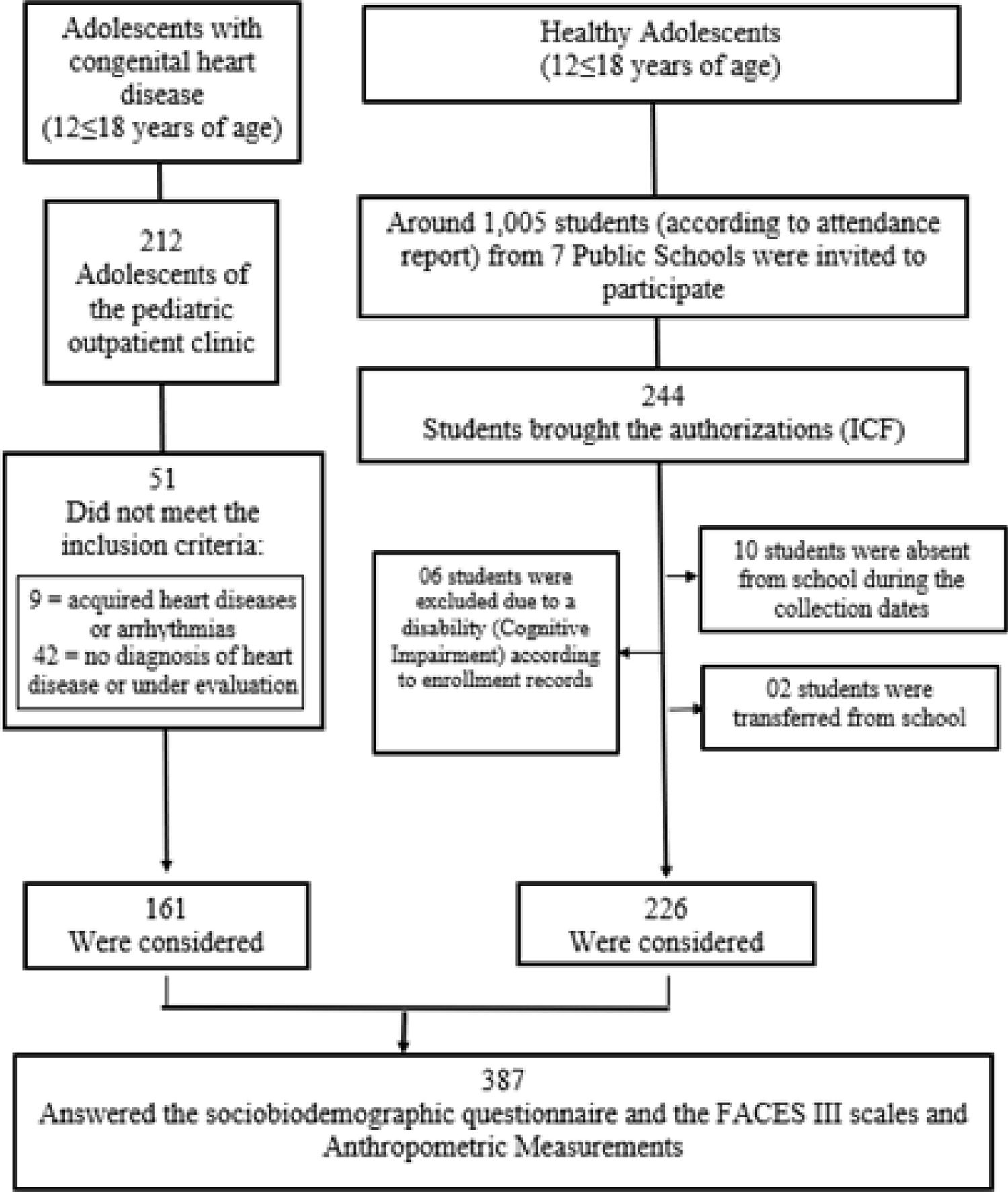
Cross-sectional exposed-control study with 2 groups of adolescents (12 -18 years). The exposed group included adolescents with congenital heart disease (CHD), from a specialized public health system hospital (SUS), and adolescents from 7 public schools, considered healthy, composed the control group. In the hospital, the data collection was individual, before the medical consultation. In schools, the collection took place in groups. Adolescents and parents responded to the FACES III scale. The following statistical tests were used: Pearson’s chi-square, Fisher’s test, T-test for independent samples, Poisson multivariate regression analysis with 95% reliability, significance established at 5% and a statistical power at 99% (ß = 0.01).

Results

A total of 161 (41.6%) adolescents with CHD and 226 (58.4%) healthy adolescents participated. There was greater family cohesion among adolescents with CHD, with a higher frequency of connected families, while among healthy adolescents, there are more families of the disengaged type. Regarding adaptability, a higher proportion of families of the chaotic type were found among healthy adolescents compared to adolescents with CHD. A higher frequency of high-risk families was identified among healthy adolescents (16.8%).

Conclusion

The families of the adolescents with CHD have a more balanced functioning and low risk when compared to the families of healthy adolescents; with greater cohesion between the members and greater adaptability. Congenital heart disease was not an independent factor for high-risk family. (Int J Cardiovasc Sci. 2020; [online].ahead print, PP.0-0).

  • Academic Performance
  • Adolescent
  • compliance
  • Heart Defects, Congenital
  • School Health Services
  • Social Cohesion
Read Full Article
Creative Commons Attribution (CC BY) Creative Commons license
23/11/2020 DOI: 10.36660/ijcs.20190113 Views 1
Heart failure with normal ejection fraction
ABC
Review Article

Heart failure with normal ejection fraction

Meliza Goi Roscani et al. Luiz Shiguero Matsubara Beatriz Bojikian Matsubara

Heart failure with normal ejection fraction (HFNEF) is a complex syndrome that has been broadly studied since the last decade. It is caused by diastolic ventricular dysfunction demonstrated by complementary methods, such as hemodynamic study or echocardiogram, in the presence of a normal ejection fraction (EF). It affects primarily elderly individuals with comorbidities, such as systemic arterial hypertension, coronary failure and obesity. The physiopathological mechanisms are complex and multifactorial, involving the myocardial passive stiffness, the ventricular geometry, the pericardial restraint and the interaction between the ventricles. The main objectives of the treatment were to decrease the pulmonary venous congestion and the heart rate and control the comorbidities. There is no strong evidence that the use of specific medications, such as the angiotensin-converting enzyme inhibitors or beta-blockers can influence mortality. The poorer prognostic factors include advanced age, presence of kidney dysfunction, diabetes, functional class III and IV (NYHA) and advanced-stage diastolic dysfunction, with a restrictive pattern of ventricular filling. Another aspect that has been increasingly cited in the literature is the analysis of the role of the systolic function in HFNEF cases. All these aspects are analyzed in detail in the present review.

  • Cardiomegaly
  • compliance
  • Diastole
  • Echocardiography
  • Heart Failure
Read Full Article
Creative Commons Attribution (CC BY) Creative Commons license
22/09/2010 DOI: 10.1590/S0066-782X2010000500019 Views 1
ABC
Artigo Original

Relationship between regular attendance to ambulatory appointments and blood pressure control among hypertensive patients

Eduardo Barbosa Coelho et al. Miguel Moysés Neto Raquel Palhares Maria Camila de Miranda Cardoso … Tufik José Magalhães Geleilete Fernando Nobre

OBJECTIVE: Our objective was to determine the rate of hypertensive patients with controlled BP (BP <140X90 mmHg) and to study its relationship with regular attendance to ambulatory appointments. METHODS: A total of 245 medical records from patients followed up at the Unidade Clínica de Hipertensão Arterial (Clinical Unit of Arterial Hypertension) HCFMRP-USP for a period of one year were randomly and retrospectively reviewed. The patients were classified as assiduous (A) and as regularly absent to scheduled appointments (F), with the second group being defined as those who failed to appear longer than 30 days after the scheduled appointment. The mean of three measurements prior to the date of the scheduled appointment was calculated to determine the rate of patients with controlled BP. Compliance with the treatment was inferred through a questionnaire applied by the nurse team before the appointment. RESULTS: From the 245 patients analyzed, 220 were classified as A (89.7%) and 25 (10.3%) as F. Group A patients showed a higher rate of BP control than F patients (30% vs. 8%, p=0.02, Fischer exact test). Compliance with pharmacological treatment was higher in A patients than in F patients (91% vs. 56 %, p<0.05) as well as to non-pharmacological treatment (63% vs. 44%, p<0.05). CONCLUSION: Although the rate of blood pressure control was low in the population studied, lower compliance with the treatment and BP control was observed in individuals who usually missed the scheduled appointments.

  • Blood Pressure
  • compliance
  • Hypertension
  • Treatment
Read Full Article
Creative Commons Attribution (CC BY) Creative Commons license
10/10/2005 DOI: 10.1590/S0066-782X2005001600002

How to cite this article

EndNote RIS

Electronic Document Format (Vancouver)

Martinez TLR. Adherence, Compliance and Persistency in High Cholesterol Treatment. Arquivos Brasileiros de Cardiologia 2025;121(11):e20240652.

Electronic Document Format (ABNT)

Martinez, Tania L. R.. Adherence, Compliance and Persistency in High Cholesterol Treatment. Arquivos Brasileiros de Cardiologia, v. 121, n. 11, e20240652, Jan. 2025.

Electronic Document Format (APA)

Martinez, T. L. R. (2025). Adherence, Compliance and Persistency in High Cholesterol Treatment. Arquivos Brasileiros de Cardiologia, 121(11), e20240652.

Electronic Document Format (ISO)

Martinez, Tania L. R.. Adherence, Compliance and Persistency in High Cholesterol Treatment. Arquivos Brasileiros de Cardiologia [online]. 2025, vol. 121, n. 11, [cited 2026-10-14], e20240652. Available from: <https://journals.cardiol.br/en/article/adherence-compliance-and-persistency-in-high-cholesterol-treatment/>. ISSN 0066-782X

EndNote RIS

Electronic Document Format (Vancouver)

Piccoli , Neiva-Silva L, Pellanda LC. Family Functioning of Adolescents with Congenital Cardiopathy in a Sample from Public Schools in Porto Alegre – RS. International Journal of Cardiovascular Sciences 2020;34(6):599-607.

Electronic Document Format (ABNT)

Piccoli, Ângela; Neiva-Silva, Lucas; Pellanda, Lucia Campos. Family Functioning of Adolescents with Congenital Cardiopathy in a Sample from Public Schools in Porto Alegre – RS. International Journal of Cardiovascular Sciences, v. 34, n. 6, p. 599-607, Nov. 2020.

Electronic Document Format (APA)

Piccoli, , Neiva-Silva, L., & Pellanda, L. C. (2020). Family Functioning of Adolescents with Congenital Cardiopathy in a Sample from Public Schools in Porto Alegre – RS. International Journal of Cardiovascular Sciences, 34(6), 599-607.

Electronic Document Format (ISO)

Piccoli, Ângela and Neiva-Silva, Lucas and Pellanda, Lucia Campos. Family Functioning of Adolescents with Congenital Cardiopathy in a Sample from Public Schools in Porto Alegre – RS. International Journal of Cardiovascular Sciences [online]. 2020, vol. 34, n. 6, [cited 2026-10-14], pp. 599-607. Available from: <https://journals.cardiol.br/en/article/family-functioning-of-adolescents-with-congenital-cardiopathy-in-a-sample-from-public-schools-in-porto-alegre-rs/>. ISSN 2359-4802

EndNote RIS

Electronic Document Format (Vancouver)

Roscani MG, Matsubara LS, Matsubara BB. Heart failure with normal ejection fraction. Arquivos Brasileiros de Cardiologia 2010;94(5):694-702.

Electronic Document Format (ABNT)

Roscani, Meliza Goi; Matsubara, Luiz Shiguero; Matsubara, Beatriz Bojikian. Heart failure with normal ejection fraction. Arquivos Brasileiros de Cardiologia, v. 94, n. 5, p. 694-702, Sep. 2010.

Electronic Document Format (APA)

Roscani, M. G., Matsubara, L. S., & Matsubara, B. B. (2010). Heart failure with normal ejection fraction. Arquivos Brasileiros de Cardiologia, 94(5), 694-702.

Electronic Document Format (ISO)

Roscani, Meliza Goi and Matsubara, Luiz Shiguero and Matsubara, Beatriz Bojikian. Heart failure with normal ejection fraction. Arquivos Brasileiros de Cardiologia [online]. 2010, vol. 94, n. 5, [cited 2026-10-14], pp. 694-702. Available from: <https://journals.cardiol.br/en/article/heart-failure-with-normal-ejection-fraction/>. ISSN 0066-782X

EndNote RIS

Electronic Document Format (Vancouver)

Coelho EB, Moysés Neto M, Palhares R, Cardoso MCM, Geleilete TJM, Nobre F. Relationship between regular attendance to ambulatory appointments and blood pressure control among hypertensive patients. Arquivos Brasileiros de Cardiologia 2005;85(3):157-61.

Electronic Document Format (ABNT)

Coelho, Eduardo Barbosa; Moysés Neto, Miguel; Palhares, Raquel; Cardoso, Maria Camila de Miranda; Geleilete, Tufik José Magalhães; Nobre, Fernando. Relationship between regular attendance to ambulatory appointments and blood pressure control among hypertensive patients. Arquivos Brasileiros de Cardiologia, v. 85, n. 3, p. 157-161, Oct. 2005.

Electronic Document Format (APA)

Coelho, E. B., Moysés Neto, M., Palhares, R., Cardoso, M. C. M., Geleilete, T. J. M., & Nobre, F. (2005). Relationship between regular attendance to ambulatory appointments and blood pressure control among hypertensive patients. Arquivos Brasileiros de Cardiologia, 85(3), 157-161.

Electronic Document Format (ISO)

Coelho, Eduardo Barbosa and Moysés Neto, Miguel and Palhares, Raquel and Cardoso, Maria Camila de Miranda and Geleilete, Tufik José Magalhães and Nobre, Fernando. Relationship between regular attendance to ambulatory appointments and blood pressure control among hypertensive patients. Arquivos Brasileiros de Cardiologia [online]. 2005, vol. 85, n. 3, [cited 2026-10-14], pp. 157-161. Available from: <https://journals.cardiol.br/en/article/relationship-between-regular-attendance-to-ambulatory-appointments-and-blood-pressure-control-among-hypertensive-patients/>. ISSN 0066-782X

  • About ABC Family
  • Internal Regulation
  • Editorial Board
  • Brazilian Society of Cardiology (SBC)

Issues

SBC Guidelines

  • Videos
  • Podcasts
  • News