Uncontrolled Cholesterol in Individuals with Severe Hypercholesterolemia in a Health Evaluation Program in Brazil
Abstract
Background
Individuals with severe hypercholesterolemia (SH) are considered at high atherosclerosis risk and should be intensively treated with lipid-lowering drugs aiming for an LDL-C reduction of≥50% and a goal of <70 mg/dL.
Objectives
This study aimed to evaluate cholesterol control in individuals with SH (LDL-C ≥ 190 mg/dL or 160-189 mg/dL using lipid-lowering drugs) followed in a health evaluation program.
Methods
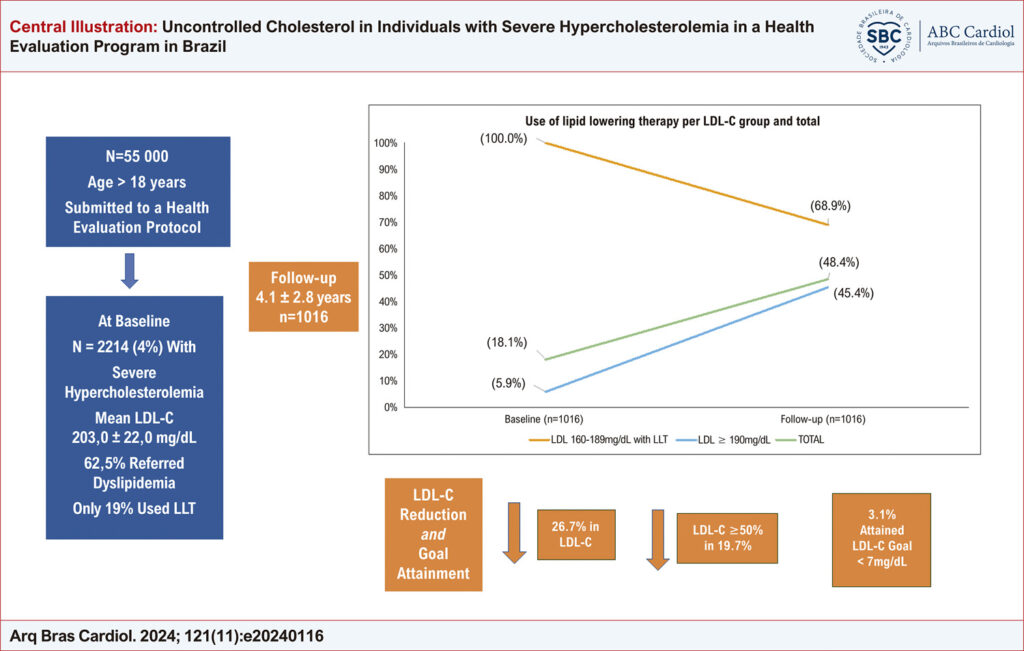
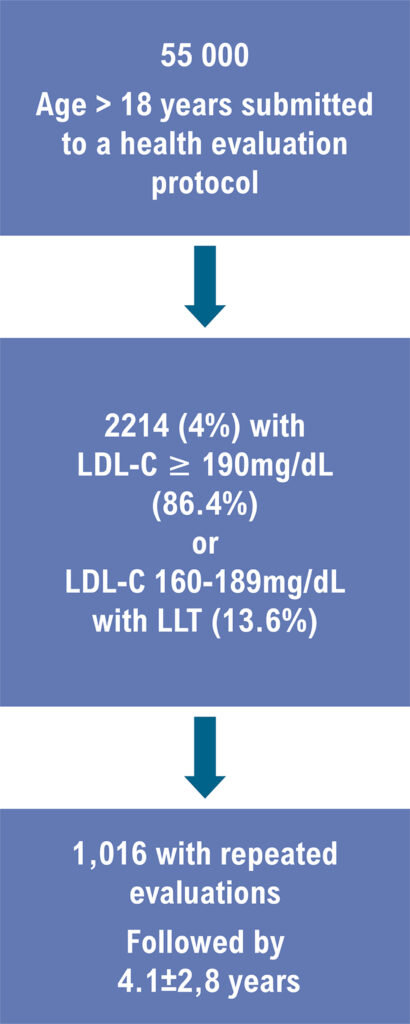
55,000 individuals were evaluated, of which 2,214 (4%) had SH, and 1,016 (45.8%) had repeated assessments. Achievement of recommended LDL-C goals was the primary study endpoint. A p-value < 0.05 was considered significant.
Results
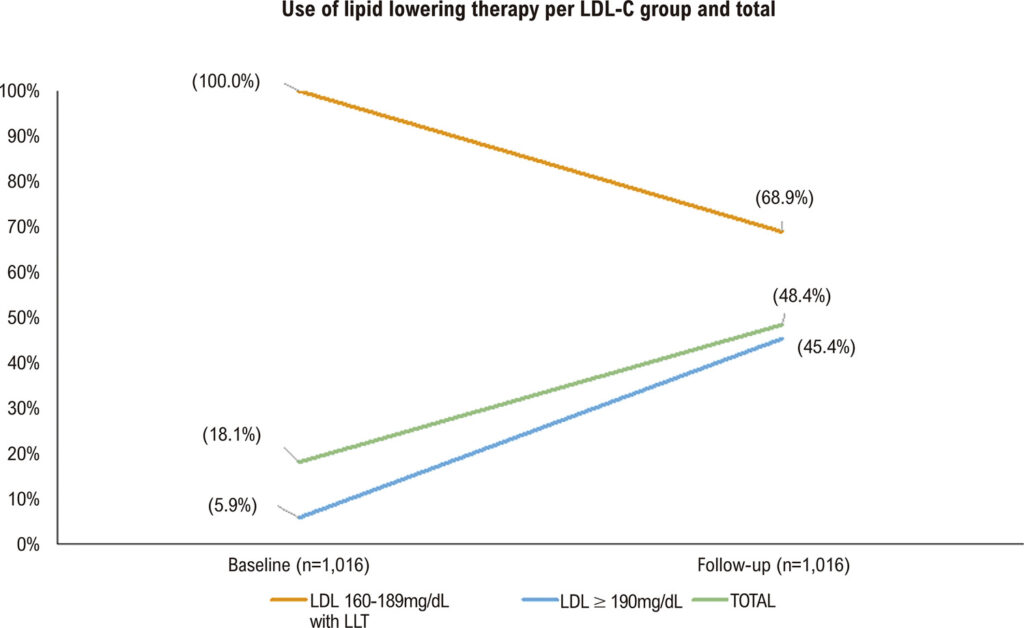
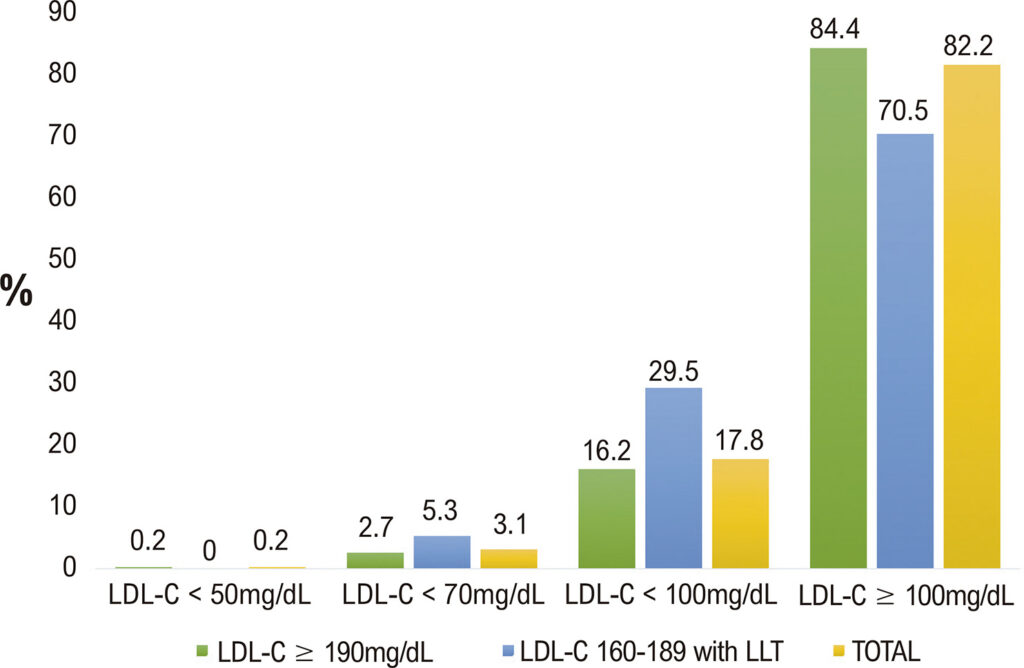
Mean age (± SD) was 44.9±8.8 years, 84.2% were men, and 0.5% reported previous myocardial infarction. Mean LDL-C was 203.0±22.0 mg/dL, and although 62.5% referred dyslipidemia, only 19% were using lipid-lowering drugs (5.9% in cases with LDL-C ≥ 190 mg/dL). During a 4.1±2.8-year follow-up, use of lipid-lowering drugs increased from 18.1% to 48.4% (p<0.00001), 5.9% to 45.4% in those with LDL-C ≥ 190 mg/dL (p< 0.00001) though 31% of cases with LDL-C 160-189 mg/dL stopped taking medications. Overall, there was a mean 26.7% reduction in LDL-C (p 190 mg/dL and 160-189 mg/dL respectively. Only 3.1% reached LDL-C < 70 mg/dL (2.7% in those with LDL-C ≥ 190 and 5.3% in those with 160-189 mg/dL).
Conclusions
A serious gap was found between treatment recommendations and reality in individuals at high atherosclerosis risk due to SH.
Images
Image gallery fullscreen viewer
Comments are moderated by the editorial team before publication. Discussions should be evidence-based and use scientific language. Conflicts of interest should be declared.