ABC Family Arquivos Brasileiros de Cardiologia International Journal of Cardiovascular Sciences ABC Heart Failure & Cardiomyopathy ABC Imagem Cardiovascular
Português English
ABC Family
Português English
  • About
    • About ABC Family
    • Internal Regulation
    • Editorial Board
    • Brazilian Society of Cardiology (SBC)
  • Issues
  • SBC Guidelines
  • Content
    • Videos
    • Podcasts
    • News
  • About
    • About ABC Family
    • Internal Regulation
    • Editorial Board
    • Brazilian Society of Cardiology (SBC)
  • Issues
  • SBC Guidelines
  • Content
    • Videos
    • Podcasts
    • News

ABC Family

  • ABC Family
  • Arquivos Brasileiros de Cardiologia
  • International Journal of Cardiovascular Sciences
  • ABC Heart Failure & Cardiomyopathy
  • ABC Imagem Cardiovascular
Search in

No content found.

Journals
Ordering
Article types
Others

  1. Home
  2. Keyword: Fatty Liver
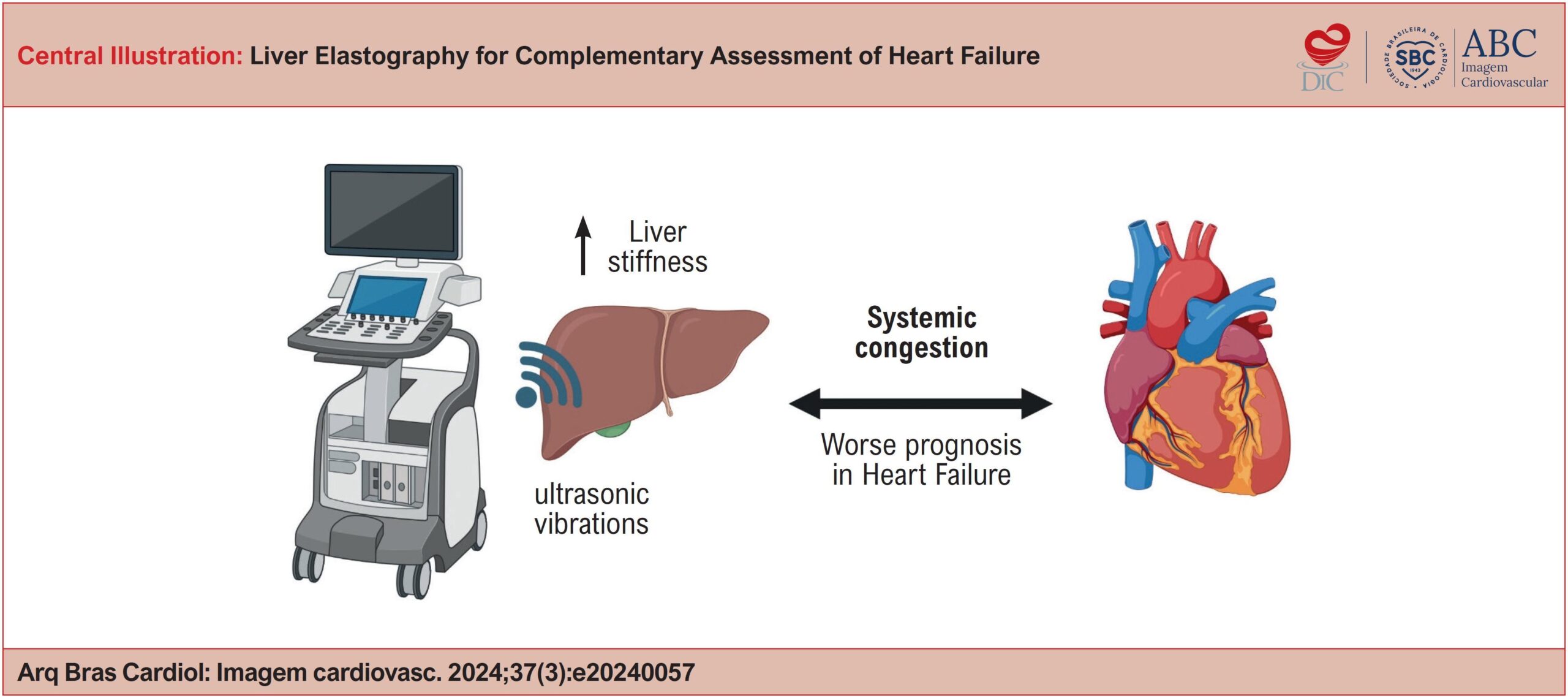
Liver Elastography for Complementary Assessment of Heart Failure
ABCIC
Review Article

Liver Elastography for Complementary Assessment of Heart Failure

Diane Xavier de Ávila et al. Humberto Villacorta Evandro Tinoco Mesquita

Abstract

Liver elastography (LE) assesses the systemic consequences of heart failure (HF). This method may help in the prognostic assessment of patients with HF. HF can secondarily affect the function of various organs and systems, especially the liver, through venous congestion. The purpose of this article is to provide a narrative review of the importance of LE in the complementary evaluation of HF. The hepatic consequences of cardiac disease are sometimes silent, without significant changes in physical examination and/or laboratory tests. In this context, LE has emerged as a recommended non-invasive method to measure liver damage caused by HF.

  • Elasticity Imaging Techniques
  • Fatty Liver
  • Heart Failure
  • Liver Cirrhosis
Read Full Article
Creative Commons Attribution (CC BY) Creative Commons license
20/09/2024 DOI: 10.36660/abcimg.20240057i Views 2
ABC
Editorial

A New Rodent Model of Non-Alcoholic Steatohepatitis and Metabolic Syndrome

Fernando Gomes Romeiro et al. Lívia Alves Amaral Santos

Obesity is markedly linked to an increased risk of all-cause mortality and its prevalence has risen to unacceptable levels in the developed world., Obesity and insulin resistance compose the core of most cases of metabolic syndrome (MS), which is a group of conditions and traits associated with an increased risk of cardiovascular disease and diabetes (approximately 2-fold and 5-fold, respectively). Non-alcoholic fatty liver disease (NAFLD) is the hepatic manifestation of MS and has gained attention not only for obesity-related disorders but also for the progression to non-alcoholic steatohepatitis (NASH), liver cirrhosis, and hepatocellular carcinoma. Similar to the other metabolic components involved in MS, NAFLD treatment is based on lifestyle changes that are difficult to achieve in clinical trials, making preclinical studies an excellent option to increase the knowledge about the disease and to test the interventions proposed.

However, in vitro models have severe limitations to evaluate the hepatic and extrahepatic findings of human NASH due to its multifactorial etiology. As a result, data obtained from animals are largely assessed, with a growing interest in the development of mice models. Even if many of these models do not develop steatohepatitis as the strict definition applied to human liver tissue, they are still an outstanding source of knowledge about NAFLD and NASH.

[…]

  • Fatty Liver
  • Inflammation
  • Insulin Resistance
  • Liver Disease
  • Metabolic Diseases
  • Obesity
  • Rats
  • Stress, Oxidative
  • Syndrome Metabolic
Read Full Article
Creative Commons Attribution (CC BY) Creative Commons license
02/12/2019 DOI: 10.5935/abc.20190219
Figure 1
ABC
Original Article

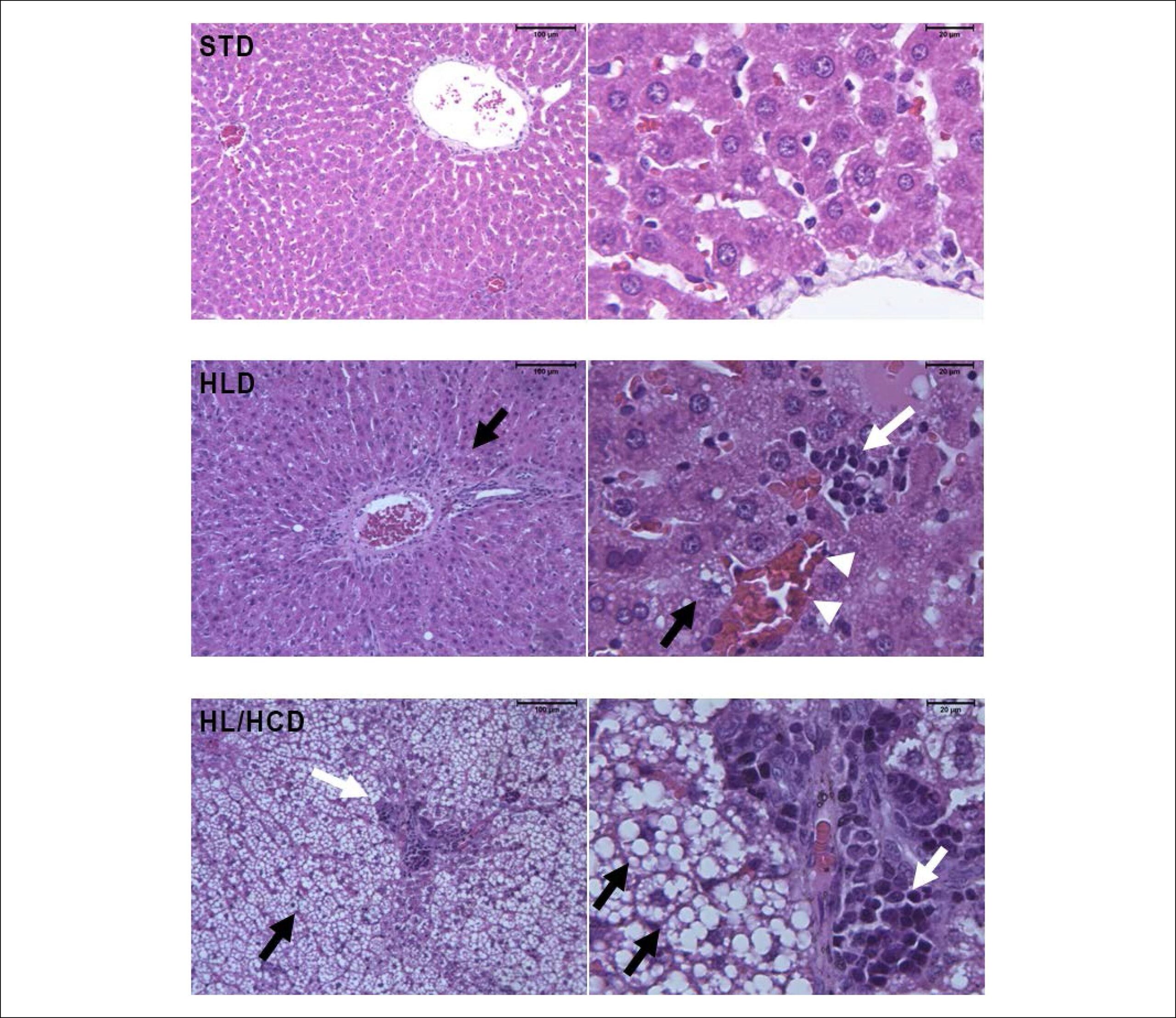
High-Lard and High-Cholesterol Diet, but not High-Lard Diet, Leads to Metabolic Disorders in a Modified Dyslipidemia Model

Lidiane B. Muniz et al. Aline M. Alves-Santos Fabricio Camargo Danieli Brolo Martins … Mara Rubia N. Celes Maria Margareth V. Naves

Abstract

Background:

In view of the increased global prevalence of cardiovascular and hepatic diseases, the diet lipid content and its relationship with the accumulation of fat in hepatocytes have been investigated as key factors in preventing these diseases.

Objective:

To evaluate the metabolic effects of a high-lard diet supplemented or not with cholesterol on a modified dyslipidemia model.

Methods:

We divided 24 adult male Wistar rats into three groups: standard diet (STD – 4% lipids), high-lard diet (HLD – 21% lard), and high-lard and high-cholesterol diet (HL/HCD – 20% lard, 1% cholesterol, 0.1% cholic acid). After six weeks of treatment, blood and liver were collected for biochemical (serum lipid profile and liver enzymes) and morphological analyses. Statistical analysis included one-way analysis of variance (ANOVA), followed by Tukey test for mean comparisons, and a 5% probability was considered statistically significant.

Results:

Animals fed HL/HCD showed increased total cholesterol, triacylglycerol, LDL-c, non-HDL-c, alanine aminotransferase (ALT), and aspartate aminotransferase (AST) serum levels compared to those fed STD. In addition, the HL/HCD animals presented higher relative liver weight, with moderate macrovesicular hepatic steatosis and inflammatory infiltrate.

Conclusion:

A high-fat diet with lard (20%) and cholesterol (1%) triggered dyslipidemia with severe liver damage in rats in a shorter experimental time than the previously reported models. The high-lard diet without supplementation of cholesterol led to body weight gain, but not to dyslipidemia.

  • Cholesterol
  • Dietary Fats
  • Fatty Liver
  • Inflammation
  • Lipid Metabolism
  • Rats
Read Full Article
Creative Commons Attribution (CC BY) Creative Commons license
29/08/2019 DOI: 10.5935/abc.20190149 Views 1
Figure 1
ABC
Review Article

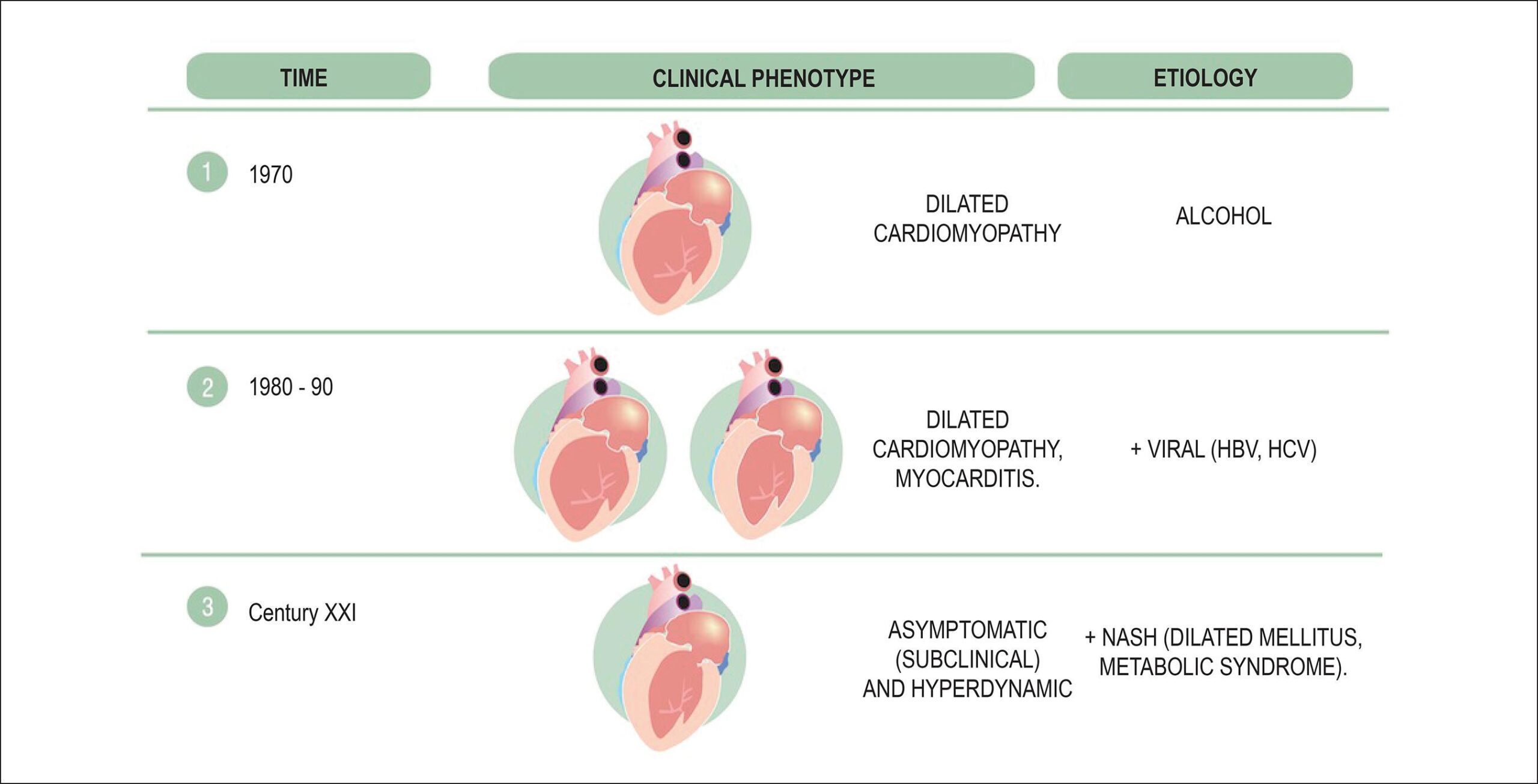
Cirrhotic Cardiomyopathy: A New Clinical Phenotype

Luis Otávio Cardoso Mocarzel et al. Mariana Macedo Rossi Bruna de Mello Miliosse Pedro Gemal Lanzieri Ronaldo Altenburg Gismondi

Introduction

Hepatic cirrhosis is the final spectrum of several aggressions to the liver, with great relevance to public healthcare. National data estimate a prevalence of 0.14% to 0.35%, mortality of 3 to 35 per 100,000 individuals and an annual average of 30,000 hospital admissions in Brazil., With the ageing population, the prevalence of chronic liver diseases, in particular steatohepatitis associated to obesity and metabolic syndrome, results in an increase in the number of hepatic cirrhosis cases.

Cardiac manifestations of hepatic cirrhosis were first reported in the 20th century, with alterations on cardiac output. With new information on the extra-hepatic repercussions of cirrhosis, cirrhotic cardiomyopathy (CCM) has been described as a spectrum of chronic morphofunctional alterations in the heart of cirrhotic patients with no previous cardiac diseases.– The cardiomyocyte lesion is provoked by an imbalance in hemeostasis that occurs in the progression of cirrhosis, with exhaustion of beta-adrenergic receptors, cytoplasmic impregnation by endocannabinoids, and imbalance of nitric oxide and endothelin. CCM is asymptomatic; however, systolic and diastolic structural alterations are described in the electrocardiogram (ECG) and Doppler echocardiogram (ECHO).

[…]

  • aging
  • Cardiomyopathy, Alcoholic
  • Fatty Liver
  • Liver Cirrhosis / mortality
  • Metabolic Syndrome
  • Obesity
Read Full Article
Creative Commons Attribution (CC BY) Creative Commons license
01/06/2017 DOI: 10.5935/abc.20170066
Figure 1
ABC
Artigo Original

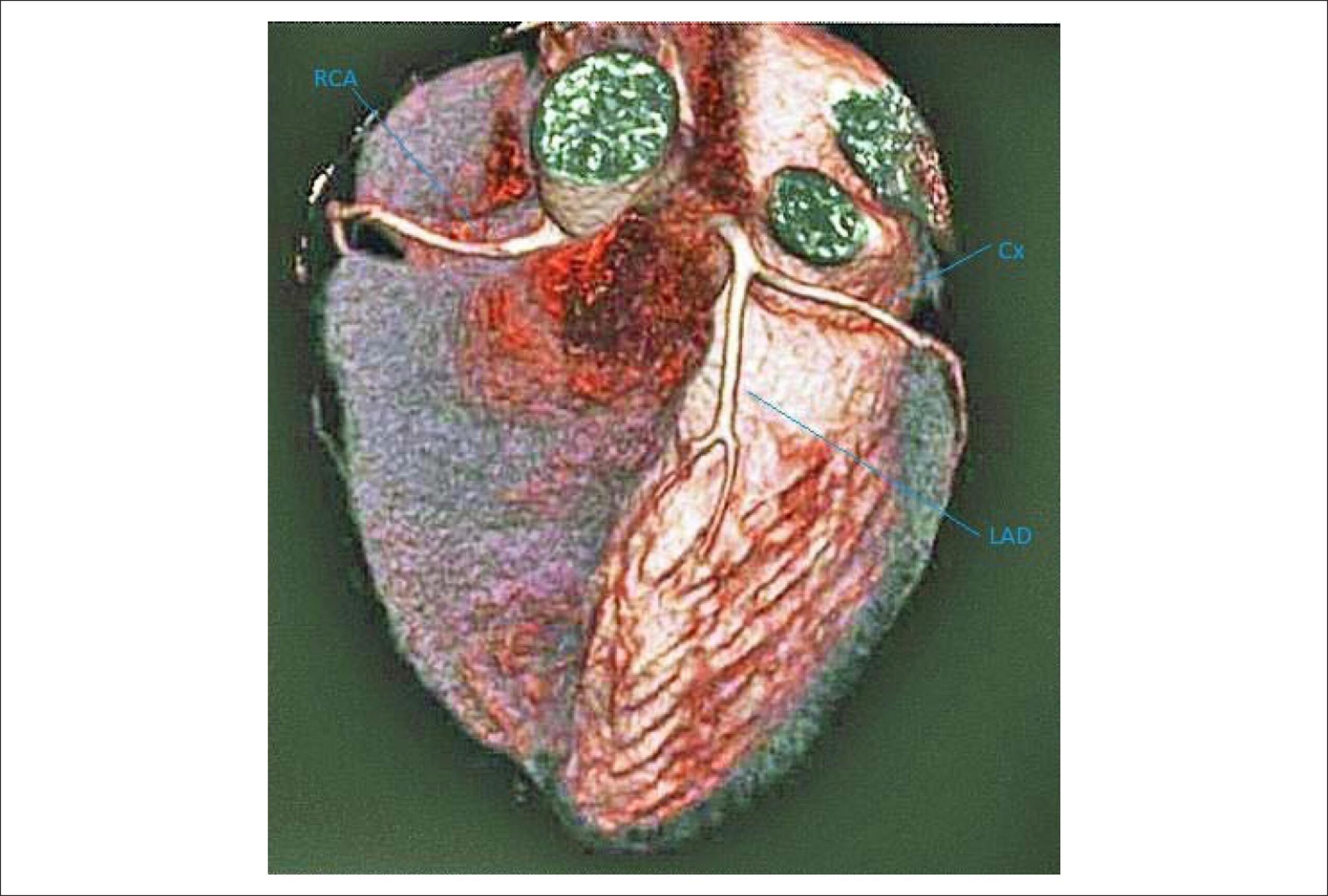
Assessment of the Relationship between Non-Alcoholic Fatty Liver Disease and CAD using MSCT

Duran Efe et al. Fatih Aygün

Background:

Some risk factors for atherosclerosis are followed by non-alcoholic fatty liver disease (NAFLD). We wanted to use Multislice computed tomography (MSCT) as technique for searching relationship between NAFLD and coronary artery disease (CAD).

Objective:

The relationship between NAFLD and CAD was investigated using MSCT.

Methods:

A total of 372 individuals with or without cardiac symptoms who had undergone MSCT angiography were included in the study. The patients were divided into two groups according to the presence of NAFLD. Coronary artery segments were visually evaluated via MSCT angiography. Based on the coronary artery stenosis degree, those with no or minimal plaques were considered normal, whereas those who had stenosis of less than 50% and at least one plaque were considered to have non-obstructive coronary artery disease (non-obsCAD). The patients who had at least one plaque and coronary artery stenosis of 50% or more were considered to have obstructive coronary artery disease (obsCAD). NAFLD was determined according to the MSCT protocol, using the liver density.

Results:

According to the liver density, the number of patients with non-alcoholic fatty liver disease (group 1) was 204 (149 males, 54.8%) and with normal liver (group 2) was 168 (95 males, 45.2%). There were 50 (24.5%) non-obsCAD and 57 (27.9%) obsCAD cases in Group 1, and 39 (23.2%) non-obsCAD and 23 (13.7%) obsCAD cases in Group 2.

Conclusions:

The present study using MSCT demonstrated that the frequency of coronary artery disease in patients with NAFDL was significantly higher than that of patients without NAFDL.

  • Fatty Liver
  • Hepatitis
Read Full Article
Creative Commons Attribution (CC BY) Creative Commons license
22/11/2013 DOI: 10.5935/abc.20130225

How to cite this article

EndNote RIS

Electronic Document Format (Vancouver)

Ávila DX, Villacorta H, Mesquita ET. Liver Elastography for Complementary Assessment of Heart Failure. ABC Imagem Cardiovascular 2024;37(3):e20240057.

Electronic Document Format (ABNT)

Ávila, Diane Xavier de; Villacorta, Humberto; Mesquita, Evandro Tinoco. Liver Elastography for Complementary Assessment of Heart Failure. ABC Imagem Cardiovascular, v. 37, n. 3, e20240057, Sep. 2024.

Electronic Document Format (APA)

Ávila, D. X. , Villacorta, H., & Mesquita, E. T. (2024). Liver Elastography for Complementary Assessment of Heart Failure. ABC Imagem Cardiovascular, 37(3), e20240057.

Electronic Document Format (ISO)

Ávila, Diane Xavier de and Villacorta, Humberto and Mesquita, Evandro Tinoco. Liver Elastography for Complementary Assessment of Heart Failure. ABC Imagem Cardiovascular [online]. 2024, vol. 37, n. 3, [cited 2026-10-14], e20240057. Available from: <https://journals.cardiol.br/en/article/liver-elastography-for-complementary-assessment-of-heart-failure/>. ISSN 2318-8219

EndNote RIS

Electronic Document Format (Vancouver)

Romeiro FG, Santos LAA. A New Rodent Model of Non-Alcoholic Steatohepatitis and Metabolic Syndrome. Arquivos Brasileiros de Cardiologia 2019;113(5):903-4.

Electronic Document Format (ABNT)

Romeiro, Fernando Gomes; Santos, Lívia Alves Amaral. A New Rodent Model of Non-Alcoholic Steatohepatitis and Metabolic Syndrome. Arquivos Brasileiros de Cardiologia, v. 113, n. 5, p. 903-904, Dec. 2019.

Electronic Document Format (APA)

Romeiro, F. G., & Santos, L. A. A. (2019). A New Rodent Model of Non-Alcoholic Steatohepatitis and Metabolic Syndrome. Arquivos Brasileiros de Cardiologia, 113(5), 903-904.

Electronic Document Format (ISO)

Romeiro, Fernando Gomes and Santos, Lívia Alves Amaral. A New Rodent Model of Non-Alcoholic Steatohepatitis and Metabolic Syndrome. Arquivos Brasileiros de Cardiologia [online]. 2019, vol. 113, n. 5, [cited 2026-10-14], pp. 903-904. Available from: <https://journals.cardiol.br/en/article/a-new-rodent-model-of-non-alcoholic-steatohepatitis-and-metabolic-syndrome/>. ISSN 0066-782X

EndNote RIS

Electronic Document Format (Vancouver)

Muniz LB, Alves-Santos AM, Camargo F, Martins DB, Celes MRN, Naves MMV. High-Lard and High-Cholesterol Diet, but not High-Lard Diet, Leads to Metabolic Disorders in a Modified Dyslipidemia Model. Arquivos Brasileiros de Cardiologia 2019;113(5):896-902.

Electronic Document Format (ABNT)

Muniz, Lidiane B.; Alves-Santos, Aline M.; Camargo, Fabricio; Martins, Danieli Brolo; Celes, Mara Rubia N.; Naves, Maria Margareth V.. High-Lard and High-Cholesterol Diet, but not High-Lard Diet, Leads to Metabolic Disorders in a Modified Dyslipidemia Model. Arquivos Brasileiros de Cardiologia, v. 113, n. 5, p. 896-902, Aug. 2019.

Electronic Document Format (APA)

Muniz, L. B., Alves-Santos, A. M., Camargo, F., Martins, D. B., Celes, M. R. N., & Naves, M. M. V. (2019). High-Lard and High-Cholesterol Diet, but not High-Lard Diet, Leads to Metabolic Disorders in a Modified Dyslipidemia Model. Arquivos Brasileiros de Cardiologia, 113(5), 896-902.

Electronic Document Format (ISO)

Muniz, Lidiane B. and Alves-Santos, Aline M. and Camargo, Fabricio and Martins, Danieli Brolo and Celes, Mara Rubia N. and Naves, Maria Margareth V.. High-Lard and High-Cholesterol Diet, but not High-Lard Diet, Leads to Metabolic Disorders in a Modified Dyslipidemia Model. Arquivos Brasileiros de Cardiologia [online]. 2019, vol. 113, n. 5, [cited 2026-10-14], pp. 896-902. Available from: <https://journals.cardiol.br/en/article/high-lard-and-high-cholesterol-diet-but-not-high-lard-diet-leads-to-metabolic-disorders-in-a-modified-dyslipidemia-model/>. ISSN 0066-782X

EndNote RIS

Electronic Document Format (Vancouver)

Mocarzel LOC, Rossi MM, Miliosse BM, Lanzieri PG, Gismondi RA. Cirrhotic Cardiomyopathy: A New Clinical Phenotype. Arquivos Brasileiros de Cardiologia 2017;108(6):564-8.

Electronic Document Format (ABNT)

Mocarzel, Luis Otávio Cardoso; Rossi, Mariana Macedo; Miliosse, Bruna de Mello; Lanzieri, Pedro Gemal; Gismondi, Ronaldo Altenburg. Cirrhotic Cardiomyopathy: A New Clinical Phenotype. Arquivos Brasileiros de Cardiologia, v. 108, n. 6, p. 564-568, May. 2017.

Electronic Document Format (APA)

Mocarzel, L. O. C., Rossi, M. M., Miliosse, B. M., Lanzieri, P. G., & Gismondi, R. A. (2017). Cirrhotic Cardiomyopathy: A New Clinical Phenotype. Arquivos Brasileiros de Cardiologia, 108(6), 564-568.

Electronic Document Format (ISO)

Mocarzel, Luis Otávio Cardoso and Rossi, Mariana Macedo and Miliosse, Bruna de Mello and Lanzieri, Pedro Gemal and Gismondi, Ronaldo Altenburg. Cirrhotic Cardiomyopathy: A New Clinical Phenotype. Arquivos Brasileiros de Cardiologia [online]. 2017, vol. 108, n. 6, [cited 2026-10-14], pp. 564-568. Available from: <https://journals.cardiol.br/en/article/cirrhotic-cardiomyopathy-a-new-clinical-phenotype/>. ISSN 0066-782X

EndNote RIS

Electronic Document Format (Vancouver)

Efe D, Aygün F. Assessment of the Relationship between Non-Alcoholic Fatty Liver Disease and CAD using MSCT. Arquivos Brasileiros de Cardiologia 2013;102(1):10-8.

Electronic Document Format (ABNT)

Efe, Duran; Aygün, Fatih. Assessment of the Relationship between Non-Alcoholic Fatty Liver Disease and CAD using MSCT. Arquivos Brasileiros de Cardiologia, v. 102, n. 1, p. 10-18, Nov. 2013.

Electronic Document Format (APA)

Efe, D., & Aygün, F. (2013). Assessment of the Relationship between Non-Alcoholic Fatty Liver Disease and CAD using MSCT. Arquivos Brasileiros de Cardiologia, 102(1), 10-18.

Electronic Document Format (ISO)

Efe, Duran and Aygün, Fatih. Assessment of the Relationship between Non-Alcoholic Fatty Liver Disease and CAD using MSCT. Arquivos Brasileiros de Cardiologia [online]. 2013, vol. 102, n. 1, [cited 2026-10-14], pp. 10-18. Available from: <https://journals.cardiol.br/en/article/assessment-of-the-relationship-between-non-alcoholic-fatty-liver-disease-and-cad-using-msct/>. ISSN 0066-782X

  • About ABC Family
  • Internal Regulation
  • Editorial Board
  • Brazilian Society of Cardiology (SBC)

Issues

SBC Guidelines

  • Videos
  • Podcasts
  • News