ABC Family Arquivos Brasileiros de Cardiologia International Journal of Cardiovascular Sciences ABC Heart Failure & Cardiomyopathy ABC Imagem Cardiovascular
Português English
ABC Family
Português English
  • About
    • About ABC Family
    • Internal Regulation
    • Editorial Board
    • Brazilian Society of Cardiology (SBC)
  • Issues
  • SBC Guidelines
  • Content
    • Videos
    • Podcasts
    • News
  • About
    • About ABC Family
    • Internal Regulation
    • Editorial Board
    • Brazilian Society of Cardiology (SBC)
  • Issues
  • SBC Guidelines
  • Content
    • Videos
    • Podcasts
    • News

ABC Family

  • ABC Family
  • Arquivos Brasileiros de Cardiologia
  • International Journal of Cardiovascular Sciences
  • ABC Heart Failure & Cardiomyopathy
  • ABC Imagem Cardiovascular
Search in

No content found.

Journals
Ordering
Article types
Others

  1. Home
  2. Keyword: Lipid Metabolism
Figure 1
ABC
Original Article

High-Lard and High-Cholesterol Diet, but not High-Lard Diet, Leads to Metabolic Disorders in a Modified Dyslipidemia Model

Lidiane B. Muniz et al. Aline M. Alves-Santos Fabricio Camargo Danieli Brolo Martins … Mara Rubia N. Celes Maria Margareth V. Naves

Abstract

Background:

In view of the increased global prevalence of cardiovascular and hepatic diseases, the diet lipid content and its relationship with the accumulation of fat in hepatocytes have been investigated as key factors in preventing these diseases.

Objective:

To evaluate the metabolic effects of a high-lard diet supplemented or not with cholesterol on a modified dyslipidemia model.

Methods:

We divided 24 adult male Wistar rats into three groups: standard diet (STD – 4% lipids), high-lard diet (HLD – 21% lard), and high-lard and high-cholesterol diet (HL/HCD – 20% lard, 1% cholesterol, 0.1% cholic acid). After six weeks of treatment, blood and liver were collected for biochemical (serum lipid profile and liver enzymes) and morphological analyses. Statistical analysis included one-way analysis of variance (ANOVA), followed by Tukey test for mean comparisons, and a 5% probability was considered statistically significant.

Results:

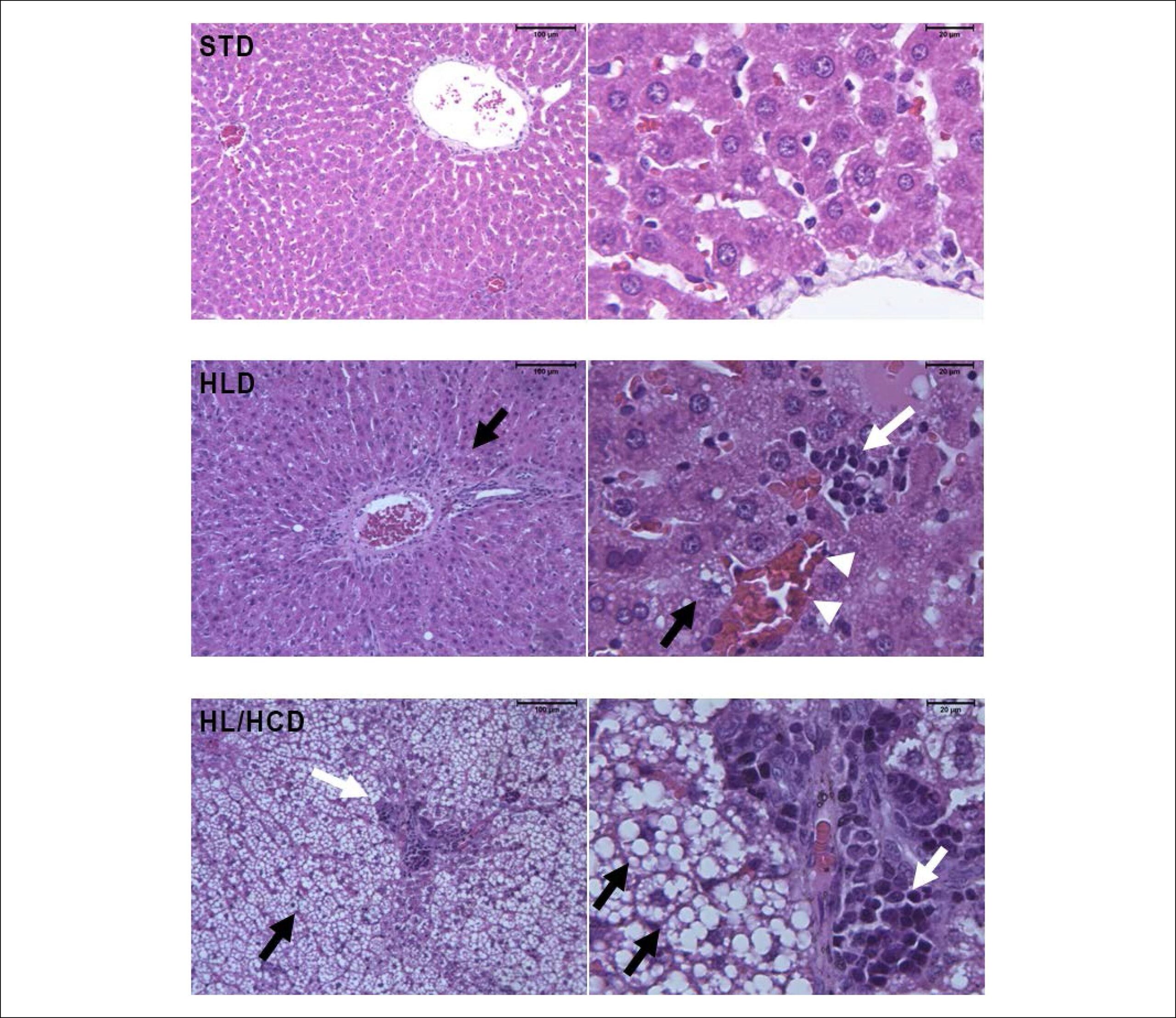
Animals fed HL/HCD showed increased total cholesterol, triacylglycerol, LDL-c, non-HDL-c, alanine aminotransferase (ALT), and aspartate aminotransferase (AST) serum levels compared to those fed STD. In addition, the HL/HCD animals presented higher relative liver weight, with moderate macrovesicular hepatic steatosis and inflammatory infiltrate.

Conclusion:

A high-fat diet with lard (20%) and cholesterol (1%) triggered dyslipidemia with severe liver damage in rats in a shorter experimental time than the previously reported models. The high-lard diet without supplementation of cholesterol led to body weight gain, but not to dyslipidemia.

  • Cholesterol
  • Dietary Fats
  • Fatty Liver
  • Inflammation
  • Lipid Metabolism
  • Rats
Read Full Article
Creative Commons Attribution (CC BY) Creative Commons license
29/08/2019 DOI: 10.5935/abc.20190149 Views 1
Figure 1
ABC
Original Article

Serum Sirtuin 1, 3 and 6 Levels in Acute Myocardial Infarction Patients

Emrullah Kızıltunç et al. Arzu Kösem Can Özkan Burcu Uğurlu Ilgın … Harun Kundi Mustafa Çetin Ender Ornek

Abstract

Background:

Sirtuins may act in many cellular processes like apoptosis, DNA repair and lipid/glucose metabolism. Experimental studies suggested some sirtuin types may have protective effects against endothelial dysfunction, atherosclerosis, cardiac hypertrophy and reperfusion injury. Data about sirtuins in acute myocardial infarction (AMI) patients are scarce.

Objectives:

To investigate temporal changes of serum sirtuin 1,3 and 6 levels in AMI patients; to compare the serum sirtuin 1,3 and 6 levels between AMI patients and control subjects; and to investigate the association of serum sirtuin 1,3 and 6 levels with prognostic markers of AMI.

Methods:

Forty patients with AMI and 40 patients with normal coronary arteries were included. Left ventricular ejection fraction (LVEF), serum proBNP, CRP, sirtuin1, sirtuin 3 and sirtuin 6 levels were processed. Peak troponin T levels, GRACE score, first day / second day sirtuin levels were recorded of AMI patients. A p value < 0.05 was considered statistically significant.

Results:

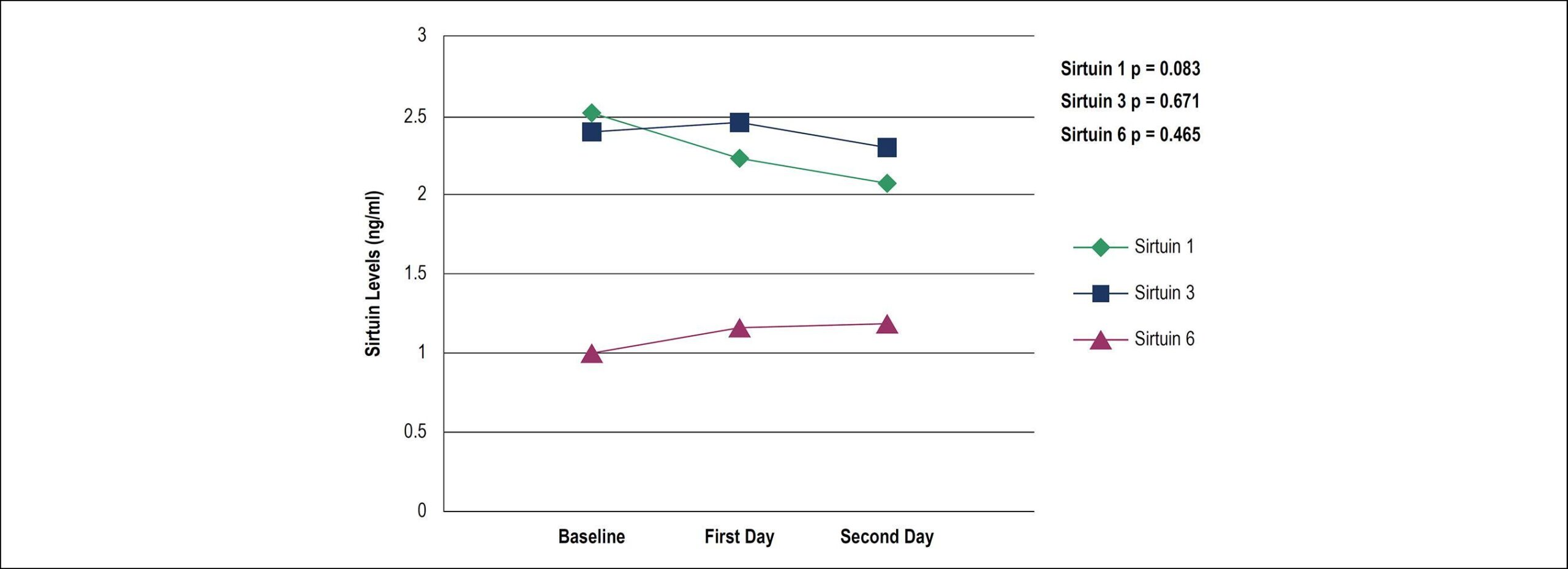
Serum sirtuin 1,3 and 6 levels in AMI patients were similar to those in normal coronary patients. No temporal change in serum sirtuin 1,3 and 6 levels were found in AMI course. No correlation was evident between the sirtuin levels and the following parameters: proBNP, CRP, peak troponin and LVEF. Baseline sirtuin 1 and 6 levels were positively correlated with reperfusion duration. Baseline sirtuin 3 levels were negatively correlated with GRACE score.

Conclusion:

Serum sirtuin 1,3 and 6 levels in AMI patients were similar to those in normal coronary patients. This study does not represent evidence of the possible protective effects of sirtuin1, 3 and 6 in AMI patients.

  • Atherosclerosis
  • Carcinogenesis
  • Cardiomegaly
  • Cellular Senescence
  • Endothelium / dysfunction
  • Lipid Metabolism
  • Sirtuins/drug effects
Read Full Article
Creative Commons Attribution (CC BY) Creative Commons license
10/07/2019 DOI: 10.5935/abc.20190114
ABC
Original Article

Effects of atorvastatin and T-786C polymorphism of eNOS gene on plasma metabolic lipid parameters

Vanessa Helena de Souza Zago et al. José Eduardo Tanus dos Santos Mirian Regina Gardin Danelon Roger Marcelo Mesquita da Silva … Natália Baratella Panzoldo Eliane Soler Parra Fernanda Alexandre Vítor Wilson de Moura Virgínio Eder Carlos Rocha Quintão Eliana Cotta de Faria

BACKGROUND: Endothelial nitric oxide synthase (eNOS) activity may be modulated by high-density lipoprotein cholesterol (HDL-C), statins or polymorphisms, such as the T-786C of eNOS. OBJECTIVE: This study aimed at evaluating if the T-786C polymorphism is associated with changes of atorvastatin effects on the lipid profile, on the concentrations of metabolites of nitric oxide (NO) and of high sensitivity C-reactive protein (hsCRP). METHODS: Thirty male volunteers, asymptomatic, aged between 18 and 56 years were genotyped and classified according to absence (TT, n = 15) or presence (CC, n = 15) of the polymorphism. They were randomly selected for the use of placebo or atorvastatin (10 mg/day/14 days). After each treatment lipids, lipoproteins, HDL2 and HDL3 composition, cholesteryl ester transfer protein (CETP) activity, metabolites of NO and hsCRP were evaluated. RESULTS: The comparisons between genotypes after placebo showed an increase in CETP activity in a polymorphism-dependent way (TT, 12±7; CC, 22±12; p < 0.05). The interaction analyses between treatments indicated that atorvastatin has an effect on cholesterol, LDL, nitrite and lipid-protein ratios (HDL2 and HDL3) (p < 0.001) in both genotypes. Interestingly, we observed genotype/drug interactions on CETP (p < 0.07) and lipoprotein (a) (Lp(a)) (p < 0.056), leading to a borderline decrease in CETP, but with no effect on Lp(a). HsCRP showed no alteration. CONCLUSION: These results suggest that statin treatment may be relevant for primary prevention of atherosclerosis in patients with the T-786C polymorphism of eNOS, considering the effects on lipid metabolism.

  • Lipid Metabolism
  • Lipid Regulating Agents
  • Nitric Oxide
  • Polymorphism, Genetic
  • Protein C
Read Full Article
Creative Commons Attribution (CC BY) Creative Commons license
18/12/2012 DOI: 10.1590/S0066-782X2012005000120 Views 1
Cardiometabolic abnormalities in patients with berardinelli-Seip syndrome
ABC
Artigo Original

Cardiometabolic abnormalities in patients with berardinelli-Seip syndrome

Antonio Guedes do Rêgo et al. Evandro Tinoco Mesquita Carlos Alberto de Faria Marcel Álvares Guedes do Rêgo … Maria de Fátima Paiva Baracho Maria Goretti do Nascimento Santos Eryvaldo Sócrates Tabosa do Egito José Brandão Neto

BACKGROUND: Berardinelli-Seip syndrome (BSS) or Generalized Congenital Lipodystrophy often affects the cardiovascular system and also promotes metabolic abnormalities involving glycidic and lipid metabolisms. OBJECTIVE: To assess the prevalence of cardiometabolic abnormalities in patients with BSS. METHODS: Twenty-two patients from the state of Rio Grande do Norte, Brazil, diagnosed with BSS, underwent clinical evaluation, resting electrocardiogram, echodopplercardiogram, chest X-ray, 24-hour ambulatory electrocardiogram monitoring, exercise testing and laboratory analysis. RESULTS: The patients were predominantly young adults, most of whom women. The whole sample showed insulin resistance, acanthosis nigricans and diminished HDL-cholesterol. The presence of splenomegaly, hepatomegaly, type II diabetes and elevated triglycerides was constant. Metabolic syndrome was characterized in most patients, which were predominantly women and with a high degree of paternal consanguinity. SAH and prehypertension blood pressure were found in more than half of the patients (77.3%). The echodopplercardiogram showed the presence of CLVH (50%), eccentric left ventricular hypertrophy (4.5%), and normal left ventricular geometry (45.5%). High arrhythmia rates were observed by Holter monitoring, such as ventricular ectopic beats, supraventricular ectopic beats and sustained supraventricular tachycardia. Chronotropic incompetence (54.5%) was observed during exercise testing. CONCLUSION: A high prevalence of cardiovascular and metabolic abnormalities was observed in young asymptomatic individuals with BSS. These findings point to the need for systematic cardiological follow-up and of preventive measures in this high-risk group.

  • Cardiovascular Diseases
  • Lipid Metabolism
  • Lipodystrophy, Congenital Generalized
  • Metabolism
Read Full Article
Creative Commons Attribution (CC BY) Creative Commons license
22/09/2010 DOI: 10.1590/S0066-782X2010000100017
Metabolic abnormalities, antiretroviral therapy and cardiovascular disease in elderly patients with HIV
ABC
Review Article

Metabolic abnormalities, antiretroviral therapy and cardiovascular disease in elderly patients with HIV

Andréa Sebben Kramer et al. Alexandre Ramos Lazzarotto Eduardo Sprinz Waldomiro Carlos Manfroi

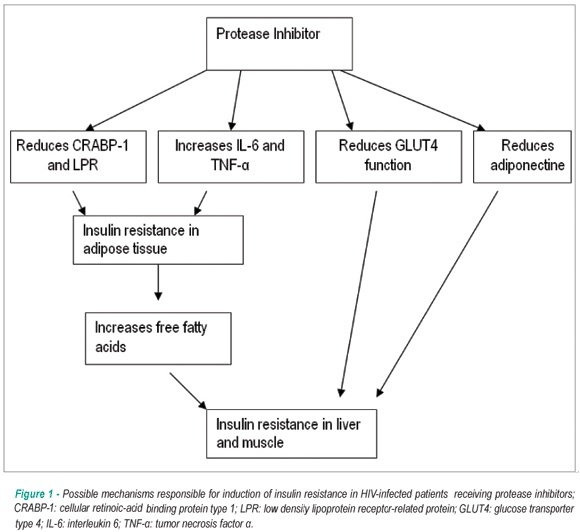
One of the most recent phenomena related to the acquired immunodeficiency syndrome (AIDS) is the emergence of a new vulnerable population: the elderly. One of the factors that account for this increase is the development of combination antiretroviral therapy (ART), which has provided better quality of life and life expectancy for HIV-positive patients. However, ART is associated with adverse effects such as dyslipidemia, diabetes mellitus and insulin resistance, which are risk factors for cardiovascular disease. Due to the impact of ART on lipid and glucose metabolism, many studies were published involving HIV infection and cardiovascular disease, as well as their risk factors and the use of ART, but few of them reported on the cardiotoxicity of this therapy in the elderly. The objective of this study is to review the main metabolic changes caused by the use of antiretroviral therapy and its impact on an increased risk of cardiovascular disease in elderly people with HIV.

  • Aged
  • Antiretroviral Therapy Highly Active
  • Cardiovascular Diseases
  • Dyslipidemias
  • HIV/AIDS
  • Lipid Metabolism
Read Full Article
Creative Commons Attribution (CC BY) Creative Commons license
20/01/2010 DOI: 10.1590/S0066-782X2009001100019 Views 1
ABC
Artigo de Pesquisa

Pharmacology of fibrates

Hermes Toros Xavier

Fibrates are drugs commonly used in hypertriglyceridemias. After their absorption, fibrates are metabolized by the liver, using P450 isoenzymes not shared by statins. However, for some fibrates, such as genfibrozil, an interaction with statins can occur during their liver glucuronidation, or by displacement of free fraction of statins linked to proteins in plasma. Plasma half-life is variable among fibrates (2-80 h). Recently it has been shown that fibrates produce plasma lipid changes mainly by stimulating peroxisome-proliferation activation receptors alpha. Through this action, there is an increase in the transcription of some genes related to lipid metabolism, such as LLP, APOAI, APOAII, ABCA-1, as well as decrease in the expression of APOCIII, and many other actions.

  • fibrates
  • Lipid Metabolism
  • Pharmacology
Read Full Article
Creative Commons Attribution (CC BY) Creative Commons license
02/01/2006 DOI: 10.1590/S0066-782X2005002400004
Postprandial lipemia: influence of aging
ABC
Artigo Original

Postprandial lipemia: influence of aging

Jaqueline Scholz Issa et al. Jayme Diament Neusa Forti

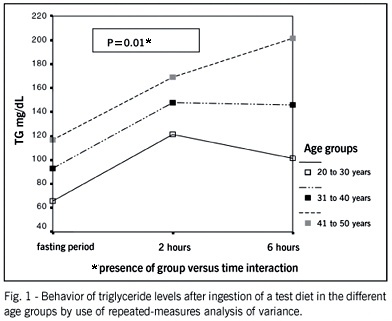
OBJECTIVE: To investigate the behavior of postprandial lipemia assessed by means of repeated measurements of triglyceride levels in healthy individuals aged from 20 to 50 years, divided into the following 3 age groups: GI – from 20 to 30 years; GII – from 31 to 40 years; and GIII – from 41 to 50 years. METHODS: Triglyceride levels were measured in 3 conditions: after a 12-hour fast, and 2 and 6 hours after a standard meal containing 40 g of fat. RESULTS: The repeated-measures analysis of triglyceride levels showed a distinct behavior of the age groups throughout the 6 hours. The younger participants (GI) had a reduction in the triglyceride levels in the sixth hour; the elderly (GIII) had increasing values in the sixth hour; and those in the intermediate age group (GII) maintained their triglyceride levels, when comparing the second and sixth hours of blood collection. The differences in behavior were significant (P=0.01). CONCLUSION: In a healthy adult population sample, aging influences the postprandial lipemia behavior.

  • aging
  • Lipid Metabolism
  • postprandial lipemia
Read Full Article
Creative Commons Attribution (CC BY) Creative Commons license
29/09/2005 DOI: 10.1590/S0066-782X2005001400004

How to cite this article

EndNote RIS

Electronic Document Format (Vancouver)

Muniz LB, Alves-Santos AM, Camargo F, Martins DB, Celes MRN, Naves MMV. High-Lard and High-Cholesterol Diet, but not High-Lard Diet, Leads to Metabolic Disorders in a Modified Dyslipidemia Model. Arquivos Brasileiros de Cardiologia 2019;113(5):896-902.

Electronic Document Format (ABNT)

Muniz, Lidiane B.; Alves-Santos, Aline M.; Camargo, Fabricio; Martins, Danieli Brolo; Celes, Mara Rubia N.; Naves, Maria Margareth V.. High-Lard and High-Cholesterol Diet, but not High-Lard Diet, Leads to Metabolic Disorders in a Modified Dyslipidemia Model. Arquivos Brasileiros de Cardiologia, v. 113, n. 5, p. 896-902, Aug. 2019.

Electronic Document Format (APA)

Muniz, L. B., Alves-Santos, A. M., Camargo, F., Martins, D. B., Celes, M. R. N., & Naves, M. M. V. (2019). High-Lard and High-Cholesterol Diet, but not High-Lard Diet, Leads to Metabolic Disorders in a Modified Dyslipidemia Model. Arquivos Brasileiros de Cardiologia, 113(5), 896-902.

Electronic Document Format (ISO)

Muniz, Lidiane B. and Alves-Santos, Aline M. and Camargo, Fabricio and Martins, Danieli Brolo and Celes, Mara Rubia N. and Naves, Maria Margareth V.. High-Lard and High-Cholesterol Diet, but not High-Lard Diet, Leads to Metabolic Disorders in a Modified Dyslipidemia Model. Arquivos Brasileiros de Cardiologia [online]. 2019, vol. 113, n. 5, [cited 2026-10-14], pp. 896-902. Available from: <https://journals.cardiol.br/en/article/high-lard-and-high-cholesterol-diet-but-not-high-lard-diet-leads-to-metabolic-disorders-in-a-modified-dyslipidemia-model/>. ISSN 0066-782X

EndNote RIS

Electronic Document Format (Vancouver)

Kızıltunç E, Kösem A, Özkan C, Ilgın BU, Kundi H, Çetin M, Ornek E, et al. Serum Sirtuin 1, 3 and 6 Levels in Acute Myocardial Infarction Patients. Arquivos Brasileiros de Cardiologia 2019;113(1):33-9.

Electronic Document Format (ABNT)

Kızıltunç, Emrullah; Kösem, Arzu; Özkan, Can; Ilgın, Burcu Uğurlu; Kundi, Harun; Çetin, Mustafa; Ornek, Ender. Serum Sirtuin 1, 3 and 6 Levels in Acute Myocardial Infarction Patients. Arquivos Brasileiros de Cardiologia, v. 113, n. 1, p. 33-39, Jul. 2019.

Electronic Document Format (APA)

Kızıltunç, E., Kösem, A., Özkan, C., Ilgın, B. U., Kundi, H., Çetin, M., & Ornek, E. (2019). Serum Sirtuin 1, 3 and 6 Levels in Acute Myocardial Infarction Patients. Arquivos Brasileiros de Cardiologia, 113(1), 33-39.

Electronic Document Format (ISO)

Kızıltunç, Emrullah and Kösem, Arzu and Özkan, Can and Ilgın, Burcu Uğurlu and Kundi, Harun and Çetin, Mustafa and Ornek, Ender. Serum Sirtuin 1, 3 and 6 Levels in Acute Myocardial Infarction Patients. Arquivos Brasileiros de Cardiologia [online]. 2019, vol. 113, n. 1, [cited 2026-10-14], pp. 33-39. Available from: <https://journals.cardiol.br/en/article/serum-sirtuin-1-3-and-6-levels-in-acute-myocardial-infarction-patients/>. ISSN 0066-782X

EndNote RIS

Electronic Document Format (Vancouver)

Zago VHS, Santos JET, Danelon MRG, Silva RMM, Panzoldo NB, Parra ES, Alexandre F, et al. Effects of atorvastatin and T-786C polymorphism of eNOS gene on plasma metabolic lipid parameters. Arquivos Brasileiros de Cardiologia 2012;100(1):14-20.

Electronic Document Format (ABNT)

Zago, Vanessa Helena de Souza; Santos, José Eduardo Tanus dos; Danelon, Mirian Regina Gardin; Silva, Roger Marcelo Mesquita da; Panzoldo, Natália Baratella; Parra, Eliane Soler; Alexandre, Fernanda; Virgínio, Vítor Wilson de Moura; Quintão, Eder Carlos Rocha; Faria, Eliana Cotta de. Effects of atorvastatin and T-786C polymorphism of eNOS gene on plasma metabolic lipid parameters. Arquivos Brasileiros de Cardiologia, v. 100, n. 1, p. 14-20, Dec. 2012.

Electronic Document Format (APA)

Zago, V. H. S., Santos, J. E. T. , Danelon, M. R. G., Silva, R. M. M. , Panzoldo, N. B., Parra, E. S., Alexandre, F., Virgínio, V. W. M., Quintão, E. C. R., & Faria, E. C. (2012). Effects of atorvastatin and T-786C polymorphism of eNOS gene on plasma metabolic lipid parameters. Arquivos Brasileiros de Cardiologia, 100(1), 14-20.

Electronic Document Format (ISO)

Zago, Vanessa Helena de Souza and Santos, José Eduardo Tanus dos and Danelon, Mirian Regina Gardin and Silva, Roger Marcelo Mesquita da and Panzoldo, Natália Baratella and Parra, Eliane Soler and Alexandre, Fernanda and Virgínio, Vítor Wilson de Moura and Quintão, Eder Carlos Rocha and Faria, Eliana Cotta de. Effects of atorvastatin and T-786C polymorphism of eNOS gene on plasma metabolic lipid parameters. Arquivos Brasileiros de Cardiologia [online]. 2012, vol. 100, n. 1, [cited 2026-10-14], pp. 14-20. Available from: <https://journals.cardiol.br/en/article/effects-of-atorvastatin-and-t-786c-polymorphism-of-enos-gene-on-plasma-metabolic-lipid-parameters/>. ISSN 0066-782X

EndNote RIS

Electronic Document Format (Vancouver)

Rêgo AG, Mesquita ET, Faria CA, Rêgo MG, Baracho MFP, Santos MGN, Egito EST, et al. Cardiometabolic abnormalities in patients with berardinelli-Seip syndrome. Arquivos Brasileiros de Cardiologia 2010;94(1):109-18.

Electronic Document Format (ABNT)

Rêgo, Antonio Guedes do; Mesquita, Evandro Tinoco; Faria, Carlos Alberto de; Rêgo, Marcel Álvares Guedes do; Baracho, Maria de Fátima Paiva; Santos, Maria Goretti do Nascimento; Egito, Eryvaldo Sócrates Tabosa do; Brandão Neto, José. Cardiometabolic abnormalities in patients with berardinelli-Seip syndrome. Arquivos Brasileiros de Cardiologia, v. 94, n. 1, p. 109-118, Sep. 2010.

Electronic Document Format (APA)

Rêgo, A. G. , Mesquita, E. T., Faria, C. A. , Rêgo, M. G. , Baracho, M. F. P., Santos, M. G. N., Egito, E. S. T. , & Brandão Neto, J. (2010). Cardiometabolic abnormalities in patients with berardinelli-Seip syndrome. Arquivos Brasileiros de Cardiologia, 94(1), 109-118.

Electronic Document Format (ISO)

Rêgo, Antonio Guedes do and Mesquita, Evandro Tinoco and Faria, Carlos Alberto de and Rêgo, Marcel Álvares Guedes do and Baracho, Maria de Fátima Paiva and Santos, Maria Goretti do Nascimento and Egito, Eryvaldo Sócrates Tabosa do and Brandão Neto, José. Cardiometabolic abnormalities in patients with berardinelli-Seip syndrome. Arquivos Brasileiros de Cardiologia [online]. 2010, vol. 94, n. 1, [cited 2026-10-14], pp. 109-118. Available from: <https://journals.cardiol.br/en/article/cardiometabolic-abnormalities-in-patients-with-berardinelli-seip-syndrome/>. ISSN 0066-782X

EndNote RIS

Electronic Document Format (Vancouver)

Kramer AS, Lazzarotto AR, Sprinz E, Manfroi WC. Metabolic abnormalities, antiretroviral therapy and cardiovascular disease in elderly patients with HIV. Arquivos Brasileiros de Cardiologia 2010;93(5):561-8.

Electronic Document Format (ABNT)

Kramer, Andréa Sebben; Lazzarotto, Alexandre Ramos; Sprinz, Eduardo; Manfroi, Waldomiro Carlos. Metabolic abnormalities, antiretroviral therapy and cardiovascular disease in elderly patients with HIV. Arquivos Brasileiros de Cardiologia, v. 93, n. 5, p. 561-568, Jan. 2010.

Electronic Document Format (APA)

Kramer, A. S., Lazzarotto, A. R., Sprinz, E., & Manfroi, W. C. (2010). Metabolic abnormalities, antiretroviral therapy and cardiovascular disease in elderly patients with HIV. Arquivos Brasileiros de Cardiologia, 93(5), 561-568.

Electronic Document Format (ISO)

Kramer, Andréa Sebben and Lazzarotto, Alexandre Ramos and Sprinz, Eduardo and Manfroi, Waldomiro Carlos. Metabolic abnormalities, antiretroviral therapy and cardiovascular disease in elderly patients with HIV. Arquivos Brasileiros de Cardiologia [online]. 2010, vol. 93, n. 5, [cited 2026-10-14], pp. 561-568. Available from: <https://journals.cardiol.br/en/article/metabolic-abnormalities-antiretroviral-therapy-and-cardiovascular-disease-in-elderly-patients-with-hiv/>. ISSN 0066-782X

EndNote RIS

Electronic Document Format (Vancouver)

Xavier HT. Pharmacology of fibrates. Arquivos Brasileiros de Cardiologia 2006;85(suppl 5):15-6.

Electronic Document Format (ABNT)

Xavier, Hermes Toros. Pharmacology of fibrates. Arquivos Brasileiros de Cardiologia, v. 85, n. suppl 5, p. 15-16, Jan. 2006.

Electronic Document Format (APA)

Xavier, H. T. (2006). Pharmacology of fibrates. Arquivos Brasileiros de Cardiologia, 85(suppl 5), 15-16.

Electronic Document Format (ISO)

Xavier, Hermes Toros. Pharmacology of fibrates. Arquivos Brasileiros de Cardiologia [online]. 2006, vol. 85, n. suppl 5, [cited 2026-10-14], pp. 15-16. Available from: <https://journals.cardiol.br/en/article/pharmacology-of-fibrates/>. ISSN 0066-782X

EndNote RIS

Electronic Document Format (Vancouver)

Issa JS, Diament J, Forti N. Postprandial lipemia: influence of aging. Arquivos Brasileiros de Cardiologia 2005;85(1):15-9.

Electronic Document Format (ABNT)

Issa, Jaqueline Scholz; Diament, Jayme; Forti, Neusa. Postprandial lipemia: influence of aging. Arquivos Brasileiros de Cardiologia, v. 85, n. 1, p. 15-19, Sep. 2005.

Electronic Document Format (APA)

Issa, J. S., Diament, J., & Forti, N. (2005). Postprandial lipemia: influence of aging. Arquivos Brasileiros de Cardiologia, 85(1), 15-19.

Electronic Document Format (ISO)

Issa, Jaqueline Scholz and Diament, Jayme and Forti, Neusa. Postprandial lipemia: influence of aging. Arquivos Brasileiros de Cardiologia [online]. 2005, vol. 85, n. 1, [cited 2026-10-14], pp. 15-19. Available from: <https://journals.cardiol.br/en/article/postprandial-lipemia-influence-of-aging/>. ISSN 0066-782X

  • About ABC Family
  • Internal Regulation
  • Editorial Board
  • Brazilian Society of Cardiology (SBC)

Issues

SBC Guidelines

  • Videos
  • Podcasts
  • News