ABC Family Arquivos Brasileiros de Cardiologia International Journal of Cardiovascular Sciences ABC Heart Failure & Cardiomyopathy ABC Imagem Cardiovascular
Português English
ABC Family
Português English
  • About
    • About ABC Family
    • Internal Regulation
    • Editorial Board
    • Brazilian Society of Cardiology (SBC)
  • Issues
  • SBC Guidelines
  • Content
    • Videos
    • Podcasts
    • News
  • About
    • About ABC Family
    • Internal Regulation
    • Editorial Board
    • Brazilian Society of Cardiology (SBC)
  • Issues
  • SBC Guidelines
  • Content
    • Videos
    • Podcasts
    • News

ABC Family

  • ABC Family
  • Arquivos Brasileiros de Cardiologia
  • International Journal of Cardiovascular Sciences
  • ABC Heart Failure & Cardiomyopathy
  • ABC Imagem Cardiovascular
Search in

No content found.

Journals
Ordering
Article types
Others

  1. Home
  2. Keyword: Heart Disease Risk Factors
Hypertension in Pregnancy: From Guidelines to the Cardiologist's Clinical Practice
ABC
Research Letter

Hypertension in Pregnancy: From Guidelines to the Cardiologist's Clinical Practice

Walkiria Samuel Ávila

Introduction

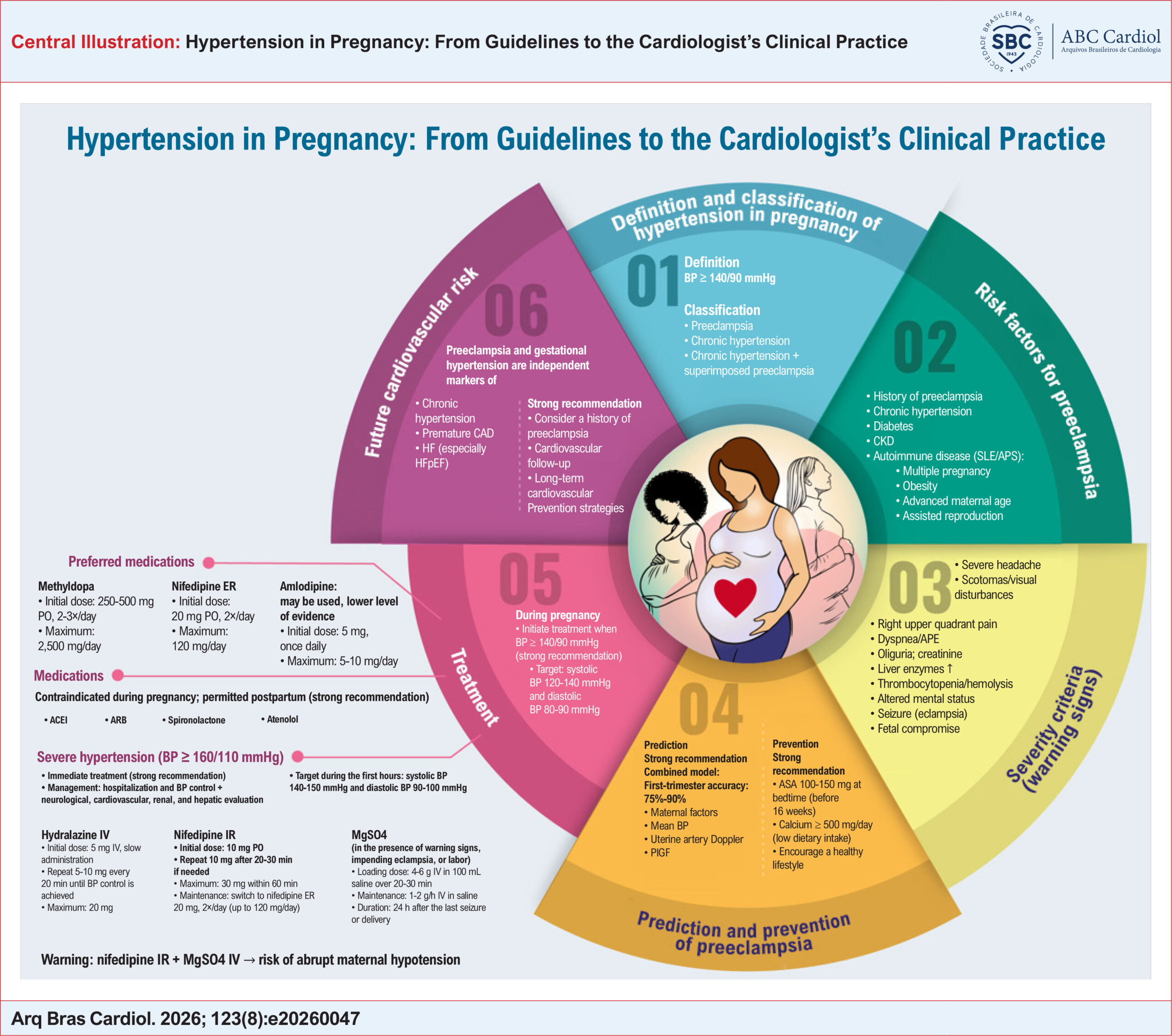
The Brazilian Guidelines of Hypertension– 2025 of the Brazilian Society of Cardiology objectively address hypertension during pregnancy, dedicating a specific chapter to the topic. The document covers diagnostic definitions, strategies for the prediction and prevention of preeclampsia, therapeutic management during pregnancy and the postpartum period as well as the assessment of future cardiovascular risk associated with hypertensive disorders of pregnancy (HDPs).

In the international setting, the 2025 European Society of Cardiology (ESC) Guidelines for the Management of Cardiovascular Disease During Pregnancy provide detailed algorithms for proteinuria assessment, emergency management, and the treatment of hypertension and preeclampsia. Their recommendations are based predominantly on expert consensus, reflecting the scarcity of randomized clinical trials in this field.

[…]

  • Heart Disease Risk Factors
  • Hipertension
  • Practice Guideline
  • Pre-Eclampsia
  • Pregnancy
Read Full Article
Creative Commons Attribution (CC BY) Creative Commons license
14/09/2026 DOI: 10.36660/abc.20260047i Views 1
IJCS
Letter to the Editor

Metabolic Challenges in The Semiarid Region: A Critical Analysis of Nutritional Transition and Early Cardiovascular Risk

Leonardo Alves Santos et al. Álvaro Eduardo Santos Oliveira Beatriz Vitória Carvalho Lordêlo Luis Antonio Cavalcanti Matias … Rodrigo Mendes Pedro Pereira Tenório

Dear Editor,

We had the opportunity to review the article entitled “Assessment of Overweight/Obesity and Elevation of Blood Pressure in Schools in Rural and Urban Area in the Backlands of Bahia.” We would like to congratulate the authors for their initiative in investigating a pediatric cohort in a region marked by social and climatic vulnerability, frequently underrepresented in scientific literature, as well as for highlighting the relevance of addressing childhood obesity and arterial hypertension – two major cardiovascular risk factors with direct impact on future morbidity and mortality.

[…]

  • Heart Disease Risk Factors
  • Hypertension
  • Metabolism
  • Obesity
Read Full Article
Creative Commons Attribution (CC BY) Creative Commons license
21/08/2026 DOI: 10.36660/ijcs.20260059 Views 2
Figure 1
IJCS
Original Article

Evaluation of Cardiovascular Risks Associated with Calcium Use: A Systematic Review and Meta-Analysis

Paulo Henrique Gouveia et al. Joyce da Silva Guimarães Astrid Wiens

Abstract

Background

Calcium plays vital roles in both physiological and pathological processes, and its use as a therapeutic agent is primarily indicated for osteoporosis and osteopenia. It may increase cardiovascular risk, thereby increasing cardiovascular morbidity and mortality.

Objective

To synthesize the available evidence on cardiovascular risks in patients using calcium-based medications and supplements.

Methods

This systematic review and meta-analysis utilized three major international databases and included intervention studies and comparative observational studies with data on the intake of calcium-based medications or supplements in adult populations and associated cardiovascular outcomes. A p-value < 0.05 was considered for all analyses, and the certainty of evidence was assessed using the GRADE approach.

Results

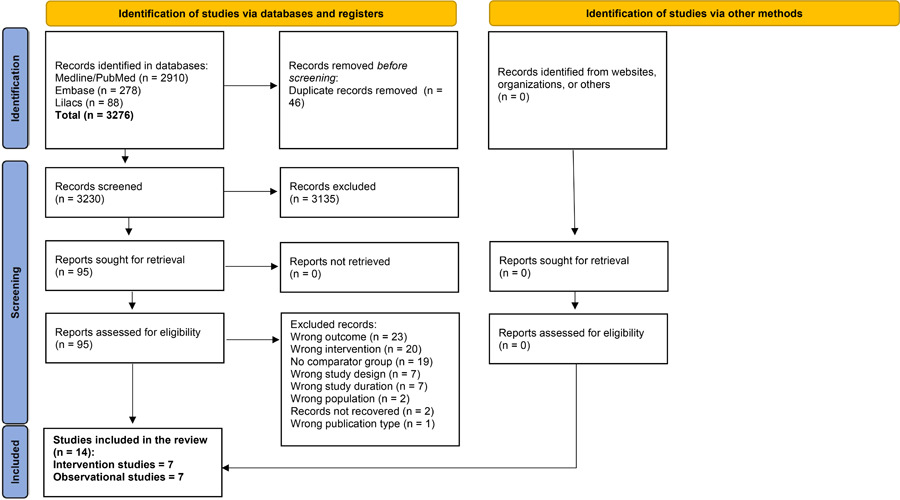
A total of fourteen articles were included: three pivotal intervention studies, four post hoc analyses, and seven observational studies. The outcomes assessed were mortality from cardiovascular events, myocardial infarction, stroke, and coronary artery disease. Although an increased incidence of coronary artery disease was observed among users of calcium-based medications or supplements when considering only observational studies (RR 1.08; 95% CI 1.02–1.15), this finding was not confirmed in interventional studies. Therefore, further investigation is warranted. No increased risk of cardiovascular mortality, myocardial infarction, or stroke was observed. The quality of the evidence was considered low or very low for all outcomes due to the risk of bias and limitations inherent to the meta-analyses themselves.

Conclusions

Caution is recommended when interpreting the results, particularly in the development of clinical protocols. The importance of pharmacotherapeutic monitoring for patients using these medications is emphasized, and further research to explore additional outcomes is suggested.

  • Calcium
  • Calcium Compounds
  • Heart Disease Risk Factors
  • systematic review
Read Full Article
Creative Commons Attribution (CC BY) Creative Commons license
17/08/2026 DOI: 10.36660/ijcs.20250239
Cardiovascular Risk Stratification and Low-Density Lipoprotein Cholesterol Target Achievement in Primary Health Care: A Cross-Sectional Study
IJCS
Original Article

Cardiovascular Risk Stratification and Low-Density Lipoprotein Cholesterol Target Achievement in Primary Health Care: A Cross-Sectional Study

Gabriel Olivo Leandro et al. Pedro Henrique Daniel Abreu Samantha Cristiane Lopes Silvia Rozauria Froes Toniazzo

Abstract

Background:

Cardiovascular diseases (CVDs) remain the leading cause of mortality in Brazil. Effective dyslipidemia management is essential for preventing major adverse cardiovascular events (MACE); however, previous studies have reported low rates of lipid target achievement and inadequate statin prescribing in primary health care (PHC) settings.

Objective:

To evaluate low-density lipoprotein cholesterol (LDL-C) target achievement and the appropriateness of statin prescriptions according to cardiovascular risk among patients receiving PHC in a medium-sized Brazilian city.

Methods:

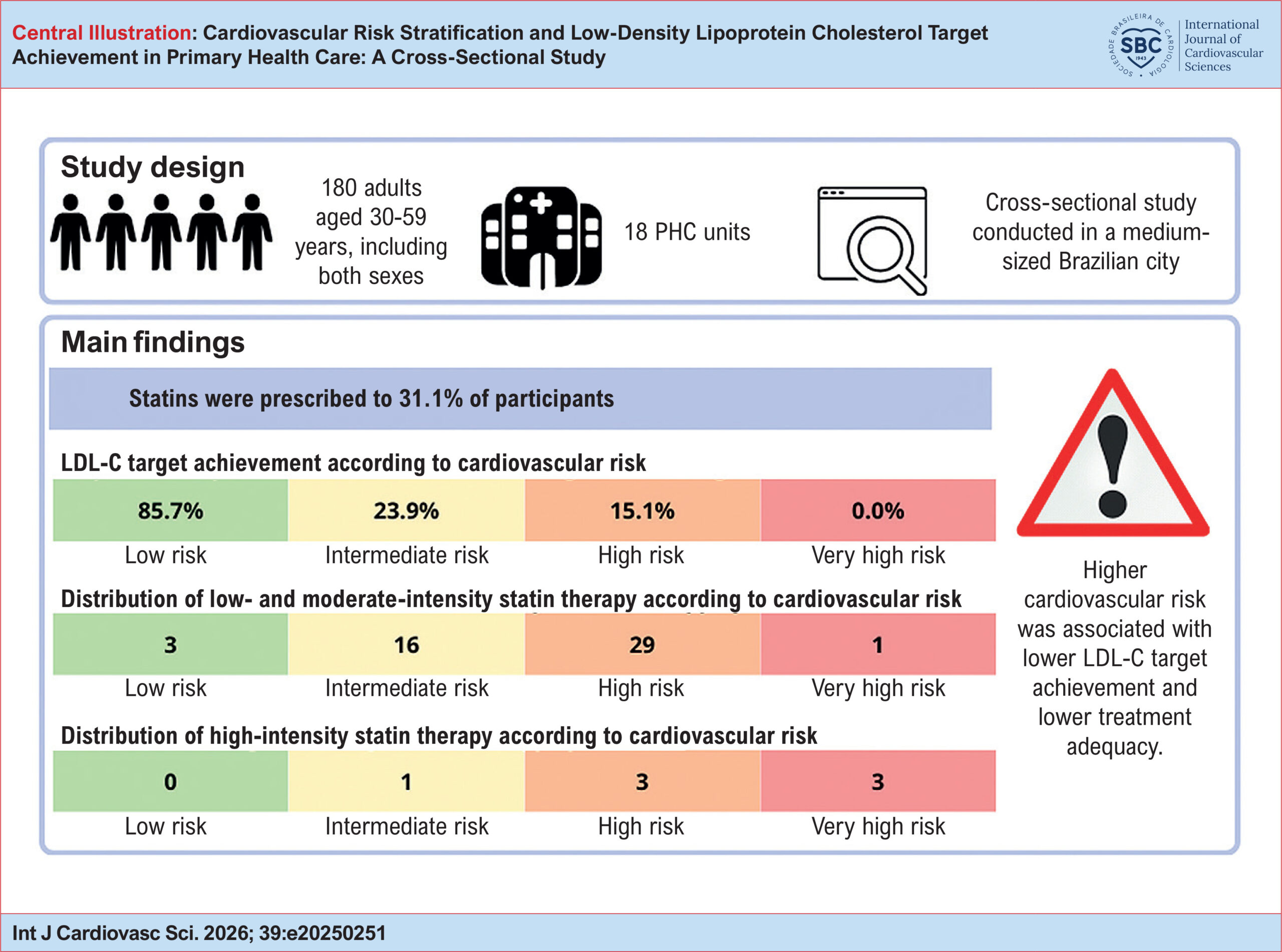
This cross-sectional study was conducted in 18 PHC units in Rio do Sul, Santa Catarina, Brazil, between January 13 and May 30, 2025. The study included 180 adults aged 30-59 years of both sexes who had been followed for at least 6 months and had a lipid profile assessment within the previous year. Cardiovascular risk was estimated using the Framingham Risk Score. Data were analyzed using the chi-square, Mann-Whitney, and Kruskal-Wallis tests. Statistical significance was set at p < 0.05.

Results:

Among the 180 participants, 95 (52.7%) did not achieve LDL-C targets. LDL-C goal attainment was more frequent among low-risk (85.7%) and intermediate-risk (23.9%) individuals and less frequent among high-risk (15.1%) and very high-risk (0.0%) individuals. Cardiovascular risk was significantly associated with lipid control (p < 0.05). Median LDL-C was 106.8 mg/dL (Interquartile Range (IQR), 88.4-136.2), with significant differences across risk categories (p < 0.05). Among the 56 statin prescriptions identified, only 26 (46.4%) were consistent with guideline-recommended statin intensity.

Conclusion:

The low rate of LDL-C target achievement and the high prevalence of inadequate statin therapy highlight the need for more effective lipid management strategies and structured interventions in PHC.

  • Heart Disease Risk Factors
  • Hydroxymethylglutaryl-CoA Reductase Inhibitors
  • LDL-colesterol
  • Observational Study
  • Primary Health Care
Read Full Article
Creative Commons Attribution (CC BY) Creative Commons license
03/08/2026 DOI: 10.36660/ijcs.20250251 Views 1
Artificial Intelligence Applied to Electrocardiogram-Based Cardiovascular Risk Assessment: A Systematic Review
ABC
Review Article

Artificial Intelligence Applied to Electrocardiogram-Based Cardiovascular Risk Assessment: A Systematic Review

Maria Clara Mantoan Pinheiro et al. Lívia Felberg Isadora Cristine Reis Sguizzato Bozzi Antônio Luiz Pinho Ribeiro Gabriela Miana de Mattos Paixão

Abstract

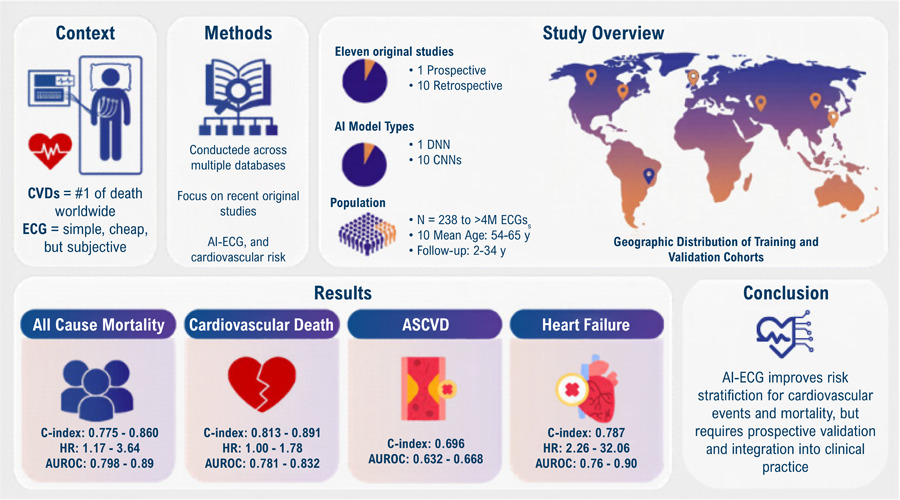
Cardiovascular diseases (CVDs) are the leading cause of mortality worldwide, underscoring the need for effective risk prediction and early detection. Although the electrocardiogram (ECG) is a widely available and low-cost diagnostic tool, its traditional interpretation is limited by subjectivity. Artificial intelligence (AI) has emerged as a promising approach, capable of extracting hidden prognostic information from ECG signals. This systematic review aimed to assess original studies applying AI techniques to ECGs for cardiovascular risk prediction and mortality. Original studies that used ECG signals as the sole input variable for AI models, focusing on cardiovascular risk outcomes, were included. A systematic search was conducted in different databases, and data were synthesized narratively. Eleven studies were included, predominantly retrospective cohorts applying convolutional neural networks (CNNs) to predict cardiovascular risk or mortality. The sample primarily consisted of adult populations in high-income countries. Primary outcomes included all-cause mortality, cardiovascular death, and major adverse cardiovascular events (MACE). Reported AUROC values ranged from 0.63 to 0.961 in training sets, with some models outperforming traditional risk scores. AI-ECG models demonstrated the potential to detect subclinical disease, enabling early risk stratification even in normal ECGs. However, challenges remain regarding population diversity, model interpretability, and prospective validation. The application of AI to ECG analysis represents a promising advancement in personalized cardiovascular risk assessment. Nonetheless, further research is needed to ensure the safety, effectiveness, and equitable clinical integration of these technologies.

  • Artificial Intelligence
  • Electrocardiography
  • Heart Disease Risk Factors
Read Full Article
Creative Commons Attribution (CC BY) Creative Commons license
03/08/2026 DOI: 10.36660/abc.20250790i
Analysis of the Lipid Profile and Prevalence of Cardiovascular Risk Factors in Hemodialysis Patients from an Academic Health Institution in Belo Horizonte
IJCS
Original Article

Analysis of the Lipid Profile and Prevalence of Cardiovascular Risk Factors in Hemodialysis Patients from an Academic Health Institution in Belo Horizonte

Sarah Mattos Moraes et al. Matheus Evangelista da Costa Flávia Carvalho Leão Reis Kleisson Antônio Pontes Maia

Abstract

Background:

There is a lack of epidemiological data regarding the cardiovascular risk profile of patients with chronic kidney disease (CKD) undergoing hemodialysis in the Brazilian state of Minas Gerais.

Objective:

To analyze the lipid profile and assess the prevalence of traditional cardiovascular risk factors among patients with CKD on hemodialysis treated at an academic healthcare institution in Belo Horizonte, Minas Gerais, Brazil.

Methods:

This was a cross-sectional, observational, and non-interventional study. The researchers obtained clinical, laboratory, and demographic data from medical records and conducted structured individual interviews with all participants. The chi-square test of independence, Fisher’s exact test, and the Wilcoxon rank-sum test were applied. A significance level of 0.05 was adopted to establish the statistical validity of comparisons.

Results:

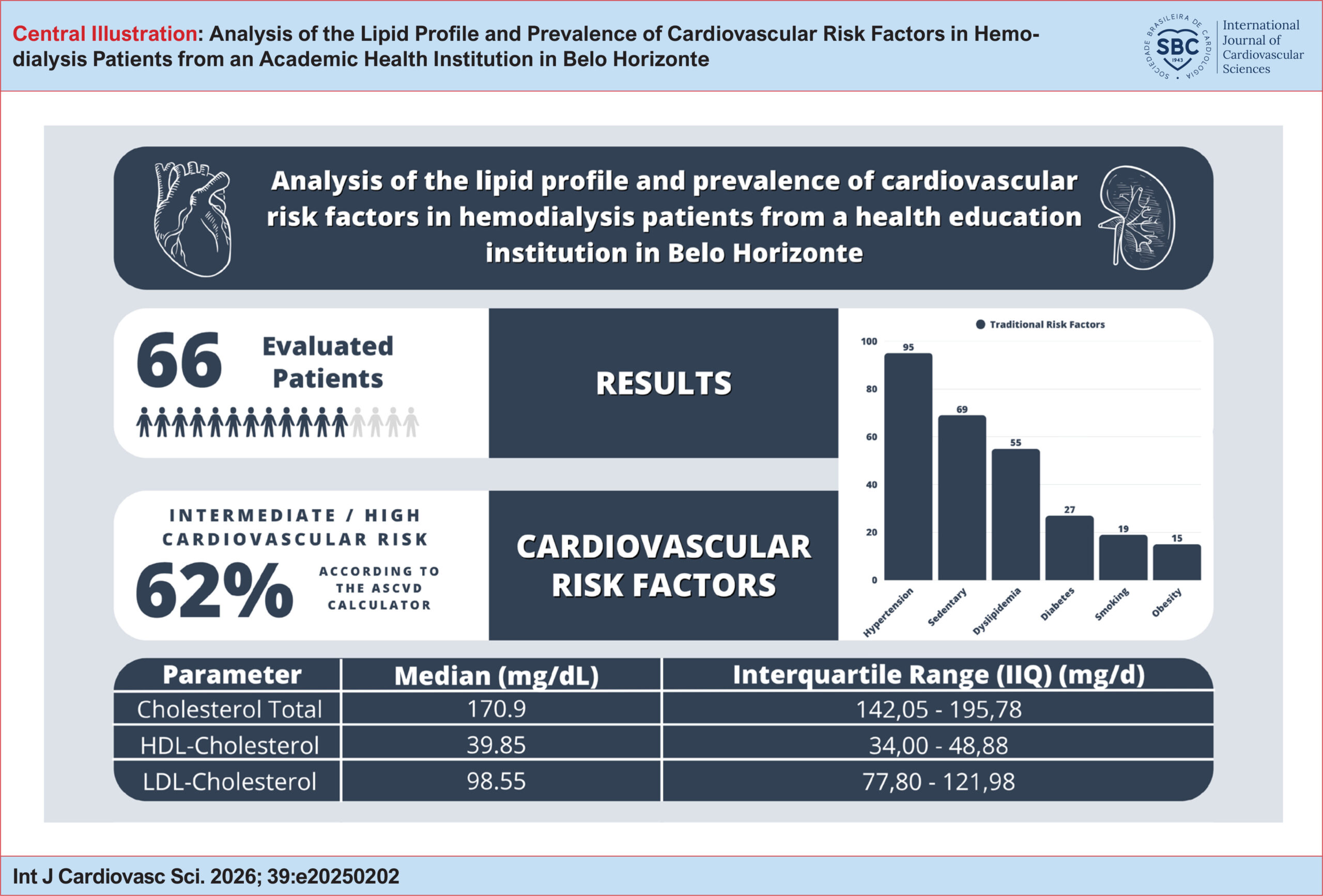
A total of 66 patients were included, representing 91.6% of all individuals undergoing hemodialysis at the study center. The mean age was 56 years. Among participants, 59% were male, and 89% self-identified as mixed race. A high prevalence of traditional cardiovascular risk factors was observed, including hypertension (95%), physical inactivity (69%), dyslipidemia (55%), diabetes mellitus (27%), current smoker (19%), and obesity (15%). The lipid profile analysis showed a median total cholesterol level of 170.9 mg/dL (interquartile range: 142.05 to 195.78 mg/dL) and Low-Density Lipoprotein (LDL-cholesterol) of 98.55 mg/dL (interquartile range: 77.80 to 121.98 mg/dL).

Conclusion:

This study demonstrated a high burden of cardiovascular risk factors among hemodialysis patients, with systemic arterial hypertension, dyslipidemia, physical inactivity, and diabetes mellitus being the most prevalent conditions. Furthermore, the lipid profile findings suggest suboptimal control of this lipid fraction in the studied population.

  • chronic renal insufficiency
  • Heart Disease Risk Factors
  • Lipids
  • renal dialysis
Read Full Article
Creative Commons Attribution (CC BY) Creative Commons license
24/07/2026 DOI: 10.36660/ijcs.20250202 Views 1
IJCS
Original Article

Assessment of Cardiovascular-Metabolic Risk in Wistar Rats Fed a Hypercaloric Diet Supplemented with Selenium: A Preclinical Animal Study

Matheus Von Jelita Salina et al. Vitor Hugo Moro Pironatto André Amaro Mamédio dos Santos Tiago Daniel Gueiber … Luiz Gustavo Lima Eduardo Machado Dechandt Camila Cury Caruso Pedro Henrique Karpinski Thiago Martins Figueiredo Alceu de Oliveira Toledo-Junior Camila Marinelli Martins Ricardo Zanetti Gomes

Abstract

Background:

Residual cardiovascular risk persists even with adequate serum LDL-c control through statins, possibly due to dysfunctions in serum triglycerides and HDL-c. Elevated TG and reduced HDL-c are associated with metabolic syndrome and cardiovascular diseases. The TG/HDL-c ratio may predict these risks. Selenium, an antioxidant cofactor, may modulate these alterations, especially in diets that dysregulate serum lipid metabolism.

Objectives:

To evaluate the effects of selenium supplementation on the cardiometabolic risk (CMR) of Wistar rats exposed to a high-fat hyperglycemic diet (HHD).

Methods:

For 11 weeks, 55 female Wistar rats were divided into the following five groups: standard diet (SD), SD + ContinuousSe, HHD, HHD + LateSe, and HHD + EarlySe. Selenium was supplemented using sodium selenite (1 mg/kg). We performed one-way ANOVA, Kruskal–Wallis, and post hoc tests, adopting a significance level of p < 0.05.

Results:

Total cholesterol increased in HHD + LateSe compared to SD (p = 0.032) and to HHD (p = 0.013). HDL-c increased in HHD + LateSe compared to SD (p = 0.004) and to HHD (p = 0.008). LDL-c increased in HHD + LateSe compared to HHD (p = 0.008). TG decreased in HHD + LateSe (p = 0.006) and in HHD + EarlySe (p = 0.016) compared to SD. TG/HDL-c ratio decreased in HHD + LateSe compared to SD (p < 0.001) and SD + ContinuousSe (p = 0.013); and in HHD + EarlySe compared to SD (p = 0.005).

Conclusion:

Selenium supplementation showed potential to increase HDL-c and reduce TG, key diagnostic components of metabolic syndrome. It also demonstrated potential to lower the TG/HDL-c ratio, a possible predictor of CMR, in rats fed HHD. Further studies are needed in subjects with high CMR and statin use to better define the clinical response to this therapy.

  • Atherosclerosis
  • Heart Disease Risk Factors
  • Metabolic Syndrome
  • Sodium Selenite
  • Triglycerides
Read Full Article
Creative Commons Attribution (CC BY) Creative Commons license
12/06/2026 DOI: 10.36660/ijcs.20250069 Views 1
Figure 1
IJCS
Editorial

What is the Best Cardiovascular Risk Score in Our Daily Practice?

Glaucia Maria Moraes de Oliveira

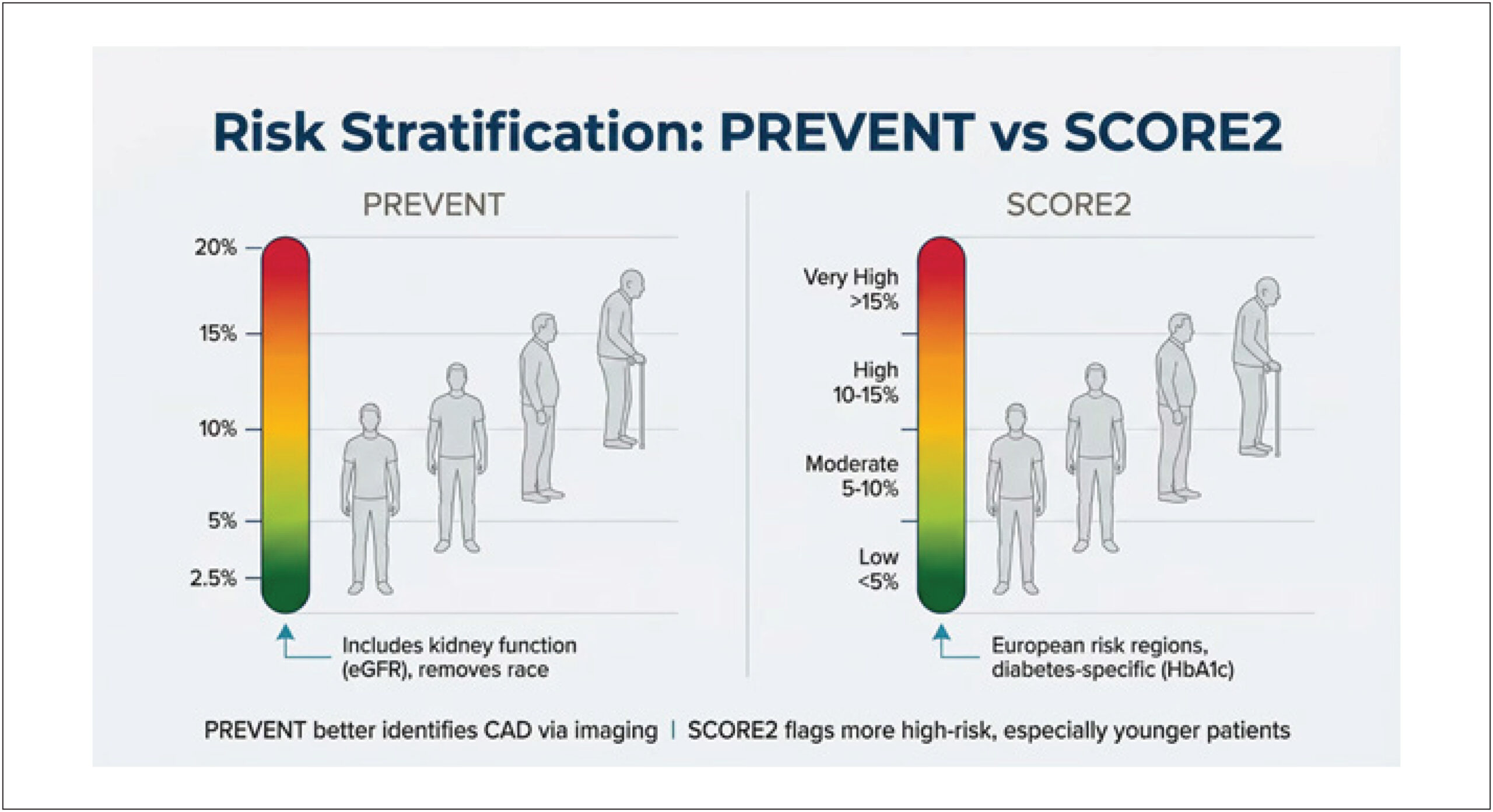
Preventing cardiovascular disease (CVD) involves lifestyle modifications, risk factor management at the individual level (identifying high-risk patients and setting targets to reduce CVD risk), and public health strategies at the population level (targeting the overall population and aiming to minimize the risk throughout the entire population). The intervention, with a slight reduction in overall CVD risk, is unexceptionally significant but difficult to achieve. Both strategies must be combined to reduce the burden of CVDs. Moreover, it is essential to consider that younger patients are often classified as low risk in most risk-prediction models. However, the future lifetime risk of CVD is much greater in younger patients with multiple risk factors than in older patients.

Population-level prevention is implemented through broad strategies, such as policy and community interventions, to reduce risk factor prevalence, including tobacco control through bans and taxes, salt/trans fat reduction in foods, the promotion of physical activity via urban planning, and mass media campaigns for healthy eating and alcohol moderation. Community settings, such as faith-based organizations, schools, workplaces, and social services, deliver evidence-based programs (e.g., nutrition education, activity policies), using multilevel strategies, including training implementers, audits, incentives, and partnerships for equity.

[…]

  • Heart Disease Risk Factors
  • Medição de Risco
  • Prevenção de Doenças
Read Full Article
Creative Commons Attribution (CC BY) Creative Commons license
01/06/2026 DOI: 10.36660/ijcs.20250282 Views 1
ABC
Editorial

Hypertension in Indigenous Brazilians: A Rapidly Emerging Public Health Crisis

Allan K. N. Alencar

The increasing burden of systemic arterial hypertension among Brazil’s Indigenous populations is a clear indicator of the country’s ongoing epidemiological transition, marked by a shift from infectious diseases and malnutrition to non-communicable chronic diseases (NCDs) such as hypertension. In the recent study by Araújo et al., conducted in a specialized outpatient clinic for Indigenous health in Passo Fundo (RS), 26.0% of Indigenous adults were found to be hypertensive. This prevalence is consistent with previous reports from other Indigenous populations in Brazil, such as those from the Xingu Indigenous Park (26.7%) and the Upper Rio Negro region (29.0%), suggesting that the findings reflect a broader national trend of increasing cardiovascular risk among Indigenous communities. Multiple studies highlight this transition, noting that Indigenous communities are experiencing rising rates of hypertension and other cardiometabolic conditions as a result of rapid cultural, economic, and lifestyle changes, including urbanization, dietary shifts, and increased interaction with non-Indigenous society.– National surveys confirm the emergence of obesity, hypertension, and diabetes in a growing number of Indigenous communities across all regions of Brazil, further underscoring the epidemiological transition., Once considered virtually absent in these communities, hypertension is now emerging as a critical health concern, with prevalence rates approaching or even surpassing national averages.

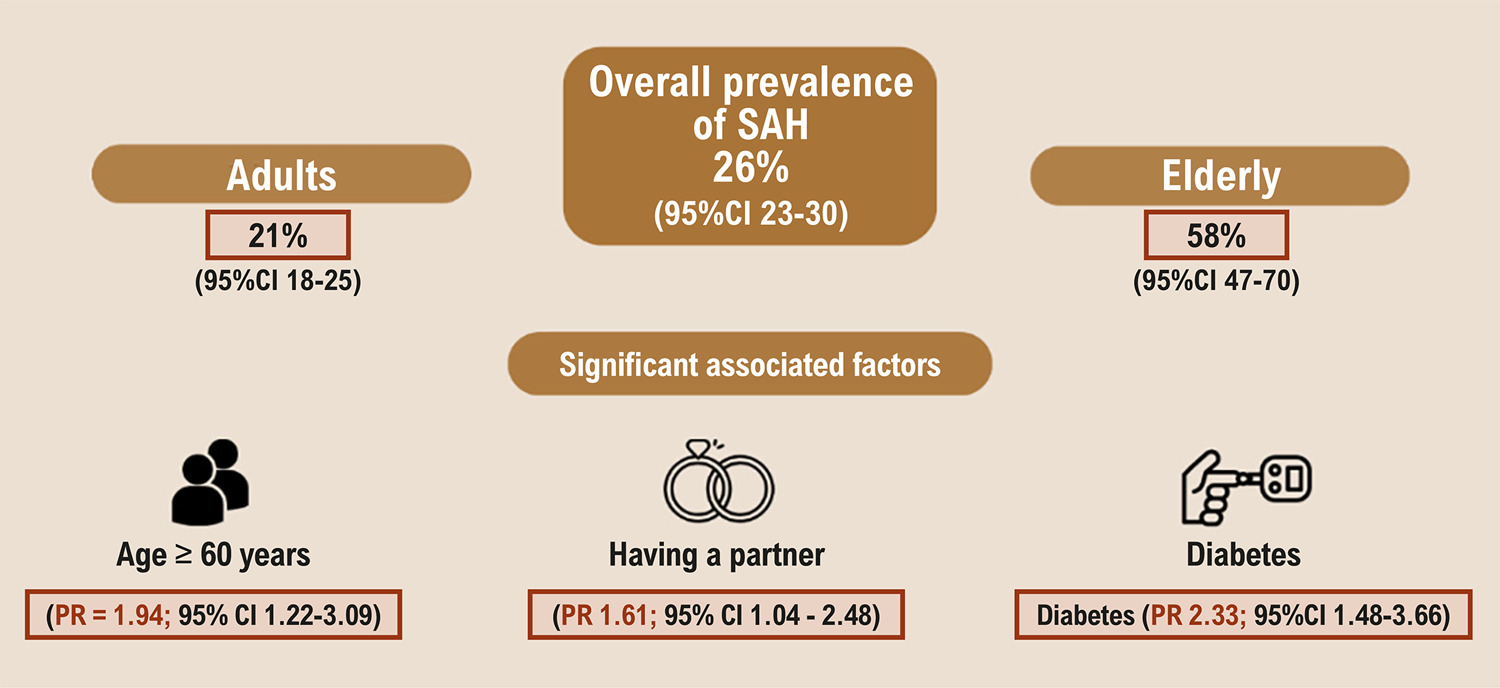
The study by Araújo et al. adds nuance to this epidemiological picture by identifying factors independently associated with hypertension: age ≥60 years, having a spouse, and diabetes mellitus. The finding that 58% of older individuals in this population are hypertensive is especially troubling when juxtaposed with demographic data showing that only 20.1% of Indigenous people in Rio Grande do Sul are over 60 years old. This suggests a high disease burden among the elderly and reinforces the urgency of implementing age-specific preventive strategies.

[…]

  • Health of Indigenous Peoples
  • Health Status Disparities
  • Health Transition
  • Heart Disease Risk Factors
  • Hypertension
Read Full Article
Creative Commons Attribution (CC BY) Creative Commons license
14/11/2025 DOI: 10.36660/abc.20250567i Views 1
Prevalence of Systemic Arterial Hypertension and Associated Factors in Indigenous Treated at a Specialized Outpatient Clinic in Southern Brazil
ABC
Original Article

Prevalence of Systemic Arterial Hypertension and Associated Factors in Indigenous Treated at a Specialized Outpatient Clinic in Southern Brazil

Jackson Menezes de Araújo et al. Leandro Tuzzin Daniela Teixeira Borges Jossimara Polettini … Renata dos Santos Rabello Gustavo Olszanski Acrani Ivana Loraine Lindemann

Abstract

Background

The increasing occurrence of systemic arterial hypertension (SAH) is associated with multifactorial conditions, including lifestyle changes among Indigenous populations.

Objective

To estimate the prevalence and identify factors associated with SAH among Indigenous individuals receiving care at a specialized outpatient clinic in southern Brazil.

Methods

This cross-sectional study was conducted with a sample of Indigenous individuals of both sexes aged 20 years or older, using data collected from medical records. Hypertension was defined as the dependent variable based on the recorded diagnosis, for which prevalence was estimated with a 95% confidence interval (95% CI). Sociodemographic, health-related, and behavioral characteristics were analyzed as potential associated factors through estimates of crude and adjusted prevalence ratios (PR), along with their respective 95% CIs.

Results

The sample consisted of 570 Indigenous individuals, with a SAH prevalence of 26% (95% CI: 23–30). The associated factors were age 60 years or older (PR = 1.94; 95% CI: 1.22–3.09), having a partner (PR = 1.61; 95% CI: 1.04–2.48), and a diagnosis of diabetes mellitus (PR = 2.33; 95% CI: 1.48–3.66).

Conclusion

The prevalence of SAH was found to be high, reinforcing its significance as a public health issue within the Indigenous population as well. These findings underscore the need to strengthen primary health care with an emphasis on prevention, early diagnosis, and proper management

  • Chronic Disease
  • Health Services Research
  • Heart Disease Risk Factors
Read Full Article
Creative Commons Attribution (CC BY) Creative Commons license
29/09/2025 DOI: 10.36660/abc.20250269i Views 1
Figure 1
ABC
Editorial

From Cholesterol Metabolism to Comprehensive Lipid Management and Crosstalk of Inflammation: Expanding the Frontiers of Cardiovascular Prevention

Eduardo Vilela et al. Nuno Bettencourt

Lipids and cardiovascular disease (CVD)

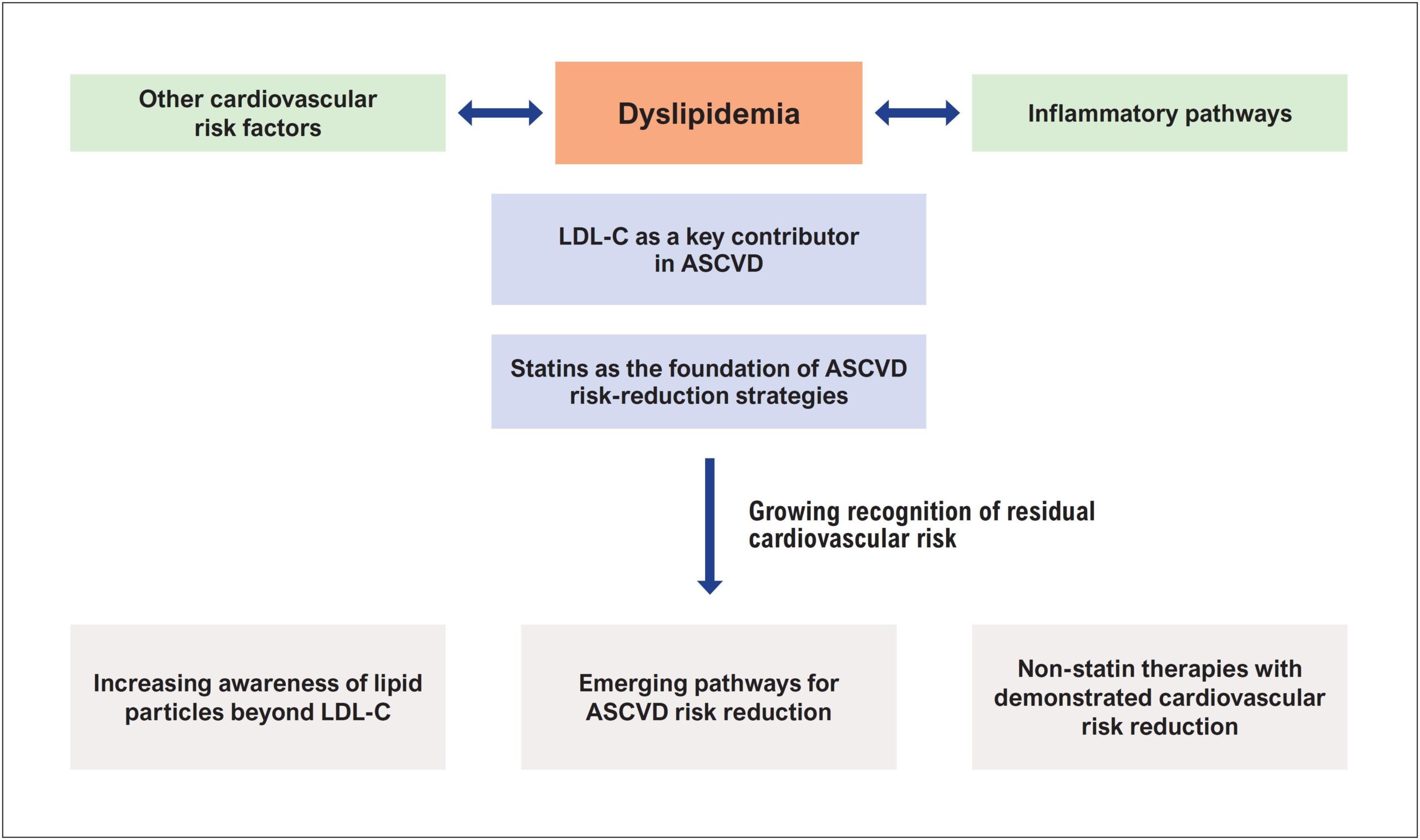
Lipid metabolism involves a wide range of complex pathways that play key roles in both normal physiology and disease. Lipids are essential for maintaining cell membrane integrity and supporting energy balance and metabolic homeostasis. Among them, cholesterol has drawn particular attention for its strong association with CVD.–

While cholesterol is vital for several physiological functions — such as those related to nervous system structure and steroid hormone production — its role in the development of CVD has also been extensively studied., CVD, and particularly atherosclerotic CVD (ASCVD), remains a leading global health burden, and advances in our understanding of lipid metabolism have significantly shaped prevention strategies over the past decades.,,

[…]

  • Cholesterol
  • Heart Disease Risk Factors
  • Inflammation
Read Full Article
Creative Commons Attribution (CC BY) Creative Commons license
26/09/2025 DOI: 10.36660/abc.20250386i Views 2
Relationship between Liver Fibrosis Due to Metabolic Dysfunction-Associated Steatotic Liver Disease and Subclinical Atherosclerosis
ABC
Original Article

Relationship between Liver Fibrosis Due to Metabolic Dysfunction-Associated Steatotic Liver Disease and Subclinical Atherosclerosis

Daniele Araujo de Azeredo Coutinho et al. Jenaine Rosa Godinho Raphael Carreiro Moura Rogério Martins Oliveira … Hevila Faria Passos Jordana de Paula Felipe Mendes Carlos Roberto Moraes de Andrade Junior Luis Guillermo Coca-Velarde Maria Auxiliadora Nogueira Saad Priscila Pollo Flores Debora Vieira Soares

Abstract

Background

Metabolic dysfunction-associated steatotic liver disease (MASLD) is the most prevalent liver disease worldwide. MASLD can progress to fibrosis and related complications, with cardiovascular disease being the leading cause of death in affected individuals. Carotid atherosclerosis markers can predict cardiovascular outcomes, underscoring the relevance of their association with liver fibrosis.

Objective

To evaluate the relationship between liver fibrosis in MASLD and subclinical atherosclerosis by assessing carotid intima-media thickness (cIMT), vascular age (VA), and the presence of atherosclerotic plaques.

Methods

This prospective study included participants at risk for MASLD. Liver steatosis and fibrosis were assessed via ultrasound and liver elastography using controlled attenuation parameter measurements. Carotid atherosclerosis was evaluated through carotid ultrasound, cIMT measurements, and VA. A significance level of 5% (p < 0.05) was adopted.

Results

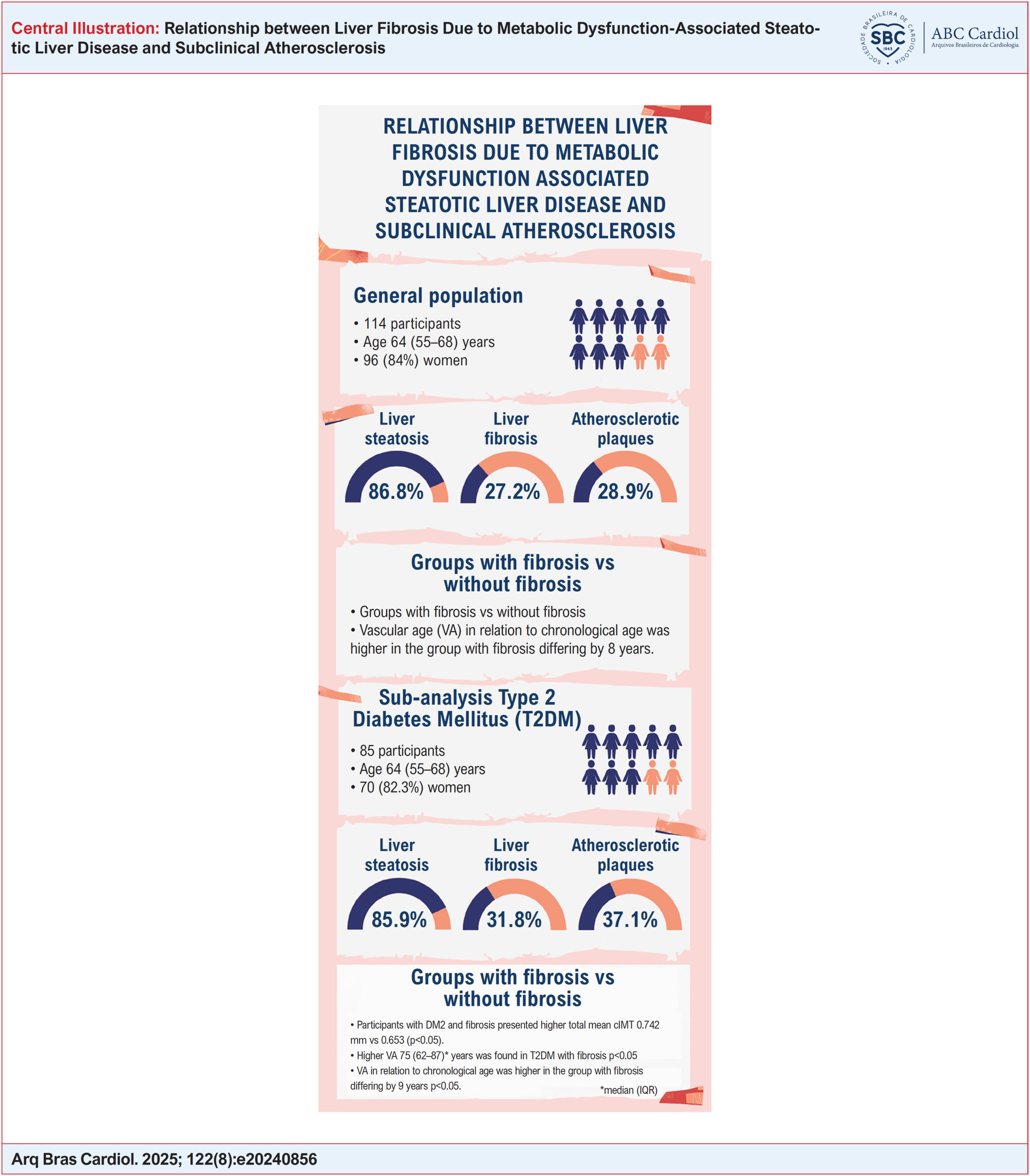
A total of 114 participants were included, with a median age of 64 years (IQR: 55–68), and 96 (84%) were women. Steatosis was identified in 99 participants (86.8%) and fibrosis in 31 (27.2%). Atherosclerotic plaques were present in 33 participants (28.9%), with no significant difference in frequency between groups. However, the fibrosis group showed higher cIMT and elevated VA. In a subgroup analysis of 85 participants with type 2 diabetes mellitus (T2DM), 27 (31.8%) had fibrosis. These individuals had a higher cIMT (0.742 mm vs. 0.653 mm; p < 0.05), and VA exceeded chronological age by 9 years in the fibrosis group compared to those without fibrosis (p < 0.05).

Conclusion

This study demonstrates that individuals with MASLD and liver fibrosis exhibit greater vascular aging and increased cardiovascular risk, as reflected by elevated cIMT and VA.

  • Atherosclerosis
  • Heart Disease Risk Factors
  • Liver Cirrhosis
  • Type 2 Diabetes Mellitus
Read Full Article
Creative Commons Attribution (CC BY) Creative Commons license
19/09/2025 DOI: 10.36660/abc.20240856i Views 2
Figure 1
ABC
Original Article

Agreement between Framingham, Pooled Cohort Equations, and Globorisk-LAC in the Estimation of Cardiovascular Risk in Brazil, 2013

Leonardo Ferreira Fontenelle et al. Thiago Dias Sarti Gabriela Callo Quinte Ana Paula Santana Coelho Almeida José Geraldo Mill

Abstract

Background

The Framingham risk score and Pooled Cohort Equations (PCE) have never been recalibrated for the Brazilian population. In contrast, the Globorisk-LAC score was recently derived using a methodology analogous to the PCE and has been recalibrated for Latin American countries.

Objectives

To describe the agreement between the Framingham, PCE, and Globorisk-LAC scores in estimating the 10-year cardiovascular risk in the Brazilian population.

Methods

This cross-sectional study used the three scores to estimate cardiovascular risk in participants aged 40 to 74 years without a history of cardiovascular disease based on data from the 2013 National Health Survey (PNS). The agreement was estimated as (i) the percentage of participants in which the risk estimated by one score was between 0.80 and 1.25 times the risk estimated by another score and (ii) based on the Gwet’s agreement coefficient (AC1) according to risk categories (low, intermediate, and high).

Results

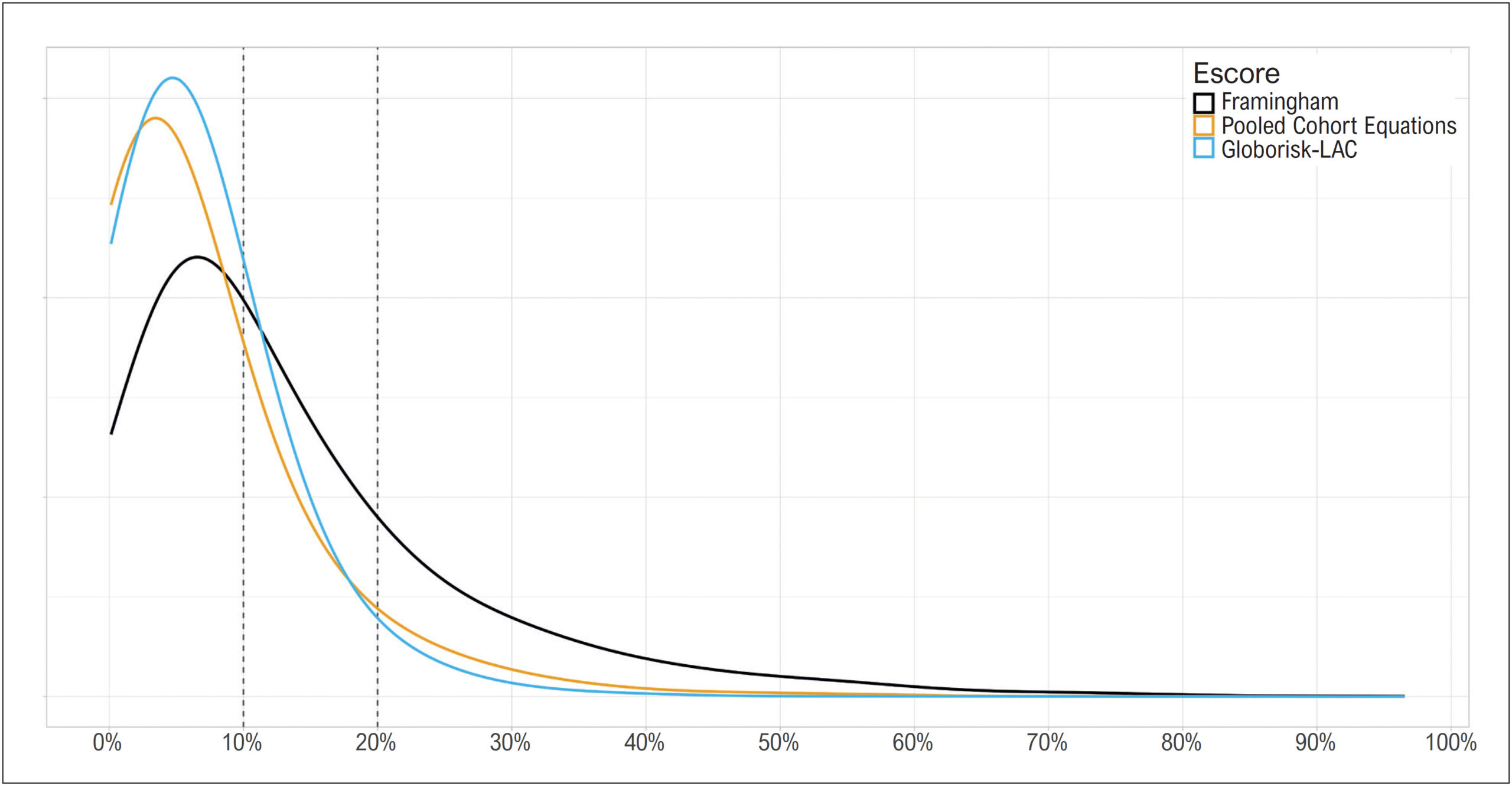
A total of 4,416 participants were included from 8,952 participants from the PNS with a laboratory component. The median (interquartile range) of the estimated 10-year cardiovascular risk was 9.2% (5.1 to 17.8) according to the Framingham, 3.6% (1.7 to 8.2) according to the PCE, and 4.7% (2.8 to 8.1) according to the Globorisk-LAC. The risk estimated using the Framingham agreed with the Globorisk-LAC and PCE in 6.4% and 1.8% of the cases, respectively, whereas the PCE and Globorisk-LAC agreed in 34.7% of the cases. When considering the risk stratification, the respective AC1 values were 0.454, 0.489, and 0.874.

Conclusions

The three cardiovascular risk scores showed low levels of agreement with each other. The reasons for this disagreement suggests that Globorisk-LAC is a strong candidate to replace the Framingham in the Brazilian guidelines for dyslipidemia.

  • Brazil
  • Heart Disease Risk Factors
  • Risk Assessment
Read Full Article
Creative Commons Attribution (CC BY) Creative Commons license
28/07/2025 DOI: 10.36660/abc.20240405i Views 2
Analysis of Ventricular Repolarization in Hypertensive Patients: Influence of Nocturnal Blood Pressure Dipping
ABC
Review Article

Analysis of Ventricular Repolarization in Hypertensive Patients: Influence of Nocturnal Blood Pressure Dipping

Marco Aurélio Goulart et al. Dalmo Antonio Ribeiro Moreira Fernando Yue Cesena Jonathan Batista Souza … Antonio Gabriele Laurinavicius Fernanda Marciano Consolim-Colombo Márcio Gonçalves de Sousa

Abstract

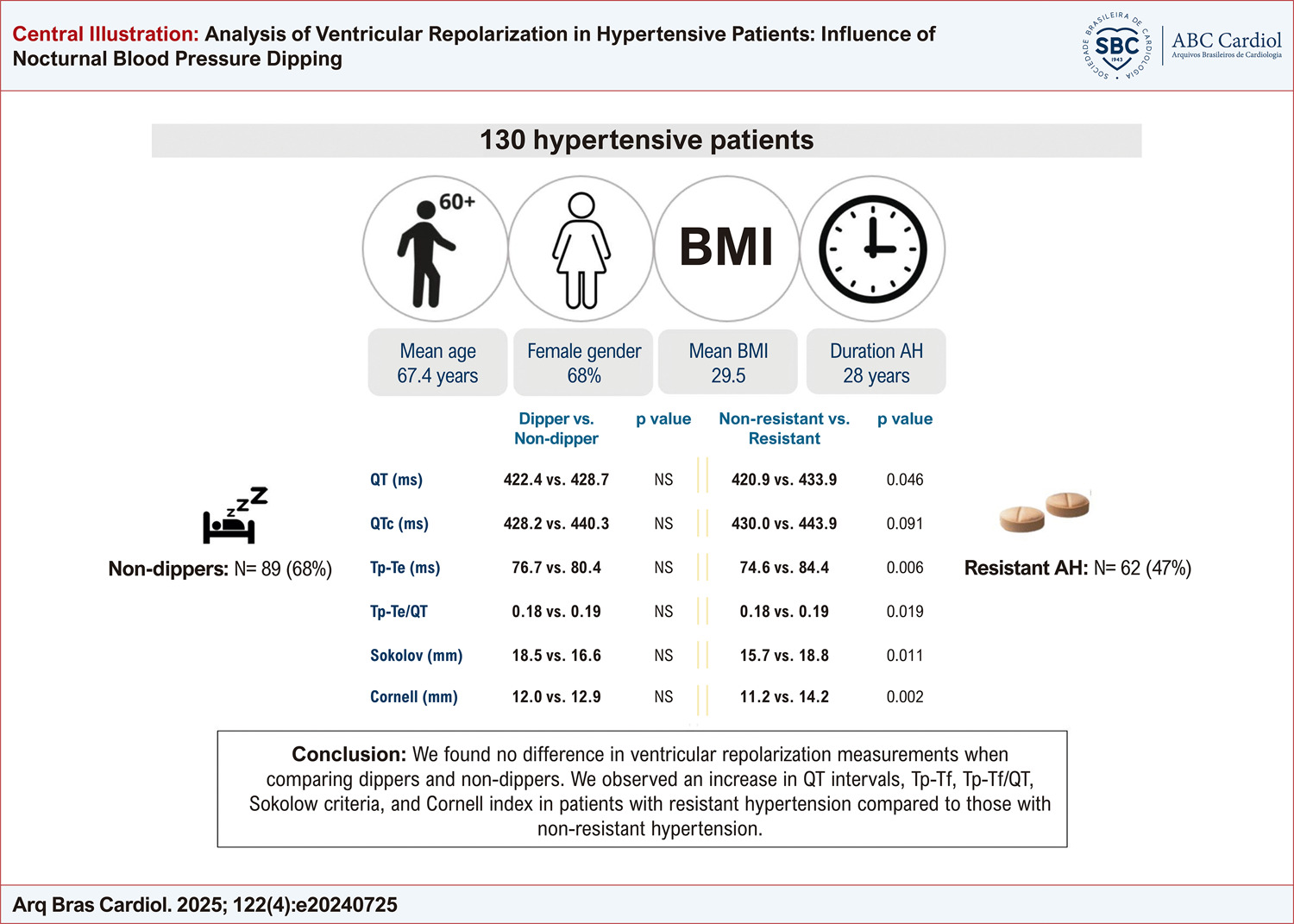
Changes in ventricular repolarization are associated with ventricular arrhythmias and higher mortality. The association between a non-dipper blood pressure pattern and changes in ventricular repolarization remains controversial. This study sought to compare ventricular repolarization measurements (QT interval, QTc, Tp-Te, Tp-Te/QT, and QTd) in hypertensive dippers and non-dippers. Secondary objectives are to compare measurements between controlled and uncontrolled hypertensive patients, as well as resistant and non-resistant hypertensive patients. This observational, cross-sectional study involved patients monitored in a Hypertension Service. The level of significance adopted in the statistical analysis was 5%. A total of 130 participants were admitted. The mean age was 67.4 years, with 72% presenting some form of target organ damage. Repolarization measurements did not differ between dippers and non-dippers. However, within the resistant hypertension group, when compared to the non-resistant, differences were observed in the QT interval in V5 (433.3 ms vs. 420.9 ms, p = 0.046), Tp-Te in both V2 (85.4 ms vs. 78.7 ms, p = 0.049) and V5 (84.6 ms vs. 74.6 ms, p = 0.006), Tp-Te/QT in V5 (0.19 vs. 0.18, p = 0.019), Sokolow-Lyon index (18.8 mm vs. 15.7 mm, p = 0.011), and Cornell index (14.2 mm vs. 11.2 mm, p = 0.002), aged-adjusted values. In this high cardiovascular risk hypertensive population, no difference in repolarization measures was found between dippers and non-dippers. However, this is the first study to demonstrate increased ventricular repolarization measures in patients with resistant hypertension.

  • Cardiac Electrophysiology
  • Heart Disease Risk Factors
  • Hypertension
Read Full Article
Creative Commons Attribution (CC BY) Creative Commons license
16/05/2025 DOI: 10.36660/abc.20240725i Views 1
Association between Cardiovascular Risk Factors and Carotid Plaques in a Population-Based Study - The SHIP-Brazil Study
ABC
Original Article

Association between Cardiovascular Risk Factors and Carotid Plaques in a Population-Based Study – The SHIP-Brazil Study

Fernanda Burger Zimmermann et al. Sérgio Luiz Zimmermann Marcelo Burger Zimmermann Enrico Klug Beraldi … Mateus Campanelli Franco da Rocha Bruno Pereira de Oliveira Zabot Siegmar Starke Ernani Tiaraju de Santa Helena Marcello Ricardo Paulista Markus

Abstract

Background

Atherosclerotic disease is a relevant cause of morbidity and mortality in the general population, and it is important to detect factors that can influence its prevention.

Objective

To evaluate the association of cardiovascular risk factors with carotid plaques in participants of the Study of Health in Pomerania (SHIP) – Brazil.

Methods

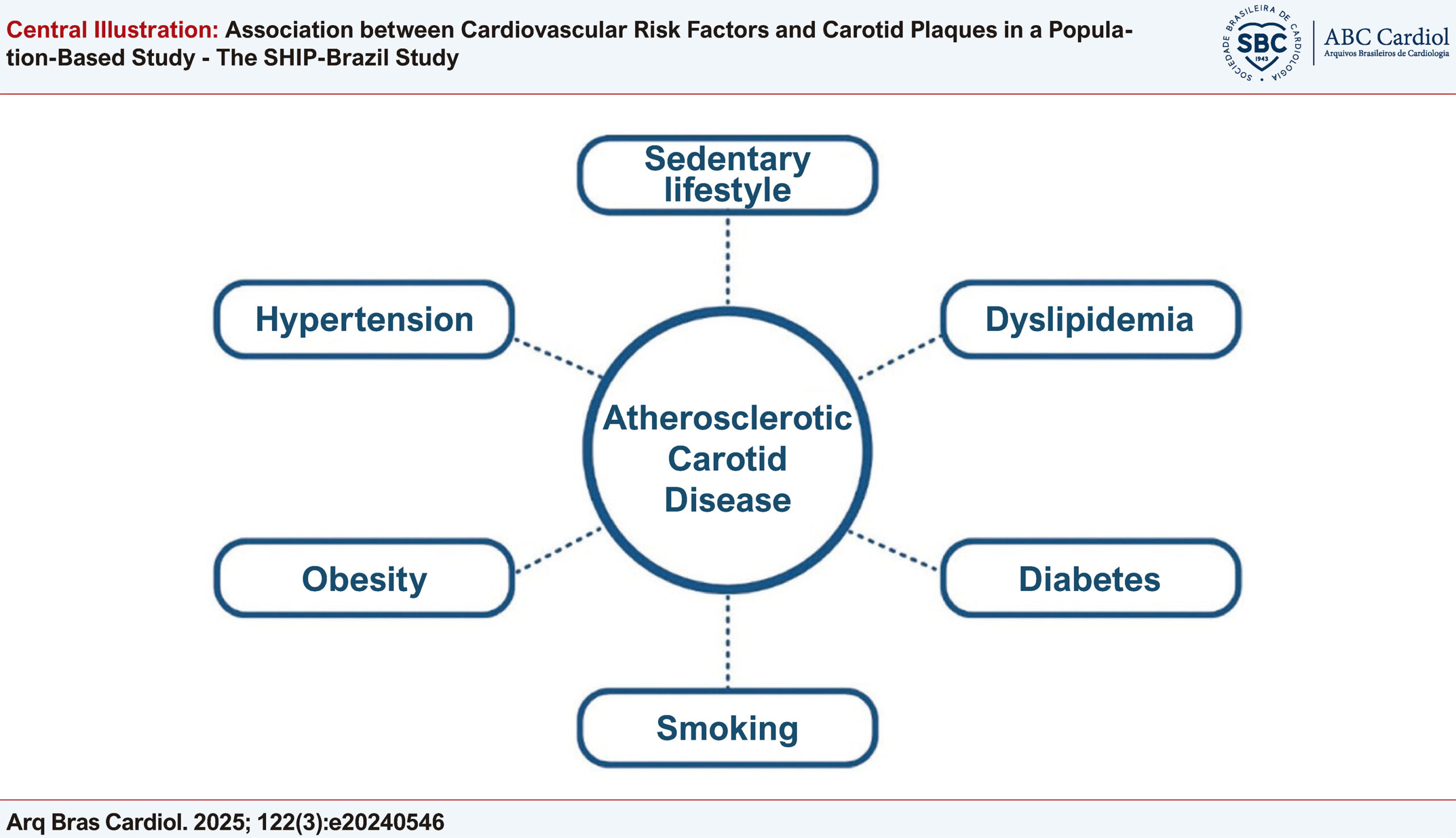
A total of 1,953 participants were assessed for the presence of cardiovascular risk factors (hypertension, dyslipidemia, type 2 diabetes, obesity, smoking and physical inactivity) and sociodemographic variables (gender, age group, Germanic culture, color/race self-declared, and alcohol consumption), waist circumference measurement, waist-to-hip ratio and waist-to-height ratio. The presence of carotid plaques was analyzed by ultrasound. The association between the study variables and carotid plaques was assessed using the Chi-square test. A p-value < 0.05 was considered significant.

Results

Plaques were present in 56.5% of hypertensive patients (p<0.001), 49.8% of dyslipidemic patients (p<0.001), 62% of diabetic patients (p<0.001), 52% of smokers, 29% of those who had never smoked (p<0.001), 39.5% of sedentary people and 33.1% of non-sedentary people (p=0.014), 43.7% of obese people and 26.1% of eutrophic people (p<0.001).

Conclusion

Carotid plaques were prevalent in men, aged between 60 and 79, white, hypertensive, dyslipidemic, diabetic, smokers, sedentary and obese, illiterate, in economic class A1/A2, and of Germanic culture, and low alcohol consumption.

  • Atherosclerosis
  • Carotid Arteries Ultrasonography
  • Carotid Intima-Media Thickness
  • Heart Disease Risk Factors
Read Full Article
Creative Commons Attribution (CC BY) Creative Commons license
02/05/2025 DOI: 10.36660/abc.20240546i Views 1
ABC
Editorial

A Fresh Glimpse on Chest X-Ray: Revealing Significance of Aortic Arch Calcifications for Stroke Recurrence

José Ribeiro

The global impact of cardiovascular disease continues to be significant, despite improvements in diagnosis and treatment. The epidemiological significance and associated clinical outcomes emphasize the importance of risk stratification and preventive measures.

In the realm of medical diagnostics, every subtle observation holds the potential to unlock crucial insights into the prognosis and management of various health conditions. One such observation that has garnered attention is the presence of calcification in the aortic arch as detected on chest X-ray. While traditionally viewed as a marker of cardiovascular risk, recent studies have ignited a debate on whether aortic arch calcification (AAC) could serve as an independent predictor of recurrent stroke.

[…]

  • Diagnostic Imaging
  • Heart Disease Risk Factors
  • Mass Chest X-Ray
  • Stroke
  • Thoracic aorta
Read Full Article
Creative Commons Attribution (CC BY) Creative Commons license
22/11/2024 DOI: 10.36660/abc.20240404i Views 1
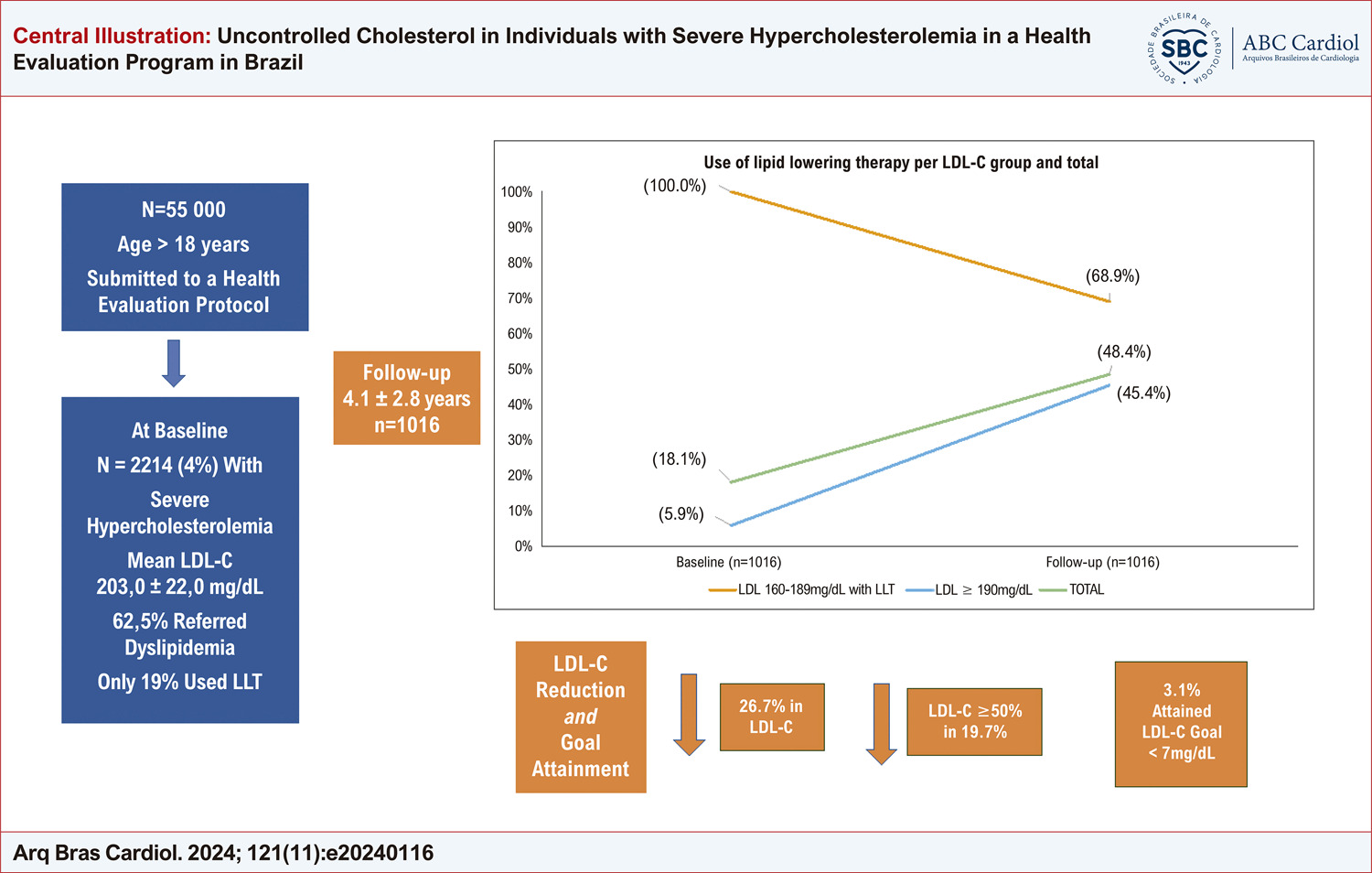
Uncontrolled Cholesterol in Individuals with Severe Hypercholesterolemia in a Health Evaluation Program in Brazil
ABC
Original Article

Uncontrolled Cholesterol in Individuals with Severe Hypercholesterolemia in a Health Evaluation Program in Brazil

Raul D. Santos et al. Nea Miwa Kashiwagi Fernando Yue Cesena Silvia Regina Lamas Assis … Josué Nieri Carlos Andre Minanni Marcelo Franken Otavio Berwanger

Abstract

Background

Individuals with severe hypercholesterolemia (SH) are considered at high atherosclerosis risk and should be intensively treated with lipid-lowering drugs aiming for an LDL-C reduction of≥50% and a goal of <70 mg/dL.

Objectives

This study aimed to evaluate cholesterol control in individuals with SH (LDL-C ≥ 190 mg/dL or 160-189 mg/dL using lipid-lowering drugs) followed in a health evaluation program.

Methods

55,000 individuals were evaluated, of which 2,214 (4%) had SH, and 1,016 (45.8%) had repeated assessments. Achievement of recommended LDL-C goals was the primary study endpoint. A p-value < 0.05 was considered significant.

Results

Mean age (± SD) was 44.9±8.8 years, 84.2% were men, and 0.5% reported previous myocardial infarction. Mean LDL-C was 203.0±22.0 mg/dL, and although 62.5% referred dyslipidemia, only 19% were using lipid-lowering drugs (5.9% in cases with LDL-C ≥ 190 mg/dL). During a 4.1±2.8-year follow-up, use of lipid-lowering drugs increased from 18.1% to 48.4% (p<0.00001), 5.9% to 45.4% in those with LDL-C ≥ 190 mg/dL (p< 0.00001) though 31% of cases with LDL-C 160-189 mg/dL stopped taking medications. Overall, there was a mean 26.7% reduction in LDL-C (p 190 mg/dL and 160-189 mg/dL respectively. Only 3.1% reached LDL-C < 70 mg/dL (2.7% in those with LDL-C ≥ 190 and 5.3% in those with 160-189 mg/dL).

Conclusions

A serious gap was found between treatment recommendations and reality in individuals at high atherosclerosis risk due to SH.

  • Cholesterol
  • Heart Disease Risk Factors
  • Hypercholesterolemia
Read Full Article
Creative Commons Attribution (CC BY) Creative Commons license
22/11/2024 DOI: 10.36660/abc.20240116i Views 1
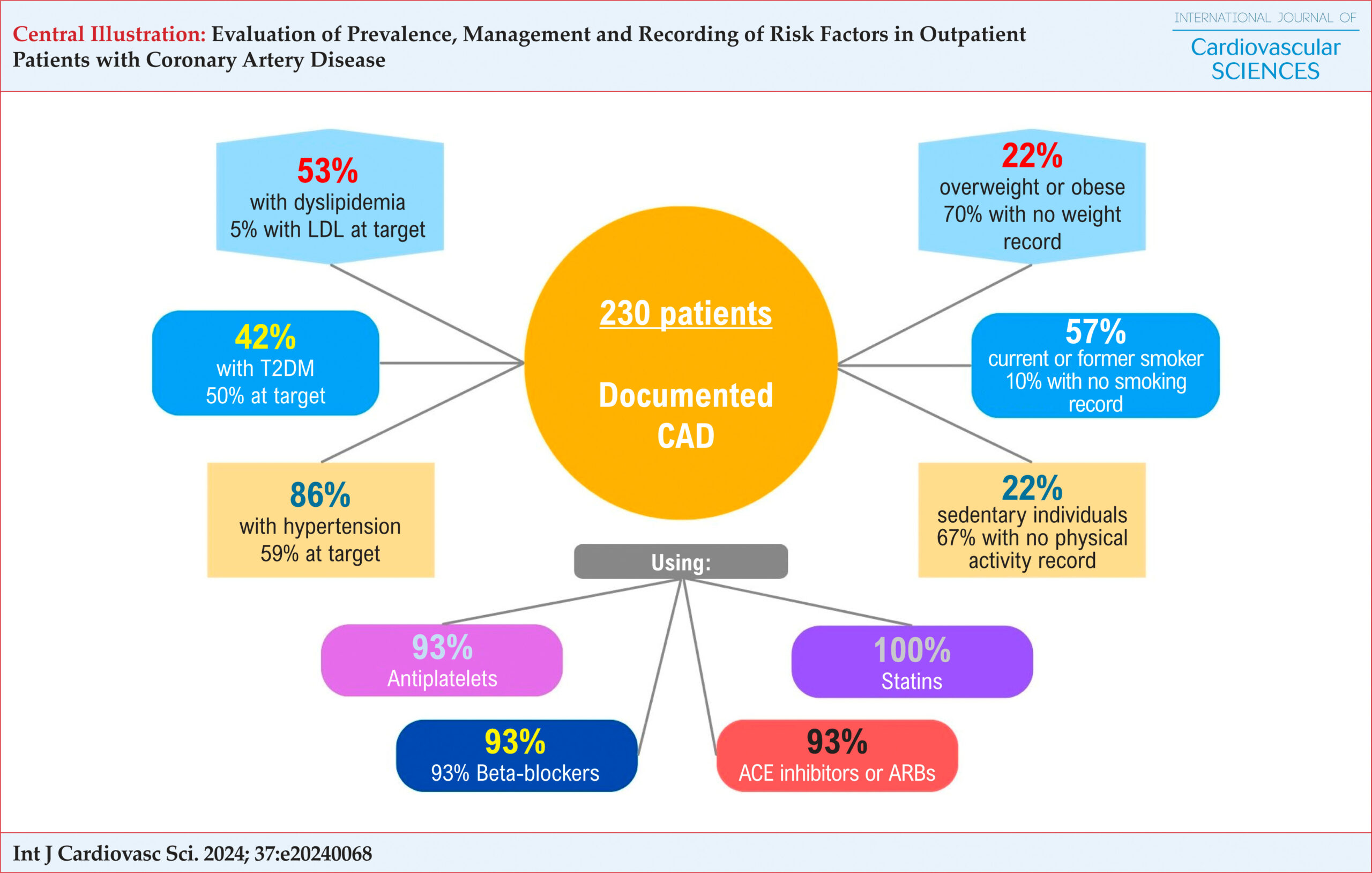
Evaluation of Prevalence, Management and Recording of Risk Factors in Outpatient Patients with Coronary Artery Disease
IJCS
Original Article

Evaluation of Prevalence, Management and Recording of Risk Factors in Outpatient Patients with Coronary Artery Disease

Alexandre Felipe Pacini et al. Gerson Luiz Bredt Junior Eline da Rós Moro Alcirley de Almeida Luiz Ana Paula de Oliveira Francez

Abstract

Background

Coronary artery disease (CAD) is the leading cause of mortality worldwide. Adequate management of risk factors is directly correlated with better outcomes.

Objectives

This study aims to identify risk factors and evaluate the indicated medical treatment (both pharmacological and non-pharmacological) in patients with CAD.

Methods

Epidemiological data were collected from electronic medical records of patients treated at Cardiology outpatient clinics of a Tertiary Hospital and a descriptive analysis of the data was performed.

Results

Patients with documented CAD (n = 230) were selected for the study, with a predominance of white (60%) men (62%), most of whom were monitored following an Acute Coronary Syndrome (ACS) (63.9%). High prevalence and irregular control of risk factors such as smoking, hypertension, dyslipidemia, diabetes, obesity, and sedentary lifestyle were observed. Target blood pressure was achieved in 52.6% of patients, low-density lipoprotein (LDL) in 5.7%, and HbA1c in 50.8%, despite appropriate prescriptions for most patients – 100% were prescribed statins, and over 90% received antiplatelet agents, angiotensin-converting enzyme (ACE) inhibitors or angiotensin II receptor blockers, and beta-blockers. Few patients were encouraged to quit smoking and engage in physical activities.

Conclusion

Significant recording errors were noted in the medical records, along with inadequate control of CAD-related risk factors. Improvements in both recording and management of these risk factors are necessary to enhance CAD outcomes. The study utilized a straightforward and cost-effective model, which effectively mapped the local population profile and managed CAD risk factors.

  • Cardiovascular Diseases
  • Coronary Artery Disease
  • Heart Disease Risk Factors
  • Secondary Prevention
Read Full Article
Creative Commons Attribution (CC BY) Creative Commons license
04/11/2024 DOI: 10.36660/ijcs.20240068
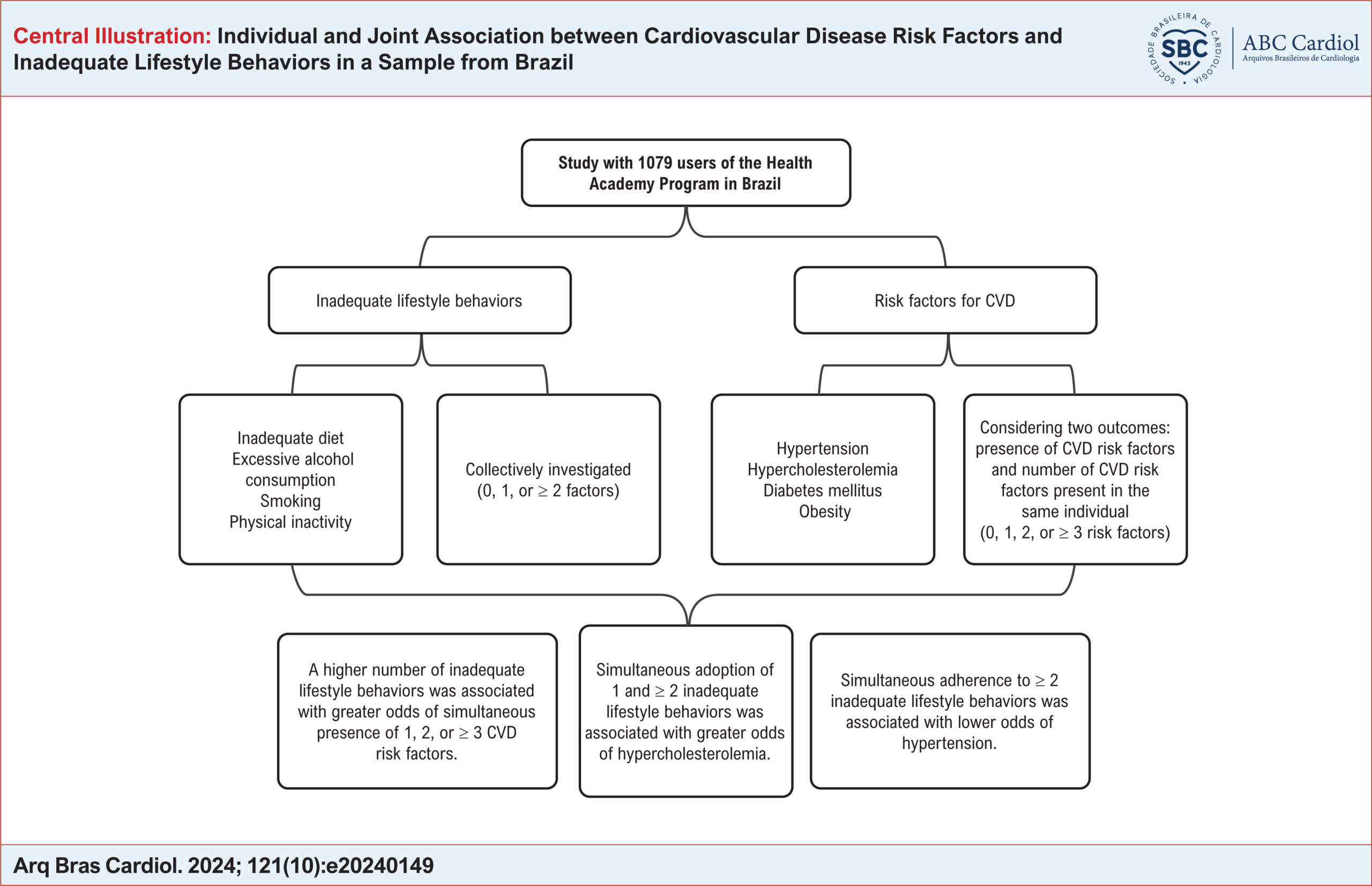
Individual and Joint Association between Cardiovascular Disease Risk Factors and Inadequate Lifestyle Behaviors in a Sample from Brazil
ABC
Original Article

Individual and Joint Association between Cardiovascular Disease Risk Factors and Inadequate Lifestyle Behaviors in a Sample from Brazil

Letícia Gonçalves et al. Suellem Zanlorenci Andreia Pelegrini Tiago Rodrigues de Lima Diego Augusto Santos Silva

Abstract

Background:

Cardiovascular diseases (CVD) are often influenced by modifiable factors, notably individuals’ lifestyle choices, which play a crucial role in modulating cardiovascular risk.

Objective:

To investigate the individual and simultaneous association between inadequate lifestyle behaviors and risk factors for CVD in adults and older adults.

Method:

A cross-sectional study with 1079 users of the Health Academy Program in Brazil. Information related to inadequate diet, excessive alcohol consumption, smoking, and physical inactivity were individually and collectively investigated (0, 1, or ≥ 2 factors) in association with CVD risk factors (hypertension, hypercholesterolemia, diabetes mellitus, and obesity), considering the following two outcomes: presence of CVD risk factors and number of CVD risk factors present in the same individual (0, 1, 2, or ≥ 3 risk factors). Logistic and multinomial logistic regression analyses were used. The statistical significance adopted was 5%.

Results:

A higher number of inadequate lifestyle behavior was associated with greater odds of simultaneous presence of 1, 2, or ≥ 3 CVD risk factors. The simultaneous adoption of 1 and ≥ 2 inadequate lifestyle behaviors was associated with greater odds of hypercholesterolemia. Simultaneous adherence to ≥ 2 inadequate lifestyle behaviors was associated with lower odds of hypertension.

Conclusion:

A greater number of inadequate lifestyle behaviors was associated with higher odds of simultaneous presence of multiple CVD risk factors.

  • Adult Health
  • Health of the Elderly
  • Health Risk Behaviors
  • Heart Disease Risk Factors
Read Full Article
Creative Commons Attribution (CC BY) Creative Commons license
18/10/2024 DOI: 10.36660/abc.20240149i Views 1
Figure 1
ABC
Research Letter

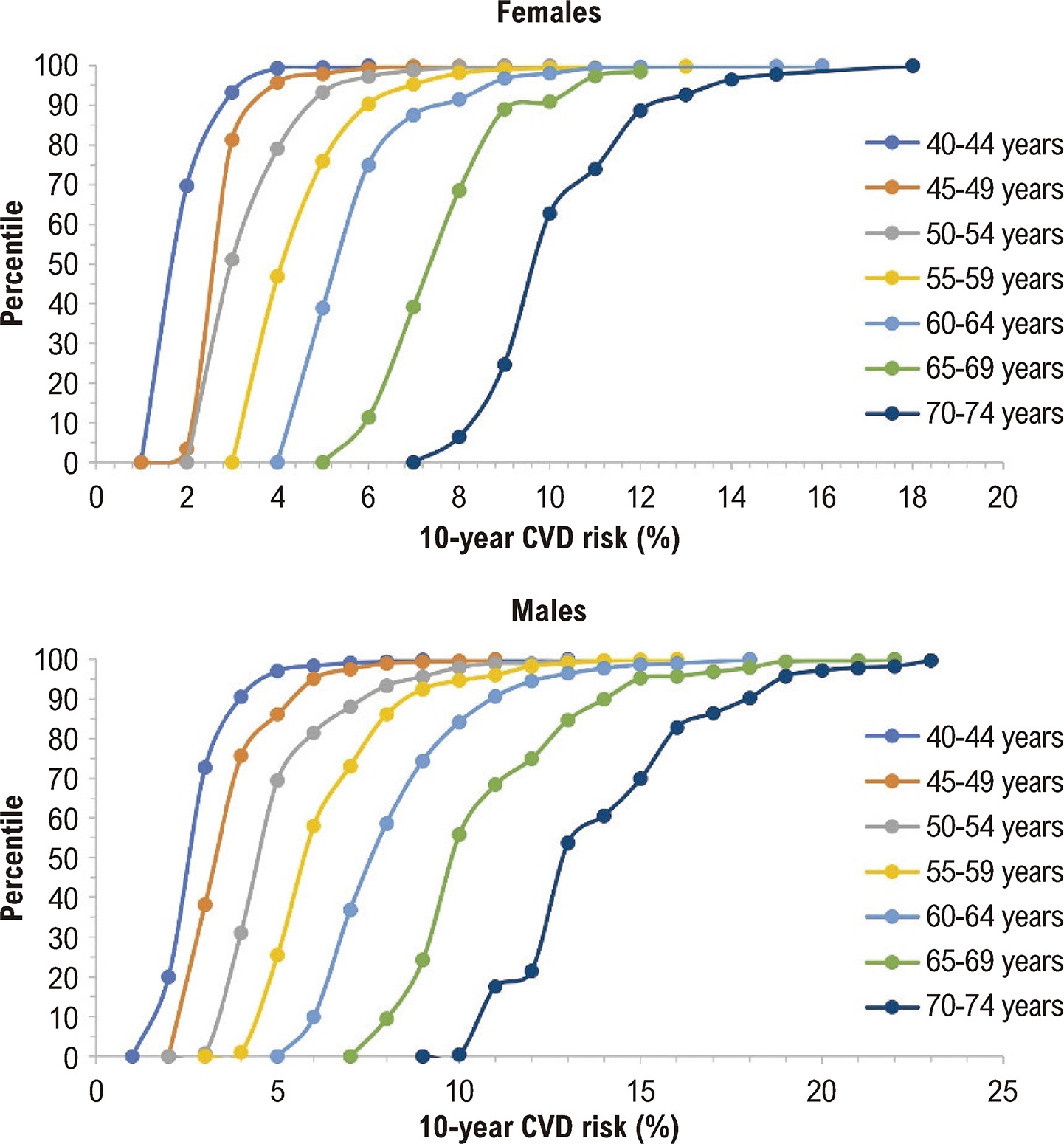
The WHO Cardiovascular Disease Risk (Non-Laboratory-Based) in a Selected Brazilian Population: Percentiles of Distribution And Agreement With Laboratory-Based Scores

Fernando Yue Cesena et al. Giuliano Generoso Itamar de S. Santos Alexandre C. Pereira … Marcio S. Bittencourt Raul D. Santos Paulo A. Lotufo Isabela M. Benseñor

Introduction

In 2019, the World Health Organization (WHO) published revised charts for estimating the 10-year risk of cardiovascular disease (CVD). Two models are proposed: one based on laboratory tests including plasma total cholesterol and presence or absence of diabetes mellitus as predictors, and another based on the body mass index (BMI). In low-resource and office settings, when cholesterol levels and information on diabetes are not available, the BMI-based score can be used.

In a previous study, we determined laboratory-based percentiles of the WHO CVD risk distribution, according to sex and age, in the Brazilian Longitudinal Study of Adult Health (ELSA-Brasil) baseline population. These percentiles were associated with the calculated risk of atherosclerotic CVD up to 75 years, regardless of the estimated 10-year risk. Expressing the risk percentile has been proposed to increase risk awareness and improve adherence to preventive measures.–

[…]

  • body mass index
  • Cardiovascular Diseases
  • Heart Disease Risk Factors
  • Risk Assessment
  • World Health Organization
Read Full Article
Creative Commons Attribution (CC BY) Creative Commons license
26/08/2024 DOI: 10.36660/abc.20240002i
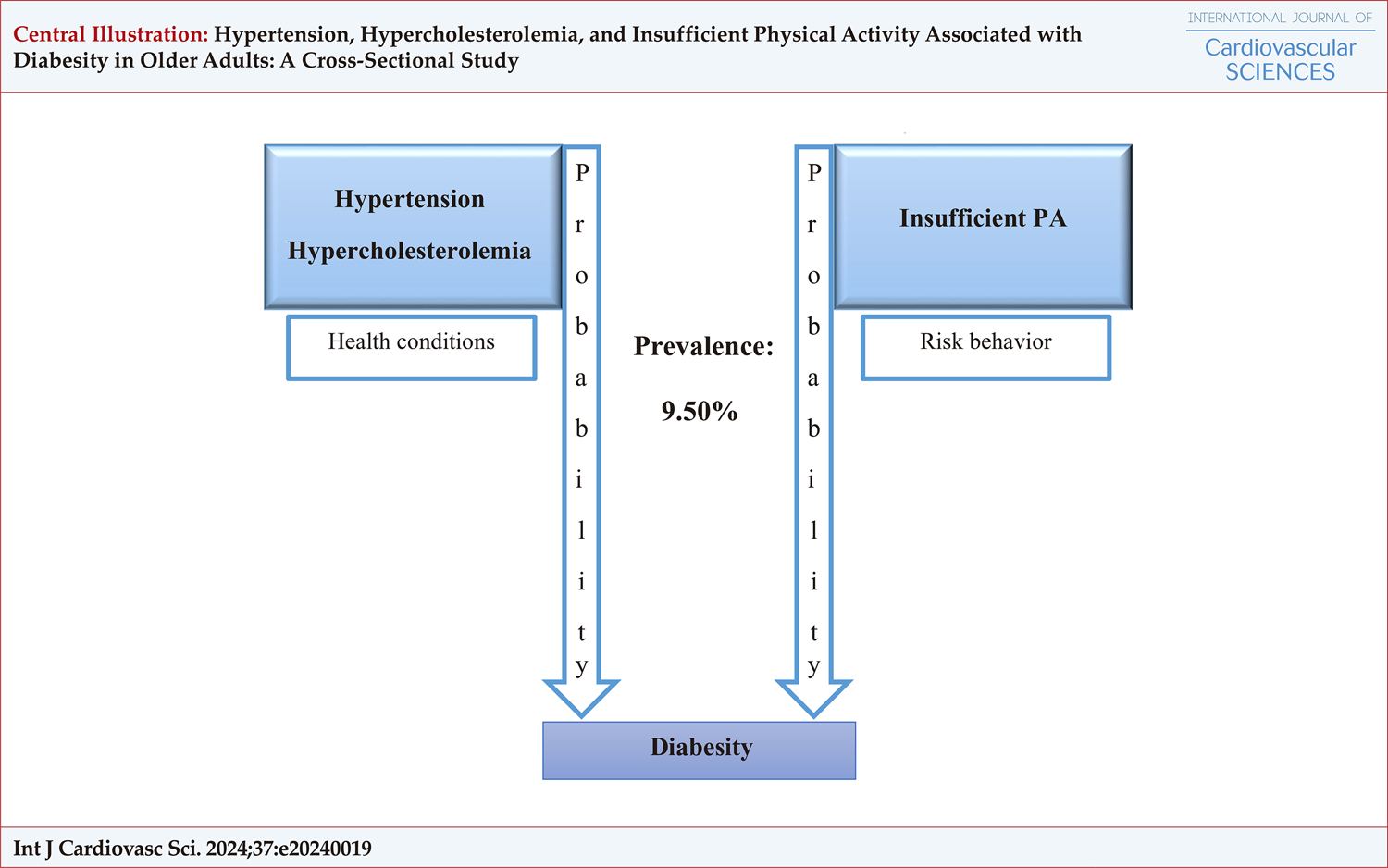
Hypertension, Hypercholesterolemia, and Insufficient Physical Activity Associated with Diabesity in Older Adults: A Cross-Sectional Study
IJCS
Original Article

Hypertension, Hypercholesterolemia, and Insufficient Physical Activity Associated with Diabesity in Older Adults: A Cross-Sectional Study

Gabriel Alves Godinho et al. Paulo da Fonseca Valença Neto Claudio Bispo de Almeida Saulo Sacramento Meira … Beatriz Cardoso Roriz Raquel dos Santos Barbosa Cezar Augusto Casotti Lucas dos Santos

Abstract

Background

During aging, physiological and behavioral changes occur that lead to the development of diabesity (diabetes + obesity). Hence, the hypothesis that behavioral and health aspects can increase the probability of this outcome is plausible. In this framework, it is essential to carry out health surveys to investigate the factors that increase the probability of diabesity, as this information could be used to help monitor this outcome in the older population more accurately.

Objective

To verify the factors associated with diabesity in older adults.

Methods

This is an epidemiological survey, with a cross-sectional design, conducted with 211 older adults (58.80% women) from Aiquara, Bahia, Brazil. To assess the outcome, body mass index (BMI > 27 kg/m2) and the concomitant presence of diabetes mellitus were used. In the inferential analyses, crude models and, subsequently, a multiple hierarchical explanatory model were constructed (level 1: socioeconomic variables; level 2: behavioral aspects; level 3: health conditions). This was performed using Poisson regression, with a robust estimator, calculations of prevalence ratios (PR) and their relevant 95% confidence intervals (CI).

Results

The prevalence of diabesity observed was around 9.50%. Furthermore, older adults who were insufficiently active (RP: 2.55; 95% CI: 1.20 to 6.36), those with arterial hypertension (PR: 5.32; 95% CI: 1.10 to 25.73), and those with hypercholesterolemia (PR: 2.80; 95% CI: 1.08 to 7.23) were more likely to have this outcome.

Conclusion

In the older population of Aiquara, Bahia, Brazil, the factors associated with diabesity were insufficient level of physical activity (PA), arterial hypertension, and hypercholesterolemia.

  • aging
  • Epidemiology
  • Heart Disease Risk Factors
Read Full Article
Creative Commons Attribution (CC BY) Creative Commons license
09/08/2024 DOI: 10.36660/ijcs.20240019 Views 1
ABC
Letter to the Editor

Cost-Effectiveness of the Use of the Coronary Calcium Score in Primary Prevention as a Guide for the Therapeutic Decision

Cristian Rodrigues do Nascimento et al. Júlio Martinez Santos Rodrigo Mendes Johnnatas Mikael Lopes Pedro Pereira Tenório

To the Editor,

We read with great interest the article: “Cost-Effectiveness of Using the Coronary Calcium Score to Guide Therapeutic Decisions in Primary Prevention in the Brazilian Population” The study aimed to evaluate the cost-effectiveness of using the calcium score in therapeutic guidance for primary cardiovascular prevention. The analysis was based on population data from the “ Multi-Ethnic Study of Atherosclerosis (MESA),” a cohort of 6,814 participants from different study centers in the United States. The inferences made by the authors are important, especially when it comes to identifying factors related to pharmacoeconomics in the prevention of cardiovascular diseases. However, we identified that the procedures suggested using the calcium score (CE) to define the use or not of statins could lead to attrition bias, as there are clinical situations in which more imaging studies on the involvement of the vascular structure are necessary, especially the coronary arteries so that subsequent management can be defined.

[…]

  • Coronary Disease
  • Drug Therapy
  • Economics Pharmaceutica
  • Heart Disease Risk Factors
  • Vascular Calcification
Read Full Article
Creative Commons Attribution (CC BY) Creative Commons license
22/12/2023 DOI: 10.36660/abc.20230542
ABC
Editorial

Saturated Fatty Acids and Implications for Cardiovascular Disease

Matheus Augusto Callegari et al. Ricardo Luiz Damatto Priscila Portugal dos Santos

Cardiovascular diseases (CVD) are the leading cause of mortality, accounting for 17.9 million deaths in 2019, 32% of all global deaths. It is important to detect CVD early to start treatment. For this, there are several standard risk factors in CVD prediction, but interest in finding more sensitive and accurate biomarkers is intense. Gonçalinho et al. propose that the use of inflammation and endothelial dysfunction biomarkers may reflect CVD and predict worse prognosis, regardless of traditional risk factors. Most CVDs can be prevented by addressing behavioral risk factors like diet. Dietary fat intake is one of the major modifiable risk factors implicated in the causation of CVD. Gonçalinho et al. showed that stearic acid (SA) is associated with inflammatory biomarkers and endothelial dysfunction in individuals at cardiovascular risk.

To study the association of fatty acids (FA) with cardiovascular risk factors, Gonçalinho et al. used FA from membrane phospholipids of red blood cells (RBC) as a biomarker of FA status. This analysis has been used since these FAs can be incorporated from the serum lipoproteins. Additionally, it offers an advantage over analysis of plasma because RBC last on average 120 days compared to 3 weeks for plasma lipids, reflecting better long-term dietary FA intake. However, it is important to highlight that the cost of preparing RBC exceeds the plasmatic method and that there are different analytical strategies., Therefore, for FA from RBC membrane phospholipids to become a biomarker of the nutritional status of dietary FA in clinical practice, there remains a need for investigations of cost-effectiveness and method standardization.

[…]

  • Fatty Acids
  • Heart Disease Risk Factors
  • Lipoproteins
  • Palmitic Acid
  • Stearic Acids
Read Full Article
Creative Commons Attribution (CC BY) Creative Commons license
30/10/2023 DOI: 10.36660/abc.20230612 Views 1
Cardiovascular Risk Scores among Asymptomatic Adults with Haemophilia
ABC
Original Article

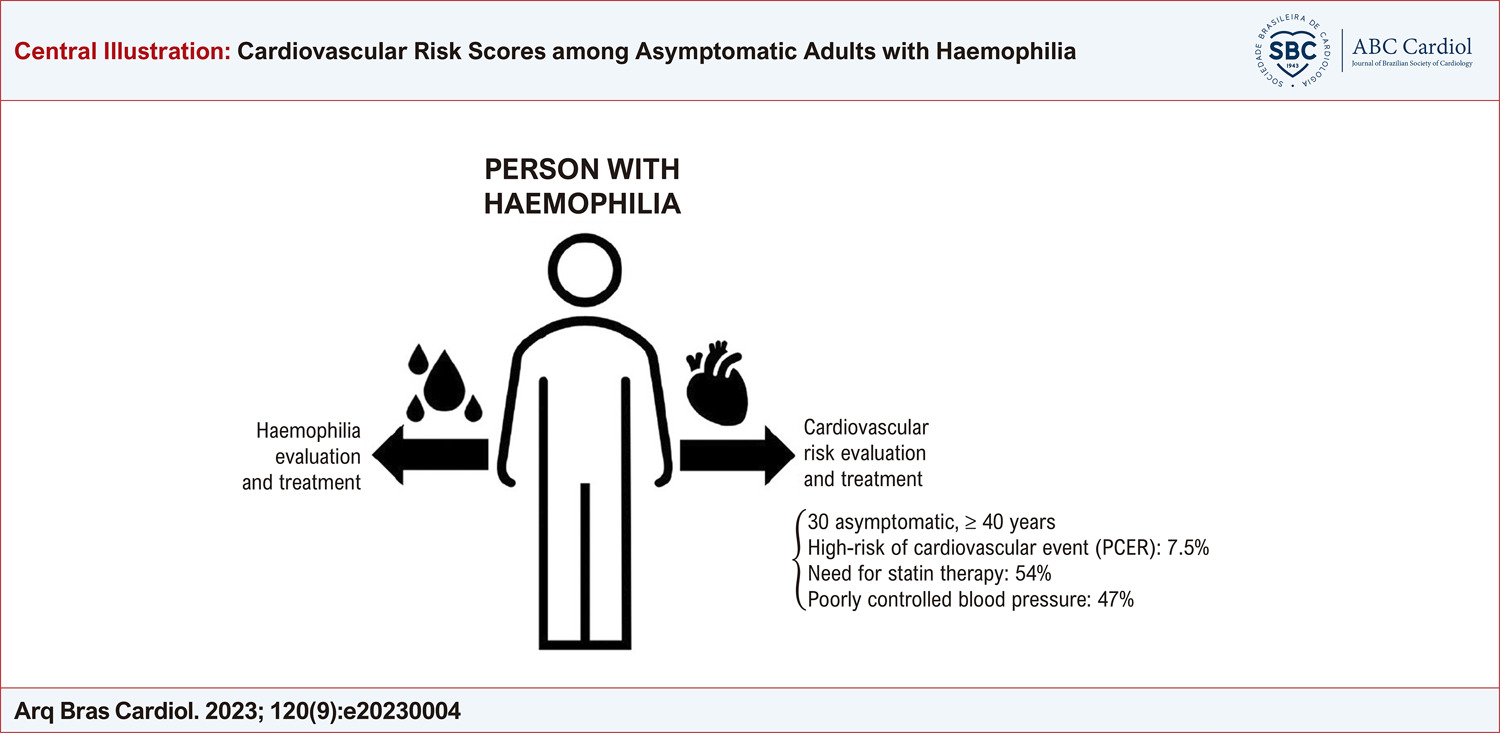
Cardiovascular Risk Scores among Asymptomatic Adults with Haemophilia

Ricardo Mesquita Camelo et al. Camila Caram-Deelder Bruna Pontes Duarte Marilia Carolina Braga de Moura … Neuza Cavalcanti de Moraes Costa Iris Maciel Costa Ana Maria Vanderlei Tania Maria Rocha Guimarães Samantha Gouw Suely Meireles Rezende Johanna van der Bom

Abstract

Background

The mortality rate of Brazilian people with haemophilia (PwH) is decreasing, but the relative incidence of deaths associated with cardiovascular disease (CVD) is increasing.

Objectives

We aimed to describe the CVD risk score of PwH according to Pooled Cohort Equations Risk (PCER) Calculator tool and its treatment recommendations. We also compared the PCER estimates with the respective Framingham Risk Score (FRS).

Methods

This cross-sectional study included male PwH ≥ 40 years treated at the Comprehensive Haemophilia Treatment Centre of Pernambuco (Recife/Brazil). PwH with a previous CVD event or a low-density lipid cholesterol ≥ 5.0 mmol/L were excluded. Interviews, medical file reviews, and blood tests were performed. The PCER tool was used to estimate the CVD risk and compare it with the respective FRS. A p-value < 0.05 was accepted as statistically significant.

Results

Thirty PwH were included. Median age was 51.5 [interquartile range-IQR; 46.0-59.5] years. The prevalence of obesity, systemic arterial hypertension, diabetes mellitus, hypertriglyceridaemia, hypercholesterolaemia, and hypoHDLaemia were 20%, 67%, 24%, 14%, 47%, and 23%, respectively. The median PCER score was 6.9% [IQR; 3.1-13.2], with 50% having a high risk (PCER ≥ 7.5%). Statin use was suggested for 54% of PwH. Blood pressure was poorly controlled in 47% of PwH. The agreement between PCER and FRS was 80% (κ = 0.60; p = 0.001).

Conclusions

Half of the male people with haemophilia aged 40 years or older had a 10-year high risk of developing CVD with strong recommendations to improve control of dyslipidaemia and blood pressure.

  • Heart Disease Risk Factors
  • Hemophilia A
  • Hemophilia B
  • Primary Prevention
Read Full Article
Creative Commons Attribution (CC BY) Creative Commons license
18/09/2023 DOI: 10.36660/abc.20230004 Views 2

Could not load more articles. Please try again.

How to cite this article

EndNote RIS

Electronic Document Format (Vancouver)

Ávila WS. Hypertension in Pregnancy: From Guidelines to the Cardiologist’s Clinical Practice. Arquivos Brasileiros de Cardiologia 2026;123(8):e20260047.

Electronic Document Format (ABNT)

Ávila, Walkiria Samuel. Hypertension in Pregnancy: From Guidelines to the Cardiologist’s Clinical Practice. Arquivos Brasileiros de Cardiologia, v. 123, n. 8, e20260047, Sep. 2026.

Electronic Document Format (APA)

Ávila, W. S. (2026). Hypertension in Pregnancy: From Guidelines to the Cardiologist’s Clinical Practice. Arquivos Brasileiros de Cardiologia, 123(8), e20260047.

Electronic Document Format (ISO)

Ávila, Walkiria Samuel. Hypertension in Pregnancy: From Guidelines to the Cardiologist’s Clinical Practice. Arquivos Brasileiros de Cardiologia [online]. 2026, vol. 123, n. 8, [cited 2026-10-14], e20260047. Available from: <https://journals.cardiol.br/en/article/hypertension-in-pregnancy-from-guidelines-to-the-cardiologists-clinical-practice/>. ISSN 0066-782X

EndNote RIS

Electronic Document Format (Vancouver)

Santos LA, Oliveira ES, Lordêlo BVC, Matias LAC, Mendes R, Tenório PP. Metabolic Challenges in The Semiarid Region: A Critical Analysis of Nutritional Transition and Early Cardiovascular Risk. International Journal of Cardiovascular Sciences 2026;39:e20260059.

Electronic Document Format (ABNT)

Santos, Leonardo Alves; Oliveira, Álvaro Eduardo Santos; Lordêlo, Beatriz Vitória Carvalho; Matias, Luis Antonio Cavalcanti; Mendes, Rodrigo; Tenório, Pedro Pereira. Metabolic Challenges in The Semiarid Region: A Critical Analysis of Nutritional Transition and Early Cardiovascular Risk. International Journal of Cardiovascular Sciences, v. 39, e20260059, Aug. 2026.

Electronic Document Format (APA)

Santos, L. A., Oliveira, E. S., Lordêlo, B. V. C., Matias, L. A. C., Mendes, R., & Tenório, P. P. (2026). Metabolic Challenges in The Semiarid Region: A Critical Analysis of Nutritional Transition and Early Cardiovascular Risk. International Journal of Cardiovascular Sciences, 39, e20260059.

Electronic Document Format (ISO)

Santos, Leonardo Alves and Oliveira, Álvaro Eduardo Santos and Lordêlo, Beatriz Vitória Carvalho and Matias, Luis Antonio Cavalcanti and Mendes, Rodrigo and Tenório, Pedro Pereira. Metabolic Challenges in The Semiarid Region: A Critical Analysis of Nutritional Transition and Early Cardiovascular Risk. International Journal of Cardiovascular Sciences [online]. 2026, vol. 39, [cited 2026-10-14], e20260059. Available from: <https://journals.cardiol.br/en/article/metabolic-challenges-in-the-semiarid-region-a-critical-analysis-of-nutritional-transition-and-early-cardiovascular-risk/>. ISSN 2359-4802

EndNote RIS

Electronic Document Format (Vancouver)

Gouveia PH, Guimarães JS, Wiens A. Evaluation of Cardiovascular Risks Associated with Calcium Use: A Systematic Review and Meta-Analysis. International Journal of Cardiovascular Sciences 2026;39:e20250239.

Electronic Document Format (ABNT)

Gouveia, Paulo Henrique; Guimarães, Joyce da Silva; Wiens, Astrid. Evaluation of Cardiovascular Risks Associated with Calcium Use: A Systematic Review and Meta-Analysis. International Journal of Cardiovascular Sciences, v. 39, e20250239, Aug. 2026.

Electronic Document Format (APA)

Gouveia, P. H., Guimarães, J. S., & Wiens, A. (2026). Evaluation of Cardiovascular Risks Associated with Calcium Use: A Systematic Review and Meta-Analysis. International Journal of Cardiovascular Sciences, 39, e20250239.

Electronic Document Format (ISO)

Gouveia, Paulo Henrique and Guimarães, Joyce da Silva and Wiens, Astrid. Evaluation of Cardiovascular Risks Associated with Calcium Use: A Systematic Review and Meta-Analysis. International Journal of Cardiovascular Sciences [online]. 2026, vol. 39, [cited 2026-10-14], e20250239. Available from: <https://journals.cardiol.br/en/article/evaluation-of-cardiovascular-risks-associated-with-calcium-use-a-systematic-review-and-meta-analysis/>. ISSN 2359-4802

EndNote RIS

Electronic Document Format (Vancouver)

Leandro GO, Abreu PHD, Lopes SC, Toniazzo SRF. Cardiovascular Risk Stratification and Low-Density Lipoprotein Cholesterol Target Achievement in Primary Health Care: A Cross-Sectional Study. International Journal of Cardiovascular Sciences 2026;39:e20250251.

Electronic Document Format (ABNT)

Leandro, Gabriel Olivo; Abreu, Pedro Henrique Daniel; Lopes, Samantha Cristiane; Toniazzo, Silvia Rozauria Froes. Cardiovascular Risk Stratification and Low-Density Lipoprotein Cholesterol Target Achievement in Primary Health Care: A Cross-Sectional Study. International Journal of Cardiovascular Sciences, v. 39, e20250251, Aug. 2026.

Electronic Document Format (APA)

Leandro, G. O., Abreu, P. H. D., Lopes, S. C., & Toniazzo, S. R. F. (2026). Cardiovascular Risk Stratification and Low-Density Lipoprotein Cholesterol Target Achievement in Primary Health Care: A Cross-Sectional Study. International Journal of Cardiovascular Sciences, 39, e20250251.

Electronic Document Format (ISO)

Leandro, Gabriel Olivo and Abreu, Pedro Henrique Daniel and Lopes, Samantha Cristiane and Toniazzo, Silvia Rozauria Froes. Cardiovascular Risk Stratification and Low-Density Lipoprotein Cholesterol Target Achievement in Primary Health Care: A Cross-Sectional Study. International Journal of Cardiovascular Sciences [online]. 2026, vol. 39, [cited 2026-10-14], e20250251. Available from: <https://journals.cardiol.br/en/article/cardiovascular-risk-stratification-and-low-density-lipoprotein-cholesterol-target-achievement-in-primary-health-care-a-cross-sectional-study/>. ISSN 2359-4802

EndNote RIS

Electronic Document Format (Vancouver)

Pinheiro MCM, Felberg L, Bozzi ICRS, Ribeiro ALP, Paixão GMM. Artificial Intelligence Applied to Electrocardiogram-Based Cardiovascular Risk Assessment: A Systematic Review. Arquivos Brasileiros de Cardiologia 2026;123(7):e20250790.

Electronic Document Format (ABNT)

Pinheiro, Maria Clara Mantoan; Felberg, Lívia; Bozzi, Isadora Cristine Reis Sguizzato; Ribeiro, Antônio Luiz Pinho; Paixão, Gabriela Miana de Mattos. Artificial Intelligence Applied to Electrocardiogram-Based Cardiovascular Risk Assessment: A Systematic Review. Arquivos Brasileiros de Cardiologia, v. 123, n. 7, e20250790, Aug. 2026.

Electronic Document Format (APA)

Pinheiro, M. C. M., Felberg, L., Bozzi, I. C. R. S., Ribeiro, A. L. P., & Paixão, G. M. M. (2026). Artificial Intelligence Applied to Electrocardiogram-Based Cardiovascular Risk Assessment: A Systematic Review. Arquivos Brasileiros de Cardiologia, 123(7), e20250790.

Electronic Document Format (ISO)

Pinheiro, Maria Clara Mantoan and Felberg, Lívia and Bozzi, Isadora Cristine Reis Sguizzato and Ribeiro, Antônio Luiz Pinho and Paixão, Gabriela Miana de Mattos. Artificial Intelligence Applied to Electrocardiogram-Based Cardiovascular Risk Assessment: A Systematic Review. Arquivos Brasileiros de Cardiologia [online]. 2026, vol. 123, n. 7, [cited 2026-10-14], e20250790. Available from: <https://journals.cardiol.br/en/article/artificial-intelligence-applied-to-electrocardiogram-based-cardiovascular-risk-assessment-a-systematic-review/>. ISSN 0066-782X

EndNote RIS

Electronic Document Format (Vancouver)

Moraes SM, Costa ME, Reis FCL, Maia KAP. Analysis of the Lipid Profile and Prevalence of Cardiovascular Risk Factors in Hemodialysis Patients from an Academic Health Institution in Belo Horizonte. International Journal of Cardiovascular Sciences 2026;39:e20250202.

Electronic Document Format (ABNT)

Moraes, Sarah Mattos; Costa, Matheus Evangelista da; Reis, Flávia Carvalho Leão; Maia, Kleisson Antônio Pontes. Analysis of the Lipid Profile and Prevalence of Cardiovascular Risk Factors in Hemodialysis Patients from an Academic Health Institution in Belo Horizonte. International Journal of Cardiovascular Sciences, v. 39, e20250202, Jul. 2026.

Electronic Document Format (APA)

Moraes, S. M., Costa, M. E. , Reis, F. C. L., & Maia, K. A. P. (2026). Analysis of the Lipid Profile and Prevalence of Cardiovascular Risk Factors in Hemodialysis Patients from an Academic Health Institution in Belo Horizonte. International Journal of Cardiovascular Sciences, 39, e20250202.

Electronic Document Format (ISO)

Moraes, Sarah Mattos and Costa, Matheus Evangelista da and Reis, Flávia Carvalho Leão and Maia, Kleisson Antônio Pontes. Analysis of the Lipid Profile and Prevalence of Cardiovascular Risk Factors in Hemodialysis Patients from an Academic Health Institution in Belo Horizonte. International Journal of Cardiovascular Sciences [online]. 2026, vol. 39, [cited 2026-10-14], e20250202. Available from: <https://journals.cardiol.br/en/article/analysis-of-the-lipid-profile-and-prevalence-of-cardiovascular-risk-factors-in-hemodialysis-patients-from-an-academic-health-institution-in-belo-horizonte/>. ISSN 2359-4802

EndNote RIS

Electronic Document Format (Vancouver)

Salina MVJ, Pironatto VHM, Santos AAM, Gueiber TD, Lima LG, Dechandt EM, Caruso CC, et al. Assessment of Cardiovascular-Metabolic Risk in Wistar Rats Fed a Hypercaloric Diet Supplemented with Selenium: A Preclinical Animal Study. International Journal of Cardiovascular Sciences 2026;39:e20250069.

Electronic Document Format (ABNT)

Salina, Matheus Von Jelita; Pironatto, Vitor Hugo Moro; Santos, André Amaro Mamédio dos; Gueiber, Tiago Daniel; Lima, Luiz Gustavo; Dechandt, Eduardo Machado; Caruso, Camila Cury; Karpinski, Pedro Henrique; Figueiredo, Thiago Martins; Toledo-Junior, Alceu de Oliveira; Martins, Camila Marinelli; Gomes, Ricardo Zanetti. Assessment of Cardiovascular-Metabolic Risk in Wistar Rats Fed a Hypercaloric Diet Supplemented with Selenium: A Preclinical Animal Study. International Journal of Cardiovascular Sciences, v. 39, e20250069, Jun. 2026.

Electronic Document Format (APA)

Salina, M. V. J., Pironatto, V. H. M., Santos, A. A. M. , Gueiber, T. D., Lima, L. G., Dechandt, E. M., Caruso, C. C., Karpinski, P. H., Figueiredo, T. M., Toledo-Junior, A. O., Martins, C. M., & Gomes, R. Z. (2026). Assessment of Cardiovascular-Metabolic Risk in Wistar Rats Fed a Hypercaloric Diet Supplemented with Selenium: A Preclinical Animal Study. International Journal of Cardiovascular Sciences, 39, e20250069.

Electronic Document Format (ISO)

Salina, Matheus Von Jelita and Pironatto, Vitor Hugo Moro and Santos, André Amaro Mamédio dos and Gueiber, Tiago Daniel and Lima, Luiz Gustavo and Dechandt, Eduardo Machado and Caruso, Camila Cury and Karpinski, Pedro Henrique and Figueiredo, Thiago Martins and Toledo-Junior, Alceu de Oliveira and Martins, Camila Marinelli and Gomes, Ricardo Zanetti. Assessment of Cardiovascular-Metabolic Risk in Wistar Rats Fed a Hypercaloric Diet Supplemented with Selenium: A Preclinical Animal Study. International Journal of Cardiovascular Sciences [online]. 2026, vol. 39, [cited 2026-10-14], e20250069. Available from: <https://journals.cardiol.br/en/article/assessment-of-cardiovascular-metabolic-risk-in-wistar-rats-fed-a-hypercaloric-diet-supplemented-with-selenium-a-preclinical-animal-study/>. ISSN 2359-4802

EndNote RIS

Electronic Document Format (Vancouver)

Oliveira GMM. What is the Best Cardiovascular Risk Score in Our Daily Practice?. International Journal of Cardiovascular Sciences 2026;39:e2025282.

Electronic Document Format (ABNT)

Oliveira, Glaucia Maria Moraes de. What is the Best Cardiovascular Risk Score in Our Daily Practice?. International Journal of Cardiovascular Sciences, v. 39, e2025282, May. 2026.

Electronic Document Format (APA)

Oliveira, G. M. M. (2026). What is the Best Cardiovascular Risk Score in Our Daily Practice?. International Journal of Cardiovascular Sciences, 39, e2025282.

Electronic Document Format (ISO)

Oliveira, Glaucia Maria Moraes de. What is the Best Cardiovascular Risk Score in Our Daily Practice?. International Journal of Cardiovascular Sciences [online]. 2026, vol. 39, [cited 2026-10-14], e2025282. Available from: <https://journals.cardiol.br/en/article/what-is-the-best-cardiovascular-risk-score-in-our-daily-practice/>. ISSN 2359-4802

EndNote RIS

Electronic Document Format (Vancouver)

Alencar AKN. Hypertension in Indigenous Brazilians: A Rapidly Emerging Public Health Crisis. Arquivos Brasileiros de Cardiologia 2025;122(9):e20250567.

Electronic Document Format (ABNT)

Alencar, Allan K. N.. Hypertension in Indigenous Brazilians: A Rapidly Emerging Public Health Crisis. Arquivos Brasileiros de Cardiologia, v. 122, n. 9, e20250567, Nov. 2025.

Electronic Document Format (APA)

Alencar, A. K. N. (2025). Hypertension in Indigenous Brazilians: A Rapidly Emerging Public Health Crisis. Arquivos Brasileiros de Cardiologia, 122(9), e20250567.

Electronic Document Format (ISO)

Alencar, Allan K. N.. Hypertension in Indigenous Brazilians: A Rapidly Emerging Public Health Crisis. Arquivos Brasileiros de Cardiologia [online]. 2025, vol. 122, n. 9, [cited 2026-10-14], e20250567. Available from: <https://journals.cardiol.br/en/article/hypertension-in-indigenous-brazilians-a-rapidly-emerging-public-health-crisis/>. ISSN 0066-782X

EndNote RIS

Electronic Document Format (Vancouver)

Araújo JM, Tuzzin L, Borges DT, Polettini J, Rabello RS, Acrani GO, Lindemann IL, et al. Prevalence of Systemic Arterial Hypertension and Associated Factors in Indigenous Treated at a Specialized Outpatient Clinic in Southern Brazil. Arquivos Brasileiros de Cardiologia 2025;122(9):e20250269.

Electronic Document Format (ABNT)

Araújo, Jackson Menezes de; Tuzzin, Leandro; Borges, Daniela Teixeira; Polettini, Jossimara; Rabello, Renata dos Santos; Acrani, Gustavo Olszanski; Lindemann, Ivana Loraine. Prevalence of Systemic Arterial Hypertension and Associated Factors in Indigenous Treated at a Specialized Outpatient Clinic in Southern Brazil. Arquivos Brasileiros de Cardiologia, v. 122, n. 9, e20250269, Sep. 2025.

Electronic Document Format (APA)

Araújo, J. M. , Tuzzin, L., Borges, D. T., Polettini, J., Rabello, R. S., Acrani, G. O., & Lindemann, I. L. (2025). Prevalence of Systemic Arterial Hypertension and Associated Factors in Indigenous Treated at a Specialized Outpatient Clinic in Southern Brazil. Arquivos Brasileiros de Cardiologia, 122(9), e20250269.

Electronic Document Format (ISO)

Araújo, Jackson Menezes de and Tuzzin, Leandro and Borges, Daniela Teixeira and Polettini, Jossimara and Rabello, Renata dos Santos and Acrani, Gustavo Olszanski and Lindemann, Ivana Loraine. Prevalence of Systemic Arterial Hypertension and Associated Factors in Indigenous Treated at a Specialized Outpatient Clinic in Southern Brazil. Arquivos Brasileiros de Cardiologia [online]. 2025, vol. 122, n. 9, [cited 2026-10-14], e20250269. Available from: <https://journals.cardiol.br/en/article/prevalence-of-systemic-arterial-hypertension-and-associated-factors-in-indigenous-treated-at-a-specialized-outpatient-clinic-in-southern-brazil/>. ISSN 0066-782X

EndNote RIS

Electronic Document Format (Vancouver)

Vilela E, Bettencourt N. From Cholesterol Metabolism to Comprehensive Lipid Management and Crosstalk of Inflammation: Expanding the Frontiers of Cardiovascular Prevention. Arquivos Brasileiros de Cardiologia 2025;122(7):e20250386.

Electronic Document Format (ABNT)

Vilela, Eduardo; Bettencourt, Nuno. From Cholesterol Metabolism to Comprehensive Lipid Management and Crosstalk of Inflammation: Expanding the Frontiers of Cardiovascular Prevention. Arquivos Brasileiros de Cardiologia, v. 122, n. 7, e20250386, Sep. 2025.

Electronic Document Format (APA)

Vilela, E., & Bettencourt, N. (2025). From Cholesterol Metabolism to Comprehensive Lipid Management and Crosstalk of Inflammation: Expanding the Frontiers of Cardiovascular Prevention. Arquivos Brasileiros de Cardiologia, 122(7), e20250386.

Electronic Document Format (ISO)

Vilela, Eduardo and Bettencourt, Nuno. From Cholesterol Metabolism to Comprehensive Lipid Management and Crosstalk of Inflammation: Expanding the Frontiers of Cardiovascular Prevention. Arquivos Brasileiros de Cardiologia [online]. 2025, vol. 122, n. 7, [cited 2026-10-14], e20250386. Available from: <https://journals.cardiol.br/en/article/from-cholesterol-metabolism-to-comprehensive-lipid-management-and-crosstalk-of-inflammation-expanding-the-frontiers-of-cardiovascular-prevention/>. ISSN 0066-782X

EndNote RIS

Electronic Document Format (Vancouver)

Coutinho DAA, Godinho JR, Moura RC, Oliveira RM, Passos HF, Mendes JPF, Andrade Junior CRM, et al. Relationship between Liver Fibrosis Due to Metabolic Dysfunction-Associated Steatotic Liver Disease and Subclinical Atherosclerosis. Arquivos Brasileiros de Cardiologia 2025;122(8):e20240856.

Electronic Document Format (ABNT)

Coutinho, Daniele Araujo de Azeredo; Godinho, Jenaine Rosa; Moura, Raphael Carreiro; Oliveira, Rogério Martins; Passos, Hevila Faria; Mendes, Jordana de Paula Felipe; Andrade Junior, Carlos Roberto Moraes de; Coca-Velarde, Luis Guillermo; Saad, Maria Auxiliadora Nogueira; Flores, Priscila Pollo; Soares, Debora Vieira. Relationship between Liver Fibrosis Due to Metabolic Dysfunction-Associated Steatotic Liver Disease and Subclinical Atherosclerosis. Arquivos Brasileiros de Cardiologia, v. 122, n. 8, e20240856, Sep. 2025.

Electronic Document Format (APA)

Coutinho, D. A. A., Godinho, J. R., Moura, R. C., Oliveira, R. M., Passos, H. F., Mendes, J. P. F., Andrade Junior, C. R. M. , Coca-Velarde, L. G., Saad, M. A. N., Flores, P. P., & Soares, D. V. (2025). Relationship between Liver Fibrosis Due to Metabolic Dysfunction-Associated Steatotic Liver Disease and Subclinical Atherosclerosis. Arquivos Brasileiros de Cardiologia, 122(8), e20240856.

Electronic Document Format (ISO)

Coutinho, Daniele Araujo de Azeredo and Godinho, Jenaine Rosa and Moura, Raphael Carreiro and Oliveira, Rogério Martins and Passos, Hevila Faria and Mendes, Jordana de Paula Felipe and Andrade Junior, Carlos Roberto Moraes de and Coca-Velarde, Luis Guillermo and Saad, Maria Auxiliadora Nogueira and Flores, Priscila Pollo and Soares, Debora Vieira. Relationship between Liver Fibrosis Due to Metabolic Dysfunction-Associated Steatotic Liver Disease and Subclinical Atherosclerosis. Arquivos Brasileiros de Cardiologia [online]. 2025, vol. 122, n. 8, [cited 2026-10-14], e20240856. Available from: <https://journals.cardiol.br/en/article/relationship-between-liver-fibrosis-due-to-metabolic-dysfunction-associated-steatotic-liver-disease-and-subclinical-atherosclerosis/>. ISSN 0066-782X

EndNote RIS

Electronic Document Format (Vancouver)

Fontenelle LF, Sarti TD, Quinte GC, Almeida APSC, Mill JG. Agreement between Framingham, Pooled Cohort Equations, and Globorisk-LAC in the Estimation of Cardiovascular Risk in Brazil, 2013. Arquivos Brasileiros de Cardiologia 2025;122(6):e20240405.

Electronic Document Format (ABNT)

Fontenelle, Leonardo Ferreira; Sarti, Thiago Dias; Quinte, Gabriela Callo; Almeida, Ana Paula Santana Coelho; Mill, José Geraldo. Agreement between Framingham, Pooled Cohort Equations, and Globorisk-LAC in the Estimation of Cardiovascular Risk in Brazil, 2013. Arquivos Brasileiros de Cardiologia, v. 122, n. 6, e20240405, Jul. 2025.

Electronic Document Format (APA)

Fontenelle, L. F., Sarti, T. D., Quinte, G. C., Almeida, A. P. S. C., & Mill, J. G. (2025). Agreement between Framingham, Pooled Cohort Equations, and Globorisk-LAC in the Estimation of Cardiovascular Risk in Brazil, 2013. Arquivos Brasileiros de Cardiologia, 122(6), e20240405.

Electronic Document Format (ISO)

Fontenelle, Leonardo Ferreira and Sarti, Thiago Dias and Quinte, Gabriela Callo and Almeida, Ana Paula Santana Coelho and Mill, José Geraldo. Agreement between Framingham, Pooled Cohort Equations, and Globorisk-LAC in the Estimation of Cardiovascular Risk in Brazil, 2013. Arquivos Brasileiros de Cardiologia [online]. 2025, vol. 122, n. 6, [cited 2026-10-14], e20240405. Available from: <https://journals.cardiol.br/en/article/agreement-between-framingham-pooled-cohort-equations-and-globorisk-lac-in-the-estimation-of-cardiovascular-risk-in-brazil-2013/>. ISSN 0066-782X

EndNote RIS

Electronic Document Format (Vancouver)

Goulart MA, Moreira DAR, Cesena FY, Souza JB, Laurinavicius AG, Consolim-Colombo FM, Sousa MG, et al. Analysis of Ventricular Repolarization in Hypertensive Patients: Influence of Nocturnal Blood Pressure Dipping. Arquivos Brasileiros de Cardiologia 2025;122(4):e20240725.

Electronic Document Format (ABNT)

Goulart, Marco Aurélio; Moreira, Dalmo Antonio Ribeiro; Cesena, Fernando Yue; Souza, Jonathan Batista; Laurinavicius, Antonio Gabriele; Consolim-Colombo, Fernanda Marciano; Sousa, Márcio Gonçalves de. Analysis of Ventricular Repolarization in Hypertensive Patients: Influence of Nocturnal Blood Pressure Dipping. Arquivos Brasileiros de Cardiologia, v. 122, n. 4, e20240725, May. 2025.

Electronic Document Format (APA)

Goulart, M. A., Moreira, D. A. R., Cesena, F. Y., Souza, J. B., Laurinavicius, A. G., Consolim-Colombo, F. M., & Sousa, M. G. (2025). Analysis of Ventricular Repolarization in Hypertensive Patients: Influence of Nocturnal Blood Pressure Dipping. Arquivos Brasileiros de Cardiologia, 122(4), e20240725.

Electronic Document Format (ISO)

Goulart, Marco Aurélio and Moreira, Dalmo Antonio Ribeiro and Cesena, Fernando Yue and Souza, Jonathan Batista and Laurinavicius, Antonio Gabriele and Consolim-Colombo, Fernanda Marciano and Sousa, Márcio Gonçalves de. Analysis of Ventricular Repolarization in Hypertensive Patients: Influence of Nocturnal Blood Pressure Dipping. Arquivos Brasileiros de Cardiologia [online]. 2025, vol. 122, n. 4, [cited 2026-10-14], e20240725. Available from: <https://journals.cardiol.br/en/article/analysis-of-ventricular-repolarization-in-hypertensive-patients-influence-of-nocturnal-blood-pressure-dipping/>. ISSN 0066-782X

EndNote RIS

Electronic Document Format (Vancouver)

Zimmermann FB, Zimmermann SL, Zimmermann MB, Beraldi EK, Rocha MCF, Zabot BPO, Starke S, et al. Association between Cardiovascular Risk Factors and Carotid Plaques in a Population-Based Study – The SHIP-Brazil Study. Arquivos Brasileiros de Cardiologia 2025;122(3):e20240546.

Electronic Document Format (ABNT)

Zimmermann, Fernanda Burger; Zimmermann, Sérgio Luiz; Zimmermann, Marcelo Burger; Beraldi, Enrico Klug; Rocha, Mateus Campanelli Franco da; Zabot, Bruno Pereira de Oliveira; Starke, Siegmar; Helena, Ernani Tiaraju de Santa; Markus, Marcello Ricardo Paulista. Association between Cardiovascular Risk Factors and Carotid Plaques in a Population-Based Study – The SHIP-Brazil Study. Arquivos Brasileiros de Cardiologia, v. 122, n. 3, e20240546, May. 2025.

Electronic Document Format (APA)

Zimmermann, F. B., Zimmermann, S. L., Zimmermann, M. B., Beraldi, E. K., Rocha, M. C. F. , Zabot, B. P. O., Starke, S., Helena, E. T. S., & Markus, M. R. P. (2025). Association between Cardiovascular Risk Factors and Carotid Plaques in a Population-Based Study – The SHIP-Brazil Study. Arquivos Brasileiros de Cardiologia, 122(3), e20240546.

Electronic Document Format (ISO)

Zimmermann, Fernanda Burger and Zimmermann, Sérgio Luiz and Zimmermann, Marcelo Burger and Beraldi, Enrico Klug and Rocha, Mateus Campanelli Franco da and Zabot, Bruno Pereira de Oliveira and Starke, Siegmar and Helena, Ernani Tiaraju de Santa and Markus, Marcello Ricardo Paulista. Association between Cardiovascular Risk Factors and Carotid Plaques in a Population-Based Study – The SHIP-Brazil Study. Arquivos Brasileiros de Cardiologia [online]. 2025, vol. 122, n. 3, [cited 2026-10-14], e20240546. Available from: <https://journals.cardiol.br/en/article/association-between-cardiovascular-risk-factors-and-carotid-plaques-in-a-population-based-study-the-ship-brazil-study/>. ISSN 0066-782X

EndNote RIS

Electronic Document Format (Vancouver)

Ribeiro J. A Fresh Glimpse on Chest X-Ray: Revealing Significance of Aortic Arch Calcifications for Stroke Recurrence. Arquivos Brasileiros de Cardiologia 2024;121(7):e20240404.

Electronic Document Format (ABNT)

Ribeiro, José. A Fresh Glimpse on Chest X-Ray: Revealing Significance of Aortic Arch Calcifications for Stroke Recurrence. Arquivos Brasileiros de Cardiologia, v. 121, n. 7, e20240404, Nov. 2024.

Electronic Document Format (APA)

Ribeiro, J. (2024). A Fresh Glimpse on Chest X-Ray: Revealing Significance of Aortic Arch Calcifications for Stroke Recurrence. Arquivos Brasileiros de Cardiologia, 121(7), e20240404.

Electronic Document Format (ISO)

Ribeiro, José. A Fresh Glimpse on Chest X-Ray: Revealing Significance of Aortic Arch Calcifications for Stroke Recurrence. Arquivos Brasileiros de Cardiologia [online]. 2024, vol. 121, n. 7, [cited 2026-10-14], e20240404. Available from: <https://journals.cardiol.br/en/article/a-fresh-glimpse-on-chest-x-ray-revealing-significance-of-aortic-arch-calcifications-for-stroke-recurrence/>. ISSN 0066-782X

EndNote RIS

Electronic Document Format (Vancouver)

Santos RD, Kashiwagi NM, Cesena FY, Assis SRL, Nieri J, Minanni CA, Franken M, et al. Uncontrolled Cholesterol in Individuals with Severe Hypercholesterolemia in a Health Evaluation Program in Brazil. Arquivos Brasileiros de Cardiologia 2024;121(11):e20240116.

Electronic Document Format (ABNT)

Santos, Raul D.; Kashiwagi, Nea Miwa; Cesena, Fernando Yue; Assis, Silvia Regina Lamas; Nieri, Josué; Minanni, Carlos Andre; Franken, Marcelo; Berwanger, Otavio. Uncontrolled Cholesterol in Individuals with Severe Hypercholesterolemia in a Health Evaluation Program in Brazil. Arquivos Brasileiros de Cardiologia, v. 121, n. 11, e20240116, Nov. 2024.

Electronic Document Format (APA)

Santos, R. D., Kashiwagi, N. M., Cesena, F. Y., Assis, S. R. L., Nieri, J., Minanni, C. A., Franken, M., & Berwanger, O. (2024). Uncontrolled Cholesterol in Individuals with Severe Hypercholesterolemia in a Health Evaluation Program in Brazil. Arquivos Brasileiros de Cardiologia, 121(11), e20240116.

Electronic Document Format (ISO)

Santos, Raul D. and Kashiwagi, Nea Miwa and Cesena, Fernando Yue and Assis, Silvia Regina Lamas and Nieri, Josué and Minanni, Carlos Andre and Franken, Marcelo and Berwanger, Otavio. Uncontrolled Cholesterol in Individuals with Severe Hypercholesterolemia in a Health Evaluation Program in Brazil. Arquivos Brasileiros de Cardiologia [online]. 2024, vol. 121, n. 11, [cited 2026-10-14], e20240116. Available from: <https://journals.cardiol.br/en/article/uncontrolled-cholesterol-in-individuals-with-severe-hypercholesterolemia-in-a-health-evaluation-program-in-brazil/>. ISSN 0066-782X

EndNote RIS

Electronic Document Format (Vancouver)

Pacini AF, Bredt Junior GL, Moro ER, Luiz AA, Francez APO. Evaluation of Prevalence, Management and Recording of Risk Factors in Outpatient Patients with Coronary Artery Disease. International Journal of Cardiovascular Sciences 2024;37:e20240068.

Electronic Document Format (ABNT)

Pacini, Alexandre Felipe; Bredt Junior, Gerson Luiz; Moro, Eline da Rós; Luiz, Alcirley de Almeida; Francez, Ana Paula de Oliveira. Evaluation of Prevalence, Management and Recording of Risk Factors in Outpatient Patients with Coronary Artery Disease. International Journal of Cardiovascular Sciences, v. 37, e20240068, Nov. 2024.

Electronic Document Format (APA)

Pacini, A. F., Bredt Junior, G. L., Moro, E. R., Luiz, A. A., & Francez, A. P. O. (2024). Evaluation of Prevalence, Management and Recording of Risk Factors in Outpatient Patients with Coronary Artery Disease. International Journal of Cardiovascular Sciences, 37, e20240068.

Electronic Document Format (ISO)

Pacini, Alexandre Felipe and Bredt Junior, Gerson Luiz and Moro, Eline da Rós and Luiz, Alcirley de Almeida and Francez, Ana Paula de Oliveira. Evaluation of Prevalence, Management and Recording of Risk Factors in Outpatient Patients with Coronary Artery Disease. International Journal of Cardiovascular Sciences [online]. 2024, vol. 37, [cited 2026-10-14], e20240068. Available from: <https://journals.cardiol.br/en/article/evaluation-of-prevalence-management-and-recording-of-risk-factors-in-outpatient-patients-with-coronary-artery-disease/>. ISSN 2359-4802

EndNote RIS

Electronic Document Format (Vancouver)

Gonçalves L, Zanlorenci S, Pelegrini A, Lima TR, Silva DAS. Individual and Joint Association between Cardiovascular Disease Risk Factors and Inadequate Lifestyle Behaviors in a Sample from Brazil. Arquivos Brasileiros de Cardiologia 2024;121(10):e20240149.

Electronic Document Format (ABNT)

Gonçalves, Letícia; Zanlorenci, Suellem; Pelegrini, Andreia; Lima, Tiago Rodrigues de; Silva, Diego Augusto Santos. Individual and Joint Association between Cardiovascular Disease Risk Factors and Inadequate Lifestyle Behaviors in a Sample from Brazil. Arquivos Brasileiros de Cardiologia, v. 121, n. 10, e20240149, Oct. 2024.

Electronic Document Format (APA)

Gonçalves, L., Zanlorenci, S., Pelegrini, A., Lima, T. R. , & Silva, D. A. S. (2024). Individual and Joint Association between Cardiovascular Disease Risk Factors and Inadequate Lifestyle Behaviors in a Sample from Brazil. Arquivos Brasileiros de Cardiologia, 121(10), e20240149.

Electronic Document Format (ISO)

Gonçalves, Letícia and Zanlorenci, Suellem and Pelegrini, Andreia and Lima, Tiago Rodrigues de and Silva, Diego Augusto Santos. Individual and Joint Association between Cardiovascular Disease Risk Factors and Inadequate Lifestyle Behaviors in a Sample from Brazil. Arquivos Brasileiros de Cardiologia [online]. 2024, vol. 121, n. 10, [cited 2026-10-14], e20240149. Available from: <https://journals.cardiol.br/en/article/individual-and-joint-association-between-cardiovascular-disease-risk-factors-and-inadequate-lifestyle-behaviors-in-a-sample-from-brazil/>. ISSN 0066-782X

EndNote RIS

Electronic Document Format (Vancouver)

Cesena FY, Generoso G, Santos IS, Pereira AC, Bittencourt MS, Santos RD, Lotufo PA, et al. The WHO Cardiovascular Disease Risk (Non-Laboratory-Based) in a Selected Brazilian Population: Percentiles of Distribution And Agreement With Laboratory-Based Scores. Arquivos Brasileiros de Cardiologia 2024;121(7):e20240002.

Electronic Document Format (ABNT)

Cesena, Fernando Yue; Generoso, Giuliano; Santos, Itamar de S.; Pereira, Alexandre C.; Bittencourt, Marcio S.; Santos, Raul D.; Lotufo, Paulo A.; Benseñor, Isabela M.. The WHO Cardiovascular Disease Risk (Non-Laboratory-Based) in a Selected Brazilian Population: Percentiles of Distribution And Agreement With Laboratory-Based Scores. Arquivos Brasileiros de Cardiologia, v. 121, n. 7, e20240002, Aug. 2024.

Electronic Document Format (APA)

Cesena, F. Y., Generoso, G., Santos, I. S., Pereira, A. C., Bittencourt, M. S., Santos, R. D., Lotufo, P. A., & Benseñor, I. M. (2024). The WHO Cardiovascular Disease Risk (Non-Laboratory-Based) in a Selected Brazilian Population: Percentiles of Distribution And Agreement With Laboratory-Based Scores. Arquivos Brasileiros de Cardiologia, 121(7), e20240002.

Electronic Document Format (ISO)

Cesena, Fernando Yue and Generoso, Giuliano and Santos, Itamar de S. and Pereira, Alexandre C. and Bittencourt, Marcio S. and Santos, Raul D. and Lotufo, Paulo A. and Benseñor, Isabela M.. The WHO Cardiovascular Disease Risk (Non-Laboratory-Based) in a Selected Brazilian Population: Percentiles of Distribution And Agreement With Laboratory-Based Scores. Arquivos Brasileiros de Cardiologia [online]. 2024, vol. 121, n. 7, [cited 2026-10-14], e20240002. Available from: <https://journals.cardiol.br/en/article/the-who-cardiovascular-disease-risk-non-laboratory-based-in-a-selected-brazilian-population-percentiles-of-distribution-and-agreement-with-laboratory-based-scores/>. ISSN 0066-782X

EndNote RIS

Electronic Document Format (Vancouver)

Godinho GA, Valença Neto PF, Almeida CB, Meira SS, Roriz BC, Barbosa RS, Casotti CA, et al. Hypertension, Hypercholesterolemia, and Insufficient Physical Activity Associated with Diabesity in Older Adults: A Cross-Sectional Study. International Journal of Cardiovascular Sciences 2024;37:e20240019.

Electronic Document Format (ABNT)

Godinho, Gabriel Alves; Valença Neto, Paulo da Fonseca; Almeida, Claudio Bispo de; Meira, Saulo Sacramento; Roriz, Beatriz Cardoso; Barbosa, Raquel dos Santos; Casotti, Cezar Augusto; Santos, Lucas dos. Hypertension, Hypercholesterolemia, and Insufficient Physical Activity Associated with Diabesity in Older Adults: A Cross-Sectional Study. International Journal of Cardiovascular Sciences, v. 37, e20240019, Aug. 2024.

Electronic Document Format (APA)

Godinho, G. A., Valença Neto, P. F., Almeida, C. B. , Meira, S. S., Roriz, B. C., Barbosa, R. S., Casotti, C. A., & Santos, L. (2024). Hypertension, Hypercholesterolemia, and Insufficient Physical Activity Associated with Diabesity in Older Adults: A Cross-Sectional Study. International Journal of Cardiovascular Sciences, 37, e20240019.

Electronic Document Format (ISO)

Godinho, Gabriel Alves and Valença Neto, Paulo da Fonseca and Almeida, Claudio Bispo de and Meira, Saulo Sacramento and Roriz, Beatriz Cardoso and Barbosa, Raquel dos Santos and Casotti, Cezar Augusto and Santos, Lucas dos. Hypertension, Hypercholesterolemia, and Insufficient Physical Activity Associated with Diabesity in Older Adults: A Cross-Sectional Study. International Journal of Cardiovascular Sciences [online]. 2024, vol. 37, [cited 2026-10-14], e20240019. Available from: <https://journals.cardiol.br/en/article/hypertension-hypercholesterolemia-and-insufficient-physical-activity-associated-with-diabesity-in-older-adults-a-cross-sectional-study/>. ISSN 2359-4802

EndNote RIS

Electronic Document Format (Vancouver)

Nascimento CR, Santos JM, Mendes R, Lopes JM, Tenório PP. Cost-Effectiveness of the Use of the Coronary Calcium Score in Primary Prevention as a Guide for the Therapeutic Decision. Arquivos Brasileiros de Cardiologia 2023;120(11):e20230542.

Electronic Document Format (ABNT)

Nascimento, Cristian Rodrigues do; Santos, Júlio Martinez; Mendes, Rodrigo; Lopes, Johnnatas Mikael; Tenório, Pedro Pereira. Cost-Effectiveness of the Use of the Coronary Calcium Score in Primary Prevention as a Guide for the Therapeutic Decision. Arquivos Brasileiros de Cardiologia, v. 120, n. 11, e20230542, Dec. 2023.

Electronic Document Format (APA)

Nascimento, C. R. , Santos, J. M., Mendes, R., Lopes, J. M., & Tenório, P. P. (2023). Cost-Effectiveness of the Use of the Coronary Calcium Score in Primary Prevention as a Guide for the Therapeutic Decision. Arquivos Brasileiros de Cardiologia, 120(11), e20230542.

Electronic Document Format (ISO)

Nascimento, Cristian Rodrigues do and Santos, Júlio Martinez and Mendes, Rodrigo and Lopes, Johnnatas Mikael and Tenório, Pedro Pereira. Cost-Effectiveness of the Use of the Coronary Calcium Score in Primary Prevention as a Guide for the Therapeutic Decision. Arquivos Brasileiros de Cardiologia [online]. 2023, vol. 120, n. 11, [cited 2026-10-14], e20230542. Available from: <https://journals.cardiol.br/en/article/cost-effectiveness-of-the-use-of-the-coronary-calcium-score-in-primary-prevention-as-a-guide-for-the-therapeutic-decision/>. ISSN 0066-782X

EndNote RIS

Electronic Document Format (Vancouver)

Callegari MA, Damatto RL, Santos PP. Saturated Fatty Acids and Implications for Cardiovascular Disease. Arquivos Brasileiros de Cardiologia 2023;120(8):e20230612.

Electronic Document Format (ABNT)

Callegari, Matheus Augusto; Damatto, Ricardo Luiz; Santos, Priscila Portugal dos. Saturated Fatty Acids and Implications for Cardiovascular Disease. Arquivos Brasileiros de Cardiologia, v. 120, n. 8, e20230612, Oct. 2023.

Electronic Document Format (APA)

Callegari, M. A., Damatto, R. L., & Santos, P. P. (2023). Saturated Fatty Acids and Implications for Cardiovascular Disease. Arquivos Brasileiros de Cardiologia, 120(8), e20230612.

Electronic Document Format (ISO)

Callegari, Matheus Augusto and Damatto, Ricardo Luiz and Santos, Priscila Portugal dos. Saturated Fatty Acids and Implications for Cardiovascular Disease. Arquivos Brasileiros de Cardiologia [online]. 2023, vol. 120, n. 8, [cited 2026-10-14], e20230612. Available from: <https://journals.cardiol.br/en/article/saturated-fatty-acids-and-implications-for-cardiovascular-disease/>. ISSN 0066-782X

EndNote RIS

Electronic Document Format (Vancouver)

Camelo RM, Caram-Deelder C, Duarte BP, Moura MCB, Costa NCM, Costa IM, Vanderlei AM, et al. Cardiovascular Risk Scores among Asymptomatic Adults with Haemophilia. Arquivos Brasileiros de Cardiologia 2023;120(9):e20230004.

Electronic Document Format (ABNT)

Camelo, Ricardo Mesquita; Caram-Deelder, Camila; Duarte, Bruna Pontes; Moura, Marilia Carolina Braga de; Costa, Neuza Cavalcanti de Moraes; Costa, Iris Maciel; Vanderlei, Ana Maria; Guimarães, Tania Maria Rocha; Gouw, Samantha; Rezende, Suely Meireles; Bom, Johanna van der. Cardiovascular Risk Scores among Asymptomatic Adults with Haemophilia. Arquivos Brasileiros de Cardiologia, v. 120, n. 9, e20230004, Sep. 2023.

Electronic Document Format (APA)

Camelo, R. M., Caram-Deelder, C., Duarte, B. P., Moura, M. C. B. , Costa, N. C. M., Costa, I. M., Vanderlei, A. M., Guimarães, T. M. R., Gouw, S., Rezende, S. M., & Bom, J. (2023). Cardiovascular Risk Scores among Asymptomatic Adults with Haemophilia. Arquivos Brasileiros de Cardiologia, 120(9), e20230004.

Electronic Document Format (ISO)

Camelo, Ricardo Mesquita and Caram-Deelder, Camila and Duarte, Bruna Pontes and Moura, Marilia Carolina Braga de and Costa, Neuza Cavalcanti de Moraes and Costa, Iris Maciel and Vanderlei, Ana Maria and Guimarães, Tania Maria Rocha and Gouw, Samantha and Rezende, Suely Meireles and Bom, Johanna van der. Cardiovascular Risk Scores among Asymptomatic Adults with Haemophilia. Arquivos Brasileiros de Cardiologia [online]. 2023, vol. 120, n. 9, [cited 2026-10-14], e20230004. Available from: <https://journals.cardiol.br/en/article/cardiovascular-risk-scores-among-asymptomatic-adults-with-haemophilia/>. ISSN 0066-782X

  • About ABC Family
  • Internal Regulation
  • Editorial Board
  • Brazilian Society of Cardiology (SBC)

Issues

SBC Guidelines

  • Videos
  • Podcasts
  • News