ABC Family Arquivos Brasileiros de Cardiologia International Journal of Cardiovascular Sciences ABC Heart Failure & Cardiomyopathy ABC Imagem Cardiovascular
Português English
ABC Family
Português English
  • About
    • About ABC Family
    • Internal Regulation
    • Editorial Board
    • Brazilian Society of Cardiology (SBC)
  • Issues
  • SBC Guidelines
  • Content
    • Videos
    • Podcasts
    • News
  • About
    • About ABC Family
    • Internal Regulation
    • Editorial Board
    • Brazilian Society of Cardiology (SBC)
  • Issues
  • SBC Guidelines
  • Content
    • Videos
    • Podcasts
    • News

ABC Family

  • ABC Family
  • Arquivos Brasileiros de Cardiologia
  • International Journal of Cardiovascular Sciences
  • ABC Heart Failure & Cardiomyopathy
  • ABC Imagem Cardiovascular
Search in

No content found.

Journals
Ordering
Article types
Others

  1. Home
  2. Keyword: Anthropometry
Unconventional Anthropometric Indicators: Foundations, Applicability, and Validity as Predictors of Health Conditions
IJCS
Review Article

Unconventional Anthropometric Indicators: Foundations, Applicability, and Validity as Predictors of Health Conditions

Haroldo da Silva Ferreira et al. Antonio Fernando Silva Xavier Júnior Élison Ruan da Silva Almeida Tainá Cardoso Caminha-Uchôa … Andressa Bruna Batista de Verçoza Hitalo de Moraes Vieira

Abstract

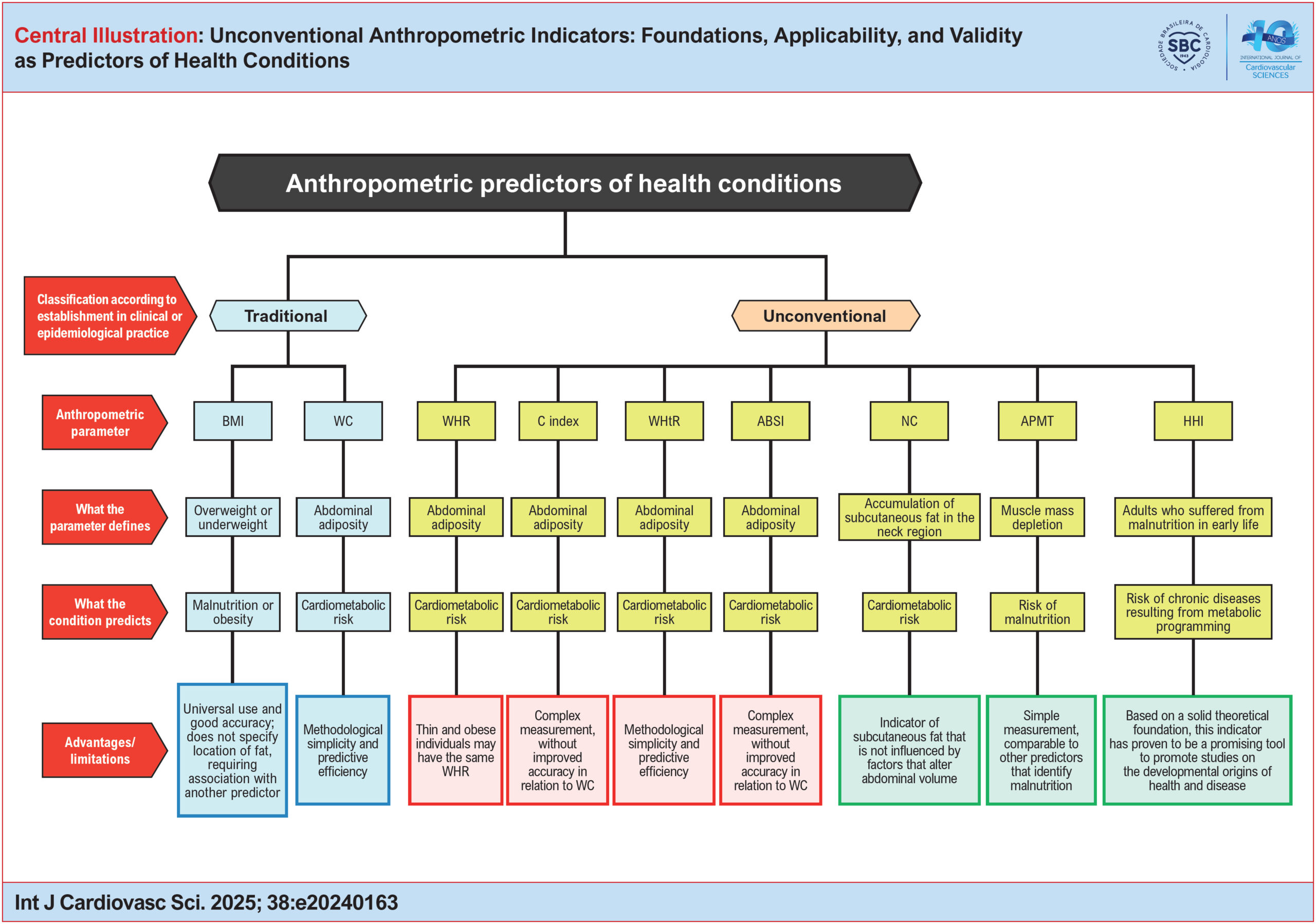
Several anthropometric parameters have been proposed as indicators of health conditions. Some have achieved wide acceptance and applicability. Others, although grounded in solid theoretical frameworks and demonstrating good diagnostic validity, have not gained the same level of recognition. These are referred to here as “unconventional anthropometric indicators”. This article aims to provide a descriptive and conceptual synthesis of these measures, addressing their nuances and applicability. It is a narrative review that discusses the following indicators: Head-to-height index (HHI), Waist-to-Height Ratio (WHtR), Conicity Index (C-Index), Waist-to-Hip Ratio (WHR), A Body Shape Index (ABSI), Neck Circumference (NC), and Adductor Pollicis Muscle Thickness (APMT). WHtR, C-Index, WHR, and ABSI are based on the identification of abdominal fat accumulation and its association with cardiometabolic risks. However, for this purpose, waist circumference stands out due to its methodological simplicity and predictive effectiveness. NC is an indicator of subcutaneous fat, whose excess increases disease risk and is not influenced by factors that alter abdominal volume. APMT identifies muscle depletion and is comparable to other anthropometric predictors of malnutrition risk. HHI was proposed to identify individuals who experienced undernutrition early in life. Grounded in a robust theoretical foundation, it is a promising tool for advancing research on the Developmental Origins of Health and Disease (DOHaD). The indicators analyzed are valuable for monitoring cardiometabolic risk factors, each with its unique characteristics. Understanding these particularities is essential for selecting the most appropriate indicators for different contexts, thus enabling more effective interventions.
  • Anthropometry
  • Cardiometabolic Risk Factors
  • Nutrition Assessment
  • Public Health Surveillance
  • Risk Factors
Read Full Article
Creative Commons Attribution (CC BY) Creative Commons license
27/06/2025 DOI: 10.36660/ijcs.20240163 Views 3
Incremental Determinants of The Combined Supine-Prone Protocol for Myocardial Perfusion Scintigraphy
ABCIC
Original Article

Incremental Determinants of The Combined Supine-Prone Protocol for Myocardial Perfusion Scintigraphy

Tiago Oliveira Costa et al. Mário de Seixas Rocha Gilson Feitosa Soares Filho Raphael Abegão de Camargo Cristiano Ricardo Bastos de Macedo

Abstract

Background:

Myocardial perfusion scintigraphy is an important non-invasive method for diagnosing coronary artery disease, but it is not free from artifacts. Performing the combined supine-prone protocol can bring benefits to images with artifacts from the standard protocol in the supine position. The lack of unanimity in the implementation of the combined protocol may be related to the lack of objective data for the prior selection of patients.

Objective:

To evaluate which anthropometric profiles may be associated with a greater benefit in excluding artifacts for the optimized performance of the combined protocol.

Methods:

A cross-sectional and analytical study was carried out with 370 patients at the Nuclear Medicine Group Clinic between April and August 2022. The estimated level of statistical significance was 5%. Statistical analysis using binary logistic regression was used to evaluate the association between anthropometric data and the change in the initial test result after carrying out the combined protocol.

Results:

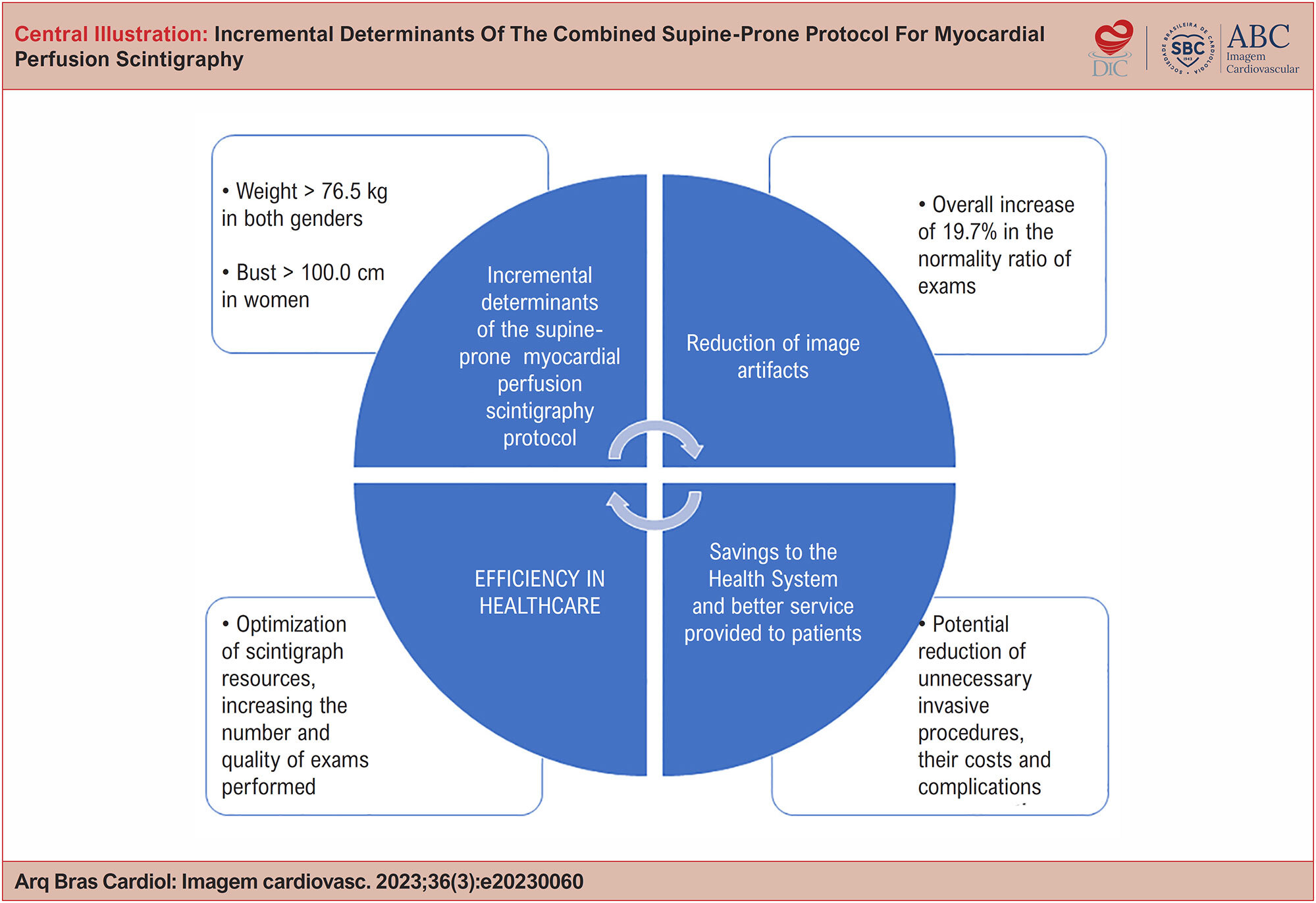
The combined protocol promoted a 19.7% increase in the normality ratio of the standard protocol. The variables weight, for both genders [OR = 1.02 (95% CI, 1.0002 – 1.04; p = 0.047)], and bust in women [OR = 1.06 (95% CI, 1. 01 – 1.11; p = 0.014)] represented incremental determinants with statistical significance. Weight greater than 76.5kg for both genders (S: 58.5%; E: 61.5%) and bust greater than 100.0 cm in women (S: 73.9%; E: 53.4%) were the best cutoff points in the receiver operating characteristic (ROC) curve.

Conclusion:

The optimized implementation of the combined protocol using the described weight and bust measurement criteria can promote greater efficiency in image acquisition.

  • Anthropometry
  • Coronary Disease
  • Myocardial Perfusion Imaging
  • Prone Position
  • Radionuclide Imaging
Read Full Article
Creative Commons Attribution (CC BY) Creative Commons license
02/10/2023 DOI: 10.36660/abcimg.20230060i Views 1
IJCS
Original Article

Family History of Hypertension: Impact on Blood Pressure, Anthropometric Measurements and Physical Activity Level in Schoolchildren

Tatiana Affornali Tozo et al. Beatriz Oliveira Pereira Francisco José de Menezes Junior Cristianne Morgado Montenegro … Carla Marisa Maia Moreira Neiva Leite

Abstract

Background:

A family history of arterial hypertension (AH), combined with environmental risk factors, is directly related to the development of AH.

Objectives:

To evaluate the frequency of AH, anthropometric indicators and level of physical activity and their association with a family history (FH) of AH in school children.

Methods:

Cross-sectional study with 118 students, aged between 11 and 17 years, of both sexes. Waist circumference (WC), weight, height, level of physical activity and FH of HA were collected. Body mass index z score (BMI-z) and waist-to-height ratio (WHtR) were calculated. Binary logistic regression model was used to verify the chance risk, with significance p <0.05.

Results:

Of the 118 parents who answered the questionnaire, 34.7% had a positive FH of AH. Girls with a positive FH had higher means of WC (p= 0,004), BMI (p=0,020), and systolic blood pressure (SBP) (p=0,006) than boys, and a higher risk of being overweight (OR=4,48; 95%CI:1,55–12,94), and having elevated WHtR (OR=5.98; 95%CI:1.66– 21.47) and SBP (OR=3,07; 95%CI:1,03–9,13) than girls without a FH, but they practice more vigorours moderate physical activity (MVPA) (p=0,039). On the other hand, no differences in these parameters were observed between boys with and without a FM of AH.

Conclusion:

Overweight and a FH of hypertension were associated with an increased risk for AH in girls. This was not observed among boys, perhaps due to more active lifestyle.

  • Anthropometry
  • Blood Pressure
  • Heredity/genetics
  • Hypertension/genetics
  • Obesity
  • Physical activity
  • Schoolchildren
Read Full Article
Creative Commons Attribution (CC BY) Creative Commons license
25/02/2022 DOI: 10.36660/ijcs.20200346 Views 1
ABC
Editorial

A Key Strategy to Predict Cardiovascular Diseases: A Combination of Anthropometric Indices

José Bruno Nunes Ferreira Silva

The obesity pandemic is one of the most pressing health concerns of the 21stcentury. Prevalent even among developed and developing countries, this disease has been related to cardiovascular events, dyslipidemia, type 2 diabetes, sleep disorders, and cancer. It has recently been considered a risk factor for critical illness in coronavirus disease-2019 (COVID-19) pandemic. ,

In Brazil, the National Health Survey , in partnership with the Ministry of Health, found that obesity has gradually increased over the last 17 years in adult women (14.5% to 30.2%) and men (9.6% to 22.8%). Its prevalence has more than doubled between 2003 and 2019. A collaborative effort between the government, public health officers, and medical staff is needed to manage the complex and multifactorial obesity issue.

[…]

  • Anthropometry
  • Cardiovascular Diseases
  • Obesity
  • Pandemics
  • Risk Factors
Read Full Article
Creative Commons Attribution (CC BY) Creative Commons license
25/10/2021 DOI: 10.36660/abc.20210716 Views 1
Figure 1
ABC
Original Article

Individual and Combined Performance of Indicators of Overall and Central Obesity to Estimate Coronary Risk in ELSA-Brasil Participants

Rogério Tosta de Almeida et al. Sheila Maria Alvim Matos Estela M. L. Aquino

Abstract

Background:

Anthropometric indicators have been used in clinical practice and epidemiological studies for screening of health risk factors.

Objectives:

To evaluate the individual discriminatory power of body adiposity index (BAI), body mass index (BMI), waist circumference (WC) and waist-hip-ratio (WHR) to identify individuals at risk for coronary heart disease and to evaluate whether combinations of anthropometric indicators of overall obesity with indicators of central obesity improve predictive ability in adults.

Methods:

A total of 15,092 participants (54.4% women) aged 35-74years were assessed at baseline of the ELSA-Brasil study. Individuals at risk for coronary heart disease were identified using the Framingham risk score and divided into very-high risk (VHR 20%) and high risk (HR10%). Measures of diagnostic accuracy and area under the ROC curves (AUC) were analyzed. Associations were tested using Poisson regression analysis with robust variance, according to age and sex. Statistical significance was set at 5%.

Results:

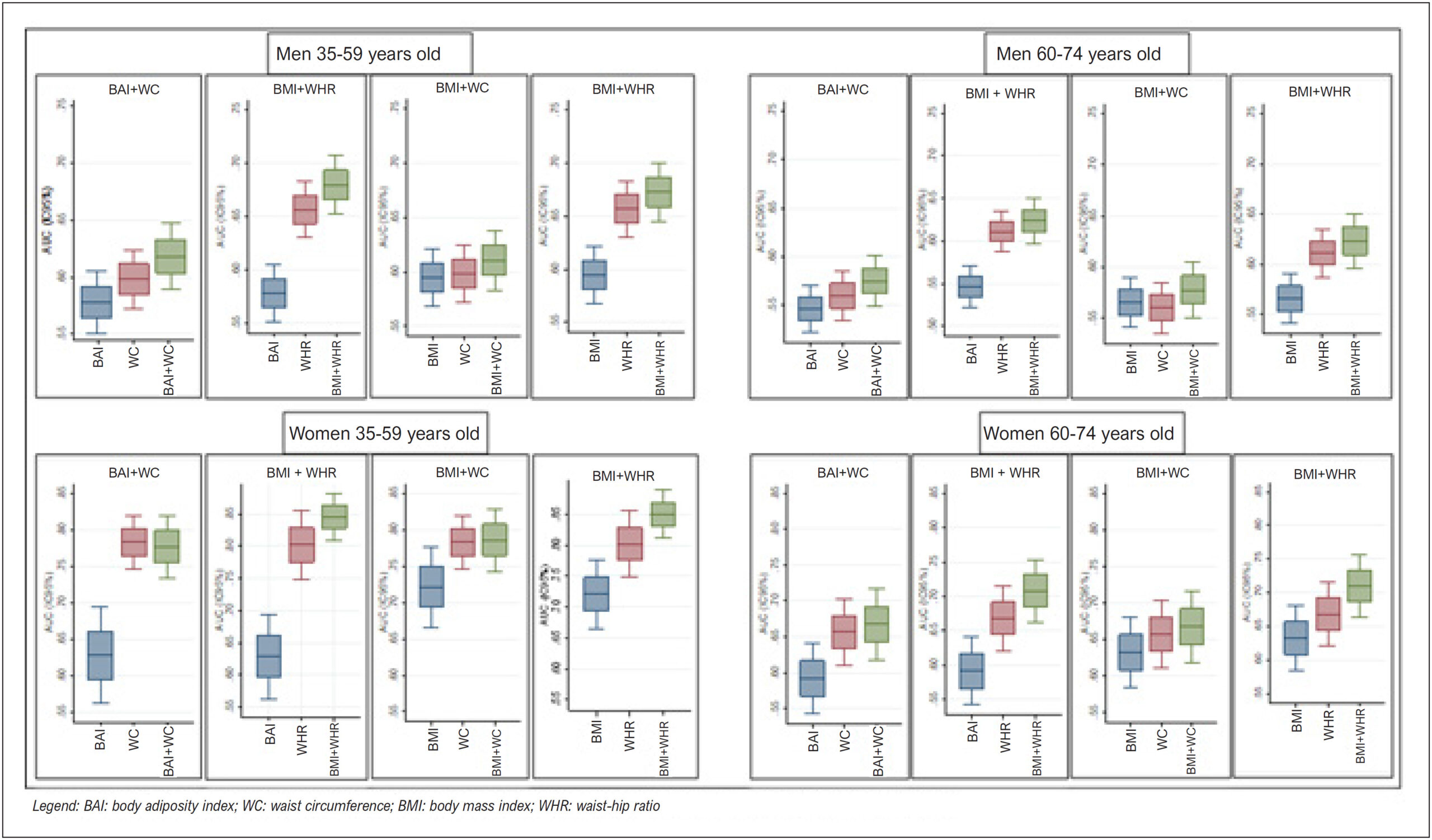
WHR showed the highest discriminatory power for VHR20% in all groups, with higher predictive ability in women (AUC: 0.802; 95%CI: 0.748-0.856 vs 0.657; 95%CI: 0.630-0.683 in the age range of 35-59 years, and AUC: 0.668; 95%CI: 0.621-0.715 vs 0.611; 95%CI: 0.587-0.635 in the age range of 60-74 years). BAI + WHR and BMI + WHR had the highest predictive power in men and women, respectively. Combinations of indicators of overall obesity with indicators of central obesity were more strongly associated with VHR20% and HR10% in all subgroups.

Conclusion:

Combined indicators had greater predictive ability than indicators taken individually. BAI+ WHR and BMI + WHR were the best estimators of coronary risk in men and women, respectively, and WHR had the best individual performance.

  • Adiposity
  • Anthropometry
  • body mass index
  • Cardiovascular disease
  • Epidemiology
  • Obesity
  • Risk Factors
  • Waist Circumference
Read Full Article
Creative Commons Attribution (CC BY) Creative Commons license
30/07/2021 DOI: 10.36660/abc.20200360
ABC
Original Article

Blood Pressure in Children: Association with Anthropometric Indicators, Body Composition, Cardiorespiratory Fitness and Physical Activity

Gisele Pinheiro et al. Júlio Mello Adroaldo Gaya Anelise Reis Gaya

Abstract

Background:

Evidence points to anthropometric and fitness variables as associated factors with children’s blood pressure. Analysing these factors in a single context is a relevant possibility of identifying the weight that each factor can present for the development of arterial hypertension.

Objective:

Identify the possible associations between anthropometric measurements, body composition, moderate-vigorous physical activity (MVPA) and cardiorespiratory fitness (CRF) with blood pressure in children.

Methods:

Correlational study with a quantitative approach. Sample: 215 schoolchildren aged 6-12 years selected by convenience criteria of a public school in Porto Alegre, Brazil. Blood pressure was measured with a digital sphygmomanometer. For data treatment, the values of systolic and diastolic blood pressure were standardized (Z score) and added. The variables tested as predictors were: MVPA; body fat percentage (BF%); Body Mass Index (BMI); waist-height ratio (WHTR); maturity-offset and CRF. After checking the normality parameters, the crude and adjusted associations (for sex, age and maturity-offset) were tested with linear regression equations. For the analyses, p <0.05 was considered.

Results:

Three different models indicated the best sets of factors associated with standardized blood pressure. Model 1 (R2 = 0.21) consisted of the variables WHTR (β = 9.702) and MVPA (β = −0.021). Model 2 (R2 = 0.19) was composed of the variables BMI (β = 0.156) and MVPA (β = −0.021). Model 3 (R2 = 0.18) included the variables BF% (β = 0.063) and CRF (β = −0.004).

Conclusion:

Blood pressure in children is predicted by the body variables BF%, BMI and WHTR, in addition, it is negatively associated with MVPA and CRF.

  • Anthropometry
  • Blood Pressure
  • Body Composition
  • Child
  • Exercise
  • Motor Activity
  • physical fitness
Read Full Article
Creative Commons Attribution (CC BY) Creative Commons license
17/05/2021 DOI: 10.36660/abc.20190520 Views 1
IJCS
Editorial

Epicardial Fat Thickness: a Promising Cardiovascular Risk Factor that Requires in-Depth Studies

Roberto M. Saraiva et al. Andréa Rodrigues da Costa

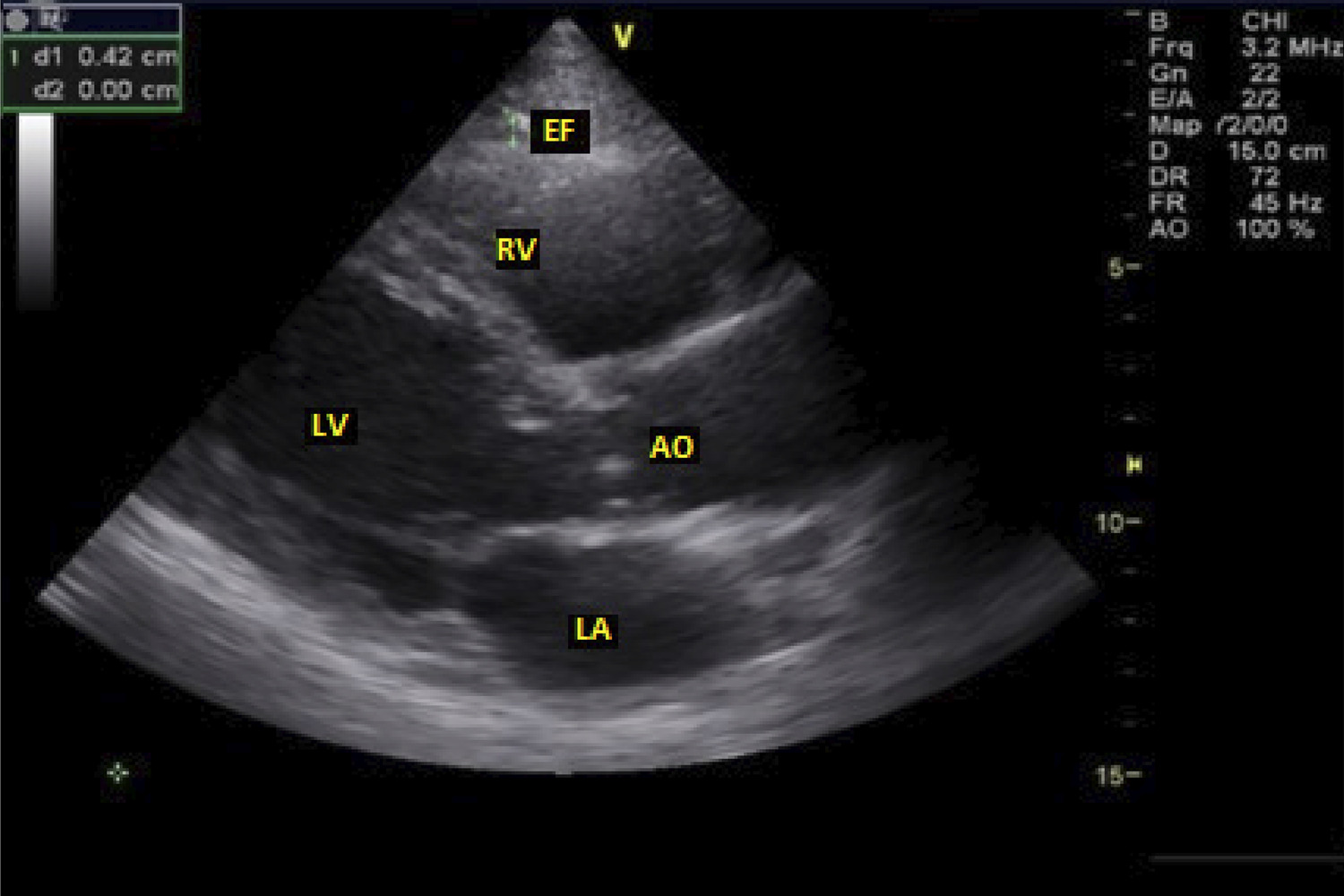
This issue of the International Journal of Cardiovascular Sciences presents a paper by Castanheira et al. that addresses epicardial fat (EF) thickness in an elderly Portuguese population. They describe the mean values of EF thickness and its correlation with anthropometric, echocardiographic, and clinical variables in these individuals.

EF is the visceral adipose tissue located between the myocardium and the visceral pericardium, and commonly found in the atrioventricular and interventricular grooves. EF has several physiological roles, including local effects on the heart, in a paracrine manner.– EF can be measured non-invasively by echocardiography, and the measurement of EF thickness by 2D echocardiography has been proposed as a surrogate for visceral fat, since it is easier to perform as compared with direct measures such as computed tomography and magnetic resonance imaging (MRI). In addition, a significant correlation between EF and visceral fat measurements by MRI was demonstrated.

[…]

  • Adipose Tissue
  • Aged
  • Anthropometry
  • Echocardiography/methods
  • Metabolic Syndrome
  • Pericardium
  • Portugal/epidemiology
Read Full Article
Creative Commons Attribution (CC BY) Creative Commons license
12/03/2021 DOI: 10.36660/ijcs.20200363 Views 1
Figure 1
IJCS
Original Article

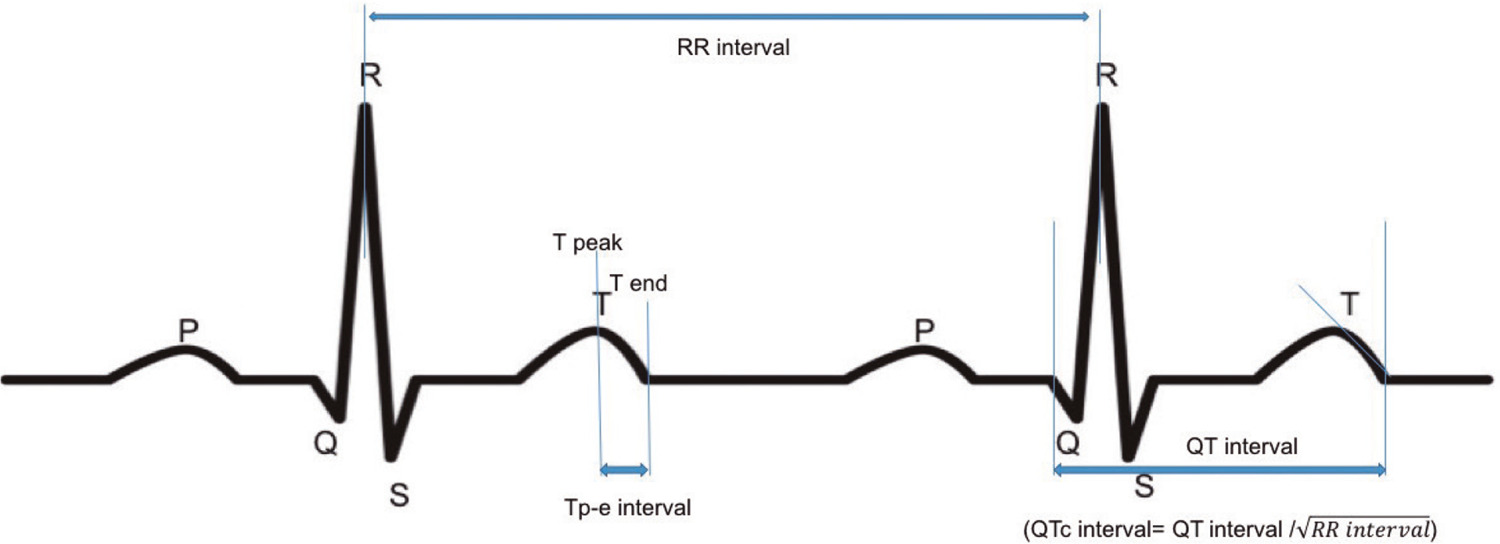
The Association between Tp-e interval, Tp-e/QT , and Tp-e/QTc Ratios and Coronary Artery Disease Spectrum and Syntax Score

Serkan Kahraman et al. Ali Dogan Gokhan Demirci Arda Guler … Ali Kemal Kalkan Fatih Uzun Nuri Kurtoglu Mehmet Erturk Mehmet Emin Kalkan

Abstract

Background

Coronary artery disease (CAD) causes electrical heterogeneity on ventricular myocardium and ventricular arrhythmia due to myocardial ischemia linked to ventricular repolarization abnormalities.

Objective

Our aim is to investigate the impact of increased level of CAD spectrum and severity on ventricular repolarization via Tp-e interval, Tp-e/QT and Tp-e/QTc ratios.

Methods

127 patients with normal coronary artery (group 1), 129 patients with stable CAD (group 2) and 121 patients with acute coronary syndrome (group 3) were enrolled. Tp-e interval, Tp-e/QT and Tp-e/QTc ratios were evaluated as well as baseline demographic and clinical parameters. Kruskal-Wallis one-way ANOVA test was used for comparing quantitative variables with abnormal distribution while One-Way ANOVA test was used for comparing the means between groups with normal distribution. Tukey HSD and Welch tests were used for subgroups analyses with normal distribution. Spearman analysis was used to evaluate the correlation between clinical variables and repolarization markers. A p-value < 0.05 was considered statistically significant.

Results

Tp-e interval [66(50-83), 71(59-82) and 76(64-86); group 1,2 and 3 respectively, p<0.001], Tp-e/QT (0.170.02, 0.180.01 and 0,190.01; group 1,2 and 3 respectively, p<0.001) and Tp-e/QTc (0.150.02, 0.160.02 and 0.170.02; group 1,2 and 3 respectively, p<0.001) ratios were found to be associated with increased level of CAD spectrum. Syntax score was positively correlated with Tp-e interval (r=0.514, p<0.001), Tp-e/QT (r=0.407, p<0.001), and Tp-e/QTc ratios (r=0.240, p<0.001).

Conclusion

Prolonged Tp-e interval and increased Tp-e/QT and Tp-e/QTc ratios were detected in the presence of CAD and especially in patients with acute ischemic syndromes. (Int J Cardiovasc Sci. 2020; [online].ahead print, PP.0-0)

  • Anthropometry
  • Arrhythmias Cardiac
  • Cardiovascular Diseases
  • Coronary Artery Disease
  • Electrocardiography
  • Methods
  • Score Sintax
Read Full Article
Creative Commons Attribution (CC BY) Creative Commons license
22/01/2021 DOI: 10.36660/ijcs.20190149 Views 3
IJCS
Original Article

Physical Activity Level, Anthropometric and Cardiovascular Profile Among Students in Sergipe State Attending Public Schools

Luan Morais Azevêdo et al. Lucas Souza Santos Emerson Pardono Jeeser Alves Almeida Aldemir Smith Menezes

Abstract

Background

Cardiovascular diseases are the leading cause of mortality among adults. Evidence has shown that sedentary behaviors are the main preventable outcome, however, many sedentary children also become sedentary adults. Therefore, identifying potential risk factors as early as possible contributes to therapeutic success.

Objective

To achieve an anthropometric and cardiovascular mapping of school-age students from Sergipe State, Brazil.

Methods

A school-based cross-sectional study with a representative sample from public schools in the state of Sergipe (n= 4700). Anthropometric and blood pressure measurements were performed, and the Global School-based Student Health Survey was used to assess the physical activity level. An independent samples t-test was performed for all comparisons, and significance was established at 5% (p<0.05).

Results

Despite showing mean blood pressure values within reasonable limits (SBP = 114.1±12.4 mm Hg and DBP = 66.3±8.1 mm Hg), school-age students did not comply with global recommendations for health promotion. It was also observed a high rate of low body weight (42.6%), suggesting dietary compromises, which can interfere with the development of this population. In addition, only 7.3% of students met the minimum physical activity criteria proposed for maintaining their health status.

Conclusion

The findings of the present study emphasize the importance of maintaining Physical Education classes as an essential curricular component, since they provide several health benefits and ensure that this population reaches the minimum daily recommendations, preventing diseases in adult life. (Int J Cardiovasc Sci. 2020; [online].ahead print, PP.0-0)

  • Adolecents
  • Anthropometry
  • Epidemiology
  • Exercise
  • Hypertension
  • Prevalence
  • Public Schools
  • Risk Factors
  • Sedentarism
  • students
Read Full Article
Creative Commons Attribution (CC BY) Creative Commons license
08/01/2021 DOI: 10.36660/ijcs.20200050
IJCS
Original Article

Cardiovascular Risk Factors in Patients with Chronic Kidney Disease Under Conservative Treatment

Cássia Oliveira et al. Priscila Moreira de Lima Pereira Iris Teixeira Soares Melina Gabriela Monteiro … Marcus Gomes Bastos Ana Paula Carlos Cândido

Abstract

Background

Cardiovascular disease (CVD) is commonly associated with chronic kidney disease (CKD). These diseases have a significant impact on life expectancy. Individuals with CKD are more likely to die from CVD than to progress to end-stage kidney disease.

Objective

To assess cardiovascular risk factors of patients with CKD under conservative treatment.

Methods

This was an observational, cross-sectional study. Socioeconomic, anthropometric, biochemical, and physical inactivity data were assessed, and 10-year risk for CVD were estimated using the Framingham Score in patients with CKD under conservative treatment. For statistical analysis, the Student’s t-test and Pearson’s chi-square test were performed.

Results

A total of 172 individuals were evaluated, 57% of whom were male, with an average age of 68.85 ± 11.41 years. The prevalence of hypertension and diabetes were 87.2% and 53.5%, respectively; 62.2% were physically inactive; 9.9% of men were smokers and 12.8% consumed alcohol. According to BMI, 82.4% of adults <60 years old and 60.6% of those older than 60 years were overweight. High waist circumference and a high waist-hip ratio were highly prevalent in females (91.9% and 83.8%, respectively) and males (64.3% and 39.8%, respectively); 92.4% had a high body fat percentage and 73.3% high uric acid levels. According to the Framingham score, 57% have a medium or high risk of developing CVD in 10 years.

Conclusion

There was a high prevalence of cardiovascular risk factors in the population studied. The assessment of cardiovascular risk factors in patients with CKD makes it possible to guide the conduct of health professionals to prevent mortality from cardiovascular causes. Int J Cardiovasc Sci. 2020; [online].ahead print, PP.0-0

  • abdominal circumference
  • Adults
  • Anthropometry
  • Cardiovascular Diseases/complications
  • Diabetes Mellitus
  • Hypertension
  • Renal Insufficiency, Chronic
  • Risk Factors
Read Full Article
Creative Commons Attribution (CC BY) Creative Commons license
06/11/2020 DOI: 10.36660/ijcs.20190195 Views 1
Figure 1
IJCS
Original Article

Correlation between Epicardial Fat Thickness and Clinical and Anthropometric Variables in an Elderly Population

Joaquim Castanheira et al. Cristiana Nunes Telmo Pereira

Abstract

Background

Epicardial fat (EF) thickness is a marker of visceral adiposity and consequently considered an important predictive marker of cardiovascular and metabolic risk.

Objective

To describe echocardiographic features of the heart in an elderly population and to study the correlation between EF thickness and clinical and anthropometric variables.

Methods

A sample of 34 individuals (25 women) aged between 65 and 92 years, who attended a private institution in the central region of Continental Portugal, was analyzed. A standardized sociodemographic questionnaire was applied, and anthropometric assessment, echocardiography and blood pressure measurement were performed in all subjects. A correlational analysis of EF thickness with anthropometric and clinical parameters was performed. The association between variables was tested by Pearson’s correlation and point-biserial correlation. A value of p < 0.05 was defined as statistically significant.

Results

EF thickness was higher in males (6.0 ± 1.4 mm vs 5.2 ± 0.9 mm in females), and ranged from 4 to 9 mm. There were statistically significant correlations between EF thickness and weight (r = 0.4; p = 0.02), body surface area (r = 0.4; p = 0.02), lean mass (r = 0.4; p = 0.03), calf circumference (r = 0.5; p = 0.01) and left ventricular end-diastolic diameter (r = 0.3; p = 0.04).

Conclusion

EF thickness was higher in males and was significantly correlated with anthropometric parameters of adiposity and left ventricular end-diastolic diameter. Int J Cardiovasc Sci. 2020; [online].ahead print, PP.0-0

  • Adiposity
  • aging
  • Anthropometry
  • Blood Pressure
  • Diabetes Mellitus
  • Echocardiography/methods
  • Epicardial Fat
  • Hypertension
  • Risk Factors
Read Full Article
Creative Commons Attribution (CC BY) Creative Commons license
06/11/2020 DOI: 10.36660/ijcs.20190179 Views 1
ABC
Original Article

Hypertension in Workers: The Role of Physical Activity and its Different Dimensions

Uelito Everaldo Souza Ribeiro Junior et al. Rita de Cassia Pereira Fernandes

Abstract

Background

Physical activity, each type in its own manner, whether occupational, domestic or leisure, can play a significant role regarding high blood pressure (HBP). However, practicing physical activity only at leisure time, or in specific situations, can be insufficient to achieve the effective control of HBP.

Objective

To analyze the isolated and cumulative effect of different types of physical activity and the prevalence of HBP among workers.

Methods

A cross-sectional study with 1,070 Urban Cleaning and Footwear Industry workers in Bahia, who answered a survey, conducted by an interviewer on sociodemographic, occupational, lifestyle and hypertensive morbidity aspects. Weight, height, waist circumference and blood pressure were measured. Case of HBP: Systolic blood pressure ≥140 or diastolic blood pressure ≥90, or regular treatment for HBP. The occupational, domestic and leisure aspects of Physical Activity were studied. A multivariate analysis with Cox Regression was performed for cross-sectional studies.

Results

The prevalence of HBP was 24%, being 37% among workers aged between 35-44 years, and 51% among workers aged between 45-54 years. The multivariate model showed that workers who were active in one form of physical activity only or no forms had 62% higher BP levels and that these levels were 25% higher among workers who were active in two out of three physical activity forms. Being a male, being older (> 31 years old) and being overweight were characteristics associated with HBP, with prevalence ratios of 1.62, 2.10 and 2.26, respectively.

Conclusions

There was a cumulative effect of the form of physical activity on the occurrence of HBP. Classifying active subjects at work or at home as inactive persons by relying only on the leisure form can lead to methodological errors. (Arq Bras Cardiol. 2020; 114(5):755-761)

  • Anthropometry
  • Hypertension
  • Life Style
  • Motor Activity
  • Physical Exerton
  • Socioeconomic Factors
  • Urban Cleaning Service
  • Work
  • Workers
Read Full Article
Creative Commons Attribution (CC BY) Creative Commons license
01/06/2020 DOI: 10.36660/abc.20190065 Views 1
Figure 1
ABC
Original Article

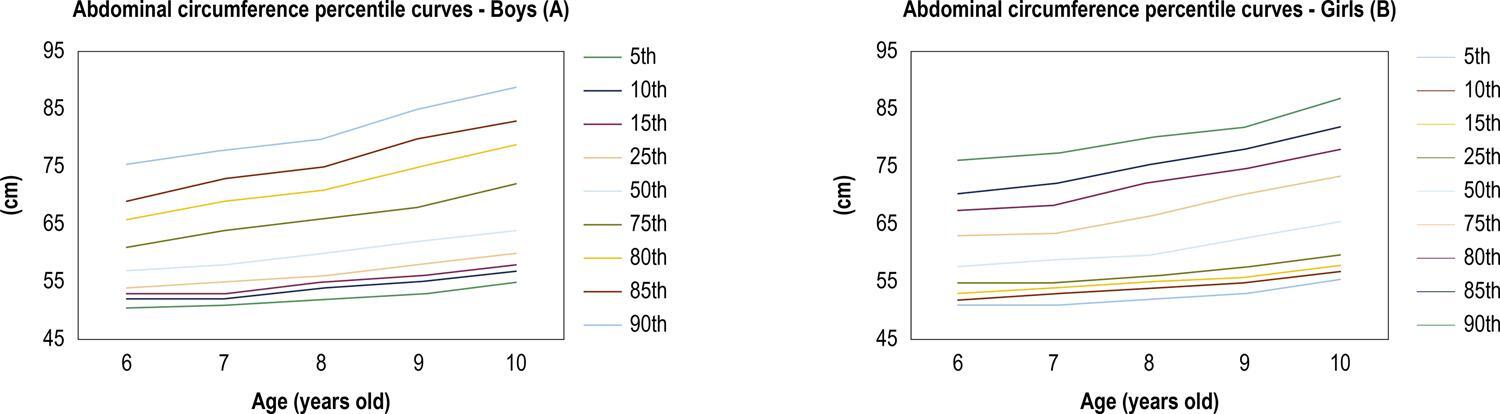
Waist Circumference Percentiles and Cut-Off Values for Obesity in a Large Sample of Students from 6 To 10 Years Old Of The São Paulo State, Brazil

José Luiz F Santos et al. Valentin P. Valério Rafael N. Fernandes Ligia Duarte … Antonio C. Assumpção Jayme Guerreiro Antonio L. Sickler Álvaro A. R. Lemos Jayro G Goulart Filho Luiz Antonio Machado Cesar Ibraim Masciarelli Pinto Carlos Magalhães Maria Fernanda Hussid Cleber Camacho Alvaro Avezum Carine T. Sangaleti Fernanda Marciano Consolim-Colombo

Abstract

Backgroud

The prevalence of obesity has systematically been increased in the population, including children and adolescents, around the world.

Objectives

To describe reference percentile curves for waist circumference (WC) in Brazilian children and provide cut-off values of WC to identify children at risk for obesity.

Methods

A multicenter, prospective, cross-sectional study was performed with children aged from 6 to 10 years old, enrolled in public and private elementary schools from 13 cities of the São Paulo State. Height, weight, and WC were measured in duplicate in 22,000 children (11,199 boys). To establish the WC best cut-off value for obesity diagnosis, ROC curves with children classified as normal weight and obese were calculated, according to BMI curves, stratified by gender and age, and the Youden Index was utilized as the maximum potential effectiveness of this biomarker. A p < 0.05 was considered statistically significant.

Results

WC values increased with age in both boys and girls. The prevalence of obesity in each age group varied from 17% (6 years old) to 21.6% (9 years old) among boys, and from 14.1% (7 years old) to 17.3 % (9 years old) among girls. ROC analyses have shown the 75th percentile as a cut-off for obesity risk, and the diagnosis of obesity is classified on the 85th percentile or more.

Conclusion

Age and gender specific reference curves of WC for Brazilian children and cut-off values for obesity risk may be used for national screening and interventional studies to reduce the obesity burden in Brazil. (Arq Bras Cardiol. 2020; 114(3):530-537)

  • Anthropometry
  • Child
  • Obesity, Students
  • Parameters
  • Waist Circunference/physiology
Read Full Article
Creative Commons Attribution (CC BY) Creative Commons license
06/04/2020 DOI: 10.36660/abc.20190043 Views 1
Figure 1
IJCS
Viewpoint

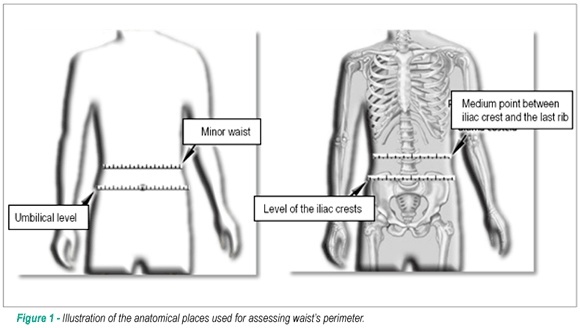
Abdominal Circumference or Waist Circumference?

Tiago de Oliveira Chaves et al. Michel Silva Reis

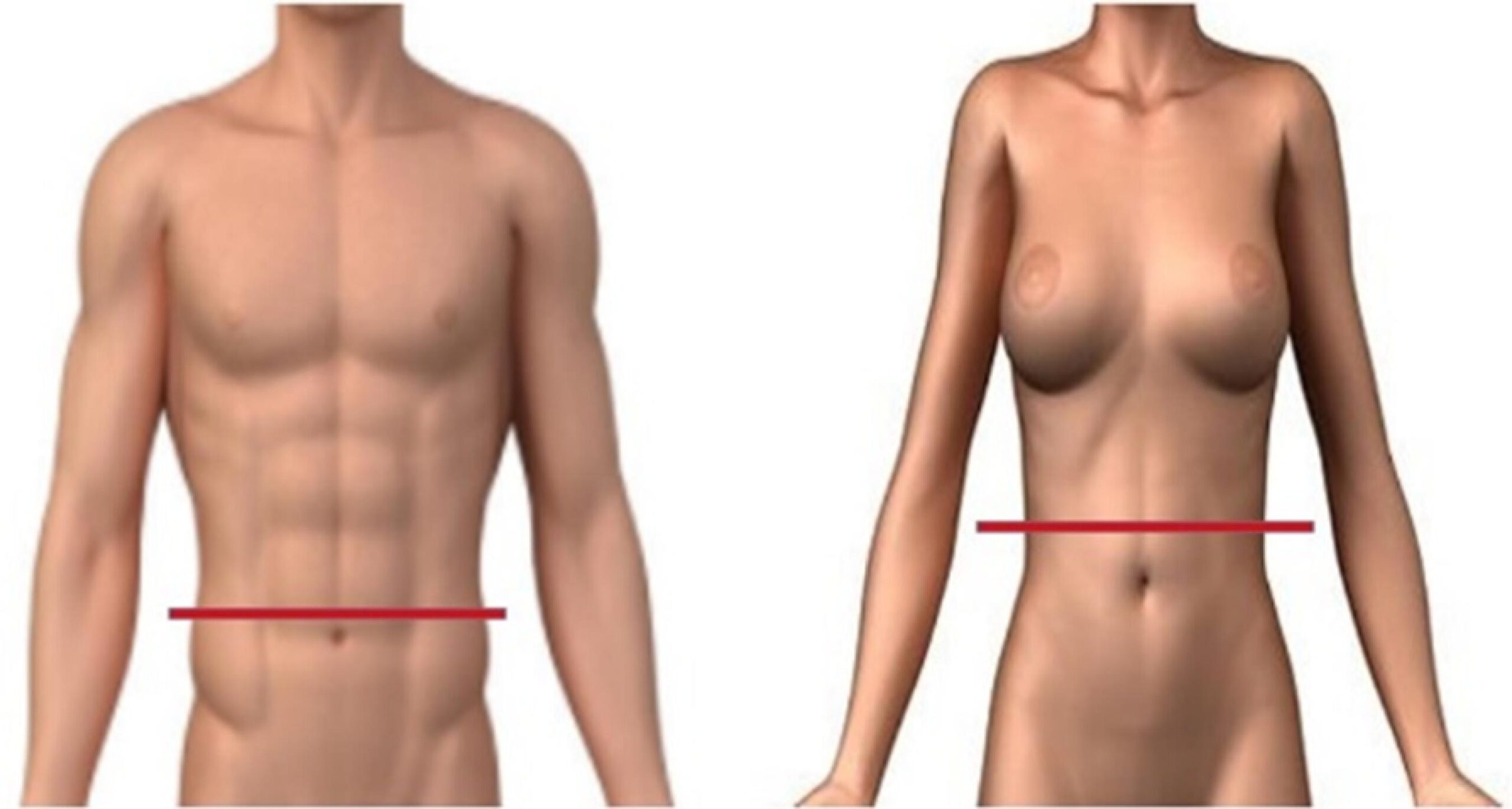
Circumference measures, also called perimetry, are part of the anthropometric evaluation. Important Brazilian guidelines, as well as the Brazilian Society of Cardiology (SBC), have considered the abdominal circumference values as a point of reference to classify the risk for cardiovascular disease development.

However, what is the adequate terminology that should be used to quantify the increased cardiovascular disease risk: abdominal circumference or waist circumference?

[…]

  • abdominal circumference
  • Anthropometry
  • Cardiovascular Diseases
  • Risk Factors
  • Waist Circumference
  • Waist-Hip Ratio
Read Full Article
Creative Commons Attribution (CC BY) Creative Commons license
20/05/2019 DOI: 10.5935/2359-4802.20180080
IJCS
Original Article

Adductor Pollicis Muscle Thickness as a Marker of Nutritional Status in Heart Failure

Fabiane da Silva Rosário et al. Denise Tavares Giannini Viviane de Oliveira Leal Ricardo Mourilhe-Rocha

Abstract

Background:

Malnutrition is associated with morbidity and mortality in patients with heart failure (HF). Thus, it is essential to apply reliable indicators to assess the nutritional status of these individuals.

Objective:

To evaluate the thickness of the adductor pollicis muscle (APM) in patients with HF as an indicator of somatic protein status and correlate the obtained values with conventionally used parameters and electrical bioimpedance (EBI) markers.

Methods:

Cross-sectional study with patients with HF undergoing regular outpatient treatment. APM thickness was measured in the dominant arm, and the values obtained were classified according to gender and age. The anthropometric parameters assessed included the body mass index (BMI) and specific parameters to assess the muscle (arm muscle circumference [AMC] and arm muscle area [AMA]). Values of phase angle (PA), standard PA (SPA), and lean mass were obtained by EBI. Statistical analyses were performed with the software Statistical Package for the Social Sciences, version 19, using unpaired Student’s t, Mann-Whitney, or one-way analysis of variance (ANOVA) tests for comparisons between groups, as appropriate. The correlation between variables of interest was performed using Pearson’s or Spearman’s correlation coefficient, as adequate. The level of significance was set at 5%.

Results:

About 70% of the 74 patients evaluated were classified as malnourished according to the APM thickness. Values of AMC, AMA, and lean mass correlated positively with APM thickness (p < 0.005). The APM thickness also correlated positively with PA and SPA (r = 0.49, p < 0.001 and r = 0.31, p = 0.008, respectively).

Conclusion:

Patients with HF presented a high frequency of protein malnutrition when APM thickness was used as an indicator of nutritional status. APM thickness values correlated with conventional measures of somatic protein evaluation and may be related to the prognosis of these patients, since they correlated positively with PA and SPA.

  • Anthropometry
  • Heart Failure
  • Malnutrition / mortality
  • Nutrition Assessment
  • Thumb
Read Full Article
Creative Commons Attribution (CC BY) Creative Commons license
21/01/2019 DOI: 10.5935/2359-4802.20180094
ABC
Original Article

Dyslipidemia in Adolescents Seen in a University Hospital in the city of Rio de Janeiro/Brazil: Prevalence and Association

Nathalia Pereira Vizentin et al. Paula Mendonça Santos Cardoso Camila Aparecida Gomes Maia Isabela Perez Alves … Gabriel Lunardi Aranha Denise Tavares Giannini

Abstract

Background:

Early exposure to obesity favors greater risks of cardiovascular factors such as dyslipidemia.

Objectives:

To establish the prevalence of dyslipidemia, and to evaluate its association with nutritional status of the adolescents attended at the ambulatory of the Adolescent Health Studies Center of the University Hospital Pedro Ernesto.

Methods:

This is a cross-sectional, observational study, the sample of which was of convenience, consisting of adolescents from 12 to 18 years old of both genders. The lipid profile was evaluated, along with its association with the anthropometric indicators: body mass index and waist circumference. For statistical analysis, a significance level of 5% was used.

Results:

A total of 239 adolescents, 104 boys (43.5%) and 135 girls (56.5%) were evaluated and, of these, 52 (21.8%) were eutrophic, 60 (25.1%) overweight, and 127 (53.1%) obese. Obeseadolescents had significantly lower mean values of HDL-cholesterol (44.7 mg/dl vs 53.9 mg/dl; p < 0.001) and higher triglycerides (109.6 mg/dl vs 87.3 mg/dl; p = 0.01). The changes with higher prevalence were low HDL-cholesterol (50.6%), hypercholesterolemia (35.1%), and hypertriglyceridemia (18.4%). A negative association of HDL-cholesterol with body mass index and a positive association of triglycerides with body mass index could be observed, even after adjustment for gender and skin color.

Conclusion:

This study demonstrated high prevalence of dyslipidemia among adolescents. In view of the significant association between lower levels of HDL-cholesterol and increased triglycerides with overweight, the control of these factors should receive attention, with the precocious diagnosis of the dyslipidemia being important, mainly if it is associated with another cardiovascular risk, to develop effective intervention strategies.

  • Adolescent
  • Anthropometry
  • Cardiovascular Diseases
  • Hyperlipidemias
  • Obesity
  • Risk Factors
  • Sedentary Lifestyle
Read Full Article
Creative Commons Attribution (CC BY) Creative Commons license
17/12/2018 DOI: 10.5935/abc.20180254
Figure 1
IJCS
Review Article

Predictors of Metabolic Syndrome in the Elderly: A Review

Carolina Cunha de Oliveira et al. Emanuelle Dias da Costa Anna Karla Carneiro Roriz Lilian Barbosa Ramos Mansueto Gomes Neto

Abstract

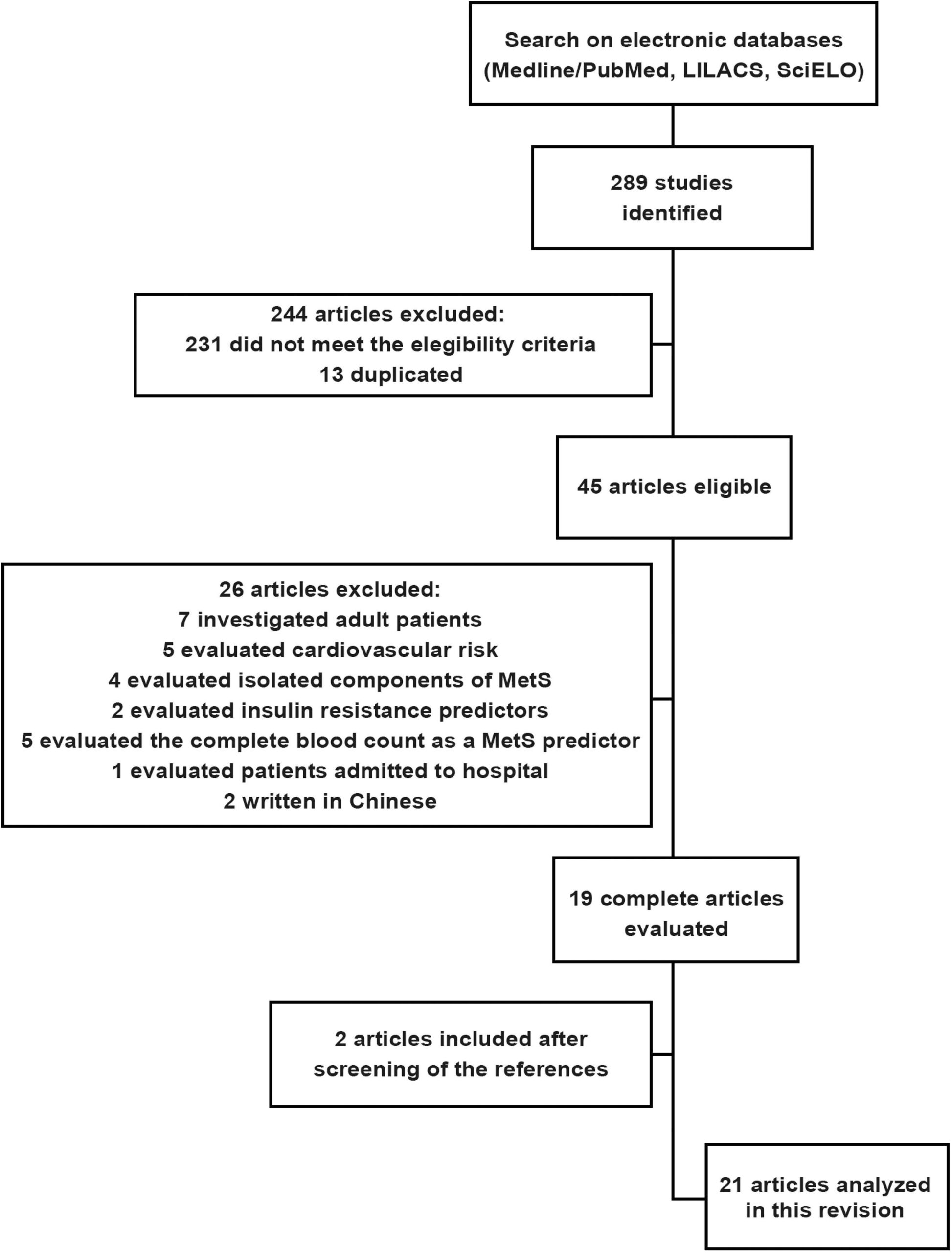
The article aimed to critically analyse studies which evaluated the capacity of anthropometric and clinical indicators to predict MetS in the elderly. Bibliographical research was performed using the electronic databasese Medline/PubMed, LILACS e SciELO , references from selected articles and contact with several authors. Twenty one articles involving anthropometric and clinical indicators in the elderly were analysed, using different MS criteria. Fourteen studies report anthropometric indicators, being the waist circumference (WC) and waist-to-height ratio (WHtR), described as the best MS predictors, with the area under the ROC curve (AUC) over 0.70 (p < 0.05). The neck circumference was also described as an alternative indicator but with less discriminatory power. Lipid accumulation product (LAP) was the parameter with the best performance to identify MS, with an AUC over 0.85 and efficiency greater than 70%. The WC, WHtR and LAP indicators were the most sensitive for predicting MS. The use of these parameters may facilitate the early identification of MS, with good accuracy and low cost. In addition, it is important to determine specific cutoff points for the elderly, since obesity alone does not appear to be a strong predictor of MS in the elderly.

  • Aged
  • Anthropometry
  • Body Weights and Measures
  • Indicators
  • Metabolic Syndrome
  • Obesity
  • Risk Factors
Read Full Article
Creative Commons Attribution (CC BY) Creative Commons license
01/01/2017 DOI: 10.5935/2359-4802.20170059
Figure 1
ABC
Original Article

Correlation of Insulin Resistance with Anthropometric Measures and Blood Pressure in Adolescents

Polyana Resende Silva de Morais et al. Ana Luiza Lima Sousa Thiago de Souza Veiga Jardim Flávia Miquetichuc Nogueira Nascente … Karla Lorena Mendonça Thaís Inácio Rolim Povoa Carolina de Souza Carneiro Vanessa Roriz Ferreira Weimar Kunz Sebba Barroso de Souza Paulo César Brandão Veiga Jardim

Abstract

Background:

Blood pressure is directly related to body mass index, and individuals with increased waist circumference have higher risk of developing hypertension, insulin resistance, and other metabolic changes, since adolescence.

Objective:

to evaluate the correlation of blood pressure with insulin resistance, waist circumference and body mass index in adolescents.

Methods:

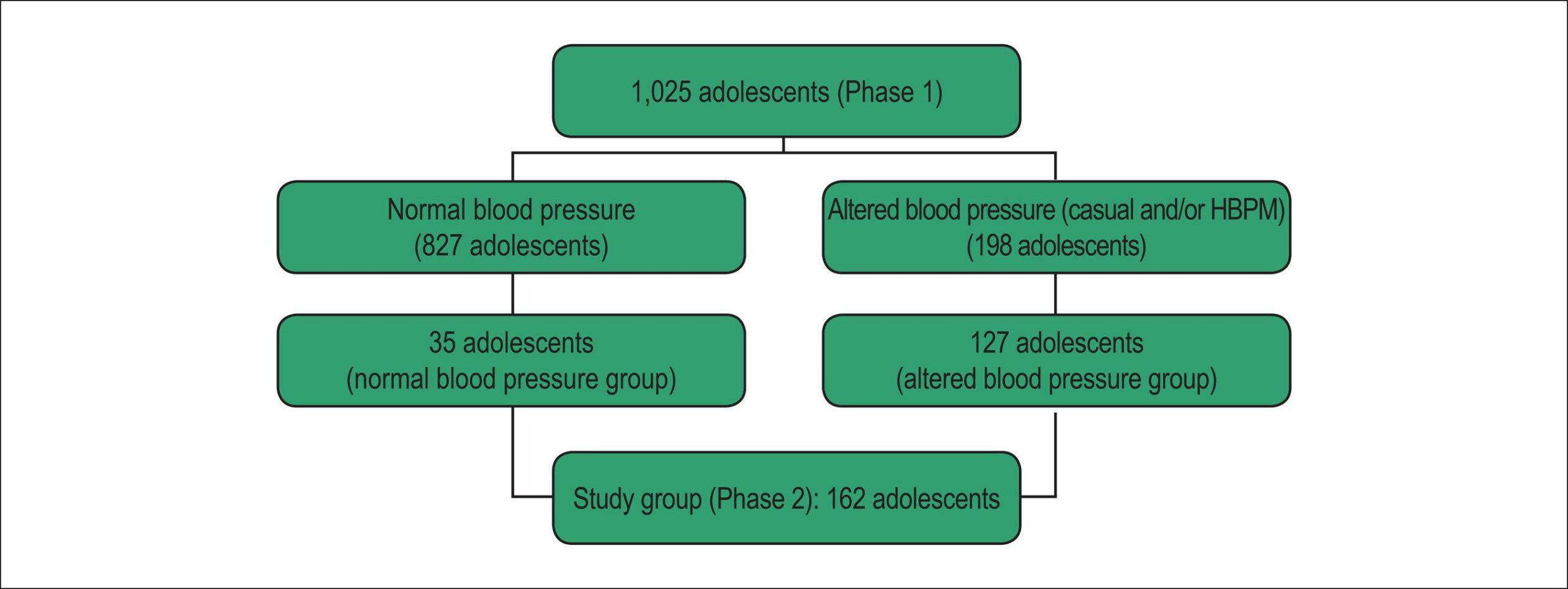
Cross-section study on a representative sample of adolescent students. One group of adolescents with altered blood pressure detected by casual blood pressure and/or home blood pressure monitoring (blood pressure > 90th percentile) and one group of normotensive adolescents were studied. Body mass index, waist circumference were measured, and fasting glucose and plasma insulin levels were determined, using the HOMA-IR index to identify insulin resistance.

Results:

A total of 162 adolescents (35 with normal blood pressure and 127 with altered blood pressure) were studied; 61% (n = 99) of them were boys and the mean age was 14.9 ± 1.62 years. Thirty-eight (23.5%) adolescents had altered HOMA-IR. The group with altered blood pressure had higher values of waist circumference, body mass index and HOMA-IR (p<0.05). Waist circumference was higher among boys in both groups (p<0.05) and girls with altered blood pressure had higher HOMA-IR than boys (p<0.05). There was a significant moderate correlation between body mass index and HOMA-IR in the group with altered blood pressure (ρ = 0.394; p < 0.001), and such correlation was stronger than in the normotensive group. There was also a significant moderate correlation between waist circumference and HOMA-IR in both groups (ρ = 0.345; p < 0.05). Logistic regression showed that HOMA-IR was as predictor of altered blood pressure (odds ratio – OR = 2.0; p = 0.001).

Conclusion:

There was a significant association of insulin resistance with blood pressure and the impact of insulin resistance on blood pressure since childhood. The correlation and association between markers of cardiovascular diseases was more pronounced in adolescents with altered blood pressure, suggesting that primary prevention strategies for cardiovascular risk factors should be early implemented in childhood and adolescence.

  • Adolescent
  • Anthropometry
  • Blood Pressure
  • body mass index
  • Insulin Resistance
Read Full Article
Creative Commons Attribution (CC BY) Creative Commons license
22/03/2016 DOI: 10.5935/abc.20160041 Views 1
Figure 1
ABC
Artigo Original

Excess Weight, Anthropometric Variables and Blood Pressure in Schoolchildren aged 10 to 18 years

Vânia Ames Schommer et al. Sandra Mari Barbiero Cláudia Ciceri Cesa Rosemary Oliveira … Anelise Damiani Silva Lucia Campos Pellanda

Background:

The prevalence of hypertension among children and adolescents is estimated to range between 1% and 13%. Excess weight and central obesity are related to blood pressure levels in adults, and may be important in the early pathogenesis of SH when present in childhood.

Objectives:

To study the association between anthropometric variables and blood pressure levels in schoolchildren from the 5th and 8th grades, and to identify which parameter was more strongly correlated with blood pressure levels.

Methods:

Contemporary cross-sectional study with probabilistic population-based cluster sampling of schoolchildren enrolled from the 5th to the 8th grades in public elementary schools of Porto Alegre. Data on familial risk factors and anthropometry were collected. Statistical analysis included correlations and cluster-adjusted confidence intervals.

Results:

The mean age of participants was 12.57 (± 1.64) years, and 55.2% of them were females. Abnormal blood pressure levels were found in 11.3% of the sample and borderline values, in 16.2%. Among the anthropometric variables analyzed, hip circumference was the one with the strongest correlation with increased blood pressure (r = 0.462, p < 0.001), followed by waist circumference (r = 0.404, p < 0.001) and abdominal skinfold (r = 0.291, p < 0.001).

Conclusion:

We observed an association of waist circumference and skinfolds with increased blood pressure levels in the schoolchildren of the sample. Therefore, it is of the utmost importance that early measurements of blood pressure, and waist and hip circumferences become a routine in health services in order to prevent this condition.

  • Adolescents
  • Anthropometry
  • Blood Pressure
  • Body Weights and Measures
  • Child
Read Full Article
Creative Commons Attribution (CC BY) Creative Commons license
01/03/2014 DOI: 10.5935/abc.20140038
ABC
Artigo Original

Association of different anthropometric measures and indices with coronary atherosclerotic burden

Patricia Chagas et al. Paulo Caramori Christiano Barcellos Tatiana Pizzato Galdino … Irênio Gomes Carla Helena Augustin Schwanke

BACKGROUND: The association between anthropometric parameters and atherosclerotic burden is not well established and few studies have addressed this issue. OBJECTIVE: To evaluate the association of different anthropometric parameters with the coronary atherosclerotic burden. METHODS: Adult patients undergoing coronary angiography were enrolled in the study. Sociodemographic characteristics and cardiovascular risk factors were collected through a standardized questionnaire. Weight, height, waist circumference (WC), abdominal circumference (AbC), hip circumference (HC) and neck circumference (NC) were measured and body mass index (BMI), waist-hip ratio (WHR), abdominal circumference-hip ratio (AbCHR) and waist-height ratio (WHtR) were calculated. The atherosclerotic burden at the coronary angiography was measured through Friesinger score (FS). Significant atherosclerosis was considered when FS > 5. RESULTS: The sample consisted of 337 patients, of whom 213 were men (63.2%). The mean age was 60.1 ± 10 years. Only WHR (r = 0.159 and p = 0.003) showed a significant linear correlation with the coronary atherosclerotic burden as measured by FS. When the sample was stratified by gender, we found a significant correlation between women’s AbCHR (r = 0.238 and p = 0.008) and WHR (r = 0.198 and p = 0.028) with FS. Men showed no correlation between anthropometric parameters and FS. After adjusting for gender, age, hypertension, smoking and DM, no anthropometric parameter was associated with coronary atherosclerotic burden as measured by FS in the total sample or when separated by gender. CONCLUSION: No anthropometric parameter was an independent risk factor for coronary atherosclerotic burden.

  • Anthropometry
  • body mass index
  • Coronary Artery Disease
  • Waist-Hip Ratio
Read Full Article
Creative Commons Attribution (CC BY) Creative Commons license
30/09/2011 DOI: 10.1590/S0066-782X2011005000093 Views 1
ABC
Artigo Original

Prevalence and anthropometric predictors of high blood pressure in schoolchildren from João Pessoa – PB, Brazil

Veruska Moreira de Queiroz et al. Patrícia Vasconcelos Leitão Moreira Tereza Helena Cavalcanti de Vasconcelos Rodrigo Pinheiro de Toledo Vianna

BACKGROUND: Arterial hypertension (AH) belongs to the group of cardiovascular diseases with the highest mortality in the world and its onset can occur in childhood. OBJECTIVE: To evaluate the prevalence of high blood pressure (BP) in schoolchildren from public schools and its association with anthropometric indicators. METHODS: The present was a cross-sectional study, consisting of a random sample of 750 schoolchildren aged 6 to 9 years from public schools of the city of Joao Pessoa, state of Paraiba, Brazil. The data were collected by a previously trained team. BP was measured by auscultation, using a stethoscope and an aneroid sphygmomanometer. The collected anthropometric data were weight, height and abdominal circumference. Chi-square and Student’s t association tests were used to compare means, both with a level of significance of 5%. Three logistic regression models were constructed, correlating high BP with the anthropometric variables to find a better prediction model. RESULTS: The prevalence of high BP levels was 13.6%. The body mass index (BMI) variable presented a significant association with the increase in BP levels (p < 0.0001) and a higher odds ratio (OR = 1.17). The increase in the BP levels also occurred with the increase in weight (p < 0.0001) and abdominal circumference (p < 0.0001). CONCLUSION: The identified association between excess weight with high BP levels emphasizes the need for intervention and for nutritional status control measures, such as dietary education programs aimed at the prevention and treatment of obesity as a risk factor for cardiovascular diseases in the pediatric and older age ranges. (Arq Bras Cardiol 2010; 95(5): 629-634)

  • Anthropometry
  • body mass index
  • Cardiovascular Diseases
  • Child
  • Hypertension
  • Obesity
Read Full Article
Creative Commons Attribution (CC BY) Creative Commons license
13/04/2011 DOI: 10.1590/S0066-782X2010001500011
Anthropometric indicators as predictors of high blood pressure in adolescents
ABC
Artigo Original

Anthropometric indicators as predictors of high blood pressure in adolescents

Carmem Cristina Beck et al. Adair da Silva Lopes Francisco José Gondim Pitanga

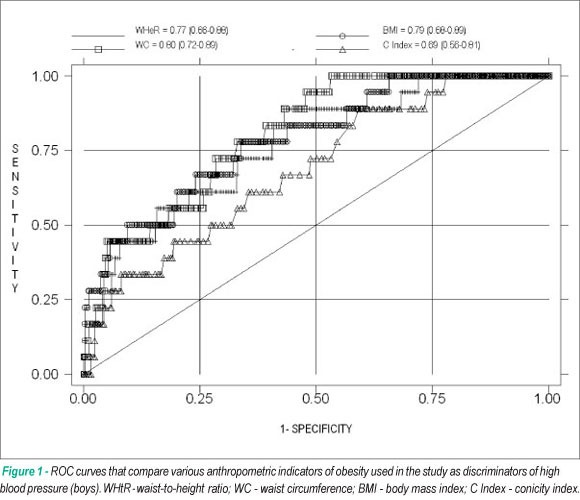
BACKGROUND: Hypertension is related to increased body fat, which can be evaluated by anthropometric indicators. OBJECTIVE: To determine the predictive power of anthropometric indicators and establish their cutoff points as discriminators of high blood pressure. METHODS: Cross-sectional study with a sample of 660 adolescents aged 14 to 19 including 51.9% girls. We considered the following anthropometric indicators: body mass index (BMI), waist circumference, waist-to-height ratio and conicity index. High blood pressure was characterized by values above the 90th percentile for systolic and/or diastolic blood pressure. To identify predictors of high blood pressure, we adopted the analysis of receiver operating characteristic curves (ROC) with a confidence interval of 95%. Subsequently, we identified the cutoff points with their relevant sensitivities and specificities. RESULTS: The areas under the ROC curves with confidence intervals were: boys – waist circumference = 0.80 (0.72 to 0.89); BMI = 0.79 (0.68 to 0.89), waist-to-height ratio = 0.77 (0.66 to 0.88); conicity index = 0.69 (0.56 to 0.81) and for girls – waist circumference = 0.96 (0.92 to 1.00); BMI 0.95 (0.87 to 1.00), waist-to-height ratio = 0.93 (0.85 to 1.00); conicity index = 0.74 (0.50 to 0.98). The different cutoff points of anthropometric indicators with better predictive power and their relevant sensitivities and specificities were identified. CONCLUSION: Although the waist-to-height ratio and BMI have shown good areas under the ROC curve, we suggest the use of waist circumference to predict high blood pressure.

  • Adolescent
  • Anthropometry
  • Hypertension
  • Obesity
  • prediction
Read Full Article
Creative Commons Attribution (CC BY) Creative Commons license
19/11/2010 DOI: 10.1590/S0066-782X2010005000153
Anthropometric indicators of insulin resistance
ABC
Clinical Update

Anthropometric indicators of insulin resistance

Ana Carolina Vasques et al. Lina Rosado Gilberto Rosado Rita de Cassia Ribeiro … Sylvia Franceschini Bruno Geloneze

Some studies have analyzed the efficacy of anthropometric indicators in predicting insulin resistance (IR), for they are more economic and accessible. In this study, the objective was to discuss the measures and anthropometric indices that have been associated with IR. A bibliographic review was done, based on Scielo, Science Direct and Pubmed. Among these studies, waist and sagittal abdominal diameter presented better predictive capacity for IR, with more consistent results. The waist-to-thigh, waist-to-size, neck-to-thigh ratios, the conicity and the sagittal index have showed positive results; nevertheless, more studies are necessary to consolidate them as predictors to IR. The obtained results, with the use of body mass index and of the waist-to-hip ratio, were inconsistent. In the Brazilian population, the realization of studies evaluating the performance of these indicators in predicting IR is suggested, since the results of the studies conducted in other populations are not always applicable to ours, due to ethnical differences resulting from the great miscegenation in the country.

  • abdominal circumference
  • Anthropometry
  • Insulin Resistance
  • Intra-Abdominal Fat
  • Obesity
Read Full Article
Creative Commons Attribution (CC BY) Creative Commons license
29/09/2010 DOI: 10.1590/S0066-782X2010001100025
ABC
Artigo Original

Relation between anthropometric indicators and risk factors for cardiovascular disease

Mirele Arruda Michelotto de Oliveira et al. Regina Lúcia Martins Fagundes Emília Addison Machado Moreira Erasmo Benício Santos de Moraes Trindade Tales de Carvalho

BACKGROUND: Studies have been carried out to identify the best anthropometric predictor of chronic diseases in different populations. OBJECTIVE: To verify the relation between anthropometric measures and risk factors (lipid profile and blood pressure) for cardiovascular diseases. METHODS: Transversal study carried out with 180 males and 120 females, with mean age 39.6±10.6 years old. Body mass index (BMI), waist circumference (WC), body fat percentage (%BF), waist-to-hip ratio (WHR), lipid profile, glycemia and blood pressure were the variables assessed. RESULTS: BMI, WC and WHR were higher among males, and %BF were higher among females (p<0.001). The proportion of altered cases of WHR and %BF in relation to LDL-cholesterol and total cholesterol (TC) was higher among males. The individuals considered normal for WC presented alteration in the values of LDL-c, TC and HDL-cholesterol. There was a correlation between BMI and WC (males: r=0.97 and females: r=0.95; p<0.001). Among males, the best correlation (p<0.001) was presented between WC and WHR (r=0.82) and among females, %BF and WC (r=0.80). Triglycerides (TG) presented correlation to WHR (males: r=0.992; females r=0.95; p<0.001), and to WC (males: r=0.82; females r=0.79; p<0.001). In the multiple analysis (Prevalence ratio – PR, Confidence interval – CI), the BMI were associated with total cholesterol (PR=1.9; 95%CI 1.01-3.69; p=0.051) among males and slightly associated with TG/HDL-cholesterol (PR= 1.8; IC95% 1.01-3.45; p=0.062) among females. CONCLUSION: BMI and WHR were the anthropometric indicators with strongest relation to lipid profile in both sex groups. This data support the hypothesis that BMI and WHR may be considered as risk factors for cardiovascular disease.

  • Anthropometry
  • Cardiovascular Diseases
  • Obesity
  • Risk Factors
Read Full Article
Creative Commons Attribution (CC BY) Creative Commons license
26/03/2010 DOI: 10.1590/S0066-782X2010005000012 Views 1

Could not load more articles. Please try again.

How to cite this article

EndNote RIS

Electronic Document Format (Vancouver)

Ferreira HS, Xavier Júnior AFS, Almeida RS, Caminha-Uchôa TC, Verçoza ABB, Vieira HM. Unconventional Anthropometric Indicators: Foundations, Applicability, and Validity as Predictors of Health Conditions. International Journal of Cardiovascular Sciences 2025;38:e20240163.

Electronic Document Format (ABNT)

Ferreira, Haroldo da Silva; Xavier Júnior, Antonio Fernando Silva; Almeida, Élison Ruan da Silva; Caminha-Uchôa, Tainá Cardoso; Verçoza, Andressa Bruna Batista de; Vieira, Hitalo de Moraes. Unconventional Anthropometric Indicators: Foundations, Applicability, and Validity as Predictors of Health Conditions. International Journal of Cardiovascular Sciences, v. 38, e20240163, Jun. 2025.

Electronic Document Format (APA)

Ferreira, H. S., Xavier Júnior, A. F. S., Almeida, R. S., Caminha-Uchôa, T. C., Verçoza, A. B. B. , & Vieira, H. M. (2025). Unconventional Anthropometric Indicators: Foundations, Applicability, and Validity as Predictors of Health Conditions. International Journal of Cardiovascular Sciences, 38, e20240163.

Electronic Document Format (ISO)

Ferreira, Haroldo da Silva and Xavier Júnior, Antonio Fernando Silva and Almeida, Élison Ruan da Silva and Caminha-Uchôa, Tainá Cardoso and Verçoza, Andressa Bruna Batista de and Vieira, Hitalo de Moraes. Unconventional Anthropometric Indicators: Foundations, Applicability, and Validity as Predictors of Health Conditions. International Journal of Cardiovascular Sciences [online]. 2025, vol. 38, [cited 2026-10-14], e20240163. Available from: <https://journals.cardiol.br/en/article/unconventional-anthropometric-indicators-foundations-applicability-and-validity-as-predictors-of-health-conditions/>. ISSN 2359-4802

EndNote RIS

Electronic Document Format (Vancouver)

Costa TO, Rocha MS, Soares Filho GF, Camargo RA, Macedo CRB. Incremental Determinants of The Combined Supine-Prone Protocol for Myocardial Perfusion Scintigraphy. ABC Imagem Cardiovascular 2023;36(3):e20230060.

Electronic Document Format (ABNT)

Costa, Tiago Oliveira; Rocha, Mário de Seixas; Soares Filho, Gilson Feitosa; Camargo, Raphael Abegão de; Macedo, Cristiano Ricardo Bastos de. Incremental Determinants of The Combined Supine-Prone Protocol for Myocardial Perfusion Scintigraphy. ABC Imagem Cardiovascular, v. 36, n. 3, e20230060, Oct. 2023.

Electronic Document Format (APA)

Costa, T. O., Rocha, M. S., Soares Filho, G. F., Camargo, R. A. , & Macedo, C. R. B. (2023). Incremental Determinants of The Combined Supine-Prone Protocol for Myocardial Perfusion Scintigraphy. ABC Imagem Cardiovascular, 36(3), e20230060.

Electronic Document Format (ISO)

Costa, Tiago Oliveira and Rocha, Mário de Seixas and Soares Filho, Gilson Feitosa and Camargo, Raphael Abegão de and Macedo, Cristiano Ricardo Bastos de. Incremental Determinants of The Combined Supine-Prone Protocol for Myocardial Perfusion Scintigraphy. ABC Imagem Cardiovascular [online]. 2023, vol. 36, n. 3, [cited 2026-10-14], e20230060. Available from: <https://journals.cardiol.br/en/article/incremental-determinants-of-the-combined-supine-prone-protocol-for-myocardial-perfusion-scintigraphy/>. ISSN 2318-8219

EndNote RIS

Electronic Document Format (Vancouver)

Tozo TA, Pereira BO, Menezes Junior FJ, Montenegro CM, Moreira CMM, Leite N. Family History of Hypertension: Impact on Blood Pressure, Anthropometric Measurements and Physical Activity Level in Schoolchildren. International Journal of Cardiovascular Sciences 2022;35(3):382-90.

Electronic Document Format (ABNT)

Tozo, Tatiana Affornali; Pereira, Beatriz Oliveira; Menezes Junior, Francisco José de; Montenegro, Cristianne Morgado; Moreira, Carla Marisa Maia; Leite, Neiva. Family History of Hypertension: Impact on Blood Pressure, Anthropometric Measurements and Physical Activity Level in Schoolchildren. International Journal of Cardiovascular Sciences, v. 35, n. 3, p. 382-390, Feb. 2022.

Electronic Document Format (APA)

Tozo, T. A., Pereira, B. O., Menezes Junior, F. J. , Montenegro, C. M., Moreira, C. M. M., & Leite, N. (2022). Family History of Hypertension: Impact on Blood Pressure, Anthropometric Measurements and Physical Activity Level in Schoolchildren. International Journal of Cardiovascular Sciences, 35(3), 382-390.

Electronic Document Format (ISO)

Tozo, Tatiana Affornali and Pereira, Beatriz Oliveira and Menezes Junior, Francisco José de and Montenegro, Cristianne Morgado and Moreira, Carla Marisa Maia and Leite, Neiva. Family History of Hypertension: Impact on Blood Pressure, Anthropometric Measurements and Physical Activity Level in Schoolchildren. International Journal of Cardiovascular Sciences [online]. 2022, vol. 35, n. 3, [cited 2026-10-14], pp. 382-390. Available from: <https://journals.cardiol.br/en/article/family-history-of-hypertension-impact-on-blood-pressure-anthropometric-measurements-and-physical-activity-level-in-schoolchildren/>. ISSN 2359-4802

EndNote RIS

Electronic Document Format (Vancouver)

Silva JBNF. A Key Strategy to Predict Cardiovascular Diseases: A Combination of Anthropometric Indices. Arquivos Brasileiros de Cardiologia 2021;117(4):713-4.

Electronic Document Format (ABNT)

Silva, José Bruno Nunes Ferreira. A Key Strategy to Predict Cardiovascular Diseases: A Combination of Anthropometric Indices. Arquivos Brasileiros de Cardiologia, v. 117, n. 4, p. 713-714, Oct. 2021.

Electronic Document Format (APA)

Silva, J. B. N. F. (2021). A Key Strategy to Predict Cardiovascular Diseases: A Combination of Anthropometric Indices. Arquivos Brasileiros de Cardiologia, 117(4), 713-714.

Electronic Document Format (ISO)

Silva, José Bruno Nunes Ferreira. A Key Strategy to Predict Cardiovascular Diseases: A Combination of Anthropometric Indices. Arquivos Brasileiros de Cardiologia [online]. 2021, vol. 117, n. 4, [cited 2026-10-14], pp. 713-714. Available from: <https://journals.cardiol.br/en/article/a-key-strategy-to-predict-cardiovascular-diseases-a-combination-of-anthropometric-indices/>. ISSN 0066-782X

EndNote RIS

Electronic Document Format (Vancouver)

Almeida RT, Matos SMA, Aquino EML. Individual and Combined Performance of Indicators of Overall and Central Obesity to Estimate Coronary Risk in ELSA-Brasil Participants. Arquivos Brasileiros de Cardiologia 2021;117(4):701-12.

Electronic Document Format (ABNT)

Almeida, Rogério Tosta de; Matos, Sheila Maria Alvim; Aquino, Estela M. L.. Individual and Combined Performance of Indicators of Overall and Central Obesity to Estimate Coronary Risk in ELSA-Brasil Participants. Arquivos Brasileiros de Cardiologia, v. 117, n. 4, p. 701-712, Jul. 2021.

Electronic Document Format (APA)

Almeida, R. T. , Matos, S. M. A., & Aquino, E. M. L. (2021). Individual and Combined Performance of Indicators of Overall and Central Obesity to Estimate Coronary Risk in ELSA-Brasil Participants. Arquivos Brasileiros de Cardiologia, 117(4), 701-712.

Electronic Document Format (ISO)

Almeida, Rogério Tosta de and Matos, Sheila Maria Alvim and Aquino, Estela M. L.. Individual and Combined Performance of Indicators of Overall and Central Obesity to Estimate Coronary Risk in ELSA-Brasil Participants. Arquivos Brasileiros de Cardiologia [online]. 2021, vol. 117, n. 4, [cited 2026-10-14], pp. 701-712. Available from: <https://journals.cardiol.br/en/article/individual-and-combined-performance-of-indicators-of-overall-and-central-obesity-to-estimate-coronary-risk-in-elsa-brasil-participants/>. ISSN 0066-782X

EndNote RIS

Electronic Document Format (Vancouver)

Pinheiro G, Mello J, Gaya A, Gaya AR. Blood Pressure in Children: Association with Anthropometric Indicators, Body Composition, Cardiorespiratory Fitness and Physical Activity. Arquivos Brasileiros de Cardiologia 2021;116(5):950-6.

Electronic Document Format (ABNT)

Pinheiro, Gisele; Mello, Júlio; Gaya, Adroaldo; Gaya, Anelise Reis. Blood Pressure in Children: Association with Anthropometric Indicators, Body Composition, Cardiorespiratory Fitness and Physical Activity. Arquivos Brasileiros de Cardiologia, v. 116, n. 5, p. 950-956, May. 2021.

Electronic Document Format (APA)

Pinheiro, G., Mello, J., Gaya, A., & Gaya, A. R. (2021). Blood Pressure in Children: Association with Anthropometric Indicators, Body Composition, Cardiorespiratory Fitness and Physical Activity. Arquivos Brasileiros de Cardiologia, 116(5), 950-956.

Electronic Document Format (ISO)

Pinheiro, Gisele and Mello, Júlio and Gaya, Adroaldo and Gaya, Anelise Reis. Blood Pressure in Children: Association with Anthropometric Indicators, Body Composition, Cardiorespiratory Fitness and Physical Activity. Arquivos Brasileiros de Cardiologia [online]. 2021, vol. 116, n. 5, [cited 2026-10-14], pp. 950-956. Available from: <https://journals.cardiol.br/en/article/blood-pressure-in-children-association-with-anthropometric-indicators-body-composition-cardiorespiratory-fitness-and-physical-activity/>. ISSN 0066-782X

EndNote RIS

Electronic Document Format (Vancouver)

Saraiva RM, Costa AR. Epicardial Fat Thickness: a Promising Cardiovascular Risk Factor that Requires in-Depth Studies. International Journal of Cardiovascular Sciences 2021;34(2):147-8.

Electronic Document Format (ABNT)

Saraiva, Roberto M.; Costa, Andréa Rodrigues da. Epicardial Fat Thickness: a Promising Cardiovascular Risk Factor that Requires in-Depth Studies. International Journal of Cardiovascular Sciences, v. 34, n. 2, p. 147-148, Mar. 2021.

Electronic Document Format (APA)

Saraiva, R. M., & Costa, A. R. (2021). Epicardial Fat Thickness: a Promising Cardiovascular Risk Factor that Requires in-Depth Studies. International Journal of Cardiovascular Sciences, 34(2), 147-148.

Electronic Document Format (ISO)

Saraiva, Roberto M. and Costa, Andréa Rodrigues da. Epicardial Fat Thickness: a Promising Cardiovascular Risk Factor that Requires in-Depth Studies. International Journal of Cardiovascular Sciences [online]. 2021, vol. 34, n. 2, [cited 2026-10-14], pp. 147-148. Available from: <https://journals.cardiol.br/en/article/epicardial-fat-thickness-a-promising-cardiovascular-risk-factor-that-requires-in-depth-studies/>. ISSN 2359-4802

EndNote RIS

Electronic Document Format (Vancouver)

Kahraman S, Dogan A, Demirci G, Guler A, Kalkan AK, Uzun F, Kurtoglu N, et al. The Association between Tp-e interval, Tp-e/QT , and Tp-e/QTc Ratios and Coronary Artery Disease Spectrum and Syntax Score. International Journal of Cardiovascular Sciences 2021;34(2):179-87.

Electronic Document Format (ABNT)

Kahraman, Serkan; Dogan, Ali; Demirci, Gokhan; Guler, Arda; Kalkan, Ali Kemal; Uzun, Fatih; Kurtoglu, Nuri; Erturk, Mehmet; Kalkan, Mehmet Emin. The Association between Tp-e interval, Tp-e/QT , and Tp-e/QTc Ratios and Coronary Artery Disease Spectrum and Syntax Score. International Journal of Cardiovascular Sciences, v. 34, n. 2, p. 179-187, Jan. 2021.

Electronic Document Format (APA)

Kahraman, S., Dogan, A., Demirci, G., Guler, A., Kalkan, A. K., Uzun, F., Kurtoglu, N., Erturk, M., & Kalkan, M. E. (2021). The Association between Tp-e interval, Tp-e/QT , and Tp-e/QTc Ratios and Coronary Artery Disease Spectrum and Syntax Score. International Journal of Cardiovascular Sciences, 34(2), 179-187.

Electronic Document Format (ISO)

Kahraman, Serkan and Dogan, Ali and Demirci, Gokhan and Guler, Arda and Kalkan, Ali Kemal and Uzun, Fatih and Kurtoglu, Nuri and Erturk, Mehmet and Kalkan, Mehmet Emin. The Association between Tp-e interval, Tp-e/QT , and Tp-e/QTc Ratios and Coronary Artery Disease Spectrum and Syntax Score. International Journal of Cardiovascular Sciences [online]. 2021, vol. 34, n. 2, [cited 2026-10-14], pp. 179-187. Available from: <https://journals.cardiol.br/en/article/the-association-between-tp-e-interval-tp-e-qt-and-tp-e-qtc-ratios-and-coronary-artery-disease-spectrum-and-syntax-score/>. ISSN 2359-4802

EndNote RIS

Electronic Document Format (Vancouver)

Azevêdo LM, Santos LS, Pardono E, Almeida JA, Menezes AS. Physical Activity Level, Anthropometric and Cardiovascular Profile Among Students in Sergipe State Attending Public Schools. International Journal of Cardiovascular Sciences 2021;34(3):255-61.

Electronic Document Format (ABNT)

Azevêdo, Luan Morais; Santos, Lucas Souza; Pardono, Emerson; Almeida, Jeeser Alves; Menezes, Aldemir Smith. Physical Activity Level, Anthropometric and Cardiovascular Profile Among Students in Sergipe State Attending Public Schools. International Journal of Cardiovascular Sciences, v. 34, n. 3, p. 255-261, Jan. 2021.

Electronic Document Format (APA)

Azevêdo, L. M., Santos, L. S., Pardono, E., Almeida, J. A., & Menezes, A. S. (2021). Physical Activity Level, Anthropometric and Cardiovascular Profile Among Students in Sergipe State Attending Public Schools. International Journal of Cardiovascular Sciences, 34(3), 255-261.

Electronic Document Format (ISO)

Azevêdo, Luan Morais and Santos, Lucas Souza and Pardono, Emerson and Almeida, Jeeser Alves and Menezes, Aldemir Smith. Physical Activity Level, Anthropometric and Cardiovascular Profile Among Students in Sergipe State Attending Public Schools. International Journal of Cardiovascular Sciences [online]. 2021, vol. 34, n. 3, [cited 2026-10-14], pp. 255-261. Available from: <https://journals.cardiol.br/en/article/physical-activity-level-anthropometric-and-cardiovascular-profile-among-students-in-sergipe-state-attending-public-schools/>. ISSN 2359-4802

EndNote RIS

Electronic Document Format (Vancouver)

Oliveira C, Pereira PML, Soares IT, Monteiro MG, Bastos MG, Cândido APC. Cardiovascular Risk Factors in Patients with Chronic Kidney Disease Under Conservative Treatment. International Journal of Cardiovascular Sciences 2020;34(2):170-8.

Electronic Document Format (ABNT)

Oliveira, Cássia; Pereira, Priscila Moreira de Lima; Soares, Iris Teixeira; Monteiro, Melina Gabriela; Bastos, Marcus Gomes; Cândido, Ana Paula Carlos. Cardiovascular Risk Factors in Patients with Chronic Kidney Disease Under Conservative Treatment. International Journal of Cardiovascular Sciences, v. 34, n. 2, p. 170-178, Nov. 2020.

Electronic Document Format (APA)

Oliveira, C., Pereira, P. M. L., Soares, I. T., Monteiro, M. G., Bastos, M. G., & Cândido, A. P. C. (2020). Cardiovascular Risk Factors in Patients with Chronic Kidney Disease Under Conservative Treatment. International Journal of Cardiovascular Sciences, 34(2), 170-178.

Electronic Document Format (ISO)

Oliveira, Cássia and Pereira, Priscila Moreira de Lima and Soares, Iris Teixeira and Monteiro, Melina Gabriela and Bastos, Marcus Gomes and Cândido, Ana Paula Carlos. Cardiovascular Risk Factors in Patients with Chronic Kidney Disease Under Conservative Treatment. International Journal of Cardiovascular Sciences [online]. 2020, vol. 34, n. 2, [cited 2026-10-14], pp. 170-178. Available from: <https://journals.cardiol.br/en/article/cardiovascular-risk-factors-in-patients-with-chronic-kidney-disease-under-conservative-treatment/>. ISSN 2359-4802

EndNote RIS

Electronic Document Format (Vancouver)

Castanheira J, Nunes C, Pereira T. Correlation between Epicardial Fat Thickness and Clinical and Anthropometric Variables in an Elderly Population. International Journal of Cardiovascular Sciences 2020;34(2):136-4.

Electronic Document Format (ABNT)

Castanheira, Joaquim; Nunes, Cristiana; Pereira, Telmo. Correlation between Epicardial Fat Thickness and Clinical and Anthropometric Variables in an Elderly Population. International Journal of Cardiovascular Sciences, v. 34, n. 2, p. 136-146, Nov. 2020.

Electronic Document Format (APA)

Castanheira, J., Nunes, C., & Pereira, T. (2020). Correlation between Epicardial Fat Thickness and Clinical and Anthropometric Variables in an Elderly Population. International Journal of Cardiovascular Sciences, 34(2), 136-146.

Electronic Document Format (ISO)

Castanheira, Joaquim and Nunes, Cristiana and Pereira, Telmo. Correlation between Epicardial Fat Thickness and Clinical and Anthropometric Variables in an Elderly Population. International Journal of Cardiovascular Sciences [online]. 2020, vol. 34, n. 2, [cited 2026-10-14], pp. 136-146. Available from: <https://journals.cardiol.br/en/article/correlation-between-epicardial-fat-thickness-and-clinical-and-anthropometric-variables-in-an-elderly-population/>. ISSN 2359-4802

EndNote RIS

Electronic Document Format (Vancouver)

Ribeiro Junior UES, Fernandes RCP. Hypertension in Workers: The Role of Physical Activity and its Different Dimensions. Arquivos Brasileiros de Cardiologia 2020;114(5):755-61.

Electronic Document Format (ABNT)

Ribeiro Junior, Uelito Everaldo Souza; Fernandes, Rita de Cassia Pereira. Hypertension in Workers: The Role of Physical Activity and its Different Dimensions. Arquivos Brasileiros de Cardiologia, v. 114, n. 5, p. 755-761, May. 2020.

Electronic Document Format (APA)

Ribeiro Junior, U. E. S., & Fernandes, R. C. P. (2020). Hypertension in Workers: The Role of Physical Activity and its Different Dimensions. Arquivos Brasileiros de Cardiologia, 114(5), 755-761.

Electronic Document Format (ISO)

Ribeiro Junior, Uelito Everaldo Souza and Fernandes, Rita de Cassia Pereira. Hypertension in Workers: The Role of Physical Activity and its Different Dimensions. Arquivos Brasileiros de Cardiologia [online]. 2020, vol. 114, n. 5, [cited 2026-10-14], pp. 755-761. Available from: <https://journals.cardiol.br/en/article/hypertension-in-workers-the-role-of-physical-activity-and-its-different-dimensions/>. ISSN 0066-782X

EndNote RIS

Electronic Document Format (Vancouver)

Santos JLF, Valério VP, Fernandes RN, Duarte L, Assumpção AC, Guerreiro J, Sickler AL, et al. Waist Circumference Percentiles and Cut-Off Values for Obesity in a Large Sample of Students from 6 To 10 Years Old Of The São Paulo State, Brazil. Arquivos Brasileiros de Cardiologia 2020;114(3):530-7.

Electronic Document Format (ABNT)

Santos, José Luiz F; Valério, Valentin P.; Fernandes, Rafael N.; Duarte, Ligia; Assumpção, Antonio C.; Guerreiro, Jayme; Sickler, Antonio L.; Lemos, Álvaro A. R.; Goulart Filho, Jayro G; Cesar, Luiz Antonio Machado; Pinto, Ibraim Masciarelli; Magalhães, Carlos; Hussid, Maria Fernanda; Camacho, Cleber; Avezum, Alvaro; Sangaleti, Carine T.; Consolim-Colombo, Fernanda Marciano. Waist Circumference Percentiles and Cut-Off Values for Obesity in a Large Sample of Students from 6 To 10 Years Old Of The São Paulo State, Brazil. Arquivos Brasileiros de Cardiologia, v. 114, n. 3, p. 530-537, Apr. 2020.

Electronic Document Format (APA)

Santos, J. L. F., Valério, V. P., Fernandes, R. N., Duarte, L., Assumpção, A. C., Guerreiro, J., Sickler, A. L., Lemos, A. R., Goulart Filho, J. G., Cesar, L. A. M., Pinto, I. M., Magalhães, C., Hussid, M. F., Camacho, C., Avezum, A., Sangaleti, C. T., & Consolim-Colombo, F. M. (2020). Waist Circumference Percentiles and Cut-Off Values for Obesity in a Large Sample of Students from 6 To 10 Years Old Of The São Paulo State, Brazil. Arquivos Brasileiros de Cardiologia, 114(3), 530-537.

Electronic Document Format (ISO)

Santos, José Luiz F and Valério, Valentin P. and Fernandes, Rafael N. and Duarte, Ligia and Assumpção, Antonio C. and Guerreiro, Jayme and Sickler, Antonio L. and Lemos, Álvaro A. R. and Goulart Filho, Jayro G and Cesar, Luiz Antonio Machado and Pinto, Ibraim Masciarelli and Magalhães, Carlos and Hussid, Maria Fernanda and Camacho, Cleber and Avezum, Alvaro and Sangaleti, Carine T. and Consolim-Colombo, Fernanda Marciano. Waist Circumference Percentiles and Cut-Off Values for Obesity in a Large Sample of Students from 6 To 10 Years Old Of The São Paulo State, Brazil. Arquivos Brasileiros de Cardiologia [online]. 2020, vol. 114, n. 3, [cited 2026-10-14], pp. 530-537. Available from: <https://journals.cardiol.br/en/article/waist-circumference-percentiles-and-cut-off-values-for-obesity-in-a-large-sample-of-students-from-6-to-10-years-old-of-the-sao-paulo-state-brazil/>. ISSN 0066-782X

EndNote RIS

Electronic Document Format (Vancouver)

Chaves TO, Reis MS. Abdominal Circumference or Waist Circumference?. International Journal of Cardiovascular Sciences 2019;32(3):290-2.

Electronic Document Format (ABNT)

Chaves, Tiago de Oliveira; Reis, Michel Silva. Abdominal Circumference or Waist Circumference?. International Journal of Cardiovascular Sciences, v. 32, n. 3, p. 290-292, May. 2019.

Electronic Document Format (APA)

Chaves, T. O., & Reis, M. S. (2019). Abdominal Circumference or Waist Circumference?. International Journal of Cardiovascular Sciences, 32(3), 290-292.

Electronic Document Format (ISO)

Chaves, Tiago de Oliveira and Reis, Michel Silva. Abdominal Circumference or Waist Circumference?. International Journal of Cardiovascular Sciences [online]. 2019, vol. 32, n. 3, [cited 2026-10-14], pp. 290-292. Available from: <https://journals.cardiol.br/en/article/abdominal-circumference-or-waist-circumference/>. ISSN 2359-4802

EndNote RIS

Electronic Document Format (Vancouver)

Rosário FS, Giannini DT, Leal VO, Mourilhe-Rocha R. Adductor Pollicis Muscle Thickness as a Marker of Nutritional Status in Heart Failure. International Journal of Cardiovascular Sciences 2019;32(3):253-60.

Electronic Document Format (ABNT)

Rosário, Fabiane da Silva; Giannini, Denise Tavares; Leal, Viviane de Oliveira; Mourilhe-Rocha, Ricardo. Adductor Pollicis Muscle Thickness as a Marker of Nutritional Status in Heart Failure. International Journal of Cardiovascular Sciences, v. 32, n. 3, p. 253-260, Jan. 2019.

Electronic Document Format (APA)

Rosário, F. S., Giannini, D. T., Leal, V. O., & Mourilhe-Rocha, R. (2019). Adductor Pollicis Muscle Thickness as a Marker of Nutritional Status in Heart Failure. International Journal of Cardiovascular Sciences, 32(3), 253-260.

Electronic Document Format (ISO)

Rosário, Fabiane da Silva and Giannini, Denise Tavares and Leal, Viviane de Oliveira and Mourilhe-Rocha, Ricardo. Adductor Pollicis Muscle Thickness as a Marker of Nutritional Status in Heart Failure. International Journal of Cardiovascular Sciences [online]. 2019, vol. 32, n. 3, [cited 2026-10-14], pp. 253-260. Available from: <https://journals.cardiol.br/en/article/adductor-pollicis-muscle-thickness-as-a-marker-of-nutritional-status-in-heart-failure/>. ISSN 2359-4802

EndNote RIS

Electronic Document Format (Vancouver)

Vizentin NP, Cardoso PMS, Maia CAG, Alves IP, Aranha GL, Giannini DT. Dyslipidemia in Adolescents Seen in a University Hospital in the city of Rio de Janeiro/Brazil: Prevalence and Association. Arquivos Brasileiros de Cardiologia 2018;112(2):147-51.

Electronic Document Format (ABNT)

Vizentin, Nathalia Pereira; Cardoso, Paula Mendonça Santos; Maia, Camila Aparecida Gomes; Alves, Isabela Perez; Aranha, Gabriel Lunardi; Giannini, Denise Tavares. Dyslipidemia in Adolescents Seen in a University Hospital in the city of Rio de Janeiro/Brazil: Prevalence and Association. Arquivos Brasileiros de Cardiologia, v. 112, n. 2, p. 147-151, Dec. 2018.

Electronic Document Format (APA)

Vizentin, N. P., Cardoso, P. M. S., Maia, C. A. G., Alves, I. P., Aranha, G. L., & Giannini, D. T. (2018). Dyslipidemia in Adolescents Seen in a University Hospital in the city of Rio de Janeiro/Brazil: Prevalence and Association. Arquivos Brasileiros de Cardiologia, 112(2), 147-151.

Electronic Document Format (ISO)

Vizentin, Nathalia Pereira and Cardoso, Paula Mendonça Santos and Maia, Camila Aparecida Gomes and Alves, Isabela Perez and Aranha, Gabriel Lunardi and Giannini, Denise Tavares. Dyslipidemia in Adolescents Seen in a University Hospital in the city of Rio de Janeiro/Brazil: Prevalence and Association. Arquivos Brasileiros de Cardiologia [online]. 2018, vol. 112, n. 2, [cited 2026-10-14], pp. 147-151. Available from: <https://journals.cardiol.br/en/article/dyslipidemia-in-adolescents-seen-in-a-university-hospital-in-the-city-of-rio-de-janeiro-brazil-prevalence-and-association/>. ISSN 0066-782X

EndNote RIS

Electronic Document Format (Vancouver)

Oliveira CC, Costa ED, Roriz AKC, Ramos LB, Gomes Neto M. Predictors of Metabolic Syndrome in the Elderly: A Review. International Journal of Cardiovascular Sciences 2017;30(4):343-5.

Electronic Document Format (ABNT)

Oliveira, Carolina Cunha de; Costa, Emanuelle Dias da; Roriz, Anna Karla Carneiro; Ramos, Lilian Barbosa; Gomes Neto, Mansueto. Predictors of Metabolic Syndrome in the Elderly: A Review. International Journal of Cardiovascular Sciences, v. 30, n. 4, p. 343-353, Dec. 2016.

Electronic Document Format (APA)

Oliveira, C. C. , Costa, E. D. , Roriz, A. K. C., Ramos, L. B., & Gomes Neto, M. (2017). Predictors of Metabolic Syndrome in the Elderly: A Review. International Journal of Cardiovascular Sciences, 30(4), 343-353.

Electronic Document Format (ISO)

Oliveira, Carolina Cunha de and Costa, Emanuelle Dias da and Roriz, Anna Karla Carneiro and Ramos, Lilian Barbosa and Gomes Neto, Mansueto. Predictors of Metabolic Syndrome in the Elderly: A Review. International Journal of Cardiovascular Sciences [online]. 2017, vol. 30, n. 4, [cited 2026-10-14], pp. 343-353. Available from: <https://journals.cardiol.br/en/article/predictors-of-metabolic-syndrome-in-the-elderly-a-review/>. ISSN 2359-4802

EndNote RIS

Electronic Document Format (Vancouver)

Morais PRS, Sousa ALL, Jardim TSV, Nascente FMN, Mendonça KL, Povoa TIR, Carneiro CS, et al. Correlation of Insulin Resistance with Anthropometric Measures and Blood Pressure in Adolescents. Arquivos Brasileiros de Cardiologia 2016;106(4):319-26.

Electronic Document Format (ABNT)

Morais, Polyana Resende Silva de; Sousa, Ana Luiza Lima; Jardim, Thiago de Souza Veiga; Nascente, Flávia Miquetichuc Nogueira; Mendonça, Karla Lorena; Povoa, Thaís Inácio Rolim; Carneiro, Carolina de Souza; Ferreira, Vanessa Roriz; Souza, Weimar Kunz Sebba Barroso de; Jardim, Paulo César Brandão Veiga. Correlation of Insulin Resistance with Anthropometric Measures and Blood Pressure in Adolescents. Arquivos Brasileiros de Cardiologia, v. 106, n. 4, p. 319-326, Mar. 2016.

Electronic Document Format (APA)

Morais, P. R. S. , Sousa, A. L. L., Jardim, T. S. V., Nascente, F. M. N., Mendonça, K. L., Povoa, T. I. R., Carneiro, C. S., Ferreira, V. R., Souza, W. K. S. B. , & Jardim, P. C. B. V. (2016). Correlation of Insulin Resistance with Anthropometric Measures and Blood Pressure in Adolescents. Arquivos Brasileiros de Cardiologia, 106(4), 319-326.

Electronic Document Format (ISO)

Morais, Polyana Resende Silva de and Sousa, Ana Luiza Lima and Jardim, Thiago de Souza Veiga and Nascente, Flávia Miquetichuc Nogueira and Mendonça, Karla Lorena and Povoa, Thaís Inácio Rolim and Carneiro, Carolina de Souza and Ferreira, Vanessa Roriz and Souza, Weimar Kunz Sebba Barroso de and Jardim, Paulo César Brandão Veiga. Correlation of Insulin Resistance with Anthropometric Measures and Blood Pressure in Adolescents. Arquivos Brasileiros de Cardiologia [online]. 2016, vol. 106, n. 4, [cited 2026-10-14], pp. 319-326. Available from: <https://journals.cardiol.br/en/article/correlation-of-insulin-resistance-with-anthropometric-measures-and-blood-pressure-in-adolescents/>. ISSN 0066-782X

EndNote RIS

Electronic Document Format (Vancouver)

Schommer VA, Barbiero SM, Cesa CC, Oliveira R, Silva AD, Pellanda LC. Excess Weight, Anthropometric Variables and Blood Pressure in Schoolchildren aged 10 to 18 years. Arquivos Brasileiros de Cardiologia 2014;102(4):312-8.

Electronic Document Format (ABNT)

Schommer, Vânia Ames; Barbiero, Sandra Mari; Cesa, Cláudia Ciceri; Oliveira, Rosemary; Silva, Anelise Damiani; Pellanda, Lucia Campos. Excess Weight, Anthropometric Variables and Blood Pressure in Schoolchildren aged 10 to 18 years. Arquivos Brasileiros de Cardiologia, v. 102, n. 4, p. 312-318, Feb. 2014.

Electronic Document Format (APA)

Schommer, V. A., Barbiero, S. M., Cesa, C. C., Oliveira, R., Silva, A. D., & Pellanda, L. C. (2014). Excess Weight, Anthropometric Variables and Blood Pressure in Schoolchildren aged 10 to 18 years. Arquivos Brasileiros de Cardiologia, 102(4), 312-318.

Electronic Document Format (ISO)

Schommer, Vânia Ames and Barbiero, Sandra Mari and Cesa, Cláudia Ciceri and Oliveira, Rosemary and Silva, Anelise Damiani and Pellanda, Lucia Campos. Excess Weight, Anthropometric Variables and Blood Pressure in Schoolchildren aged 10 to 18 years. Arquivos Brasileiros de Cardiologia [online]. 2014, vol. 102, n. 4, [cited 2026-10-14], pp. 312-318. Available from: <https://journals.cardiol.br/en/article/excess-weight-anthropometric-variables-and-blood-pressure-in-schoolchildren-aged-10-to-18-years/>. ISSN 0066-782X

EndNote RIS

Electronic Document Format (Vancouver)

Chagas P, Caramori P, Barcellos C, Galdino TP, Gomes I, Schwanke CHA. Association of different anthropometric measures and indices with coronary atherosclerotic burden. Arquivos Brasileiros de Cardiologia 2011;97(5):397-401.

Electronic Document Format (ABNT)

Chagas, Patricia; Caramori, Paulo; Barcellos, Christiano; Galdino, Tatiana Pizzato; Gomes, Irênio; Schwanke, Carla Helena Augustin. Association of different anthropometric measures and indices with coronary atherosclerotic burden. Arquivos Brasileiros de Cardiologia, v. 97, n. 5, p. 397-401, Sep. 2011.

Electronic Document Format (APA)

Chagas, P., Caramori, P., Barcellos, C., Galdino, T. P., Gomes, I., & Schwanke, C. H. A. (2011). Association of different anthropometric measures and indices with coronary atherosclerotic burden. Arquivos Brasileiros de Cardiologia, 97(5), 397-401.

Electronic Document Format (ISO)

Chagas, Patricia and Caramori, Paulo and Barcellos, Christiano and Galdino, Tatiana Pizzato and Gomes, Irênio and Schwanke, Carla Helena Augustin. Association of different anthropometric measures and indices with coronary atherosclerotic burden. Arquivos Brasileiros de Cardiologia [online]. 2011, vol. 97, n. 5, [cited 2026-10-14], pp. 397-401. Available from: <https://journals.cardiol.br/en/article/association-of-different-anthropometric-measures-and-indices-with-coronary-atherosclerotic-burden/>. ISSN 0066-782X

EndNote RIS

Electronic Document Format (Vancouver)

Queiroz VM, Moreira PVL, Vasconcelos THC, Vianna RPT. Prevalence and anthropometric predictors of high blood pressure in schoolchildren from João Pessoa – PB, Brazil. Arquivos Brasileiros de Cardiologia 2011;95(5):629-34.

Electronic Document Format (ABNT)

Queiroz, Veruska Moreira de; Moreira, Patrícia Vasconcelos Leitão; Vasconcelos, Tereza Helena Cavalcanti de; Vianna, Rodrigo Pinheiro de Toledo. Prevalence and anthropometric predictors of high blood pressure in schoolchildren from João Pessoa – PB, Brazil. Arquivos Brasileiros de Cardiologia, v. 95, n. 5, p. 629-634, Apr. 2011.

Electronic Document Format (APA)

Queiroz, V. M. , Moreira, P. V. L., Vasconcelos, T. H. C. , & Vianna, R. P. T. (2011). Prevalence and anthropometric predictors of high blood pressure in schoolchildren from João Pessoa – PB, Brazil. Arquivos Brasileiros de Cardiologia, 95(5), 629-634.

Electronic Document Format (ISO)

Queiroz, Veruska Moreira de and Moreira, Patrícia Vasconcelos Leitão and Vasconcelos, Tereza Helena Cavalcanti de and Vianna, Rodrigo Pinheiro de Toledo. Prevalence and anthropometric predictors of high blood pressure in schoolchildren from João Pessoa – PB, Brazil. Arquivos Brasileiros de Cardiologia [online]. 2011, vol. 95, n. 5, [cited 2026-10-14], pp. 629-634. Available from: <https://journals.cardiol.br/en/article/prevalence-and-anthropometric-predictors-of-high-blood-pressure-in-schoolchildren-from-joao-pessoa-pb-brazil/>. ISSN 0066-782X

EndNote RIS

Electronic Document Format (Vancouver)

Beck CC, Lopes AS, Pitanga FJG. Anthropometric indicators as predictors of high blood pressure in adolescents. Arquivos Brasileiros de Cardiologia 2010;96(2):126-33.

Electronic Document Format (ABNT)

Beck, Carmem Cristina; Lopes, Adair da Silva; Pitanga, Francisco José Gondim. Anthropometric indicators as predictors of high blood pressure in adolescents. Arquivos Brasileiros de Cardiologia, v. 96, n. 2, p. 126-133, Nov. 2010.

Electronic Document Format (APA)

Beck, C. C., Lopes, A. S., & Pitanga, F. J. G. (2010). Anthropometric indicators as predictors of high blood pressure in adolescents. Arquivos Brasileiros de Cardiologia, 96(2), 126-133.

Electronic Document Format (ISO)

Beck, Carmem Cristina and Lopes, Adair da Silva and Pitanga, Francisco José Gondim. Anthropometric indicators as predictors of high blood pressure in adolescents. Arquivos Brasileiros de Cardiologia [online]. 2010, vol. 96, n. 2, [cited 2026-10-14], pp. 126-133. Available from: <https://journals.cardiol.br/en/article/anthropometric-indicators-as-predictors-of-high-blood-pressure-in-adolescents/>. ISSN 0066-782X

EndNote RIS

Electronic Document Format (Vancouver)

Vasques AC, Rosado L, Rosado G, Ribeiro RC, Franceschini S, Geloneze B. Anthropometric indicators of insulin resistance. Arquivos Brasileiros de Cardiologia 2010;95(1):e14-23.

Electronic Document Format (ABNT)

Vasques, Ana Carolina; Rosado, Lina; Rosado, Gilberto; Ribeiro, Rita de Cassia; Franceschini, Sylvia; Geloneze, Bruno. Anthropometric indicators of insulin resistance. Arquivos Brasileiros de Cardiologia, v. 95, n. 1, p. e14-e23, Sep. 2010.

Electronic Document Format (APA)

Vasques, A. C., Rosado, L., Rosado, G., Ribeiro, R. C., Franceschini, S., & Geloneze, B. (2010). Anthropometric indicators of insulin resistance. Arquivos Brasileiros de Cardiologia, 95(1), e14-e23.

Electronic Document Format (ISO)

Vasques, Ana Carolina and Rosado, Lina and Rosado, Gilberto and Ribeiro, Rita de Cassia and Franceschini, Sylvia and Geloneze, Bruno. Anthropometric indicators of insulin resistance. Arquivos Brasileiros de Cardiologia [online]. 2010, vol. 95, n. 1, [cited 2026-10-14], pp. e14-e23. Available from: <https://journals.cardiol.br/en/article/anthropometric-indicators-of-insulin-resistance/>. ISSN 0066-782X

EndNote RIS

Electronic Document Format (Vancouver)

Oliveira MAM, Fagundes RLM, Moreira EAM, Trindade EBSM, Carvalho T. Relation between anthropometric indicators and risk factors for cardiovascular disease. Arquivos Brasileiros de Cardiologia 2010;94(4):478-85.

Electronic Document Format (ABNT)

Oliveira, Mirele Arruda Michelotto de; Fagundes, Regina Lúcia Martins; Moreira, Emília Addison Machado; Trindade, Erasmo Benício Santos de Moraes; Carvalho, Tales de. Relation between anthropometric indicators and risk factors for cardiovascular disease. Arquivos Brasileiros de Cardiologia, v. 94, n. 4, p. 478-485, Mar. 2010.

Electronic Document Format (APA)

Oliveira, M. A. M. , Fagundes, R. L. M., Moreira, E. A. M., Trindade, E. B. S. M., & Carvalho, T. (2010). Relation between anthropometric indicators and risk factors for cardiovascular disease. Arquivos Brasileiros de Cardiologia, 94(4), 478-485.

Electronic Document Format (ISO)

Oliveira, Mirele Arruda Michelotto de and Fagundes, Regina Lúcia Martins and Moreira, Emília Addison Machado and Trindade, Erasmo Benício Santos de Moraes and Carvalho, Tales de. Relation between anthropometric indicators and risk factors for cardiovascular disease. Arquivos Brasileiros de Cardiologia [online]. 2010, vol. 94, n. 4, [cited 2026-10-14], pp. 478-485. Available from: <https://journals.cardiol.br/en/article/relation-between-anthropometric-indicators-and-risk-factors-for-cardiovascular-disease/>. ISSN 0066-782X

  • About ABC Family
  • Internal Regulation
  • Editorial Board
  • Brazilian Society of Cardiology (SBC)

Issues

SBC Guidelines

  • Videos
  • Podcasts
  • News